Category: Murder mystery

The Testament of Dr Mabuse (1933)

The Testament of Dr Mabuse (1933)

Lang’s masterful mix of gangster thriller and supernatural psychological drama is superb

Director: Fritz Lang

Cast: Rudolf Klein-Rogge (Dr Mabuse), Otto Wernicke (Inspector Lohmann), Oskar Beregi Snr (Professor Baum), Gustav Diessl (Thomas Kent), Wera Liessem (Lilli), Karl Meixner (Hofmeister), AE Licho (Dr Hauser), Theo Lingen (Karetzky), Klaus Pohl (Muller), Theodor Loos (Dr Kraum)

Did Fritz Lang invent the concept of the cinematic universe? Or after completing M, did he just wonder what it would be like if his detective Lohmann (Otto Wernicke) took on the dastardly criminal mastermind Dr Mabuse (Rudolf Klein-Rogge) from his earlier epic crime drama. Either way, the hero and the villain from those two very different films face-off in The Testament of Dr Mabuse, a pacey crime melodrama spliced with a spooky ghost story, that rattles its way through a scintillating story tinged with the whiff of the dread of Nazism.

It’s eleven years after Mabuse’s reign of terror ended with him catatonic and under arrest. In a psychiatric hospital under Professor Baum (Oskar Beregi Snr), who sees him as a fascinating case study of deluded genius, Mabuse has not spoken in years instead filling his days with endlessly scribbling a series of blueprints and schemes for the criminal underworld, focused on destabilising the country and corrupting the currency. But, despite being under lock and key, a secret society of criminals is carrying out Mabuse’s scribbles, seemingly under the guidance of the man himself. Can death, when it comes, really take Mabuse? Or are Lohmann’s suspicions that the dread hand of the Great Unknown still controls events, even from beyond the grave, correct?

Lang’s gangster film throws together some of the best elements of all his German films. This is a pulpy gangster thriller, full of action, shoot-outs and explosions mixed with the unsettling double exposure appearance of ghosts and shady, unknown powers manipulating events. It’s Scarface meets A Christmas Carol, with Mabuse as a dreadful Marley’s Ghost causing devastation and chaos even after death. The Testament of Dr Mabuse sees realism meet thriller meet supernatural powers, but brilliantly combines all three up into a propulsive thriller.

And it’s a film, more than any of Lang’s others, about the malign influence of Fascism. For what is Mabuse’s dogmatic lust for chaos and destruction, but a terrible prophecy of the horrors Hitler would unleash. Mabuse, like the Fuhrer, is interested only in destruction wanting to pull the world down to rule over the ashes, to reforge the remains into his ideal vision of reality. His paranoid ramblings – and the spectral, transparent (brilliant use of double exposure at the technical possibilities of cinema, as always from Lang) presence he becomes parroting the same mantra of the nobility of destruction – are about leading the country into a morass of destruction. No wonder The Testament of Dr Mabuse was almost immediately spiked by Goebbels. Hitler’s magnetic powers of persuasion and control were surely the real-world apotheosis of Mabuse’s skills.

Mabuse’s powers are so great that even death can’t slow him down. Today it doesn’t take long to figure out exactly who the real mastermind – or after-death puppet of Mabuse’s – might be. As wardens in the hospital say, even in silence the fixed, controlling glare of Mabuse is enough to bend minds to his will. The rantings of his testament – Mabuse’s Mein Kampf – merely add to the force of his stare. Even the echo of Mabuse’s name will turn former police detective Hofmeister into a gibbering wreck. His power is absolute.

No wonder he appears after death, disfigured post-autopsy, his eyes bulging, to continue to direct his puppets, his ghostly form directing their actions. It’s a wonderful visual expression of the hypnotic control Mabuse had over his victims, that they continue to see his controlling, ranting form – across a desk or guiding them down corridors – even after they’ve gone. Mabuse’s ghostly form will literally emerge out of the body of his underling, crossing to sit opposite him and pour more instructions in his ear.

Ordering his underlings from behind a curtain that hides his true face, Mabuse’s commands are absolute and its threats always delivered. The gang, each a series of cells who work together only when instructed, are nearly all brain-washed fanatics, accepting orders without question. Much like Hitler, Mabuse’s followers cover a vast range, not just common criminals, or trigger-happy loons but also the middle-class and professional, in thrall to the words of a mad man promising a new dawn (sound familiar?) Much like in Mabuse’s hey-day, any deviation from absolute loyalty is met with swift, fatal punishment. What chance does Thomas Kent (Gustav Diessl – a spitting image for the young George Sanders) have when he decides the gang life is too risky for his girlfriend?

Up against this, Lang places his hero from M and his accustomed detailed fascination with the mechanics of investigation. The Testament of Dr Mabuse mixes this analysis of things like the forensic translation of scratches on a windowpane, with this outré pulpy set-up of Wizard of Oz-like criminal masterminds. The world of Lohmann is one of order and methodical investigation, grounded in realism and detail. It’s an adjustment for Lohmann who, in M, was more the jovial face of a failing institution – here he’s the last bastion of reasonable authority.

The Testament of Dr Mabuse is full of shrewd political observations – but it’s also a supremely entertaining film. Few directors were as good at crime drama set-ups than Lang. The film’s opening sequence, showing Hofmeister tracking the gang through a warehouse, is a masterclass of the tension of imminent discovery, then of explosive (literally) violence during a chase. A gorgeously inventive bomb sequence – where a flooded room is the best chance of safety – is another masterpiece of slow burn tension, while the insidious threat of Mabuse’s voice creates a miasma of terror.

That sequence plays beautifully into Lang’s increasing comfort with, and mastery of, sound. The film opens with a pounding heart-beat on the soundtrack as freelance investigator Hofmeister hides in the factory where Mabuse’s men assemble their latest schemes, capturing the fear as he constantly ducks and hides to (unsuccessfully) avoid detection. The sound of machinery grows to overwhelm the film and, as Hofmeister flees, his barracked by the sounds of engines and rolling oil-filled barrels that burst into flames. Sound skilfully stresses mood and bridges scenes, controlling mood and atmosphere and adding to the air of distrust and disturbance.

The technique shines out of several stunning set-pieces. A traffic light assassination – another masterpiece of sound – is a brilliant piece of gangster-ish business, the gangsters using a crescendo of car horns to cover a fatal shot. Watching its slow build-up and the carefully paced release of information to the audience (the presence of the killers, the gun, the tension of the wait) you can see why Lang often felt Hitchcock got a lot of credit for things he had invented.

Fast-paced and thrilling, it’s a perfect extension of both Lang’s previous films, a brilliantly unsettling and disturbing drama wrapped up in a gangster package. It’s supernatural touches are just the right side of psychological drama, a portrait of obsession and a fractured mind. A perfect expression of Lang’s mastery of mixing the high and low brow into an engaging, thought-provoking and thrilling package.
The Big Sleep (1946)

The Big Sleep (1946)

Bogie and Bacall flirt their way into legend in the iconic Chandler adaptation

Director: Howard Hawks

Cast: Humphrey Bogart (Philip Marlowe), Lauren Bacall (Vivian Sternwood Rutledge), John Ridgeley (Eddie Mars), Martha Vickers (Carmen Sternwood), Sonia Darrin (Agnes Lowzier), Dorothy Malone (Acme bookstore owner), Regis Toomey (Chief Inspector Bernie Ohls), Peggy Knudsen (Mona Mars), Charles Waldron (General Sternwood), Charles D Brown (Norris), Elisha Cook Jnr (Harry Jones)

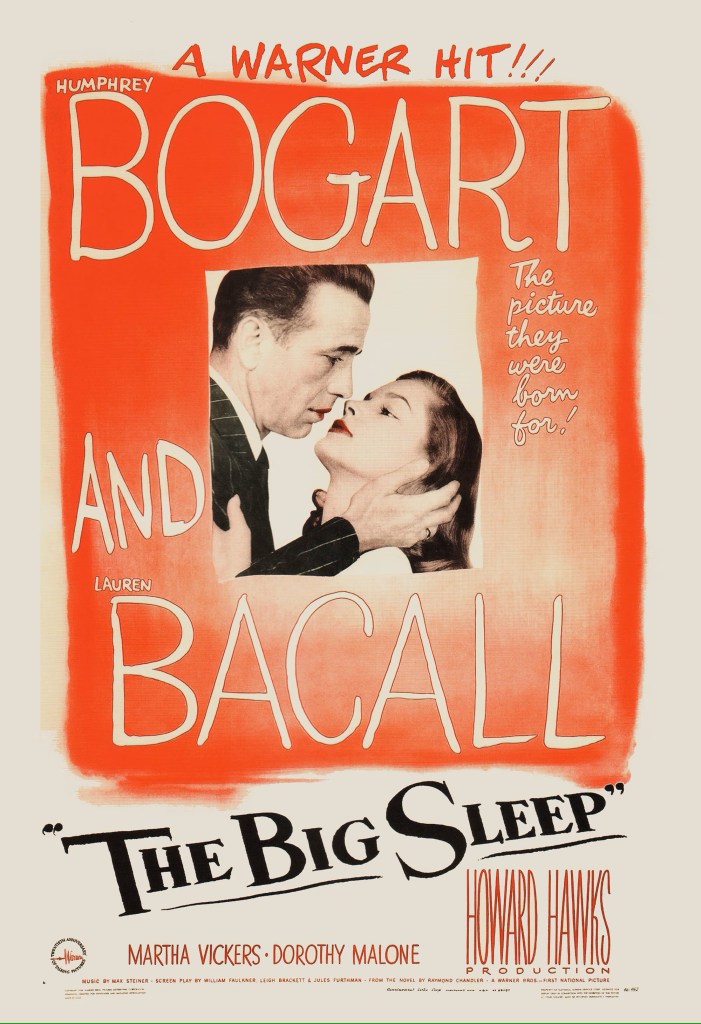
The Big Sleep was actually shot in 1944 – you can spot the odd wartime reference, from a female taxi driver to Marlowe’s special gasoline permit – but was released almost two years later. A lot had changed since then (the end of the war for starters) not least the fact that Bogart and Bacall had become the most famous couple in the world. After previews, Warner Bros quickly twigged they could have a mega-hit if they took out some of the dull bits and replaced them with Bogie and Bacall flirting instead. Which they duly did, helping turn The Big Sleep from what could-have-been a fairly routine Chandler gumshoe adaptation into a sort of genre-defining phenomenon.

The first thing they sacrificed was the plot. Famously, nothing in The Big Sleep really makes that much sense – and it hardly matters. Bogie asked Hawks at one point just who exactly shoved the Sternwood unconscious chauffer’s into the river – neither Hawks or the several scriptwriters (including William Faulkner and Leigh Brackett) had a clue. It doesn’t matter, because few films are about “the ride” as much as The Big Sleep. Every moment has something in it to appeal to the hard-boiled detective fan. Not a scene goes by without either a glamourous lady eager to bed Bogie, a fight, a shooting or some combination of all three. All washed down by a hard-bitten Bogie at his absolutely best, over-flowing with charisma and an impish sense-of-fun at how cool it all was.

The Big Sleep sees Philip Marlowe (Humphrey Bogart) hired by General Sternwood (Charles Waldron) to investigate a series of mysterious debts run up by Sternwood’s carefree and wantonly flirtatious daughter Carmen (Martha Vickers). The plot inevitably thickens as Marlowe uncovers blackmail, prostitution, pornography rings and lord knows what else, all circulating around a sinister bookseller with a sideline in naughty photos, a brazen femme fatale (Agnes Lowzier) manipulating a series of weak-willed men and a tough gangster Eddie Mars (John Ridgeley) willing to use his secrets to win advantage. That’s not even mentioning Carmen’s austerely arch sister Vivian (Lauren Bacall) whose sultry flirtatiousness captures Marlowe’s attention.

The Big Sleep really is a series of hugely entertaining scenes, loosely tired together with a vague plot. The original cut had featured a dull scene with Bogie laboriously explaining what was going on to his dull-as-ditch-water police friend. What Hawks and co realised is no one really wants to see that when they could see Bogie and Bacall puffing cigarettes and talking suggestively (brazenly!) about how you need to ride a horse hard. They were probably right: after all, no one thinks about Psycho and says “my favourite scene is the bit with the psychiatrist’s explanation at the end”. Hawks realised if the viewer enjoyed themselves, no one would give a damn if it made almost no sense.

How else really can you explain scenes like Marlowe’s drop-in on an Acme bookstore where he meets the sort of drop-dead gorgeous bombshell store owner (Dorothy Malone, sexy as hell) who only exists in movies and happily closes the store in the middle of the afternoon to drink a bit of whisky (and more) with Bogie? It offers nothing to the plot that couldn’t be covered with a brief time-lapse montage – it’s all about the mood, the dialogue and the sensual charge between the two characters, with the illicit promise of no-strings sex (which, rather nicely for a 40s movie, they both seem well-up for). Who hasn’t dreamed of that?

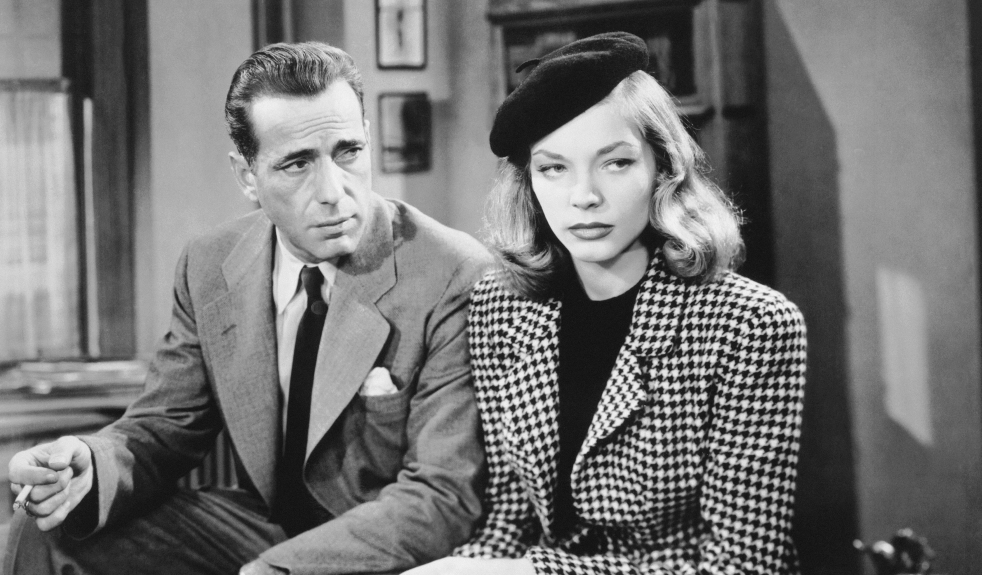
It’s the same frisson that lies behind the whole Bogie and Bacall appeal. These two set the screen alight with the sort of temperature that came from basically watching them have an affair right in front of us. The two became an illicit item while filming To Have and Have Not and large chunks of The Big Sleep were held up due to Bogie drinking away his guilt. By ’46 they were an official item, but you couldn’t doubt it from the lingering, heated looks they give each other. Or the screwball lightness – and the one-upmanship and delight in making the other laugh – during their telephone call to the police department, as they pass the phone between each other putting on voices and pretending to be various members of an entire clan of troubled curtain-twitchers.

Humphrey Bogart was in his element here. Literally no one before or since could play this sort of super-smart, more-sensitive-than-he-appears hero who covers himself with a cynical, wise-cracking front than him. His Philip Marlowe has a joke for every occasion but also a strong moral sense close to the surface. He’s playful – the delight in which he affects the fusspot demeanour of a book collector early on is delightful – but superbly unruffled by threats.

No wonder Bacall’s Vivian is drawn towards him. Bacall is sultry and husky voiced, a slice of imperial sexiness. If the film doesn’t call for her to do much more than that, she certainly can deliver it. It’s a performance that is left surprisingly one-note (after all that one-note was all Hawks wanted from her). Chandler believed Martha Vicker’s inspired performance of childish selfishness and sexual shamelessness as her sister Carmen was if anything even better – and he’s probably right. But then Bacall has those famous scenes with Bogie – somewhere between His Girl Friday and Basic Instinct – and it’s those moments that cement themselves in your mind.

That and The Big Sleep’s effective moments of hard-edged violence. Elisha Cook Jnr gets his greatest role as a weakling who bungles his way into an early grave in a partially-silhouetted murder. There is a cracking shoot-out between Marlowe and Mars’ hired gun and a neat (if barely logical) final face-off between the outraged Bogie and Joh Ridgeley’s expertly judged Mars who crumbles from arrogant superiority to snivelling cowardice. There are equal delights in numerous other scenes that play out like stand-alone treats – from Bogie’s imperious swatting of bully-boy Brody to his greenhouse hiring by General Sternwood. Every scene in the film plays out with hard-boiled zing like its own cool little stand-alone movie.

It makes for a fun package – and it’s easy to see why The Big Sleep is the sort of film people list as “their favourite”. It’s playful and manages to seem extremely cool without seeming to make any effort. Bogart is sensational and every second of the film offers something good. What the hell does it matter if none of it really makes sense?

Dr Mabuse, der Spieler (1923)

Dr Mabuse, der Spieler (1923)

Lang’s crime drama is a sprawling silent mini-series, still gripping today

Director: Fritz Lang

Cast: Rudolf Klein-Rogge (Dr Mabuse), Bernhard Goetzke (State Prosecutor von Wenk), Aud Aged Nissen (Cara Carozza), Gertrude Welker (Countess Dusy Told), Alfred Abel (Count Told), Paul Richter (Edgar Hull), Robert Forster-Larringa (Spoebri), Hans Adalbert von Schlettow (Georg), Georg John (Pesch), Karl Huszar (Hawasch), Grete Berger (Fine)

In a world before television, there were only two places for long-form stories – and Fritz Lang wasn’t a novelist. His four-and-a-hour epic Dr Mabuse der Spieler is really a sort of gargantuan mini-series, a rollicking action-adventure about a conscience-free conman wiling to go to any lengths to get the things he wants. It’s pulled together as a pacey, episodic yarn – each reel is basically an individual act (or episode) and filmed with such visionary vividness that it remains compelling today. Whether you decide to settle in for the long haul or split its parts and acts over a series of nights (and why not, the film was released in two parts, months apart) it won’t fail to entertain.

It was based on Norbert Jacques novel, a publishing sensation (so much so this was rushed into production while Jacques novel was still being serialised). At its heart: Dr Mabuse (Rudolf Klein-Rogge), practically the dictionary definition of an omnipotent, amoral villain. Mabuse is a practiced liar, master-of-disguise, ruthless murderer, conman and has such demonic will power he is capable of extraordinary levels of hypnotic control, whose gang of acolytes switch between terror and outright worship of him. He can manipulate the rich into handing over their money as easily as he can the collapse of businesses on the stock exchange. No one knows who this malign spider is. But State Prosecutor von Wenk (Bernhard Goetzke) will make it his business to know.

Lang’s film is a gorgeous mix of the sort of urban realism he mastered in M and little touches of mystical realism more reminiscent of The Cabinet of Dr Caligari, wrapped up in the sort of action that inspired everything from The Sting to Mission: Impossible. It’s opening section is a brilliant example of both. Essentially a twenty-minute prologue to introduce Mabuse’s nefarious genius, it sees our anti-hero masterfully execute a plot mixing heist, disguise, manipulation and brazen self-confidence to make a fortune on the stock exchange. The theft of a secret commercial contract from a train involves the sort of disguises and split-second timing (to throw the contract from a train passing over a bridge into a car passing under it) which would make Ethan Hunt’s heart race.

It’s a perfect entrée to our villainous lead, Mabuse. First introduced rifling through photos of the many expert disguises he will effortlessly assume during the film – he becomes everything from banker to magician, psychologist to hypnotist, tramp to member of high society – Mabuse has no moral code what-so-ever other than the accumulation of things. That ranges from wealth, to an obsessive desire for ownership over attractive women (and his desire for Gertrude Welker’s Countess Told eventually contributes to his undoing) to simply the having power over the wills of weaker men. Rudolf Klein-Rogge is magnetic as this monster of the dark, ruthlessly calm but equally wild-eyed, unflappable but willing to go to any lengths.

Spieler is often translated as “gambler” – but it’s German meaning is richer than that and many have commented a better translation might well be “player”. Mabuse is certainly that. He is a master actor, who can be lose himself in different roles, undetectable to others. He weaves elaborate games around his victims, where only he knows the rules (and, often, only he knows a game is even being played). Other people are pawns to moved and gambled with. He’s a monster, but one born from disillusion of the end of the First World War, part of the hedonistic self-regard of dissolute Weimar. We can see touches of this environment throughout Lang’s film, in its hedonistic gambling dens and the casual thoughtlessness of the rich. Mabuse flourishes because he is the rash an age has come out in. (Retrospectively, you can detect the shadow of Hitler in this ruthlessly power-mad monster who hides in plain sight but demands absolute control).

Mabuse is “the Great Unknown” and the natural target of methodical if uncharismatic von Wenk, played with a stolidness by Bernhard Goetzke, balancing Klein-Rogge’s larger-than-life portrayal perfectly. The duel between these two moves from gambling rooms to elaborate houses, from the streets to the jails of the city, taking in chases, bombs, shootings, kidnappings and all sorts of attempted moves and counter-moves, culminating in a shoot-out that surely inspired countless Hollywood gangster movies.

Through it all Lang directs with astonishing freshness and invention. Dr Mabuse der Speiler throws a slice of cinematic visual inventiveness into almost every scene. Lang makes extensive use of superimpositions, cross-fading, location shooting, fast-paced editing and brilliantly evocative lighting to create a world both highly realistic and also dancing to the tune of its demonic lead. Some of this has become such a part of cinematic language that it’s unlikely to draw comment from modern viewers today – we are unlikely to be wowed by night-time footage of Wenk pursing Mabuse in a car, but to viewers at the time such scenes of photorealism taken in darkness were unheard of.

There is plenty that will continue to thrill audiences. Lang’s visual portrayal of Mabuse’s hypnotic powers is superb. In his first confrontation with von Wenk (both men are disguised at the time – this really is a game of move and counter-move), Mabuse attempts to implant a hypnotic suggestion in von Wenk. Lang demonstrates with an astonishing use of lighting which slowly concentrates the light into a small pool on Mabuse’s face before his face seems to grow to fill the frame (technical effects like this were a small miracle in 1923). On a second attempt, the hypnotically suggestive words are imposed on the screen as a set of animated letters which loom over von Wenk and later seem to be almost leading him (in his car) to the clifftop Mabuse has suggested he drive off. It’s a superb way of showing the power of Mabuse, building on the intimidating cross-fade from our stock-exchange opening that briefly shows Mabuse’s face super-imposed over the clutter-filed room.

Lang mixes this imaginative dynamism with some superbly done realist scenes that help make Dr Mabuse der Spieler a gripping crime thriller. That stock-exchange opening is followed by car chases and murders – one character is dispatched in the streets after dark with a brutal suddenness. Lang creates a series of locations, all perfectly detailed but instantly recognisable, from the distinctive look of each gambling den (from art deco lined walls to a strange rotating gambling pit filled with cards and erotic dangers) to the objet d’Art packed rooms of Mabuse’s mark Count Told (a gloriously ineffective Alfred Abel – unrecognisable from the world controller he would become in Metropolis) to the white-lined jails and careful detailed offices of von Wenk’s police headquarters.

Dr Mabuse der Spieler uses these real locations to constantly remind us that, underneath the Moriarty genius of its lead, this is also a tragedy of real people caught in the web of an uncaring spider. Mabuse cares nothing for his underlings, sacrificing them as readily as pawns. None more so than Cara Carozza, beautifully played by Aud Aged Nissen, a seducer in love with Mabuse who dedicates her life to him, at the cost of her own. She makes a dark mirror for Countess Told, drawn into Mabuse’s web but drawing strength from her admiration of Cara who is, in her own way, deeply principled. Mabuse’s victims are prodded, pushed and outright shoved into punishing and often self-destructive behaviours, their lives flourishing or ending according to his whims.

As a sort of epic mini-series, Dr Mabuse der Speiler is sublime entertainment. Each act follows its own clear arc and the culmination in a brutal shoot-out throws in a nightmare of surrealist imagery at its close as a crucial character tips, under pressure, into madness and delusion. (This series of horrors, the ghosts of fallen characters arising to torment him, is a masterclass in ghostly horror). It gripped audiences then and its surprisingly brisk pace and pulpy sensibility still do now.

Anatomy of a Fall (2023)

Anatomy of a Fall (2023)

Brilliant courtroom drama, full of enigmatic questions around the nature of truth

Director: Justine Triet

Cast: Sandra Hüller (Sandra Voyter), Swann Arlaud (Vincent Renzi), Milo Machado-Graner (Daniel Maleski), Antoine Reinartz (the Prosecutor), Samuel Theis (Samuel Maleski), Jehnny Beth (Marge Berger), Saadia Bentaieb (Nour), Camille Rutherford (Zoé Solidor), Anne Rotger (the President)

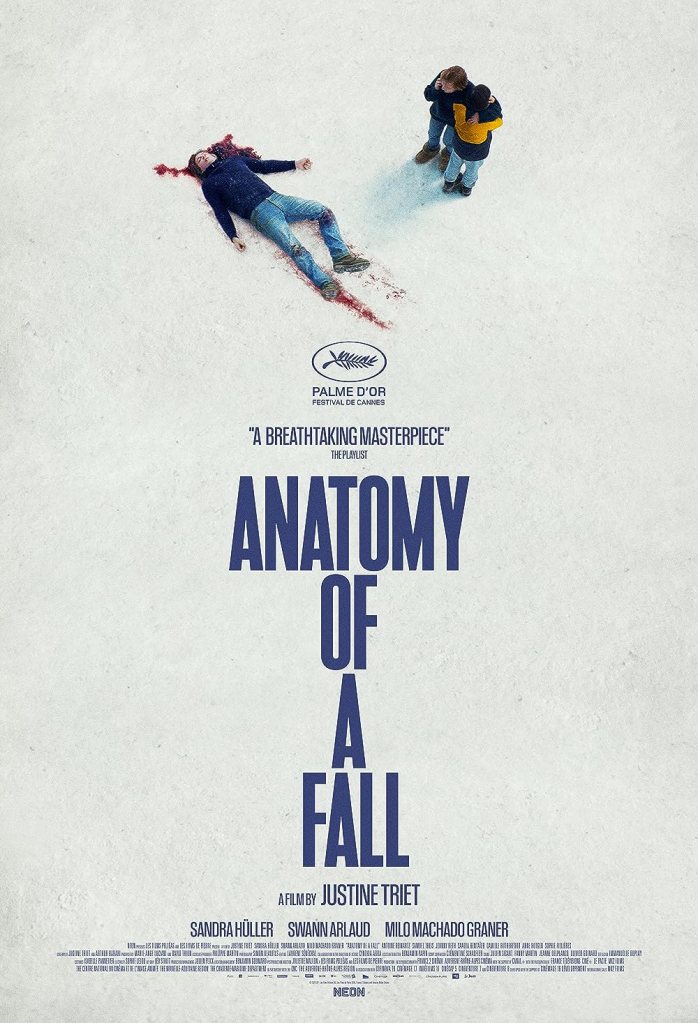
What is a trial? A forum for discovering the truth? Or a theatre where the best story wins? Anatomy of a Fall, Justine Triet’s Palme d’Or winning courtroom drama, explores this and takes its place as one of the finest courtroom films made. Complex, fascinating and compelling, it asks searching questions about the unknowable nature of truth. Presenting only perspectives, recollections and conflicting inferences based on the same handful of facts, it places the viewer in the same position as the jury: ultimately we must choose a version of the truth “we can live with”.

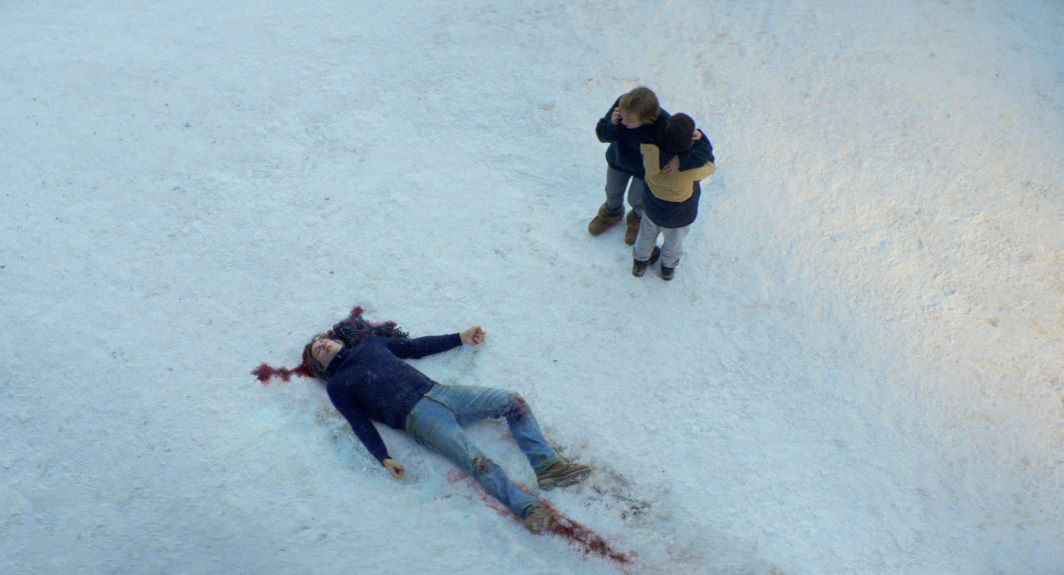
The trial revolves around the death of Samuel Maleski (Samuel Theis), lecturer and amateur house renovator, discovered dead by his son Daniel (Milo Machado-Graner) having fallen from the attic of their Grenoble chalet. Did he fall, jump or was he pushed? Suspicions fall on the only suspect: his wife, famous novelist Sandra Voyter (Sandra Hüller). Sandra’s story doesn’t quite stack up and her assurance that they were in a difficult but loving relationship isn’t supported by the facts. A dramatic court case begins, in which both the prosecutor (Antoine Reinartz) and Sandra’s lawyer, old friend Vincent (Swann Arlaud), lay out compelling, but utterly conflicting versions of Sandra and Samuel’s marriage, with their son Daniel (the only real witness) caught horrifically in the middle.

Anatomy of a Fall only shows us facts that a jury could have. We open no more than an hour before the fateful event, with Sandra’s interview at home with a young student (Camille Rutherford) halted by an unseen Samuel playing an instrumental cover of 50 Cent’s P.I.M.P. at deafening volume. Is his playing of loud music an everyday event (as Sandra says) or a passive aggressive move designed to disrupt the interview of a wife he is jealous of? We don’t know because we never get to see their subsequent confrontation, as we follow Daniel walking his dog, returning find Samuel’s body.

This sets the tone for the superbly uneasy courtroom drama that follows. Throughout, Samuel is literally a ghost. The film finally shows him only when a recording he made of a vicious argument between the couple is played to the courtroom. Triet cuts from the courtroom to a flashback so we can see Sandra and Samuel’s increasingly heated conversation, where he condemns her for selfishly dominating their lives, while she accuses him of a martyr complex and blaming her for his own failures. But the second the recording hits a disputed physical clash we cut back to the courtroom and hear only the sounds themselves and their interpretations from prosecution and defence.

Those interpretations are effectively stories, and Anatomy of a Fall makes it clear a compelling and relatable story is essential. Taking a leaf from Anatomy of a Murder (a clear inspiration), it’s less the facts and more the presentation that is likely to win either conviction or acquittal. Vincent carefully coaches Sandra on her version of events – the loving relationship turned sour by her husband’s depression, bought on by his guilt for the accident that left their son visually impaired – advising her on tone, wording and when to stress certain points and which to avoid. He flatly tells her an accident is something “I don’t believe” and stresses their only chance is to establish Samuel’s suicidal intent. Lawyers aren’t paid to find the truth: they are paid to secure verdicts.

There is an added complexity as Sandra, a German, must conduct the trial in French, her third language, rather than her preferred second language of English. Language is itself a topic of debate in the marriage – her French husband Samuel accuses Sandra of forcing him and French-speaking Daniel to meet on her preferred ground of English, rather than improve her French. She counters that English makes them all equal, speaking a second language. In the trial, Sandra struggles to articulate her points, floundering for precise words. Eventually the pressures of the trial force her to revert to English, which is then translated for the rest of the court.

Superbly played by Sandra Hüller, Sandra is an assured professional, struggling to understand how she has ended up in this position. She can be distant and doesn’t suffer fools gladly. Unspoken as it is, it’s clear for police and prosecution she doesn’t fit their profile of a grieving widow. Every beat of Hüller’s performance is brilliantly open to interpretation: is she anxious about the pressure on her son, or scared about what he might say? Is she filled with stoic regret or did she never care for her husband? Even when she switches to English in the court, is this a result of pressure or because it is easier for her to elaborate a story in this language?

The truth is increasingly sidelined. We see no reconstruction of the possible crime, only two (both convincing) versions of it presented with models and computer graphics that outline first a murder then a suicide, both plausibly explaining how a suspicious blood splatter appeared on a shed. A psychiatrist arguing passionately for Samuel’s clear-headedness and determination to live, is blamed by Sandra for getting him hooked on anti-depressants. Sandra’s novels are dragged into the trial (on the excuse that she has talked extensively about their autobiographical content) – was her use of Samuel’s idea from his abandoned novel theft or agreement? We can never be sure.

This struggle for the best story has an increasingly damaging impact on their son Daniel. Beautifully played by Milo Machado-Graner, Daniel is a quiet, sensitive, precocious young boy, whose accidental visual impairment becomes crucial. Certain at first of what he saw and heard, we see his certainty crumble during police-escorted reconstructions at the scene (the loud music making what he claimed he heard from where, impossible). On the stand he tries to reconcile his love for both his parents with knowledge of their arguments. At home with his mother, he becomes increasingly withdrawn and closer to his court-appointed guardian Marge (a superbly conflicted Jehnny Beth).

It is Marge who gives voice to, perhaps, Anatomy of a Fall’s central message. The truth is, in the end, the story we choose to believe, the one we can live with. Anatomy of a Fall presents us with multiple choices but no definitive answers. It is up to us to listen to the evidence and decide on Sandra’s guilt or innocence. Triet’s superb film throws in a final additional mystery with a late piece of evidence that is even more open to interpretation than anything else, a story that could be argued as a late realisation or an elaborate lie. We even see Samuel again, as the witness recounts words they claim he said, but this time we just see him lip synching to the audio of the witness’ testimony – are words literally being put into his mouth? The truth is what we make of it, and as subjective as any story.

Anatomy of a Fall is a brilliant courtroom drama and a scintillatingly human story with a superbly enigmatic performance from Sandra Hüller at its heart. Triet and Arthur Harari’s script is sharp and marvellously balances objective and subjective facts. Triet directs with a tight, pacey assurance, with a striking series of final images that remain open to viewer interpretation as to who is protecting whom and why. Fascinating, compelling and open to endless reconsideration and reinterpretation, Anatomy of a Fall can take its place as one of the definitive courtroom dramas on film.

Spellbound (1945)

Spellbound (1945)

Hitchcock dives into psychiatry with mixed success in a middle-brow effort

Director: Alfred Hitchcock

Cast: Ingrid Bergman (Dr Constance Petersen), Gregory Peck (Dr Edwardes/John Brown/John Ballantyne), Michael Chekhov (Dr Alexander Brulov), Leo G Carroll (Dr Murchison), Rhonda Fleming (Mary Carmichael), John Emery (Dr Fleurot), Norman Lloyd (Mr Garmes)

Spellbound was born out of Selznick’s faith in the magic of psychiatry. It opens with a touchingly naïve dedication that stresses a little touch of Freud is a magic bullet: “once the complexes that have been disturbing the patient are uncovered and interpreted, the illness and confusion disappear and the devils of unreason are driven from the human soul”. Oh, would that it was so easy. Spellbound turns psychiatry as a sort of detective game, the subconscious a sort of smorgasbord of clues that, when shuffled into the correct order, will produce the answer.

The mystery is what exactly has happened to the new head of Green Manors Psychiatric Hospital, Dr Edwardes, here to replace the not-exactly-happy-to-retire Dr Murchison (Leo G Carroll)? The man who has arrived claiming to be Edwardes (Gregory Peck) may be charming but his odd obsessions with dark parallel markings on white surfaces, tendency to faint and lack of familiarity with psychiatry in general raise suspicions. Dr Constance Petersen (Ingrid Bergman), leading light of the Hospital, deduces Edwardes or “JB” as he vaguely remembers his initials being, is suffering from guilt-induced amnesia. Petersen refuses to believe – despite mounting evidence – that this man she has fallen in love with could be a killer. On the run, she recruits her old mentor Dr Brulov (Michael Chekov) to help analyse JB’S dreams, convinced the answer to the mystery is there.

Selznick hired his psychiatrist to act as a consultant on the film. This didn’t matter that much to Hitchcock, who considered the film essentially another murder-mystery thriller with a bit of Freudian dressing and bluntly told the advisor at one point when she protested yet another inaccuracy “my dear, it’s only a movie”. Spellbound is a decent, mid-level Hitchcock effort, with a touch or two of the master’s invention and magic, but which slows down for an extended act three analysis scene crammed with dodgy psychiatry and a detailed Salvador Dali-inspired dream sequence.

Of course, no one watching the film (rather like Cary Grant in Suspicion) could ever believe for a minute that the charming, handsome Gregory Peck is actually a murderer. Hitchcock’s trick is to keep the tension up, since (at best) there are only two suspects (and only one of them has a heavily advertised motive). You could argue here the trick is a “howdunnit” rather than a “who”. What mystery is Peck holding in his head and why can’t he remember who he is? Hitchcock throws in a host of little flourishes to keep us guessing, and if he clearly cares very little about Freudian insight (just as well, imagine the field day Freud would have had with Hitch) that hardly seems to matter.

Spellbound still manages to fairly barrel along, with a sparky script by Ben Hecht interweaving screwball banter between Peck and Bergman with cod-psychiatry. Hitchcock lets most of this play out fairly traditionally, but punctuates it with moments of flair. An early romance dialogue takes place in voiceover over a series of shots of doors opening to reveal a never-ending corridor (a neat visual metaphor for delving inside the mind). A tracking shot on a disturbed Peck down a flight of stairs, focuses on a cut-throat razor in his hand, ending with the razor alarmingly large in-shot. Disturbing POV shots make objects appear ultra-large, from a glass of milk (echoes of Suspicion) to a gun barrel turned to face us at the film’s conclusion. All of this is accompanied by an excellent score by Miklos Rosza which brings together romantic strings and the theremin to suggest the unsettling undercurrents of the subconscious. Rosza, rightly, won an Oscar for his hugely atmospheric work.

Spellbound is also notable for the way it inverts gender expectations. Peck effectively plays the damsel-in-distress here. Vulnerable and scared about what he could do, he lapses into catatonic panicked silence as much as smooth banter. Instead, for all the film stresses her feminine weakness when in love, it’s Dr Petersen who is the protagonist here. Played with a relaxed authority by Bergman, Constance is an assured professional and a dedicated campaigner for the truth. It’s she who constantly drives the plot forward and its her who plays both doctor and detective to crack the case and confront (with an assured coolness) the killer.

Hitchcock’s film provides a subtle commentary on the experience of women. Searching for JB in a hotel lobby, Petersen is first pestered by a drunk traveller who drunkenly all-but calls her a cock-tease when she asks him to leave her alone. Even when saved from an unpleasant scene by a hotel detective, he assumes her to be a schoolteacher or governess, and Petersen immediately recognises that disguising her accomplishments is a perfect way to gain this would-be-saviour’s help. Petersen also has to shrug off the pestering attentions of a colleague (John Emery).

But it’s her who eventually deduces the meaning of JB’s dream. This dream was heavily promoted as the work of Salvador Dali. While full of striking imagery, it feels more like a pastiche of Dali, as if a Hollywood art director threw The Persistence of Memory and Eyes for Your Eyes at the wall see what stuck. Which is pretty much what happened: Dali’s work was largely discarded for being too weird and overlong and William Cameron Menzies was bought into create something in Dali’s style. Selznick hardly cared – what mattered was promoting the Dali collaboration (Hitchcock had little to do with the scene, until it drew praise and he then claimed authorship).

It’s another striking moment in Spellbound. But truthfully the film is a careful construction of striking moments and performances, which power a simplistic and unrealistic plot which relies on coincidence and bizarre logic gaps. Psychiatry is a magic bullet – it’s hard to imagine anyone in real life reacting with the sort of glee JB does here when he discovers he didn’t murder his brother in his childhood, only accidentally fatally impaled him on some railings outside his house. The “revelations” from the analysis takes an over-extended single session with the unconscious yielding a series of Agatha Christie-style clues.

But then that fits Spellbound in the tradition of Hollywood psychiatry, from this to Ordinary People to Good Will Hunting, a touch of confession on a couch eventually solves all problems (all the kissing Peck gets from Bergman – which didn’t stop off camera – also clearly helped). Hitchcock’s work here is professional, but middlebrow. However, the odd imaginative shot, and the impressive performances (Bergman, Peck and also famous acting-coach Michael Chekov, immensely playful and Oscar-nominated as Constance’s cuddly mentor) still make this an entertaining watch.

A Haunting in Venice (2023)

A Haunting in Venice (2023)

Branagh’s third Poirot outing lowers the scale but feels more real and involving than any others

Director: Kenneth Branagh

Cast: Kenneth Branagh (Hercule Poirot), Kyle Allen (Maxime Gerard), Camille Cottin (Olga Seminoff), Jamie Dornan (Dr Leslie Ferrier), Tina Fey (Ariadne Oliver), Jude Hill (Leopold Ferrier), Ali Khan (Nicholas Holland), Emma Laird (Desdemona Holland), Kelly Reilly (Rowena Drake), Riccardo Scamarcio (Vitale Portfoglio), Michelle Yeoh (Joyce Reynolds)

Branagh’s Poirot films have been a mixed bag. Big on starry cast and luscious locations, they’ve also succumbed too readily to bombast not to mention the sort-of tricksy directorial flourishes Branagh has such a weakness for. It’s a pleasant surprise then that A Haunting in Venice turns itself into the smallest-scale and tightest of his Poirot films and might just be the most successful of the lot.

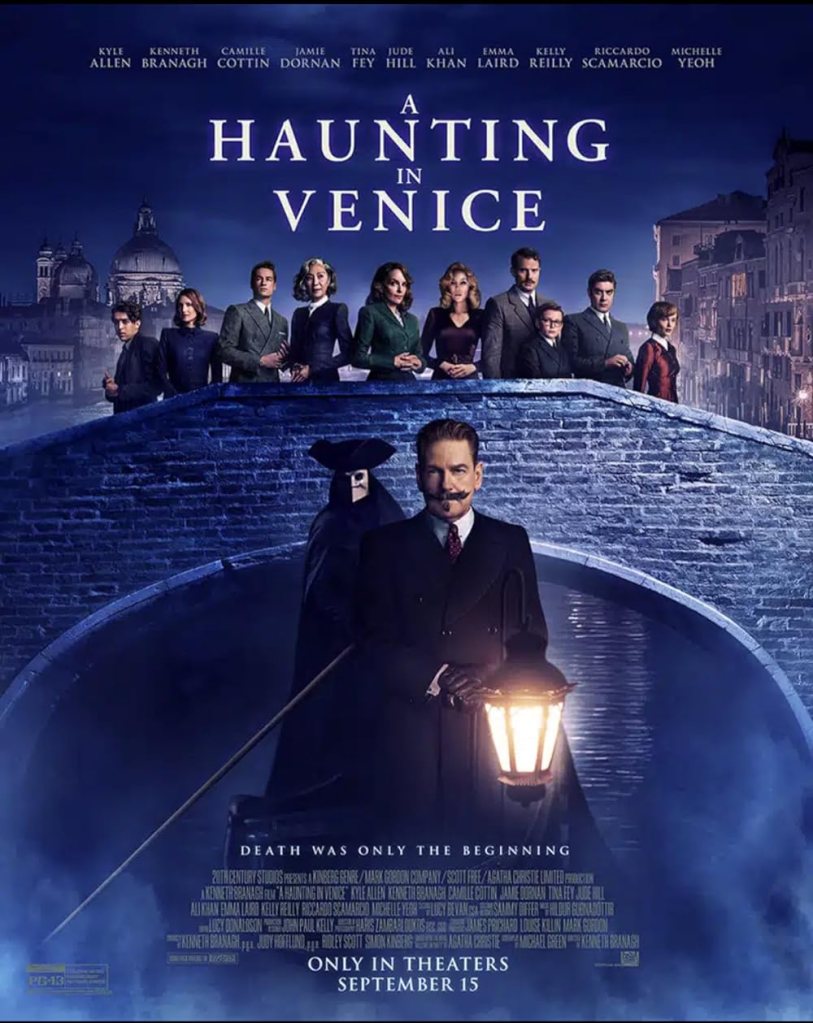
It’s 1947 and a retired Hercule Poirot (Kenneth Branagh) lives as a recluse in Venice, studiously ignoring potential cases, his door firmly guarded by bodyguard (and retired policeman) Vitale Portfoglio (Riccardo Scamarcio). All this changes when he is visited by an old friend, crime novelist Ariadne Oliver (Tina Fey) who recruits Poirot to help debunk spiritualist Joyce Reynolds (Michelle Yeoh). Reynolds is conducting a séance for retired opera singer Rowena Drake (Kelly Reilly), still grieving the recent death of her daughter Alicia. With other guests including Alicia’s former fiancée Maxime (Kyle Allen), PTSD suffering Dr Ferrier (Jamie Dornan) and his precocious son Leopold (Jude Hill) and housekeeper Olga Seminoff (Camille Cotton), the stage is set when a storm and a murder all strike on the same night. Finally, Poirot takes up arms again.

A Haunting in Venice has a fair bit of latitude to work with since there is not an Agatha Christie Poirot mystery actually called that (or even set in Venice). Instead, this is a fast-and-loose adaptation of Hallowe’en Party (definitely one of the lesser-known books) which shifts its location, reshuffles the characters backgrounds, brings a few off-page murders very much “on page” and repackages the story to take place in a sadness-tinged, post-war misery which neatly reflects Poirot’s private grief and guilt at a life which has seen so much death.

This actually works rather well. Contrary to much of the publicity, which played up the horror elements, this is about a million miles away from The Exorcist (although Branagh clearly rewatched Don’t Look Now for Venice scares inspiration), offering instead a camp-fire spookiness and a couple of jump scares. A Haunting in Venice is actually the first Branagh Poirot that feels it would fit into the Suchet-Poirot mould: a slightly maudlin atmosphere mixed with gentle humour, a tight interview-based structure and a (thankful) reduction in gun-toting stand-offs.

A Haunting in Venice is predominantly set in one crumbling Venetian house over one night during a wild storm. The house is given a ghostly backstory of a medieval orphanage left walled-up to prevent a plague outbreak spreading – and there are suggestions of supernatural mischief (objects fall down seemingly on their own) at various points (most of which are swiftly debunked by Poirot). The film is shot and framed with a series of fish-eye lenses and some oblique angles (as per Branagh, the second shot of the film is a Dutch angle) to maximise the dimensions of the house but also at key points stress its claustrophobia, all of which works rather well. It’s moodily lit in a series of shadows (to maximise those spooky jump scares) but its horror elements are lite – a whirligig of screaming and bloodshot eyes at the séance are about as far as it goes.

Instead, it unfolds in a traditional manner, bookended by a prologue and epilogue that indulges the beauty of the location shooting (including a luscious final aerial shot over Venice). The film effectively uses its post-war setting to add emotional impact – after suffering through a war that claimed millions of lives, is it surprising that people are more susceptible to the attractions of taking to the dead? The impact of war blights several characters, from Jamie Dornan’s doctor (Dornan is very good in the role), forever scared by the sights he saw liberating Bergen Belsen to a pair of young Eastern European refugees who have fled the Nazis.

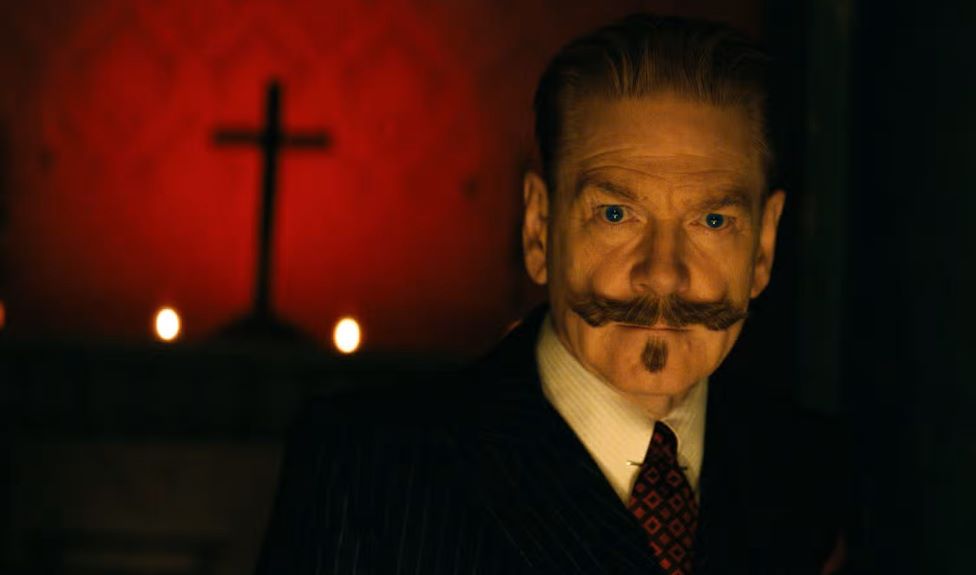
Poirot’s background as a soldier and his own traumatic familiarity with death are also rather neatly wrapped up in questions of his faith. In Branagh’s quiet, melancholic performance (where its clear moments of warmth are only covering deep regrets), it becomes clear his faith in God is as lost as his belief that the world can be improved by deduction. His rejection of spiritualism is pointedly based on a belief that there is nothing outside of the tangible.He fits in witha house awash with traumatised doctors, opera singers lost in grief, housemaids who feel their lives have no purpose and even a crime novelist who’s last three books were flops.

Tina Fey is very playful as this Agatha Christie self-portrait, bouncing effectively off Branagh’s more sombre Poirot. The cast is in fact uniformally strong – a reduced cast list from previous Branagh Poirot’s means each one feels slightly more developed. Yeoh bites into the juicy part of Joyce with movie-star confidence, Reilly is subtly fragile, Cottin and Scamarcio both effectively hiding secret depths. Jude Hill, fresh from playing the young Branagh in Belfast marks himself as a kid with a golden future with a stand-out turn as the mature, worldly-wise young Leopold, comforting and caring for his emotionally scarred Dad.

All of this is marshalled into a tight murder-mystery – we get a bit of Grand Guignal slaughter as well as an effective locked room mystery thrown on top (as well as a homage to the originals apple-bobbing murder) – with a Poirot who is unsettled and out of sorts (for reasons that I guessed but make perfect, secular sense when revealed). It even wraps up on a quietly affecting note of hope. By dialling down the flourishes, scale and action (even if Branagh can’t resist a snorricam shot of himself through the house), A Haunting in Venice actually becomes more rewarding than either of the previous films in the series – and Branagh’s Poirot remains a strong, very human interpretation of the character. Surprisingly, despite its playing with the supernatural, it feels more grounded and human and, despite effectively creating a new story, closer to Christie.

Jagged Edge (1985)

Jagged Edge (1985)

Exploitation and barmy courtroom and steamy romantic couplings abound in this silly but fun mystery

Director: Richard Marquand

Cast: Glenn Close (Teddy Barnes), Jeff Bridges (Jack Forrester), Peter Coyote (DA Thomas Krasny), Robert Loggia (Sam Ransom), John Dehner (Judge Carrigan), Karen Austin (Julie Jenson), Guy Byd (Matthew Barnes), Marshall Colt (Bobby Slade), Louis Giambalvo (Fabrizi), Lance Henricksen (Frank Martin), Leigh Taylor Young (Virginia Howell)

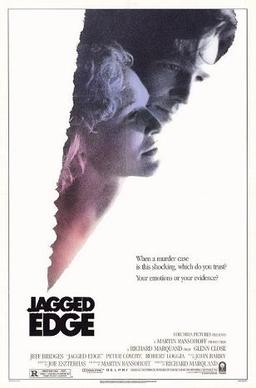
Teddy Barnes (Glenn Close) is done with criminal law after her time at the DA’s office, working under ambitious, unscrupulous Thomas Krasny (Peter Coyote). But she’s dragged back in to defend handsome newspaper editor Jack Forrester (Jeff Bridges), accused of brutally murdering his wife and her maid (for the money naturally). Teddy takes the case and soon crosses that line marked “personally involved” as she and Jack swiftly move from riding horses to riding each other. But what if Jack is really guilty after all?

Jagged Edge is a big, silly courtroom drama, a sort of erotic thriller B-movie that got some serious notice because two critically-acclaimed, three-time Oscar nominated actors fleshed out the cast. Written by Joe Eszterhase (for whom this was the springboard for a career of sex-filled, murder-and-legal dramas that would culminate, via Basic Instinct, with Striptease), Jagged Edge is full of pulpy, super-tough dialogue that its cast loves to chew around their mouths and spit out. It’s got the sort of courtroom dynamics that would see a case thrown out in minutes and would make its lead character unemployable in seconds. It’s daft, dodgy and strangely good fun for all that.

What it is not, really, is either any good or in any way surprising. One look at rugged, casually handsome Jeff Bridges and sharp-suited, charming-but-whipper-smart Glenn Close and you just know its only a matter of time before they end up in bed together. This leads to all sorts of unprofessional sex-capades and legal decisions, not to mention the sort of pathetically readable poker-faces in courtrooms that I would definitely not want from my lawyer.

Jagged Edge makes no secret of its hard-boiled, pulp roots. It opens with a POV home invasion as the killer breaks into his victim’s house that is only barely the right side of exploitative. Marquand doesn’t shirk any opportunities to chuck crime scene photos up on the wall. Peter Coyote’s uber-macho DA loves to say lines like “he has a rap sheet longer than my dick”. Best-in-show Robert Loggia (Oscar-nominated) is the sort of grimy flatfoot investigator who has a fridge full of booze and can’t go more than five words without cussing (when asked if his mother ever washed his mouth out with soap he simply responds “Yeah. Didn’t do no fuckin’ good”).

It’s similarly open about its sexy energy. Close and Bridges have a blue-filtered, late-night roll in the sheets, made even more exciting (perhaps) by the fact she spends half the film suspecting he did the deed. That’s the question the film challenges us with. On the one hand, Bridges seems far too boyish and aw-shucks to have slaughtered two women with a jagged knife. He sure looks upset when he visits the crime scene. Problem is there doesn’t seem to be any other possible suspect, and all that circumstantial evidence just keeps stacking up around him.

Close plays all this with a great deal of force and emotional intelligence, far more than the part (or the film) really deserves. She’s amicably separated from her husband (a very decent guy) and the film even finds a little ahead-of-its time space to make clear that Kransky’s animosity for her (and her loathing of him) is based on his sexual harassment of her as much as his flexibility with courtoom rules. Close balances the whole B-movie set-up with a real dedication – it’s effectively a warm-up (in a way) for the nonsense she’d play in Fatal Attraction.

Bridges is also pretty good, always keeping you guessing from scene-by-scene. How bothered is he when he spreads his wife’s ashes off his yacht? But then how affronted and hurt he looks when he is accused of the crime? It’s a tricky part, but he does a great job of constantly shifting the audience viewpoint and his relationship with Close’s Teddy is just smooth enough to have you guessing how genuine it is.

Wisely – perhaps – he doesn’t hit the stand during the trial. It would probably lead to drama meltdown. The courtroom is full of unbelievable curveballs, witnesses crumbling in a way they never do in real life. Every single disaster for each case is signposted by the fixed horror on the faces of the lawyers. Revelations fly-in and a new suspect effectively incriminates himself mid-trial to the delight of all (this suspect even enforces his caddishness by threatening Teddy in a car park in another moment where the film tries too hard).

The film culminates in the inevitably silly reveal, with plot twists abounding, where we are asked to believe that a killer who has ingeniously considered every single angle of his crime casually leaves incriminating evidence hanging around waiting to be discovered. Its final scene, where the killer is revealed, is either tense or unbearably, ridiculously stupid, depending on your viewpoint (everyone behaves ludicrously out-of-character and takes stupid, unnecessary risks). But for the bulk of its runtime, Jagged Edge is dirty, cheap fun.

Dance with a Stranger (1985)

Dance with a Stranger (1985)

Hell is other people in this Satresque version of the life of Ruth Ellis

Director: Mike Newell

Cast: Miranda Richardson (Ruth Ellis), Rupert Everett (David Blakely), Ian Holm (Desmond Cussen), Stratford Johns (Morrie Conley), Joanne Whalley (Christine), Tom Chadbon (Antony Findlater), Jane Bertish (Carole Findlater), David Troughton (Cliff Davis)

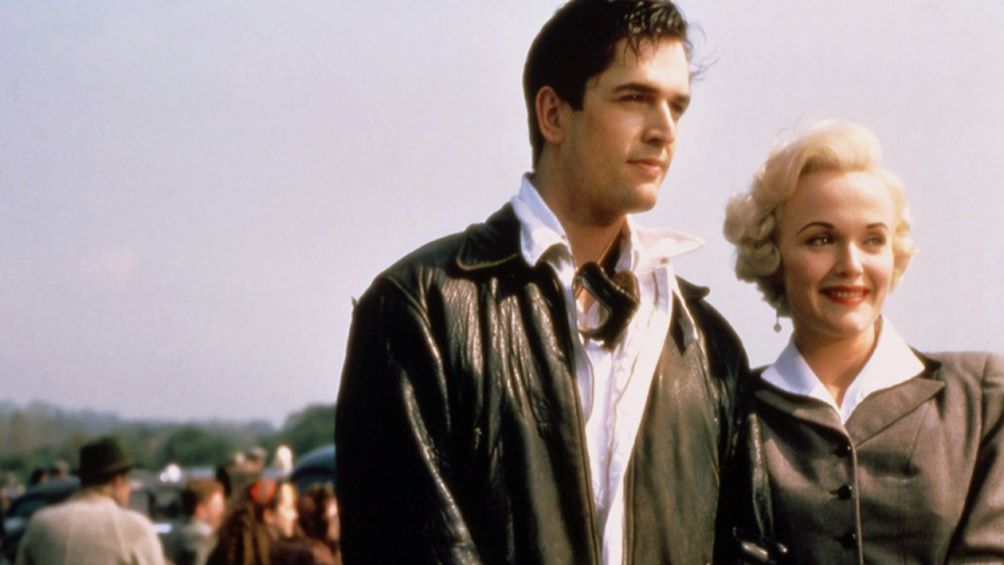
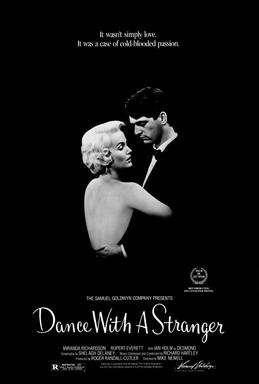
Hell is other people. Dance with a Stranger is the tragic story of how Ruth Ellis (Miranda Richardson in an electrifying screen debut) became the last woman hung for murder in Britain. But it’s also a terrible Satre-like tale of three people stuck a destructive cycle, loathing each other but unable to imagine their lives apart. Ellis is fanatically, obsessively in love with feckless David Blakely (Rupert Everett) who blows hot and cold on her and is nowhere near consistent in his feelings as middle-aged Desmond Cussen (Ian Holm), so besotted with Ruth (who treats him like a benevolent uncle) that he drives her to her assignations and pays rent on the apartment where she sleeps with Blakely.

All three cause each other immeasurable harm in Newell’s cool, bleak, well-made true-crime story that is far less interested in the moments of violence and retribution, than the sad and sorry cycle that leads to them. Tellingly, we never see a single moment of the trial or punishment of Ruth and the film effectively concludes in long-shot as we watch the fatal shooting of Blakely from afar. But who needs the close-up of this inevitable ending, when we’ve had front row seats to the catastrophic relationships that led up to it.

Like many British films, it’s at least partly about class. In 1950s London, we’re still on the cusp of the sort of cultural levelling out of the 1960s. This is a post-war, Agatha-Christie-like London. Blakely and his friends are Waughish Bright Young Things, living on Trust Funds and driving racing cars for fun. Their evenings are spent in drinking clubs aiming for glamour, staffed by those yearning to jump up a notch on the ladder like Ruth Ellis. Such women are of course for dalliances (and casual screws) not for marrying. Ruth’s back-up lover Desmond is an RAF-veteran who misses the war, an overgrown besotted schoolboy and middle-aged bachelor who accepts he is only worth other men’s cast offs.

Blakely’s friends encourage him to mess Ruth around because she’s a working-class strumpet. Ruth is at least partly willing to forgive him because marriage could lift her once and for all out of the working classes. Desmond is of less-interest, because a loveless middle-class marriage of sexual duty simply isn’t as attractive. Neither does Ruth love – or lust after – him the way she does the dynamic, sexy, little-boy-lost Blakely. A man she finds herself so uncontrollably drawn to that, no matter what he does – not turn up, mock her in front of his friends, push her down the stairs or punch her in the face in public – she comes crawling back. Often with Desmond in helpless tow, ignoring his adoration while demanding he drive her to another confrontation with the selfish Blakely.

Dance with a Stranger finds intense sympathy, to various degrees, with all three of its leads. But most strongly it turns Ruth Ellis, who could be a historical statistic, into a figure of real tragedy. Richardson is superb as a woman who is confident, assertive – even arrogantly dismissive – in so many areas of her life except one: her compulsive, obsessive and destructive love for Blakely. Dance with a Stranger charts effectively her mental collapse: from a woman who flirts confidently in a bar, to a quivering, weeping mess standing in the streets staring up at her lover’s window, screaming abuse, smashing up cars and babbling incoherently and inconsolably.

The film charts the same deadly cycle, showing Blakely’s ill-treatment and selfishness having ever more deadly impact on Ruth’s mental well-being. In it all, Blakely isn’t always malicious, more immature and easily led. Everett’s performance is perfect at capturing this playboy uneasiness under a fundamentally weak personality, a man who has been handed everything on a plate and is unable to respond in any adult way to Ruth’s love for him. Nevertheless, his stroppy behaviour gets her fired from her job and his behaviour fluctuates from gifts of framed pictures and promises of devotion, alternated with angry outbursts and emotional and physical violence.

And Desmond Cussen picks up the pieces time and again. Ian Holm is wonderful as this hen-pecked sadomasochist, impotent and all-too willing to debase himself, hurt time and again by seeing Ruth returning time and again to the dismissive Blakely. Holm makes Cussen small, weak, moody and frequently pathetic. He limply follows where she leads and suffers with weary, besotted patience every one of her preoccupied complaints against Blakely. This is man who almost sado-masochistically puts himself in painful situations, can’t be angry with Ruth for more than a few minutes and gets into impotent scuffles with Blakely outside pubs.

But it’s also Cussen who has the gun – and the film at least suggests the possibility that his openness about its location might well have been a factor in Ruth’s later decision to use it. The killing is, deliberately, the least interesting part of the film. What matters is the mental state that led Ruth to this killing. The self-delusion and desperation to believe that she could form a relationship with Blakely, the same obsessive blind-spot that leads to her closing the film writing a condolence letter to Blakely’s mother. Ruth is a victim here as much as him (perhaps more?) a mis-used woman who cannot give Cussen what he wants and can never get what she needs from Blakely.

Newell’s direction is sharp and sensitive and while the film’s cycle of destructive behaviour – Blakely and Ruth row, break-up, Cussen picks up some pieces, rince and repeat – can become overwhelming, it is partly the intention. And it cements the feeling for the audience of being as much trapped in this hell as everyone else. Holm is superb, Everett perfectly cast but Richardson is mesmeric as Ruth, vivid, vibrant, vivacious, vulnerable and victimised in a film that goes a long way to humanise the suffering behind what seem open-and-shut cases.

Decision to Leave (2022)

Decision to Leave (2022)

Obsession, murder and romance combine in this stunningly made inventive romantic film noir

Director: Park Chan-wook

Cast: Tang Wei (Song Seo-rae), Park Hae-il (Detective Jang Hae-jun), Lee Jung-hyun (Jung-an), Go Kyung-pyo (Soo-wan), Park Yong-woo (Im Ho-shin), Kim Shin-young (Yeon-su), Jung Yi-seo (Yoo Mi-ji), Jung Young-Sook (Granny Hae Dong), Yoo Seung-mok (Ki Do-soo), Park Jeong-min (San-oh), Seo Hyun-woo (Sa Cheol-seong “Slappy”)

Death from dizzying heights, a mysterious femme fatale and a detective who tips into unhealthy, romantic obsession. Sound familiar? Park Chan-wook’s Decision to Leave is an enticing spin on Vertigo, but also a beautifully made marriage of Park’s visually dynamic style with classic Hollywood film noir. Decision to Leave is soaked in the sort of atmosphere you’d find in Laura or Double Indemnity and is a breath-taking marriage of half-a-dozen genres, from noir to romance to tragedy. It rotates continuously, no matter how much we observe and watch people, on how little we understand them – and how little we understand ourselves. It’s a stunning piece of film-making.

Jang Hae-jun (Park Hae-il) is a high-flying Busan murder detective, the youngest senior investigator on the force. He’s also a reserved man, crippled with insomnia and weighed down with guilt over cases he failed to solve, conducting a long-distance marriage with Jung-an (Lee Jung-hyun) a scientist at the nuclear plant in distant Ipo. He’s called into investigate the death of a civil servant and keen climbing enthusiast, who fell to his death from his favourite climbing spot. His much younger Chinese wife Song Seo-rae (Tang Wei) is strangely unmoved by his death and becomes the investigation’s focus. She also becomes the focus of Hae-jun’s sleep-deprived obsession as he stakes out her home. Gradually Seo-rae and Hae-jun form an intimate but unromantic relationship as they discover a deep bond between them. But does that mean that Seo-rae isn’t a murderer?

Questions of motivation and the reasoning behind decisions is central to Park’s film. At its heart is Seo-rae, a woman constantly unreadable, as hard to distinguish as her turquoise-tinged clothes are between blue or green (depending on who you talk to). A Chinese woman in South Korea, her Korean is formal and perfectly phrased but she relies on Google Translate to render more emotive sentences into Korean. She nurses ageing women in their homes, showing them care and attention. She might also be a murderer several times over, for motives that are impossibly unreadable.

It must be particularly unreadable for a detective whose mind is clouded by lack of sleep. Hae-jun’s eyes in his lined, weary face are frequently blurred by eye drops (the same eye drops covering POV camera shots). As a detective he’s prepared for everything. He wears trainers, constantly prepared for sudden sprints after criminals (one of these sees him pounding up the side of Busan’s mountain – both he and the suspect collapsing, wheezing for breath, at the top), he has specially tailored coats filled with any object he might need, from tissues to aspirin to a knife glove for hand-to-hand combat. He is calm, unruffled and ready for anything. He’s also a man who struggles with knowing who or what he wants and has placed such pressure on himself that insomnia feels like his body telling him sleeping is irresponsible in a world where there is so much to fix.

Decision to Leave revolves around the fascinating dance between these two characters, a Sherlock Holmes and Irene Adler, who recognise on some-level they are kindred spirits. Both are quiet, dedicated observers of people. Both have the ability to zero in on details – its telling that Seo-rae is the only one who can help Hae-jun begin to crack his old cases and that Hae-jun is the only one who delights in every detail of Seo-rae’s careful, formal Korean. Neither are exhibitionists, both quest obsessively because they feel they must for others: Hae-jun for the victims of crimes, Seo-rae to reclaim the Korean land her grandfather had been forced to leave behind when he fled to China.

But yet… these are also people seemingly determined to manipulate and entrap each other. Sae-jae’s growing closeness with Hae-jun is also a way to get closer to the case, to follow Hae-jun’s progress and to nudge (or outright shove) it in certain directions. Her motives and decisions remain unclear. When they go on a tenderly chaste date to a Buddhist temple, is their connection and intimacy genuine for her, or is she ruthlessly playing a lonely man for advantage?

Because Hae-jun defines himself as a detective – after all, he will chase cases to the end long-after his bosses have demanded he file it. Decision to Leave explores how far this will affect Hae-jun: how far will he go to protect someone he suspects might be a killer? If he helps Seo-rae, how much would he grow to hate himself for doing it? Or to put it another way – is there a greater expression of love that a Holmes is capable of, than to help his Irene Adler get away with it?

These dizzying themes interweave with fascinatingly oblique motivations in this endlessly rewarding puzzle-box of a movie. It’s also clear to see the Vertigo parallels, as manipulators fall in love and stalkers try to shape people and events to meet their desires. It’s second act, set in Ipo, as the characters come back together after a time-jump is a brilliantly engaging dance between two people who might be deeply in love and might be doing their very best to manipulate each other. Here acts of love include reading seized phone call transcripts or draining a swimming pool of bloody water.

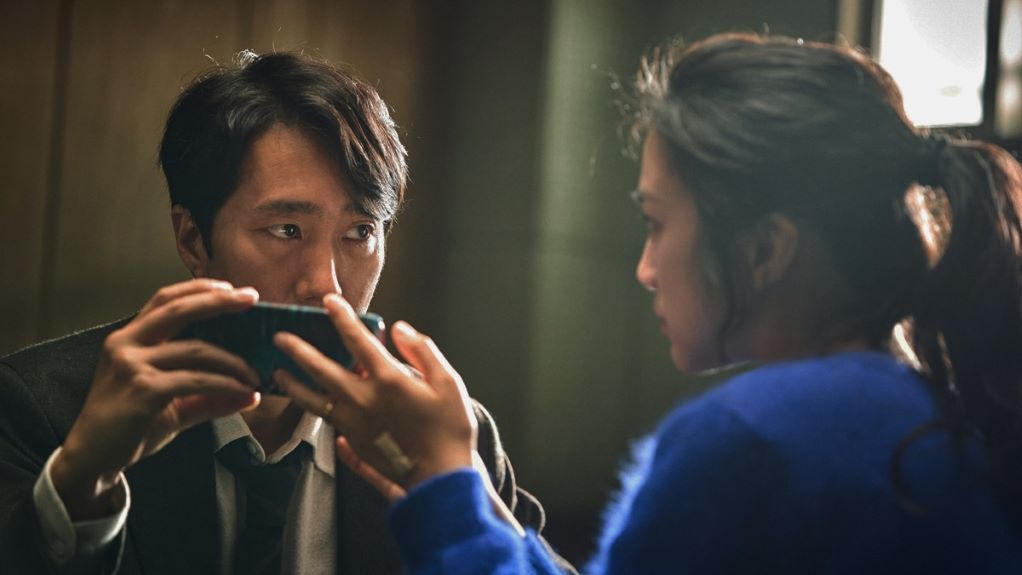
It’s extraordinarily shot by Park chan-wook – this is the sort of film that makes you want to run out and see everything else he’s ever made straight away. Decision to Leave is more classical and reserved than his other ‘cinema of cruelty’ films. But that isn’t to say it’s not crammed with endless inventive flair. Camera angles plumb every depth of imagination – from vertigo-inducing heights to shots that seem to place the camera inside phones, their graphics superimposed across the screen.

As Hae-jun imagines Seo-rae’s actions or stakes out her home, he is visually inserted into her memories or placed in the scene as a witness as he deduces how she may have killed her husband. As this dedicated, obsessive watcher – who can’t leave his fascination with the case alone – watches her home, Park suddenly places Hae-jun inside Seo-rae’s home, sitting alongside her on a sofa. Scenes replay from multiple angles to show us new perspectives, and the characters blur and switch roles as Seo-rae stakes out Hae-jun in Ipo, noticing how his smart shoes (not suitable for running) are in fact a sign of his collapse in confidence.

Decision to Leave gains hugely from Tang Wei and Park Hae-il’s superb performances. Tang Wei is utterly unreadable, her motives and emotions discernible moment-by-moment only in micro-clues – but by the film’s conclusion you feel you finally have an understanding of her tortured, confused emotions. Park Hae-il drips crumpled loneliness and sadness under a professional demeanour, his emotional vulnerability becoming more and more apparent, his job a fig leaf to give his life definition. The chastely, strangely innocent, intimacy between the two of them has profound emotional impact – this is a classic romance, about two people far closer than sex could make them.

Park’s direction of all this is perfectly paced – for a slight plot and an extended run-time, this feels like a film where not a moment is wasted. Like Vertigo every moment fits together into a complete whole which might only be understandable when you step back and look at. Visually, it’s a treat – inventive but not flashy, unique but not overbearing. And it builds a carefully modulated and deeply moving spiritual romance at its heart. It’s a beautiful slice of film noir, rung through with poetry. It’s a marvellous film.

Eastern Promises (2007)

Eastern Promises (2007)

Brutal violence in London’s underbelly in Cronenberg’s formal and chilling dark fairytale

Director: David Cronenberg

Cast: Viggo Mortensen (Nikolai Luzhin), Naomi Watts (Anna Ivanova Khitrova), Armin Mueller-Stahl (Semyon), Vincent Cassel (Kirill Semyonovich), Sinead Cusack (Helen), Mina E Mina (Azim), Jerzy Skolimowski (Stepan Khitrov), Donald Sumpter (Inspector Yuri), Raza Jaffrey (Dr Aziz), Josef Altin (Ekrem), Tatiana Maslany (Tatiana’s voice)

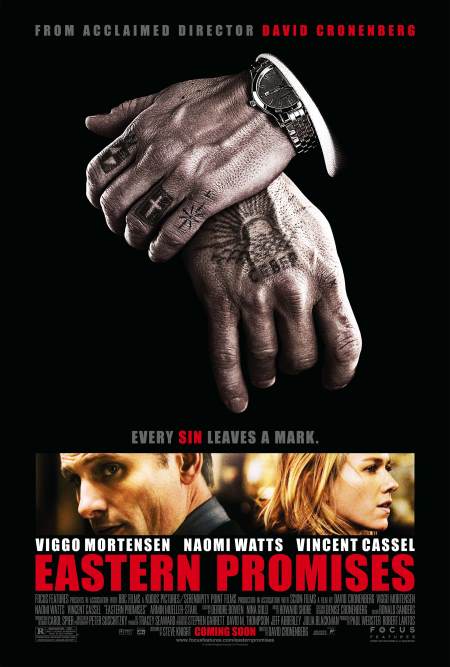
Big promises shipped back to Russian villages, telling women about dreams they can make reality in the bright lights of London. Those are Eastern Promises – but the reality, of sexual slavery and abuse in Russian Mafia controlled houses is horrifyingly different. Set in an underbelly of London just under grand restaurants and red buses, Eastern Promises is a typically tough and bloody gangster fable from David Cronenberg, which plays out like a nightmare fairytale.

It’s the nightmare of midwife Anna Khitrova (Naomi Watts). When a pregnant Russian teenager dies giving birth, the only clue she has to who her daughter’s family might be is a Russian diary and a business card for a Russian restaurant. Anna – whose family are Russian immigrants – is offered help by grandfatherly restaurant owner Semyon (Armin Mueller-Stahl). Seymon is all pleasant insistence that he can help, even as asks after every detail of her life. Because Seymon is a ruthless Mafia kingpin, with a hapless son Kirill (Vincent Cassel) leaning on the emotional and practical support of his imposing, heavily tattooed driver Nikolai (Viggo Mortensen). As Anna is pulled further and further into Semyon’s deadly world of death, could she have a surprising saviour?

Cronenberg’s film, sharply scripted by Steven Knight, is shot with a traditional stillness and a palette of strong colours – all of which reassuring visual language is utterly at odds with the skin-slashing violence at its heart. Eastern Promises opens with a Russian gangster practically having his head sawn off with a switchblade, in the hands of a mentally-handicapped nephew of a minor Turkish gangster. There isn’t a single gun in Eastern Promises – after all that would be breaking British law! – instead violence is meted out with the violent intimacy of a knife across the throat.

The film’s formal structure and framing – angles and cutting are kept simple, almost static – works brilliantly. As we watch throats slashed, grim sexual encounters or moments of imposing menace, the matter-of-fact presentation of these become more-and-more chilling. Eastern Promises feels like a bogey-man fable. Seymon’s restaurant – all class and bright red walls – an ogre’s cavern that leads us into an ever-grimmer world of violence and mayhem.

It’s a world Anna is unprepared for. Determined and resilient, Naomi Watts’ Anna is also undone by her politeness. How can she refuse an offer to help from someone as polite as Seymon? Watts does extremely well with a slightly under-written role, a woman on a quest who slowly realises how terrible the world she is peeking into is, but stop from trying to force through what she believes is right. Her disbelief – and out-of-place semi-innocence and sense of moral duty – make her stand out all the more in this terrible underbelly world, full of ogres and secret codes.

At the centre of is a monster. Armin Mueller-Stahl looks like your favourite uncle, but he quietly exudes cold, remorseless villainy. He’s the sort of man who delights in cooking the finest borsch, playfully teases his granddaughter’s violin playing and doesn’t bat an eyelid about ordering a rival to be dismembered. Mueller-Stahl is terrifying as this man the audience instinctively knows is dangerous and will stop at no moral boundaries to get what he wants (watch the steely eyed kindness he asks Anna where she works, lives and who she knows during their first meeting).

The obvious moral void in Seymon makes the unreadable Nikolai even more intriguing. Played with an extraordinary physical and linguistic commitment by Mortensen, Nikolai’s body is a tattooed walking advert of his past and capacity for violence and he’s the sort of relaxed heavy who is as unfussed with stubbing a cigarette out on his tongue as he is with snipping fingers off a corpse. Mortensen’s skill here is to make us constantly unsure where the moral lines are for Nikolai. He is a confirmed killer, but he takes an interest in Anna. Is this sexual or protective? What does he make of his bosses’ brutality towards women? What does he think of his direct superior Kirill?

Kirill is played with a larger-than-life weakness by Vincent Cassel in a thrilling performance that constantly shifts expectations. At first, he seems like a drunken blow-hard with a capacity for thoughtless violence. But Cassel makes clear he is a weak man with some principles, bullied by his father (to whom he is a constant disappointment), desperate to prove he is more capable than he is. He has an emotional reliance on Nikolai laced with sexual fascination (he can barely keep his hands off him).

Nikolai seems to accept this. But we don’t seem to know why. His actions are constantly open to interpretation. Ordered to have sex with a prostitute, he almost apologises to her after – left alone with her after Kirill has watched their sexual encounter, he’s strangely tender. He urges Anna to keep her distance but follows orders with calm disinterest. How far will he go? What moral qualms does he have, if any? Mortensen’s carefully judged performance is a master-class in inscrutability in a film that plays its cards very close to its chest as to why he (and others) do the things they do.

Cronenberg’s entire film is structured like this. Is the dragon a dragon or a potential knight? Can Anna emerge from this semi-Lynchian nightmare world and return to normal life – or will everything connected to her be destroyed by this world. Cronenberg’s study of this shady, heartless world is masterful. The “rules” and code of this brutal Russian Mafia world are excellently explored. And the film’s formal style culminates in a stunningly violent but beautiful (if that’s the right word) fight between a nude Mortensen and two knife-wielding Checians in a Turkish bath that is a brutal model for how these things can be done.

Eastern Promises resolves itself, after twists and turns, into something more comforting and traditional than you might expect. But is it a fairy tale ending to a nightmare? Either way, Cronenberg’s mix of formality and unflinching gore is masterful and in Mortensen it has a performance both relaxed and full of tightly-wound violence. Tough but essential.