Category: Musicals

Wicked (2024)

Wicked (2024)

Hugely enjoyable and electrically filmed (sung and danced) adaptation of the classic stage musical

Director: John M. Chu

Cast: Cynthia Erivo (Elphaba Thropp), Ariana Grande (Galinda Upland), Jonathan Bailey (Fiyero Tigellar), Michelle Yeoh (Madame Morrible), Jeff Goldblum (Wizard of Oz), Ethan Slater (Boq Woodsman), Bowen Young (Pfannee), Marissa Bode (Nessarose Thropp), Peter Dinklage (Dr Dillamond), Bronwyn James (Shenshen), Andy Nyman (Governor Thropp)
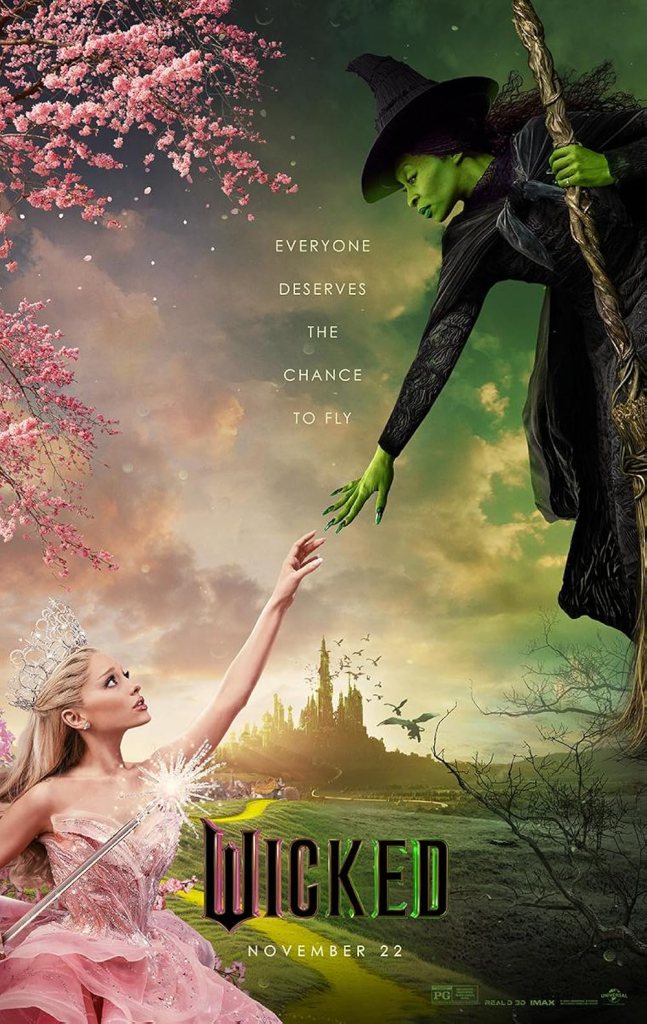
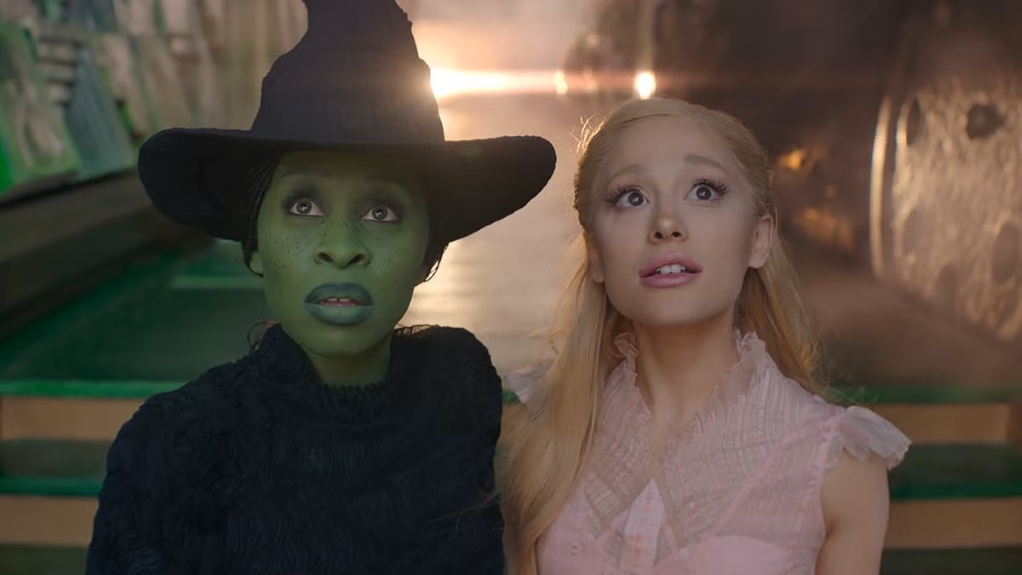
I might be the only person who missed the phenomenon of Wicked, a smash-hit musical that filled in the back story of The Wizard of Oz. Set long before the arrival of Dorothy and her march down that yellow brick road, it covers the meeting and eventual friendship of Elphaba (Cynthia Erivo) future Wicked Witch of the West and Galinda (Ariana Grande) future Glinda the Good, at Shiz University (a sort of Ozian Hogwarts). Wicked is a grand, visual spectacular crammed with memorable tunes and show-stopping dance numbers and it’s bought to cinematic life in vibrant, dynamic and highly enjoyable style by John M. Chu.

At Shiz, Elphaba is snubbed by all and sundry who can’t see past her green skin. Despised by her father (Andy Nyman) – who we know isn’t her true father (I wonder who it could be?) – she’s lived a life of defensive self-sufficiency. Galinda, in contrast, is effortlessly popular and has never found herself in any situation where she can’t get what she wants. But Elphaba has something Galinda wants – a natural talent for magic that makes her the protégé of Madame Morrible (Michelle Yeoh) – and circumstances end up with the two of them sharing rooms. Surprisingly, a friendship forms when these two opposites find common ground. But will this be challenged when Elphaba is called to the Emerald City to meet with the Wonderful Wizard of Oz (Jeff Goldblum)?

Wicked Part One covers (in almost two and half hours!) only the first act of Wicked, meaning the film culminates with the musical’s most famous number ’Defying Gravity’. The producers proudly stated this was to not compromise on character development by rushing – the more cynical might say they were motivated by double-dipping into mountains of box-office moolah. Despite this, Wicked Part 1 (despite taking pretty much as long to cover Act 1 as it takes theatres to stage the entire musical) feels surprisingly well-paced and the film itself is so energetic, charming and fun you quickly forget the fundamental financial cynicism behind it.

Wicked is directed with real verve and energy by John M. Chu – it’s easily the most purely enjoyable Hollywood musical since West Side Story and one of the most entertaining Broadway adaptations of this century. Wicked is expertly shot and very well edited, its camerawork making the many dance sequences both high-tempo and also easy to follow (Wicked avoids many musicals’ high-cutting failures that make choreography almost impossible to see). And it looks fabulous, the design embracing the bold colours and steam-punk magic of Oz.
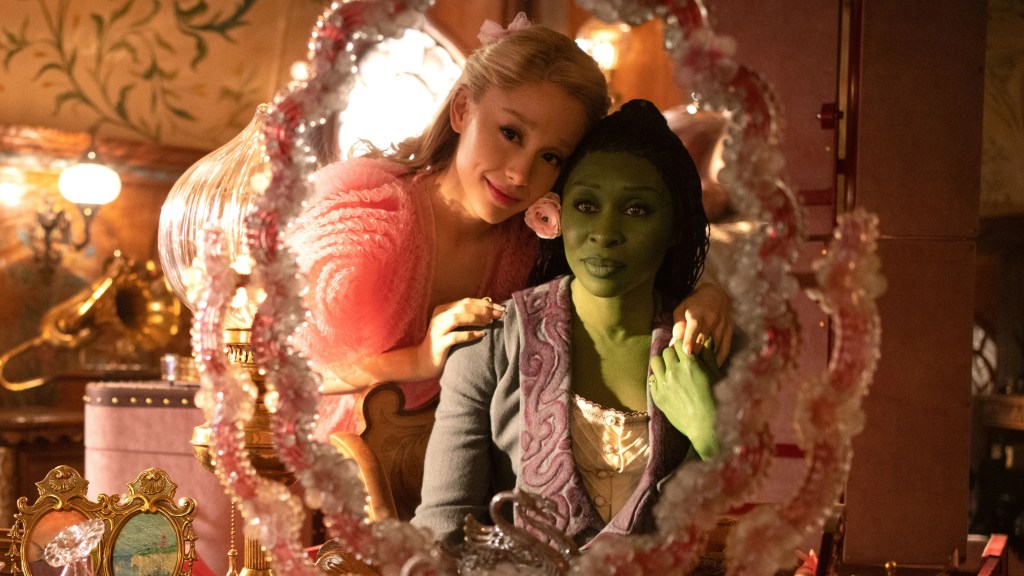
It also perfectly casts its two leads, both of whom are gifted performers bringing passion and commitment. Cynthia Erivo’s voice is spectacular, and she taps into Elphaba’s loneliness and pain under her defensive, defiant outer core. It’s a fabulously sad-eyed performance of weary pain and Erivo beautifully conveys Elphaba’s moral outrage at the lies that underpin Oz. Just as fantastic is Ariana Grande. Grande says she had dreamed about playing Galinda since she was a kid (yup, that’s how old this musical is) – and it shows. It’s an electric, hilarious performance that embraces Galinda’s studied sweet physicality, her little bobs and flicks and blithe unawareness of her aching privilege and self-entitlement, but what Grande does stunningly well is really make you like Galinda no matter how misguidedly self-centred she is.

And she really is. Part of Wicked’s appeal is mixing Oz with Mean Girls with more than a dash of racial prejudice. Elphaba is immediately snubbed because she literally doesn’t look right (anti-green prejudice is an unspoken constant) compared to Galinda’s pink-coated, blond-haired perfectness. Galinda is Shiz’s queen bee, followed everywhere by two sycophantic acolytes (delightfully slappable performances from Bowen Young and Bronwyn James) who cheer everything she does and push Galinda to maximise her subtle hazing of the green-skinned outsider. After all, they see popularity as a zero-sum game: the more Elphaba might have, the less there must be to go around for them.

It’s not really a surprise that Elphaba has had a tough time. Oz is dripping with prejudice, racist assumptions and strict hierarchies. From the film’s opening number – ‘No one mourns the wicked’, where Munchkins wildly celebrate Elphaba’s future death – we are left in little doubt there is a culture of blaming those who are different for misfortunes. This sits alongside a purge of unwanted citizens: namely talking animals. Goat professor Dr Dillamond (a lovely vocal performance from Peter Dinklage) is subtly belittled for his goat-accent then dragged in disgrace from the school. A new professor extols the virtues of keeping frightened animals in cages. The casting of Jeff Goldblum helps with creating this genial but cruel world, his improvisational mumbling suggesting a man of arrogant, sociopathic distance under initial aw-shucks charm.

These secrets will impact the friendship between our leads. The extended runtime means it already takes a very long time for the ice between them to thaw (and, for me, their ballroom reconciliation doesn’t land with the cathartic force it needed for the transition from hostility to friendship to completely work), but the exceptional chemistry between Erivo and Grande helps sell it. What Wicked does very well though is show the fault-lines in this relationship. Galinda’s answer to all Elphaba’s problems is for her to be more like her, while Elphaba has clearly never had a real friend in her life and wants one more than anything. There is true kindness and love between them, but Elphaba remains an outsider with cause to be angry against the system while Galinda is the ultimate insider for whom the system has always worked. Wicked Part 1 does a very good job of never letting these facts escape your notice, for all the charm of an unexpected friendship.

Wicked Part 1 though is also a monstrously entertaining film. The song and dance numbers are spectacular – the pin-point choreography of ‘What Is This Feeling’ is superb, while the power ballad intensity if ‘The Wizard and I’ is perfectly nailed by Erivo. Jonathan Bailey comes close to stealing the limelight with a show-stopping turn as the charming, likeable but slightly rogueish Fiyero, his ‘Dancing Through Life’ routine in particular being a stunning display of athletic dancing matched with perfect vocals. Every number is given its own carefully judged tone, with wonderfully complementary photography and editing, to create a film that leaves you eagerly wanting more.

I didn’t really know the musical coming into it, but after Jon M Chu’s excellent production, I’m excited to see what happens in Part (Act) 2.

Cyrano (2021)

Cyrano (2021)

Slight but enjoyable musical, with the flaws of the original but some virtues of its own

Director: Joe Wright

Cast: Peter Dinklage (Cyrano de Bergerac), Haley Bennett (Roxanne), Kelvin Harrison Jr. (Christian de Neuvillette), Ben Mendelsohn (De Guiche), Monica Dolan (Marie), Bashir Salahuddin (Le Bret), Joshua James (Valvert), Anjana Vasan (Sister Claire), Ruth Sheen (Mother Marthe), Mark Benton (Montfleury), Richard McCabe (Priest), Peter Wight (Ragueneau)

Edmond Rostand’s play has been reinvented time-and-time again. After all, who can’t relate to a man convinced he’s unlovable and uses his poetic heart to write the words to help his rival woo the woman they both love. Erica Schmidt’s stage musical with songs by Aaron and Bryce Dessner from The National, pretty much keeps everything but kicks out the famous oversize nose in favour of making Cyrano a man with dwarfism. Bringing him to life – both here and on stage – is Schmidt’s husband Peter Dinklage, with his stage and screen love Roxanne portrayed by Haley Bennett, wife of Cyrano’s director Joe Wright.

It all helps create an easy-going feeling to Cyrano, a decent, at times impressive musical, that never quite turns into something really lasting but presents several fine songs in its middle act. It’s unfortunate that it’s opening section – and largely forgettable initial number – set the scene less than compellingly, dutifully repeating Rostand via a show-boating Cyrano easily besting a preening actor in a battle of wits, all while casting faintly longing looks at impressed Roxanne. What it doesn’t really do is seize the attention. In fact, what it does is really remind you what a slight story Cyrano de Bergerac really is: and that it only really starts with the Act Two introduction of Christian.

It’s certainly, it feels, where Wright’s interest begins. The romantic triangle between the three – Cyrano and Christian both in love with Roxanne, Roxanne in love with Christian and (perhaps) sub-consciously with Cyrano – introduces drama and stakes into a film that until then largely lacks either. Contrasts are drawn between Cyrano and Christian who share honour and decency, but are polar opposites in terms of confidence. Christian is physically and socially assured but crippled with inarticulate shyness when asked to speak; Cyrano can turn his feelings into poetry, but is convinced he is an unlovable imp, his confidence forever crushed by his appearance.

The concept of exchanging oversize nose for Dinklage’s dwarfism works rather well, when every single camera angle constantly reminds us of Cyrano’s otherness. It also gives a wonderful showpiece for the excellent Dinklage, who brings an intense, grungy charisma to the role. He can do the Cyrano’s performative showmanship, but also expertly demonstrates this is a front to protect his true self from being seen and potentially rejected. It becomes clear Cyrano partly embraces his titanic ghost-writing (hundreds and hundreds of pages), without Christian’s knowledge, because he genuinely feels it is the closest he can come to experiencing a relationship, just as he believes should he ever speak his true feelings they would inevitably be rejected. Dinklage does a wonderful job of balancing inner vulnerability with a mask of cocksure, arrogant confidence.

Cyrano certainly misses the subtle indicators, from the start, that Haley Bennett’s Roxanne might well have feelings for him. Aware that Cyrano de Bergerac often presents not the most flattering picture of Roxanne’s intelligence (she is a woman, after all, fooled for years into believing all those romantic words came from her husband not her lifelong friend). Bennett however let’s a – again perhaps subconscious – suspicion play just around the corner of her eyes, not to mention that her feelings for Cyrano feel a lot closer to romantic from the start. Is she as scared of rejection as Cyrano, put off by his independent front? After all she values honest feelings – and Christian, even if his words come from someone else, is clear about the way he feels in a way Cyrano never is. Kelvin Harrison Jr. is rather charming as this sweet, kind, strangely shy young man, tongue-tied and bemused by long words but with a strong sense of right and wrong.

The film – and the musical – is at its strongest when these three are interacting. Wright’s filmmaking also comes to life, with his more staid and traditional visual set-ups for the theatre-set prologue giving way (via a dynamic one-shot full of ducking and diving camerawork as Cyrano takes out ten assassins single-handed) to a series of balletic scenes. Large-scale musical numbers are accompanied by people going about every-day tasks with a wonderfully choreographed grace: be that bakers rhythmically kneading dough and stocking ovens, to a mass of soldiers fencing in perfect harmony. The songs also pick up considerably in both power and humability, culminating in the affecting Wherever I Fall, an eve-before-battle group number that sees Cyrano’s regiment preparing themselves for what could-be their final night, beautifully shot with a mist-filled coolness.

Cyrano’s slight story remains its weakness and the film can’t quite decide how to expand organically the deception plot at its heart. It’s almost a shame it bravely closes the door on the film’s most obvious protagonist, with Ben Mendelsohn’s De Guiche getting a scowling ‘villainy’ number but proving himself a man of honour. Fundamentally the long introduction to the set-up and the five-year-later coda the film wraps up with end-up feeling unsatisfying. It’s actually too faithful to Rostand, carrying across the original’s flaws. Cyrano embraces the mix of romance, comedy and sadness in its wooing-by-proxy and the odd-couple friendship between Cyrano and Christian, but feels more perfunctory as soon as it has to move beyond this section of the film.

It’s a shame as that central section is actually rather effective with Wright bringing the musical numbers in particular to life with a real delicate beauty. There are some very good performances, especially the heart-felt work from Dinklage, but it eventually strains towards an epic scale its story isn’t quite strong or engaging enough to support.

Jesus Christ Superstar (1973)

Jesus Christ Superstar (1973)

Some odd clashes of style but still a distinctive and unique musical, if not a triumph

Director: Norman Jewison

Cast: Ted Neeley (Jesus Christ), Carl Anderson (Judas Iscariot), Yvonne Elliman (Mary Magdalene), Barry Dennen (Pontius Pilate), Bob Bingham (Caiaphas), Larry Marshall (Simon Zealotes), Josh Mostel (King Herod), Kurt Yaghjian (Annas), Philip Toubus (Peter)

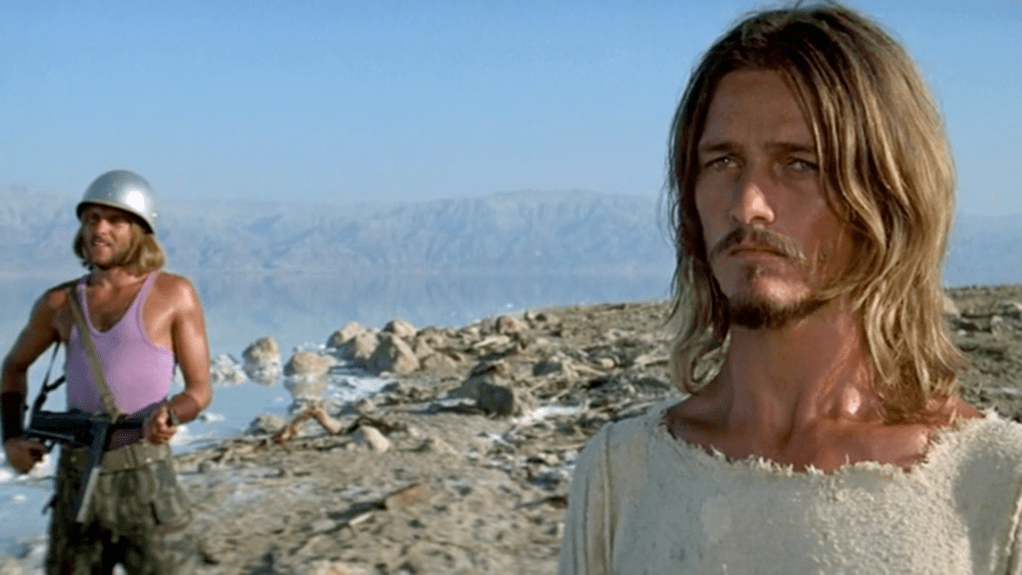
A bus rolls up in the West Bank and a bunch of excited, hippie actors and singers bundle out. What else are they going to do but replay the final days of Jesus Christ – with songs! Thus begins Norman Jewison’s adaptation of Andrew Lloyd Weber and Tim Rice’s rock opera musical, a hodge-podge of interesting ideas, stylistic nonsense and touches of the bizarre. Some of it works, some of its doesn’t – but at least it’s having a stab at doing something different.

I’ll assume you are familiar with the final days of Jesus Christ (Ted Neeley) as Jesus Christ Superstar ticks off the arrival in Jerusalem, the money lenders in the temple, the last supper, Gethsemane, Pilate washing his hands and the crucifixion (but not, pointedly, the resurrection). Jesus is at the centre of this but, as is so often the case in films, is an enigmatic, unreadable figure. The real lead is Judas (Carl Anderson), worried that the Messiah is running the risk of provoking a brutal smack-down from the Romans and letting the worship of his follower’s rush to his head. Perhaps he should do something about it?

First the good stuff. Douglas Slocombe’s photography, on location in a sun-soaked Middle East (the cast must have been grateful their flowing, hippie robes translated into such light clothing) looks gorgeous (the final shot of the cross at dusk – with a shepherd and sheep just visible in the corona of the sun’s glare, a happy on-the-day accident – is sublime). The locations are bravely selected to stress the sweeping vastness of desert: Pilate’s home is a rocky mountain, the apostles dance among abandoned Roman pillars, Gethsemane is the only splash of green we see. A cave with a circular hole in its roof, casts a striking shard of light over Jesus with his disciples. There is gorgeous stuff here.

It’s mixed in with some successful modern touches. Turning the money lender’s stalls into a trashy marketplace, rife with everything from tourist tat to heavy weaponry works as a striking image of commercial corruption. Jesus’ final vision of Judas takes place in a Roman amphitheatre decked out like a concert carries a nice dream-like quality. The idea of having the priest’s temple being a piece of bare-bones scaffolding is a nice visual image of their ambition. At the centre of the film is a very striking, excellently sung performance by Carl Anderson as Judas. Pretty much dominating the film, he brings the part just the right amount of spark, frustration, anger and self-pity and best manages to invest the songs with character.

Unfortunately, Jesus Christ Superstar mixes this with plenty of modern touches that either land flatly or whose intention becomes almost hard to work out. When Judas is chased through the desert by tanks or buzzed by fighter planes, is this a sign of the conflict that would come, the sense of destiny forcing him into his assigned role, or just an excuse to see the budget put into effect on some military hardware? Moments like this feel they are trying too hard against the more subtle modern touches.

There’s also the rather mixed bag of inexperienced performers Jewison fills the film out with. Ted Neeley can certainly hold a note, but he’s no actor, turning Jesus into a blank void who frequently feels like he’s watching the action around him while waiting for his cue. Yvonne Elliman similarly is an excellent singer but doesn’t really manage to convey the complex feelings of love and worship in Mary Magdalene. The rest of the cast give it an enthusiastic go, ranging from the decent (Barry Dennon) to the over-emphatic (Philip Toubas – who later became a hugely successful porn star, not exactly the expected career path of St Peter).

The mix of hippie-ish costumes also only works in places. While Jesus is of course dressed pretty much as any Hollywood film had ever dressed him (white-flowing robes), others wear a mixture of that, flower-power garbs or the sort of in-between strangeness (I’m looking at you Roman soldiers) that makes it look like they have wandered in from an episode of Star Trek. The brightly coloured costumes do however stand out extremely well in the vast blankness of the desert.

Jesus Christ Superstar’s main problem is its lack of narrative drive. Co-scripting with Melvyn Bragg (surely the easiest paycheque ever for one of the UK’s leading public intellectuals), Jewison doesn’t really provide any dramatic meat or force between the songs. There isn’t really a sense of moral and narrative development, with the film instead feeling rather like the concert album it’s based on, a series of songs staged one after-the-other without really linking together in a full narrative arc.

Saying that, Jewison’s effectiveness with the camera comes across well. “Hosanna” is crammed with a full-blown, very well-shot Busby-Berkely style number where Jewison rather effectively uses freeze-frames to punctuate the beats. “The Temple” sees Jesus disappear under a swarm of lepers like a zombie victim. A shot of the Judas’ purse of thirty pieces of silver dominates the frame at one point like it’s drawing him in. Some of the frantic tracking shots of Judas through the desert have a real elemental force to them.

But there isn’t quite enough of that to bring Jesus Christ Superstar to make it a triumph. Its episodic song structure, it’s odd mix of styles and the wildly varying quality of its performances never quite gel together. However, it’s perfect for turning this into a sort of camp spectacular, a cult oddness that stands out as quite unlike any other musical or film Jewison made.

Wonka (2023)

Wonka (2023)

Charming but light confection that repackages Wonka into a Paddington type figure

Director: Paul King

Cast: Timothée Chalamet (Willy Wonka), Calah Lane (Noodle), Keegan Michael-Key (Chief of Police), Paterson Joseph (Arthur Slugworth), Matt Lucas (Gerald Prodnose), Mathew Baynton (Felix Fickelgruber), Sally Hawkins (Mrs Wonka), Rowan Atkinson (Father Julius), Jim Carter (Abacus Crunch), Natasha Rothwell (Piper Benz), Olivia Colman (Mrs Scrubit), Hugh Grant (Lofty), Rich Fulcher (Larry Chucklesworth), Rakhee Thakrar (Lottie Bell), Tom Davis (Bleacher)

What did Willy Wonka do, before the factory and the carefully stuffed golden tickets in selected chocolate bars? According to Paul King’s amusingly light confection of a film, he was just a guy with a sweet box and a dream, befuddled by the big city. A bright-eyed, naïve young man, Wonka (Timothée Chalamet) is swiftly bested by the Chocolate Cartel and conned into a life of servitude by his landlady Mrs Scrubit (Olivia Colman), after not reading the contract small print. But Wonka’s invention, good cheer and alliance with put-upon fellow Scrubit victim, orphan Noodle (Calah Lane), sees him turn adversity into cartel-smashing triumph.

It might be clear from that paragraph that the Willy Wonka of this film bears very little resemblance to the figure from the Dahl original who happily allows children to face dangerous punishments in his factory. King’s film has some flourishes of Dahl in its character names and eccentricities but, in terms of tone, it takes far more after his successful Paddington films than anything Dahl wrote. Wonka himself, in his accident-prone naivety, decency and fundamental sense of fair-play, is certainly a figure in the shadow of Peru’s most beloved bear, with the film swiftly also giving him a version of Paddington’s eccentric surrogate family and increasingly comic traps to get out of.

Wonka isn’t really Dahl and doesn’t bother to begin to explore how on earth the man we see here might become the character from the books. Does that really matter? I suppose not. I guess you need to judge each film on its merits, and while the Dahl purists are unlikely to consider this fitting for the great storyteller, I’d point them instead towards Wes Anderson’s gorgeous short films, which are a true blast of Dahlish delight.

Wonka instead is a sweet, bouncy, family-friendly musical with a hero designed to appeal to all ages, carefully set in a non-descript European-ish location that combines elements of multiple cities, regions and periods (so much is the film a higgledy-piggledy fantasia combination of places, all enhanced with CGI, that it’s a surprise to see Oxford’s Radcliffe Camera appear in the film’s conclusion unadjusted and intact). It’s packed with songs – which, if I’m being honest, are mostly clever and decent than catchy or memorable – and is set in a world where corrupt monks and police detectives will bend any rules for another chocolate fix.

At the heart of all this, Timothée Chalamet gives a sprightly and engaging performance. Chalamet dials up the eccentricity of Wonka, creating a character that is whimsical but caring, an innocent abroad who just can’t understand why people would be cruel or lie. Chalamet throws himself into some effective singing and dancing, and generally lands the role pretty much in the sweet spot between sickly sweet and deliciously more-ish. It helps a great deal that he develops a brilliant sibling chemistry with Calah Lane, who is street-smart and a lot of fun as an orphan whom the world has taught to be cunning and creative.

King crafts a number of set-pieces that fit this revisioning of Wonka as a song-and-dance man at the heart of an Arthur Freed-style musical. There is a fine word-play packed song (as Wonka searches for effective rhymes for Noodle) in a giraffe pen, a balloon-carried number in the skies and, best of all, a very funny work song sung by those poor unfortunates conned by Mrs Scrubit into a lifetime of debt. This surrogate family, by the way, is a neat illustration of King and co-writer Simon Farnaby’s trick of turning potential one-note characters into people you care for, ably embodied by Jim Carter as a stuffy accountant, Natasha Rothwell as a bouncy seamstress, Rakhee Thakrar as a nervous telephonist and Rich Fulcher as a past-his-best comedian.

Much like his Paddington films, Wonka takes place in a world of minimal threat. The villains are largely comic – Olivia Colman surely will spend most of the next few years duelling with Helena Bonham Carter to land toothy, sweaty grotesques roles like Mrs Scrubit – with the Chocolate Cartel in particular making a droll collection of smugly superior types, ably played by Paterson Joseph, Matt Lucas and Matthew Baynton. Their operations take place in a surreally complex underground base (under a cathedral guarded by chocolate-obsessed monks naturally), built around a vault full of liquid chocolate. Following the structure of both Paddington films, naturally this becomes the site of an act four heist by our heroes.

Wonka frequently feels a little too often like it is simply repeating and representing stuff that had worked well for King and Farnaby in the past. (You also feel that about the casting of Hugh Grant as an Oompa-Loompa – fundamentally that is the joke, although Grant delivers it repeatedly marvellously.) While few people do this sort of thing better than them, you feel Wonka offered the chance to be something more rather than a spiritual retread of the superior Paddington films.

It’s a film that never quite finds it own identity, or really finds a Dahlish uniqueness. It settles, happily, for being a feel-good confection, a charming series of scenes and songs delivered with just the right level of enthusiasm and glee by a cast who look like they are having a marvellous time. It’s charming enough and I enjoyed it, but I can’t say I loved it like I do Paddington 2. I can’t help but feel that’s because the emotional connection isn’t there. Wonka himself, repackaged as he is, is a little too odd to be as adorable as the Bear, and without really, deeply, caring for Wonka the film itself doesn’t carry the impact it should. It’s entertaining, but it didn’t win a place in my heart.

Hello Dolly! (1969)

Hello Dolly! (1969)

Bloated, miscast and over-produced musical that nearly sank the genre and studio

Director: Gene Kelly

Cast: Barbra Streisand (Dolly Levi), Walter Matthau (Horace Vandergelder), Michael Crawford (Cornelius Hackl), Marianne McAndrew (Irene Molloy), EJ Peaker (Minnie Fay), Danny Lockin (Barnaby Tucker), Joyce Ames (Ermengarde Vandergelder), Tommy Tune (Ambrose Kemper), Judy Knaiz (Gussie Grander), David Hurst (Rudolph Reisenweber), Louis Armstrong (Band leader)

The old-fashioned musical had always been a winner for Hollywood. So, I guess it made perfect sense to pump $25 million (just over $200 million in today’s money) into Hello Dolly!. Reality didn’t agree though. Hello Dolly! was a massive box-office bomb which, despite its seven Oscar nominations (including Best Picture, due to intense studio lobbying) pretty much killed the traditional, Freed-style musical stone-dead. After this, musicals would have drama at their heart (like Fiddler on the Roof or Cabaret) and scale down the production numbers.

It also didn’t help that the mega-budget, colossal production values across its bum-numbing two-and-a-half hour run time ruthlessly exposed Hello Dolly! as a perilously slight story, in a way its years playing on Broadway hadn’t. Dolly Levi (Barbra Streisand) is a widowed matchmaker, hired by grumpy “half-a-millionaire” Horace Vandergelder (Walter Matthau) to find him a wife. However, Dolly rather fancies getting back into the game with Horace herself. Around them other parties flirt, such as Horace’s niece Ermengarde (Joyce Ames) with artist Ambrose Kemper (Tommy Tune) and his clerks Corenlius Hackl (Michael Crawford) and Barnaby Tucker (Danny Luckin) with fashion store owner Irene Molloy (Marianne McAndrew) and her assistant Minnie Fay (EJ Peaker).

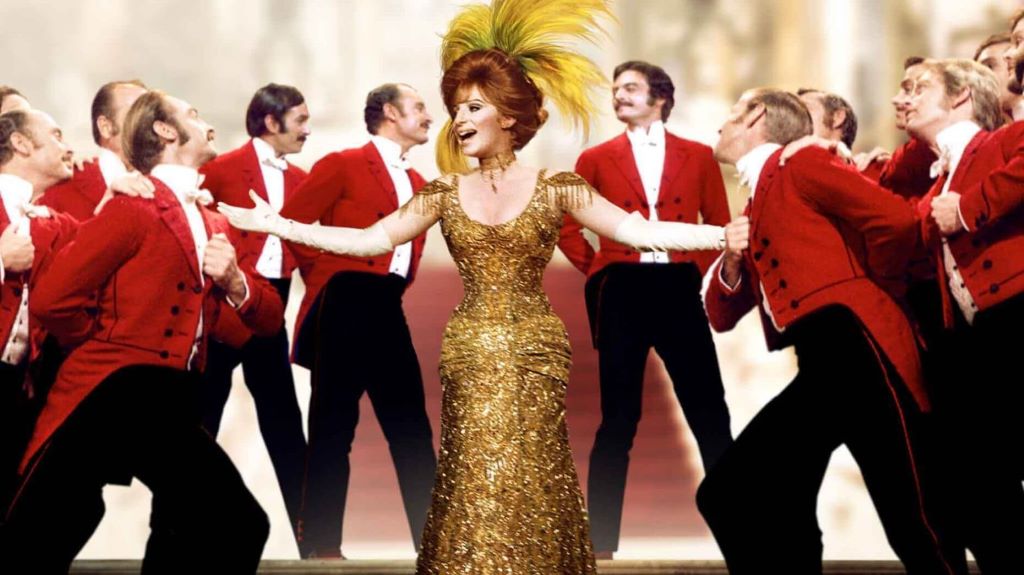
I’ll grant the scale and sets are impressive. Whole streets and parks were built. Grand, elaborate costumes (some of Streisand’s costumes cost thousands and thousands of dollars by themselves) add wow factor. If you believe “more is more” Hello Dolly! is for you, it’s Oscar for set design well deserved. But as you watch Streisand hit a high note in long shot while an entire parade of thousands takes place around her, you start to realise you’ve not formed a bond with the characters. When we finally get them all in one place (a crowded restaurant in New York) the best part of thirty minutes is taken up with three massive numbers (Dancing waiters! Streisand’s entrance number! Comedy foot-tapping from Crawford! Louis Armstrong cameo!) that piles so much stuff on, that you almost forget what the scene was meant to be about in the first place.

What this probably needed to be is a tighter, American in Paris style romantic comedy, the sort of stuff Arthur Freed would have run out in 100 minutes with a few set pieces. Instead, it’s a bloated mega-production with colossal sets, 12,000 extras, widescreen soaking up the action and vast, never-ending dance numbers that fail to progress either story or emotion. After being bludgeoned by balletic leaps, you suddenly realise not only has nothing much happened, but you are being asked to invest in the future happiness of characters you barely know and often hardly even like.

It’s not helped by the chronic miscasting of the leads. Barbra Streisand was the hottest star in town – the studio was (correctly) convinced mega-stardom was inevitable after watching the rushes of Funny Girl – but she is wrong on almost every level for Dolly Levi. A part intended for a slightly-over-the-hill widower in her late 40s, was barely retrofitted for a glamourous diva aged 26. Streisand, clearly painfully aware she was wrong for the part, struggles to work out how to play it. Sometimes she’s coquetteish, other times she goes for a mother-in-law largeness, most of the time she ends up channelling Mae West sauciness. While her singing is (of course) outstanding, she never looks comfortable. Equally out-of-place is Walter Matthau, whose grouchy comedy style never meshes with the tone of the film (although he has a great bit of business with a walking stick which he hammers down onto a table with such irritated force it almost rebounds and hits him in the face).

It also doesn’t help that Matthau and Streisand all-too-clearly can’t stand each other (their closing kiss is hilariously awkward – try replicating their physical positions to see how unnatural and unromantic it is). On set Matthau felt Streisand was too big for her newcomer boots while Streisand saw him as envious of her star quality. The two frequently fell into heated rows: this at least meant they fitted in naturally on a set where almost no-one got on. Streisand and Kelly’s working styles (both being demanding perfectionists) proved incompatible, Kelly stopped speaking to the official choreographer who also stopped speaking to the costume designer.

With the leads struggling, most of the film’s charm actually relies on its secondary leads. Hello Dolly! is, actually, an effective showcase for Michael Crawford’s physical dexterity (some would say recklessness) and his sweet romance with Marianne McAndrew’s charming Irene Molloy is the film’s emotional heart. It’s a shame both their film careers effectively ended here (though Crawford would go on to greater things on stage). Their dance number Elegance is one of the film’s most engaging while their duet It Only Takes a Moment is the simplest filmed and most moving moment in the film.

Bloat and bombast overwhelms the rest. Although Kelly knows how to shoot dancing – effective camera moves and having the dancers move towards the camera, increasing their dynamism is very well done – he’s far less suited to the character moments which Stanley Donen and Vincente Minnelli excelled at. The gags very rarely land, either because the timing is off or the camera is so focused on getting the mammoth sets in that the bits of business look like minor irrelevances.

Fundamentally, Hello Dolly! bet the house on throwing all the budget on the screen to wow audiences the way something like The Great Ziegfeld had over thirty years ago. But audiences needed an emotional connection with what they were watching. Hello Dolly spectacularly fails to deliver on this. What we were left with is a very slight story about matchmaking, basically a chamber piece with about six characters, transposed onto the sort of epic backdrop that makes Gone with the Wind look humble. The mismatch never works and the entire enterprise eventually collapses under its own gravitational pull. A box office dud that nearly sank the studio, the musical would never be the same again.

Fiddler on the Roof (1971)

Fiddler on the Roof (1971)

Film adaptation successfully aims for drama and emotion over showbiz bells and whistles

Director: Norman Jewison

Cast: Topol (Tevye), Norma Crane (Golde), Rosalind Harris (Tzeitel), Michele Marsh (Hodel), Neva Small (Chava), Molly Picon (Yente), Paul Mann (Lazar Wolf), Leonard Frey (Motel Kamzoil), Paul Michael Glaser (Perchik), Ray Lovelock (Fyedka), Zvee Scooler (Rabbi), Louis Zorich (Constable), Alfie Scopp (Avram), Howard Goorney (Nachum), Barry Dennen (Mendel), Ruth Madoc (Fruma-Sarah)

Sometimes it’s a surprise to remember Fiddler on the Roof is one of the most successful musicals of all time. A sensation when it opened on Broadway in 1964, it became the first musical to pass 3,000 performances and was soon playing all over the world. Based on a series of stories by Sholem Aleichem about life in a Jewish village in turn-of-the-century Imperial Russia, it feels like odd material for a hit. But it’s universal themes of the struggles between generations, persecution of a community and finding a balance between tradition and change struck a universal chord. So, it shouldn’t be a surprise that Jewison’s film version became the biggest hit of 1971.

It’s 1905 and milkman Tevye (Topol) lives his life by the traditions of his faith and Jewish community, balancing a series of competing demands like a fiddler perched on a roof playing his fiddle (it’s a tortured metaphor but it’s the title…). He has three daughters – sensible Tzeitel (Rosalind Harris), romantic Hodel (Michele Marsh) and kind Chava (Neva Small) – all of whom need marrying off, ideally to suitable husbands. But can life continue for ever when you live in a country rife with antisemitism, with pogroms as regular as clockwork?

Fiddler on the Roof was perfect material for a director as passionate about social issues as Norman Jewison. It balances comedy and theatricality very effectively with gritty realism and a sense of generational trauma at the suffering inflicted on innocent people for no reason other than their heritage. Although the film is undoubtedly too long (at nearly three hours), this does make the mood transition from gentle comedy to loss and bleakness something slow but relentless, helping it carry even more impact.

Jewison effectively translates stage musical to screen reality. Fiddler on the Roof is neatly edited, it’s opening number Tradition showing a montage of everyday-activities in the village (meat chopped, clothes sewn, pray books opened) with every action cut to mirror the song’s beat. It avoids glossy choreography in favour of something either more cinematically literate like this or more intimate, with many songs delivered in medium-shot, the camera zeroing in on the thought process and allowing the actors to give intense, emotional renditions.

Not that Jewison isn’t averse to a big theatrical number. Matchmaker, Matchmaker is the first number that could be on the Broadway stage but gets away with its moments of classical beats of choreographed movement because of the playfully-natural delivery of Harris, Marsh and Small. Jewison saves his real fire for Tevye’s Dream, liberated from the film’s realistic approach by happening in a dream. This number is pure theatre, with a chorus of dancing ghosts and a diva-ish spectre (played by Hi-de-Hi’s Ruth Madoc of all people) giving it everything they’ve got.

But Fiddler on the Roof’s main beat is realism. Oswald Morris’ Oscar-winning cinematography – its slightly sepia tone captured by stretching a pair of tights over the lens, its gauze clearly visible at points – displays a world that is, for all the vibrancy of the people living in it, frequently cold, unhospitable and difficult. That matches the attitudes of their Russian rulers, prejudiced bullies whose local representative stutters the sort of excuses about “just following orders” that are even more chilling with our knowledge of the horrors to come forty years later.

What makes the village flourish is its community. Run by tradition and faith, where (for better or worse) everyone understands their roles, duties and expectations. Fiddler on the Roof is about how far these can be pushed in changing times, structured around a man’s choice of his daughter’s husbands. Can Tevye accept a daughter choosing for herself? How about a daughter marrying a firebrand radical who wants to leave the village? How about another wanting to marry a gentile?

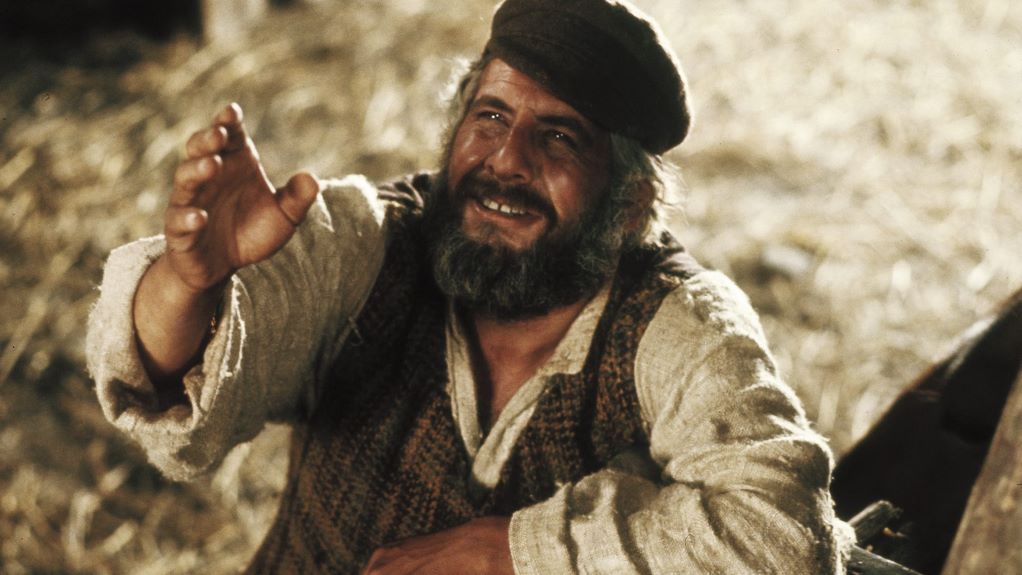
They are ideas initially beyond the ken of Tevye, a firm traditionalist with passing dreams of riches but who wants a world where nothing changes. To make this dyed-in-the-wool conservative a warm and entertaining figure, requires the right casting. In America, the role was associated with its originator Zero Mostel (desperate to play it on film). But Jewison felt Mostel’s personality was too large for cinema, that Mostel’s theatricality would work against the realist film he wanted. Instead, he cast the Israeli actor playing the role in London’s West End, Chaim Topol.

It was a masterstroke (much as it crushed Mostel and outraged fans). Topol, like Yul Brynner in The King and I, would define his career with the role, playing it over 3000 times on stage in a series of productions over almost forty years (eventually Harris would graduate from playing his daughter to his wife!). Astonishingly he was only 35 in 1971 – a brilliant combination of make-up and Topol’s gift for physical acting makes him feel 25 years older – and Fiddler, for a large part, relies on his charisma and charm. Topol is as comfortable with the conversational address to the camera – which dominates much of the film’s opening – as he is with the world-weary sadness and frustrated anger Tevye responds to the changing world around him with.

Topol’s performance works in perfect tandem with Jewison’s aim to ground and avoid flights of whimsy or vaudeville comedy. The harsh conditions don’t dampen the warmth in the community – wonderfully captured in the marvel that greets the arrival of tailor Mostel’s (an endearing, Oscar-nominated, Leonard Frey) sewing machine – and means the Tsarist repression and gangs of Cossacks who ride in, torches in hand, to burn and pillage carry real impact.

Jewison’s film carries foreknowledge of the Holocaust throughout, not dodging the knowledge that communities like this would be destroyed under Nazism. The film’s closing exodus may bring hope for Tevye and family (bound for New York) but also brings death to those who speak of heading to Krakow. It’s part of understands why tradition is so important to Tevye: as the imaginary fiddler follows Tevye’s family on the road, we understand the link to a shared cultural past is what gives identity and hope to a people facing persecution at every turn for thousands of years.

Fiddler on the Roof mines it’s material for emotion and character over showbiz bells and whistles. While it undoubtedly takes too long to explore in depth its slight plot, its length does conversely add even more impact to its closing look to the future. A fine musical adaptation.

A Hard Day’s Night (1964)

A Hard Day’s Night (1964)

The Fab Four conquer the movies in this fast-paced and funny road movie

Director: Richard Lester

Cast: The Beatles, Wilfrid Brambell (John McCartney), Norman Rossington (Norm), John Junkin (Shake), Victor Spinetti (TV Director), Anna Quayle (Millie), Richard Vernon (Man on Train), Kenneth Haigh (Simon Marshall)

In 1964 they weren’t just the most popular music act: they basically were music. Everywhere they went they were met by crowds of screaming fans. They’d conquered America. They were no longer four lads from Liverpool: they were The Beatles. They were numbers 1-5 in the States, their last 11 songs had gone to number one, they were the most popular people on the planet. Of course, it was time for them to conquer the movies.

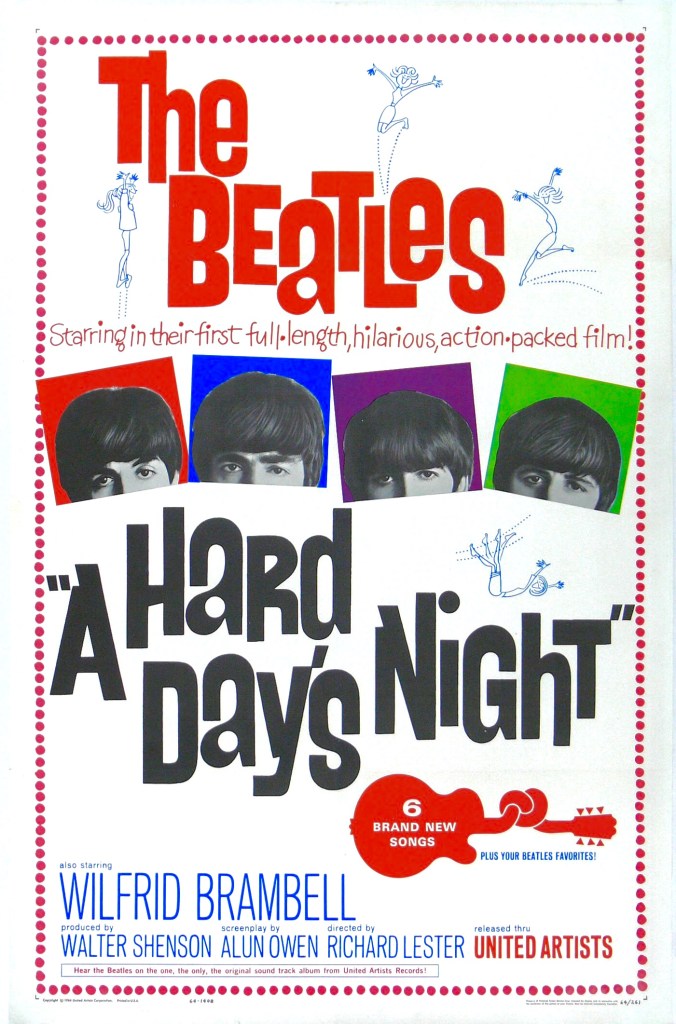
What’s striking is that A Hard Day’s Night could have been like any number of god-awful Elvis Presley films, with the King awkwardly playing a series of characters shoe-horned into plots based on songs. Richard Lester would do something different – and along the way he’d arguably invent the music video (when told he was the father of MTV, Lester famously asked for “a paternity test”) and the mockumentary all in one go. Lester placed the fab four into a day-in-the-life road movie, mixed with silent-comedy inspired capers and Marx Brothers style word play, in which they would play versions of their various personas in what basically amounted to a series of fly-on-the-wall sketches.

The film follows the gang in Paul’s (fictional) grandfather John (“Dirty old man” Steptoe’s Wilfrid Brimbell) complains move from “a train and a room and a car and a room and a room and a room”. (In a running gag lost on those not au fait with 60s British sitcoms, he is repeatedly called “clean”). In other words, we see the Fab Four shuttle to London, answer questions at a press conference, skive-off to prat about in a park then go through a series of rehearsals (with interruptions) before performing on TV and choppering off to their next appointment. It’s non-stop (even their night-off is filled with answering fan-mail – and pulling Grandad out of casino) work, work, work and any time outside is spent running from a mob of screaming fans. A Hard Day’s Night indeed.

Lester shoots this with an improvisational energy that feels like its run novelle vague through a kitchen-sink drama. He’s not averse to Keystone Kops style chases, sight gags and letting the camera bounce and jerk around with the actors. If things go wrong – ten seconds into the film George and Ringo fall over during a chase scene, get up and start running again while John laughs his head off – Lester just ran with it and kept it in. Everything feels like it has the casual, cool energy of just sticking the camera down and watching four relaxed, cool guys shoot the breeze.

It helps that he moulds four decent performances from a band that, let’s be honest, was never going to trouble the Oscars for their acting. Screenwriter Alun Owen – whose Oscar-nominated script is awash with pithy one-liners and gags – spent a couple of weeks with the boys and from that essentially scripted them four personas best matching their real-life attitudes. John becomes a cocksure smart-arse, with a quip for every corner. Paul an earnest, decent guy with a taste for wacky gags. George a shier, poetic type. Ringo the closest the band gets to a sad-sack loser, but also the most down-to-earth. Essentially, with these scripted “selves” the band were encouraged to relax and go where the mood takes them.

It works. Of course, it helps that the Beatles are (a) really cool and (b) totally relaxed with themselves, with Lester encouraging an atmosphere where the four feel less like they are acting and more like they are just being. There is an impressive naturalness about this film – really striking since it’s full of silly stuff, from the four hiding in a work tent to a car thief being roped in by the police to drive them through a chase – that means it catches you off guard. After a while you kick back and relax along with the people in it. That’s the sort of casual cool that’s impossibly hard work to pull off.

The musical sequences also feel spontaneous. When the Beatles bust out their kit and do a number on the train among the baggage it makes as much sense as them performing their stuff in the studio. It all stems from confidence – the sort of confidence that makes the group seem cheeky rather than cocky. There is a vein in A Hard Day’s Night of thumbing your noise at the posh, privileged world that was being gate-crashed by four working-class Scousers. It’s hard not to side with the Beatles when they tease Richard Vernon’s snobby city gent on the train (“I fought a war for you lot” he sniffs “Bet you wish you’d lost now” John snarks) or smirk at the deferential police eye these working class lads with suspicion.

What A Hard Day’s Night does best of all is make the Fab Four look like Four Normal Guys. They always look slightly dumbfounded by the pace of their life and the riotous reception from fans. They always seem like they’d be happier joking around or, as Ringo does when he bunks off for some time alone, wandering along chatting with people and dreamily watching the world go. They treat the media attention (and stupid questions) with straight-faced but ridiculous answers (“What do you call this haircut?” “Arthur”) and never feel or look like fame has corrupted them. Their manager Norm (a fine Norman Rossington) essentially treats them like four naughty schoolboys.

A Hard Day’s Night flies by in less than 90 minutes. It’s charm, wit and Lester’s sparkling imagery (the boys pratting around in the park did indeed inspire about a million MTV videos) and ability to shoot musical gigs in imaginative exciting ways makes it almost certainly the finest music-star film ever made – and inspired generations of comedies to comes. No wonder it made the Beatles number one at the Box Office and the Charts.

The King and I (1956)

The King and I (1956)

Deliberately artificial adaptation, powered by star performers and sumptuous set-design

Director: Walter Lang

Cast: Deborah Kerr (Anna Leonowens), Yul Brynner (King Mongkut), Rita Moreno (Tuptim), Terry Saunders (Lady Thiang), Martin Benson (Kralahome), Rex Thompson (Louis Leonowens), Patrick Adiarte (Prince Chulalongkom), Carlos Rivas (Lun Tha), Alan Mowbray (Sir John Hay), Geoffrey Toone (Sir Edward Ramsey)

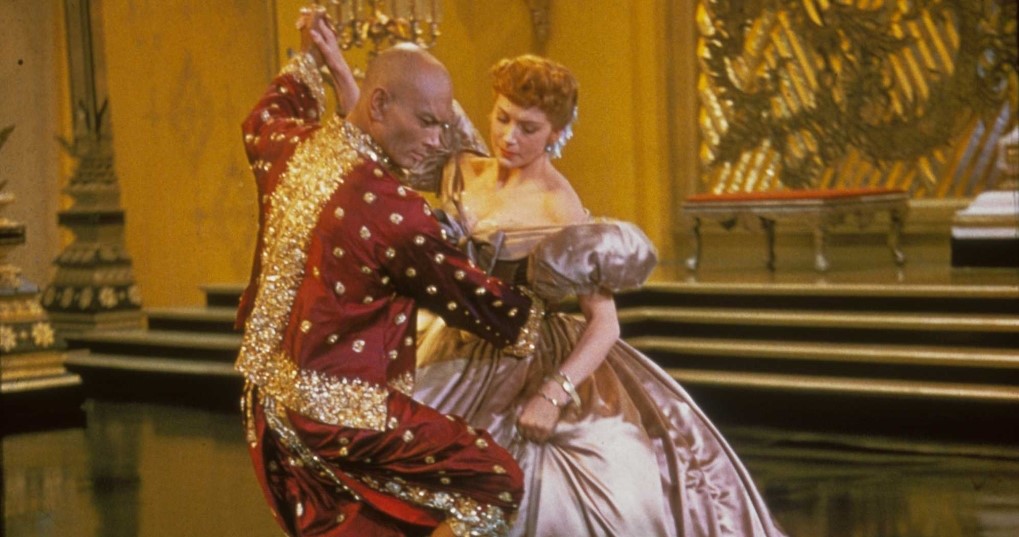
In its glistening, stagy exactness The King and I is the most traditional adaptation of Rodger and Hammerstein to hit the screen. A (questionably accurate) memoir by Anna Leonowens (Deborah Kerr) about her experiences as a tutor to the children of King Mongkut of Siam (Yul Brynner) in the 1860s, was repackaged by the musical hit-machine duo into a charming culture clash, with a garland of unspoken romance across the top. Anna wants to help the king improve and develop his kingdom – but also clashes with his ideas about his antiquated ideas and (above all) his treatment of concubine Tuptim (Rita Moreno), who is in love with servant Lun Tha (Carlos Rivas). Can the King and Anna reach an understanding?

The King and I is one of the grandest, most artificial looking films you will see. No attempt has been made by anyone to even pretend we are not watching events play out on a series of massive, elaborately decorated soundstages. It all looks gorgeous of course, brightly coloured sets filling the frame. Even the scenes ‘outside’ – on Anna’s ship or the palace grounds – drip with ostentatious artificiality.

This impression is only increased by the mediocre direction of Walter Lang. A reliable studio B-movie hack, Lang sets the camera up in the equivalent of the front row of the stalls. While he can frame a scene efficiently (his centring in the final shot of the king’s hand is neatly done), Lang provides no originality, flair or real visual interest, all that supplied solely by the sets. He either misses beats or misunderstands jokes (the accidental flashing of the English ambassador is crying out for a beat of titillation from the old guy). It’s quintessential widescreen hackwork of the 50s, where the focus is on wowing the people with the money, bright colours and massive sets they couldn’t get from the little box in the corner. On that basis, a director who sets the camera up to get as much of that seen as possible all the time, fits the bill.

Besides, the film’s two most distinctive features didn’t really rely on Lang anyway. The King and I’s grand Thai-style ballet based on Uncle Tom’s Cabin was visualised and choreographed by Jerome Robbins (with Lang setting the camera stationary in mid-shot to capture it all). This ballet is, by the way, a masterclass of expressive visual originality (with its swirling use of masks, sheets and banners) that sticks out like a sore thumb in a film as visually flat as this one.

The other was of course Yul Brynner’s star-turn as the King. Brynner’s performance of the role on Broadway had transformed his career and years of honing it on stage meant he was the master of every beat of its eccentric energy. Brynner is magnificent, bombastic, proud, grand but also subtly playful, surprisingly timid and strangely shy. Brynner’s performance with its theatrical touches (the striking pose and the “et ceteras”) could be seen as overplaying, but actually fits perfectly with a man constantly, deliberately, putting on a show.

Brynner really shows the more thoughtful, quiet man under the surface, worried about his kingdom’s future. The earnest autodidact, who lies on the floor reading books. The eager-to-impress man who swots up on topics of conversation to impress the English ambassadors and hands a prompt sheet to Anna to work them into conversation. The careful flirt who only allows flashes of his romantic interest in Anna show. It’s a clever, grand but very human performance. Brynner had wanted to direct (and, rumour has it, partially did so) but settled for a Best Actor Oscar instead.

He also sparks extremely well off Deborah Kerr, buried under some truly might dresses (so heavy, that Kerr allegedly lost twelve pounds over the course of filming). Kerr turns a potentially stodgy part into a woman who is independent but not judgemental, forward-looking but diplomatic and very careful about allowing any expression for romantic feelings. Although her singing is dubbed by Marnie Nixon, it’s Kerr’s engaging sprightliness that carries a lot of the drama. She and Brynner’s chemistry also ensures the scenes between the two of them are by far the film’s highlights.

Most of the faults of The King and I can be traced to the musical itself. There isn’t much in the way of plot. The quiet will-they-won’t-they bond between Anna and the King is partly because that’s the nature of these things, but partly because the musical doesn’t really give them much material to work with. Virtually every character other than these two feels like either a sketch, a plot function or a stereotype, with the actors given almost nothing to work with. Impressive as the ballet is, it essentially takes up almost 15 minutes of screentime without advancing the plot or the themes of the film at all. Thematically the film explores very little, either on social progress in Siam or its place in the world. The film rushes towards a conclusion that feels like it comes out of the blue.

But then people aren’t watching The King and I for its social commentary or thematic depth. They are watching it for some hit songs, impressive production values and charismatic performers. You certainly get that and if the overall shape of the film feels rather loosely plotted and doesn’t go anywhere, that’s neither here or there. And of course, it’s a triumph for Brynner (who, late in life, dedicated his final years to performing the role, racking up over 4,600 performances), whose confidence and star-quality carries thing. Pretty, fun, not deep but pleasant – but then that’s Rodgers and Hammerstein for you and if that’s for you, this is the film for you.

Meet Me in St Louis (1944)

Meet Me in St Louis (1944)

Technicolour musical delight in this unashamedly nostalgic and feel-good Minnelli musicial

Director: Vincente Minnelli

Cast: Judy Garland (Esther Smith), Margaret O’Brien (“Tootie” Smith), Mary Astor (Mrs Anna Smith), Lucille Bremer (Rose Smith), Leon Ames (Mr Alonzo Smith), Tom Drake (John Truett), Marjorie Main (Katie), Harry Davenport (Grandpa), June Lockhart (Lucille Ballard), Henry H Daniels Jnr (Lon Smith Jnr), Joan Carroll (Agnes Smith), Hugh Marlowe (Colonel Darly), Robert Sully (Warren Sheffield), Chil Wills (Mr Neely)

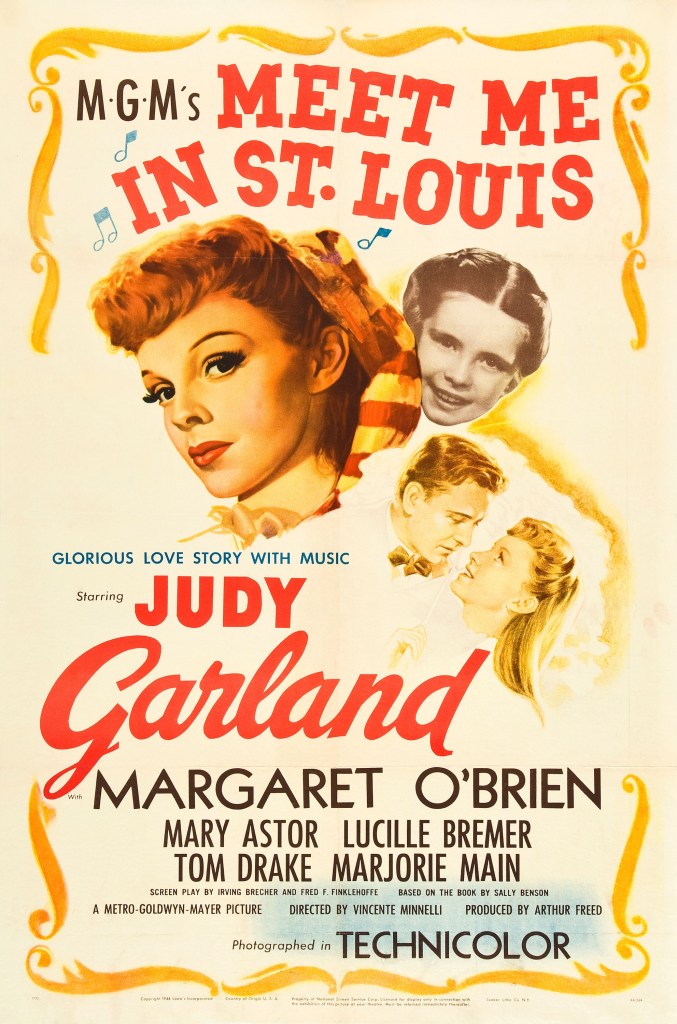
“There’s no place like home” is the message lying behind two of Judy Garland’s most iconic films. While it might be at the heart of Wizard of Oz, that longing may be even stronger in Meet Me in St Louis. From the Arthur Freed production stable, this technicolour delight is relentlessly gentle and optimistic. It went down a delight in a year when so many Americans dreamed of the end of a war that had separated families and kept soldiers from their home and remains a delightful paean to a lost America (that perhaps never even was).

Set, of course, in St Louis in 1904 during the build-up to the World’s Fair (the gleam of the electric lights turning at the exhibition are the film’s final shot), Meet Me in St Louis follows the lives and loves of the Smith family. Patriarch Alonzo Smith (Leon Ames) is a lawyer (or something, the film doesn’t trouble itself too much), his wife Anna (Mary Astor) a devoted home maker. They have four daughters: Rose (Lucille Bremer) hopes for a proposal from Warren Sheffield (Robert Sully), youngest children Agnes (Joan Carroll) and especially “Tootie” (Margaret O’Brien) are perpetually in trouble and Esther (Judy Garland) is just starting to make eyes at next door neighbour John Truett (Tom Drake). But their contented life could all turn upside down when father announces they will be moving to New York. Surely, they can’t leave St Louis behind?

In many ways Meet Me in St Louis is an inverse The Magnificent Ambersons. While Welles’ film brilliantly charted the decline of a family of wealthy snobs (the Ambersons would certainly recognise the Smiths as equals) with technology an intruder, upending everything they understand about the world, Meet Me in St Louis is a gloriously entertaining celebration of nostalgia with new technology either a source of jokes (scrambled long-distance calls, jolly cable-car songs) or wonder (that closing light-show). Both have stylistic comparisons: from their use of title cards to their fluid camera showcasing sumptuous sets and costumes. But only one of them is about cheering you up.

Meet Me in St Louis only barely has a plot, so concentrated is it on charm and whimsy (father’s announcement, which introduces the real drama, arrives over half-way through). Adapted from a series of short stories by Sally Benson, it’s an episodic film built around events – parties, cable-car rides, a Halloween adventure and a Christmas Eve ball – with a few threaded plotlines of flirtation, principally between Esther and John. Freed sprinkles in a series of songs from his collected rights holdings (including the title song) with a few additional tunes from writers Hugh Martin and Ralph Blane, the most notable being The Trolley Song (a ludicrously catchy-number you can’t get out of your head) and the iconic Have Yourself a Merry Little Christmas (although their original far more depressing lyrics were hurriedly re-written).

These last two are performed with astonishing bravura by Judy Garland in possibly her finest hour (until A Star is Born). Garland’s singing is almost effortlessly graceful and beautiful, and she matches it with a very warm, feisty and engaging performance. Esther lands perfectly between two stools: she can be rebellious, impatient and judgemental but also caring, sensible and forgiving. Garland is reassuringly collected, funny and luminous through-out – so much so it’s striking to read what a nightmare the shoot was, with the star frequently absent as she succumbed to the mental and physical ailments that would plague the rest of her life.

Part of the success of her performance was the closeness that developed between her and Minnelli – the first director to really treat her as an adult and collaborator (they started an affair during the film). Minnelli, in only his third film and first in colour, directs with the assurance and visual beauty of an accomplished pro. Meet Me in St Louis was his first Freed musical and it might just be his best. The sumptuousness of the visuals and design were to a large part due to him – you can see the influence this had on the later work of Visconti among others, particularly the ballroom scene – and Minnelli worked labouriously with the actors to build a sense of family between them.

This pays off in spades throughout the film, where the close chemistry between the actors only helps create a nostalgic glow for happy days gone by. Ames and Astor have a relaxed ease of a long-married couples, while the four sisters interact with each other with an easy, unstudied naturalness – sharing chairs, food from their plates and time together with an unfussy ease. In particular Minnelli helped guide Margaret O’Brien to the one of the most delightful child performances on screen: the Halloween sequence, where “Tootie” confronts a scary neighbour is a masterclass of childish excitement and fear, matched later by O’Brien’s affecting distraught tears at the prospect of leaving St Louis.

Minnelli shoots the film with a technical confidence and imagination that quickly makes you forget it’s simple plot. That Halloween sequence is an eerie wonder, shot with a low-angled, tracking shot unease that leaves a haunting impression. He and cinematographer George J Folsey deigned a gorgeous gaslight dimming sequence as Esther and John go through her house dimming the lights, the camera moving in a single, complex, take up-and-around them while Folsey adjusts the set light in sync. Later there is a brilliant shot that seems to pass through a window to lead us straight into the ball, which seems years ahead of its time in its technical accomplishment. The ‘Trolley Song’s sequence uses framing and costumes perfectly to turn a cable car into something that feels as large as a small theatre. It’s an exceptionally well-made film.

You could argue certainly that it is a conservative and unchallenging film. It’s a celebration of small-time life, an argument for staying where you are and embracing the status quo. It never crosses its mind to consider that it’s a lot easier to do that if you have a huge house and servants. Not a moment of anger or serious disagreement is allowed to enter the picture. Everyone is unendingly nice all the time. But does that matter? Sometimes you need a film like a warm hug. And, when you do, don’t you want it also to be a masterclass in filmmaking with a star like Garland at the top of her game? Of course you do.

The Band Wagon (1953)

The Band Wagon (1953)

The delights of putting on a show come to life in a hugely enjoyable Freed musical

Director: Vincente Minnelli

Cast: Fred Astaire (Tony Hunter), Cyd Charisse (Gabrielle Gerard), Oscar Levant (Lester Marton), Nanette Fabray (Lily Marton), Jack Buchanan (Jeffrey Cordova), James Mitchell (Paul Byrd), Robert Gist (Hal Benton), Ava Gardner (Herself)

Tony Hunter (Fred Astaire) has a glorious career behind him. Famed for top-hat-and-tails dance numbers (hang on, this is ringing some bells…), he can now ride the train unknown and contemplates retirement. But he leaps at the chance to perform on Broadway with a new script by husband-and-wife writing team Lester (Oscar Levant) and Lily Marton (Nanette Fabray) – themselves self-parodies of non-married writing team Betty Comden and Adolph Green. He’ll co-star with ballet dancing sensation Gabrielle Gerard (Cyd Charisse) and the show will be produced, directed and co-star British impresario Jeffrey Cordova (Jack Buchanan). Problem is Jeffrey wants to turn their light musical into a heavy-handed, over-produced Faust drama. Will audiences say ‘That’s Entertainment’ or will they prefer the musical? And will Tony and Gabrielle’s mutual hostility turn to love?

If you have any doubt about the answer to either of those questions, then I have to ask “where have you been and have you never seen a movie before?” The Band Wagon is the Arthur Freed machine at its peak. You get the sense that, by this point, it really was as smooth as getting the guys back together and throwing on a show. It’s what lies behind the immense charm of the film: for the majority of its run-time it’s basically people who really know what they are talking about chronicling the backstage friendships and rivalries, technical hiccups and clashes of vision when passionate, talented people get together to put on a show.

In fact, everything in The Band Wagon wants you to relax and to make sure you don’t worry or be anxious that everything isn’t going to turn out okay. It’s kind, decent and zeroes in on the glorious camaraderie of theatre. For starters, Tony Hunter is a thoroughly good-egg. Played with glorious charm and a wonderful light-tough by Astaire, he’s patient, relaxed about his declining fame and a very willing collaborator. His (very gentle) arguments with Gabrielle are based around their mutual intimidation at each other. He always feels like a regular Joe who has become a star but would be just as happy in the chorus line.

Around Astaire, a bank of cool, calm talent is called on. Minnelli was already an absolute pro at pulling spectacles like this together and The Band Wagon mixes together the deceptive simplicity of his compositional eye with a host of wonderfully designed sets. The script is full of great gags and beautiful one-liners and, while the story is effectively a remix of elements from half-a-dozen Freed movies prior to this one, it demonstrates aptly that if ain’t broke, don’t fix it. The bright and breezy fun stretches over the good-natured kindness of the script. There are no real villains: Jeffrey is over-ambitious and a touch pretentious, but when push comes to shove he does what’s best for the show. Even Gabrielle’s choreographer boyfriend is an honest professional whose main offence (other than not being Fred Astaire) is being snobby rather than mean.

The Band Wagon gets a great deal of comic mileage out of the over-blown ideas of Jeffrey Cordova. Hilariously played by Jack Buchanan with a burst-out-of-the box enthusiasm, his conversation is full of grandiose bombast, spraying ideas around and re-shaping everything in the play to match his own impressions of high art. A gentle egotist – the poster for his Broadway production of Oedipus Rex credits him no less than four times (producer, director, adapter and star) and Sophocles not at all – he is the sort of force-of-nature who wins over backers for the production by acting out the entire play in a drawing room, playing all the parts and supplying the sound effects.

The production he shapes allows Minnelli to gently parody some of the excesses of his own productions. The set is a hydraulic nightmare, with multiple platforms rising up and down from scene to scene. Needless to say, at the tech rehearsal, this turns into an obstacle course that leaves Jeffrey dangling from the ceiling by a microphone cord. At one point in rehearsal, Tony and Gabrielle have to perform a ballet (he as Faust) while endless pyrotechnics explode around them, constantly forcing them to jump out of the way. Every inch of the dialogue is re-written and (in one hilarious rehearsal scene) Tony is pushed into performing a mundane scene with ridiculous over-emphasis.

Parallel to this, we have of course the romance. Rather sportingly, the age difference between Tony and Gabrielle is not only acknowledged, it becomes a focus of their initial discomfort. Comdon and Green script a particularly juicy exchange between the two, that riffs on the subject culminating in Gabrielle bluntly telling Tony he should audition her grandmother as co-lead because “She’d be just about right for you”. Astaire actually takes a great deal of good-natured ribbing here for being past it and over-the-hill (“times have changed and you have not changed with them” Jeffrey tells him in the height of misguided enthusiasm), but there is a charming decency as he declares himself not Nijinsky or Brando but “Mrs Hunter’s little boy, song and dance man”.

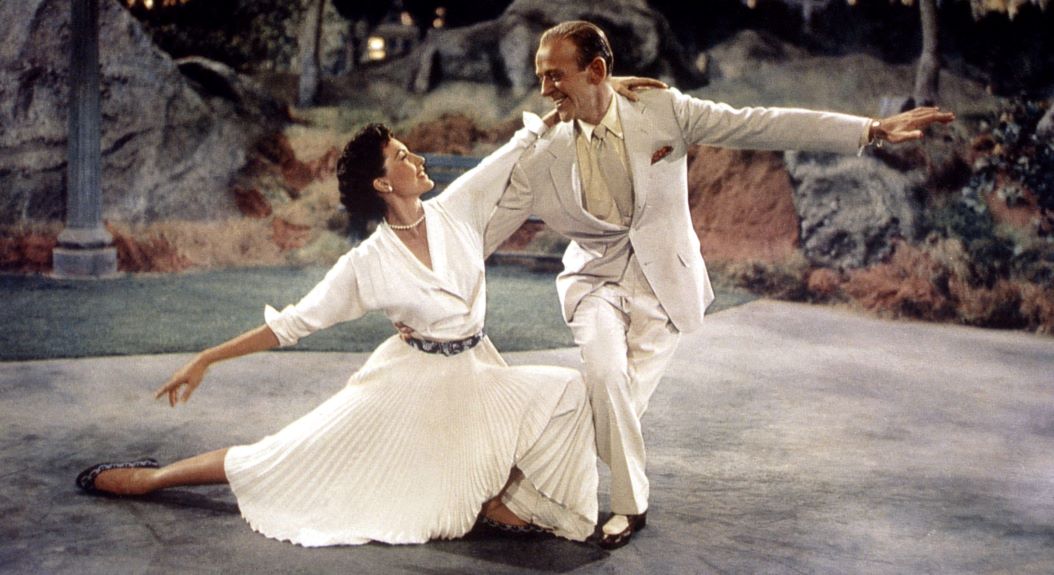
And that he is. Astaire and Charisse get several show-stopping numbers, the finest being a graceful, gorgeous balletic number in the park as they ice finally melts between them, a perfect, beautifully choreographed number that sees their bodies in perfect unison. The dancing is of course flawless throughout: Astaire early tap number on getting his shoes shined is charming and when we see snippets of their professional work on stage it’s deeply impressive.

If The Band Wagon has a flaw, it is that the last twenty minutes – which shows snippets of the final show being staged across the country – has a bitty, disjointed quality to it. It’s very hard not to notice that the plot has been completed and what we are left with are a series of non-too-catchy numbers and non-too-memorable set-pieces (except for the sight of Astaire, Fabray and Buchanan as adult babies which to be honest I wish I could forget). The final film-noir spoof ballet that ends the ‘show within the show’ (and God knows what that show, a bizarre, disjointed cabaret night as far as I can see is even about) is well-staged but lacks spark.

But The Band Wagon is still enjoyable, charming and above all fun – and if you can watch it without a smile breaking across your face (particularly if you love the theatre) then there is something wrong with you.