Category: Musician biography

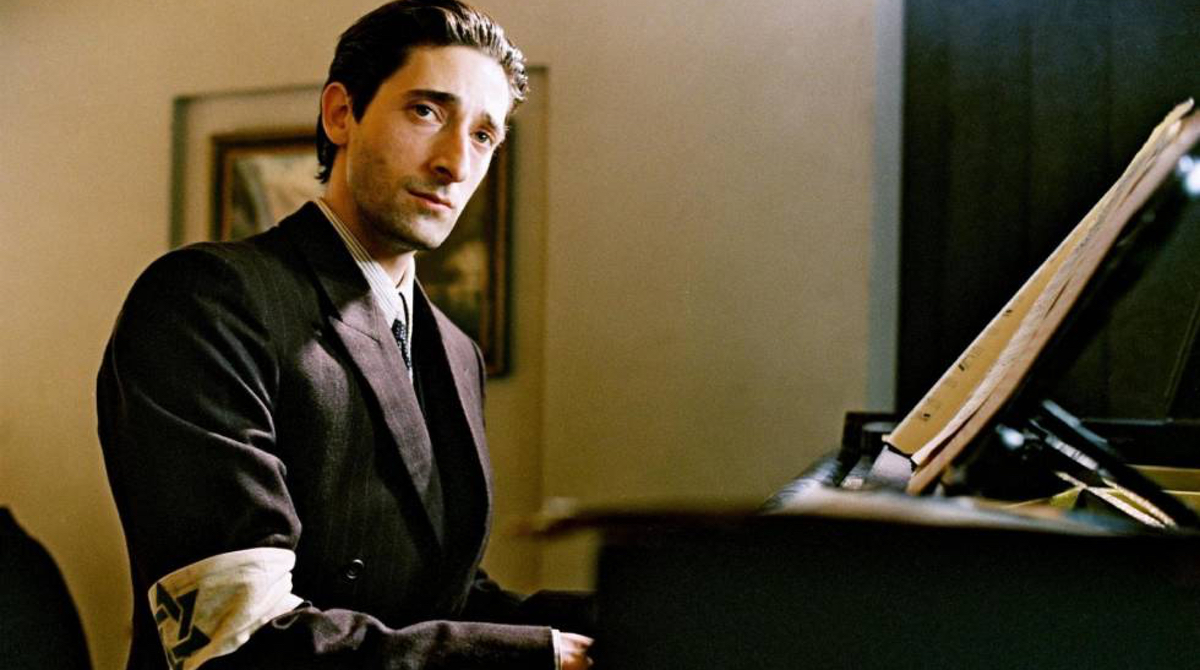
The Pianist (2002)

Adrien Brody is outstanding in the compelling The Pianist

Director: Roman Polanski

Cast: Adrien Brody (Wladyslaw Szpilman), Thomas Kretschmann (Captain Wilm Hosenfeld), Frank Finlay (Samuel Szpilman), Maureen Lipman (Edwarda Szpilman), Emilia Fox (Dorota), Ed Stoppard (Henryk Szpilman), Julia Raynor (Regina Szpilman), Jessica Kate Meyer (Halina Szpilman), Ronan Vibert (Andrzek Bogucki), Ruth Platt (Janina Bogucki), Andrew Tiernan (Szalas)

Few directors have as personal a link with the Holocaust as Roman Polanski. As a boy, he witnessed his parents deported to their deaths, surviving only by chance, escaped the Krakow Ghetto and was sheltered by a Catholic family. The lasting impact is clear to anyone who has seen a Polanski film and he avoided Holocaust projects for decades (including Spielberg’s offer to direct Schindler’s List). The Pianist was the film he made on this trauma. Perhaps because the experience of Wladyslaw Szpilman was, in many ways, similar to his own.

Wladyslaw Szpilman (Adrien Brody) is a famous Polish concert pianist. As the German occupation begins, Szpilman and his family face the cruel downward spiral of the new regime’s anti-Semitic policies. Very quickly, laws move from a ban on Jews in public places, to wearing Star of David badges to herded into ghettos. In the ghettos, life is a terrifying struggle, as the German occupiers shift from simple bullying to acts of random, indiscriminate murder. The whim of a German soldier decides whether you live or die. Szpilman’s family are eventually deported to Treblinka, but by a twist of fate Szpilman escapes – and finds himself hiding in Warsaw for years, sheltered by the Polish resistance, desperately trying to survive until the war ends.

Polanski’s film is heart-breakingly sincere and the documentary matter-of-factness it presents appalling, unjustifiable crimes gives great power to the whole film. It never blinks or looks away, and never offers false hope or sentiment. Only the terrible realisation that nothing can have any impact on whether you live or die: death could come from as little a thing as dropping a brick. People are plucked from lines and shot, speaking at the wrong moment is a death sentence and people in wheelchairs are tipped out of fifth storey windows.

There are moments where Polanski seems to be commenting on Schindler’s List’s touches of melodrama: that film featured a Jewish man saved from death by a German officer’s gun jamming – when the same thing happens in here, the German officer calmly stops, carefully reloads the gun, checks it and shoots his victim in the head. That’s the reality. The Pianist tracks all this with a traditionalist, stable camera and a marked restraint. There is no flair, or immersion, to any of this film. Instead, it grimly and calmly shows you each horror.

There is also no sense of fate or destiny. Szpilman survives – while every other Jewish character he encounters does not – not because of things he does himself, but because of chance, luck and risks taken by others. There is a powerful will to survive in Szpilman, but you can say the same for thousands of others. And, as the film demonstrates time and again, determination and desire to live won’t save you if a German officer decides to make an example of you.

Polanski’s film is honest and shocking in its presentation of the descent into brutality in the ghetto. The film chillingly presents the viciousness of what starts as bullying – the German officers who smack Szpilman’s father (a dignified Frank Finlay) around and force him to walk in the gutter – into killing-for-sport. Literally so: German officers turf out the occupants of a building, just for the ‘fun’ of shooting them down like rabbits in their car headlights as they run away.

While the first half of the film covers the horrors of the Ghetto – from over-crowding, to deportations to the increasingly open and random violence – the second half becomes a survival tale that owes a lot to the unsettling horror films of Polanski’s early career. Hiding in a series of apartments, knowing discovery will lead to instant death, Szpilman find himself in a terrifying city where the slightest sound will condemn him. After the noise of the ghetto, the silence of these apartments – and the long periods of silence from Szpilman himself – become increasingly overbearing, while also helping build the dread of discovery.

The only sound we hear are the piano concertos Szpilman is reduced to playing in his head. Frequently Szpilman’s hands move to play an imaginary piano. In one apartment, there sits a piano he can never play: nevertheless his first act is to open it and let his hands dance perfectly above the keys, imagining the music they produce. It’s a brilliant reminder of the ordinary life he has been forced to leave behind – and how, even when things are at their worst, we cling to the things that make us human.

As Szpilman weakens and grows pale in his apartment prisons, he witnesses both the Ghetto uprising of 1943 and the Warsaw uprising of 1944. Polanski treats this urban war with the same chilling matter-of-factness as the rest. From Szpilman’s window we see bodies fall and buildings burn. People slump dead in unusual, un-cinematic positions – a woman, shot in the back, falls to her knees and slumps forward – and with an abrupt, horrible finality. Only someone who has seen death in war, could film it like this.

When Szpilman finally emerges into Warsaw – a city Polanski has only let us see as Szpilman sees it, a few buildings, a street or two – he finds the city a burned-out ruin. It’s the first crane shot of the whole film, that until then has kept its formal angles down at the level Szpilman has experienced. The wreck of the city also matches Szpilman, now an emaciated, mute Beckettian tramp, clutching his only food, a can of pickles.

Despite all this, the film is full of good, brave people who help Szpilman, many of them in the Polish resistance. Most affectingly of all is the touch of hope the story offers – the last to help is a German pfficer (affectingly played by Thomas Kretschmann). The motives of this character are left vague – is it kindness, weariness with war, disgust at Nazism or just another whim – perhaps because all we know is this man, who helped many others as well, died in 1952 in a Soviet prison camp. For all that, seeing a good man in a uniform worn by so many murderers,  gives you hope something can come out of this wreckage.

At the heart is Adrien Brody, who gives a transformatively superb performance as Szpilman. Wry and dry at first, the film sees him being hollowed out into someone scared, desperate and finally emaciated and traumatised. Brody’s brilliance is in stressing there is nothing out of the ordinary to Szpilman beyond his piano playing. He has to learn to bear the guilt of having no choice but to walk away while his family are killed. But he never loses his humanity and dignity – even as a frazzled tramp, when finally allowed to play a piano, after a pause he launches into a performance of breath-taking cathartic release. It’s a superb performance.

The Pianist showcases the sadistic whim that drove the Holocaust. Death is not operatic, but functional, everyday and comes without warning. The film is unflashy, almost classical in its approach, carefully paced and un-melodramatic. But that reflects the lack of romance in war and the grinding terror and suffering of just surviving. By focusing on a single man’s story and experience, it helps us begin to appreciate that his story was just one of millions. That helps make The Pianist one of the most compelling, moving and brilliant Holocaust dramas ever made.

Yankee Doodle Dandy (1942)

Yankee Doodle Dandy (1942)

Cagney proves there is more far more to him than guns, in this cracking musical

Director: Michael Curtiz

Cast: James Cagney (George M Cohan), Joan Leslie (Mary Cohan), Walter Huston (Jerry Cohan), Richard Whorf (Sam Harris), Irene Manning (Fay Templeton), George Tobias (Dietz), Rosemary DeCamp (Nellie Cohan), Jeanne Cagney (Josie Cohan), Eddie Foy Jnr (Eddie Foy)

To many James Cagney was the definitive gangster. But Cagney wanted to be known as more than just another heavy: at heart he was a song-and-dance man. He got few chances to show it, so when the right film came along, doggone it he didn’t plan to leave anything in the dressing room. Cagney dominates George M Cohan biopic Yankee Doodle Dandy (at times its almost a one-man show with guests). He’s in almost every scene, doing his twist on Cohan’s stiff-legged dancing style with such energy and enthusiasm it leaves you quite exhausted watching it (Cagney sprained his ankle twice making it). It was a massive hit and won Cagney a much-deserved Oscar.

George M Cohan came from a family vaudeville troupe and became “the man who owned Broadway”. An accomplished performer, he was also a prolific writer (banging out more than 50 shows and 300 songs, including nation-defining tunes like Over There, The Yankee Doodle Boy and You’re a Grand Old Flag). The film uses his awarding of the Congressional Gold Medal from President Franklin D Roosevelt (Cohan arrives at the White House fresh from playing an all-singing, all-dancing version of the wheelchair-confined President in I’d Rather Be Right) as a framing device. Naturally, the President wants to know all about this Broadway legend’s life. Cue Cohan settling back to tell him his entire life story: from birth to childhood stardom, knock-backs and a string of successes.

It’s odd to think Cagney wasn’t keen at first. A leading union man – one of the founder members of the Screen Actor’s Guild – Cagney was not an admirer of Cohan, who had taken a strong stand against the 1919 actor’s union strike. What changed Cagney’s mind was accusations of communism from the House of Un-American Activities in 1940: he was cleared but his producer-brother William told him he needed “to make the goddamndest patriotic picture that’s ever been made.” They certainly succeeded with Yankee Doodle Dandy, such an all-singing, all-dancing celebration of the American way it must surely be Sam the Eagle’s favourite film.

Yankee Doodle Dandy is nothing more-or-less than a grand slice of entertainment. It’s very much cut from the same cloth as The Great Ziegfeld, another cradle-to-grave rundown of the life of a Broadway mover-and-shaker. Like that film, Cohan’s rough edges are comprehensively shaved off: his hostility to the actor’s union goes unmentioned as does his divorce and remarriage (instead his two wives are amalgamated into a new fictional wife, conveniently called Mary so that his song Mary’s a Grand Old Name can be named after her). Several events are telescoped or shifted to a new date for dramatic impact. Cohan emerges thoroughly charming (if proud), decent and honest all-round entertainer, overflowing with bonhomie.

Narratively the film does nothing Hollywood hadn’t done before. The big difference here to The Great Ziegfeld is that Curtiz keeps the story moving with real pace and a certain flair (it’s a solid two hours, and never outstays its welcome) and the musical numbers are dynamic and entertaining. A great deal of that is due to Cagney, outstanding in a part that demands an overabundance of personality. Cagney’s dancing and singing doesn’t have the grace of Fred Astaire (the original choice), but it has a gloriously entertaining and breath-taking energy. Cagney studied Cohan’s stiff-legged-marionette dancing style, and used his physical exuberance to bring to life his numerous dance routines with a spectacular stand-and-applaud skill and energy. (Curtiz uses a highly mobile camera to film most of these in single shots, to really capture the skill and energy of Cagney). His singing also follows the Cohan style – the sort of half-singing, half recital style Rex Harrison would later make his own. His impersonation is uncanny and performance superb.

Cagney is gloriously entertaining and makes every single one of his numerous songs thrum with glee. It’s a real reminder of what a modern performer Cagney was: he’s fast-paced, lacks any sense of staginess and has a real emotional honesty. His comic moments are very funny: in Cohan’s first meeting with Mary, still in old-man make-up (fresh from playing father to his own mother on stage), Cagney lets a little moment of glee move across his face as he realises Mary thinks he really is an old-man in his 70s – a confusion he plays up to, before launching into an impromptu tap dance routine. When tragedy strikes he is just as moving: his heart-broken repeat of his mantra “My mother thanks you. My father thanks you. My sister thanks you. And I thank you” at his father’s death-bed not only moves the audience, it also made the stony Curtiz weep on set.

No wonder, when a dying Cohan watched the film, he said “My God, what an act to follow!” Cagney’s performance, with its playful energy, encouraged a greater spontaneity in Curtiz’s disciplined directorial style. The famous sequence, where Cagney walks down the steps inside the White House before bursting into a joyful bout of tap-dancing was improvised on the spot (and a glorious summary of the playful joy of the movie it is). Curtiz uses montage very effectively at several points (a sequence of early knock-backs for Cohan is a wonderful collection of shots of signs, producer refusals and walking feet). He often uses high and low angles to imaginatively shoot the action, and the fluid camera for the musical numbers finds a neat middle ground between theatrical performance and cinema.

Of course, it is damned patriotic. The film recreates several of Cohan’s most stirring numbers in all their pomp. The explosion of Americana (Washington! Lincoln! Teddy Roosevelt!) that is You’re a Grand Old Flag (with hundreds of Stars and Stripes). The cheek and charm of Yankee Doodle Boy. The rousing marvel of Over There. The film plays up Cohan’s determination to do his bit in the First World War – turned down for service as too old, he carries out a full tap-dance routine to show he’s as limber as the next man. But it also has time for finding a way of staging creativity: there is a marvellous little sequence – beautifully shot by James Wong Howe – of Cohan finding the tune for Over There, tinkling experimentally with a piano on an empty stage.

The narrative of the play doesn’t reinvent the wheel, but it delivers a traditional structure with plenty of energy and some good scenes. (I enjoyed Cohan’s mother, struggling to find something nice to say about one of Cohan’s rare-flops, a music-free melodrama, left weakly praising the set). Though Cagney dominates the film, Walter Huston is very fine as his supportive and experienced dad and Joan Leslie charming as his loyal wife Mary (so supportive she’s happy to gift her song to stage star Fay Templeton, because the show needs her more). The balance between standard biopic scenes and musical numbers is very nicely handled.

Yankee Doodle Dandy offers up a familiar package, but one of the most professionally assembled and enjoyable of its type ever made. With Cagney in joyful, dominant form, you’d genuinely be quite happy just sitting and watching him go through as many vaudeville acts as he likes. Shot with flair by Curtiz, Yankee Doodle Dandy is catchy and highly entertaining.

Topsy-Turvy (1999)

Allan Corduner and Jim Broadbent excel as the Gilbert and Sullivan’s in Mike Leigh’s superb Topsy-Turvy

Director: Mike Leigh

Cast: Jim Broadbent (WS Gilbert), Allan Corduner (Sir Arthur Sullivan), Lesley Manville (Lucy “Kitty” Gilbert), Ron Cook (Richard D’Oyly Carte), Eleanor David (Fanny Ronalds), Wendy Nottingham (Helen Lenoir), Timothy Spall (Richard Temple), Vincent Franklin (Rutland Barrington), Martin Savage (George Grossmith), Dorothy Atkinson (Jessie Bond), Shirley Henderson (Leonara Braham), Kevin McKidd (Durward Lely), Louise Gold (Rosina Brandham), Andy Serkis (John D’Auborn), Dexter Fletcher (Louis), Sam Kelly (Richard Barker)

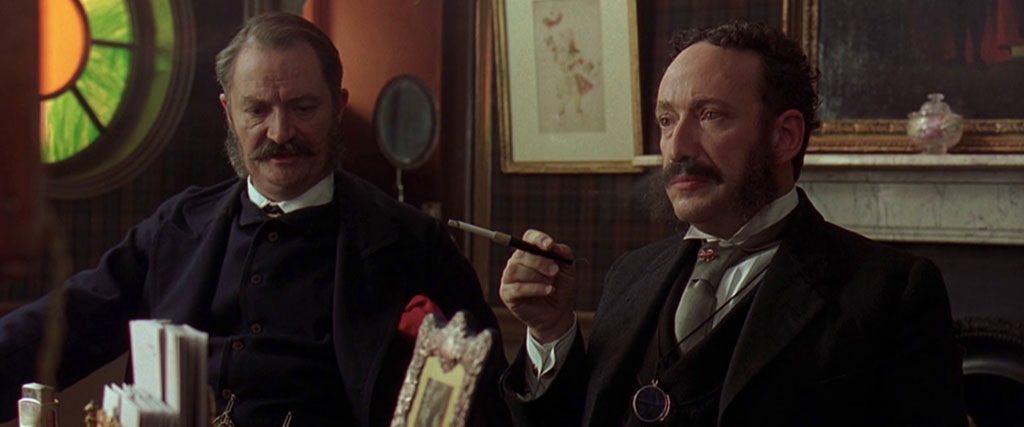
It seems an odd-fit: Mike Leigh, auteur of working class drama, prestige period films and the music of the middle-class in Gilbert and Sullivan. But that’s to forget Gilbert and Sullivan were among the masters of theatre – and Leigh himself is a theatrical great. Topsy-Turvy, from seeing the most uncharacteristic of the director’s works, in fact perhaps an examination of the creative process Leigh has made his life. It’s a wonderfully made, superbly executed tribute to the struggles and rewards of artistic creation. A celebration of how disparate personalities come together to create something bigger than themselves. Affectionate, heartfelt, at times quietly moving, Topsy-Turvy is both one of Leigh’s most enjoyable films and one of his most tender.

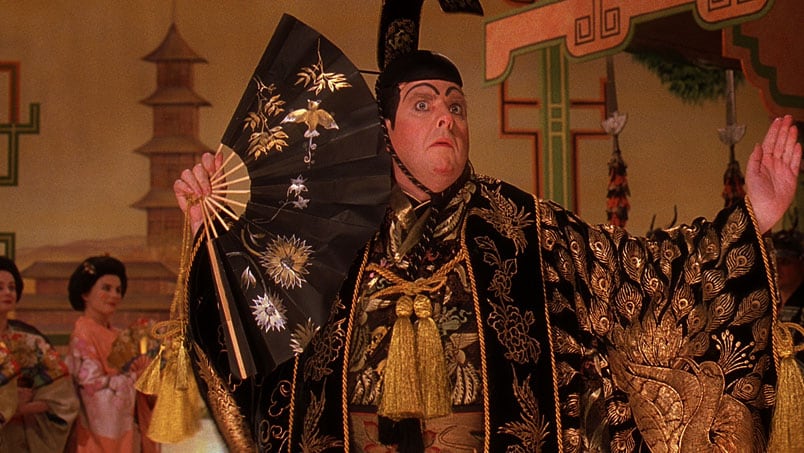
It’s 1884 and the creative partnership between WS Gilbert (Jim Broadbent) and Arthur Sullivan (Allan Corduner) is at a turning point. With their latest, Princess Ida, hardly setting the box-office alight. Sullivan feels the partnership has gone stale – and also feels under pressure to turn his attention towards more ‘serious’ composing. Gilbert refuses to change his next libretto, which Sullivan feels is effectively more of the same. Things change though when Gilbert is intrigued by an exhibition of Japanese arts and crafts, quickly creating a new libretto: The Mikado. The two geniuses, finally in unison, work together to bring the production to the stage.

Topsy-Turvy is probably Leigh’s most purely entertaining film. For anyone who has ever been involved in theatre or the arts, you’ll certainly recognise more than a few moments in this film, which is practically Leigh’s love letter to the arts. Leigh’s aim was to pay tribute to the difficulties of creativity and the demand of having to constantly refresh and reinvent your work to stay relevant and fulfilled. He succeeded: few films have so beautifully captured the struggle, pain, satisfaction and joy of creation or the strange anti-climax artistic success can bring.

Most of the second half of the film is a fascinating look at every step required to bring a production to life. From casting and contract negotiations, to costume fittings, staging and work in the rehearsal room. We get a fascinating insight into the complex backstage politics and squabbles in this small world. From actors bitching about the management (always incompetent, regardless of the situation) to the delight and playfulness of rehearsals as different opportunities are explored, it’s a wonderfully true insight into the theatre. Matched with the intricate and extraordinary detail of the reconstruction of the original production – and you have an enthralling insight into theatre. It also very appropriate for Leigh, whose organic methods of creating a film through copious rehearsal and improvisation remains very similar to theatre.

Alongside this though, the film has plenty of sympathy for the cost of creative exertion. Many of the actors lead sad and even lonely lives. Shirley Henderson’s Leonara Braham struggles with drink, Martin Savage’s George Grossmith is a drug addict (the company is too polite to mention it, but he’s clearly struggling with withdrawal at the dress rehearsal), Dorothy Atkinson’s Jessie Bond has constant pains from an unhealed ulcer. WS Gilbert and his wife lead a chaste life, he as terrified of intimacy and connection as he is of watching first nights. Sullivan juggles health problems and a long-running, regular-abortion marked, affair with Fanny Ronalds with a lingering sense of shame at not having exploited his talents more fully. These are lives that come to life when doused with creation, for all the off-stage world reveals trouble and strife.

Much of the first half is a wonderfully judged contrast between the extraverted Sullivan, keen to stretch himself but lacking the application and drive, and the repressed Gilbert, doggedly ploughing on with his (stale-sounding) original idea and unable to comprehend Sullivan’s reluctance. Leigh’s film could easily have manifested itself as a clash between two mis-matched partners. However, while the film expertly draws the parallels between the two, it also shows how much their energy comes from mutual respect. Sullivan is, after all, right that Gilbert’s first idea is a limp retread. But Gilbert’s Mikado idea is so good we don’t need a scene showing Sullivan change his mind – the simple contrast of Sullivan’s chuckles and animated striding while Gilbert reads him The Mikado’s libretto with his boredom and constant questions to the abandoned libretto speaks volumes.

Jim Broadbent is outstanding as Gilbert. He has the repressed distance, the grumpy-old-man bluntness but he mixes it with small flashes of excitement and rapture that speak volumes. His fascinated glances at the Japanese exhibition – soaking up inspiration – are beautifully judged, while his later excited larking around with a samurai sword (the very next scene sees him with a first draft) is perfect. Broadbent is both supremely funny, with several perfectly judged mon-bots, and also heartbreakingly, unknowingly lonely in his distance and fear of emotional contact. Allan Corduner makes a perfect contrast as the brash Sullivan, enjoying fame in a way Gilbert never can, but sharing with him a tortured sense of his need to fulfil his artistic potential.

The rest of the cast – a delightful mix of Leigh regulars and familiar faces – are also fabulous. Lesley Manville is wonderful as Gilbert’s wife, a gentle, eager-to-please woman who we discover has carefully buried deep regret about her emotionally repressed marriage and lack of children (Gilbert’s own difficult relationships with his parents have had a long reach on his life). Timothy Spall is wonderfully entertaining as bitchy leading actor who reacts with quiet despair when his big number is cut. Shirley Henderson’s fragility is perfect for a woman whose stage presence masks her emotional vulnerability and drink dependence. Dorothy Atkinson and Martin Savage are marvellous as two actors whose willingness to carry on under all conditions is skilfully contrasted.

Leigh’s film is also a brilliant reconstruction of time and era (rarely can a researcher be so highly billed on a film’s credits). There is a delight taken in showing how the characters react to new inventions, from Gilbert’s bellowing phone calls (“I am hanging up the phone now!”) to Sullivan’s wonder at a fountain pen (“What will they think of next?”). The design from Eve Stewart, the glorious photography of Dick Pope and the Oscar-winning costumes Lindy Hemming all are perfectly judged. The film though never becomes buried in “prestige costume drama” trappings: it’s eye for history is to acute. From alcoholism to drug addiction, broken families to the seamier streets of London, this is a film that never succumbs to easy nostalgia.

What it remains is a loving tribute to the strange families the build up around theatre. When Temple’s song is cut from the play, the chorus come together humbly but selflessly to beg for the song to be retained, because of their affection and regard for Temple. There may be disagreements, but everyone pulls together to stage the show when the time comes. Leigh’s film is full of wit, affection and a deep, loving regard for those who have chosen a life of creativity. While the film can show the cost of such a life – and the contrasting emptiness and regret away from the stage, in a life which can doesn’t always provide satisfaction – it also celebrates art in a way few other films can. One of the greatest films about the theatre ever made.

Nashville (1975)

nashville header
Robert Altman’s sprawling classic takes on a whole city in the brilliant Nashville

Director: Robert Altman

Cast: David Arkin (Norman), Barbara Baxley (Lady Pearl), Ned Beatty (Del Reese), Karen Black (Connie White), Ronee Blakley (Barbara Jean), Timothy Brown (Tommy Brown), Keith Carradine (Tom Frank), Geraldine Chaplin (Opal), Robert Du Qui (Wade Cooley), Shelley Duvall (Martha), Allen Garfield (Barnett), Henry Gibson (Haven Hamilton), Scott Glenn (Pfc Kelly), Jeff Goldblum (Tricycle Man), Barbara Harris (Winifred), David Hayward (Kenny), Michael Murphy (John Triplette), Allan F. Nicholls (Bill), Dave Peel (Bud Hamilton), Cristina Raines (Mary), Bert Remsen (Star), Lily Tomlin (Linnea Reese), Gwen Welles (Sueleen Gay), Keenan Wynn (Mr Green)

Robert Altman’s magnum opus, Nashville has the city has its set and, seemingly, its entire population as the cast. Over the course of a few days, Nashville charts the interweaving lives of a host of people making (or trying to make) a living in the home of country and western and the hangers on and fans flocking around the edges. Meanwhile a presidential campaign plays out, trying to recruit stars as fund-raisers.

You could say that, on the surface, Nashville isn’t really about anything. Certainly, it’s plot (such as it is) is more based on observing our characters interacting with and responding to events. Wonderfully rich short stories overlap each other, the focus mothing smoothly from one and another. It’s not really grounded in an overarching plot, such as McCabe and Mrs Miller or The Long Goodbye. In many ways its more similar to M*A*S*H, an experience piece trying to capture the thoughts and emotions of a particular moment of time. It’s that which I think is the heart of it. Nashville is about very little, but really it’s about everything – and it’s one of the most enlightening and vital studies of twentieth century America you are ever going to see. A rich and fascinating insight into a particular point in history, in a country rife with tensions.

You can’t escape that Nashville takes place in an America under the shadow of traumatic events. The 1970s (and the legacy of the 1960s) has pulled America further apart than ever. It’s a country struggling with a wave of assassinations, still deeply scared by the sacrifice of JFK (several characters, most notably Barbara Bexley’s permanently intoxicated Lady Pearl, reflect on the loss of innocence that came with it). Scott Glenn’s uniform clad army private is only the most visual reminder that the country is being ripped apart by Vietnam. Bubbling racial tensions are captured by short-order cook Wade (a lovely performance by Robert Du Qui) who angrily denounces black country singer Tommy Brown (a suave Timothy Brown) as an Uncle Tom.

Politically, America isn’t heading anywhere. The film is continuously framed by a car literally driving around in circles, blaring out meaningless platitudes straight from the lips of Hal Phillip Walker a third-party Presidential candidate who is against a lot of stuff (lawyers in congress and the Election College) but doesn’t seem to be ‘for’ anything. His smooth advance man John Triplette (Michael Murphy, quietly unimpressed by the music stars around him) drums up musicians to appear at a benefit – not one of whom even ask about the politics of the man they are being asked to endorse. Nashville isn’t a film that feels particularly enamoured either with politics or the level of our engagement with it.

Instead there is a new religion in town: fame. The musicians of Nashville at the time were unhappy with the film, feeling that Altman planned an attack on their industry. Altman is, of course, smarter than this. Of course, there are some satirical blows landed – but the film has respect and admiration for artists with genuine talent. Its real criticism is for fakes and poseurs (of which more later). But for the talents at the centre, sure they are flawed – but there is a respect for their skills and genuineness that keeps the film relatable. (Altman would be far more vicious when he turned his eyes to Hollywood with The Player).

The artists at its heart are flawed but human. Haven Hamilton (a grandiose Henry Gibson) may be a blow-hard reactionary, but his patriotic pride and sense of personal responsibility is genuine (late in the film he will ignore a serious injury to show concern for others). At the film’s centre is fragile super-star Barbara Jean (a delicate Ronee Blakely), the beloved super-star teetering on the edge of a dangerous breakdown, overwhelmed with the pressures of fame and expectation. A lonely person, reduced to trying to communicate her unease to her audiences in rambling monologues. Looking for a human connection she’s unable to make elsewhere (this makes for a neat contrast with her rival, Karen Black’s bubbly but coolly distant Connie White who knows where to draw the line between public and private).

This humanity also makes for intriguing personal dilemmas. Singing trio Tom (a swaggering Keith Carradine), Bill (a frustrated Allan F Nicholls) and Mary (a saddened Cristina Raines) are in the middle of a love triangle (caused by Mary’s love for Tom, who loves the attention but doesn’t return the favour). Made more tense by Tom’s desire to go solo, the couple’s tensions are never firmly resolved – part of Altman’s avoiding of neat endings. Tom himself, in many ways a shallow lothario, is also shown to be feeling the same loneliness and emptiness as others.

It’s interesting that the film’s warmest character, Lily Tomlin’s Linnea, lies half-way between the world of the music and the world of normal life. A dedicated performer of gospel with an all-Black choir, Linnea also works tirelessly at home to support her two deaf children (who attract very little interest from their father, would-be fixer Ned Beatty). Linnea though is never portrayed as someone trapped in her life, in the way others are, but in complete acceptance – and even contentment – with her lot. Similar to Keenan Wynn’s grieving husband, desperate for his niece to engage with her aunt’s illness, the film’s real warmth is for those people grounded in real-life worries.

The film’s real fire is saved for the shallow wannabes that flock around the edges. The music stars may be flawed but they have talent (as witnessed by the film showcasing almost an hour of musical performance in its runtime – all the songs written and performed by the stars). Shelley Duvall’s would-be groupee is hilariously empty-headed and selfish. Ned Beatty’s greasy-pole climbing political animal is ridiculously pompous. At the top of the pile is Geraldine Chaplin’s reporter, an empty headed fame obsessive, hilariously fawning to the rich and famous and abrupt and rude to ‘the staff’, pontificating emptily in a car junkyard. Is she even a real reporter or just a fantasist?

Altman’s film also finds time for two very different women trying to find fame in this heartland of country and western. Sueleen Gray (Gwen Welles) is a waitress carefully cultivating all the patter of a star, but lacking the key attribute – talent. So desperate is she to ‘make it’ that she is willing to be exploited for a big chance, with only Wade having the decency to tell her she should cut her losses (advice she bats away in anger). By contrast, Barbara Harris’ Albuquerque, running from her husband to find fame, has the talent but never gets the opportunities – until of course at the very end (and it’s the result of the tragic fate of another woman whose doomed fate hangs over the film).

Nashville is a rich character study, but all these characters link back into an America at a turning point in its cultural history. Detached and disillusioned with politics, this is a country that is starting to see fame – and the indulgence of your own passions and desires – as the new religion. A religion that attracts both wannabes and also stalkers and dangerous obsessives (at least two of whom populate the film, one with fatal consequences). In this world, as idealism dies and is replaced by cynicism, people start to check out and either engage more with their own problems or yearn to change their lives and become something else. Altman’s film captures this moment in time personally, as well as being a compelling melting pot of stories. A rich, multi-layered tapestry – of which a review can only scratch the surface – it’s a great film.

Amadeus (1984)

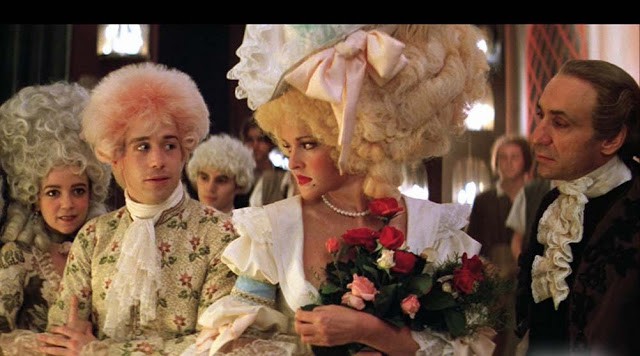
Tom Hulce is the childlike genius in Amadeus

Director: Milos Forman

Cast: F. Murray Abraham (Antonio Salieri), Tom Hulce (Wolfgang Amadeus Mozart), Elizabeth Berridge (Constanze Mozart), Roy Dotrice (Leopold Mozart), Simon Callow (Emanuel Schikaneder), Christine Ebersole (Caterina Cavalieri), Jeffrey Jones (Emperor Joseph II), Charles Kay (Count Orsini-Rosenberg), Kenneth McMillan (Michael Schlumberg), Richard Frank (Father Vogler), Cynthia Nixon (Lorl), Patrick Hines (Kapellmeister Giuseppe Bonno), Jonathan Moore (Baron von Swieten)

Peter Shaffer’s Amadeus was a smash hit play, both at the National Theatre and on Broadway. With such a delicious plot line – captured so beautifully in its tag line “The Man, the Music, the Madness, the Murder!” – is it any wonder that this fable about the life of Mozart, framed around the envy of his contemporary Antonio Salieri who, as an old man, claims to have murdered the great genius, was swiftly bought to the screen? Radically reworked and restructured by Peter Shaffer for the screen, Amadeus may stand as one of the few times where the script for the film is superior to the script for the stage. And the film itself is so carved out of radiance, that every single production of the play will forever live in its shadow.

As an old man Antonio Salieri (F. Murray Abraham) confesses to the murder of Wolfgang Amadeus Mozart (Tom Hulce). After a suicide attempt, he tells his tale to a young priest (Richard Frank). As a younger man, Salieri was the court composer to Emperor Joseph II (Jeffrey Jones). He has everything he dreamed of as a young man – fame, riches and a life of music – all of which fortune he sees as a sign from God. His world view is shaken with the arrival in Vienna of the young genius Mozart. A brilliant artist and composer, with a God-given gift for composition, Mozart is also everything the reserved Salieri is not – brash, rude, impulsive and a man of once-in-a-generation talent. How, Salieri wonders, could a man like him be given all the gifts, while Salieri’s music is merely competent? Salieri believes this is a cruel joke played on him by God – made worse by the realisation that alone in Vienna society, Salieri seems able to recognise the genius. Salieri decides to destroy this chosen child of God once and for all.

Shot on location in Prague – and Czech defector Milos Forman was treated as a returning hero when he bought the film there – Amadeus is perhaps one of the most strikingly beautiful films ever made. The cinematography is luscious, the production design – utilising every inch of the almost untouched-since-the-18th-century Prague settings (Thank God for Communist inefficiency Forman joked) – sinks you into the era completely while the costume design is striking, imaginative and excellent. The film is an opulent feast. But it is a million miles from being a staid period piece – instead this is something fresh, bold and modern.

Amadeus is perhaps one of my favourite films of all time. I just think it gets everything more or less right. Not least, capturing the idea of the passions and struggle of creativity. It’s clear why this story spoke so clearly to Hollywood, because no film captures as well as this one, the horrible plight of the competent journeymen, working every hour, while watching an effortless genius create masterpieces as easy as breathing. That’s the real tension here – and what makes us all empathise with Salieri, at least on some level. All of us have looked at the things we create – be it putting up a shelf to writing a play – and frustratingly seen our grasp exceed our reach, while seeing others do what we have so failed to achieve with frustrating ease.

Matched in with this, it’s a film that understands perhaps better than any other the burdensome process of creation. It’s easy for viewers to just remember the childish excess of Mozart – but Forman and Shaffer also show a dedicated and passionate worker. Hulce’s Mozart crouches over a billiard table, oblivious to the world around him while he composes (the soundtrack, as it often does, is flooded with the score he is composing, while his wife tries to get his attention – snapping to silence as soon as she succeeds). His dedication to his music is absolute – in his first scene, only hearing the orchestra starting to play his music before his arrival snaps him out of his raucously rude flirtatious banter with Constanze. Scenes of him conducting and directing rehearsals pinpoint his exactitude and perfection. Salieri as well is seen frequently labouring carefully and precisely over his work, while lacking the inspiration of Mozart.

It’s pinpointed with a beautiful late scene, where a bed-ridden Mozart dictates his Requiem score to Salieri. Mozart is electric, precise, his thinking fast-paced, complete, his passion for the score all-consuming – with poor Salieri desperately trying to keep up (“You go to fast” he frequently whines). It’s a scene that captures completely the intensity of mining creation. (Hulce apparently deliberately skipped lines during the scene, to add to Abraham’s confusion in the scene – with Abraham’s later agreement!). Its part of what the film beautifully captures, how being able to bring your ideas, perfectly formed, into the world is the most enchanting drug of all.

So you can see why Salieri grows too loath this blessed talent. In a wonderful moment – again perfectly utilising Forman’s decision to use the music as almost a character in the piece – he flicks through a portfolio of Mozart compositions, all of them first drafts devoid of any correction, the music playing in his head (and on the soundtrack) as he reads. It’s the sort of skill his diligent and slavish composition could never achieve.

It’s pinpointed even more in their first scene together, where Mozart arrives at Joseph’s court. The emperor plays a small welcoming march, composed by Salieri, which is fine. Mozart not only memorises the tune on first hearing it (“The rest is just the same?”) but then beautifully starts to play with it before suddenly turning it into an aria from The Marriage of Figaro, composing this beautiful piece on the spot. Nothing could be more devastating but to see your hack work improved in front of others into something genius – and the genius in question to be so oblivious of the impact, that he behaves like he’s done you a favour. No scene in the movies, I believe, has ever captured so completely this world of difference between the journeyman and the artist.

The film is crammed full of moments like this, all perfectly delivered by a perfectly chosen cast. The film was controversial at the time for using American actors – with their natural accents – rather than Brits (the “American accents jar the ear” whined Brit critic Leslie Halliwell). In fact it’s an inspired idea, that adds an air of modernity to the piece, but also principally opens the door to making the whole genre less stuffy (as if 18th century Venetians would speak with received pronunciation). The only characters who speak with English accents are the most upper-class, Italian-fixated, Opera purists. Everyone else – with even Simon Callow (the original stage Mozart, here in his film debut) adopting an accent – speaks with a Yank twang.

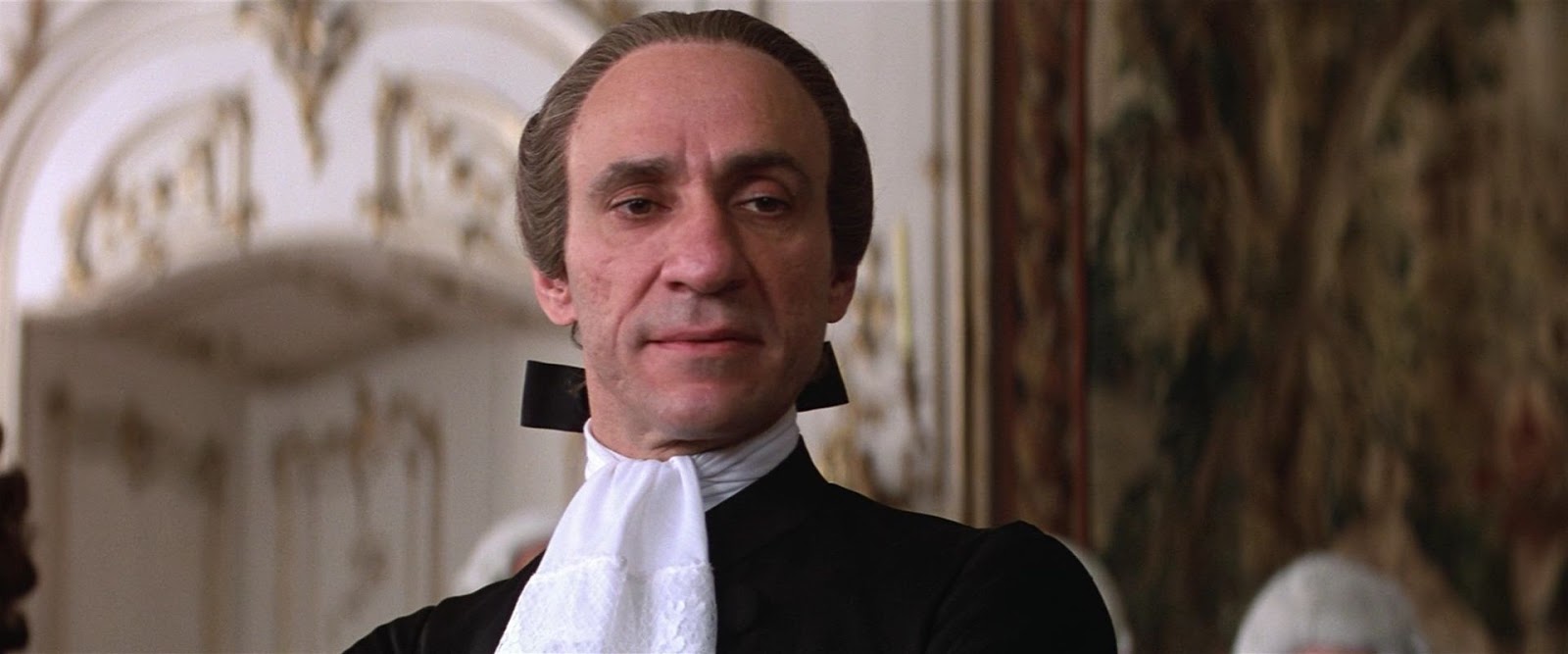
F. Murray Abraham beat out seemingly the whole Western acting world to land the leading role of Salieri. (In a backhanded compliment if ever I heard it, Forman suggested on meeting Abraham that he simply was Salieri). Abraham’s precise, detailed and beautifully judged performance – which allows gallons of resentment and self-pity to bubble under the surface of a tight self-control. He also has a wonderful spry lightness as his elder self, who has come to terms with his failures. It’s a brilliant role – and one Abraham struggled to match for decades to come.

Tom Hulce is equally superb as Mozart. I’ve talked a lot about how wonderfully the film – and Hulce – captures inspiration. But Hulce perfectly mixes this with a childlike vulnerability, an impulsive foolishness and sense of absurdity. His Mozart is frequently rude, obnoxious and interested only in a good time – frequently losing nights to drink, sleeping around with a crude sense of humour. But he’s also sweetly childlike, who needs to be looked after – Elizabeth Berridge (very good, a late replacement for Meg Tilly during shooting) as Constanze frequently has to mother him and manage his life and career. The rest of the cast are equally strong, from Jeffrey Jones’ studied normality as the Emperor, to Roy Dotrice’s firmness as Mozart’s disapproving father.

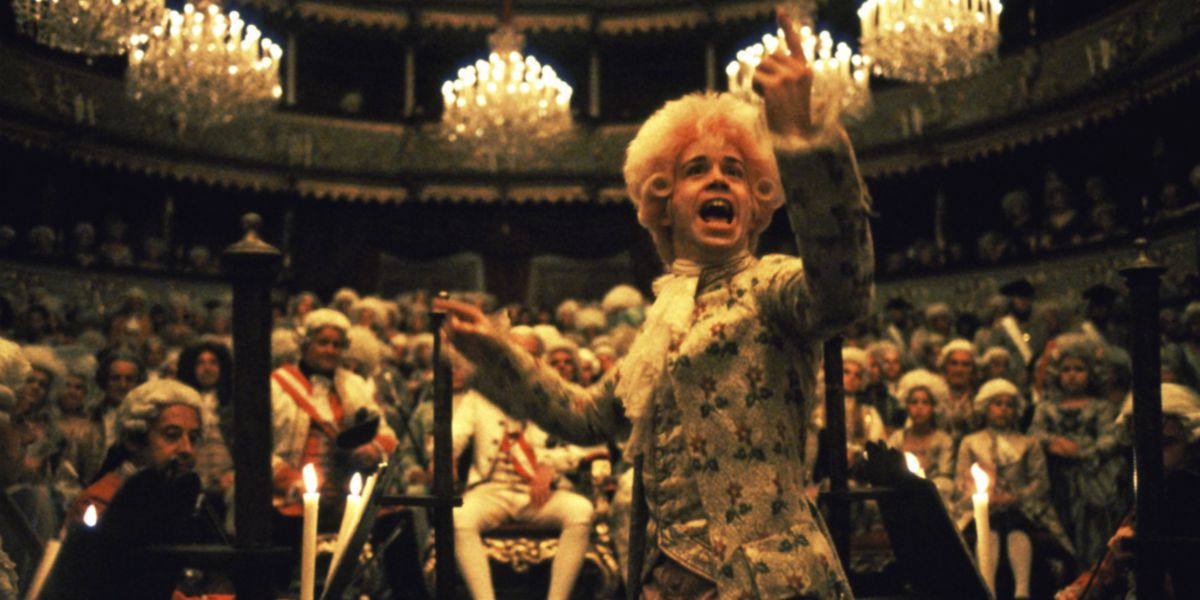
Amadeus brings this all together superbly – Forman’s direction is faultless – and mixes it together with Mozart’s music. Not a single piece of music is used twice in the film, and each quote from the music has been perfectly chosen to reflect the scene, from the film’s opening with Symphony #25 to its close with the Requiem. Sections from opera performances are shown – with the actors conducting (both learnt). The music soaks through the whole film – Shaffer and Forman believed it was the “third lead”. And it perfectly captures the tone and emotion every time, deepening and enriching the film itself.

Winning eight Oscars (including Picture, Director, Actor for Abraham and Screenplay), Amadeus is not only the best film ever made about classical music, it’s also one of the most fascinating and profoundly engaging films ever made about creativity. Does it matter that historically it’s all bunk? Not really at all, as a fictionalised exploration of how the average can be tormented by the extraordinary it’s perfect.

Control (2007)

Sam Riley excels in this heartbreak life story of Ian Curtis

Director: Anton Corbijn

Cast: Sam Riley (Ian Curtis), Samantha Morton (Deborah Curtis), Alexandra Maria Lara (Annik Honoré), Joe Anderson (Peter Hook), Toby Kebbell (Rob Gretton), Craig Parkinson (Tony Wilson), James Anthony Pearson (Bernard Sumner), Harry Treadaway (Stephen Morris), Andrew Sheridan (Terry Mason), Matthew McNulty (Nick Jackson)

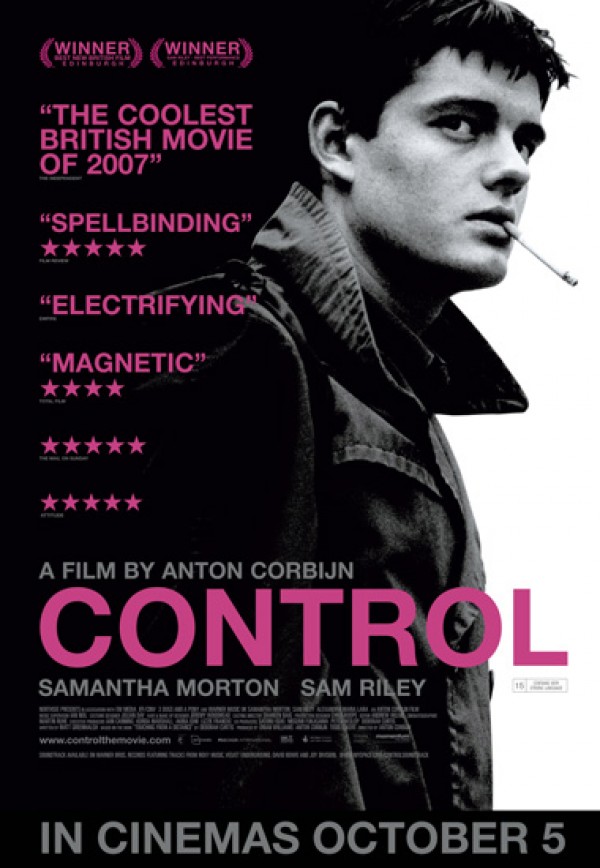
Depression is no respecter of fame or success. You can have everything many people would give their right arm for, and still find the prospect of life overwhelming. Control is a heartfelt, deeply affecting film about Joy Division lead singer Ian Curtis, who committed suicide shortly before a career-changing tour of America. Anton Corbijn knew Curtis and the band personally, and his deep connection with this story is obvious in every frame of this beautifully shot film.

In 1975, fresh out of school, Ian Curtis (Sam Riley) marries Deborah Woodruff (Samantha Morton). Curtis is a would-be poet, but finds his interest piqued when he attends a gig by the Sex Pistols and quickly forms a band – Joy Division – with a group of friends. Powered by Curtis’ imaginative lyrics, the group starts to make a name for itself, taking on a manager Rob Gretton (Toby Kebbell) and winning the attention of the influential Tony Wilson (Craig Parkinson). However, all is not well with Curtis: beginning to suffer increasingly from epilepsy, Curtis is also falling in love with a young Belgian journalist Annik Honoré (Alexandra Maria Lara) while still in love with – although increasingly lacking in mutual understanding with – Deborah. These pressures slowly build up on Curtis.

Control is a film about a person’s longing to have security and a sense of mastery over their own life, but finding they lack both this and the emotional strength to deal with the consequences. Curtis is a man buffeted by competing pressures and desires, as well as a paralysing fear that epilepsy will eventually claim his life. He is frequently unable to relax, and tries his utmost to divorce himself from the reality of his situation by living as much as he can in the moment, ignoring until it is impossible the burdens of making choices about his life and relationships.

Living in the moment is what, for Curtis, makes it all possible. You can see it in reflection in his performances of Joy Division songs – the intense focus, mixed with the channelling of his own epileptic fits into a series of mesmeric on-stage dances, filled with wild and jerky movements. The entire film suggests much of Curtis’ output could be retrospectively seen as a cry for help, many of his lyrics about concerns that would eventually lead to him taking his own life. At one point, Curtis sings heartbreakingly of his isolation in a recording studio booth – with Corbijn cutting straight to the rest of the band and studio technicians talking and going about their business in the studio, oblivious to the underlying desperation that runs through it.

Because the film makes clear no one knew how to help Curtis or even how to identify his problem. To his manager and the band, its all part of the rough and tumble of rock ‘n’ roll. To his studio, it’s the artistic personality. Doctors seem to barely understand how to treat his epilepsy and miss all the signs of the personal stress it places on him. Neither his wife nor girlfriend can imagine that his guilt and self-loathing run as deep as they do. 

Corbijn’s beautifully evocative black and white photography adds hugely to this sense of dream-like non-reality around Curtis’ life, against the backdrop of some beautifully rendered Macclesfield locations. It helps wonderfully capture the sense of Curtis’ life somehow never coming fully into colour, as well as adding a deeply affecting air of melancholy over every frame. It’s also perfect for capturing the atmosphere of the 1970s clubs and bars that the band experienced.

The photography gives the film a feeling of the classic kitchen-sink dramas of the 1960s, and that is no bad thing, adding a certain depth to the tragedy of a working-class lad swept up by success and largely unable to cope with the burdens of expectation. Curtis is shown to be constantly overwhelmed by the pressure of live performance and the expectations of fans and viewers, yet also desperate to continue to have this channel to express himself.

Corbijn doesn’t give him a free pass though, and shows how he deliberately distanced himself from Deborah and their child. Often silent and disengaged, with a glazed look of a man who would rather be anywhere else than having to support a wife and child before he was 20, Curtis and Deborah’s marriage is one of affection but no shared interests of outlook. Deborah clearly provides Curtis with no kindred-spirit feeling, but he uses her as an emotional prop. Simultaneously he uses Annik for the same, while conducting an affair that clearly gives him a deep sense of shame, but finds impossible to resist. It’s living in the moment again: clearly, at every point, he would rather forget the other woman altogether, and is incapable of making the final life-altering decision needed.

This balance works so well because Sam Riley is astonishingly good as Curtis – real, pained, gentle, tender, selfish, with eyes that seem to have the life and will to go on drain out of them as the film goes on. Riley’s performance is pitch-perfect, and his empathetic brilliance for this man who did not know how to express his own feelings clearly is deeply moving. Over the film you see a sensitive man slowly fall apart in self-loathing, feeling trapped in his own life and unable to break free.

The film is stuffed with excellent performances, with Samantha Morton very good as Curtis’ deeply caring wife who unwittingly smothers him with demands – demands that are more than fair considering she is left frequently to hold the baby while her husband disappears for days on end. Alexandra Maria Lara has less to work with, but does a lot with Annik. Toby Kebbell provides some much needed lightness as Joy Divison’s manager, a blistering, foul-mouthed force of nature who can’t even begin to entertain the idea that his lead singer might consider ending his life.

The final sequence of the film, as Curtis (off camera) decides to follow-through on committing suicide (his second attempt to do so, another clear sign of those around him being totally unable to respond to the signals) is unbearably sad, ending with a beautifully evocative, tear-inducing shot of the crematorium releasing its ash – the last vestige of this lost life – into the sky to drift and disperse freely in a way Curtis never could. Control is a modern classic of British realism and possibly one of the finest music biopics ever made. Corbijn has the soul and eye of an artist, and brings all this to bear on a deeply heartfelt and moving film.

Bohemian Rhapsody (2018)

Rami Malek brings Freddie Mercury to life in crowd-pleaser Bohemian Rhapsody

Director: Bryan Singer (Dexter Fletcher)

Cast: Rami Malek (Freddie Mercury), Lucy Boynton (Mary Austin), Gwilym Lee (Brian May), Ben Hardy (Roger Taylor), Joe Marzello (John Deacon), Aidan Gillen (John Reid), Allen Leech (Paul Prenter), Tom Hollander (Jim Beach), Mike Myers (Ray Foster), Aaron McCusker (Jim Hutton), Ace Bhatti (Bomi Bulsara), Meneda Das (Jer Bulsara)

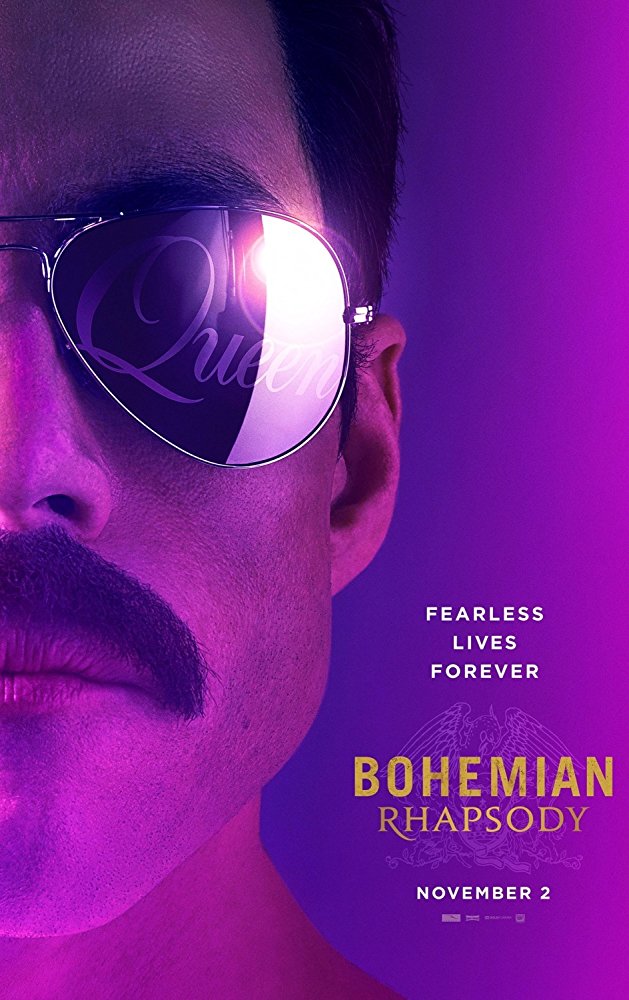
Biography can be a tricky territory on film. How can you hope to capture a whole life, with all its ups and downs, its shades of grey, in a single sitting of two hours? Well the truth is you can’t really – and Bohemian Rhapsody is an enjoyable but very safe and traditional attempt to tell something of Mercury’s life. It carefully organises his life into a clear five act structure (Beginnings, Early success, Triumph, Temptation and fall, Redemption) that wouldn’t have been unfamiliar to the writer of a medieval mystery play.

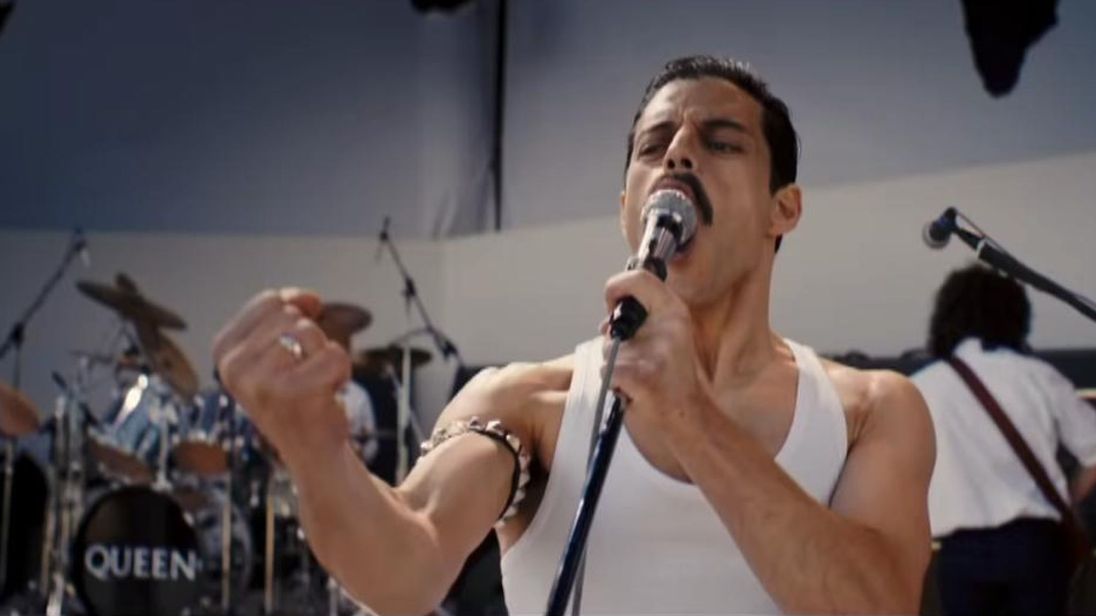
The film uses Queen’s legendary Live Aid performance as the book ends for a story that covers Freddie Mercury (Rami Malek) as he joins Queen, works closely with the band to compose the hit songs that would make them legends, then falls tragically under the influence of band manager Paul Prenter (Allen Leech) and leaves the band to build a solo career and succumbs to those dreaded demons of drink, drugs and sex. The film culminates in a brilliant recreation of Live Aid (by the way, only making the vaguest of passing references to the cause behind Live Aid, with the main motivation for performing seeming to be that everyone else is) which, despite some wonky CGI at points, brilliantly captures the atmosphere of being at an electric live gig. 

Bohemian Rhapsody is an affectionately made crowd-pleaser of a film which has convention running through its soul like sugar at the centre of stick of rock. With the heavy involvement of the surviving members of Queen and their manager, it’s a film that wants to very carefully avoid anything too controversial – which is fair enough when it’s people making a film about their friend – and does its best to shave off his rough edges, and apportion blame for faults anywhere other than Freddie.

As such, the film defines Freddie’s successes as those he achieved as part of “the family” of Queen – and his failures when he fell under the influence of others who were using him. The film draws Freddie as being desperate to find love and acceptance – from his struggles to be accepted by his traditional father (a very good performance by Ace Bhatti), to his deep love for his wife Mary Austin (while guiltily struggling with his homosexuality), to his sometimes prickly relationship with the rest of Queen, who are basically a band of brothers. Is it any wonder that someone as desperate for love as Freddie might fall under the influence of someone offering constant but not genuine affection?

Anyway, the film very carefully spreads the genius of Queen neatly around the band (we see them all chucking in songs and key ideas, even if Freddie is the driving force). Part of the reason the film works is that the band are right – these are songs for everyone. These are songs that make you want to be involved in their performance, that make you want to sing along and stamp your feet. It’s the magic alchemy of the band’s own genius that the film is so dependent on – even if the film does sometimes struggle to dramatise the act of creating art. Early on we see Freddie idly play the opening bars of Bohemian Rhapsody on the piano. “What’s that, it’s beautiful” asks his wife – “It has promise” Freddie shrugs. That’s about par for the course for how the songs come together in this film. What makes it work is the chemistry between the actors and the general lightness of the story telling.

That lightness is largely missing from the sections of the film that chart Freddie’s “dark days”. Keen to absolve Freddie as much as possible from fault, the film largely takes all his negative traits and actions and basically pours them into another man and identifies him as the reason for everything bad that happens in the film. I have no idea if the real Paul Prenter (a moustache twirling performance by Allen Leech) bore any resemblance to the chippy, bitter, scheming, selfish, greedy bad influence who appears in this film – but then Prenter has been dead for over 20 years so we’ll never know. The film blames everything – and I mean everything – on Prenter and paints Freddie as an innocent victim led astray.

The film also shies away as much as possible from showing us anything too gay. In fact, it’s hard not to get the awkward (if no doubt inadvertent) feeling that the film’s implying that the more Freddie got immersed in the gay underworld, the more he was consumed by his flaws and by bad things. In any case we get shots of Freddie at S&M parties, but shot with a dream like wistfulness that concentrates on Freddie walking towards the camera disconnected from his surroundings. The film juggles the timeline of Freddie’s life as much as possible to make for a clean narrative (in actual fact Prenter wasn’t dismissed until two years after Live Aid, Queen never split up and reformed and Freddie wasn’t diagnosed formally with AIDS until 1989), and it adds to a feeling that we are seeing a carefully formed drama that is telling a “better” version of Freddie’s life.

The biggest weapon in the film’s arsenal is Rami Malek’s performance in the lead role. His recreation of Freddie’s style and on-stage swagger is so faultless, you start to believe you are seeing the real thing. He also really adds a vulnerability, loneliness and sensitivity to Freddie’s private life. He can be prickly and arrogant, but it all stems from a deep insecurity that Malek brilliantly builds with a tender empathy. It’s a star-making performance, and he is very well supported by the rest of the cast, including Lucy Boynton as his loving wife, Gwilym Lee, Ben Hardy and Joe Mazzello very good as the other members of the band and Tom Hollander excellent as their eventual manager.

The main issue with the film is its strident conventionality. It obeys all the rules you would expect of a good biopic, and builds a picture of Freddie’s life that perfectly fits an ideal drama structure. Its basically safe, traditional and largely directed with a lack of imagination (although it’s troubled production, Bryan Singer’s dismissal due to “personal problems” and Dexter Fletcher’s late parachuting in to finish the film no doubt contributed to this) which offers very little that will surprise you and, in its quesiness on homosexuality, some that might offend you. But I think it provides enough pleasure from Queen’s wonderful discography that it almost rocks you.

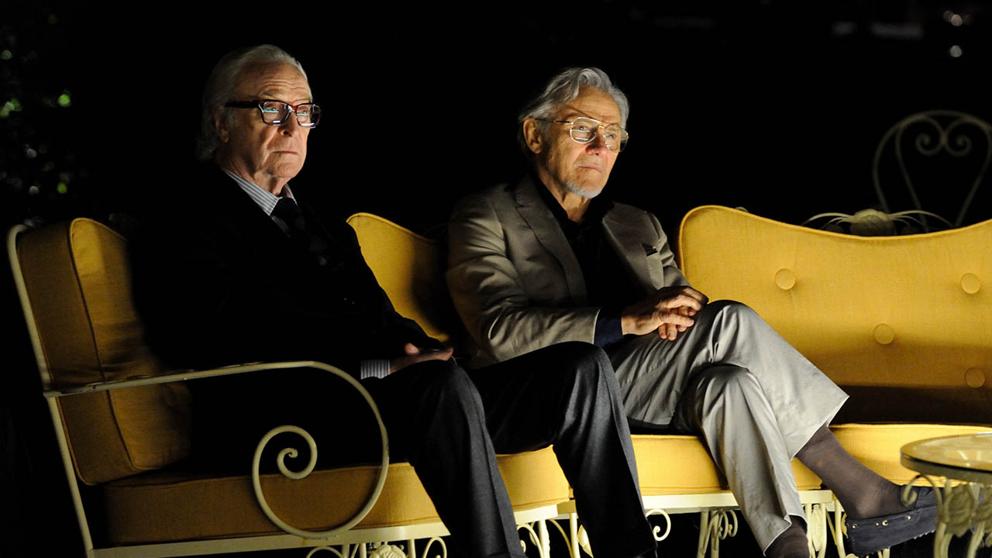
Youth (2015)


Michael Caine and Harvey Keitel try to embrace their past in Paolo Sorrentino’s mesmeric Youth

Director: Paolo Sorrentino

Cast: Michael Caine (Fred Ballinger), Harvey Keitel (Mick Boyle), Rachel Weisz (Lena Ballinger), Paul Dano (Jimmy Tree), Jane Fonda (Brenda Morel), Roly Serrano (Argentinian Footballer), Alex MacQueen (Queen’s emissary), Robert Seethaler (Luca Moroder), Ed Stoppard (Julian Boyle), Paloma Faith (Herself), Tom Lipinski, Chloe Pirrie, Alex Beckett, Nate Dern, Mark Gessner (Screenwriters)

Well this is something different. Youth is a hard to categorise film from Paolo Sorrentino. Sorrentino often seems the definition of (admittedly beautifully filmed) style over substance. But he’s also able to suggest great, unseen depth, a hard to define quality. Sometimes these qualities result in an impressive but frustratingly empty work. And sometimes it results in something simply wonderful. Youth falls firmly into the second category. In fact, it fits so firmly into this that I think it might be the most wonderful film Sorrentino has made. Put frankly, I loved this film. I can’t quite put my finger on why somehow, but I loved it.

It’s set in a Swiss retreat, peopled by the rich and famous. There are film stars, Miss Universe, famous pop stars and an overweight former Argentinian footballer (who could be anyone right?). Fred Ballinger (Michael Caine) is a world-famous composer, a man officially in retirement, uninterested in answering entreaties from the Royal Family to perform his famous “Simple Song #3” at Prince Philip’s birthday. He is accompanied by his daughter Lena (Rachel Weisz), who acts as his assistant, and struggles with her father’s difficult personality and her resentment towards him. Fred’s best friend Mick Boyle (Harvey Keitel), a famous director, is also staying at the resort with a gang of screenwriters, preparing his script for what he intends to be his final film (his “testament”).

Youth is a film that conveys great depth and emotional strength, while never falling into any category or offering up clear answers or spoon-fed themes. Instead it explores, in a gentle way, age, disappointment, hope, lost opportunities and warm memories. It’s nominally a film about old people reflecting on their youth, but it’s also full of moments that show these characters still have moments of vibrancy. In a beautiful moment, the footballer (barely able to get himself out of a pool without oxygen) carries out a series of beautifully skilful keepie-uppies with a tennis ball for over a minute, before he wheezes and has to stop. That’s kinda the whole film right there in an image: age and youth all in one go. It’s beautiful. I loved it.

Sorrentino loves the flashy shot, and carefully framed image. This film is full of them, and they work wonderfully well. It’s sprinkled throughout with gorgeous dream sequences and fantasy moments, from Boyle seeing a field full of his leading ladies past, to Lena dreaming of a hilariously overblown music video showing her unfaithful husband (a slimy Ed Stoppard) and Paloma Faith (a very good sport) undulating over a speeding car. We see Fred sitting in a field conducting a semi-imaginary orchestra of cows with bells. Imaginative shots are sprinkled throughout, everyday things seen from new and unique angles. 

And its so emotionally fulfilling, filled with both lump-in-the-throat moments and moments of searing, magical hope and joy. It explores what matters to us as we get old – and how what matters to us in our lives changes as we age. Sometimes these things remain the same, sometimes we move with the times. Sometimes we adjust, and sometimes we don’t. It’s a film where some characters struggle to recall events, others reinterpret their lives as they happen. You could criticise the film for not having a clear central theme, but its theme if anything is life – and life is not easy to categorise. It’s a mountain of different moments and attitudes: and that is what this film likes. It’s messy and hard to predict. And it’s strangely beautiful. 

So Sorrentino crafts a feast of a film here, crammed full of dialogue that should be almost too weighty and overtly “important”, but somehow never comes across like that. It’s partly because it’s delivered with such experienced, lightly worn skill, but also because Sorrentino pulls off the trick of positioning it as profound rather than overbearing. Shot with a gentle, elegiac expressiveness, it’s a film that brilliantly works, that conveys and carries great weight. It’s about the human condition, and it feels real and human at all times.

It also helps that it’s superbly acted. There isn’t a dud performance here – and some give some of the most beautiful work of their career. Michael Caine takes a few minutes to accept as a world famous composer (something about him just doesn’t quite work), but you quickly let it go because he is astonishingly good here. Caine’s Fred carries great reserves of regret and loss, but also many memories of joy. Caine is beautifully expressive – part observer, part driver of the action. He has the wonderful air of being young-old and an old-young-at-heart. He’s playful but also tired. He’s strangely unknowable but at times open. It’s a beautiful performance.

Just as good is Harvey Keitel. The film is full of these two guys – like Stadler and Waldorf – moaning about getting old. But Keitel brings a great tragic depth to Boyle, a great director fallen on hard times, a man whose best days may well be behind him but who refuses to let the light die. He’s both funny and (by the end) incredibly moving. Rachel Weisz is radiant as Lena – a scene where she finally lets years of anger out is wonderful – but another late scene as she quietly weeps with a sort of sad joy is simply superb. She has a gentle romance that builds with real sweetness. She’s impossible to look away from in this, she’s brilliant.

Youth also has moments where it explores the nature of art and its legacy. Ballinger feels he is probably a good-but-not-great composer. Boyle feels there are moments he touched greatness, but is never sure if it’s there or not. Paul Dano plays a great stage actor who is known worldwide for his role as a robot in a Star Wars style smash. What is art? The film doesn’t dare to answer the question, but it does ask what are artists? How do they question themselves? Why do they do what they do? Artists in this film are always watching – even the footballer – they are always looking to become a part of their world or comment on it. 

Sorrentino’s film is marvellous. I really loved it. It’s crammed full of brilliant moments. Even Jane Fonda’s overblown cameo as a film star works (I think just). It’s played with such brilliancy, structured with such light playfulness, that it is able to carry great depth and grace. It’s a film that rewards reviewing – I’m not sure I’ve worked out the implications of the final shot, or what it might mean for how we should interpret Ballinger’s final actions – and I can’t wait to see it again.

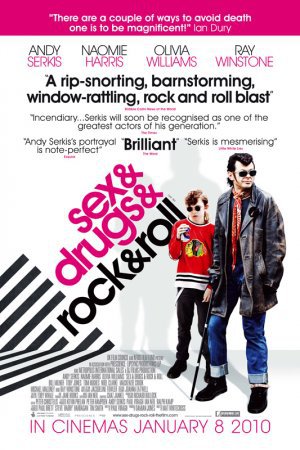
Sex & Drugs & Rock & Roll (2010)


Andy Serkis and Bill Milner recreate the 1970s in this mixed bag Ian Dury biography

Director: Mat Whitecross

Cast: Andy Serkis (Ian Dury), Bill Milner (Baxter Dury), Naomie Harris (Denise), Ray Winstone (Bill Dury), Olivia Williams (Betty Dury), Noel Clarke (Desmond), Toby Jones (Hargreaves), Ralph Ineson (The Sulphate Strangler), Mackenzie Crook (Russell Hardy), Michael Maloney (Graham), Luke Evans (Clive Richard), Tom Hughes (Chaz Jankel), Arthur Darvill (Mick Gallagher)

Ian Dury, one of the leading new wave British musicians of the late 70s, has his life brought to the screen in an eclectic and inconsistent film with flashes with genius. The film covers Dury’s life, from his early polio to initial success and later revitalisation. Front and centre is the effect disability has on Dury’s life, and the relationship with his son, wife and girlfriend.

The film’s main claim to fame is Andy Serkis’ brilliant performance as Dury. The role is a perfect match for Serkis’ vocal range and physicality. As a reconstruction of Dury’s style and manner it is triumphantly perfect (he has a standing invitation from the Blockheads to tour with them as Dury). What Serkis does really well here though is to delve into the heart and mind of Dury, to bring out the emotional confusion, pain and mixed desires within him – to believably present someone confusingly in love with two people, but causing both of them great pain. A man who can idolise the relationship his late father had with him, but confusingly repeat many of the mistakes of his isolated later childhood with his own children. Serkis burns up the screen, and motors the film – he’s the heart, the lungs and most of the brain as well.

It needs this ­tour-de-force of committed resurrection from Serkis, boiling with righteous indignation and cheeky charm, as the film itself is a little uninteresting to anyone not already into this era of British pop. In fact, I’d go so far as saying some initial study of Dury is pretty much essential to understand what is going on – and above all to understand the impact of various moments on the wider world. The film is rather confused in explaining the impact of this band on the cultural scene, and tends to fly too quickly over events.

It’s also stylistically an odd film. It starts with a fantastic device of Dury presenting the film like a compere at a surreal lecture, or music gig. Filmed in a concert hall, Dury runs through the events and even drags onto stage at times, like props or exhibits, moments from his past. It’s a rather avant garde idea, returned to only sporadically throughout – I suspect limited access to the filming location may have had something to do with it – but it sets up an expectation of a film that will be a bit more thematically and structurally daring than it eventually becomes. The film has a scattergun range of filmic styles, from animation to surrealist recreation, as if the director had a host of ideas about how to make the film, and threw them all in, rather than make something tonally consistent.

Away from the stylistic flourishes, you are constantly reminded that this film follows a pretty familiar series of music biog tropes: the early struggles, the success, the drugs, the loss of form, the triumphant return. The film does mine some interesting material from the relationship between Dury father and son, but even this is fundamentally a “Dad and Lad” story we have seen before.

So what makes the film stand out is the performances. Naomi Harris is heartfelt and sweet as Dury’s lover, while Olivia Williams is excellent as his understanding, undervalued wife. There are decent supporting turns from the rest of the cast, while Bill Milner underlines his promise as a performer with an intelligent turn as a son pushed into being a rebel.

It’s a decent rock biography, but depends too much on you already knowing the story – and forgiving the fact that it’s not nearly as different from other films as it likes to think it is.

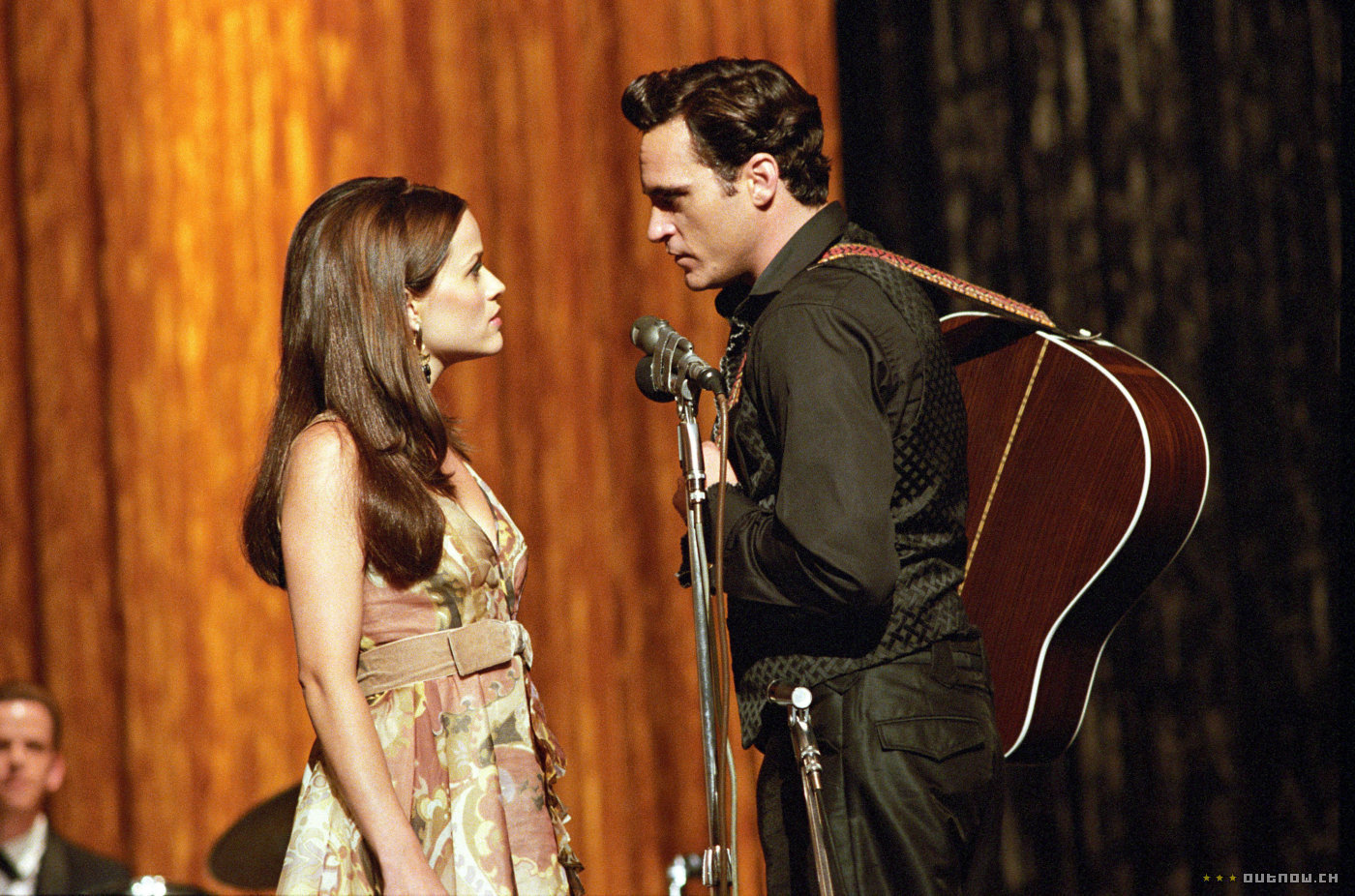
Walk the Line (2005)


Reese Witherspoon and Joaquin Phoenix excel in this star-crossed lovers musical biopic

Director: James Mangold

Cast: Joaquin Phoenix (Johnny Cash), Reese Witherspoon (June Carter), Ginnifer Goodwin (Vivian Liberto), Robert Patrick (Ray Cash), Dallas Roberts (Sam Phillips), Shelby Lynne (Carrie Cash), Waylon Payne (Jerry Lee Lewis)

Walk the Line focuses on Johnny Cash’s early career, from 1955-1968, culminating in his live performance at Folsom Prison and the tour it kickstarts. The main element in this story is the long-running courtship/friendship/disagreements between Cash (Joaquin Phoenix) and June Carter (Reese Witherspoon) and their more-than-a-decade-long journey to turn an immediate attraction into a relationship. It’s a very endearing, well directed biopic with a lot of heart at its centre as well as capturing a great deal of the feeling behind the music.

The thing about biopics like this is that they have a standard format, particularly it for music stars: the difficult childhood, the early struggle for success, the glory years, the troubled years (addiction usually rears its head here) before a triumphant rebirth. Walk the Line doesn’t really stray away from this format at all. You also have to acknowledge it was made with the close co-operation of John and June’s son (a co-producer) so there possibility that maybe some of this has been improved for fiction (although there seems no doubt about the strength of the relationship at its centre), even if it doesn’t shy away from Cash’s womanising or addiction to prescription pills during this period.

Well I’m not sure if it is good history, but its damn good story telling. This is a hugely sweet romance, which carefully builds the ups and downs of its central relationship without coating the whole thing with treacle. I certainly found myself very moved by it and deeply invested in seeing the two lead characters finally embrace their feelings for each other. The film does a very good job of establishing the immediate attraction between both Johnny and June, while also carefully demonstrating why it took them so many years to finally be together. It does this without feeling contrived or manipulative, which is quite an accomplishment.

What’s also quite satisfying is that, throughout, Cash plays the “weaker” role – he is the needy one, the one who spirals into depression and moping after rejection, the one who thrives on attention and affection. These traits in his personality are a running theme in the film. It’s a piece of cod psychology to connect these to the death as a child of his older brother, but it makes sense: Cash in this film spends his life trying to find an emotional replacement for this loss, from his over-hasty first marriage to his alternatingly shy and overeager pursuit of June. I also felt that June’s mixed feelings over Johnny – guilt over the attraction, rejection of his sometimes childish behaviour, worry about the public perception of her failed marriages or being accused of being a home-wrecker – also make perfect sense as presented in the film.

If you want to criticise the depiction of the relationship, you could say that it fits neatly into the trope of the female character being hugely supportive and caring over the troubled male genius. However, I think it avoids this – it makes clear that June did consider some of Johnny’s behaviour (both flirting on stage and his drug-taking in particular) unacceptable. At the same time, it also makes clear her affection for him from the start – and in that situation who wouldn’t help someone they care for when he is at his lowest point?

Focusing as it does on the romantic relationship, this film is pretty close to a two-hander. Every scene features either Johnny or June and the majority include them both. Phoenix and Witherspoon are both sensational in the roles. Phoenix’s physical and vocal mannerisms are spot on, but he also seems to have a deep understanding of the feelings of guilt, loneliness and anger that bubble under the surface of Cash, as well as his childish enthusiasm and sweetness. Witherspoon is similarly radiant as June, showing the contrasts between her girl-next-door stage persona and the more complex person below the skin, intelligent and resourceful but anxious about the implications of starting a relationship. Both performances are something quite special.

Alongside all of this, the film is highly accomplished technically, particularly in recreating a series of live performances of Johnny Cash hits. Phoenix and Witherspoon, who do all their own singing, do wonderful vocal and physical imitations, capturing the vibrancy and energy of live performance. Somehow there is something extremely real about seeing Phoenix’s sweating face in close-up, animatedly covering Cry Cry Cry, which manages to get across the excitement of live performance in a way lip-synching couldn’t. The recreation of the era is brilliantly well done – the Folsom Prison sequence is a particular stand out. 

Of course this film is slightly formulaic, and yes it tells a pretty safe story of love conquering all – but damn it when it’s put together with as much heart and skill as James Mangold manages here, who gives a damn. This is very moving, stirring material and I defy you to watch the final 15 minutes without a big grin on your face.