
Category: Palme d’Or winner

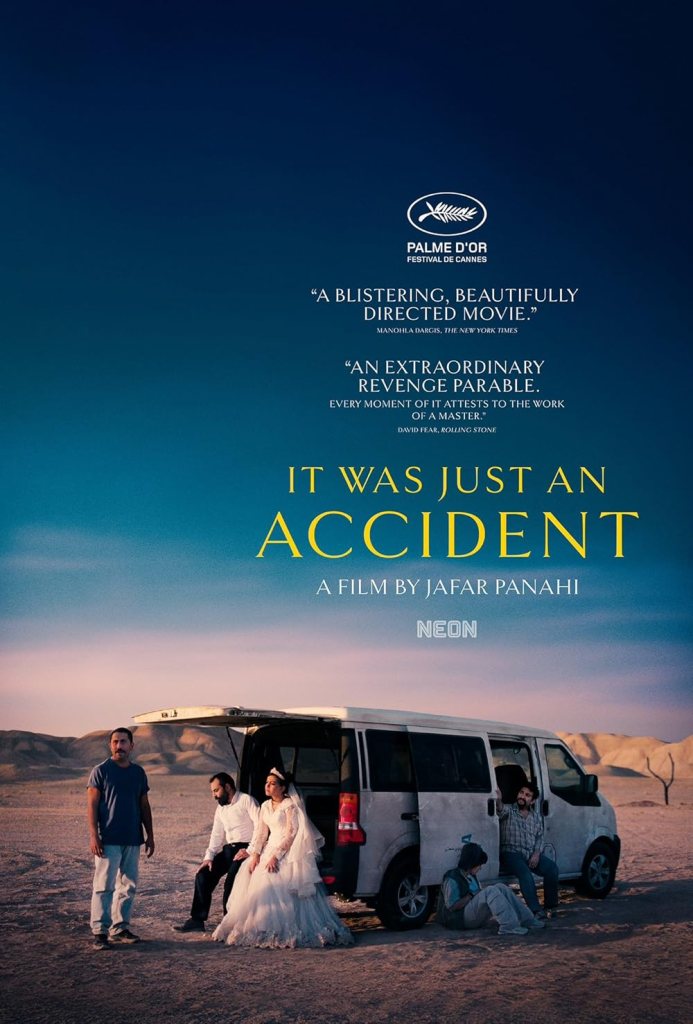
It Was Just an Accident (2025)

It Was Just an Accident (2025)

Compelling, compassionate and deeply political drama, full of humanism and warmth

Director: Jafar Panahi

Cast: Vahid Mobasseri (Vahid), Mariam Afshari (Shiva), Ebrahim Azizi (‘Eghbal’), Hadis Pakbaten (Goli), Majid Panahi (Ali), Mohammad Ali Elyasmehr (Hamid), Delnaz Najafi (‘Eghbal’’s daughter), Afssaneh Najmabadi (‘Eghbal’s’ wife)
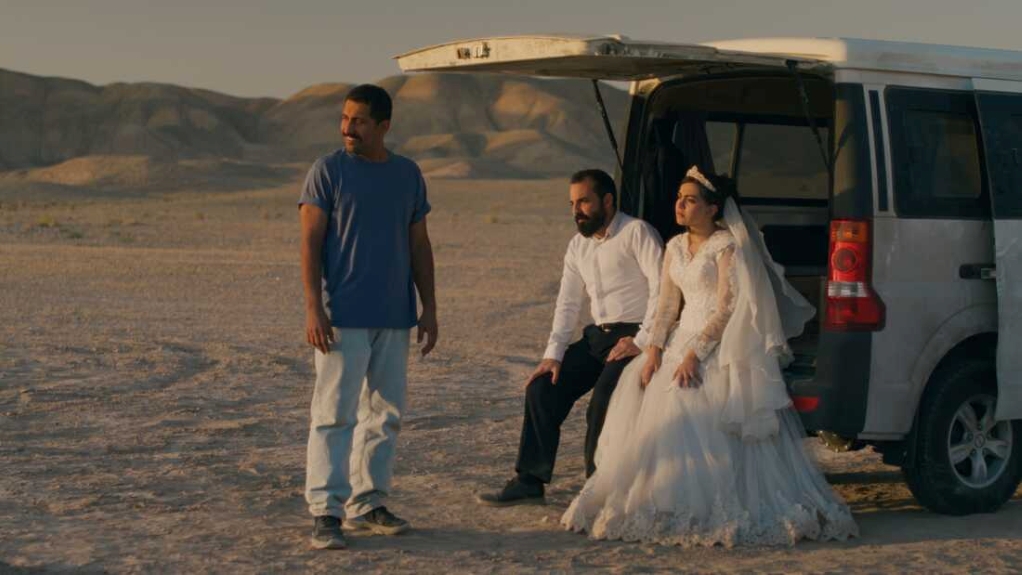
Late at night, a father (Ebrahim Azizi) driving his heavily pregnant wife and daughter home, hits a wild dog. His young daughter is deeply upset, but the father impassively responds it was ‘just an accident’. But the car is damaged, so the father pulls over for help. When he does so, the distinctive squeak of his artificial leg brings near-by Vahid (Vahid Mobasseri) into a horrified cold sweat. Vahid has heard that squeak before: belonging to Eghbal (‘Peg Leg’) the man who brutally tortured him in prison.

The next day Vahid kidnaps Eghbal, intending to bury him alive until doubt sets in: has he got the right man? To get the confirmation he needs, he reaches out to others tortured by Eghbal, including wedding photographer Shiva (Mariam Afshari), bride Goli (Hadis Pakbaten) (with groom Ali (Majid Panahi) in tow) and Shiva’s former partner Hamid (Mohammad Ali Elyasmehr). Can this motley group confirm Eghbal’s identity? What will they do with him?

It Was Just an Accident takes inspiration from Death and the Maiden and it’s a story that could be happening right now. Jafar Pahani’s outstanding film is set in Iran, where anyone can be seized from the streets and face months of relentless, brutal questioning from furious interrogators. Pahani, himself imprisoned for seven months in 2022-23 (only gaining release after going on hunger strike) shot the film secretly (and illegally) in Iran, the sixth film he has shot in this way, after being banned from film-making. Smuggled out of the country, it won the Palme d’Or, and makes compelling political points about life in Iran while never losing track of the human stories at its heart.

Pahani asks searching questions about truth, reconciliation and what separates the oppressed from the oppressor. Each character, a rag-tag assemblage of the regime’s victims all bundled together in a beat-up van like an eccentric Scooby-gang, must ask themselves what they want from their former torturer. Is it vengeance pure and simple? Or something deeper? And would taking satisfying, violent revenge really fill the hole years of brutal treatment left inside them? Do they want to stoop to the same vile level as their torturer – if he can take the last vestige of their humanity from them in this state, is this not a victory of sorts for Iran?

There is no doubt about the lasting trauma years of imprisonment has left on its victims. Vahid, constantly stooped with back-pain, literally freezes in mute horror at hearing Eghbal’s squeaking leg, before rushing into a sudden, ill-thought-out kidnapping. Shiva can barely bring herself to look at her possible torturer, barely suppressing vomit when she recognises his smell. Goli has to be restrained from beating him, her pain roaring to the surface. Hamid’s instinct to immediately kill Eghbal needs all the group to restrain him: his fury so intense, the man’s identity is almost irrelevant to Hamid’s desire for revenge. Even the calmest people find themselves succumbing to the cathartic need to assault Eghbal, to work some of the pain out of their system.

But yet… aside from Hamid, the group find it hard to embrace the violence of their oppressors. Instead, all crowded into Vahid’s van with a drugged Eghbal locked in the boot, they meander, arguing over what to do. Bury him in the desert? Confront him? Let him go before he identifies them? These people fell foul of Iran’s government because they campaigned for worker’s rights – they are not revolutionary fighters, but ordinary people. This dilemma leaves them sitting in the desert, emotionally sharing stories of their imprisonment, seemingly waiting (as Hamid says watching Shiva sit under a dead tree, like Waiting for Godot) for a decision to come to them.

These heart-rending stories reveal the oppressive horror of Iran’s system. Tales of mock executions, people left hanging upside down for days, harangued under brutal conditions to confess and name names. The fear of returning there is a constant, all of them scared that a released Eghbal may come for them. The abusive infection at the top of the country, trickles down. Anyone with any authority abuses their power, from car park attendants who carry card machines to force bribes for turning blind eyes to suspicious activity to hospital staff who place rules above treating people (and nurses who expect ‘tips’ for service), the system feels corrupt from top-to-bottom.

But that doesn’t mean the country is. Pahani reminds us throughout that real people are kind: there is a strong, uplifting humanist streak throughout It Was Just an Accident. From an ordinary person’s instinctive offer to help when Eghbal’s car breaks down, to passers-by who rush to help push Vahid’s van when it breaks down (filmed in long shot, these passers-by didn’t even knew they were in a film) to a doctor who over-rules petty officialdom to help a woman in need. It Was Just an Accident is full of small moments of human warmth and decency. Each of our group displays these attributes at points, with Vahid and Shiva in particular revealed as people of deep generosity and kindness. The film also takes surprising turns, with the characters responding to circumstances with a decency and humanity that is immensely moving.

Pahani shoots with a series of measured, long-takes allowing performances and themes to naturally expand. He films a series of virtuoso extended scenes of intense emotion, where the camera simply sits or glides gently to follow the action. The long desert scene, where the characters share their stories is all the more powerful for the gentle, unobtrusive distance the camera gives them. Best of all, a hugely powerful sustained shot, lit by the brake lights of the van, explodes with grief, cathartic anger, menace and shame – as well as eliciting extraordinary performances from the actors.

It Was Just an Accident is wonderfully acted across the board. Vahid Mobasseri is heart-breakingly decent beneath his pain. Mairam Afshari’s Shiva is superb as a principled woman who won’t allow herself to be corrupted. Mohammed Ali Elyasmehr’s Hamid never lets the anguish beneath his rage get forgotten. Hadis Pakbaten gives Goli a desperation to speak out while Majid Panahi’s Ali allows his character’s reserve to slowly break. Ebrahim Azizi walks a fine-line with the possible Eghbal, switching from assurance to desperate confusion, pleading to rage – and closes with an impassioned tour-de-force that provokes complicated, enigmatic reactions from the audience.

Enigmatic is also part of Pahani’s ending, a quiet, open-to-interpretation final sequence that could be either a haunting reminder of how the past never lets us go, or a suggestion that there is a hope for truth and reconciliation. How you take it, is to you. But there is no doubting the extraordinary power of Pahani’s film, or how lightly it wears its political and social messages. This is not a film without humour, nor is it a film that forgets people are capable of decent, humane acts that can surprise even themselves. It’s a film that will leave you thinking deeply.
Anatomy of a Fall (2023)

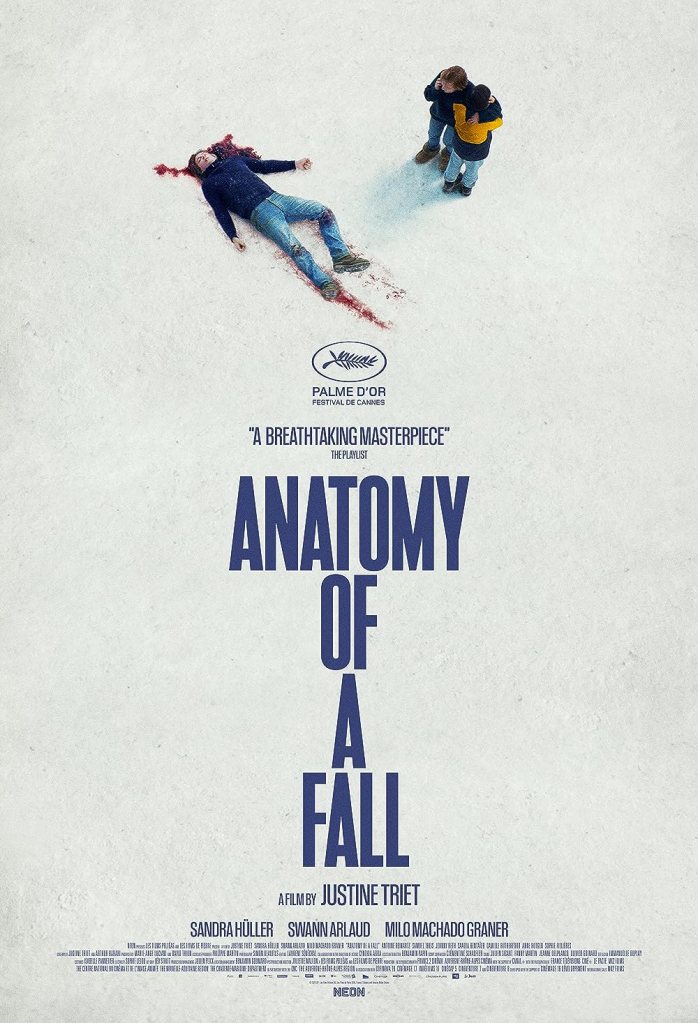
Anatomy of a Fall (2023)

Brilliant courtroom drama, full of enigmatic questions around the nature of truth

Director: Justine Triet

Cast: Sandra Hüller (Sandra Voyter), Swann Arlaud (Vincent Renzi), Milo Machado-Graner (Daniel Maleski), Antoine Reinartz (the Prosecutor), Samuel Theis (Samuel Maleski), Jehnny Beth (Marge Berger), Saadia Bentaieb (Nour), Camille Rutherford (Zoé Solidor), Anne Rotger (the President)

What is a trial? A forum for discovering the truth? Or a theatre where the best story wins? Anatomy of a Fall, Justine Triet’s Palme d’Or winning courtroom drama, explores this and takes its place as one of the finest courtroom films made. Complex, fascinating and compelling, it asks searching questions about the unknowable nature of truth. Presenting only perspectives, recollections and conflicting inferences based on the same handful of facts, it places the viewer in the same position as the jury: ultimately we must choose a version of the truth “we can live with”.

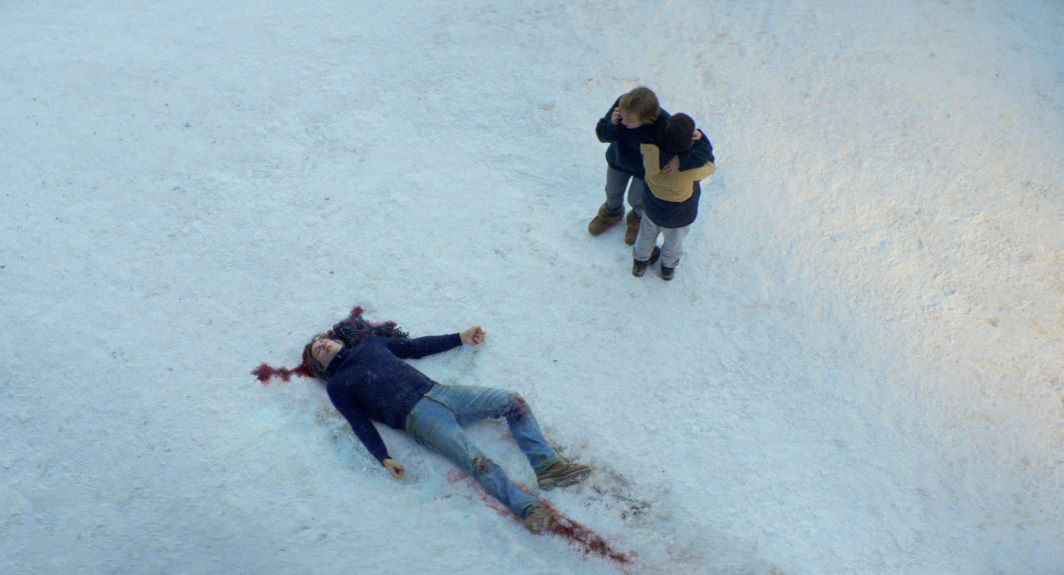
The trial revolves around the death of Samuel Maleski (Samuel Theis), lecturer and amateur house renovator, discovered dead by his son Daniel (Milo Machado-Graner) having fallen from the attic of their Grenoble chalet. Did he fall, jump or was he pushed? Suspicions fall on the only suspect: his wife, famous novelist Sandra Voyter (Sandra Hüller). Sandra’s story doesn’t quite stack up and her assurance that they were in a difficult but loving relationship isn’t supported by the facts. A dramatic court case begins, in which both the prosecutor (Antoine Reinartz) and Sandra’s lawyer, old friend Vincent (Swann Arlaud), lay out compelling, but utterly conflicting versions of Sandra and Samuel’s marriage, with their son Daniel (the only real witness) caught horrifically in the middle.

Anatomy of a Fall only shows us facts that a jury could have. We open no more than an hour before the fateful event, with Sandra’s interview at home with a young student (Camille Rutherford) halted by an unseen Samuel playing an instrumental cover of 50 Cent’s P.I.M.P. at deafening volume. Is his playing of loud music an everyday event (as Sandra says) or a passive aggressive move designed to disrupt the interview of a wife he is jealous of? We don’t know because we never get to see their subsequent confrontation, as we follow Daniel walking his dog, returning find Samuel’s body.

This sets the tone for the superbly uneasy courtroom drama that follows. Throughout, Samuel is literally a ghost. The film finally shows him only when a recording he made of a vicious argument between the couple is played to the courtroom. Triet cuts from the courtroom to a flashback so we can see Sandra and Samuel’s increasingly heated conversation, where he condemns her for selfishly dominating their lives, while she accuses him of a martyr complex and blaming her for his own failures. But the second the recording hits a disputed physical clash we cut back to the courtroom and hear only the sounds themselves and their interpretations from prosecution and defence.

Those interpretations are effectively stories, and Anatomy of a Fall makes it clear a compelling and relatable story is essential. Taking a leaf from Anatomy of a Murder (a clear inspiration), it’s less the facts and more the presentation that is likely to win either conviction or acquittal. Vincent carefully coaches Sandra on her version of events – the loving relationship turned sour by her husband’s depression, bought on by his guilt for the accident that left their son visually impaired – advising her on tone, wording and when to stress certain points and which to avoid. He flatly tells her an accident is something “I don’t believe” and stresses their only chance is to establish Samuel’s suicidal intent. Lawyers aren’t paid to find the truth: they are paid to secure verdicts.

There is an added complexity as Sandra, a German, must conduct the trial in French, her third language, rather than her preferred second language of English. Language is itself a topic of debate in the marriage – her French husband Samuel accuses Sandra of forcing him and French-speaking Daniel to meet on her preferred ground of English, rather than improve her French. She counters that English makes them all equal, speaking a second language. In the trial, Sandra struggles to articulate her points, floundering for precise words. Eventually the pressures of the trial force her to revert to English, which is then translated for the rest of the court.

Superbly played by Sandra Hüller, Sandra is an assured professional, struggling to understand how she has ended up in this position. She can be distant and doesn’t suffer fools gladly. Unspoken as it is, it’s clear for police and prosecution she doesn’t fit their profile of a grieving widow. Every beat of Hüller’s performance is brilliantly open to interpretation: is she anxious about the pressure on her son, or scared about what he might say? Is she filled with stoic regret or did she never care for her husband? Even when she switches to English in the court, is this a result of pressure or because it is easier for her to elaborate a story in this language?

The truth is increasingly sidelined. We see no reconstruction of the possible crime, only two (both convincing) versions of it presented with models and computer graphics that outline first a murder then a suicide, both plausibly explaining how a suspicious blood splatter appeared on a shed. A psychiatrist arguing passionately for Samuel’s clear-headedness and determination to live, is blamed by Sandra for getting him hooked on anti-depressants. Sandra’s novels are dragged into the trial (on the excuse that she has talked extensively about their autobiographical content) – was her use of Samuel’s idea from his abandoned novel theft or agreement? We can never be sure.

This struggle for the best story has an increasingly damaging impact on their son Daniel. Beautifully played by Milo Machado-Graner, Daniel is a quiet, sensitive, precocious young boy, whose accidental visual impairment becomes crucial. Certain at first of what he saw and heard, we see his certainty crumble during police-escorted reconstructions at the scene (the loud music making what he claimed he heard from where, impossible). On the stand he tries to reconcile his love for both his parents with knowledge of their arguments. At home with his mother, he becomes increasingly withdrawn and closer to his court-appointed guardian Marge (a superbly conflicted Jehnny Beth).

It is Marge who gives voice to, perhaps, Anatomy of a Fall’s central message. The truth is, in the end, the story we choose to believe, the one we can live with. Anatomy of a Fall presents us with multiple choices but no definitive answers. It is up to us to listen to the evidence and decide on Sandra’s guilt or innocence. Triet’s superb film throws in a final additional mystery with a late piece of evidence that is even more open to interpretation than anything else, a story that could be argued as a late realisation or an elaborate lie. We even see Samuel again, as the witness recounts words they claim he said, but this time we just see him lip synching to the audio of the witness’ testimony – are words literally being put into his mouth? The truth is what we make of it, and as subjective as any story.

Anatomy of a Fall is a brilliant courtroom drama and a scintillatingly human story with a superbly enigmatic performance from Sandra Hüller at its heart. Triet and Arthur Harari’s script is sharp and marvellously balances objective and subjective facts. Triet directs with a tight, pacey assurance, with a striking series of final images that remain open to viewer interpretation as to who is protecting whom and why. Fascinating, compelling and open to endless reconsideration and reinterpretation, Anatomy of a Fall can take its place as one of the definitive courtroom dramas on film.