Category: Political drama

Misbehaviour (2020)

What price progress in Misbehaviour?

Director: Philipa Lowthorpe

Cast: Keira Knightley (Sally Alexander), Gugu Mbatha-Raw (Jennifer Hosten, Miss Grenada), Jessie Buckley (Jo Robinson), Greg Kinnear (Bob Hope), Lesley Manville (Dolores Hope), Rhys Ifans (Eric Morley), Keeley Hawes (Julia Morley), Phyllis Logan (Evelyn Alexander), Loreece Harrison (Pearl Jansen, Miss Africa South), Clara Rosager (Marjorie Johansson, Miss Sweden), Suki Waterhouse (Sandra Wolsfield, Miss USA), John Heffernan (Gareth Stedman Jones)

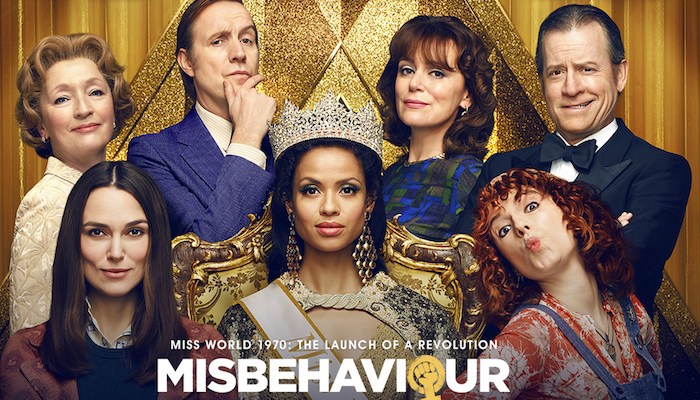
In 1970, the Miss World Competition in London was disrupted before a world-wide TV audience by Women’s Liberation campaigners, furious at the competition being the public face of a world that judged women on appearance rather than personality. The disruption was led by post-graduate UCL student Sally Alexander (Keira Knightley) and commune radical Jo Robinson (Jessie Buckley), and rather overshadowed for many the fact that, for the first time in history, black female competitors like Miss Grenada Jennifer Hoosten (Gugu Mbatha-Raw) were treated as genuine contenders for the title. Misbehaviour recreates all this wonderfully, but also makes an intriguing exploration of the different ways women can make themselves a place in the world.

It would have been very easy for Philipa Lowthorpe’s engaging film to have designated villains – after all with the casual sexism and objectification of the Miss World competition, you could easily have assigned the competition runners as baddies. Instead the film is richer than that, full of people who genuinely feel they are doing their best in the roles they’ve been given in life. If there is a villain, it’s society itself which traps women into certain roles, and doesn’t allow them to grow.

The film follows three plot lines – the women’s liberation movement, the background of staging the Miss World Competition, and the lives and expectations of the contestants themselves. Of these three plots, the women’s liberation movement is surprisingly the least engaging. Keira Knightley and Jessie Buckley do decent jobs, but their characters are more one-dimensional and lack real development (they start the film as passionate rebels and end the film the same way), with this lack of plot being padded out by movie clichés of the “you’re off the protest” variety. 

The real interest surprisingly is the competitors themselves. Like the protestors, the film is keen to not blame the contestants. The ones we follow are smart, intelligent, passionate women who are, by and large, willing to play the game to get their future ambitions realised. We see this most of all for Miss Grenada and Miss “Africa South” (a black South African shoe-horned into the competition to counter accusations of legitimising apartheid): the competition places them in the position of representing victimised minorities, groups that have their options sharply restricted. Having spent their lives being told that only being white, blonde and blue-eyed is beautiful, the chance to set an example to others is important to them – and the film doesn’t downplay or demean this at all.

This is captured particularly in the exploration of Gugu Mbatha-Raw’s Miss Grenada, Jennifer Hoosten. A woman willing to use the competition as a springboard to try and build herself a professional career, she is an intelligent and dedicated woman who understands the nature of her competition. Hoosten however rejects being positioned as a victim, as well as the way Women’s Liberation crams all women’s aims into a single homogenous goal. Why should another group of women tell her what is best for her – isn’t that what men have been doing all her life? As a black woman, her only way to get the opportunities that someone like Sally Alexander has – education and career – is to play the hand that nature has given her the only way she can. Mbatha-Raw captures this all extremely well in a quietly judged and affecting performance.

Similar feelings motivate the rest of the competitors. Miss Africa South (an engaging Loreece Harrison) just wants to keep her head down and get home to her family, letting her presence alone make her statements. Miss Sweden (a fiery Clara Rosager) rails against the control and management of the organisers on every aspect of her life while at the competition. It’s a film where women are working to find their place in the world, but accepting that not all those goals will be the same. Keeley Hawes does excellent work as Julia Morley (co-runner of the competition with her husband, a brash Rhys Ifans), a woman trying her best to reform the competition from within.

Lowthorpe juggles these interesting themes – giving oxygen to all these points of view – within a fascinatingly precise reconstruction of the competition itself and the protest. As part of this Greg Kinnear contributes a spot-on performance as Bob Hope, here a sexist comedian from a different era who can’t understand the changing world. The film gets a lot of comic mileage as well from the jaw-dropping sexism of the BBC coverage and the drooling perviness of the reporters rushing to interview the competitors.

“This isn’t the end of anything, but this could be a start” says Lesley Manville in her waspishly delightful cameo as Hope’s wife. She’s right, the world didn’t change overnight. But as the film captures it started getting people thinking, even if it accepted that not all women will have the same view. Sally Alexander and her mother can disagree on women’s roles – “Why would I want to grow up like you?” Sally berates her housewife mother (very well played by Phyllis Logan) – but the two characters can still come together and agree that having opportunities is still better than not. And perhaps that’s what the film is arguing for: all these women are stretching for opportunities. And if that means the world needs to change so half the population gets the same chances as the other half, so be it.

The Candidate (1972)

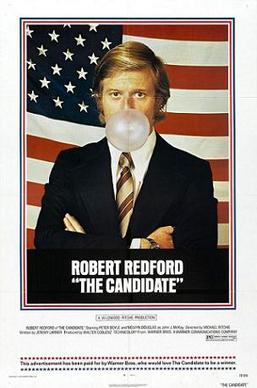
Robert Redford as a political puppet in The Candidate

Director: Michael Ritchie

Cast: Robert Redford (Bill McKay), Peter Boyle (Marvin Lucas), Melvyn Douglas (Former Governor John J McKay), Don Porter (Senator Crocker Jarmon), Allen Garfield (Howard Klein), Karen Carlson (Nancy McKay), Quinn Redeker (Rich Jenkin), Michael Lerner (Paul Corliss), Kenneth Tobey (Floyd J Starkey)

Bill McKay (Robert Redford) has it all – the looks, the charm, the ideals, and he’s the son of former California governor John McKay (Melvyn Douglas). Who else could stand a chance as the Democratic candidate against long-time incumbent Senator Crocker Jarmon (Don Porter)? McKay is reluctant to run – but he’s promised by Marvin Lucas (Peter Boyle), election specialist, that he has no chance of winning so sure, he can say whatever he wants. But Lucas has another plan, to turn the good-looking, charismatic McKay into his ideal candidate – workshopped, bland, generic and with as wide (and shallow) an appeal as possible. And as the election goes on, McKay turns from not caring, to not wanting to get humiliated, to wanting to win. What price idealism in a political game like this one?

Today, The Candidate looks considerably less fresh and inventive than it seemed in 1972. Back then it caught the wave of an America becoming increasingly disillusioned with its leaders and elections. Then, the idea of mass media manipulating focus-grouped candidates into something pliable, bland and uncontroversial to appeal to as many people as possible, seemed revelatory. Today, when even the optimistic The West Wing chronicles how even the good guys are obsessed with being on message and putting together political ideas into simple, repeatable soundbites with image as everything, The Candidate hardly looks ground breaking.

It won an Oscar for its screenplay, but it looks behind the times now – or even telling us only what we know already. So politics is all about image? Well big news there. In its Faustus-like structure, with McKay being corrupted away from his initial principles into the sort of cookie-cutter candidate focus group organisers dream of, it should be compelling. It isn’t really, part of the problem being that, even with his ideals, McKay is not really an interesting character.

He’s a character that can almost be defined as “looks like Robert Redford”. That’s what makes him appealing – the script spends no time at all on establishing any political or social ideas in McKay early-on beyond a vague wish to “do good” with his low-key law consultancy representing only the poorest. There is a half-hearted attempt to add some daddy issues, with the son determined to never become the principle-free politician his father (a blithely uncaring Melvyn Douglas) is. But these don’t really come into shape. Perhaps that’s the point? What makes McKay so appealing to Lucas from the start is he looks like a Kennedy, but has no real personality or ideas of his own.

He is, basically, a weak person who is quickly shuttled from place to place, told what to say and what to do and willingly converted one step at a time into an even greater non-entity. McKay clings to the idea of his political videos being about an idea, but quickly accepts “ideas don’t work” in these short pieces and allows them to be turned into puff pieces praising his youth and vigour. The film does get some fun out of the emptiness of campaigning – the slogan “McKay: The Better Way” means nothing at all – not to mention McKay becoming so dependent taking direction he can’t even do a broadcast without asking if his jacket should be buttoned or unbuttoned. But it lacks a real oomph.

Perhaps that’s because the film doesn’t really have a plot or characters as such. Every person in the film is there to fill an objective, no more and no less. Even Lucas, the arch manipulator, is little more than a cipher to represent spin doctors (years before the term was coined) for whom the competition and battle is all that matters and principles count for nothing. Ritchie shoots the film with a sort of sub-Altmanesque observational style with overlapping dialogue, but never really immerses the viewer in the quick-moving world of politics, instead serving up a series of mediocre images and scenes that serve as sketches or statements (Campaign ads are empty! Politicians are pre-packaged! They don’’t answer questions!) that eventually become a bit wearing.

Without this sense of narrative, events drift by and character developments just seem to happen with no logic. Redford supplies no real character to the part, unable to convey a sense of growing corruption and ambition in his performance. So when McKay starts doing things – like the mistress he takes during the course of the campaign – it just feels like the film has a nihilistic loathing for politicians rather than the ability to make any actual points that carry weight. 

It’s a disappointment as this is a good idea, and could have really worked if the writers and directors had allowed the film to have some heart alongside its cold cynicism, or even had allowed some clear story to play alongside. Instead we simply watch McKay becoming even more empty and artificial – taking part in a debate with his rival on air, in which he skilfully never answers a single question but parrots quotes from his briefings – only addressing at the very end that all this leaves us with politicians good at winning elections but with no idea about how to run the country. While it is one of the first films of its type, you feel it has long since been surpassed.

Parasite (2019)

The Kim family juggle poverty with dreams of improvement in the brilliant Parasite

Director: Bong Joon-Ho

Cast: Song Kang-Ho (Kim Ki-taek), Choi Woo-shik (Kim Ki-woo), Park So-dam (Kim Ki-jeong), Jang Hye-jin (Kim Chung-sook), Lee Sun-kyun (Park Dong-ik), Cho Yeo-jeung (Park Yeon-gyo), Jung Ji-so (Park Da-hye), Jung Hyeon-jun (Park Da-song), Lee Jung-eun (Gook Moon-gwang), Park Geun-rok (Yoon), Park Seo-joon (Min-hyuk)

I’m writing this in the glorious after-glow of Parasite’s shock win for Best Picture, finally breaking (after 92 years!) the taboo on foreign language films lifting the Big One at the Hollywood’s annual love in. So let’s just say: not only is it a delight to see Hollywood breaking “the 1-inch barrier of subtitles” (to quote Bong from his Best Director at the Golden Globes), but also it’s a thrill to see the Oscar go to something that can make a legitimate claim to being the Best Picture of the Year – not to mention a film that speaks to the modern world in a way very few nominees have done since Get Out.

Bong’s superb picture has found such universal appeal perhaps because it so completely understands questions of class and wealth in our modern world. Set in an unnamed South Korean city, we are introduced to both the extreme poor and the extreme rich. At the bottom end of the scale – living in a half-basement apartment – are the Kim family. At the top – almost literally, living in a sprawling, modernist apartment bathed in sun with a large private garden at the top of a hill – are the Park family. When son Kim Ki-woo (Choi Woo-Shik) lands a job at the Parks’ teaching English to their daughter, he quickly begins to work with sister Ki-jeong (Park So-dam) to manipulate Park Yeon-gyo (Cho Yeo-jeung) to hire each member of the family in turn in a job in the household. But from there, the best laid plans spiral firmly out of control.

The less you know about the structure and events of Parasite going into it, the more you will gain from the film. What Bong has created here is a superb medley of genres, developing from a black-comedy-heist-caper into thriller territory, with a splash of horror and lashings of intelligently subtle social commentary. This is a film for the modern age, addressing questions of class, cultural resentment, societal divisions and the damaging impact of the super-rich and super-poor living side-by-side in ways that are profoundly insightful and fundamentally universal. 

Who are the parasites in Parasite? You could argue its society itself. At first it seems obvious on the surface that the Kims – living half beneath the surface of the city itself, inveigling their way into homes and roles, ruthless in acquiring their aims – fit the bill. But what about the Parks? So sheltered by money (“She can afford to be nice” says Kim dismissively of Mrs Park) they seem barely able to organise their own lives without the aid of an army of employees, placing no real value on them as people, only as extensions of their own house.

It’s all part of Bong’s skilful shift of perceptions throughout the film: the Kims are in some ways sympathetic (for the extreme poverty and desperation) but also they have no concern about hurting other people or manipulating them to get what they want. At the same time, we invest in seeing the well laid plans come to fruition, despite the impact it has on other people affected by their schemes. But as the film progresses, the innate selfishness and thoughtlessness of the Parks, their assumptions that their problems are of more concern than other people’s, that the world should revolve around them, makes them less sympathetic and the Kims more rounded and human.

Bong’s film brilliantly outlines this class war, every frame enforcing the insane split between such completely different worlds all rammed into the same city. The Parks’ apartment is a triumph of modernist design, the Kims’ flat a lightless dive with a regular tramp who pisses just outside their window. The Kims scurry to distant corners of the apartment to gain access to roving free wifi and stretch limited food supplies and their few pennies to the absolute limit. The family takes menial jobs to make ends meet, including folding a never ending pile of pizza boxes (boxes that seem to grow to dominate their flat).

At one point the camera follows the progress of the Kims as they leave the Park house and scamper, in an almost surreal series of long shots, down a never-ending parade of steps and streets, literally descending further down-and-down into the gutters of the city. It’s superb moments like this in Bong’s intricately designed film that constantly show us the divides between these people, the Parks living practically on Olympus with the Kims in Tartarus. These are problems that infect every society in the world, and the difficulty of making both rich and poor actually understand each other and find common ground to relate on are the problems we all see around us every day.

That’s even leaving aside the triumphs of Bong’s directing confidence, his mastery of tone and genre. The first half of the film is very funny – with Bong even leaning on this by having his characters drop dialogue that subtly refers to the ease with which the Kims’ plans come together – and has a delightful heist movie vibe. But the bubbling barriers between class hint at the tensions and danger that we feel lie in wait in the film, and threaten to break out. Korea is a volcano with the Kims and Parks sitting on the top, but it’s a volcano that the whole world can recognise. As Bong makes the film darker, leaner and even more menacing with hints of tragedy, it feels like the world correcting itself.

The acting is superb across the board with Song Kang-Ho hilarious and then deeply affecting as Mr Kim, a man slowly pushed beyond what he can bear. Cho Yeo-jeung is terrifically endearing and frustratingly thoughtless as the naïve Mrs Park. Park So-dam is brilliant as a super-smart Ki-jeong Kim, brilliantly manipulating left-right-and-centre. There is not a false note in the cast, the entire ensemble perfectly combining to create the class-conscious world of the film. To say too much more would be spoil it!

Bong Joon-ho’s film is Western break-through but really it’s a universal condemnation of the dangerous influence of class. And with Bong’s mastery of cinema – this is such a well directed film, both in terms of tone and every single shot contributing brilliantly to the whole – this has produced a film that feels like a very modern, prescient and profound masterpiece, a film that speaks to and almost defines the problems of the modern world. While at the same time being immensely entertaining and unpreaching. Thank goodness that 1 inch barrier came tumbling down.

Nixon (1995)

Anthony Hopkins triumphs as Nixon in Oliver Stone’s surprisingly sympathetic biopic

Director: Oliver Stone

Cast: Anthony Hopkins (Richard Nixon), Joan Allen (Pat Nixon), James Woods (HR Haldeman), Powers Boothe (Alexander Haig), Larry Hagman (“Jack Jones”), Ed Harris (E. Howard Hunt), Dan Hedaya (Trini Cardoza), Bob Hoskins (J. Edgar Hoover), Madeline Kahn (Martha Mitchell), EG Marshall (John Mitchell), David Paymer (Ron Ziegler), David Hyde Pierce (John Dean), Paul Sorvino (Henry Kissinger), Mary Steenburgen (Hannah Nixon), JT Walsh (John Ehrlichman), Sam Waterston (Richard Helms), Brian Bedford (Clyde Tolson), Tom Bower (Francis Nixon), Kevin Dunn (Charles Colson), Annabeth Gish (Julie Nuxon), Tom Goldwyn (Harold Nixon), Saul Rubinek (Herbert G Klein)

In 1995, there was one person the chronicler of the 1970s American experience, Oliver Stone, hadn’t covered: Richard M Nixon. The man who was the embodiment of the dark scar on the American consciousness, the grim, unlovable presence behind the war in Vietnam, the protests and the deep, never-ending wound of Watergate, who seemed to drag the country further and further into the abyss. The man who besmirched the office, the least popular president ever, the national shame. With Stone’s searing attacks on everything from Vietnam policy to the conspiracies behind the Kennedy assassination, you’d expect his film on Nixon to be a condemnation. What people didn’t expect was a film as strikingly even-handed as this, which recasts Nixon not as a gloating villain, but a Shakespearean figure, a Greek tragedy of a man destroyed by chronic character flaws.

Opening with a crushed Nixon, like a drunken Gollum cradling his precious, listening to his precious tapes in the bowels of the White House during his final days in office, the film is told in a fascinatingly non-linear style – loosely falling into two acts, cutting backwards and forwards in time. The first act covers most of Nixon’s career up to the presidency, focusing on his Quaker childhood and the influence of his mother Hannah (Mary Steenburgen), his defeat in the 1960 election to Kennedy and his years rebuilding his political standing. The second half takes a more linear approach, covering a Presidency becoming increasingly bogged down in the inept cover-up of Watergate and increasingly desperate attempts to save his presidency, intermixed with foreign policy successes.

What is really striking is that Stone’s movie finds a great deal of sympathy for this troubled and complex man. He’s a man who has greatness in his grasp, dedicated, intelligent and with vision – but fatally undermined by self-loathing, self-pity and a bubbling resentment about not having the love of the people. Like Lear raging against the storm, or Macbeth bemoaning the impact of his vile deeds, Stone’s Nixon becomes a sympathetic figure, even while the film makes no apologies for his actions, his aggressive bombing of Cambodia (the film notes at its end the bombing led directly to the massacres of the Khmer Rouge) or his failures to claim any responsibility for how he caused his own end.

Stone’s empathetic vision of Nixon is shaped largely by Anthony Hopkins’ titanic performance in the lead role. Hopkins makes no real effort – beyond teeth and hair – to look like Nixon, but brilliantly embodies Nixon’s awkward physicality and, above all, his angry, bitter, resentful personality. It’s not an imitation, but it totally captures him. Hopkins has got it, and the disintegration of Nixon over the course of the film into the shambling, miserable, twitching, even slightly unhinged mess he became in the final days of his presidency is astounding. 

It works because Hopkins never loses sense of the potential for greatness in Nixon – sure he’s socially awkward (Hopkins superbly captures Nixon’s awkward grin, his stumbling nervousness in conversation), but politically he’s assured, confident and has huge insight into realpolitik. His flaw is that he wants to be both the master politician and the people’s champ, to be Nixon and JFK, to have the people cheer him to the rafters. It’s a longing that turns to resentment, fuelling insecurity and fear, that causing him to be so afraid of being cheated that he cheats first and bigger.

It’s that potential for greatness that swims through Stone’s masterfully made, electric film. Stone’s love for mixing film stock, fake newsreel footage, snazzy camerawork, switching colour stock, stylistically eclectic sound and music choices and bombastic lecturing comes to the fore here – and I accept it won’t be for everyone. But for me it works. It’s a big, dramatic movie because it covers an epic theme. From its early echoes of Citizen Kane – the White House as Xanadu, those missing 18 ½ minutes of the tape Nixon’s “Rosebud” – through to the accelerated pace and film stock as events spiral out of the President’s control, it’s an explosion of style that really works, even if there are points which are too on-the-nose (a scene where Nixon’s dinner talk of war is interrupted by a steak that leaks gallons of blood as he cuts into it, is clumsy in the extreme).

Stone’s theories revolve around the true villain being the government-financial power system itself, a grindingly oppressive beast chews up and spits out the men who think they can ride it. Nixon may know about the danger of the system, but he’s as powerless as anyone else. Its tendrils extend everywhere, from the creepily domineering CIA chief Helms (Sam Waterston, unsettlingly intimidating in scenes restored in the director’s cut) to the shady Texan money interests (led by an excellent Larry Hagman of all people) who sure-as-shit want to get rid of that liberal, Cuban surrender monkey Kennedy, by any means necessary (“Say Kennedy dont run in 64?”). 

Nixon wants to control it, to do some good – and the film is excellent at stressing how Nixon’s poverty-filled Quaker background gave him a drive to achieve but also a chippy insecurity and moral standards from his imperious mother he can never hope to meet – but what hope does he have? In any case, his own deep moral failings doom any chance of forging his own goals, sucking him into a quagmire where long-running dirty deeds, shady deals and unedifying company consume him. “When they look at you they see what want to be. When they look at me they see what they are” Nixon complains to the painting of Kennedy, the rival whom he can never eclipse, the man born with all the advantages Nixon never had, the millionaire embraced by the people while the working-class Nixon is reviled. It’s these resentments that consume and destroy Nixon, and Stone presents this as an epic tragedy of a great politician, crushed by his fundamentally human flaws.

Around Hopkins, Stone assembles a brilliant cast. Joan Allen is superb as Nixon’s loving but insightful wife who won’t shy to speak truth to power. James Woods is perfect as the bullishly aggressive, fiercely loyal Haldeman. Paul Sorvino does a wonderfully arch impersonation of Kissinger, always keeping his distance. David Hyde Pierce makes a smoothly innocent but determinedly self-preserving John Dean, Powers Boothe a wonderful cold Alexander Haig. Only Bob Hoskins gives a performance slightly too broad as Hoover – but he still laces the role with a crackling menace.

Nixon is a great film, an explosion of style (perhaps at times a little too much), which painstakingly strips bare the President’s psyche – his doubt, guilt, bitterness, resentments and finally overwhelming self-pity. Powered by a titanically well-observed performance by Anthony Hopkins, who is just about perfect in every frame – every nuance feels real – Nixon is a wallow in the dark underbelly of America, which hints throughout at the even greater dangers that lie under the surface, the powerful system maintaining the status quo that sees presidents come and go, but never allows any real change. It’s a remarkable film.

The Two Popes (2019)

Hopkins and Pryce excel in Fernando Merielles’ witty and thought-provoking The Two Popes

Director: Fernando Meirelles

Cast: Jonathan Pryce (Cardinal Jorge Mario Bergoglio/Pope Francis), Anthony Hopkins (Cardinal Joseph Ratzinger/Pope Benedict XVI)

Hollywood loves a buddy movie. And what buddy movie could be more off the wall than Two Popes: one a German traditionalist with a reputation for rigid interpretation of church law who reads Latin for fun, the other an easy-going Argentinian reformer with a love of football and tango. So that’s what you get with The Two Popes, a surprisingly funny and engaging film about Papal politics, dashed with a pleasingly even-handed perspective on its two central characters.

In 2012, Cardinal Jorge Mario Bergoglio (Jonathan Pryce) is planning to hand in his resignation as Archbishop of Buenos Aires to Pope Benedict XVI (Anthony Hopkins), now in his seventh year of Pope. Bergoglio feels that he has little left to offer the church, and this own reformist ideas are out of step with the current leadership. He feels his best calling would be to return to a simpler, parish priest life. But Benedict XVI summons him to the Vatican to dissuade him – leading to a series of prolonged heart-to-heart conversations between the two that see a thaw in their relationship, heartfelt confessions from both men on their failings, and Benedict’s revelation that he plans to resign from the Pontificate – and wants Bergoglio to succeed him, as Bergoglio can offer the reform to the church that Benedict cannot.

The Two Popes is a terrific adaptation by Anthony McCarten of his own stage play. It shows us Benedict’s conservative, safety-first policies (towards everything from financial scandals to child abuse scandals) and Bergoglio’s more modern, inclusive church, but largely avoids holding one up as wholly superior to the other, or turning the story into a simple good guy/bad guy conflict. Instead it focuses on showing the faults and positives of both men, and how both men felt a calling and need for their service at different times – and how this loss of calling (something both men suffer from at the start of the film) can be reborn through patience, listening and reflection. Meirelles directs this very theatrical piece sharply, with a keen eye for expanding it into film with a combination of intriguing angles, visual style and confident editing.

Unfolding over the course of several increasingly heartfelt conversations – which progress from awkwardly blunt confrontation, through thawing openness, to something near to a confessional – this is a film that uses the Hollywood convention of a mismatched couple to allow an intriguing exploration of the price and value of faith and the difficulty of duty. Sharp commentary is made on the backgrounds of both men – Benedict growing up in Nazi Germany, the sharp criticism of Bergoglio’s perceived lack of action during the Military Junta coup, which led to his dismissal as head of the Jesuit order in Argentina. Both express guilt, regret and even touches of self-loathing – but both also react to those feelings in the other with patience and support.

It also helps that these conversations around church politics and religious intent are told with plenty of fresh and entertaining jokes. There is always a lot of mileage to be had from seeing people like the Pope delightedly watching trashy TV or failing to recognise either ABBA or the Beatles, while Bergoglio’s homespun openness and willingness to talk with anyone about anything (not to mention his passion for football) throw open no end of comic possibilities from seeing this prince of the Church insist on being treated as just a regular joe.

It also gives loads of opportunities for its two stars, arguably Wales’ leading actors (both highly deserving of their Oscar nods). Hopkins, given his best material in years, is brilliant as Benedict: irascible, imposing, morally certain and firm but also playful just below the surface and a man profoundly aware of his own mistakes and failings. Hopkins delivers the lines with just the right touch of twinkle in his eye. 

He also bounces wonderfully off Pryce who is possibly at a career best as Bergoglio. A brilliant physical match for Pope Francis, Pryce’s performance captures perfectly the unaffected humility of the man, but also his intensely sharp personal reflection and the burdens of guilt, as well as the shying away from confrontation that is Bergoglio’s greatest failing. Pryce’s comic timing is impeccable, but he also carries the movie’s heart and soul with affecting skill, pulling off the difficult trick of making a good man a compelling one.

Meirelles’ film is a talky affair – and its construction is a little pat at times, like a very well assembled production line buddy movie and biopic. It never completely escapes the clichés of two-very-different-people-coming-together that is one of its heartbeats, but it does it all so well, with such grace and wit – and two such terrific performances – that it hardly matters. Another big success for Netflix.

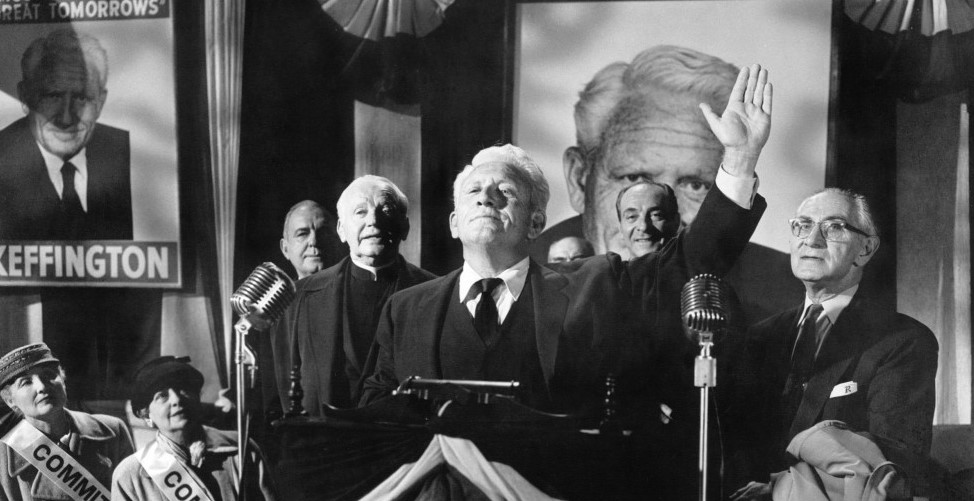
Quiz Show (1994)

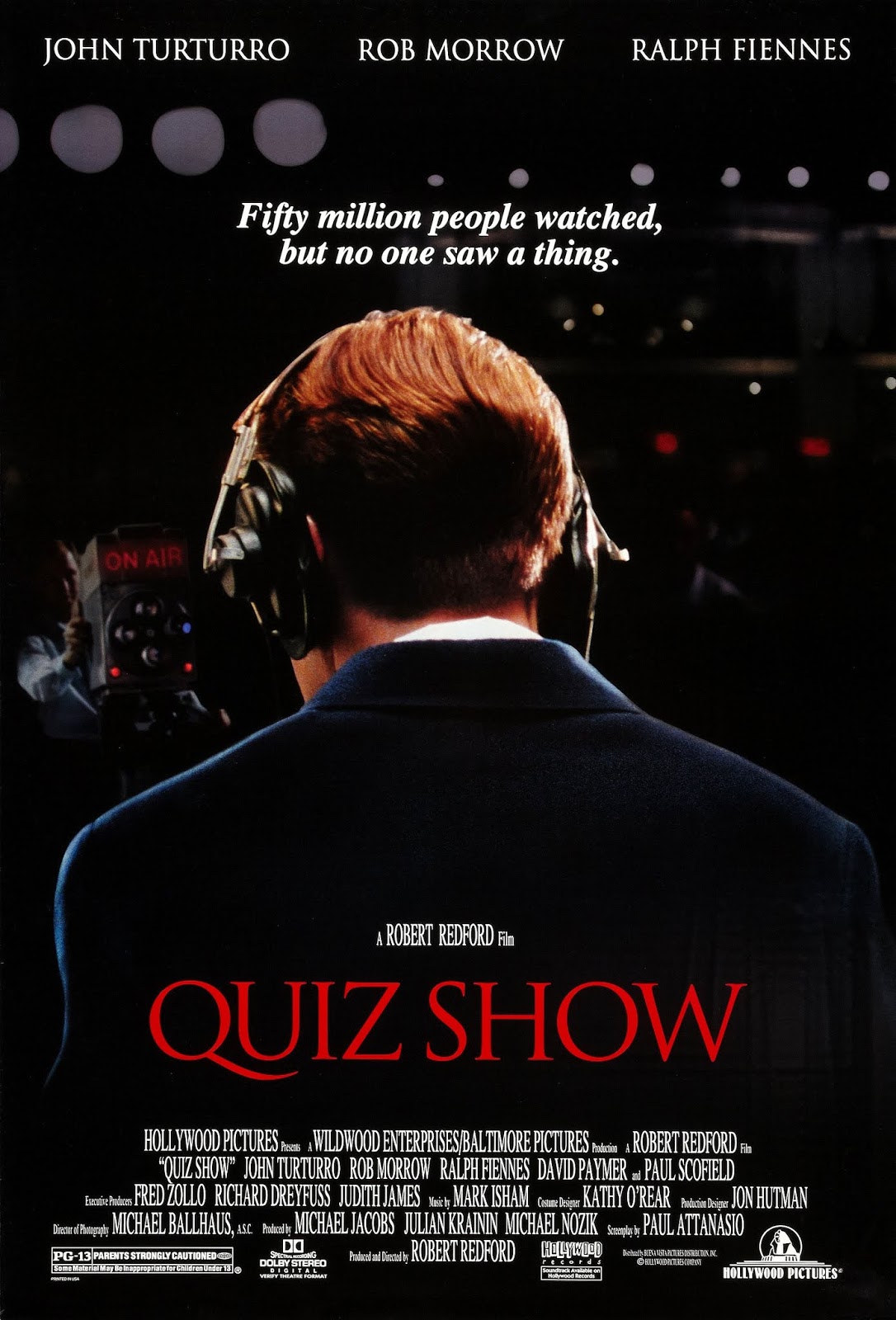
Ralph Fiennes excels as the man who as the answers he shouldn’t have in Quiz Show

Director: Robert Redford

Cast: John Turturro (Herb Stempel), Rob Morrow (Richard Goodwin), Ralph Fiennes (Charles Van Doren), David Paymer (Dan Enright), Paul Scofield (Mark Van Doren), Hank Azaria (Albert Freedman), Christopher McDonald (Jack Barry), Elizabeth Wilson (Dorothy Van Doren), Mira Sorvino (Sandra Goodwin), Allan Rich (Robert Kintner), George Martin (Chairman Oren Harris), Paul Guilfoyle (Lishman), Martin Scorsese (Martin Rittenhome), Barry Levinson (Dave Garroway)

Imagine, if you can, a time when we trusted everything we saw on television. When whole nations crowded around to watch a show, and would run home to make sure they didn’t miss it. When the people appearing on the box in the corner were like members of the family invited into our home. In our cynical age of streaming and distrust, such ideas are impossible to imagine. Now we doubt anything we are shown on the box – and the first brick in that wall fell into place with the rigged quiz show scandals on American television in the 1950s.

Twenty-One is the biggest hit on NBC, with reigning champion Herb Stempel (John Turturro) correctly answering every question that comes his way. But the show’s sponsor, Geritol, is worried: Stempel’s ratings are at a plateau, and they feel the show needs a new champion. So producers Dan Enright (David Paymer) and Albert Freedman (Hank Azaria) look to recruit the sort of face of Twenty-One the sponsors want – and find him in clean-cut, Ivy league, charming Columbia League instructor (or “Professor” as they insist on calling him – and Van Doren’s move from reminding him he hasn’t qualified for that title, to happily accepting it is telling in itself) Charles Van Doren (Ralph Fiennes). 

They offer Van Doren the chance to win the show by telling him the answers in advance, while offering Stempel a career in television if he will agree to throw the next edition of the programme. Both men are plagued with indecision, but Stempel throws the game and Van Doren provides the correct answer to his final question – the exact same question he had been asked at his audition. Van Doren, seduced by the fame, quickly agrees to be given the answers in advance of the show, but the unreliable Stemple is dropped by NBC and instigates Grand Jury proceedings. The records are sealed but this piques the interest of Congressional lawyer Richard Goodwin (Rob Morrow), who begins to see the potential to “put television on trial” – while being deeply conflicted by his growing friendship with Van Doren, keen to be seen as co-operating with any investigation.

Quiz Show remains Redford’s finest directorial achievement by far, a rich, fascinating, beautifully made film with a profoundly rewarding and engrossing reflection on fame, television and the media in 20th-century America. Told at a gentle but compelling pace, probably the strongest weapon in its arsenal is a fantastically literate, well-constructed, dryly amusing and affecting script by Paul Attanasio. Scenes are beautifully assembled, crammed with well observed character beats and wonderfully quotable lines. It’s a script that would stand up extraordinarily well as a play itself, and Redford allows it plenty of room to breathe in his assured, unshowy and perfectly judged direction.

This is a film that analyses exactly how truth and entertainment are supposed to be inter-related. The rigging of quiz shows – and it was systematic across a range of shows on all channels – was a detailed lie to the American people. But, the film asks, what was the real harm of this? What are these quiz shows for? Tests of intellectual attainment or pieces of entertainment for the masses? As Scorsese’s Geritol executive says, people weren’t watching the questions, they were watching the money. 

And money is where the villainy lies in this film. For a film rich in period detail, Redford makes clear that there is a definite sense of class that underlies all the action. Decisions are made on the show based on selling things – advertising hours and Geritol products. And there are people in this show – the heads of corporations like NBC – who are making millions out of peddling rigged entertainment shows to the people. And when the chips come crashing down, it’s not these executives who are in the firing lines; it’s the little people who were the face of the enterprise – the contestants themselves – who pay the price.

It’s the exact opposite of what Goodwin wishes to achieve when he starts his investigation. He wants to add some moral force, some legislative control, to what you can and cannot present as fact and fiction on television. What he fails to understand – and what the film does – is that deep down people don’t want this. They want the excitement and the thrills – and at the end of the day wouldn’t care less if they never found out everything presented to them was carefully scripted. This lasts today: do we care that comedy sketches are not improvised but carefully scripted? Do we care if game show contestants are carefully pre-selected? Again, as Scorsese’s sponsor representative states, all any investigation will accomplish is TV shows figuring out other ways to get the high ratings: and simpler questions and less erudite competitors will be the way to go.

Because it’s all the glamour and excitement and drama we like to watch, not displays of intellectual accomplishment. It’s something the film understands – and something that comes across very clearly in Ralph Fiennes’ exquisitely well-judged performance as Charles van Doren. A genuinely intelligent, decent man, Fiennes’ performance works so well because he makes clear that under the WASPish, patrician decency of van Doren is a fundamental shallowness, a laziness and hunger for the quick buck and easy success. Constantly, Fiennes’ confident grin and easy manner hide his unease and guilt at his conduct. But he clearly can’t help himself, a Faust wrapped up in his pact.

After all what would his father – the famous poet and academic Mark van Doren, played with a beautiful ease, grace, intelligence and iron-clad honesty by Paul Scofield, a sublime actor at the top of his game – think of this all if he found out? The scenes between the two men – one the proud, loving but quietly demanding father, the other the successful, shallow, quietly desperate son – are the film’s strongest moments, consumed with the tension of the unspoken. We can see the pressure of familial expectations reflected elsewhere in Herb Stempel’s wife’s disappointment at finding that Stempel himself was a coached as much as van Doren.

John Turturro goes larger as Stempel, a bitter and frustrated man addicted to the attention and glamour TV has bought him which he has always felt has been denied him. Stempel’s desire for fame, his assumption of a persona in the public eye which is part studied, part eagerness to please his audience, gets to the heart of TV’s power. It’s the box in every room, and it can turn the ordinary into the extraordinary. It’s a box with the potential to weave magic – and it’s the tricks behind the magic that are difficult to see. For all we know the magician doesn’t saw the assistant in half (as Hank Azaria’s crude producer puts it), it makes it hard to enjoy the trick when you know it is one.

It’s ideas like this that the film gets to  so cleverly, and which turns the American quiz show into an intelligent metaphor for the corrupted ambition of America itself. The dream is to get to the top, and this was a way of offering a short cut for it – and all to help big business sell its products and make money. This is the subversive truth at the heart of Quiz Show, but it’s easy to forget as we, like the American people, have the obvious villains of the ordinary contestants be crucified by the media, rather than those who really profited. Redford’s film is smart enough to constantly remind us of this, to humanise the contestants and to show the darker elements underneath. Quiz Show is a great film.

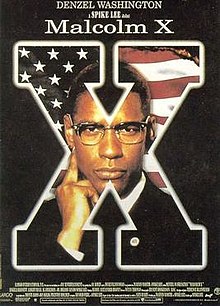
Malcolm X (1992)

Denzel Washington dominates in Spike Lee’s masterpiece Malcolm X

Director: Spike Lee

Cast: Denzel Washington (Malcolm X), Angela Bassett (Betty Shabazz), Albert Hall (Brother Baines), Al Freeman Jnr (Elijah Muhammad), Delroy Lindo (West Indian Archie), Spike Lee (Shorty), Roger Guenveur Smith (Rudy), Theresa Randal (Laura), Kate Vernon (Sophia), Lonette McKee (Louise Little), Tommy Hollis (Earl Little), James McDaniel (Brother Earl), Steve White (Brother Johnson), Ernest Lee Thomas (Sidney), Christopher Plummer (Prison Chaplin Gill), Peter Boyle (NYPD Captain Green)

In the early 1990s, Norman Jewison was attached to direct a biopic of Malcolm X, the powerful African-American activist, tragically assassinated in 1965. It was the project of Spike Lee’s dreams – and Jewison conceded he did not have the vision for the film that Lee clearly had. Lee stepped in – and thank goodness, as this is perhaps a film only he could have made. It splices together Lee’s customary political savvy and (accurate) sense of the injustice Black Americans have faced with a surprisingly adept use of the cinematic language of David Lean and other sweeping epics. In bringing these together, he created a superb biography, a great piece of epic cinema and a vital piece of American film-making.

The film covers the life of Malcolm X in three clear stages. Firstly his young days as a tearaway in Harlem, with drug addiction and crime, all with best friend Shorty (Spike Lee), a local gangster whom he admires (Delroy Lindo) and white girlfriend Sophia (Kate Vernon). The second act is his conversion to Islam under the guidance of (fictional) Brother Baines (Albert Hall) and his rise as an incendiary speaker with the Nation of Islam under the influence of its leader Elijah Muhammad (Al Freeman Jnr). The final act covers his disillusionment and departure from that organisation after a host of scandals and political disagreements, his pilgrimage to Mecca and his return looking to work with other civil rights movements before his assassination by former members of the Nation of Islam.

It’s hard to know whose film to call this, because Spike Lee and Denzel Washington both invest this film with so much passion, director and actor working in perfect synchronicity, that it’s impossible to imagine the film without one or other of them. Washington’s performance is quite simply extraordinary. He spent over a year of focused preparation on the film, and every pore of his body seems to have soaked in the mood, manners and attitudes of Malcolm X. It’s a transformative performance of purest emotional commitment: impassioned, empowering and enthralling, charismatic in the extreme. He never shies away from the anger and the faults of Malcolm X, but so engrossingly human is his work that he brings to life in a way few people had before Malcolm’s humanity, his generosity, his love, his decency. It’s a performance that seems to have transformed the actor into the man and the film works so well because Washington completely involves you in his story. 

Washington should have won the Oscar that year – it went instead to Al Pacino – and Malcolm X also should have been nominated for Best Picture and Best Director, far more so than Scent of a Woman nominated in both categories. It’s a film that builds its audience’s empathy so successfully with its lead character, and so clearly understands what Malcolm was trying to do, that you come away from it full of respect and admiration for the man. Even when the film was made, many people saw Malcolm X as a divisive, even dangerous figure – but watching the film you forget that and invest in him as a man.

It’s also inarguable – as n-words and racial bias from many whites in the film litter the screen – that it opened the eyes of many people as to exactly how harsh living in America was at the time if you were black. Put simply, it was a country labouring constantly under injustice, persecution and suffering where a black life was worth less than a white one. It’s a theme that Lee has returned to time and again in his work – and quite rightly – and it’s the sort of masterclass of simmering political anger that powers the best of his work. Would any other director under the sun have chosen to open this film with footage of the Rodney King beating? Would anyone else have thought of ending it with a coda in South Africa, as Nelson Mandela (yes the real Nelson Mandela) addresses a classroom full of children about the importance and power of Malcolm’s vision of black people taking pride in themselves and their heritage – a pride beaten out of them still today, as Lee’s Rodney King footage shows.

Lee’s direction is quite simply superb, a wonderful fusion of his own styles with a classical sweep of David Lean, spiced with the textual play of Oliver Stone. The photography from Ernest Dickerson is wonderful, the film is beautifully cut and assembled and the recreation of period detail from set to costume is remarkable. Lee’s style is sublime, from a riotously fun Harlem song and dance routine (really impressive) with Malcolm others dancing a superb Lindy Hop, to the harshness of prison, through to the intelligent and acute analysis of growing divisions in the Nation of Islam (Al Freeman Jnr is fabulous as Elijah Muhammed) and Malcolm’s developing political stance.

Lee’s film is even-handed on the whole – Malcolm’s real opponents are ideological disagreements, the film dramatizes a moment Malcolm considered a great regret where he rudely brushed aside a white college student keen to help his cause, and the film makes a lot of play over his controversial opinions on Kennedy’s assassination (essentially that he deserved it). But it also builds a superb sense of Malcolm’s personal life alongside, and the film is crammed with moments of quiet intimacy and a wonderfully developed performance of supportive love from Angela Bassett as Betty.

But the Lee touch is in that sense of anger. The politics and fury of Malcolm’s speeches and his message to black people today to save themselves and find pride in themselves carry through the whole film. Lee was sick and tired of the “white saviour” film and he triumphantly made here a film that was by black people, about black people but had something for all to hear. Malcolm X is a superb piece of biography cinema that leaves you with justifiable admiration for a man it’s easy to misjudge, engrosses you in a complex and disturbing era, angers you at racism and its impact, and also leaves you entertained. In many ways the most classical of Lee’s films – but a reminder that he is a unique and compelling voice. He thought he was the only one that could tell this story. He was right.

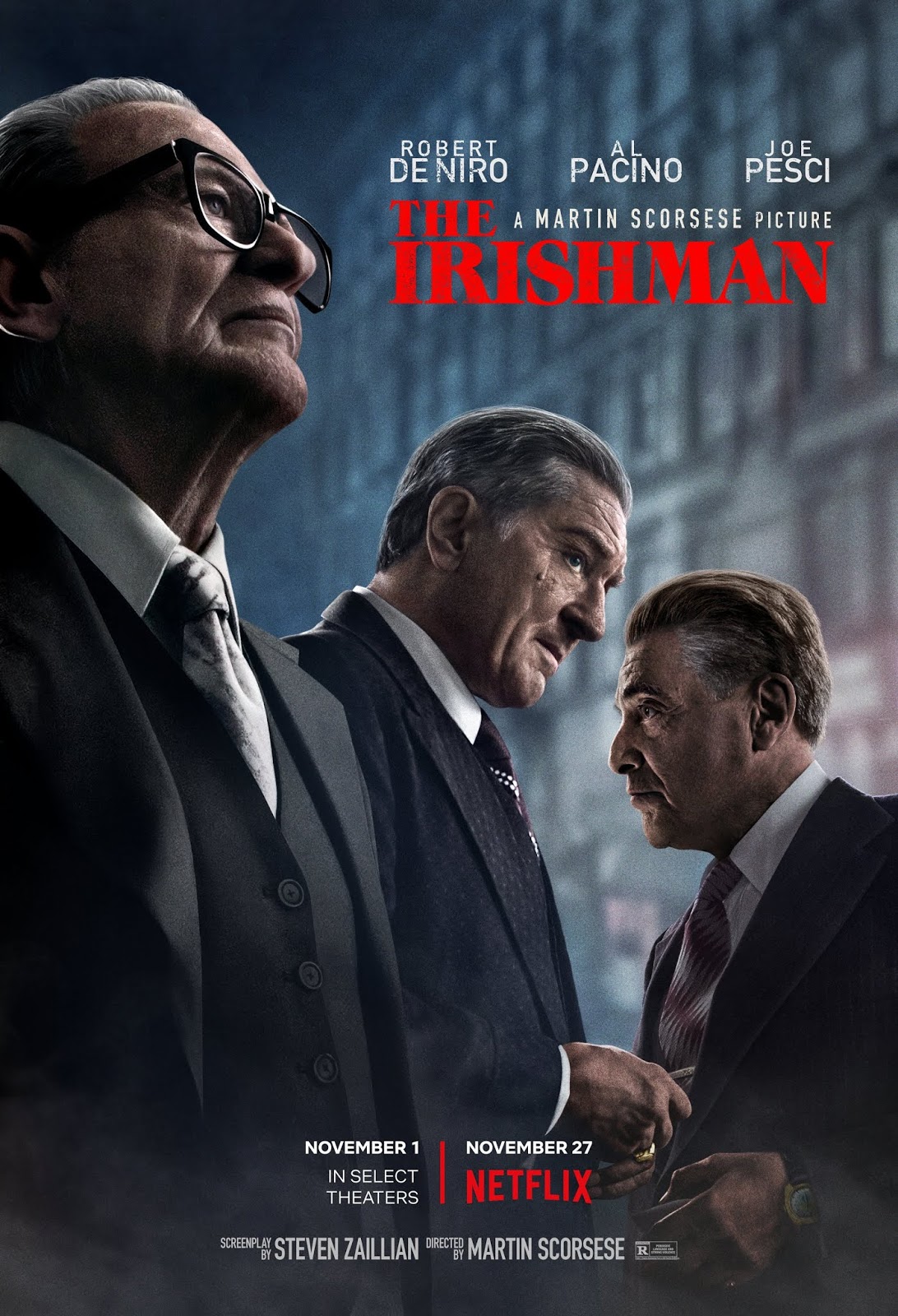
The Irishman (2019)

De Niro and Pacino under digital facelifts bring to life Scorsese’s meditative The Irishman

Director: Martin Scorsese

Cast: Robert De Niro (Frank Sheeran), Al Pacino (Jimmy Hoffa), Joe Pesci (Russell Bufalino), Ray Romano (Bill Bufalino), Bobby Cannavale (Felix “Skinny Razor” DiTullio), Anna Paquin (Peggy Sheeran), Stephen Graham (Anthony “Tony Pro” Provenzano), Stephanie Kurtzuba (Irene Sheeran), Jesse Plemons (Chuckie O’Brien), Harvey Keitel (Angelo Bruno)

Scorsese had wanted to make this film for almost 20 years but it took the mega bucks of Netflix (to the tune of over $150 million) to finally bring it to life. With complete creative control, we get Scorsese’s epic as he saw it, an over three-and-a-half hour long sad meditation on the life of the gangster. For the first time in almost 25 years, Scorsese is reunited with his muse Robert De Niro – appearing here under various digital facelifts to tell the story of Frank Sheeran, an Irish member of the Mafia, and his relationship with infamous Teamster union leader Jimmy Hoffa (Al Pacino). Was the film worth the effort to make it?

I first saw The Irishman in the cinema. I now feel that was a mistake. This is a film that needs to be soaked in like a warm bath. Like reading an involving novel, it needs to savoured and consumed at your own pace. In the cinema in one take – with no intermission – its runtime is punishing. It’s the worst form of criticism but in one take, the film can overstay its welcome. In fact it can become a little boring.

Re-watching the film a year later at home – where I could break it up into three chunks as (I feel) so many people have, it becomes a richer and more engrossing viewing experience. Because this is a totally different beast to Scorsese’s previous gangster movies, a quiet mood piece, contemplative, sad, a genuinely tragedy-tinged, doom-laden reflection on the emptiness and costly violence of the gangster life, and the empty shells it leaves of the people in it. And at its centre, a man so dehumanised by war, by obeying orders, so lacking of personality, so incapable of emotion it seems, that he ends the film as a blank, lonely, abandoned slate. It’s a real, and deliberate, counter-point to his electric gangster films of the past, from Mean Streets via Goodfellas to Casino and the cartoonish The Departed. Here the price of doing business is your soul – and when that final bullet comes (as it inevitably will) you have nothing to show for it.

It makes for a late Scorsese epic – nearly a TV mini-series – slow-paced, wintery and a perfect counterpoint to Goodfellas. There crime is ruthless but you can see it’s also fun. Here it’s hardwork, unrewarding and inevitably leads to a bloody demise. Time settles on the shoulders of its leads like deadweights and their is a weary sadness as they trudge from one feud to another, each of which can only be resolved by putting another body in the ground. And everyone knows that the next feud might well mean it’s their body that will end up six feet under.

Frank Sheeran is a drained automaton, a human being possibly in name only, who takes on violent acts without question, who can kill without remorse. This is the very picture of a second-tier career criminal, a man who takes orders and carries out missions. De Niro brilliantly creates an sociopathic monster, a man almost devoid of his own personality, with little to him but a taciturn killer. Sheeran is a tough character to relate to or understand – but that’s because he’s not really a character at all. Interestingly he doesn’t have the sort of flaws that undermine other Scorsese gangsters, like Henry Hill. His flaw is in fact his entire existence. His sociopathic acceptance of violence, his thoughtless carrying out of killing, his inability to relate to human beings. It’s what leaves him alone, unloved and isolated in a care-home. This is a man who can barely muster much emotion about killing his best friend, whose quiet, placid nature perhaps only hides his lack of capability of even experiencing emotion.

The Teamster union politics content of the film is often dense and hard-to-follow. At times it tips into being not that interesting. So it’s tough that it takes up almost two hours of the film’s run-time. It’s a sign of the films overindulgence. At the end of the day I’m not sure it adds much to your overall impression of the film. But reviewing the film perhaps that’s the point. The very shallowness and even pettiness of this feuding – not to mention the naked, unromantic greed – over how to distribute union pension money, explodes the myth of any romance to this crime. These are blue-collar conmen, using violence as a way to conclude a board meeting.

As Jimmy Hoffa, Al Pacino is the best he’s been in literally decades – the film uses his “hoo hah” shoutiness to great effect, but Pacino also makes Hoffa an unexpectedly vulnerable and lost figure amongst all the politics, a showman who overestimates his importance and invulnerability. The entire film is shaped (we discover) around a series of flashbacks from Sheeran on a road trip on what turns out to be the final days of Hoffa’s life (the film includes a solution to Hoffa’s famous disappearance). De Niro and Pacino spark beautifully off each other as a bond forms between them – the films lingering on their growing friendship (and at times strangely homoerotic intimacy) one of its strongest elements, as well as carefully demonstrating how disloyalty is a crucial survival skill in this world.

The film strongest elements are the doom-laden nihilism of the gangster life. Told by Scorsese deliberately without flash and excitement, with a score so sparse that long stretches of the film echo with silence, there seems to be no fun at all in the gangster world, instead a series of mundane men sitting in small restaurants, talking about admin and punching the clock. Many of the gangster characters are introduced with on-screen captions that detail the dates and natures of their violent deaths. It’s the exact opposite of what you might expect from a Scorsese film. It’s a director showing the dark flipside of his previous films, of the way the gangster life is a dwindle through a dull life marked with moments of danger, where death is a sudden violent explosion that ends a life too soon.

And it leaves families in a mess. Anna Paquin speaks very few words as Sheeran’s adult daughter, but only because her silent disapproval and disgust at her father’s life becomes the haunting of Sheeran’s whole life. His daughter’s silent disgust is a recurrent theme (even from childhood, she is repulsed by his capacity for violence and his heartlessness). Sheeran’s attempt to break through her silent disapproval, to get her to acknowledge him in some way becomes a large part of the sad coda of Sheeran’s life. It’s all part of Scorsese’s message: what is the point of a life like this that brings wealth and power, but also leaves you broken, lonely and despised by everyone around you?

And you can’t argue with the skill with which this quiet, meditative, grim and slow exploration of the gangster world is put together by Scorsese – or the artistry that every moment of the film has, or the control of the director. It’s beautifully shot and edited. It’s pace is at times glacial, but this is resolved by watching at your own pace on Netflix. It’s not a film to be binged (ironically Scorsese has made a television novel that he wants you to watch in one go) but instead one to be savoured and considered. That’s where it’s strengths are.

There are also excellent performances. Joe Pesci, lured from retirement, is outstanding. He’s a revelation as a sort of cool, calm, grandfatherly fixer a million miles from the lunatics he played in Casino or Goodfellas. Pesci quietly dominates several scenes, using stillness and quiet like a vicious badger who knows he only needs to swat once to remove his foes. This is a performance of beautifully judged grace and stability, a calm reflectiveness that carries a vicious coldness at its heart. Russell may prefer a peaceful solution – but he will order your death without thinking twice. Also excellent is Stephen Graham as the sort of dangerously impulsive bully Pesci played to such great effect in those earlier movies.

And those famous digital facelifts? Well they are fine technically. You ignore them after a while. But no matter of digital trickery can make De Niro move with the gait, physicality or certainty of a man more than 30 years younger than he is. As we watch De Niro (supposedly a killer in his prime) shamble forward, or gingerly give a rude grocer a kicking, you can’t forget that he’s really a much older man. To be honest the film would have been just as good – maybe better – with actors the correct age filling in for the younger roles. Watching it again, I’m never convinced that I am watching a De Niro the age he was in Mean Streets or even Goodfellas. To be honest, at times the facelifts don’t look a lot more convincing than hair dye and a little tape to stretch the skin back.

In fact the digital facelift at times is almost a metaphor for the film: it’s a film where age and time are a constant presence. Knowing the lead actors are old men, trying to look young kind of sits with that. These are not dynamic, triumphant young men. But then they never were. These are men who feel the burdens of the world on their shoulders every day. Who at the end of their lives will have nothing to show for it over than a satisfaction that they managed to live slightly longer than they expected. Whose friends and family will hate them and who find they sold their souls and gained nothing but dust in exchange. Long, slow, sometimes trying – but on a second rewatch, also compelling, thought-provoking, heartfelt, insightful and inspiring.

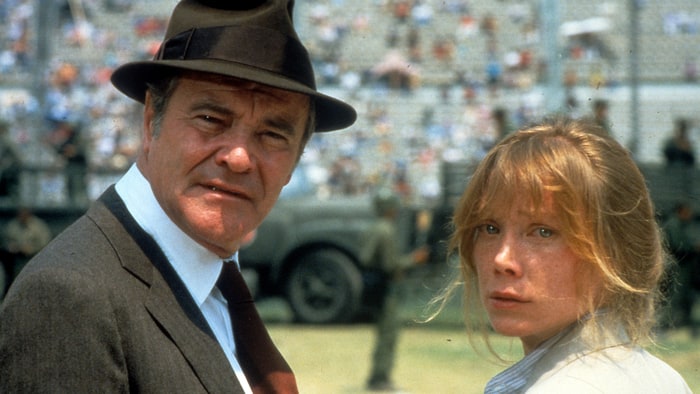
Missing (1982)

Jack Lemmon and Sissy Spacek are on a quest for the Missing

Director: Costa-Gravas

Cast: Jack Lemmon (Edmund Horman), Sissy Spacey (Beth Horman), John Shea (Charles Horman), Melanie Mayron (Terry Simon), Charles Cioffi (Captain Ray Tower), David Clennon (Consul Phil Putnam), Richard Venture (US Ambassador), Jerry Hardin (Colonel Sean Patrick), Janice Rule (Kate Newman), Richard Bradford (Andrew Babcock)

Politically motivated American films are few and far between, especially ones that take such a starkly critical view of American foreign policy. So it’s a testament to the respect given to Greek director Costa-Gravas that his first American film is an angry denunciation of America’s attitude towards Latin and South America and a criticism of the cosy assumption of so many of its citizens that the very fact of their being American will open all doors and make them invulnerable to harm. 

Set in the immediate aftermath of Pinochet’s military coup in Chile in 1973 (although for various legal reasons Chile itself is never named), young American journalist and filmmaker Charles Horman (John Shea) goes missing. His wife Beth (Sissy Spacek) is left alone in the increasingly dangerous city, while his father Ed Horman (Jack Lemmon) flies into the country. Ed assumes his government will swiftly work with him to solve the mystery, and that his son must have been wrapped up in some dodgy dealings to have gone missing. He is to be brutally disabused of both notions with a painful swiftness, as he finds he and his son are insignificant factors in America’s geopolitical interests.

Costa-Gravas’ film wisely avoids focusing too much on the details of Chilean politics, or the causes of the coup, or even really concentrating on the left-wing politics of many of the American citizens wrapped up in the coup. Instead it zeroes in on the human impact of loss and pain, and by focusing less on the politics of a coup but on the impact of it, it places the audience attention instead on the atrocities that military revolutions bring. Alongside this, Costa-Gravas places front-and-centre of the story not a firebrand liberal, or a left-wing polemicist, but a character who could not be more of a strait-laced conservative, a quintessential American who firmly believes his country is the greatest in the world and heads into a foreign land anticipating doors will be opened for him and his government is here to help. 

It’s vital for the film’s success that it’s the experience of Ed Horman that drives the film narrative. First appearing 25 minutes into the film, the rest of the narrative charts Ed’s growing shocked realisation that his government doesn’t give a damn about his son and, even worse, is more than happy to lie to his face about the level of their involvement. While Ed believes America to be the font of all goodness in the world, he is horrified to discover that it is at the centre of a far more shady world of realpolitik. And that his own complacent belief in the country, and unquestioning assumption that it can do no wrong, is part of what empowers its representatives to back murderous regimes. “If you hadn’t been personally involved in this unfortunate incident, you’d be sitting at home complacent and more or less oblivious to all of this” the Ambassador haughtily tells Ed, after the frantic father has angrily denounced America’s policies. And, from what we saw of Ed at the start, he’s right.

It’s a superb role of growing disillusionment and a stunned realisation that his own home-grown principles and believe in truth, justice and the American Way turn out to be just words. And Jack Lemmon is just about the perfect actor for it. This might be Lemmon’s finest performance, superb from start to finish, a perfect emobodiment of All-American principles that disintegrates into someone angry, bitter and disillusioned. But at its heart as well – and the films – is the very real grief of a father who has lost his son. Worse, a father who only feels he grows close to – and understanding of – his son after losing him. Lemmon’s performances mines every ounce of empathetic sympathy from the role, in a series of heartbreaking moments as Ed begins to realise just how much he has lost in a son he begins to feel he never gave a chance.

This very personal story is at the centre of the film, but Costa-Gravas never for one moment allows us to forget – or avert our eyes – from the horrors coups like this bring. By not naming Chile, it manages to make this the face of all brutal revolutions. As characters move through the streets, or squares, in controlled, carefully framed long-shots and takes we see all around, uncommented on by the camera, unfocused on by the director, the signs of brutality. Throughout the film the background action sees casual arrests, violence, assaults, book burnings, bodies being left in the street or thrown into trucks… All around ordinary people keep their heads down or run for terror. Curfews leave people trapped outside – Sissy Spacek (very impressive) as Beth is caught out and is forced to spend a night hiding in the porch of a hotel, while gun shots ring out around the city (a regular soundtrack for every scene).

The investigation into Charles’ disappearance is pushed forward not the embassy – which presents a series of acceptable faces of the new regime and a smiling reassurance that every thing is being done – but by harried and scared survivors and asylum seekers in European embassies, who tell snippets of the events they have seen, the deaths they have seen glimpses off, the horrors of detention centres. It’s finally dragged home to Ed and Beth as they are taken to an office block with every room containing executed corpses, some identified some not, the bodies piled on every floor of the building. 

In all this America – and shady military and industrial interests – are complicit, and the executions and deaths of citizens of this country (and a few Americans who unwisely mixed themselves up in it) are seen as acceptable collateral damage, the price of doing business to protect American financial interests. The Government is happy bed fellows with murderers and crooked officials, and the idea that the death of one American citizen is going to matter at all is nonsense. Costa-Gravas’ film has a firm point to make – but it makes it within the context of a very human and personal story. “They can’t hurt us, we’re Americans!” are Charlie’s final (on-screen) words: in this attitude he’s as naïve as his father, and he clearly believes just as much in the divine goodness and special status of his homeland. America has no special or outstanding moral character: it’s as mired in dirty world realities as anyone else. This rude awakening will cost the son his life and cause untold grief to his father as well as shattering all his cosy greatest generation idealism.

The Last King of Scotland (2006)

Forest Whitaker dominates as Idi Amin in The Last King of Scotland

Director: Kevin Macdonald

Cast: Forest Whitaker (Idi Amin), James McAvoy (Nicholas Garrigan), Kerry Washington (Kay Amin), Gillian Anderson (Sarah Merrit), Simon McBurney (Stone), David Oyelowo (Dr Junju)

Forest Whitaker won every award going for his performance as Idi Amin. A film can perhaps only begin to scratch the surface of what a megalomaniac nutjob Amin was, and the depths of his depravity and corruption. But The Last King of Scotland is perhaps less focused on that, and more on the pull that people as charismatically self-absorbed and larger-than-life like Amin can have on the weak-minded and, on a wider basis, how this can end up with him leading an entire country on a not-so-merry dance, everyone desperate to gain the love and approval of a single dominant personality.

That weakling is Dr Nicholas Garrigan (James McAvoy) a young medical graduate from Edinburgh, who is arrogant, cocksure over-sexed and over-here in Uganda, keen for adventure and to get as much sex and experiences in as he can while he’s over here. A gap-year student with a desire for the easy life, after a chance meeting Garrigan becomes chief-physician and confidant to Amin, a man with a deep love for Scotland and who likes to think of himself as a father to those around him. It takes Garrigan a long time to realise that this indulgent, if bad-tempered, charismatic father-figure  is in fact a brutal dictator, his eyes eventually opened by the experiences of one of Amin’s wives Kay (Kerry Washington) who pays a heavy price for mothering an epileptic and adultery. Will Garrigan escape from Uganda?

Macdonald’s film gets a brilliant sense of both the exotic appeal of Uganda at the time (and or Amin) and it’s heat-embroiled danger. The camera work is flooded with yellows and grimy details, that makes every scene feel like its bathed in heat (and later danger) as well as giving it a documentary realism (helped by its use of handheld and immediate footage). The story of the film itself is a fairly basic morality tale, but these stories work because of their universality and it’s clear that Garrigan’s selfishness, shallowness and self-interest is going to lead to a terrible awakening.

The film’s real strength is Whitaker’s tour-de-force as Idi Amin. Whitaker is an actor who has been straining at the leash for an explosive roll, and he gets one here. If ever there was a part that would allow an actor to let rip it’s the one, with Amin part Hannibal Lector, part decadent Roman emperor, a low-rent Hitler with an ego larger than his country. But the bombast and childish fury work because it is built within the framework of a sort of puffed-up magnetism, a charismatic “hail-fellow-well-met” bonhomie that suggests this guy could be the best fun in the room. So dripping in assurance and confidence is Amin that he becomes strangely attractive – and the sort of all-powerful force of nature that would have most of us smiling if we caught a word of approval from him.

The trick of the film is to front-and-centre this lighter, fun-loving aspect. It’s easy to enjoy it like Garrigan as Amin charms the audience as much as he does its lead character. Sure there may be violence at the margins, but good-old-Amin is just doing what needs to be done. He’s brilliant with the people. It’s funny when he on-a-whim appoints Garrigan to decide a major architectural pitch from several countries. He’s playful and enthusiastic. When he’s cross with people he seems at first more disappointed than angry. It’s only as the film goes on that we realise we have been gaslit as much as Garrigan, that Amin may be a fun guy but he also cares nothing for anyone and that the more his focus shifts away, the more we see his callous paranoia and lack of any moral scruples.

Certainly we start getting a sense of the ruthlessness he is prepared to exhibit to enforce his rule in Uganda and the brutality with which he will suppress any resistance. Aides killed in a failed assassination attempt illicit no sympathy. He feels no guilt or responsibility for anything he does. In one brutal moment he berates Garrigan for failing to counsel him against expelling all Asians from Uganda. When Garrigan protests he did, Amin only responds with “Yes, but you did not persuade me Nicholas!” the sort of inverted logic practised only by the insanely self-obsessed.

Whitaker’s performance powers all this, a magnetic masterclass in insanity, charisma and paranoia. He’s well matched by James McAvoy (the film’s real lead) whose performance is similarly a masterclass is shallowness and petty triteness. If anything the film is almost too successful in this. A Garrigan is such a little arsehole it takes quite a force of will to build up any sympathy for this serial shagger playboy. It’s capable to think as the fire turns on him that perhaps he deserves this – and the number of (mostly black) characters who lay down their lives to protect him starts to get a bit wearing after a while.

Because this in part is a film where actual Ugandans are not heard that much. The two principle characters we see are both victims: Kerry Washington in a thankless part as the attractive young wife you just know from day one Garrigan will climb into bed with and David Oyelowo as the sort of noble doctor you only seem to find in movies. For all its horror at Amin’s crimes, it’s still largely filtered through the eyes of a young, white, innocent abroad who sees up-front the dangers but the real victims of Amin, the Ugandans themselves, are clichés or elevated clichés.

While you could say that was not the point of the film, it still means we miss some of the real danger and psychopathy of the leading character, so absorbed are we in seeing the increasing peril of the white man caught up in it all. It’s why The Last King of Scotland doesn’t quite work as well as it should, any why it settles in the end for a being a morality tale plot-boiler about a monster at the heart of the forest, rather than a deeper and more intelligent film about the tragedy of an African state. It’s still enjoyable for all that, but it could have been more.