Category: Political drama

Golda (2023)

Golda (2023)

Undramatic saga of Middle East history that fails to bring seismic events to life

Director: Guy Nattiv

Cast: Helen Mirren (Golda Meir), Camille Cottin (Lou Kaddar), Liev Schreiber (Henry Kissinger), Rami Heuberger (Moshe Dayan), Rotem Keinan (Zvi Zamir), Lior Ashkenazi (Lt General David Elazar), Dvir Benedek (Major General Eli Zeira), Ed Stoppard (Major General Benny Peled), Dominic Mafham (Lt General Haim Bar-Lev), Emma Davies (Miss Epstein), Ohad Knoller (Major General Ariel Sharon)

I’m sure you couldn’t have picked a worse time to release a film celebrating Israel’s fight against the Arab nations than November 2023. As the world looks on in horror at the latest cycle of violence engulfing Gaza, it hardly feels like the right time to kick back and cheer as Israeli forces fight for their country in the 1973 Yom Kippur War. But, even without that, Golda is fatally undermined by being a turgid, dull biopic where despite the volume of events little is made either engaging or interesting.

Golda Meir (Helen Mirren) is Prime Minister of Israel, managing the country’s military response after the combined forces of Egypt and Syria launch a surprise attack on the Golan Heights and Sinai. After intelligence failures leave Israel on the back foot, Meir must plan Israel’s counter-offensive, deal with the moral complexities of sacrificing soldiers, and work diplomatically to ensure the continued support of the US via Secretary of State Henry Kissinger (Liev Schreiber), all while dealing with cancer. All of this is told through the intermittent use of a framing device, where Meir is being interviewed by a 1974 committee investigating those intelligence failures.

Golda is obviously apeing Cuban Missile Crisis political thriller Thirteen Days, with its focus on a tight timeline, generals in cigarette-smoke-filled rooms making tough calls, and the dilemmas faced by an elected leader trying to ensure their country’s survival. Unfortunately, where Thirteen Days mixed history lesson with genuine drama, Golda just feels like it takes thirteen days to watch. How did they manage to make such a seismic conflict as dull as this?

There was a bit of controversy initially on casting the non-Jewish Helen Mirren. That can be largely forgotten, not least because Mirren is by some way the best thing in the film, gravelly and conveying the unbearable pressure on Meir. She even gets to show her human side, with sweet scenes with her loyal assistant (well played by Camille Cottin) and a plate of borsch and an offer for Henry Kissinger (a decent Liev Schreiber). Mirren is caked under various prosthetics but does a good job.

But the rest of the film is a dull mess with its flat, lifeless script singularly failing to add tension or drama. The film feels like a box-ticking exercise, from flat conversations on various troop movements to the casualty figures Meir dutifully records in her notebook. Only rarely does the film bring any of this viscerally to life (such as the increasingly crowded morgue Meir walks through to receive her cancer treatments). Events at the front are given no human face to draw us into the crackly reports coming in over radios, and there is little sense of characters having to debate and choose between different courses of action under huge pressure. Keeping the action contained within just a few indoor locations serves to make the film feel cheap rather than claustrophobic.

Our only glimpse of the front is to see Dayan fly over the Golan Heights (and promptly vomit in guilt). Discussions in briefing rooms get bogged down in establishing who someone is and what they are in charge of, rather than communicating the stakes. So, we get various uniform-clad actors spouting reams of geographical locations, division numbers and military statistics, accompanied by maps where the odd cigarette lighter stands in for various armies. Somehow, despite the volume of talking, its nearly impossible to understand any of this, so poorly is it communicated visually.

That’s before we get started on the film’s one-sided lack of historical context. A brief series of captions that opens the film runs down an Israeli-only perspective of the country’s history. The crucial background of the 1967 war – a pre-emptive strike by Israel that seized the land now being attacked in 1973 – is completely ignored. It’s never made clear that the Arab nations argued they had launched their attack in response to 1967, and no wider context is given.

This feels particularly awkward considering recent events (in late 2023) threw the conflicting narratives in the region even more into the limelight. Both Arabs and Israelis have legitimate cases. But a film that focuses on one side only and whose only Arab voice is a radio intercept of a Syrian gleefully celebrating the “death of the Zionists” hardly feels like it is making a mature and sensitive statement about the Middle East conflict.

It means the film’s final celebration that the war led to the peace agreement between Egypt and Israel – including the recognition of Israel by Egyptian Premier Sadat – rings hollow. Peace, as a topic, is never raised in the course of the film (so hardly feels like a thematically correct ending) and its celebration at the end feels like a fig leaf to suggest an “upbeat” ending, when 1973 was effectively just another round in a war that was to continue (with increasingly horrific impact on civilians on both side) for the rest of all our lifetimes so far.

Golda fails as drama, fails as history and fails as a film. It’s a mess.

Caché (2005)

Caché (2005)

Haneke’s fascinating puzzle is a profound and challenging modern masterpiece

Director: Michael Haneke

Cast: Daniel Auteuil (Georges Laurent), Juliette Binoche (Anne Laurent), Maurice Bénichou (Majid), Lester Makedonsky (Pierrot Laurent), Walid Afkir (Majid’s son), Annie Girardot (Georges’s mother), Daniel Duval (Pierre), Bernard Le Coq (Georges’s boss), Nathalie Richard (Mathilde)

Is any film more aptly named than Caché? Haneke’s film keeps its cards so close to its chest, it’s entirely possible revelations remain hidden within it in plain sight. Caché famously ends with a final shot where a possibly crucial meeting between two people we’ve no reason to suspect know each other plays out in the frame so subtly many viewers miss it. It shows how Haneke’s work rewards careful, patient viewing (and Caché is partially about the power of watching and being watched), but also how unknowable the past can be. It’s a chilling and engrossing film that fascinates but never fully reveals itself.

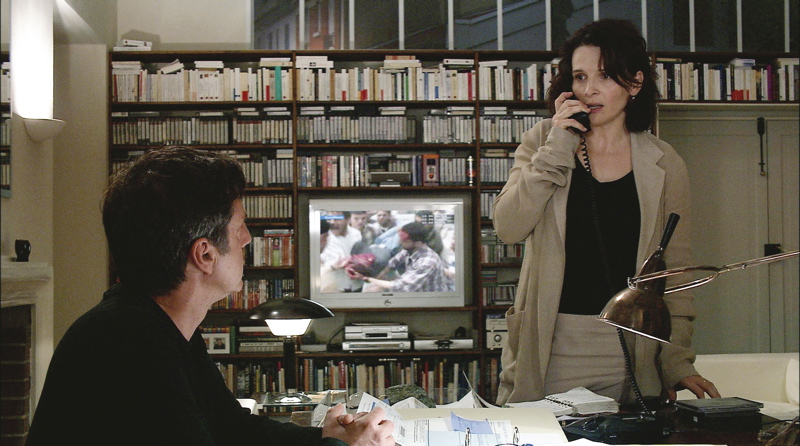
Georges Laurent (Daniel Auteuil) lives a life of success. A wealthy background, host of a successful TV literary debate show and living in an affluent suburb of Paris, he’s married to publisher Anne (Juliette Binoche) and father to young champion swimmer Pierrot (Lester Makedonsky). But there’s a serpent in his Garden of Eden. Georges and Anne are plagued by a stream of videos arriving at their house. These show long, static shots of their home and are accompanied by crude, graphic drawings. Someone is watching their house and the dread that this could escalate at any time is consuming them. But does Georges know more – do the messages chime with guilty memories in his past?

Haneke’s film is a multi-layered masterpiece, a haunting exploration (free of clear answers) into the things we prefer to forget, the hidden horrors we supress. It’s a film all about the shame and guilt buried amongst the everyday. Haneke even shoots the film on hi-definition video so that the surveillance footage of Georges and his home visually merges with the ‘real’ images of the couple. Within that, Caché starts to unpack the hinterland we hold as individuals (and, quite possibly as entire nations) of the guilts of our past that keep bubbling to the surface to bite us.

Caché is shot through with Haneke’s genius for menace and veiled threat. Can you imagine anything creepier than a camera set up outside your home, filming everything you do – but never knowing where it is? It’s an invasion of privacy that is insidious and covered in the additional menace that, at any time, it could escalate to something worse. The creeping, invasive tyranny of surveillance is in every inch of Caché, its omnipresence giving every interaction the feeling of being watched (something Haneke plays up – watch a man watching Anne when she sits in a café with a friend).

So gradually the book-lined world of the Laurents becomes a base under siege, a feeling amplified by Haneke’s mix of smooth camera movements adrift from establishing shots: constantly the camera glides through a space where we feel we neither truly understand the geography or are confident about the time. It’s accentuated by the window-free room the Laurents largely inhabit. In fact, their whole home feels window free, with curtains frequently drawn and rooms plunged into darkness, the family throwing up a shield to protect them from the outside world.

Or is it to cut them off from the unpleasant facts of life? It becomes clear Georges has built a world around himself, where he is the hero and all traces of the unpleasant or disreputable in his past have been dismissed to the dark recesses of memory, never to be accessed. Played with a bull-headed arrogance by Daniel Auteuil, under his assurance Georges is prickly and accusatory, liable to lash out verbally (and perhaps physically, considering the threat he carries in two key scenes). Auteuil masters in the little moments of startled panic and stress that cross Georges’ face, a man so used to a world that matches his needs, that anything questioning that is met with rejection.

It’s why he lies to Anne about his growing suspicions about the source of the tapes. The cartoons hint at a series of (deeply shameful) interactions, when he was a child in the 60s, with a young Algerian boy, Majid, who his parents considered adopting after the death of Majid’s parents. It was Georges lies that forced this boy out of his perfect farm-house into the cold-arms of the unfeeling French orphanage system. This is the original sin of Georges’ life, arguably the foundation of his success – a guilty secret that so haunts and disgusts him, even the slightest mention of it brings out the muscular aggression he otherwise keeps below the surface.

Of course, it’s hard not to see an echo of France’s colonial past. One of the things that works so well with Caché, is that this subtext is there without Haneke ever stressing it. Just as Georges’ lies forced Majid into a life of depression and misery, so France’s treatment of Algeria is the terrible shame the nation would rather forget. Majid’s parents died in a famously brutal stamping out of an Algerian protest in Paris in October 1961 (the deaths of over 200 people at the hands of French government forces only came to light decades later). The anger many show when presented with inconvenient, horrible past deeds (both personal and national), only feels more relevant today with our culture battles over history.

Georges sees himself as a victim of a vicious campaign. But, when Georges meets Majid, played with startling vulnerability by Maurice Bénichou, he seems light years away from the sort of man who could possibly be capable of such a campaign. Indeed, when a video of Georges encounter with Majid is widely shared, it is Georges (as even he admits) who appears the bully and aggressor. Majid has been demonised in Georges’ memory – in his nightmare he becomes an axe-wielding monster-child – but he’s an innocent, who had everything taken from him in a micro-colonialist coup carried out by a 6-year-old Georges. A coup the adult Georges has let himself forget, making him little different from France itself. (We are reminded the cycle continues, with constant background news footage of Iraq, ignored by the Laurents.)

The mistakes repeat themselves, but they don’t trouble the complacent middle-classes who benefit from them. Georges will even use his influence to have Majid and his son bundled into a police van. Of course it leads to an outburst that will shake this world up. Haneke’s films have always been realistic when it comes to the visceral horror of violence, and Caché contains an act of such shocking violence that it will leave the viewer as speechless and distressed as the witnesses.

And still the question hangs: who? It could be anyone. At one-point Georges storms out of his front door to confront the mystery video-sender, only to return to find a video wedged in the door. It’s literally impossible for this video to be placed without him seeing it done. Haneke is so uninterested in the whodunnit part that, perhaps, he’s implying the perpetrator is the director himself, using the mechanics of film-making to entrap the guilty parties. It fits with the coldly intellectual steel-trap part of Haneke’s mind, the part that uses films (like Funny Games) to tell off and preach. What other director would be more likely to set himself up as unseen antagonist in the film?

And does Georges learn anything? He will continue to confront characters who challenge his world view and dispatch (like nations) his guilt to the recesses of memory. His begrudging peace with his wife – a superbly restrained Juliette Binoche, increasingly resentful at her husband’s secrets – seems built on the shaky ground of their continuing mutual comfort. And suspicions linger over his son, an increasingly hostile figure who (just perhaps) is learning more about the flaws of his parents than they would be comfortable with.

Of course, this might all be open to interpretation from multiple angles. After all the film is called Caché. Haneke has hidden enough subtle implications in it that it can reward analysis from multiple angles. Shot with his characteristic discipline that suggests a dark, creeping fear behind every corner, it’s a masterclass in suggestion and paranoia. Brilliantly unsettling and constantly reworking itself before your eyes, it’s a masterpiece.

The Last Command (1928)

The Last Command (1928)

Hollywood and the revolution meet in von Sternberg’s sympathetic look at White Russians

Director: Josef von Sternberg

Cast: Emil Jannings (Grand Duke Sergius Alexander), Evelyn Brent (Natalie Dabrova), William Powell (Lev Andreyev), Jack Raymond (Assistant director), Nicholas Soussanin (Adjutant), Michael Visaroff (Serge)

Hollywood director Lev Andreyev (William Powell) flicks through photos of extras, searching for someone to play the Russian General in his WW1 epic. His eyes light up – the perfect face! Sergius Alexander (Emil Jannings) is summoned. But Andreyev has ulterior motives: Sergius Alexander is a former Grand Duke who clashed with the revolutionary Andreyev in Russia ten years ago and this is the chance for revenge Andreyev has longed for. A cousin of the Tsar, Sergius Alexander was commander of the Western Front. Imperious but noble, deeply patriotic, he gave everything for Russia, despite falling in love with revolutionary Natalie Dabrov (Evelyn Brent). The revolution turned Sergius into a traumatised shell and kitting him out in uniform again impacts his sanity.

Von Sternberg’s The Last Command is two films mixed into one. It’s partly a satire on Hollywood, a machine specialising in creating artificiality that chews extras up and spits them out with little regard for their well-being (rather like the trench system the film is set in). The other – and more dominant – part is a classic melodrama of a noble Russian lost and powerless as his world collapses around him. It’s this second part that dominates the film, almost an hour of its ninety-minute run-time being taken up with its Russian flashback sequence. Like many von Sternberg films it’s charged with a mix of sex and sadomasochism, while also being a sympathetic, white-Russian look at the revolution.

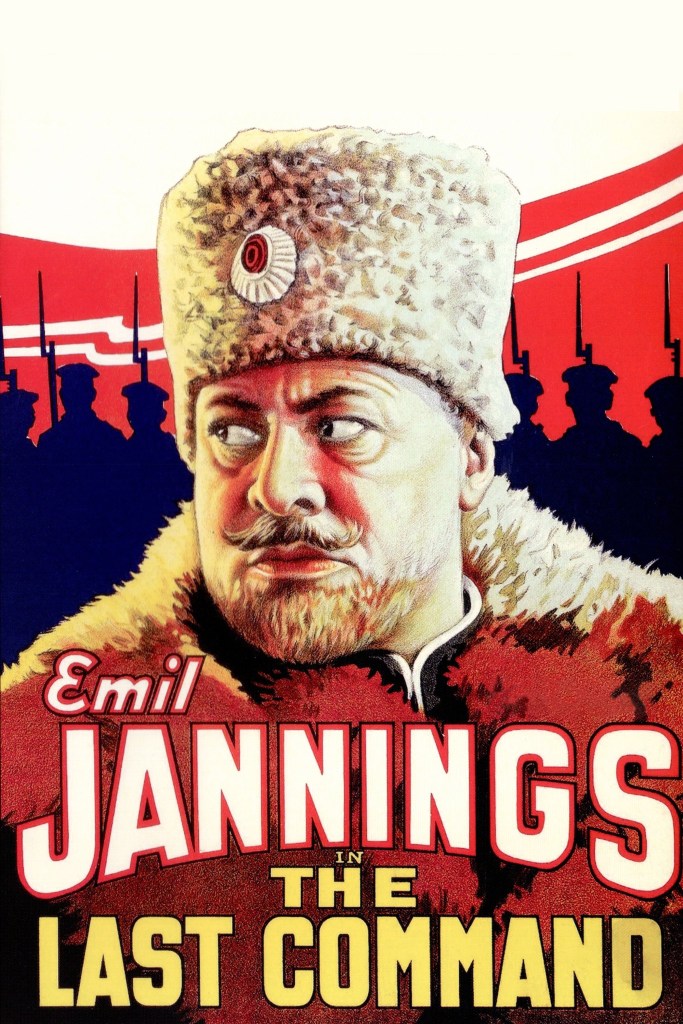
Emil Jannings received the first ever Best Actor Oscar for this (and the now lost The Way of all Flesh). At the time Jannings was seen as one-of (if not the) greatest actor in the world, based on his mastery of the expressive arts of silent cinema. Janning’s physicality, his emotion-filled piercing gaze is duly showcased. Jannings effectively plays two parts: the Sergius Alexander of the Russian era, the Russian aristocrat who emerges as a man of honour, dignity and patriotism; and the Sergius Alexander of the present day, a timid, broken man, forever twitching, scared to look people in the eye. In both cases, von Sternberg’s camera constantly pulls back to Jannings whose ability to transform and twist his body – from ram-rod officer to broken husk – is executed perfectly.

Von Sternberg’s gives the bulk of the film’s run-time over to the build-up of the Russian revolution. While The Last Command gives some criticism to the ancién regime – our first shot is of a poverty-stricken mother and baby sitting in the snow, while the Tsar is a paper king more interested in parades than reality – von Sternberg’s affection is clearly for the decent nobles trying to make the system work. The revolutionaries are largely violent or shadowy manipulators (we get a brief scene with obvious Lenin and Trotsky stand-ins, presented as hypocritical middle-class looking schemers focused on power). On the contrary Sergius Alexander is interested only in the good of Russia.

It’s that which wins him the unexpected respect of feared revolutionary Natalie Dabrova, well played by Evelyn Brent. Dabrova is a power-keg whose fire and passion seizes the fascination of Sergius. Their initial meeting is the only time von Sternberg presents him as a tyrannical figure, sitting in an office questioning potential revolutionaries for his own amusement (including a whip across the face for Andreyev). But from there Sergius’ essential decency emerges – his politeness, his old-school chivalry. He treats her like a lady and (eventually) courts her with a Victorian gentility.

That contributes to Natalie’s shift towards seeing Sergius as a man trying his best in difficult circumstances rather than the ogre she assumed. Von Sternberg masterfully shoots the pomp and pageantry of the old Russia, full of military parades, fine dining and smart uniforms using this pageantry to show how it disguised the real threat facing the country. There are also elements of the sado-masochistic in the relationship between Natalie and Sergius. This bastion of the system is attracted to this woman who wants to burn the whole thing down. Visiting her in her bedroom, spotting a hidden pistol, is there an air of debased excitement when he turns his back on her and all but invites her to shoot him? In turn, Brent is almost a prototype of the classic Dietrich character, a strong, imperious woman, who dominates men, torn between conflicting desires.

There is a neat series of contrasts and contradictions in all the characters in The Last Command. Sergius is both a Tsarist bully, a decent man interested only in his country and a shattered husk in Hollywood. Lev is a firebrand revolutionary and an aristocratic Hollywood director. Natalie is a fascinating mix: a banner-waving anarchist who fits neatly into Sergius’ cocktail parties, who despises and loves the General. Duality and hidden identities hints at hidden desires within all the characters in a world tearing itself apart.

That collapse of order is the stunning heart of von Sternberg’s film. The seizure of Sergius’ train by revolutionaries, the final act before his exile, is superb in its vibrant tracking shots and Eisenstein-inspired energy. Jannings is placed at the heart of the crowd in a series of tracking-shot marches through baying crowds all pulling, spitting, pushing and abusing him that is part walk to calvary, part fantasy of humiliation. There are moments of understanding for the masses – a scene shows Tsarist soldiers machine-gun down a mob – though it’s balanced by the ruthless shooting they carry out on wounded soldiers. Sergius is reduced to the lowest-of-the-low, a humiliated figure shovelling coal for his revolutionary masters while they conduct (what looks like) an orgy in his state compartment.

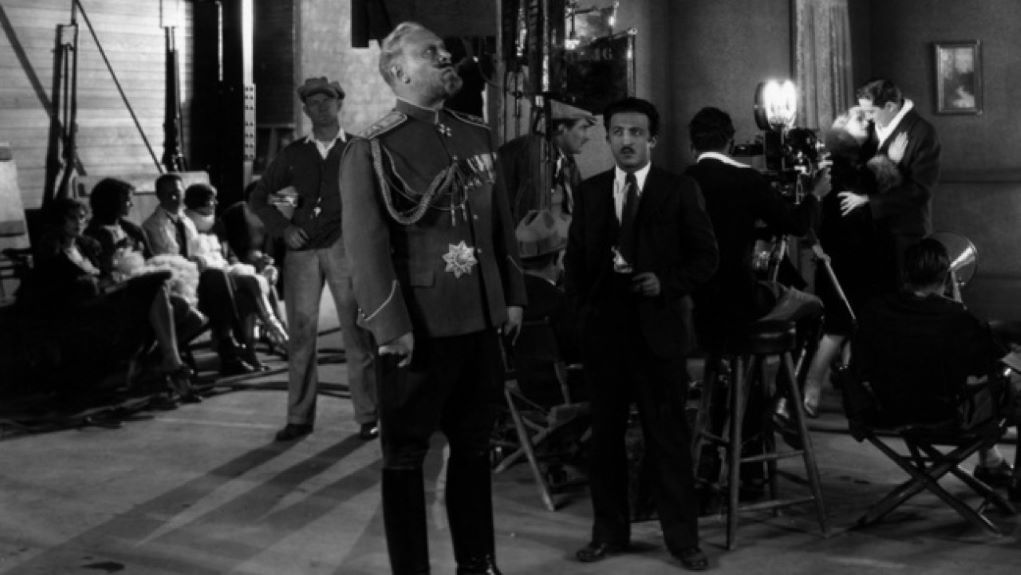
Humiliation is also the name of the game in Hollywood. While The Last Command is more about its sympathetic look at good White Russians let down by the system (fitting von Sternberg’s imperialist sympathies), it throws in to its first and final act an uncomfortable look at Hollywood. Extras crowd at the studio door as another sea of desperate humanity (Sergius’ buffeting here in this crowd, must remind him of that humiliating walk through the mob in Russia). Costumes are flung at people identified only by tickets. Assistant directors treat people like dirt and extras are seen only as props.

But the satire is blunted by the fact that the treatment on set is motived by personal animosity. After all this is Lev – William Powell, rather good and clearly channelling von Sternberg – living out his own revenge fantasy. A sharper satire would have had no link between director and extra, merely seen the heartless system exploit a past trauma for its own benefit – with terrible consequences.

The Last Command is less a satire on Hollywood and more a rose-tinted look at the decent figures in the Tsarist system, with touches of satire on revolutionaries who are either power-mad middle-classes or working-class simpletons seduced by the temptations of drink and sex. It’s also a subtle smuggling in of the director’s own sexual fascinations, with Jannings a superb vehicle for this fantasy of humiliation with Brent shot with the sultry imperiousness of a potential dominatrix. For all this it’s a fine film, a visual marvel and a fascinating character study.

Modern Times (1936)

Modern Times (1936)

Chaplin’s silent swansong, is a funny but quietly impassioned attack on corporate greed

Director: Charles Chaplin

Cast: Charles Chaplin (The factory worker aka The Tramp), Paulette Goddard (The Gamin), Henry Bergman (Café owner), Stanley “Tiny” Sandford (Big Bill), Chester Conklin (Mechanic), Al Ernest Garcia (President of Electro Steel), Stanley Blystone (Gamin’s father), Richard Alexander (Cell mate)

As cinema entered Modern Times of its own, Chaplin had a profound sense that he needed to move with those times. The legendary comedian, whose Tramp persona had made him (possibly) the most famous man in the world, was a silent comedian starting to be left behind by sound. There is a rich relish in the fact that Modern Times, a joke-packed criticism of the coldness of modern industry, is both Chaplin’s last silent and first sound movie, a dipping of the toe in modern times and a valedictory swansong for the past. It’s a film that bridges the ‘modern’ and classic of cinema.

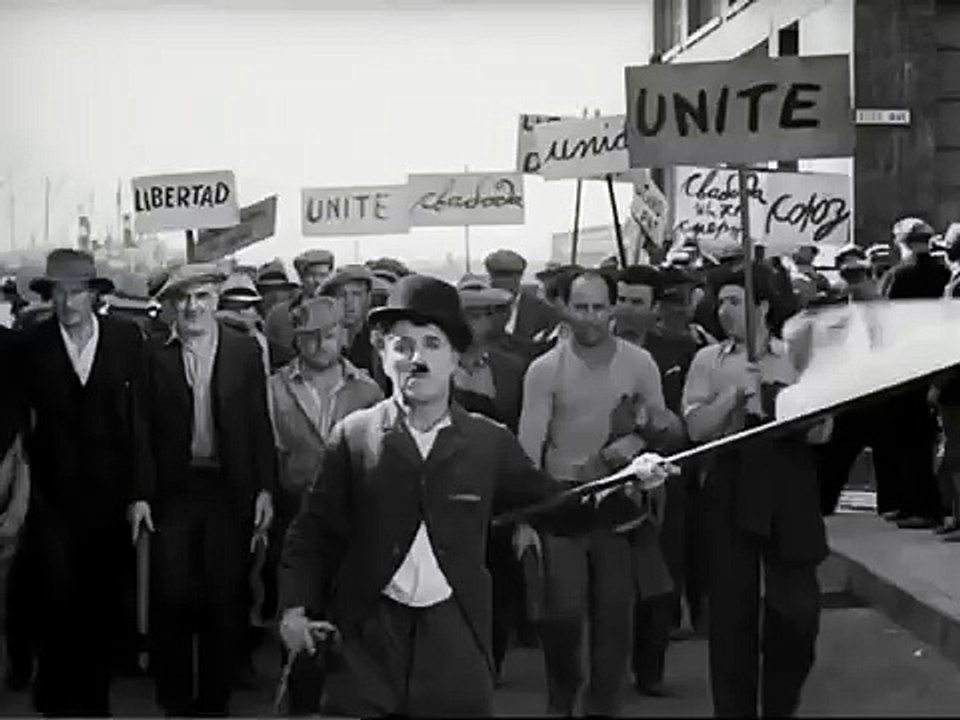
Chaplin is an assembly line-worker eventually driven to a nervous breakdown by the relentless, fast-paced monotony of his work (not to mention a death-defying encounter with the internal workings of the factory machines). Sent to recover in a hospital, he emerges into to find there is little in the world that a dreamer and romantic like him can understand. Again and again, things go wrong. He’s arrested for picking up a red flag in a union march, fired as a night watchman in a department store for helping starving thieves, hopeless as a factory repair man and struggles with tongue-tied silence as a singing waiter. But he and a young ‘Gamin’ (Paulette Goddard), both hope for a better life.

Modern Times has a deceptive structure. It’s easy, at first glance, to see is as four two-reelers thrown together: mini-films in the factory, prison, department store and café. But what Chaplin has created here is a picaresque fable, with the Tramp in the middle. (Only one sequence, with the Tramp as a repairman in a factory, feels superfluous repeating some jokes from the opening act). A morality tale of the modern era, where the big bosses and machines are indifferent to those on the bottom rungs, continually punctuated by the police riding up to bear away the innocent on the slightest pretext. It’s a masterclass of subtle repetition, with moments of contentment forever snatched away.

Chaplin’s most subtly political work became his most controversial. In a way few other films of the 1930s did, Modern Times engages with the conditions and politics of the Great Depression. Housing for the poor is ramshackle, with walls literally held up by mops. The factory alternates exploiting its workers at ever dizzying production speeds with ruthlessly laying them off the moment a slight economic downtown takes place. Union movements are ruthlessly stamped out: when the Tramp accidentally joins a march, he is arrested while the Gamin’s father is shot by police crushing another march. Poverty is ever-present – the Gamin ‘steals’ unwanted food to feed others, laid off factory-workers rob stores for food and when the factories are re-opened there is an almighty struggle from the desperate to get through the gates and claim a few hours of work.

Unsurprisingly Modern Times was condemned as possibly communist and suspiciously anti-American: Chaplin, turning a mirror on conditions in America started to be seen more-and-more by many as a suspicious alien (after all, he’d never taken on American citizenship). Nobody wanted to hear the funnyman turn prophet and many were suspicious of the comedian who used jokes to sweeten the bitter pill (even if, as per many of Chaplin’s messages, it was a rather naïve and simplistic one). It didn’t matter that Modern Times boils down to a plea for a universal love and understanding, it was somehow a creeping sign of the political dangers in ‘modern times’.

Today, distanced from the Red Scare, Modern Times looks far more like what it actually is: a pathos-filled, liberal eye on the working classes that champions the dreamers and the little guys over the corporations and the system. And who better as a hero for that than The Tramp? After all, this was a figure who had struggled against the odds for decades. Modern Times would see that struggle on multiple fronts: against the system, against the machines (literally so, as they swallow him up) and against a way of life that seems to be betting against him.

Even cinema was betting against the Tramp. Chaplin knew he couldn’t put off converting to sound forever. But he also knew the Tramp was a universal figure – and a large part of that was his silence. He never speaks in Modern Times – and when he sings, it’s in garbled, funny-voiced nonsense that effectively keeps him as a universal mute. It’s The Tramp’s final victory lap.

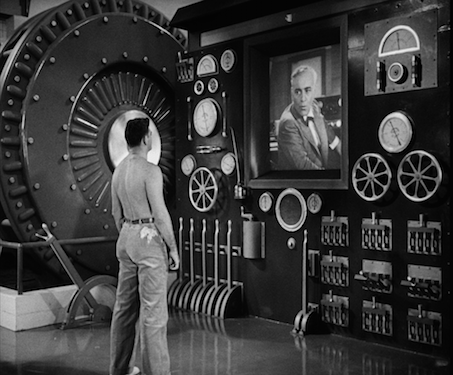
Chaplin’s comic timing remains masterful, and Modern Times is awash with marvellous, balletic set-pieces. Most famous is the opening factory sequence (which owes more than a debt to Fritz Lang’s Metropolis and feels remarkably prescient of Orwell’s 1984 with its Big Brotherish boss), a crazed ballet of repetitive, fast-paced movement on the production line – culminating in the legendary sequence of him being sucked into the very gears of the machine. The factory cares so little about the men there, that a machine designed to feed them as they work is dismissed as impractical rather than inhumane – though it gives us a great set piece of Chaplin assaulted by this machine with soup, custard pies and morsels rammed into his face by a mechanical arm.

The comic invention continues through the prison sequence. It’s a sign of the sting under the surface of Modern Times that the highlights of this sequence come about due to the Tramp (accidentally) being high on a mountain of cocaine. Foiling a jail break through coked-up bravado – another wonderfully done sequence, timed to perfection and filmed in one-shot – the Tramp’s reward is not being allowed to stay (and get the roof and food he needs) but early release. (Modern Times finds time, before he goes, for a final pop at ineffectual, superior middle-class do-gooders, lampooning a crusading priest’s wife as coldly distant and the subject of a cheeky gaseous gag).

Modern Times develops into a sweet fairy-tale romance with the introduction of the Gamin. Paulette Goddard gives a radiant performance, full of confidence and comic vibrancy – she becomes the first female lead given near-equal treatment by Chaplin. The department store sequence is grounded with their relationship, from the Gamin taking the opportunity to sleep in a beautifully prepared bed. Their time in the shop at night is full of wonder at the comfort and luxury – that they never see in their own homes – and culminates in a beautifully shot roller-skating sequence, with Chaplin circling balletically on the floors of the shop. (Tellingly though, he does so on the edge of precipice marked danger – Modern Times never forgets that danger lies just round the corner).

It’s the Gamin who lands them a job at a bustling café – awash with spoiled, rich customers – via her dancing ability (there is a fabulously simple transition that sees her pirouetting on the streets to ending the dance in glamourous clothes in the café). Even this moment of happiness is foiled by the law – illogically chasing the Gamin for past vagary offences rather than leaving her to work. But it’s made clear that they are a partnership: fitting the humane message of Modern Times that our best chance of being saved is sticking together.

Modern Times is shot by Chaplin with a striking, sprightly inventiveness. There are signs throughout of Chaplin’s overlooked visual and editorial skill, transitions that are hugely cinematic, storylines that are communicated with maximum efficiency and clarity. As well as the influences of Lang, Chaplin shows a debt to Eisenstein with a striking early visual cut that sees a crowd of sheep (with one black sheep in the middle) cut to a crowd of workers emerging from a subway into the factory. Modern Times pushes its humane message with a gentle persistency, but never lets it dominate the comic and emotional force of the film. Chaplin is an entertainer with a social conscience – but he is an entertainer first of all – and Modern Times is never anything less than charming and funny, even when it is spikey.

Hamlet (1964)

Hamlet (1964)

Kozintsev’s masterful version of Hamlet is one of the greatest Shakespeare films ever made

Director: Grigori Kozintsev

Cast: Innokenty Smoktunovsky (Hamlet), Mikhail Nazvanov (Claudius), Elza Radziņa (Gertrude), Yuri Tolubeyev (Polonius), Stepan Oleksenko (Laertes), Anastasiya Vertinskaya (Ophelia), Vladimir Erenberg (Horatio), Igor Dmitriev (Rosencrantz), Vadim Medvedev (Guildenstern), Aadu Krevald (Fortinbras)

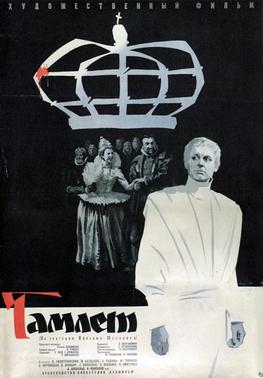
One of the main reasons Shakespeare remains timeless is that he can be shifted and adjusted through any society or perception and new riches will be discovered in his work. That’s why the, perhaps, greatest film version of Hamlet doesn’t even have an actual word of Shakespeare in it: Grigori Kozintsev’s epic, paranoia-tinged Hamlet with the dialogue translated into robust, poetic Russian by Boris Pasternak, takes huge liberties with the text but creates a richer, commanding and, above all, cinematic version of Elsinore than almost any other version yet made.

Kozintsev was a leading Russian theatre director who had written extensively on Shakespeare. He bought to his film both a brilliantly cinematic eye but also a comprehensive understanding of the play. Kozintsev’s Hamlet is filtered through Stalinist Russia. Where other Hamlets of the era focused on Freudian themes and the poet Prince, his Hamlet would be starkly, strikingly political.

Here Elisinore is a place devoid of privacy, where every word is overheard and every action watched. It’s controlled by Claudius as an eminence grise turned king, a smooth and assured political player who understands the machinations of power and the importance of appearance. Koznitsev’s rearranges Claudius opening speech into three discrete chunks. The first sees a herald reading out Claudius’ announcement of his wedding and the new regime to a crowded courtyard of peasants. We then cut to crowded room of Ambassadors of various European powers roaming, where we hear snippets of conversation each delivering a separate line from Claudius’ oration. Finally, the conclusion of the speech, and his plans for Fortinbras, is delivered by the king himself to a room of nodding courtiers. That’s imaginative cinematic translation of Shakespeare right there.

This is a Hamlet that lives and breathes the fear of living in an oppressive regime, under the thumb of a smiling autocrat. Mikhail Nazvanov’s Claudius charms but has a resolute, ruthless coldness behind his eyes. The court is drenched in paintings of the great leader – including one grand armoured horseback painting that looks like a Claudius head has been swiftly painted over his brother’s. Claudius controls all privacy in the castle: Koznitsev fills the film with shots of closing doors, lowered portcullises and a constant stream of background observers for every conversation. Only Claudius can gain solitude – tellingly he is the only character who speaks his soliloquy out loud, because he is the only character who knows for sure his words are for his ears alone.

This Elsinore is a castle where knowing too much is dangerous and the threat of being wrapped up in the wrong side of a purge is a very real one. Laertes’ aborted rebellion may see him forgiven – but the citizens who follow him to charge into the castle are escorted way, hands bound, never to be seen again. Claudius’ soldiers are increasingly visible presence in every doorway and corridor. When Hamlet unsettles the King with the Player’s performance, the courtiers practically fly away from the would-be dissident, as if worried that even the faintest contact could infect them with the same danger of exile and death that Hamlet is flirting with.

In this authoritarian production, our Hamlet is not the poet prince that so many Western productions at the time presented him as. Instead, portrayed with a chilling intensity by Innokenty Smoktunovsky, Hamlet is a dangerous man, filled to the brim with suspicion and resentment, who trusts nothing and confides to no-one. Rarely alone in this crowded Elsinore, he strikes a lonely figure, who finds isolation only on the cliffs staring out to the sea. His soliloquies are all internal voiceover monologues – less due to their internalised nature, and more that you feel he cannot risk speaking his feelings out loud (an impression created by his voiceover of his “Too, too solid flesh” speech delivered while Smoktunovsky moves through a crowd of courtiers).

Hamlet’s destructive bitterness is sparked by the Ghost. Cutting the first scene, Koznitsev introduces Hamlet and us to the Ghost at the same time. Unlike the smooth, ornately collared Claudius, the Ghost is an armour-clad rigid behemoth, his face almost completely obscured by his helmet. (There is a brief shot of his eyes which I would have removed – better that it had been kept completely distant from us). The camerawork stresses both its deliberation and size while Dmitri Shostakovich masterful score helps to build its sense of power and might (so effectively, that only a reprise of its theme is enough to suggest its reappearance to Hamlet later). It is a terrifying, other-wordly figure.

Smoktunovsky’s Hamlet barely ever raises his voice but has the intense determination of a man of natural action. Koznitsev has removed virtually every line that dabbles in doubt, uncertainty or hints even vaguely at delay. Smoktunovsky is merely biding his time for his chance at taking a hit at Claudius – a chance that will rarely come, in a court crowded with military protection for the King. He never forgives and even the slightest delay rouses him to anger rather than self-analysis. Koznitsev has trimmed out most of his lines with Horatio, who becomes an almost silent, scholarly observer and makes Smoktunovsky even more of a distant figure, liable to break out into dangerous violence at any moment, with no regard for the consequences.

The most visible of those consequences is Ophelia, who Smoktunovsky’s Hamlet uses coldly as a tool for probing the weaknesses of his enemies. Portrayed with a touching vulnerability by Anastasiya Vertinskaya, Ophelia is likewise never alone, unable to escape a crowd of duennas, who train her in dancing like a clockwork toy. Polonius (here an arch and scruple free political fixer, played by Yuri Tolubeyev) shows almost no interest in her at all, bluntly dismissing her and her distress when his need for her is done. After his death, she is literally locked into a metallic corset by her maids and covered by a gauzy funeral dress – even her clothes are cages. Her madness scene inevitably takes place in a room full of soldiers: even at the end she cannot escape the eyes of strangers.

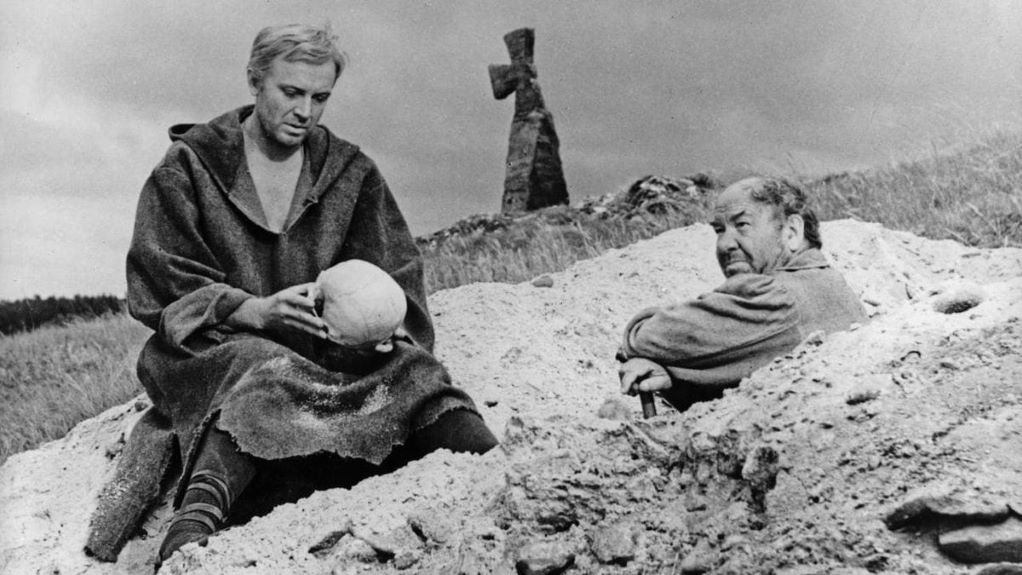
In the cold, Bergmanesque quality of Koznitsev’s film (the players, in particular, look like they have rolled in from The Virgin Spring), the stoney castle on the cliff (despite its renaissance, wood-lined interiors) is an imposing, terrible place. After the death of Polonius, Hamlet is dragged into (essentially) a show-trial (including a stenographer) before being dispatched to England. Rosencranzt and Guildernstern are empty-headed, ambitious minor officials who Hamlet displays not a moment’s hesitation in dispatching to their deaths. The only moment of reflection Smoktunovsky affords Hamlet is over Yorick’s skull – and even then, the cut suggests his focus is on the lost opportunities of great men. Certainly, Smoktunovsky’s grief over Ophelia is as much motivated by Laertes’ ostentatious show of public grief as sadness (and certainly not guilt, which he lacks entirely).

Koznitsev’s supremely visual film, beautifully designed and shot, reorders and reworks the text to maximum effect to continuously stress Hamlet’s highly political nature. It does mean characters like Gertrude fade into the background, but it repositions Elsinore highly effectively as a dangerous, ruthless place where life can be cheap. Like Stalinist Russia, the wrong word can condemn you and even our hero is as much a potential dictator as our villain. Hamlet is the most imaginative, revelatory and intelligently distinctive reading of the play on film, a production that interprets the play rather than just presenting it. It is a masterclass in adapting the Bard for the screen.

Watch the film here!

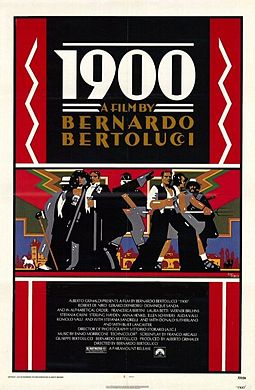
1900 (1976)

1900 (1976)

Bertolucci’s bloated, self-indulgent and simplistic film is a complete mess

Director: Bernardo Bertolucci

Cast: Robert De Niro (Alfredo Berlinghieri), Gerard Depardieu (Olmo Dalco), Dominique Sanda (Ada Fiastri Paulhan), Donald Sutherland (Attila Mellanchini), Laura Betti (Regina), Burt Lancaster (Alfredo Berlinghieri the Elder), Stefania Sandrelli (Anita Foschi), Werner Bruhns (Ottavio Berlinghieri), Stefania Casini (Neve), Sterling Hayden (Leo Dalco), Francesca Bertini (Sister Desolato), Anna Henkel (Anita the Younger), Ellen Schwiers (Amelia), Alida Valli (Signora Pappi)

After The Conformist and Last Tango in Paradise, Bertolucci could do anything he wanted. Unfortunately, he did. Perhaps the saddest thing about 1900 is that you could watch The Conformist twice with a decent break in-between during the time it would take you to watch it– and get a much richer handle on everything 1900 tries to do. Bertolucci went through a struggle to get his 315-minute cut released: perhaps the best thing that could have happened would have been if he had lost. Not only would the film be shorter, but it would be remembered as a lost masterpiece ruined by producers, rather than the interminable, self-indulgent mess we ended up with.

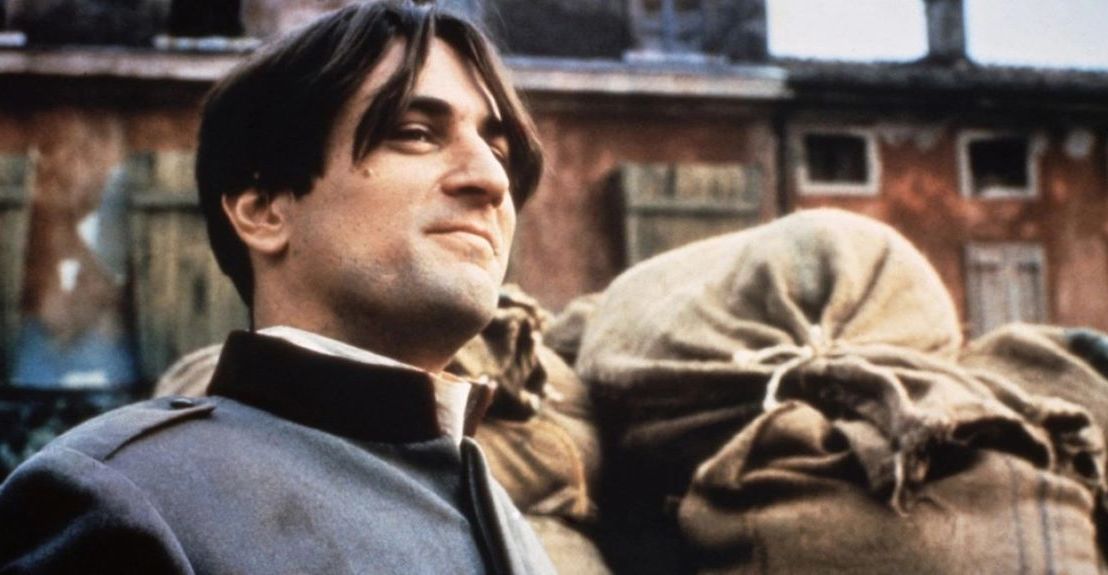
1900 – or Twentieth Century to literally translate its title Novecento – follows the lives of two very different men. Born minutes apart in 1901, Alfredo (Robert De Niro) is the grandson of the lord of the manor (Burt Lancaster), while Olmo (Gerard Depardieu) is the grandson of Leo (Sterling Hayden), scion of a sprawling dynasty of peasants. They grow up as friends, Olmo becomes a socialist and Alfredo an indolent landlord and absent-minded collaborator with the fascists, embodied by his psychopathic land agent Attila (Donald Sutherland). Their small community becomes a symbol of the wider battle between left and right in Italy.

In many ways 1900 is an epic only because it is extremely long and beautifully shot in the Bologna countryside by Vittorio Storaro. In almost every sense it fails. It offers nominal scale in its timeline, but its attempt to become a sweeping metaphor for Italy in the twentieth century falls flat and it focuses on a small community of simple characters, many of whom are ciphers rather than people. All of Bertolocci’s communist sympathies come rushing to the fore in a film striking for its political simplicity. It never convinces in its attempt to capture in microcosm the forces that divided Italy between the two world wars, nor invests any of its characters with an epic sense of universality.

Instead Bertolucci presents a world of obvious questions and easy answers. Every worker is an honest, noble salt-of-the-earth type, working together in perfect harmony to fight for rights. Every single upper-class character is an arrogant, selfish layabout, caring only about their back-pockets and the easy life. Bertolucci suggests fascism only arose in Italy as a means for the rich to control the poor, and never allows for one moment the possibility that any working-class person was ever tempted to take their side. It never rings true. (Bertolucci skips a huge chunk of the fascist 30s and 40s, possibly because this fantasy would be impossible to sustain if he actually focused on the history of that era.)

Bertolucci uses his two protagonists to make painfully on-the-nose comparisons between working class and rich with De Niro’s weak-willed Alfredo always found wanting compared to Depardieu’s Olmo. Even as children, Olmo is braver, stronger and smarter. Olmo has the guts to lie under the moving trains (Alfredo runs), Olmo stands up for what he believes in (Alfredo looks away), Olmo puts others first Alfredo whines about his own needs. Hell, Olmo even has a bigger cock than Alfredo (something they discover comparing penises as children and re-enforced when as young men they share an epileptic prostitute and she ‘tests’ them both).

The upper classes hold all the power but can do nothing without the working class. During the 1910s, a strike by the workers on the Berlinghieri leaves the clueless rich unable to even milk their moaning cows (they buy milk instead). Sterling Hayden’s peasant patriarch is a manly inspiration to all, while Lancaster’s increasingly shambling noble is literally and metaphorically impotent (Lancaster’s role is like a crude commentary on his subtle work in The Leopard). At one point he even pads around barefoot in horseshit to hammer home his corruption. (Incidentally this is the only film where you’ll ever see a horse’s anus being massaged on camera to produce fresh shit to be thrown at a fascist.)

For the rich, fascism is the answer. Continuing to shoot fish in a barrel, Bertolucci scores more easy hits by presenting our prominent fascist as an out-and-out psychopath. Played with a scary relish by Sutherland – in the film’s most compelling performance – no act of degradation is too far for Attila. Along with his demonic partner-in-crime Regina (a terrifyingly loathsome Laura Betti), he routinely carries out acts of violence, horrific murder and child-abuse, even literally headbutting a cat to death while ranting about the evils of socialism.

The poor meanwhile are all good socialists. Olmo, decently played by Depardieu, and his wife Anita (an affecting Stefania Sandrelli) rally the workers to stand against charging cavalry and protect their rights. Bertolucci even has Depardieu flat-out break the fourth wall for a closing speech, spouting simplistic platitudes direct to camera about the inherent wickedness of the landowner. Depardieu at least seems more comfortable than De Niro among this Euro-pudding (every actor comes from a different country and the soundtrack is a mismatch of accents and dubbing, not least Depardieu himself). Rarely has De Niro looked more uncomfortable than as the empty Alfredo, a role he fails to find any interest in, like the rest of the actors never making him feel like more than a device.

Bertolucci, stretching the run-time out, also embraces numerous tiresome excesses. Rarely does more than 20 minutes go by without a sex scene or a sight of someone’s breasts or sexual organs. From children comparing penises, to Depardieu performing oral sex on Sandrelli (just outside a socialist meeting), to De Niro and Depardieu getting hand-jobs from a prostitute, to Sanda dancing naked and high on cocaine or the revolting exploits of Attila and Regina, nothing is left to the imagination. As each goes on and on Bertolucci ends up feeling more like a naughty boy than an artist, so praised for his sexual licence in Last Tango that he feels more is always more. The excess doesn’t stop with sex either: at one point a worker silently cuts his ear off in front of a landowner to make a point about his stoic nobility.

1900 eventually feels like you’ve stumbled into a student debating club, where a privileged student drones on at great length about the evils of the rich, while quaffing another glass of champagne. It has moments of cinematic skill – some of its time jump transitions, in particular a train passing through a tunnel in one time and emerging at another, are masterful – but it’s all crushed under its self-indulgence. From its length to its sexual and violence excess, to its crude and simplistic politics delivered like a tedious lecture, everything is crushed by its never-ending self-importance.

The Grapes of Wrath (1940)

The Grapes of Wrath (1940)

Steinbeck’s masterpiece is transformed into a richly humanitarian and heartfelt film

Director: John Ford

Cast: Henry Fonda (Tom Joad), Jane Darwell (Ma Joad), John Carradine (Jim Casy), Charley Grapewin (Grandpa Joad), Dorris Bowdon (“Rosasharn” Joad), Russell Simpson (Pa Joad), OZ Whitehead (Al Joad), John Qualen (Muley Graves), Eddie Quillan (Connie Rivers), Zeffie Tilbury (Grandma Joad), Frank Sully (Noah Joad), Frank Darien (Uncle John), Darryl Hickman (Winfield Joad)

If you can be certain of one thing, it’s that times of economic hardship rise and fall like waves on the shore. John Steinbeck’s novel The Grapes of Wrath was a searing, powerful exploration of the impact of the Dust Bowl, the Great Depression and new farming technologies on Oklahoma tenant farmers. It was almost immediately cemented as a Great American Novel. Just as Ford’s moody, heartfelt, humanitarian film of it was immediately hailed as a Great American Film.

In Oklahoma, Tom Joad (Henry Fonda) is released from prison (after killing a man in a bar fight) to find his farming community has been devastated. The Depression has shattered the market and the landowners now farm their land with tractors rather than people. Tom and his family have no choice but to load up a beaten-up van and migrate to California where they have hopes of work picking fruit for meagre wages. What they find on the way, among small acts of kindness, is exploitation, brutal policing determined to crush any protest from migrants and migrant camps in terrible conditions. Misery, death and the endless grind of fading hopes seems to be all they have to look forward to.

The Grapes of Wrath moved to the screen faster than almost any other novel in history. Published in April 1939, in months Nunnally Johnson had completed a script and shooting began in October for release in 1940. The unprecedented speed spoke to the book’s enormous impact, which has remained eternally relevant in its depiction of the hostility faced by migrants. Producer Darryl F Zanuck, despite his passion for the novel, worried it would be seen as pro-Communist propaganda – thankfully basic research showed Steinbeck had, if anything, played down the labour conditions. Zanuck was convinced he could defend any accusation of anti-Americanism – perhaps, as well, he decided recruiting the film poet of romantic Americana, John Ford, as director would lay any change The Grapes of Wrath could be seen as an attack on the US to rest.

Ford was in fact a near perfect choice as director. A man who held his Irish migrant roots close to his heart, he felt a powerful bond with these victims of changed circumstances. As a man with a romantic view of America’s Golden Age, he was equally critical of sharp technology changes (he shoots the tractors who plough through the Oklahoma farmland as monstrous tanks, crushing hope below their ominous caterpillar tracks). Working closely with cinematographer Gregg Toland, he shot a film with one foot in realism, the other in low-lit, moody impressionistic shadow, a rich visual treat that marries both methods to enforce the appalling economic situation it depicts.

From its opening shot, which frames Tom Joad walking across Oklahoma desert land framed with telegraph poles, the idea of ordinary people left behind by technological change rings out. Tom’s farmstead Tom is derelict with one tenant recounting his eviction in a cramped room lit by a single candle. The Joad’s leave for California in a truck so beat up, it only just starts and appears to be partially made of wood. The California shanty town they are herded into is contrasted with the sleek automobile of the landowner offering work for a pittance. In the government run camp, we see running taps and modern bathrooms that seem space-age compared to the squalor we’ve seen.

The Grapes of Wrath doesn’t shirk in its anger at the ill-treatment of these sons of the soil. In California, the bosses are cruel, uncaring and greedy. The flyers the Joad family clutch hoping for work, is one of thousands recruiting for only hundreds of jobs. Salaries are constantly undercut – at their second camp, the Joads work exhaustingly for just about enough to feed them for the day. The sheriffs are little more than heavies for the bosses, breaking up protests at pay, arresting and beating ‘trouble makers’ and turning a blind eye to any threats or danger to the migrants.

The injustice of it is captured in a superb speech by John Carradine’s Jim Casy, a former preacher whose faith has been replaced by a burning passion to protect the rights of the little guy. Shot by Toland in a shadow-drenched, candle-lit tent, Carradine delivers with impassioned brilliance an inarticulate but moving speech on the need for the workers to stick together to combat exploitation. He follows in the footsteps of an earlier ‘rabble rouser’, whose denunciation of a fat-cat businessman is met with gunfire from a sheriff (a woman being near-fatally shot in the aimless fire).

It’s feelings that will inspire Henry Fonda’s Tom Joad. Fonda is marvellous as this plain-speaking man with a streak of self-destruction, who learns to focus his anger aware from his own needs to fighting for others. With his father – well-played by Russell Simpson – increasingly ineffective, Tom transforms himself slowly into a leader. His lolloping stance doesn’t detract from his everyman nobility. Fonda even manages to make some heavy-handed, speechifying really work as a profound statement of human rights.

He’s joined in this with the film’s third stand-out, the Oscar-winning Jane Darwell as the indefatigable “Ma”. Darwell becomes the family lodestone and an epitome of resilient spirit, her pained but patient face returned to again and again. Darwell as at the heart of many of the most moving moments, perhaps the most one of its simplest: Ma quietly, with sad smiles, burning old mementoes and holding up a pair of earrings to study her reflection in the flickering candlelight. Ma holds the family together, from cradling the dying Grandma on the floor of the truck to desperately hiding Tom from the vindictiveness of the police. Ford closes the film with a powerful speech of hope and resilience from Ma, again wonderfully delivered by Darwell in simple, unflashy close-up.

Despite that delivery though, the end film’s final act doesn’t ring true with what has gone before. The film reshuffles the novel’s plot. That culminated in a bleak miscarriage in a windswept hut. The well-built government-run migrant town is a stopping off point, a moment of hope, in a grim journey towards desolation. Here it is the final destination – and the community dances, organised by benevolent caretakers, feels like a cheat of reality. Perhaps Zanuck felt a relatively hopeful ending was needed to balance those fears of Anti-Americanism. Either way, it never feels like a ‘real’ ending: this economic catastrophe didn’t end like this for many, so it shouldn’t for our everymen.

It is perhaps, though, the only major flaw in Ford’s superb film. It’s a film sprinkled with as many small moments of peace and hope as it is injustice. The Joads enjoying a swim in the lake, or the kindly garage staff who let Pa buy bread and sweets for the kids at a price far below their value warms the heart. The shanty towns are given a real sense of community by Ford. It makes the stark cruelty of those in charge stand-out all the more.

The film doesn’t shirk on the grim surroundings. The detail of the squalor is magnificently delivered, while the foreboding, shadow filled lighting of Toland’s photography is exceptional. With a host of excellent performances, Grapes of Wrath is the finest statement of Ford’s overlooked humanitarianism. He was a director with a warm regard for the common man, who believed in their righteousness and right to just treatment. This streak runs strong throughout The Grapes of Wrath and makes a film that is never sentimental, but arouses huge sentiment in anyone who watches it.

Coming Home (1978)

Coming Home (1978)

Emotional but a little too worthy Vietnam message movie, well-directed with great performances

Director: Hal Ashby

Cast: Jane Fonda (Sally Hyde), Jon Voight (Luke Martin), Bruce Dern (Captain Bob Hyde), Penelope Milford (Vi Munson), Robert Carradine (Robert Munson), Robert Gintu (Sgt Dink Mobley), Mary Gregory (Martha Vickery), Kathleen Miller (Kathy Delise)

Vietnam is a jagged scar on the soul of America but, more than that, it’s been a literal scar for the veterans. Luke Martin (Jon Voight) was a college athletic star, now returned from the frontlines as an angry paraplegic, struggling with post-traumatic stress. Helping him – eventually – is old school-friend Sally Hyde (Jane Fonda), married to a Marine captain Bob (Bruce Dern) who has himself shipped out to Vietnam. Sally and Luke find themselves growing closer and closer emotionally, as their hostility towards the brutal war grows. But how will Bob – still loved by Sally and himself ever more scarred by trauma – react when he returns from the front?

Coming Home was released in the same year as The Deer Hunter and makes for an interesting comparison. While Cimino’s film is a horrific plunge into the grisly horrors of war, combined with a sort of mesmeric epic poetry, Ashby’s Coming Home is a quieter, more domestic piece, an earnest attempt to explore trauma. There is no doubting the passion of all those involved: but Coming Home is at times a little too earnest. Despite its moments of undeniable emotional impact, its sometimes feels a little too pointedly like a “message” film, worn a little too heavily on its sleeve.

But, saying that, there are many positives. It’s shot with a skilful casualness by Ashby, whose unobtrusive camera makes us a witness to events (at one crucial point it is even half obstructed by a door). Ashby has a poetic sensibility that flies in the face of what could have been its soapy roots. He lets scenes unfold with such ease and gentleness of touch that you only slowly notice how extremely well assembled the film is. There is a whimsical, lyrical sadness about the whole thing – matched with a striking lack of condemnation of people, only for a system that bends and twists human beings into killing machines.

It uses a parade of hit songs, but the songs play not as snippets but as full performances, playing out over several scenes, scenes which at first seem to be directly counter to the lyrics and tone of the song itself. Then you notice the skill with which the film has been edited to the beat of the music, and how much The Rolling Stones, The Beatles, Hendrix, Simon & Garfunkel, Bob Dylan and many others set the tone for a whole era. Coming Home captures this tone, an era of optimism crushed by brutal contact with the cold, dark realities of the world. The songs weave themselves in and out of scenes, capturing an overwhelming sense of a nation lost and confused.

It’s in this framework the relationship between Luke and Sally flourishes as Luke begins finding purpose in his life. Heavily based on the life of Ron Kovic, Jon Voight won an Oscar for his extraordinarily committed performance. From early outbursts of naked fury and pain, wheeling himself around on a hospital bed, his outbursts seemingly only prevented by medication, Voight charts the development of Luke as a humanitarian and compassionate man, committed to helping others overcome their pain and loss.

He also develops an attachment to Sally that transcends physical attraction: the two are kindred spirits. Fonda (effectively the film’s producer), generously takes on the film’s least interesting role as the disengaged, homespun Sally, increasingly horrified by the war’s impact on veterans – and the lack of interest from others (capturing the whole sweep-it-under-the-carpet attitude of the armed services, her military wives’ club refuses to include a report from Luke’s hospital in their newsletter because it’s too depressing). This translates into a deep attraction for Luke, the only other person who truly shares her growing resentment for the war.

Coming Home gained much attention at the time for its frank depiction of sex, with Luke and Sally tenderly overcoming the barriers of his disability. (Although today, their coupling – with Fonda replaced by a body double – culminating in Sally’s first ever orgasm feels a little too obvious in its comparisons with her passionless flings with Bob). But sex is less important than sharing their feelings, from Luke’s talk of dreams where he can still walk to Sally’s doubts about her life choices.

If there is a problem with Coming Home, it’s that the film doesn’t really know what to do with these characters other than showcase their pain. It tends to make sharp jumps – Luke’s recovery from initial rage to tender, thoughtful man feels very swift. And although Penelope Milford is good value as Sally’s best friend, struggling to deal with her veteran brother’s collapsing mental health, her plotline and performance is a little too obviously designed to contrast with Sally’s.

The basic problem with Coming Home is that in its rush to establish the fundamental decency of its characters – and the appalling horror of the war they are wrapped up in – it often avoids drama of struggle. It makes an interesting contrast with Zinnemann’s The Men which turned Brando’s paraplegic veteran’s psychological recovery into an entire movie: here Luke’s finding of a new purpose is as swift as his mood shift is.

The film’s most interesting plotline actually follows Dern’s Bob Hyde. Dern gives the film’s most complex performance as a dedicated solider, struggling with deep denial about his growing disaffection and unacknowledged PTSD, confronting his wife’s infidelity with a mix of anger and desperation to receive a comforting hug from her. Hyde’s discovery of the affair is its most melodramatic moment, but also strangely its most unpredictable – and a film exploring this character’s switch in perspective might just have been a little more challenging.

But Coming Home has plenty to recommend it. Voight has never been better, warm, tender and throbbing with emotion, his closing speech to a roomful of students exhorting them not to fight and choking back tears that taking another life is never worth it, is worth the price of admission alone. Ashby’s film has a poetic sensibility to it and if it sometimes feels a little too self-righteously earnest about its anti-war credentials, and a little too aware of its status as a “message movie”, at least it is a message that needs to be heard.

All the President’s Men (1976)

All the President’s Men (1976)

The greatest film about journalism ever made? This dense, detailed conspiracy thriller is a marvel.

Director: Alan J Pakula

Cast: Robert Redford (Bob Woodward), Dustin Hoffman (Carl Bernstein), Jason Robards (Ben Bradlee), Jack Warden (Harry M Rosenfeld), Martin Balsam (Howard Simons), Hal Holbrook (“Deep Throat”), Jane Alexander (The Bookkeeper), Stephen Collins (Hugh W Sloan Jnr), Ned Beatty (Martin Dardis), Meredith Baxter (Deborah Murrah Sloan), Penny Fuller (Sally Aiken)

If anything, even remotely, dodgy happens in politics than, quick as a flash, you can bet the suffix “gate” is added to it. It all stems from Watergate, the Washington building that was the location of the most disastrous attempted burglary in political history. Agents from the Committee to Re-Elect the President (CREEP to you and me) broke into the Democratic office on a dirty tricks mission. They got caught, Nixon and his cronies decided to cover it up and obstruct justice – and when the story broke, it broke Nixon and his Presidency as well.

All the President’s Men covers the early days of how that story was broken by two junior reporters on the Washington Post: Bob Woodward (Robert Redford) and Carl Bernstein (Dustin Hoffman). Involved in the case from the night of the break-in, the film (adapted from the book by ‘Wood-stein’) covers their pain-staking investigation to work out what lies behind this burglary and, if there is a conspiracy of silence, how far up the chain of the Presidency it reaches. As well as winning the trust of sources, they must also persuade editor Ben Bradlee (Jason Robards) their reporting is rigorous and worth placing the full might of the paper behind them.

Produced by Redford, All the President’s Men is grounded in realism and the painstaking, methodical series of telephone calls, knocked doors, flicked reference books and sleepless sorting of facts and theories that lies behind investigative reporting. While never once slacking on the patience-defying, unglamourous, exhausting work, All the President’s Men may just have inspired more journalists to choose their career than any other film. This is journalism in all its freedom-of-speech, speaking-truth-to-power might and with Woodward and Bernstein already the most famous journalists alive, their glamour could only be doubled by being played by Redford and Hoffman.

The main obstacle All the President’s Men faced during its development was, how do you make the most famous political scandal in history suspenseful? After all (particularly in 1976) everyone watching the film knew more than the characters at every single step. The solution was fascinating. Not only does the film only focus on the second half of Woodward and Bernstein’s book – culminating in one of their biggest blunders – but the film would try and match the same confusion the journalists felt. All the President’s Men takes an already dense conspiracy – with a plethora of names and uncertain links – and works hard to make it more obtuse and obscure at every turn. Just like the journalists, mist surrounds us. Leads peter out. The focus shifts from scene-to-scene, from people to money. Nothing has been simplified or stream-lined. Instead, the film brilliantly captures the confusion the reports felt, making each revelation a beam of light.

It should, therefore, make the film disengaging and alienating. It’s quite the opposite. Alan J Pakula was already a master of 1970s American paranoia noir, and All the President’s Men is awash of the tension of questions answered and threats and dangers left hanging. There are shadowy implications throughout of dark forces at work, blocking our heroes. Potential witnesses seem terrified – in particular a CREEP book-keeper (a superb, Oscar-nominated, cameo of suppressed fear and nervy strength of purpose by Jane Alexander) who sits rigidly still, willing herself to share revelations.

Pakula’s film is tightly paced and frequently jumps over what could be otherwise clumsy narrative structures – the journalists frequently jump from A to C with the film avoiding functional scenes showing how they passed through B. With its quiet air of looming, indefinable menace – Gordon Willis’ photography makes for a superb mix of light and shade – All the President’s Men makes the unspooling of this conspiracy into pre-tension filled cinema.

It’s also a triumph of sound-mixing and editing. Sound levels drop in and out on key conversations – sometimes phrases are deliberately missed, at other times background sound drops out to sharply narrow our focus. The office of the Washington Post is a hive of background noise. Bernstein talks to a source and literally has to shout over a passing plane. The film sets its sound stall out with an opening eighteen seconds of grayish silent screen – until a crash like a gunshot reveals we have been starring at paper in a typewriter, the keys hammering letters in with earth-shattering impact.

It’s attention to journalistic detail is stunning. The offices of the Washington Post were recreated in detail, shot by Gordon Willis with a low-ceilinged brightness that contrasts completely with almost every other location in the film (in particular the car park, laid out with pillars that echo the office, where Woodward meets with shady informer “Deep Throat” it’s darkness where secrets are hid the polar opposite of a newsroom where secrets are revealed). In gripping single-takes, we watch Woodward conduct phone calls juggling sources (Redford even flubs a line at one point but works it seamlessly into the take) or Bernstein desperately track down sources for last-minute confirmations.

Willis uses a split dopter to brilliant effect. Effectively, this splits the lens in two – one half becomes a close-up, the other long-distance focus. It makes the screen a deeply unsettling mix of blur and crystal-clear clarity. So, while Woodward sits at his desk, we see blurred distance immediately around him – but on the other side of the screen far away other journalists clearly. Not only does this brilliantly create a sense of the endless bustle of the newsroom (also helped by the sound designs superb mix of typewriters and office noise) but also adds a visual metaphor of misty confusion that literally envelops our heroes.

All the President’s Men is a resolutely unflashy film for all of this. Its brilliance is all in its mastery of small details. It means more attention-grabbing shots – like the aerial shot of a circular library – carry even greater impact. The lack of flash also carries across to its stars, who have arguably never been better. Initially presented in two-shot exchanges (particularly in their first encounter over Bernstein rewriting Woodward’s text without his agreement), the two increasingly share the frame. Redford and Hoffman even learned each other’s lines so they could complete each other’s sentences – they almost become one character (‘Woodstein’).

The two actors were also wonderful contrasts, reflecting the two men they played. Redford, who worked hard to keep the project grounded, has a WASPY boy-scout decency and a relaxed unfussy star delivery, Hoffman the twitchy fiddling of the working-class reporter made good. Both actors have rarely been better. Equally good is the Oscar winning Robards who perfectly captures Bradlee’s avuncular professionalism while Holbrook is superbly enigmatic as the shadowy ‘Deep Throat’.

All the President’s Men demands attention like few other films – but it’s deliberately dense plot exactly matches the mystifying journey of the journalists themselves. It also turns journalism itself into a cause for typewriter knights (you could argue the downside of its legacy is journalism focused on ‘gotcha’ rather than informing). Pakula’s marvel is crammed with stunning sound and visual design and a lingering sense of paranoic fear. The film wants us to be as uncertain about what is happening as the characters – but in doing so it makes the greatest argument in favour of the power of journalism ever made by cinema.

Wilson (1944)

Wilson (1944)

Well-meaning if slightly dry hagiography that struggles to turn history into drama

Director: Henry King

Cast: Alexander Knox (Woodrow Wilson), Charles Coburn (Professor Henry Holmes), Geraldine Fitzgerald (Edith Wilson), Thomas Mitchell (Joseph Tumulty), Ruth Nelson (Ellen Wilson), Cedric Hardwicke (Senator Henry Cabot Lodge), Vincent Price (William G McAdoo), William Eythe (George Felton), Mary Anderson (Eleanor Wilson), Ruth Ford (Margaret Wilson), Sidney Blackmer (Josephus Daniels), Madeline Forbes (Jessie Wilson), Katherine Locke (Helen Bones)

Darryl F Zanuck had a passion project: a biopic of the 28th President Woodrow Wilson. It would be both a tribute to a man, he felt, was overlooked and also a homage to current President Roosevelt – and a warning for the future. Like FDR, Wilson had introduced a raft of reforms and led the country in wars – and Zanuck was worried America would fudge the peace, just as Wilson had failed to get the Senate to endorse the League of Nations, leaving it a toothless lion.

Zanuck’s no-expense spared approach gives us a laudatory biopic that lavishes Wilson in euphoric praise, smooths off all his edges and presents him as a visionary and a near-flawless leader. The money was thrown into building elaborate sets and costumes – vast swathes of the White House and the Palace of Versailles were re-built on the sound stages of 20th Century Fox – and the script repackaged a series of major events interspersed with Wilsonian speeches. It was launched to a fanfare, was nominated (largely due to Zanuck’s influence) for ten Oscars (winning five) and was a box-office failure.

But is it a good movie? In truth, not quite. Despite the lavish production values, this is a dry, unimaginative and stately progression through its subject’s life. Henry King marshals events with the professionalism of an accomplished journeyman, but little inspiration. There is nothing striking, original or brave in a single minute of Wilson, but everything is perfectly framed and (considering its immense length) well-paced. King uses a series of low-angle shots to hammer home the magnificent detail of the sets and Alfred Newman’s score remixes a series of patriotic scores and heavenly-sounding choirs to build the impression of Wilson as secular saint.

But Wilson remains a largely undramatic movie, with an (Oscar-winning) script by Lamar Trotti that fails to inject drama or skilfully convey information. The warning signs are there in the film’s opening, with a group of New Jersey Democrats arrive to recruit Princeton head Wilson to run for Governor and clumsily give each other a potted precis of his CV and academic achievements while they wait for him to join them. Dialogue frequently info dumps historical research in our ears. Newspapers bluntly tell us in crude headlines what’s happening. Poor Thomas Mitchell’s entire role seems to be made up of running into rooms clutching telegrams announcing major events.

In amongst all this research though, we get very little idea of what Wilson actually stood for. There is virtually no time spent on his Governorship of New Jersey, other than a two-scene disagreement with the Democratic bosses whose power he breaks. On becoming President, his major legislative reforms are covered in a less-than-a-minute montage of signed bills. He consults his cabinet once or twice and, when war comes, walks a fine line between preserving American strength and not rushing into war. The final act of the film covers his failed battle for the League of Nations, the only policy the film invests any time into explaining.

For much of the rest of the time, this hagiography concerns itself with down-playing or skating over anything in Wilson that could be perceived as a flaw. Wilson here talks a good game of reform, equality and rights for all. In real life, he was a dyed-in-the-wool segregationist, sceptical about women’s suffrage as well as being an intellectually arrogant elitist who, later in his Presidency, began to see himself as a sort of vessel for God’s policies. While he was undoubtedly a highly effective moderniser and legislator, none of his faults make it to the screen.

Other areas are also carefully removed. Wilson was often accused of being heavily under the influence of advisors like “Colonel” House – House gets a one-scene cameo here. He ran for re-election in 1916 promising to keep America out of the war – this unfortunate broken promise is repackaged as Wilson sitting in the White House deeply regretting the campaign the party is running for him but stating there’s nothing he can do about it. His controversial re-marriage in 1915 to the much-younger Edith Galt (only two years after his wife died) is excused by his wife informing his daughters on her death bed that Wilson must marry again as he needs a wife. Wilson’s incapacity after a stroke in 1920 is down-played, while Edith (who effectively took over running the country for her husband in a constitutional scandal that would never stand today) states “I never made a decision without your knowledge and consent” while sitting with a sturdy Wilson.

All of this is played out in parallel with making Wilson’s rivals in the Senate mustachio-stroking schemers. None more so than Henry Cabot Lodge (well played by Cedric Hardwicke) who begins a career of animosity against the President after being made to wait for a meeting at the White House. In real life, Wilson refused any compromise offered by Lodge to get the League approved by the Senate, but here Wilson is a noble crusader foiled by political pygmies.

Saying that, the film benefits hugely from a very strong performance from Alexander Knox as Wilson, who not only looks and sounds exactly like the President, but perfectly captures his mannerisms. It makes you regret though the film is so little interested in Wilson’s personality or in building any picture of the humanity behind this leader. The rest of the cast have little to do other than state historical facts or stand to listen to Knox masterfully delivering Wilsonian speeches.

Wilson has a historical interest for Presidential buffs and, while it downplays the negatives around Wilson, it makes a very effective case for the President as a visionary leader (he was undoubtedly right about the League of Nations – even if his stance here is restructured into an FDRish self-determination for all nations). But this is a dry, stately film that never manages to turn the march of time into the thrust of drama. The Oscar-winning sets and photography look impressive, but its simplistic and hagiographic presentation of events eventually shakes your interest.