Category: Political satire

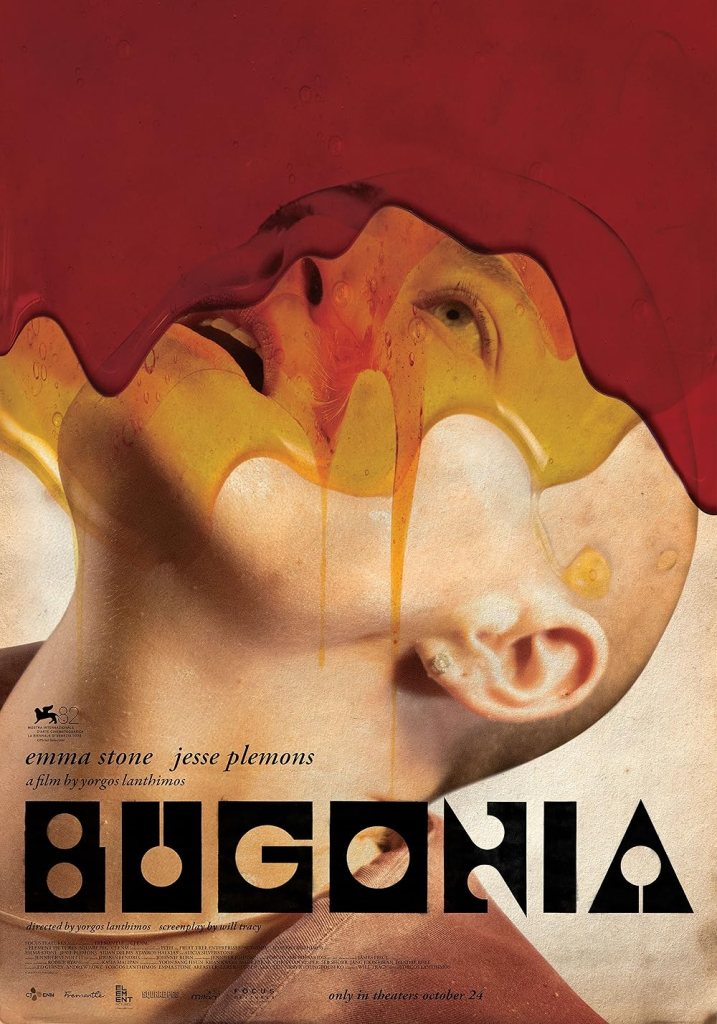
Bugonia (2025)

Bugonia (2025)

Satire, kidnap drama, politics and more combine in Lanthimos’ partially successful thriller

Director: Yorgos Lanthimos

Cast: Emma Stone (Michelle Fuller), Jesse Plemons (Teddy Gatz), Aidan Delbris (Don), Stavros Halkias (Casey), Alicia Silverstone (Sandy Gatz)

The world sometimes feels like its racing towards hell in a handcart And those on the bottom surely can’t help but look at the super-rich and wonder what on Earth do I have in common with them? But some, maybe particularly beaten down by life, may conclude something different: I’ve got nothing in common with the super-rich, because they are literally not of this Earth. That they are mysterious aliens who walk among us, planning to wipe us out. Bugonia takes a deep dive into the troubled, damaged psyche that can embrace the worm-hole of conspiracy theory, as well as the uncaring platitudes of the mega-companies that (maybe) rule the world.

Michelle Fuller (Emma Stone) is the CEO of Auxolith, an all-powerful pharmaceutical company that operates (at times) right on the fringes of legal. She becomes the target of beaten-down beekeeper Teddy Gatz (Jesse Plemons) and his loyal learning-disabled cousin Don (Aidan Delbris). Teddy is certain Michelle is from the planet Andromeda, that she can contact her mothership through her hair and that her mission is to wipe out mankind. Locking her in the basement of his farm-house, they enter into a mix of interrogation, battle of wills and wits and fluctuating power balances. Is Teddy deranged, vulnerable or misguided? Is Michelle scared victim, arch-manipulator or heartless CEO?

All this plays out, often in tight close-up, in Lanthimos’ jet-black comedy, which is two parts social satire to one part blisteringly nihilistic view of humanity and our future. As Burgonia’s carefully oscillates from one side to another, its political views and stances can be hard-to-perceive, but it certainly suggests Lanthimos has hardly the highest hopes for future. This helps make the film fresh, engaging and challenging. It’s constant cuts from one ‘side’ to the other, also means these two rivals rarely share the same frame, visually imposing their distance and rivalry – Lanthimos even uses non-complementary framing to place them awkwardly together, two people with no common ground.

While Teddy nominally holds the cards as the kidnapper, he’s so clearly such a weak, scared, vulnerable character (often framed weakly within the film) it’s hard not to feel sorry for him. Similarly, Michelle may go through some truly ghastly treatment as Teddy tries to unmask her ‘secret identity’, but remains such a forceful, dominant character (“I’m a winner and you are a fucking loser” she rants at Teddy at one point), framed with such utter assurance, her bland corporate indifference to others and willingness to manipulate the fault-lines in her kidnappers relationships (especially the gentle, child-like Don) never make her feel like a victim but just as dangerous as Teddy.

Teddy’s crazy, flat-Earth-mindset (and Lanthimos punctures each chapter with a view of an increasingly flat Earth, which is at first a darkly comic hat tip and then takes on a second chilling meaning late on) ranting and raving is presented as both darkly funny and also unsettling in how he can use it to justify any violence. Sure, it’s funny that he shaves Michelle’s head and covers her with cream to ‘weaken her influence’, or with gentle earnestness stresses he leads the human resistance to Andromeda (membership currently two). Slightly less funny that he insists he and Don chemically castrate themselves so as not to be seduced, or that pumps Michelle full of over 400 volts to try and unmark her (all while insisting her is a humanitarian, but as an alien Michelle technically has no human rights).

But then Michelle’s corporate coldness is rarely absent. She may remember all her staff’s name with a practised efficiency, but there is a degree of empathy missing in her, replaced with pragmatic hardness. As it becomes clear Teddy’s selection of her is (perhaps) more connected to her drugs companies treatment of his mother (Alicia Silverstone), her blasé assurances that everything was done legally and lack of any real guilt speaks volumes.

Lanthimos always keeps us guessing with Michelle: at moments she will switch from fear and vulnerability, to suddenly snapping back with utter authority, absorbing all the power in the room from the frequently hapless Teddy. Teddy in fact increasingly resembles a lost little boy (he even cycles through town with the relentless pedal-turning speed of a toddler), way-out-of-his-depth and at times all but deferring to Michelle’s advice about her own kidnapping.

Bugonia becomes a dance, not only between truth and fiction, but between two strikingly very different people, one so accustomed to power than even when in a nominally powerless situation they don’t feel anything but a winner, the other a desperate, scraggy haired loser who seems unable to really process what he should do to win a hand where he seems to hold all the aces. To make it work you need two electric actors: Lanthimos has this in spades with two trusted collaborators.

Stone’s ability to switch between corporate fear, desperate negotiation and earnest insincerity are as striking as her ability to keep her character so utterly, eventually terrifyingly, unknowable. In every second of Bugonia you can never be certain exactly what sort of person Stone is playing, her sociopathic assurance both understandable in the situation but also deeply unsettling. Plemons’ gives Teddy a child-like earnestness and desire to do the right thing that underpins his unhinged, ludicrous conspiracy theories, making him someone we both pity and understand is capable of doing terrible things for reasons he can justify to himself. Credit also goes to Aidan Delbris’ affecting performance as the gentle, easily-led Don.

Bugonia may well over-play its hands at points. It’s hard not to expect some sort of twist coming our way – I’m not sure how many people will be surprised by how the film plays out. It’s nihilistic ending feels a little too hard-edged and pointed for a film that hasn’t, until that point, embraced that level of flat-out cynicism. A clumsy introduction of a cop with a shady past is thrown in merely (it seems) to give us another reason to feel sorry for Teddy. Lanthimos’ at points engages, not always successfully, in a level of body horror that wouldn’t feel out of place in the excesses of Cronenberg. But then there are moments of real wit: the paralleled cuts of both Teddy/Don and Michelle going through their fitness regimes, a painfully uncomfortable bolognaise meal that tips into a full-out barney between the two stars, it’s unsettling near-finale in Michelle’s office and the playful realisation that much of the truth was there from the start, but hidden.

Bugonia might be a little too scatter-gun and self-consciously crazy to be a really effective satire, but with two terrific performances and an unsettlingly tense shooting style from Lanthimos (with echoes of everything from Dreyer to Hitchcock) there is enough of interest there to keep your mind bubbling even after it’s hard-hittingly sour ending.

Mickey 17 (2025)

Mickey 17 (2025)

Indulgent, over-long satire that mixes painfully obvious political targets with on-the-nose comedy

Director: Bong Joon-Ho

Cast: Robert Pattinson (Mickey 17/Mickey 18), Naomi Ackie (Nasha Barridge), Steven Yeun (Timo), Toni Collette (Ylfa Marshall), Mark Ruffalo (Kenneth Marshall), Patsy Ferran (Dorothy), Cameron Britton (Arkady), Daniel Henshall (Preston), Stephen Park (Agent Zeke), Anamaria Vartolomei (Kai Katz), Holliday Grainger (Red Haired recruiter)

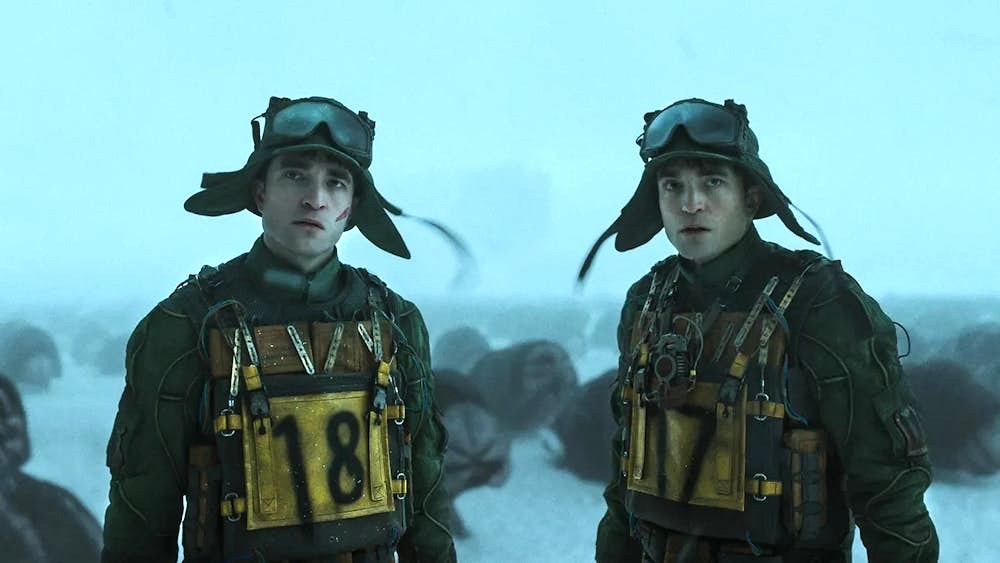
In 2050, everyone on the colony ship to the planet Niflheim has a job. Even a washed-up loser like Mickey (Robert Pattinson). His job is the most loserish of all: he’s an ‘expendable’, hired to die repeatedly in all forms of dangerous mission or twisted scientific and medical experiments, with a new body containing all his backed-up memories rolling out of the human body printer. The one rule is there can never be more than one Mickey at a time – so it’s a problem when 17 is thought dead and the more assertive 18 is printed: especially as they are flung into a clash between the colonisers and Niflheim’s giant grub-resembling lifeforms ‘Creepers’. Can Mickey(s) prevent a war that the colony’s leader, a failed politician and TV-star Kenneth Marshall (Mark Ruffalo) and his socialite wife Ylfa (Toni Collette), want to provoke?

It’s all thrown together in Bong Joon-Ho’s follow-up to Parasite which trades that film’s sharp, dark social satire and insidious sense of danger for something more-like a brash, loud, obvious joke in the vein of (but grossly inferior to) his Snowpiercer. Mickey 17 is awash in potentially interesting ideas, nearly all of which feel underexplored and poorly exploited over the film’s whoppingly indulgent runtime of nearly two-and-a-half hours, and Bong lines up political targets so thuddingly obvious that you couldn’t miss these fish-in-a-barrel with a half-power pea-shooter.

Mickey 17 actually has more of a feel of a director cutting-lose for a crowd-pleaser, after some intense work. Mickey 17 is almost a knock-about farce, helped a lot by Robert Pattinson’s winning performance as the weakly obliging Mickey 17 who grows both a spine and sense of self-worth. A sense of self-worth that has, not surprisingly, been crushed after a lifetime of failure on Earth leads him to series of blackly-comic deaths (the film’s most successful sequence) that has seen him irradiated and mutilated in space, gassed with a noxious chemical, crushed, incinerated and several other fates.

Not surprisingly, there is a bit of social commentary here: Mickey is essentially a zero-hours contract worker, treated as sub-human by the businessmen and scientists who run this corporate-space-trip. It’s an idea you wish the film had run with more: the darkly comic idea of people so desperate to find a new life that they willingly agree to have that life ended over-and-over again as the price. It’s not something Mickey 17 really explores though: right down to having Mickey sign on due to his lack of attention to contract detail (how interesting would it have been to see a wave of migrant workers actively pushing for the job as their only hope of landing some sort of green card?).

Mickey 17 similarly shirks ideas around the nature of life and death. Questions of how ‘real’ Mickey is – like the Ship of Theseus, if all his parts are replaced is he still the ship? – don’t trouble the film. Neither does it explore an interesting idea that each clone is subtly different: we’ve already got a clear difference between the more ‘Mickey’ like 17 and his assertively defiant 18, and 17 references that other clones have been more biddable, anxious or decisive. Again, it’s a throwaway comment the film doesn’t grasp. Neither, despite the many references to Mickey’s unique experience of death (and the many times he is asked about it) do questions of mortality come into shape: perhaps because Mickey is simply not articulate or imaginative enough to answer them.

Either way, it feels like a series of missed opportunities to say something truly interesting among the knock-about farce of Mickey copies flopping to the floor out of the printer, or resignedly accepting his (many) fates. Especially since what the film does dedicate time to, is a painfully (almost unwatchably so) on-the-nose attack on a certain US leader with Mark Ruffalo’s performance so transparent, they might as well have named the character Tonald Drump. Ruffalo’s performance is the worst kind-of satire: smug, superior and treats it’s target like an idiot, who only morons could support. It’s a large cartoony performance of buck-teeth, preening dialogue matched only by Toni Collette’s equally overblown, ludicrous performance as his cuisine-obsessed wife.

Endless scenes are given to these two, for the film to sneer at them (and, by extension, the millions of people who voted Trump). Now I don’t care for Trump at all, but this sort of clumsy, lazy, arrogant satire essentially only does him a favour by reminding us all how smugly superior Hollywood types can be. So RuffaTrump fakes devout evangelical views, obsesses about being the centre of attention, dreams of his place in the history books while his wife is horrified about shooting Mickey because blood will get on her Persian carpet. It’s the most obvious of obvious targets.

It’s made worse that the film’s corporate satire is as compromised and fake as the conclusion of Minority Report. It’s a film where a colonialist corporate elite defers to a preening autocrat, keeps its colonists on rationed food and sex and sacrifices workers left-and-right for profit. But guess which body eventually emerges to save the day? Yup, those very corporate committee once they learn ‘the truth’. Mickey 17 essentially settles down into the sort of predictably safe Hollywood ending, with all corporate malfeasance rotten apples punished. For a film that starts with big anti-corporate swings, it ends safely certain those in charge will always do the right thing when given the chance.

Much of the rest of Mickey 17 is crammed with ideas that usually pad out a semi-decent 45 minute episode of Doctor Who. Of course, the deadly, giant insect-like aliens are going to turn out to be decent, humanitarian souls – just as inevitable as the mankind bosses being the baddies. It’s as obvious, as the film’s continual divide of its cast list into goodies and baddies.

Mickey 17’s overlong, slow pacing doesn’t help. An elongated sequence with Anamaria Vartolomei’s security guard who has the hots for Mickey 17 (every female in the film, except maybe Collette, fancies him proving even losers get girls if they look like Robert Pattinson) could (and should) have been cut – especially as that would also involve losing an interminable dinner-party scene with Ruffalo and Collette. The final sequence aims for anti-populist messaging and action – but is really just a long series of characters saying obvious things to each other. Despite Pattinson’s fine performance – and some good work from Ackie – Mickey 17 is a huge let-down which, despite flashes of Bong’s skill, feels like a great director cruising on self-indulgent autopilot, taking every opportunity for gags over depth or heart. Not a success.

The Exterminating Angel (1962)

The Exterminating Angel (1962)

Buñuel’s unique party-gone-wrong is a fascinating mix of comedy, surrealism and satire

Director: Luis Buñuel

Cast: Silvia Pinal (Leticia, “The Valkyrie”), Jacqueline Andere (Alicia de Roc), José Baviera (Leandro Gomez), Augusto Benedico (Dr. Carlos Conde), Enrique Rambal (Edmundo Nóbile), Luis Beristáin (Cristián Ugalde), Antonio Bravo (Sergio Russell), Claudio Brook (Julio), César del Campo (Colonel Alvaro Aranda), Rosa Elena Durgel (Silvia), Lucy Gallardo (Lucía de Nóbile), Enrique García Álvarez (Alberto Roc)

Imagine a party so good, you couldn’t bear to leave. Sounds great, right? Now imagine a party that wasn’t even that good, but you couldn’t leave anyway. A dinner party with the hoi polloi that locks you into a seemingly never-ending parade of days (or weeks) where you and everyone else were physically incapable of stepping over the threshold of the room you’re in. All of you forced to live in a tiny space, on top of each other, none of you having a clue why you can’t leave or why this is all happening. Imagine that, and you’ve got Buñuel’s The Exterminating Angel, a surrealist-tinged, open-ended mystery of a film that presents its situation and leaves you to make of it what you will.

Returning to Mexico after comprehensively incinerating his nascent re-alignment with Spanish cinema with Viridiana (a film made in Catholic Fascist Spain that mocked both the fascists and the Church), Buñuel creates a haunting elliptical masterpiece by harnessing an idea so compelling it’s been recycled, reframed and reexplored by countless films after.  It’s an idea that has soaked into horror, of being trapped by some unknown force in a single place, unable to break free. It’s also sparked satire with its depiction of the thin veil of smug self-satisfaction over the bourgeoisie that collapses under the strain of covering primitive, violent instincts.

The Exterminating Angel tips us off from the start that we won’t be settling down to watch any old dinner party. As the guests assemble, the staff at the grand town house are practically falling over themselves to flee, as if subconsciously aware there is something wrong in the house. Buñuel throws the viewer off from the start by deliberately repeating scenes – a repetition so on-the-nose, that when watching I actually doubted myself about whether I had just seen what I thought I saw. We see the guests arrive – and make a forlorn call for their coats to be taken – twice in quick succession. It’s so blatant, even Buñuel’s editor gave him a panicked phone call about the ‘error’ just before the film’s opening!

Later the micro-repetitions of scenes, interactions and lines will pile up (it’s a film that rewards constant reviewing) making the whole set-up even more disconcerting. Two characters introduce themselves to each other three times, each time with a different emotional mood (from friendly to outright hostile). The same dinner toast will be greeted with rapture then complete indifference. Two couples will echo the same conversation. Oblique points about freemasonry and current affairs will be made over and over. Is Buñuel suggesting the whole whirligig of the social situation is just a slightly pointless merry-go-round where the same old bullshit happens over-and-over again and essentially means nothing? Sure, the characters notice they are literally trapped in the same room, but really aren’t they just metaphorically trapped in the same old rooms all the time?

Nevertheless, as the dinner party winds down, everyone is far too polite (or far too concerned with appearances) to openly say they feel like its physically impossible for them to cross the threshold and leave. Instead, the hosts quietly grumble that no-one seems to know when to go as the clock ticks into the wee small hours and the middle-class types here settle down in armchairs, on sofas or even on the floor to sleep. Come the next morning, polite embarrassment prevents anyone from saying exactly why they are still here. In fact, everyone promptly makes politely meaningless excuses about why they aren’t quite ready to leave yet: they’ve not had breakfast, nanny will look after their children, they don’t need to be anywhere quite yet.

In fact, I’m not sure anyone openly says they ever feel trapped. It’s like social faux pas everyone is horrified of pointing out. Not a surprise really as everyone here is from the height of professional society: doctors, conductors, army officers, businessmen, society grande dames. None of them wants to stand out like some panicked rube thrown by odd sensations. Instead, everyone slowly settles down into working around this bizarre situation no one wants to talk about. A cupboard is tacitly turned into a toilet. The food is carefully rationed. A water pipe is tapped into so everyone can drink. Sleeping areas are claimed. No one tries to solve the problem, because even acknowledging the problem feels like a cheeky liberty.

It leads into an increasingly fascinating blend of horror, dark satire and surrealist black comedy that Buñuel skilfully builds. A few shots show us the threshold of the room from the next room (a lush ballroom), and there are cuts to a crowd of rubber-neckers outside the house) who also cant enter. But otherwise, it’s all in this one room and as time – and the guests lose all track of that – drags on, the bonds of society both loosen under the polite instincts. Tempers fray, but there remains a formality even as the ravenous guests rip apart (off camera) and cook a sheep that wanders into the room. Some guests take advantage of the proximity to indulge in voyeuristic perversions, but when arguments erupt they are resolved with a Victorian duel mind-set. Only towards the end, as the world really fragments, does the danger of real violence (a suggested lynching of those judged responsible) flare up.

Buñuel would criticise himself later for not going far enough (if you want an idea of relatively tame he later thought it was, he argued cannibalism was one of the things he should have explored). But the fact that much of the behaviour remains grounded, recognisably stuck in a rut of upper-class restraint makes the film more effective. (Or as restrained as a party, where the cancelled ’entertainment’ at the original dinner was an unspecified event involving a tame-ish bear and three sheep, can be). Somehow, if the guests had regressed into the most animalistic behaviour possible, the film might have lost some of its enigmatic quality. As it happens, the fact the guests can never quite escape the trappings of their social rules makes it even more unsettling. It means that threats – such as the ferocity behind the ‘I’ll kill you’ response to a joke about someone being pushed out of the room – carries even more of a shock.

Buñuel throws in the odd surrealistic touch – after all he always claimed a dream sequence was in there when he had run out of ideas. We get two, one revolving about a nightmare of a disembodied hand moving freely around the house (it must be some sort of joke from Buñuel that the hand itself is the least convincing rubbery affair you can imagine) and later a sequence of disconnected images superimposed over a cloud filled sky. The film’s conclusion suggests a deadly, ever-expanding loop, based around the fact the characters suffer but learn nothing from it.

You can argue that The Discreet Charms of the Bourgeoisie, by allowing more physical freedom to its characters, allowed even more surreal, fascinating and intriguing exploration of the repressions, lies and hypocrisies of bourgeoisie life. But The Exterminating Angel has a claustrophobic horror to it, and the pressure cooker bubbling just below the surface of these trapped characters exposes class tensions in superbly unnerving ways. It makes for an expertly executed, shrewdly vicious social satire that lifts a lid on the many petty behaviours that govern so much of our lives. And it’s a mark of genius that you cannot imagine anyone other than Buñuel making it.

Juggernaut (1974)

Juggernaut (1974)

Disaster film masquerading as a sort of state-of-the-nation political satire of 70s Britain

Director: Richard Lester

Cast: Richard Harris (Lt Com Anthony Fallon), Omar Sharif (Captain Alex Brunel), David Hemmings (Charlie Braddock), Anthony Hopkins (Supt John McLeod), Shirley Knight (Barbara Bannister), Ian Holm (Nicholas Porter), Clifton James (Corrigan), Roy Kinnear (Social Director Curtain), Caroline Mortimer (Susan McLeod), Mark Burns (Hollingsworth), John Stride (Hughes), Freddie Jones (Sidney Buckland), Julian Glover (Commander Marder), Cyril Cusack (O’Neil), Michael Hordern (Baker)

Based on an event that almost happened – a bomb threat against the QE2 that led to a bomb disposal team parachuting onto the ship at sea, only to discover it was a haux – Juggernaut was a popular 70s thriller that today looks surprisingly dry. The ship here is the SS Britannic, caught in stormy seas. A calm man calls the firm’s director (Ian Holm) and to state he’s placed multiple high explosives onboard. Bomb disposal expert Anthony Fallon (Richard Harris) and his crew fly to the ship, captained by Alex Brunel (Omar Sharif), to try and disarm the bombs while Superintendent John McLeod (Anthony Hopkins) – whose family, naturally, is onboard – races against time to find the bomber.

Juggernaut can feel as sluggish as the cruise liner it’s set on, with large chunks feeling like they are being played for surprisingly low stakes. The passengers feel strangely impassive about their imminent deaths. When a member of the bomb disposal crew drowns on arrival no one seems to care. There is a strangely sombre mood everywhere, a general air of misery that seems in place long before the bombs are even announced. The police investigation is carried out by a team that thinks its hopeless and the captain retreats to his cabin to fiddle with executive desk toys.

Then you realise. This isn’t The Towering Inferno full of can-do action. This is a British disaster film, which is really about the depressing, dreary, dead-end feeling a lot of people in Britain had about their country (seemingly permanently in the grip of strikes, economic depression and political crisis) throughout the 70s. Juggernaut reflects this completely, the ship a weird state-of-the-nation place where even a bomb threat can’t shake the general feeling of grim acceptance that life doesn’t get any better than this, everyone and everything in charge is useless, so best get used to it.

Richard Lester appropriately then directs events in a very distanced way – perhaps he also wanted to put behind him his Hellzapoppin’ style that bought him fame and success with the Beatles. Most of the moments of action and tension are presented in a deliberately prosaic style (the culmination of the film happens in a distant long-shot with the final dialogue mumbled quietly) with a journalistic lens (there are obvious debts to Fred Zinnemann’s The Day of the Jackal in its forensic laying out of procedure, but with that film’s pace or urgency carefully compromised, despite the clock ticking down). As part of this, the characters become devoid of exactly that – character.

Juggernaut actually is more about taking rebellious swings at British politics than solving a crisis. The British government – embodied by a smugly self-satisfied John Stride’s three-piece-suit apparatchik – makes it quite clear the 1,200 souls on the Britannic are expendable if the cost compromises the government. Juggernaut has more discussion of government subsidies than every other disaster film alive. The navy is run by fusty rules-bound types (interestingly, the private enterprise company is presented much more favourably – Holm, as its representative, is principled, decent and the only guy who really cares about the passengers). The bomber is a disillusioned former government worker, shafted on retirement by the cheapskate MOD (he even asks for an embarrassingly small amount of money). Fallon, in his cynical style, constantly bemoans how nothing in the country works and how useless his bosses are.

Juggernaut flings together an American style disaster and action plot, with a kitchen-sink drama about British society. While its interesting, personally I feel mashing these two genres together creates a slow, dry action-adventure and a shallow, social commentary. The tone seems to have confused some of the actors: Omar Sharif seems literally all-at-sea. A potential romance with Shirley Knight’s character deliberately goes nowhere – the film so takes the unconventional route with plots likes this that you state to wonder why on earth Knight even agreed to do it). Anthony Hopkins permanently feels like his attention is elsewhere. The smaller roles tend to come out best: Stride’s uncaring official, Roshan Seth as waiter who pretends to speak less English than he does (a neat social commentary on cultural expectations in the 70s), Michael Hordern in a scuzzy cameo as a bomb expert – all of them make more impact.

Lester does treat himself to several amusing background events. A nameless passenger who doesn’t let the ship’s imminent explosion get in the way of his exercise regime (he runs into almost every single main character at some point). Throw-away gags (very much in the style of The Three Musketeers) are common, such as market stall owner turning to place something on his stall, not noticing it’s been sent flying by a speeding police car or a flustered Holm feeding Rice Krispies to his kid then his dog. You could make the surrealist argument the real hero is Roy Kinnear’s entertainment officer, relentlessly continuing the good cheer. From umpiring half-hearted badminton matches in a squall to jollying the passengers through a fancy dress party that could also be their last evening on earth, Officer Curtain is determined ‘civilisation must be preserved’. Is there a better vision of what it felt like living in 70s Britain, clinging to the fading memory of the Blitz spirit?

Richard Harris – in a neat and no-doubt-boozy pairing with David Hemmings – is the only one of the leads seemingly allowed to inject life in this, or able to marry up the counter-culture harrumphing and tense wire-cutting action in a performance of amusing cynicism and cocky pride. Juggernaut – for all it boils down to our maverick hero having to choose between the red and blue wire – is actually fairly detailed (and praised by experts) on the process and teamwork of bomb disposal, even if Harris’ less-than-steady hands are not what I would want standing between me and death.

Away from him though Juggernaut is a curiously unhurried, slow and sometimes-less-than-gripping thriller that really shines a light on the slightly run-down, depressed and bewildering place Britain was to many people in the 70s. A land it seems where everything felt a bit hopeless and pointless and nothing seemed to work – except the bombs used to blow the place up. Expect that and you’ll find stuff to enjoy: expect The Towering Inferno and you are in for a disappointment.

The Right Stuff (1983)

The Right Stuff (1983)

Patriotic heroism subtly retold as shrewd satire – no wonder the film bombed

Director: Philip Kaufman

Cast: Sam Shepard (Chuck Yeager), Scott Glenn (Alan Shepard), Ed Harris (John Glenn), Dennis Quaid (Gordon Cooper), Fred Ward (Gus Grissom), Barbara Hershey (Glennis Yeager), Kim Stanley (Pancho Barnes), Veronica Cartwright (Betty Grissom), Scott Paulin (Deke Slayton), Charles Frank (Scott Carpenter), Lance Henriksen (Wally Schirra), Donald Moffat (Lyndon B Johnson), Levon Helm (Jack Ridley), Mary Jo Deschanel (Annie Glenn), Scott Wilson (Scott Crossfield), Kathy Baker (Louise Shepard), David Clennon (Liaison man), Jeff Goldblum (Recruiter), Harry Shearer (Recruiter)

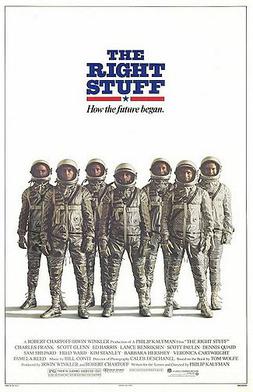
During the Cold War, the US and Russia had to fight with something – from proxy wars to chess, but most famously with Space: the competition to go further, faster and higher among the stars. The Right Stuff focuses on the Mercury Seven pilots at the centre of the US response to Soviet success including Alan Shepard (Scott Glenn), John Glenn (Ed Harris), Gus Grissom (Fred Ward) and Gordon Cooper (Dennis Quaid), a mix of the cocksure and the confident. But in a space programme where a monkey is an acceptable “pilot” for this human cannonball, do any of them have “the right stuff”? Could any of them match the skill of legendary test pilot Chuck Yeager (Sam Shepard) – one of the guys who scorned this astronaut programme for being “spam in a can”?

The Right Stuff, adapted from Tom Wolfe’s book, seemed destined to become a patriotic smash-hit. Despite its eight Oscar nominations (and four wins) it was, in fact, a catastrophic bomb. Perhaps that was because it subverted its patriotism so well. The Right Stuff is, in fact, a subtle, anti-heroic satire (told at huge length) masquerading as a patriotic yarn. It’s marketing avoided that meaning those most likely to enjoy didn’t go and see it, and those who went for that felt alienated. While largely respecting the astronauts, it suggests space race triumphalism was a sort of mass hysteria, with limited results, inflated into something mythic by political expediency, media spin and industrial might. Not the happy, flag-waving message Reaganite America expected or wanted.

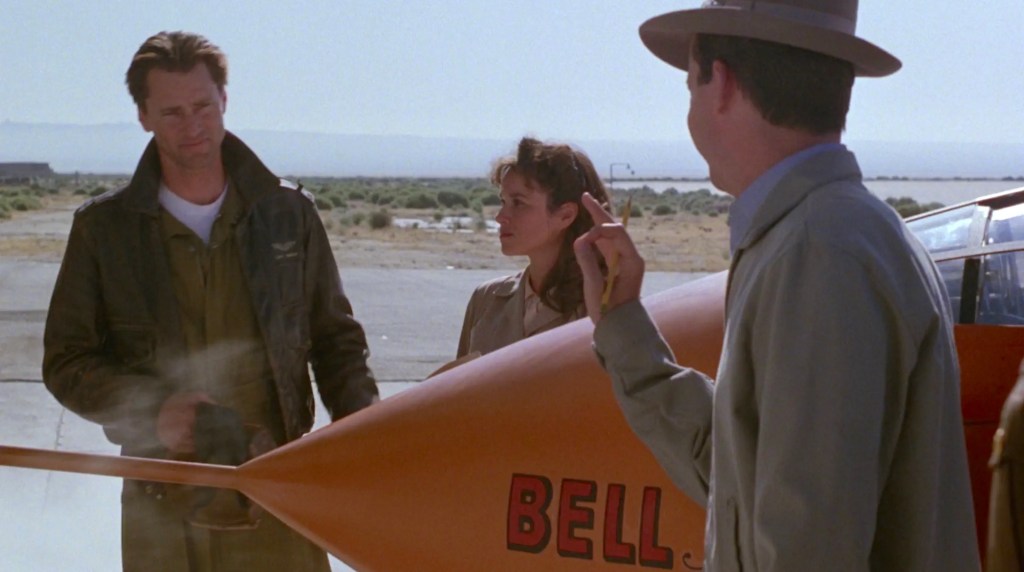
Kaufman’s sympathy instead lies with an older, “truer” America. The Right Stuff is an intensely nostalgic film: but for a completely different time. It is in love with Frontier America, where men-were-men and the daring proved themselves in taming the frontier, in this case the sky itself. Our tamer is Chuck Yeager, played with a monosyllabic Gary-Cooper-charisma by Sam Shepard. Yeager is the last of the cowboys (even introduced riding a horse in the desert), taking to the skies like an old frontiersman hunting down that “demon” who lives at the sound barrier.

This is the sort of America The Right Stuff celebrates, and Yeager is the guy who has it. Unlike the Mercury programme, Yeager isn’t interested in showbiz and self-promotion (his reward for breaking the sound barrier? A free steak and a press embargo), just the quiet satisfaction of having done it. It’s the old, unflappable, quietly masculine confidence of a certain kind of American tradition and it’s totally out of step with the world the media is now celebrating with the astronauts. Instead, these effective passengers in the rocket will be hailed as the great pilots.

Kaufman’s film is a long, carefully disguised, quiet ridicule of many of the aspects of the Mercury programme. It’s conceived, in a darkened room, by a group of politicians so clumsy they can’t even work a projector. It’s head, Lyndon B Johnson (Donald Moffat on panto form) is a ludicrous figure, at one point reduced to an impotent tantrum in a car when he doesn’t get his way. The NASA recruiters are a comedy double act – Goldblum and Shearer sparking wonderfully off each other – who first suggest (in all seriousness) circus acrobats as pilots and then fail to identify Yuri Gargarin. The programme begins with a series of failed launches that travel tiny distances before exploding, culminating in one attempt ending with an impotent pop of the cap at the top of the rocket.

NASA is slightly ramshackle and clueless throughout. Far from the best and brightest, Kaufman is keen for us to remember that many of the scientists fought for the Germans in the war, that decisions were often made entirely based on what the Russians have just done, that the astronaut recruitment tests are a parade of bizarre physical tests because no one has a clue what to test for, and that the final seven selected aren’t even the best just the ones who persevered through the tests and (crucially) were small enough to fit in the capsule. That doesn’t stop the media – played by a San Francisco physical comedy troop – from turning them overnight from jobbing pilots to superstars.

The astronauts status is frequently punctured. Scott Glenn’s granite-faced Shepard is strapped into the cockpit for hours on his first flight, until finally he begs to pee (followed by a montage of coffee being slurped, hose pipes blasting and taps dripping) before being instructed to release his bladder into his suit, meaning he heads into space sitting in a puddle of his own piss. Dennis Quaid’s cocksure Cooper has an over-inflated idea of his skills and is prone to dumb, blow-hard statements (arriving at Yeager’s Air Force base he non-ironically states he’ll soon have his picture up on the deceased pilot’s memorial wall). Fred Ward’s Gus Grissom is a slightly sleazy chancer – controversially The Right Stuff presents him as panicking on re-entry from his first mission, blowing his hatch and sinking his ship, something he categorically denied (and was later proved not to have done).

Even John Glenn, played with a sincerity and decency by Ed Harris (if this had been a hit, Harris’ career of playing hard-heard would have been totally different), is subtly lampooned. So straight-laced he literally can’t swear (his attempt to say ‘fuck’ never gets past a strained Ffff), he’s introduced via a ludicrous TV quiz show and his square-jawed morals frequently tip into puritan self-importance. Undergoing physical tests, Kaufman even cuts from his grimacing face to a grinning chimp on the same test (and who will beat him into space). Compared to Yeager, who can correct a plane on a desperate nose dive and beat the skies into submission (and has the only outright heroic refrain in Bill Conti’s Oscar-winning score), none of them have that right stuff.

Do they get it? In a way: but their triumph is establishing their character, not their skills. Kaufman uses Yeager to point us towards this (his seal of approval is vital for the film): after Grissom’s debacle, he defends him in the bar and praises their courage in essentially sitting on top of a massive bomb.
Tellingly, the astronauts’ most courageous moment in the film isn’t in the cockpit at all: it’s Glenn supporting his stammering wife’s refusal to go on air with LBJ, despite the pressure from NASA bigwigs – and the other astronauts uniting in fury when Glenn is threatened with being dumped from the next flight. The others become more noble through maturing and casting aside fame’s temptations.

In a way they prove their spurs, even if Kaufman’s film makes clear none of them can match Yeager’s traditional values. The film ends with Yeager, maverick to the last, undertaking an unauthorised test flight in a desperate attempt to keep funding for his jet programme going. Even with this final flight – dressed in a bastardised version of a space suit – Yeager shows he’s not lost it, a man so undeniably superhuman in his American resilience that even a bit of fire won’t slow him down.

The Right Stuff celebrates Yeager, but he’s the B-story – and the film frames him as a forgotten figure, left behind by a world obsessed with the bright and shiny. The Right Stuff has to centre the astronauts but it doesn’t focus on the missions (which, apart from Glenn’s, barely receive any screen time – certainly not compared to the time given to Yeager’s flights) or the glory, only quietly implies there was a slight air of pointlessness about the whole thing – that the space race was perhaps just a dick-waggling competition between superpowers. It makes for interesting – if overlong – viewing, but as punch-the-air entertainment, no sir. No wonder it bombed.

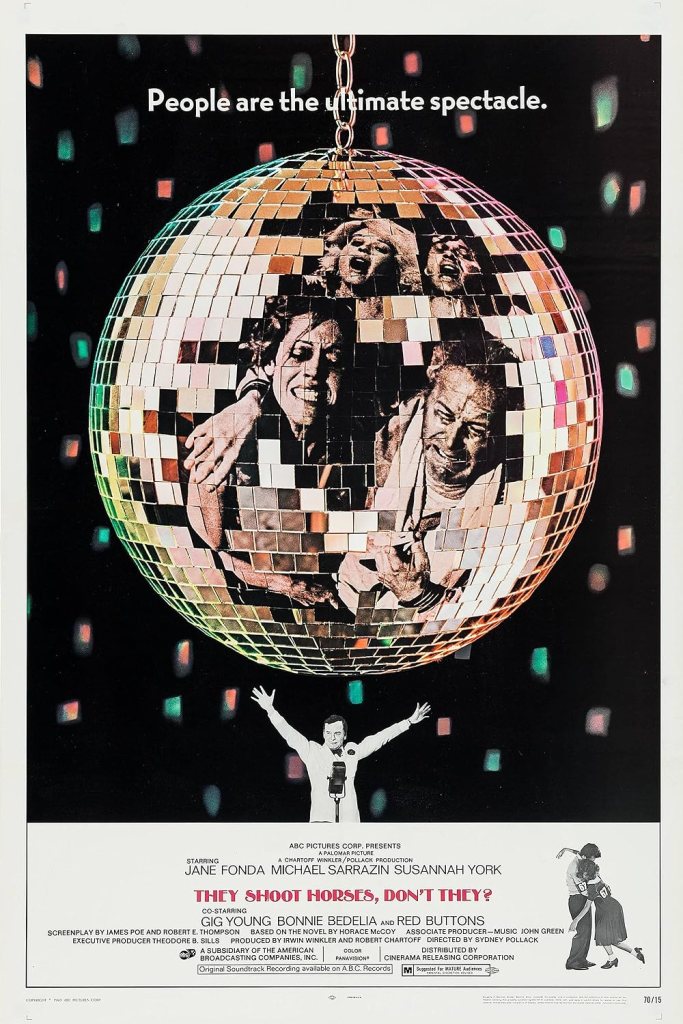
They Shoot Horses, Don’t They? (1969)

They Shoot Horses, Don’t They? (1969)

Savage satire on the cruelty of entertainment, heavy-handed at times but also ahead of them

Director: Sydney Pollack

Cast: Jane Fonda (Gloria Beatty), Michael Sarrazin (Robert Syverton), Susannah York (Alice LeBlanc), Gig Young (Rocky Gravo), Red Buttons (Harry Kline), Bonnie Bedelia (Ruby Bates), Michael Conrad (Rollo), Bruce Dern (James Bates), Al Lewis (“Turkey”), Robert Fields (Joel Girard), Severn Darden (Cecil), Allyn Ann McLiere (Shirl), Madge Kennedy (Mrs Laydon)

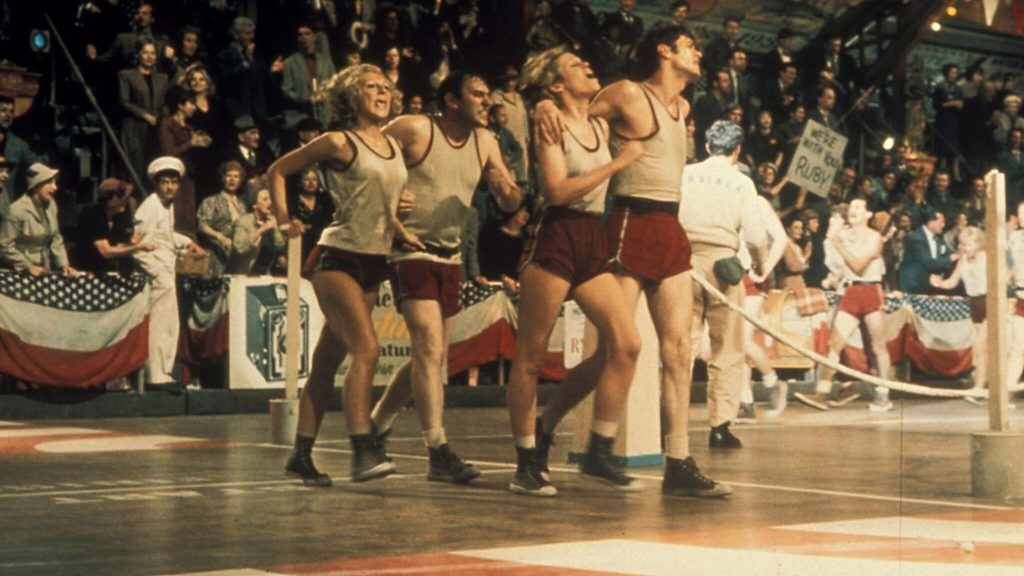
Wheeling out the desperate for entertainment was a mainstay of TV for much of the early noughties with the Simon Cowell factory repackaging human lives for entertainment. But it’s hardly a new phenomenon. During the Depression in 30s America, the country was gripped by a new craze: dance marathons. In exchange for prize money and (perhaps!) a shot at stardom, regular people came off the streets to dance (or at least move around the dance floor) for as long as possible (with short breaks every hour). These shows went on and on, hour after hour, day after day for months at a time, with the audience paying to pop in and gawp.

It doesn’t take much to see how class comes into this. The competitors are the unemployed and out of luck, attracted as much by regular food and a roof over their head. The audience are rich and comfortable, tossing sponsorship bones towards the manufactured ‘stories’ that take their fancy. The event is controlled by a manipulative, alcoholic MC (Gig Young) spinning stories and drama for the crowd. As days turn to weeks the contestants become ever more haggard, drained and physically and emotionally shattered: cynical Gloria (Jane Fonda), homeless Robert (Michael Sarrazin), aspiring actors fragile Alice (Susannah York) and distant Joel (Robert Fields), retired sailor Harry (Red Buttons) and bankrupt farmers James (Bruce Dern) and his heavily pregnant wife Ruby (Bonnie Bedelia).

Pollack’s viciously nihilistic satire throws all these into a hellish never-ending treadmill of physical movement and psychological torture that leaves each character washed out, drained, doused in sweat with sunken, sleepless eyes. You can clearly see the links from They Shoot Horses to Rollerball all the way to The Hunger Games. It’s a grim look into part of the human psyche that, ever since the Colosseum, takes pleasure out of watching the suffering of others for entertainment. The crowded audience – eating popcorn and cheering on their favourites – are as indifferent to the sufferings of the contestants as the organisers with their quack medical teams.

Designed to gain the maximum sense of claustrophobia – once we enter the hall for the dance competition, we never see the outside again for virtually the whole film – the film constantly grinds us down with the exhausting relentlessness of the show. Pollack intercuts this with brief shots of Robert being questioned by the police – moments we eventually realise are flashforwards, making it clear tragedy is our eventual destination. A siren that sounds like nothing less than an air raid warning is repeatedly heard, warning competitors any brief respite they have is coming to a close. The actors become increasingly shuffling, wild-eyed and semi-incoherent in their speech and actions, grimly embodying characters acting on little sleep, in situations of constant strain.

But then that’s entertainment! Part of the thrill for the crowd – whipped up by Gig Young’s showman, a man who oscillates between heartless indifference and flashes of sympathy for his stars (hostages?) – is watching them push on through never-ending pressure. It’s clear to us as well – from their desperate, fixed determination to complete any physical challenge set and the relish with which they consume any food given – that the contestants will tolerate anything just to have, for a few weeks, a taste of something they couldn’t hope to get living on the streets.

Their desperation doesn’t even enter into the moral calculations of those running the show. In fact it’s something that makes them easier to manipulate. Part of the MC’s calculations is creating a relatable story of suffering for the chosen few ‘leads’ any one of which can lead to a triumphant feel-good ending. Potential love-matches are pushed together, sentimental favourites are promoted. Alice’s fine clothing is quietly destroyed by the team running the show because it doesn’t fit a narrative of penniless dreamers. The participants are crafted into “characters”: the ageing Harry as the “Old Man of the Sea”, Gloria and Robert – thrown-together, last-minute partners –as star-cross’d lovers (despite their extremely tense personal relationship).

It all gets too much for the contestants. Serious medical conditions are not unusual – the frequent refrains from the (so-called) medical staff that “we’ve got a dead one” before exhausted, unresponsive contestants are slapped or thrown into ice baths to revive them speaks volumes. When a contestant does indeed die, the event is quietly hushed up for the audience with another feel-good fantasy of noble retirement. Those desperate for a shot at stardom – something they have no hope of getting from a show designed to turn them into drained-out zombies for the entertainment of the masses – are reduced to quivering messes. None more so than Alice – played with a heart-rendering fragility by Susannah York channelling Streetcar Vivien Leigh – who begins the film confidently performing a Shaw monologue and it ends it barely connected to reality.

York’s fine performance is one of several in the film. Young won an Oscar as a MC Rocky, the consummate showman who sometimes surprises us with flashes of humanity (which he clearly drowns with the bottle) before his professional ruthlessness kicks in. Red Buttons is excellent as the rogueish Harry who realises he’s out of depth far-too-late, Bedelia and Dern very good as an experienced couple earning a desperate living from marathons. Particularly fine is Jane Fonda who grounds the film with a gut-punch of a performance of barely concealed rage, deep-rooted self-loathing and brutal, angry cynicism as a woman who understands exactly the show she is in but has no choice but to play along, while hating herself for doing it.

They Shoot Horses, Don’t They feel in many ways ahead of its time and for all time – after all, entertainment like this hasn’t died out. Pollack’s film is harshly lit, and his direction is very strong, even if the film does sometimes make its points with a little too much repetitive force. It’s also a film – with its metaphor of suffering horses standing in for suffering people –a fraction too pleased with its own arty contrivance (a slow-mo and sepia tinged opening lays on its symbolism a little too thick, while its flash-forwards yearn a little too much for a French New Wave atmosphere). Michael Sarrazin isn’t quite able to bring depth to the – admittedly deliberately blank Robert – making him an opaque POV character, a role he effectively surrenders on viewing to Fonda.

But despite its flaws, They Shoot Horses Don’t They is a remarkably hard and incredibly bleak film on human nature, which doesn’t let up at all as it barrels to its almost uniquely grim and nihilistic ending. It offers nothing in the way of hope and paints a world gruesomely corrupted and completely indifferent to the thoughts and feelings to the most vulnerable in it. It is ripe for rediscovery.

Fight Club (1999)

Fight Club (1999)

Hugely popular, I find it widely misunderstood but also a little too in love with its own cleverness

Director: David Fincher

Cast: Edward Norton (The Narrator), Brad Pitt (Tyler Durden), Helena Bonham Carter (Marla Singer), Meat Loaf (Robert Paulson), Jared Leto (Angel Face), Holt McCallany (Mechanic), Zach Grenier (Richard Chessler), Eion Bailey (Ricky), Peter Lacangelo (Lou), Thom Gossom Jnr (Detective Stern)

When Fight Club was made, the studio didn’t get it. You can’t blame them. Studio suits sat down and just couldn’t understand what on earth this primal cry of anger, giving voice to the disillusioned and dispossessed, was going on about. Fight Club was categorically not for them. I’d managed to miss it for decades, so it’s an odd experience watching this angry millennial film for the first time when I’m now exactly the sort of punch-clock office drone its characters despised. I think I missed the boat.

Our narrator (Edward Norton) is cynical, bored and feels his life is going nowhere. Suffering from crippling insomnia, he takes to attending support groups for various terminal illness survivors, releasing his own ennui among the pain there. It’s where he meets fellow ‘suffering tourist’, Marla (Helena Bonham Carter), whom he’s attracted to while resenting her intrusion on his own private therapy. Shortly after he meets Tyler Durden (Brad Pitt), a charismatic rebel with whom he founds an underground bare-knuckle fight group for men who can’t express themselves in the modern world. But Durden’s charismatic, anti-corporatist rhetoric tips more and more into radicalism and he starts an affair with Marla. What will our Narrator do?

Sometimes I think Fight Club might be one of the most misunderstood films ever. So many people who have fallen in love with it talk about it being an attack on conformity in our cold modern world. Of its celebration of people leaving the oppressive, mindless 9-5 grind to find something true and real that makes them feel alive. To be fair, Fight Club is partly this. But how do our heroes do this? By starting a cult where the bitter, resentful and inadequate search for meaning through violence and becoming part of a monolithic organisation that bans independent thought. Essentially, it’s a cult movie, exploring what makes people who can’t relate to the monotony of the “real life”, embrace an oppressive set of rules simply because those rules make them feel important.

This misreading by many is a tribute to the brilliance of Fincher’s direction. Fincher’s film is radical, sexy, pulsating and exciting. It’s shot like a mix of music video and experimental feature and crammed with cutting, witty lines that skewer and puncture the ”grown up” ideas that so many find weary and tiresome. It’s a modern Catcher in the Rye and it pours all its functional, dynamically written anti-establishment rhetoric into the mouth of one of the world’s most charismatic stars in Brad Pitt and allows him to let rip.

Fincher’s Fight Club is really, to me, about the intoxicating excitement of anger, of how easy it is to pour your frustrations into actions that are destructive and selfish but which you can invest with a higher meaning. School shooters, incels – many of them see themselves as stars in their own Fight Clubs, as cool anti-establishment rebels who see some higher truth beyond the rest of us. Fight Club is a brilliantly staged exposure of how this mindset is created and how damn attractive it can be.

Because when Pitt lets rip with this mantra on finding truth and purpose, turning your back on Ikea and Starbucks and all the other soulless “stuff” people find important, you want to stand up and cheer with him. You can see that the attraction of forming a secret brotherhood with a series of other similarly frustrated men, who feel emasculated and purposeless in a world where they can’t do something meaningful like fight Nazis or hunt deer. How they could find satisfaction and a sense of masculine validation in punching seven shades of shit out of each other. Because, as the adrenalin and the blood flows, and the teeth go flying, you feel alive.

It’s certainly a lot more fun than trying to actually deal with your problems. Fight Club is really about this sort of toxic, masculine anger and bitterness leads us to fail to deal with our problems. The Narrator needs Durden, because he can’t manage to process his own feelings of insecurity and inadequacy. He can’t deal with ennui – except through a constant stream of cynical, privately spoken, bitter remarks – and when he meets a girl he likes, he can’t cope with that either.

Durden comes into his life straight after Marla does, and Durden does everything with Marla the Narrator can’t. He flirts with, impresses and fucks her. That’s the sort of thing the Narrator (literally) can only dream about doing. The film builds towards the Narrator realising that, by embracing Durden, he is denying himself the possibility of something real with an actual kindred spirit (screwed up as Marla is, she has decency and empathy). Fight Club – much as many of its fans who find the final act “disappointing” don’t want to admit it – is about putting away childish resentments and growing up. Even if the Narrator is culpable for the things Durden does – and only threats to Marla awaken his acknowledgement that he should do something – he recognises the aimless, irresponsible and dangerous anger of Durden is not healthy.

Because Fight Club centralises a group of terrorists who tell themselves they are plucky anarchists who don’t want to hurt anyone – but we know it never stops there. Especially when you have a mesmeric, Hitlerish figure like Durden driving people on. Pitt is superb as this raving id monster, a hypnotic natural leader who delivers rhetorical flourishes with such intense and utter belief he essentially brainwashes a legion of men into following his orders without question – acid burns, bombs and death don’t even make them blink, just even more willing to follow his orders.

Fincher works so hard to make us understand the attraction of all this that sometimes Fight Club – with its flash filtered look set in a nearly perpetual night – is more than a little pleased with its impish menace. It also takes a little too much delight in teasing its infamous twist – it’s a little too delighted with the “ah but when you watch it back” ingeniousness with which it presents a melange of scenes (the twist also makes you realise later just how brainwashed and dangerous the men in this cult must be, once we realise what they saw and how little they reacted to it). Fight Club also, for all its cool lines and winning gags, has an air of pop psychology to it. (I am very willing to overlook its cheap anarcho-socialism as we are very clearly invited to see this as empty nonsense – for all many people watching the film don’t.)

Edward Norton is extremely good in a challenging role, a stunted and bitter dweeb who dreams of being a player and barrels along with ever more dangerous events. He walks a fine line between a sheltered follower and true acolyte, in several moments showing more than a flash of Durden’s ballsy, take-no-chances, sadism-tinged determination when you least expect it. It’s the sort of performance designed to make sense in the whole, not in the moment – and on that score it’s exquisite. He also makes a wonderful pairing with Helena Bonham Carter, exploding her bonnet reputation with a part that’s rough-edged, unpredictable but surprisingly humane and vulnerable.

Is Fight Club a masterpiece? I’m not sure. It’s a very clever, sharp and dynamic piece of film-making designed to pull the wool over your eyes (in more ways than one). But it can also be overly pleased with itself and does such a superb job of getting you to empathise with the deluded and violent that when it gear changes in the final act it never quite lands as it should. It feels like an angry teenager’s idea of the greatest film ever made (and you can’t deny it digs into the same “loner who sees the deeper truth” vibe that helped make The Matrix a phenomenon later that year). It’s Fincher at his young, punk best – and maybe Fight Club got all this out of his system (you can’t believe the same man made this and Curious Case of Benjamin Button), but for me it lives in the shadow of Fincher’s dark and dangerous Seven, a film which explores similar themes but with more humanity and greater depth than Fight Club.

The Front (1976)

The Front (1976)

The Blacklist is skewered in this heartfelt comedy that turns tragedy

Director: Martin Ritt

Cast: Woody Allen (Howard Prince), Zero Mostel (Hecky Brown), Herschel Bernardi (Phil Sussman), Michael Murphy (Alfred Miller), Andrea Marcovicci (Florence Barrett), Remak Ramsey (Francis X Hennessey), Lloyd Gough (Herbert Delaney), David Marguiles (William Phelps), Danny Aiello (Danny LaGattuta), Josef Summer (Committee chairman)

The first Hollywood drama about the “the Blacklist”, the shamefully unconstitutional banning of left-leaning Hollywood figures from working as a result of the House of Un-American Activities Committee’s investigation into alleged communist subversion. If there was any doubt how personal the film was to its makers, the credits scroll with the Blacklisting dates of many of its makers including Ritt, screenwriter Walter Bernstein, Mostel, Bernardi, Gough and Delaney. The Front is a tragedy told with a wry comic grin. Perhaps the makers knew that if they didn’t laugh they’d cry.

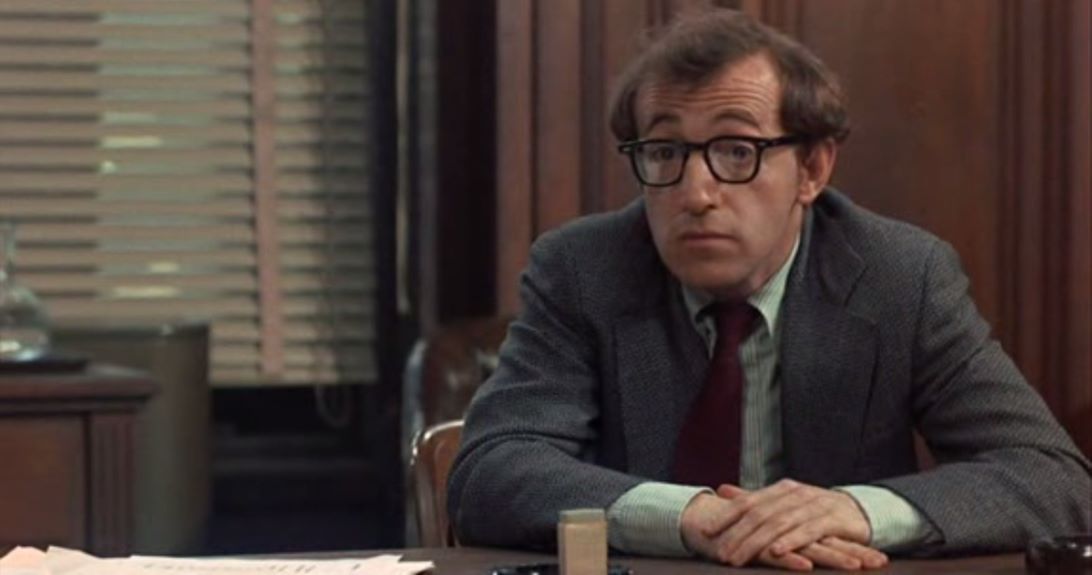
When screenwriter Alfred Miller (Michael Murphy) is blacklisted he asks an old friend, small-time bookie and cashier Howard Prince (Woody Allen) to attach his name to Miller’s scripts and submit them. In return Prince will keep 10% of all payments. The scheme is so successful Prince becomes “the Front” for two other writers and the quality and volume of Howard’s ‘output’ wins him a lucrative job as lead writer on a successful TV show, while his ‘genius’ wins the love of idealistic script editor Florence (Andrea Marcovicci). But, as the Blacklist takes hold – driving out of work actors with tenuous links to Communism like the show’s star Hecky Brown (Zero Mostel) – will Howard take any sort of moral stand about what’s happening in America?

The Front took a bit of flak at the time for not being more overtly angry about the Blacklist – as if the only response possible was spittle-flecked fury. However, today, its mix of comedy and real, visceral tragedy looks like the perfect response. The Front embraces the Kafkaesque ridiculousness the Blacklist created. Howard locked in an office at his studio to do an emergency re-write, calling Miller who taxies round replacement pages. Howard’s general ignorance of writing in general and his desperate mugging up on Eugene O’Neill and Dostoyevsky to pass them off as ‘influences’. The fact the list hasn’t done anything to stop these writers’ work from getting out there.

It’s also strong on the sense of underground community that grew among the banished writers. As veterans themselves, Ritt and Bernstein could be nostalgic about the sense of ‘all being in it together’ that the unemployed scribblers had.That vibe comes across well form Miller, Delaney and Phelps meeting in restaurants, libraries and hospital rooms to knock ideas around. There is the espionage-tinged excitement of watching script pages being palmed across to Howard like dead-drops. The film never forgets the gut-wrenching difficulty, stress and pain of not being able to work openly. But it also remembers the family feeling of a support network, giving people the courage to keep going.

But then the Kafkaesque comedy slowly drains away, as the punishing injustice creeps to the fore. Studio fixer – and vetting officer – Hennessy (played with self-satisfied relish by Remak Ramsey) calmly pressures creatives to turn on each other. Sure, there is comedy in him telling a victim of mistaken identity that there is nothing he can do to help him as the guy has nothing to confess to – that’s Kafka – but Ritt doesn’t miss the desperation and fear in the victim’s eyes. To Hennessy everyone is guilty, innocence is something that needs to be proved – and it’s a lot less funny when he strips people of their livelihoods because their personal views don’t fit.

The film’s true tragedy is actor Hecky Brown. Beautifully played by Zero Mostel, in a performance of a jovial front placed over ever-growing bitterness, anger, self-loathing and despair, Hecky can’t work quietly behind a front. As an actor, once he’s under suspicion, he’s unemployable. Despite his jokey pleas that he only marched on May Day and subscribed to the Socialist Worker (six years ago, when as he points out the USSR were our allies) to impress a girl, he’s goes from star to begging for work at the Catskills. There the manager is all smiles and pays him $250 for a gig worth thousands (based on a real life incident that happened to Mostel – and the pain and anger of it is still in his eyes).

Mostel’s performance is the heart-and-soul of the film which follows his increasingly bleak tip into despair. He scuffles with that Catskills manager over his hypocritical sorrow. Staying in Howard’s apartment, he despises himself as he searches through Howard’s desk for incriminating evidence. In a striking scene, he berates “Henry Brownstein” (Hecky’s real name) for stopping him turning state’s evidence. It’s a sad, moving picture of the real human cost of this injustice that helps moves the film past comedy and into dark drama.

And to get an even better of how serious this human cost, what could be better than placing a self-interested, politically disengaged chancer at its heart and seeing how he responds. The casting of Woody Allen – in one of the few films he appeared in and didn’t write – is perfect. There is no-one more politically disengaged and full of pinickity obsession that Allen. Howard Prince is a decent guy but his main interests are money (his eyes light up at earning 10% for nothing), his fancy apartment, seducing Florence and the adulation from fawning producers.

What better way to show the impact of the Blacklist injustice, than to see how Howard slowly shifts from a man so disinterested he doesn’t even know what the Fifth Amendment is, to someone who feels compelled to make a stand. Slowly he finds he can’t ignore the injustice – there is a beautiful moment when Howard embarrassedly drinks and stares at a poster on the office wall at the back of the frame while Hecky begs for $500 from that Catskill’s manager. He gradually realises a fun ride for him is a dystopian nightmare for others – his self-satisfied shrugs turning into real principle.

Because, he will learn, HUAC doesn’t care for names – they care about breaking people. Being as ignorant and disinterested in politics as Howard won’t save you. That’s what Ritt and Bernstein have been driving to: this wasn’t Kafka, it was Orwell, it wasn’t about the obstructive indifference of bureaucracy but Big Brother’s ruthless rooting out of thought crime. So, when Allen tells them – in the final lines of the film – to go fuck themselves, and the film freezes so he can walk out of it, you really understand why this is a glorious cry of wish fulfilment straight from the heart of the film-makers.

La Règle du Jeu (1939)

La Règle du Jeu (1939)

Shallowness, selfishness and self-indulgence swirl in Renoir’s masterpiece, that plays like a giant metaphor for Europe in the 1930s

Director: Jean Renoir

Cast: Nora Gregor (Marquise Christine de la Chesnaye), Paulette Dubost (Lisette Schumacher), Marcel Dalio (Robert, Maquis de la Chesnaye), Roland Toutain (André Jurieux), Jean Renoir (Octave), Mila Parély (Geneviève de Marras), Julian Carette (Marceau), Gaston Modot (Edouard Schumacher), Anne Mayen (Jackie), Pierre Magnier (The General), Léon Larive (Chef)

When you are at the top of society, the rules bend to your will. They are, after all, for the little people. Get to the very top and life is all a game anyway – birth, death, marriages they are just movements in a great dance, none need cause you any concern if you don’t let them. Renoir’s masterpiece La Règle du Jeu explores in microcosm a whole fractured society of pampered, myopic focus on immediate pleasures, outweighing real life tragedies. And, whether at the top of bottom of the social ladder, no one seems able to move beyond a blasé and shallow attitude to life.

La Règle du Jeu is set at a weekend shooting party in the French countryside, hosted by Robert, Maquis de la Chesnaye (Marcel Dalio). Robert is married to a German wife, Christine (Nora Gregor) but having an affair with Geneviève (Mila Parély). But that’s fine, Christine is having a half-hearted affair with naïve airman André Jurieux (Roland Toutain). Below stairs, Christine’s maid Lisette (Paulette Dubost) yawns through her boring marriage with stuffy groundskeeper, the German Schumacher (Gaston Modot) by flirting with cheeky poacher-turned-employee Marceau (Julian Carette). Over the weekend, flirtations and affairs simmer to the boil, with Octave (Jean Renoir), a family friend, moving uneasily between parties trying to do the right thing.

The timing of Renoir’s film could not have been better. The story of people, as he put it, “dancing on the volcano” found its way into cinemas in July 1939. Europe was on the edge of the precipice. Within a year France would be literally ripped in two by Hitler. And here was Renoir releasing a blackly dark drawing room comedy, with its characters obsessed about small, shallow and trivial details and utterly ignorant of the world around them. Even worse, when violence and death intrude, it’s brushed under the carpet. It was a film that embodied the head-in-the-sand attitude of France, a country just months away from being steam-rollered by the Nazi war machine.

It wasn’t until 1959 that it was rediscovered and took its place as one of the great films. Renoir creates both a delightfully dark and droll comedy of manners, but also a rich and overwhelming metaphor for global chaos. Everything here is magnificent surface, with everyone pretending they are fine, upright citizens while flitting in and out of each other’s beds and never letting anything like morals or genuine emotions intrude. The game demands life be played as lightly as possible.

Everyone seems to know everything, but it’s all a joke. Robert is sleeping with the imperiously bitter Geneviève – so he seems less bothered about his wife Christine’s affair with airman André. Renoir’s film opens with André’s return from a cross-Atlantic flight. The media swarm around him, but André retreats into a funk when he sees Christine is not there to greet him. Even would-be heroes in this film are insular and self-obsessed. Toutain makes André strangely pathetic (you wonder – as does she at times – what the cultured and daring Christine saw in someone so prone to self-pity and devoid of drive). He whines about an affair which won’t take fire, does nothing to drive it and turns a car accident suicide attempt into a sulky fit of pique. He’s neither a romantic hero or a tragic figure.

But then no-one fills their role. Robert hosts the event, but he’s a strangely winsome, at times insecure figure (Dalio used his personal unease as a Jewish actor cast in a very Aryan role to skilled effect). He both puffs about how he doesn’t care about conventions – willingly inviting his wife’s lover to the weekend – but is also a fussy, eccentric figure who delights in clockwork machines and amateur theatricals. He has a casual, playboy attitude to money and life – everything comes easy, so he values very little. He doesn’t like conflict, preferring to let people off the hook, partly why he’s keen to end his relationship with Geneviève as he can’t bear the idea of Christine finding out.

Christine, played with a very effective awkwardness by Nora Gregor, feels surprisingly out of place among this social mileu. She’s consciously aware of her German background, looks uncomfortable in fine clothes, doesn’t enjoy social events and seems less assured than her bolshy, irreverent maid Lisette. She seems less like a Countess than Geneviève, played with cool austere sharpness by Mila Parély. Christine shrugs off the arrival of her lover André (to the respect of all) but on discovering her husband’s parallel affair seems unsure how to deal with it: she goes from bouncing mutual jokes about Robert with his lover, to considering half the household as potential elopement mates. Renoir felt Gregor was uncomfortable in the role – but her discomfort works superbly.

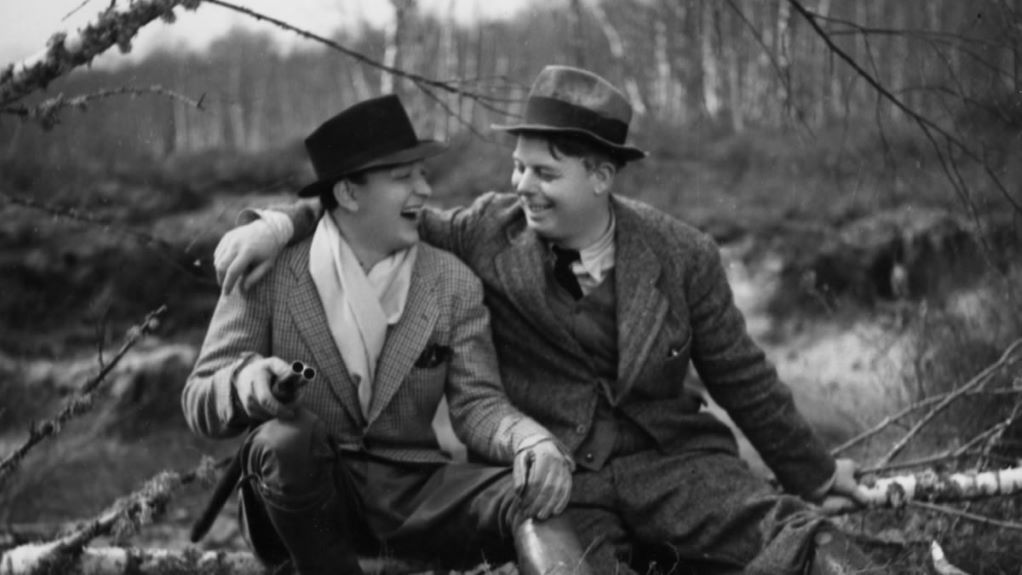
At the heart of this weekend retreat – and the film itself – is a brutish, extended hunting sequence. Renoir, who loathed the killing of animals, knew that nothing speaks more about the nature of man than how he treats those weaker than himself. The hunt is machine-like in its rounding up of birds, rabbits and other animals to be blazed down by the rich and powerful, with the carcasses chucked into the back of a van and never thought of again. Renoir shoots a single rabbit death with intense sympathy, the creature halting then curling itself vainly into a ball in its death throws. It reminds us queasily not only of the blood baths in fields like this only 20 years earlier, but also the carnage to come. It also foreshadows the death the film ends on, the victim falling as pathetically as the rabbits.

This same hunting party is also the catalyst for a string of disasters. Marcel Dalio’s Robert spontaneously affronts the tiresomely officious Schumacher (an unbending, unsympathetic Gaston Modet, rigid in his Prussian militarism) by not only shrugging his shoulders at the actions of charming poacher Marceau (a Hancock-ish Julian Carette, as charmingly amoral as anyone in the film) but actually hiring him. Needless to say, Marceau is less grateful and more delighted at the opportunities for shamelessness this presents him with and instantly attempts to seduce the maid Lisette (a coquetteish Paulette Dubost), setting him on a collision course with Schumacher. All stemming from Robert’s blasé indifference to rules and the contempt for hierarchy only those at the top can afford.

Renoir brings all these events together in a series of masterful sequences. This is a film that frequently shifts in tone and transition. The film moves so comfortably between storylines, from upstairs and downstairs, that it’s unfocused and meandering narrative reflects its themes and delivery. Above all, Renoir yet again demonstrates his mastery of marrying film and theatre. La Règle du Jeu could be a classic piece of farce, but is constructed with the skill of a master cineaste.

Much of the final act of the film is taken up with a truly sublime sequence, edited and shot to perfection, that sees all plotlines and entanglements intermingle in a dinner party. Renoir’s camera roves and tracks through the house. Events and characters play out in the back of scenes, while our focus is elsewhere. Figures at the edge of the frame suddenly seize the camera’s attention. We’ll move rooms and characters we left five minutes ago will march in continuing arguments. It’s a breathtaking display of planning, narrative and cinematic panache, expertly directed.

Renoir himself, as Octave, is the closest thing we have to either an audience surrogate or master of ceremonies. Of course, he’s neither of these things: he’s a clumsy bear of a man (even dressing as a dancing bear for the amateur theatricals), who tries to do the right thing out of stubbornness and masochistic pride. He pushes André and Christine together even though he loves Christine – in fact he sets at it with more energy than either of them. He fantasises about himself as a conductor, and that’s what he wants to be: controlling the dance rather than playing the tune. But he’s clueless, clumsy and ineffective and his actions inadvertently push a man to his death.

That death ends the film. Renoir triumphantly doesn’t make this epic or even tragic – it’s a clumsy case of mis-identity, the victim of one of these unhappy lovers settling accounts and picking the wrong person. But the game goes on: everyone pulls together to re-establish the status quo and stress it was an all accident, no one should feel bad, these things happen and everyone back to your drinks. Master and servant come together to keep the status quo ticking over and nothing is allowed to intrude on life. It’s a stage-managed ending that allows nothing to be learned and nothing to change.

After all, the rules mustn’t be changed when everyone is comfortable with them. La Règle du Jeu is a masterful metaphor for an entire society where shallowness, selfishness and self-indulgence win out over duty and decency. Everyone we see is preoccupied only with their own desires, from the whimsy of Robert to the flirtations of Lisette, the self-pity of André and Octave’s desire to influence the narrative. It whirls round and round like a merry-go-round until someone falls off and dies. The volcano is primed to explode, but the dance goes blithely on.

The Menu (2022)

The Menu (2022)

Dark satire is mixed with intelligent character work and a challenge to our assumptions in this intriguing film

Director: Mark Mylod

Cast: Ralph Fiennes (Julian Slowik), Anya Taylor-Joy (Margot Mills), Nicholas Hoult (Tyler Ledford), Hong Chau (Elsa), Janet McTeer (Lilian Bloom), John Leguizamo (Famous Actor), Reed Birney (Richard Liebbrandt), Judith Light (Anne Leibbrandt), Paul Adelstein (Ted), Aimee Carrero (Felicity), Arturo Castro (Soren), Rob Yang (Bryce), Mark St Cyr (Dave)

A dash of Succession. A soupcon of Hannibal Lector. Lashings of The Most Dangerous Game. All these ingredients are mixed to delightfully dark comic effect in The Menu, a sharp and tangy assault on class and modern society which leaves an unusual but satisfying taste in the mouth.

First those touches of The Most Dangerous Game. Julian Slowick (Ralph Fiennes) is a restauranteur so exclusive, his restaurant is based on a private island. Each course, of each menu is part of an overall story that forms the meal. For the story of the meal he is currently preparing, Slowick has selected an exclusive guest list of the rich and famous: businessmen, the rich, movie stars, food critics – the elite, the snobbish, the 1%. And the story he is serving up is one of increasingly grim retribution for this table-load of takers not givers. The only unexpected figure there is Margot (Anya Taylor-Joy), last-minute guest of obsessive food purist Tyler (Nicholas Hoult). How will this unexpected fly in the soup affect Slowick’s plans for the evening?

The Menu in many ways is a revenge satire. Slowick does not hold back in his increasing fury and bitterness at the people he serves without appreciation or gratitude in return. His customers are interested only in food if it costs a lot and is exclusive. They have no interest in his actual skills, in the staff (whose names they do not remember), the food itself or anything beyond their own desires. Many of the customers – most hideously a trio of “bro” investors (played with slapable smugness by Castro, Yang and St Cyr) – flash their jobs and cash expecting these to ensure their every whim is met. To them the world is like dough to be shaped into whatever bread they want it to be.

The film – with glee – exposes the hideous selfishness of the rich customers. A rich couple (Birney and Light) who have attended Slowick’s restaurants several times yet remember nothing about the food or the staff. Janet McTeer’s elite food critic, who practically scratches marks into her pen to mark the restaurants she has closed (she’s accompanied by a fawningly obsequious editor, played by Adelstein). A famous actor (John Leguizamo) who has long-since sold-out and treats his fans with contempt, joined by his spoilt rich-girl assistant/girlfriend (Aimee Carrero). Each of them is deconstructed in turns by Slowick over a series of courses parodying the snobbish bizarreness of high-class dining.

And here is where those touches of Succession make themselves known in the flavour. That series – and Mylod is a veteran (and its finest director) – also presents the ghastly shallowness and greed of the super-rich to expert comic effect. But what that show also does – and what Mylod brilliantly manages here – is make what could be two dimensional monsters sympathetic. The Menu presents these dreadful people with honesty; but, as the punishments – cruelly personal reveals, psychological torture, a finger cut off here, a man hunt there – pile up, you start to wonder if the punishment is too much?

The “bro” investors may be dreadful selfish, arrogant, dick-swinging morons: but they are also immature idiots who have never really grown up. The rich couple might treat places like this elite restaurant as a God-given right, but does that really deserve death? The food critic is harsh and arrogant, but is writing cruel words a mortal sin? The actor loathes himself for selling out his talent to make money and his girlfriend has simply been born into money and never wanted for anything. Do these people really deserve the monstrous ends Slowick has planned for them?

It’s the smartness of The Menu which could easily have invited us to just enjoy the rich and powerful being exposed, humiliated and punished. Instead, this is a smarter, more intelligent dish. The lower-class restaurant staff should be the people we are rooting for. But Slowick runs the restaurant like a cult, the staff near-robotic automatons that follow Slowick’s orders without question, intone their “Yes, Chef!” answers like a religious chant and snap to attention as one. Slowick’s number two Elsa – superbly played by Hong Chau – sums them up: all of them are desperate to become her boss and will follow Slowick to hell and back without a murmour and their heartless, personality free cruelty makes them very hard to root for.

As does Slowick himself. Here comes that sprinkling of Lector. Played with a superb, chilling intensity by Ralph Fiennes at his most coldly austere, Slowick could have been a character who swept us up in his intelligent superiority. But there is not a hint of joy in Slowick, only a vast, bubbling anger and resentment under a coldly precise exterior. Who on earth could look at this near-psychopath and think “I’d love to be him”? Slowick’s service is dryly, terrifyingly funny but you’d certainly not be left wanting to leave him a tip (unless it was your only way of getting out alive).

Instead, we gravitate towards the odd one-out. Anya Taylor-Joy is excellent as Margot, the unexpected guest who finds herself the only person unprepared for by Slowick, who is neither a member of the super-rich, but too free-spirited and independent minded to join the Slowick cult. Dragged along by Tyler – a hilarious performance of over-eagerness, snobbish elitism and stroppy self-entitlement by Nicholas Hoult – The Menu revolves more and more around the dance of death between her and Slowick. Like the audience, Margot is invited to pick a side to sympathise with.

It makes for a rich, lingering dish with an intriguing after taste, far more developed and better cooked than the sloppy revenge saga or re-heated leftovers it could have been. It left me wanting a second course.