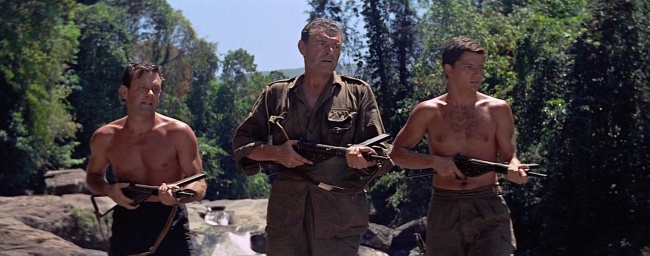
Category: Prison films

Unbroken (2016)

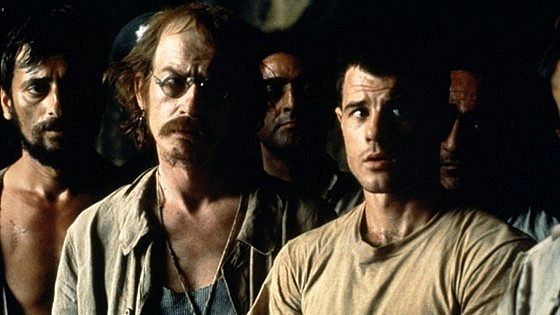
Jack O’Connell does fine work in the middlingly impactful Unbroken

Director: Angelina Jolie

Cast: Jack O’Connell (Captain Louis Zamperini), Domhnall Gleeson (Lt Russell Phillips), Garrett Hedlund (Lt Commander John Fitzgerald), Miyavi (Sgt Mutsuhiro “The Bird” Watanabe), Finn Wittrock (Sgt Francis McNamara), Jai Courtenay (Lt Charlton Cupernell), Luke Treadaway (Miller), Spencer Lofranco (Harry Brooks)

Angelina Jolie’s directing work doesn’t get the acknowledgement it perhaps deserve and it’s easy to think, watching the confident and imaginative framing of much of the film, that if, say, Brad Pitt had directed the film it might have got a more positive reaction from people. Anyway, perhaps part of the problem might be for all the extraordinary courage of Louis Zamperini’s life story, the general ideas behind the film are now so common in film-making that – and it feels terrible to say it – perhaps we are at last too familiar with these stories for them to have a real lasting impact. 

Louis Zamperini (Jack O’Connell) was an Olympic athlete, who set a world record for the fastest lap in his final lap of the 1936 Olympics 5000 metres final (despite finishing 8th overall). Signing up for service in the war, his bomber crashes and (after surviving 47 days in an open lifeboat in the Pacific) he is captured by the Japanese. There he experiences the brutality of the POW camps – and earns the enmity of Mutsuhrio Watanabe (Miyavi) one of the camp’s officers, who beats him mercilessly. But through it all his determination never wavers, neither does his humanity. He remains Unbroken.

The attraction of the resilience of the human spirit never wavers – and many of us suspect we would break, making our admiration and respect for those that don’t all the greater. That admiration is easily bound up in O’Connell’s wonderful performance as Zamperini, dripping charisma powered by kindness, humanity, decency and self-respect. O’Connell dominates the film, and is also the key to its successful moments – the camera always comes back to him, and his eyes wind up telling much of the story. Without him the film would struggle to make a real impact.

Which is part of the problem with it – it doesn’t make the impact you feel it should. Jolie’s direction is technically accomplished and very skilful, and the film is beautifully shot and filmed by Roger Deakins. There is barely a foot wrong anywhere in its make-up – but for some reason it doesn’t come together into something that carries real force. Maybe this is overfamiliarity with these stories, maybe this is too much professionalism and expertise crowding the emotion out, maybe it’s just that there isn’t enough story here for it to really work. But for whatever reason, this is a film that winds up leaving you colder than it should.

Its finest sequence coves the isolation on the boat, the struggle with sun and sea, without sufficient food or water, a marathon endurance test that claims the life of one of the three men who undergo it. Jolie’s film captures the strange claustrophobia of a tiny world – one lifeboat – in a huge expanse of nothingness. These scenes are compelling in a way the later prison camp scenes just aren’t. 

The camp scenes are of course tough and brutal in a way (although some have – perhaps justly –  complained that they are so beautifully and elegantly filmed that their impact is dramatically reduced, with every shot of the camp turned into some sort of renaissance-lit masterpiece) but they don’t hit like they should. Yes what Zamperini and the soldiers go through is dreadful and awful beyond measure, but nothing here seems to really capture that. It’s sort of something we understand but don’t wind up feeling from the film. 

Perhaps that’s because the one thing the film does capture really well is the powerless drift of POW life. The soldiers have no control over their fates and no way of escaping it, This all gets captured in the brutal bullying of Watanabe – but the film never manages to make either him or his rivalry with Zamperini compelling, leaving me unsure whether he was intended as a representative cipher of the appalling system rather than a real character.

Unbroken won’t exactly disappoint but it won’t exactly thrill either. While I do feel not enough credit is given to Jolie – and a male star would have got more praise – this is also a film that feels too much like a Hollywood prestige picture, too much like an important film straining for those Oscars. It forgets the heart and doesn’t engage our feelings.

Scum (1979)

Ray Winstone finds prison life a tough proposition in Scum

Director: Alan Clarke

Cast: Ray Winstone (Carlin), Mick Ford (Archer), Julian Firth (Davis), John Blundell (Banks), Phil Daniels (Richards), Alan Igborn (Meakin), Alrick Riley (Angel), Patrick Murray (Dougan), Peter Howell (Governor), John Judd (Mr Sands), Philip Jackson (Mr Greaves), John Grillo (Mr Goodyear), Bill Dean (Mr Duke)

In 1977 Alan Clarke’s searing condemnation of the borstal system in the UK, Scum, was shot as a BBC Play for Today. Outraged at its content, pressure in the press led to the film being banned. But that didn’t change what an electric bit of work it was – and when talk turned to creating a film version, having a filmed version of the script already in existence that could be used as a pitch tool was invaluable. So was born the film version of Scum, with much of the same cast, a higher budget (although still tiny by comparison to other films) and a chance for Clarke to bring his uncompromisingly harsh vision to the big screen.

Three young boys arrive at a borstal: Davis (Julian Firth) is a sensitive youngster who ran away from his previous borstal, Angel (Alrick Riley) a black kid who suffers the systemic racism at every level of the system and Carlin (Ray Winstone) a hard man with a dangerous reputation, who punched a warden at his last borstal. On arrival, the three are identified as requiring being “broken” by staff: Davis is bullied, Angel abused and Carlin is placed at the mercy of the wing’s “Daddy” Banks (John Blundell), suffering beatings with the authorities turning a blind eye. The entire system is rotten to the core and, while Carlin eventually rises up to take over the position of “Daddy”, it changes little in a young offender’s prison rife with racism, sadism, violence, abuse and rape. 

Scum is almost unbelievably grim and pessimistic for this system of incarceration, finding nothing to redeem or excuse the system across its entire running time. The borstal is a wintery hell on Earth, with justice and sympathy nowhere to be seen. While the system claims to be helping its inmates (aged from early teens to early twenties) to find new skills and purpose in life, its real function seems to be trying to beat discipline and subservience into its inmates by all means necessary. While the Governor (a silkly patrician Peter Howell) may talk faith, duty and country he oversees a system where the wardens ruthlessly beat the inmates, encourage them to ‘discipline’ each other, turn a blind eye to violence and abuse, encourage an atmosphere of racial loathing and generally show no concern or interest in any boy’s problem that can’t be solved without punching them in the mouth.

It’s a world Carlin is dropped into, and he knows it well. Played by Ray Winstone with a chippy anger that never seems that far from bursting to the surface, Carlin might want at first to keep his head down but quickly accepts the only way to survive in this dog-eat-dog world is to be the top dog. There will certainly be no justice from the wardens, who beat him on arrival as a trouble-maker, and set the Wing’s alphas on him to break his spirit. Casually beaten in the middle of the night, it’s the bruised Carlin who is sent to solitary confinement for fighting while his attackers go free. He is joined by Davis, framed for theft and Angel, for whom being black seems to be crime enough (walloped by a warden, and spilling food across his room, he is sent down for keeping his cell untidy).

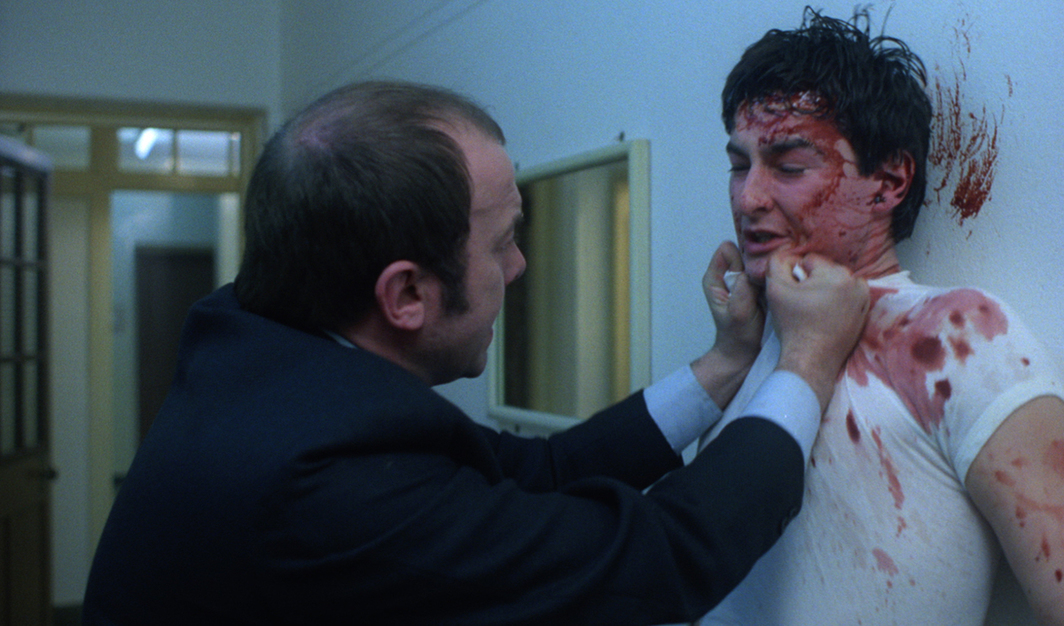
What’s striking in this film though is that, as much as we are meant to think Carlin might be the hero, Clarke is smarter than that. He carefully watches Carlin – a tight-control on Winstone’s face that promises retributive violence is on the way – for almost forty minutes adjust in this system, before he takes matters into his hand. The film’s most famous sequence – shot in one dizzying tracking shot that captures the immediacy of Carlin’s putsch – sees Carlin beat Bank’s weasily sidekick Richards (Phil Daniels) with two snooker balls in a sock, before heading up to his dormitory toilet to beat Banks black-and-blue (and bloody), the cut finally coming to show us Carlin (from Banks POV) screaming at him “I’m the Daddy now”. It’s a masterclass of a sequence, electric in its execution and gives a moment of pleasing oomph (for all its extreme violence) as it shows Carlin finally getting a bit of justice.

Only Carlin’s institution as the Daddy brings largely only a change of figurehead rather than real change. Sure Carlin isn’t quite the bully Banks is, but he’s an unashamed racist, a violent thug, who ruthlessly takes over the money smuggling operation Banks was running (but taking a higher cut) and takes control of another wing by beating its “Daddy” (another black inmate) with an iron bar. Carlin is also quickly adopted by the wardens, just as Banks was, agreeing to maintain peace and control in the borstal in exchange for certain privileges like his own room. Carlin may at first seem to us the angel of retribution – but he’s really a ruthless survivor who is perfectly happy with the status quo so long as he on the top of it.

But then no one has any interest in improving things. The governor is only interested in the appearance of gentility. The wardens couldn’t care less about the rehabilitation of the inmates so long as they have a quiet life. The inmates drift through their life there, never questioning the violence around them. The matron is well-being, but hopelessly rules-bound, whose concern for the boy’s welfare never develops into seeing them as human beings. It’s a systemic failure.

There are other perspectives of course. Possibly the most fascinating character is Mick Ford (replacing David Threlfall in the original production) as Archer, a precociously intelligent inmate in his early twenties, possibly the only one who has read the rulebooks and enjoys running intellectual rings around the wardens. Causing trouble in his “own little way”, he claims to be a vegetarian (requiring a complex set of arrangements to be put in place to feed him separately) and also unable to wear leather boots (requiring his own special plastic boots to be located) and provokes the bible-bashing Governor with thoughts of converting to Islam and Sikhism. 

But he’s also a smart cookie, who recognises (in a fascinating conversation with veteran warder Dukes) that the entire system is a trap, both for the inmates and the wardens, imprisoning them in a system where criminal acts are endemic, the wardens are trapped and brutalised by the system as much as the prisoners and the whole system manifestly fails to do anything other than inoculate Darwinian violence into its inmates (Archer is of course promptly put on report for this cutting analysis). The scene – a key part of the film’s argument – is also a tribute to the skilful writing of Roy Minton, whose script bubbles with both quotable and sadly realistic dialogue.

Clarke’s entire film is the exploration of this violence and the mixture of hypocrisy and denial down to outward condonation and support it receives from the Governor down to the wardens. Any proper review of the conditions in the Borstal is impossible, as it would rock the boat and fly in the face of the positive message the Governor wishes to promote about his institution. Effort is put into putting the boys at loggerheads with each other (usually on racial grounds) as a divide and rule. The weak are happily left at the bottom of the rung, not least the tragic Davis, a sensitive boy (marvellously played by Julian Firth with a heartbreaking vulnerability) totally failed by everyone around him.

Clarke’s final act spins out of a disturbingly intense rape scene of a young inmate (an act witnessed with a sneer by sinister warden Sands, a repulsive John Judd) – the scene a mix of careful filming to show nothing too graphic, and heart-rendering intensity in its vulnerability and violence. The victim is totally ignored, leading to tragic consequences – another difficult to watch scene which hammers home both the cruel indifference of the warders and the helplessness of the victim. The eventual riot this is all leading too is, however, painfully futile: scapegoats are selected at random and beaten senseless, the status quo is reinforced by a bland platitude speech from the Governor. 

Directed with fire and passion by Alan Clarke, a virtuoso of realism and master of social conscious, Scumis a masterpiece of anger, of boiling resentment against systems that do not work and do not care that they do not work. Packed with astonishing performances and some sublime camera work and film-making skill, it’s a must-see.

The Railway Man (2013)

Colin Firth is haunted by the past in The Railway Man

Director: Jonathan Teplitzky

Cast: Colin Firth (Eric Lomax), Nicole Kidman (Patricia Lomax), Stellan Skarsgård (Finlay), Hiroyuki Sanada (Takashi Nagase), Jeremy Irvine (Young Eric Lomax), Sam Reid (Young Finlay), Tanroh Ishida (Young Takashi Nagase)

There is perhaps nothing harder to do in life than to put the past behind you and forgive. We all seem to be hot wired to want revenge and to seek it against all odds. It’s rare indeed the man who learns to put the rage against the past behind him and to extend the hand of friendship.

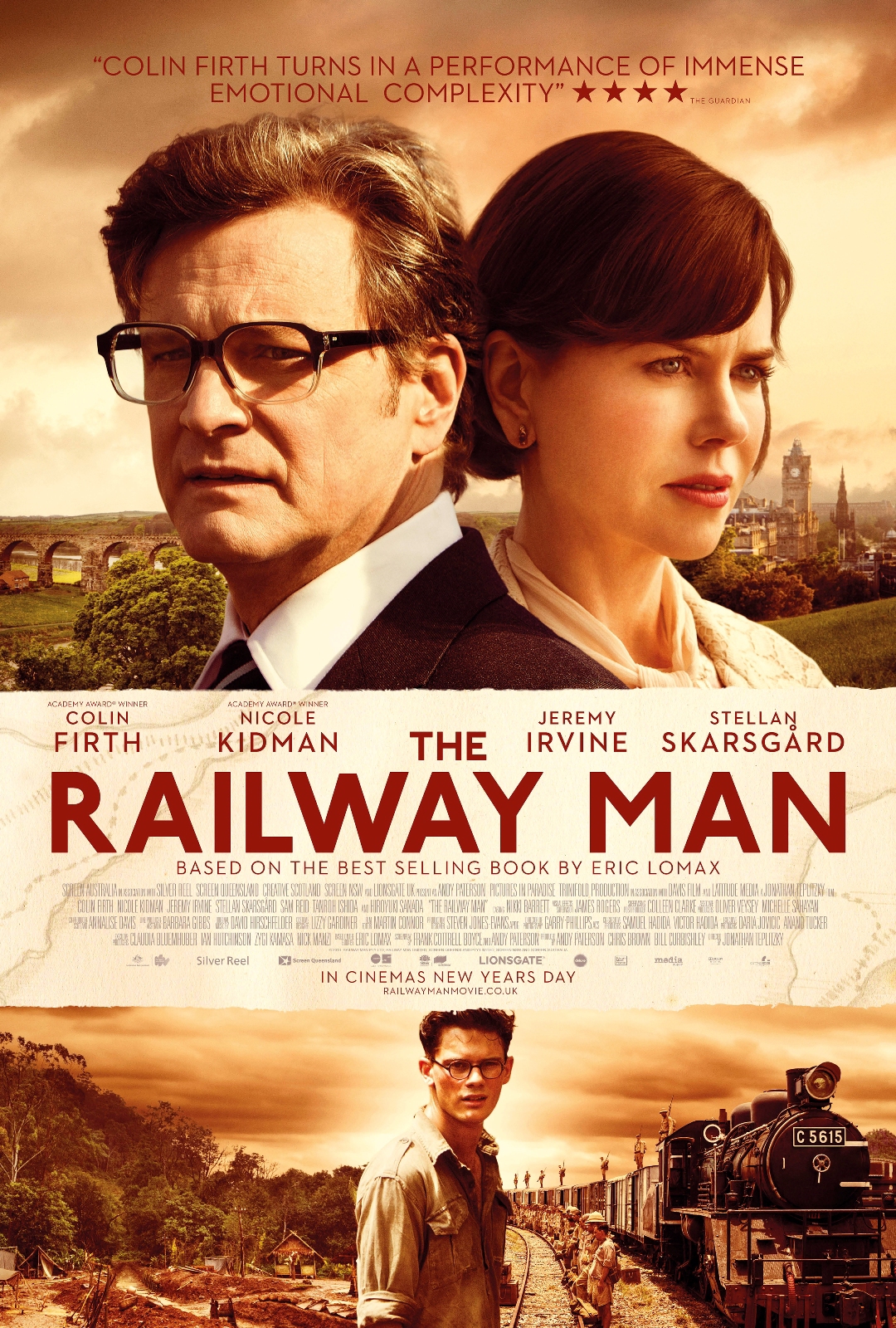
Such a man was Eric Lomax (played here by Colin Firth). In the 1970s Eric meets and falls in love with Patricia (Nicole Kidman). The two are married, but Patricia soon discovers Eric is still plagued by memories of his imprisonment as a young man (played by Jeremy Irvine) by the Japanese during the Second World War, and in particular a prolonged period he spent being tortured by the Japanese secret police for building a radio. Lomax is unable to begin to talk about his experiences, even as trauma causes his life to deteriorate. Fellow ex-POW Finlay (Stellan Skarsgård – very good in a small but vital role) is the only one who has even the faintest idea of his experience, but cannot persuade him to even speak about his past or try and move on. After discovering his torturer Takashi Nagase (Hiroyuki Sanada) is alive and well and working as a tourist guide in the very camp where Lomax was tortured, he travels to Japan, torn about what he should do.

Teplitzy’s film is powered by several marvellous performances, not least Colin Firth who is excellent in the lead role as the deeply repressed, tormented Lomax who in his heart has never left the prison where he suffered unbelievable torment. The film is a carefully structured, and deeply moving, character study of how atrocious and inhumane actions trap us all – both the victims and perpetrators – in patterns of suffering where we feel our own humanity drain away. Even handed, honest and generous, like Lomax’s book, it’s an engaging and moving tribute to the strength of the human spirit and our capacity for generosity.

Not least because when we finally meet the aged Nagase, he is far from the monster we expected. Like Lomax he too is haunted by the past, but where Lomax cannot escape the horrors he suffered, Nagase is plagued by guilt and disgust as he realises his actions as a young man were far from those of a righteous soldier, but rather a brainwashed pawn in a brutal army. Nagase, like Lomax, is desperate to purge himself of memories of this past, and has worked his whole life to try and make amends for the suffering he has caused. No simple good guys and bad guys here – both torturer and tortured are dehumanised, scarred and traumatised by the actions they have carried out. 

Teplitzky films that torture with an unflinching honesty, that leaves you in no doubt about why it has had such impact on Lomax. Jeremy Irvine is very good as the young Lomax, scared, vulnerable but brave and self-sacrificing who puts himself in the way of danger to try and protect his friends and then goes through savage beatings, interrogations and water boarding for information he doesn’t have. It’s difficult to watch, but never sensationalised and the traumatic pointlessness of these methods is abundantly clear. 

These memories, slowly revealed, are all too apparent in any case in Firth’s blasted face.  The film slowly reveals his psychological damage, with the opening sequence in fact suggesting a far lighter film ahead. The opening follows the meeting of Lomax and Patricia on a chance train journey. Playful and charming, these scenes work so well due to the wonderful chemistry between Firth and Kidman. It plays off in spadeas the plot gets darker and more disturbing. Kidman is very easy to overlook here in the “wife” role, but she invests it with an emotional honesty, a supportive woman eventually driven to the edge of her capabilities.

After the lightness of the opening, Terplitzky introduces the past literally like ghosts, with Lomax caught in a sudden delusion of himself being dragged through the hotel on his honeymoon, screaming in panic, to be carried to his torture danger. Throughout the film, the image of his torturer as a young man appears at various points (including at one point in a field as a train passes behind him), a constant reminder of how the past is here and now for Lomax.

It builds towards a sensational series of scenes as Lomax confronts Nagase, powered by two exceptional performances from Firth (barely able to control his anger, rage and pain) and a beaten down, distressed performance of shame from Hiroyuki Sanada, who matches him step for step. Sanada is superb as a man who confronts his nightmare – a man from his past – but also overwhelmed with the opportunity this gives him for amends. 

That’s what the film captures so well. This tension between past and present encapsulates the universal theme of our desire for revenge and our human need to connect coming together. Lomax and Nagase had every reason to kill each other, but their reaction to seeing each other is surprising, moving and a deep tribute to the human capacity to connect and move on. Grief and the past will destroy us all if we let it. The heroic examples of both Lomax and Nagase show us this doesn’t need to be the case.

The Miseducation of Cameron Post (2017)

Re-education classes turn out to be not for the good in The Miseducation of Cameron Post

Dir: Desiree Akhavan

Cast: Chloë Grace Moretz (Cameron Post), John Gallagher Jnr (Reverend Rick), Jennifer Ehle (Dr Lydia March), Sasha Lane (Jane Fonda), Forrest Goodluck (Adam Red Eagle), Marin Ireland (Bethany), Owen Campbell (Mark), Kerry Butler (Ruth Post), Emily Skeggs (Erin), Quinn Shepherd (Coley Taylor)

In 1993 teenager Cameron Post (Chloë Grace Moretz) is dispatched to a church-run sexual re-education camp after she is found to be in a same-sex relationship with a classmate. At the camp, her quietly cynical attitude quickly finds her aligned with the sceptical students Jane (Sasha Lane) and Adam (Forrest Goodluck) as they push up against the regime installed by Dr Lydia Marsh (Jennifer Ehle). How dangerous is the world of sexual re-education for its students?

Not surprisingly, the answer is very. The Miseducation of Cameron Post is a rather self-consciously indie film that sets up easy targets and then happily spends 90 minutes knocking them down. It’s often made with sensitivity, and has an excellent performance from Chloë Grace Moretz as its lead, a character you really root for, but this is a fairly empty viewing experience.

The film does get a lot of material out of the awful, cringing re-education programmes. It lands some blows against the hypocritical nature of the organisation, with at least one of the teachers (John Gallagher Jnr’s earnest Rick) also barely suppressing his homosexuality – and it re-enforces the cruelty of forcing people into becoming something they are not. But this is hardly news to any right-thinking person, and it doesn’t always make for good drama.

This is partly because Cameron herself never feels isolated in this re-education camp. She almost immediately falls in with like-minded rebel friends, and several of the other students are openly struggling with doubts. While the film perhaps wants to show that this sort of social engineering is never going to work, it does mean that our heroine never really feels at a disadvantage. You can’t help but feel a more effective film would isolate Cameron among people professing they are true believers (even if it turns out later they’ve been pretending), and show her struggling against conformity and clinging to her individuality. Instead, there seems no threat or any danger at all that she will ever drink the Kool Aid here at this camp – not for one second do you feel any chance that she is going to conform.

It makes for a major weakness for the film. It also makes Jane and Adam rather boring characters. They don’t challenge Cameron’s viewpoint at all, but merely echo her inner views with an added spice of rebellion. It makes for uninteresting scene constructions, and it’s not helped by the lack of chemistry between the three characters. By contrast, her relationship with roommate Erin, who is desperate to overcome her sexuality, makes for a far more interesting dynamic. Two characters with very different inner struggles, trying to find a common ground but frequently failing. Emily Skeggs is also heartbreaking as Erin, a young woman deeply unhappy and seemingly destined to remain so.

But there isn’t enough of this sort of thing. Nor is the viewer really challenged to consider the viewpoints of those running the camps. Jennifer Ehle, as the doctor running the camp, is a domineering Nurse Ratched figure, in a role which needed more shades of grey. She’s never a woman honestly doing what she believes is best, just a bully enjoying the power. John Gallagher Jnr’s conflicted worker doesn’t come into focus as a fully rounded human being, and his torment is touched on but his reasons for the decisions he has made are never explored.

It all contributes to a disappointing viewing experience. The film is too often shot with a self-conscious indie coolness, which gets on your nerves after a time, with its constant moody fall backs and gloomy set-ups. But it’s also a film that is taking a bit too much delight in making rather obvious and safe points over and over again, and failing to invest itself with enough drama to make for a compelling story. It’s a disappointment.

Star Trek VI: The Undiscovered Country (1991)

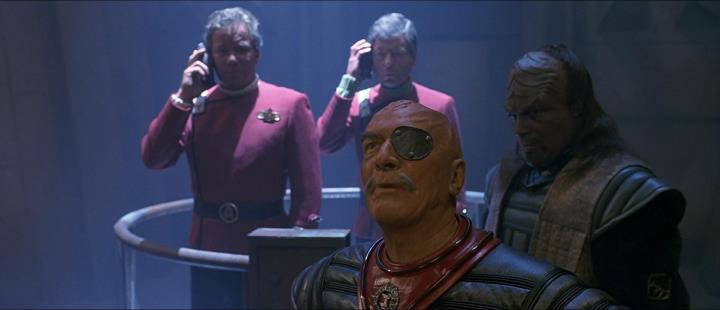
Kirk has to overcome a lifelong prejudice against Klingons in the marvellous, best-in-series film Star Trek VI: The Undiscovered Country

Director: Nicholas Meyer

Cast: William Shatner (Captain James T Kirk), Leonard Nimoy (Captain Spock), DeForest Kelley (Dr Leonard ‘Bones’ McCoy), James Doohan (Scotty), Walter Koenig (Commander Pavel Chekov), Nichelle Nichols (Commander Uhuru), George Takei (Captain Hikaru Sulu), Christopher Plummer (General Chang), Mark Lenard (Ambassador Sarek), David Warner (Chancellor Gorkon), Kim Cattrell (Lt Valeris), Rosana DeSoto (Azetbur), Kurtwood Smith (Federation President), Brock Peters (Admiral Cartwright), Michael Dorn (Colonel Worf), John Shuck (Klingon Ambassador), Iman (Martia)

This will sound ridiculous, but there are few films that have had such an impact on me as Star Trek VI: The Undiscovered Country. How bizarre is that? But not only can I trace my love of all things Trek to this film, but it was also my basic introduction to Shakespeare, whose plays in various shapes and forms have been a big part of my life ever since. Throw into the mix that it sparked an interest in the Cold War and you’ve got quite a coup for this sixth film in (I’ll be honest!) a hit-and-miss franchise.

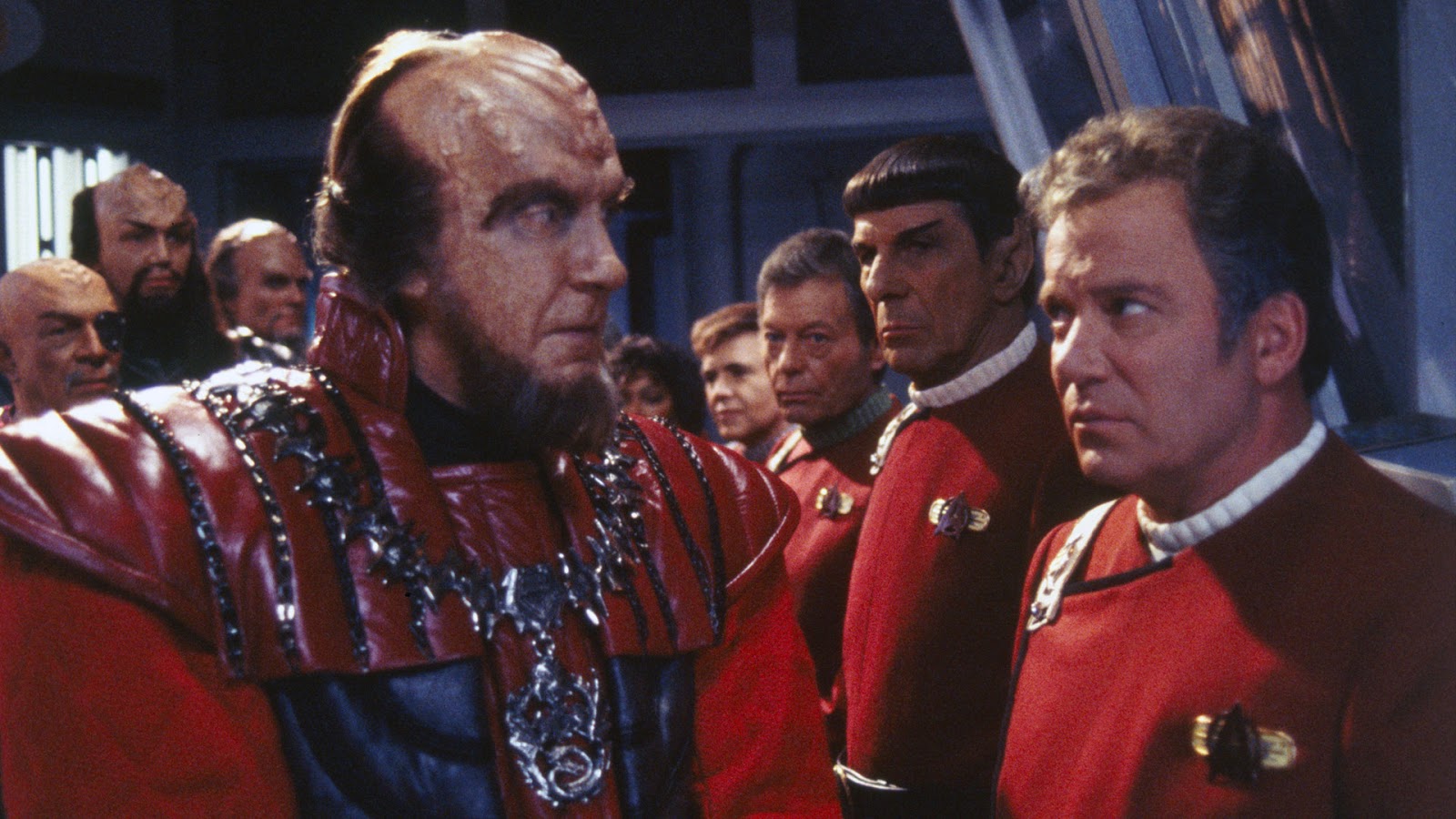
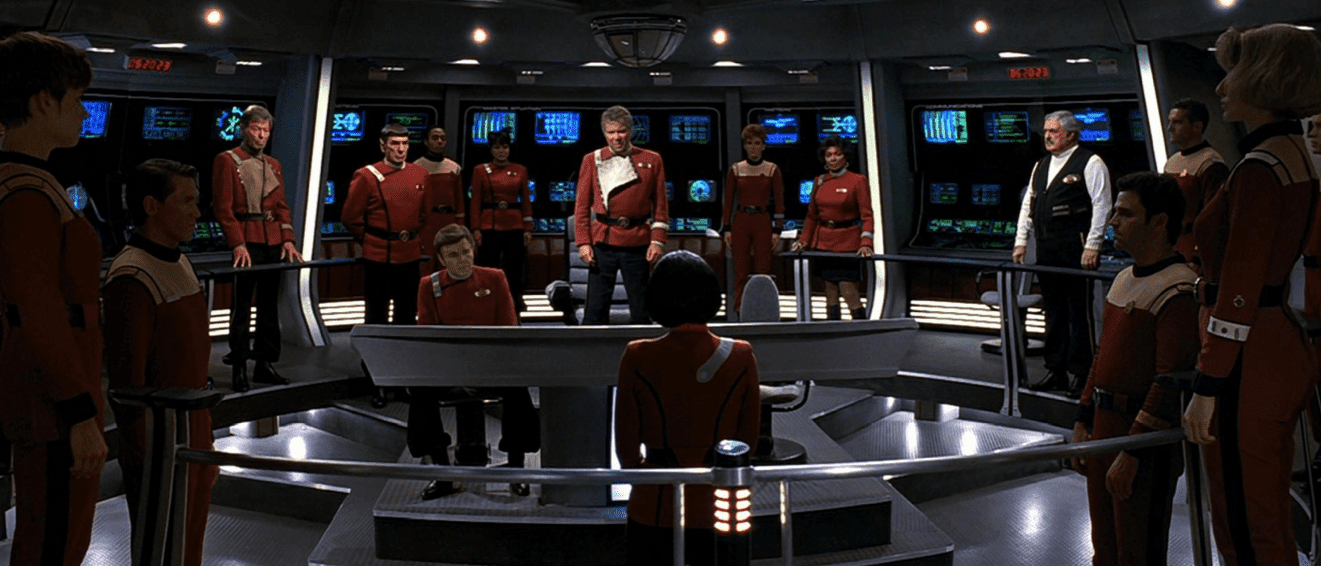
This film follows the final mission of Kirk (William Shatner) and company. There has been a disaster on the Klingon moon Praxis, which has devastated the Klingon economy and left them with no choice but to enter peace negotiation with the Federation, to try and end the Cold War that has existed for generations between the two powers. Sound familiar? While Spock (Leonard Nimoy) has been one of the leading negotiators with Klingon Chancellor Gorkon (David Warner), Kirk is reluctantly roped in to provide an escort for the Klingons to a peace conference. Kirk, and many of his crew, are weighed down with decades of prejudice and suspicion of Klingons (attitudes that erupt in a tense dinner between the Enterprisecrew and many of the equally suspicious Klingons). Kirk and McCoy (DeForest Kelley) however find themselves in trouble when Gorkon is assassinated and the two men are arrested and put on trial by the Klingons. Will Spock save them? Can they save the peace talks? Time for one last adventure.

Star Trek VI very nearly didn’t happen. The previous film, written and directed by Shatner, was a disaster, a messy, strange, flat-footed, cheap-looking adventure that was a huge flop, won several Razzies and nearly killed the series off. So it’s great that the cast got a chance to have one final swan-song in their parts – and that this basically turned into the most intelligent film they had made since Star Trek II. No surprise that Nicholas Meyer, an articulate, literate and intelligent novelist turned film-maker, was the common link between them. Not weighed down by Star Trek lore, nor the breezy “I’m above this” contempt that other directors in the series have had, Meyer understands what makes good Trek – a strong story, compelling character arcs, intelligent writing and a good balance between adventure and themes that resound with contemporary depth.

Star Trek VI was written as the Berlin Wall fell, and it’s a neat commentary on the sort of attitudes you would have seen in America and Russia at the time. Gorkon’s name even echoed Gorbachev (and Lincoln as well). But this isn’t just a historical parallel with the modern world. Instead Meyer also uses this to explore the attitudes of his characters. Like Star Trek II, this works into a neat deconstruction of Kirk’s persona. Kirk has to confront not age here (as in that film) but instead his own out-of-step anger, prejudices and refusal to change. At the same time, the film also explores Kirk as a man who can overcome his instinctive hostility, to make himself a better man. It’s such rich complexity that it’s no wonder I got sucked into a life-long love for Star Trek.

All this makes a fabulous framework for the strongest, most high-stakes entry in the franchise. Meyer’s direction is spot on: simmering with tension in the first half, investing every scene with a creeping intensity and rumbling sense of disagreement. He also works brilliantly with the regular cast, who turn in some of their best performances in this film: Shatner in particular reins in (mostly) the ham for a thoughtful and intelligence performance, while Kelley mixes deadpan snarks with a world-weary resignation. Nimoy also goes further than he has for a long time with Spock, who struggles under the surface with a host of emotions, from hope, pride, guilt and fury all bubbling away under that cool Vulcan façade. The rest of the cast also get moments to shine. 

This is a film that barely puts a foot wrong in its entire first act. From the opening explosion of Praxis – with a hugely exciting sense of danger as Sulu’s Excelsior starship gets caught up in the shockwave – through to the trial of Kirk and Bones, this film is tonally spot on. We understand completely the hostility and distrust Kirk feels towards the Klingons, just as we appreciate on a deeper level his desire to make the peace talks work. The awkward encounters with the Klingons simmer with an unspoken racism from the Federation characters (many of the cast reported being uncomfortable with the imperialist and superior tone their characters had to take), and a hostile resentment from the Klingons. The eventual assassination attempt has a grim inevitability about it, but is expertly shot and edited (a zero-gravity assault by two assassins on Gorkon’s disabled ship). The show-trial itself is like a nightmare of injustice. It’s scintillating and compelling stuff.

While the pace does slacken slightly when Kirk and McCoy find themselves in a Klingon prison camp – we are, by the way, introduced to the prison camp via a speech from the commandant eerily reminiscent of the greetings handed out in Bridge on the River Kwai – it never loses the audience’s attention. And it powers back up for a brilliant all-action, at first totally one-sided, fight between the Enterprise and a Klingon ship en route to the peace conference. A large measure of the film’s atmospheric success should also be given to the extraordinary score by Cliff Eidelman, a brilliant combination of familiar themes and fast-paced orchestral work, one of my favourite film scores.

And Shakespeare? Where does he come into it? Largely through Christopher Plummer, playing General Chang, the man who emerges as principal antagonist. Plummer’s exuberant performance is perfect for this larger-than-life warrior – a man who loves nothing more than reading Shakespeare “in the original Klingon” (one of many examples of the film’s wit). Plummer lets rip throughout the film, quoting endlessly from virtually every Shakespeare play you could imagine, just this side of ham. Plummer is also, for my money, the best villain this series had. But how could you not love a film where the villain rotates round in his command chair shrieking gleefully “Cry havoc and let loose the dogs of war!” Or says farewell to Kirk early on with a cheeky “we have heard the chimes at midnight…”. It’s possibly the best introduction to how great Shakespeare is that you can have.

But then that’s just part of Meyer’s witty, literate script, which throws in quotes from Conan Doyle and JM Barrie to Adlai Stevenson and Neville Chamberlain, and has Spock tells Kirk he’s the perfect choice for a mission to the Klingons as “there is an old Vulcan saying: only Nixon can go to China”. With stuff like that how can you not enjoy the film? It also understands the warmth between the main cast, their sense of character. The whole film combines an elegiac tone with a triumphant final mission, the passing of an era – with the final moments of the film capturing this, from its Peter Pan quote (“First star to the left and straight on until morning”), to the signatures of the cast appearing on the screen, literally signing off on their Star Trek careers.

The whole film is perfectly pitched like this. Every moment works from the off, and the action and adventure is balanced by some wonderful comic moments and beats of high tension and drama. The film’s use of the Cold War in Space as a backdrop works really well, and sheds a new light on attitudes in the franchise that have never really been touched before. It’s well acted, directed with flair and skill (the final space battle is brilliantly assembled), and the score is fantastic. There is a reason why I inflicted this film on my best man and ushers the morning before my wedding: it’s got a special place in my heart and it always will.

The Next Three Days (2010)

Elizabeth Banks and Russell Crowe go on the run in workmanlike thriller The Next Three Days

Director:  Paul Haggis

Cast: Russell Crowe (John Brennan), Elizabeth Banks (Laura Brennan), Brian Dennehy (George Brennan), Lennie James (Lt Nabulsi), Olivia Wilde (Nicole), Ty Simpkins (Luke Brennan), Helen Carey (Grace Brennan), Liam Neeson (Damon Pennington), Daniel Stern (Meyer Fisk)

What would you do to protect the person you love? How far would you go to keep her safe? What would you sacrifice? What rules would you break? Paul Haggis’ serviceable thriller tries to answer these questions, but doesn’t really get much closer to the answers than I have here.

Russell Crowe is John Brennan, a teacher of English Literature at a mid-ranking college. One day, his wife Laura (Elizabeth Banks) is arrested for the murder of her boss. Despite her pleas of innocence, before they know it she is sentenced to spend most of the rest of her life behind bars. When desperation at the thought of her fate – and missing the upbringing of their young son – leads her to attempt suicide, John decides to take the extreme step of breaking her out of prison. But where to begin with the planning? And what will he be prepared to do?

It’s the sort of film that early-on has the lead character meet a ruthless expert (in this case an ex-con with a history of prison breaks, played with a growling enjoyment by Liam Neeson in a one-scene cameo) who outlines a list of rules and terrible things that the hero will be forced to do. The hero looks askance – but sure enough each situation arises and doncha know it the hero is forced to bend his own morality to meet the needs of his mission. What a surprise.

Only of course the film doesn’t have the courage to force Crowe’s John to actually do things that bend his morality. There is always a get-out clause. When his actions lead to him taking a petty criminal’s life (while stealing money from a drug den), it’s self-defence. When he looks like he may be forced to put innocent people in harm’s way, he backs away. When he’s asked to sacrifice something major, he refuses. The film wants to be the sort of film where we see the lead character change inexorably as he becomes harder and more ruthless to achieve his mission. But it worries about losing our sympathy, so constantly gives the audience and the character get-out clauses to excuse his behaviour.

Not that Crowe gives a bad performance – he’s actually rather convincing as a humble, slightly timid man way out of his depth at the start – but the film fails completely to show these events really changing the man. It believes that it’s turning him into a darker, more ruthless person, but it isn’t. At heart, this film isn’t really a character-study at all but a dark caper movie. Obstacles are constantly thrown in the path of our hero, many of which bamboozle him: but then when we hit the prison break itself at last, suddenly he’s pulling carefully planned rabbits and double bluffs out of his hat like Danny Ocean. It’s a film that wants to have its cake and eat it: to show a hero bewildered by his task, in danger from this ruthless world he finds himself in – but also to have him become a sort of long-game con artist thinking three moves ahead of the police.

It just doesn’t quite tie up. It’s the film adapting to whatever it feels the requirements and desires of the audience might be at a particular moment rather than something that develops naturally. Enjoyable as it is to see these sort of games play out, you can’t help but feel a little bit cheated – there has been no indication before this that the character has this level of ingenuity in him.

He doesn’t even really need to pay a price beyond that which he had accepted from the start: at points major sacrifices are dangled before him but he never needs to make any of them. He never has to really bend his personal morality significantly. It’s the cleanest conversion to criminality that you are likely to see.

The film cracks along at a decent pace – even if it is a little too long – and shows its various twists and reveals fairly well. Elizabeth Banks is pretty good as Laura, even though she hardly seems the most sympathetic character from the start (the audience has to do a bit of work for why Crowe’s character seems so devoted to her). Most of the rest of the cast are basically slightly larger cameos but no one disgraces themselves.

The main problem with the film is its lack of depth and ambition. Mentioning Don Quixote several times in the narrative doesn’t magically grant a film depth and automatically create intelligent contrasts with the novel. Instead it just sounds like straining for depth rather than actually having it.

Midnight Express (1978)

Brad Davis and John Hurt find themselves in melodramatic hell in Midnight Express

Director: Alan Parker

Cast: Brad Davis (Billy Hayes), Randy Quaid (Jimmy Booth), John Hurt (Max), Paul L Smith (Hamidou), Irene Miracle (Susan), Bo Hopkins (Tex), Paolo Bonacelli (Rifkin), Norbert Weisser (Erich), Mike Kellin (Mr Hayes), Peter Jeffrey (Ahmet), Kevork Malikyan (Prosecutor)

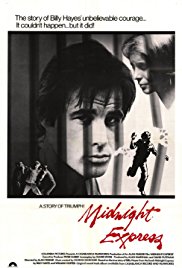
Ever wondered why “Turkish prison” was, for a long time, practically a synonym for “hell on earth”? A big reason is this film’s box-office success, a heavily fictionalised version of the experiences of Billy Hayes (Brad Davis), a young American caught smuggling hashish out of Turkey and eventually sentenced to 30 years in a prison notorious for violence, torture and rape. The film covers Hayes’ imprisonment, his alliances with fellow prisoners loud-mouthed American Jimmy (Randy Quaid) and sensitive, strung-out Englishman Max (John Hurt), and his ill-treatment at the hands of sadistic guard Hamidou (Paul L Smith). It’s not exactly a light watch.

Midnight Express was an unexpected controversial sleeper hit. Many felt the film was grossly violent, horrible, and borderline racist towards its Turkish characters. Looking back now, the violence is (with a few exceptions) no more than you might expect – but the attitude the film takes towards its Turkish characters really sticks out.

There is barely a Turk in this who isn’t crooked, sadistic, greedy, ugly or stupid (or a combination of all five). The depiction is so unsettlingly bad, the real Billy Hayes apologised at the time (he was joined years later by the film’s producers and writer, Oliver Stone). Many of the Turks are lascivious anal rapists, while the whole film has a queasy unease about homosexuality. The real Billy Hayes engaged in relationships with other men in prison – the film’s Hayes kisses a fellow prisoner in the shower but then shakes his head and leaves. A 1970s audience could cope with seeing a man flogged or tortured – but in no way could they be expected to watch two men making out.

Other than these unsettling black marks, Midnight Express is a taut, well-made, melodrama. And I say melodrama because both Stone and Parker frequently go over the top. After a friend is betrayed to a horrible fate by a Turkish prisoner, Hayes freaks out, violently beats the Turk, gouges his eyes and then (in almost laughable slow-mo) bites his tongue out and spits it across the room. Later, he is finally allowed to receive a visit from his girlfriend – she presses her breasts up against the glass while a near catatonic Hayes tearfully masturbates (“I wish I could make it better for you baby” she sighs, tearfully). Yes both those sequences are as OTT as they sound.

But when it calms down, Parker crafts a pretty affecting story. It cuts Hayes a lot of slack – I found it hard to feel sorry for a dumb, drug-smuggler who assumes his American passport will let him off with a slap on the wrist. I can’t be alone in thinking that someone who breaks the law deserves to pay some sort of price. To be fair, I think the film partly shares this view: it fast-forwards through most of Hayes’ original term, and only really hits into full misery once his sentence is arbitrarily extended by 27 years. I think Parker and Stone believe this switches the moral right to Hayes, who had served his term only to be hit with a sudden draconian change weeks before release. 

A lot of the film’s impact comes from Brad Davis’ impassioned performance as Hayes. There is something very sensitive and gentle about Davis, a real vulnerability that the film seizes upon to great effect. He looks like a bewildered lost soul, and Davis’ performance is scintillating first in its confusion, then his distress and anger. 

There are decent performances from the rest of the cast, with John Hurt standing out as the gentle Max. Garlanded with awards, Hurt is perfect as the straggled, beaten down, but still cynical and surly Max – and of course Hurt’s natural affinity for suffering works perfectly for a character who goes through the wringer. Quaid also does decent work as a thoughtless loudmouth, as does Kellin as Hayes’ impotent father. It’s also nice to see a small cameo from Peter Jeffrey as a well-spoken half-English paedophile in the prison’s psychiatric ward.

It’s a shame that Midnight Express too frequently goes too far, as it’s got an almost medieval understanding of suffering. The prison is a grim world of its own, where the prisoners largely self-police and acts of petty revenge are common. Later in the film, Hayes is sent to the film’s psychiatric ward, a hellish basement where prisoners walk in drugged-up dumbness pointlessly round and round a stone pillar.

Moments like this are far more impactful because they avoid the extremities of the rest of the film. Most of what we see isn’t true – Hayes’ story and his escape was vastly different, and the film exaggerates both his naïveté and his suffering – but it still works extremely well. Parker fought to end the film simply, rather than the all-action escape sequence filmed and this works wonderfully (it’s basically a Third Man homage, by way of Robert Altman’s The Long Goodbye) – although it still finds another moment for a threat of anal rape in the final ten minutes.

Midnight Express is a decent film, but not a pleasant one – and it leaves a slightly sour taste in the mouth, for all the competence with which it is made. Parker and Stone frequently go too far, and the reek of homophobic racism still comes off the film. However it is certainly a good piece of technical film-making and has some marvellous performances in the mix.

Stalag 17 (1953)

William Holden is the untrusted fixer in Billy Wilder’s prison camp drama Stalag 17

Director: Billy Wilder

Cast: William Holden (JJ Sefton), Don Taylor (Lieutenant Dunbar), Otto Preminger (Colonel von Scherbach), Robert Strauss (Stanislas ‘Animal’ Kuzara), Harvey Lembeck (Harry Shapiro), Peter Graves (Price), Sig Rumann (Sgt Johann Sebastian Schulz), Neville Brand (Duke), Richard Erdman (Hoffy)

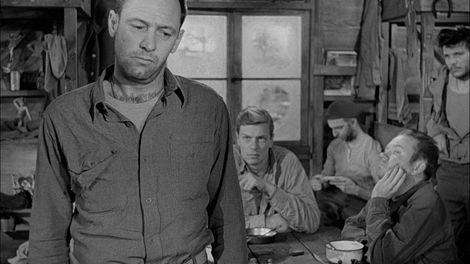
A sort of cross between The Great Escape and Colditz (but not as good as either), Stalag 17 is a relatively minor entry into Billy Wilder’s illustrious cannon: but that makes it more than good enough to be a stand-out movie in anybody else’s. Set in a German prisoner of war camp for captured American NCOs, it follows the hunt for a traitor leaking escape plans to the Germans. The suspicions of the other inmates quickly turn to camp fixer JJ Sefton (William Holden), a self-serving, cynical outsider, despite his protestations of innocence. When a saboteur and POW is betrayed to the Germans, Sefton decides he needs to locate the stool pigeon himself.

The main historical interest in Stalag 17 is William Holden’s Oscar-winning performance. Holden apparently walked out of the original Broadway production of the play, but such was his trust in Wilder’s judgement he agreed to play the substantially rewritten role. Just as well he did, as Holden’s drawling cynicism, air of bitterness and the marvellous impression he is able to give of a man of commitment and principle under the veneer of a self-serving egotist are perfect for it. Holden won the Oscar (he believed it was a consolation for his failure to win for Sunset Boulevard) – and co-incidentally gave the shortest acceptance speech ever (due to TV coverage rules), a simple “thank you.”

Holden’s character slowly dominates the narrative more and more, but is often shot on the margins of the film. Wilder shoots a film where the lead character is on the periphery of the action, with Holden on the edge of frames, or just being caught by the camera as it drifts towards him. He feels like a supporting character for a large chunk of the first half of the film, while Wilder focuses on the daily life and bonhomie of the camp: two things Sefton deliberately exiles himself from. But you keep coming back to him, and are always aware of what he is thinking and planning.

The focus on the atmosphere of the camp allows a number of fun scenes around the isolation of the men. There are joyful celebrations for Christmas (including tree decorations and a full dance in the barracks, with men eagerly grabbing each other for a whirl in a way you can’t imagine them doing back home). We get the games and in-jokes that keep them sane, the cheeking of the guards, and the obsessive interest in the women held in the Russian camp next door.

This also allows a number of colourful performances from a solid group of character actors. Robert Strauss was Oscar-nominated as the scruffy, Betty-Grable-obsessed “Animal”, and his comic antics provide much of the film’s humour. There are fine performances from Harvey Lembeck as his confidante (Lembeck and Strauss had both played the same roles in the stage production), while Peter Graves, Neville Brand and Richard Erdman contribute performances as very different POWs.

The film also deals with mob dynamics: the group turns on Sefton, it seems, because he dares to bet against an escape and, as a fixer, he has access to luxuries the rest of the group don’t have (and charges them to access). Throw in his distance and his happiness not to make friends and it’s clear why they suspect him. But that doesn’t make their brutal punishment of him (on no evidence) and their cruel ostracism any easier to watch. You can’t help suspecting that Wilder had more than half his mind on the McCarthy trials taking place at the time when he was filming this mob-justice film.

The film is also notable for making the Germans reasonably fully-formed characters. Sure, our two main characters are, to varying degrees, ruthless buffoons, but they are not vicious or cruel. Otto Preminger’s camp commandant is a puffed-up martinet who puts his boots on when calling a General merely so he can click the heels together (and immediately removes them when the call is complete). Sig Rumann’s barracks guard is a decent cove and bluff braggart, who actually runs a fairly efficient spy system with the traitor.

The film is partly a study of men under pressure and partly a mystery – obviously Sefton isn’t the traitor, and the film slowly reveals who is before an impressive sequence where we see the traitor in action planting a message. There is a noir-ish quality to this mystery element, and the film holds a balance fairly well between a war comedy and an adventure where lives really are at stake (it’s book-ended by characters being machine gunned by the Germans after all). It’s not the greatest war film ever, but it has more than enough going for it.

The Bridge on the River Kwai (1957)


Alec Guinness is the British Colonel in captivity whose principles are sadly misguided in The Bridge on the River Kwai

Director: David Lean

Cast: William Holden (Commander Shears), Alec Guinness (Lt Colonel Nicholson), Jack Hawkins (Major Warden), Sessue Hayakawa (Colonel Saito), James Donald (Major Clipton), Geoffrey Horne (Lt Joyce), André Morell (Colonel Green), Peter Williams (Captain Reeves), John Boxer (Major Hughes)

“Madness! Madness!”Are there many better final lines of films – or any delivered with more emphatic, meaningful gusto than James Donald manages at the close of this David Lean classic? The Bridge on the River Kwai is a constantly reliable, wonderfully assembled classic film, and a never-ending joy to watch. It’s not only a gripping epic, it’s also a wonderful psychological study of a series of men and the impact war has on their psyches. It’s all madness after all.

In 1943, Colonel Nicholson (Alec Guinness) and his men arrive in a Japanese prisoner of war camp in Burma. Camp Commander Colonel Saito (Sesse Hayakawa) has been tasked with building a bridge over the river Kwai, and demands officers and men go to work. When Nicholson adamantly refuses to allow officers to do manual labour (as per the Geneva Convention), he and Saito are set for a clash of wills, in which the iron-willed, rigid certainty of Nicholson eventually triumphs. However, once Nicholson is released from solitary confinement, he is so horrified by the decline in discipline of his men, he decides building the bridge is the perfect opportunity to rebuild morale and demonstrate British character=. So he sets upon building a better, stronger bridge than the Japanese had designed. Meanwhile, fellow prisoner American Commander Shears (William Holden) escapes from the camp back to Allied headquarters – only to be forced to return to the jungle on a commando raid to destroy the bridge, led by Major Warden (Jack Hawkins).

Wow this is one hell of a film. It was garlanded with seven Oscars, and totally deserves each and every one of them. Kwai is a deeply engaging, wonderfully structured epic that balances perfectly the sweep of Hollywood cinema with a keen understanding of the complexities of psychologies under pressure. Because like Clipton says, this is a film about madness. Virtually everyone in this is mad in some way. Lean brilliantly positions these psyches in a series of conflicts and clashes: we have Nicholson vs. Saito, Nicholson vs. Shears, Shears vs. Warden – in every relationship in the film there is conflict and disagreement. It makes for extraordinary drama.

Pile on top of that the fact that David Lean is a consummate film maker. Every moment of Kwai is a display of wondrous visual storytelling, from the arrival of the British in the prison camp – a triumph of defiance, pride and hubris – to the final attack on the bridge. The final sequence around the bridge is exquisitely assembled. The editing is flawless, the tension build-up (nearly 20 minutes!) never flags, but carefully establishes the who, what, why and where. The sequence itself builds up both events and problems with daunting skill. In between, every sequence of the film has some masterful work in it.

The heartbeat is Alec Guinness, simply marvellous as Nicholson. It’s hard to believe watching it that he was not the first choice – in a parallel universe Charles Laughton starred opposite Cary Grant’s Commander Shears! – because he is superb in this Oscar-winning role. Guinness’s Nicholson is mad. Not in the cuckoo way or a cruel or arrogant way. He’s blinded by the rule book, by the middle-class values of duty, order and dignity that govern his life. Mad because he takes a task from his Japanese enemies and does it better than they ever could have: “Must we work so well? Must we build them a better bridge than they could have built themselves?” Clipton asks of him. Too true. Nicholson’s response? That one day people will remember the bridge was built not by “a gang of slaves, but soldiers, British soldiers…even in captivity”. 

So Nicholson doesn’t see it that way. It doesn’t match his narrow world view of a place for everything and everything in its place. Because he has no vision beyond his own immediate circumstances. The important thing for him is to build the bridge, because it’s his duty to keep his men together, and demonstrate British resolve. So it’s Nicholson who visits Clipton’s sick bay and gently questions the wounded men, encouraging them to go back to work on the bridge so it can be finished on time (they ironically march through the graveyard of the camp on the way). For Nicholson the bridge is everything – and Guinness’ eyes are full of rigid monomania (needless to say, by the end of the film Nicholson himself off-handedly informs Clipton with pride that the officers have volunteered to work on the bridge to make sure it will be finished before the deadline).

His manner contrasts fascinatingly with Sesse Hawakaya’s Colonel Saito. Saito, a bank manager type if ever you saw one, clearly struggles with holding his command together and to deliver the bridge as planned. He has the strength of office, but not the strength of character of Nicholson. Hawakaya plays a weak man – and it’s fascinating how Lean charts the shift in power from Saito to Nicholson. Nicholson stands for principle and simply cannot imagine backing down – and then, with a sense of certainty and natural authority that governs his life, swiftly takes over the entire planning of the bridge from Saito. Poor Saito is a broken, weakened man: and in his own form of madness, is left with Nicholson alone as a confidant (the two of them talk more to each other about their loneliness and uncertainties than they do anyone else – Nicholson in particular gets a marvellous speech about the sad transience of the soldier’s life – “it’s a good life, but still there are times…”).

The madness doesn’t stop there. Jack Hawkins’ Major Warden is as fanatical as Nicholson: the mission is everything. Hawkins is excellent, turning Warden into a sort of over-grown schoolboy, playing at soldiers but with an adolescent aggressive willingness to sacrifice the pieces for the greater good. For Warden, no life in the team is sacred (including his own), and everything must be about the target. Warden’s gung-ho, take-no-prisoners attitude, his lack of empathy for the lives of those around him, makes him as much of an insane danger as Nicholson, perhaps more so.

Holden’s more humane Shears is the counterbalance with these three lunatics. Of course, Shears is sucked even more into the madness than anyone else – who else would escape from a prison camp, only to be forced to head back into the jungle on a fool’s errand? Holden is damned impressive as the naturally anti-authoritarian Shears, a man who never seems to have seen a boss without questioning him, who recognises the insanity of the war around him but when push comes to shove throws himself into the mission he has been given. 

He’s the big addition to the original source material – but it’s an idea so good that Pierre Boullé said he wished he had thought of it himself. Boullé won the screenplay Oscar, but the writers of the script were really the black-listed Michael Wilson and Carl Foreman. These two put together a superb script, and the structure contrasting Shears with Nicholson works perfectly. These two are mirror images, but never really antagonists. Their final meeting towards the end of the film has a poetic sadness about it. It adds a whole extra dimension to the film – while one storyline sees the bridge being built, a parallel one prepares for its destruction.

All these threads come together beautifully on the morning of the bridge’s opening, after a triumphant celebration by the prisoners on the completion of the bridge – a moment Nicholson describes to them as “turn[ing] defeat into victory”. He is of course both right and wrong – and the triumph of the film is that you can’t help but share Nicholson’s desire to save this bridge that we have seen so much work, effort and love go into constructing. 

“Madness”. That’s how Clipton sees it – James Donald is by the way wonderful as the one sane man – and yes of course he’s right. It’s all part of what is a masterful film made by a master storyteller, beautifully filmed and edited. Alec Guinness gives a performance for the ages as stubborn, small-minded man whom we somehow still end up strangely admiring and respecting. Holden, Hawkins and Hayakara offer intelligent, engaging portrayals. The Bridge on the River Kwaiis a film that you can watch again and again. In fact you should, because Lean here marries an epic scale with a story that feels small, personal and deeply felt – that places the psychology of real people at the centre of an epic stage. It’s simply a classic.

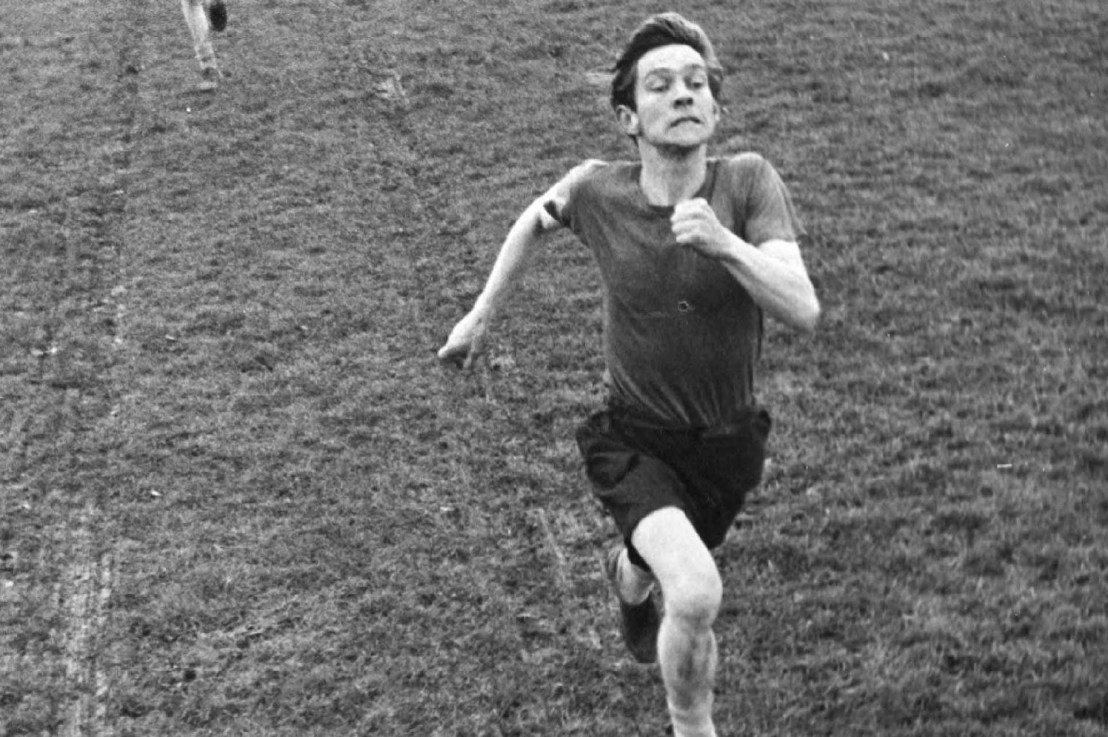
The Loneliness of the Long Distance Runner (1962)

The Loneliness of the Long Distance Runner (1962)

Class struggles makes it harder to win the race in this excellent kitchen-sink drama

Director: Tony Richardson

Cast: Tom Courtenay (Colin Smith), Michael Redgrave (Governor), Avis Bunnage (Mrs Smith), Alec McCowen (Brown), James Bolam (Mike), Joe Robinson (Roach), Dervis Ward (Detective), Topsy Jane (Audrey), Julia Foster (Gladys), James Fox (Gunthorpe), John Thaw (Bosworth)

In the 1960s British film made waves when it started to turn away from upper-class, costume-laden dramas, and accents started to be heard that weren’t cut-glass and RP. Few of these films ran (literally) further from this than The Loneliness of the Long Distance Runner.

After the death of his father, Colin Smith (Tom Courtenay), a working-class young man, is drawn into a life of petty crime. Sent to borstal for his re-education, his skill at long-distance running catches the eye of the Governor (Michael Redgrave). The Governor hopes to use Colin to win the five-mile cross-country run in the joint sports challenge day he has arranged with the local private school. But will Colin play ball, or will he stick to his own principles of never playing “their” game?

The Loneliness of the Long Distance Runner is in many ways a sort of British Rebel Without a Cause, but without the glamour. Instead, Colin is a council house lad, angry at the world (but not quite clear why) and brought low by the theft of £70. The film showcases Colin as a sort of anti-authority hero, a man who just simply doesn’t want those bastards telling him what to do. He’s not violent or dangerous, he’s more sullen, fed-up and laced with anger and contempt at a world that short-changed his father. 

He finds himself in the confines of borstal, an institution all about rules, regulations and changing people to match what society expects of them: everything Colin hates, and spends the film pushing against. Unlike the anti-hero of Alan Sillitoe’s other seminal kitchen sink drama, Saturday Night and Sunday Morning, Colin isn’t out for what he can get – while that film’s lead was more frustrated the system didn’t work enough for him, Colin wants no system at all. He wants freedom to make his own choices and define his own life – and his rebelling is all about that.

What’s intriguing about Silitoe’s story is Colin has a genuine gift for running. Richardson shoots the sequences of Colin running through the country (granted special permission to go unattended by the Governor) with a lyrical freedom. It’s as if, while running, Colin can put the world aside for a moment, to focus on his own independence. Silitoe gives Colin the means to move up in the world – but to do so he has to fall in with the desires of his “betters”. Therein lies the film’s conundrum.

It helps a great deal that Michael Redgrave is terrific as the Governor – the very picture of hypocritical and self-serving authoritarianism, interested in the boys only so far as they can serve his ends. The slightest misdemeanour and punishment is absolute – with the boy banished back to the bottom rung of the borstal, and ignored by the Governor. 

Richardson shoots the borstal as a confining series of small spaces, a real contrast to the broad, open spaces Colin runs through. The flashback scenes that showcase Colin’s life of petty crime are shot with an intense realism, on-location in Nottingham streets. These scenes are perhaps slightly less engaging and interesting than those at the borstal: their content is pretty similar to other kitchen-sink dramas, and they seem more predictable (for all their engaging direction and acting) than other parts of the film.

The real success of the film is largely due to Tom Courtenay, making his film debut. It would be easy to be annoyed by Colin, an inarticulate and chippy lad who hates the system without actually being engaged enough to understand why. But Courtenay brings the part a tenderness and surly vulnerability, and for all his childish rebellion, his barely expressed feelings of grief and anger at his father’s death strike a real chord. Given a sum of money in compensation, largely frittered away by his mother (Avis Bunnage also excellent) on her fancy man, Colin symbolically burns part of it, then spends the rest taking himself, a friend and two girls to Skegness. Colin’s relationship with Audrey is sweetly, and gently organically grown – and Courtenay brings a real vulnerability to a confession of his own virginity.

Courtenay makes Colin’s principles and issues understandable to us – and relatable – even though it’s tempting to encourage him to play along with the Governor, win the race and seize and opportunity to better himself from that. But what Courtenay makes clear, is that doing that would be a sacrifice Colin’s own sense of self – and that would be a defeat.

The Loneliness of the Long Distance Runner is a terrific kitchen-sink drama, built around an empathetic lead performance, that gives you plenty to think about. It’s shot with a poetic beauty by Richardson and photographer Walter Lassally. Finally, some credit must go to the casting director – not only Courtenay, but James Bolam and (uncredited) John Thaw and James Fox fill out the cast in prominent roles. Keep an eye on those guys: they might have futures ahead of them y’know.