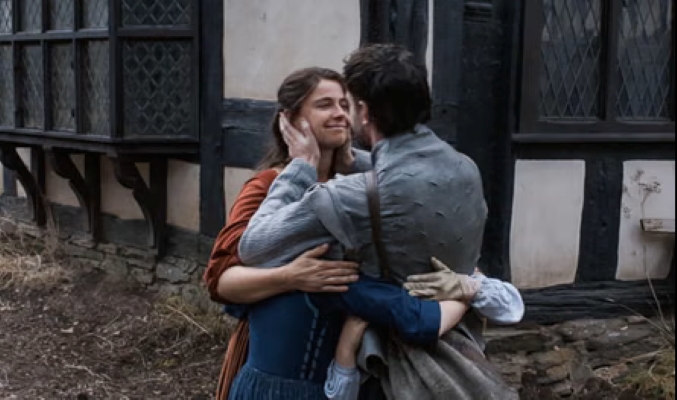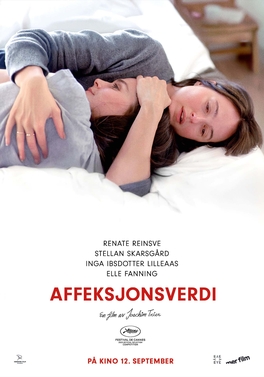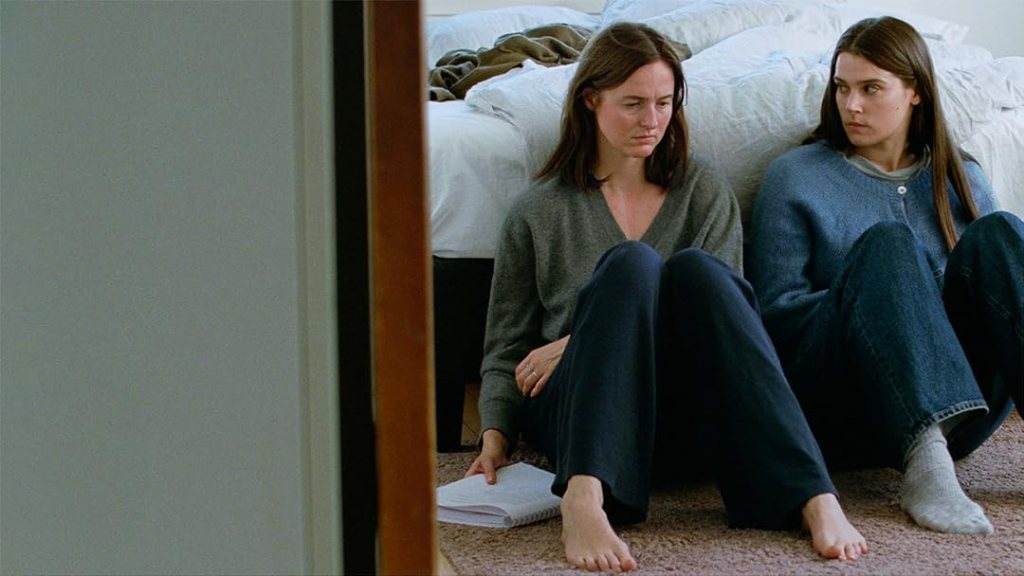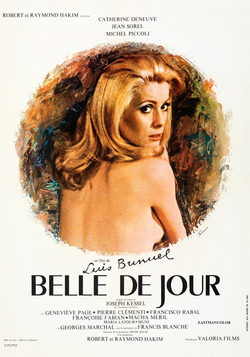
Category: Relationship film

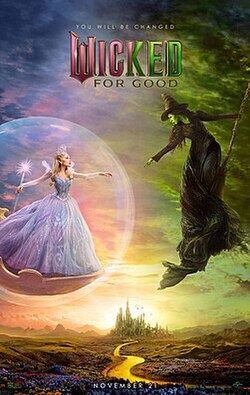
Wicked: For Good (2025)

Wicked: For Good (2025)

Part 2 doesn’t match Part 1 for entertainment or depth, but has enough moments to work

Director: Jon M. Chu

Cast: Cynthia Erivo (Elphaba Thropp), Ariana Grande-Butera (Glinda Upland), Jonathan Bailey (Fiyero Tigelaar), Michelle Yeoh (Madame Morrible), Jeff Goldblum (The Wizard of Oz), Ethan Slater (Boq Woodsman), Marissa Bode (Nessarose Thropp), Bowen Yang (Pfannee), Bronwyn James (ShenShen), Colman Domingo (Cowardly Lion)

Act Two comes to the screen in Wicked: For Good, putting the finishing touches to a five-hour journey through a single stage musical. While there are literally hundreds of millions of reasons for splitting the film in two, you can’t doubt the passion and love for the source material from everyone involved. However, Wicked: For Good, while shorter than the first film, feels longer: more padded but also more aimless, exposing more of the flaws of the musical less apparent when Act Two breezes past in about an hour. It’s still an entertaining watch, but it lacks the explosive, glorious impact of the first film.

Elphaba (Cynthia Erivo) has been firmly branded public enemy number one as the Wicked Witch of the West. Meanwhile, her old friend Glinda (Ariana Grande-Butera) is the universally beloved face of the regime, showmanship and trickery hiding her complete lack of magic. Elphaba is fighting a losing battle for hearts and minds, failint at her attempts to expose the Wizard’s (Jeff Goldblum) lies and to protect the animals of Oz from persecution. Attempts at good deeds constantly go wrong and the arrival of a young girl from Kansas brings chaos. Will Elphaba and Glinda heal their relationship and will Oz be saved?

Wicked: For Good suffers for covering the weaker second act. Most of the best songs were in the first film. The first act also has more interplay between the two leads (whose relationship is the heart of the story) and had a clearer coming-of-age arc with Elphaba’s eyes being opened to the nature of Oz. Wicked: For Good tries to tackle an awful lot (Good and Evil! Animal rights! The Wizard’s oppression and guilt! Propaganda and manipulation! Backstory for every character in The Wizard of Oz! Elphaba and Glinda’s relationships with Fiyero!) But it often ends up under-cooking, hand-waving and fudging many of them. It chops and changes its focus so often, that developments seem sudden or under-explained.

This is where the extended run-time doesn’t help. The logic leaps that can be done in a few minutes of dialogue between songs in an hour of stage-time, make less sense when stretched over two hours plus. One of Elphaba’s main motivations is protecting the animal’s rights, with these creatures literally losing their voice. Despite opening with her trying to free slave-worker animals from building the Yellow Brick Road, eventually this plot-line feels lost in the shuffle. The motivations and mechanisms of the persecution are unclear, and then confusingly bunched in with racist laws against Munchkins. Similarly, Jeff Goldblum’s Wizard switches from a sociopathic arch-manipulator, into a drink-dependent man coated in guilt, without this journey being amply explained.

Wicked: For Good also awkwardly shoe-horns in events from The Wizard of Oz (there is a lot of Dorothy and her companions on the margins) and comes up with not-always-well-developed reasons why Elphaba and Glinda do the things-they-do as required by Wizard of Oz, without contradicting the more complex, interesting characters they are here. Again, these are flaws revealed by the extended run-time which gives more depth to the leads, but little of its added hour to giving more depth and context to the plot and themes the film is trying to handle, making them feel under-powered.

That’s not to say there are not plenty of positives. Wicked: For Good really understands its core strength is the relationship between its leads, and the chemistry between Erivo and Grande is still dynamite. It’s made very clear they are taking opposite approaches in interpreting ‘what’s best for Oz’ (for Elphaba it’s ending the lies, for Glinda it’s keeping people happy – very on brand for both). Their scenes are the film’s emotional heart, whether laughing or crying together, or even (in one laugh-out-loud moment) literally fighting. Just as in the first film, Wicked: For Good demonstrates the different perception an outsider and an insider brings to a situation and how this informs their loyalties and actions.

Erivo’s wonderfully draws on deep loneliness and growing frustration at her inability to change things, capturing the sense of someone certain she’s in the wrong, but who utterly lacks the ability to persuade (be that animals to stay and fight, or Ozians to take another look at the Wizard). Her deep need for friendship (and romance with Jonathan Bailey’s effortlessly charismatic Fiyero – rather short-changed by screen time here) is clear, even if her transition to embracing elements of ‘the villain’ seems rather forced. Her singing remains breathtakingly good with ‘No Good Deed’ an extraordinary show-stopper.

However, the film might just belong to Ariana Grande. If Wicked was Elphaba’s coming-of-age, this is Glinda’s. Grande brilliantly shows how fragile the bubble of happiness Glinda has built is. Glinda’s realisation that from an early age (an excellent childhood flashback scene helps here) she hid her feelings with an immaculate smile is very well explored – as is her realisation that she is universally beloved, but has no real friends. Grande finds a desperation, fragility and sense of pain that only just peak out – feelings covered well in the best of the film’s two new songs ‘The Girl in the Bubble’, with Chu using reflections to stress Glinda’s realisation of the lies she has told herself.

Of the many themes the film tries to cover in a broad sweep, this one comes out best while others fall by the wayside. Propaganda and dictatorship in Oz sort of sits there as a presence without getting real focus. The oppression of the animals (and imagery of them working in whips and chains) makes a big emotional swing the film isn’t willing to commit to. The other new song, ‘No Place Like Home’, is an unforgettable ballad that awkwardly stages Elphaba begging animal users of an Underground Railroad to stay and hope for the best (imagine telling that to real-life Railroad users). There are darker elements I liked (Marissa Boda’s Nessarose and Ethan Slater’s Boq explore jealousy, possessiveness and rage in a surprisingly daring way, told with an effective economy I wish Chu could have found more often).

When Wicked: For Good works, it works. The impressive visual design from the first film is still in place. Chu directs with energy and vibrancy and gets real emotion from the moments between the leads. But I miss the large choreographed numbers here (perhaps expected from a darker Act Two) and its plot is often unfocused, forced and manages to use double the time to barely extend (or make more interesting) the level of thematic exploration the original musical does. I didn’t enjoy it as much as the first one and becomes a little too trapped by fitting into Wizard of Oz but it’s still an entertaining ride.

A Touch of Class (1973)

A Touch of Class (1973)

A decent farce gets buried in a film that tries to make a profound point about relationships

Director: Melvin Frank

Cast: George Segal (Steve Blackburn), Glenda Jackson (Vickie Allessio), Hildegard Neil (Gloria Blackburn), Paul Sorvino (Walter Menkes), K Callan (Patty Menkes), Cec Linder (Wendell Thompson), Nadim Sawalha (Hotel manager), David de Keyser (Doctor Alvarez), Eve Kampf (Miss Ramos)

London-based American banker Steve Blackburn (George Segal) and divorced fashion designer Vickie Allessio (Glenda Jackson) feel an instant spark when they literally bump into each other while he’s playing baseball in the park. She loves the idea of some no-strings sex; he’s got more than a little experience of cheating on his wife. They head to Málaga for a dirty weekend, only to find a string of circumstances keep getting in their way of a relaxing (dirty) weekend.

A Touch of Class seems an odd choice as Best Picture nominee – just as Glenda Jackson seems an unlikely Oscar winner for a fairly straight-forward role of comic exasperation. (Surely part of Oscar was the voters surprise that the fiercely serious Jackson even had a sense of humour). But this film has its moments of entertaining farce, particularly in its opening half covering the disastrous trip to Málaga where literally nothing seems to go right. It works less well when A Touch of Class segues later into something trying to be more serious, not least since the film’s attempt to explore genuine feelings works best when it embraces the fact its lead characters realise that, beyond a sexual charge, they pretty much can’t stand each other.

There is something very British about this farce of manners. The first hour chronicles a series of embarrassments, nearly all of them revolving around a constant sense of social obligation and clumsy propriety, much of it coming from Steve’s desperation not to be caught out as an unfaithful husband. From booking tickets for their flight – an arch travel advisor (a very funny Eve Kampf) responding with mocking po-faced seriousness to attempts by Steve to pass Vickie off as his ‘mother’ – to the two awkwardly pretending not to know each other when Steve bumps into film producer friend Walter (Paul Sorvino) – who you suspect wouldn’t care less –  it quickly goes from bad to worse.

Like any classic farce, they end up trading their winning pre-booked car for a juddering mini with a faulty clutch (so Steven can escape Sorvino’s character without having to explain why he can’t give him a lift), arrive at their hotel to be shunted from room-to-toom, Steve putting his back out after a bizarre argument about which side of the bed each will sleep on and eventually both being invited separately to dinner with Walter and his wife (who, unknowingly to them, are awkwardly shadowing part of their holiday). The comedy of this social awkwardness, the terror of saying something that might shock or embarrass someone, genuinely generates some decent comic mileage.

A Touch of Class also generates an entertaining sense that the two have very little in common. George Segal’s Steve is an overgrown, spoilt schoolboy, obsessed with winning who celebrates like he’s scooped The Open when he beats the child (as talented as a young Seve) he’s hired to play golf with him. (Vickie’s look of scornful disgust throughout this match is great.) When it comes to sex, you get the sense he’s demanding and in constant need of praise. Their first major argument kicks off when he responds very poorly to her review of their first tumble as ‘very nice’. Segal mixes this with a frantic desire to constantly be seen as a nice guy by everyone, from his wife to his friends while making minimal sacrifices for a relationship with Vickie.

In fact, the film would work best if it just focused on the disastrous holiday and two people discovering an initial spark disguised feelings clearly closer to mutual loathing. A more nimble film would have allowed more peaks and troughs where strong sexual desire mix with growing dislike outside of the tumbles in the sheet, leading to the affair beginning and ending in Málaga. Instead, A Touch of Class suddenly shifts in its final third to exploring the two attempting a long-term adulterous affair, a beat of seriousness it’s not adept enough to pull off. It’s not helped by the fact it repeats points already made (Steve is interested in booty calls with minimal concentration, Vickie is torn between having some fun and wanting something serious). It becomes a different – and to be honest, not that good, movie (not helped by an in-movie screening of Brief Encounter which really points up how much weaker this films depiction of infidelity is).

Part of the problem is it’s really hard to see what Glenda Jackson’s Vicki could find to respect in this guy once she got to know him. Jackson is a much better comic performer than you might expect – she landed the role after Frank saw her royally take the piss out of her impossibly-serious image on TV’s Morecambe and Wise – but her comedy is one of dry, arch exasperation not flat-out farce. She’s at her most relaxed in the moments where she can barely hide her contempt for Steve, or when laying into his selfishness and immaturity with arch sarcastic monologues. But this strength of character makes it all the more unlikely Vicki would consider continuing the affair in London – or that she would ever tolerate being used as essentially a sex toy by a selfish lover.

A sudden pivot to wider ambitions the film can undermining what could have been a decent comic farce. Expanding the film’s first two thirds and embracing showing the life cycle of a relationship starting as a fling and disintegrating under the pressure of actually spending time together gets lost under a clumsy attempt to say something profound about infidelity. A strange desire to suggest there is in fact real emotion between these two clashes constantly with the comic drive of the film suggesting the exact opposite. As the humour drains awkwardly out the film, so does its purpose and success. It’s as if Frank and team were as embarrassed as Steve to be caught out in a sex farce and felt they needed to add a clumsy social message and character study to make it feel legit. This never meshes with the film’s most successful moments and never rings true.

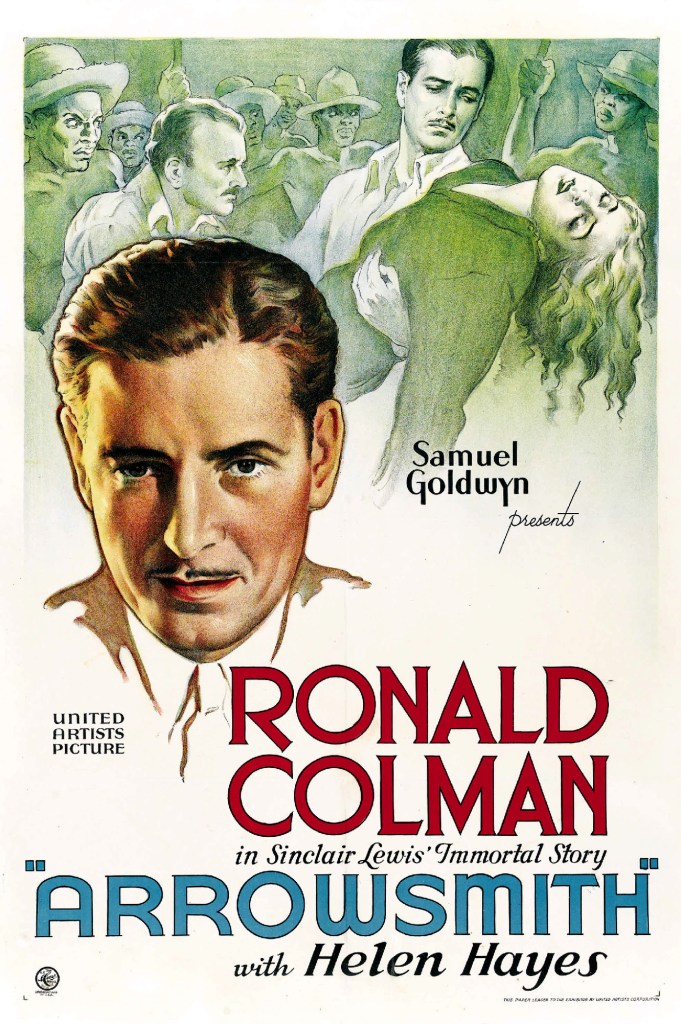
Arrowsmith (1931)

Arrowsmith (1931)

An uninspired prestige drama suddenly turns at the end into an intriguingly subversive drama

Director: John Ford

Cast: Ronald Colman (Dr Martin Arrowsmith), Helen Hayes (Leora Arrowsmith), Richard Bennett (Gustav Sondelius), A.E. Anson (Professor Max Gottlieb), Clarence Brooks (Dr Oliver Marchand), Alec B Francis (Twyford), Claude King (Dr Tubbs), Bert Roach (Bert Tozer), Myrna Loy (Mrs Joyce Lanyon), Russell Hopton (Terry Wickett), Lumsden Hare (Sir Robert Fairland)

A neat trivia question: what was the first John Ford film nominated for Best Picture? Not many people remember Arrowsmith today – although, since Ford was ordered by producer Samuel Goldwyn to not touch a drop of the sauce while making it, we can be pretty sure he did. Adapted from a hulking Pulitzer-prize winning novel by Sinclair Lewis, it was the epitome of prestige Hollywood filmmaking. It’s a far from a perfect film, but it contains flashes of real beauty and genius – and presents one of the most surprising, subversive visions of infidelity you’ll see in 30’s Hollywood.

Martin Arrowsmith (Ronald Colman) is desperate to be a high-flyer. A scientist and doctor, he’s wants to make his mark – and his mentors such as noted bacteriologist Professor Gottlieb (A.E. Anson) and Swedish scientist Gustav Sondelius (Richard Bennett) think he can. But Arrowsmith postpones his dreams for a spontaneous marriage to Leora (Helen Hayes), before re-embracing science. When plague breaks out in the West Indies, the Arrowsmiths travel there, ordered to test a possible cure on the natives: half will receive the cure, the other a placebo. But temptation and tragedy will be Arrowsmith’s constant companion there.

Arrowsmith is very much a film of two halves (or, in terms of its run-time, two-thirds, one-third). To be honest, much of its first hour is frequently rushed, ponderous and dull, flatly filmed with the air of uninspiring prestige production. Watching it play, it’s hard to connect a film as flat, perfunctory and serviceable as this with Ford’s energy and flair. It’s not helped by the accelerated storytelling. Stuffing in as much of Lewis’s door-stop best-seller as it can (the first fifteen minutes cover as many events as whole movies often content themselves with), the plot barrels along so fast it can leave your head spinning. Scenes either feel like sketches from a larger whole or like narrative cul-de-sacs included to tick a box from the novel.

Arrowsmith feels like a compromised film. I suspect Goldwyn’s aim was to cover the book. But I feel Ford’s interest – if he had one in the film’s opening hour – was the Arrowsmith marriage. On the surface this is your standard loving-husband-supportive-wife pairing. But, underneath, there is a lot more going on here. Everything about their courtship and registry office marriage feels perfunctory. Arrowsmith treats his wife with a fondness that never tips into passion. When she suffers a miscarriage (which prevents her having children), he is sad but moves on remarkably quickly. At one point, Leona discusses the idea of leaving her preoccupied, distant husband who disappears for days on end (you feel she’s only half joking). Arrowsmith calls her ‘old girl’, which feels rather complacent and smug.

You suspect Ford might be hinting that, frankly, Arrowsmith is a self-important shit with grandiose ideas. It’s an idea the film can’t quite push – Ronald Colman’s undoubted charm smooths off Arrowsmith’s rough edges, even while he makes him self-righteous and pompous. But as Leona (Hayes is excellent in subtly suggesting this woman is much more lonely than she admits) watches her house jerry-rigged into a Frankenstein-laboratory (his atrociously poor safety measures will come back to haunt him later) or is left for days alone at home, it’s hard not to feel this is a more complex, strained relationship than the film can openly say.

These half-stated implications lead us into the film’s final act in the West Indies, which almost redeems the slightly confused mish-mash it proceeds. From the opening shot of this sequence – focused on Clarence Brooks’ doctor (notable for treating a Black character as an assured professional) with his patients sitting on a balcony, excluded from the conversation about their health going on down below – it’s impossible not to see Ford’s sympathy more openly lying with the West Indian villagers, whose health is of little interest to the white population and who even our nominal hero (reluctantly) uses as guinea pigs for his cure. This powers us through a half-hour sequence that is by far-and-away the most focused and interesting of the entire film.

This tragedy-laden sequence not only buzzes with an indignation of the unfairness of this system – in which our hero is a semi-reluctant participant – but unleashes the most beautiful, shadow-filled, expressionistic lighting in the film. Ford signposts moments of high emotion by casting people’s bodies in shadow. This mesmerising effect is used brilliantly, combined with shots deliberately echoing each other (most strikingly two contrasting shots of the Arrowsmith home, both framed at low angles with foreground chairs – the second laced with tragedy). Visual imagery reflects, not least the cutting between two cigarettes smoked by the Arrowsmith’s. There is a host of heart-rendering, inventive ideas in visual storytelling: at one point, Arrowsmith’s phone call with a sweating colleague goes dead – we cut to see a shot of the empty phone on the other end bathed in shadow, enough to tell us his interlocutor has literally died mid-call.

This shadow-filled sequence also powers the film’s most subtle moment: possibly the most under-the-wire depiction of infidelity seen in the movies. The original novel made clear Arrowsmith was serially unfaithful. Here, he meets Myrna Loy’s wealthy heiress, to whom he admits an immediate kinship. At night, wordlessly, Ford cuts back and forth between Loy preparing for bed and Colman sitting (bathed in shadow) smoking and possibly waiting. Wordlessly the cuts go back and forth – and then fades to black as we see a shadow approach the door of Colman’s bedroom. You can miss it entirely: but its clear they sleep together. (A late scene with Colman and Loy, with a lingering handhold, feels like proof positive). A late scene of Colman filled with manic energy, in this context feels powered more by guilt and shame.

It’s subtle because we know that in scenes of open emotion and dramatic import we’ve seen faces thrown into shadow. When its repeated here, in an otherwise inconsequential scene, we’re having visually communicated to us something the film can’t openly tell us: Arrowsmith is cheating on his wife. It’s the highlight of a compelling final act, full of drama, tragedy and beautiful filmmaking. When the film leaves the West Indies for its lab-set coda, it returns to flat film-making and sudden, jarring plot developments. But for this half-hour section, it’s a fascinating, oblique, challenging and rewarding film: one of the best short films buried in a large one you’ll see. Arrowsmith may not be a classic, but’s it’s a fascinating film.

Materialists (2025)

Materialists (2025)

Smug, contrived and misguided romantic comedy with a self important air

Director: Celine Song

Cast: Dakota Johnson (Lucy Mason), Chris Evans (John P), Pedro Pascal (Harry Castillo), Zoë Winters (Sophie), Marin Ireland (Violet)

In the modern world, what do we look for most in a partner? To professional matchmaker Lucy Mason (Dakota Johnson) “the math is simple” (strap in folks, that’s a phrase you’ll hear a lot): we want someone who ticks plenty of our boxes, offers financial and social security as well as being the right height with the right level of charm. Love, you’ll notice, doesn’t play a role in that. So, what’s Lucy to do when she starts a relationship with ‘unicorn’ Harry (Pedro Pascal), exactly the sort of charming, super-wealthy and tall guy women dream of, just when her ex-boyfriend John (Chris Evans), part-time-actor-and-waiter, suddenly resurfaces in her life. How strong will her principles to make the best deal possible be?

It sounds like the set-up for a romantic comedy. And honestly, it would have made a perfectly good one. Our heroine would be warm and charming even as she professed her cynicism, and the plot focussed on the whimsically old-fashioned concept of matchmaking would have gradually led her to embrace love (along with, inevitably, the poor but adorable love interest.) But Celine Song’s follow-up to Past Lives is a scrupulously dry character study, that wants you to think it’s got a deep and meaningful message about relationships in the world today, but eventually pedals the same rom-com message you imagine it would call trite.

But in a rom-com, the audience knows they’re watching a candyfloss fantasy – Song tries to staple the same “abandon realism here” kind of ending onto her ponderously, pretentious story, despite it contradicting the heroine’s entire personality and the characters’ painstakingly spelled out obstacles, and doesn’t seem to have noticed it makes the whole thing a complete dog’s dinner.   

Putting it simply: I didn’t particularly like Materialists, found its smugly superior attitude irritating, its final message deeply confusing, and felt it eventually chickened out of making a real point about modern dating. It’s an art-house film, dressed as a rom-com, trying to fool you into thinking it’s a state-of-the-nation film while letting its lead end up in a reassuring fantasy that only happens in the movies.

Partly based on Song’s experience as a match-maker, the most interesting content in Materialists is its exploration of what makes people choose who to date. I think this is a very interesting topic: at a time when people find it harder to meet (and the financial demands of the modern world harder to cope with), hundreds of thousands of people will be making relationship decisions based on cold hard financial and social facts. And yeah, some of them probably do feel guilty about that, much as Materialists suggests.

But exploring the loneliness of modern life isn’t Song’s goal. Lucy’s clients (bar one) are deliberately awful caricatures – who cares why someone like that would be looking for love, right? The film is solely here for Lucy’s Great Dilemma: How far will she go in a relationship with a box-ticking man she likes, but whom she doesn’t love. (A more challenging version of Materialists might have left out Evans’ unbelievably-handsome-and-decent penniless actor, and just really explored this dilemma for Lucy.)

But instead, the love triangle offers an easy get-out card for Lucy. Because, unlike her clients, Lucy has already met her perfect match. In fact, while her desperate and deluded clients just want to meet someone who can stand to be at the same table sa them, Lucy has two gorgeous, considerate, tall, charming men begging her to let them commit their lives to her. (And who, by the way, can believe a charming, six-foot multi-millionaire who looks like Pedro freaking Pascal can’t get a date?) She’s got the lovely Harry, whose stunning Manhattan penthouse she gazes at awe-struck, like Lizzy Bennett at Pemberly. And there is literally nothing wrong with John, aside from his lack of income (he’s the only actor in the world who doesn’t have an agent and doesn’t want commercial work) – he’s kind and decent  and trying to follow a dream. It makes her conundrum a false fantasy.

That’s one of the worst things about Materialists which, in many ways, is even less risky and daring than flipping Pretty Woman. It talks a big game about dating and relationships being economic and social decisions. It bangs on endlessly about this topic but, deep down, clearly doesn’t believe in it at all. Because even an astute analyst of people’s personalities (as Song can be) isn’t brave enough to make a film that commits to its initial proposition. Instead, Song sets up a parade of straw-man arguments that Lucy’s experiences can knock down to reach the ‘correct’ decision.

Ah Lucy. This mystifyingly motivated character who Dakota Johnson struggles to make coherent sense from. It’s not helped by Johnson’s breathy, evenly paced delivery that makes it very hard sometimes to work out what her character is meant to be thinking or feeling. Her air of dead-eyed professional monotone makes sense for her interactions with clients, but her colourless delivery of nearly all her lines made it almost impossible for me to work out when her character’s views change.

It’s not completely Johnson’s fault that Lucy is a deeply irritating character, but it would take a significantly more charismatic actor to make you overlook what a self-pitying, self-loathing waif she is, whose fundamental selfishness isn’t softened by constantly telling us she knows how selfish she is. Are we supposed to be rooting for her, when she essentially treats John (Evans, very likeable, sweet and witty) as an emotional-comfort-blanket, who can be dropped when she gets bored with him? Even when John calls her out on this, by the next sentence he’s absolving her for it.

Then in order to provoke her epiphany, the film clumsily introduces a sexual assault plotline for a supporting character, which exists solely to give Lucy the equivalent of “man-pain” – honestly, if the same plot was put in a film with a male lead, the socials would be burning up with cries of foul. This plotline is ludicrous from start to finish, while simultaneously treating a genuinely serious issue in dating like a ‘problem-of-the-week’ that can be solved with a hug. No male writer could have gotten away with the shallow, clumsy, plot-contrived development – and I don’t think Song should either.

Materialists takes place in a crazy world, where a dating firm has offices across the world, where the Manhattan police don’t respond to harassment call-outs from rapists, where everyone is paying tens of thousands of dollars to hook-up and John seems to be the only poor person. It’s dripping with smug assurance at its own cleverness, while offering a sort of moral message identical to a Sanda Bullock 90s romcom (but with fewer gags and chemistry). It’s frequently ponderous, stuffed with overly mannered dialogue and goes on forever. Having a Michael Haneke inspired closing shot, doesn’t change the fact the scene itself could have come straight out of The Runaway Bride. Materialists was not good.

Random Harvest (1942)

Random Harvest (1942)

Two superb leading performances hold together a romantic confection of a film

Director: Mervyn Le Roy

Cast: Ronald Colman (Charles Rainier/”Smithy”), Greer Garson (Paula Ridgeway/ “Margaret Hanson”), Philip Dorn (Dr. Jonathan Benet), Susan Peters (Kitty Chilcet), Henry Travers (Dr. Sims), Reginald Owen (Biffer), Bramwell Fletcher (Harrison), Rhys Williams (Sam), Una O’Connor (Tobacco Shopkeeper), Aubrey Mather (Sheldon), Margaret Wycherly (Mrs. Deventer), Arthur Margetson (Chetwynd Rainier), Melville Cooper (George Rainier), Alan Napier (Julian Rainier), Jill Esmond (Lydia Rainier)

Random Harvest is one of the most fondly remembered romances of Golden Age Hollywood – if you want yearning dedication bought to life, this is the film for you. It might also be one of the barmiest films ever made, stuffed with so many outlandish plot developments, hilarious logic gaps and hand-waved contrivances it would put a Netflix soap to shame. You can see why Syndey Pollack and Anthony Minghella eventually abandoned remakes: you can’t imagine a modern audience going with Random Harvest’s essential loopiness and not laughing somewhere along the line. Which is not to say it isn’t beautifully made and winningly bought to life at times.

It’s the final days of World War One, and amnesic soldier “John Smith” (Ronald Colman) can’t remember anything about his life. On the final day of the war, he sneaks out of the asylum and runs into music hall performer Paula (Greer Garson). She takes a shine to “Smithy” and decides to save him. They run away to the country, fall in love, get married, have a baby, he starts to write, goes to Liverpool to start a journalism career… and gets hit by a cab. The collision restores his original memory – but also causes him to forget everything about Paula and his life as Smithy. Instead, he restarts his original life as industrial heir Charles Rainier, presumed dead by his family. While he lives this life for years, Paula takes a job as his secretary “Margaret”. Will he remember who she is?

It says a lot that that summary only scratches the surface of a plot that throws in the kitchen sink in attempting to ring as many tear-soaked tissues out of you as possible. Smithy and Paula carry out their little memory dance over the course of over twenty years. It’s the sort of a film where millionaire Charles only thinks about investigating what might have happened to him in Liverpool when nudged to do so after over a decade. Where the couple enter a ‘marriage of convenience’ as the memory-free Charles and fake Margaret. Where Charles’ owns a major factory in the town where our lovers first met, but neither (a) stepped foot there in 15 years (since the moment he does his memory starts to return) and (b) the heir to the town’s major employer wasn’t recognised by anyone while living in an asylum five minutes walk down the road.

Take it on the merits of logic and conventional narrative and Random Harvest crashes and burns. But this isn’t a film about those things. This is a classic weepie that stole the hearts of a war-torn nation in 1942 (it was the biggest hit of the year). Powered by two committed and emotional performances, if it hits you in the right mood its probably irresistible. The sort of long-term adversity that makes Romeo and Juliet’s look like a casual dalliance (so full of tragedy, the death of their son is literally a throwaway moment). It’s framed with a great, sensual beauty by Mervyn LeRoy and powered by an emotionally throbbing score by Herbert Stothart that’s just the right side of sickly.

Ronald Colman’s performance is quiet, measured and vulnerable (especially in his “Smithy” performance). From the start, he has eyes of hesitant, unknown sorrow and stumbles into a relationship with Paula like a new-born discovering life. Threads of his gentleness and excitability work their way into his Charles persona, tinged this time with the natural confidence of wealth. Nevertheless, Colman makes Charles a man who has dealt with unnerving amnesia by actively not thinking about it, carrying on a watch-chain the key to his “Smithy” home as a subconscious reminder. It’s a fine performance – so much so you can overlook he’s twenty-five years too old (the restored Charles forgoes returning to university, something that looks long gone for Colman).

Just as fine is Greer Garson, fully embracing an emotional roller-coaster as Paula. Introduced as a good-natured music hall singer (and Garson sings a high-kicking She’s Ma Daisy number in possibly the shortest skirt the Hays Code ever allowed), Garson’s warm and playful Paula is drawn towards “Smithy” in ways she almost can’t understand. But it’s a wonderfully different side for an actress so often associated with self-sacrificing wives and mothers: Paula is vivacious, forward and seizes the things she wants from life. It’s the second half – the patient, yearning desperation of “Margaret” hoping her husband will remember her – that leans more into her Mrs Miniver wheelhouse, but Garson mixes this with a real lingering, desperate sadness tinged with just enough hope that her husband might just recognise her.

Both performers overwhelmingly lift this otherwise (frankly) slightly contrived film into something rather sweet and endearing. It is, however, a film that would be even more so if it was shorter: the general morass of missed opportunities, misunderstandings and wrong ends of sticks being grasped would be easier to sustain over 90 than 120 minutes. It’s a rare film that covers so much ground over so much time that it’s lead character is declared dead twice.

The second declaration is Paula gaining that status for “Smithy”, dissolving their marriage and removing (you suspect for Hay’s Code reasons) the risk that Charles might accidentally commit bigamy by marrying his young niece. This is a lovely performance of youthful idealism and earnest devotion from Susan Peters (a tragic accident shortly after curtailed her promising career), and if the whole years-long subplot of the possibility of Charles marrying his besotted niece is a narrative cul-de-sac the overall film would be better without, it does at least mean we get the pleasure of Peters, performance captured forever.

But Random Harvest remains a pure romance: where no less than two women spend decades of their life in selfless, one-sided devotion for the lead and he still comes across as the sort of saintly man cheered by his own factory workers for sorting out a strike. The whole confection is a very fragile thing, but LeRoy carries this fully-loaded glass ornament with pure skill and the performances of Colman and Garson set the bar for classic Hollywood tragic romance. Minghella and Pollack were right – our cynical age can’t believe the nonsense – but on its own terms it still works.

The Dresser (1983)

The Dresser (1983)

One of the best films about the magic and trauma of theatre, with two powerhouse lead performances

Director: Peter Yates

Cast: Albert Finney (Sir), Tom Courtenay (Norman), Edward Fox (Oxenby), Zena Walker (Her Ladyship), Eileen Atkins (Madge), Michael Gough (Frank Carrington), Lockwood West (Geoffrey Thornton), Cathryn Harrison (Irene), Betty Marsden (Violet Manning), Shelia Reid (Lydia Gibson), Donald Eccles (Godstone), Llewellyn Rees (Brown)

For centuries British theatre was run by Actor-Managers. Stars with complete control of their companies, where they (and their wives) played the best roles – sometimes years past the point where it was still suitable – until the next generation emerged to build their own companies. The Dresser shows this world’s dying days, at the height of the war, when Sir (Albert Finney) a legendary actor is shepherding an aged company around the provinces to perform, while his health and mental sharpness teeter, Lear-like, on the edge of the abyss.

If Sir is Lear, his Fool is Norman (Tom Courtenay) his dresser. A waspishly camp man whose entire life revolves around every inch of Sir’s whims, shepherding, coaxing and bullying the man onto the stage, somewhere between a valet, son and nursemaid. Sir remains a force-of-nature, toweringly bombastic egotist and man of magnetic charisma, with an all-consuming, obsessive love for the theatre. The Dresser takes place in January 1942 in Bradford, largely during a performance of King Lear which Sir’s declining health has placed on a knife-edge. Can Norman hold Sir together to give life to Shakespeare’s greatest tragedy for the 227th time?

The Dresser is based on Ronald Harwood’s play, which was semi-based on Harwood’s experiences as dresser then business manager to Donald Wolfit, one of the final breed of the old-school actor-managers Sir represents. (Harwood hastened to add, neither he nor Wolfit were portraits of Norman or Sir). While it’s a sometimes acidic look at the backstage politics and egos of touring theatre, it also richly celebrates the power of theatre and the momentary (and the film is unsentimental enough to show it is momentary) sense of family that can develop in theatre, that can end with that final curtain. In other words, The Dresser understands the brief, bright flame of theatre can be – and what a transformative feeling and dizzy drug it can be.

Both Sir and Norman are addicted to the grease-paint, their whole lives revolving around theatre and that elusive search for perfection. Even if Sir’s health is failing and sanity is crumbling – pre-show, Norman finds him raging in the streets of Bradford like Lear in the storm, only barely aware of who he is – ‘Dr Greasepaint’ can still briefly restore him to the man he was, spouting Shakespeare, bemoaning and relishing the huge weight of bringing art to life night-after-night. Norman is equally consumed by theatre: he can barely speak to others (such as train manager or a baker) without his conversation being littered with impenetrable theatre-speak. He’s as well-versed in Shakespeare as Sir is and flings himself into his backstage tasks with the same gusto Sir tackles a soliloquy.

These two have a symbiotic relationship: Sir for the support and dedication Norman exerts to get him on stage, Norman for the glorious world (and purpose) Sir gives him access to. Yates uses mirrors, framing and shared reflections to frequently frame these characters together, visually linking them in a Bergmanesque way as elements of the same personality. But, the relationship is never as straightforward as that, complicated by underlying feelings on both sides. Norman’s homosexuality – over-looked in a world where such feelings are a crime (another member of the company has recently been fired for what sounds like cottaging) – complicates his obsession with Sir, while Sir’s affection for Norman always has the hint of a Lord’s affection for his valet: a man he will confide in, but would never imagine inviting to dinner.

This complex interplay of both characters urgently needing the other, but with an underlying imbalance in their level of true emotional engagement is a subtle dance brilliantly handled throughout Yates’ and Harwood’s film: so much so, it is a surprise to many audiences that Sir utterly fails to mention Norman at all in his draft autobiography even though it’s about as likely as Churchill name-checking his butler in his. Sir and Norman may be partners in the same task – creating theatre – but Norman’s mistake is to see himself as an equal, something Sir never truly believes he is.

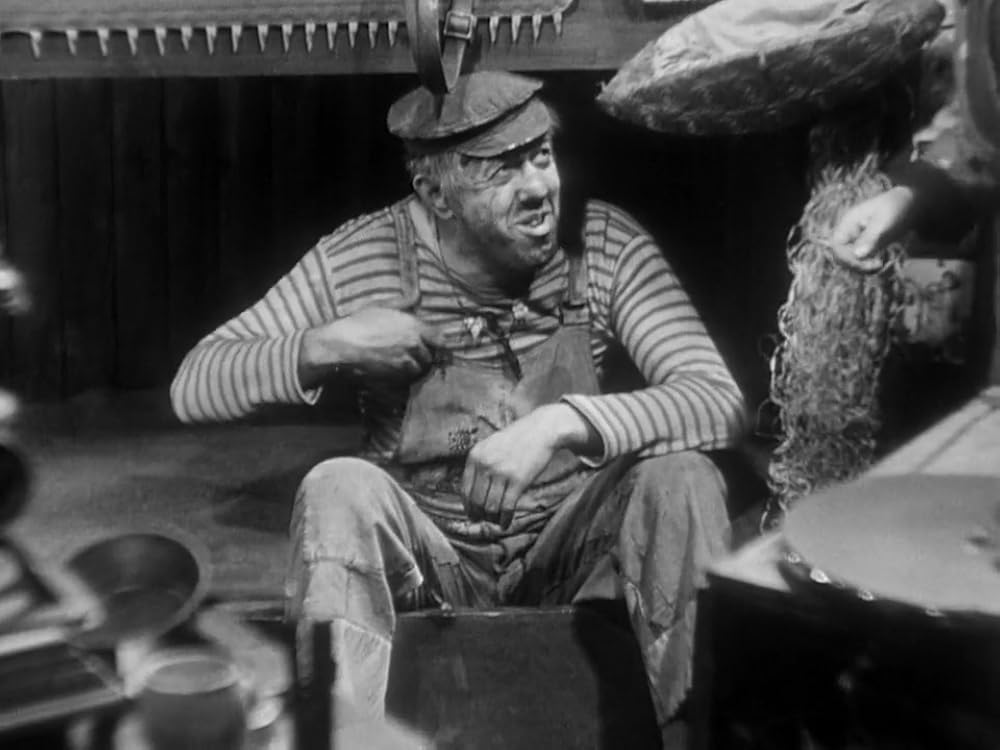
There is, however, no doubt about the partnership between the two actors. Tom Courtenay, who had played Norman on stage, is extraordinary. With his flamboyant hands and a voice divided between camp, whiny and ingratiating, constantly reaching for the bottle to power through the stress, Norman is as loyal, dutiful and comforting and he can be waspish, bitter, selfish, possessive and cruel. Courtenay can switch from coaxing Sir like a recalcitrant child, to throwing a potential rival for Sir’s attention to the wall and threatening all manner of damnation. It’s an astonishingly multi-layered performance, with Courtenay shrewd and brave enough to avoid making Norman a fully sympathetic figure but someone so soaking in desperation that even at his most self-pitying you feel for his desolation and emptiness.

Alongside him, Albert Finney is imperiously brilliant as Sir (playing a role almost 25 years older than him). Finney’s Sir is magnetic (they may grumble about him, but in person the company treat him with awe) and charismatic (his booming voice carries such power, it can even stop a departing train). But he’s also selfish, cruel, childish and intensely vulnerable. He’s got all the egotism of the actor (“The footlights are mine and mine alone. You must find what light you can.”), the productions revolve around him (he even continues to direct mid-performance, muttering instructions from Othello’s death bed). But he’s teetering, his mind crumbling, constantly looking to Norman for assurance, Finney living Sir’s fear at the approaching undiscovered country.

Both actors are extraordinary in a play that understands the addictive power of theatre. The Dresser avoids the trap of making Sir an Old Ham: in fact, the production we see (for all its old fashioned air) contains a performance of real power from Sir, rousing himself to touch something transcendent. Of all his 227 Lear’s this might be finest. Cynical technicians and wounded pilots weep openly. Thornton (Lockwood West), an ageing second-rate actor hastily promoted to Fool, talks of how the part has made him hungry for more. Oxenby (a marvellously louche Edward Fox), the youngest company member, clearly is ready for the new era (he carries a script full of bad language he longs to stage) but even he (after an initial point-blank refusal) throws himself into the backstage effort to create the storm. For all the rivalries, when the play is on, everyone briefly feels part of the same team working towards the same goal.

It’s a film with a melancholic feeling of an era coming to a close. It’s also one that punctures the character’s illusions. Sir is a star, but there are greater stars (with real knighthoods) in London; Norman may feel like his relationship with Sir is special, but Sir’s relationship with Madge (a brilliant Eileen Atkins, unflappably loyal and deeply pained under her professionalism) predates his and is more genuine. But it’s also one that understands the transformative power of live theatre. With stunning performances by Finney and Courtenay, backed by a marvellous, faultless cast it’s one of the finest films about theatre ever made.

The Goodbye Girl (1977)

The Goodbye Girl (1977)

Some funny lines isn’t quite enough for this romantic comedy to work as well as it should

Director: Herbert Ross

Cast: Richard Dreyfuss (Elliot Garfield), Marsha Mason (Paula McFadden), Quinn Cummings (Lucy McFadden), Paul Benedict (Mark Bodine), Barbara Rhoades (Donna Douglas), Nicol Williamson (Oliver Fry)

Working as a performer sucks. There’s no money and who knows when the next job is round the corner? It’s even tougher when you are forever unlucky in love. That’s the case for semi-retired dancer Paula McFadden (Marsha Mason). She’s been jilted twice by actors who disappear for a big break somewhere else, leaving only a cursory apology behind. It makes being a single mother to precocious-but-vulnerable ten-year-old Lucy (Quinn Cummings) even harder. Harder again is that her recent awful boyfriend, as a parting gift, sublet their apartment without her knowledge to Elliot Garfield (Richard Dreyfuss), an actor as neurotic as Paula, arriving in New York for his big break. Paula refuses to leave her home and the two kick off a territorial feud, which settles into a truce and a flat share. But could it lead to anything else?

It probably won’t be a surprise to say yes it does, in this sharply written film from Neil Simon, crammed with fast-paced, theatrical, gag-filled dialogue which keeps the film’s pace up without really converting it into something real. The main problem with The Goodbye Girl is that it’s hard to believe in, or really care for, either of its two lead character. I don’t think it’s an exaggeration to say both of them would be incredibly hard work to live with. After all, they can frequently be rather trying just to watch. Simon makes them both brittle, neurotic, high-strung and prone to performative bursts of euphoria and rage. Both can swing on a six-pence between these. It’s probably meant to make them the perfect match, like a feuding Bogart (who Garfield impersonates at one point) and Bacall, but after a while just starts to wear you down. You want to give both of them a bit of a shake and say “pull yourself together!”

The ability to stick with the film revolves around how charming you find both performers. Here, Richard Dreyfuss has the definite advantage. Coming off a hot-streak that had seen almost every film he had made turn into a smash hit, Dreyfuss’ performance made him (at 29) the youngest winner of the Best Actor Oscar. A late replacement for a fired Robert De Niro (can you even begin to imagine De Niro’s deadpan intensity working here?), the part is a perfect match for Dreyfuss’ youthful, madcap energy. He seizes on the rat-a-tat dialogue, embraces Garfield’s zany love for New Agey thinking (yoga, guitar and sleeping “buffo”) and bounces around the film as likely to make monkey noises while euphorically chinning up on a door frame as he is to play sweet imagination games with young Lucy. He brings a lot of charm to a highly strung, difficult man, uncovering a lot of his essential decency and kindness.

He actually settles more into the difficult balance than Marsha Mason, the person (Simon’s wife) who the film was written for. Mason never really manages to find the softness and likability in this role. It’s not entirely her fault: while the point is that Paula is a woman with serious trust issues, the film never gives her a moment of calmness or reflection to open up about this. Instead, it takes a lazier route of having this turn her into an abrasive comic character, the sort of person who responds to a “morning after” with a furious expectation of betrayal. Mason never quite manages to find a softness or likeability under this prickly defensiveness. Interestingly, for all the project was written for her, she has few of the truly funny lines and is effectively the obstacle that must be fixed rather than having the more engaging role of charming disrupter.

To be honest there is not a lot of chemistry between the two. Simon so enjoys the competitive dialogue feuding over territory, bills and who will have what room and when, that he rather forgets to  show them actually falling in love. In fact, he ends up relying on the age-old formula of a precocious, New York Times reading child being the bridge to bring them together. Quinn Cummings is rather good as the sort of kid who only exists in the movies, as adept with the witty retort as the adults. But between Elliot and Paula, the romance always feels a bit too inevitable rather than natural, the eventual thawing occurring swiftly rather than feeling it has developed naturally and gently.

It’s part of the slightly formulaic nature of The Goodbye Girl. It’s a highly safe film, with a very conventional romantic storyline, that bubbles along to a happy ending. You can feel the box-ticking from scene-after-scene, just as you can feel the inevitability of its happy ending. It’s also overly theatrical, feels constrained by its location and never quite light enough on its feet. There are a few too many stand-up rows around the apartment block (their poor neighbours) and Herbert Ross’ direction struggles as much as Simon’s script to give us a reason to really root for this couple.

There are though some decent digs at the working life in the arts. Paula, trying to get back into the dancing game, is hideously off-the-pace and takes a job as an enthusiastic glamour-girl flogging Japanese cars at trade show. Elliot is forced to fall back a doorman gig at a strip club. It’s a tough old trade, especially as Elliot’s big break in New York falls apart after he is forced by a pretentious, talentless director to perform Richard III as a limp-wristed, 1970s stereotype of a gay man, mincing around and lisping his lines to the ridicule and disgust of audiences and critics. This comic highlight feels a little awkward now (the joke is the stereotyped gay behaviour, rather than the appalling idea, making it’s a little uncomfortable to watch at times, rather as if Elliot was being made to play it in black face).

The Goodbye Girl just isn’t quite charming or likeable enough and its characters are never people we really end up warming to or rooting for. Its sharp dialogue ends up making them feel less like real people and more like theatrical characters, bouncing off each other for effect. Dreyfuss comes off best here, but Ross’ direction is uninspired, its romantic coupling never really convincing and it tends to rather overstay its welcome.

Le Mépris (1963)

Le Mépris (1963)

Godard’s film mixes virtuoso film-making with what feels a hard contempt for audience and characte

Director: Jean-Luc Godard

Cast: Brigitte Bardot (Camille Javal), Michel Piccoli (as Paul Javal), Jack Palance (Jeremiah Prokosch), Giorgia Moll (Francesca Vanini), Fritz Lang (Himself), Jean-Luc Godard (Lang’s assistant director), Linda Veras (Siren)

The title translates as Contempt and, to be honest, it’s hard not to feel a bit of the contempt when watching. Of all the Great Directors, the one I find the hardest to like is Godard. When you settle down to watch Godard, it’s hard not to escape the feeling you are steeling yourself to be looked down on. Godard wants you to know he’s watched more, read more and thought more than you about everything. Godard is playing out his fantasy of being a Hollywood director and a Great Artiste and wants you to know it. In fact, the further you move away from his debut À Bout de Souffle, the more his films become (for me) overly pleased-with-themselves statements rather than actual films.

Paul Javal (Michel Piccoli) is a writer, who wishes he could be producing great novels or plays, but is actually banging out crapola dialogue to fill American producer Jeremiah Prokosch’s (Jack Palance) Odyssey-opus, a film its director (Fritz Lang, one of Godard’s idols, playing himself) is trying to turn into art rather than the cheap sword-and-sandals epic Prokosch wants. But by taking the shilling, Paul earns the contempt of his glamourous wife Camille (Brigitte Bardot), who sleepwalks her way into an affair with Prokosch. Things come to head (as such) at Prokosch’s villa on Capri.

It was shot with a larger budget and a more controlling producer than any previous (or subsequent Godard film). God alone knows what they made of this – one suspects them reacting rather like Palance’s tantrum-filled producer when he inspects the arty dailies of statues and coastlines Lang has shot (“You lied to me Fritz!”). On some level Le Mépris is Godard playing a joke on his money men. The want a steamy relationship film, with plenty of Bardot on display? Have a slow series of elliptical conversations, a languid (but wonderfully filmed) argument scene in which Piccoli takes both a bath and a crap, and here are some deliberately functional shots of Bardot’s naked back on the bed while she and Piccoli intone empty dialogue. For a film that involves extra-marital sex, groping, a gun and a fatal car crash it’s deliberately unsensational – as if Godard was showing the money men he could ram anything they demanded into the film and still make it feels like a ticking-off.

To be honest, there’s also in Le Mépris a bit of Godard’s contempt for himself for selling out, as if he realised part way through he’d made a terrible mistake by taking the money and wanted everyone to know it. You can see it in the film’s visuals, that turn the demanded cinemascope wideness (which Godard loathed) into a series of pan-and-scan shots and tight close-ups that wipe-out the impact of the grand visuals. Godard may appear in the film himself, but is real substitute is his hero Lang, here a visionary polygot (the only person who can speak the full hodgepodge of languages the characters communicate in), who gives voice to Godard’s most closely held views about cinema and the only person completely assured and comfortable with what he is doing.

Not that there isn’t an awful lot to admire in Godard’s work here. As fits a director steeped in a love of film, Le Mépris drips with homages to cinema technique. Godard speaks the credits – Welles in Magnificent Amberson’s style – over an opening shot which is itself of an opening shot filming a crew filming the opening tracking shot of Le Mépris. There are touches of Ford, Hawks and Lang in the stylistic love of Godard’s heroes. Paul dresses like a mix of Sam Spade and Dean Martin and loves chatter about old movies (he’s very excited about the prospect of catching an old Hawks film). The tattered film studio is lined with film posters (including those depicting Godard’s former wife Anna Karina). We see the intricate procedures of film-making and post-production and Bardot even reads books about cinema in her downtime.

There is some astonishing film-making – Godard may be self-important, but he can shoot a film with grace. The tracking shots through the seemingly abandoned Cinecittà studios in Italy are beautifully done, as is the intriguing framework of the unique Capri villa and its striking staircase. The film’s highlight (and finest sequence by far, as well as its most human) is its middle act, a virtuoso choreographed sequence in the Javal’s under construction apartment (including French doors without glass, bathrooms without doors and intermittent furniture). The camera moves, brilliantly at a distance, to constantly frame these two characters interspersed between doorways, or kept apart by walls in the centre of the frame, barely ever managing to ever be in the frame together, the disjointed visual language perfect for communicating a conversation where they are never on the same page. It’s a superb way of filming partly an argument, partly a drifting out of love, partly a fumbling attempt to find common ground. There is a real emotional reality to this scene, something that isn’t present anywhere else in the film.

Even there though, it works because of its distance. Le Mépris is a strikingly distant film, Godard presenting a deliberately cold, hostile film that lacks any real warmth, empathy, wit or lightness, like he’s challenging us to swallow down this filmic medicine of cinematic inspiration and beautiful framing. Le Mépris also seems to despise its characters. Palance’s film producer (and this is a deeply uncomfortable performance from Palance, who constantly looks like he’s woken up suddenly and doesn’t know where he is) is a boorish philistine and an idiot. Piccoli’s writer is a shallow, preening  lightweight who wants to be a Godard but is a hack with pretensions.

Interestingly the most intriguing character in it is Bardot – but she remains elliptical, perhaps because part of Godard can only see her as some sort of trophy or status symbol, something Paul fails to ‘deserve’ because he can’t maintain his principles. Her motivations remain a mystery and one wonders if there is much place for them in Godard’s masculine view of the world, where women are either secretaries or muses. Camille herself seems to see herself as sort of property, suspecting her husband of pimping her to a producer but then seemingly embracing that in any case (despite her contempt for Prokosch). There is an air in Le Mépris that Godard can’t really imagine either Bardot or Giorgia Moll’s Francesca (a striking presence, who has the best running joke with her rudimentary translations of Javal’s dialogue for Prokosch) as collaborators or equals to either the brutish producer or the tortured men, but people who can only be defined by their attitudes towards them.

Above all, Le Mépris wants you to know your place when watching it. To admire it, but also to know that you wishes for something more dramatic or humane are shallow, base desires. That really you should be seeking out the sort of arty stuff Fritz Lang is shooting on the island, not the page-turning nonsense the executives wanted. It’s an attitude that pours out of the film, and after a while its one that makes you want to spend your time elsewhere. Godard may be a clever guy, but he can be very poor company.

La Ronde (1950)

La Ronde (1950)

Ophüls masterful film is a cheeky end-of-pier comedy in smart clothes and subtle musing on filmmaking

Director: Max Ophüls

Cast: Anton Walbrook (Master of Ceremonies), Simone Signoret (Léocadie, the Prostitute), Serge Reggiani (Franz, the Soldier), Simone Simon (Marie, the Chambermaid), Daniel Gélin (Alfred, the Young Man), Danielle Darrieux (Emma Breitkopf, the Married Woman), Fernand Gravey (Charles Breitkopf, the Husband), Odette Joyeux (Anna, the Young Woman), Jean-Louis Barrault (Robert Kuhlenkampf, the Poet), Isa Miranda (Charlotte, the Actress), Gérard Philipe (the Count)

La Ronde is the sort of film many would describe as elegant and sophisticated, with its Edwardian Viennese setting, gorgeously expansive costumes and luxuriant sets. Which is perhaps part of Max Ophüls’ joke: because, in many ways, La Ronde is a sublimely naughty end-of-the-pier show where a suave Master of Ceremies (a gloriously arch Anton Walbrook, standing in for Ophüls himself), manipulates events and people to present a chain of sexual encounters that eventually loop back round through the partners to the prostitute (Simeone Signoret) who started it all. Only of course she didn’t start it, since Walbrook’s MC instructed her exactly which soldier she was to invite for a romantic knee-trembler. La Ronde is a sex comedy of manners – but it’s also an intriguing commentary on the act of film-making.

Walbrook’s MC is essentially the film’s director. He all but tells us this, as Ophüls camera (in one of the director’s signature long, roving camera moves) tracks him walking in evening garb in front of what looks suspiciously like a painted backdrop… and then is immediately revealed to indeed be one as Walbrook guides us past a film camera onto another set, changes his clothes and begins handing out instruction to actors. Over the course of the film, Walbrook will guide characters between sets (through a blatant back-stage area), take on a series of small roles to directly intercede in the action and even snip out the film of La Ronde’s most smutty part. He’ll even cue the sun to rise. Walbrook’s archly artificial performance is crammed with assurance, charm and a supremely entertaining streak of naughtiness: for what is a film director but a sort of enthusiastic child who enjoys playing out his stories for us.

It makes sense that La Ronde takes place in a curiously artificial world, that often seems to be only populated by whichever pair of lovers Walbrook happens to have introduced. Its design echoes the circular narrative of the piece. Ophüls camera frequently moves through circular tracking shots, while the frame is stuffed with circles. From the merry-go-round the MC rides on, circles are everywhere: courtyards and rooms are circular, stair-cases and walkways roll round on themselves, characters are framed through chandeliers or circular gaps in ormolu clocks. The set seems to loop around as much as the story does, characters being forced into rotation, as if they were constantly riding the merry-go-round (which indeed we see, at one point, kitted out with a whole dinner service) not in control of their own fate but driven forward by endless momentum.

It’s an endless momentum that crashes only once, the MC’s roundabout breaking down when a young lover suffers from a bout of impotence. It’s telling that, during this sequence, we get the closest we get to an adult conversation between two lovers, Daniel Gélin’s eager-to-please young man and the relaxed worldliness of Danielle Darrieux’s married woman. Just as it’s telling that the only encounter not punctuated by sex, but instead by an earnest conversation that there are more important things in a marriage than the buzz of passion, is between Darrieux and Fernand Gravey’s fusty but strangely vulnerable Husband. Aside from that, these encounters have a constant frission of desire beneath them, only rarely punctuated by more complex emotions.

In fact, there is something very stereotypically French about a film that essentially says a constant parade of sexual encounters between willing partners is perfectly harmless, so long as eyes are open and honesty prevails. It’s also striking how, from encounter-to-encounter, characters switch from seduced to seducer.  Simone Simon’s Chambermaid goes from the arms of Serge Reggiani’s enthusiastic soldier (whose interest in her declines almost immediately after the deed), to shamelessly provoking the lust of Gélin’s young man who then immediately, enthusiastically, courts Darrieux. Odette Joyeux coquettishly plays along with Gravey’s extra-marital tumble and then finds herself swept up with Barrault’s poet who is putty in the hands of Miranda’s actress.

It all eventually loops us back round to Simone Signoret’s prostitute: and if there is anything in La Ronde about the cost of love, it seems fitting it should be connected to the loneliness of the only person to whom this is a professional obligation rather than a choice. Signoret makes the woman surprisingly melancholy and regretful, more desperate perhaps than anyone else for a taste of genuine connection: be it from Reggiani’s soldier (to whom she offers a free romantic encounter, which he only accepts so long as it doesn’t involve a ten minute walk to her apartment) or later from Philipe’s count, where she seems not even surprised that he awakens claiming to not remember a thing about the night before. La Ronde bookends a frequently light, sexy, cheeky film with its most tragic character (another sign of Signoret’s skill at pained neglect).

Aside from this, it’s a surprisingly light, playful and cheeky confection – one which relies on its impact from the masterfully graceful filming it receives from Ophüls, at the top of his game here. No point is made too forcefully, every scene smoothly but relentlessly builds towards a comic highlight, each shot is framed to perfection, from the gliding tracking shots to the Dutch angles and circulatory framing. This is a director’s film like few others: so, its immensely fitting it should, with Walbrook’s character, effectively make the director the key character, delightedly telling us every part of his design, guiding our eyes where to look and manipulating and positioning the other characters so they add to our enjoyment. There are few films quite like La Ronde in that all this is done with an astonishing lightness of touch. Nothing here is to be taken too seriously, or to be hammered home too hard. Instead, it’s a whimsical naughty story intended to leave you with a grin on your face when you recount it to friends.

Five Easy Pieces (1970)

Five Easy Pieces (1970)

Nicholson gives a scintillating performance as a self-loathing soul in this searing drama

Director: Bob Rafelson

Cast: Jack Nicholson (Robert Eroica Dupea), Karen Black (Rayette Dipesto), Susan Anspach (Catherine Van Oost), Lois Smith (Partita Dupea), Ralph Waite (Carl Fidelio Dupea), Billy “Green” Bush (Elton), Irene Dailey (Samia Glavia), Toni Basil (Terry Grouse), Helena Kallianiotes (Palm Apodaca), William Challee (Nicholas Dupea), John Ryan (Spicer)

Robert Dupea (Jack Nicholson) is a man out of place. From a family of musical prodigies, groomed from childhood to become a leading concert pianist, he now works as an oil rigger out West. Turns out Robert isn’t content anywhere: he’s too rebellious for the upper-classes, too contemptuous to be part of the working classes. His life is one of running away, moving from place-to-place, avoiding emotional responsibilities, commitment and honesty, constantly seething with feelings he lacks the ability to process, unable to know what he wants with a self-destructive chasm a mile wide that swallows anyone that gets near it.

Five Easy Pieces is an intelligent, quiet, thoughtful character-study of a man who defies all possible labels and doesn’t fit comfortably into any pigeon-holes. Heavily influenced by the European artistes of the 60s, it’s a film that engages with class alienation in America more than almost any other, placing at its heart a man who refuses to compromise with anyone (to his own detriment) and whose selfishness and willingness to hurt other people constantly challenges the level of sympathy we are willing to give him. Despite this though, Rafelson has created a quiet domestic tragedy, with a man at its heart who is both unbearably selfish and unendingly vulnerable and scared at the world, who only knows how to react with bursts of resentful anger and whose instinct is to run away when things get either too tough or too involved.

Five Easy Pieces splits into three acts: the first sees Robert quietly snobbily bucking up against the working-class environment he’s chosen to live in; the second the long car journey to his family home while he struggles to find outlets for his tension; the third his return to the upper-class environs of his family where he can’t hide his contempt for their closeted privilege. What’s consistent is Robert is as constantly ashamed of himself as he is of his environs: a man of class and culture who longs to be working joe, a manual worker who yearns for sophistication around him. Robert’s tragedy is he can never square this circle.

It’s a role that calls for an actor at the top of his game, which it gets with Jack Nicholson. There is a moment near the start, where Nicholson does a little half-pivot skip while going round a corner into this home. It’s a small moment, but it’s a flash of something playfully real and endearingly childish that explains why we bear with him, even while he’s blowing things up around him. Nicholson’s performance is extraordinary. Robert has a constant simmering tension to him, but it’s a born of deep personal discontent. Nicholson perfectly brings to life a man constantly trying to seem assured, carefree and cool – but always with a nervous fear of what people think of him. Do the workers, and his friend Elton, realise he’s as posh as he is? Will his family look down on his waitress girlfriend?

One of the things Nicholson brings so brilliantly to Robert is his unease with talking: sure, he can barnstorm a self-righteous speech, but when it comes to actual conversation or talk about personal emotions he’s as timid and lost as a child. The idea of having roots is anathema to him (he’s perfectly willing to abandon Rayette when he thinks she’s pregnant) but it’s clear he also wants to belong somewhere. His tragedy is, as soon as he finds himself part a community all he feels is contempt for them – as if, like Groucho Marx, he can’t imagine joining a club that would have him as a member.

In fact, it becomes clear, Robert probably hates himself. He dismisses his accomplishments: inveigled into playing piano by his brother’s fiancée Catherine (a lovely performance of misguided sensitivity by Susan Anspach) he responds to her emotional reaction with dismissive rage, belittling his playing and questioning her feelings. It’s a mark, again, of the vulnerability and sensitivity Nicholson balances in this tempestuous, angry man that after this takedown we still believe she goes to bed with him. The tension of Robert’s loathing of himself never needs much to be released in anger against strangers: be it ranting at cars pointlessly blaring horns in traffic jams or an argument with a waitress who refuses to bring him toast that ends with glasses thrown petulantly across the floor. Nicholson never lets the pain of dealing with the world escape from Robert’s eyes, even when he’s at his most abrasive.

Robert’s inability to place himself in either world is perfectly captured in his relationship with waitress and would-be country singer Rayette, played with an endearing honesty and affection by Karen Black. If Robert could compromise, they would be well-suited: they both love music and share a sense of rootlessness. But he makes no real room for her. He can’t hide her contempt for her liking the wrong sort of music (country is no Chopin), he fills their house with little touches of art and scoffs at her inability to appreciate them; then he defends her working-class-honesty against his family’s snobbish friends while also being mortified by her artless, uneducated conversation among his family.

Fundamentally, Robert only cares for Rayette in relation to how she makes him feel about himself in the moment. She is a safe, undemanding comfort blanket – someone who will accept anything from him. His first instinct before returning to his family is to ditch her. Nicholson (in a superb sequence) shamefacedly mutters apologies between angry self-justifications while packing his bags – before a burst of self-loathing in his car sees him return. He then drags her across country only to park her at a motel while he sees ‘how things are’, clearly hoping she may decide to head home without him. When she instead turns up, he’s as ashamed of her as he as of his family’s wealth.

Like his siblings, Robert has never really grown up. His kindly sister Tita (a beautiful performance by Lois Smith) bounces around with enthusiasm, twiddles with a ping-pong bat with teenage glee while she flirts with her father’s nurse and seems utterly cossetted from the outside world. His brother Carl (Ralph Waite, very funny) has the distracted air of a natural eccentric, who has never had to engage with reality. But are they that different from Robert, who has a childish tantrum when he loses a bowling match? Five Easy Pieces suggests a difficult, distant relationship with his domineering father (now confined to silence in a wheelchair) in an astonishingly raw scene from Nicholson – but goes far from giving Robert a pass, his self-destructive self-loathing being far more of an inbuilt character flaw.

In fact, Robert suffers from an ennui that suggests he will never be happy wherever he lands – and he lacks either the self-knowledge or willingness to change. Above all, and it’s clear in every frame of Nicholson’s searing performance, Robert is a man who despises some part of himself so much, that all he can feel for those who show him warmth is contempt. After all, if he doesn’t care for him, why would anyone do so? It’s a pattern that is destined to leave him forever unhappy, forever hurting people, for ever lashing out. It’s a brutal honesty that makes Five Easy Pieces in some ways one of the bleakest, least hopeful of American films.