Category: Relationship film

The Dresser (1983)

The Dresser (1983)

One of the best films about the magic and trauma of theatre, with two powerhouse lead performances

Director: Peter Yates

Cast: Albert Finney (Sir), Tom Courtenay (Norman), Edward Fox (Oxenby), Zena Walker (Her Ladyship), Eileen Atkins (Madge), Michael Gough (Frank Carrington), Lockwood West (Geoffrey Thornton), Cathryn Harrison (Irene), Betty Marsden (Violet Manning), Shelia Reid (Lydia Gibson), Donald Eccles (Godstone), Llewellyn Rees (Brown)

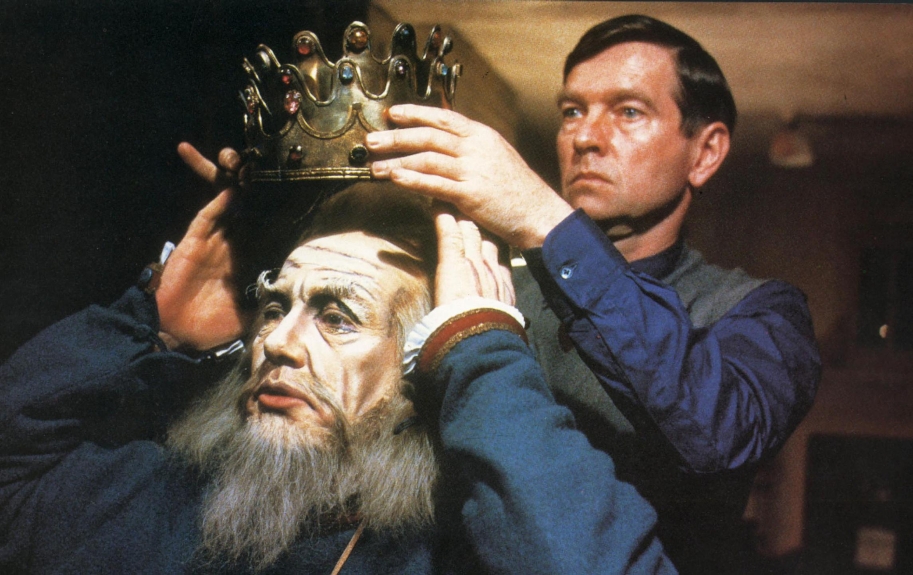
For centuries British theatre was run by Actor-Managers. Stars with complete control of their companies, where they (and their wives) played the best roles – sometimes years past the point where it was still suitable – until the next generation emerged to build their own companies. The Dresser shows this world’s dying days, at the height of the war, when Sir (Albert Finney) a legendary actor is shepherding an aged company around the provinces to perform, while his health and mental sharpness teeter, Lear-like, on the edge of the abyss.

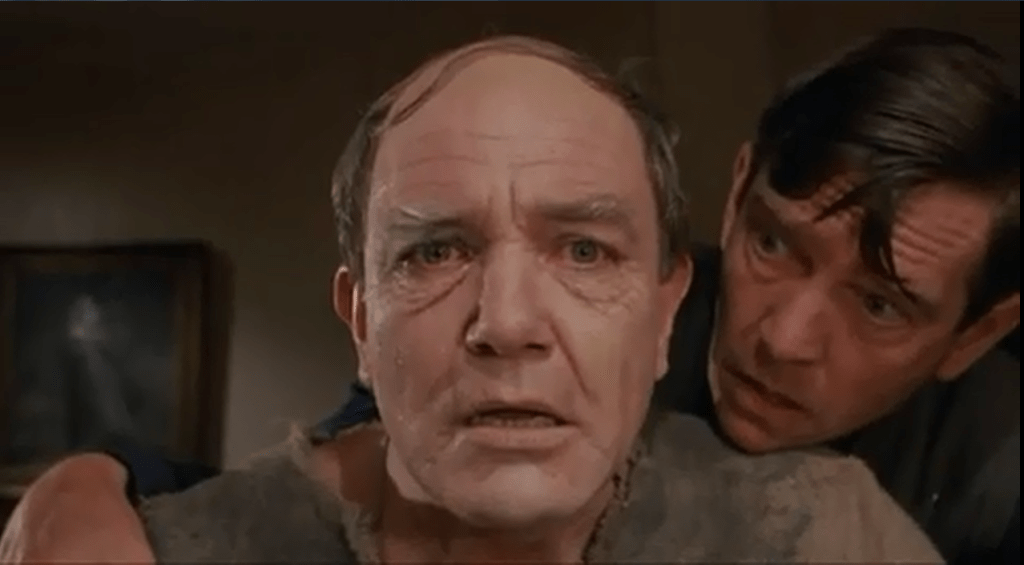
If Sir is Lear, his Fool is Norman (Tom Courtenay) his dresser. A waspishly camp man whose entire life revolves around every inch of Sir’s whims, shepherding, coaxing and bullying the man onto the stage, somewhere between a valet, son and nursemaid. Sir remains a force-of-nature, toweringly bombastic egotist and man of magnetic charisma, with an all-consuming, obsessive love for the theatre. The Dresser takes place in January 1942 in Bradford, largely during a performance of King Lear which Sir’s declining health has placed on a knife-edge. Can Norman hold Sir together to give life to Shakespeare’s greatest tragedy for the 227th time?

The Dresser is based on Ronald Harwood’s play, which was semi-based on Harwood’s experiences as dresser then business manager to Donald Wolfit, one of the final breed of the old-school actor-managers Sir represents. (Harwood hastened to add, neither he nor Wolfit were portraits of Norman or Sir). While it’s a sometimes acidic look at the backstage politics and egos of touring theatre, it also richly celebrates the power of theatre and the momentary (and the film is unsentimental enough to show it is momentary) sense of family that can develop in theatre, that can end with that final curtain. In other words, The Dresser understands the brief, bright flame of theatre can be – and what a transformative feeling and dizzy drug it can be.

Both Sir and Norman are addicted to the grease-paint, their whole lives revolving around theatre and that elusive search for perfection. Even if Sir’s health is failing and sanity is crumbling – pre-show, Norman finds him raging in the streets of Bradford like Lear in the storm, only barely aware of who he is – ‘Dr Greasepaint’ can still briefly restore him to the man he was, spouting Shakespeare, bemoaning and relishing the huge weight of bringing art to life night-after-night. Norman is equally consumed by theatre: he can barely speak to others (such as train manager or a baker) without his conversation being littered with impenetrable theatre-speak. He’s as well-versed in Shakespeare as Sir is and flings himself into his backstage tasks with the same gusto Sir tackles a soliloquy.

These two have a symbiotic relationship: Sir for the support and dedication Norman exerts to get him on stage, Norman for the glorious world (and purpose) Sir gives him access to. Yates uses mirrors, framing and shared reflections to frequently frame these characters together, visually linking them in a Bergmanesque way as elements of the same personality. But, the relationship is never as straightforward as that, complicated by underlying feelings on both sides. Norman’s homosexuality – over-looked in a world where such feelings are a crime (another member of the company has recently been fired for what sounds like cottaging) – complicates his obsession with Sir, while Sir’s affection for Norman always has the hint of a Lord’s affection for his valet: a man he will confide in, but would never imagine inviting to dinner.

This complex interplay of both characters urgently needing the other, but with an underlying imbalance in their level of true emotional engagement is a subtle dance brilliantly handled throughout Yates’ and Harwood’s film: so much so, it is a surprise to many audiences that Sir utterly fails to mention Norman at all in his draft autobiography even though it’s about as likely as Churchill name-checking his butler in his. Sir and Norman may be partners in the same task – creating theatre – but Norman’s mistake is to see himself as an equal, something Sir never truly believes he is.

There is, however, no doubt about the partnership between the two actors. Tom Courtenay, who had played Norman on stage, is extraordinary. With his flamboyant hands and a voice divided between camp, whiny and ingratiating, constantly reaching for the bottle to power through the stress, Norman is as loyal, dutiful and comforting and he can be waspish, bitter, selfish, possessive and cruel. Courtenay can switch from coaxing Sir like a recalcitrant child, to throwing a potential rival for Sir’s attention to the wall and threatening all manner of damnation. It’s an astonishingly multi-layered performance, with Courtenay shrewd and brave enough to avoid making Norman a fully sympathetic figure but someone so soaking in desperation that even at his most self-pitying you feel for his desolation and emptiness.

Alongside him, Albert Finney is imperiously brilliant as Sir (playing a role almost 25 years older than him). Finney’s Sir is magnetic (they may grumble about him, but in person the company treat him with awe) and charismatic (his booming voice carries such power, it can even stop a departing train). But he’s also selfish, cruel, childish and intensely vulnerable. He’s got all the egotism of the actor (“The footlights are mine and mine alone. You must find what light you can.”), the productions revolve around him (he even continues to direct mid-performance, muttering instructions from Othello’s death bed). But he’s teetering, his mind crumbling, constantly looking to Norman for assurance, Finney living Sir’s fear at the approaching undiscovered country.

Both actors are extraordinary in a play that understands the addictive power of theatre. The Dresser avoids the trap of making Sir an Old Ham: in fact, the production we see (for all its old fashioned air) contains a performance of real power from Sir, rousing himself to touch something transcendent. Of all his 227 Lear’s this might be finest. Cynical technicians and wounded pilots weep openly. Thornton (Lockwood West), an ageing second-rate actor hastily promoted to Fool, talks of how the part has made him hungry for more. Oxenby (a marvellously louche Edward Fox), the youngest company member, clearly is ready for the new era (he carries a script full of bad language he longs to stage) but even he (after an initial point-blank refusal) throws himself into the backstage effort to create the storm. For all the rivalries, when the play is on, everyone briefly feels part of the same team working towards the same goal.

It’s a film with a melancholic feeling of an era coming to a close. It’s also one that punctures the character’s illusions. Sir is a star, but there are greater stars (with real knighthoods) in London; Norman may feel like his relationship with Sir is special, but Sir’s relationship with Madge (a brilliant Eileen Atkins, unflappably loyal and deeply pained under her professionalism) predates his and is more genuine. But it’s also one that understands the transformative power of live theatre. With stunning performances by Finney and Courtenay, backed by a marvellous, faultless cast it’s one of the finest films about theatre ever made.

The Goodbye Girl (1977)

The Goodbye Girl (1977)

Some funny lines isn’t quite enough for this romantic comedy to work as well as it should

Director: Herbert Ross

Cast: Richard Dreyfuss (Elliot Garfield), Marsha Mason (Paula McFadden), Quinn Cummings (Lucy McFadden), Paul Benedict (Mark Bodine), Barbara Rhoades (Donna Douglas), Nicol Williamson (Oliver Fry)

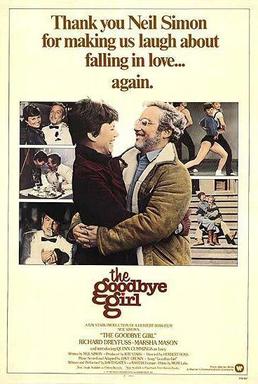
Working as a performer sucks. There’s no money and who knows when the next job is round the corner? It’s even tougher when you are forever unlucky in love. That’s the case for semi-retired dancer Paula McFadden (Marsha Mason). She’s been jilted twice by actors who disappear for a big break somewhere else, leaving only a cursory apology behind. It makes being a single mother to precocious-but-vulnerable ten-year-old Lucy (Quinn Cummings) even harder. Harder again is that her recent awful boyfriend, as a parting gift, sublet their apartment without her knowledge to Elliot Garfield (Richard Dreyfuss), an actor as neurotic as Paula, arriving in New York for his big break. Paula refuses to leave her home and the two kick off a territorial feud, which settles into a truce and a flat share. But could it lead to anything else?

It probably won’t be a surprise to say yes it does, in this sharply written film from Neil Simon, crammed with fast-paced, theatrical, gag-filled dialogue which keeps the film’s pace up without really converting it into something real. The main problem with The Goodbye Girl is that it’s hard to believe in, or really care for, either of its two lead character. I don’t think it’s an exaggeration to say both of them would be incredibly hard work to live with. After all, they can frequently be rather trying just to watch. Simon makes them both brittle, neurotic, high-strung and prone to performative bursts of euphoria and rage. Both can swing on a six-pence between these. It’s probably meant to make them the perfect match, like a feuding Bogart (who Garfield impersonates at one point) and Bacall, but after a while just starts to wear you down. You want to give both of them a bit of a shake and say “pull yourself together!”

The ability to stick with the film revolves around how charming you find both performers. Here, Richard Dreyfuss has the definite advantage. Coming off a hot-streak that had seen almost every film he had made turn into a smash hit, Dreyfuss’ performance made him (at 29) the youngest winner of the Best Actor Oscar. A late replacement for a fired Robert De Niro (can you even begin to imagine De Niro’s deadpan intensity working here?), the part is a perfect match for Dreyfuss’ youthful, madcap energy. He seizes on the rat-a-tat dialogue, embraces Garfield’s zany love for New Agey thinking (yoga, guitar and sleeping “buffo”) and bounces around the film as likely to make monkey noises while euphorically chinning up on a door frame as he is to play sweet imagination games with young Lucy. He brings a lot of charm to a highly strung, difficult man, uncovering a lot of his essential decency and kindness.

He actually settles more into the difficult balance than Marsha Mason, the person (Simon’s wife) who the film was written for. Mason never really manages to find the softness and likability in this role. It’s not entirely her fault: while the point is that Paula is a woman with serious trust issues, the film never gives her a moment of calmness or reflection to open up about this. Instead, it takes a lazier route of having this turn her into an abrasive comic character, the sort of person who responds to a “morning after” with a furious expectation of betrayal. Mason never quite manages to find a softness or likeability under this prickly defensiveness. Interestingly, for all the project was written for her, she has few of the truly funny lines and is effectively the obstacle that must be fixed rather than having the more engaging role of charming disrupter.

To be honest there is not a lot of chemistry between the two. Simon so enjoys the competitive dialogue feuding over territory, bills and who will have what room and when, that he rather forgets to  show them actually falling in love. In fact, he ends up relying on the age-old formula of a precocious, New York Times reading child being the bridge to bring them together. Quinn Cummings is rather good as the sort of kid who only exists in the movies, as adept with the witty retort as the adults. But between Elliot and Paula, the romance always feels a bit too inevitable rather than natural, the eventual thawing occurring swiftly rather than feeling it has developed naturally and gently.

It’s part of the slightly formulaic nature of The Goodbye Girl. It’s a highly safe film, with a very conventional romantic storyline, that bubbles along to a happy ending. You can feel the box-ticking from scene-after-scene, just as you can feel the inevitability of its happy ending. It’s also overly theatrical, feels constrained by its location and never quite light enough on its feet. There are a few too many stand-up rows around the apartment block (their poor neighbours) and Herbert Ross’ direction struggles as much as Simon’s script to give us a reason to really root for this couple.

There are though some decent digs at the working life in the arts. Paula, trying to get back into the dancing game, is hideously off-the-pace and takes a job as an enthusiastic glamour-girl flogging Japanese cars at trade show. Elliot is forced to fall back a doorman gig at a strip club. It’s a tough old trade, especially as Elliot’s big break in New York falls apart after he is forced by a pretentious, talentless director to perform Richard III as a limp-wristed, 1970s stereotype of a gay man, mincing around and lisping his lines to the ridicule and disgust of audiences and critics. This comic highlight feels a little awkward now (the joke is the stereotyped gay behaviour, rather than the appalling idea, making it’s a little uncomfortable to watch at times, rather as if Elliot was being made to play it in black face).

The Goodbye Girl just isn’t quite charming or likeable enough and its characters are never people we really end up warming to or rooting for. Its sharp dialogue ends up making them feel less like real people and more like theatrical characters, bouncing off each other for effect. Dreyfuss comes off best here, but Ross’ direction is uninspired, its romantic coupling never really convincing and it tends to rather overstay its welcome.

Le Mépris (1963)

Le Mépris (1963)

Godard’s film mixes virtuoso film-making with what feels a hard contempt for audience and characte

Director: Jean-Luc Godard

Cast: Brigitte Bardot (Camille Javal), Michel Piccoli (as Paul Javal), Jack Palance (Jeremiah Prokosch), Giorgia Moll (Francesca Vanini), Fritz Lang (Himself), Jean-Luc Godard (Lang’s assistant director), Linda Veras (Siren)

The title translates as Contempt and, to be honest, it’s hard not to feel a bit of the contempt when watching. Of all the Great Directors, the one I find the hardest to like is Godard. When you settle down to watch Godard, it’s hard not to escape the feeling you are steeling yourself to be looked down on. Godard wants you to know he’s watched more, read more and thought more than you about everything. Godard is playing out his fantasy of being a Hollywood director and a Great Artiste and wants you to know it. In fact, the further you move away from his debut À Bout de Souffle, the more his films become (for me) overly pleased-with-themselves statements rather than actual films.

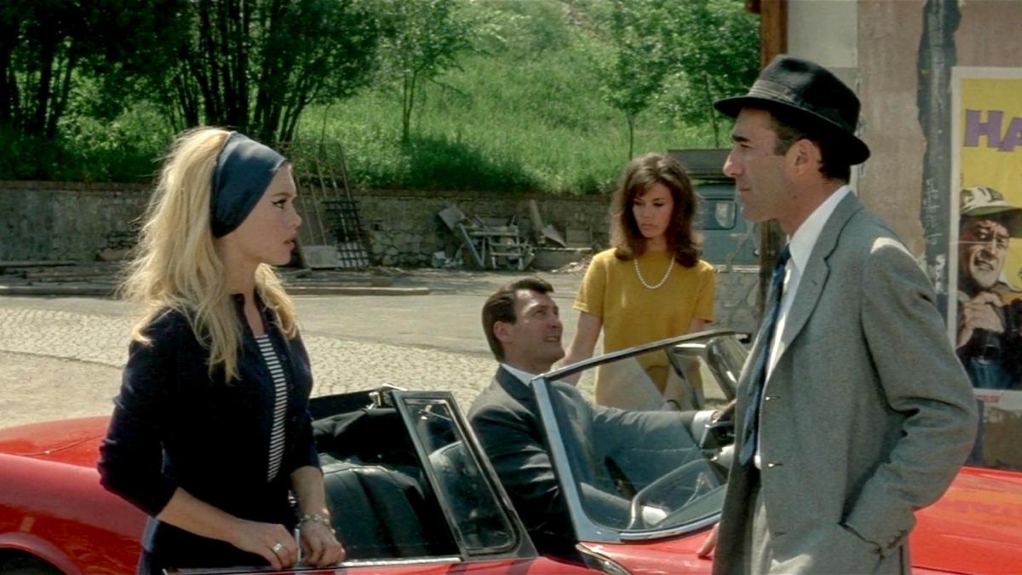
Paul Javal (Michel Piccoli) is a writer, who wishes he could be producing great novels or plays, but is actually banging out crapola dialogue to fill American producer Jeremiah Prokosch’s (Jack Palance) Odyssey-opus, a film its director (Fritz Lang, one of Godard’s idols, playing himself) is trying to turn into art rather than the cheap sword-and-sandals epic Prokosch wants. But by taking the shilling, Paul earns the contempt of his glamourous wife Camille (Brigitte Bardot), who sleepwalks her way into an affair with Prokosch. Things come to head (as such) at Prokosch’s villa on Capri.

It was shot with a larger budget and a more controlling producer than any previous (or subsequent Godard film). God alone knows what they made of this – one suspects them reacting rather like Palance’s tantrum-filled producer when he inspects the arty dailies of statues and coastlines Lang has shot (“You lied to me Fritz!”). On some level Le Mépris is Godard playing a joke on his money men. The want a steamy relationship film, with plenty of Bardot on display? Have a slow series of elliptical conversations, a languid (but wonderfully filmed) argument scene in which Piccoli takes both a bath and a crap, and here are some deliberately functional shots of Bardot’s naked back on the bed while she and Piccoli intone empty dialogue. For a film that involves extra-marital sex, groping, a gun and a fatal car crash it’s deliberately unsensational – as if Godard was showing the money men he could ram anything they demanded into the film and still make it feels like a ticking-off.

To be honest, there’s also in Le Mépris a bit of Godard’s contempt for himself for selling out, as if he realised part way through he’d made a terrible mistake by taking the money and wanted everyone to know it. You can see it in the film’s visuals, that turn the demanded cinemascope wideness (which Godard loathed) into a series of pan-and-scan shots and tight close-ups that wipe-out the impact of the grand visuals. Godard may appear in the film himself, but is real substitute is his hero Lang, here a visionary polygot (the only person who can speak the full hodgepodge of languages the characters communicate in), who gives voice to Godard’s most closely held views about cinema and the only person completely assured and comfortable with what he is doing.

Not that there isn’t an awful lot to admire in Godard’s work here. As fits a director steeped in a love of film, Le Mépris drips with homages to cinema technique. Godard speaks the credits – Welles in Magnificent Amberson’s style – over an opening shot which is itself of an opening shot filming a crew filming the opening tracking shot of Le Mépris. There are touches of Ford, Hawks and Lang in the stylistic love of Godard’s heroes. Paul dresses like a mix of Sam Spade and Dean Martin and loves chatter about old movies (he’s very excited about the prospect of catching an old Hawks film). The tattered film studio is lined with film posters (including those depicting Godard’s former wife Anna Karina). We see the intricate procedures of film-making and post-production and Bardot even reads books about cinema in her downtime.

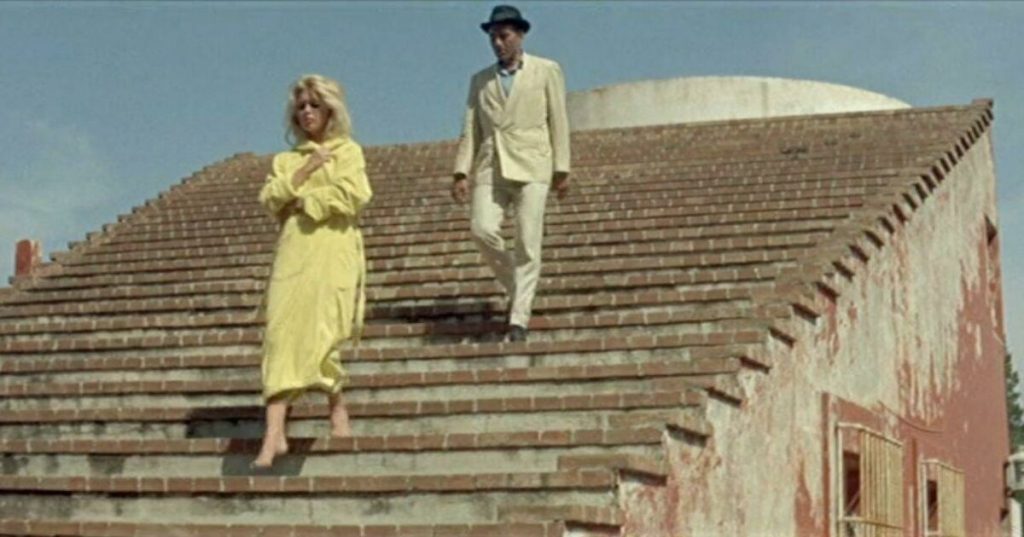
There is some astonishing film-making – Godard may be self-important, but he can shoot a film with grace. The tracking shots through the seemingly abandoned Cinecittà studios in Italy are beautifully done, as is the intriguing framework of the unique Capri villa and its striking staircase. The film’s highlight (and finest sequence by far, as well as its most human) is its middle act, a virtuoso choreographed sequence in the Javal’s under construction apartment (including French doors without glass, bathrooms without doors and intermittent furniture). The camera moves, brilliantly at a distance, to constantly frame these two characters interspersed between doorways, or kept apart by walls in the centre of the frame, barely ever managing to ever be in the frame together, the disjointed visual language perfect for communicating a conversation where they are never on the same page. It’s a superb way of filming partly an argument, partly a drifting out of love, partly a fumbling attempt to find common ground. There is a real emotional reality to this scene, something that isn’t present anywhere else in the film.

Even there though, it works because of its distance. Le Mépris is a strikingly distant film, Godard presenting a deliberately cold, hostile film that lacks any real warmth, empathy, wit or lightness, like he’s challenging us to swallow down this filmic medicine of cinematic inspiration and beautiful framing. Le Mépris also seems to despise its characters. Palance’s film producer (and this is a deeply uncomfortable performance from Palance, who constantly looks like he’s woken up suddenly and doesn’t know where he is) is a boorish philistine and an idiot. Piccoli’s writer is a shallow, preening  lightweight who wants to be a Godard but is a hack with pretensions.

Interestingly the most intriguing character in it is Bardot – but she remains elliptical, perhaps because part of Godard can only see her as some sort of trophy or status symbol, something Paul fails to ‘deserve’ because he can’t maintain his principles. Her motivations remain a mystery and one wonders if there is much place for them in Godard’s masculine view of the world, where women are either secretaries or muses. Camille herself seems to see herself as sort of property, suspecting her husband of pimping her to a producer but then seemingly embracing that in any case (despite her contempt for Prokosch). There is an air in Le Mépris that Godard can’t really imagine either Bardot or Giorgia Moll’s Francesca (a striking presence, who has the best running joke with her rudimentary translations of Javal’s dialogue for Prokosch) as collaborators or equals to either the brutish producer or the tortured men, but people who can only be defined by their attitudes towards them.

Above all, Le Mépris wants you to know your place when watching it. To admire it, but also to know that you wishes for something more dramatic or humane are shallow, base desires. That really you should be seeking out the sort of arty stuff Fritz Lang is shooting on the island, not the page-turning nonsense the executives wanted. It’s an attitude that pours out of the film, and after a while its one that makes you want to spend your time elsewhere. Godard may be a clever guy, but he can be very poor company.

La Ronde (1950)

La Ronde (1950)

Ophüls masterful film is a cheeky end-of-pier comedy in smart clothes and subtle musing on filmmaking

Director: Max Ophüls

Cast: Anton Walbrook (Master of Ceremonies), Simone Signoret (Léocadie, the Prostitute), Serge Reggiani (Franz, the Soldier), Simone Simon (Marie, the Chambermaid), Daniel Gélin (Alfred, the Young Man), Danielle Darrieux (Emma Breitkopf, the Married Woman), Fernand Gravey (Charles Breitkopf, the Husband), Odette Joyeux (Anna, the Young Woman), Jean-Louis Barrault (Robert Kuhlenkampf, the Poet), Isa Miranda (Charlotte, the Actress), Gérard Philipe (the Count)

La Ronde is the sort of film many would describe as elegant and sophisticated, with its Edwardian Viennese setting, gorgeously expansive costumes and luxuriant sets. Which is perhaps part of Max Ophüls’ joke: because, in many ways, La Ronde is a sublimely naughty end-of-the-pier show where a suave Master of Ceremies (a gloriously arch Anton Walbrook, standing in for Ophüls himself), manipulates events and people to present a chain of sexual encounters that eventually loop back round through the partners to the prostitute (Simeone Signoret) who started it all. Only of course she didn’t start it, since Walbrook’s MC instructed her exactly which soldier she was to invite for a romantic knee-trembler. La Ronde is a sex comedy of manners – but it’s also an intriguing commentary on the act of film-making.

Walbrook’s MC is essentially the film’s director. He all but tells us this, as Ophüls camera (in one of the director’s signature long, roving camera moves) tracks him walking in evening garb in front of what looks suspiciously like a painted backdrop… and then is immediately revealed to indeed be one as Walbrook guides us past a film camera onto another set, changes his clothes and begins handing out instruction to actors. Over the course of the film, Walbrook will guide characters between sets (through a blatant back-stage area), take on a series of small roles to directly intercede in the action and even snip out the film of La Ronde’s most smutty part. He’ll even cue the sun to rise. Walbrook’s archly artificial performance is crammed with assurance, charm and a supremely entertaining streak of naughtiness: for what is a film director but a sort of enthusiastic child who enjoys playing out his stories for us.

It makes sense that La Ronde takes place in a curiously artificial world, that often seems to be only populated by whichever pair of lovers Walbrook happens to have introduced. Its design echoes the circular narrative of the piece. Ophüls camera frequently moves through circular tracking shots, while the frame is stuffed with circles. From the merry-go-round the MC rides on, circles are everywhere: courtyards and rooms are circular, stair-cases and walkways roll round on themselves, characters are framed through chandeliers or circular gaps in ormolu clocks. The set seems to loop around as much as the story does, characters being forced into rotation, as if they were constantly riding the merry-go-round (which indeed we see, at one point, kitted out with a whole dinner service) not in control of their own fate but driven forward by endless momentum.

It’s an endless momentum that crashes only once, the MC’s roundabout breaking down when a young lover suffers from a bout of impotence. It’s telling that, during this sequence, we get the closest we get to an adult conversation between two lovers, Daniel Gélin’s eager-to-please young man and the relaxed worldliness of Danielle Darrieux’s married woman. Just as it’s telling that the only encounter not punctuated by sex, but instead by an earnest conversation that there are more important things in a marriage than the buzz of passion, is between Darrieux and Fernand Gravey’s fusty but strangely vulnerable Husband. Aside from that, these encounters have a constant frission of desire beneath them, only rarely punctuated by more complex emotions.

In fact, there is something very stereotypically French about a film that essentially says a constant parade of sexual encounters between willing partners is perfectly harmless, so long as eyes are open and honesty prevails. It’s also striking how, from encounter-to-encounter, characters switch from seduced to seducer.  Simone Simon’s Chambermaid goes from the arms of Serge Reggiani’s enthusiastic soldier (whose interest in her declines almost immediately after the deed), to shamelessly provoking the lust of Gélin’s young man who then immediately, enthusiastically, courts Darrieux. Odette Joyeux coquettishly plays along with Gravey’s extra-marital tumble and then finds herself swept up with Barrault’s poet who is putty in the hands of Miranda’s actress.

It all eventually loops us back round to Simone Signoret’s prostitute: and if there is anything in La Ronde about the cost of love, it seems fitting it should be connected to the loneliness of the only person to whom this is a professional obligation rather than a choice. Signoret makes the woman surprisingly melancholy and regretful, more desperate perhaps than anyone else for a taste of genuine connection: be it from Reggiani’s soldier (to whom she offers a free romantic encounter, which he only accepts so long as it doesn’t involve a ten minute walk to her apartment) or later from Philipe’s count, where she seems not even surprised that he awakens claiming to not remember a thing about the night before. La Ronde bookends a frequently light, sexy, cheeky film with its most tragic character (another sign of Signoret’s skill at pained neglect).

Aside from this, it’s a surprisingly light, playful and cheeky confection – one which relies on its impact from the masterfully graceful filming it receives from Ophüls, at the top of his game here. No point is made too forcefully, every scene smoothly but relentlessly builds towards a comic highlight, each shot is framed to perfection, from the gliding tracking shots to the Dutch angles and circulatory framing. This is a director’s film like few others: so, its immensely fitting it should, with Walbrook’s character, effectively make the director the key character, delightedly telling us every part of his design, guiding our eyes where to look and manipulating and positioning the other characters so they add to our enjoyment. There are few films quite like La Ronde in that all this is done with an astonishing lightness of touch. Nothing here is to be taken too seriously, or to be hammered home too hard. Instead, it’s a whimsical naughty story intended to leave you with a grin on your face when you recount it to friends.

Five Easy Pieces (1970)

Five Easy Pieces (1970)

Nicholson gives a scintillating performance as a self-loathing soul in this searing drama

Director: Bob Rafelson

Cast: Jack Nicholson (Robert Eroica Dupea), Karen Black (Rayette Dipesto), Susan Anspach (Catherine Van Oost), Lois Smith (Partita Dupea), Ralph Waite (Carl Fidelio Dupea), Billy “Green” Bush (Elton), Irene Dailey (Samia Glavia), Toni Basil (Terry Grouse), Helena Kallianiotes (Palm Apodaca), William Challee (Nicholas Dupea), John Ryan (Spicer)

Robert Dupea (Jack Nicholson) is a man out of place. From a family of musical prodigies, groomed from childhood to become a leading concert pianist, he now works as an oil rigger out West. Turns out Robert isn’t content anywhere: he’s too rebellious for the upper-classes, too contemptuous to be part of the working classes. His life is one of running away, moving from place-to-place, avoiding emotional responsibilities, commitment and honesty, constantly seething with feelings he lacks the ability to process, unable to know what he wants with a self-destructive chasm a mile wide that swallows anyone that gets near it.

Five Easy Pieces is an intelligent, quiet, thoughtful character-study of a man who defies all possible labels and doesn’t fit comfortably into any pigeon-holes. Heavily influenced by the European artistes of the 60s, it’s a film that engages with class alienation in America more than almost any other, placing at its heart a man who refuses to compromise with anyone (to his own detriment) and whose selfishness and willingness to hurt other people constantly challenges the level of sympathy we are willing to give him. Despite this though, Rafelson has created a quiet domestic tragedy, with a man at its heart who is both unbearably selfish and unendingly vulnerable and scared at the world, who only knows how to react with bursts of resentful anger and whose instinct is to run away when things get either too tough or too involved.

Five Easy Pieces splits into three acts: the first sees Robert quietly snobbily bucking up against the working-class environment he’s chosen to live in; the second the long car journey to his family home while he struggles to find outlets for his tension; the third his return to the upper-class environs of his family where he can’t hide his contempt for their closeted privilege. What’s consistent is Robert is as constantly ashamed of himself as he is of his environs: a man of class and culture who longs to be working joe, a manual worker who yearns for sophistication around him. Robert’s tragedy is he can never square this circle.

It’s a role that calls for an actor at the top of his game, which it gets with Jack Nicholson. There is a moment near the start, where Nicholson does a little half-pivot skip while going round a corner into this home. It’s a small moment, but it’s a flash of something playfully real and endearingly childish that explains why we bear with him, even while he’s blowing things up around him. Nicholson’s performance is extraordinary. Robert has a constant simmering tension to him, but it’s a born of deep personal discontent. Nicholson perfectly brings to life a man constantly trying to seem assured, carefree and cool – but always with a nervous fear of what people think of him. Do the workers, and his friend Elton, realise he’s as posh as he is? Will his family look down on his waitress girlfriend?

One of the things Nicholson brings so brilliantly to Robert is his unease with talking: sure, he can barnstorm a self-righteous speech, but when it comes to actual conversation or talk about personal emotions he’s as timid and lost as a child. The idea of having roots is anathema to him (he’s perfectly willing to abandon Rayette when he thinks she’s pregnant) but it’s clear he also wants to belong somewhere. His tragedy is, as soon as he finds himself part a community all he feels is contempt for them – as if, like Groucho Marx, he can’t imagine joining a club that would have him as a member.

In fact, it becomes clear, Robert probably hates himself. He dismisses his accomplishments: inveigled into playing piano by his brother’s fiancée Catherine (a lovely performance of misguided sensitivity by Susan Anspach) he responds to her emotional reaction with dismissive rage, belittling his playing and questioning her feelings. It’s a mark, again, of the vulnerability and sensitivity Nicholson balances in this tempestuous, angry man that after this takedown we still believe she goes to bed with him. The tension of Robert’s loathing of himself never needs much to be released in anger against strangers: be it ranting at cars pointlessly blaring horns in traffic jams or an argument with a waitress who refuses to bring him toast that ends with glasses thrown petulantly across the floor. Nicholson never lets the pain of dealing with the world escape from Robert’s eyes, even when he’s at his most abrasive.

Robert’s inability to place himself in either world is perfectly captured in his relationship with waitress and would-be country singer Rayette, played with an endearing honesty and affection by Karen Black. If Robert could compromise, they would be well-suited: they both love music and share a sense of rootlessness. But he makes no real room for her. He can’t hide her contempt for her liking the wrong sort of music (country is no Chopin), he fills their house with little touches of art and scoffs at her inability to appreciate them; then he defends her working-class-honesty against his family’s snobbish friends while also being mortified by her artless, uneducated conversation among his family.

Fundamentally, Robert only cares for Rayette in relation to how she makes him feel about himself in the moment. She is a safe, undemanding comfort blanket – someone who will accept anything from him. His first instinct before returning to his family is to ditch her. Nicholson (in a superb sequence) shamefacedly mutters apologies between angry self-justifications while packing his bags – before a burst of self-loathing in his car sees him return. He then drags her across country only to park her at a motel while he sees ‘how things are’, clearly hoping she may decide to head home without him. When she instead turns up, he’s as ashamed of her as he as of his family’s wealth.

Like his siblings, Robert has never really grown up. His kindly sister Tita (a beautiful performance by Lois Smith) bounces around with enthusiasm, twiddles with a ping-pong bat with teenage glee while she flirts with her father’s nurse and seems utterly cossetted from the outside world. His brother Carl (Ralph Waite, very funny) has the distracted air of a natural eccentric, who has never had to engage with reality. But are they that different from Robert, who has a childish tantrum when he loses a bowling match? Five Easy Pieces suggests a difficult, distant relationship with his domineering father (now confined to silence in a wheelchair) in an astonishingly raw scene from Nicholson – but goes far from giving Robert a pass, his self-destructive self-loathing being far more of an inbuilt character flaw.

In fact, Robert suffers from an ennui that suggests he will never be happy wherever he lands – and he lacks either the self-knowledge or willingness to change. Above all, and it’s clear in every frame of Nicholson’s searing performance, Robert is a man who despises some part of himself so much, that all he can feel for those who show him warmth is contempt. After all, if he doesn’t care for him, why would anyone do so? It’s a pattern that is destined to leave him forever unhappy, forever hurting people, for ever lashing out. It’s a brutal honesty that makes Five Easy Pieces in some ways one of the bleakest, least hopeful of American films.

A Place in the Sun (1951)

A Place in the Sun (1951)

A great Hollywood romance obscures darker, more sinister implications that its makers seem unaware of

Director: George Stevens

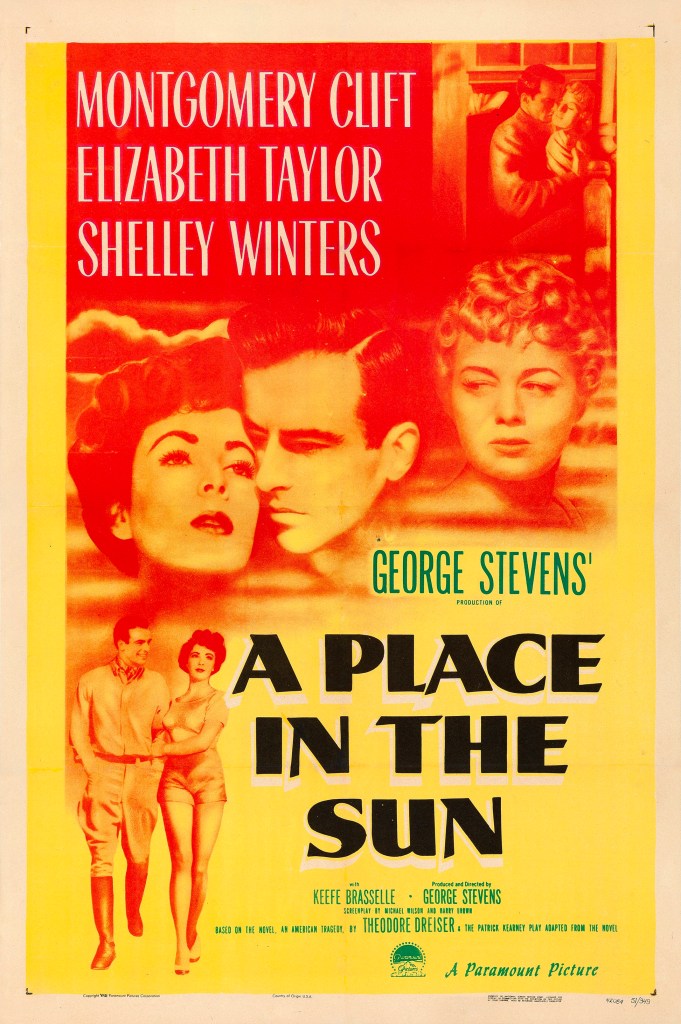
Cast: Montgomery Clift (George Eastman), Elizabeth Taylor (Angela Vickers), Shelley Winters (Alice Tripp), Anne Revere (Hannah Eastman), Keefe Brasselle (Earl Eastman), Fred Clark (Bellows), Raymond Burr (DA Frank Marlowe), Herbert Hayes (Charles Eastman), Shepperd Strudwick (Tony Vickers), Frieda Inescort (Ann Vickers)

It’s based on Theodore Dreiser’s An American Tragedy, but in some ways it feels like very British. After all, few American films are more aware of class than A Place in the Sun and there is something very British about a working-class man pressing his nose up against the window of the wealthy and wishing he could have a bit of that. In some ways, A Place in the Sun’s George Eastman is a more desperate version of Kind Heart’s and Coronets Louis desperate to be a D’Ascoynes or a murderous version of Room at the Top’s Joe Lampton not wanting his girlfriend to get in the way of wooing a better prospect. The most American thing about A Place in the Sun it is that what would be a black comedy or a bitter drama in Britain, becomes a tragic romance in George Steven’s hands.

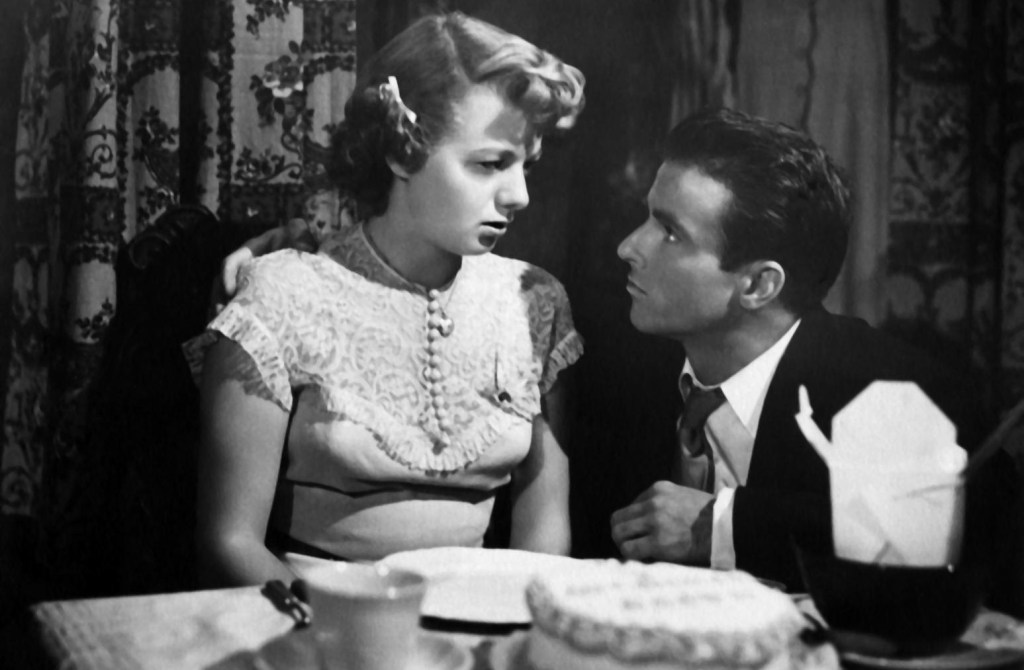
George Eastman (Montgomery Clift) is from the black sheep working-class side of the Eastman clan, rather than the factory-owning elite side who live among the city’s hoi polloi. George is gifted an entry-level grunt job in the factory but works hard for progression. He absent-mindedly dates production line co-worker Alice (Shelley Winters), who thinks he’s the bee’s knees. Unfortunately for her, George meets Angela Vickers (Elizabeth Taylor), daughter of the wealthy Vickers family, and they fall passionately in love. Just as Alice announces she’s pregnant and asks when George will do the decent thing. Can George thread this needle, rid himself of Alice and marry the willing Angela? Perhaps with the help of the Eastman’s lake side house and Alice’s inability to swim?

You can see the roots of a cynical tale of opportunism and ambition there, but A Place in the Sun wants to become a luscious romance. It is shot with radiant beauty by William C. Mellor, bringing us sensually up-close with Clift and Taylor whose chemistry pours off the screen. It’s soundtracked by a passionately seductive score by Franx Waxman. As we watch these two fall into each other’s arms, the film tricks us (and, I think, itself) into thinking these two lovers deserve to be together. And, by extension, everyone would be much better off if Shelley Winter’s gratingly needy Alice, who can’t hold a candle to Elizabeth Taylor’s grace, charm and beauty, just disappeared. Before we realise it, we and the film are silently rooting for a man with fatal plans to rid himself of this encumbrance.

What’s striking reading about A Place in the Sun is that Clift felt Eastman, far from a sympathetic romantic, was an ambitious social-climber (much like his role in The Heiress) too feckless, weak and cowardly to face up to his responsibilities. Clift’s performance captures this perfectly: at the height of his method-acting loyalty, Clift is sweaty, shifty and increasingly guilt-ridden with Alice, awkwardly mumbling platitudes rather than talking (or taking) action. It’s actually a superb performance of people-pleasing weakness from Clift. Eastman always says what those around him want to hear, whether it overlaps with what he believes or not. He can say sweet nothings to Alice and romantic longings to Angela. This is a great performance of an actor being, in many ways, more clear-eyed than the film about what the story is really about: a man who decides the best way to deal with the inconvenience of a pregnant girlfriend is to drown her.

What Clift didn’t anticipate is how much the power of photography and editing (not to mention the radiance of his and Taylor’s handsomeness) would mean many viewers would end up rooting for the selfish romantic dreams of this weak-willed heel. Steven’s film turns the Clift-Taylor romance into a golden-age Hollywood dream. Taylor, at her most radiant, makes Angela possibly the nicest, kindest, most egalitarian rich girl you can imagine. Their undeniable click is there from their first real encounter (Angela watching George absent-mindedly sink a cool trick shot at an abandoned pool table – how many takes did that take?). The sequences of these two together play out like a classic idyll, from slow-dancing at glamourous parties to lakeside smooching. Everything about what we are seeing is programming us to root for them – and I’m not sure Stevens realises the implications.

If we are being encouraged to relate to Clift and Taylor, everything in Shelley Winter’s Alice is designed to make us see her not want to be her. Winters lobbied for the part, desperate for a role to take her away from shallow romantic parts – ironically her success pigeon-holed her to dowdy, needy second-choice women, deluded wives and desperate spinsters. But she’s superb here, making Alice just engaging enough for us to imagine George would take a break from his self-improvement books, but also so fragile and needy we can believe she’d become both increasingly desperate and annoying. Angela, dancing radiantly at parties, is who we want to be: Alice, sitting up late in her cramped flat with a try-hard birthday dinner and carefully chosen gift waiting for the arrival of an indifferent George, is who we fear we are. If movies are an escape, we don’t choose her.

Steven’s film makes Alice’s pregnancy more and more a trap. (The film carefully skirts the much discussed but never named abortion option). When on the phone together, the camera tracks slowly into George as he huddles against a wall mumbling, the film’s world shrinking with his. In one of the film’s many beautifully chosen Murnau-inspired super-impositions, Alice appears like a ghost over George and Angela at the river. Alice’s increasingly fractious demands that George do his duty and marry her, with increasingly wild threats of social disgrace interspersed with her grating, desperate neediness makes us cringe with him. Possibly because we worry we’d be like her.

A Place in the Sun makes us root for a man plotting murder and guilty, at the very least, of manslaughter. That could make it the most subversive romance of all time – if it wasn’t for the fact that, even in the end, George is presented as the real victim. Even a priest gives him only a few words of criticism, while George is not even punished by losing the love of the faithful and trusting Angela. Even if George didn’t push Alice in, he also didn’t lift a finger to save her life. In the trial, Raymond Burr’s showboating DA helps us pity George as he presents a version of that fateful boat trip that we know isn’t true but is only a few degrees more horrible than what George actually did. Even his guards feel sorry for him, and Steven’s clunkily intercuts between George’s dutifully honest working-class family and the wealth of his rich uncle’s circuit to hammer home the tragedy.

Did Stevens realise all of this as he made the film? I’d argue possible not: that he was as much sucked into the romance as the viewing audience. But some American movies embrace optimism – and an American tragedy in that world is lovers kept apart. A British tragedy is an ambitious man destroying himself and others. There is a smarter, more ruthless film to be made from the material of A Place in the Sun. One where Clift’s George is a truly heartless go-getter and both Alice and Angela are different types of victim. And that would be American to: it would be one which consciously shows us how our longing for fairy tales and the American Dream can lead to perverse, outrageous outcomes. That film would be a masterpiece, rather than the unsettling work A Place in the Sun actually is.

Three Coins in the Fountain (1954)

Three Coins in the Fountain (1954)

The first big travelogue hit, full of beautiful images and a nice song – and almost no plot

Director: Jean Negulesco

Cast: Clifton Webb (John Frederick Shadwell), Dorothy McGuire (Miss Frances), Jean Peters (Anita Hutchins), Louis Jourdan (Prince Dino di Cessi), Rossano Brazzi (Giorgio Bianchi), Maggie McNamara (Maria Williams), Howard St. John (Burgoyne), Kathryn Givney (Mrs. Burgoyne), Cathleen Nesbitt (Principessa)

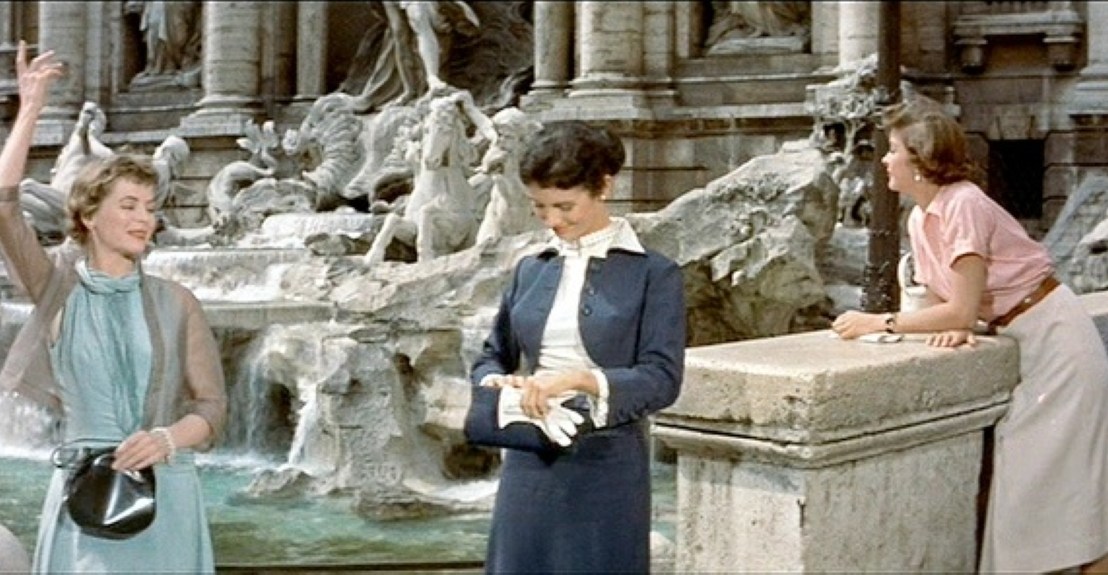
Did you ever visit the Eternal City and wondered why the Trevi Fountain seems to be full of small change? Well, a large chunk of the responsibility probably lies with this film. Three Coins in the Fountain, the very first Cinemascope travelogue super smash, meanders from our heroes chucking a coin into the fountain in line with the local myth that it means they will, one day, return to Rome. I can’t blame them – pretty sure I did the same when I was there. Whether many people have ever tossed a coin wishing to return to Three Coins in the Fountain is another question.

But Three Coins in the Fountain, a picturesque romance as shallow as the fountain itselfmade the idea internationally famous (it doesn’t trouble itself, by the way, with the fact only two of them actually toss a lira in). The story from there is as thin as paper. Our three leads are American secretaries: Frances (Dorothy McGuire) works for famed expat author John Frederick Shadwell (Clifton Webb) whom she secretly loves, Anita (Jean Peters) is seeing out her final weeks in the American embassy before flying home to a fictional fiancée, training up her replacement Maria (Maggie McNamara). Anita can’t afford to marry her Italian translator beau Giorgio (Rossano Brazzi) with his family of thousands to support. Maria sets her cap at Prince Dino (Louis Jourdan), ruthlessly researching and copying his views and opinions on everything from art to playing the piccolo.

Will these three relationships end well? What do you think! Drama in any case largely takes a complete back seat to the film’s main focus: filling the screen with the gorgeous architecture of Rome (and Venice as a two-for-one, thanks to a brief stop-off in Dino’s private plane) and basically giving the American cinema-going public a mouth-watering chance to see in glorious technicolour sights they had only previously seen in black-and-white photos. If 20th Century Fox and director Jean Negulesco didn’t have some shares in the Italian tourist industry squirreled away somewhere, I’ll eat my Panama hat.

Surely one of the most forgettable Best Picture nominees of all time, Three Coins in the Fountain did win two Oscars for its most memorable features. The first was Milton Krasner’s picture-postcard cinematography, making Rome look like the sort of place you’d jump on the first plane to get to. The other was Jule Styne and Sammy Cohn’s charming little ditty Three Coins in the Fountain (the velvet vocals of a surprisingly unbilled Frank Sinatra must have helped here). You can enjoy the finest moments of each in the film’s opening three minutes that plays the entire song (endlessly refrained again throughout the film) while the camera glides through the most beautiful sights of Rome. Truthfully, the rest of the running time is more of the same with added soap suds.

The plot lines are so slight and insubstantial it almost feels mean to poke critical holes in them. Few moments in this film ever ring true, but then this is the sort of luxurious fairy tale where American secretaries live in what seems to be a five-star hotel with panoramic views and work jobs that are really just time-fillers for their real quest of finding husbands. (The sexual politics of Three Coins in the Fountain, where women can’t imagine any other life horizon than typing up a gruff employer’s dull thoughts, and dream of swopping that for setting up house-and-home for a wealthy man, is as dated today as Anita and Maggie seemingly working for the 50s equivalent of USAID). Three Coins in the Fountain knows though the romantic plots are just there to keep us occupied between the postcards, and so long as they don’t offend or bore the viewer they’ve done their job.

Dorothy McGuire invests all the charm she can in playing a role written as a fussy busy-body interfering in her friend’s romantic lives and pining for Clifton Webb’s John Patrick Shadwell but seems oblivious to the fact that he is all too clearly coded to be what gossip columnists of the day called ‘a confirmed bachelor’. Their resolutely sexless ‘companionship’ contrasts with Jean Peter’s Anita giving a lusty fire to her flirtation with Giorgio (an underused Rossano Brazzi, who got a much better go round at this sort of thing in David Lean’s vastly superior Summertime). Various artificial obstacles are placed in their way (a modern film, unburdened by the Hays Code, would have leaned more into hints of a pregnancy scandal in Anita’s otherwise inexplicable decision to leave Rome).

Finally, Maggie McNamara gives a lightness of touch to a hilariously transparent campaign of romantic deception launched by Maria to win the heart of Prince Dino. Dino is, of course, deeply hurt that ‘the only woman I can trust’ has been lying to him – but I couldn’t help but feel most men at the time would jump like Casanova in heat on a woman who smilingly repeated back their own opinions to him with total conviction. Louis Jourdan, like Clifton Webb, charmingly offers up the sort of Euro-charm he was called to produce for most of the 50s.

There are amusing moments in Three Coins. Webb (clearly having a nice holiday in between dialling in his trademarked waspy socialite) is always pretty good value, and his arch glance through Maria’s charade is as grin-inducing as Frances being seen as so destined to become a frustrated spinster that Shadwell’s maid gives her a cat so she won’t be alone. Giorgio’s family eagerness to practically shove Anita into a wedding dress the second they meet her is almost as funny as watching the clueless Anita fail to control Giorgio’s truck as it rolls wildly downhill (inexplicably she tries to put it into gear rather than, oh I don’t know, hitting the brakes…)

But moments like this are few and far between in an otherwise gentle amble through the tourist hotspots of Rome. (The Venice shots, hilariously, see all the actors appear in brief scenes in front of projected images – clearly just the camera crew got that trip.) Negulesco keeps it all flowing forward like the pro he was, but by the time it ends you’ll be left with a vague longing to stroll around the streets of one of the world’s most beautiful cities – and only a vague idea about whether there was any other point to the film you just watched.

Last Year at Marienbad (1961)

Last Year at Marienbad (1961)

Ultimate arthouse film, designed to reward constant analysis and interpretation with no answers

Director: Alain Resnais

Cast: Giorgio Albertazzi (X), Delphine Seyrig (A), Sacha Pitoëff (M)

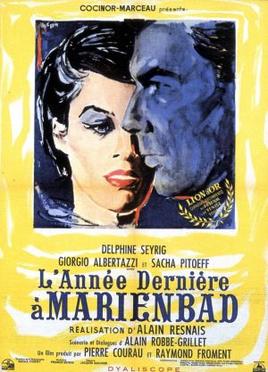
If there is one film that could practically stand as a dictionary definition of art-house cinema, it might be Last Year at Marienbad. A striking collaboration between director Alain Resnais and novelist Alain Robbe-Grillet, is puts the vague in Nouvelle Vague (French New Wave to you and me). Last Year at Marienbad is a film almost unlike any other, a work of art that lays itself out in front of you and asks you to bring your own viewpoint to bear to decide what (if anything) it’s actually about. You could call it a riddle wrapped in a mystery inside an enigma (to borrow a phrase from Churchill – and lord knows what he would have made of it).

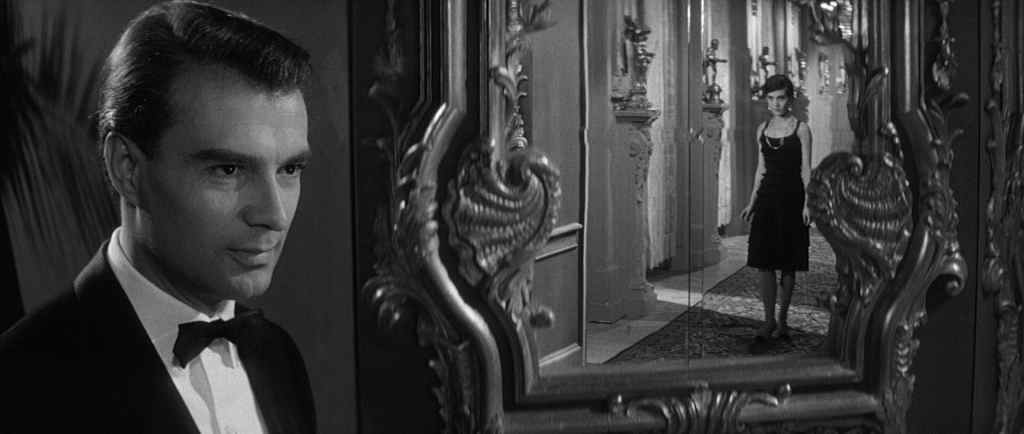
Last Year at Marienbad is set in a sprawling, Versailles-like palace (which might be a hotel), where grand, art-laden corridors go on forever, every room drips with fine details the grounds are mini-countries and opulent, geometric designs fill ever corner of the building. Within this, a parade of people dressed in evening finery move like impassive robots, uttering flat banalities and either moving slowly between rooms or standing impassively like statues. Among these strange, ghost-like figures a man (Giorgio Albertazzi) waylays a woman (Delphine Seyrig) and tells her a year earlier they met somewhere else (possibly Marienbad, but could have been Frederiksbad, Karlstadt or Baden), fell in love and planned to elope a year later. She doesn’t remember him at all. He spends the film trying to persuade her. Another man (Sacha Pitoëff), who might be her husband, engages the first in a mathematical card game (nim) which he defeats him at constantly.

If that sounds sparse, it’s because a plot description barely functions for a film so wilfully oblique it’s about whatever you decide it’s about. Resnais and Robbe-Grillet’s purpose perhaps can be seen when our two could-be lovers discuss a classical statue. (In a neat touch, the statue itself was specially carved for the film). Their conversation revolves around different interpretations of what these Roman (or Greek) figures are doing: is the man protecting the woman from walking into danger? Is the woman protecting the man? Are they in love? Are they arguing? Why is there a dog sitting at her feet, looking away? This conversation is framed through a series of lingering shots from multiple angles, that invite us to bore our eyes into the statue and decide for ourselves.

And that’s basically the film in microcosm. It’s a series of beautifully haunting images and scenes, shot by a gliding camera and accompanied by Francis Seyrig’s hypnotic score, that invites the views to stare at this film like they would a painting in a gallery and spot as many (or as few) tiny details as they like and see if it changes their view of the artist’s overall intention. Last Year at Marienbad, in effect, nearly defies any sort of logical criticism. What you take out of depends entirely on what you put in. Which is to say, it’s as perfectly legitimate to say it’s a pile of pretentious, piss-taking piffle as it is to call it a gorgeous, transcendent piece of art that leaves you thinking for days.

Everything is designed to leave things open to question, with the normal rules of logic and cinematic structure routinely discarded. Characters will be in frame at the start of the shot and then, as the camera drifts away from them, suddenly appear in another (impossible) location – for example one shot starts with X at a card table, then drifts across the room to the doorway to see him enter.

The people move like functional props, or bored actors trotting through their marks. There is barely a facial expression or jot of intonation in anyone. They stand mutely to attention, or shift through a senseless parade of conversations, waltzes and card games. There is a ghostly, dream-like, never-world quality to the entire hotel (it’s influence on The Shining – from Resnais’ controlled, Steadicam style shots, to the haunting sense that mankind has no agency or influence in the building – is really clear). It’s as cold as a block of marble, and the people often feel like statues that have walked off their pedestals into the world.

Locations are inconsistent and change all the time: Resnais shot the film in multiple palaces and stitched the locations together, hiding cuts with carefully placed objects (in one instance A walks down a corridor seemingly in one shot, but Seyrig is actually walking through about three totally different locations). The pattern, design and contents of rooms change (A’s bedroom shifts through myriad designs and layout, most noticeable in its constant swopping between either a mirror or a painting above the mantelpiece). An exterior balcony next to that statue subtly changes location as well (and even appears as a detailed landscape painting).

Everything shifts, twists and contorts all the time as if the film reforms depending on the angle you are looking at it from. The hotel could be a purgatory or a dream. It could be a half-formed memory. X could be an Orpheus striving to save his Eurydice. Or a self-aware film character. Or a trapped dead soul. A could be an amnesiac, a fantasy figure, a ghost, a part of X’s psyche. M could be her husband, X’s alter-ego, death or a complete stranger. Every single interpretation is legitimate and you could pull out different moments to support any one of them.

Myself, I saw it as like a dive into X’s memories. Everything about the shifting scenery, strange dis-jointed logic of the film moving seemingly at random between past and present, the repetitions and reframings of the same conversations, seemed like a man sifting his memories. X even stops and argues against certain scenes (‘It didn’t happen like that.’) There are hints of a dark trauma: repeated shots of A cowering in her room, brief moments of shock, tears and her pulling away from X. We see multiple hints of A’s death, including a possible shooting by M. I started to think this was X reframing his memories to absolve himself: that after rejection by A, he assaulted her in some way, she committed suicide (the opening play the characters are watching is Romers based on Ibsen’s play about a man haunted by the suicide of his wife). X is now forcing his memory to adjust this into a tragedy where he was the victim – and as part of that must persuade A she loved him.

But that’s just my view. You could just as well say X is so bored watching Romers, he makes up a whole fantasy based on it to keep himself entertained (inevitably, the set of the play changes completely whenever we see it). I do think it interesting most 60s criticism took X completely at his word as a victim, while more recent criticism has often cast X as an unreliable narrator (if that term has any meaning here). What matters more is whether you are intrigued enough to find dwelling on what this all means (the way we dwell over a Picasso) worth your time. For me it unquestionably is.

Don’t Look Now (1973)

Don’t Look Now (1973)

Atmospheric, heart-rendering and beautifully constructed supernatural film, an emotional look at grief

Director: Nicolas Roeg

Cast: Julie Christie (Laura Baxter), Donald Sutherland (John Baxter), Hilary Mason (Heather), Clelia Matania (Wendy), Massimo Serato (Bishop Barbarrigo), Renato Scarpa (Inspector Longhi), Leopoldo Trestini (Hotel manager), Giorgio Trestini (Woekman)

We tend to trust our senses, don’t we? We like to see the world as something solid and factual, that we can process and understand with rational thought. What we don’t have time for is the idea of a sixth sense about the world beyond us. We can’t measure that, so we prefer to ignore those feelings. Don’t Look Now is partially about the terrible consequences of ignoring gut-instincts about the unexplainable, as well as the terrible, all-consuming horror of grief. On top of that it’s a horrifying quasi-ghost story, a moving portrait of marriage and a terrifyingly beautiful image of Venice that’s quite unlike anything else on film.

John (Donald Sutherland) and Laura Baxter (Julie Christie) are in Venice, a few months after the death of their daughter in a tragic drowning accident. John is busying himself at work restoring a church, Laura is looking for distraction from grief. Chance leads to a meeting between Laura and two mysterious sisters (Hilary Mason and Clelia Matania), one of whom claims to have second sight and to be able to ‘hear’ messages from the Baxter’s late daughter. Laura is desperate to believe, but John is resolutely unconvinced. But it’s John who starts seeing visions of a child in a red coat – a red coat just like the one their daughter was wearing when she drowned – and becomes increasingly troubled by strange coincidences and feelings.

Roeg’s stunning film is a masterpiece of atmosphere. Shot in vivid colours in a coldly intimidating Venice – which Roeg manages to make feel both beautiful and deeply, disturbingly unknowable and dreadfully intimidating. Don’t Look Now constantly unsettles and disorientates you, a gorgeous city hosting an insidious gothic mystery. It’s a masterfully edited film, that uses our ‘knowledge’ of the language of cinema to disorientate us, forcing us to form associations between images by juxtaposing them together (for instance, Roeg cuts from John casting doubts on the motives of the sisters to them laughing joyfully something that context makes us see as sinister).

The clue in Don’t Look Now is in the title – once we are told to look at something, we’ve got an overwhelming desire to stare straight at it. John’s mind is mind sending a plethora of subconscious warnings: but the more his mind says ‘don’t look’, the longer he stares. He should be picking up on the visual signals from Roeg’s extraordinary design: Don’t Look Now is awash in red. In almost every scene, splashes of striking crimson abound – from coats, to bags, to signs, to everyday objects, to blood – as if the film itself is trying to warn him (at one crucial moment, he even turns away from a street of green fronted shops and cafes, to charge down a street lined with red ones). Don’t Look Now is the tragedy of a man with great powers of intuition who comprehensively ignores them because it’s the rational, sensible thing.

Already he has been warned of the dangers of ignoring his instincts. Roeg opens the film with the drowning of the Baxter’s daughter, while her parents rest indoors after a large Sunday meal. It’s a sequence of ominous, intense anxiety and terrifying, gut-wrenching impact as we cut back and forth between the daughter playing outside (with broken glass and lost balls floating on ponds), to John and Laura continuing casually talking while a slide frame of the Venetian church John is working on soaks in spilled water and the red of a girl’s coat in the image bleeds across the it (as much a prescient warning of John’s danger, as it is of his daughter’s). A distracted John is finally unable to resist the of danger he is feeling – racing instinctively to the pond, but too late to prevent tragedy.

The heart-rendering, raw pain as John fishes his daughter from the pond – the elemental roar from Donald Sutherland being almost unwatchable – caps a deeply affecting sequence in Don’t Look Now’s profound and tender study of grief and the strain it places on a loving relationship. Sutherland and Christie give beautifully judged, profoundly humane and sympathetic performances as shell-shocked people, barely able to process tragedy and looking for anything to distract them from the crushing grief that is hollowing them out. Grief in this wintery city is practically a third wheel in the relationship, an unspoken mix of regrets (and recriminations, Laura at one point blaming John’s lax rules for their daughter’s death) and barely expressed pain.

This doesn’t detract from the deep love they still feel from each other. Don’t Look Now’s (in)famous sex scene carries the erotic charge it does, because it genuinely feels like a long-married couple reconnecting physically, intimately familiar with each other’s bodies. Brilliantly, this sense is actually increased by Roeg intercutting from their love-making to their post-coital dressing, somehow the act of them half-watching each other put their clothes on being as loving as what they did before. Both have a deep desire to protect the other: John is distracting himself from his grief by ‘looking after’ Laura, while she re-focuses on an intense desire to protect her remaining family.

Laura at first feels the more vulnerable of the two: her emotions rawer (she collapses in distress after her first encounter with the sisters), her need for spiritual connection – either lighting candles in the Church, or desperately trying to believe she can communicate with their late daughter – much greater. It’s only when they are separated (after she rushes home to see their son after an injury at school) that the depths of John’s vulnerability and fragility become clear. Without her to distract him, he quickly seems to fall apart: becoming paranoid, increasingly fixated on possible disasters, ever-more obsessed with his glancing images of that girl in the red coat.

Roeg presents much of the world exactly as John sees it, and his masterful framing and editing of key moments and sequences both leave us in as much doubt about what is real as John is, suckering us into making the same mistakes he does. Again, our trust of how visual images are presented works against us, just as John misinterprets and misunderstands premonitions as events literally happening at that moment. It’s what lies behind his obsessive hunt for his ‘kidnapped’ wife, after seeing her on a boat on the canal hours after she flew back to England. Later events will demonstrate how disastrously he has misinterpreted these warnings.

John is drawn into an ever-more Kafkaesque nightmare (there is a lovely touch that, the more distressed John becomes, the more his Italian evaporates – in his element at the church, rebuilding frescoes, he’s fluent – at other times he can barely string a sentence together). A sinister police inspector – Roeg deliberately not correcting Renato Scarpa’s phonetic delivery of his English dialogue, making it unsettingly ‘wrong’ – seems sympathetic, but has John watched. The off-season city empties out (even the Baxter’s hotel closes), becoming a ghost town of echoey, identical streets which John hurtles down. The dark mystery of a serial killer haunting Venice becomes more prominent, concluding in the film’s horrifying reveal of what lies under that red coat, John realising all too late the skills of intuitive understanding that make him a skilled restorer of fragmented mosaics, was the same ignored intuition warning him of the dangers first to his daughter then himself.

Don’t Look Now is not only a masterpiece of atmosphere and superb editing and structure, it’s also Roeg’s most humane and tender work. It’s a deeply affecting portrait of a loving marriage struggling with grief – with extraordinary performances from Christie and Sutherland – and the way our longings combat with our rational mind to confound us. Set in a Venice that is eerily, ghostly and unsettling, it’s a haunting, powerful and superb piece of film-making.

The Fallen Idol (1948)

The Fallen Idol (1948)

Brilliant thriller about how hard the world is for a child to understand

Director: Carol Reed

Cast: Ralph Richardson (Baines), Michèle Morgan (Julie), Sonia Dresdel (Mrs Baines), Bobby Henrey (Philippe), Denis O’Dea (Chief Inspector Crowe), Jack Hawkins (Detective Amos), Walter Fitzgerald (Dr Fenton), Dandy Nichols (Mrs Patterson), Geoffrey Keen (Detective Inspector Davis), Bernard Lee (Inspector Hart), Dora Bryan (Rose), Karel Stepanek (First Secretary), Torin Thatcher (Constable)

We’ve all had heroes we worship haven’t we? Few hero worships burn as brightly as a child’s. Eight-year-old Philippe (Bobby Henrey), son of a foreign ambassador in London, is awe-struck by the embassies English butler Baines (Ralph Richardson), a kind, decent man with a twinkle in his eye who enjoys spinning stories for Phil about his exciting life in India. The highlight of Phil’s day is spending time in Baines’ parlour. For Baines though, his highlights are the snatched moments of release from his domineering, unloving wife (a masterfully tough-to-like Sonia Dresdel) that he spends with embassy secretary Julie (Michèle Morgan).

The affair is obvious to us in seconds. But Phil – from whose perspective we see large amounts (but, crucially, not all) of the film play-out – is of course oblivious, readily accepting Baines awkward assurance Julie is just his niece. The Fallen Idol – the middle film in Reed’s astonishingly high-quality run of films that includes Odd Man Out and The Third Man – is a brilliantly tense, very moving story of how adrift children feel in the adult world, how easily they misinterpret signals and misread social cues. Superbly filmed, with a wonderful script by Graham Greene (from his own novel) it’s a masterclass in how the simplest situation can lead to the most intense drama.

It revolves around a fatal trap for Baines. Believing his wife is away for the weekend (she has in fact concealed herself in the embassy mansion), Baines treats himself to a day and night with Julie. Discovered, the confrontation leads to Mrs Baines dead at the bottom of the stairs. The argument is partially witnessed by Phil – but crucially, only glimpses of it as he runs down the exterior fire escape, peering in through windows as he goes – but in full by the viewer. It’s clearly a terrible accident, taking place after Baines had left. But Phil is convinced he has witnessed a murder – and so passionate is his hero worship of Baines (and loathing of Mrs Baines), he decides to do everything he can to protect the butler.

The genius of Reed’s The Fallen Idol is that we are always know more than any of the characters. Just as we can tell immediately from witnessing Baines and Julie’s whispered, Brief Encounter-ish meeting in a London coffee shop that they are in the midst of a passionate affair, so we also know much faster than any character that Mrs Baines is still in the house and that her death is a clumsy accident. We can also see, in ways Phil cannot, that his desperate lies only undermine Baines honest version of events. We know all the details well ahead of the police, watching them misinterpret clues and behaviour in the worst possible light. The entire film shows how damning circumstances and coincidences can fold up into a vice-like trap from which there is almost no escape.

The Fallen Idol is a film awash with lies. In many ways it’s a heartbreaking reveal of how quickly the compromises and selfishness of the adult world corrupts the child’s. At the heart of these lies is Baines himself. The role is beautifully played by Ralph Richardson, utilising his eccentric cuddliness to exceptional effect, but also perfectly capturing the selfishness, weakness and cowardice of Baines. Because Baines is a liar – not only to his wife, but also to Julie (he spectacularly lacks the guts to ask his wife for a divorce, despite what he tells Julie) and, walking Phil back after he has crashed Baines’ tea-time meeting with Julie, urgently instructs him to lie if he is ever asked about what happened that afternoon. Baines doubles down on his duplicity by using the unwitting Phil as a shield to cover a zoo-trip date with Julie, and even his adventure stories to Phil are all slightly self-aggrandizing tall tales.

One of the toughest things about The Fallen Idol is that hero-worship is a confused one-way street, especially when children are involved. Baines is fond of Phil but often treats him with distracted affection out-of-kilter with the earnest, devoted adoration Phil pours on him. This devotion from Phil is so great, even his belief that his hero is a murderer makes no impact on him. Having taken his idol’s lessons to heart, about what to do when questioned about anything to do with Julie, Phil lies and lies to the investigating officers, corrupting himself (he believes, after all, he is helping a killer) while also making the innocent Baines seem guiltier-and-guiltier with every word.

Carol Reed draws a superbly natural performance from Bobby Henrey, in a performance utterly lacking in childish, mannered acting tricks. It’s a hugely natural performance, over-flowing with innocence making Phil a character we end up deeply caring for. The early half of the film throws us perfectly into the excited world of a child with a whole mansion to run around in, cuddling his pet snake close to his chest. Reed also brilliantly captures how a moment of trauma confuses and terrifies an innocent into not knowing what action to take. Fleeing the house barefoot – clearly terrified and heartbroken – immediately after the death, Phil is petrified when he encounters a policeman not because he is intimidated, but because he fears inadvertently betraying his idol.

Reed superbly captures the desperate vulnerability of children, the nightmare of not having your voice listened to as adults talk over and around you. The Fallen Idol (with its careful use of disjointed angles and God-like, wide-angle shots from above) has a superb sense of the horror of being caught in a situation you neither fully understand or can influence. It’s echoed perfectly by Baines’ increasingly defensive panic as each denial falls on all-too-obviously deaf ears. Phil also misinterprets almost everything he is told in the film, right up to when the sympathetic Julie (a lovely, warm performance from Michèle Morgan) begs him that only the truth can help Baines.

The Fallen Idol spices this up with superb moments of comedy. Dora Bryan has a delicious cameo as a ‘lady of the night’, called upon to by the flummoxed policemen at the station Phil has fled to, to try and draw some words out of the stubbornly silent child – and who can only fall back on the cliches of her profession (‘Can I take you home dearie?’). An Inspector (a lovely cameo from Bernard Lee) called in to translate in the embassy is begged by the first secretary to drop his inept schoolboy French. A tense interrogation of Baines is interrupted when a pedantic embassy staffer insists he must be allowed to check the clocks in the room (Reed wittily shows the characters revolving, clockwork like, impatiently on the spot in the background while this interminable check goes on).

But the great strength of The Fallen Idol is how it captures the joyful innocence of childhood and the Kafkaesque confusion the adult world can have on a child. Poor Phil never really understands anything that goes on (although the film ends with a sweet irony of Phil being the only person who perhaps understands a vital ‘clue’ only to be completely ignored) while we are always in complete understanding. Reed’s direction is faultless, both from his work with actors to his masterful use of camerawork and editing to really capture the confusing, unreadable adult-world from a child’s perspective. It’s a masterful, gripping, heart-rending film – a small scale classic that perfectly mixes tension and wit.