Category: Road trip movie

The African Queen (1951)

Katharine Hepburn and Humphrey Bogart on a sweaty romantic river cruise in The African Queen

Director: John Huston

Cast: Humphrey Bogart (Charlie Allnut), Katharine Hepburn (Rose Sayer), Robert Morley (Reverend Samuel Sayer), Peter Bull (Captain of the Königin Luise), Theodore Bikel (First Officer of the Königin Luise), Walter Gotell (Second Officer of the Königin Luise), Peter Swanwick (First Officer of Fore Shona)

John Huston’s The African Queen is a beloved classic – so much so its odd-couple romance in tropical climes has been endlessly ripped off and riffed on practically ever since it was made. It’s a gentle, enjoyable travelogue of a movie where (truthfully) not much happens, other than we sit back and watch two masters of cinema acting go through the paces with consummate skill.

In 1914 in German East Africa, missionary brother and sister Samuel (Robert Morley) and Rose Sayer (Katharine Hepburn) plough their lonely furrow bringing God’s word to the disinterested natives, their only contact with the outside world being drunken Charlie Allnut (Humphrey Bogart), captain of the steam ship The African Queen, who delivers their supplies. Their world is turned upside down when Charlie brings news of World War One. The Sayers plan to stay, until German soldiers burn down the mission and assault Samuel who swiftly dies of fever. Charlie agrees to take Rose out of danger on his steam boat – but on the dangerous journey Rose develops a plan to use The African Queen to sink a German gun boat preventing British access to Africa, and Charlie and Rose find themselves – much to their surprise – falling in love.

Truth be told, nothing happens in The African Queen that you will find remotely surprising if you’ve ever seen a film before. Not even in 1951 could anything in this film be said to be pushing the envelope or offering something different to hundreds of studio epics past. Two people who seem to have nothing in common come together only to find, by heck and by jiminy, they actually are perfect for each other. Obstacles are put in place for them to struggle against but eventually love (and our heroes) triumph over all. Hip hip hoorah! You can see why the picture is so widely loved – it’s in many ways totally unchallenging and familiar.

John Huston seems to know this and just sits back and allows the film to almost tell itself with a professional, unfussy precision. The African Queen is an extremely well made film, sumptuous to look at, and never overstaying its welcome. It’s been boiled down to its barest necessities, and as such it works extremely well. There’s nothing extraneous in there – heck the film only really has three characters and one of them dies in Act One. Huston’s demands to film the entire thing (more or less) on location in the Congo is totally validated by the immersive filth, sweat and heat that reeks off the picture and seems to have soaked into the skin of the actors. 

Huston also understood that the real gold here was the acting – and the chemistry – of his two beloved stars. Tales of the making of the film are legendary – Bogie brought along Bacall, who helped out on catering, Hepburn refused to join the Bogart/Huston drinking sessions and became the only one to get ill from drinking the water, all four became lifelong friends. The script originally demanded Allnut to be a chippy cockney and Rose to be a prim schoolmistress type. The parts were re-written, Allnut into a “Canadian” (yeah right) while Hepburn reimagined Rose as, by her own admission, a sort of Eleanor Roosevelt in the jungle.

But it works a treat because both stars are on fire in this vehicle. Bogart perfectly mixes drunken awkwardness and defensiveness with a roguish charm, and what grows into a sprightly delight at being taken seriously for the first time in his life. Allnut is besotted with Rose from early on – even if he can’t admit it – and his whole personality seems to flourish and grow from her attentions, while never losing that slight “little boy lost” air. Mind you, Rose is as clearly attracted to Allnut early on as he is to her – but with her ideas of standards she would never allow herself to explore those feelings except in extreme circumstances.

Hepburn is such a gifted actor that you always know Rose is a far more intelligent, interesting and dynamic character than the one we are introduced to playing piano at one of her brother’s interminable sermons. Shaking off – with Allnut’s help – her shock at his death, she swiftly displays a head-girlish determination and pluck,that extends from rolling up her sleeves to steer the boat to laying out a plan to torpedo a German gun boat. Far from domineering Allnut, she flourishes and grows just as he does from her attention, and Hepburn suggests worlds of feeling and engagement opening up in Rose that she has never considered possible before.

The chemistry between them is scintillating and extremely warm, while the burgeoning romance is very sweet. I love the gentle way they switch form formal address to “Rosie” and “Dear”, the first few times each with that gentle hesitation that half expects rejection and anger. The film is also surprisingly daring about its depiction of sex (it’s pretty clear Rose and Charlie get jiggy in the boat at least twice while cruising down the river). The film mixes this touching stuff with some generally winning comedy – Rose pouring away Charlie’s huge whisky reserve after a particularly drunken display early on is a highlight – that really plays off the odd-couple combination of the two of them. It also helps play into the sweetness of the romance: Charlie impersonating a hippo to a delightedly bemused Rose is also very sweet.

It’s obvious stuff really – and Huston intersperses a few too many shots of crocodiles and hippos, as if he was keen to hammer home that they actually went on location – and there isn’t much in the film to surprise you or that you might not expect. It’s really all about the success of the two stars working together – and their natural chemistry and warmth spills out of the screen. Really it’s Bogart and Hepburn just doing their thing – but when their thing is as good as is this, you can certainly sit and watch it for ages.

Collateral (2004)

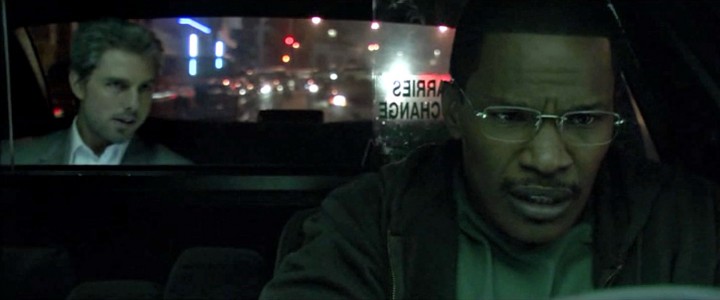
Tom Cruise and Jamie Foxx take a long taxi ride in Michael Mann’s thriller Collateral

Director: Michael Mann

Cast: Tom Cruise (Vincent), Jamie Foxx (Max Durocher), Jada Pinkett Smith (Annie Farrell), Mark Ruffalo (Detective Ray Fanning), Peter Berg (Detective Richard Weidner), Bruce McGill (Frank Pedrosa), Irma P. Hall (Ida Durocher), Barry Shabaka Henley (Daniel Baker), Javier Bardem (Felix Reyes-Torrena)

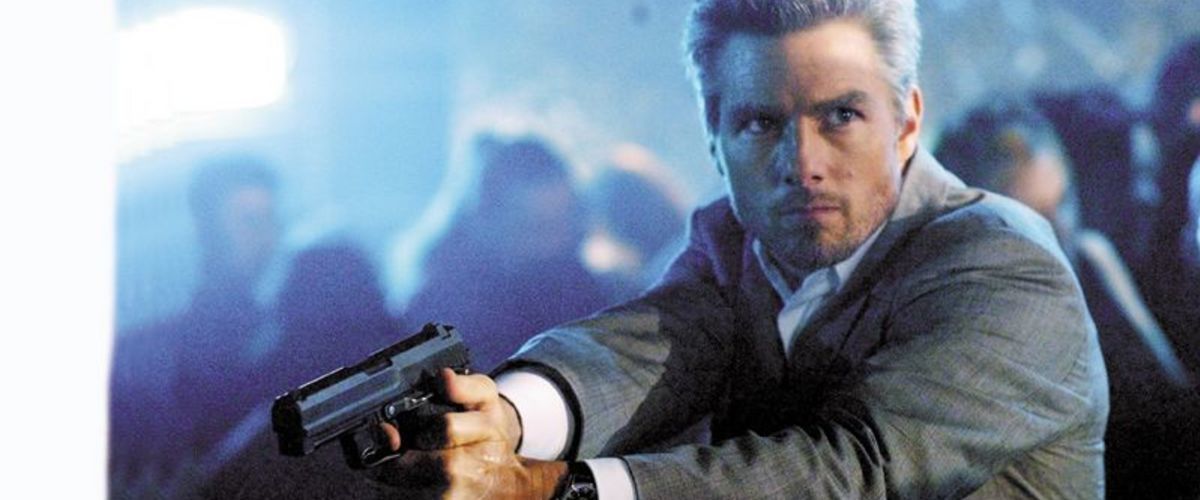
Tom Cruise enjoys throwing us film-goers curveballs every now and again. In Collateral he pops up as a sociopathic hitman, grey of hair and suit (like a buzzcut, rampaging John Major) leaving bodies strewn about the place. It’s great to see him in Michael Mann’s lean, very enjoyable action thriller, looking as sleek and soulless as the rest of LA.

Cruise’s Vincent is a hitman in LA to knock off a list of targets. But how will he get from hit to hit? Why by hiring a taxi driver for a night: risk-averse dreamer Max (Jamie Foxx) who has been working “temporarily” as a taxi driver while he builds plans for his dream limo business for a mere 12 years. Max is thrilled to have a big spender in his car – until something goes wrong on hit #1 and a body lands on his cab. Max no has no choice but to assist Vincent – although Vincent ends up becoming more attached to Max than he might ever have imagined.

Mann shot his film on a high-definition video and it gives a very unique look at LA, really capturing the hazy yellows and cool blues of the city and giving everything in the picture a slightly grainier, starker look. But that would count for nothing if the story of the film wasn’t pretty good, and Collateral is a very effective action thriller, which doesn’t reimagine the genre but offers more than enough freshness to enliven the familiar elements it’s made up from. 

Its main assets (along with Mann’s cool, detached and pin-point sharp direction) are the performances of its two leads. Cruise is just about bang-on as a professional hitman, devoid of empathy, who finds surprising possibilities of friendship open in front of him. He’s a fascinating character, like someone who has spent so long studying people that he can just about replicate human reactions, without understanding the humanity behind them. Cruise’s obsessive preparation for his roles also help makes him flawlessly convincing as this lethal ubermensh.

Foxx however is just as good as a basically decent, friendly, low-key guy who is kidding himself that he is not drifting through life. It’s Max’s story we follow throughout the film – and it’s his sense of personal morality, his strict belief in right and wrong, that gives the film its dramatic force. Foxx also avoids undermining or laughing at Max, who is basically a man so buttoned up and cautious that (without a major push) he’ll clearly die of old age in that cab. 

These two characters thrown together have a curious chemistry – a sort of riff on the casual bonds that can develop between driver and passenger as they talk about their lives, views and interests. It’s not a friendship – certainly not in Max’s case – but it’s a strange sort of bond nevertheless. Vincent, you feel, hasn’t talked to many people like this – and while he’s still willing to threaten Max or put him at great risk, he still develops a strange protectiveness about him. It’s this quirky and different relationship that powers the film and finally makes it unique. This odd couple don’t overcome boundaries to become bosom friends, but they also don’t come together as fierce rivals. Instead they sort of work out a co-existence in that cab.

It’s the most interesting thing about a film that otherwise – to be honest – deals a pretty familiar deck with confidence. Sometimes the film plays its cards so well you overlook them – the first time I watched it, I was semi-surprised at the reveal of the final victim, but really it should be pretty obvious to anyone who has seen a movie before. The plot is full of moments like this that are played with a freshness – or with a cunning – that stops them from feeling familiar.

But that’s really what it is. The journey around LA from hit-to-hit is a familiar sounding idea. The encounters between Vincent and the targets are pretty familiar – the exception being a fascinating, and hard to read, encounter with Barry Shabaka Henley’s jazz player turned informant, which sizzles with tension – and the action scenes, while well staged, are the sort of shoot-outs we’ve seen before. Mann shoots them with a vibrant excitement, but it’s mostly B-movie stuff presented freshly.

What it comes down to is that relationship between those two characters, and the skill of director and actor in drawing out subtleties in performance. (Don’t listen by the way to the director’s commentary, which ruthlessly strips these subtleties away as Mann bangs on about heavy-handed, predictable backstories which thankfully don’t make it into the movie, but make it sound dumber than it is). Cruise and Foxx are both fantastic, Mann’s direction of this sort of icy-cold, impersonal, dangerous city is impeccable and the film itself doesn’t fail to entertain.

About Schmidt (2002)

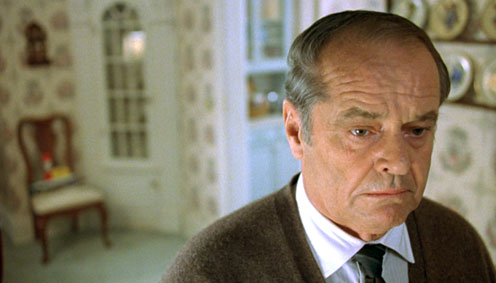
Jack Nicholson is superb as beaten down Warren Schmidt in About Schmidt

Director: Alexander Payne

Cast: Jack Nicholson (Warren R Schmidt), Kathy Bates (Roberta Hertzel), Hope Davis (Jeannie Schmidt), Dermot Mulroney (Randall Hertzel), June Squibb (Helen Schmidt), Howard Hesseman (Larry Hertzel), Len Cariou (Ray Nichols)

When you think about About Schmidt, it’s almost impossible not to think about Jack Nicholson. For so long Nicholson has been JACK, a personality so large, so present in the public conscious as the ultimate raging lothario, that most of his performances have been unable to escape it. He has blasted through so many films as a force of nature that what’s almost most surprising about About Schmidt is that Nicholson is so feeble, worn-out, uncharismatic and beaten down in the lead role. Did I also mention he was brilliant?

Nicholson is Warren R Schmidt, a recently retired actuary with an Insurance company in Omaha. As a young man he dreamed of a golden future, but his life has been one of crushing mundanity and boredom (albeit, I will say, clearly very well paid!). Schmidt has become a cowed, average, hollow man – the sort of man who urinates sitting down because his wife insists he does so and whose idea of defiance is to pop out for a milkshake. After his wife (June Squibb) suddenly dies, he is forced to deal with the fact that he is actually largely estranged from his idealised daughter Jeannie (Hope Davis) and that he despises her decent-but-no-hoper fiancée Randall (Dermot Mulroney). Can he make her abandon the wedding?

Alexander Payne has excelled in this style of film: a slightly off-centre social comedy with a mix of a lemony sharpness, satirical wit and genuine warmth for its characters. He perfectly captures the hopes and dreams of small-town America and the trap of mediocrity and disappointment that these sort of suburban, unremarkable lives can have. About Schmidt does this brilliantly, by counterpoising the Schmidt’s feelings of depression and being trapped with the clearly empty dreams of his daughter’s would-be husband. Not to mention taking shots at the overbearing try-too-hard irritability of Randall’s bohemian family (who seem to celebrate the very failures Warren believes his life has been made of).

Payne works in perfect synchronicity with Nicholson, keeping all the actor’s OTT gestures and mannerisms well in check and pushing him to create a quiet, timid, worn-out man who is beginning to reflect (with some bitterness) on what his life has been and been to suspect (with some dread) what it might be for his daughter. Nicholson’s comic timing and his sense of empathetic sadness are both absolutely perfect. The film uses a brilliant device to let us hear Schmidt’s inner monologue via his writing a series of letters to the African child Ndugo he is sponsoring (hilarious in that he unleashes on this no doubt uncomprehending young boy a series of bitter, reflective and sad cries from the heart).

The film is about the disappointments of life, but each point is told with a dark or wry humour. From Schmidt’s retirement party (an event that everyone seems to attend only out of duty) to the death of his wife (who collapses mid hoovering) there is a dark sense of humour throughout. Nicholson plays these moments with a world-weary sadness that keeps the character grounded. At other moments, he can let rip with a more overt comic touch as he struggles with the distaste and alarm he is far too polite to show as he stays with Randall’s bohemian family (Kathy Bates is very good as the matriarch of this clan, a woman whose laissez-faire attitude is a front for her tyranny).

The film’s plot is brilliantly simple, and is fundamentally about how far Schmidt can go in re-evaluating and re-claiming his life, giving his final years (with his actuary head on he believes he has between 10-12 years left) some sense of individuality. These attempts rotate from sad starry-night imagined conversations with his late wife to awkwardly comedic encounters with a nice couple at a camping site, whose signals he completely misreads. Schmidt is angry – and those moments when it bursts out to Ndugo are hilarious – but as much with himself as anyone else. After all, who do we have to blame more than ourselves? 

Schmidt isn’t even a bad guy. He’s spot on about Randall, a decent enough guy but a hopeless businessman and incompetent chancer. A large chunk of the film’s final act hinges on us knowing that Schmidt is right, knowing that is daughter is making a huge mistake, but also knowing that we’d be as powerless about it as Schmidt is. Because the film, in its darkly comic way, is saying that nearly all of us are on this treadmill – and that nearly all of us can see that others are as well – but we can’t do anything about it or help them get off. We can only watch the gears shifting on.

It’s a brilliant, thought-provoking film, very funny in places – and Jack Nicholson gets to remind us all that he a marvellous, clever and subtle actor, in one of his finest performances since the 1970s. Nicholson’s control and likeability are vital to making Schmidt someone whom we warm to and pity, even while he frustrates. And Payne’s wonderfully directed, empathetic story illustrates a life of tragedy without meaning and dreams, but never scoffs at those who lead them – instead it’s only wistfully sad for what might have been.

Rain Man (1988)

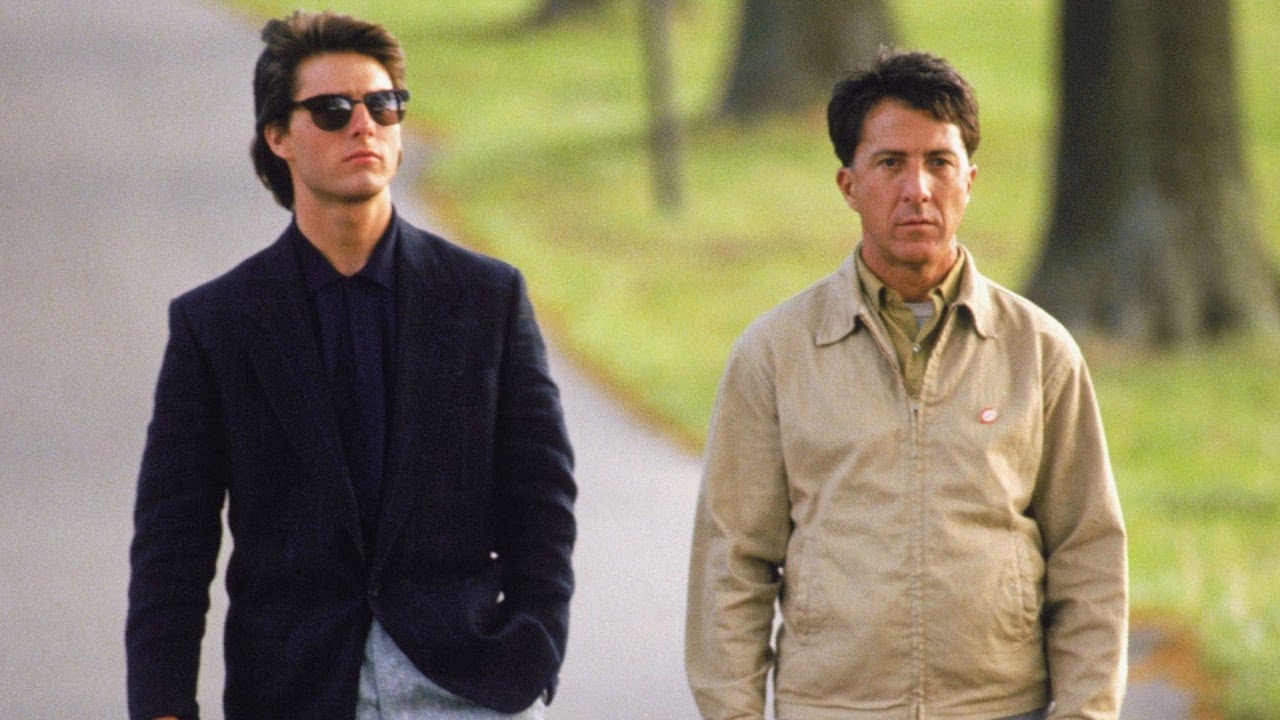
Tom Cruise and Dustin Hoffman go on a road journey of personal discovery in Rain Man

Director: Barry Levinson

Cast: Dustin Hoffman (Raymond Babbitt), Tom Cruise (Charlie Babbitt), Valeria Golino (Susanna). Jerry Molen (Dr Bruner), Ralph Seymour (Lenny), Michael D Roberts (Vern), Bonnie Hunt (Sally Dibbs)

Rain Man poster1988 wasn’t a vintage year at the Oscars, so perhaps that explains why this functional film ended up scooping several major awards (Picture, Director, Actor and Screenplay). Rain Man is by no means a bad film, just an average one that, for all its moments of subtlety and its avoidance of obvious answers, still wallows in clichés.
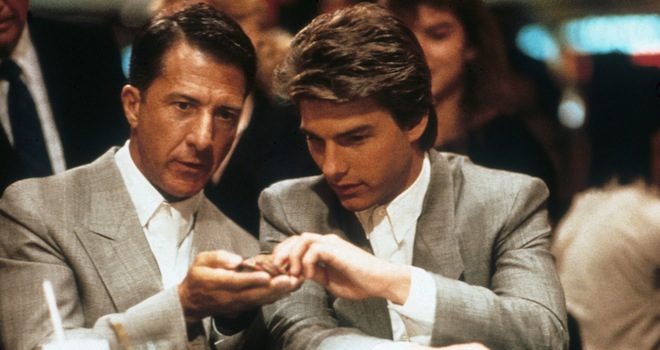
Charlie Babbitt (Tom Cruise) is a cocksure car dealer (he’s Cruise to the max) whose latest deal is spiralling down the toilet when he hears his father has died. Charlie had long since cut all links to his father, so he’s not surprised to be left only a car. But he is intrigued the money has been placed into a trust – and is shocked and furious to discover he has an autistic brother Raymond (Dustin Hoffman) he never knew about. After essentially kidnapping Raymond in order to claim his share of his father’s fortune, the two end up in a cross country road trip where Charlie slowly learns more about Raymond and their shared past and begins to soften in his view of his brother.

Rain Man is basically the sort of movie where two characters go on a road trip and have a personal journey of discovery, offering the sort of twists and character developments that are only really going to be surprising to someone who has never seen a movie before. But despite that, it does do something interesting, avoiding the standard Hollywood cliché of Raymond discovering depths or learning to overcome part of his condition: he is basically the same at the end of the film as at the beginning.

Instead all the change and journey is in Charlie Babbitt. The film carefully and unobtrusively develops Charlie over the course of the film so that he evolves away from the selfish, greedy yuppie we first encounter, who seems incapable of building emotional links with the people around him. Instead, as he learns to care (in every way) for another person, he also discovers reserves of love and a yearning for connection in himself that he never knew he had before. 

This all sparks off his interaction with Raymond – and his growing acceptance of Raymond for who he actually is, rather than who he wants him to be. This happens slowly – and Charlie can intermix tenderly teaching Raymond to dance with using him to count cards in Las Vegas – but you can plainly see the difference in his character from his reactions when he says hello to his girlfriend earlier (flirtatious but distant) with how he greets her when they reunite later in the film (warm, loving and open). It’s a gradual but very natural development shift that is the real heart of the film.

This works due to a terrific performance from Tom Cruise. Cruise has possibly never been better than he is here. His role is not about glamour or flash, but about carrying the narrative and emotion of the story. Cruise is sensational, quietly carving out a gradual and intelligent character development over a period of time that avoids all the flashy tricks and obvious “emotional” moments you expect. Cruise isn’t afraid to be unlikeable either at points in the story.

That’s what the real emotional connection with the viewer is in this story, and that’s the real arc that the film captures. However it’s Dustin Hoffman who attracted the real plaudits for his performance as the autistic Raymond. Interestingly Hoffman was initially tapped for the role of Charlie, but quickly worked out Raymond was the flashier part. 

Hoffman’s performance is a masterpiece of virtuoso transformation, and his capturing of the quirks and mannerisms of an autistic man are perfectly done. He convinces utterly. But, by the nature of the character, there is no real emotional or character work here. The performance is one that is largely a collection of extremely successful mannerisms. It’s rather like watching an expert juggler successfully juggle twenty things for over two hours. Hoffman doesn’t drop a single thing, but it’s a series of actor tricks rather than a complex acting performance of emotion and character. 

Rain Man did give an insight into autism for many in the 1980s for the first time. Its influence may perhaps have been too great – it’s now become almost standard for an autistic savant in movies to be a maths genius with amazing memory – but in the film, it’s carefully structured to serve as a starting point for Charlie to begin to see Raymond as a human being rather than an object. The film itself sets out a similar stall, encouraging the viewers to see those with autism as people with their own feelings – however much they struggle to understand or express these, as Raymond does. 

What it does very well is to subtly and sensitively explore Raymond’s situation. The medical professionals in the film are never demonised (as they so easily could have been) but are as concerned about Raymond as Charlie becomes. Raymond and Charlie discover they have a closer bond that both seem barely able to express – even Raymond seems to become, at least, used to Charlie’s presence enough to let him touch him. The film shows Raymond however can only progress so far – there is no miracle cure, and no out of character outburst of empathy. 

Rain Man works best when it focuses on subtlety – and has an outstanding performance from Tom Cruise – and it has a well filmed simplicity to it. But it is a slight tale, directed with a functional professionalism by Barry Levinson that never really manages to stand out from several other movies very similar to it. It has a certain warmth and emotionality to it, but deep down it’s nothing really that special – just a more subtle version of a story we have seen several times before.

Midnight Run (1988)


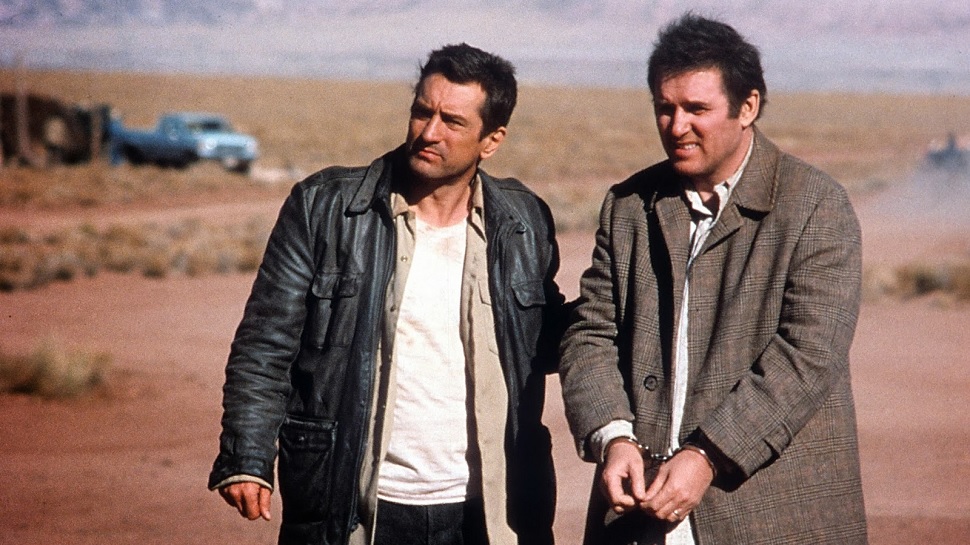
Robert De Niro and Charles Grodin go on the road in terrific buddy-movie action comedy Midnight Run

Director: Martin Brest

Cast: Robert De Niro (Jack Walsh), Charles Grodin (Jonathan “The Duke” Mardukas), Yaphet Kotto (Special Agent Alonzo Mosely), John Ashton (Marvin Dorfler), Dennis Farina (Jimmy Serrano), Joe Pantoliano (Eddie Moscone), Richard Foronjy (Tony), Robert Miranda (Joey), Jack Kehoe (Jerry Geisler), Wendy Phillips (Gail), Danielle DuClos (Denise Walsh), Philip Baker Hall (Sidney)

There are few comic set-ups you can get better mileage from than an “odd couple” – they meet, they argue, they grow closer, they fight again, they reconcile. It’s a standard formula. Midnight Run throws this together with a road trip formula (two people have to get from A to B but via every other letter of the alphabet). Really it should be hugely predictable. But Midnight Run is well written, very well acted and hugely fun – it manages to feel both light and frothy, but also sufficiently real and dangerous. It’s a great comic movie.

Jack Walsh (Robert De Niro) is a down-on-his-luck bounty hunter. Having been run out of the Chicago police force years ago for not taking a bribe, he’s skilled at his job but fundamentally unlucky and disenchanted. He’s looking for one big job to get him out: and it comes when mob accountant Jonathan “The Duke” Mardukas (Charles Grodin) skips bail. Hired by bail bondsman Eddie Moscone (Joe Pantoliano), Walsh has four days to find the Duke bring him back to LA before his bail is forfeit – manage it and he’ll get a cool $100k. But the Duke has stolen millions from the mob – so they want him dead, the FBI want him to testify, rival bounty hunters want to take him in – it’s all working out into a very long week for Walsh.

I really enjoyed Midnight Run when I first watched it years ago – and it’s been years since I’ve seen it – so it’s a delight to find it is as good as I remember. In fact, if anything, I think it might be better. It’s very funny – without anyone playing the material for overt or obvious laughs – but it’s also got a lot of soul. It never loses sight of the characters at its heart, in particular the loneliness, sadness and regret at the heart of Walsh, who presents a chip-on-his-shoulder stance to the world, to hide a decent and honourable man who can’t believe his principles are rewarded.

De Niro took on Midnight Run because he wanted to try comedy (he had just played Satan and Al Capone, so probably had earned a rest). Walsh is probably one of his best comedic performances, because he treats it with the investment he gave his greatest roles. He makes Walsh a real person – and he’s willing to downplay the comedy. He doesn’t mug or play to the camera (as he has more recently), he just plays the role with a slight wryness, a touch of lightness from the actor, while the role itself is kept real. His increasing frustration and world-weary resignation matches up perfectly with the hint of sadness he keeps under the surface. It’s a very effective performance.

It helps as well that De Niro allows Charles Grodin to carry the bulk of the comedy. Grodin was cast over the wishes of the studio – but it was an inspired move as the chemistry between the two actors is fantastic. They play off each other brilliantly, Grodin the more worldly, urbane and dry accountant, opposite the stressed out Walsh. Grodin is very funny, and very genuine – and he’s as whippersmart as the Duke himself, constantly keeping us on our toes as to when the Duke is telling the truth, and when he is pulling the wool over our (and Walsh’s) eyes. 

The film throws these two into a series of increasingly hilarious events – from a panic-attack on a plane, to a sneaky piece of con-man work in a back-district town – but mixes it up with genuine moments where the two open up to each other (there is a wonderful scene where Walsh, under the Duke’s gentle probing, final opens up about his past). Each of these moments is wonderfully played, and works so well because the two actors have a genuine connection between them. Both lift the other: Grodin clearly helps De Niro relax and loosen up, De Niro encourages Grodin to bring a greater depth to his acting than ever before.

The contrivances and competing parties they take on also throw in plenty of fun problems. My recording from the BBC from years ago was somewhat sanitised, so it’s a surprise to hear how many times De Niro uses the f-word in this film! Martin Brest films all this with a controlled restraint – perhaps a little too much control (Yaphet Kotto has talked of his misery of performing endless takes of even the simplest scenes). But the dangers Walsh has to take on walk just the right line between feeling real, and feeling comedic.

So we have a sinister gang-boss (played with lip-smacking relish by Dennis Farina), but his underlings on the ground are realistic-feeling, but non-too-bright gangsters (sharp enough to keep track of Walsh, dull enough to constantly say the dumbest things). The Feds are led by a tensely wound-up Yaphet Kotto, but the comedy comes from his cold stares at his underlings, who are prone to state the obvious. John Ashton is good value as a rival bounty hunter, a regular joe not-as-smart-as-he-thinks, but more than smart enough to win the odd hand. Joe Pantoliano gives possibly one of his most Pantoliano-performances of weasily whininess as Walsh’s bail bondsman boss.

Midnight Run rattles along brilliantly. It’s hugely entertaining, with a series of surprisingly high-blown action set-pieces (all met with a dry reaction from the Duke – “I’m sure we’re completely safe” when a pursing gun-laden helicopter temporarily drops out of view – and in turn a furious “Will you shut the fuck up!” from Walsh). Martin Brest gets the balance just right between comedy and drama, and creates a very funny movie where you end up caring a great deal for the characters. It’s a road-movie, buddy comedy that feels fresh and really works because it manages not to feel like it’s trying too hard. And of course it has a great closing scene – and one of my favourite end-lines to a movie ever: “Looks like I’m walking”. Check it out. You’ll like it.

Lion (2016)


Dev Patel searches for his past in Lion

Director: Garth Davies

Cast: Sunny Pawar (Young Saroo), Dev Patel (Saroo Brierley), Rooney Mara (Lucy), Nicole Kidman (Sue Brierley), David Wenham (John Brierley), Abishek Bharate (Guddu), Divina Ladwa (Mantosh Brierley), Priyanka Bose (Kamla Munshi), Seepti Naval (Saroj Sood)

In 1986, Saroo (Sunny Pawar) is accidentally separated from his brother Guddu (Abishek Bharate) and mother (Priyanka Bose) after being trapped on a train that travels 1,600km to Calcutta. Unable to find his way home, and dodging the dangers of Calcutta’s streets, he eventually ends up in an orphanage. He is adopted by an Australian couple, the Brierleys (fine and tender performances Nicole Kidman and David Wenham). Twenty years later, a chance meeting with a group of Indian students brings Saroo’s (Dev Patel) memories flooding back– and dedicates himself to retracing his steps and finding his family in India.

Lion is an overlong expansion of a story that would really spark your interest when presented in a newspaper article. But Garth Davies’ film drains the dramatic life out of the story by ludicrously overextending the telling in order to try and eke as much emotion from the audience as possible. Lion is under two hours, but it really should be at most an hour and a half.

The problem is the central section in Australia, while our hero tries to locate his roots. It just isn’t quite interesting enough, despite sterling, committed and emotional work from Dev Patel. Put simply, even with an extraordinary story like this, the film can’t help but communicate Sarro’s obsessions through cinema’s clichés. So we get a madness board with pins and bits of string to link clues. We get Saroo increasingly dishevelled. We get him driving away family and girlfriend. We get moody, tearful glances into the middle distance. Even the final solution to the mystery occurs after a spark of inspiration during a rage fuelled “I’m going to wreck this board and give up” moment. This whole section just serves to reduce the story into movie-of-the-week territory.

The film just doesn’t quite connect with us as it should. Perhaps because of the amount of time given over to very slow Google Earth searches, or overblown camera tracking shots across train lines, or expansive slow, piano-scored moments of emotional torment from Saroo. It’s a shame because there are flashes of good material in there – Nicole Kidman’s has a stand out scene to explain why she chose not to have children – and Dev Patel is the best he’s been. But it doesn’t quite work. After Saroo’s emotional revelation at an Indian friend’s house and realisation that he is “lost” (and this quiet devastation from Patel is affecting), the story doesn’t really kick off. It just slows down.

It’s a shame as the opening third of the film with young Saroo lost in Calcutta is very well done, even if it seems virtually every male living on the streets is a paedophile. The early scenes with Saroo and his brother are very good, and establish the strength of their bond. Sunny Pawar does a marvellous job as the lost boy, and Garth Davies films Calcutta with an earthy realism, as well as having a wonderful sense of empathy for the vulnerability of children. It’s also striking to see how uncommented upon a child alone on the streets of Calcutta goes. The dangers Saroo dodges feel genuinely threatening, and helps us invest emotionally for the rest of the film.

The moments that flash back to this do get overplayed later. Much as I initially liked Saroo hallucinating his brother and mother appearing around him in the streets of Melbourne, it’s a card that quickly gets overused. Like many of the ideas in this film, it gets hammered home a little too much. It’s that whole middle section, with poor Rooney Mara saddled with the thankless part of supportive girlfriend. You could have cut it down by 20 minutes and had the same impact. Garth Davies’ direction simply gets carried away with the lyrical sadness, to try and tug our heartstrings.

The problem is the most moving part of the film is the final sequence where we see the real people meeting in the streets of Khandwha. Nothing else in the film really measures up to this genuine emotion. Particularly after we’ve watched a man searching Google and behaving moodily for well over forty minutes. It’s a film that loses its way because it’s moments of emotional reality like that which make these stories truly profound – and a dramatisation can never provide that. With the film also unable to find a way to make the search as dramatic and engaging as the getting lost and being found, it also flounders in the middle, taking way too long to get us to the destination. It’s got its moments, but it’sa well assembled film that outstays its welcome.

Mad Max: Fury Road (2015)


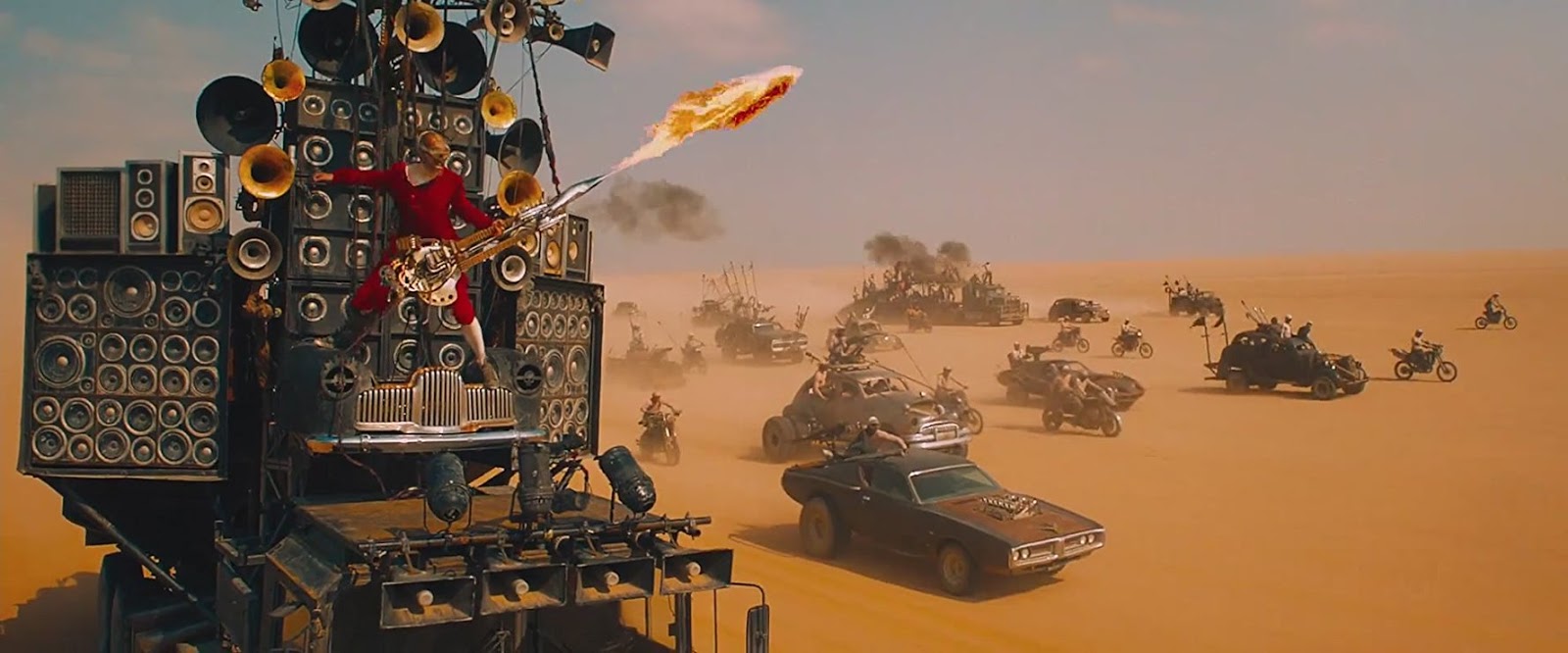
George Miller’s Mad Max: Fury Road – a crazy car chase film

Director: George Miller

Cast: Tom Hardy (Max Rockatansky), Charlize Theron (Imperator Furiosa), Nicholas Hoult (Nux), Hugh Keays-Byrne (Immortan Joe), Rosie Huntington-Whiteley (The Splendid Angharad), Nathan Jones (Rictus Erectus), Riley Keough (Capable), Zoë Kravitz (Toast the Knowing), Abbey Lee (The Dag), Courtney Eaton (Cheedo the Fragile), Josh Helman (Slit)

Sometimes films seem designed to give you a visceral thrill, to throw you into an experience and see whether you sink or swim. To pull off that sort of hard-edged momentum, you need a film-maker skilful enough to create an addictive energy that never slackens and never gives you a second to question the film while it’s going on. Mad Max: Fury Road has such a director in George Miller, and its demented, high-octane excess, married with a film-making style that felt modern, vibrant and grounded in reality, surprisingly made it one of the most acclaimed films of 2015.

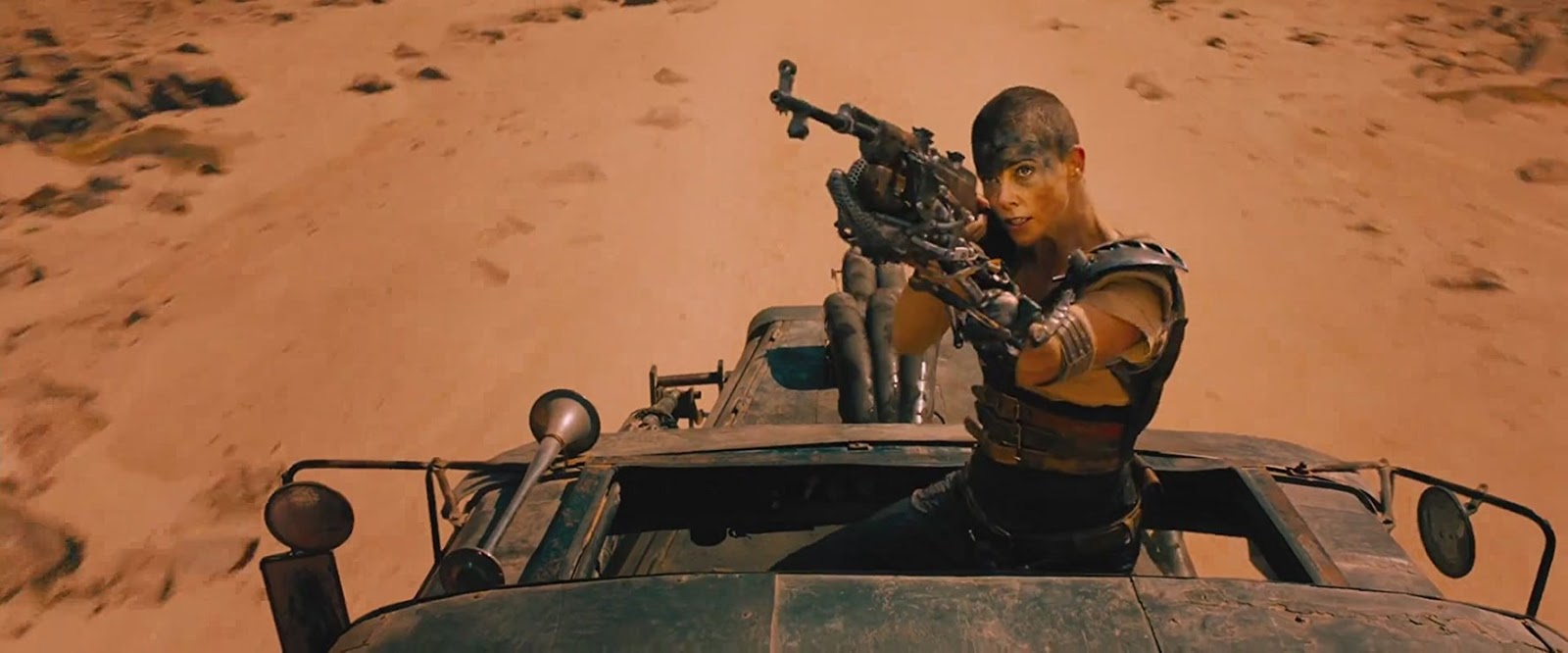
In a post-apocalyptic future Australia, the world is a ruined desert and basic requirements like water, greenery and fuel are more valuable than anything. In a rocky outcrop, cult-leader Immortan Joe (Hugh Keays-Byrne) rules one of the few populations by controlling access to the water. “Road warrior” Max Rockatansky (Tom Hardy) is captured by Immortan Joe’s warriors and put to work as a “blood bag” to transfuse into Immortan Joe’s warriors. However, this coincides with a planned escape by Immortan Joe’s wives (the few remaining women capable of conceiving children). Led by road warrior Imperator Furiosa (Charlize Theron), the women flee to find a mysterious paradise in the wilderness. Cue an almighty chase and running battle between Furiosa’s road carrier and Immortan Joe’s forces, desperate to reclaim the wives.

Mad Max: Fury Road is a bizarre, extreme, surreal thrill ride, a high-octane road chase, crammed with action, thrills and dynamism. It’s directed with extraordinary vibrancy by George Miller, who makes it fresh and scintillating. Miller crams the action and design with an explosion of style. Everything is amped up to 11, from the look to the characterisations and motivations. But what makes this such a well-directed film is that Miller shoots much of it with careful, professional clarity: so many other films would be cut with a frantic craziness, but this has a polished traditionalism to it. Basically Miller knows the actual content of the story is “insane” enough that he doesn’t need to gild the lily with bizarre, swooping camera angles or choppy editing. 

That’s partly why this film has had such a strong positive reaction. While being insanely OTT, it’s actually quite an old-fashioned piece of film-making, and it looks like a lot of it was shot for real on location, using real practical stunts. This may or may not be the case, but it certainly looks like this. And in an era where so many action films are about superheroes, and crammed with special effects, to have a world where things feel grimy and real, where the objects we are watching feel like they exist, is like a breath of fresh air. The design throughout the film accentuates this sense of reality. It makes things feel like they have depth and force. It immediately adds stakes to the action.

That action takes place in a unique looking world. The visuals in this film are crazy. The design of Immortan Joe’s half-nude soldiers, with their silver paint aerosol and petrol smeared faces, is terrifyingly cultish. The look of the many different vehicles is immediately striking, with each being clearly of the same world, but each distinctive in look, like some Wacky Races. The steampunkish mix of cobbled-together remains of technology to create the cars and trucks is brilliantly done. It’s a film that looks like nothing else, and shot with radiant streaks of yellows and blues, mixed with scenes shot in almost painterly black and white. It’s an explosion of style, but not straining too hard to force itself upon you like so many films do. 

The film also has a simple structure and storyline, that allows it to focus on the action. It’s slick, steamlined and very focused. The villains are clear, and their motivations easy to understand. They are presented with a certain depth, but their essential villainy is easy to have a gut instinct against. This also helps us bond with our heroes – despite the fact that most of the wives have only the most briefly sketched of characters. But we totally understand their position, fear and desire for freedom. Just as the film is a primal explosion of “fight or flight”, so are the feelings our heroes carry. Everyone can relate to them.

It’s also great that this is an action film where the women largely drive (literally!) much of the action. The film may have the Mad Max name on it, but the true lead of the film is Furiosa. It’s her actions that drive the film, it’s her conflicts that are at its heart, the film is her journey and Max is largely along for the ride (again literally!). Charlize Theron is very impressive in the lead, a strong warrior woman, but also someone with a buried poetic soul and a clear emotional arc. Tom Hardy delivers as the grizzled Max, but this is very much Theron’s film.

Mad Max: Fury Road is an exciting and engrossing film. But it’s made with such professional inspiration on the visuals that it invites people to read into it a lot more depth than I think is actually there. It’s got such old-fashioned control and brilliance to it, while being so explosive and vibrant, that it’s tempting to read into it a thematic complexity. Let’s be honest, this is a chase movie. It’s a hell of a chase movie, but it’s a chase movie.

It may be set in a world of post-apocalyptic totalitarianism, but it’s not trying to tell us anything hugely original about what such a world may be like. It creates such a world with huge inventiveness, but it’s not an enlightening film. Similarly, this is a film that places women at the centre of its action, but I’m not sure you could call it a film that has much to say about feminism. Most of the women in this film are still defined primarily by their breeding abilities. Furiosa may be the leader, but most of the rest of the women are under her protection. The film does something different with gender, but it also does a lot of quite traditional things. 

It’s really tempting to see great symbolism in such a dynamic and striking piece of film-making. But thematically there isn’t much there. Miller directs a film that is brilliant too experience, so brilliant you expect there to be more at its heart. In truth there isn’t really – it’s largely what it appears to be on the tin. There’s nothing wrong with that though. You just need to know what you are going to get. This is not some great game changer of a motion picture, that will reinvent and reposition the genre. It is a skilfully made and compelling chase movie, where a group of people run to a point, turn around and head back, being chased all the way. It’s shot with a near poetic, old-school brilliance – but it’s still just a chase movie. Accept it as that – a high-octane action thriller – and you will be swept away. Look to it for the thematic depth some have claimed it carries and you will be disappointed.

Sullivan's Travels (1941)


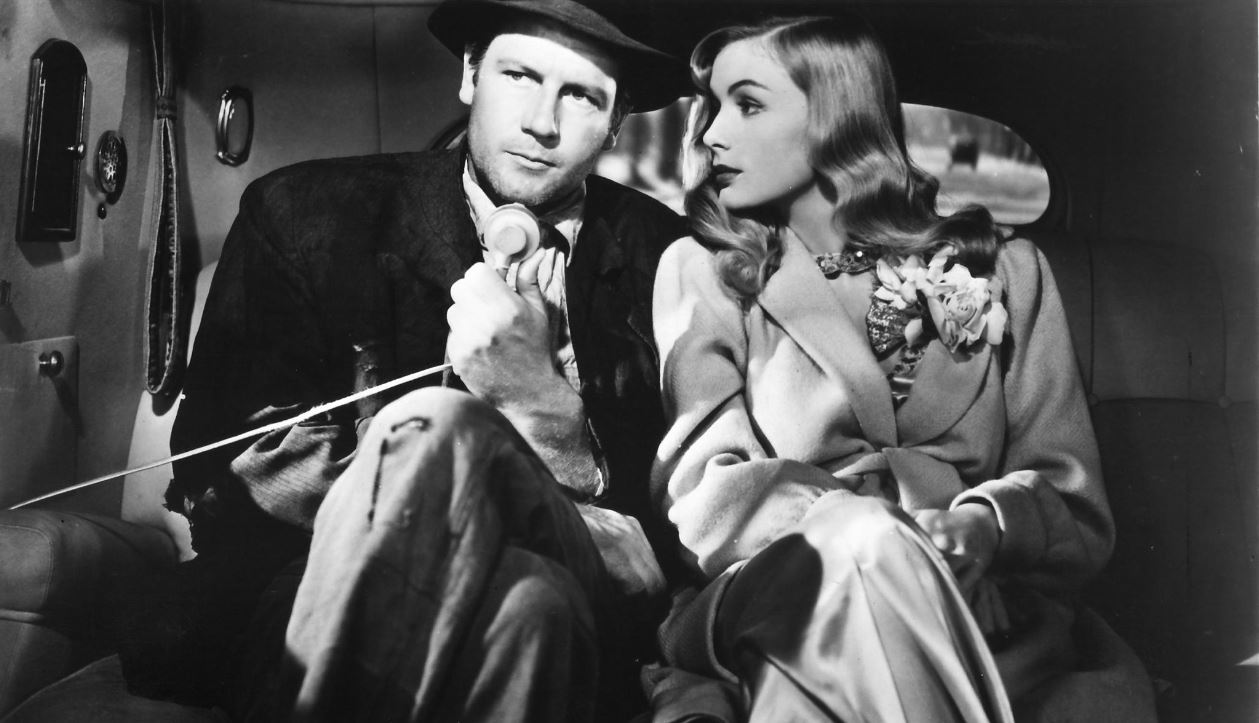
Joel McCrea and Veronica Lake go on a journey of discovery – with a lot of jokes

Director: Preston Sturges

Cast: Joel McCrea (John L. Sullivan), Veronica Lake (The Girl), Robert Warwick (Mr Lebrand), William Demarest (Mr Jonas), Franklin Pangborn (Mr Casalsis), Porter Hall (Mr Hadrian), Byron Foulger (Mr Johnny Valdelle), Robert Grieg (Burrows), Eric Blore (Sullivan’s Valet)

Sullivan: I’m going out on the road to find out what it’s like to be poor and needy, and then I’m going to make a picture about it. 
Burrows [his butler]: If you’ll permit me to say so sir, the subject is not an interesting one. The poor know all about poverty and only the morbid rich would find the topic glamourous.

Preston Sturges was one of Hollywood’s first writer-directors, a whip-sharp satirist. In Sullivan’s Travels he turned his guns firmly on Hollywood, satirising the industries self-importance. However, what he did so well was to counterbalance this with a genuinely insightful look at the urban poor and a celebration of the magic of the movies. The fact that he managed to cover this all in one movie – without making the film feel wildly inconsistent in tone – is quite some accomplishment.

John L. Sullivan (Joel McCrea) is a Hollywood director tired of making shallow crowd-pleasers. He wants to make a serious, social-issue film (called O Brother Where Art Thou?). When studio heads point out he knows nothing about the working man, Sullivan declares he will head to live the life of a drifter until he understands them. After several false starts, it isn’t until he meets a girl (Veronica Lake) that he starts to truly experience the life of the poor.

I’ve mentioned Sullivan’s Travels shifts in tone. In many ways, it’s a film that wants to have its cake and eat it – to be a satire of self-important move-making, and at the same time be an important movie. The extent to which it succeeds is a matter of taste: I can imagine plenty of people being thrown by the sudden shift in tone that kicks in for the final 40 minutes, after the slapstick and screwball comedy of the opening hour. But that’s partly the point. Sullivan’s Travels works because it puts all the objections you could make to a film “teaching” real people about their lives in that first hour – so you feel disarmed heading into the final half hour when the film does just this.

So that first hour first: it’s very funny. The scattergun satire of Hollywood folks is brilliantly done. The fast-paced dialogue of Sullivan and his studio bosses discussing his plans is wonderfully funny – how could you not like an exchange like this:

Sullivan: I want this picture to be a commentary on modern conditions. Stark realism. The problems that confront the average man!
Studio head #1: But with a little sex in it,
Sullivan: A little but I don’t want to stress it.

What’s sparkling about the exchanges is that Sullivan is just as out-of-touch and elitist as the suits, but with a higher degree of self-delusion. His attempts to head off onto the open road and live the life of the drifter are hilariously inept – his first sees him travelling with a “support team” (including a doctor, chef and media man); the second sees him accidentally return back to Hollywood. Sullivan wants to make a film about real people, but Sturges stresses he is as clueless and confused about the subject as any other rich Hollywood snob. The film has a glorious mixture of verbal acrobatics and slapstick pratfalls to demonstrate the comedy of this extraordinarily rich man (who at one point off-handedly runs through the features of his vast home) trying to relate at a distance to the poor.

It takes his meeting with Veronica Lake’s unnamed Girl for him to begin to understand the drifter’s life. Lake’s character remains unnamed, which is another joke on Hollywood – earlier Sullivan discusses women in films with the phrase “There’s always a girl in the picture”, so the plot shoe-horning a Girl in (without even naming her) as a sort of beggar Viola is, in itself, a neat parody of the structural conventions of Hollywood films. Anyway, it’s the introduction of this character that serves as Sullivan’s gateway into seeing what the world is like. Disguised as a boy (which allows plenty of neat gags in itself) the Girl takes Sullivan on a tour of shanty-towns and soup kitchens.

It’s here the tone of the film slowly shifts towards seriousness as we finally get to see the lives of paupers, in a film satirising a Hollywood director who wants to make a film about that subject. It’s wonderfully meta! Sturges shoots these scenes with tenderness and simplicity, without dialogue and scored only by gentle music. There are some small laughs on the way – but we never laugh at the poor and the overall impression is of the quiet dignity of these people just struggling to get by. It couldn’t seem further away from Sullivan’s privileged expectations. It’s quiet and it’s dignified.

Sullivan ends the film (for various reasons) as part of a chain-gang, and finally true suffering and gains the strength of character to acknowledge his own vanity. In one of the film’s most magical sequences, Sullivan watches a film with his fellow convicts and a poor black congregation. Unlike a sequence earlier where he watched a film with the urban middle class (hilariously then every possible breach of cinema etiquette is made, from crunching loud food to babies wailing) this audience are transported by the magic of a Walt Disney cartoon.

This sequence is justly famous, not only for its innocent charm, but also its ahead-of-its-time treatment of the black congregation. The congregation is open-hearted, intelligent and generous. There is a marvellous (and moving) rendition of Go Down Mosesand the black working class is contrasted with the dehumanising conditions of the chain gang. The whole sequence points out the underlying social injustice of America during this era. It’s wonderful – so well done you forget the film (in its jauntier first half) had a crude “white face” gag with its forelock-tugging black chef.

That’s the kind of film this is – a real mixture of genres, of views, of satire on social commentary mixed with real social commentary… Sturges throws almost everything at the wall here, and nearly all of it sticks. The underlying theme, if there is one, is the nature of class and privilege in America. Sullivan is well-off, from a rich background. He finds himself on a chain-gang when he is mistaken for the bums he is attempting to find out more about – but when he is revealed as a rich film director he is immediately released, despite still being guilty of the offence he was arrested for in the first place. In America, money talks and everyone else walks.

Sullivan’s Travels is probably not going to be everyone’s taste. Watching it, I missed the comedy of the first half during the more serious second half, cleverly done as the build of expectations was (how can you criticise the film, when the film is already criticising itself successfully?). Sure parts of it are dated, but it contains so many different types of film-making (screwball wit, Chaplin-esque pratfalls, animation, social realism, melodrama, romantic comedy) it’s almost a film school essay. It also manages to make its changes of tone throughout feel like natural developments.

All this and I’ve hardly mentioned the performances. The cast is full of brilliant character players, all of whom get their moments to shine – Sturges cast from a pool of regular actors, and he was a superb judge of distinctive faces and unique vocal delivery. Veronica Lake is very good – endearing but also sharp and smart as the Girl – but the film is totally anchored by Joel McCrea’s superb, low-key, straight-forward performance which resists all temptations to wink at the camera. 

Sullivan’s Travels feels like a little known masterpiece – but it deserves being known better. It’s original, it’s funny, it’s moving, it’s clever and it’s packed full of great moments. It’s a wonderful example of old-school Hollywood looking harshly at itself – not only at its shallowness and formulaic nature, but also at its self-importance and self-satisfaction – but still acknowledging that the escapist pleasure it can give to people is valuable, that it can be a force for good, for all its faults. It tries to have its cake and eat it – but do you know what? It’s probably one of the very few films that pulls that off.

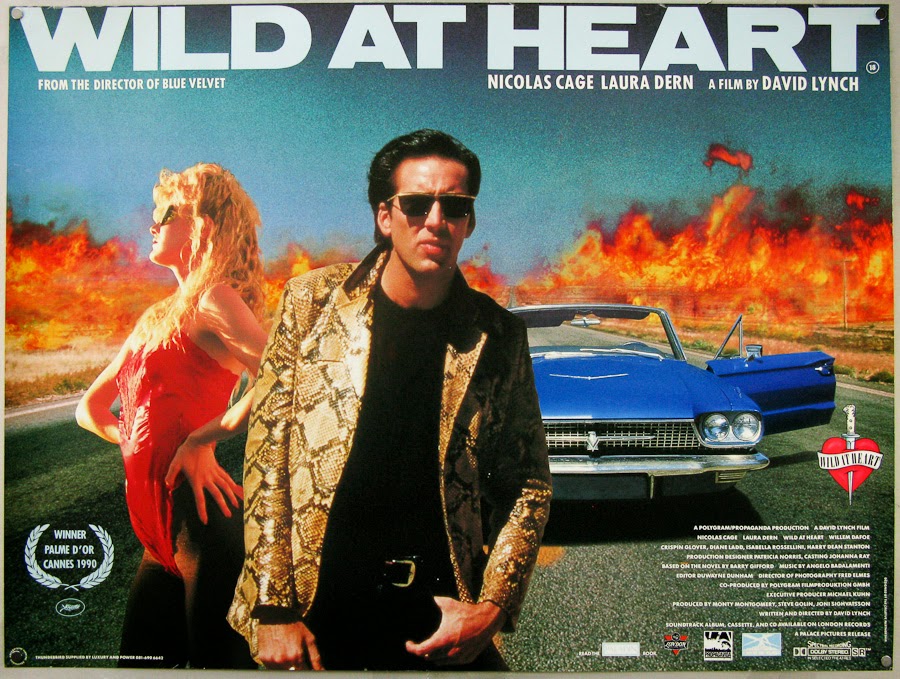
Wild at Heart (1990)


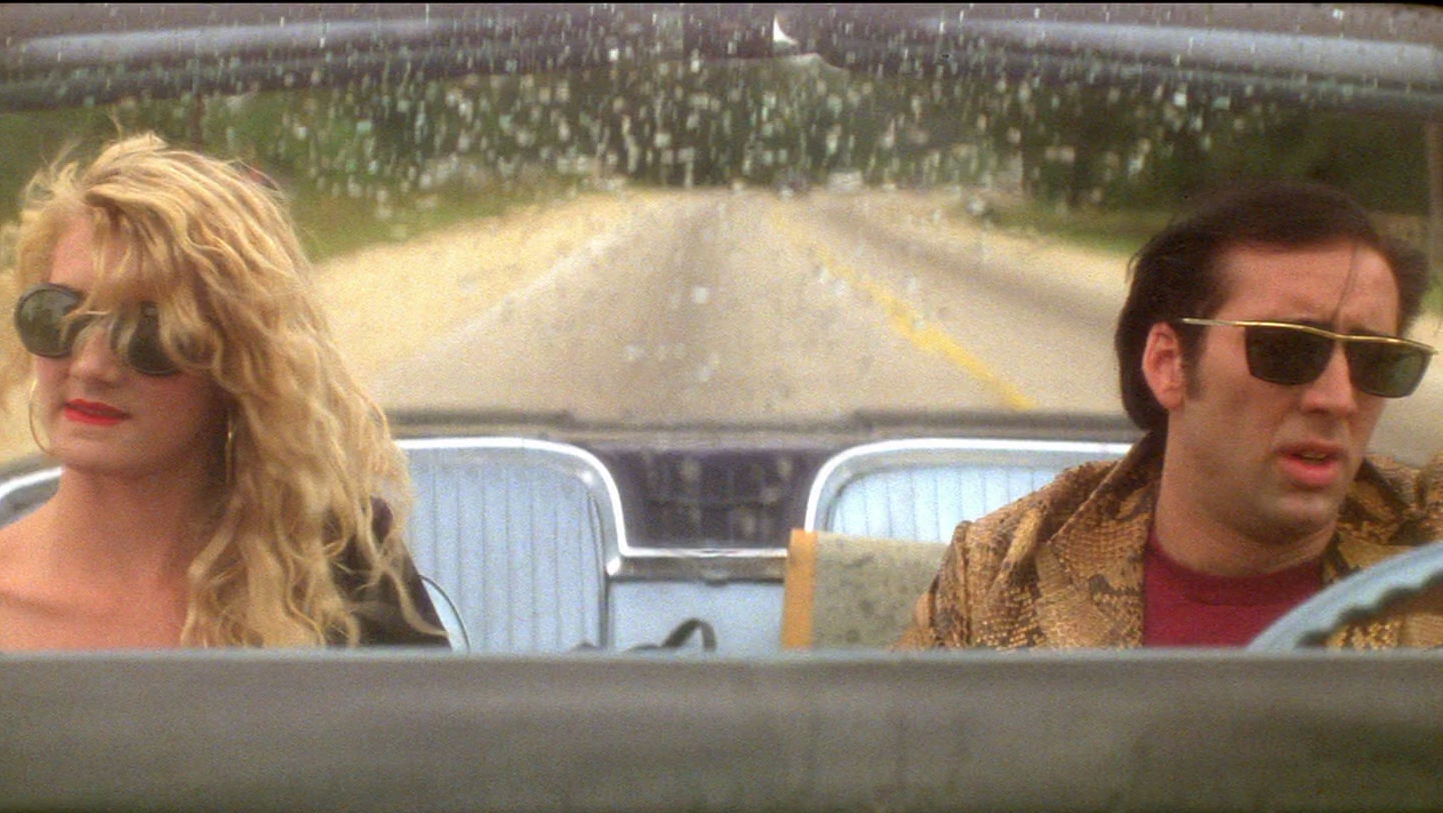
Laura Dern and Nicolas Cage in the hideously empty Wild at Heart

Director: David Lynch

Cast: Nicolas Cage (Sailor Ripley), Laura Dern (Lula Pace Fortune), Diane Ladd (Marietta Fortune), Harry Dean Stanton (Johnnie Farragut), J.E. Freeman (Marcello Santos), W. Morgan Sheppard (Mr Reindeer), Willem Dafoe (Bobby Peru), Crispin Glover (Dell), Isabella Rossellini (Perdita Durango), Sherilyn Fenn (Car Accident Girl), Sheryl Lee (Good Witch)

David Lynch is an eccentric film director. I think that is a fair comment. At his best, he combines his “view askew” look at the world with genuine comedy and pathos. At other times, his films disappear down a self-reverential rabbit-hole that seems designed to frustrate and alienate the viewer. Wild at Heart is the latter type of movie.

Sailor Ripley (Nicolas Cage) is released from prison after his self-defence response to a knife-wielding man at a party turns into a homicidal fury. The knifeman may (or may not) have been hired by Marietta (Diane Ladd), mother to Sailor’s “girl” Lula Pace Fortune (Laura Dern, Ladd’s real life daughter) a woman with a sexually troubled background of abuse, who is in the middle of a sexual awakening. Together they go on a road trip to – well just kinda to get away I guess.

I’ve got to confess I really hated this movie. I only stuck with it to the end, because (a) it wasn’t that long and (b) I wanted to have actually watched the whole thing before I laid into it in this review. This film is the absolute worst elements of Lynchian oddness and gore mixed with pop-culture references to the 1930s through to the 1950s.

In fact it’s a film that is so totally obsessed with these two things that there is literally no room in it for any real plot or emotion. Instead it’s full of pointless, smug and irritating visual and audio quotes from Elvis to The Wizard of Oz, and empty characters played by showboating actors giving massive performances under ostentatious make-up, all to hide the fact that the film (for all its bombast) is a shallow as a puddle. It’s a horrible piece of intellectual fakery, that pretends to be about deep profound themes about love and death but tells us nothing about them. In the end it gets more delight from Dafoe blowing his head off with a shotgun than it does from anything to do with its so-called themes.

Lynch piles on the violence for the sake of it, all in the name of parodying the aggression that lies under his apple-pie surface Americana. This worked in Blue Velvetbecause the contrast was so great, and the characters (for all their larger-than-life qualities) felt real. Here, everything feels artificial. A constant visual image of fire and flames runs through the story – it’s a reference back to the murder (it’s not a surprise to say) of Lula’s father (burnt alive on the orders of his wife it turns out). This adds nothing at all to our understanding of anything – particularly since Marietta is the most obviously corrupt and hypocritical character from the start, drawing attention in such a ham fisted way to her past misdeeds, and the impact of them, hardly seems necessary.

The film is full of signs of man’s inhumanity – the brutal shootings, the torture of Harry Dean Stanton’s luckless PI (toned down considerably from the original cut), Sailor’s brutal murder at the start, a road accident peopled with twisted bodies – but it’s all so bloody obvious. We get it David, the world is bad and people suck. Just because you’ve shot this with some tricky angles and carry it across with a tongue-in-cheek delight at your own naughtiness doesn’t make this a masterpiece. It just highlights the shallow emptiness you are peddling as art.

The rampant self-indulgence spreads to the actors. You’d think Cage would be perfect for Lynch right? Wrong. His hideously self-conscious performance of overt oddity here just makes his performance all the more unbearable. Diane Ladd gives the sort of performance many call brave, but is really just about shouting and smearing lipstick all over her face. By the time Willem Dafoe turns up with ludicrous teeth, ripping into the scenery, you’ve lost all patience. The only person who emerges with any credit is Laura Dern, who at least invests her characters with some level of humanity and sweetness. Everyone else (everyone!) is a stock cartoon drawing.

But even Dern is cursed with Lynch’s awful sexual abuse sub-plot, which is genuinely offensive in its trite shallowness and in its suggestion that having sex with your uncle as a young teenager will turn you into a real goer later in life. Did he really deal with the same themes with such sensitivity in Twin Peaks? As for the so-called romantic happy ending – it’s unearned in any way by the film, which has treated the subject with scorn. The film’s dark wit isn’t even particularly funny – everything is so dialed up to eleven, that all the comic beats get smothered in over acting or over stylised dialogue and action.

Wild at Heart won a flipping Palme d’Or (to be fair the announcement was booed). But don’t be fooled. This is a film pretending an intellectual depth it never gets anywhere near to achieving. It’s a horrible, pathetic, cruel and empty film that thinks it’s a satire on the dark heart that lies at America’s soul. It’s not. It’s just a cartooney, self-important lecture which mistakes oddity and eccentricity for heart. Lynch is a talent for sure, but here his talents are sorely misdirected into indulgent, childish emptiness and faux profundity. Don’t watch it.