Category: Romance

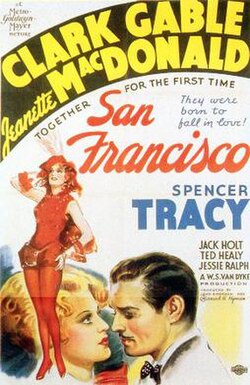
San Francisco (1936)

San Francisco (1936)

Charismatic stars and a well-oiled Hollywood plot lead into an highly effective disaster movie

Director: W.S. Van Dyke

Cast: Clark Gable (“Blackie” Norton) Jeanette MacDonald (Mary Blake), Spencer Tracy (Father Tim Mullin), Jack Holt (Jack Burley), Jessie Ralph (Mrs Burley), Ted Healy (Mat), Shirley Ross (Trixie), Margaret Irving (Della Bailey), Harold Huber (Babe)

With San Francisco, Hollywood stumbled on a formula that was a sure-fire success: a romantic triangle comes to head in the face of a natural disaster with buildings tumbling. Love and disasters – who doesn’t love that? San Francisco is set in the build up to the 1906 earthquake that left over two thirds of the city in ruins and over 3,000 people dead. How’s that for focusing minds onto what really matters: who you really love and, of course, faith in a higher power.

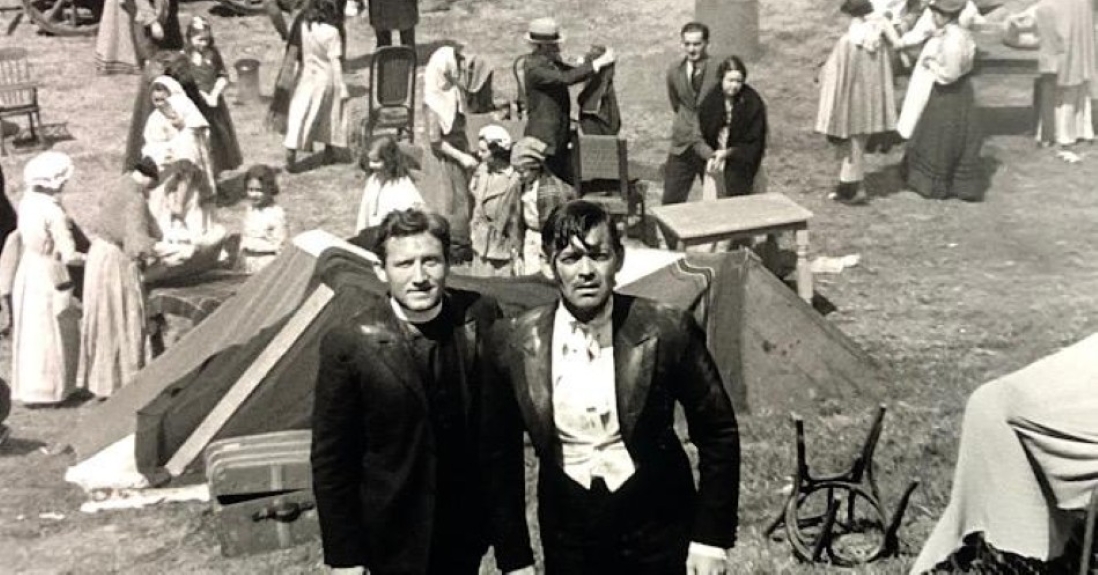
“Blackie” Norton (Clark Gable) is a lovable rogue, a saloon owner on San Francisco’s rough-and-ready Barbary Coast. His love for a good time doesn’t stop him being best friends with Father Tim Mullin (Spencer Tracy), a man’s man whose heart is with the Church. Blackie hires knock-out soprano singer Mary Blake (Jeanette MacDonald) for his saloon, but can’t wrap his head around the fact that she’s meant for classier things (like San Francisco’s opera house) than a life singing for his rowdy crowds. Of course they fall in love. Blackie is holding Mary back (without fully realising it) and she finds a new patron (and suitor) in stuffed-shirt rich-man Jack Burley (Jack Holt). All these romantic problems are suddenly dwarfed by that earthquake.

Like all disaster films, San Francisco starts with a high-blown melodrama before becoming a special effects laden epic. Much of the first 90 minutes revolves around an engagingly played familiar pair of formulas. We have a story of two old rough-and-tumble childhood friends – inevitably one who chose a life of the cloth, the other of rowdy pleasure – whose friendship struggles under the weight of conflicting principles. And we also get a love triangle where a woman is torn between two suitors – one a rogueish chancer who doesn’t understand her dreams, the other a selfish dull rich guy who offers her those dreams at a price. This is classic Hollywood stuff.

To deliver it, three popular stars go through their paces to audience pleasing effect. Clark Gable brings his customary suave charm and naughty grin to make Blackie (who in other hands could come across as a myopic, selfish sleazeball) into someone fairly endearing. Of course, it’s helped that the plot makes clear Blackie may appear to be a boozy saloon owner, but actually he has a heart of pure gold: he buys an organ for the local church, gives money to orphans and is running for office to improve the city’s fire safety. He’s easily the most polite, decent and upstanding bad boy you’ll see – and he’s even completely faithful to the woman he loves. He may say God is for ‘suckers’, but it’s not going to be a long journey to reform him into someone worthy of a good woman.

And he’s also honest in his love for Jeanette MacDonald’s Mary, trying to give her what he thinks she wants. Blinded by his three ‘Chicken Ball’ trophies for ‘artistic achievement’, he genuinely can’t see the difference between Mary performing Faust and dressing her up in the shortest skirt imaginable (as he tells her, good legs sell) to sing for hundreds of drunken punters. Poor Mary feels obliged to give up her dream to return for this nonsense, until good old Father Tim points out Blackie is accidentally behaving like a cad. Enter Jack Burley as alternative: just to make sure we know it’s the wrong choice, he’s played as un-charismatically as possible by Jack Holt and uses his money to get everyone to follow his orders, exactly the sort of ‘Nob Hill’ crook Blackie rails against.

With Jeanette MacDonald – who is perhaps a little too coy and bashful for today’s taste – we also get an awful lot of singing, from opera to hymns to several renditions of ‘San Francisco’. This went down like a storm at the time, but is probably a bit too much to take now. MacDonald actually has the duller, less engaging role, constantly changing her mind between her various career and romantic options, although she does a nice line in awkward uncomfortableness when accommodating herself to Blackie’s wishes rather than her own (not least in her body language when dressed up in that slutty showgirl costume that Blackie thinks is a compliment).

Surprisingly Spencer Tracy then landed an Oscar nomination (the shortest ever leading performance nominated), but he nails the muscular Christianity of Tim, the boxing priest. Tracy’s main role is dispensing advice and guidance to Gable and MacDonald, full of shrewd wisdom mixed with firm stares of moral judgement. Tracy plays the role very lightly, never making Tim priggish even at his most righteous. A confrontation which sees a frustrated Gable smack him in the mouth, is a classic Tracy moment: a steely eyed glare dripping with disappointment, but still he refuses to react (the film throws in an early boxing scene between the two, where Tracy easily bests Gable, to confirm he certainly ain’t scared of his co-lead!)

The various smoothly handled formula leads perfectly into the earthquake. You can’t deny this is hugely impressive sequence. The scale, using super-imposition and enormous sets, is truly stunning: buildings topple in flames, fires rip through houses, crowds run in panic through debris-packed streets. A ballroom crumbles before our eyes: the roof cracking, the wall falling down (Gable is nearly crushed by a wall), a staircase balcony collapsing.

Clearly someone on the MGM lot spent a bit of time watching Battleship Potemkin. The first wave takes Soviet cinematic montage inspiration to the max. Tight reaction cuts to horrified faces are intermixed with tumbling walls and buildings. A statue is seen, seemingly starring down in horror, before a cut to it cracking and then a shot of the head roiling downwards on the floor. A carriage wheel spins in the streets in close-up as debris falls around it. This sequence feels visceral and intense, a real stand-out moment. A second wave picks up the baton with a street literally tearing itself in two, flames licking up from a burst gas main. Buildings are dynamited as fire breaks. And through the aftermath, Gable stumbles blooded and torn and genuinely looking lost and afraid, terrified that he has lost the woman he loves in the conflagration.

It brings a real energy and punch to an entertaining plot-boiler relying on the chemistry and charisma of its stars. San Francisco ends with a tribute to the endurance of the American Spirit (not to mention, of course, Gable completing his reformation into a man of God), as all races and creeds are bought together with the ‘Battle Hymn of the Republic’ as they march towards a city reborn in superimposed imagery. With all that is it any wonder it was a box office smash?

A Touch of Class (1973)

A Touch of Class (1973)

A decent farce gets buried in a film that tries to make a profound point about relationships

Director: Melvin Frank

Cast: George Segal (Steve Blackburn), Glenda Jackson (Vickie Allessio), Hildegard Neil (Gloria Blackburn), Paul Sorvino (Walter Menkes), K Callan (Patty Menkes), Cec Linder (Wendell Thompson), Nadim Sawalha (Hotel manager), David de Keyser (Doctor Alvarez), Eve Kampf (Miss Ramos)

London-based American banker Steve Blackburn (George Segal) and divorced fashion designer Vickie Allessio (Glenda Jackson) feel an instant spark when they literally bump into each other while he’s playing baseball in the park. She loves the idea of some no-strings sex; he’s got more than a little experience of cheating on his wife. They head to Málaga for a dirty weekend, only to find a string of circumstances keep getting in their way of a relaxing (dirty) weekend.

A Touch of Class seems an odd choice as Best Picture nominee – just as Glenda Jackson seems an unlikely Oscar winner for a fairly straight-forward role of comic exasperation. (Surely part of Oscar was the voters surprise that the fiercely serious Jackson even had a sense of humour). But this film has its moments of entertaining farce, particularly in its opening half covering the disastrous trip to Málaga where literally nothing seems to go right. It works less well when A Touch of Class segues later into something trying to be more serious, not least since the film’s attempt to explore genuine feelings works best when it embraces the fact its lead characters realise that, beyond a sexual charge, they pretty much can’t stand each other.

There is something very British about this farce of manners. The first hour chronicles a series of embarrassments, nearly all of them revolving around a constant sense of social obligation and clumsy propriety, much of it coming from Steve’s desperation not to be caught out as an unfaithful husband. From booking tickets for their flight – an arch travel advisor (a very funny Eve Kampf) responding with mocking po-faced seriousness to attempts by Steve to pass Vickie off as his ‘mother’ – to the two awkwardly pretending not to know each other when Steve bumps into film producer friend Walter (Paul Sorvino) – who you suspect wouldn’t care less –  it quickly goes from bad to worse.

Like any classic farce, they end up trading their winning pre-booked car for a juddering mini with a faulty clutch (so Steven can escape Sorvino’s character without having to explain why he can’t give him a lift), arrive at their hotel to be shunted from room-to-toom, Steve putting his back out after a bizarre argument about which side of the bed each will sleep on and eventually both being invited separately to dinner with Walter and his wife (who, unknowingly to them, are awkwardly shadowing part of their holiday). The comedy of this social awkwardness, the terror of saying something that might shock or embarrass someone, genuinely generates some decent comic mileage.

A Touch of Class also generates an entertaining sense that the two have very little in common. George Segal’s Steve is an overgrown, spoilt schoolboy, obsessed with winning who celebrates like he’s scooped The Open when he beats the child (as talented as a young Seve) he’s hired to play golf with him. (Vickie’s look of scornful disgust throughout this match is great.) When it comes to sex, you get the sense he’s demanding and in constant need of praise. Their first major argument kicks off when he responds very poorly to her review of their first tumble as ‘very nice’. Segal mixes this with a frantic desire to constantly be seen as a nice guy by everyone, from his wife to his friends while making minimal sacrifices for a relationship with Vickie.

In fact, the film would work best if it just focused on the disastrous holiday and two people discovering an initial spark disguised feelings clearly closer to mutual loathing. A more nimble film would have allowed more peaks and troughs where strong sexual desire mix with growing dislike outside of the tumbles in the sheet, leading to the affair beginning and ending in Málaga. Instead, A Touch of Class suddenly shifts in its final third to exploring the two attempting a long-term adulterous affair, a beat of seriousness it’s not adept enough to pull off. It’s not helped by the fact it repeats points already made (Steve is interested in booty calls with minimal concentration, Vickie is torn between having some fun and wanting something serious). It becomes a different – and to be honest, not that good, movie (not helped by an in-movie screening of Brief Encounter which really points up how much weaker this films depiction of infidelity is).

Part of the problem is it’s really hard to see what Glenda Jackson’s Vicki could find to respect in this guy once she got to know him. Jackson is a much better comic performer than you might expect – she landed the role after Frank saw her royally take the piss out of her impossibly-serious image on TV’s Morecambe and Wise – but her comedy is one of dry, arch exasperation not flat-out farce. She’s at her most relaxed in the moments where she can barely hide her contempt for Steve, or when laying into his selfishness and immaturity with arch sarcastic monologues. But this strength of character makes it all the more unlikely Vicki would consider continuing the affair in London – or that she would ever tolerate being used as essentially a sex toy by a selfish lover.

A sudden pivot to wider ambitions the film can undermining what could have been a decent comic farce. Expanding the film’s first two thirds and embracing showing the life cycle of a relationship starting as a fling and disintegrating under the pressure of actually spending time together gets lost under a clumsy attempt to say something profound about infidelity. A strange desire to suggest there is in fact real emotion between these two clashes constantly with the comic drive of the film suggesting the exact opposite. As the humour drains awkwardly out the film, so does its purpose and success. It’s as if Frank and team were as embarrassed as Steve to be caught out in a sex farce and felt they needed to add a clumsy social message and character study to make it feel legit. This never meshes with the film’s most successful moments and never rings true.

King Solomon’s Mines (1950)

King Solomon’s Mines (1950)

Travelogue journey through the jungle is the main appeal here, in an otherwise bog-standard adventure tale

Director: Compton Bennett, Andrew Marton

Cast: Deborah Kerr (Elizabeth Curtis), Stewart Granger (Allan Quatermain), Richard Carlson (John Goode), Hugo Haas (Van Brun), Lowell Gilmore (Eric Masters), Kimursi (Khiva), Siriaque (Umbopa), Sekaryongo (Gagool), Baziga (King Twala)

H Rider Haggard’s King Solomon’s Mines was one of the definitive ‘ripping yarns’, schoolboy tales of daring do in places far away from England’s cricket pavilions. This travelogue epic strips down Haggard’s story to a minimum, its main purpose being giving viewers over an hour of location footage from the African safari, all in glorious technicolour. It’s perhaps not a surprise that it was a massive box-office success, bit it is to think this very average adventure went up against All About Eve and Sunset Boulevard for Best Picture. Surely only its mega-bucks takings at the Box Office can explain that.

Allan Quatermain (Stewart Granger), the world’s most famous hunter, has made his life shepherding wealthy Europeans in front of exotic animals they can shoot. Tired of the life and sick of arrogant tourists, so he’s not interested in joining what he considers a damn-fool crusade – a trek through the jungle to find Henry Curtis, missing in search of the mythical treasure of King Solomon. Money talks however, if he can’t stand what he sees as the pampered arrogance of his new employer, Curtis’ wife Elizabeth (Deborah Kerr). She, in turn, is infuriated by his arrogance and rudeness. This odd couple trek off, accompanied by Elizabeth’s brother John Goode (Richard Carlson), Allan’s trusted bearer Khiva (Kimursi), picking up mysterious Umbopa (Siriaque) along the way.

King Solomon’s Mines already re-mixed the novel to introduce a (inevitable) female character: the novel has Henry Curtis searching for his brother. But you can’t have an adventure epic without a opposites-attract love story blooming, and it’s not the greatest surprise that’s what happens between Kerr and Granger’s. (Apparently, it also spilled over into real life as well). “You keep watching each other, what’s wrong” queries the clueless Goode halfway through as Kerr and Granger squabble, bicker and mentally undress each other for over an hour before a late-night clinch up a tree. That is, to be honest, kind of it in the film which otherwise is almost completely free of plot.

Instead it focuses overwhelmingly on the opening section of the novel, the actual journey to the mysterious mines. This swallows up over 70 of the film’s 108 minutes, showcasing the extensive location shooting across Uganda, Kenya and the Congo, with Richard Surtees’ (Oscar-winning) cinematography capturing a never-ending parade of animals, jungle foliage, crocodile-infested rivers, vast plains and a parade of indigenous tribes all happy to co-operate with the filming (as well as supplying much of the cast). So much footage was shot, that b-roll footage collected by Surtees found its way into dozens of MGM films for years-to-come.

And it was catnip for the punters, stunned by seeing the sights of the safari in glorious technicolour, soundtracked by brief bursts of tribal music (there is no orchestral score at all, rare for the time). King Solomon’s Mines feels like a National Geographic film with a plot very loosely attached. So gorgeous was the outside footage, the parts shot on studio sets do stick out (Hugo Haas, popping up as a rogue hunter with a villainous agenda, all too obviously never stepped foot out of California to shoot the film). The photography still looks impressive today, distressing as it is to find out an elephant gunned down in the opening (and mourned by his herd) was shot for real.

Did it matter that there is no real plot half the time? I guess not, when audiences are there for that photography. There is more than a whiff of colonialism about the whole thing, but Haggard’s attitudes were always more advanced than many give him credit for, carried across here. Like his novel version, Quartermain is respectful of (and genuinely likes) the indigenous people he encounters, learning their languages, forming friendships and mourning any deaths sincerely. Sure, he’s also an Edwardian paternalist, but it’s strikingly compared to the dripping contempt we see him treat most Westerners with. Granger plays him with a matinee-idol gruffness (Errol Flynn was the first choice).

Opposite him, Kerr has the typical ‘woman’s’ role in such stories. Although much is made of her toughening up on the journey – casting off her corsets, going by foot and taking a gun – she’s still required to regularly shriek and faint when danger calls. There’s a hilarious moment (even the original audiences laughed but it had to be kept in) when we cut from Kerr chopping off her flowing locks with a pair of scissors, to shampooing, to luxuriating in the sun with a hairstyle that looks like she’s spent hours in the make-up chair. Kerr could, of course, play these prim-and-proper types who really love the bad boy standing on her head, and the role is hardly a stretch.

The focus on the wildlife footage leaves almost no time for the actual plot of King Solomon’s Mines which is crammed into the film’s final half-an-hour, as mysterious bearer Umbopa (one of the novel’s main characters, here reduced to an almost wordless plot device) reveals himself as rightful king of the mountains and our heroes discover, enter, get trapped in and escape the mine (this takes about 6 minutes of screen time). Whether the actual plot was so heavily cut-back because the producers didn’t trust the Indigenous actors they cast to carry it or it was felt the 50s audience wouldn’t be interested in seeing an African story led by actual African characters is entirely up to speculation. Not a single African character in the film is really given an individual personality let alone a plot arc, a major disappointment considering the strikingly memorable, rich African characters (both heroic and villainous) in Haggard’s original story.

The film suddenly into a mad, often tough to follow for newbies, rush after an elongated trek through the jungles (Hugo Haas’ sudden Act Two appearance as a mid-trek baddie was introduced, solely to give us an antagonist of sorts on the journey). It proves that the main appeal was that safari trek photography (with an opposites-attract romance as a bonus). King Solomon’s Mines, truthfully, isn’t nothing special – everything it attempts to do would be done infinitely better a year later in The African Queen – and it remains a truly odd entry in the list of Best Picture nominees.

Mr Deeds Goes to Town (1936)

Mr Deeds Goes to Town (1936)

Capra’s brilliant comedy lays out his world version – and is extremely entertaining to boot

Director: Frank Capra

Cast: Gary Cooper (Longfellow Deeds), Jean Arthur (Babe Bennett), George Bancroft (McWade), Lionel Stander (Cornelius Cobb), Douglass Dumbrille (John Cedar), Raymond Walburn (Walter), HB Warner (Judge May), Ruth Donnelly (Mabel Dawson), Walter Catlett (Morrow), John Wray (Farmer)

If any film first set out what we think of today as ‘Capraesque’ it might well be Mr Deeds Goes to Town. This was the film where so many of the elements we associate Capra – the honest little guy and his small-town, homespun American values against the selfish, two-faced, disingenuousness of the elites – really came into focus. Mr Deeds Goes to Town develops these ideas with a crisp, sharp comic wit, with Capra’s reassuringly liberal-conservative message delivered to perfect, audience-winning effect. It led to the even-better Mr Smith Goes to Washington and the template for every film which celebrates the little guy asking ‘why’ things have to be done this way.

Longfellow Deeds (Gary Cooper) is just your-average-Joe from small-town Mandrake Falls in Vermont who suddenly finds that he has inherited the unheard-of sum of $20million from a recently deceased uncle. His uncle’s assorted lawyers, led by suavely corrupt John Cedar (Douglass Drumbille) expect the naïve Deeds will happily allow them to continue riding the gravy train they’ve enjoyed for years. However, Deeds proves to have a mind of his own, refusing to kowtow to opportunists.

However, Deeds has an Achilles heel: he’s fallen hard for Babe Bennett (Jean Arthur), who he believes to be an out-of-work office girl but is in fact a star reporter, spinning the stories she picks up from their dates into articles about Deed that make him a laughing stock (the ‘Cinderella Man’). When Deeds discovers the truth – and is simultaneously threatened by Cedar with institutionalisation over his plans to give away his fortune to help the poor – he’s flung into a desperate court case to establish his sanity. Will a heart-broken Deeds defend himself?

Mr Deeds, with a sparkling script from Riskin, captures Capra’s idea of true American values. Deeds is a softly-spoken, unfailingly honest, no-nonsense type who won’t waste a minute on flattery and forlock-tugging and respects hard-work and plain, simple decency. He’s an independent spirit: be that playing the tuba, sliding down the banisters of his grand home, jumping on board fire trucks to help out or sweetly scribbling limericks, he’s as endearingly enthusiastic as he is lacking in patience for pretension.

He also proves an honest man is no fool, but a shrewd judge of character – expertly recognising a lawyer who turns up pushing for his uncle’s ‘common law wife’ to take a share of his fortune is an ambulance-chasing crook – and he’s no push-over or empty suit (made the chair of his uncle’s Opera board, he shocks the rest by actually proceeding to chair the meeting and make decisions). He’s the sort of humble-stock, common-roots, middle-class hero without any sense of snobbery or self-importance, just like his hero President Grant, judging people on their merits not their finery.

It is, in short, a near perfect role for Gary Cooper, at the absolute top-of-his game here: funny, charming and hugely endearing. Cooper can also convincingly back-up Deeds’ affability with a (literal) fist when pushed too far. Cooper is an expert at preventing an otherwise almost-too-good-to-be-true character from becoming grating or irritating. He’s also extremely touching when called upon – his giddy, bed-rolling phone call to Jean Arthur’s Babe is as sweet as his broken edge-of-tears sadness when he discovers she’s been lying to him (I can think of very few 30s actors who would have been comfortable looking as emotionally vulnerable as Cooper does here).

But Capra’s world view was always more complex though than we think. It’s easy to see Mr Deeds as arguing we should re-direct our efforts to helping the poor and needy, and the greed and hypocrisy of the rich (the sort of snobs who mock Deeds to his face at the dinner table). That might be closer to screenwriter Robert Riskin’s views: but actually, Capra’s vision has more of an Edwardian paternalism to it. He sees Deeds’s destiny – once he renounces the wild living of suddenly being loaded – not be a Tony Benn style-radical but the sort of paternalistic benefactor of the deserving poor you might see in a cosy Downton Abbey-style costume-drama.

Because the people Deeds ends up helping share his view of the world, as one where hard-work and having the right attitude should lead to rewards (with the implicit message, that if you can’t succeed then, it’s your fault). Deeds is tugged out of his slowly forming playboy lifestyle by John Wray’s desperate farmer. Wray is at the heart of a genuinely affecting sequence, determined to cause Deeds harm (believing stories of him frittering away money on eccentric trifles) and ending it in shameful tears, accepting Deeds unasked-for help. Like this man, those Deeds helps have lost farms and land due to the depression, screwed by the games of the financial elites.

But Mr Deeds Goes to Town never once tries to suggest there is anything fundamentally wrong with this system – only some of the people who have risen to the top. And even then, it’s their personal greed and inverted snobbery that’s their crime, not the fundamentally unbalanced financial system. The main strawman for elite’s financial frippery is the Opera house committee Deeds chairs for: he can’t see the point of taking a loss on an art institution, essentially arguing it should focus more on commerce to earn its way – the sort of art view that it’s only good if loads of people pay for it (on that basis Avengers Endgame is the greatest film ever made).

It’s part of a criticism of snobbery that the homely, common-man, Deeds can’t abide: captured in the idea that enjoying the plays and books ordinary people don’t want to read is somehow proof of an elitist coldness that doesnt value ordinary people. There’s an inverted Conservative snobbery here.

Now, don’t get me wrong: there’s still a decent world-view in Capra at valuing hard working people who want to help themselves. In the big city where life is a “crazy competition for nothing”, it’s refreshing to have someone who doesn’t care about societies ins and outs society, but does care that hungry farmers have a sandwich to eat. But it’s also a more conservative, and safe message than people remember.

Saying all that, Mr Deeds is a hugely entertaining film. The romance between Cooper and Jean Arthur (absolutely in her element as the screwball femme fatale with a heart-of-gold) expertly mixes genuine sweetness with spark. The film’s Act Five trial scene is perfectly executed, a brilliant parade of snobs and slander leading to an inevitable final reel rebuttal from Cooper that the actor knocks out of the park. (It works so well, the whole structure would be largely repeated in Mr Smith with the twist that here Deeds doesn’t speak at all) There are a host of superb performances: Stander is perfect as the cynical hack who finds himself surprised at his own conscience, perfectly balanced by Drumbrille as the suave lawyer who has no conscience at all.

All of these elements come together to sublime effect in a film that is rich, entertaining and genuinely sweet – with a possibly career-best performance from Cooper (Again, it’s refreshing to see an alpha-male actor so willing to be vulnerable). Capra’s direction is sublime: dynamic, witty and providing constant visual and emotional interest. Its politics are more conservative and simplistic than at first appears, but as a setting-out of Capra’s mission statement for warmer, kinder, small-town American values of simplicity, plainness, honesty and decency it entertainingly puts forward as brilliant a case as Deeds does.

Love Story (1970)

Love Story (1970)

Smash-hit romance that I found forced, smug, tiresome and very mediocre

Director: Arthur Hillier

Cast: Ali MacGraw (Jenny Cavilleri), Ryan O’Neal (Oliver Barrett IV), John Marley (Phil Cavilleri), Ray Milland (Oliver Barrett III), Russell Nype (Dean Thompson), Katharine Balfour (Mrs Barrett), Sydney Walker (Dr Shapeley), Tommy Lee Jones (Hank Simpson)

Right from the top Love Story tells you it ain’t Happy Story, as grieving Oliver Barrett (Ryan O’Neal) wistfully asks in voiceover what you can say about a 25-year-old girl who died. The girl, we quickly work out, is Jenny Cavilleri (Ali MacGraw) and the fact we all know she’s doomed didn’t stop Love Story turning into a mega-hit. But a mega-hit isn’t a good film: and Love Story, to tell the truth, is not a good film. And, in the spirit of its mantra  “Love means never having to say you’re sorry” I’m not apologising for that (it also sounds like the sort t-shirt friendly message you might see an abusive spouse wearing).

Oliver comes from a wealthy background, with expectations from his father (Ray Milland) that he will follow in the Barrett family footsteps, to study in Barrett Hall at Harvard and join the Supreme Court. Jenny is the daughter of a baker (John Marley) who dreams of becoming a musician. They meet at college, fall in love and want to marry. Oliver’s father asks his son to wait, Oliver says no, is cut off and he and Jenny work to put him through Harvard (to inevitable success). He gets a high-powered job, she gets a terminal illness. Let the tissues come out.

Anyway, Love Story charts the star-crossed romance between O’Neal and MacGraw, defining their careers and melting the hearts of millions. But to my eyes, this dull, distant, dreary romance lacks charm. The dialogue strains to try and capture a Hepburn-Tracy sparky banter, but it’s as if writer Erich Segal has heard about what a screwball comedy is without ever having actually seen one. O’Neal calling MacGraw a bitch within 180 seconds of the film starting doesn’t feel like a spiky banter, but just plain creepy. All the way through the film’s sentimental courtship, the dialogue consistently makes its characters sound sulky, whiny and self-involved.

This isn’t helped by the fact that both actors lack the charisma and energy these sorts of parts need. Both end up sounding infuriatingly smug and their leaden dialogue clunks out of their mouths, stubbornly refusing to come to life. When the emotion kicks in, neither can go much further than wistful stares with the hint of a tear, which isn’t much of a difference from their forced laughter and studied embraces. Put bluntly, both O’Neal and MacGraw do little to breathe life into the Romeo and Juliet construct the film totally depends on. Watching it with my older, cynical eyes… I quickly lost patience with this pair. I also find it hilarious that O’Neal himself married age 21, divorced by 23 and essentially said the whole thing was a youthful mistake.

Is it really that unreasonable for his father to suggest that perhaps Oliver shouldn’t rush into marriage with a girl he has literally just met? It wouldn’t take much reangling to see Oliver as a Willoughby-type, leading on a love-struck young woman in a selfish act of rebellion. Certainly, I can’t help but see Oliver as (to a certain extent) a stroppy, entitled rich-kid rebelling against his Dad. Just as I can’t help but feel, when he aggressively tells Jenny to mind her own business when she broaches a reconciliation, that he’s more than a bit of a prick. But then, the film keeps vindicating him, by implying his Dad must be an arsehole because he’s rich and reminding us that of course love means never saying you’re sorry.

As for Oliver’s whining about his money problems, being forced (can you believe this!) to actually work to make his way in life – give me strength. Clearly, we are meant to side with him when he is incredulous that Harvard’s Dean refuses to grant him a scholarship (on the grounds they are for academically gifted poor kids, not scions of the Founding Fathers with Daddy Issues). But Holy Smokes, Oliver reacts like a brat who no-one has never said no to before. He even has the gall to complain that he is the real victim of the economic status quo. Every time he bangs on about the difficulties of paying for Harvard (even after Jenny dutifully abandons her dreams to help pay for him), I literally shouted at the screen “sell your car you PRICK” (how many coins would this high performance, expensive to run, classic car get him?). The film never really tackles Oliver’s sulky lack of maturity (he can’t even get through an ice hockey match without throwing a hissy fit), not helped by O’Neal even managing to make grief feel like sulking.

To be honest Jenny isn’t much better. This is a ‘character’ where quirk takes the place of personality. From her forced nick-name of “Preppy” for Oliver (better I suppose than his early nick-names for her, most of which use the word bitch), to her pretentiously shallow love of classical music (she knows all the classics and that’s about it). Her whimsical insistence about calling her dad ‘Phil’ because she’s such a free spirit. MacGraw’s limitations as an actress and flat delivery of the dire-logue accentuate all these problems, preventing Jenny from ever feeling anything other than a rich-kid’s wet-dream of what a boho pixie-dream girl from the sticks might be like.

You can probably tell that the film got my back up so much, I felt like giving up on love. Everything in the film is smacking you round the head to make you feel the feelings. Its vision of New York is a snow-soaked Narnia where it’s always Christmas. The Oscar-winning song soaks into the syrupy soundtrack. I suppose it’s interesting to be reminded of an era where the husband is told about his wife’s fatal illness before she is (and warned not to tell her). But so much else about Love Story had me reaching for a paper bag.

Surprisingly distant, dull, led by two unengaging actors speaking terminally flat dialogue, it was nominated for seven Oscars and made millions. But the longer this Love Story hangs around, the less interesting it seems. A love story that feels like it will only move those who have never seen a love story before.

Materialists (2025)

Materialists (2025)

Smug, contrived and misguided romantic comedy with a self important air

Director: Celine Song

Cast: Dakota Johnson (Lucy Mason), Chris Evans (John P), Pedro Pascal (Harry Castillo), Zoë Winters (Sophie), Marin Ireland (Violet)

In the modern world, what do we look for most in a partner? To professional matchmaker Lucy Mason (Dakota Johnson) “the math is simple” (strap in folks, that’s a phrase you’ll hear a lot): we want someone who ticks plenty of our boxes, offers financial and social security as well as being the right height with the right level of charm. Love, you’ll notice, doesn’t play a role in that. So, what’s Lucy to do when she starts a relationship with ‘unicorn’ Harry (Pedro Pascal), exactly the sort of charming, super-wealthy and tall guy women dream of, just when her ex-boyfriend John (Chris Evans), part-time-actor-and-waiter, suddenly resurfaces in her life. How strong will her principles to make the best deal possible be?

It sounds like the set-up for a romantic comedy. And honestly, it would have made a perfectly good one. Our heroine would be warm and charming even as she professed her cynicism, and the plot focussed on the whimsically old-fashioned concept of matchmaking would have gradually led her to embrace love (along with, inevitably, the poor but adorable love interest.) But Celine Song’s follow-up to Past Lives is a scrupulously dry character study, that wants you to think it’s got a deep and meaningful message about relationships in the world today, but eventually pedals the same rom-com message you imagine it would call trite.

But in a rom-com, the audience knows they’re watching a candyfloss fantasy – Song tries to staple the same “abandon realism here” kind of ending onto her ponderously, pretentious story, despite it contradicting the heroine’s entire personality and the characters’ painstakingly spelled out obstacles, and doesn’t seem to have noticed it makes the whole thing a complete dog’s dinner.   

Putting it simply: I didn’t particularly like Materialists, found its smugly superior attitude irritating, its final message deeply confusing, and felt it eventually chickened out of making a real point about modern dating. It’s an art-house film, dressed as a rom-com, trying to fool you into thinking it’s a state-of-the-nation film while letting its lead end up in a reassuring fantasy that only happens in the movies.

Partly based on Song’s experience as a match-maker, the most interesting content in Materialists is its exploration of what makes people choose who to date. I think this is a very interesting topic: at a time when people find it harder to meet (and the financial demands of the modern world harder to cope with), hundreds of thousands of people will be making relationship decisions based on cold hard financial and social facts. And yeah, some of them probably do feel guilty about that, much as Materialists suggests.

But exploring the loneliness of modern life isn’t Song’s goal. Lucy’s clients (bar one) are deliberately awful caricatures – who cares why someone like that would be looking for love, right? The film is solely here for Lucy’s Great Dilemma: How far will she go in a relationship with a box-ticking man she likes, but whom she doesn’t love. (A more challenging version of Materialists might have left out Evans’ unbelievably-handsome-and-decent penniless actor, and just really explored this dilemma for Lucy.)

But instead, the love triangle offers an easy get-out card for Lucy. Because, unlike her clients, Lucy has already met her perfect match. In fact, while her desperate and deluded clients just want to meet someone who can stand to be at the same table sa them, Lucy has two gorgeous, considerate, tall, charming men begging her to let them commit their lives to her. (And who, by the way, can believe a charming, six-foot multi-millionaire who looks like Pedro freaking Pascal can’t get a date?) She’s got the lovely Harry, whose stunning Manhattan penthouse she gazes at awe-struck, like Lizzy Bennett at Pemberly. And there is literally nothing wrong with John, aside from his lack of income (he’s the only actor in the world who doesn’t have an agent and doesn’t want commercial work) – he’s kind and decent  and trying to follow a dream. It makes her conundrum a false fantasy.

That’s one of the worst things about Materialists which, in many ways, is even less risky and daring than flipping Pretty Woman. It talks a big game about dating and relationships being economic and social decisions. It bangs on endlessly about this topic but, deep down, clearly doesn’t believe in it at all. Because even an astute analyst of people’s personalities (as Song can be) isn’t brave enough to make a film that commits to its initial proposition. Instead, Song sets up a parade of straw-man arguments that Lucy’s experiences can knock down to reach the ‘correct’ decision.

Ah Lucy. This mystifyingly motivated character who Dakota Johnson struggles to make coherent sense from. It’s not helped by Johnson’s breathy, evenly paced delivery that makes it very hard sometimes to work out what her character is meant to be thinking or feeling. Her air of dead-eyed professional monotone makes sense for her interactions with clients, but her colourless delivery of nearly all her lines made it almost impossible for me to work out when her character’s views change.

It’s not completely Johnson’s fault that Lucy is a deeply irritating character, but it would take a significantly more charismatic actor to make you overlook what a self-pitying, self-loathing waif she is, whose fundamental selfishness isn’t softened by constantly telling us she knows how selfish she is. Are we supposed to be rooting for her, when she essentially treats John (Evans, very likeable, sweet and witty) as an emotional-comfort-blanket, who can be dropped when she gets bored with him? Even when John calls her out on this, by the next sentence he’s absolving her for it.

Then in order to provoke her epiphany, the film clumsily introduces a sexual assault plotline for a supporting character, which exists solely to give Lucy the equivalent of “man-pain” – honestly, if the same plot was put in a film with a male lead, the socials would be burning up with cries of foul. This plotline is ludicrous from start to finish, while simultaneously treating a genuinely serious issue in dating like a ‘problem-of-the-week’ that can be solved with a hug. No male writer could have gotten away with the shallow, clumsy, plot-contrived development – and I don’t think Song should either.

Materialists takes place in a crazy world, where a dating firm has offices across the world, where the Manhattan police don’t respond to harassment call-outs from rapists, where everyone is paying tens of thousands of dollars to hook-up and John seems to be the only poor person. It’s dripping with smug assurance at its own cleverness, while offering a sort of moral message identical to a Sanda Bullock 90s romcom (but with fewer gags and chemistry). It’s frequently ponderous, stuffed with overly mannered dialogue and goes on forever. Having a Michael Haneke inspired closing shot, doesn’t change the fact the scene itself could have come straight out of The Runaway Bride. Materialists was not good.

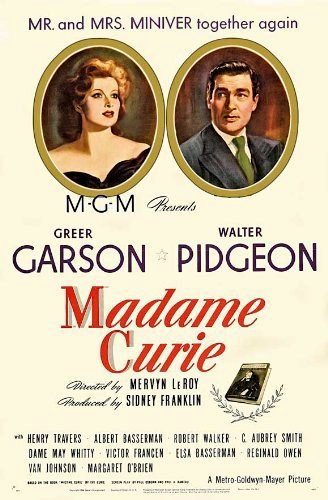
Random Harvest (1942)

Random Harvest (1942)

Two superb leading performances hold together a romantic confection of a film

Director: Mervyn Le Roy

Cast: Ronald Colman (Charles Rainier/”Smithy”), Greer Garson (Paula Ridgeway/ “Margaret Hanson”), Philip Dorn (Dr. Jonathan Benet), Susan Peters (Kitty Chilcet), Henry Travers (Dr. Sims), Reginald Owen (Biffer), Bramwell Fletcher (Harrison), Rhys Williams (Sam), Una O’Connor (Tobacco Shopkeeper), Aubrey Mather (Sheldon), Margaret Wycherly (Mrs. Deventer), Arthur Margetson (Chetwynd Rainier), Melville Cooper (George Rainier), Alan Napier (Julian Rainier), Jill Esmond (Lydia Rainier)

Random Harvest is one of the most fondly remembered romances of Golden Age Hollywood – if you want yearning dedication bought to life, this is the film for you. It might also be one of the barmiest films ever made, stuffed with so many outlandish plot developments, hilarious logic gaps and hand-waved contrivances it would put a Netflix soap to shame. You can see why Syndey Pollack and Anthony Minghella eventually abandoned remakes: you can’t imagine a modern audience going with Random Harvest’s essential loopiness and not laughing somewhere along the line. Which is not to say it isn’t beautifully made and winningly bought to life at times.

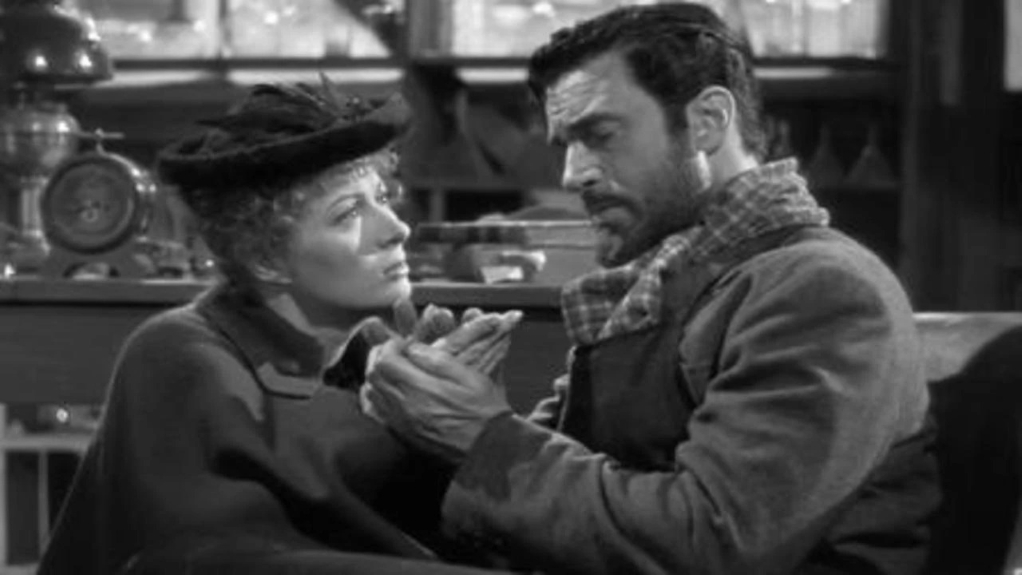
It’s the final days of World War One, and amnesic soldier “John Smith” (Ronald Colman) can’t remember anything about his life. On the final day of the war, he sneaks out of the asylum and runs into music hall performer Paula (Greer Garson). She takes a shine to “Smithy” and decides to save him. They run away to the country, fall in love, get married, have a baby, he starts to write, goes to Liverpool to start a journalism career… and gets hit by a cab. The collision restores his original memory – but also causes him to forget everything about Paula and his life as Smithy. Instead, he restarts his original life as industrial heir Charles Rainier, presumed dead by his family. While he lives this life for years, Paula takes a job as his secretary “Margaret”. Will he remember who she is?

It says a lot that that summary only scratches the surface of a plot that throws in the kitchen sink in attempting to ring as many tear-soaked tissues out of you as possible. Smithy and Paula carry out their little memory dance over the course of over twenty years. It’s the sort of a film where millionaire Charles only thinks about investigating what might have happened to him in Liverpool when nudged to do so after over a decade. Where the couple enter a ‘marriage of convenience’ as the memory-free Charles and fake Margaret. Where Charles’ owns a major factory in the town where our lovers first met, but neither (a) stepped foot there in 15 years (since the moment he does his memory starts to return) and (b) the heir to the town’s major employer wasn’t recognised by anyone while living in an asylum five minutes walk down the road.

Take it on the merits of logic and conventional narrative and Random Harvest crashes and burns. But this isn’t a film about those things. This is a classic weepie that stole the hearts of a war-torn nation in 1942 (it was the biggest hit of the year). Powered by two committed and emotional performances, if it hits you in the right mood its probably irresistible. The sort of long-term adversity that makes Romeo and Juliet’s look like a casual dalliance (so full of tragedy, the death of their son is literally a throwaway moment). It’s framed with a great, sensual beauty by Mervyn LeRoy and powered by an emotionally throbbing score by Herbert Stothart that’s just the right side of sickly.

Ronald Colman’s performance is quiet, measured and vulnerable (especially in his “Smithy” performance). From the start, he has eyes of hesitant, unknown sorrow and stumbles into a relationship with Paula like a new-born discovering life. Threads of his gentleness and excitability work their way into his Charles persona, tinged this time with the natural confidence of wealth. Nevertheless, Colman makes Charles a man who has dealt with unnerving amnesia by actively not thinking about it, carrying on a watch-chain the key to his “Smithy” home as a subconscious reminder. It’s a fine performance – so much so you can overlook he’s twenty-five years too old (the restored Charles forgoes returning to university, something that looks long gone for Colman).

Just as fine is Greer Garson, fully embracing an emotional roller-coaster as Paula. Introduced as a good-natured music hall singer (and Garson sings a high-kicking She’s Ma Daisy number in possibly the shortest skirt the Hays Code ever allowed), Garson’s warm and playful Paula is drawn towards “Smithy” in ways she almost can’t understand. But it’s a wonderfully different side for an actress so often associated with self-sacrificing wives and mothers: Paula is vivacious, forward and seizes the things she wants from life. It’s the second half – the patient, yearning desperation of “Margaret” hoping her husband will remember her – that leans more into her Mrs Miniver wheelhouse, but Garson mixes this with a real lingering, desperate sadness tinged with just enough hope that her husband might just recognise her.

Both performers overwhelmingly lift this otherwise (frankly) slightly contrived film into something rather sweet and endearing. It is, however, a film that would be even more so if it was shorter: the general morass of missed opportunities, misunderstandings and wrong ends of sticks being grasped would be easier to sustain over 90 than 120 minutes. It’s a rare film that covers so much ground over so much time that it’s lead character is declared dead twice.

The second declaration is Paula gaining that status for “Smithy”, dissolving their marriage and removing (you suspect for Hay’s Code reasons) the risk that Charles might accidentally commit bigamy by marrying his young niece. This is a lovely performance of youthful idealism and earnest devotion from Susan Peters (a tragic accident shortly after curtailed her promising career), and if the whole years-long subplot of the possibility of Charles marrying his besotted niece is a narrative cul-de-sac the overall film would be better without, it does at least mean we get the pleasure of Peters, performance captured forever.

But Random Harvest remains a pure romance: where no less than two women spend decades of their life in selfless, one-sided devotion for the lead and he still comes across as the sort of saintly man cheered by his own factory workers for sorting out a strike. The whole confection is a very fragile thing, but LeRoy carries this fully-loaded glass ornament with pure skill and the performances of Colman and Garson set the bar for classic Hollywood tragic romance. Minghella and Pollack were right – our cynical age can’t believe the nonsense – but on its own terms it still works.

Me and Orson Welles (2008)

Me and Orson Welles (2008)

A star-turn from McKay and a brilliant theatrical reconstruction makes a charming comedy

Director: Richard Linklater

Cast: Zac Efron (Richard Samuels), Claire Danes (Sonja Jones), Christian McKay (Orson Welles), Ben Chaplin (George Coulouris), James Tupper (Joseph Cotton), Eddie Marsan (John Houseman), Leo Bill (Norman Lloyd), Kelly Reilly (Muriel Brassler), Patrick Kennedy (Grover Burgess), Travis Oliver (John Hoyt), Zoe Kazan (Gretta Adler)

In the 1930s Orson Welles was the Great Man of American theatre, a genius blessed with Midas’ skill to turn everything he touched to Gold. He had conquered the stage and his success on radio transmitted his fame into households across America. All this and he was not even thirty. On top of his boundless charisma, creativity and magnetic leadership qualities, he was also vain, selfish, boundlessly ambitious and self-obsessed, seeing other people as little more than extras in his drama. It’s an exploration of the man central to Linklater’s Me and Orson Welles, combined with the film’s wonderfully fond exploration of that magical world behind the curtain in the theatre.

Me and Orson Welles charts Welles’ landmark Broadway production of Julius Caesar: a modern-dress marvel (‘the fascist Caesar’) that reimagined a sharply cut, pacey production set in a world of jackboots, black shirts and Nuremberg-esque beams of light. Welles (Christian McKay) was, of course, front-and-centre as Brutus with his Mercury theatre players (nearly all of whom followed him to Hollywood for Citizen Kane) all around him. Newest to the cast is 17-year-old Richard Samuels (Zac Efron), away from school, dreaming of being an actor and falling in love with older production manager Sonja Jones (Claire Danes). As the production stumbles towards the stage under Welles’ mercurial hand, Richard worships Welles and loves Sonja – but will his hero-worship survive sustained contact with Welles?

Linklater’s film is set in a gorgeous recreation of 1930s Broadway theatre, full of love for the greasepaint, backstage gossip and theatrical tricks that create a world on stage. It also features an astonishingly accurate recreation of this seminal production, staged and lit to perfection, which gets as close as we can to capturing some sense of the astonishing experience the first night audience had watching the sort of Shakespeare production they had never seen before (Dick Pope, harnessing his experience of recreation Gilbert and Sullivan in Topsy-Turvy deserves major credit for his cinematography here, perfectly capturing Welles’ pioneering use of light).

Welles’ flaws are slowly discovered by Richard Samuels – a charming, deceptively light and winning performance by Zac Efron. Samuels is at first bowled over by Welles charisma – and Welles enjoys the ego-trip of taking a star-struck young man under his wing, who he can tutor and mould (who, after all, doesn’t love having a disciple). What Me and Orson Welles interestingly does is to have its young lead slowly work out that Welles may be a genius – but he’s also a fundamentally, principle-free shit who never means what he says, doesn’t think twice about dropping people when they have served their purpose and largely sees conversation as a one-way street where Welles monologues and the other person listens (and certainly never, ever, contradicts – Welles never forgives correction).

But Welles dominates the film, like he dominated life. He’s brilliantly portrayed by Christian McKay in his first major film role. McKay, an unknown, was selected after Linklater was wowed by his one-man show about the Great Man. (Linklater refused calls from the producers to replace him with a more famous actor). McKay dominates the film in what is not only a superb capturing of Welles vocal and physical mannerisms, but also a capturing of his mix of utter charisma, God-given talent and overwhelmingly selfish egotism. McKay roars through every scene with the same force-of-character you imagine Welles had, bowling over everyone around him and shaping the world into what he wishes it to be. Problems of money, timing and people are waved away (or left to be fixed by Eddie Marsan’s put-upon version of John Houseman) and McKay’s Welles uses sheer force of will to turn every event, outcome and single moment into an intended triumph (whether it is or not). Me and Orson Welles brilliantly captures Welles ability to shape his world.

We see the way he overwhelms the personalities of those around him. People like Joseph Cotton (a superbly captured performance by James Tupper) both love him and know that’s he’s a selfish, arrogant git who doesn’t seem to care about anyone but himself. Others, like Ben Chaplin’s tortured George Coulouris, allow themselves to be mothered by Welles, even though they know his motivations are more for the show itself (and the glory that shall be Welles’). Welles is the guy who gives the same heartfelt pep-talk to multiple actors, and writes identical jovial thank-you cards to all on opening night. The guy who uses nicknames for those around him because it’s a way to subtly assert control. Linklater’s film recognises his genius, makes him overwhelmingly attractive in his gung-ho confidence, but – and this is the brilliant thing about McKay’s stunning performance – also exposes his deep character flaws.

It superbly captures his vanity, selfishness and self-occupation. Welles cares little for anyone, assuming he can brow-beat or overwhelm them to fulfil his wishes. That could be a set designer, furious at Welles hogging credit for his work in the programme (Welles promises this will be amended, forgets about it and then later – when it’s too late to do anything about it – bluntly says he has no intention of not taking credit). It could be the radio show he turns up to record, clearly having not read the script, walking in seconds before live broadcast and promptly improvising a superb monologue (based on The Magnificent Ambersons) which at first puzzles, frustrates and then stuns into fawning admiration his fellow actors. What’s clear is that this is the sort of behaviour you can only get away with when you are flying high and all is perfect – Welles after all would self-destruct like few others in the next few years, never again able to yield such charismatic power again.

Me and Orson Welles uses a familiar structure – a love triangle of sorts – to bring this to life. Claire Danes gives a marvellously winning performance as an ambitious and super-confident woman, trying to make her way in a male world, perhaps drawn towards young Richard because he’s more thoughtful than the rest of the men around her. (Me and Orson Welles makes clear we live in a world where the actors of the company feel comfortable taking bets on who can bed Sonja, while she is also accepts that Welles can use the women of the company like a room-service menu). Both she and Richard are perhaps the forerunners of those who will finally be pushed too far by Welles, that would leave him a perpetual outsider.

This is a fun musing on the personality of one of the greatest film-makers of all time, brilliantly set in a luxurious recreation of classic Broadway. Directed with pace and wit by Linklater, with a fine cast giving it their all (and a career-defining turn from McKay), Me and Orson Welles is light, frothy but fascinating work.

The Goodbye Girl (1977)

The Goodbye Girl (1977)

Some funny lines isn’t quite enough for this romantic comedy to work as well as it should

Director: Herbert Ross

Cast: Richard Dreyfuss (Elliot Garfield), Marsha Mason (Paula McFadden), Quinn Cummings (Lucy McFadden), Paul Benedict (Mark Bodine), Barbara Rhoades (Donna Douglas), Nicol Williamson (Oliver Fry)

Working as a performer sucks. There’s no money and who knows when the next job is round the corner? It’s even tougher when you are forever unlucky in love. That’s the case for semi-retired dancer Paula McFadden (Marsha Mason). She’s been jilted twice by actors who disappear for a big break somewhere else, leaving only a cursory apology behind. It makes being a single mother to precocious-but-vulnerable ten-year-old Lucy (Quinn Cummings) even harder. Harder again is that her recent awful boyfriend, as a parting gift, sublet their apartment without her knowledge to Elliot Garfield (Richard Dreyfuss), an actor as neurotic as Paula, arriving in New York for his big break. Paula refuses to leave her home and the two kick off a territorial feud, which settles into a truce and a flat share. But could it lead to anything else?

It probably won’t be a surprise to say yes it does, in this sharply written film from Neil Simon, crammed with fast-paced, theatrical, gag-filled dialogue which keeps the film’s pace up without really converting it into something real. The main problem with The Goodbye Girl is that it’s hard to believe in, or really care for, either of its two lead character. I don’t think it’s an exaggeration to say both of them would be incredibly hard work to live with. After all, they can frequently be rather trying just to watch. Simon makes them both brittle, neurotic, high-strung and prone to performative bursts of euphoria and rage. Both can swing on a six-pence between these. It’s probably meant to make them the perfect match, like a feuding Bogart (who Garfield impersonates at one point) and Bacall, but after a while just starts to wear you down. You want to give both of them a bit of a shake and say “pull yourself together!”

The ability to stick with the film revolves around how charming you find both performers. Here, Richard Dreyfuss has the definite advantage. Coming off a hot-streak that had seen almost every film he had made turn into a smash hit, Dreyfuss’ performance made him (at 29) the youngest winner of the Best Actor Oscar. A late replacement for a fired Robert De Niro (can you even begin to imagine De Niro’s deadpan intensity working here?), the part is a perfect match for Dreyfuss’ youthful, madcap energy. He seizes on the rat-a-tat dialogue, embraces Garfield’s zany love for New Agey thinking (yoga, guitar and sleeping “buffo”) and bounces around the film as likely to make monkey noises while euphorically chinning up on a door frame as he is to play sweet imagination games with young Lucy. He brings a lot of charm to a highly strung, difficult man, uncovering a lot of his essential decency and kindness.

He actually settles more into the difficult balance than Marsha Mason, the person (Simon’s wife) who the film was written for. Mason never really manages to find the softness and likability in this role. It’s not entirely her fault: while the point is that Paula is a woman with serious trust issues, the film never gives her a moment of calmness or reflection to open up about this. Instead, it takes a lazier route of having this turn her into an abrasive comic character, the sort of person who responds to a “morning after” with a furious expectation of betrayal. Mason never quite manages to find a softness or likeability under this prickly defensiveness. Interestingly, for all the project was written for her, she has few of the truly funny lines and is effectively the obstacle that must be fixed rather than having the more engaging role of charming disrupter.

To be honest there is not a lot of chemistry between the two. Simon so enjoys the competitive dialogue feuding over territory, bills and who will have what room and when, that he rather forgets to  show them actually falling in love. In fact, he ends up relying on the age-old formula of a precocious, New York Times reading child being the bridge to bring them together. Quinn Cummings is rather good as the sort of kid who only exists in the movies, as adept with the witty retort as the adults. But between Elliot and Paula, the romance always feels a bit too inevitable rather than natural, the eventual thawing occurring swiftly rather than feeling it has developed naturally and gently.

It’s part of the slightly formulaic nature of The Goodbye Girl. It’s a highly safe film, with a very conventional romantic storyline, that bubbles along to a happy ending. You can feel the box-ticking from scene-after-scene, just as you can feel the inevitability of its happy ending. It’s also overly theatrical, feels constrained by its location and never quite light enough on its feet. There are a few too many stand-up rows around the apartment block (their poor neighbours) and Herbert Ross’ direction struggles as much as Simon’s script to give us a reason to really root for this couple.

There are though some decent digs at the working life in the arts. Paula, trying to get back into the dancing game, is hideously off-the-pace and takes a job as an enthusiastic glamour-girl flogging Japanese cars at trade show. Elliot is forced to fall back a doorman gig at a strip club. It’s a tough old trade, especially as Elliot’s big break in New York falls apart after he is forced by a pretentious, talentless director to perform Richard III as a limp-wristed, 1970s stereotype of a gay man, mincing around and lisping his lines to the ridicule and disgust of audiences and critics. This comic highlight feels a little awkward now (the joke is the stereotyped gay behaviour, rather than the appalling idea, making it’s a little uncomfortable to watch at times, rather as if Elliot was being made to play it in black face).

The Goodbye Girl just isn’t quite charming or likeable enough and its characters are never people we really end up warming to or rooting for. Its sharp dialogue ends up making them feel less like real people and more like theatrical characters, bouncing off each other for effect. Dreyfuss comes off best here, but Ross’ direction is uninspired, its romantic coupling never really convincing and it tends to rather overstay its welcome.

The Love Parade (1929)

The Love Parade (1929)

Lubitsch’s delightful early musical mixes European class with battle of the sexes wit

Director: Ernst Lubitsch

Cast: Maurice Chevalier (Count Alfred Renard), Jeanette MacDonald (Queen Louise), Lupino Lane (Jacques), Lillian Roth (Lulu), Eugene Pallette (Minister of War), E. H. Calvert (Sylvanian Ambassador), Edgar Norton (Master of Ceremonies), Lionel Belmore (Prime Minister)

Sylvania has a problem with its ambassador in France, Count Alfred Renard (Maurice Chevalier) – largely that he can’t stop seducing anything that moves. Renard is swiftly recalled to his homeland… where he catches the eye of young, unmarried Queen Louise (Jeannette MacDonald), who immediately thinks he might just be the man for her. Renard isn’t averse to marrying into royalty, but quickly finds himself chafing in the role of Prince Consort – this isn’t what marriage is supposed to be, the husband doesn’t defer to the wife!

It is of course a slightly dated version of marriage, and The Love Parade could be seen as a very light piece of Taming of the Shrew style-action where a strong woman learns true happiness is sometimes being the number two. The fact that, despite this, The Love Parade is still charming, funny and more than a little delightful is partly due to the immensely skilled lightness it’s directed with by Lubitsch (it feels the whole sweet confection could burst with a puff of strong air) and the huge charm of its leads. After all, Chevalier is no-one’s idea of a Petruchio while Jeanette MacDonald manages to marry up romantic longing with being tired of the restrictive burdens of royalty, that you believe she’d be happy to share some of it out.

The Love Parade was one of the first ‘talkie-musicals’ and it’s assembled with such pace and energy by Lubitsch (at his very best) that you almost don’t notice how often its forced into static framing for the talking and singing (where couples frequently sit or stand opposite each other to burst into song). That’s because the film is awash with swift intercutting between different locations, often to great comic effect (not least cut aways to groups of ministers, soldiers and servants excitedly commentating from afar on the lead’s first date) and intermixes this with smoothly seductive tracking shots through grand Habsburg-style sets.

Lubitsch’s film however uses sound effectively and remarkably imaginatively. Establishing his confidence with it, it opens with us overhearing dialogue from outside a room before the door swings open and we see Chevalier stride in and confide directly to us. Sound is used throughout for comic effect, either in its presence – the highly suggestive ‘400 cannon blasts’ on the night of the wedding or the frustrated drumming of fingers on the table our happy couple do in the midst of an early row to the awkwardly quiet march-past of a group of soldiers trying not to disturb the Queen’s lie-in. It’s creative stuff, considering the limitations at the time, and bounces effectively off the parade of songs and witty dialogue that powers the film.

Alongside that, the film works because it’s such an interesting exploration of social mores and etiquette, not to mention a cheeky love of the sort of content code-Hollywood would have frowned on. The opening sequence revolves around the aftermath of one of Renard’s seductions, with shots of garters, a furious husband and a gun loaded with blanks (Renard seems to have a drawer full of these for just such occasions). Queen Louise is all too clearly extremely aroused by reading about Renard’s string of sexual conquests, immediately running into her dressing room to apply more make-up before she can greet him with all the coquetteish excitement she can manage.

There is innuendo throughout (“My wife has told me everything” one of Renard’s embassy colleagues announces, something Chevalier’s face tells us is clearly far from true). Lubitsch uses visual humour expertly, cutting away from Renard’s delighted recounting of one of his adventures to a shot outside where we watch Renard and his audience talking silently from the other side a window, with only their reactions clueing us into how saucy the story is. All this is classic ‘Lubitsch touch’, which thrives among these gorgeously grand sets and costumes.

The Love Parade manages to keep us feel sympathy for the likeable Renard, not least once he discovers, as Prince Consort, his duties seem to be little more than shaving (because, as he tells Louisa, he looks terrible in a beard) and resting (so he’s nice and ready for the evening’s fun later). He literally can’t eat a meal until Louisa arrives to eat first (he’s reduced to plucking an apple from a tree to beat off hunger) and finds his advice is instantly handed back to him unread by one of Louisa’s many court flunkies. Sure, you’d prefer that The Love Parade works its way into a proper partnership at the end, rather than just reversing the power to it’s ‘natural order’ but at least you can see Renard has a point.

It’s interesting that a more natural partnership actually seems to develop between their two servants, Renard’s valet Jacques (Lupino Lane) and Louisa’s maid Lulu (Lilian Roth). Lane and Roth give energetically charming comedic performances – and also by far the most engaging and dynamic musical sequences. The highlight here is ‘Let’s be common’, that brilliantly uses Lupino’s double-jointed flexibility to stage the film’s most overtly entertaining number. There is a Mozartian quality to these super-smart servants – so much so, I’d willingly trade a few of Chevalier or MacDonald’s numbers for a couple more with them.

Which isn’t to disparage the stars. Chevalier’s comic skills are exploited to the max here – his reaction to ‘being shot’ in the opening sequence is a masterclass in timing – and it’s a part he invests with huge charm which sells Renard’s slight selfishness as genuine likeability. Lubitsch throws in a few neat gags about his accent, not least Renard’s penchant to voice his frustrations in perfect, rat-a-tat French to bewildered Sylvanians (he’s deeply disappointed when he asks one obstructive courtier if he speaks French only to get the answer ‘yes’). Jeannette MacDonald is also skilfully sharp and just frustrating enough, from her opening scene where she is poutishly pissed that he flunkies can’t find her a consort (despite the fact she doesn’t want one) to her mix of romanticism and imperiousness that runs through the film.

The Love Parade is an engaging and funny Lubitsch masterclass in his particular genre of sophisticated comedy, as well as a strikingly original use of sound and music. It remains engaging and entertaining today.