Category: Romance

Modern Times (1936)

Modern Times (1936)

Chaplin’s silent swansong, is a funny but quietly impassioned attack on corporate greed

Director: Charles Chaplin

Cast: Charles Chaplin (The factory worker aka The Tramp), Paulette Goddard (The Gamin), Henry Bergman (Café owner), Stanley “Tiny” Sandford (Big Bill), Chester Conklin (Mechanic), Al Ernest Garcia (President of Electro Steel), Stanley Blystone (Gamin’s father), Richard Alexander (Cell mate)

As cinema entered Modern Times of its own, Chaplin had a profound sense that he needed to move with those times. The legendary comedian, whose Tramp persona had made him (possibly) the most famous man in the world, was a silent comedian starting to be left behind by sound. There is a rich relish in the fact that Modern Times, a joke-packed criticism of the coldness of modern industry, is both Chaplin’s last silent and first sound movie, a dipping of the toe in modern times and a valedictory swansong for the past. It’s a film that bridges the ‘modern’ and classic of cinema.

Chaplin is an assembly line-worker eventually driven to a nervous breakdown by the relentless, fast-paced monotony of his work (not to mention a death-defying encounter with the internal workings of the factory machines). Sent to recover in a hospital, he emerges into to find there is little in the world that a dreamer and romantic like him can understand. Again and again, things go wrong. He’s arrested for picking up a red flag in a union march, fired as a night watchman in a department store for helping starving thieves, hopeless as a factory repair man and struggles with tongue-tied silence as a singing waiter. But he and a young ‘Gamin’ (Paulette Goddard), both hope for a better life.

Modern Times has a deceptive structure. It’s easy, at first glance, to see is as four two-reelers thrown together: mini-films in the factory, prison, department store and café. But what Chaplin has created here is a picaresque fable, with the Tramp in the middle. (Only one sequence, with the Tramp as a repairman in a factory, feels superfluous repeating some jokes from the opening act). A morality tale of the modern era, where the big bosses and machines are indifferent to those on the bottom rungs, continually punctuated by the police riding up to bear away the innocent on the slightest pretext. It’s a masterclass of subtle repetition, with moments of contentment forever snatched away.

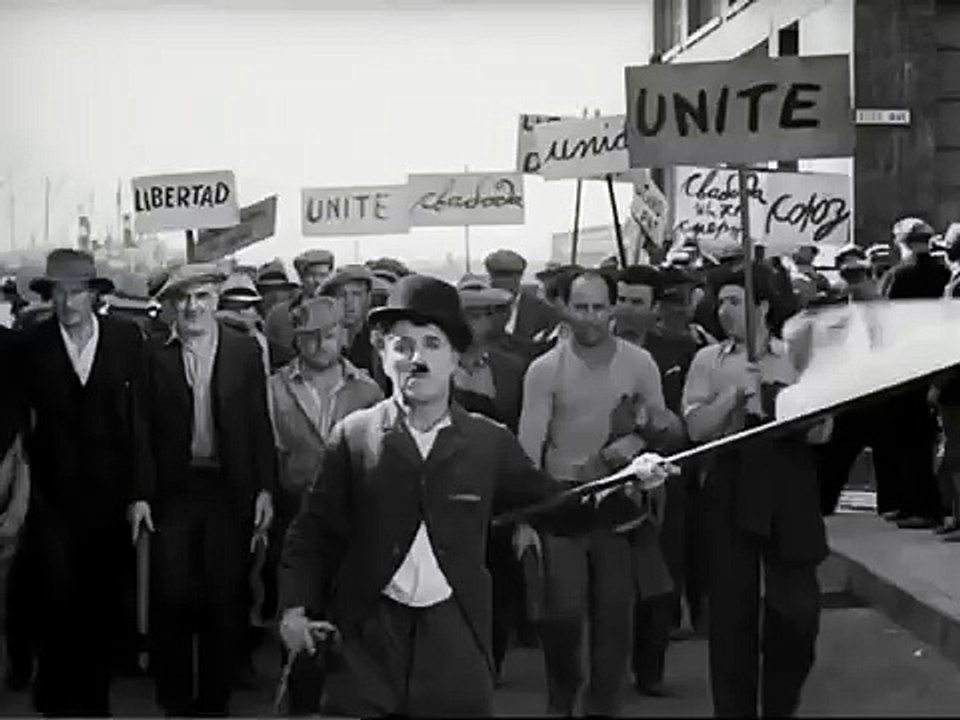
Chaplin’s most subtly political work became his most controversial. In a way few other films of the 1930s did, Modern Times engages with the conditions and politics of the Great Depression. Housing for the poor is ramshackle, with walls literally held up by mops. The factory alternates exploiting its workers at ever dizzying production speeds with ruthlessly laying them off the moment a slight economic downtown takes place. Union movements are ruthlessly stamped out: when the Tramp accidentally joins a march, he is arrested while the Gamin’s father is shot by police crushing another march. Poverty is ever-present – the Gamin ‘steals’ unwanted food to feed others, laid off factory-workers rob stores for food and when the factories are re-opened there is an almighty struggle from the desperate to get through the gates and claim a few hours of work.

Unsurprisingly Modern Times was condemned as possibly communist and suspiciously anti-American: Chaplin, turning a mirror on conditions in America started to be seen more-and-more by many as a suspicious alien (after all, he’d never taken on American citizenship). Nobody wanted to hear the funnyman turn prophet and many were suspicious of the comedian who used jokes to sweeten the bitter pill (even if, as per many of Chaplin’s messages, it was a rather naïve and simplistic one). It didn’t matter that Modern Times boils down to a plea for a universal love and understanding, it was somehow a creeping sign of the political dangers in ‘modern times’.

Today, distanced from the Red Scare, Modern Times looks far more like what it actually is: a pathos-filled, liberal eye on the working classes that champions the dreamers and the little guys over the corporations and the system. And who better as a hero for that than The Tramp? After all, this was a figure who had struggled against the odds for decades. Modern Times would see that struggle on multiple fronts: against the system, against the machines (literally so, as they swallow him up) and against a way of life that seems to be betting against him.

Even cinema was betting against the Tramp. Chaplin knew he couldn’t put off converting to sound forever. But he also knew the Tramp was a universal figure – and a large part of that was his silence. He never speaks in Modern Times – and when he sings, it’s in garbled, funny-voiced nonsense that effectively keeps him as a universal mute. It’s The Tramp’s final victory lap.

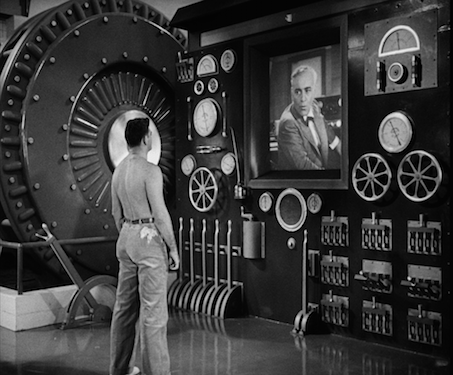
Chaplin’s comic timing remains masterful, and Modern Times is awash with marvellous, balletic set-pieces. Most famous is the opening factory sequence (which owes more than a debt to Fritz Lang’s Metropolis and feels remarkably prescient of Orwell’s 1984 with its Big Brotherish boss), a crazed ballet of repetitive, fast-paced movement on the production line – culminating in the legendary sequence of him being sucked into the very gears of the machine. The factory cares so little about the men there, that a machine designed to feed them as they work is dismissed as impractical rather than inhumane – though it gives us a great set piece of Chaplin assaulted by this machine with soup, custard pies and morsels rammed into his face by a mechanical arm.

The comic invention continues through the prison sequence. It’s a sign of the sting under the surface of Modern Times that the highlights of this sequence come about due to the Tramp (accidentally) being high on a mountain of cocaine. Foiling a jail break through coked-up bravado – another wonderfully done sequence, timed to perfection and filmed in one-shot – the Tramp’s reward is not being allowed to stay (and get the roof and food he needs) but early release. (Modern Times finds time, before he goes, for a final pop at ineffectual, superior middle-class do-gooders, lampooning a crusading priest’s wife as coldly distant and the subject of a cheeky gaseous gag).

Modern Times develops into a sweet fairy-tale romance with the introduction of the Gamin. Paulette Goddard gives a radiant performance, full of confidence and comic vibrancy – she becomes the first female lead given near-equal treatment by Chaplin. The department store sequence is grounded with their relationship, from the Gamin taking the opportunity to sleep in a beautifully prepared bed. Their time in the shop at night is full of wonder at the comfort and luxury – that they never see in their own homes – and culminates in a beautifully shot roller-skating sequence, with Chaplin circling balletically on the floors of the shop. (Tellingly though, he does so on the edge of precipice marked danger – Modern Times never forgets that danger lies just round the corner).

It’s the Gamin who lands them a job at a bustling café – awash with spoiled, rich customers – via her dancing ability (there is a fabulously simple transition that sees her pirouetting on the streets to ending the dance in glamourous clothes in the café). Even this moment of happiness is foiled by the law – illogically chasing the Gamin for past vagary offences rather than leaving her to work. But it’s made clear that they are a partnership: fitting the humane message of Modern Times that our best chance of being saved is sticking together.

Modern Times is shot by Chaplin with a striking, sprightly inventiveness. There are signs throughout of Chaplin’s overlooked visual and editorial skill, transitions that are hugely cinematic, storylines that are communicated with maximum efficiency and clarity. As well as the influences of Lang, Chaplin shows a debt to Eisenstein with a striking early visual cut that sees a crowd of sheep (with one black sheep in the middle) cut to a crowd of workers emerging from a subway into the factory. Modern Times pushes its humane message with a gentle persistency, but never lets it dominate the comic and emotional force of the film. Chaplin is an entertainer with a social conscience – but he is an entertainer first of all – and Modern Times is never anything less than charming and funny, even when it is spikey.

Cat Ballou (1965)

Cat Ballou (1965)

Zany western comedy, a little dated, but with almost enough good jokes

Director: Eliot Silverstein

Cast: Jane Fonda (Cat Ballou), Lee Marvin (Kid Shelleen/Tim Strawn), Michael Callan (Clay Boone), Dwayne Hickman (Uncle Jed), Nat King Cole (Sunrise Kid), Stubby Kate (Sam the Shade), Tom Nardini (Jackson Two-Bears), John Marley (Frankie Ballou), Reginald Denny (Sir Harry Percival)

In a town out West in Wyoming, Cat Ballou (Jane Fonda) is to be hanged as a notorious outlaw. How did she end up here? Let Nat King Cole and Stubby Kaye tell you as they recount ‘The Ballad of Cat Ballou’. This young, would-be school-teacher ended up on the gallows after a feud over her father’s (John Marley) land with Sir Harry Percival (Reginald Denny). Percival has a brutal hired gun, Tim Shrawn (Lee Marvin). So, Cat hired her own gunman, the legendary Kid Shelleen (Marvin again) who has become an equally legendary drunk. After the death of her father, Cat, Kid and her friends and love interests form a gang to bring Percival’s corporation down.

Cat Ballou stems from an era when audiences were not quite ready for the violent, nihilistic Western revisionism that would spawn the likes of McCabe and Mrs Miller and The Wild Bunch, but could no longer take the Ford/Wayne style Western seriously. Instead, it takes its inspiration from Swinging Sixties comedy, playing like Tom Jones or a Dick Lester Beatles movie. It’s zany, tongue-in-cheek, daubed in primary colours and nothing in it is meant to be taken particularly seriously, not even the bullets. It’s a fast-paced entertainment and if it looks rather dated today, at least it has its moments.

It’s most notable as the film that won Marvin the Oscar for his double performance as the drunk, shambling Kid Shelleen and the Marvinesque heavy Tim Strawn (with missing nose). Marvin revelled a chance to showcase his comic skills – and even have his stereotypical role as a bruising, violent killer as a contrast. Kid Shelleen doesn’t turn-up until almost a third of the way in, but all the film’s most memorable moments involve him. Slurring, scruffy, stumbling and only able to shoot straight when a little bit pissed (in an early shooting test he literally can’t hit a barn door), Marvin offers not only a red-eyed piece of comedy acting just this side of hammy, but also a neat jokey commentary on the truth behind an army of Western heavies (Cat is hugely disappointed to find the stories she’s read of Kid’s exploits, in no ways matches the mess she sees before her).

Marvin, rather graciously, always claimed of his Oscar “that half of this belongs to a horse somewhere out in San Fernando Valley”. It’s a touchingly modest reference to the film’s closing sequence – the inevitable rescue attempt on Cat – where Kid turns up pissed, riding a horse that seems as drunk as him (a neat shot, that took much careful animal wrangling, shows both Kid and his horse leaning lopsidedly against a wall, the horse with its legs drunkenly crossed). But Marvin’s performance works because it nails the tone of the film in a way no-one else really does.

That’s arguably true of Jane Fonda, who seems either slightly bemused or mildly contemptuous of the role she’s ended up in. When the film throws in moments close to tragedy, she reacts with more emotional realism than a zany comedy can support. She’s not willing to surrender herself to the moments of farce or flirtation, not helped by the dull or forgettable performances of her love interests. Callan lacks charisma or flair as outlaw Clay Boone, Dwayne Hickman overeggs as Boone’s comedic partner-in-crime Uncle Jed while Tom Nardini tries hard but lacks grace as Jackson Two-Bears. Fonda is also stuck in the only role where she can’t corpse at the drunken antics of Marvin.

The film bounces along, from its animated opening, via a series of comedic twists on Western tropes (a dance, a fight, a train robbery etc). Personally, I’ve never really been a fan of zany comedies, and my mind wasn’t changed here. Mixed with its very 60s view of the West, all colour splashed checked shirts, the try-hard craziness of Cat Ballou can start to wear cynical modern viewers like me down.

Which isn’t to say there isn’t a good joke here or there, or that Marvin isn’t worth the price of admission. Silverstein directs with a professional smoothness that leaves the actors to get on with it (perhaps a little too much). The darker moments of the film don’t always marry up successfully with the tone – Cat’s reaction to the death of her father is from a different movie altogether – but generally it glides along, helped with some catchy tunes well sung by Cole and Kaye as a ballad-touting Greek Chorus.

Cat Ballou might actually be best enjoyed by taking a leaf out of Kid Shelleen’s books: get a couple of whiskies inside you and you’ll find the accuracy of your laughter jumping up several notches.

Jagged Edge (1985)

Jagged Edge (1985)

Exploitation and barmy courtroom and steamy romantic couplings abound in this silly but fun mystery

Director: Richard Marquand

Cast: Glenn Close (Teddy Barnes), Jeff Bridges (Jack Forrester), Peter Coyote (DA Thomas Krasny), Robert Loggia (Sam Ransom), John Dehner (Judge Carrigan), Karen Austin (Julie Jenson), Guy Byd (Matthew Barnes), Marshall Colt (Bobby Slade), Louis Giambalvo (Fabrizi), Lance Henricksen (Frank Martin), Leigh Taylor Young (Virginia Howell)

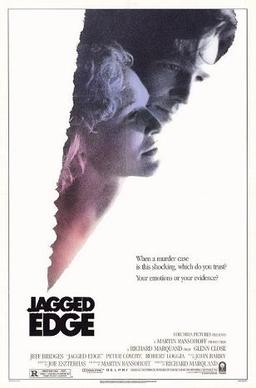
Teddy Barnes (Glenn Close) is done with criminal law after her time at the DA’s office, working under ambitious, unscrupulous Thomas Krasny (Peter Coyote). But she’s dragged back in to defend handsome newspaper editor Jack Forrester (Jeff Bridges), accused of brutally murdering his wife and her maid (for the money naturally). Teddy takes the case and soon crosses that line marked “personally involved” as she and Jack swiftly move from riding horses to riding each other. But what if Jack is really guilty after all?

Jagged Edge is a big, silly courtroom drama, a sort of erotic thriller B-movie that got some serious notice because two critically-acclaimed, three-time Oscar nominated actors fleshed out the cast. Written by Joe Eszterhase (for whom this was the springboard for a career of sex-filled, murder-and-legal dramas that would culminate, via Basic Instinct, with Striptease), Jagged Edge is full of pulpy, super-tough dialogue that its cast loves to chew around their mouths and spit out. It’s got the sort of courtroom dynamics that would see a case thrown out in minutes and would make its lead character unemployable in seconds. It’s daft, dodgy and strangely good fun for all that.

What it is not, really, is either any good or in any way surprising. One look at rugged, casually handsome Jeff Bridges and sharp-suited, charming-but-whipper-smart Glenn Close and you just know its only a matter of time before they end up in bed together. This leads to all sorts of unprofessional sex-capades and legal decisions, not to mention the sort of pathetically readable poker-faces in courtrooms that I would definitely not want from my lawyer.

Jagged Edge makes no secret of its hard-boiled, pulp roots. It opens with a POV home invasion as the killer breaks into his victim’s house that is only barely the right side of exploitative. Marquand doesn’t shirk any opportunities to chuck crime scene photos up on the wall. Peter Coyote’s uber-macho DA loves to say lines like “he has a rap sheet longer than my dick”. Best-in-show Robert Loggia (Oscar-nominated) is the sort of grimy flatfoot investigator who has a fridge full of booze and can’t go more than five words without cussing (when asked if his mother ever washed his mouth out with soap he simply responds “Yeah. Didn’t do no fuckin’ good”).

It’s similarly open about its sexy energy. Close and Bridges have a blue-filtered, late-night roll in the sheets, made even more exciting (perhaps) by the fact she spends half the film suspecting he did the deed. That’s the question the film challenges us with. On the one hand, Bridges seems far too boyish and aw-shucks to have slaughtered two women with a jagged knife. He sure looks upset when he visits the crime scene. Problem is there doesn’t seem to be any other possible suspect, and all that circumstantial evidence just keeps stacking up around him.

Close plays all this with a great deal of force and emotional intelligence, far more than the part (or the film) really deserves. She’s amicably separated from her husband (a very decent guy) and the film even finds a little ahead-of-its time space to make clear that Kransky’s animosity for her (and her loathing of him) is based on his sexual harassment of her as much as his flexibility with courtoom rules. Close balances the whole B-movie set-up with a real dedication – it’s effectively a warm-up (in a way) for the nonsense she’d play in Fatal Attraction.

Bridges is also pretty good, always keeping you guessing from scene-by-scene. How bothered is he when he spreads his wife’s ashes off his yacht? But then how affronted and hurt he looks when he is accused of the crime? It’s a tricky part, but he does a great job of constantly shifting the audience viewpoint and his relationship with Close’s Teddy is just smooth enough to have you guessing how genuine it is.

Wisely – perhaps – he doesn’t hit the stand during the trial. It would probably lead to drama meltdown. The courtroom is full of unbelievable curveballs, witnesses crumbling in a way they never do in real life. Every single disaster for each case is signposted by the fixed horror on the faces of the lawyers. Revelations fly-in and a new suspect effectively incriminates himself mid-trial to the delight of all (this suspect even enforces his caddishness by threatening Teddy in a car park in another moment where the film tries too hard).

The film culminates in the inevitably silly reveal, with plot twists abounding, where we are asked to believe that a killer who has ingeniously considered every single angle of his crime casually leaves incriminating evidence hanging around waiting to be discovered. Its final scene, where the killer is revealed, is either tense or unbearably, ridiculously stupid, depending on your viewpoint (everyone behaves ludicrously out-of-character and takes stupid, unnecessary risks). But for the bulk of its runtime, Jagged Edge is dirty, cheap fun.

Sherlock Jr (1924)

Sherlock Jr (1924)

Keaton invents Looney Tunes in this master-class in both cinema and comedy

Director: Buster Keaton

Cast: Buster Keaton (Projectionist/Sherlock Jr), Kathryn McGuire (The Girl), Joe Keaton (The Girl’s Father), Erwin Connelly (The Hired Man/The Butler), Ward Crane (The Local Sheik/The Villain), Ford West (Theatre Manager/Gillette)

If there is one thing you learn from watching Keaton’s masterpiece, Sherlock Jr, it’s this: all Looney Tunes cartoons are Buster Keaton films. The level of astounding, frantic, comic genius in Sherlock Jr hits new heights and its mix of slapstick, improbable stunts, chases and poker-faced reactions basically makes it resemble nothing less than the world’s greatest cartoon made real. There is something either delightful or double-takingly how-did-they-do-that impressive in every scene and the entire film is assembled and designed with invention dripping from every pore.

Buster is an absent-minded, day-dreaming projectionist in a local theatre. But what he really wants to be is a detective. He gets his chance when he discovers that the father (Joe Keaton) of the girl (Kathyn McGuire) he’s in love with has had his watch stolen. We know it’s her villainous suitor (Ward Crane), but Buster’s clumsy investigation only ends up getting himself framed, with only the Girl to clear his name. Back in the theatre, Buster daydreams himself into the film he’s projecting, where he is the famed Sherlock Jr, master-detective besting scheming villains and winning the heart of the Girl, all of whom now look like the people he encountered in the real world.

Sherlock Jnr resolves almost its entire plot in the opening fifteen minutes after Buster fails to prove his mettle as a detective. Bless, he goes about his investigation with a robotic lack of imagination, slavishly following the steps in his How to be a Detective book right down to following his suspect by almost literally dogging his footsteps (requiring a parade of sudden jerks, turns and dodges to avoid being seen). Fortunately, the Girl solves the crime for him, clears his name and heads to the theatre to tell him while he drifts off to sleep. What this means is that we can enjoy Buster’s day-dream of the movies without ever worrying about how he will solve the pickle he is in in real life.

Sherlock Jr can focus on its delightful fantasy sequence. In an oft-imitated stroke of double exposure shooting, the dream Buster emerges from the body of the sleeping Buster, picks up his (dream) hat and walks out of the projection room to the theatre where he is flabbergasted to see people he knows playing roles in the film. Why shouldn’t he be tempted to walk down the aisle and try to climb into the picture? Of course, the villain responds by tossing him out of the frame and back into the auditorium (just to reassure us again, Keaton cuts to the sleeping Buster in the projection room).

Keaton’s film has hugely inventive, creative fun with the medium as Buster re-enters the movie only to find – with the power of editing – his location changing with dizzying speed, without his position changing from shot-to-shot. He steps down a flight of stairs to find it turn immediately into a bench. He tries to sit on the bench but lands in a busy road. He walks down the road to find himself on a cliff edge. He peers off the edge to find himself among lions, then crawling through the desert, sitting on the shore, diving into a snow drift. This whole sequence is effortlessly, brilliantly assembled with Keaton’s position seemingly never changing but the location changing almost a dozen times. Think that cartoon when Daffy Duck goes to war with the cartoonist. No one before had understood the comic potential of editing, shifting locations and changed perspectives.

It’s perhaps the stroke of defining genius in a film crammed with moments from here to the end that leave you breathless with their chutzpah, daring and invention. From here, Sherlock Jr is full to the brim with hilarious comic stunts that Keaton makes look effortless but required such complex planning (and endless repetition on set to get right) that your admiration for their humour is matched only by the wonder at the dedication and sweat it took to deliver them.

In the dream-film, Sherlock Jr has just enough of Keaton’s comic clumsiness to be amusingly recognisable, but every detecting trick he plays turns up trumps. He tails suspects successfully, locates stolen jewels, unmasks criminals and he is never outwitted by the criminals (saying that he can also ride on the handlebars of a motorbike for miles not noticing that the driver has long since fallen off). Through it all, Keaton gives every set-piece the sort of physical commitment Hollywood wouldn’t see again until Tom Cruise started to embark on Impossible Missions.

All of this needed time. Imagine, if you will, the innumerable takes Keaton needed to execute a deluge of seemingly impossible trick shots in a game of pool, where every ball is pocketed except the number 13 (which has been replaced by a bomb). This is the sort of Newtonian logic of a Bugs Bunny cartoon but done for real. It’s doubly funny later when you realise Sherlock Jr wasn’t being phenomenally lucky but was in fact aware the ball was a bomb and was missing deliberately. Even without that knowledge, watching balls bend round the number 13 or divide perfectly so that two balls pass by without contact is breath-taking.

Equally so a stunt which sees Keaton fold up a disguise dress in a window, head into the room, then dive out of the window, straight into the dress, and walk away. The stunt is so incredible, Keaton even dissolves part of the wall of the building so we can see it done in one take. If that’s not enough, moments later he will seemingly dive into a wall through the chest of an accomplice who will then walk away – all in one take. Keaton wanted these magic tricks to seem impossible, to leave the audience helplessly trying to work out what they have seen. The answer, in every case, was endless attempts and vaudeville expertise. Just as Keaton worked out the comic potential of editing could transport him, in a single step, hundreds of miles – so he also worked out it could make impossible events look effortless by removing all the failed attempts.

The film culminates in a chase scene the Looney Tunes cartoons would riff on endlessly (the entire Wile-E-Coyote/Road Runner series is effectively a long version of the end of Sherlock Jr). Sherlock Jr races to rescue a girl, on the handles of a rider-less motorbike, racing over roads, blockages, train tracks and all sorts then switches with her to a car, that similarly does a series of improbably manoeuvres before it crashes into a lake and turns into a slowly sinking boat. All hilarious, all directed and played with a super abundant energy.

And then he wakes into a romantic reconciliation where our hero, slavishly, follows the romantic gestures of the man in the movie he is watching to win a kiss from the Girl. We knew the happy ending was coming – that’s why we enjoyed, pressure-free, the fantasy sequence where nothing was at stake. Sherlock Jr delivers a comic tour-de-force so packed with delightful tricks, committed stunts and joyous invention that it feels like it sails by even quicker than its 45 minutes. It’s a perfectly sustained and balanced series of gags all wrapped up in something that uses the medium perfectly. It’s the first and best Looney Tunes cartoon ever made.

Watch it now!

Meet Me in St Louis (1944)

Meet Me in St Louis (1944)

Technicolour musical delight in this unashamedly nostalgic and feel-good Minnelli musicial

Director: Vincente Minnelli

Cast: Judy Garland (Esther Smith), Margaret O’Brien (“Tootie” Smith), Mary Astor (Mrs Anna Smith), Lucille Bremer (Rose Smith), Leon Ames (Mr Alonzo Smith), Tom Drake (John Truett), Marjorie Main (Katie), Harry Davenport (Grandpa), June Lockhart (Lucille Ballard), Henry H Daniels Jnr (Lon Smith Jnr), Joan Carroll (Agnes Smith), Hugh Marlowe (Colonel Darly), Robert Sully (Warren Sheffield), Chil Wills (Mr Neely)

“There’s no place like home” is the message lying behind two of Judy Garland’s most iconic films. While it might be at the heart of Wizard of Oz, that longing may be even stronger in Meet Me in St Louis. From the Arthur Freed production stable, this technicolour delight is relentlessly gentle and optimistic. It went down a delight in a year when so many Americans dreamed of the end of a war that had separated families and kept soldiers from their home and remains a delightful paean to a lost America (that perhaps never even was).

Set, of course, in St Louis in 1904 during the build-up to the World’s Fair (the gleam of the electric lights turning at the exhibition are the film’s final shot), Meet Me in St Louis follows the lives and loves of the Smith family. Patriarch Alonzo Smith (Leon Ames) is a lawyer (or something, the film doesn’t trouble itself too much), his wife Anna (Mary Astor) a devoted home maker. They have four daughters: Rose (Lucille Bremer) hopes for a proposal from Warren Sheffield (Robert Sully), youngest children Agnes (Joan Carroll) and especially “Tootie” (Margaret O’Brien) are perpetually in trouble and Esther (Judy Garland) is just starting to make eyes at next door neighbour John Truett (Tom Drake). But their contented life could all turn upside down when father announces they will be moving to New York. Surely, they can’t leave St Louis behind?

In many ways Meet Me in St Louis is an inverse The Magnificent Ambersons. While Welles’ film brilliantly charted the decline of a family of wealthy snobs (the Ambersons would certainly recognise the Smiths as equals) with technology an intruder, upending everything they understand about the world, Meet Me in St Louis is a gloriously entertaining celebration of nostalgia with new technology either a source of jokes (scrambled long-distance calls, jolly cable-car songs) or wonder (that closing light-show). Both have stylistic comparisons: from their use of title cards to their fluid camera showcasing sumptuous sets and costumes. But only one of them is about cheering you up.

Meet Me in St Louis only barely has a plot, so concentrated is it on charm and whimsy (father’s announcement, which introduces the real drama, arrives over half-way through). Adapted from a series of short stories by Sally Benson, it’s an episodic film built around events – parties, cable-car rides, a Halloween adventure and a Christmas Eve ball – with a few threaded plotlines of flirtation, principally between Esther and John. Freed sprinkles in a series of songs from his collected rights holdings (including the title song) with a few additional tunes from writers Hugh Martin and Ralph Blane, the most notable being The Trolley Song (a ludicrously catchy-number you can’t get out of your head) and the iconic Have Yourself a Merry Little Christmas (although their original far more depressing lyrics were hurriedly re-written).

These last two are performed with astonishing bravura by Judy Garland in possibly her finest hour (until A Star is Born). Garland’s singing is almost effortlessly graceful and beautiful, and she matches it with a very warm, feisty and engaging performance. Esther lands perfectly between two stools: she can be rebellious, impatient and judgemental but also caring, sensible and forgiving. Garland is reassuringly collected, funny and luminous through-out – so much so it’s striking to read what a nightmare the shoot was, with the star frequently absent as she succumbed to the mental and physical ailments that would plague the rest of her life.

Part of the success of her performance was the closeness that developed between her and Minnelli – the first director to really treat her as an adult and collaborator (they started an affair during the film). Minnelli, in only his third film and first in colour, directs with the assurance and visual beauty of an accomplished pro. Meet Me in St Louis was his first Freed musical and it might just be his best. The sumptuousness of the visuals and design were to a large part due to him – you can see the influence this had on the later work of Visconti among others, particularly the ballroom scene – and Minnelli worked labouriously with the actors to build a sense of family between them.

This pays off in spades throughout the film, where the close chemistry between the actors only helps create a nostalgic glow for happy days gone by. Ames and Astor have a relaxed ease of a long-married couples, while the four sisters interact with each other with an easy, unstudied naturalness – sharing chairs, food from their plates and time together with an unfussy ease. In particular Minnelli helped guide Margaret O’Brien to the one of the most delightful child performances on screen: the Halloween sequence, where “Tootie” confronts a scary neighbour is a masterclass of childish excitement and fear, matched later by O’Brien’s affecting distraught tears at the prospect of leaving St Louis.

Minnelli shoots the film with a technical confidence and imagination that quickly makes you forget it’s simple plot. That Halloween sequence is an eerie wonder, shot with a low-angled, tracking shot unease that leaves a haunting impression. He and cinematographer George J Folsey deigned a gorgeous gaslight dimming sequence as Esther and John go through her house dimming the lights, the camera moving in a single, complex, take up-and-around them while Folsey adjusts the set light in sync. Later there is a brilliant shot that seems to pass through a window to lead us straight into the ball, which seems years ahead of its time in its technical accomplishment. The ‘Trolley Song’s sequence uses framing and costumes perfectly to turn a cable car into something that feels as large as a small theatre. It’s an exceptionally well-made film.

You could argue certainly that it is a conservative and unchallenging film. It’s a celebration of small-time life, an argument for staying where you are and embracing the status quo. It never crosses its mind to consider that it’s a lot easier to do that if you have a huge house and servants. Not a moment of anger or serious disagreement is allowed to enter the picture. Everyone is unendingly nice all the time. But does that matter? Sometimes you need a film like a warm hug. And, when you do, don’t you want it also to be a masterclass in filmmaking with a star like Garland at the top of her game? Of course you do.

Coming Home (1978)

Coming Home (1978)

Emotional but a little too worthy Vietnam message movie, well-directed with great performances

Director: Hal Ashby

Cast: Jane Fonda (Sally Hyde), Jon Voight (Luke Martin), Bruce Dern (Captain Bob Hyde), Penelope Milford (Vi Munson), Robert Carradine (Robert Munson), Robert Gintu (Sgt Dink Mobley), Mary Gregory (Martha Vickery), Kathleen Miller (Kathy Delise)

Vietnam is a jagged scar on the soul of America but, more than that, it’s been a literal scar for the veterans. Luke Martin (Jon Voight) was a college athletic star, now returned from the frontlines as an angry paraplegic, struggling with post-traumatic stress. Helping him – eventually – is old school-friend Sally Hyde (Jane Fonda), married to a Marine captain Bob (Bruce Dern) who has himself shipped out to Vietnam. Sally and Luke find themselves growing closer and closer emotionally, as their hostility towards the brutal war grows. But how will Bob – still loved by Sally and himself ever more scarred by trauma – react when he returns from the front?

Coming Home was released in the same year as The Deer Hunter and makes for an interesting comparison. While Cimino’s film is a horrific plunge into the grisly horrors of war, combined with a sort of mesmeric epic poetry, Ashby’s Coming Home is a quieter, more domestic piece, an earnest attempt to explore trauma. There is no doubting the passion of all those involved: but Coming Home is at times a little too earnest. Despite its moments of undeniable emotional impact, its sometimes feels a little too pointedly like a “message” film, worn a little too heavily on its sleeve.

But, saying that, there are many positives. It’s shot with a skilful casualness by Ashby, whose unobtrusive camera makes us a witness to events (at one crucial point it is even half obstructed by a door). Ashby has a poetic sensibility that flies in the face of what could have been its soapy roots. He lets scenes unfold with such ease and gentleness of touch that you only slowly notice how extremely well assembled the film is. There is a whimsical, lyrical sadness about the whole thing – matched with a striking lack of condemnation of people, only for a system that bends and twists human beings into killing machines.

It uses a parade of hit songs, but the songs play not as snippets but as full performances, playing out over several scenes, scenes which at first seem to be directly counter to the lyrics and tone of the song itself. Then you notice the skill with which the film has been edited to the beat of the music, and how much The Rolling Stones, The Beatles, Hendrix, Simon & Garfunkel, Bob Dylan and many others set the tone for a whole era. Coming Home captures this tone, an era of optimism crushed by brutal contact with the cold, dark realities of the world. The songs weave themselves in and out of scenes, capturing an overwhelming sense of a nation lost and confused.

It’s in this framework the relationship between Luke and Sally flourishes as Luke begins finding purpose in his life. Heavily based on the life of Ron Kovic, Jon Voight won an Oscar for his extraordinarily committed performance. From early outbursts of naked fury and pain, wheeling himself around on a hospital bed, his outbursts seemingly only prevented by medication, Voight charts the development of Luke as a humanitarian and compassionate man, committed to helping others overcome their pain and loss.

He also develops an attachment to Sally that transcends physical attraction: the two are kindred spirits. Fonda (effectively the film’s producer), generously takes on the film’s least interesting role as the disengaged, homespun Sally, increasingly horrified by the war’s impact on veterans – and the lack of interest from others (capturing the whole sweep-it-under-the-carpet attitude of the armed services, her military wives’ club refuses to include a report from Luke’s hospital in their newsletter because it’s too depressing). This translates into a deep attraction for Luke, the only other person who truly shares her growing resentment for the war.

Coming Home gained much attention at the time for its frank depiction of sex, with Luke and Sally tenderly overcoming the barriers of his disability. (Although today, their coupling – with Fonda replaced by a body double – culminating in Sally’s first ever orgasm feels a little too obvious in its comparisons with her passionless flings with Bob). But sex is less important than sharing their feelings, from Luke’s talk of dreams where he can still walk to Sally’s doubts about her life choices.

If there is a problem with Coming Home, it’s that the film doesn’t really know what to do with these characters other than showcase their pain. It tends to make sharp jumps – Luke’s recovery from initial rage to tender, thoughtful man feels very swift. And although Penelope Milford is good value as Sally’s best friend, struggling to deal with her veteran brother’s collapsing mental health, her plotline and performance is a little too obviously designed to contrast with Sally’s.

The basic problem with Coming Home is that in its rush to establish the fundamental decency of its characters – and the appalling horror of the war they are wrapped up in – it often avoids drama of struggle. It makes an interesting contrast with Zinnemann’s The Men which turned Brando’s paraplegic veteran’s psychological recovery into an entire movie: here Luke’s finding of a new purpose is as swift as his mood shift is.

The film’s most interesting plotline actually follows Dern’s Bob Hyde. Dern gives the film’s most complex performance as a dedicated solider, struggling with deep denial about his growing disaffection and unacknowledged PTSD, confronting his wife’s infidelity with a mix of anger and desperation to receive a comforting hug from her. Hyde’s discovery of the affair is its most melodramatic moment, but also strangely its most unpredictable – and a film exploring this character’s switch in perspective might just have been a little more challenging.

But Coming Home has plenty to recommend it. Voight has never been better, warm, tender and throbbing with emotion, his closing speech to a roomful of students exhorting them not to fight and choking back tears that taking another life is never worth it, is worth the price of admission alone. Ashby’s film has a poetic sensibility to it and if it sometimes feels a little too self-righteously earnest about its anti-war credentials, and a little too aware of its status as a “message movie”, at least it is a message that needs to be heard.

The Piano (1993)

The Piano (1993)

Searing emotion, passions and fascinating enigmas abound in Campion’s brilliant landmark masterpiece

Director: Jane Campion

Cast: Holly Hunter (Ada McGrath), Harvey Keitel (George Baines), Sam Neill (Alisdair Stewart), Anna Paquin (Flora McGrath), Kerry Walker (Aunt Morag), Genevieve Lemon (Nessie), Tungia Baker (Hira), Ian Mune (Reverend), Peter Dennett (Head seaman), Cliff Curtis (Mana)

What’s really striking about The Piano is how literary it feels, despite the fact it’s an entirely original cinematic work. Every moment of Campion’s intelligent, beautifully constructed, often enigmatic and unreadable film feels like it has been plucked from the pages of a lost Booker Prize winner. Juggling themes of feminism and sexual awakening alongside colonial and masculine thinking, it’s a richly beautiful film awash with superb performances and a heightened, literary reality buried inside a film grounded in the mud and squalor of reality. It remains Campion’s finest achievement.

Ada McGrath (Holly Hunter) and her nine-year-old daughter Flora (Anna Paquin) arrive on the coast of nineteenth-century New Zealand. Having refused to speak since the age of six, Ada communicates through sign language and the precocious Flora. Silent in person, her treasured piano gives her a voice and allows her to express passions she otherwise keeps carefully controlled. Ada is to marry landowner Alisdair Stewart (Sam Neill), but he baulks at carrying the huge piano from the shore to his home through the forest. Instead, it falls into the possession of neighbour George Baines (Harvey Keitel). George, besotted with Ada, offers her the chance to earn it back one key at a time, in return for allowing him to “do things” while she plays it in his house. The arrangement leads to a complex, sexual love triangle between Ada, George and Alisdair that will see passions explode.

I wonder sometimes if The Piano is a bit of a problem for some campaigners today. You can discover plenty of retrospective reviews that find it hard to mask their disappointment that the film doesn’t offer a more pointed condemnation of its two male characters. Many want The Piano to show Ada rejecting Alisdair as a repressed potential rapist and George as a manipulative sexual predator. But Campion is telling a far more nuanced, feminist story than this easy-to-swallow structure. The Piano is not about pigeon-holing people into easily definable roles. Rather it looks at how unexpected bonds can rise and how darker, deeper passions can flair in unexpected ways.

Because George’s at-first manipulative, outrageous offer actually awakens something unexpected in Ada. George is perfectly played by Keitel as outwardly a lump of inarticulate, labouring flesh but inwardly far more sensitive and strangely poetic – and his desire is based as much on a curious romantic longing and a sensitive fear of rejection. His requests are often based around the briefest of physical touches, the desire to see Ada’s shoulders and legs. He’s timid, shy and becomes increasingly open about his feelings for her.

Even more strikingly, Ada discovers that (after initial shock) she enjoys the bartering negotiation of the arrangement (offering more in-depth contact for a higher number of keys) and finds her ability to provoke desire in George both sexually liberating and exciting. So much so that, when George ends the arrangement (recognising that he cannot get what he really wants – Ada’s love – as long as it stands), her reaction is one of anger, more like a spurned lover, then a relieved victim.

This simmering desire is at the heart of Campion’s passionate work. Rewatching it’s striking how vital touch is in the film, how much it is linked to emotional and sexual connection. Campion focuses in extreme close-up on George stroking Ada’s skin through a tiny hole in her stockings – to her initial shock and increased pleasure. The slightest contact of hands between these two carries an emotional and sensual charge. It’s exactly the lack of this that becomes impossible not to notice in the relationship between Ada and Alisdair. Contact between them is minimal and when it occurs it carries darker meanings: most obviously the impotent, frustration Alisdair half-heartedly uses with Ada, then in the rain-soaked fury he will unleash when her betrayal is revealed.

Ada increasingly uses touch to control. She caresses and strokes Alisdair’s naked body at night – never allowing him to touch her in return – both to manipulate him but also, partly, to satisfy her own newly-discovered itch for sexual power, just as she grew to give herself over totally to the hold she had over George. Dressed in restrictive black, that covers almost her whole body, The Piano is about a flowering of a newly confident and sexually awakened woman from a repressed shell.

The language of the body ties into this. Campion reverses the expectations of nudity. Instead, it’s the male form of George we first – and almost predominantly – see. It turns this physically imposing man into someone vulnerable and sensitive. Like a romantic lover, he cleans the piano naked. He will reveal his body to Ada with shyness. When they first make love, he focuses on her pleasure rather than his own. He contrasts with the stiff-backed Alisdair, trapped in his formal clothes (compared to George’s indigenous tattoos and garments) who, even when Ada seduces him, uncomfortably tries to pull his trousers up over his bare buttocks.

Alisdair – superbly played by Sam Neill in a challenging role – is not a bad man, just a deeply unimaginative, repressed and self-satisfied one. He sees a woman’s duty as wife and nothing else. Just as he can only see the Māori on the land around them as simple savages, clinging to naïve superstitions (he cannot understand why they do not wish to sell or farm the land their ancestors are buried on), so he can find no common ground with Ada. He’s even subconsciously aware the piano is a means of emotional expression she refuses to share with him, causing him to do everything he can to remove it from his house with the same loathing he would have for a rival. But he’s also a timid, needy soul – witnessing George and Ada coupling, he watches from his concealment with a curious mix of envy, longing and sadness at something he will never have.

The Piano places Ada at the centre of this complex junction of feelings and emotions. Played with awards-laden brilliance (including the Oscar) by Holly Hunter, this is a woman who never speaks but whose complex emotional journey is always clear. Stubborn, difficult and demanding, we learn this is defence mechanism against a world she has so cut herself off from, so much so she has literally refused to speak for decades. Her piano is the only outlet she allows herself in a world with strict rules for women. Finding something alternative to this is a frightening and alluring prospect.

It’s one not necessarily understood by her daughter Flora (a brilliant Oscar-winning performance by Anna Paquin) who is so precocious in some ways – forcefully communicating her mother’s wishes – and so young in others. Flora understands little – with fateful consequences – of the emotional and sexual tangles around her and, like a child, often accepts the path of least resistance. She also sees the strong bond between mother and daughter as threatened by the presence of George – in a way she cannot comprehend, even after spying their intimacy together.

Campion’s film superbly ties these literary themes into a film of complex enigma and aching beauty (it’s beautifully filmed by Andrew McAlpine). The film is aided enormously in its emotional charge by the radiantly lyrical score by Michael Nyman (his distinctive sound makes the film sound like the finest film Peter Greenaway never made). The Piano offers challenging, thought-provoking and intriguing scenes at every turn, powered by a brilliant script and wonderful performances. Avoiding the obvious, it’s power and reputation has rightly only grown in the decades since its filming.

The Band Wagon (1953)

The Band Wagon (1953)

The delights of putting on a show come to life in a hugely enjoyable Freed musical

Director: Vincente Minnelli

Cast: Fred Astaire (Tony Hunter), Cyd Charisse (Gabrielle Gerard), Oscar Levant (Lester Marton), Nanette Fabray (Lily Marton), Jack Buchanan (Jeffrey Cordova), James Mitchell (Paul Byrd), Robert Gist (Hal Benton), Ava Gardner (Herself)

Tony Hunter (Fred Astaire) has a glorious career behind him. Famed for top-hat-and-tails dance numbers (hang on, this is ringing some bells…), he can now ride the train unknown and contemplates retirement. But he leaps at the chance to perform on Broadway with a new script by husband-and-wife writing team Lester (Oscar Levant) and Lily Marton (Nanette Fabray) – themselves self-parodies of non-married writing team Betty Comden and Adolph Green. He’ll co-star with ballet dancing sensation Gabrielle Gerard (Cyd Charisse) and the show will be produced, directed and co-star British impresario Jeffrey Cordova (Jack Buchanan). Problem is Jeffrey wants to turn their light musical into a heavy-handed, over-produced Faust drama. Will audiences say ‘That’s Entertainment’ or will they prefer the musical? And will Tony and Gabrielle’s mutual hostility turn to love?

If you have any doubt about the answer to either of those questions, then I have to ask “where have you been and have you never seen a movie before?” The Band Wagon is the Arthur Freed machine at its peak. You get the sense that, by this point, it really was as smooth as getting the guys back together and throwing on a show. It’s what lies behind the immense charm of the film: for the majority of its run-time it’s basically people who really know what they are talking about chronicling the backstage friendships and rivalries, technical hiccups and clashes of vision when passionate, talented people get together to put on a show.

In fact, everything in The Band Wagon wants you to relax and to make sure you don’t worry or be anxious that everything isn’t going to turn out okay. It’s kind, decent and zeroes in on the glorious camaraderie of theatre. For starters, Tony Hunter is a thoroughly good-egg. Played with glorious charm and a wonderful light-tough by Astaire, he’s patient, relaxed about his declining fame and a very willing collaborator. His (very gentle) arguments with Gabrielle are based around their mutual intimidation at each other. He always feels like a regular Joe who has become a star but would be just as happy in the chorus line.

Around Astaire, a bank of cool, calm talent is called on. Minnelli was already an absolute pro at pulling spectacles like this together and The Band Wagon mixes together the deceptive simplicity of his compositional eye with a host of wonderfully designed sets. The script is full of great gags and beautiful one-liners and, while the story is effectively a remix of elements from half-a-dozen Freed movies prior to this one, it demonstrates aptly that if ain’t broke, don’t fix it. The bright and breezy fun stretches over the good-natured kindness of the script. There are no real villains: Jeffrey is over-ambitious and a touch pretentious, but when push comes to shove he does what’s best for the show. Even Gabrielle’s choreographer boyfriend is an honest professional whose main offence (other than not being Fred Astaire) is being snobby rather than mean.

The Band Wagon gets a great deal of comic mileage out of the over-blown ideas of Jeffrey Cordova. Hilariously played by Jack Buchanan with a burst-out-of-the box enthusiasm, his conversation is full of grandiose bombast, spraying ideas around and re-shaping everything in the play to match his own impressions of high art. A gentle egotist – the poster for his Broadway production of Oedipus Rex credits him no less than four times (producer, director, adapter and star) and Sophocles not at all – he is the sort of force-of-nature who wins over backers for the production by acting out the entire play in a drawing room, playing all the parts and supplying the sound effects.

The production he shapes allows Minnelli to gently parody some of the excesses of his own productions. The set is a hydraulic nightmare, with multiple platforms rising up and down from scene to scene. Needless to say, at the tech rehearsal, this turns into an obstacle course that leaves Jeffrey dangling from the ceiling by a microphone cord. At one point in rehearsal, Tony and Gabrielle have to perform a ballet (he as Faust) while endless pyrotechnics explode around them, constantly forcing them to jump out of the way. Every inch of the dialogue is re-written and (in one hilarious rehearsal scene) Tony is pushed into performing a mundane scene with ridiculous over-emphasis.

Parallel to this, we have of course the romance. Rather sportingly, the age difference between Tony and Gabrielle is not only acknowledged, it becomes a focus of their initial discomfort. Comdon and Green script a particularly juicy exchange between the two, that riffs on the subject culminating in Gabrielle bluntly telling Tony he should audition her grandmother as co-lead because “She’d be just about right for you”. Astaire actually takes a great deal of good-natured ribbing here for being past it and over-the-hill (“times have changed and you have not changed with them” Jeffrey tells him in the height of misguided enthusiasm), but there is a charming decency as he declares himself not Nijinsky or Brando but “Mrs Hunter’s little boy, song and dance man”.

And that he is. Astaire and Charisse get several show-stopping numbers, the finest being a graceful, gorgeous balletic number in the park as they ice finally melts between them, a perfect, beautifully choreographed number that sees their bodies in perfect unison. The dancing is of course flawless throughout: Astaire early tap number on getting his shoes shined is charming and when we see snippets of their professional work on stage it’s deeply impressive.

If The Band Wagon has a flaw, it is that the last twenty minutes – which shows snippets of the final show being staged across the country – has a bitty, disjointed quality to it. It’s very hard not to notice that the plot has been completed and what we are left with are a series of non-too-catchy numbers and non-too-memorable set-pieces (except for the sight of Astaire, Fabray and Buchanan as adult babies which to be honest I wish I could forget). The final film-noir spoof ballet that ends the ‘show within the show’ (and God knows what that show, a bizarre, disjointed cabaret night as far as I can see is even about) is well-staged but lacks spark.

But The Band Wagon is still enjoyable, charming and above all fun – and if you can watch it without a smile breaking across your face (particularly if you love the theatre) then there is something wrong with you.

Dark Victory (1939)

Dark Victory (1939)

Bette Davis almost single-handedly lifts another tear-jerker into something grander

Director: Edmund Goulding

Cast: Bette Davis (Judith Traherne), George Brent (Dr Frederick Steele), Humphrey Bogart (Michael O’Leary), Geraldine Fitzgerald (Ann King), Ronald Reagan (Alec Hamm), Henry Travers (Dr Parsons), Cora Witherspoon (Carrie Spottswood), Dorothy Peterson (Miss Wainwright)

Judith Traherne (Bette Davis) is vivacious and fun-loving. From her grand Long Island home, her days are taken up with racehorses and fast cars, her nights with parties and booze. No wonder she keeps having headaches and making those small falls, right? Pushed to check it out at the insistence of her best friend Ann (Geraldine Fitzgerald), it doesn’t take long for brain specialist Dr Frederick Steele (George Brent) to diagnose a brain tumour. An operation is a short-term success, but Judith’s condition is terminal. At best, she has a year to live. Steele and Ann decide to keep the news from Judith – but when she discovers the truth she decides to live life to the full with Frederick, the man she has grown to love.

Watching Dark Victory is a reminder of the sometimes-limited opportunities for women in Hollywood at the time. If an actor as radiantly talented as Bette Davis were a man, she would have been playing earth-shattering roles in stirring dramas. This was when Tracy, Muni and March were playing explorers, scientists, world leaders and campaigners. Davis, like other women, saw the vast majority of strong roles for women centred on screwball comedies or as loving wives and mothers. As such she made a career propping up effective, sentimental twaddle like Dark Victory.

Which is to be a little harsh, I will admit, on a fine if unambitious tear-jerker. Dark Victory had been a Broadway play – and a flop. The stage had exposed a little too clearly the blatant emotional manipulation of the story of a woman who falls in love in the final year of her life then facing death with self-sacrificing fortitude. On film though, it could be made to work, not least through the full-throated commitment and intelligence of Bette Davis’ acting.

Davis is too often button-holed into the “camp icon” bucket, but Dark Victory – much like Now Voyager – sees her real strong suit, turning ordinary women, tinged with sadness, into portraits of deep tragedy and emotional self-sacrifice. Davis evolves Judith from a shallow, fun-loving playgirl into someone thoughtful, caring and empathetic. Davis avoids almost completely the obvious histrionics you could resort to playing a woman dying of a terminal brain tumour.

Instead, she meets her diagnosis with a carefully studied casualness that hides her fear, confronts the realisation that she has been deceived with a betrayed disappointment rather than carpet-chewing fury, and faces death with an unselfish concern for others (a physical tour-de-force as Davis acts blind – the final stage of her condition – but hides this from her husband so as not to cause him to abandon a medical research conference he has postponed frequently for her sake).

It’s all, of course, very standard material for a tear-jerking “woman’s picture” of the 1930s. A flighty woman finds love, happiness and inevitable tragedy. Davis fizzes around much of the film’s first 30 minutes with a Hepburnesque energy and wit, jodhpurs and champagne glasses abounding. A great deal of sweet charm brilliantly adds to the poignancy as, in her first consultation with Steele, she fails to identify blindfolded the same object being placed in both hands (a dice, a pencil and a piece of silk, all instantly identified in her left are met with confused incomprehension in her right). This is highly skilled, emotionally committed acting that pays off in spades as the gentle, thoughtful, caring woman underneath is revealed.

It helps that Davis has a trusted director in Edmund Goulding. Never the finest visual stylist or most compelling technician, Goulding’s great strength was his finesse with actors. He worked especially well with Davis, his careful focus on performance over technical flair giving her an excellent showpiece for her skills. Davis paired again with George Brent, a solid but generous actor (with whom Davis started a long-running affair) never better than when breathing humanity and life into an on-paper stiff roll as a noble surgeon who falls in love with his patient.

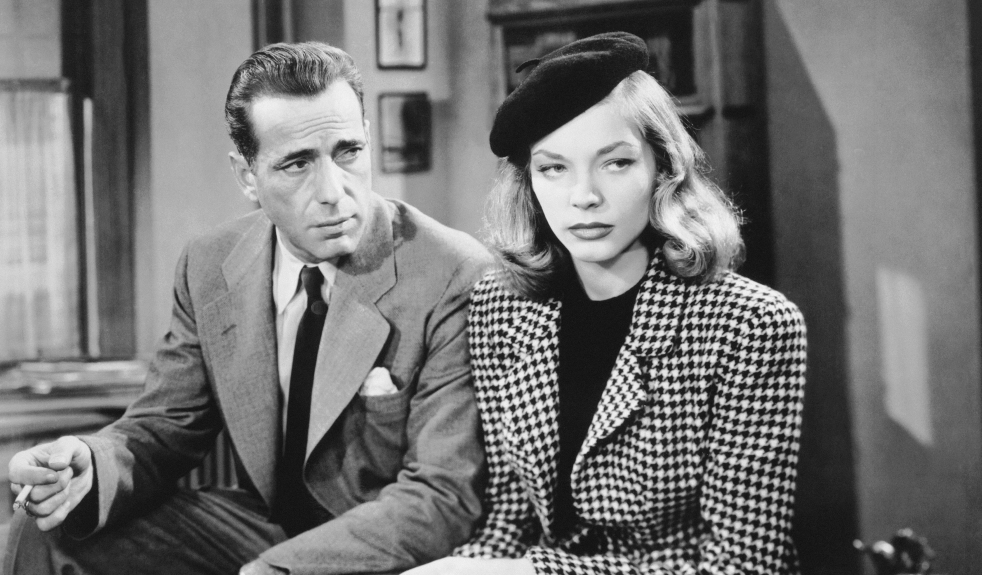
Brent and Davis’ chemistry and comfort with each other squeeze out all other potential romantic sub-plots, despite the actors in the roles. Lord knows what the Irish Republican Brent made of Bogart’s bizarre Irish accent as Judith’s roguish horse trainer. Bogart looks hilariously uncomfortable, his accent coming and going and he lacks affinity for the role or the film. He still comes off better than the rather wet Ronald Reagan as Judith’s playboy friend. Instead, the film’s finest supporting performer is the wonderful Geraldine Fitzgerald, sparky, firm-jawed and endlessly loyal while torn up with grief for her friend.

Dark Victory, though, rises and falls on the success of Davis’ performance. It certainly makes no secret of the fact that we are heading towards a tragic ending. A parade of doctors emerge to confirm to Steele that, yes, the disease is terminal. When Judith uncovers her case notes, she flips through an army of letters from eminent surgeons repeating the phrase “Prognosis: negative” – she even then asks Steele’s secretary to explain the wording. We are building up constantly towards a show-stopping, three-hankie, climax of Judith’s inevitable decease.

And yet the film still manages to get you. Again, it’s the low-key but honest performance of Davis that makes this. The moment of tragic realisation that death is arriving, then the studied determination to carry on regardless and to spare her loved ones as much pain as possible. It’s the self-sacrificing decency and honour of the very best of the “women’s pictures”. Davis delivers on it so utterly successfully, it does make you wonder what triumphs she might have had if she could have played the sort of roles males stars played, as well as breathing such conviction-filled life into gentle weepies like this.

My Brilliant Career (1979)

My Brilliant Career (1979)

Edgy and very good feminist film about a prickly and difficult woman struggling against a lack of choice

Director: Gillian Armstrong

Cast: Judy Davis (Sybylla Melvyn), Sam Neill (Harry Beecham), Wendy Hughes (Aunt Helen), Robert Grubb (Frank Hawdon), Max Cullen (Peter McSwatt), Pat Kennedy (Aunt Gussie), Aileen Britton (Grandma Bossier), Peter Whitford (Uncle Julius)

In turn of the century Australia, it’s fair to say women were not awash with choices as Sybylla Melvyn (Judy Davis) discovers. Growing up on a dust covered farm, she dreams of becoming something – an artist, a singer, a writer, a connoisseur of culture, anything rather than spending her life as a wife and mother. She is dispatched by her parents to her wealthy maternal grandmother (Aileen Britton), determined to scrub her up, shave off her rough edges and find her a good marriage. Sybylla resists, but much to her surprise finds herself attracted to old childhood friend, Harry Beecham (Sam Neill). But will Sybylla choose marriage over finding her own path in life?

Adapted from a semi-autobiographical novel by Miles Franklin (the pen name of Stella Maria Sarah Miles Franklin), My Brilliant Career was a feminist watershed in Australian cinema, also one of the first Australian films directed by a woman. Gillian Armstrong was fascinated by a story that, while a period piece, still spoke strongly to a time when women were moving out of stereotypical traditional roles they had been pigeon-holed into. My Brilliant Career is a costume drama that looks at the stark reality for women at the time (wife, mother or “spinster”). And while men could dream of lives of cultural and artistic fulfilment or economic ambition, women faced innumerable barriers.

The frustrations help explain why Sybylla is such a prickly, at times maddening, frustrated woman trapped in a constant stream of situations where her choices are narrow or she cannot decide what she wants. On her parents’ farm, her interest in art and classical music turns her into a sort of freakish bluestocking (or larrakin), her slow plonking of Schumann on the family’s out-of-tune piano sounding to them like sounds from the end of the world. Among the well-off hoi polloi of Australia, she seems scruffy and wild and her knowledge of working-class drinking songs and enjoyment of rough-and-tumble games and dancing lead to raised eyebrows (it’s telling she switches to playing the bawdy tunes of her parents’ local drinking hole on the grand piano of her grandmother’s house – she is an outsider everywhere she goes).

Sybylla is brought to life in a sensational, star-making performance by Judy Davis. Davis isn’t afraid to make Sybylla often difficult and even a little unlikeable. She’s capricious and often infuriatingly vague about what she wants. She has high-blown dreams of an artistic life, with no fixed idea about what that might mean. She is adamantly opposed to marriage, but flirts outrageously. She scorns the uncultured dirt of the poor but finds the fussy exactitude of the rich oppressive. She’s a mass of contradictory and confused impulses, all caught up in her limited opportunities: marry as everyone wants her to do and, even if she loves the man, say goodbye to the ability to make her own choices.

This is captured perfectly in Davis’ shabby impertinence. She makes Sybylla someone never afraid to speak her mind: smutty jokes at dinner tables, blunt refusals of “I’m-doing-you-a-favour” proposals. Davis makes her defiant and difficult, but also strangely vulnerable (she’s very sensitive about her appearance – not surprising considering barely a scene goes by without someone commenting on her plainness, freckles, messy hair or some combination of all three). Davis charges about the screen with a masculine tom-boyishness. She trudges through fields, clambers up trees, drives horse and carts with aggressive pace. She rarely looks comfortable in her clothes. She has a sharp, at times even cruel, sense of humour, never suffers fools and doesn’t allow anyone to talk down to her.

Armstrong’s film however makes clear this is all in the nature of the teething problems of a young woman still mystified about what she wants from life. And who can blame Sybylla at the unattractiveness of the various alternatives put to her (basically a range of glorified servant roles). She is even dispatched to serve as a governess to a group of scruffy farm children, again tellingly the only time she truly embraces the comfort of formal clothes, as if cementing her place as not among the mud. (This sequence does show Sybylla’s social flexibility as, much to her surprise, she forms a bond with these coarse workers.) It’s a situation made particularly difficult when she has two viable suitors thrust at her.

The first she can dismiss with ease – a pompous stuff-shirt played with smackable smugness by Frank Hawdon. The other is far more viable: a kindred-spirit of a sort played by an attractively charismatic Sam Neill. Harry and Sybylla capture in each other the exact qualities the other finds attractive but would cause long-term disaster in marriage. Sybylla is attracted to Harry’s humour and intelligence but would find his settled landowning life restrictive. Harry is drawn to Sybylla’s free-spirited independence but long-term would find it infuriating. Nevertheless, the temptation to marry is strong for both of them.

Armstrong’s film expertly builds the unspoken, awkward courtship between these two. They take it in turns to ignore and provoke jealousy in each other. When thrown together they go from surly silence into bawdy flirtation (including an epic outdoor pillow-fight across Harry’s farmland). The question always remains though whether marriage is the right choice for either of them. Not least as it would potentially end Sybylla’s dreams of exploring the world and her place in it.

My Brilliant Career is lusciously designed (by Luciana Arrighi) and beautifully shot (by Donald McAlpine). Gillian Armstrong brings a strong visual eye to the film – there are some superb compositions involving windows and walls creating visual barriers between characters and some terrific transitions (the finest being a cut that visually compares Sybylla’s beside her bed with her mother in her dining room at home). The film builds a wonderfully subtle feminist picture, with several women – Sybylla’s mother who has married for love and found poverty, her aunt (well played by Wendy Hughes) jilted by an unsuitable husband, her great aunt who chose freedom but is deeply lonely – presenting potential life paths that further illustrate the paucity of choice.

It makes for a prickly but eventually very involving film, with a sly wit, very well filmed that gradually makes us care deeply for a character who is initially as irritating and challenging for the viewer as she can be for the characters. With a brilliant performance by Judy Davis, My Brilliant Career is an important milestone in the Australian New Wave and a superb debut for Gillian Armstrong, that mixes strong thematic ideas and beautiful visuals.