Category: Science fiction film

Zardoz (1974)

Yes Sean Connery actually wears this in Zardoz

Director: John Boorman

Cast: Sean Connery (Zed), Charlotte Rampling (Consuella), Sara Kestelman (May), Niall Buggy (Arthur Frayn/Zardoz), John Alderton (Friend), Sally Anne Newton (Avalow), Bosco Hogan (George Saden)

Be warned. When a director is given the money to make any film he wants – with total creative control and no interference from anyone else – you’ve got a 50/50 chance of either getting a work of genius or a piece of pap. In the case of John Boorman’s Zardoz you definitely get the latter. Zardoz is possibly one of the most bizarre, misguided, surreal and finally plain bad films you’ll see, like a walking advert for the most pretentious and terrible outreaches of science fiction. 

It’s the year 2293, and the world is a post-apocalyptic wasteland. The “Brutes” live in the wastelands, growing food for the “Eternals” – immortal figures, leading a luxurious but empty, pointless existence on a series of country estates protected from the outside world by forcefields, their lives governed by a super computer. In the middle are the “Exterminators”, who control (i.e. kill and enslave) the Brutes and worship “Zardoz”, a giant flying head sent by the Eternals. Until, one day, Exterminator Zed (Sean Connery) sneaks his way into Zardoz and finds himself in the world of the Eternals and starts to lead them to question the point of their interminable immortality.

Zardoz looks overwhelmingly silly, and is often filmed and edited with such high-flown, empty surrealness, that it’s almost impossible to take seriously from the start. It looks so bizarre – with its terrible costumes, camp playing and overly designed look and feel – that it’s hard not to suppress a snigger. This is made worse by the shallow, pretentious and obvious social satire forced upon on once you start to concentrate on the dialogue.

It’s also one of those films that mistakes an incoherent, poorly explained plot – in which characters frequently change sides, motivations and aims at the drop of a hat – for a sort of mystical profoundity. The influence of The Prisoner is very strongly felt, from its commune-like setting to our “hero” being trapped in a stylised world where he is trying to work out the rules. But while The Prisoner manages, more or less, to suggest some sort of deeper meaning behind all the stylistic self-indulgence and pleased-with-itself babble, Zardoz just manages to be unengaging and heavily self-indulgent. 

You don’t need a philosophy major to work out the social commentary being made in a world where the richest exploit the rest of the population to live a life of ease and content. Nor is it a surprise to find that this sort of life without challenges, continuing forever, has led to stagnated and lazy lives where everything (even, to the film’s shock, sex – although of course the muscular Connery fixes that) has lost all meaning. Frankly this world takes off-cuts of several, far better and smarter films, and remixes them together into a turgid mess.

And it looks so silly. The entire design of the film constantly shoots it in the foot. How could you take Sean Connery seriously in that costume? The Eternals wear the sort of Greek-influenced hedonistic costumes that you would expect to see on a second-rate episode of Star Trek. The film frequently uses stylistic decisions that look absurd – and try too hard – from the hand gestures used to show the Eternals’ mind control (looking like a partial lift from the Macarena) to the bizarre sequences where Zed’s memory is searched using an projector, frequently using surrealist images mixed with physical theatre that frankly looks more than a little bit silly.

Sean Connery goes at this all with a respectful commitment, even if the character isn’t particularly engaging, and is hard to relate to since most of his memories seem to revolve around rape and murder. As if recognising this, there is a late plot turn where we find out that Zed is far more than he appears. But rather than making this intriguing, it makes virtually all his actions earlier in the film incoherent. But then it’s not as if that’s a problem: Charlotte Ramping, Sara Kestelman and John Alderton as the leading Eternals swop views, sides and opinions virtually scene to scene. Rampling in particular goes between plotting Zed’s death to becoming his acolyte in one conversation. For some this might be a sort of poetry. But really it’s crap.

In amongst all the nonsense, the film has a seedy, porny view of women. The Eternals seem to walk around – perhaps because they are so indifferent to sex – virtually in the buff. Connery has sex (eventually) with most of the female cast, as well as groping several others. Boobs frequently appear in shot. In one moment so bizarre it must be a joke, Zed’s sexual drive (so alien to the Eternals) is even explored by showing him some pornographic images (including some naked women mud wrestling) to see if it gets his rocks off (sadly for them, he shows much more – visible – interest in Rampling than the images they are showing). 

It all finally comes to an end in an orgy of violence intercut with images that comment on rebirth in a way that is supposed to be (no doubt) an intellectual comment on the balance between love and death – but actually is just another clumsy, empty excuse for a bit more sex and violence (and plenty of nudity). But then since the film has long since stopped making any sense (with scenes including Connery dressed as a bride, chasing himself through a hall of mirrors and briefly gaining the power to turn back time and protect others from violence with “his aura”) that it hardly seems to matter. The film had a seriously damaging impact on the careers of both Boorman (who makes a good job of the opening scene and then sees the whole film slide down a silly, indulgent and pointless mess) and Connery. Not a surprise. It’s terrible.
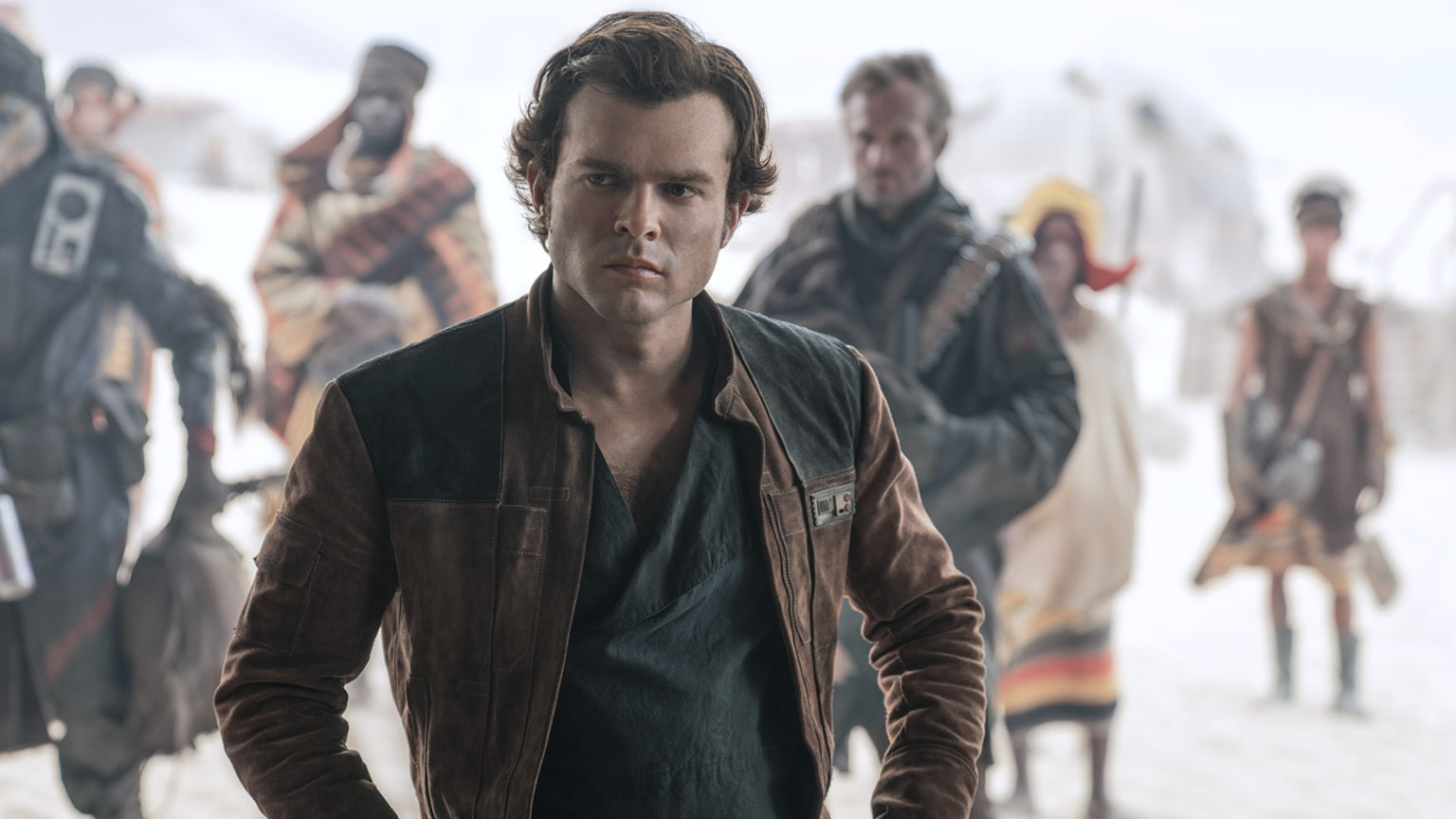
Solo: A Star Wars Story (2018)

Alden Ehrenreich tries his best in Solo: A Star Wars Story

Director: Ron Howard (Phil Lord, Christopher Miller)

Cast: Alden Ehrenreich (Han Solo), Woody Harrelson (Tobias Beckett), Emilia Clarke (Qi’ra), Donald Glover (Lando Calrissian), Thandie Newton (Val), Phoebe Waller-Bridge (L3-37), Joonas Suotamo (Chewbacca), Paul Bettany (Dryden Vos), Erin Kellyman (Enfys Nest), Jon Favreau (Rio Durant)

Solo did the impossible. No not the Kessel Run in 12 parsecs. It showed you could release a Star Wars film that lost money. How could this happen? Well the easy solution is to point at the film’s disastrous shooting. Lego Movie directors Phil Lord and Christopher Miller were originally announced as its directors, making their live-action debuts. But Lord and Miller lacked experience, and a litany of complaints – poor direction, a demand for constant improvisation slowing shooting, failing to get enough angles to allow options in editing – led to them getting fired and replaced with Ron Howard. 

Unfortunately, even though large parts of the film had already been shot, Howard still needed to go back and reshoot large chunks (and recast, with Paul Bettany replacing the Michael K Williams as the film’s villain due to a scheduling clash). The budget ballooned to nearly $300million, a sum (with marketing costs) the film didn’t stand a chance of hitting with its poor initial buzz and mixed word of mouth. Not to mention the general (misguided) poor reaction from the core fanbase to Last Jedi, which had literally only just left theatres as this film prepared to launch.

If it seems a little unfair to open a review of the film with an anecdote about its making, that’s because the film’s tortuous journey to the screen is more interesting than most of the things that actually ended up in it. It’s an origins story for Han Solo (gamely played by a trying-his-best Alden Ehrenreich), which traces his early days towards becoming the smuggler we know, with the background given for virtually every aspect of the character: meeting Chewie, how he got his surname, where he found his blaster, how he did he win the Millennium Falcon from Lando (Donald Glover, who with his charisma and cool is the only one who manages to reinterpret his character to feel both fresh and a natural predecessor of Billy Dee Williams’ interpretation) and just how did he do that Kessel Run in 12 parsecs? 

If that sounds a bit like the film is a series of nostalgic box ticks… that’s kind of because it is. The impact is made worse by the fact that nearly all its events – from Han meeting his “mentor” Beckett through to the end of the film as he jets off to do a job for Jabba the Hutt – seem to take place in a week. As so often, the modern Stars Wars films manage to make its universe as small as possible. The sense of wearying accumulation as every half reference ever made in the old films is given a backstory, makes you wonder how boring the rest of Han’s life must have been if everything he ever talks about is connected to this one job.

The telescoped timeline also has a serious impact on much of the film’s relationships. Han and Chewie get by fine because we’ve already invested in that friendship – and Ehlenreich and Suotamo do a good job of building the regard between these two, one of the best beats from Howard’s direction. But other relationships get short-changed, particularly Beckett. Played with a maverick gusto by Woody Harrelson, this character is meant to be a model of the sort of heartless mercenary Han Solo starts A New Hope as. But the relationship of the two characters never works, because there is no sense of bond – they’ve known each other a week or two at best, and the emotional trust between them doesn’t exist, so the inevitable betrayal (when it comes) means nothing.

The other principle relationship between Solo and his childhood sweetheart, the equally mercenary Qi’ra, similarly suffers from getting lost in the shuffle of ticking off iconic references. It’s not helped by the total lack of chemistry between Ehlenreich and Emilia Clarke. Clarke herself feels painfully miscast in a role that doesn’t use any of her brightness and wit, instead pushing her into the sort of fantasy-genre, fanboy’s-dream woman she might find herself trapped into playing. This links in strongly with a terminally uninteresting criminal gang plot in which a wasted Paul Bettany – playing someone who barely seems to manage to have a personality – is the mysterious crime lord manipulating everyone.

The film goes from set piece to set piece, but none of them really stand out, and all are shot and edited together with a sort of bland competence that perhaps you could expect from a master craftsman like Howard, who works better with actors than he does special effects. The film clearly wants to go for a Firefly vibe (with its heists, mismatched criminal gang, double crosses and damaged hero not wanting to get involved in the problems of others) – and there is something quite sad that this film about an iconic character feels the need to rip off a TV show that ripped off a lot of the vibe of that original iconic character.

But then that’s the problem perhaps. This is a wallowing in nostalgia that depends on your affection for Harrison Ford’s masterful Han Solo – but which will only serve to remind viewers that, for all his work, Ehlenreich is no Ford. It also doesn’t help that the film, by its very nature, can allow no development for Solo. This is a character that spends all of Star Wars as a cynical and selfish hired gun, who acts without thinking and has no interest in helping others if there is nothing in it for him. Since Solo basically starts this origins story like this, he therefore must end the film in the same way – so other than becoming a bit more competent and worldly-wise, he’s stuck not developing in any way. This makes for a film that feels even more like a slightly pointless exercise in nostalgia.

For all that, it has its moments and is fun enough – and certainly not the worst film in the franchise. But it’s the first sign, that Disney should have heeded, that nostalgia and retelling familiar stories over and over again was not a guaranteed box office smash any more. By rooting another film in things introduced in the first two Star Wars, it reminds us again that this is a small and incestuous universe, where we see the same faces over and over again. With a film where every scene is a homage and every possible piece of trivia is laboriously given a back story, that feeling grows even more.

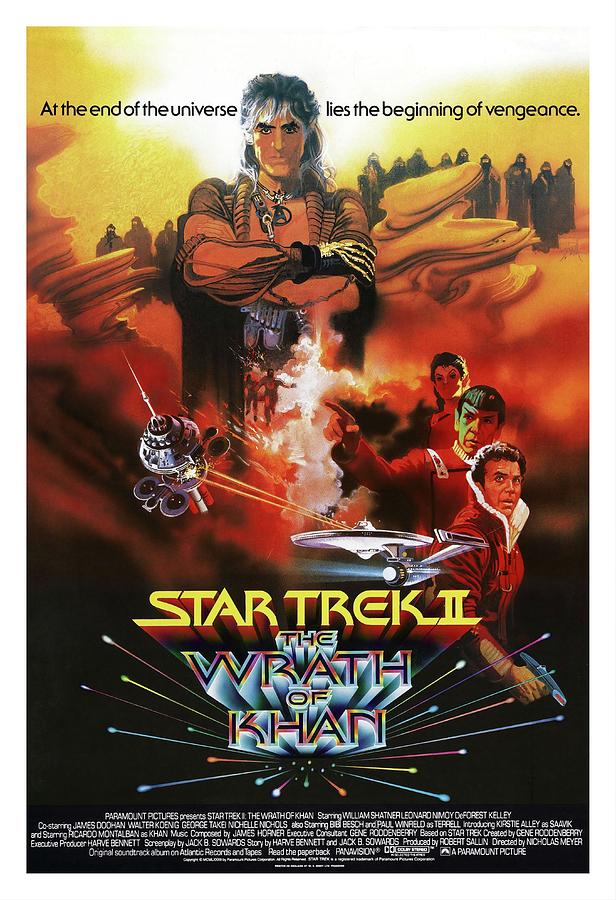
Star Trek II: The Wrath of Khan (1982)

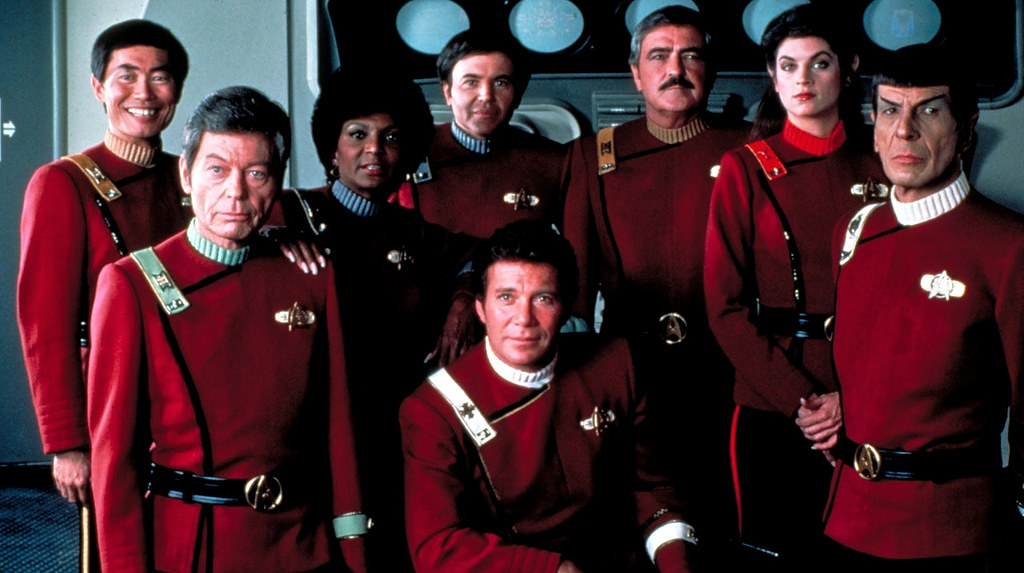
The Enterprise crew re-unite to face The Wrath of Khan

Director: Nicholas Meyer

Cast: William Shatner (Admiral James T Kirk), Leonard Nimoy (Spock), DeForest Kelley (Dr Leonard McCoy), Ricardo Montalban (Khan Noonien Singh), James Doohan (Montgomery Scott), George Takei (Hikary Sulu), Walter Koenig (Pavel Chekov), Nichelle Nichols (Uhura), Bibi Besch (Dr Carol Marcus), Merritt Butrick (Dr David Marcus), Paul Winfield (Captain Terrell), Kirstie Alley (Saavik)

After the overblown, slow and tedious The Motion Picture, you’d have been forgiven for thinking that we had seen the Enterprise crew boldly go for the very last time. If there was going to be a sequel Paramount had very clear guidelines for what it wanted: more entertaining, exciting, don’t involve Gene Roddenberry and above all make it for a fraction of the price. I think it’s fair to say that the decision to bring producer Harve (“I could make three movies for the cost of that first one!”) Bennett and above all writer and director Nicholas Meyer on board, saved the franchise.

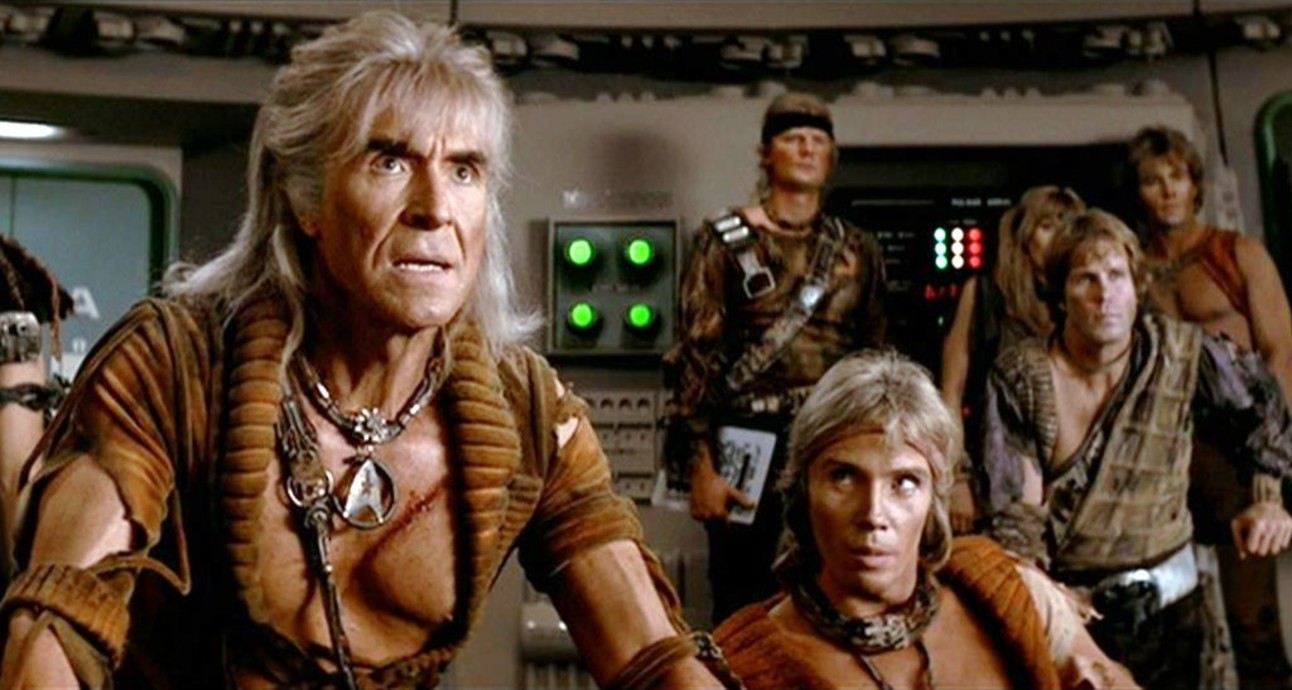
Neither Meyer or Bennett were familiar with the franchise in advance. But they did what those involved in the first film should have considered doing (looking at you Robert Wise!) – they went back and rewatched all the previous episodes and tried to work out exactly what people enjoyed about the show to begin with. And then tried to make a movie based around that. So first and foremost they decided they needed a villain – so after running through all the previous episodes they decided genetically-engineered superman Khan Noonien Singh, left abandoned on a planet with his followers after the episode Space Seed – was the best pick. Giving the film a simple “revenge” structure, it became a taught battle of minds and wills between Khan and the man he blames for all his problems – Admiral James T Kirk (William Shatner).

Star Trek II opens with an ageing Kirk, unsure of his place in the world while stuck in a desk job and scared about getting old. Running a cadet training voyage with his old crew, Kirk is called back into action after Starfleet loses touch with Federation scientists working on the Genesis device, a terraforming rocket that will help the Federation build new worlds and civilisations. The problems with Genesis are directly linked – without Kirk’s knowledge – with Khan’s (Ricardo Montalban) hijacking of the USS Reliantafter brainwashing the ship’s captain Terrell (Paul Winfield) and his first officer Chekov (Walter Koenig). Khan blames Kirk for the disasters that have taken place on the planet he was marooned on – and is determined to exact revenge on Kirk no matter the cost.

Unlike the dry Motion Picture, Wrath of Khan builds is action around a compelling, emotionally charged, story that gives each character a clear and relatable motive for their actions. Building a film about revenge may not exactly be in Roddenberry’s ideal for the 23rdcentury: but by heck it makes for a much better film. Because, if nothing else, while we may struggle to understand what the hell V’Ger wanted in the first film, everyone understands the dangerous obsession of revenge. It helps that the film has an excellent villain – a scowling, unbalanced but still strangely honourable and decent Khan, played with a grandstanding relish by Montalban who is clearly having a whale of a time. Despite never sharing the screen (or even being on set at the same time) Montalban and Shatner go at the rivalry and its impact on both characters with a real intensity that makes for compelling viewing.

Meyer also tightened and refocused the entire franchise. Roddenberry may have struggled with the increasingly naval view of Starfleet in this film – it’s at least twice referred to explicitly as the military – but Meyer recognised that if the franchise was partly Hornblower in Space, then why not redesign the film with that in mind. The ship is run with naval precision, including yeoman whistling to signal shifts and orders, uniforms that have a stylish naval formality to them, a greater focus on the ship’s movements being described in strictly naval terms – even the photon torpedo bays are prepped by enlisted men in what Meyer called his “running out the guns” sequences. This makes the entire operation not only easier to relate to, but interesting and entertaining in its own right.

It also adds huge tension to the duel that develops between the Reliant and the Enterprise that plays out part naval battle and late on – when battle turns to the Mutara nebula where systems and sensors work only intermittedly – part classic submarine drama, with Meyer practically throwing in depth charges. The battle scenes are filmed with simplicity and economy – but because the personal clashes between Kirk and Khan are so compelling and involving, they absolutely drip with tension, as these two go through move and counter move.

Meyer’s film is lean, engrossing and thrilling, and superbly well directed. It goes from skilled set-piece to set-piece, and never for a moment overlooks character. Unlike the first film, we get the moments of Kirk-Spock-McCoy discussing key themes together so beloved from the series, while most of the main cast also get their moment in the sun, most especially Walter Koenig who, as a brainwashed Chekov, gets more to work with here than he got in the whole original series. 

But this isn’t just an action adventure in space. Meyer’s literate and intelligent script has far more depth and thematic interest in it than the faux intellectualism of The Motion Picture. Taking as its starting point Kirk’s fear of on-setting age (the film opens with his 50th birthday, and McCoy’s gift of antique spectacles), it expands into an engrossing mediation of how we react to the impacts of our actions and lose-lose situations. Kirk has also to face the mortality of age and the impact of past actions – like his son (Merritt Butrick channelling Shatner’s impulsiveness) – coming back to bite him. All this while flying a ship of young cadets round – who need to shepherded into the risks of conflict. Khan meanwhile is confronted time and again with the damaging impact of his choices to follow revenge and obsession rather than settling for a winning hand.

Meyer gets his best work ever out of Shatner (allegedly after realising Shatner over committed to early takes, he made Shatner take multiple takes in order to focus his energy). This is a Kirk getting old, dealing with inner resentments and made to face up to the consequences of his actions – both with Khan and meeting the son he fathered. Shatner tackles all this with a world-weary resignation and touch of sadness that many felt were beyond him, while still making room for the fireworks that are his calling card (I suppose the famous “Khan!” was Meyer’s one major indulgence of Shatner’s exuberance).

However the other element the film is well known for is of course it’s tragic ending – the sacrifice of Leonard Nimoy’s Spock. Lured back to the film, but not convinced about ever returning, Nimoy agreed to the final reel shocker (although he enjoyed making the film so much he willingly agreed to leave the door open for Spock’s resurrection). It gives the film an emotional heft that none of the others in the franchise has. For the first time, our heroes would not magically escape unharmed to fly off onto the next adventure. Just as the film started with the cadets learning that sacrifice and facing a lose-lose scenario is a part of command (a lesson Kirk cheated on in his day, and a situation he has never faced or understood, as the film teaches him), so the film ends on the same beat. The ship can escape – but only if Spock takes a fatal radiation dose to restart the engine.

Both Nimoy and Shatner play the heck out of these scenes, probably the most emotional in the franchise – a low-key but deeply affecting moments of two old friends sharing their last moments together. It’s this successful switch into showing the real cost and loss associated with adventures like this that cap the thematic depth Meyer bought to the film.

Star Trek II succeeds on every count. Meyer’s intelligent script quotes and riffs everything from CS Forrester to Dickens via Moby Dick, while giving both heroes and villains deep and rich character arcs. It’s grippingly filmed – you wouldn’t believe how much cheaper it was than the first film, as it looks ten-times better with not a penny gone to waste – and hugely exciting. It carries real emotional force, and it’s hugely benefited by a fantastic score by a young James Horner. Even now it’s still the high point of Star Trek on screen – and probably a highlight of the franchise as a whole.

Star Trek: The Motion Picture (1979)

The Enterprise crew head to space in a tedious misfire that almost killed the franchise: Star Trek: The Motion Picture

Director: Robert Wise

Cast: William Shatner (Admiral James T Kirk), Leonard Nimoy (Spock), DeForest Kelley (Dr Leonard McCoy), James Doohan (Montgomery Scott), Walter Koenig (Lt Pavel Chekov), Nichelle Nichols (Lt Uhura), George Takei (Lt Hikaru Sulu), Persis Khambatta (Lt Ilia), Stephen Collins (Captain Willard Decker), Majel Barrett (Dr Christine Chapel), Grace Lee Whitney (Lt Janice Rand), Mark Lenard (Klingon Commander)

In the late 1970s the success of Star Wars meant every single studio was checking to find anything that could be turned into the next space-set mega-hit. Paramount’s eyes fell on a TV show that had been cancelled over ten years ago but had attracted a cult following. Hell it even had the word “Star” in the title! Quickly rejigging plans for a sequel TV series, instead Star Trek found itself heading towards the big screen. With a budget probably bigger than the amount spent making every single episode and two-time Oscar winning director Robert Wise calling the shots, what could go wrong?

Well as it transpires almost everything. Has there ever been a duller, flatter, less-engaging film that started a thirteen film franchise? Star Trek: The Motion Picture seems to have been made by people who looked at everything that made Star Wars a huge success and then decided “we ain’t going to do that!” Then they looked at everything that occasionally made the TV series self-important and hard to take seriously and said “We’re going to have some of that!” What we end up with a stupefyingly boring film that takes an immense amount of time to do almost nothing, with a story that might have made a passable 40 minutes of television into an empty and tedious two and a bit hours. Truly it was The Motionless Picture.

Anyway the plot, such as it was, features the now Admiral Kirk (William Shatner) taking back the reins of the newly revamped USS Enterprise to confront a giant cloud that is destroying everything it comes into contact with – and is on a direct course of Earth. Getting the old gang back together – including dragging Dr McCoy (DeForest Kelley) out of retirement and welcoming back Mr Spock (Leonard Nimoy), Kirk takes the place of the Enterprise’snew captain Willard Decker (Stephen Collins) and zooms out to encounter the cloud. What does the machine at the heart of this cloud want? Who is the mysterious creator that V’Ger wants to return to?

Where did it all go so wrong? The key problem lies with the script – and blame for that lies with Gene Roddenberry, Star Trek’s creator who took direct personal control of it. Determined that only he would control the Franchise’s future – after all it was his baby – Roddenberry rejected or minimised as much as possible many of the elements many of traditional film narratives (like villains, inter-personal conflict or the need for characters to ‘learn lessons’) for a science-fiction story he obviously felt dripped with importance. However, this shapeless machine like cloud searching for its “creator” tells us precisely nothing at all about the nature of faith or questions of identity. Because firstly V’Ger has no character and, secondly, the film takes so long to get this (almost three quarters of its running time) that there is no time to explore any of these themes anyway. 

No parallels are drawn between the questions V’Ger is asking, and issues the core characters are dealing with. It makes for a big airey expanse of nothing. We learn nothing about our heroes personalities from this adventure, and they in turn are so little affected by it that at the end of the film they jet off to some new random adventure. A potentially interesting idea about progress and faith gets completely lost – despite ample opportunities to have built contrasts between V’Ger’s loss of faith and the barely-explored crises that Kirk (back in command after five years) and Spock (struggling to work out if he should purge all his emotions) are experiencing. Instead no comparisons are drawn, no insights are made and all three crises either peter out completely or utterly forgotten. It’s part of the film’s failure to really make us engage with any of these characters, or to find a reason to care about them – like Roddenberry felt investment was pandering. It’s also The Emotionless Picture.

On top of which the film was obviously so thrilled with having the budget to include the sort of sweeping space vistas the show could only dream of, that a huge portion of the film was given over to watching these images draft past the screen. Slow, 2001-like pans across space vistas, around alien crafts and then through the trippy details of V’Ger’s inards clog up the film. But while Kubrick invested those with intense meaning, Wise makes them dull as ditchwater and as empty as light show. The bar is set early on with Kirk being given a long – almost four minute – silent shuttle tour around the exterior of the Enterprise. By the time the film is eating up almost ten minutes of the Enterprise flying through V’Ger, the actors have exhausted their “stare in wonder” faces and the audience are dozing off.

It’s not helped by the sub-par acting by all involved. Shatner and Nimoy give perhaps their worst, most lifeless performances in the history of the franchise. Perhaps they were caught between the mess of the script, the lifeless pace, the pressure of bringing these characters to the big screen – or perhaps the film just doesn’t give them anything interesting to do. Kelley gets a few moments of irascible charm, but the rest of the cast have barely got a few lines to rub together. Stephen Collins as Decker looks like he doesn’t really understand what he’s involved with, while Persis Khambatta looks more animated after her character has been lobotomised than she did intact.

The film drags on with a sonorous and stately pace, making no points at all and lacking any real thematic depth whatsoever. It’s not helped by Robert Wise’s lost direction. Wise prepared for making the 80th live-action entry into the franchise by watching precisely zero episodes of the show –and his utter lack of comprehension of what made the series popular in the first place perhaps explains why none of it made it into the film. There is no charm or wit here at all – everything is handled with such portentous importance it only draws attention to how little there is going on.

And it looks so bad as well. The overwhelming 1970s beige and muted colours that have been chosen for the new uniforms make it look as dull and disengaging as the words that are coming out of the actor’s mouths. It becomes even easier to notice the blandness of everything you are looking at that isn’t a matte special effect when you notice how full the script is with filler. Other a third of the film gone before the Enterprise leaves space dock. A tedious non-drama about problems going to warp (in a sequence of embarrassingly bad “slowed down” time disturbance as the ship falls into a wormhole). Almost two thirds gone before the crew make contact with V’Ger our nominal antagonist. A reveal about V’Ger’s origins and the identity of the creator that would have been shock only to people who had never seen an episode of the show before or had been living under a rock since about 1969. 

There are precisely two good things about the movie. Firstly the music is superb – Jerry Goldsmith’s themes for the film (re-used for The Next Generation) and other bits of music, especially his martial Klingon music, is so perfect, so brilliant it was used in the franchise forever more. Secondly the opening sequence with the re-designed Klingons nailed a look, design and language for them that would also stick for the rest of time and the sequence itself is pretty exciting. Other than that, there is almost nothing to recommend the film. 

As an advert for making someone want to watch any Star Trek ever again, it’s a disaster. Having gone way over budget, the series only returned due to loyal fans paying over the odds at the box-office. Roddenberry was dispatched from any future involvement, and the series bounced back with its best ever film with Star Trek II – which corrected all the script mistakes this one made.

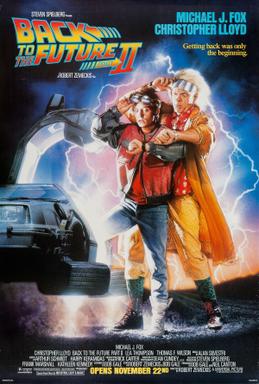
Back to the Future Part II (1989)

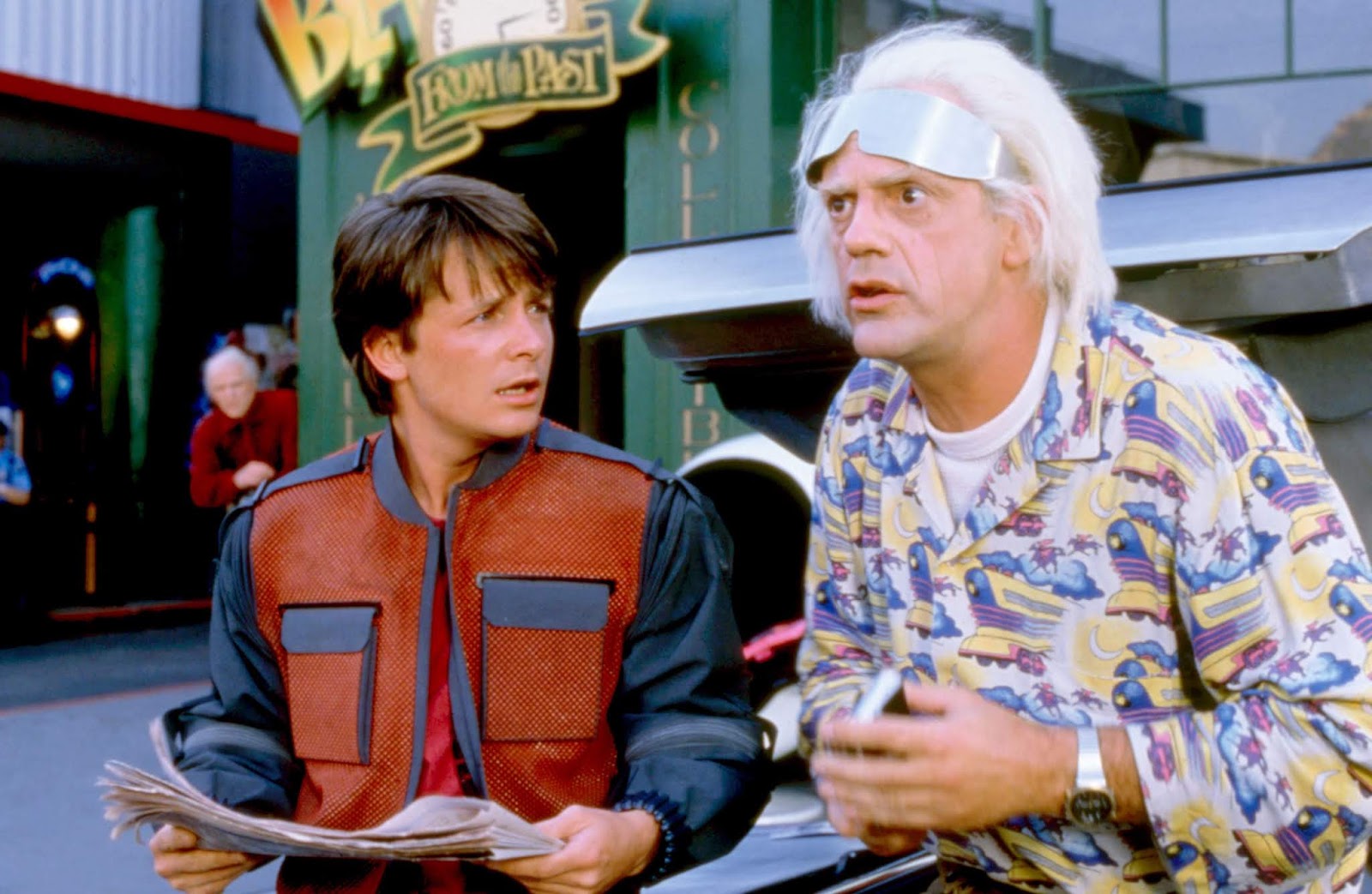
Marty and Doc head to the Future at last – alas – in the weak middle chapter Back to the Future II

Director: Robert Zemeckis

Cast: Michael J Fox (Marty McFly/Marty McFly Jnr/Marlene McFly), Christopher Lloyd (Emmett Brown), Lea Thompson (Lorraine McFly), Thomas F. Wilson (Biff Tannen/Griff Tannen), Elisabeth Shue (Jennifer Parker), James Tolkan (Strickland), Jeffrey Weissman (George McFly), Flea (Needles)

After the smash hit of Back to the Future a sequel was inevitable – particularly with that hook ending with our heroes zooming off into the future to fix Marty and Jennifer’s kids. Back to the Future Part II is often fondly remembered for its journey into 2015, a typically 1980s view of what the future might be like, but this is journey is mostly a slightly embarrassing mess that the film has to spend quite a bit of time getting over before the plot can start in full.

The journey into the future is largely a narrative cul-de-sac, which is mostly there to introduce a Sports Almanac covering 1950-2000 which Marty (Michael J Fox) picks up in an antiques store with an eye on placing some bets in the future. He’s firmly told by Doc (Christopher Lloyd) not to mess with the timeline, but that’s never here nor there to Old Biff (Thomas F. Wilson), who pinches both Almanac and DeLorean to head back in time to 1955 and handover the Almanac to his younger self. Which means when Marty and Doc return to 1985 from 2015, having not noticed the theft and return of the time machine, they find 1985 has been transformed into a nightmare dystopian world where Los Angeles is ruled by multi-billionaire Griff. So it’s back to 1955 to repair the timeline again – and this time dodge round their younger selves who are still going through the events of the first film. 

Zemeckis and Gale, it’s pretty clear, actually wrote themselves into a bit of a corner with their visit to the future. Firstly, the problem with the kids turns out to be fairly quick and easy to solve. Secondly, they are stuck with Jennifer (Elizabeth Shue replacing the unavailable Claudia Wells) who is instantly unceremoniously knocked out not once but twice in order for her not to be a third wheel on the boys adventures. Thirdly, the real interest and delight of these time travel films is seeing the past through the perspective of the present, and we lose that completely in a silly painfully of its time vision of the future. Gale himself had ruled out visiting the future in the first film, because all visions of the future date quickly on film – so it’s a shame he didn’t listen to himself.

The future sequence of the film is honestly pretty awful, in the midst of a film that takes a long time to get going and then relies very, very heavily on recreating the first film either spiritually (several set pieces in the future echo the first film, from feuds in a diner to the skateboard chase here done with a hoverboard) or literally (the third act of the film is a point-by-point recreation of the first film from different angles). The future sequence lacks any real point or drive, other than to establish two plot points: the sporting almanac and how Marty’s character flaw of pride leads him to take stupid, self-destructive risks. 

Other than that it’s an increasingly embarrassing look at what a 1980s person thinks the future might be like – flying cars, hovering skateboards, strange futuristic clothes, cybernetic implants, loud, bright colours – it’s all there. Sure there are some things correctly predicted – principally the idea of something approaching the internet and video calls – but the attempts at presenting a humourous view of the 2010s falls flat. This isn’t helped by the desperate mugging of several of the actors – none worse than Fox sadly, who plays his whiny Grandson, a latex covered middle aged version of Marty and (worst of all) his granddaughter – straining for laughs, but missing completely. It’s a cheesy, awkward sequence that says more about the hang-ups of the 1980s than anything else.

The film only starts to pick-up when we head back to the hellish Mad Max version of 1985 caused by Biff’s meddling. Sure it’s also an excuse for retreading some other elements of the previous film – and conveniently means that George McFly can be killed off, resolving the problem of working around a second recasting after the difficult to work with Crispin Glover turned down the film – but at least it kicks a bit of a plot going, away from the more feeble moments and overacting in the future section.

Which it brings us to the final act as the film reworks, reimagines and represents the events of the first film once again. I’m split on this between it being a fun, fresh idea of looking again at a beloved film (as well as opening up some comedy opportunities to play on the viewer’s expectations) or a sign of the well running dry. Either way it works a lot better than the future sections of the film, even if again the narrative structure is an almost exact re-tread of the first film, once again showing Marty trying to juggle events to get the outcome he needs and a race against time ending that culminates in a bolt of lightning and a cliffhanger.

There are some fun moments in the film, but Back to the Future II generally falls between two stools, trying to tell a new story while also setting up Part III. I appreciated more watching it again the way it carefully sets up themes and ideas for Part III – from Eastwood avoiding death in a shootout on a TV screen (the same way as Marty will) to establishing Marty’s character flaws that the third film shows him struggling to overcome. But it’s a slightly cheesy, slapdash film – short as well, as the opening 5 minutes are a reshoot of the first film and the last five are a trailer for Part III and the credits. It feels like Gale and Zemeckis felt forced to deliver the future against their will, and then spend the rest of the film course correcting to bring us back to the Past.

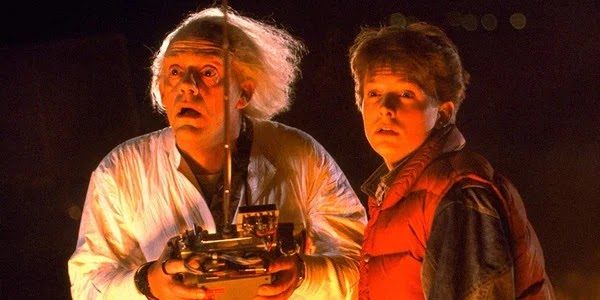
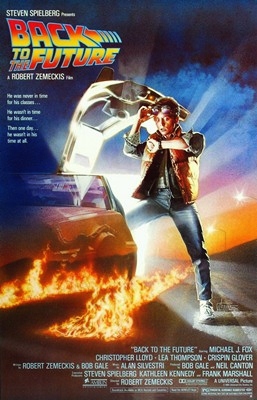
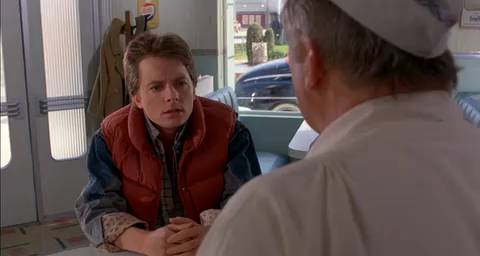
Back to the Future (1985)

Michael J Fox and Christopher Lloyd head to the past and back in the ever beloved Back to the Future

Director: Robert Zemeckis

Cast: Michael J Fox (Marty McFly), Christopher Lloyd (Dr Emmett “Doc” Brown), Lea Thompson (Lorraine Baines-McFly), Crispin Glover (George McFly), Thomas F. Wilson (Biff Tannen), Claudia Wells (Jennifer Parker), James Tolkan (Gerard Strickland)

In the tentpole 1980s film icons, few films are as beloved as Back to the Future. With the highest of high-concepts, it could easily have alienated people – or felt a little bit silly – but instead it’s a perfectly structured entertainment, a wonderfully assured combination of light comedy, drama, science fiction, farce and adventure. It’s one of those rare films that doesn’t have a wrong beat in it.

Set in 1985, Marty McFly (Michael J Fox) is a your typical teenager, cool, loves rock music, has a great girlfriend Jennifer (Claudia Wells) – and is worried he’s going to turn out like his parents, his weak father George (Crispin Glover) bullied by his supervisor Biff (Thomas F. Wilson) who never amounted to anything and his depressed mother Lorraine (Lea Thompson). His friend, eccentric scientist Emmett “Doc” Brown (Christopher Lloyd) ropes Marty into tests of his latest invention – a time travel machine built into a DeLorean car. When the first test is interrupted by angry Libyan terrorists – furious that Doc used their investment and stolen plutonium to build a time machine rather than a bomb – Doc is killed and Marty escapes in the DeLorean, accelerating to 88mph and accidentally throwing himself thirty years into the past. There he meets his parents, disrupts their first meeting and finds his mother falling in love with him and his father a weakling who he has to teach how to become a man and win his mother’s love – all while finding the help of the younger Doc to return him to 1985. 

Back to the Future has a tricky concept but a remarkably simple story which revolves around completely relatable ideas and questions. Who hasn’t wondered what your parents were like when they were young? Would you get on with them? How different would they be from the adults you know? These ideas are all caught – and told with maximum comic and dramatic impact – in Robert Zemeckis and Bob Gale’s superbly constructed script.

The secret really is in the cooking of that script – nearly five years in the making – where every single scene serves a clear purpose, and all the plot points sprinkled through the first twenty or so minutes or brilliantly pulled into effect in the rest of the film. With skilfully swift and economic story telling us all the information we need to know about Marty, his interests and skills, his parents – not to mention all the hundred and one other things happening in the film – so that as each careful plot point sprinkled through the film comes into effect it’s instantly satisfying and convincing. As director Zemeckis also gets a perfect conveying of the film’s tone of light comedy, even more surprising since it frequently touches on darker themes (murder, incest and rape for starters!) but never once feels like it’s tone is falling all over the place.

The film has a brilliant Frank Capraesque film of the strength of how one person can make a difference – both for good and bad. By arriving in the past – and with his confidence, bravery and shy decency – Marty at first ruins his parents meeting and then (almost without realising it) builds up both of them to head-off the mistakes they will make in their lives. Most obviously in his coaching of the timid and frightened George into someone who will have the confidence to make his own choices and go after the things he wants. The grooming of luckless loser George into someone who will stand up (eventually) against the brutality of Biff (a swaggeringly vile Thomas F Wilson) is particularly affecting, Crispin Glover to be commended for making a character who is wimpish and frustrating but not unlikeable. Lea Thompson also does great work as a sweet young girl, who’s more daring than she appears.

The film’s real success though is tied directly into the casting of Michael J Fox in the lead. Fox was born to play this role, the film effectively a showcase for his timing, ability to throw just enough shade and emotion onto scenes to keep them real, and above all his almost unparalleled skills as a light comedian. Originally unable to play the role due to a scheduling clash with his sitcom Family Ties, Fox was only bought on board after three weeks when backup choice Eric Stoltz proved unsuitable for the role (by his own admission). The entire film was shot either at night or the weekend to allow Fox to shoot after this 9-5 commitment to Family Ties was finished. And thank goodness because Fox makes the film.

He also has superb chemistry with Christopher Lloyd (graciously stooping for the whole film so he could fit in the same frame as the famously diminutive Fox). Lloyd, another great comedian with the instincts of a natural actor, channelled Einstein and conductor Leopold Stokowski as Brown, making him a larger than life eccentric who still feels like a real person. These two actors spark off each perfectly, adding a huge amount of comic and dramatic force to their rat-a-tat dialogue. Fox’s skill in understanding the light drama tone – and making what was already a very strong script comedy gold – as well as his ability to be immediately relatable to viewers is what makes the film an eternal success. 

That and it’s simple themes. The joke of travelling back in time and having your mum accidentally fall in love with you is perfectly judged, being just the right amount of icky (Fox’s horrified discomfort is hilarious) without being unsettlingly disturbing. The reconstruction of the tone and vibe of the 1950s is perfect – with Marty’s more hip 1980s style juddering up against the picket fence Americana of the past. There is plenty of humour from watching Marty “invent” everything from the skateboard (in a hilarious but gripping chase sequence) to rock and roll music. But it all works because the film is very heartfelt and genuine and very sweet.

Not only that but when it wants to be it’s also exciting and dramatic. The final resolution of George’s rise to manhood carries a real sense of threat as well as a cathartic moment of violence. The film’s final sequence as Doc and Marty race against time to channel a lightning strike to get the Delorean back to 1985 is truly exciting, helped as well by Alan Silvestre’s perfectly judged musical score (and thank goodness for executive meddling that nixed Zemeckis original idea of a Nevada test site and the time machine being built into a fridge). It all works as such an entertaining package you don’t even think about the fact that, as Marty returns to a radically altered family life in 1985, he won’t share any memories with his parents and siblings.

With a star actor taking on the role he was born for – and Fox was never better again, perfectly charming, endearingly sweet, cocksure and cool – Back to the Future has been entertaining audiences for almost 35 years – and it will carry on entertaining them the more we head into the future.

Star Wars: The Rise of Skywalker (2019)

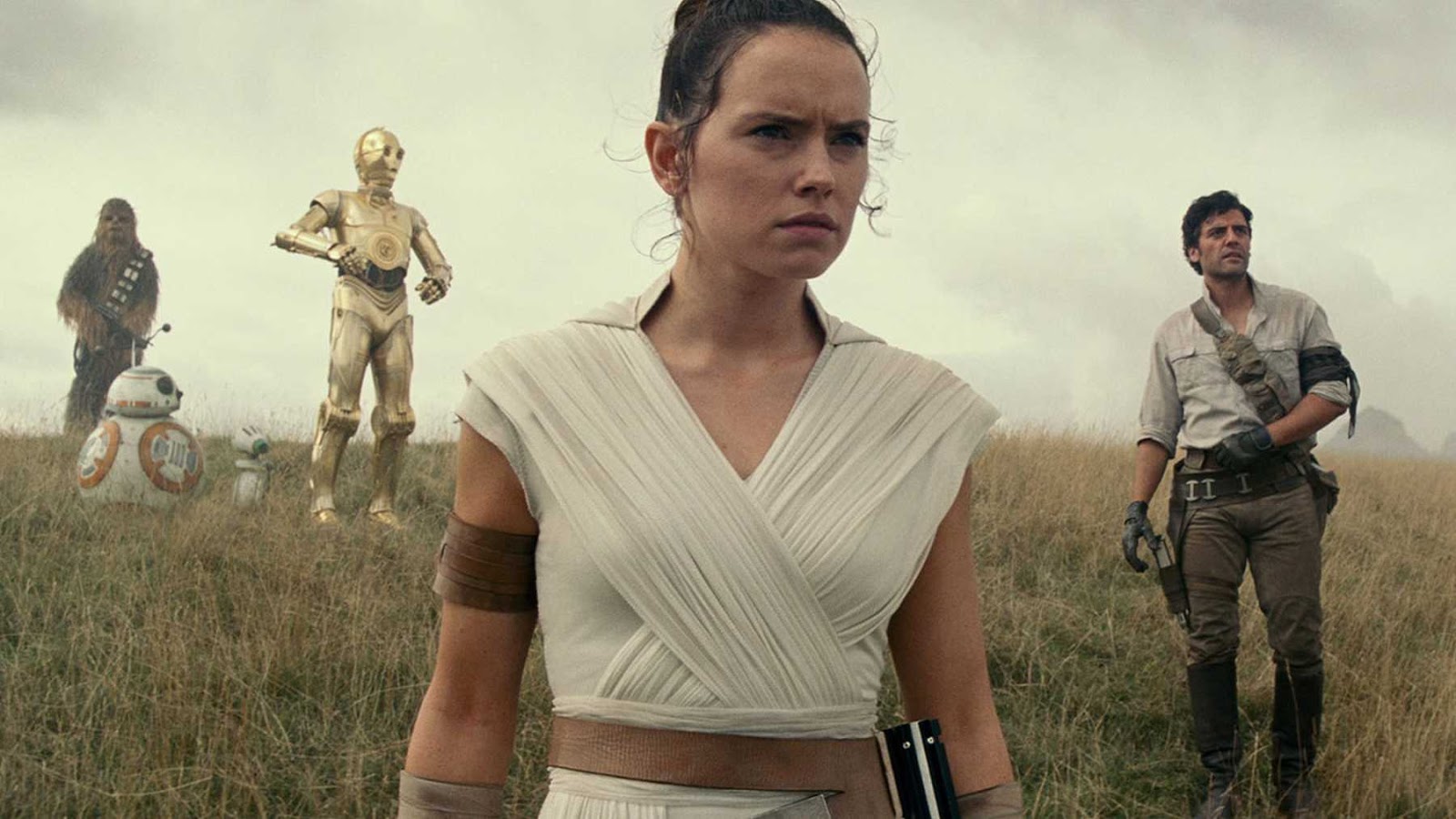
Our heroes prepare for one final adventure in Star Wars: The Rise of Skywalker

Director: JJ Abrams

Cast: Carrie Fisher (Leia Organa), Mark Hamill (Luke Skywalker), Adam Driver (Kylo Ren), Daisy Ridley (Rey), John Boyega (Finn), Oscar Isaac (Poe Dameron), Ian McDiarmid (Palpatine), Billy Dee Williams (Lando Calrissian), Anthony Daniels (C-3PO), Naomi Ackie (Jannah), Domhnall Gleeson (General Hux), Richard E. Grant (Allegiant General Pryde), Lupita Nyong’o (Maz Kanata), Keri Russell (Zorii Bliss), Joonas Suotamo (Chewbecca), Kelly Marie Tran (Rose Tico)

When Disney took over the control of the Star Wars franchise, they had in mind an epic continuation of George Lucas’ space opera that would take in everything from more tales from the renamed “Skywalker saga” to standalone entries like Rogue One and Solo. Well, we are almost seven years into this journey now, and the series has delivered some hits but also the first flop Star Wars film (Solo) and the most divisive entry for the fandom ever in The Last Jedi. So where does Rise of Skywalker fall in its plans to cap the third (and they claim final, but let’s see…) trilogy?

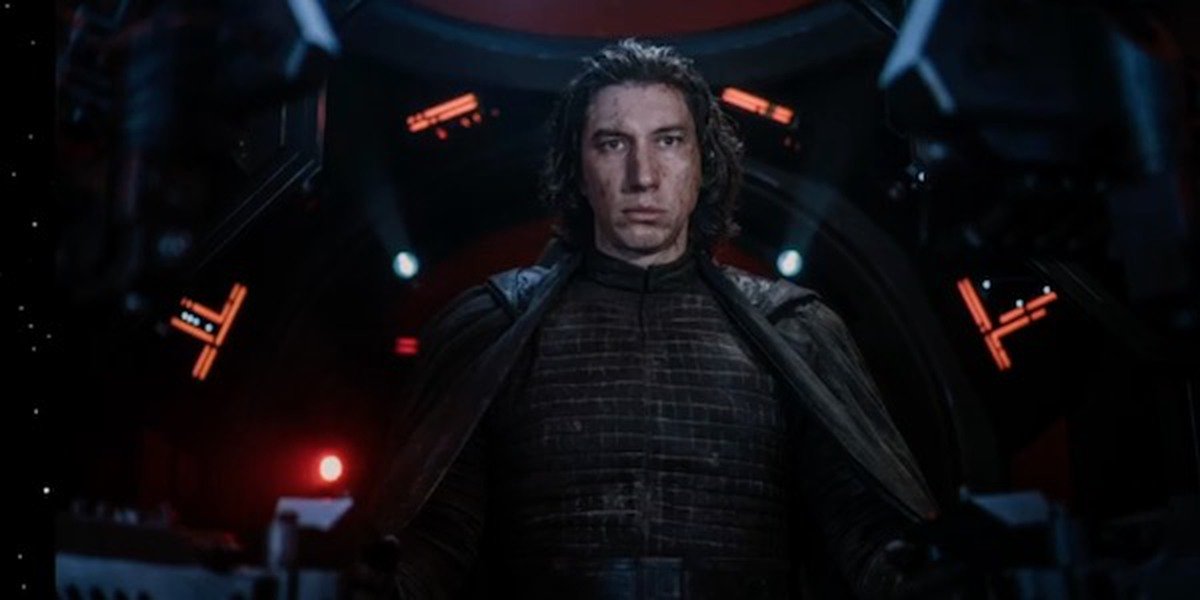
Set a year after The Last Jedi, the Resistance has rebuilt itself under the leadership of Leia Organa (Carrie Fisher), who has also been training Rey (Daisy Ridley) in the Jedi arts. Imagine their horror when a message from the not-so-late Emperor Palpatine (Ian McDiarmid) rings out across the Galaxy, threatening revenge. Kylo Ren (Adam Driver) has been searching for Palpatine and forms a deal – Palpatine will make him emperor of the galaxy, if Ren will kill Rey. Meanwhile Rey heads out into the galaxy with Finn (John Boyega) and Poe (Oscar Isaac) in a race against time to find the location of Palpatine and his armada, before the late Emperor can launch a deadly attack.

JJ Abrams’ return to the franchise is also a return to the fun-focused, action-packed, fast-paced explosion of entertainment and thrills that he offered with the excellent (and still best film in this new trilogy) The Force Awakens. It will excite you, entertain you, and offers some terrific work from many of its players, not least Daisy Ridley (who has grown and grown with each film as an actress confident in carrying a huge franchise) as Rey and Adam Driver as a morally conflicted Kylo Ren. JJ Abrams gently handles the death of Carrie Fisher, skilfully using off-cuts and deleted scenes from past Star Wars films to retroactively create a series of scenes using what dialogue they had from the actress to give her arc some sort of resolution.

It’s one of many things the film gets right here, along with its electric pace and sense of excitement, that never lets up and takes you on such a gripping thrill ride that you hardly notice that most of the film makes very little if any sense (so little sense, I didn’t really understand whether the baddies were the First Order, the old Empire or the Final Order or whatever they were meant to be). It’s a top-to-bottom piece of entertainment, designed to thrill the initiate and the casual fan and give all that you might want to the superfan.

In fact you could say it’s more or less a course correction from the deeply unpopular (with certain elements of the fandom, although its box office success was huge) The Last Jedi. Rise of Skywalker lacks all the iconoclastic “forget the past” attitudes of Rian Johnson’s film. In fact it goes out of its way to ignore as much as possible everything that happened in that film – to the extent that, apart from the growing bond between Rey and Ren and the initial training of Rey, you could more or less skip over it if you wished when viewing the trilogy. I’m not sure how I feel about this – or the fact that the franchise feels it has effectively side-stepped by-far-and-away the most interesting and different film it has produced in favour of a safe-return to familiar stories.

It does mean that Rise of Skywalker is a far less brave film than Johnson’s – and one that avoids doing anything new as well. Many elements from The Last Jedi are disregarded, and all the plot hooks that film are ignored are firmly, and hurridly, reinstated. It means that Rise of Skywalker rushes from revelation to revelation, from plot point to plot point, hardly stopping to draw breath, so eager it is to give the fans what it feels they want. It’s probably a testament to fan power – but also to the savviness of film producers, working out the vast majority of people will come and see any Star Wars film, but the hardened fans will only support a film that matches their agenda.

So it reckons the fans wanted to see answers to questions raised in Force Awakens, lots and lots of cameos and call backs, and plenty of action and space battles. So Rise of Skywalker is a film almost exclusively made up of these things. While there are flaws in this approach, it does mean that this film is a joyfully fun piece of excitement, with lots of great set pieces and some terrific gags among the screenplay. JJ Abrams is a wonderfully confident director of this sort of action, and while the film often feels like it never takes a second to really explain any of its plot dynamics, he is also able to create a narrative that is much more fun and exciting than The Last Jedi, for all its faults of pacing, narrative and characterisation.

What this film does the most is hammer home the bizarre fact that Disney set about making a franchise of three films – guaranteed three films! – with no coherent thought at all about how all these three films would work together either in terms of tone or plot. Now that all three are assembled there is no sense of them having any particular themes, or that they connect together to form an overarching story. The conclusions reached in this film are only faintly threaded in Force Awakens and all but contradicted in The Last Jedi. It’s this lack of planning that underwhelms the film – fun as it is, these are more like three loosely linked films rather than ones that progress one to the other, or feel connected to the original three films.

It’s of course made worse by the ignoring of The Last Jedi – Rose Tico, a character that film spent a lot of time building and establishing gets less than three minutes of screen time – and a re-focusing of the film on the “family of three” in Rey, Poe and Finn that mirrors the first film. This relationship is now far warmer and closer than we ever saw developing in Last Jedi (a film they never appeared in together until the final seconds) – and also laced with an odd, almost queer-baiting sexual tension, where they seem at times like a borderline thruple. (The film offers a cop out on LGBTQ people in Star Wars by having two background characters kiss at one point, a blink-and-you’ll-miss-it shot, cut in China.)

It’s part of a general lack of imagination in the film as a whole, which leans often on bringing back people from the previous trilogy and even sidelines the villains of the rest of the trilogy to shoe-horn back in Palpatine (a reintroduction that is barely explained – like much of the film – and also rather undermines the ending of Return of the Jedi) as the big-bad, and which again doubles down on many of the tropes of the first trilogy. JJ Abrams often mistakes bigger for better – and this film is big, with races against time, fleets beyond imagining, planet destroying tech that can be put into a single star destroyer, Sith powers that can stretch over thousands of miles etc. etc. He takes the same approach with the film, throwing so much of the old trilogy in that it becomes more of a surprise that stuff is missing rather than appearing (I was shocked Yoda wasn’t in this one).

But it’s what the film is going for, offering something safe and recognisable, something that is a thrill ride like you remember rather than the different path the trilogy seemed to be heading towards. There is nothing wrong with that of course at all, but it feels like a missed opportunity. For all its faults, The Last Jedi tried to do something new. This doubles down on the things it knows fans will love, and offers all the entertainment it suspects the casual viewer wants. And maybe that’s enough.

Stalker (1979)

What’s it all about? Who knows in Tarkovsky’s Stalker

Director: Andrei Tarkovsky

Cast: Alexander Kaidanovsky (Stalker), Anatoly Solonitsyn (Writer), Nikolai Grinko (Professor), Alisa Freindlich (Stalker’s Wife)

Three men stand outside a room in what looks like a rain soaked, post-industrial wasteland. They debate at great length morality, optimism, fate and destiny. They all decide not to go into the room. There really isn’t any other director like Tarkovsy is there? Perhaps that’s a good thing.

Set in an indeterminate future, Stalker takes its name from the title for guides who – through some sort of sixth sense – are able to guide travellers through “the Zone”, a fenced off area, guarded by the military, that is the site of some sort of extra-terrestrial encounter (a meterorite possibly, who knows?) that gave the Zone magical power. In the centre of the Zone is a room which will grant the innermost desires of all those who enter. Travelling with our Stalker (Alexander Kaidanovsky) are a writer (Anatoly Solonitsyn) and a professor (Nikolai Grinko). Along the journey, ideas around everything from existence to the inner soul is discussed by the three men, each of them approaching from radically different perspectives.

Tarkovsky’s style was a sort of fusing of expressionism and stately filmmaking, mixed in with his own love of extended shots. In a world of cinema where the average shot in a film lasts a few seconds, in Stalker’s 162 minutes there are only 142 shots in total. Tarkovsky’s camera pans and tracks (often slowly) through the wasteland of the Zone, finding moments of great beauty and power in the industrial mess and debris, making fabulous use of the consuming power of water as it washes over and covers everything, invading every space. Tarkovsky’s painterly structure of the film is further aided by his switching between sepia (for most of the scenes outside the Zone) and muted colours (largely for those in the Zone, with a few exceptions). 

However, Stalker is also a long, slow, rather turgid film, immersive in the sense that you will feel you have lived every minute of the never-ending journey that the heroes go on. Which comes to the central problem I have with the film – and with Tarkovsky himself. The director, without a doubt, is an intellectual, straining at the leash with thoughts and ideas that he wishes to throw up into film. But Stalker is a film that suggests intellectualism, and carries all the trappings of deep thought, but in fact seems to throw ideas haphazardly at the screen with very little thought for how these hang together, or what the overall message might be (if any).

Instead we are subjected to a number of – beautifully filmed, with real artistic grace – rambling monologues that positively drip with self-importance and intellectual snobbery. Tarkovsky’s long takes and deliberate refusal to include much in the way of story, drama or character seem designed to make the film feel as much as possible like some kind of allegory. What this is an allegory of it feels Tarkovsky would consider crude to describe. Instead the film is difficult to watch and engage with, precisely because that is (it seems) what makes Great Art in the eyes of its director. When challenged by the Moscow authorities that the film was dull and slow, Tarkovsky argued it should be both duller and slower, to make those who were not of the intellectual level to engage with it leave earlier.

Perhaps he was right, as Stalkerhas become more and more of a critical darling, the further time gets from its first release. Now it seems almost blasphemy to look at the film and wonder if it is about anything at all. Almost a crime to suggest that Tarkovsky’s film is short on answers and easy meanings perhaps because the director himself seems to have little clue on what it is about. Perhaps to say that for all its slowness, length and rambling speeches, at the end of the day the film is making fairly safe and obvious points about the dangers of free will, the dreams for a better world and the terror that could ensue in a world where we can get exactly what we want with no cost. Stalker could be about any of this at all, or could be about nothing. Either way it doesn’t make for compelling viewing.

This is all why Tarkovsky for me remains an acquired taste – and not one I’ve really managed to acquire. There are moments in all his films of haunting beauty, of profound depth. But all of it is undermined by the director’s own self-importance, his pomposity, his delusions of being some sort of Plato. Above all, I find, by his own po-faced lack of humour. Is there anything amounting to a joke in any Tarkovksy film? There certainly isn’t one here, and the earnest self-importance, the frowning condescension you feel behind the camera for the unworthy viewer, strangles the life out of the film and kills any feelings of fondness you might have towards it.

And there are things to admire in here. For all his pretensions at intellectualism, and the cold sense of superiority he delivers them with, it’s impossible to argue that Stalker is not a beautifully made film. The camerawork is sublime, the slow onset of water (both visually and the drips on the soundtrack) gradually dominates the action – what this is suggestive of, of course, isn’t clear but it feels like something to do with both the destructive and cleansing power of water. The film is nominally a science fiction, and moments of thoughtfulness or haunting ideas play at the edges of the film – in particular the influence the Zone may have had on the daughter of the Stalker. 

Tarkovsky’s films though remain cold and deliberately hard watches, and I’m not sure there is as much reward in investing the time in them as many would have you think. Many of the points of Stalker can be grasped very quickly, and while part of the point is that they are delivered at such absurd length and languid pace, I’m not sure that is a recommendation. It’s not a film for actors either, with most of the performances largely comprising delivering slabs of poetry or cod-philosophical speeches to the camera, with scarcely a characterisation in sight.

Stalker is a puzzle deliberately written without an answer, that asks questions that should feel profound but perhaps are less revelatory than the film thinks, all within an extremely long runtime. In a cruel coda, the long time spent shooting Stalker in a pair of abandoned chemical plants would eventually lead to many of those involved – including Tarkovsky, his wife and two of the lead actors – dying of cancer within a few years of the film’s completion.

Tarkovsky is a cold intellectual, who talks of images producing feelings, but frequently produces films that feel like watching elaborate slide shows while being lectured at by a boring philosophy student. He is a master of form, but perhaps is the “Great Director” it’s easiest to disregard – or to feel like watching one of their films is more than enough. Stalker is something both unique in its execution, and painfully familiar in its Arthouse pomposity.

Terminator: Dark Fate (2019)

Terminator: Dark Fate (2019)

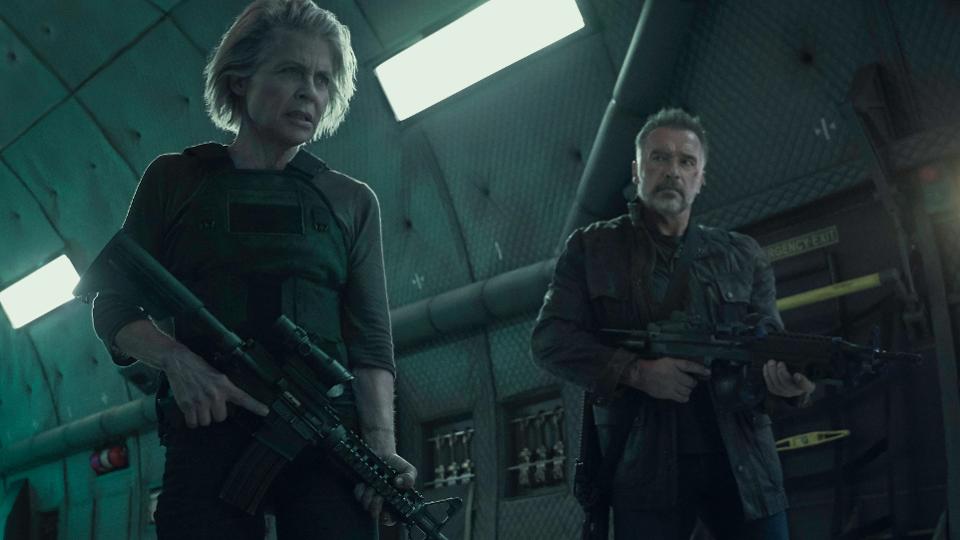
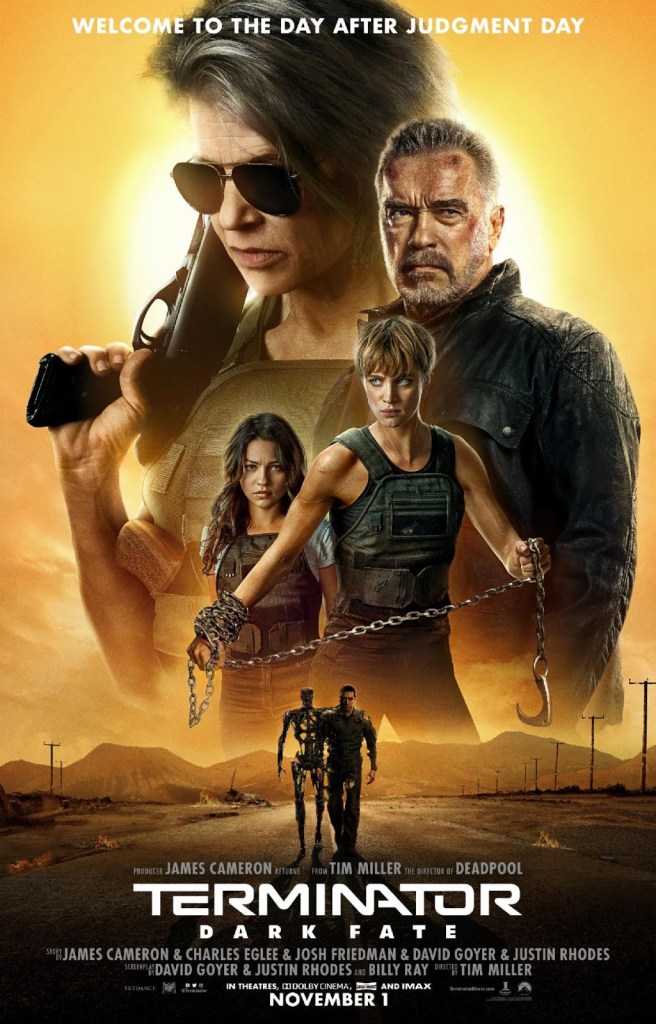
Even re-uniting Hamilton and Arnie couldn’t save this from an (undeserved) Dark Fate

Director: Tim Miller

Cast: Linda Hamilton (Sarah Connor), Arnold Schwarzenegger (Carl), Mackenzie Davis (Grace), Natalia Reyes (Dani Ramos), Gabriel Luna (Rev-9), Diego Boneta (Diego Ramos), Tristan Ulloa (Felipe Gandal)

It should have been a hit. The third attempt in the last ten years to restart the Terminator franchise, after no less than two cancelled planned trilogies, this one bought back James Cameron in a producing and story capacity, pulled in Linda Hamilton to return as Sarah Connor for the first time in nearly thirty years and finally seemed to be the “true” Terminator 3. But it bombed anyway, worse than either Salvation or Genysis and finally put paid (probably) once and all for the franchise. How did it come to this?

In 1998 a T-800 Terminator (Arnold Schwarzenegger) – one of a number sent back in time by Skynet before erased from history by our heroes in Terminator 2 – finally succeeds in killing John Connor (a CGI recreation of Edward Furlong from T2), leaving Sarah Connor (Linda Hamilton) distraught. Twenty-two years later and a new artificial intelligence from the future, Legion, has sent back a Terminator (Gabriel Luna) to wipe out a pivotal future figure for the human resistance Dani Ramos (Natalia Reyes), with the resistance once again sending back its own champion Grace (Mackenzie Davis), an artificially enhanced human. The inevitable combat between man and machine is on again, with Grace and Dani joining forces with Sarah Connor, as well as other unexpected allies.

That paragraph probably gives you a sense of what’s good and what’s bad about the film. Starting with a twist that seems to finally try and send the franchise off in a new direction – the eradication of John Connor, the person every film has been about protecting – is a brave decision. The confirmation that eternal enemy Skynet has indeed been erased from history finally changes the enemy. Arnie’s T-800 is confirmed as literally the last in existence – a killer sent from a future that now no longer exists. It looks like we are set for something entirely different.

And then of course we aren’t. Because it seems man’s reach will inevitably exceed his grasp, just as would-be Terminator film producers will always overreach themselves. Even with Skynet gone, there must always be some artificial intelligence super-computer that destroys the future, there must always be some sort of special one who must be protected at all costs, always a hero sent from the future who knows more than they can say and always an Arnie Terminator on hand for good or bad. Just as Genysis tried to re-set the table, but only reminded us what a small world is, this film tries to shake up the pieces but then replaces most of them with like-for-like and throws us into a film that has effectively exactly the same structure as the first two films.

So, after that opening scene twist, we get the arrival and meet up of the two future warriors, a scrap at an everyday setting for her hero, a series of shocked reveals about the future, some gonzo chases (this one does at least up the anti – literally – by setting one of them in a plane), a lull in proceedings while our on-the-run heroes work out whether they can trust each other, then a final smackdown in a factory where self-sacrifice is all the rage. For a film that tries to do something new, it is remarkably conservative and shows that for all the time-travel inspired gymnastics of the universe it operates in, the series is strictly tied to a set number of rules and plot mechanics.

But it’s all really confidently told. That’s almost the tragedy. This is a pretty good film. Easily the third best Terminator film made. I actually pretty enjoyed it. It has a simple narrative drive to it, an old-fashioned world where the characters throw each other about and punch each other really hard into things rather than engage in balletic, choreographed fight scenes. Tim Miller directs the whole thing with a pace and drive and if Cameron feels like he may have only really been happy to attach his name to the whole thing in return for a few story ideas and a paycheque, at least it can boast it has his definite seal of approval.

The acting is also pretty good. Linda Hamilton is a welcome return, getting some fascinating beats of intense drive mixed with deep grief. It’s a great to see an action film like this front-and-centre female characters so much. It’s a shame that this is such a franchise with such a masculine reputation, as this realignment has probably not had the impact it could have had in bringing new people in. Mackenzie Davis is impressive as Grace, Natalie Reyes growing in confidence and strength as the new messiah. Even Arnie gets to do something very different with his T-800 characterisation (after 22 years of living as human, the robot has changed beyond all recognition from the remorseless killer), not least seeing him successfully terminate a target for the first time in the franchise. 

It’s just a shame that this energetic re-telling of an old story probably suffered above all from franchise exhaustion. After reboots and restarts from Salvation to Genysis have seen their plotlines, developments and future sequels sent to the scrap heap (certainly the last two) it really seems a case that once bitten, twice bitten makes us not just shy, but running scared. At the end of the day any interest and affection the franchise had from the first two films has been burned up beyond all recognition – and this film, in the end, doesn’t reinvent the wheel enough to encourage you to come back and see what’s different. It’s a shame that this sprightly entertaining film has been terminated not by its future, but by its weary, error-strewn, past.

Sunshine (2007)

Astronauts head out to restart the sun in Danny Boyle’s Sunshine

Director: Danny Boyle

Cast: Cillian Murphy (Robert Capa), Chris Evans (James Mace), Rose Byrne (Cassie), Michelle Yeoh (Corazon), Cliff Curtis (Searle), Troy Garity (Harvey), Hiroyuki Sanada (Kaneda), Benedict Wong (Trey), Chipo Chung (Icarus), Mark Strong (Pinbacker)

Spoilers: Last act surprises are discussed here. Although they did put them in the trailer at the time as well

What would we do if the sun decided to pack it in? To be fair, probably not build a bomb the size of Manhattan out of all the world’s fissile material and then fly it up to the Sun in a huge spaceship to jump start the sun’s core. Because that idea is pretty much like trying to restart a volcano with a match. To be fair, Professor Brian Cox (for it was he) did come up with an actual concept that did work – something involving a Q-Ball in the sun, whatever the hell that is – that the film never mentions. But then who really cares about the science, we only care about the simple idea of restarting the sun’s engine with a massive nuke. That’s an idea I don’t need a staff pass at the Large Hardron Collider to understand.

Mankind’s final fate is in the hand of a team pulled from across the world’s space agencies, with Professor Robert Capa (played by Cillian Murphy as a figure inspired heavily by Brian Cox himself in looks and style) as the boffin whose job is to blow the bomb when the time comes. The mission, Icarus II, is under the command of Captain Taneka (Hiroyuki Sanada), with engineer Mace (Chris Evans), pilot Cassie (Rose Byrne), biologist Corazon (Michelle Yeoh) whose job is to maintain the oxygen garden, psychiatrist Searle (Cliff Curtis), navigator Trey (Benedict Wong) and second-in-command and comms officer Harvey (Troy Garity). Entering the final days of the mission, near Mercury, the crew discover traces of the first missing mission that carried the first payload to restart the sun, Icarus I. Deciding two payloads are better than one, the crew divert to intercept – and of course from there everything slowly falls apart into increasing chaos, destruction and horror.

Boyle’s film was marketed as a sort of slasher-in-space – which to be fair it only really becomes in its final act, as the crew accidentally take on board captain of Icarus I, Pinbacker (Mark Strong), a man driven mad by proximity to the sun, deluded in the belief that it is God’s will that mankind perish with the sun. In fact for the bulk of its runtime – and its primary themes – are really about the psychological impact of prolonged isolation in space with only a small group of people for company (a heightened submarine claustrophobia), the dangers and damage that obsession can cause and the moral complexities that emerge when the fate of mankind is literally in the hands of eight people.

With an intelligent script by Alex Garland, Boyle’s film is smart, superior sci-fi which asks searching questions of how we might respond in the situations this crew are thrown into. How quickly would you make decisions about who is expendable and who is not when you are mankind’s last chance? How quickly would you be willing to sacrifice yourself? What moral qualms would you feel if the fate of the one was balanced against the many? And how are all these feelings heightened by the intense claustrophobia and isolation of prolonged space travel, interacting with the same few people day-in and day-out in a ship of which every inch you would be intimately familiar within the first few months of a mission lasting years?

It’s a wonder more people don’t go crazy in the film. Boyle’s film makes excellent use of the terrifyingly awesome, good-like power of the sun. Its rays are so intense at the range of the ship, that any exposure over about 2% of its full strength is lethal. But there is something about its mighty power, its all-consuming presence, that draws characters too it like moths to a flame. Psychiatrist Searle (impressively played by Cliff Curtis) already seems to be becoming slowly a slave to an obsession with our star, his skin peeling from too many hours in the ship’s solar observation lounge. Pinbacker (a curiously accented performance of intense insanity from Mark Strong) lost his mind in sun worship, his mind seemingly snapped by coming face-to-face with the powers of the heaven compared to the mini-presence of man.

But it’s that presence of mankind that drives the mission, and lies behind all decisions. Hard-ass engineer Mace (Chris Evans, very good) seems like a jerk, but he simply applies Spock’s maxim of the needs of the many to a logical extreme (correctly) objecting to every course of action that invites unknowns into the equation that endanger the mission. And Mace doesn’t hesitate at any time in the film when asked to balance his own safety against the success of the mission. Each crew member – with the exception of Harvey – places their own survival a distant second behind the completion of the mission, and the film is littered with moments of self-sacrifice and self-imperilment.

It’s this humanistic core to the film, of accepting the world is it and that mankind must be preserved within that, which leads to some of the film’s more weighted points around faith and religion. The film has little time for anything away from pure science, and an interest in higher powers and staring too closely at the bright light, is mixed in heavily with a dangerous fundamentalism that eventually leads to the film’s only spiritual figure Pinbacker becoming a psychopath determined to follow what he sees as God’s plan at the cost of all human life. It’s not a subtle picture of religion – and the film could have balanced it with at least one of these characters expressing some faith in some sort of religion on the ship or gently questioning how humbling being this close to the face of God might feel. The film has no time for that.

But then I suppose this is really a psychologically intense mission film, a sort of big-themes action sci-fi that is the sort of ideas based film you wish was made more often. Boyle’s direction is pinsharp as always, and the moments of dreamy awe and shattering power of the sun (as bodies are vapourised, parts of the ship crumble) or the freezing vastness of space (as one character discovers to their cost) provide a series of haunting scenes. Shooting Pinbacker with a juddering out-of-focus intensity – intended to ape the feeling of starring directly at the sun – is effective in making the character chillingly unknowable.  This moments work very well, as does the superb cast which has not a weak link among them (Cillian Murphy in particular anchors the entire thing extremely well). Sunshine is a thought-provoking and blistering science-fiction film that manages to balance big themes and ideas with horror house jumps and haunting moments of tension.