Category: Serial killer film

Zodiac (2007)

Zodiac (2007)

A chilling chronicle of the hunt for a serial killer told with a superb mix of journalism and filmic flair

Director: David Fincher

Cast: Jake Gyllenhaal (Robert Graysmith), Mark Ruffalo (Inspector Dave Toschi), Robert Downey Jnr (Paul Avery), Anthony Edwards (Inspector Bill Armstrong), Brian Cox (Melvin Belli), Elias Koteas (Sergeant Jack Mulanax), Donal Logue (Captain Ken Narlow), John Carroll Lynch (Arthur Leigh Allen), Dermot Mulroney (Captain Marty Lee), Chloë Sevingy (Melanie Graysmith), John Terry (Charles Thieriot), Philip Baker Hall (Sherwood Morrill), Zach Grenier (Mel Nicolai)
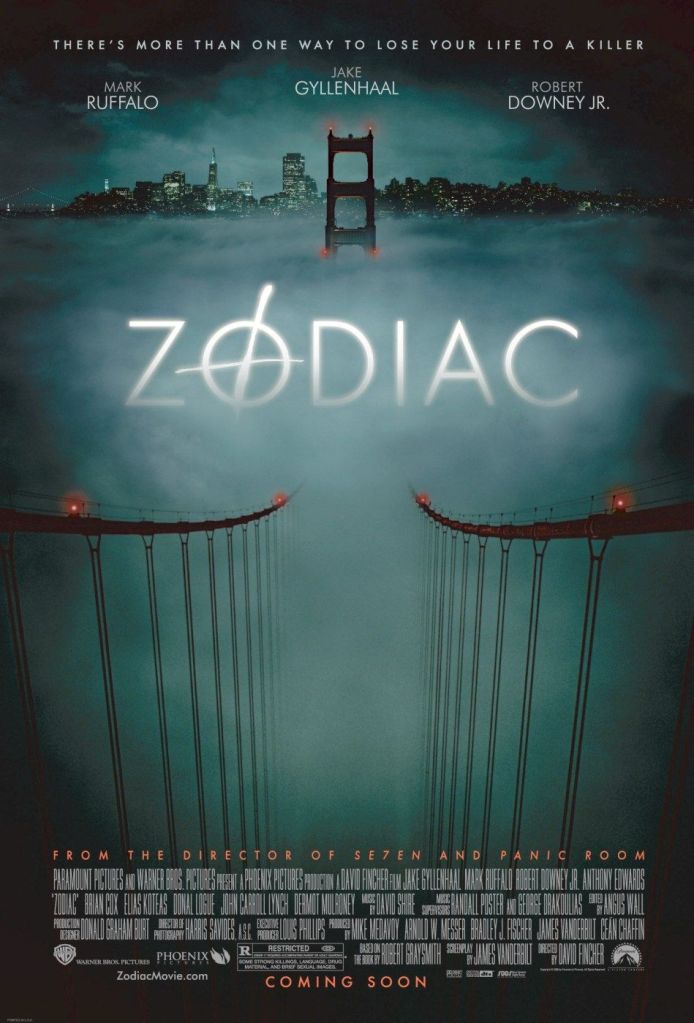
It’s one of the great unsolved mysteries of American history, like San Francisco’s version of Jack the Ripper. For a large chunk of the late 60s and early 70s, a serial killer known only as “the Zodiac killer” murdered at least five (and claimed 37) innocent people, all while sending mysterious, cipher-filled letters to San Francisco newspapers, taunting police and journalists for failing to catch him and threatening further violent acts. The investigation sifted through mountains of tips and half clues but only produced one possible suspect, Arthur Leigh Allen: though no fingerprint or handwriting match could conclude a case.

The story of the hunt for this elusive killer, stretching into the 1980s and concluding with another dead-end coda in 1992, is bought to the screen in a film from David Fincher that expertly mixes cinematic flair with journalistic observation. Channelling All the President’s Men and 70s conspiracy thrillers as much as it does the dark obsession of Fincher’s Seven, Zodiac is a master-class not only in the bewildering detail of large-scale investigations (in the days before computer records and DNA evidence) but also the grinding, destructive qualities of obsession, as those hunting the Zodiac killer struggle to escape the shadow of a case that grows to dominate their lives.

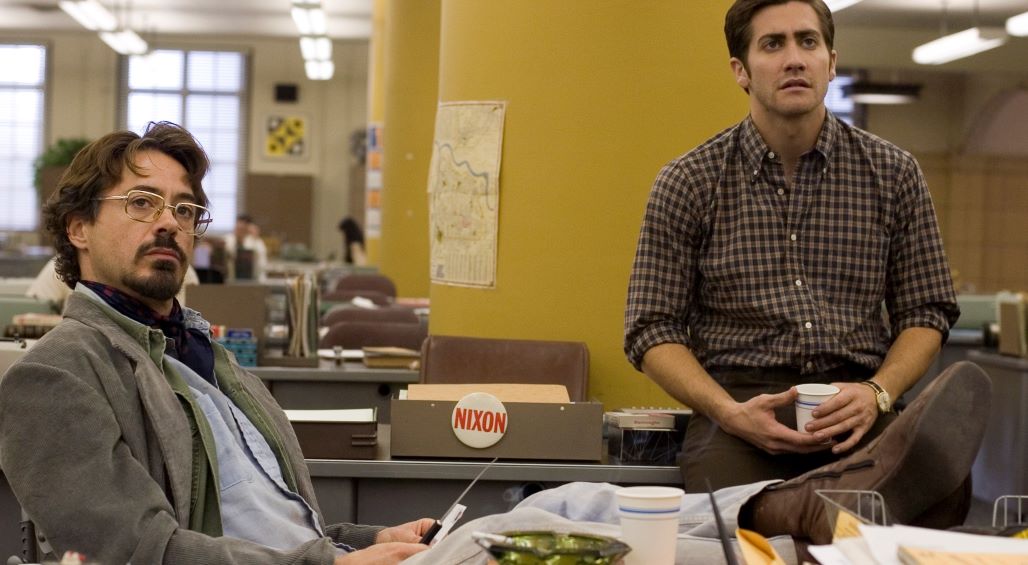
Zodiac focuses on three men, all of whom find their lives irretrievably damaged by their investigation. At first, it seems the drive will come from Robert Downey Jnr’s Paul Avery. Avery is the hard-drinking, charismatic, old-school crime correspondent on the San Francisco Chronicle. In a performance exactly the right-side of flamboyant narcissism, Downey Jnr’s Avery is a man who likes to appear like he takes nothing seriously, even while the burden of the case (and a threat to his life from the Zodiac killer) tips him even further into a drink habit that is going to leave him living in a derelict houseboat, in a permanent state of vodka-induced intoxication.

The second is Inspector Dave Tosci, a performance of dogged, focused professionalism from Mark Ruffalo. He’s confident he’ll find his man, and will go to any lengths to do it, staying on call night and day, and hoarding facts about the case like a miser. He relies more than he knows on level-headed, decent partner Bill Armstrong (played with real warmth by Anthony Edwards). Tosci’s self-image and belief slowly crumble as every lead turns dead end, every gut instinct refuses to be backed by the evidence. The killing spree becomes his personal responsibility, a cross he bears alone for so long that when a belated letter from Zodiac surfaces in 1978, his own superiors believe Tosci sent it in some vain attempt to keep a cooling case alive.

Our third protagonist, present from the arrival of the very first Zodiac letter at the door of the Chronicle, is Jake Gyllenhaal’s Robert Graysmith. A quiet, studious, teetotal political cartoonist who is literally a boy scout, Graysmith spent a huge chunk of the 70s and 80s trying to crack the case, eventually turning his investigation into a best-selling book. It’s Graysmith who becomes the focus of Fincher’s investigation of obsession. The glow of monomania is in Gyllenhaal’s eyes from the very start, as the cipher and its deadly message spark a mix of curiosity and moral duty in him. He feels compelled to solve the crime, but it’s a compulsion that will overwhelm his life. The Zodiac is his Moby Dick, the all-powerful monster he must slay to save the city. (“Bobby, you almost look disappointed” Avery tells him, when Avery suggests some of the Zodiac’s murderous claims are false, as if reducing the wickedness of the Zodiac also reduces the power of Graysmith’s quest.)

The real Graysmith commented when he saw the film, “I understand why my wife left me”. It’s a superb performance of school-boy doggedness, mixed with quietly fanatical, all-consuming obsession from Gyllenhaal, as the film makes clear how close he came (closer than almost anyone else) to cracking the case, but nearly at the cost of his own sanity. Graysmith pop quizzes his pre-teen children on the case over their breakfast (a far cry from, at first, his instinct to shield his son from the press coverage) and as he becomes increasingly unkempt, so his house more and more becomes a mountain of boxes and case notes.
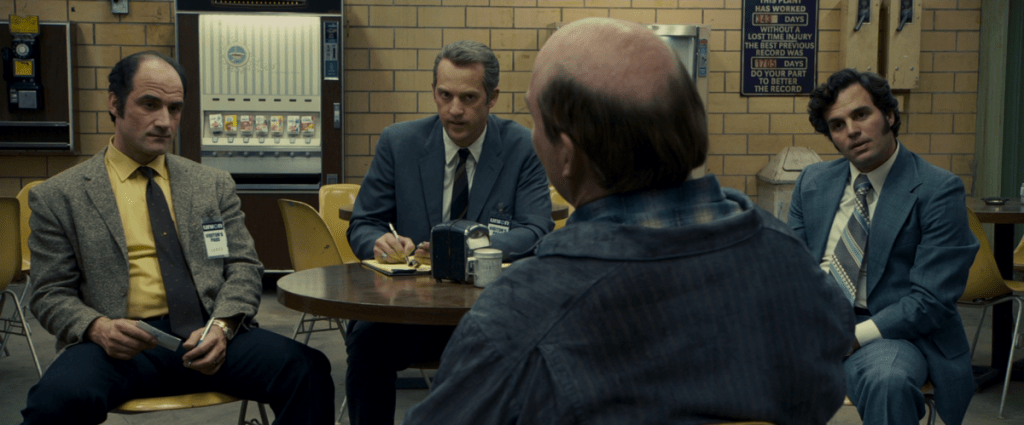
It’s the secondary theme of Zodiac: how obsession doesn’t dim, even when events and evidence drop off. The second half of the film features very little new in the case (which peaked in the early 70s) but focuses on the lingering impact of the ever more desperate and lonely attempts to solve it. Armstrong, the most well-adjusted of the characters, perhaps knew it was a hopeless crusade when he threw his cards in and left the table after a few years to spend time with his children while they grew up. Avery cashes out as well – even if his health never recovers. Tosci is cashiered from the game, and even Graysmith finally realises the impact on him.

That second half of the film is long. Too long. It also, naturally, leaves us with no ending – a sad coda that hints at the guilt of primary (only) suspect Arthur Leigh Allen, but gives us (just like the surviving victims) no closure. It’s fitting, and deliberate, but still the only real flaw of Zodiac is that, at 150 minutes, it’s too long. The deliberate draining of life from the case, like a deflating balloon, also impacts the narrative, which consciously drops in intensity (and, to a degree, interest – despite Gyllenhaal’s subtle and complex work as Graysmith). It’s even more noticeable considering the compelling flair with which Fincher delivers the first half of his scrupulously researched film.

Fincher and screenwriter James Vanderbilt spent almost 18 months interviewing everyone involved with the case. Nothing was included in the film unless it could be verified by witnesses. That included the crimes of the Zodiac: only attacks where there were survivors are shown, the only minor exception being Zodiac’s murder of a taxi driver (where only distant eye-witnesses were available) – even then, every event is confirmed by ballistics and no dialogue is placed into the mouth of the victim. The film also acknowledges the unknown nature of the Zodiac killer: each time the masked killer appears in recreations of his crime he is played by a different (masked) actor, subtle differences in build, tone of voice and manner reflecting the contradictory eye-witness statements. These chilling scenes are shot with a sensitivity that sits alongside their horrifying brutality. Fincher felt a genuine responsibility to reflect the horror of what happened, but with no sensationalism.

Instead, he keeps his virtuoso brilliance for the investigation. The newspaper room filling with the super-imposed scrawl of the Zodiac killer, while the actors read out the words. Restrained but hypnotic editing, carefully grimed photography, camera angles that present everyday items in alarming new ways, a mounting sense of grim tension at several moments that makes the film hard to watch. A superb sequence surrounding the Zodiac’s demand to speak to celebrity lawyer Melvin Belli (a gorgeous cameo from Brian Cox), first on a live TV call-in show, then in person (a “secret meeting” swamped by armed police, which Zodiac, of course, doesn’t turn up to). This is direction – aided by masterful photography (Harris Savides) and editing (Angus Wall) – that immerses us in a world (like drowning in a non-fiction bestseller), while never letting its flair draw attention to itself.

Zodiac was a box-office disappointment and roundly forgotten in 2007. It’s too long and loses energy, but that’s bizarrely the point. It implies, heavily, that Allen (played with a smug blankness by John Carroll Lynch) was indeed the killer, but doesn’t stack the deck – every single piece of counter evidence is exhaustingly shown. In fact, that’s what the film is: exhaustive in every sense. It leaves you reeling and tired. It might well have worked better, in many ways, as a mini-series. But it’s still a masterclass from Fincher and one of the most honest, studiously researched and respectful true-life crime dramas ever made. And just like life, it offers neither easy answers, obvious heroes or clean-cut resolutions, only doubts and lingering regrets.

Time After Time (1979)

Time After Time (1979)

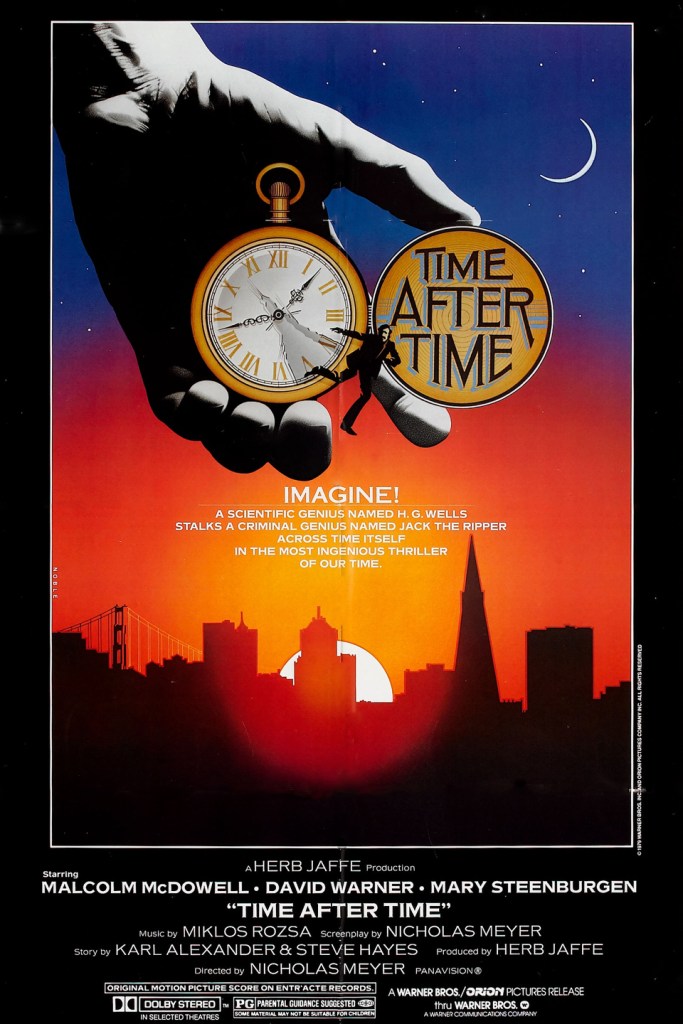
HG Wells zooms through time on the trail of Jack the Ripper in this surprisingly charming time travel romantic thriller

Director: Nicholas Meyer

Cast: Malcolm McDowell (HG Wells), David Warner (Dr John Leslie Stevenson), Mary Steenburgen (Amy Robbins), Charles Cioffi (Lt Mitchell), Kent Williams (Assistant), Patti d’Arbanville (Shirley), Joseph Maher (Adams)

1979 was clearly the Year of the Ripper. New conspiracy theories abounded on his mysterious identity. In Murder By Decree, Sherlock Holmes took on the investigation. And in Nicholas Meyer’s Time Travel fish-out-of-water drama, he pops up in 1970s San Francisco, still up to his wicked ways. How did he get there? Well, imagine instead of just writing The Time Machine, HG Wells had actually built it: and that, during a dinner with a doctor friend, he not only discovers his friend is the infamous killer, but watches him pinch his time machine to escape the long arm of the law.

HG Wells is played by Malcolm McDowell – who surely when he was sent the script assumed he was being asked to take a look at the role of the Ripper – who uses his machine to follow the Ripper to the 1970s to find him. The Ripper is played by David Warner (one of the few actors even more demonic than McDowell), and he’s rather more at home in the 1970s than Wells, who expected to find a utopia. Wells is helped by Amy Robbins (Mary Steenburgen), who is drawn to this charming Englishman, who she believes is a Scotland Yard detective on the hunt for a serial killer.

Meyer’s first film is a little raw – you can see he’s still learning his craft, a few shots are a little rough around the edges in their framing and some plot points and transitions are not easy to follow – but rather charming, for all it’s about the hunt for a serial killer. Meyer gets a lot of affectionate comic mileage from Wells – the quintessential gentle Englishman, timid but determined when riled – working out the social rules of the 1970s. From crossing the road, to hailing a taxi, from consuming a McDonalds (“Fries are pomme frites!” – some silver presumably crossed Meyer’s hands to show the novelist chomping down thrilled on the fast food chain’s merchandise) to working out the rate of exchange for his fifteen Victorian pounds doesn’t translate to many dollars, it’s got a fish-out-of-water delight and a shrewd comic energy.

It’s helped a great deal by McDowell’s gentle, playful and thoroughly engaging performance – Time After Time leaves you sad he doesn’t get to play more roles like this. Wells is optimistic, polite, gentlemanly and admirably brave: even more so, because he’s so hesitant about risk. He travels around the 1970s with a wide-eyed wonder and has a humanitarian streak a mile wide. He’s one of the nicest guys you could meet.

No wonder Amy falls for him so swiftly. There is an electric chemistry between Mary Steenburgen – full of Southern sweetness but with a very modern (but never grating) feminism – and McDowell (and clearly off screen as well, as they married almost immediately after). Meyer plays this romance like a classic rom-com, with meet-cutes at the bank and McDowell’s playing of this shy Victorian gentleman’s courtly manners (he touchingly stops a kiss to make absolutely sure he has full consent – which Amy makes clear he more than does!) works like a charm.

The jokes are genuinely well-thought out and keep the film brisk. I love the alias Well’s plucks out of the air when pretending to the police to be a Scotland Yard detective: he seizes upon what he guesses will be a long forgotten popular fiction character of his day and calls himself Sherlock Holmes. McDowell and Steenburgen have an affinity for physical comedy – watch McDowell hail a taxi with a jaunty wave or Steenburgen sitting frustratedly on a sofa waiting for Wells to make a move. The fish-out-of-water elements work a treat (you can see the clear groundwork for gags Meyer would take even further in his next time-travel hit Star Trek IV: The Voyage Home).

Time After Time sits this comedy next to a genuine Ripper-flick. The film opens with a long POV shot as the Ripper strikes in the streets of London. David Warner gives a very good performance as a world-weary psychopathic, who can hide his depravity but not control his urges. Unlike Wells, the Ripper adjusts very naturally to the modern world – probably because he’s more used to pretence than the honest Wells – dressing in progressively more relaxed 70s garb. His murders are shot with discretion – mostly off screen with the inevitable splash of scarlet on a surface or face from off camera. The actual historical elements of the Ripper are bunkum, but the handling is well done.

The time travel elements are rather laboriously explained, with much talk of keys, return-prevention locks and stabilisers. Wells points out the various features of the machine with a bluntness that all but has Meyer tapping you on the shoulder and saying “remember that it will be important later” – you can utterly (correctly) guess the eventual ending purely from this lecture. But the time travel effects use a mixture of 2001-ish camera tricks rather effectively and the film plays a little bit with paradox and timeline tweaking (although without any depth).

Meyer’s film is an enjoyable ride, even if some plot developments gear shift swiftly (the Ripper seems to have had a sudden emotional breakdown at some point between his penultimate and final scene and the reasons for the time machines physical shift to San Francisco are barely explained) and it at times loses its drive (the Ripper is all-too-obviously presumed dead at one point and his determination to grab a key that controls the time machine oscillates with urgency from act to act). But as a debut, it’s an enjoyable piece of pulp. And it’s got a hugely likeable performance from McDowell and very assured support from Steenburgen and Warner. It’s a very enjoyable romp.

Sweeney Todd: The Demon Barber of Fleet Street (2007)

Sweeney Todd: The Demon Barber of Fleet Street (2007)

Blood, guts and gore in this horror-tinged, claret-dipped Burton adaptation of Sondheim’s musical

Director: Tim Burton

Cast: Johnny Depp (Sweeney Todd), Helena Bonham Carter (Mrs Lovett), Alan Rickman (Judge Turpin), Timothy Spall (Beadle Bamford), Jayne Wisener (Johanna Barker), Sacha Baron Cohen (Adolfo Pirelli), Laura Michelle Kelly (Lucy Barker/Beggar Woman), Jamie Campbell Bower (Anthony Hope), Ed Sanders (Toby Ragg)

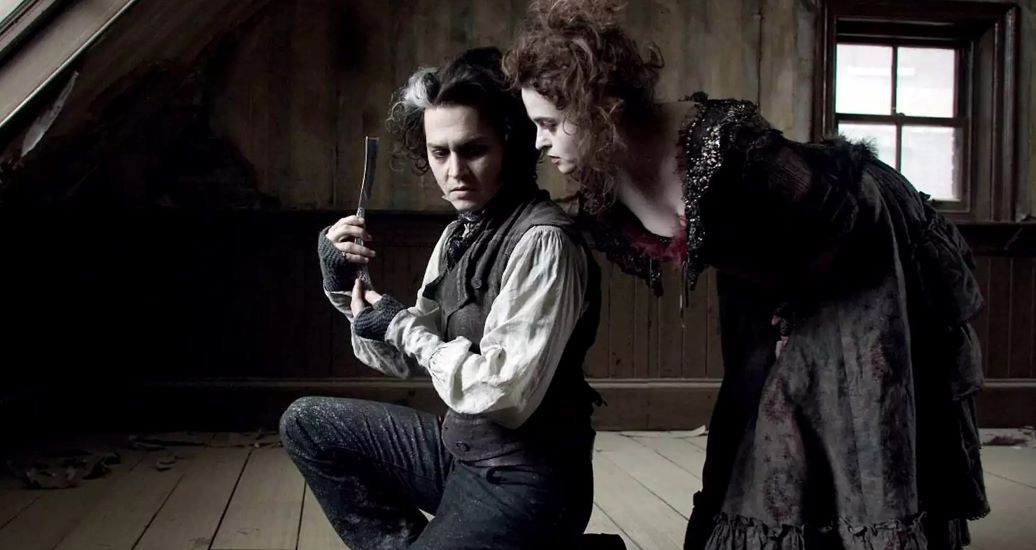
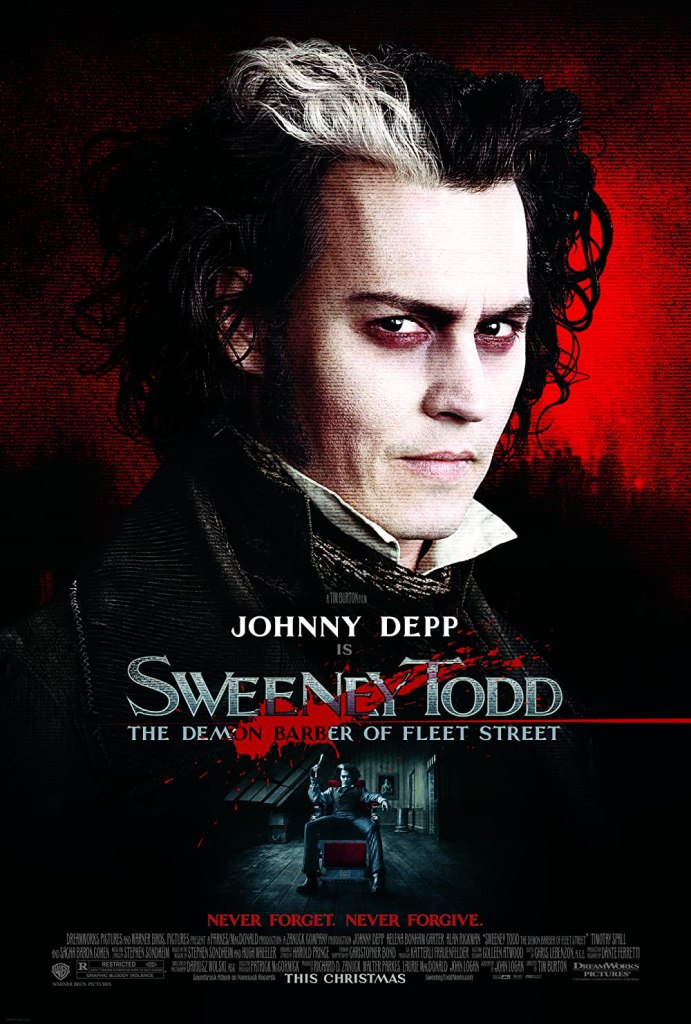
Sondheim’s blood-soaked musical about the infamous serial-killing barber, intent on revenge against the judge who transported him to Australia and stole his late wife, took years to make it to screen. His intensely theatrical, intricate musical masterpieces don’t always translate to film – they lack that crowd-pleasing oomph. What with Todd slashing throats with misanthropic glee, aided by besotted neighbour Mrs Lovett baking the bodies into pies, and no wonder Sweeney was a difficult pitch.

However, it’s practically tailor-made for the High Priest of Gothic Oddity, Tim Burton. A lifelong Hammer horror fan, it’s no surprise Burton had loved the musical since first seeing it in 1980. He’s a perfect match for this stuff, and his film is a bleak, heavily desaturated, oppressively grim and strikingly optimism-free descent into a subterranean hell, with almost every scene accompanied by a free-flowing deluge of Shining-style levels of blood.

Sweeney Todd is a design triumph (Oscar-winning for its production design and nominated for its costumes). It’s London is like an Oliver! set run through a fevered nightmare slasher film. Everything is grandiose, filthy and above all cold, oppressive and unwelcoming. Most of the light comes from the reflection of moonlight on the blades of Todd’s razors, and the basement of his building is a gruesome horror show, with a pumping furnace and mangled body parts in a mincer.

The film shocked critics expecting a more traditional Broadway musical translation with the dark glee it embraces the gore. When throats are slashed – which occurs as regularly as clockwork – blood sprays over the actors, camera and virtually everything else. Sweeney’s chair drops his victims head-first into the cellar: each fall is seen in terrible detail, bodies landing with a sickening crunch, twisted out of shape and heads smashed open on the stone floor. There is little black comedy, the film embracing flat-out horror.

It also focuses on the black hate in Sweeney’s heart, his fixation on revenge at any costs and the lack of any trace of humanity within him. While Mrs Lovett longs to turn this “relationship” into something more intimate and loving – she even sings about it in By the Sea to the stony-faced indifference of Sweeney – to Sweeney she is little more than a convenient means to an end. Bravely, no real attempt is made to make us feel real sympathy for this brutal killer – and the visceral brutality of his killings only adds to this.

The film is dominated by its two leads, simplifying the musical down to something leaner, swifter and meaner. This is a dark revenge tragedy doubling as a character study of its two leads’ souls. These places a lot of pressure on Depp and Carter. Sweeney Todd was very much at the apex of a trend in musical film-making where stars were trained to sing, rather than casting skilled singers who can act. Sweeney Todd is an immensely complex musical, with deeply challenging lead parts. Even using the intimacy and immediacy of the camera to bring the scale down (they don’t need to hit the back row), it still must have been intimidating to sing with very little experience.

Depp and Carter however acquit themselves well. Working with a director they both trust implicitly, they give dark, twisted performances of unspoken longings. Depp, in one of his finest and most restrained performances (which says a lot about the irritating abandon of many of his other roles) that stresses Sweeney’s sociopathic coldness. He is a tortured man, turning his unhappiness and self-loathing into a weapon to slice open the world. Carter channels sociopathic eccentricity with a tenderness, vulnerability and desperation for love.

As singers however, they are competent rather than inspired. Depp goes for an earthy, Bowie-esque, Rex Harrison-paced growl that conveys the emotion but simplifies the songs and robs them of some of their impact. Carter’s more lively rendition carries more character, but in both cases you wonder what would have happened if the film had married its cinematic visuals with assured Broadway performers. The best singers by far are Jamie Campbell Bower (whose role as the would-be lover of Sweeney’s long-lost daughter is heavily cut) and Ed Sanders, who is excellent as the orphan taken under Mrs Lovett’s wing (West End-star Laura Michelle Kelly, perversely, barely sings a note).

The focus on Sweeney and Mrs Lovett leaves little room for the other actors. Rickman brings a subtle perversion to Judge Turpin – even though, bless him, he’s not the best singer – and Spall a creepy eccentricity to the Beadle. But this is the Sweeney show, a decision that robs the film of any trace of the more hopeful elements of the original, to zero in on the dark horrors.

The film pulls few punches, but never makes us care about Sweeney. For all the trims, it’s surprisingly poorly-paced (especially considering its short run-time). Such little importance is given to the supporting characters, time feels wasted when we are with them. The cuts also stress how little actual plot there is around Sweeney and Mrs Lovett (once they decide to embark on a life of crime, there is little that happens to sustain the film through its middle act).

The film is a Gothic slasher triumph, but it’s perhaps neither a great musical nor a truly engaging tragedy. A slice more humanity, in between the slashed throats, might have helped a great deal.

Murder by Decree (1979)

Murder by Decree (1979)

Sherlock Holmes investigates Jack the Ripper in this overlong but enjoyable Doyle pastiche

Director: Bob Clark

Cast: Christopher Plummer (Sherlock Holmes), James Mason (Dr John Watson), David Hemmings (Inspector Foxborough), Susan Clark (Mark Kelly), Frank Finlay (Inspector Lestrade), Anthony Quayle (Sir Charles Warren), Donald Sutherland (Robert Lees), Geneviève Bujold (Annie Crook), John Gielgud (Lord Salisbury)

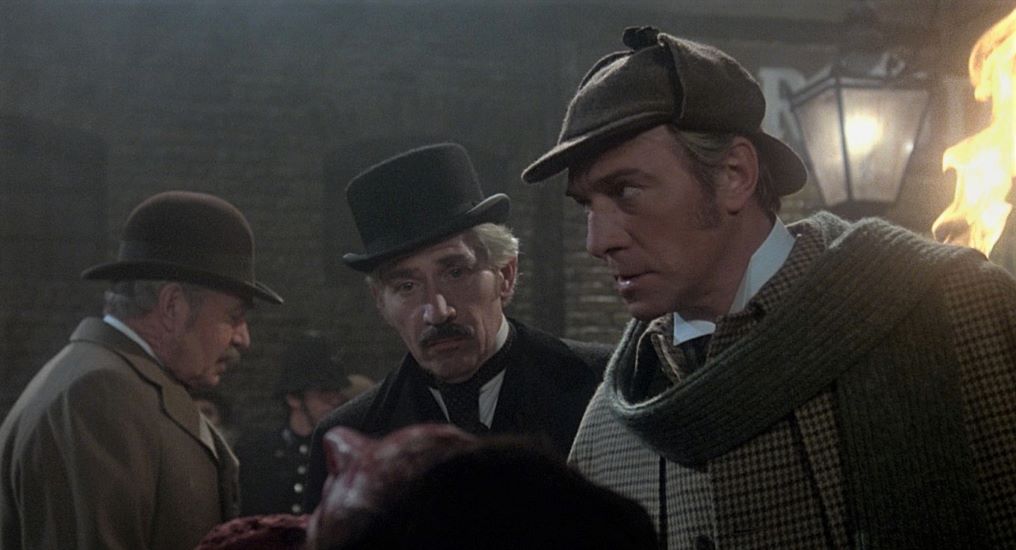
In the world of Sherlock Holmes pastiches, it’s a popular sub-genre: Sherlock Holmes vs Jack the Ripper. How would Holmes have taken on the murderer who has baffled generations since those brutal Whitechapel killings in 1889? Murder by Decree explores the idea, mixing Conan Doyle with a deep dive into (at the time) the most popular theory in Ripperology, the Royal Killings (Murder by Decree indeed!).

It’s all pulled together into a decent, if over-long, film, shot with sepia-toned stolid earnestness by Bob Clark. With its fog-ridden Whitechapel sets (carefully built but always strangely empty), heavy-duty actors sporting large sideburns, wavy-screen flashbacks and carefully unimaginative framing, there is something very old-fashioned about Murder by Decree. That also extends to its Ripper theory, steeped in a very 70s class-conscious conspiracy. The film pads out its two-hour run time with many a POV shot of the Ripper prowling the streets, which bring to mind Jaws and slasher horror films of the time.

Where Murder by Decree does stand out is in its imaginative characterisation of Holmes and Watson. They are presented as affectionate friends – Mason’s older Watson has a sweet indulgent elder-brother feeling to him, giving Plummer’s sparkly Holmes plenty to tease and bounce off. They split the casework between them – Watson is an equal partner, even if Holmes does the brainwork – and use their strengths to complement each other (notably, Watson frequently distracts people so Holmes can interrogate a witness more closely). They genuinely feel like long-term friends (there is a delightful sequence where Holmes is so distracted by Watson’s attempt to fork a pea, that he squashes it onto the fork – to be met with a forlorn “you’ve squashed my pea” from Watson, who likes the peas intact so they “pop in my mouth”).

They are dropped into the middle of a very much of-its-time Ripper theory. Murder by Decree centres on the theory that the murders were ordered (the film reluctantly suggests tacitly) by the establishment to cover up the secret marriage of Prince Edward, Duke of Clarence to a Whitechapel woman, Annie Crook. This alleged marriage produced a baby, and a royal doctor, sheltered by a Masonic conspiracy, sets about eliminating everyone who knows the truth. Of course, it’s almost certainly bollocks – but with its mix of secret societies, Royals, a lost heir and the rest, it’s an attractive story.

It gains a lot from the performances of the two actors. James Mason flew in the face of then popular perception by presenting a quick-witted, assured Watson, more than capable of looking after himself (he bests a blackmailing pimp in a street fight and is very comfortable with guns – far more than the reticent Holmes). He’s still the classic gentlemen, who loves King and Country, but also shrewd, brave, loyal, able to win people’s trust and look at a situation with clear eyes.

With Christopher Plummer, Murder by Decree has one of the all-time great Sherlock Holmes. Plummer’s Holmes is refreshingly un-sombre, twinkly with a ready wit, who loves teasing Watson (cleaning his pipe with Watson’s hypodermic needles) and delights in his own cleverness. But Plummer takes Holmes to places no other film Holmes goes. The case as a devastating effect on him: he weeps at the fate of Annie Crook (consigned by conspirators to a slow death in an asylum) and furiously attacks her doctor. When the conspiracy is unmasked, he emotionally confronts the Prime Minister and berates himself for his failures. There is a depth and humanity to Plummer’s Holmes unseen in other versions, a living, breathing and surprisingly well-adjusted man, unafraid of emotion.

Sadly, the film takes a little too long to spool its conspiracy out. Rather too much time is given to an extended cameo by Donald Sutherland as a pale-faced psychic who may or may not have stumbled upon the killer. There are a lot of unfocused shots of that killer, all swollen black eyes and panting perversion. It relies a little too much on a Poirot-like speech from Holmes at the end explaining everything we’ve seen. But there are strong moments, best of all Geneviève Bujold’s emotional cameo as the near-catatonic Annie Crook, cradling in her arms a memory of her stolen child.

There are many decent touches. The film is open in its depiction of the filth and squalor of life in Whitechapel – a pub is an absolute dive, and the women pretty much all look haggard and strung out. It has a refreshingly sympathetic eye to the victims, with Holmes denouncing the attitudes of both Government and radicals (looking to make political hay from the killings) who see them as lives without intrinsic worth. Holmes places no blame or judgment on them, or the choices life has forced on them, which in a way puts him (and the film) quite in line with modern scholarship (even if there is the odd slasher-style shot of mangled corpses).

The main issue is the film never quite manages to come to life. It’s a little too uninspired, a bit too careful and solid where it could have been daring and challenging. There are good supporting roles: Finlay is a fine low-key Lestrade (at one point persistently raising his hand to ask his superior permission to speak) while Gielgud sells the imperious Lord Salisbury. There is enough here for you to wish the film just had a bit more of spark to lift it above its B-movie roots. But in Plummer and Mason it has a Holmes and Watson to treasure – and for that alone it’s worth your time.

The Batman (2022)

The Batman (2022)

Robert Pattinson presents a noirish Bat in Matt Reeves’ dark, moody vision

Director: Matt Reeves

Cast: Robert Pattinson (Bruce Wayne/Batman), Zoë Kravitz (Selina Kyle/Catwoman), Paul Dano (The Riddler), Jeffrey Wright (Lt James Gordon), John Turturro (Carmine Falcone), Peter Sarsgaard (DA Gil Colson), Andy Serkis (Alfred Pennyworth), Colin Farrell (Oswald Cobblepot/Penguin), Jayme Lawson Bella Réal) Rupert Penry-Jones (Mayor Don Mitchell Jnr), Barry Keoghan (Arkham Prisoner)

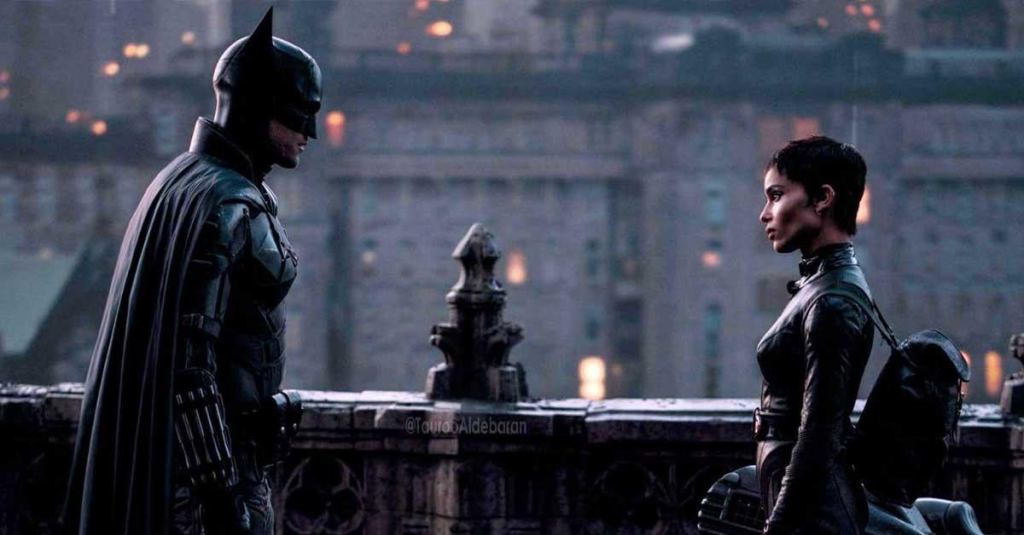
The rain pounds down on Gotham. In the shadows a masked man strikes terror into the hearts of wrong-doers. It could only be the start of a new Batman trilogy. At least that’s the intention, as DC Comics mines its strongest asset, in a dark, noirish version that positions Batman as a gumshoe pulp detective with fisticuffs. If Reeves film at times has more ambition than it knows what to do with, at least it is ambitious.

For two years Bruce Wayne (Robert Pattinson) has been crusading on the streets of Gotham as Batman, trying to fix the city’s problems one criminal at a time. He’s formed an uneasy alliance with police Lt James Gordon (Jeffrey Wright) and is just about tolerated by the official force. That starts to change when unhinged serial killer The Riddler (Paul Dano) begins a campaign of terror targeting Gotham’s elites, who he accuses of corruption. How far will the Riddler go? How do crime boss Carmine Falcone (John Turturro) and mysterious cat burglar Selina Kyle (Zoë Kravitz) fit in?

Reeves’ film is a grimy film-noir Batman. Pretty much the entire film is set at night-time, in seedy bars and filthy streets with barely a frame unaccompanied by the pounding of rain on the soundtrack. Atmospherically shot by Grieg Fraser, the film has a rain-sodden canvas with deep blacks and splashes of red. It’s sound design – and Michael Giacchino’s music – uses deep bases and reverbative sounds that give the film an intimidating rumble.

Reeves’ takes Fincher’s Seven and Zodiac as key inspirations, mixed with the shadowy darkness of Pakula and other 1970s filmmakers. Gotham is the hellish noir of Seven, where light is a stranger. The Riddler is radically re-interpreted as an ingenious psychopath, covering his crimes with cryptic clues, cultivating an online audience with videos where he conceals his face behind a sort of gimp mask and prominent spectacles – in methods and style he’s very similar to the Zodiac killer.

Batman is a tech-assisted private eye, working alongside the official forces, doing things they can’t do. Few other Batman films have zeroed in on the detective element of the character as much, but it’s possibly his main skill here: searching for clues, deftly cracking the Riddler’s cryptic clues, chasing down leads, utilising top-of-the-line surveillance equipment (a set of contact lenses that records everything he sees) and making connections from crime to crime. He’s a sort of miserable Sam Spade who punches lots of people.

Setting the film very early in Batman’s crusade allows for a rough and raw quality to Batman’s gear and approach, helped by Pattinson’s age. The suit has a homespun practicality to it, a hulking suit of armour that bullets bounce of, with various useful attachments. The batmobile is essentially a normal car with a massively souped-up engine. Batman often travels on a normal but powerful motorbike, and stakes out witnesses with his armour disguised under a hoodie. At times Bruce misjudges things: a fall from a building that almost goes horribly wrong, the odd fight where he bites of more than he can chew.

With an eemo look inspired by Kurt Cobain, Bruce Wayne is a surly recluse with serious emotional difficulties. He has a tense relationship with surrogate father Alfred (an effective Andy Serkis), who disapproves of how Bruce spends his evenings. The Batman has far less Bruce Wayne in it than almost any other Batman movie. This Bruce only feels comfortable behind the mask and has worked hard to crush all fear and emotion to find security in anonymity. He has cut himself off not only from the city, but from humanity, idealising his lost parents – and is a stern, humourless judge who describes his mission as one of vengeance.

There is a lot of vengeance needed in Reeve’s corrupt Gotham. The film bites off a huge chunk of content around corruption, class conflict and injustice. The Riddler’s crimes are all connected to corruption, people whose hands are actually filthy with drug money. His fury extends to the Wayne family – Gotham’s venerated philanthropists – and the film is at its best with this character when he functions as a sort of avenging angel of class war.

But it doesn’t quite manage to nail down exploring the morality of a serial killer, eliminating pernicious public figures. There is no discussion of the misguided merit in the twisted motives of the killer. He’s always presented as wicked and insane, with no scope given to understand or acknowledge the legitimate social points he makes. A late act reveal of his deeper plot comes from nowhere and (with its indiscriminate destruction) feels inconsistent with any point the film was trying to make earlier. It seems instead to exist to give us a big action set-piece. The film strains towards a coherent message about institutional, systemic corruption, but doesn’t quite give it the depth and shade it needs.

It’s all part of a film that isn’t quite smart enough, or a script that isn’t deft enough. Take a look at those riddles. Darkly fascinating as they are, their never quite strong or enigmatic enough. The film offers no ‘light-bulb moment’ when a hidden message is suddenly made clear. Batman cracks them all quickly, apart from one. Most audience members will quickly suss out that one and you suspect the only reason Batman doesn’t is that if he did the film would end quickly.

Ending quickly is something The Batman isn’t concerned about. At nearly three hours, it is far too long – particularly as it never quite works out what it is trying to say. There are too many sub-plots: an unrecognisable Colin Farrell is good value as The Penguin, but his entire presence is to set up future movies. The film drags out its ending with a sudden twists, which don’t feel like a wider plan playing out behind the scenes rather than slightly jarring extensions.

The Batman covers a lot, but none of it in enough depth. Very good as Robert Pattinson is, I don’t feel we learn a lot about Wayne. The Batman adds a romance with Selina Kyle (a dynamic Zoë Kravitz) and gives her a sub-plot of her own which largely just crowds the film. None of these plots are complex in themselves, but they all play out at the same time, reducing the focus on each of them. It’s all too much for you get to a handle on what the film is trying to be about.

Essentially, you feel Reeves had hundreds of ideas about what he wanted his Batman film to be – and didn’t have the heart to leave any of them out. But, even when over-ambitious, he’s an impressive and exciting film-maker. The Batman is crammed with great scenes (from action to disturbing splashes of horror). When the sequel comes, a clearer overall theme will help a great deal. But, with this dark but beautifully made film – and an impressive Batman from Robert Pattinson – I’ll be excited to see what Reeves does next.

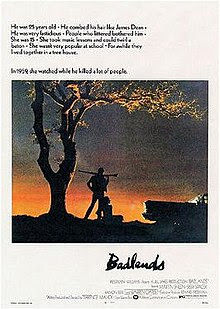
Badlands (1973)

Martin Sheen and Sissy Spacek are killers on the run in Terrence Malick’s masterpiece Badlands

Director: Terrence Malick

Cast: Martin Sheen (Kit Carruthers), Sissy Spacek (Holly), Warren Oates (Father), Ramon Bieri (Cato), Alan Vint (Deputy), Gary Littlejohn (Sheriff), John Carter (Rich man)

If American cinema has a poet, it’s Terrence Malick. His career is the most elliptical of any major American filmmaker. Shunning interviews or any discussion of his work, his mystique is built upon Kubrickian isolation (he took a 20-year gap between his second and third films) and the powerful mystique of his first film – and still his masterpiece – Badlands. A luscious, beautifully filmed, profound piece of film-making, perfectly paced and told with a poetic sensibility, it’s  powerful and brilliant. Nothing Malick has done since has reached the same beautiful balance between story, profundity, poetry and realism.

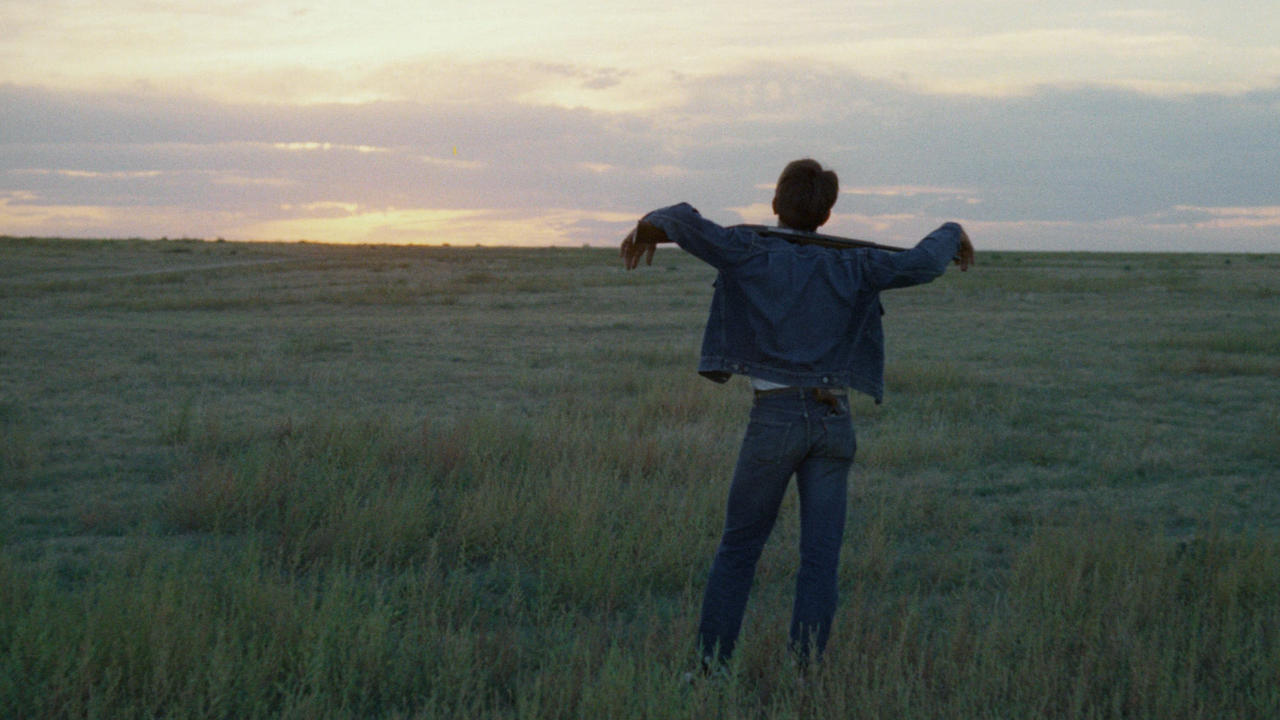
Kit Carruthers (Martin Sheen) is an aimless young man, recently fired from his job as a garbage collector in South Dakota. His imagination is captured by a teenage girl, Holly (Sissy Spacek), freshly arrived from Texas. He romances the young girl – who is naively swept up in the possibility of Kit’s poetic soul – but her father (Warren Oates) disapproves. So, in a casual confrontation at their home, Kit kills the father, burns down the house and he and Holly head out on the run. Travelling across the country, Kit kills with a casual lack of maliciousness, all the time building in his head his self-image as a James Dean-like hero in his own movie, a poet turned outlaw. Holly narrates the film, her guileless, innocent and often unreliable narrative revealing her own naivety. Sheen is outstanding as Kit, idealistic but empty, while Spacek gives Holly a sublime blankness that makes us never sure how much she understands the situation she is in.

Malick based the film on the killing spree of Charles Starkweather, who carried out a murderous journey across several states in the mid-West with his underage girlfriend in the late 50s. But what Malick found in this story was a fascinating insight into how people can become absorbed by the romanticism of the American pioneer spirit, to try and turn their own lives into something with meaning and depth. So, Kit can be little more than a not particularly bright casual killer, but he builds his own self-image as something part-way between movie star and philosopher poet.

What the film does quite brilliantly is balance the ruthlessness of Kit with this dreamlike poeticism. Much as you shouldn’t, you end up caring a little for Kit and Holly, while deploring their brutality. Perhaps it’s because both of them feel so young. After the murder of her father, they build a cabin in the woods and live off the land, with all the enthusiasm of kids. There is something very vulnerable about both of them, their abilities to really understand the situations they are in and the moral implications of their actions non-existent. In a way they are playing – but with real guns.

Their life has been so filtered through the Hollywood celebrity culture growing around them, that they see their actions like part of a film. Death is as unreal and without impact as it is in Hollywood. Kit twice, early in the film, prods dead animals with nerveless curiosity – the same blankness and lack of reaction that he will later treat dead people with. Holly is briefly shocked by the death of her father, but then builds all Kit’s actions into a narrative of romantic drama.

Kit and Holly build their own narrative the whole time – but with a shallow emptiness that reveals their own pretensions. Both of them are collectors of odds-and-ends – Kit picks up mementos and strange souvenirs from where they have been, treating these as near religious icons that future generations will use to mark his presence. Objects from lamps to paintings to rocks are invested with artistic value by the pair. Kit’s shallowness is clear: early in the film he picks up a large rock from under the tree where they first made love, determined to keep it forever as a memento. After walking a few metres, he drops it and decides to take a lighter rock. Later, when Kit is finally cornered by the police, his main concern is to build a small cairn to mark the location where he was caught.

Kit wants to be more than he is. He is delighted when his physical resemblance to James Dean is noted by the police (his appearance is carefully studied to cultivate this). At a rich man’s house, he decides to record messages for posterity – words so bland, predictable and lacking in depth they reveal the total lack of imagination and original thought in Kit. He is polite, generally kind to his victims (before killing them) and thinks of himself as a sort of poet of the wilderness. Neither he nor Holly understands the horrific finality of death. The couple have a fatally corrupted innocence, a childlike, romantic understanding of the world that becomes a sort of fairy-tale. And you can totally see why a naïve young girl like Holly might see Kit as a romantic figure who can set her free.

Malick’s film wraps this up in a film of dreamlike beauty. In later films, Malick became so obsessed with beautiful images, and increasingly pretentious in his themes, that they became self-important artefacts. But Badlands balances these instincts beautifully with a fascinating and revealing story.

The shooting of the film offers up one beautiful image after another, reflecting the poetic longings of the couple at its heart, while underpinning sharply their blandness. Malick captures the awesome grandness of the Badlands themselves, a dusty stretch of emptiness that goes on forever. Malick shoots moments, like the house-fire, with such grace and perfection that they take on deep psychological meaning (what else is that house fire but the death of Holly’s early life?). Shots of nature – the sort of wildlife photography that would go too far in later films – place the couple in exactly the sort of tranquil independence, free from the burdens of the real world, that they long for. It’s an American dream, the celebration of the pioneer spirit deeply and darkly inverted.

The film is an enigma that avoids ever casting easy judgements on its characters. Their actions may be awful, but how much have they been bent and twisted by the world around them? The film’s eclectic musical choices – Carl Orff to Nat King Cole – bring the film a sense of magic, again a dreamlike mysticism. It’s fitting for a young couple who are living in a dream, with no consequences and no morals. This impressionistic masterpiece, which mixes in moments of shocking realism and casual violence, reflects the inner life of its leads, both yearning to be more than they are, and directing these longings into disastrous ends. Badlands is one of the greatest debut films in history, and still the perfect fusing of Malick’s poetic leanings with narrative film-making.

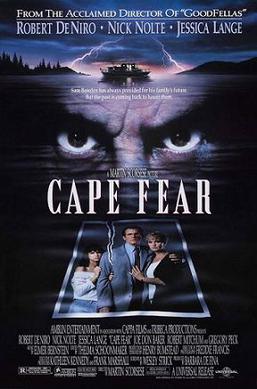
Cape Fear (1991)

Robert De Niro terrorises his lawyer’s family in Cape Fear

Director: Martin Scorsese

Cast: Robert De Niro (Max Cady), Nick Nolte (Sam Bowden), Jessica Lange (Leigh Bowden), Juliette Lewis (Danielle Bowden), Joe Don Baker (Claude Kersek), Robert Mitchum (Lt Elgart), Gregory Peck (Lee Heller), Illeana Douglas (Lori Davis), Fred Dalton Thompson (Tom Broadbent), Martin Balsam (Judge)

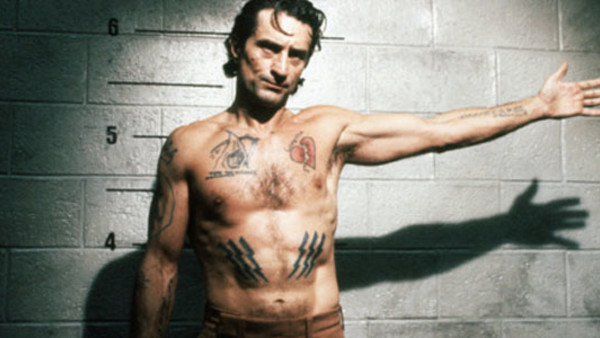
Max Cady (Robert De Niro) is out of prison after 14 years. He went in as an ill-educated psychotic bum, sent down for the rape and assault of a young woman after his appalled lawyer Sam Bowden (Nick Nolte) buried evidence on her sexual history that might have lightened his sentence. He comes out as a self-educated, articulate and psychotic force of nature, not sorry for one minute and intent on making Sam and his wife Leigh (Jessica Lange) and daughter Danielle (Juliette Lewis) pay. 

Scorsese’s remake of J. Lee-Thompson’s deliberately Hitchcock-esque thriller sees the great director go one better by trying to channel Hitchcock’s style as closely as possible. Framing and editing decisions echo Hitchcock, its design apes as much as possible cinematographer Robert Burk’s lensing, Elmer Bernstein remixes the original film’s Bernard Herrmann score into something even more Hitchcockesque than the original. Scorsese throws in several of the master’s favourite themes, with sexual obsession and frustrated, working men forced to defend themselves in extreme situations. Combined with the sort of lavish violence and extreme imagery Hitchcock couldn’t use, we end up with something like an odd film-school experiment, by film students who have watched too many slashers. It’s grim, tasteless, overlong and troubling – and not in a good way.

The film adjusts Nolte’s character from a lawyer and witness against Cady into his corrupt lawyer (no matter that his corruption in this case was well intentioned). The film has a slightly unpleasant concern with modern worries about masculinity, with Bowden now concerned he is not “man enough” to defend his home – the film constantly passes subtle judgement against Bowden’s lack of physical prowess. It also readjusts Bowden into a weasel, corrupt at work and having an affair with a young attorney (whom Cady then beats and rapes later in the film, with a slightly queasy air that she is at least partly culpable by allowing Cady to pick her up in a bar beforehand). To be honest Bowden is hard to sympathise with, and his quest to assert his masculinity rather than rely on the law or hiring others to do his dirty work not really that pleasant. Frankly Nolte was never the actor to engage sympathies in the way original choice Harrison Ford (he wanted to play Cady) would do.

Cady himself is played by Robert De Niro, channelling heavily the original’s star Robert Mitchum (with lashings of The Night of the Hunter) as the sort of articulate psychopath so beloved by film. It’s fun to watch De Niro grandstanding as this sort of violent Tyrannosaur, weaving both psychological and shockingly violent games to unnerve and panic Bowden and his family. The film doesn’t give much scope to make Cady much more than a sort of comic-book monster, but De Niro does at least have moments of reflection in amongst his insanity. And there is a sort of admirable emotional intelligence in Cady’s knack of detecting the underlying tensions in the Bowden’s marriage and family life and exploiting these to torment the family.

The film’s most effective moments are the quieter ones, none more so than Cady’s quiet befriending/seduction of Bowden’s daughter Danielle behind her parents’ back. This culminates in a deeply unsettlingly seduction scene in Danielle’s school hall, where Juliette Lewis (extremely good) fascinatingly and bashfully becomes entranced with Cady’s interest in her teenage reading list and problems with her parents. The sexuality of the scene is possibly even more unnerving today and a highlight of the film – not least, ending as it does, with Danielle sucking Cady’s thumb before kissing him and leaving with the giddy, confused excitement of someone both scared and fascinated. Few other things in the film match this moment for psychological complexity – or the unsettling exploration of teenage sexuality overlapping with rebellion against domineering parents. 

Least of all the film’s overblown and final confrontation between the Bowden family and Cady, in which Cady rises from death no  less than three times and which stretches on forever, jettisoning all the small stock of goodwill the film had built up in its quieter moments. But then this is just part of a film that chooses the graphic and the overblown over calculated and chilling, every chance it gets. It’s a shame as there is a more chilling, psychological terror film – with Cady as a demonically clever opponent – struggling to come out here, but which keeps tripping into slasher territory with Cady as an invulnerable Michael Myers.

Perhaps Scorsese just thought of the whole thing as a sort of cineaste’s private joke? All the Hitchcock references, the careful apeing of styles, even the casting of the original’s leads in small roles (a joke further amplified by casting Mitchum as the police officer, while ultimate straight arrow Gregory Peck plays a lawyer even more corrupt than Bowden). But jokes like this don’t really make for long-term entertaining films, and Cape Fear is so full of basically horrible people doing horrible things to each other (in an increasingly Grand Guignol fashion) that after a while you more than cease caring about it. You start getting actively annoyed by it.

The Proposition (2005)

Guy Pearce is given a fateful mission in bleak Aussie Western The Proposition

Director: John Hillcoat

Cast: Guy Pearce (Charlie Burns), Ray Winstone (Captain Morris Stanley), Emily Watson (Martha Stanley), Danny Huston (Arthur Burns), David Wenham (Eden Fletcher), Richard Wilson (Mike Burns), John Hurt (Jellon Lamb), Tom E Lewis (Two Bob), Leah Purcell (Queenie), Robert Morgan (Sgt Lawrence), David Gulpilil (Jacko), Tom Budge (Samuel Stoart)

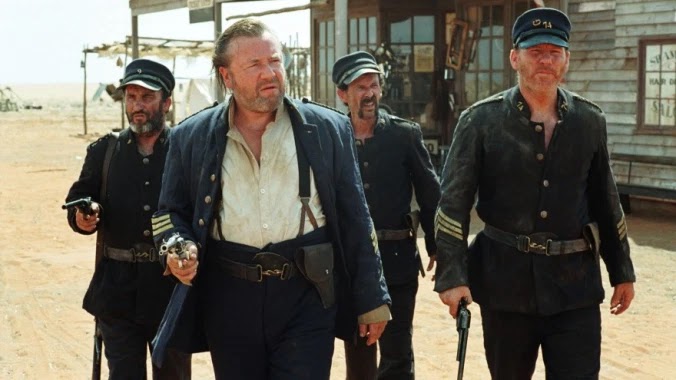
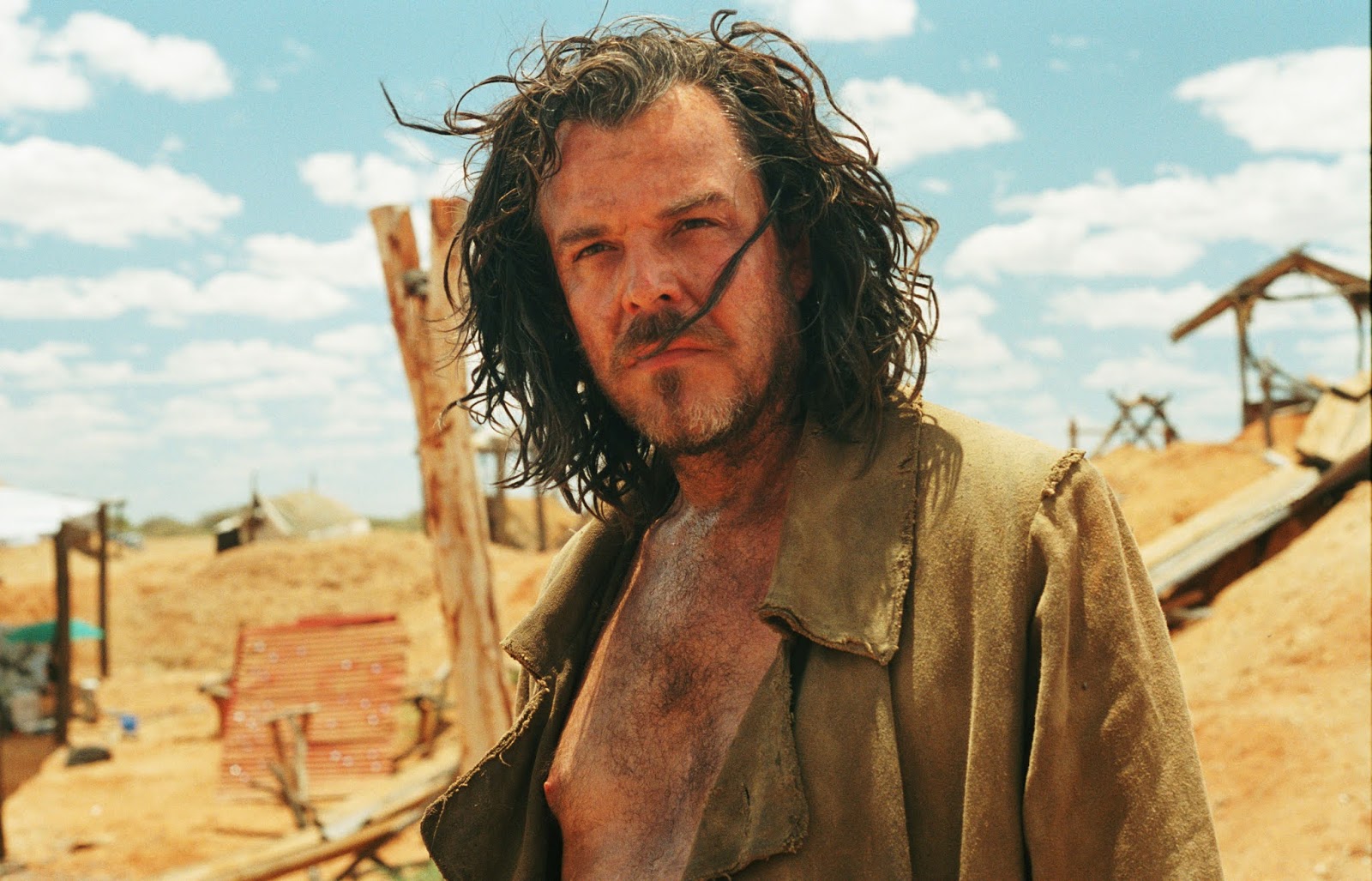
In the Australian outback at some point near the turn of the last century, a gang of ruthless killers are finally tracked down and killed by the police. The only survivors are Charlie Burns (Guy Pearce) and his younger brother Mikey (Richard Wilson). Charlie is offered a proposition by British émigré police captain Morris Stanley (Ray Winstone): find and kill Charlie’s other brother, the even more ruthless Arthur (Danny Huston), in nine days and Charlie and Mikey can go free. Will Charlie do it? And what view will Morris’ superiors take of his unusual decision? Either way violence and bleakness will ensue in the ruthless world of the Australian outback.

Scripted by Nick Cave – who also contributed the film’s sparse and haunting score – The Proposition is a dark, challenging and difficult film. It’s bleak, nihilistic and lacking in any real sense of hope or warmth. It presents a world where life is cheap and blood flows freely. All of this set in a wild, open-aired, dead, dry and dusty environment that in its gaping wildness and emptiness seems to consume the men who walk into it and leave them unhinged and capable of any depth of inhumanity.

How can there be any hope for mankind in all this? No wonder Stanley’s wife Martha (an intriguing performance of both optimism and disillusionment walking hand-in-hand from Emily Watson) tries to turn their house into a little slice of England, with a nice fence and traditional garden. It’s almost like she’s trying to slice something recognisable and safe from an environment that feels like it crushes everything it touches. It contrasts with every other ramshackle shack we see in the film, or dusty sandstone building – or the homes that most of the characters fashion among the rocks and the outback. What chance does civilisation have in this wild world?

It’s a world of ruthlessness where life is cheap. The local sport seems to be killing native Australians – something both police and gangs brag about. The native tracker used by the police – played by Walkabout’s David Gulpilil – quietly watches on as his drunken employers celebrate the (mercifully off screen) killing of a group of native Australians accused of murdering an Irish settling family. There is no pardon for him – later his throat is contemptuously slit by one of his fellows who now works as a sharp-shooter with Arthur’s gang. Hillcoat and Cave’s Australia has not a single touch of romance  or fellow feeling, but instead feels like a waiting room for hell.

Stanley is out of place here, not only by his Englishness, but also because his tough and pitiless policing is dwarfed by the cruelty he encounters. Ray Winstone gives one of his finest performances here as a toughened veteran who slowly realises he has only skimmed the surface of the brutality man can show man. Brutal and determined as he is, he has rules – and a wife he loves and a home he values – and that puts him at an utter disadvantage when going up against the amoral likes of Arthur Burns. Winstone’s Stanley also has a sense of fair play – he will struggle in vain to prevent a lethal flogging for Mikey that obsequious town mayor (a very good David Wenham) wants to inflict to placate the town. He frowns on the persecution of the indigenous people and treats his house servant well. Is it any wonder he isn’t remotely prepared for the bloodletting Arthur unleashes when he rides into town?

Danny Huston does excellent work as the poetic Arthur who lacks any touch of empathy. Softly spoken and chillingly calm at all times, with a lilting Irish accent, Arthur slaughters without any mercy and can charmingly undertake any level of depravity and violence. From mutilation to rape, from sudden slaughter to lingering sadism, worst of all it never seems to be personal with Arthur. More just a way of alleviating his own boredom with the world. Is there something about life in the outback that has turned Arthur slowly and quietly insane? Perhaps so, and it fits with Hillcoat and Cave’s nihilistic view of humanity as a destructive force with very little room for hope.

Guy Pearce’s Charlie perhaps offers what little hope we have – and even he is a murderer. Pearce does quiet, generous work in a reactive role, tipped pillar to post and dealing with conflicted family loyalties as well as some sense of right and wrong. Enough of a sense at least to believe wanton murder and destruction as practised by Arthur is too much. Pearce is a quiet, enigmatic figure in the film – perhaps a man struggling to work out where he sits. It’s a performance that cedes a lot of the fireworks elsewhere, with a moral conundrum that is almost deliberately elliptical, but striking nonetheless.

The Proposition is a tough and difficult film. It has a slightly disjointed narrative that at times skips gently over events or moves swiftly from one to another but missing connective events in between. It has the feel of a fever dream, the sort of bizarre tale you might throw together out of half-remembered nightmares. It allows wonderful opportunities for actors – all mentioned, and also John Hurt quite delightful as a drunken but deadly bounty hunter, his wizened looks perfect for the overbearing wilderness. Sure it’s a western that runs rampant with destruction, but it’s also a dark stare into the evil heart of man. It may end with a slight note of hope, but it’s an obscured and uncertain one and mixed in with more than enough suffering and destruction for the survivors.

The Proposition is still the finest film John Hillcoat has directed, and the best balance between compelling story telling and difficult nihilism.

Hannibal (2001)

Anthony Hopkins rides again in the terrible Hannibal

Director: Ridley Scott

Cast: Anthony Hopkins (Hannibal Lecter), Julianne Moore (Clarice Starling), Gary Oldman (Mason Verger), Ray Liotta (Paul Krendler), Frankie R Faison (Barney Matthews), Giancarlo Giannini (Chief Inspector Rinaldo Pazzi), Francesca Neri (Allegra Pazzi), Zeljko Ivanek (Dr Cordell Doemling)

For Dino De Laurentis, The Silence of the Lambs was always the one that got away. Owning the movie rights to the Lecter character, de Laurentis allowed Orion, producers of The Silence of the Lambs, to use the character name for free. De Laurentis was desperate to make his own Hannibal Lecter film, to cash in on Lambs success – so much so he would have put any old crap on the screen so long as it was connected to Lecter. Perhaps Thomas Harris wanted to test that out with his novel Hannibal, a blatantly for-the-money piece of pulp.

Hannibal is everything that Silence of the Lambs is not. Where Jonathan Demme’s film was subtle, insidious and unsettling this is brash, gory and garish. Harris’ serial killer works always circled around the possibility of tipping into a sort of Poesque-Gothic netherworld. Hannibal dives in head first, reinventing its central character as a sort of Robin Hood of murderous psychopaths and introducing everything from vengeful faceless paedophiles, to Dantesque murders and man-eating hogs. The plot, such as it is, sees Hannibal Lecter (Anthony Hopkins) living under an assumed identity in Florence. Back in America he is being hunted not only by Clarice Starling (Julianne Moore) but also Mason Verger (Gary Oldman, unbilled under a host of make-up) who wants revenge after being hideously disfigured by Lecter. Will Lecter turn the tables on these adversaries?

Both Jonathan Demme and Jodie Foster were offered more money than they knew what to do with for this film. Both turned it down, citing the book – and its grotesque and bizarre outcome that see Lecter and Starling becoming lover-killers together – as the major factor. Foster in particular was out-spoken about how she saw the books extremity as a betrayal of the work she did with the character in the first film. 

No such concern for Hopkins though, who took a bumper pay cheque to return. Hopkins always said Lecter was an easy role to play – basically a creepy voice and a lot of actorly tricks – and it certainly makes it easy for Hopkins to coast through the part here. Really Hopkins treats the role no differently from the countless chat shows where he had been asked to say “Hello Claressse”, the only real difference being he was paid about $20million to do it here. This is Hopkins on unthinking autopilot, in a film that tries to play up the black comedy but instead becomes a ludicrous, offensive farce, drowning in blood.

Ridley Scott directs and his painterly visuals and mastery of the epic shot strips comes at the cost of the very things that made the original film so involving and tense. The Hitchcockian suspense and intimacy of Demme’s direction is jettisoned. Instead everything is a dialled up to a brightly coloured 11. The entire film mistakes gore, blood and overblown, cartoonish villainy for horror. Watching people being mauled by wild hogs, or some more unfortunate being lobotomised and made to eat his own brain isn’t scary it’s more gross. And because nothing feels remotely real in this film, it doesn’t even carry much impact.

The entire film is based around the fact that it’s Hannibal we’re paying to see – especially Hopkins reprising the role – so by Jiminiy we better work a little bit to make this lethal killer from Lambs into something a bit closer to an anti-hero. So instead, Lecter is rejigged as a sort of charming, amoral cannibal. The sort of guy who prefers to eat the rude and unmannered, who loves art and is only really dangerous when provoked. The film carefully gives us reasons to dislike everyone Lecter kills, and slowly falls in love with his sinister magnetism. 

This reduces Julianne Moore – in a truly thankless task – trying to both forge some sort of identity for Clarice from the story that is both unique and a continuation of what Jodie Foster did so well in the first film. It’s not entirely her fault that she fails. This is a film that depowers Clarice, that goes as far as it dares to turn her into a moth around Hannibal’s flame. The film backs away from the romance of the book (even if the film hints at it enough), replacing the eventual ending with something almost as stupid but at least doesn’t turn Clarice into a brain guzzling serial killer.

The plot flies around two arcs, one set around Hannibal in Florence the other on his return to America. Both carry no resemblance to the real world. The first does at a least have a decent performance of nervy greed from Giancarlo Giannini as the Italian detective who (wrongly) feels he can go toe-to-toe with Hannibal. The second revolves around Gary Oldman’s (unbilled – due to an argument over billing or a sly joke, depending on who you talk to) repulsive Mason Verger, a villain so revoltingly gothic you can’t believe in him for a second.

The film looks good and has a decent score, but it’s basically a claret splashed mess that can’t decide whether it’s a horror or some sort of black comedy. It settles for being nothing at all. A truly terrible movie, where everyone is there for the money and I imagine no one thought about the movie for a second once their work on it was done.

The Silence of the Lambs (1991)

Jodie Foster and Anthony Hopkins carry out a strange dance in the compelling The Silence of the Lambs

Director: Jonathan Demme

Cast: Jodie Foster (Clarice Starling), Anthony Hopkins (Dr Hannibal Lecter), Scott Glenn (Jack Crawford), Ted Levine (James “Buffalo Bill” Gumb), Anthony Heald (Dr Frederick Chilton), Brooke Smith (Catherine Martin), Diane Baker (Senator Ruth Martin), Kasi Lemmons (Ardelia Mapp), Frankie Faison (Barney Matthews)

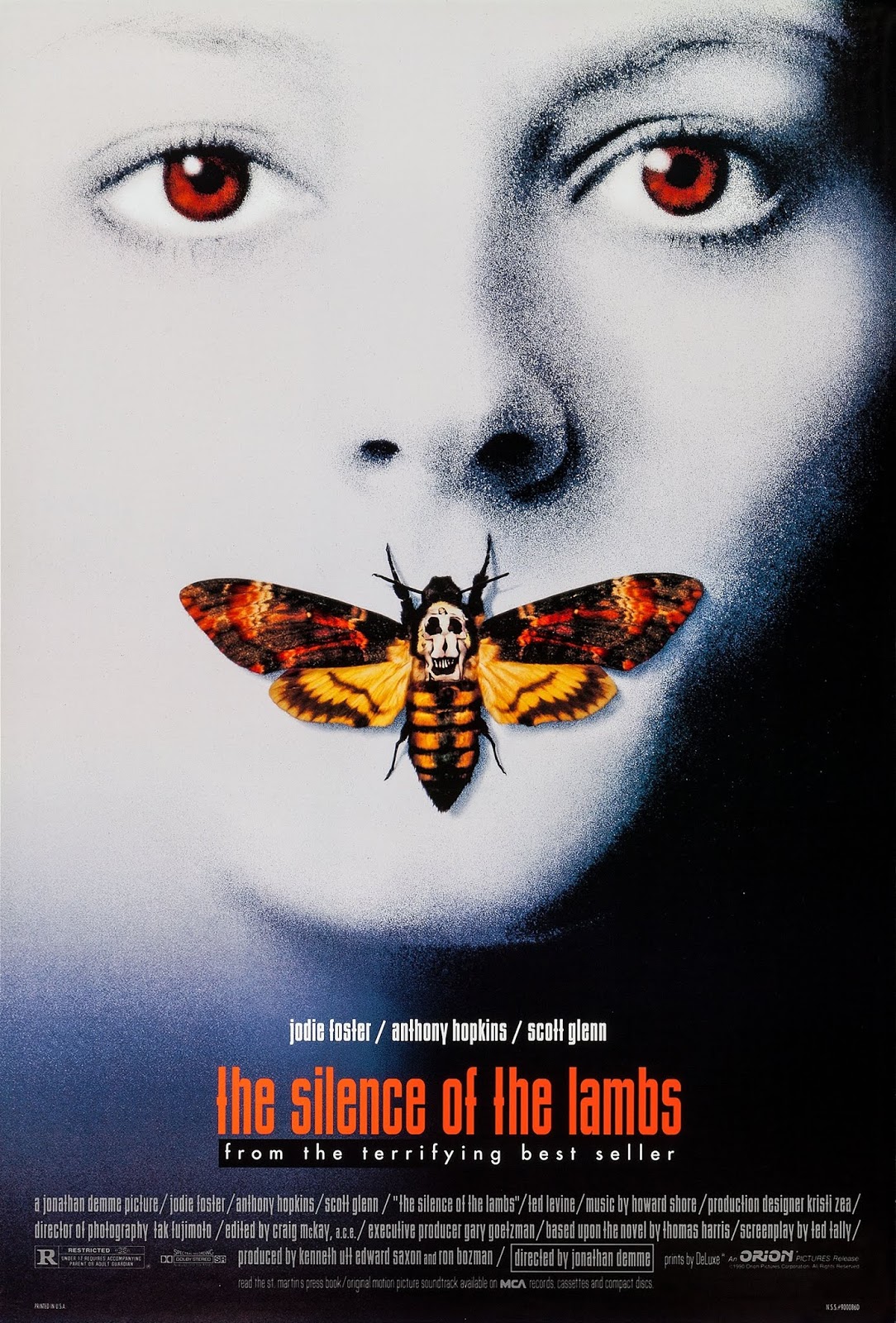
Is there a more unlikely Oscar winner than The Silence of the Lambs? In fact, double down on that: is there a more unlikely film to have won all five of the Big Ones – Picture, Director, Actor, Actress and Screenplay – only the third film in history to have achieved that (It Happened One Night and One Flew Over the Cuckoo’s Nest being the others)? Re-watching the film, it’s actually a triumphant vindication for Hollywood to have chosen a thriller for the ages, a complex and intriguing puzzle wrapped in an unsettling outer layer of thrills and horror, as if the academy was (late in the day) finally tipping an award-lined hat to the film’s spiritual grandfather, Hitchcock himself.

Clarice Starling (Jodie Foster) is a trainee FBI agent, in the final weeks before her graduation. Out of the blue she is plucked from Quantico by the head of the Behavioural Science Unit, Jack Crawford (Scott Glenn), to interview notorious psychiatrist-turned-cannibalistic-serial-killer Dr Hannibal Lecter (Anthony Hopkins), now interned in a psychiatric prison-cum-dungeon in Baltimore. Crawford hopes the Lecter might be able to shed light on the motives of “Buffalo Bill” (Ted Levine), a serial killer kidnapping and skinning young women across a number of states. Lecter can shed some light – but the price is an opportunity to investigate further into the psyche of the determined and ambitious Starling. A three-way game of cat-and-mouse between Bill, Clarice and Lecter soon starts to emerge.

Demme’s film is a sublimely made entertainment that brilliantly pulls together the trappings of multiple genres (there are splashes of horror, thriller, police procedural, romance and black comedy to name but a few) into an unsettlingly tense and engrossing whole. It’s truly a film Hitchcock would have been proud of, a masterfully assembled thrill ride where every shot serves a purpose, and each scene is carefully constructed to establish a clear story and push the audience’s buttons. It has two of the best tense “prolonged misdirects” in film history (wittily signposted in advance by an early car chase that is revealed in a pull-away to be a training exercise in Quantico – don’t trust your eyes!) and it brilliantly immerses you in the world and emotions of Clarice Starling.

Demme’s aim was to get us to empathise above all with Clarice, as she descends into the dark underbelly of this terrifying world. Demme uses a carefully selected combination of POV shots and straight-to-camera addresses to deliberately put us into the position of actually “being” Clarice Starling. From following her perspective through rooms and corridors, to seeing the characters she is talking to address the camera directly as if talking to us, through to carefully placed close-up shots that allow us to study the thoughts and feelings travelling across Clarice’s face, it brilliantly allows us to invest overwhelmingly in her without us even really noticing we are doing it.

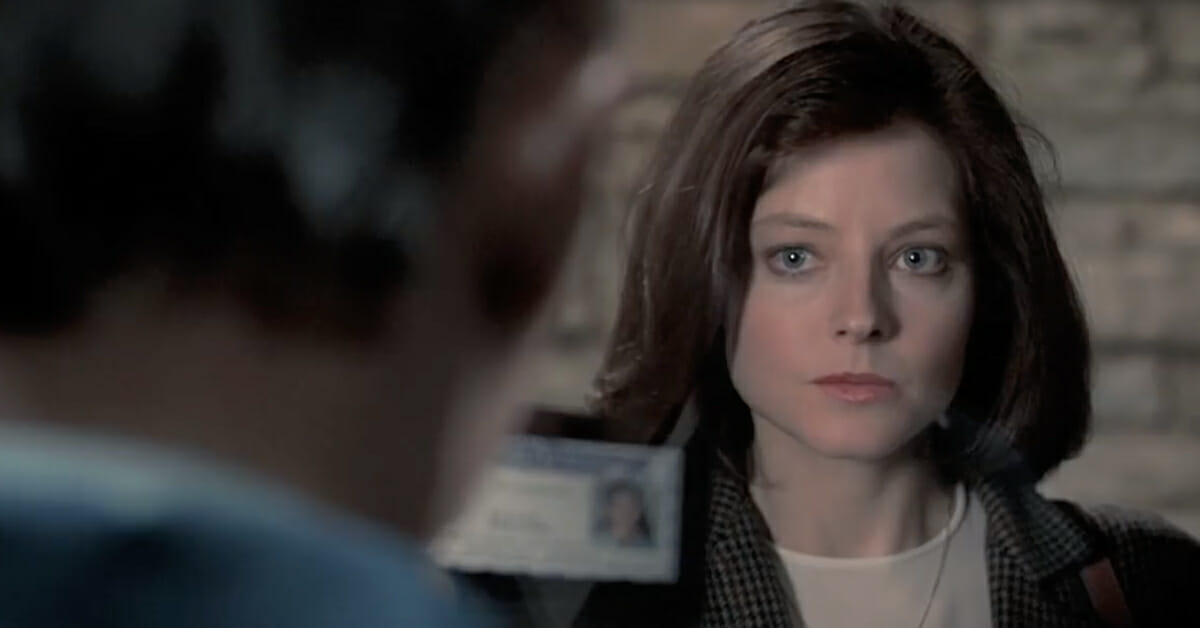
And of course that is put together with Jodie Foster’s extraordinarily brilliant performance in the role. One of the film’s many strengths is exploring the nature of being a determined, brave and ambitious – but still slight and feminine – woman in the alpha-male world of crime investigation. Clarice fends off in virtually every scene not just discrimination and instant judgement, but a parade of half-spoken advances and flirtations from male colleagues. Foster’s brilliance is to make a character who is determined but humane, slightly vulnerable while never weak. She’s the key driver of the story, but also both an insider and outsider in her world, partly motivated by a desire to prove herself, partly by an attempt to vanquish haunting childhood memories of weakness and loss.

It’s these feelings under the surface that attract the interest of Hannibal Lecter, and the strange dance between them is the heart of the film’s appeal and it’s magic. Why does Lecter want to know about the facts of Starling’s life (that quid pro quo he archly asks for)? Does he want to analyse her? Does he want to help? Does he want to amuse himself with her terrible memories? Or is he just bored? He hardly seems to be certain himself, but the intimacy shared revelations provide is neatly played with by Demme in sequences between the two (they barely share the frame by the way more than twice) that hum with a tension of danger, but also a thrill of illicit romance, mixed with incestuous interest (Starling the orphan, Lecter the father-like man of wisdom helping her catch the killer). And it works with us as well – we are so invested in Starling that, just like her, we end up liking Lecter (even though we know we shouldn’t).

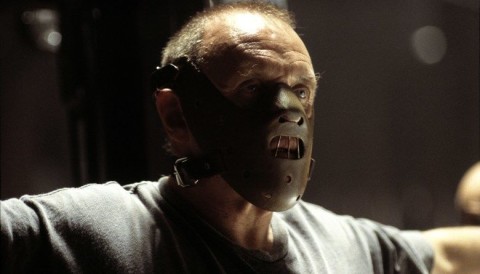
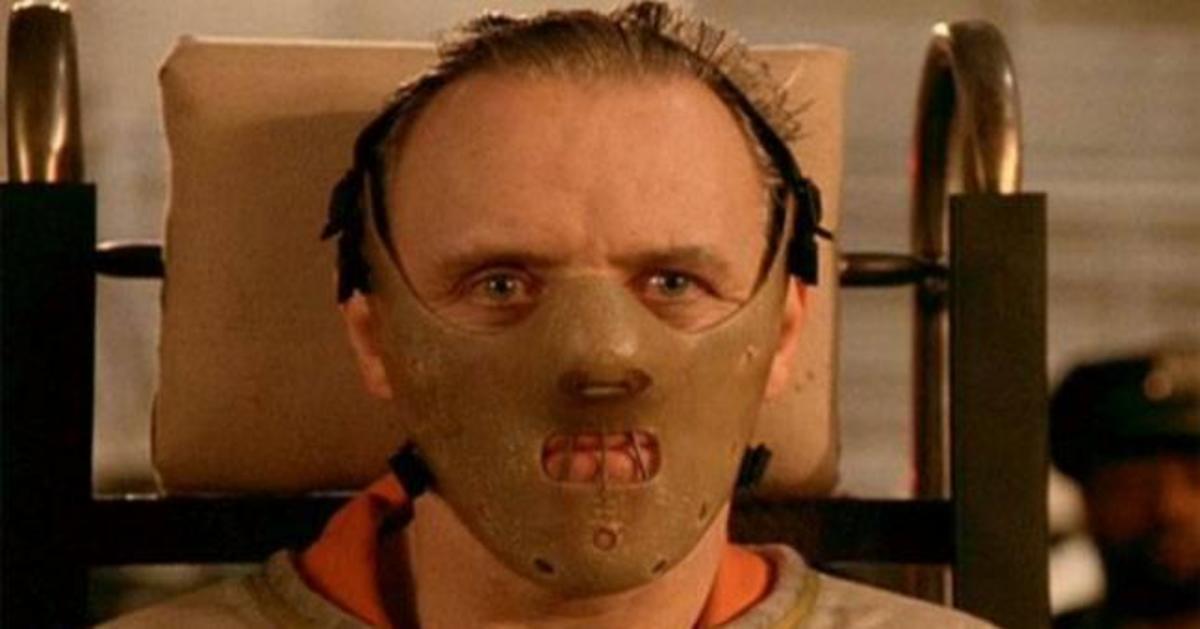
Of course it helps that Hannibal Lecter is portrayed in a performance of magnetic, career-defining brilliance by Hopkins. Hopkins modestly claimed playing Lecter was easy once you mastered the voice and the physicality – but that’s to downplay the extraordinary skill mastering those aspects concern, and the bravura brilliance with which Hopkins plays to the camera but never tips into absurdism. It’s an arch, knowing, winking performance that also carries with it an intense, psychotic menace, a delirious capacity for violence (as we find out). Demme introduces the character sublimely – after the build-up, his ram-rod stillness, polite manner and refined behaviour are somehow even more unsettling. Sure Brian Cox in Manhunter may be more conventionally chilling, but Hopkins is like an elemental demon playing with our childhood bogeyman fears, a guy who seems even more dangerous as he playfully chats one minute, then beats you to death with a truncheon the next.

The scenes between these two characters dominate the film (even if they take up no more than ten minutes of its runtime), and their relationship (beautifully shot as a game of one cagey upmanship that turns into semi-flirting, that turns into something in between) defines the movie and its legacy. Lecter’s magnetism was such that in later movies he would increasingly become an anti-hero of sorts, a lord of misrule rather than a brutal and indiscriminate killer, but here he’s terrifying and satanic, just as Starling is courageous and noble as the lady on a quest.

And that quest targets Buffalo Bill – a deeply unsettling performance of psychological unease and self-loathing by Ted Levine. The film was controversial at the time for its killer being both a transsexual and gay (although the film makes clear it’s a desire to be anyone apart from who he is that drives all these feelings), especially as at the time these groups were barely represented positively in the movies. But it also makes for singularly unsettling character, living in a subterranean cave-like basement, surrounded by moths, his voice slurred childishly while carrying no sense of shame or regret for his actions.

The hunt for Bill is the film’s story, and Demme uses the devices of cinema to make this as tense and unsettling an experience as needed. The camera prowls terrifyingly around Bill’s domains. Howard Shore’s score makes a deeply unnerving use of mournful refrains. Frequently scenes – such as the post-mortem inspection of a victim’s body – are often silently scored, making the mechanical noises of the investigator’s trade (such as the loudly clicking and whirring camera) deeply jarring. The film is grim, but relies more on reaction rather than bathing us in horrors, and implication brings the greatest terror. Every sequence of the film is perfectly assembled to leave us struggling to breathe – not least as events place Starling in more and more peril.

With its playful sense of black comedy, mixed with genuine terror and thrills, The Silence of the Lambs genuinely feels like the film Hitchcock was born to make. Everything in the film is perfectly assembled to serve the film’s aims – there is not a foot wrong in its assembly, and it’s sad that Demme never hit these sort of heights again. But the film is like a twisted companion piece to Psycho (only better), and in Hopkins and Foster produced two landmark performances. While the film engrosses us in Starling’s struggles in a man’s world, it also overwhelms us with Hopkins’ devilish magnetism and dark mystery. And what to make of the relationship between Starling and Lecter? It’s a mystery so enigmatic that it continues to grip today and it’s the secret behind the success of this compelling masterpiece.