Category: Social issue films

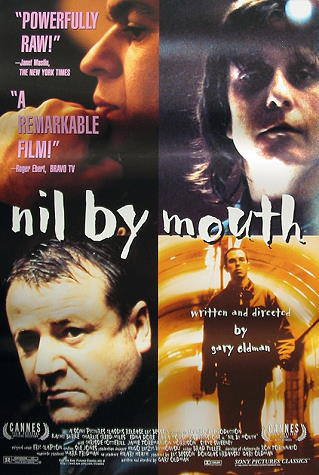
Nil by Mouth (1997)

Nil by Mouth (1997)

Gary Oldman’s passion project is a punishingly raw, unforgettably tough drama of marital abuse

Director: Gary Oldman

Cast: Ray Winstone (Raymond), Kathy Burke (Valerie), Charlie Creed-Miles (Billy), Laila Morse (Janet), Edna Dore (Kath), Chrissie Cotterill (Paula), Jon Morrison (Angus), Jamie Foreman (Mark)

Gary Oldman called it his Lamborghini. Where other stars poured money into fast cars, Oldman pumped millions into this passion project. Writing and directing, Oldman’s film was not autobiographical, but an exploration of working-class themes that had surrounded him during his life. Nil By Mouth is a punishing look at the self-destructive cycles of some working-class lives, trapped in ruts with little opportunities or aspirations, tinged with humour but smothered in an aggressive and toxic masculinity where women so often become the victims.

Raymond (Ray Winstone) is married to Valerie (Kathy Burke). They live in a council estate in London, along with Valerie’s junkie brother Billy (Charlie Creed-Miles). Raymond makes a living in casual crime and carries a seething, barely controlled temper that explodes at the slightest provocation. Often that comes from his own family and his shocking and brutal capacity for extreme, vindictive rage will leave physical and mental scars on all around him.

Oldman’s Nil By Mouth doesn’t really have a plot as such. It’s more a ‘slice of life’ film – or a kitchen-sink drama, but one where the sink is ripped from the wall and used to smash someone in the face. Nil By Mouth is visceral, difficult to watch and relentlessly, almost overwhelmingly, powerful in its grimness. Oldman doesn’t allow a shred of romance about working class life. There is no nobility inherent in poverty, and for every piece of human decency there are those stuck in self-destructive cycles. Often this means men barrelling around causing pain, while women pick up the pieces.

Oldman shoots the film with an alarming immersiveness. Handheld cameras, awkward turns and a deliberate shunning of the careful and conservative distancing of two-shot set-ups, makes the viewer feel uncomfortable close to the characters in all their exceptionally flawed whole. The film is designed to make us feel as much in the room as possible, an increasingly helpless witness to the aggression and violence that bubbles under the surface of every moment. Just like Valerie’s young daughter, who watches everything with a mute silence, we are helpless witnesses.

Working-class London is an overwhelmingly male – and toxic – environment. No one can go more than a few words without effing and blinding. All the male characters guard their personal space like pit bulls. The slightest accidental touch can be met with nose-to-nose spittle fuelled fury. While there is a homespun humour to some of the conversations, the content is pitch-black. Anything that could even be vaguely interpreted as weakness is aggressively shunned.

It’s clear that all the man are emotionally stunted, frightened little boys behaving with the aggression of angry teenagers and the muscles of fully-grown men. Oldman’s gift with the film is to look at some of the most appalling people, with an understanding that never tips into sympathy. None more so than wife-beater Raymond. Raymond is a monster. A bleeding fist of anger, who sheds self-pitying tears in the aftermath of the latest atrocity he has inflicted upon his wife (“I do it because I love you”). Raymond sees himself as “the Daddy” but is actually a weak-willed bully, drowning in self-loathing and crippled by misdirected anger and grief at his own bullying father.

None of this excuses the appalling, terrifying behaviour he dishes out to Billy and Valerie. He nearly bites Billy’s nose off in an incandescent fury when Billy steals his drugs. That’s nothing to the jealous beating he meets out to Valerie when he witnesses her playing pool with a man. This shockingly violent outburst of kicks, punches and stamps to the prone and weeping Valerie is impossible to watch (mercifully Oldman keeps it mostly off camera). It’s felt inevitable: Raymond looks on the edge of handing out a beating every time we see him.

But then, Oldman is making the point, it’s inevitable to the characters as well. None of Valerie’s family are surprised by it – even if there is a vague attempt by her mother Janet (played excellently by Oldman’s real-life sister Laila Morse) to accept Valerie’s detailed story of a hit-and-run leading to her disfiguring injuries. Raymond is translating the pain handed out him onto his own family, dishing out treatment he received from his father but a hundred-fold worse. Just as his mother accepted treatment like this from his father, so Valerie will accept it from him. Her daughter will see this behaviour, and likely accept the same from her husband in the future.

Why do women accept it? Because what choice do they have? There is so few opportunities. Aspiration hardly comes into it – even if it clearly doesn’t exist for many – because quite simply the idea of there being another way of living your life than this just seems impossible. Women are there to pick-up the pieces. Janet has been doing it for years, nursing her son through a drug-habit with cash when he needs it (all of which goes into his arm). They need to keep the family, dysfunctional as it is, strangely functional. To let the dust settle, to welcome the abuser back in when he promises to change, give the junkie who has robbed them one more chance.

Nil By Mouth is at its strongest when it implies this terrible cycle. This can’t be the first time Raymond has struck Valerie (there is mention of an earlier estranged marriage, which presumably ended for the same reason). The film comes full circle to the family back together again – but no problems have been solved, no changes made, no revelations made. People have simply come together because, at the end of the day, what other choices are there?

Nil By Mouth isn’t perfect. Its grim power is sometimes overstretched at its two-hour plus run time. Much of the first half hour focuses on Billy, with Oldman’s camera a little too in love with the observational tragedy of this slightly shallow character (Creed-Miles does a good job, but the character is never quite interesting enough to sustain his screen-time). This is particularly obvious once the focus returns to the raw, unwatchable power of Raymond and Valerie.

Here Oldman also shows his strengths as a director of actors. Winstone – who a year before was making episodes of One Foot in the Grave and Murder Most Horrid – saw his whole career change with a performance of such stunning intensity, commitment and sheer visceral horror matched with self-pitying weakness, that he makes Raymond one of the most pathetic monsters of cinema. Kathy Burke is astoundingly good as Valerie, suffering, patient but unable to conceive of a change to her life. Both have never been better, turning a domestic tragedy into something of elemental force.

Oldman’s film is hard, grim, difficult viewing – but also essential. It marks him, after Laughton, as one of the greatest sole-directing credit actors (so far!) ever. Nil By Mouth, once seen, is impossible to forget.

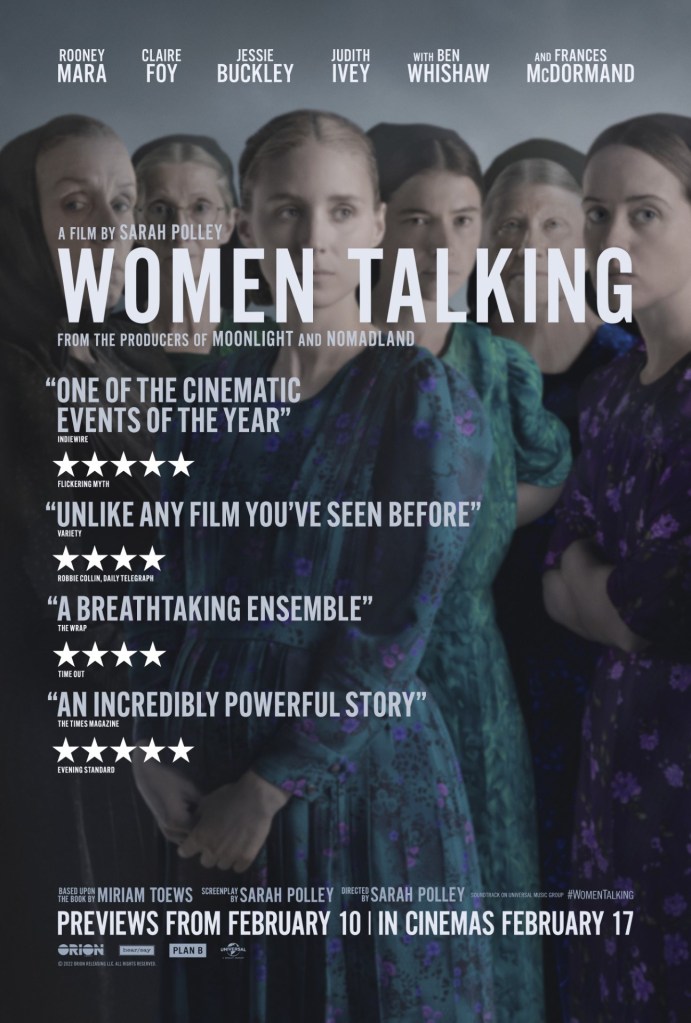
Women Talking (2022)

Women Talking (2022)

A worthy attempt but a misfire, that frustratingly fails to grapple with deeper feminist issues, settling for a safer, less challenging consensus

Director: Sarah Polley

Cast: Rooney Mara (Ona), Claire Foy (Salome), Jessie Buckley (Mariche), Judith Ivey (Agata), Ben Whishaw (August), Frances McDormand (Scarface Janz), Shelie McCarthy (Greta), Micelle McLeod Mejal), Kate Hallett (Autje), Liv McNeil (Nietje), Emily Mitchell (Miep), Kira Guloien (Anna)

In 2010, the women of an isolated Mennonite community discover they have been victims of a policy of systemic drugged rape by the men, every night for decades. All this remains unknown until a man is caught in the act and the attackers arrested. The other men go to the city to bail them out, informing the women they will be expected to forgive on their return. The women hold a vote about what to do: do nothing, stay and fight or leave. When the vote is tied between the latter two options, the women decide the final choice will be in the hands of a small group of their number, who will debate in the community’s hay loft.

All of this happens, in voiceover, in the film’s opening few minutes. It all sounds more engaging, challenging and dynamic than what actually happens in the film. I saw Women Talking with my wife, who is passionate about the issues this film wants to deal with. We were both united in our view of the film: Women Talking is full of talking, but no one really says anything. It’s a missed opportunity that fails to convert its undeniably powerful premise – or the committed and passionate performances of its cast – into something that really successfully grapples with, and comments on, the issues, with a cast of characters who feel more like devices than fully-rounded people discovering their voices and freedom.

It’s a film that should have the urgency of a time-bound debate and the passion of a group of women discovering that they have the power to make decisions themselves. But the film feels slow (much longer than its two hours), flat and theoretical where it should be filled with debate and different ideas. It has moments of power and speeches of tragedy, but it doesn’t manage to make this something truly revolutionary.

The film would have been more interesting if it had been about everything covered in that opening monologue. In this community the women are kept illiterate, have never been allowed to be part of any decision-making and are so oppressed they don’t even have language to understand what sexual assault is. There was a fascinating film waiting to be made about these women working out exactly what had happened to them – imagine the heart-rending conversations that must have involved – and discovering they were just as capable of reaching decisions in their own right as men. Of finding their voice and freedom.

Now that is a film about feminism I want to see! I wanted to see these women who have never even considered ideas about independence and self-determination discovering they could do that. Just having a vote in a community like this one is an astonishing revolutionary act – it shouldn’t be so blandly passed over as this film does. How did these women even realise that they could decide for themselves what they to do with their lives?

Instead, we get a film where actual debate is surprisingly neutered. Frances McDormand’s character is the voice of conservatism, but walks out of the debate after five minutes and never comes back. With her gone, no counter-arguments are raised, no voice given to help understand why people (and many of them have done so) would choose to stay in relationships even after they know the truth. McDormand’s character is almost certainly wrong – the women should get out of this awful place – but we should at least hear her say why she wants to stay and the film should trust us to understand that listening to her viewpoint isn’t the same as agreeing with it.

In fact, it would have been fascinating to hear why so many women in the community heard about the systemic rape and yet voted to stay. The hay-loft debates should hum with the exchange of ideas. We should hear different viewpoints. Many people voted to stay and do nothing: why? Let’s hear what makes these women accept what’s happened to them. Are they institutionalised, love their husbands despite their faults or can’t imagine leaving their homes no matter the cost? We don’t know. It’s like the film makers were worried that a debate which actually included all potential viewpoints would have been seen as reducing the horror. In reality, however, it’s essential.

There is also a fascinating discussion to engage with about justice and forgiveness – particularly given the film’s setting in a religious community that preaches forgiveness. The men have demanded the women forgive. Ona (Rooney Mara) declares early on that forced forgiveness cannot be real. But instead of engaging with this, that throwaway is all we get. It’s a deep question which we often grapple with in the wake of terrible crimes. Whole books have been devoted to people who can or cannot forgive those who’ve committed terrible crimes against them or their loved ones. There’s so much this film could have delved into with its cast of women who’ve been told all their lives they must forgive – but it had no interest.

Instead, the film wants to make things easy. It completely shirks any debate of religion. This is a community of women whose entire understanding of the world is founded on the Bible and religious instruction. But yet God, faith and Christian ideas barely come up. It’s briefly mentioned that leaving the community means exile from heaven – but that is benched and never raised again. It should be at the heart of their considerations. There isn’t even a debate about whether their community’s teachings are legitimate (since they are partly based on systemic rape, we can guess not).

In the end rather than really tackling themes, we get conversations which do little but make the same point over and over again. Some of these speeches are undeniably powerful, and the performances of Foy and Buckley in particular are strong, but they are weakened by the lack of depth to the characters.

Women Talking is full of words but never says as much as you are desperate for it to do. The actors do a fine job with the passionate speeches and bring a lot of power to this chamber piece. But it’s frustrating that we feel robbed of seeing these women realise they have the power to choose and instead circles a highly emotive but ultimately slightly unrevealing discussion intercut with on-the-nose shots of fields, playing children and empty kitchen tables. It manages to avoid focusing on anything potentially interesting or engaging and feels like a worthy missed opportunity.

Do the Right Thing (1989)

Do the Right Thing (1989)

Spike Lee’s masterpiece is still frighteningly relevant today – and stunning film-making

Director: Spike Lee

Cast: Spike Lee (Mookie), Danny Aiello (Sal), Ossie Davis (Da Mayor), Ruby Dee (Mother Sister), Giancarlo Esposito (Buggin’ Out), Bill Nunn (Radio Raheem), John Turturro (Pino), Richard Edson (Vito), Roger Guenveur Smith (Smiley), Rosie Perez (Tina), Joie Lee (Jade), Steve White (Ahmad), Martin Lawrence (Cee), Leonard L. Thomas (Punchy), Christa Rivers (Ella), Robin Harris (Sweet Dick Willie), Paul Benjamin (ML), Frankie Faison (Coconut Sid), Samuel L. Jackson (Mr Señor Love Daddy)

When it was released in 1989 it was like a punch in the solar plexus. Spike Lee’s third joint was a powerful, dynamic and deeply thought-provoking and challenging piece of cinema. This demanded you sat up, took notice and understood that underneath the happy lies America tells itself, the country was deeply divided and a tinderbox waiting for a spark. Perhaps the most painful – and shocking – thing about Do the Right Thing is how little has changed. You could make the same points today and the film’s tragic ending in police brutality, violence and uneasy truce could be repeated in the headlines as readily tomorrow as it was in 1989.

Set on one swelteringly hot day in New York City, Lee’s film is a kaleidoscope of diverse lives in the predominately Black neighbourhood of Bedford–Stuyvesant in Brooklyn. Just about the only people here not Black are Pizzeria owner Sal (Danny Aiello) and his sons Pino (John Turturro) and Vito (Richard Edson). Working for Sal is Mookie (Spike Lee), drifting through life but determined to get paid, who has a son with Tina (Rosie Perez). In this neighbourhood anything could be a spark. Perhaps it will be Buggin’ Out’s (Giancarlo Esposito) objection to Sal’s pizza parlour ‘wall of fame’ being exclusively Italian? Perhaps the bored kids schlepping around the street? Maybe imposing Radio Raheem’s (Bill Nunn) ghetto blaster constantly pumping out ‘Fight the Power’? Or will it because of the Korean convenience store owners, or the police officers who ride into the neighbourhood like it’s a war zone?

What’s really striking about Spike Lee’s film is it is neither polemic nor hand-wringing exercise. Perhaps what really outraged people in 1989 when it was released – let’s not forget it’s the year the vaguely similarly themed but deeply reassuring Driving Miss Daisy won Best Picture – was that it offered no answers. Instead, it holds a mirror up to America for a long, uncomfortable, look. While other films presented racism as a journey towards peace, Do the Right Thing shows it as a systemic problem with no easy solutions. Any reconcilement is tentative or grudging at best, few lessons are learned and there is very little sign that this won’t all happen again.

Lee’s film is an electrically confident piece of film-making. It’s also amazing what a glorious mish-mash of styles Do the Right Thing is. You get everything from music video to action set-piece, kitchen-sink drama to comic book dutch angles, soft porn to comedy, odd-couple romance… Almost every scene as it moves around its smorgasbord of characters takes an influence from a different genre, held loosely together by Samuel L Jackson’s 24/7 DJ Mr Señor Love Daddy. But never once does one scene jar up against another or does the general impact of the film feel blunted.

Perhaps it works because the entire film is awash in the messy unpredictability of life and the simmering resentments hidden below the surface. Sal and his sons are awkward fits in the neighbourhood, legacies of a bygone age – a whole other generation of usurped immigrants – keeping an uneasy truce with their customers. Not that there are obvious lines drawn here: John Turturro (in an excellent performance of great depth) plays a racially aggressive man, fascinated with Black culture. Sal, superbly played by Danny Aiello, balances genuine affection for some customers with baseball-grabbing antagonism for others.

It’s sometimes hard to tell what they might face, as the Black community is widely disparate in its feelings. (Spike Lee has written critically of the tendency by some to lump “Black people” together into a homogenous lump). There are stark generational. Da Mayor – a superb Ossie Davis, stumbling, well-spoken and ineffective – and Mother Sister (a sensational Ruby Dee), the neighbourhood matriarch, belong to an older era of Civil Rights, Malcolm X and MLK. The younger generations – those kids bombing loudly around the neighbourhood, including a young Martin Lawrence – don’t give a toss about their legacies and are barely interested in the world around them. Others, like Buggin’ Out (a firecracker Esposito), speak a semi-coherent collection of political phrases, mixed in with righteous but largely pointless anger about trivial events, that most people ignore.

In the middle of all of this, Lee himself plays Mookie, an everyman character for Black America, young, drifting, uncertain about where he is going. Mookie shirks fatherly duties – Tina literally has to order a pizza from Sal to get him to visit – and often does little more than punch-clock. But he also offers a fine, level-headed understanding of the various personal and community clashes around him. He’s an effective sounding board for every character, listening carefully and constantly torn about what doing the right thing might mean.

There is a sort of brilliantly brave ambiguity around Do the Right Thing. There are no heroes, only people, warts and all. Casual fights are picked but not seen through – like Buggin’ Out confronting John Savage’s well-to-do commuter for scuffing his trainers. The kids demean Da Mayor as a drunk wash-out who never made anything of his life (perhaps, subconsciously, worried his present is their future). Racial prejudice works every way – in one of Lee’s many flourishes, several characters (Mookie, Pino, a Hispanic man, a police officer and Sonny the Korean shop-owner) break the foruth wall to speak a flurry of racial insults to Italians, Blacks, Hispanics, Asians and white Americans, giving vent to private feelings, but also showing how close these are to the surface.

Do the Right Thing is made up of a series of brilliantly sketched vignettes as its many characters mix and mingle over the long day, some sharing insights, some butting heads. The film zigs as much as it zags – Mookie confronts Pino’s racism not with anger but calm, reasoned discussion. Our three breeze-shooting old timers are as irritated at the loud and brash kids as they resent the cops. Heavy-set Radio Raheem (a stoic Bill Nunn) puts aside his ghetto-blaster to talk about love beating hate. That ghetto blaster will exact a heavy toll.

It’s at the heart of the explosion of violence that caps the film. It’s tragic that the police violence which ends the film – and the resulting riot – is still no stranger today. A troublemaker meets a death far exceeding their crime by being effectively lynched by the police in a choke hold (Lee cuts to his feet twitching in the air, as he is lifted by a truncheon around the neck). This police murder (and the police flee the scene, taking the body – and the evidence – with them) slams the political message home. People are flawed, tensions are high – but no one does anything even vaguely approaching deserving death, and the fact the authorities ‘resolve’ problems through brutal force is everything that’s wrong with America.

But Lee is not one to excuse all violence. The mob – and it becomes a mob, with Lee not afraid to show cash tills being looted as well as furious, righteous anger – nearly turns on the Korean shop next, seemingly for no other offence than being foreign. People we would never expect, scream passionately for the world to burn. But then, Lee also makes the key point: when the world is as unjust and dangerous as this, isn’t the right thing sometimes to let out a primal scream. After all, what is a building when weighed against a man’s life?

What is the right thing to do? It’s a complex message the film grapples with. Mookie arguably starts the riot – or at least directs its anger – with a window smash. But by doing so, he also side with his community. In many ways it is the right thing to do. After all, Sal started the spiral by responding to intense, loud baiting with a flurry of racism. Mookie is, in some ways, a fixed labourer – Sal, for all his affection for Mookie, can’t imagine a world where Mookie won’t be working in his pizza parlour – and siding with the crowd is a defiant assertion of his independence and identity.

It’s just a flavour of the complex and challenging ideas in a film that avoids easy answers. As Sal and Mookie, the next day, stand in the ashes neither of them willing to forgive and forget, but also neither of them wanting to return to violence, they stand like representatives of America, struggling to process its race-related history. It’s a million miles away from the easy messages and gentle fixes of liberal Hollywood. Tension here settles for coexistence – but acknowledges that explosions of rage and anger are an inevitable part of that. That’s not a message America wanted to hear in 1989 – hell its barely one it wants to hear today – but it’s a powerful part of this landmark masterpiece.

Salvador (1986)

Salvador (1986)

Oliver Stone’s passionate denunciation of American policy, highly politicised but electrically made

Director: Oliver Stone

Cast: James Woods (Richard Boyle), Jim Belushi (Doctor Rock), Michael Murphy (Ambassador Thomas Kelly), John Savage (John Cassady), Elpida Carrillo (Maria), Cindy Gibb (Cathy Moore), Tony Plana (Major Maximiliano Casanova), José Carlos Ruiz (Archbishop Oscar Romero)

To many countries the Cold War was very hot. The USA and USSR may not have crossed swords personally, but they were happy to funnel money and arms to governments and resistance groups in other countries to fight for them. The Salvadoran Civil War became another proxy battleground for East vs West – or rather Capitalism vs Communism. The US backed the military dictatorship, the USSR the left-wing revolutionaries. Caught in the middle? The people of El Salvador and their shattered human rights.

It’s not surprising this attracted the attention of Oliver Stone. Released in the same year as Platoon, Salvador is the second half of a one-two punch against the failures of American intervention. It was considerably less palatable to the masses though: Salvador is a furious, spittle-mouthed denunciation of American policy. Unlike Platoon where the victim is basically the innocence of a whole generation of Americans (an American tragedy), here you can’t fail to notice America is one of the bad guys. To Stone, El Salvador (as Richard Boyle points out in the film) was America’s chance to fight Vietnam again, only this time “right”: win it while sacrificing the lives of another country instead. It’s a considerably less easy to digest message.

Salvador is based on a fictionalised version of gonzo-journalist Richard Boyle (played with mesmeric intensity by an Oscar-nominated James Woods) who escapes from the mess of his life in San Francisco to cover the war first hand in El Salvador. There he finds himself growing increasingly sympathetic to the left-wing rebels, as the US-backed government forces commit atrocity after atrocity: mountains of corpses, assassinations and out-of-control death squads. And no-one in the embassy wants to admit to it, not when they are more concerned about keeping El Salvador from going Red. To stop that, any price is worth paying.

It makes for a passionate, angry but not subtle film. But then is Oliver Stone known for anything else? It hectors, it bellows, it hammers its points home. Stone’s writing is often a touch simplistic. There are traces of the unpleasant racism of Stone’s scripted Midnight Express in the scruffy, lecherous vileness of many of the government troops while death squad leader Major Max (Tony Plana) struts around like a mix of Tony Montana and Henry II, all but saying “who will rid me of this turbulent priest?” as he plots the murder of leading protestor Archbishop Oscar Romero.

It’s a film that lands punches that would have been better pulled. I could have done without the all-too-detailed recreation of the rape and murder of four American missionaries by a government death squad. Changing the names, doesn’t change the fact that these are fundamentally real people whose final moments are staged with a little too much queasy detail (or close-ups of their mistreated, bullet ridden bodies). But then, Stone is equally unafraid – and perhaps rightly so – to show us mountains of dead Salvadoran bodies, including children, so maybe it’s hypocritical of me to argue restraint for American victims.

Stone shoots the film with a real urgency and immediacy. Boyle frequently makes his way to the heat of the action and the camera follows him right in there. It ducks and sways among panicked mobs of people. It sees charges of horse-backed revolutionaries head towards it. It follows Boyle through devastated streets and scenes of despicable human carnage. It doesn’t flinch from executions and murders and when Boyle is thrown to the ground by explosions and gunfire, it goes down with him. Stone allows bombastic excess into the film, twinned with a score that adds a little too much classical self-importance, but at least his reasoning behind making this an overwhelming film makes sense. The whole ghastly civil war is overwhelming.

And so is America’s part in it. Aside from the ambassador – a Carter-ish hangover, played with ineffectual decency by Michael Murphy – the figures we see from government are heartless, cold warriors, interested only in the ends and caring nothing for the means. They pour money into death squads, provide air support and tanks for rebels to be strafed on the ground and are totally indifferent to morality. The media largely backs them all the way, parroting the government line and painting the revolutionaries as terrorists. They even suggest those dead missionaries were either foolish or mixed up with the rebels – either way fundamentally responsible for their deaths.

The government contrasts with the “ordinary” Americans we see. Missionaries down here to do good. And, of course, the cryptic figure of Richard Boyle. Boyle is, in many ways, a deeply unsympathetic character. Woods makes him selfish, sleazy and self-interested, constantly letting people down and taking what he can get from friendships and situations. But the things he sees in El Salvador reawakens his sense of right and wrong. He’s vile but he’s kind of brave. He will call out what he sees as wrong. He will protect others, instinctively covering those he loves when bullets fly.

And, finally, he tries to do something right, smuggling his girlfriend Maria (sweetly played by Elpidia Carrillo) and her young son back to America (needless to say, the authorities do not react well). Part of Salvador’s success is in seeing Woods perfectly craft a character arc that takes a man interested only in himself through to putting himself at risk for innocents. It’s a long road from the gonzo washout who drives down to the country stoned with drinking buddy Dr Rock (Jim Belushi, rather good as grungy stoner, sweeter than he appears, who grows to love the country and its people).

He’s a complex hero though, superbly bought to life by Woods in a performance that’s like a raw wound in a complex film. While Platoon could be seen, for all its loss of innocence, as a film where America was the victim, Salvador casts the country as the villain sharing morally responsibility for the piles of corpses Boyle picks his way through. Stone acknowledges the crimes of the revolutionaries – Boyle furiously denounces them for their shooting of unarmed soldiers pleading for the lives – but his real anger in this passionate, vibrant polemic is America itself. It’s delivered with verve, commitment and drama and helps make Salvador one of his best and most overlooked films.

Under Fire (1983)

Under Fire (1983)

Well-filmed but politically naive Nicaraguan revolution film that pulls its punches and settles for melodrama

Director: Roger Spottiswoode

Cast: Nick Nolte (Russell Price), Gene Hackman (Alex Grazier), Joanna Cassidy (Claire Stryder), Ed Harris (Oates), Jean-Louis Trintignant (Marcel Jazy), Richard Masur (Hub Kittle), René Enríquez (President Anastasio Somoza Debayle), Hamilton Camp (Regis)

In 1979 Nicaragua was torn apart by revolution as the regime of right-wing President Somaza was challenged – and eventually overthrown – by the Sandinata National Liberation Front (FSLN), a coalition of left-wing revolutionaries. The US largely threw in its lot with the Somaza government until its appalling human rights record – and the outrage at the murder of journalist Bill Stewart, which was caught on camera – led to it withdrawing aid and the collapse of the regime. Not that it led to peace in the country, as Raegan’s government promptly began supporting the right-wing Contra rebels (but that’s another story).

A version of this is bought to the screen in Roger Spottiswoode’s earnest but slightly naïve film which tries to walk the walk but largely pulls its punches. Here Bill Stewart is translated into Alex Grazier (Gene Hackman) whose journalist ex-wife Claire Stryder (Joanna Cassidy) is in love with his best friend war photographer Russell Price (Nick Nolte). Price and Stryder are embedded in Nicaragua and find their sympathies growing for the left-wing revolutionaries – and their hackles rising at some of the actions of their country.

That “some” is the key here. For all Under Fire would like to be a firebrand political film – a sort of Battle of Algiers by way of All the President’s Men – it’s a film that continually pulls its punches. When compared to the brutal honesty Missing (a year earlier) looked at America’s bungled, self-serving and short-sighted foreign policy in Latin America, bashing any communist leaning revolutionary, even if meant propping up blood-soaked dictators, Under Fire looks very tame indeed.

Only the barest information and context is given to American policy. The only two villainous representatives of American policy we see are carefully distanced from the government. Oates, played with empathy-free gusto by Ed Harris, is a mercenary as happy driving trucks as he is executing POWs. The CIA’s man-on-the-ground is not even American – instead he’s a supercilious, lecherous Frenchman played with awkwardness by Jean-Louis Trintignant. Trintignant gets the closest anyone gets to a political speech, pointing out today’s sympathetic left-wing revolutionaries are tomorrow’s Stalinist purgers. But he’s always a degree separate from official American policy.

Instead, America remains the innocent here. The implication is the true decision makers don’t realise what’s going on, on the ground. It’s only the murder of Alex – and the smuggling out of Russell’s photos showing his execution – that leads to America having its eyes opened and withdrawing its support. This neatly lets everyone off the hook. Neither does the film dare suggest the hypocrisy of a country pouring money and arms into the bloody Somaza regime for years, only stirring when one innocent American journalist is killed. Not once does the film challenge the unpleasant truths that lie behind a statement made by a Nicaraguan: “if we had killed an American journalist years ago perhaps you might have done something”.

Instead, the film settles for a slightly naïve romance of the largely decent, young and sympathetic rebels vs brutish Government soldiers. The rebels are all plucky kids – like the young man and would-be baseball player Russell and Claire follow through a street battle in Leon (naturally, he’s shot by Oates, in the back of all places). Either that or decent, wise figures who would never consider sullying their hands the way the government forces do. It all feels a long way from the mutual brutalities of Pontecorvo’s Battle of Algiers or the (admittedly spittle-mouthed) fury of Oliver Stone’s Salvador.

After a while you start to feel Nicaragua is really a backdrop for a half-hearted romance between two journalists who re-discover their idealism under fire. The sense that the film could be set anywhere really is backed up by it’s opening in the Chad civil war, which is explored in fifteen minutes in the same cursory depth as the Nicaragua revolution. It’s all exotic backdrop for a drama about whether Russell and Claire can get over the guilt of sort-of betraying Alex (although Claire and Alex are already separated by the time they get it-on) and convert their affair into something more meaningful.

Truth be told all three journalists are thin characters, invested with more depth than they deserve by three very strong actors. Nolte is at his gravelly best, scruffy but impassioned, righteous anger bubbling not far under the surface. Cassidy turns a character that could have easily been “the woman” into a dedicated, intelligent and inspiring professional. Hackman finds beats of self-doubt and sadness in an anchorman worried he’s left what he’s loved (personally and professionally) behind.

Spottiswoode films with sweep and energy – helped by a very good score by Jerry Goldsmith and some impressive recreations (sanitised as they are) of street clashes in Nicaragua. But the story never takes flight and its political edge gets far too blunted. Even the murder of Alex is turned into melodrama, the focus quickly shifting to a wild chase for Russell to smuggle his film out of the country to end the Somaza government claims that the killers were the rebels not his soldiers.

It’s where the film goes wrong, settling for melodrama and romance where it should be angry. In the end it’s a romantic film, where American policy is misguided for the right reason and good triumphs. The cheering crowds that end the film ring especially hollow considering the continued violence that plagued the country throughout most of the 80s. It’s a solid thriller, but a flawed film.

The Front (1976)

The Front (1976)

The Blacklist is skewered in this heartfelt comedy that turns tragedy

Director: Martin Ritt

Cast: Woody Allen (Howard Prince), Zero Mostel (Hecky Brown), Herschel Bernardi (Phil Sussman), Michael Murphy (Alfred Miller), Andrea Marcovicci (Florence Barrett), Remak Ramsey (Francis X Hennessey), Lloyd Gough (Herbert Delaney), David Marguiles (William Phelps), Danny Aiello (Danny LaGattuta), Josef Summer (Committee chairman)

The first Hollywood drama about the “the Blacklist”, the shamefully unconstitutional banning of left-leaning Hollywood figures from working as a result of the House of Un-American Activities Committee’s investigation into alleged communist subversion. If there was any doubt how personal the film was to its makers, the credits scroll with the Blacklisting dates of many of its makers including Ritt, screenwriter Walter Bernstein, Mostel, Bernardi, Gough and Delaney. The Front is a tragedy told with a wry comic grin. Perhaps the makers knew that if they didn’t laugh they’d cry.

When screenwriter Alfred Miller (Michael Murphy) is blacklisted he asks an old friend, small-time bookie and cashier Howard Prince (Woody Allen) to attach his name to Miller’s scripts and submit them. In return Prince will keep 10% of all payments. The scheme is so successful Prince becomes “the Front” for two other writers and the quality and volume of Howard’s ‘output’ wins him a lucrative job as lead writer on a successful TV show, while his ‘genius’ wins the love of idealistic script editor Florence (Andrea Marcovicci). But, as the Blacklist takes hold – driving out of work actors with tenuous links to Communism like the show’s star Hecky Brown (Zero Mostel) – will Howard take any sort of moral stand about what’s happening in America?

The Front took a bit of flak at the time for not being more overtly angry about the Blacklist – as if the only response possible was spittle-flecked fury. However, today, its mix of comedy and real, visceral tragedy looks like the perfect response. The Front embraces the Kafkaesque ridiculousness the Blacklist created. Howard locked in an office at his studio to do an emergency re-write, calling Miller who taxies round replacement pages. Howard’s general ignorance of writing in general and his desperate mugging up on Eugene O’Neill and Dostoyevsky to pass them off as ‘influences’. The fact the list hasn’t done anything to stop these writers’ work from getting out there.

It’s also strong on the sense of underground community that grew among the banished writers. As veterans themselves, Ritt and Bernstein could be nostalgic about the sense of ‘all being in it together’ that the unemployed scribblers had.That vibe comes across well form Miller, Delaney and Phelps meeting in restaurants, libraries and hospital rooms to knock ideas around. There is the espionage-tinged excitement of watching script pages being palmed across to Howard like dead-drops. The film never forgets the gut-wrenching difficulty, stress and pain of not being able to work openly. But it also remembers the family feeling of a support network, giving people the courage to keep going.

But then the Kafkaesque comedy slowly drains away, as the punishing injustice creeps to the fore. Studio fixer – and vetting officer – Hennessy (played with self-satisfied relish by Remak Ramsey) calmly pressures creatives to turn on each other. Sure, there is comedy in him telling a victim of mistaken identity that there is nothing he can do to help him as the guy has nothing to confess to – that’s Kafka – but Ritt doesn’t miss the desperation and fear in the victim’s eyes. To Hennessy everyone is guilty, innocence is something that needs to be proved – and it’s a lot less funny when he strips people of their livelihoods because their personal views don’t fit.

The film’s true tragedy is actor Hecky Brown. Beautifully played by Zero Mostel, in a performance of a jovial front placed over ever-growing bitterness, anger, self-loathing and despair, Hecky can’t work quietly behind a front. As an actor, once he’s under suspicion, he’s unemployable. Despite his jokey pleas that he only marched on May Day and subscribed to the Socialist Worker (six years ago, when as he points out the USSR were our allies) to impress a girl, he’s goes from star to begging for work at the Catskills. There the manager is all smiles and pays him $250 for a gig worth thousands (based on a real life incident that happened to Mostel – and the pain and anger of it is still in his eyes).

Mostel’s performance is the heart-and-soul of the film which follows his increasingly bleak tip into despair. He scuffles with that Catskills manager over his hypocritical sorrow. Staying in Howard’s apartment, he despises himself as he searches through Howard’s desk for incriminating evidence. In a striking scene, he berates “Henry Brownstein” (Hecky’s real name) for stopping him turning state’s evidence. It’s a sad, moving picture of the real human cost of this injustice that helps moves the film past comedy and into dark drama.

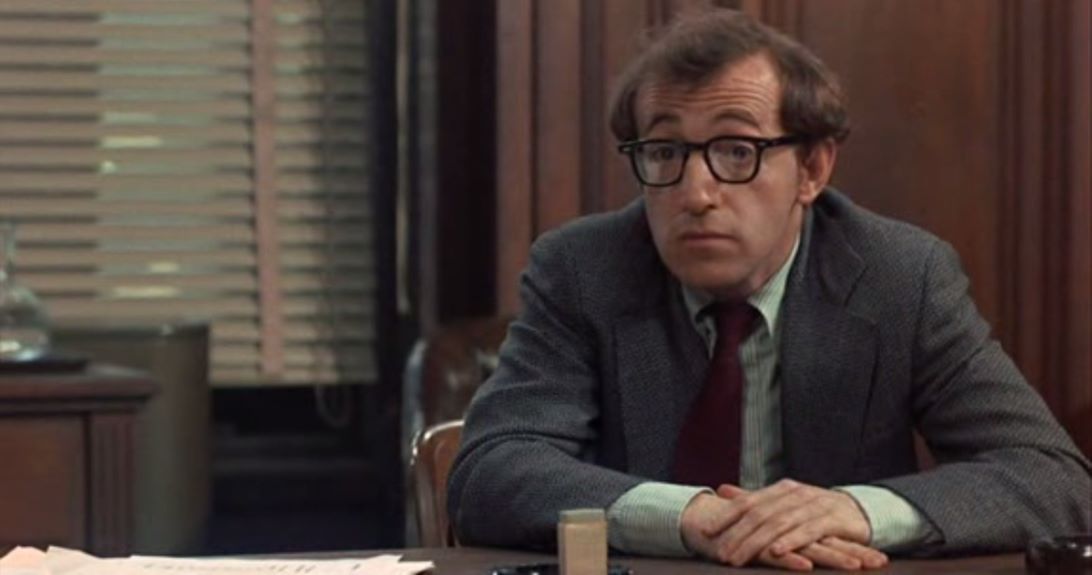
And to get an even better of how serious this human cost, what could be better than placing a self-interested, politically disengaged chancer at its heart and seeing how he responds. The casting of Woody Allen – in one of the few films he appeared in and didn’t write – is perfect. There is no-one more politically disengaged and full of pinickity obsession that Allen. Howard Prince is a decent guy but his main interests are money (his eyes light up at earning 10% for nothing), his fancy apartment, seducing Florence and the adulation from fawning producers.

What better way to show the impact of the Blacklist injustice, than to see how Howard slowly shifts from a man so disinterested he doesn’t even know what the Fifth Amendment is, to someone who feels compelled to make a stand. Slowly he finds he can’t ignore the injustice – there is a beautiful moment when Howard embarrassedly drinks and stares at a poster on the office wall at the back of the frame while Hecky begs for $500 from that Catskill’s manager. He gradually realises a fun ride for him is a dystopian nightmare for others – his self-satisfied shrugs turning into real principle.

Because, he will learn, HUAC doesn’t care for names – they care about breaking people. Being as ignorant and disinterested in politics as Howard won’t save you. That’s what Ritt and Bernstein have been driving to: this wasn’t Kafka, it was Orwell, it wasn’t about the obstructive indifference of bureaucracy but Big Brother’s ruthless rooting out of thought crime. So, when Allen tells them – in the final lines of the film – to go fuck themselves, and the film freezes so he can walk out of it, you really understand why this is a glorious cry of wish fulfilment straight from the heart of the film-makers.

Tár (2022)

Tár (2022)

Character flaws abound in this intriguing and challenging film, open to multiple interpretations

Director: Todd Field

Cast: Cate Blanchett (Lydia Tár), Nina Hoss (Sharon Goodnow), Noémie Merlant (Francesca Lentini), Sophie Kauer (Olga Metkina), Julian Glover (Andris Davis), Allan Corduner (Sebastian Brix), Mark Strong (Eliot Kaplan), Sylvia Flote (Krista Taylor), Mila Bogojevic (Petra)

Absolute power corrupts absolutely. It’s a maxim humanity manages to prove true, time and time again. It doesn’t matter what the field is, when someone holds sway over the dreams and ambitions of others, there’s a decent chance that power can be enjoyed so much it starts being abused. It’s an idea key to Todd Field’s gloriously complex and challenging Tár, a film that defies easy explanations and characterisations, both frighteningly in the “here and now” but also terrifyingly universal.

Lydia Tár (Cate Blanchett) is an internationally renowned conductor and composer. The first ever head of the Berlin Philharmonic Orchestra, she lives a jet-setting life of international acclaim and fame, praised at every stop-off for her stunning reinventions of classical music. But dark shadows swirl around her. She plays favourites: and her favourites are always attractive young women, just starting their career, who see her as inspiration and mentor. And Tár? She sees advantages to this. It’s unspoken knowledge to all, from her partner first violin Sharon (Nina Hoss) to the other members of the Orchestra. But as the suffering of one of Tár’s spurned proteges threatens to leak out into the public domain, her empire topples just as she reaches the summit of her career.

Tár is a brilliantly insidious film, a quiet but compelling character study that borrows elements of Kubrickian unknowability. In particular, Field avoids making moral decisions for the audience, but trusts we are smart enough to come to our own conclusions. Effectively, we spend the film following a deeply flawed, Spacey-like figure, whose life falls apart without being invited to feel morally superior to her. It allows us to feel the pain of her meeting the consequences of her actions, but never lets us forget her own arrogance and cruelty caused them in the first place.

Tár is both an inspirational genius and a dyed-in-the-wool bully. She solves problems with the mindset of an aggressive alpha – her solution to her daughter being picked on by a classmate, is outbullying the bully (“I will get you” she tells her, assuring her no one will believe her because Tár “is a grown-up”). She treats her assistant (and possibly former lover) Francesca who tags behind her in the hope of a junior conductor role like a slave, brow-beats Orchestra members and fellow conductors with friendly pressure and views every relationship in terms of what she can get out of it.

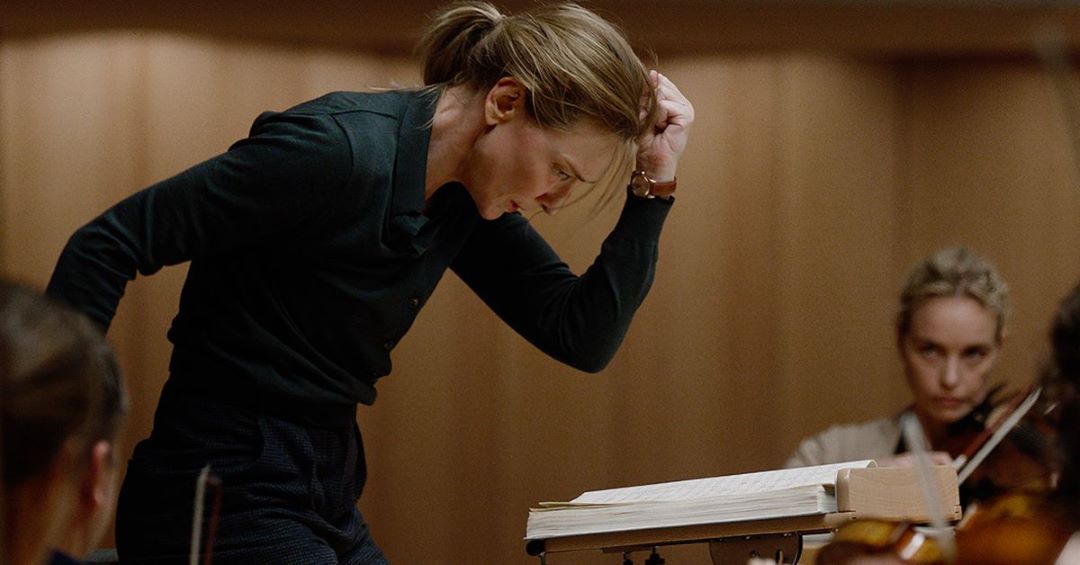
As this deeply flawed human-being, Cate Blanchett is mesmeric. Tár is a firm reminder that she is, perhaps, the greatest actor in the world and all her range is on show here. Blanchett is imperious, assured and totally brilliant. She invests Tár with such – admittedly deeply flawed – humanity, we have to constantly pull ourselves up to remember she’s a dreadful person. Tár is arrogant, convinced of her own genius and sees no-one as her peer. She’s also inspirational, charismatic and oddly charming. Blanchett’s mixes tragedy, grief, denial, panic and bottomless bitterness as Tár’s carefully constructed life falls apart like a time-delay car crash that suddenly jumps back into normal time.

Carefully paced – it’s difficult not to reflect on Tár’s opening words at a career retrospective interview on the importance of timing to give each moment its precise impact – Tár never rushes, unless it needs to and slowly, but assuredly unfolds the final days of her empire. It’s like watching the Indian Summer of an Astro-Hungarian Emperor, barely aware that huge global forces are about to sweep everything away and rob her of her control of events. Field reflects this in the film’s assembly: earlier sequences are marked by their long takes – virtuso set-pieces for Blanchett – and tracking camera, that constantly centres Tár. Later sequences become shorter, choppier, narrative information becomes less clear – it’s like Tár has lost control of the film as much as she has her life.

Control is central, and Tár’s abuse of it her undoing. Her (unspoken but implied) predatory demands for sexual favours in return for career advancement are an open secret among colleagues. Field adds a threatening sense of Tár being watched – either recorded on a phone, or shots of the red-haired back of a mysterious woman at key moments. The woman is Krista, a former protégé, the exact nature of her fall-out with Tár unclear, but who Tár has black-balled in the classical music world. Even as the fallout from this threatens to consume her, Tár can’t help herself from attempting to groom a new cellist (Sophie Kauer), fixing a blind audition, favouring her in private workshops and bypassing the orchestra’s new cellist to land her a juicy lead.

It’s part of Field’s wonderful and searching analysis of the corruption of power – even as the house of cards totters, people can’t seem to see it. While being a universal parable, the film is also fiercely topical. Tár has clear parallels with figures like Spacey. Her ageing former mentor (a crisp Julian Glover) bemoans how the slightest mistaken word to someone can be misinterpreted as lecherous abuse. Attention has focused on the idea of this as a cancel culture movie. Tár, at a Juillard lecture, does strongly disagree with a young BIPOC composer, who can’t relate to cis-gender old white guys like Bach. Tár pushes the rather self-righteous young man to justify himself, which he attempts. But she also goes increasingly further and further, moving from persuasion to brow-beating (her natural resort as a bully) and thinly veiled mockery. She’s smart enough to deconstruct the contradictions in the young man’s views – but cruel enough to mock his bravery at standing up. But Field allows both sides legitimate points, something that you don’t nearly get enough of in our polarised world.

Field also tips Tár more and more into something unsettling and other worldly. Tár’s uniquely perceptive hearing means she is plagued with strange noises: a chiming echoing around her bolt-hole apartment (the reveal of what this is, is another reminder of her indifference to other people), a screaming heard while out running, a metronome that wakes her at night. Strange daydreams, with ghostly, vampiric presences fill her mind. Late, she enters a damp-soaked abandoned building which feels like the gateway to some Lynchian parallel universe, guarded by a Tarkovsky-like dog who might as well be the gatekeeper to her nightmares. Much of the final act of the film unspools like a wild, terrible dream, where key events may not even be real. Reality crumbles, just as Tár’s control over her personal and professional life disintegrates.

Through it all we are invited by Field to empathise, but not sympathise, with this demanding and domineering woman. To understand her, but not forgive her, to dislike her but not tar and feather her. A lesser film would have done the moral work for us. Nothing is explicit about Tár’s cruelty, but the tears of her assistant (a superbly fragile Noémie Merlant) and the tight-lipped frustration of Sharon (Nina Hoss is terrifically pained and long-suffering in a difficult role) speak volumes. But yet, it’s hard not to feel something for someone as their life falls apart, no matter how earned the fall might be. Blanchett uses all her skills to make Tár someone who is frequently awful but never a bogeyman, is categorically in the wrong, but still a figure of hubristic tragedy.

Blanchett is earth-shatteringly good in the lead role and Field’s direction is subtle, balanced and plays just enough with your perceptions. Perhaps some of what we see takes place in Tár’s nightmares, perhaps we only see certain characters from Tár’s biased perceptions. It could even be a fabulous ghost story with past misdeeds haunting the frame, a deconstruction of our willingness to pull down the flawed, a study of the abuse of power – or all three and more. The fact you will debate it for weeks to come, means it’s definitely a great film.

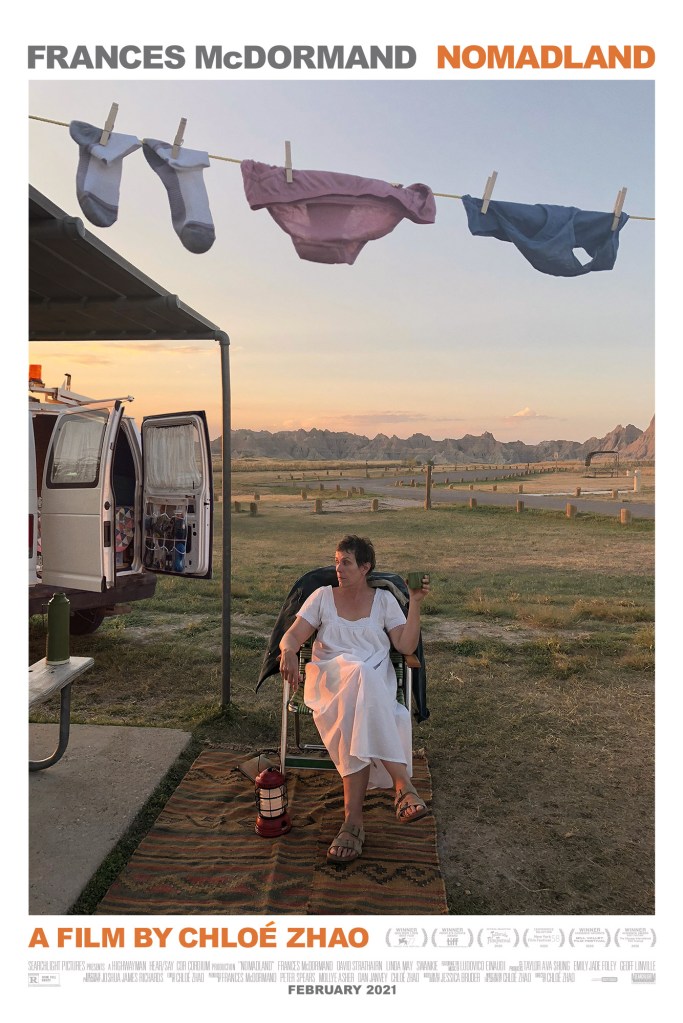
Nomadland (2020)

Nomadland (2020)

Poetic and surprisingly moving, this Best Picture winner is light on plot but deep on meaning

Director: Chloé Zhao

Cast: Frances McDormand (Fern), David Strathairn (Dave), Linda May, Charlene Swankie, Bob Wells, Peter Spears, Derek Endres

We all have ideas about what life should look like in the 21st century. Settled job, dream home, the rooted life. It’s what we are expected to be working towards – but it’s not for everyone. Nomadland, Chloé Zhao’s Malick-influenced road movie explores the lives of those who decide to live off that beaten track. The modern nomad, who chooses flexibility to move their home from place to place and don’t want to be tied down by bricks-and-mortar. It makes for a meditative, soulfully poetic film with a quietly mesmeric power.

Fern (Frances McDormand) is recently widowed, childless and has lost her job after the gypsum plant in Empire, Nevada closes. But, far from down-hearted, Fern is determined to lead a new life without the fixed commitments of her old one. She sells most of her possessions, kits out a van as a travel home and begins to drive across the country, taking seasonal jobs as and where she stops. She finds herself part of a warm and supportive community of nomads, who help to learn how to flourish in this unconventional home life.          

Nomadland winning Best Picture is as close as the Oscars have come to giving an award to Terence Malick. It’s hard not to feel his influence over the camera’s languid worship of the beauty of the Badlands, or its characters quiet searching for higher in life, via a communing with nature. Zhao’s film is a very effective and surprisingly moving character study, with only the smallest smidgen of a plot, but full of feeling. Radiantly shot by Joshua James Richards, it finds an orange-tinged beauty in a dawn and dusk and tiny moments of joy in rain falling in your face. All contrasted with the dull oppressiveness of buildings, those four walls shutting out nature.

Zhao’s film goes a long way in challenging neat assumptions we might have about this lifestyle. “I’m not homeless I’m houseless” Fern states and she politely – but firmly – turns down well-meaning offers of charity. The decision to move from place-to-place is not one enforced by poverty or failure. Instead, this is a rich, vibrant, supportive community that looks out for each other and share a legitimate (and refreshing) view of the world. Who says you need to spend your life chasing the dollar and building up a debt to have a fixed slice of real-estate you can sort of call your own?

This is particularly true in our post-recession world. Nomadland starts with the final collapse of an industrial community, now a ghost town. Many of the nomads find seasonal work that is often manual and low-skilled. Fern’s first job (of many) is working at an Amazon dispatch location, where jolly team leaders burst with enthusiasm met with smiling indifference by the (often older) staff. Fern’s travel is shaped around moving to key locations for seasonal work – Amazon, a campsite, a short-order chef job, beet processing… The economic situation is poor, but this is a way of playing the system to get a higher level of freedom, without debt or financial pressures.

It’s a key subject of a talk given to fellow nomads by Bob Wells, an influential advocate of the nomad life-style (one of any people playing versions of themselves). It’s part of a series of events at a nomad event – a sort of convention – where people gather to share experiences, advise and life-hacks. Ever needed to know how to change a tyre or what size bucket you should use for your built-in toilet? Wonder no more! On the road people come together in a way they never would in more regular life. With everything transient and nothing fixed, friendships and connections are more intense, constantly in that first glow of excitement.

That’s the pay-off of choosing this lifestyle. Everything is transient. Close friendships form, but you might not see the other person for months at a time. While phones help you to keep in touch, day-to-day you see completely different people from place-to-place. It will never be completely clear where you might be to your family. However, the short-lived intensity of connections can lead to a closeness and intimacy that might otherwise take months – a friend of Fern’s confides she has terminal cancer but regrets nothing, with a warmth and trust that would normally takes years to form not weeks.

It’s implied as well that the more short-lived intensity of friendships fits more with what the slightly taciturn and guarded Fern wants from life. Frances McDormand makes her friendly, ready with a smile, good company – but she is always slightly reserved and guarded. She will give sympathetic ears and invite confidences. But she is also a woman determined to live by her own rule. Having lived most of her life in one place in a happy marriage, a conversation with her sister (who bails her out with a loan to repair her van) reveals she was always prone to not look back when a decision was made. It’s the same with deciding to live on the road as moving to Empire – Fern knows her own heart and mind, and will fully commit to that.

This is despite temptations, the main one she faces being David Strathairn’s (the only other professional actor in the film) Dave, a fellow nomad who makes no secret of his romantic interest in her. Sweetly played by Strathairn, Dave pursues Fern and dangles the possibility of a more fixed and traditional life. They are close, but Fern has lived that life of marriage and rejected already the idea of a family. And, as McDormand makes clear in her soulful eyes, if that life was ever on the cards, it would have been with her husband not this new man, nice as he is.

Nomadland, like Fern, can see the dangers and problems. A van breaking down in the middle of nowhere is a major danger, a broken plate a potential disaster – Fern painstakingly reassembles it, not wishing to spend the money to replace it. Low temperatures and bad weather can make it uncomfortable – although she (smilingly) rejects an offer from a garage owner to sleep inside. But it also understands living this lifestyle is a legitimate choice, filled with rich possibilities. You only need to see Fern joyfully travel to the coast or get wrapped up in the embrace of the vibrant community she finds on the road to see that you could do immeasurably worse with your life.

Zhao’s film has a documentary realism to it, that comes from its deep immersion in real nomad communities. It makes copious use of real nomads playing versions of themselves, giving a rich feeling of authenticity to every moment. It also means we gain a real understanding of the idea that goodbyes are never final in this world, that there is always the prospect of seeing someone again “down the road”. The film’s poetic empathy, its warmth and the vibrant humanity of its characters makes it film that creeps up on you and has a surprising, but profound, power.

Intolerance (1916)

Intolerance (1916)

Scale and sensation fill the screen in this ground-breaking epic that has to be seen to be believed

Director: DW Griffith

Cast: Mae Marsh (The Dear One), Robert Harron (The Boy), Constance Talmadge (The Mountain Girl), Alfred Paget (Prince Belshazzar), Bessie Love (The Bride of Cana), Walter Long (The Musketeer of the Slums), Howard Gaye (Jesus Christ), Lillian Langdon (The Virgin Mary), Frank Bennett (Charles IX), Josephine Crowell (Catherine de Medici), WE Lawrence (Hendi de Navarre), Lillian Gish (Woman Who Rocks the Cradle)

Even today I’m not sure there is anything like it. (Perhaps only the bizarrely OTT Cloud Atlas gets anywhere near it). DW Griffith’s follow-up to his (now infamous) smash-hit success The Birth of a Nation would not just be a melodrama with a social conscience (as he originally planned). Instead, it would be a sweeping epic that have as its theme humanity itself. Intolerance (captioned “Love’s Struggle Throughout the Ages”) would intercut four timelines simultaneously, each showing how prejudice, envy, and rage had shattered lives throughout the history of mankind.

Griffith wanted to make the biggest film ever. The sort of sweeping spectacle that would confine all other competitors to the dustbin of history and cement himself as the new media’s master visionary. Intolerance is certainly that, a film of dizzying technical and narrative scale. Never before had a film thematically intercut between four unlinked but complementary timelines. Nothing links these stories other than theme: all four play out in parallel, events in one reflected in another. Essentially, it’s like a massive book of fables where all the pages have been cut out, reorganised and handed back to you.

Intolerance started life as The Mother and the Law. This social-issue drama followed a young couple – the Dear One (Mae Marsh) and the Boy (Robert Harron) – forced to flee their factory community for the big city, after the brutal crushing of a strike. There, the Boy is sucked into the circle of a local gangster The Musketeer of the Slums (Walter Long). He renounces it all for love, before he is framed for theft and imprisoned. Then the couple are stripped of their baby and he is arrested again for the murder of the gangster (actually done by his moll). Will the sentence be revoked?

This is still the backbone – and takes up the most of the film’s runtime. But the one thing it didn’t really have is spectacle. A lot of it happens in rooms (bar a last-minute train and car chase). As well as expanding the film’s scope, Griffith also wanted to dial up the scale. Intercut with this are three grandiose historical narratives. In the largest, Griffith had the whole of Babylon rebuilt just so he could film its fall (after betrayal from the priests), despite the struggles of the Mountain Girl (Constance Talmadge) who is in-love-from-afar with Prince Belshazzar (Alfred Paget). We also get the St Bartholomew Day’s Massacre of 1572, as French Catholics butchered their Protestant neighbours. And finally, just to dial up the import, we get the last days of Jesus Christ.

The scale of it! The sets of Babylon have to be seen to be believed. Huge, towering structures so large they dwarf elephants and the thousands of extras thrown in for scale. The camera pans slowly up to stress their gigantism and zooms in slowly in tracking shots to pick out a specific face among thousands. The siege of Babylon plays out like a real military action: armies of extras play out a choreographed battle on multiple levels of the walls while elephants push siege engines into place. Some nifty special effects allow on-screen beheadings and for us to see swords, arrows and spears plunge into bodies. It’s genuinely exciting and influenced every siege you’ve seen on film since.

This scale isn’t just restricted to Babylon. The modern plotline brilliantly recreates strike action by the masses, including a brutal put-down by private and government forces. Questing for a late pardon for her husband (who is literally walking towards the gallows while they do), the Dear One and a kindly policeman hop into the fastest car they can find to chase down the Governor’s train. In 1572, the streets of Paris are skilfully recreated – as are the grand palaces – and the action of the massacre is shot with an intense, Bruegelesque immersion. Jesus is mocked by a large crowd as he drags his cross through the streets before being crucified on a bloody-sky kissed hill with flashes of terrifying red lightening.

The huge scale is also carried across in Griffith’s narrative. This was intended as important film-making with a capital I. Griffith’s film is in places surprisingly anti-authoritarian and firmly on the side of the little guy. The modern strike is caused by a factory wage cut. Why? Because more money is needed for the firm’s charity work and it needs to come from somewhere. The charity workers are, to a woman, shown as judgemental, smug and causing more harm than good from their arrogant assertion that they know best. Homes are broken up, jobs are sacrificed and mothers judged “not good enough” separated from their children. All in the name of a moral crusade that’s more focused on prohibition than protection.

In Babylon, the priests of Bel are weasily, bitter, power-hungry figures, furious at the arrival of the new female God Ishtar, selling the city out to the barbarian hordes to preserve the old religion. The French court are certain the only way to guarantee peace (but really their own positions against the Hugenout faction) is to kill them all. Jesus’ presence is met with stern-faced priests wondering what they can do to get shot of this trouble-maker. We are always invited to sympathise with humble, simple people who want to make their own choices: Brown Eyes (Margery Wilson), a Hugenout daughter hoping to marry, the boisterous Mountain Girl, the loving Dear One and the Boy.

To keep this feeling like a universal fable of hope, names are kept as non-specific as these. Small human moments abound. Brown Eyes is as giddy as schoolgirl on the day before her wedding. Henry IV weeps and nearly vomits after being brow-beaten into ordering the massacre. The Mountain Girl – dragged to a market fair for her obstinacy – decides the best way to put off husbands is to chow down on onions. The Dear One and the Boy go on a charming date, at the end of which she pleads for the strength of character to resist the temptation to let him into her flat before they are married. It’s these little beats of humanity that help sustain the scale.

Intolerance is connected together with a series of captions – frequently badly-written and pretentious (e.g. “The loom of fate wove death for the father”) – and via a recurring image of a woman rocking a cradle, which I think represents the circle of life. The editing between the storylines is masterful though and the film’s pace and structure is generally so well maintained that your understanding of when and where we are is never challenged for a moment.

There have been claims Griffith’s more human epic was a correction to his Birth of the Nation. But that’s to misunderstand the sort of era Griffith came from. In his Victorian background, it was in no-way a contradiction for a man to be both a white supremacist and a sentimental liberal. Griffith believed the South were victims of the Civil War and the ‘unjust’ Reconstruction and felt Intolerance was a logical continuation of that theme. A few of his prejudices are on show here anyway. The only black faces are sinister heavies among the ‘barbarians’ attacking Babylon. Henry of Navarre is a limp-wristed sissy. The female reformers are all ugly harridans (the caption even tells us “When women cease to attract men they often turn to reform as a second choice”). Intolerance is an interesting reminder that a director we now think of today as American cinema’s leading racist was that and a man who passionately believed in social justice. Contradiction is the most human quality we have.

There may be a little too much in Intolerance considering its crushing run-time (the Jesus scenes could be cut with no real loss at all), but generally it hits a balance between pomposity and entertainment. It has plenty of violence and naked ladies (the harem of Babylon is shown in detail – it’s pre-Code folks) to keep the punters entertained, along with charm (though you need to look past the pose-taking, broadness of the performances). Griffith has a way with little shots: there is a lovely track into the face of the Dear One as she silently mourns. The chase in the modern plotline is genuinely tense while the massacre of the innocents in 1572 actually horrifying.

Above all, Intolerance set the table for epic cinema in exactly the way Griffith intended. While it is full of big ideas – at times clumsily presented – it’s also full of breath-taking spectacle that has influenced generations to come. For that reason, if nothing else, anyone interested in film should see it.

The Menu (2022)

The Menu (2022)

Dark satire is mixed with intelligent character work and a challenge to our assumptions in this intriguing film

Director: Mark Mylod

Cast: Ralph Fiennes (Julian Slowik), Anya Taylor-Joy (Margot Mills), Nicholas Hoult (Tyler Ledford), Hong Chau (Elsa), Janet McTeer (Lilian Bloom), John Leguizamo (Famous Actor), Reed Birney (Richard Liebbrandt), Judith Light (Anne Leibbrandt), Paul Adelstein (Ted), Aimee Carrero (Felicity), Arturo Castro (Soren), Rob Yang (Bryce), Mark St Cyr (Dave)

A dash of Succession. A soupcon of Hannibal Lector. Lashings of The Most Dangerous Game. All these ingredients are mixed to delightfully dark comic effect in The Menu, a sharp and tangy assault on class and modern society which leaves an unusual but satisfying taste in the mouth.

First those touches of The Most Dangerous Game. Julian Slowick (Ralph Fiennes) is a restauranteur so exclusive, his restaurant is based on a private island. Each course, of each menu is part of an overall story that forms the meal. For the story of the meal he is currently preparing, Slowick has selected an exclusive guest list of the rich and famous: businessmen, the rich, movie stars, food critics – the elite, the snobbish, the 1%. And the story he is serving up is one of increasingly grim retribution for this table-load of takers not givers. The only unexpected figure there is Margot (Anya Taylor-Joy), last-minute guest of obsessive food purist Tyler (Nicholas Hoult). How will this unexpected fly in the soup affect Slowick’s plans for the evening?

The Menu in many ways is a revenge satire. Slowick does not hold back in his increasing fury and bitterness at the people he serves without appreciation or gratitude in return. His customers are interested only in food if it costs a lot and is exclusive. They have no interest in his actual skills, in the staff (whose names they do not remember), the food itself or anything beyond their own desires. Many of the customers – most hideously a trio of “bro” investors (played with slapable smugness by Castro, Yang and St Cyr) – flash their jobs and cash expecting these to ensure their every whim is met. To them the world is like dough to be shaped into whatever bread they want it to be.

The film – with glee – exposes the hideous selfishness of the rich customers. A rich couple (Birney and Light) who have attended Slowick’s restaurants several times yet remember nothing about the food or the staff. Janet McTeer’s elite food critic, who practically scratches marks into her pen to mark the restaurants she has closed (she’s accompanied by a fawningly obsequious editor, played by Adelstein). A famous actor (John Leguizamo) who has long-since sold-out and treats his fans with contempt, joined by his spoilt rich-girl assistant/girlfriend (Aimee Carrero). Each of them is deconstructed in turns by Slowick over a series of courses parodying the snobbish bizarreness of high-class dining.

And here is where those touches of Succession make themselves known in the flavour. That series – and Mylod is a veteran (and its finest director) – also presents the ghastly shallowness and greed of the super-rich to expert comic effect. But what that show also does – and what Mylod brilliantly manages here – is make what could be two dimensional monsters sympathetic. The Menu presents these dreadful people with honesty; but, as the punishments – cruelly personal reveals, psychological torture, a finger cut off here, a man hunt there – pile up, you start to wonder if the punishment is too much?

The “bro” investors may be dreadful selfish, arrogant, dick-swinging morons: but they are also immature idiots who have never really grown up. The rich couple might treat places like this elite restaurant as a God-given right, but does that really deserve death? The food critic is harsh and arrogant, but is writing cruel words a mortal sin? The actor loathes himself for selling out his talent to make money and his girlfriend has simply been born into money and never wanted for anything. Do these people really deserve the monstrous ends Slowick has planned for them?

It’s the smartness of The Menu which could easily have invited us to just enjoy the rich and powerful being exposed, humiliated and punished. Instead, this is a smarter, more intelligent dish. The lower-class restaurant staff should be the people we are rooting for. But Slowick runs the restaurant like a cult, the staff near-robotic automatons that follow Slowick’s orders without question, intone their “Yes, Chef!” answers like a religious chant and snap to attention as one. Slowick’s number two Elsa – superbly played by Hong Chau – sums them up: all of them are desperate to become her boss and will follow Slowick to hell and back without a murmour and their heartless, personality free cruelty makes them very hard to root for.

As does Slowick himself. Here comes that sprinkling of Lector. Played with a superb, chilling intensity by Ralph Fiennes at his most coldly austere, Slowick could have been a character who swept us up in his intelligent superiority. But there is not a hint of joy in Slowick, only a vast, bubbling anger and resentment under a coldly precise exterior. Who on earth could look at this near-psychopath and think “I’d love to be him”? Slowick’s service is dryly, terrifyingly funny but you’d certainly not be left wanting to leave him a tip (unless it was your only way of getting out alive).

Instead, we gravitate towards the odd one-out. Anya Taylor-Joy is excellent as Margot, the unexpected guest who finds herself the only person unprepared for by Slowick, who is neither a member of the super-rich, but too free-spirited and independent minded to join the Slowick cult. Dragged along by Tyler – a hilarious performance of over-eagerness, snobbish elitism and stroppy self-entitlement by Nicholas Hoult – The Menu revolves more and more around the dance of death between her and Slowick. Like the audience, Margot is invited to pick a side to sympathise with.

It makes for a rich, lingering dish with an intriguing after taste, far more developed and better cooked than the sloppy revenge saga or re-heated leftovers it could have been. It left me wanting a second course.