Category: Social issue films

Nashville (1975)

nashville header
Robert Altman’s sprawling classic takes on a whole city in the brilliant Nashville

Director: Robert Altman

Cast: David Arkin (Norman), Barbara Baxley (Lady Pearl), Ned Beatty (Del Reese), Karen Black (Connie White), Ronee Blakley (Barbara Jean), Timothy Brown (Tommy Brown), Keith Carradine (Tom Frank), Geraldine Chaplin (Opal), Robert Du Qui (Wade Cooley), Shelley Duvall (Martha), Allen Garfield (Barnett), Henry Gibson (Haven Hamilton), Scott Glenn (Pfc Kelly), Jeff Goldblum (Tricycle Man), Barbara Harris (Winifred), David Hayward (Kenny), Michael Murphy (John Triplette), Allan F. Nicholls (Bill), Dave Peel (Bud Hamilton), Cristina Raines (Mary), Bert Remsen (Star), Lily Tomlin (Linnea Reese), Gwen Welles (Sueleen Gay), Keenan Wynn (Mr Green)

Robert Altman’s magnum opus, Nashville has the city has its set and, seemingly, its entire population as the cast. Over the course of a few days, Nashville charts the interweaving lives of a host of people making (or trying to make) a living in the home of country and western and the hangers on and fans flocking around the edges. Meanwhile a presidential campaign plays out, trying to recruit stars as fund-raisers.

You could say that, on the surface, Nashville isn’t really about anything. Certainly, it’s plot (such as it is) is more based on observing our characters interacting with and responding to events. Wonderfully rich short stories overlap each other, the focus mothing smoothly from one and another. It’s not really grounded in an overarching plot, such as McCabe and Mrs Miller or The Long Goodbye. In many ways its more similar to M*A*S*H, an experience piece trying to capture the thoughts and emotions of a particular moment of time. It’s that which I think is the heart of it. Nashville is about very little, but really it’s about everything – and it’s one of the most enlightening and vital studies of twentieth century America you are ever going to see. A rich and fascinating insight into a particular point in history, in a country rife with tensions.

You can’t escape that Nashville takes place in an America under the shadow of traumatic events. The 1970s (and the legacy of the 1960s) has pulled America further apart than ever. It’s a country struggling with a wave of assassinations, still deeply scared by the sacrifice of JFK (several characters, most notably Barbara Bexley’s permanently intoxicated Lady Pearl, reflect on the loss of innocence that came with it). Scott Glenn’s uniform clad army private is only the most visual reminder that the country is being ripped apart by Vietnam. Bubbling racial tensions are captured by short-order cook Wade (a lovely performance by Robert Du Qui) who angrily denounces black country singer Tommy Brown (a suave Timothy Brown) as an Uncle Tom.

Politically, America isn’t heading anywhere. The film is continuously framed by a car literally driving around in circles, blaring out meaningless platitudes straight from the lips of Hal Phillip Walker a third-party Presidential candidate who is against a lot of stuff (lawyers in congress and the Election College) but doesn’t seem to be ‘for’ anything. His smooth advance man John Triplette (Michael Murphy, quietly unimpressed by the music stars around him) drums up musicians to appear at a benefit – not one of whom even ask about the politics of the man they are being asked to endorse. Nashville isn’t a film that feels particularly enamoured either with politics or the level of our engagement with it.

Instead there is a new religion in town: fame. The musicians of Nashville at the time were unhappy with the film, feeling that Altman planned an attack on their industry. Altman is, of course, smarter than this. Of course, there are some satirical blows landed – but the film has respect and admiration for artists with genuine talent. Its real criticism is for fakes and poseurs (of which more later). But for the talents at the centre, sure they are flawed – but there is a respect for their skills and genuineness that keeps the film relatable. (Altman would be far more vicious when he turned his eyes to Hollywood with The Player).

The artists at its heart are flawed but human. Haven Hamilton (a grandiose Henry Gibson) may be a blow-hard reactionary, but his patriotic pride and sense of personal responsibility is genuine (late in the film he will ignore a serious injury to show concern for others). At the film’s centre is fragile super-star Barbara Jean (a delicate Ronee Blakely), the beloved super-star teetering on the edge of a dangerous breakdown, overwhelmed with the pressures of fame and expectation. A lonely person, reduced to trying to communicate her unease to her audiences in rambling monologues. Looking for a human connection she’s unable to make elsewhere (this makes for a neat contrast with her rival, Karen Black’s bubbly but coolly distant Connie White who knows where to draw the line between public and private).

This humanity also makes for intriguing personal dilemmas. Singing trio Tom (a swaggering Keith Carradine), Bill (a frustrated Allan F Nicholls) and Mary (a saddened Cristina Raines) are in the middle of a love triangle (caused by Mary’s love for Tom, who loves the attention but doesn’t return the favour). Made more tense by Tom’s desire to go solo, the couple’s tensions are never firmly resolved – part of Altman’s avoiding of neat endings. Tom himself, in many ways a shallow lothario, is also shown to be feeling the same loneliness and emptiness as others.

It’s interesting that the film’s warmest character, Lily Tomlin’s Linnea, lies half-way between the world of the music and the world of normal life. A dedicated performer of gospel with an all-Black choir, Linnea also works tirelessly at home to support her two deaf children (who attract very little interest from their father, would-be fixer Ned Beatty). Linnea though is never portrayed as someone trapped in her life, in the way others are, but in complete acceptance – and even contentment – with her lot. Similar to Keenan Wynn’s grieving husband, desperate for his niece to engage with her aunt’s illness, the film’s real warmth is for those people grounded in real-life worries.

The film’s real fire is saved for the shallow wannabes that flock around the edges. The music stars may be flawed but they have talent (as witnessed by the film showcasing almost an hour of musical performance in its runtime – all the songs written and performed by the stars). Shelley Duvall’s would-be groupee is hilariously empty-headed and selfish. Ned Beatty’s greasy-pole climbing political animal is ridiculously pompous. At the top of the pile is Geraldine Chaplin’s reporter, an empty headed fame obsessive, hilariously fawning to the rich and famous and abrupt and rude to ‘the staff’, pontificating emptily in a car junkyard. Is she even a real reporter or just a fantasist?

Altman’s film also finds time for two very different women trying to find fame in this heartland of country and western. Sueleen Gray (Gwen Welles) is a waitress carefully cultivating all the patter of a star, but lacking the key attribute – talent. So desperate is she to ‘make it’ that she is willing to be exploited for a big chance, with only Wade having the decency to tell her she should cut her losses (advice she bats away in anger). By contrast, Barbara Harris’ Albuquerque, running from her husband to find fame, has the talent but never gets the opportunities – until of course at the very end (and it’s the result of the tragic fate of another woman whose doomed fate hangs over the film).

Nashville is a rich character study, but all these characters link back into an America at a turning point in its cultural history. Detached and disillusioned with politics, this is a country that is starting to see fame – and the indulgence of your own passions and desires – as the new religion. A religion that attracts both wannabes and also stalkers and dangerous obsessives (at least two of whom populate the film, one with fatal consequences). In this world, as idealism dies and is replaced by cynicism, people start to check out and either engage more with their own problems or yearn to change their lives and become something else. Altman’s film captures this moment in time personally, as well as being a compelling melting pot of stories. A rich, multi-layered tapestry – of which a review can only scratch the surface – it’s a great film.

The White Tiger (2020)

Adarsh Gourav is a willing servant (or is he?) in The White Tiger

Director: Ramin Bahrani

Cast: Adarsh Gourav (Balram Halwai), Priyanka Chopra Jones (Pinky), Rajkummar Rao (Ashok), Mahesh Manjreker (The Stork), Vijay Maurya (Mukesh “The Mongoose”), Kamlesh Gill (Granny), Swaroop Sampat (The Great Socialist)

“India is two countries in one: an India of light, and an India of Darkness”. It’s an idea that’s at the heart of Aravind Adiga’s Booker-prize winning novel, adapted here as a dynamic (if slightly overlong) film by Ramin Bahrani. Those two India’s are rooted in the country’s deeply ingrained class differences, the new caste system being simple: the haves and the have nots.

Balram Halwai (Adarsh Gourav) is very much one of the have nots. A poor young man, who missed out on his chance of a scholarship because his family needed the income he could bring them from breaking up coal. Balram sees his way out through becoming a driver for the son of the local landlord, Ashok (Rajkummar Rao) and his American-Indian wife Pinky (Priyanka Chopra Jones). With the story being recounted by an older Balram, now a successful businessman, we know he finds a way to improve his life. But at what cost? And how many lives have been sacrificed to get him there?

Bahrani’s adaptation is a sharp, cinematic, electric piece of film-making, that makes superb use of montage and dynamic camerawork, particularly in its scene setting opening acts. Bahrani also engages brilliantly with the central themes of the novel, the all-pervading corruption of modern India (financial and spiritual) and the gulf in class and mindset that exists between the rich and poor. The wealthy upper classes see themselves as nothing less than masters of the rest of the population, who they hire and fire at will and frequently mistreat. Meanwhile, Balram argues, many of the poor cannot escape the mindset of servitude (the “chicken coop” as he puts it), unable to imagine any life other than living on the bottom rung.

It’s an idea Bahrani’s film brilliantly reinforces visually. The westernised wealth of the upper classes – living in gated communities and luxurious hotels, driving western cars with no contact with anyone outside other than servants – is contrasted with the slums and poverty of the rest of the population. Their parts of the city are run-down and crumbling. Many live on the streets. Balram himself lives on a mattress in the basement of his master’s hotel – while Ashok resides in a penthouse. You can’t escape the radical inequality – nor the violence (from slapping of servants to the implied threat of murder of your family if you step out of line) that keeps the system in place.

Part of the fascination of this film is wondering half the time, how much Balram is a willing participant in this system and how much he is longing to cast off its shackles. Sure we know, from the framing device of his later life, where he is heading. But is it his aim from the start? How genuine is his humbleness? As he schemes to have a rival driver dismissed, he talks in voiceover of his sadness – but on screen he merely shrugs and downs some sweetmeats. Does his resentment develop over the film, or is it there from the start – or does he only understand it as he realises he lives in a “chicken coop”?

As in the book its rife for interpretation – and Bahrani doesn’t lay on too think the unreliable narration element of Balram. It’s also helped immensely by Adarsh Gourav’s superb, BAFTA nominated performance in the lead role. He seems genuinely naïve and innocent – the very country pumpkin the other drivers at the hotel mock – but there is always an unknowable quality to him under the affable surface Gourav presents, a ruthlessness and also an anger. Watching both these qualities develop across the film – and questioning how well we know him – is a brilliant tight-rope walk, with Gourav maintaining our sympathies even as his actions become ever more ruthless.

He becomes an embodiment of the divide in India itself, between the mindset of being nothing more than a servant and the developing entrepreneurism in the country (represented both by the side jobs the rest of the drivers carry out as well as Balram’s later business success). It’s also fascinating to see the contrasts in his employers. Rajkummar Rao creates a character who is decent enough to know he’s treating people selfishly, while being lazy and immature enough to not bother to change. His wife, very well played by producer Priyanka Chopra Jones, speaks the language of a free America but is perfectly happy to force others to take the rap for her mistakes.

The film’s energy tails off in its second half as the plot catches up with the traffic accident that opens the film. The second half of the film tends to circle around the same issues of rich vs poor and the abuse of power that the first film explores with greater energy and wit. To be honest, you can tell an act of violence or betrayal is on the way – and the film takes too long to get there. A tighter film at an hour and 45 minutes would have been more effective and maintained the drive of the first half (even if it would have meant sacrificing some good individual scenes here and there).

But when the film is on song it works very well. The ideas it tackles around modern India feel very real and vital – and still carry plenty of relevance today. Bahrani balances the dark humour very well with the moral outrage and has a brilliant lead performance from Adarsh Gourav. It would have been better tighter which would have helped keep its pace and energy up, but this is still inventive and urgent film-making, a fine adaptation of an excellent novel.

Rocks (2020)

The lives of a group of friends in a London school is wonderfully bought to life in Rocks

Director: Sarah Gavron

Cast: Bukky Bakray (Olushola “Rocks” Omotoso), Kosar Ali (Sumaya), D’angelou Osei Kissiedu (Emmanuel Omotoso), Shaneigha-Monik Greyson (Roshé), Ruby Stokes (Agnes), Tawheda Begum (Khadijah), Afi Okaidja (Yawa), Anastasia Dymitrow (Sabina), Sarah Niles (Ms. Booker), Layo-Christina Akinlude (Funke Omotoso), Sharon D. Clarke (Anita)

It may have surprised people when Rocks emerged as the most nominated film at the BAFTA Awards for 2020. It really shouldn’t, as this independent film is not only rich, expressive and humanitarian film-making, it’s also a deeply heartfelt and emotional insight into overlooked lives in Britain, made with an expressive skill and richness.

Set in an inner-London school, the film follows Rocks (Bukky Bakray), a black teenage girl, left caring for her young brother Emmanuel (D’angelou Osei Kissiedu) after her mother walks out on them (leaving just a note and small envelope of cash). Terrified of being taken in and separated by social services, Rocks struggles to cope with the pressures forced upon her.

It’s a simple plot – and could have been told with a Loachesque bleakness, like a modern-day Cathy Come Home. Instead though Gavon and writers Theresa Ikoko and Claire Wilson frame a story that could have been misery with warmth, love and hope. The film’s essential optimism and faith in the goodness of people makes it – for all the heart-breaking sadness it includes – a far more involving and moving film than a social lecture would have been.

It also treats its teenage characters not as future tearaways, thoughtless millennials or shallow bullies. Instead they feel like real, breathing and genuine people, capable of moments of thoughtlessness but still fundamentally decent. Rocks’ best friend Sumaya (Kosar Ali, who is brilliant) is desperate to help her friend – and, for all the tears Rocks jealousy of her settled family causes, persists in being loyal and mature to the end. Even the disastrous mistake caused by Rocks’ friend Agnes comes only from an overwhelming desire to help. What also makes this film feel optimistic and real is that these disagreements are resolved with a mature kindness and emotional intelligence we could all learn from.

At the centre of is Rocks herself, played with an astonishingly naturalness and emotional rawness by Bukky Bakray. Rocks is a child forced to become an adult too early – eventually dragging Emmanuel around streets, from house to house and pretending she is his mother to book rooms in a hotel – all the time terrified to let her situation become known to social services. Rocks doesn’t have much in her life – a deceased father, a useless mother – and the thought of losing what family she has left is agonising to her. It’s what lies behind her bitter, subconscious, envy and rage at seeing the large and supportive family Sumaya has. It’s everything she has ever wanted but never had.

The only place where she can truly relax and be a child is at school. There she is free for a while of the pressures of home and caring for her brother. Gavron’s film shows an extraordinarily refreshing look at inner-city school life. These are kids who may behave ‘badly’ at points (but boisterous more than anything, captured in a food fight that breaks out in a cooking class), but they are passionate, engaged and ambitious. They have genuine dreams for the future – lawyer, businessmen, make-up artist are all careers mentioned – they seize with fascination on a lesson taught about Picasso. Far from the cliché of drifters, the film shows a world of teenagers full of passion, interest and talent – some of which, you fear, may never be truly tapped into.

It makes a real contrast with the harried doubts and concerns Rocks has to deal with in the ‘adult’ world. Her situation drives her to theft, lying and puts divides between her and her friends, who she seems unable to really open herself up to and ask for help. Her anxiety is picked up on by her adorable brother Emmanuel (D’angelou Osei Kissiedu gives a phenomenal performance of warmth, cheek and later devastating fear), who makes it his mission to cheer her up: a scene in a hotel where his simple, gentle attempts to comfort her and make her laugh are tear-inducingly endearing.

It’s all part of the winning humanity at the heart of the film. There are mistakes made in this film by its characters, forced separations and painful arguments. But, where other films would have used this as a bitter spiral to hammer home a depressing message about the bleakness of the world (and by implication of communities like this), this film remains optimistic. Despite everything, it ends with an image of a group of friends laughing and playing on a beach – they’ve feuded but have an emotional maturity to forgive adults could do with. It’s part of the fundamentally positive outlook.

The film even manages to not demonise social services in the way so many similar films do. Truth be told its clear Rocks can’t cope with these pressures – her friends know it even she and Emmanuel know it. The contrast between the girl we see in the opening moments and the increasingly insular and harassed figure she becomes is striking. Social services are genuinely concerned people – who are right to be concerned. The eventual resolution is remarkable for its normality and even touches of positivity and hope for a new beginning. It’s a film that explores the life of the less well off in the inner-city without preaching at or depressing us.

And that optimism is its greatest strength, as it allows us to see people rather than social issues. It’s an agenda-free film that simply tries to tell a human story – and, with the energy and passion its shot with, immerses us in the lives of a group of people many of us would walk past without thinking about. Rocks is about a world where people want to rally round and help, where hope and new beginnings can be found in any situation. It doesn’t shy away from moments of pain – and there are moments here that will break your heart – but it never loses its optimism and humanity.

The Invisible Woman (2013)

Ralph Fiennes and Felicity Jones excel in the thoughtful and well handled The Invisible Woman

Director: Ralph Fiennes

Cast: Ralph Fiennes (Charles Dickens), Felicity Jones (Nelly Ternan), Kristin Scott Thomas (Mrs Ternan), Tom Hollander (Wilkie Collins), Joanna Scanlan (Catherine Dickens), Michelle Fairley (Caroline Graves), Tom Burke (George Wharton Robinson), Perdita Weeks (Maria Ternan), John Kavanagh (Reverend Benham), Amanda Hale (Fanny Ternan)

In 1865 Charles Dickens was involved in a train accident. While he worked tirelessly, tending to those caught up in the accident, he was also extremely careful to hide the fact he was travelling with a young actress called Nelly Ternan. Ms Ternan was his lover, had been for several years, and the couple were returning from Paris. Dickens managed to avoid the inquest and preserve the secret of his affair. Because, while he was happy to publicly announce his separation from his wife, the idea of the public hearing that he had an affair with someone 27 years younger than him was unthinkable.

The affair is deduced from careful deduction and the small remaining correspondence (both parties destroyed large numbers of letters) by the biographer Claire Tomlin. Her book forms the basis of Fiennes’ thoughtful, careful and intelligent film, with the director playing Dickens and Felicity Jones as Nelly Ternan. The Invisible Woman is restrained and unjudgmental film-making, that largely avoids obvious moral calls and weaves a beautifully constructed tale of two people who make themselves both happy and miserable.

And that misery is partly due to the times they live in. It’s an era of Victorian morals, where all that matters is the surface appearance and any real emotions underneath can go hang. But it’s also a world where very different rules apply to men and women. Dickens can leave his wife (in a press announcement) – but of course a woman could never do the same. It’s a world of strictly defined rules, with clear roles for both genders that cannot be deviated from. And it forces Nelly Ternan to travel to Paris, because the public shame that would come with her pregnancy by Dickens would destroy her. It’s why, years after Dicken’s death, she is lying about how well she knew the man (even changing her name and age to further distance herself) so that she can conform with the expectations of being a school-master’s wife (and ensure she will not be thrown out to the streets).

The rules are so strong that both Dickens and Ternan are as much in thrall to them as anyone else. Dickens is willing to bend the rules – but only so far. He would clearly never dream of living openly with his unmarried partner and their child as his friend Wilkie Collins (a perfectly cast Tom Hollander) would do. And Nelly Ternan is as outraged at this liaison – and as desperately uncomfortable in their home – as any prim housewife would be. In fact, in many ways, Nelly is even more conservative than Dickens.

But then she has to be. After all, he would be a rogue, she would be a whore. Choices aren’t great for women – and in her chosen career of actress, Nelly is clearly far more enthusiastic than she is talented. It’s worries about the career that leads to her mother – an excellent performance of motherly love mixed with a quiet understanding of the world from Kristin Scott Thomas – all but encouraging Dickens to seduce her daughter. Because, for an independently minded woman passionate about the art, if you can’t be an actress your other option is to be a muse.

Even Dickens seems quietly ashamed at his seduction of this woman, while she half-persuades herself it isn’t happening until it is. So, what draws them together? Refreshingly this isn’t a question of an older man excited by a younger woman – or a naïve woman swept up by a powerful man. Instead, these are kindred spirits. Both of them are passionate, intelligent and questioning. They both express an emotional honesty and openness. They have shared passions for literature, theatre and stories. It’s a romance that slowly blossoms and is based on a shared feeling. It would have been easier to tell a story of seduction and abuse – but this is a more intelligent film than that. At that fatal train accident, its Dickens who yearns to stay with Nelly and its Nelly that urges him to leave to preserve his secrets.

As these two, we have two actors with beautiful chemistry. Felicity Jones is inspired as Nelly Ternan. She both idolises Dickens, but is also drawn towards him on a very human level. She is astute, but conservative and at times even remote. Her older self, over a decade later, is both prickly and defensive – and those are qualities you can trace in her younger self, and not just because of her fear of disgrace. It’s a beautifully judged performance, both older than her time and also with a vibrancy and energy that entrances.

Fiennes, a more reserved actor, seems like an odd choice for the bon vivant Dickens – but he brilliantly excels in the role, full of energy and room-filling dominance. He marvellously conveys the charm and passion of Dickens, but also his thoughtlessness. This is after all a man who drops his wife by newspaper announcement and builds a barrier between their bedrooms. Who loves Nelly, but not enough to make her anything but a secret. Who is passionate and excited about his work, but can be turn distant and cool in his personal life. It’s a fabulous performance.

And the two leads are centred in a low-key, poetic film. You get the sense that there is a danger in getting to close to genius. Dicken’s wife Catherine – a beautifully sad and lonely performance from Joanna Scanlan – even warns Nelly about it (while delivering a gift from her husband, sent to her by mistake). It’s a danger that shapes Nelly’s whole life – but also her life is enriched by having Dickens in it. It’s a film that avoids obvious moral judgments – and while there are things done which cause pain, everyone is living in an imperfect society. Fiennes direction and use of visual language is wonderful and this is an impressive film.

The Servant (1963)

Through a glass darkly: Dirk Bogarde and James Fox in a dark drama as master and The Servant 

Director: Joseph Losey

Cast: Dirk Bogarde (Hugo Barrett), Sarah Miles (Vera), James Fox (Tony) Wendy Craig (Susan Stewart), Catherine Lacey (Lady Agatha Mounset), Richard Vernon (Lord Willie Mounset)

Imagine a world where Bertie Wooster was a weak-willed, sexually confused drunk and Jeeves a malign force, to whom control over and destruction of his master go hand-in-hand. That’s the basic set-up of Joseph Losey’s masterpiece The Servant, a fascinating and brilliant exploration of class and sex in Britain in the 1960s, a lean, razor sharp, gripping and sinister film that lingers in your memory like a nightmare you can’t shake off.

Tony (James Fox) is a louche, rich young man returning home to Blighty, looking to expand his inherited fortune through dodgy property investments in Brazil. Before then, he needs a home to call his own – and a gentlemen’s gentlemen to run it. Tony hires Barrett (Dirk Bogarde), a scrupulously polite, observant man, able to meet every single one of his employer’s needs. But why is Tony’s fiancé Susan (Wendy Craig) so instinctively hostile to Barrett? And what is Barrett’s exact relationship with the housemaid Vera (Sarah Miles) he introduces into the house – and who quickly becomes the focus of Tony’s interest? Over time, the balance of power between servant and master becomes more and more uncertain.

Losey was an ex-pat American, driven out of the country by the McCarthy hearings. This adaptation of a Robin Maugham novel is the sort of brilliant deconstruction of (and assault on) the British class system and manners that perhaps only an outsider) could have made. The film drips with an air of corruption and vice. Even the earliest, most unobtrusive frames carry an air of over-observant malice. No coincidence this is also the leading quality of Barrett, perhaps one of the most darkly malign forces on film, whose piercing intelligence sees everything and whose self-control never slips. Losey’s camera constantly lingers over the slightest shot and detail, to an increasingly unsettling degree. As the plot becomes increasingly dark, claustrophobic and horrifying, the film’s exploration of the class-fuelled psycho-sexual, alcohol-fuelled relationship between Barrett and Tony becomes ever more pointed.

Losey partnered with the perfect script writer in Harold Pinter (who also briefly appears as a posh restaurant goer). Pinter’s lean, spare and menacing dialogue, with its corrupted poetry and acute psychological insight, is easily his finest film script – and perhaps the only one that truly could sit alongside his finest stage work. Pinter’s brutal vision of this twisted world is coated in a dark menacing commentary on Wodehouse (Susan and Barrett’s “duel” over the placing of a vase comes almost straight out of Jeeves) – and above all on the weakness that underlies those dependent on servants, as well as the loathing a servant can develop for his master, while still loving the control he has over his life.

Losey responds to this masterful script with some inspired work, making the house where the action takes place increasingly claustrophobic and disturbing. The camera work slowly becomes more intimate as the film progresses – and Barrett entraps Tony increasingly into a total, infantile dependence on him. Takes become longer as the house itself – increasingly dishevelled, with Barrett’s property increasingly appearing throughout the property, while Tony’s goods are disposed of – seems to close in around the action. Reflections and mirrors increasingly dominate the film, as if pulling us with Tony through a glass darkly.

It’s a good servant who understands his master’s needs before he knows them. Barrett is the best kind of servant. Within seconds, the unctuous, Uriah Heap-like Barrett (ever so ‘umble), has dissected the character of the foppishly weak playboy Tony, and identified him as man with no will of his own, ripe to be dominated and manipulated. Dirk Bogarde has never been better than his work here, a terrifyingly precise and soulless manipulator, whose veneer of obsequious service drops away with his affected accent to reveal a deeply corrupted, terrifyingly cruel man. Bogarde never allows a second of doubt to enter Barrett’s mind – even when it (briefly) looks like he’s lost his position, Barrett’s face is contorted with a contemptuous curl of the mouth and a cocky defiance. It’s brilliant work from Bogarde, creating one of cinema’s greatest monsters, destroying because he can.

His tools are of course to use his master’s fondness for booze and pretty faces against him. Vera – played with a sparkingly flirtatious richness by Sarah Miles, which disguises her ruthless disgust for Tony and his selfishness – is inveigled into the house as Barrett’s “sister” (actually his mistress), and swiftly instructed to seduce the hapless Tony, bending this playboy to her will. Losey’s camera follows in smooth shots as this woman moves from one man’s bed to another – while you can feel the influence of Pinter in the spare, sexually charged power Vera uses to seduce Tony (and the hints of submissive excitement in Tony). Losey soundtracks their first encounter – Miles erotically discussing the weather, pure Pinter genius, while Fox’s throat is so dry you can almost feel it yourself – with first the dripping of a tap, then the rocking back and forth of a pan in the sink. It brilliantly suggests the way Tony himself seems to be being consumed in a hypnotic trap.

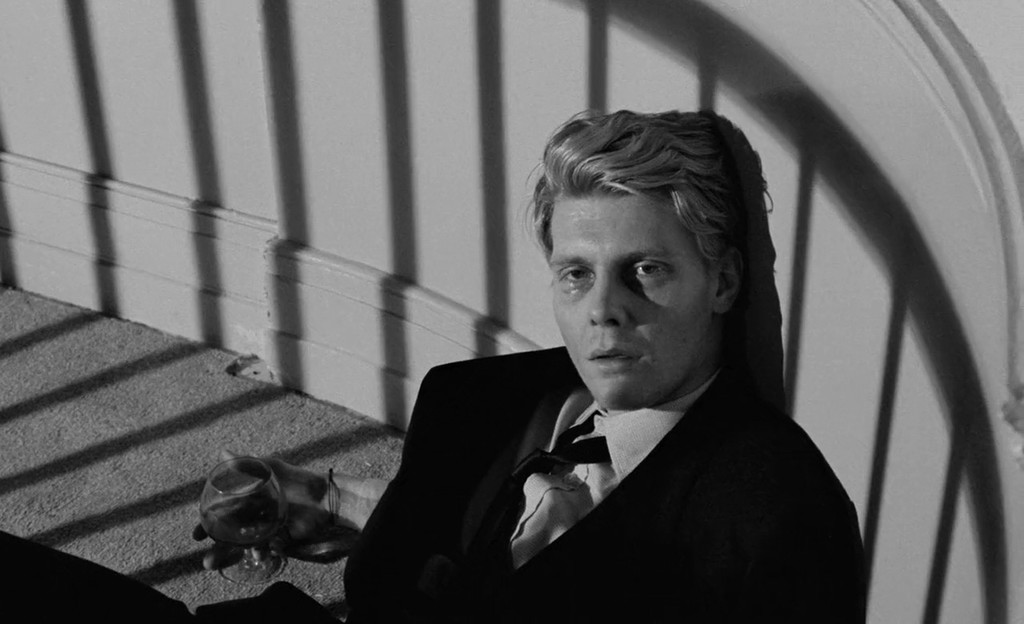
Not that Tony is particularly sympathetic himself: a weak-willed, rather feckless and languid playboy whose interests in pleasure quickly tip into addiction. James Fox is perfectly cast in a role that plays on his aristocratic assurance, but finds deep reserves of doubt and inadequacy in him. Pinter and Losey draw more than a bit of a question mark over the sexual undertone in the relationship between Barrett (at least metrosexual) and Tony, that travels across sharing the favours of Vera. After (temporarily) throwing Vera and Barrett out, Tony collapses into a grief-stricken mess over Vera’s bed – the bed shared with Barrett – the camera gliding gently over male nudes pinned to the wall. Later Tony will debase himself fully to Barrett, reduced to crawling around the floor, his tie used as leash, dragged to perform with prostitutes for Barrett’s dark amusement.

If there is a character who sees through this early it’s Wendy Craig’s sensitively played Susan – but even she can have no idea of the horrors of Barrett’s plans to break Tony completely to his will. Susan recognises – even if she can’t understand why – the sinister satanic nature of Barrett, even while she seems powerless to do anything about it. Her attempts to empower Tony to break his dependence on this omniscient figure fail completely. In a beautiful Pinterish touch, at the end she almost considers joining their bizarre, sex and alcohol fuelled menage – as close as cinema as perhaps got to skirting a sort of sexual hell.

The final act of the film (it has a neat three act structure, Pinter superbly constructing the screenplay to show Barrett and Tony’s shifting power relationship), sees an almost infantalised Tony now meekly accepting (almost apologising) as Barrett lets rip – all pretence at humbleness gone and Northern vowels increasingly let loose – with his abuse and disgust.

In a brilliantly dark commentary on the upper and serving class, such is the dependence on one for the other, that the house collapses in Barrett’s temporary absence. The power may lie with Tony – but when Barrett stops collaborating with that, the imbalance between them is revealed. It’s Barrett who can actually do things – from cleaning to cooking – that Tony cannot. The drive and will of the middle classes eventually overwhelms and breaks the upper class, turning them into a vehicle for their own entertainment, like some sort of dark National Trust.

The Servant is a profoundly brilliant film, one that could stake a claim for being one of the greatest British films ever made. Losey’s sharp outsider’s eye brilliantly dissects both the tensions between the classes, but also the disturbingly awkward relationship the British have about sex, a drug for the reserved, a pot of unspoken but deeply desired treats. Bogarde is quite simply superb, Barrett is one of the greatest monsters of cinema who could strike fear into the heart of Hannibal Lecter. Pinter’s dialogue is brilliant. This psycho-sexual class drama is a work of art and essential viewing.

Spotlight (2015)

SPotlight header
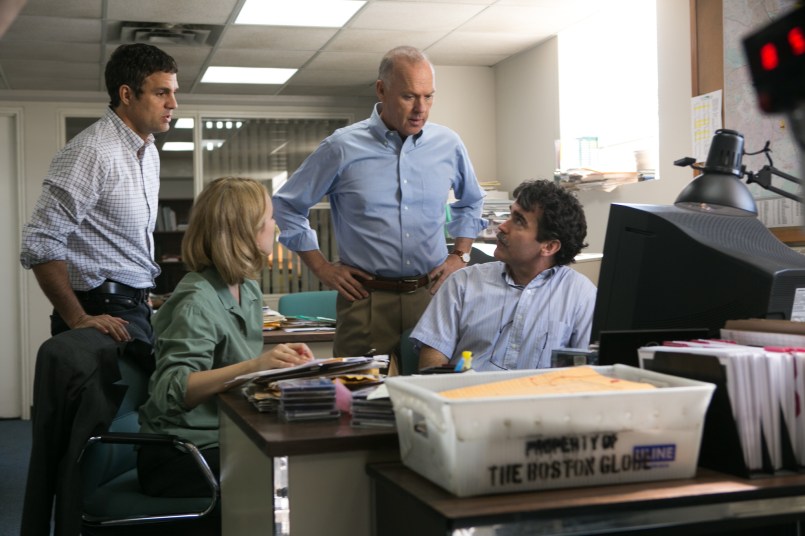
Ruffalo, McAdams, Keaton and James head up the investigation into the church in Spotlight

Director: Tom McCarthy

Cast: Michael Keaton (Walter “Robby” Robinson), Mark Ruffalo (Michael Rezendes), Rachel McAdams (Sacha Pfeiffer), Brian d’Arcy James (Matt Carroll), Liev Schreiber (Marty Baron), John Slattery (Ben Bradlee Jnr), Stanley Tucci (Mitchell Garabedian), Billy Crudup (Eric MacLeish), Jamey Sheridan (Jim Sullivan), Paul Guilfoyle (Peter Conley), Len Cariou (Cardinal Bernard Law), Neal Huff (Phil Saviano)

True villains are hard to spot: those clothed in good deeds are particularly well hidden. Few clothe themselves in good deeds more effectively than priests – and the small minority who use their positions of trust and power to abuse vulnerable children. It’s an unforgiveable, abominable betrayal that has ruined the lives of thousands of victims around the world. This century, the Catholic Church was rocked by a scandal: many in the church hierarchy were all too aware of these appalling acts, but protected priests from exposure rather than submitting them to well-deserved punishment. It took the work of crusading journalists to lift this veil and force the Church to begin to change its policy from protecting priests to protecting children.

The story was bought to wider attention by the dedicated work of the Boston Globe’s Spotlight team – the US’s finest investigative journalist team, a small team of reporters who work for months at one story. Boston is a firmly Catholic city, where the Church still holds a huge influence over the lives of its population. For years, faint suspicions of misconduct from any of the nearly 1,500 priests in the city was hushed up. It takes the arrival of an outsider at the Boston Globe – the paper’s unassuming new Jewish, Floridian editor Marty Baron (Liev Schreiber) – to push the Spotlight team to delve deeper into this story. He finds plenty of support from the team – respected editor “Robby” Robinson (Michael Keaton), the passionate Michael Rezendes (Mark Ruffalo), dedicated and empathetic Sacha Pfeiffer (Rachel McAdams) and increasingly disgusted Matt Caroll (Brian d’Arcy James). Using tried-and-trusted journalistic methods, passionate investigation, archival work and winning the confidence of survivors, the team piece together a systematic cover-up by the Catholic Church that extends all the way to the Vatican.

Spotlight scooped the Oscar for Best Picture (along with an Oscar for its brilliantly researched screenplay). It feels like a late Oscar partly awarded in memory of All the President’s Men, the film that Spotlight bears the most relation to. But, even more so than Pakula’s film, this is a low-key, reserved but strikingly effective and engrossing film that takes an almost documentary approach to the patient work required to uncover a story (no Deep Throat here) and the grinding shoe leather needed to get there. Fittingly, given the tragic story the team were reporting on, Spotlight is almost totally devoid of histrionics (there is at best one scene where a member of the team gets angry – only to be met with a quiet “are you done?”), instead being a tribute to the professionalism and integrity of journalists powered, but never overwhelmed by, their anger.

McCarthy’s film is refreshingly free of flourish or over-emphasis. It’s brave enough to let the story speak for itself, and trusts the viewer to understand both the emotional weight of abuse and the feelings of those involved without resorting to dramatic speeches or tearful dialogue. The details dominate – searching through archives for old newspaper clippings, waiting for access to court papers, days spent reading over a decade of parish records. Nothing is earned cheaply: every revelation the result of patient leg-work and following where the story leads without agenda or bias.

Agenda is something these journalists are deeply aware of. All of the team were raised in the faith to one degree or another, with strong roots in a community. The team’s leader, Robby, is an esteemed alumnus of a Catholic school one of the guilty priests worked at when he was a child – a revelation that quietly leads him to question both his implicit turning of a blind eye, but also how only a single man’s choices prevented him from becoming a victim. There is discomfort throughout the Boston Globe at the story – assistant Editor Ben Bradlee Jnr (a fine performance from John Slattery), while supportive of the team, is prickly at revelations that the Globe had previously not followed up reports of abuse and is deeply unhappy at the thought of accusing the Church itself.

The power of the Church in communities like this is subtly, but brilliantly, depicted. The film opens in the 70s with a paedophile priest having his actions being quietly hushed up by the police after the intervention of an ADA. Virtually every important person in the city is a Catholic and, like Robby, has been bought up and schooled in the Church. In exterior shots, McCarthy’s camera constantly frames churches on the edges of shot, their spires visible over residential blocks. The scale of the power of this institution – its reach and influence – is constantly demonstrated. It’s a big challenge for the team to take on – and one which they are not even sure their readers are ready to read about.

But McCarthy’s film isn’t crude. It’s made clear that these priests are a minority – 6% – and the anger is not with faith itself, but with the flawed and wrong decisions taken by men (the psychologist the team consults, an ex-priest, makes clear his faith is not shaken by his discoveries, only his trust in the institution). Equal care is given to the victims themselves. Their stories are reported by two characters in the film, each time with a careful lack of over-emphasis and a quiet, yet emotional, honesty. No attempt is made to sensationalise any of this.

And the film also makes clear that everyone is in some way complicit in this. The Globe has failed to report it. The police and government have covered it up. People might whisper about it – or say a particular priest is “dodgy” – but no one has made an effort to rock the boat and find out about it. Instead, victims are paid off, priests are moved to new parishes and everyone tries to carry on as normal. It’s a grimy and quiet conspiracy – miles away from the Grisham-esque danger the film’s trailer suggested – rather a collective failure of moral responsibility.

The film’s low-key approach, professionalism and absorption in how people do their jobs is deeply engrossing. Few things, after all, are as involving as watching highly professional people execute their jobs flawlessly. The performances are superb. Michael Keaton gives possibly the finest performance of his career – surely connected to it being his most restrained – as the team’s leader, whose sense of personal guilt and regret quietly build along with determination. Ruffalo (Oscar-nominated) is fantastic as his passionate, committed colleague (he gets the one shouting scene). McAdams delivers quiet empathy and powerful intelligence. Schreiber confounds expectations as the numbers man who emerges as a dedicated searcher for the truth.

The truth is exposed – but it’s just a tip of the iceberg. The story might be out there, but as the film shows in its coda, the struggle goes on. Crusading maverick lawyer Mitchell Garabedian (Stanley Tucci, very good) can’t celebrate the story’s publication – he’s got two child victims he needs to talk to. Cardinal Law (a fine performance of assured, misguided, certainty from Len Cariou) is promoted to the Vatican. Similar scandals emerge across the world. But the problem doesn’t go away. Just as the story needs time and work, the same qualities are needed to reform the Church.

Spotlight is quiet, engrossing and finely moving and triumphant film-making. It focuses brilliantly on professionalism and dedication producing results and shows that hyperbole and embellishment are not needed for outstanding drama. Told with documentary realism, acted with reserved grace and skill, McCarthy’s film is a call-back to 1970s film-making in the best possible way. A deserved winner and a small triumph.

Moonlight (2016)

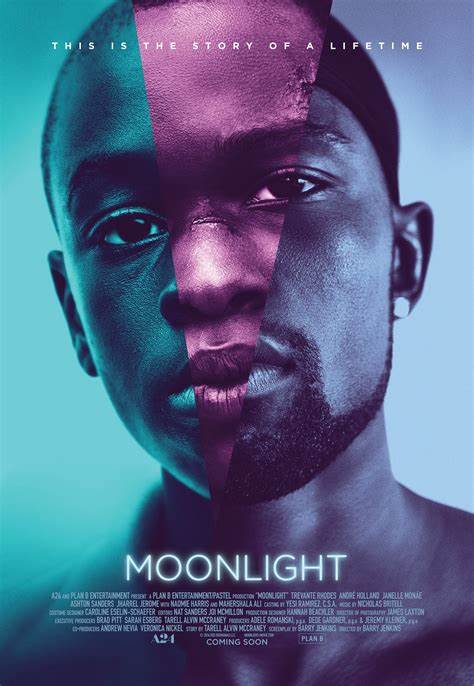
Mahershala Ali is a mentor with mixed impact in Barry Jenkins tender Moonlight

Director: Barry Jenkins

Cast: Trevante Rhodes (Adult Chiron/”Black”), Ashton Saunders (Teenage Chiron), Alex Hibbert (Young Chiron/”Little”), André Holland (Adult Kevin), Jharrel Jerome (Teenage Kevin), Jaden Piner (Young Kevin), Naomie Harris (Paula), Mahershala Ali (Juan), Janelle Monáe (Teresa), Patrick Decile (Terrel)

What makes us the people we are? So many things in our environment, personalities and influences can shape the people we are. Imagine, though, how much we might end up twisting and manipulating ourselves, if some of the core parts of what made us who we are, ran against the expectations of our community. It’s the fascinating, poetic heart of Moonlight, Barry Jenkins’ astonishingly tender Oscar-winner, which shows a side of the Black American experience that so rarely makes it to the screen.

In three acts, we see the life of Chiron, from a young child, to a confused teenager to a muscular, adult drug dealer. Played by a different actor at each age, each self-contained half-an-hour-or-so act sees him struggle with understanding who he is, and deal with the impact that different people have on shaping the man he is, from his mother Paula (Naomi Harris), a woman embracing a destructive drug addiction, to his mentor as a young boy, the thoughtful drug dealer Juan (Mahershala Ali) and his caring girlfriend Teresa (Janelle Monáe). Perhaps the core influence however is childhood friend Kevin, the love of Chiron’s life. Because Chiron is struggling with the fact he is gay, in a community where macho masculinity is all important.

Jenkins’ thoughtful and beautifully made film is a wonderful coming-of-age story, that explores deeply emotional territory with sensitivity and care. Jenkins invests the entire story with a beautiful sense of poetry and an echoing, longing sense of sadness. The entire film is constructed of paths not taken, of lost opportunities and painful misunderstandings. It asks profound questions around the people who inspire us, the impact our parents can have, the damaging impact of trying to conform with the world, and the struggle we can take to understand ourselves.

Because the main theme that runs through each act is Chiron’s struggle to come to terms with his homosexuality. As a young boy it’s something he’s beginning to be aware of – and the distance it brings, knowing he’s different from his fellow kids. It’s there in the cruel treatment he receives from his mother. As a young boy, there is the potential that his life could go another way – something that his mentor figure, drug dealer Juan, detects (perhaps, the film subtly implies, because it echoes lost opportunities and ignored feelings in Juan’s own life).

The middle act shows how these chances can be truly lost, how our teenage experiences can shake us. Because Chiron is different in a way that will never gain true acceptance in such a macho environment, where Chiron has it enforced to him time and time again that his sexuality is a weakness, something that dirties him and makes him less than others. Jenkins’ film offers a beautiful view of how a teenager can be made to feel ashamed of themselves and the person they are – to the extent that his reaction after his first sexual experience with his childhood friend Kevin is to apologise. Chiron hasn’t been given the emotional confidence or language to be comfortable with who he is – Juan is the only person who has ever told him that there is nothing wrong with being gay. Chiron instead has to cope with isolation, guilt and shame – emotions that Jenkins’ beautifully structured middle-chapters show, push him more and more towards anger and rage.

It’s perhaps not surprising that Chiron as a young adult has turned himself as much as possible into what his community believes “a man should be”. It’s striking how similar he looks to Juan – from his dress and jewelry, to his muscular manner and his profession. The skinny boy of the first two chapters has become a muscle-bound, intimidating young man. What hasn’t changed is his emotional distance, his isolation. In fact, what has been magnified is his desire to be loved, to feel a connection. A connection that he arguably hasn’t felt for over a decade.

The film can speak to anyone who has had problems fitting in, who feels different from others. Jenkins fits it beautifully into a community he was familiar with, a Black community (there isn’t a single white person anywhere in the film) that values qualities of masculinity and aggression that run counter to Chiron’s own personality, but which he is forced to conform with. This is such a compromised community that the person who understands Chiron most – the drug dealer Juan – is also a big part of the problem, supplying the drugs that are affecting his mother’s life and a leading part of the violent, macho world Chiron lives in.

This mentor relationship is the beating heart of the much of the film – helped by Mahershala Ali’s wonderfully judged (Oscar-winning) performance as Juan. Juan is a man of contrasts, thoughtful and tender, understanding of the internal struggles of a young man (has he dealt with them himself), but also moving in a violent and destructive world, a leading part of the criminal community that dominates Chiron’s world. He offers enough of a lost opportunity for Chiron to have reshaped his life – while also propping up the world that will crush him.

Juan is certainly a big part of destroying Chiron’s mother Paula. Naomi Harris is superbly damaged, raw and uncontrolled as an addict we see disintegrate over the first two chapters until she settles into the fragile older woman plagued with guilt in the final act. This is a mother who offers no love and support to her son, who denigrates him for his differences and builds a world around him that has no love or understanding in it. Her collapse is as much a criticism of the horrors and compromises of this community as it is a terrible warning story.

Jenkins’ film looks phenomenal, with a style that marries poetry and realism. It can feature young boys playing in the park with aggressive naturalness, underscored with Mozart. There is a beautiful running theme of water, cropping up at key moments of Chiron’s life: from the swimming lesson Juan gives him, to the cold water he cleans his face in after a teenage beating, to the adult Chiron largely drinking only water (perhaps to make sure he never slips and reveals too much of himself). It’s a gentle touch – reflected as well in the cool blues that frequently cover the screen, like the wash of water.

The actors portraying Chiron and Kevin are wonderful. The final act revolves around a beautifully played scene between Trevante Rhodes and André Holland as their adult versions, a low-key, but deeply emotional, conversation that sees them carefully skirt round a host of emotions that can never be expressed, partly as neither character as the emotional hinterland to use them.

Jenkin’s film won a deserved Oscar as Best Picture. It deserves it for showing us two worlds we see so little in film: both the working-class Black community, but also the life of a young gay man in modern America. It’s wonderfully judged, low-key, personal and with a slight story carries great emotional force. It gives you far more to think about and consider than you might at first expect, and makes for an eye-opening and deeply involving film.

A Separation (2011)

A Separation (2011)

Compelling drama of a family under pressure, in Farhadi’s brilliant film

Director: Asghar Farhadi

Cast: Payman Maadi (Nader), Leila Natami (Simin), Sareh Bayet (Razieh), Shahab Hosseini (Hodjat), Sarina Farhadi (Termeh), Merila Zare’I (Miss Ghahraii), Ali-Ashgar Shahbazi (Nader’s father), Babrl Karimi (Judge), Kimia Hosseini (Somayeh), Shirin Yazdanbakhsh (Simin’s mother)

It’s very easy today to imagine Iran as another world. A mysterious country, locked behind an oppressive regime that we are constantly told by our leaders is a frightening, distant place not to be trusted. But this prosperous country, with its rich historical background, isn’t some sort of Mars. It’s full of regular, normal people just trying to do their best for their families. It’s the strongest thing you’ll take out of Asghar Farhadi’s heartfelt, low-key, deeply moving masterpiece: deep down, we are all united by how circumstances push us into desperate situations with few good options.

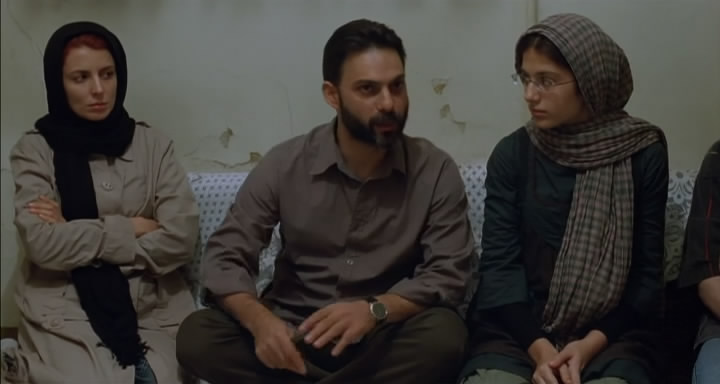
Married couple Nader (Payman Maadi) and Simin (Leila Natami) have petitioned for divorce. Secular Muslims, they want to emigrate to find better opportunities for their teenage daughter Termeh (Sarina Farhadi). Simin wants to leave now – but Nader won’t leave while his aged father (Ali-Ashgar Shahbazi), suffering from Alzheimer’s, is alive. Their only option, under Iranian law, is divorce. However, separation makes it impossible for Nader to care during the day for his father. He hires Razieh (Sareh Bayet), a devout Muslim – but the position causes her a host of problems, from concerns about touching another man (she calls her Imam to ask if she can change the old man’s trousers after an accident), to her worries about what will happen if her husband Hodjat (Shahab Hosseini), a feckless man in and out of prison, finds out she is working for a single man. After Razieh ties  Nader’s father to a bed to keep him safe, she and Nader argue, during which he forces her out of his flat. Razieh then has a miscarriage that night. Did Nader know she was pregnant? If so, he could face prison for murder. Both families find themselves in desperate straits.

A Separation is a superb piece of film-making, deceptively simple in its assembly and shooting, but carrying a huge emotional force as we become invested in the lives of the people it follows. Farhadi never passes moral judgement over his characters. All of them have strong reasons for doing what they are doing, rooted in what’s best for the family. Everyone acts in the way they feel will best protect their loved ones. Arguments become profoundly personal and damaging – but they don’t start out that way. It’s simply a question of things slipping out of control.

That’s not helped by the laws of the Iranian state. Farhadi’s film is very careful to never pass explicit comment on Iran’s laws. But the nature of the regime – and the mood it encourages – is at the heart of all the problems. Tensions are perhaps inevitable between the middle-class and secular Nadar and Simin, and the more working-class and traditional Razieh and Hodjat. This is class and religion in one cocktail, both sides carrying impressions that are nearly impossible to shake off.

But it’s the laws of the state that amplify this: where a man and a wife must go through a demanding pantomime for divorce or a man can be sentenced for murder for the lightest push on the shoulder of a woman who then miscarries. The judge hearing the pre-trial arguments (a very gentle and dignified performance from Babrl Karimi) may be the very soul of reasonableness, but it doesn’t change the fact that the laws he must rigidly uphold continually inflame the situation.

The story is brilliantly constructed, a tightly plotted melodrama that frequently presents new information that forces us to reinterpret what we have seen and heard. It mixes superbly domestic drama and crime procedural, and frequently only the audience has the complete picture of everything that has happened. Key arguments – the loss of money, Razieh’s unexplained absence from her duties, the difficulties of keeping Nadar’s father safe – are shown to us from every angle. But still, we understand the very natural – and human – reactions that people who do not have all the facts, as we have, make. Perhaps it’s the constant stress of simply living – magnified in a crowded and difficult city like Tehran – that seem to put every character on a knife-edge, terrified that a wrong step could land them in a host of trouble.

But that’s the power of Farhadi’s film-making – he invests every shot with sympathy and empathy. He wants us to understand everyone. It would be easy to make Hodjat exactly the sort of chippy, argumentative, working-class figure Nadar clearly thinks he is – but we also see his desperation, poverty, shame at not being able to provide for his family. Simin is easy to see as a woman trying to escape to live her own life – but she is also willing to cause collateral damage to the rest of her family. Nadar is the picture of a more liberal Iranian – but he also refuses to listen to people and is selfish in equating what he wants with what everyone else should want. There are no easy moral choices here – and no clear “heroes and baddies” for us to invest in.

The film reminds us that on every side of a dispute there are real people, with real concerns. And that the collateral damage can be just as bad. Nadar’s father is left even more catatonic than he was at the film’s start. Nadar and Simin’s daughter Termeh becomes consumed with guilt and disillusionment over the moral compromises her parents are forced to make. Her distress plays constantly at the edges of scenes – and even her morals eventually end up compromised – only coming fully into focus with Farhadi’s heartbreakingly open-ended conclusion.

The acting is superb. Payman Maadi is harassed and desperate under a veneer of controlled reason. Leila Natami plays a modern career woman, compromising herself every day, with great power and intensity. Sareh Bayet’s vulnerability is matched only with her profound sense that she cannot compromise her morals, in a performance that brilliantly mixes fear, resentment, warmth and anger. Shahab Hosseini superbly brings to a life a loud, brash man who is secretly profoundly weak, scared and trapped. There isn’t a wrong note in the entire cast, and Farhadi’s patient and intimate direction and shooting allows each of them to bring their characters superbly to life. This is a brilliant film which shows an intriguing – but sensitive – insight into life in Iran. But it most strongly demonstrates how human we all are. Everyone in the film is doing what they feel is best for their family – be that trying to hold them together, forcing the issue of emigration, earning money from work, or suing for compensation for the loss of a child. It’s a glorious reminder of how our lives can be altered by circumstances, and our intentions drastically different from their impact.

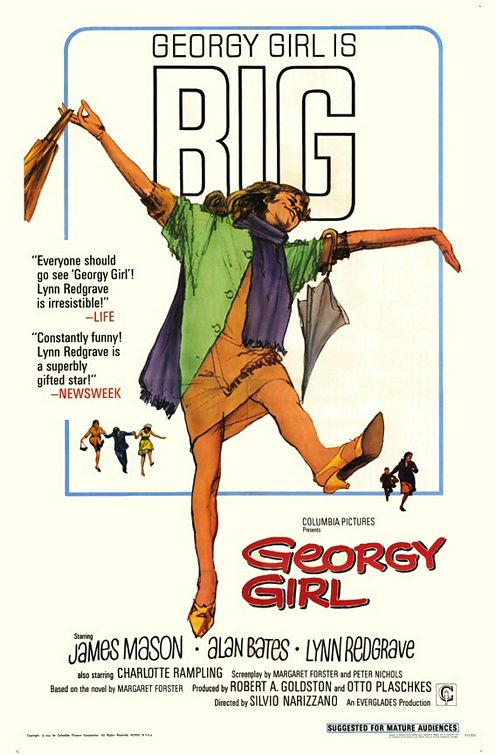
Georgy Girl (1966)

Lynn Redgrave excels as permanent odd-girl out in Georgy Girl

Director: Silvio Narizzano

Cast: Lynn Redgrave (Georgy Parkin), James Mason (James Leamington), Alan Bates (Jos Jones), Charlotte Rampling (Meredith), Bill Owen (Ted Parkin), Clare Kelly (Doris Parkin), Rachel Kempson (Ellen Leamington), Denise Coffey (Peg), Dandy Nichols (Hospital Nurse)

Made at the height of the Swinging Sixties – when London was the coolest city in the world – Georgy Girl is, in some respects, a time capsule. It was seen at the time as almost impossibly naughty and subversive, with open talk of abortions and affairs, mothers who feel their lives have been changed for the worse by having babies and young people struggling to accept their responsibilities. Now of course, it all looks rather tame. But there remains a charm to the film – helped above all by its performances – that still manages to make it a winning film, despite some of its attitudes raising entirely different questions today than its makers intended.

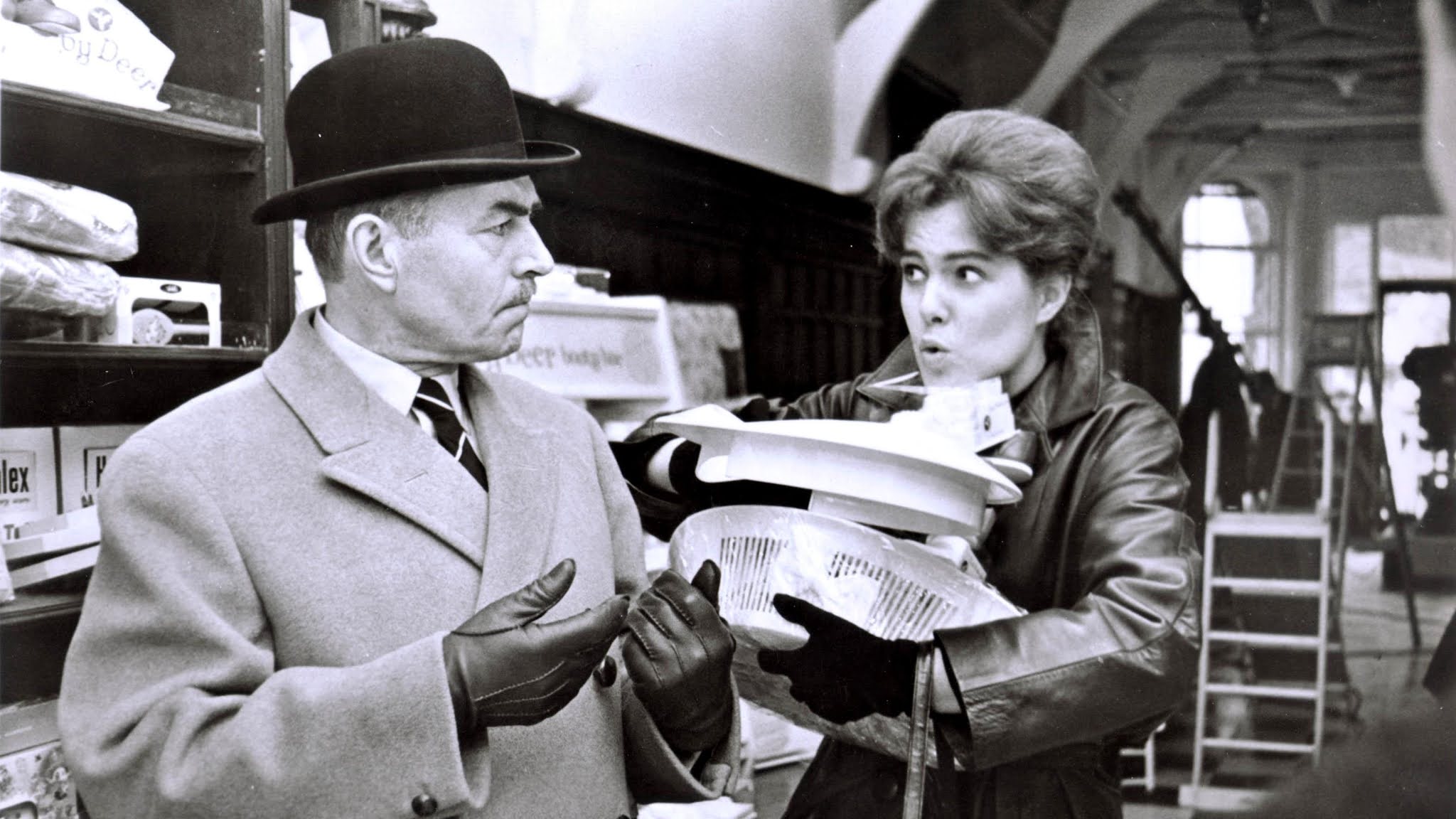
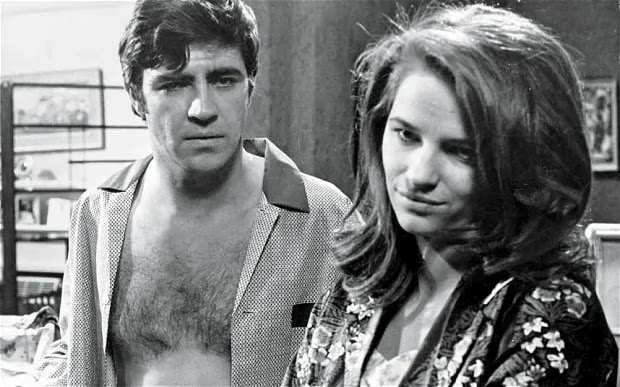
Georgy (Lynn Redgrave) is the plain-looking (and doesn’t the film keep reminding us of this!) daughter of the devoted butler (Bill Owen) to millionaire James Leamington (James Mason). Leamington has supported Georgy while she grows up – even letting her use his house for her children’s performance classes – but now his interest in her is changing. With his wife dying, James offers her the chance to become his mistress (with an actual contract). Georgy turns it down – not least because of her growing interest in Jos (Alan Bates), the fun-loving boyfriend of her flatmate Meredith (Charlotte Rampling), a drop-dead gorgeous violinist who treats him and everyone else with disdain. When Meredith falls pregnant with Jos’ baby, the two of them marry – but Meredith wants nothing to do with the child, a contrast to Georgy who has always dreamed of family.

It’s actually a film of cold, hard realities. Beware any film which gives you a conventional happy ending – the hero chasing a woman down a street crying out that he loves her – around the half way mark. All the characters are presented with choices, and are forced to either compromise or run away. It’s telling that the characters who most fit the mood of the era invariably run away, while those with a more traditional outlook stick it out. You could argue that far from being a celebration of the 60s, Georgy Girl is a fierce critique.

At the time, Georgy was seen as something of a free spirit. Perhaps this was because of her unconventional looks or her playful imagination when working with the children in her performance class. Maybe it was the opening sequence, which sees her getting a fashionable haircut, only to instantly wash it out in a sink. Or could it be because she treats her father’s wishes for her to listen to her elders and betters with disdain? (Let’s skirt over the fact her father seems to be effectively pimping her to his employer.) The way she makes a scene at Leamington’s birthday party by performing a raunchy cabaret number? Most of all though it may well have been due to the catchy (and instantly recognisable) Seekers song that plays over the opening and closing of the movie and serves as her calling card.

Interestingly though, watching it now, there is something incredibly conservative about Georgy – and quite possibly about the film itself. While she lives in the heart of the buzzing metropolis, Georgy’s dreams seem to come from another age: to become a mother, in a comfortable domestic setting. It’s hardly a feminist rallying cry. Georgy is so keen for this, she is perfectly willing to step (almost literally) into the shoes of Meredith, inheriting her husband, child and home. The film also misses no opportunity to remind the viewers Georgy is plain, dumpy and sexually inexperienced. Redgrave has been dressed to look like a sort of Teutonic housekeeper. The film doesn’t seem to quite know where to land between praising Georgy and slightly encouraging us, to chuckle at her.

Georgy isn’t in fact the swinging 60s icon in the film. That unquestionably is Charlotte Rampling as Meredith. Looking absolutely stunning, dressed by Mary Quant, Meredith is everything we expect from the era: confident, outgoing, ambitious, sexually liberated. But Meredith is also a stone-cold, ruthless, heartless bitch. Superbly played by Rampling, she treats Georgy as a servant, Jos as a mix between comfort blanket and vibrator, and decides to get married and have the child (rather than abort it as she has two others of Jos’ children – without telling him) because she’s bored. Once the poor child is born, the idea of sacrificing anything from her life is anathema to Meredith who promptly disappears over the horizon.

Georgy Girl is actually a film with much more mixed – even satiric – views of women and its era. The sort of liberation Meredith enjoys goes hand-in-hand with a selfish shirking of responsibility and using her beauty as a justification to treat everyone she meets as supplicants. Georgy is stuck in the middle, a woman in an era of growing freedoms but whose aims remain solidly in the Victorian era. The men are an equally mixed bag. Today we would certainly call what Leamington has been doing grooming. Jos has a happy-go-lucky 60s charm to him, but is flighty, unreliable, selfish and disappears with a smile the second the going gets tough. For all the film is sort of remembered for its joie-de-vive, it’s actually a searing look at the era with mixed feelings about its characters.

The fact we really end up caring for Georgy is due to Lynn Redgrave’s wonderful performance. A second choice for her sister Vanessa, the role typecast Redgrave in Hollywood’s minds as sort of dumpy loser (especially after her Oscar nomination). But she brings the role a real magnetism. Georgy is doomed to play second fiddle in people’s lives (and perhaps even her own). Perhaps the most 60s thing about her though is her determination to get what she wants – whether that is avoiding an affair with her father’s employer, or securing a good life for Meredith’s baby.

The rest of the cast are equally strong. Bates brings the best of his impish charm to the part (even if at times he tries too hard), as well as a metrosexual edge to Jos as someone very comfortable with joking around and being a bit camp. James Mason (who took a massive pay cut for the role, a decision which paid off with an Oscar nomination) is superb as fragile but creepy Leamington, a man who believes he is genuinely in love and is also excited at the prospect of replacing his bed-ridden wife (played by Redgrave’s actual mother Rachel Kempson, adding a nice Oedipal touch) with a younger model. Bill Owen mixes both a hilarious servility with assertions that his daughter “owes” Leamington something for all he’s done for her.

Georgy Girl works well because it is – and remains – funny as well as being dramatic and thought provoking. It might not be a feminist tract – and the character most likely to be seen as a feminist in the thing is its least sympathetic by far – and it might well affectionately scorn a woman who doesn’t look like a conventional man’s idea of attractive, and give her a traditional outlook behind a playful exterior – but it’s an energetic and rather charming film that does make you care. Separating it from the era it’s set in, might well do it a world of good.

The Trial of the Chicago 7 (2020)

Sacha Baron Cohen leads a campaign for justice in Aaron Sorkin’s The Trial of the Chicago 7

Director: Aaron Sorkin

Cast: Eddie Redmayne (Tom Hayden), Sacha Baron Cohen (Abbie Hoffman), Joseph Gordon-Levitt (Richard Schultz), Mark Rylance (William Kunstler), Yahya Abdul-Mateen II (Bobby Seale), Michael Keaton (Ramsey Clark), Frank Langella (Judge Julius Hoffman), John Carroll Lynch (David Dellinger), JC MacKenzie (Tom Foran), Alex Sharp (Rennie Davis), Ben Shenkman (Leonard Weinglass), Jeremy Strong (Jerry Rubin), Kelvin Harrison Jnr (Fred Hampton), Noah Robbins (Lee Weiner), Daniel Flaherty (John Froines), Caitlin Fitzgerald (Daphne O’Connor)

Aaron Sorkin’s work celebrates the great liberal possibilities of America. Is there any writer who has more faith in the institutions of the American state – while being so doubtful of many of the actual people running those institutions? You can imagine Sorkin sees more than a bit of himself in Abbie Hoffman, jocular prankster and wordsmith, angry at his country in the way only someone who really loves it can be. This idea is at the heart of Sorkin’s biopic of the trial of seven activists for promoting violence in the build-up to the Democratic convention of 1968 in Chicago.

Vietnam is in full swing with young men dying in their thousands to defend a cause many are starting to believe isn’t worth it. Nixon has just been elected – and his government wants to make an example of these left-wing, hippies he believes are drowning out “the silent majority”. Student leaders Tom Hayden (Eddie Redmayne) and Rennie Davis (Alex Sharp), hippie activists Abbie Hoffman (Sacha Baron Cohen) and Jerry Rubin (Jeremy Strong), and pacifist David Dellinger (John Carroll Lynch) are arraigned in court for conspiracy to incite a riot, facing a ten year prison sentence. Black Panther Bobby Seale (Yahya Abdul-Mateen II), who wasn’t in Chicago at the time, is thrown in to make them look more threatening. With radical lawyer William Kunstler (Mark Rylance) in their corner, the defendants deal with a slanted case from the government, being backed all the way by the judge Julius Hoffman (Frank Langella) who can’t hide his contempt for them.

The Trial of the Chicago 7 feels like it’s on the cusp of making a grand statement about the rights and liberties of Americans, at a time of great civil unrest. With the country more divided now than it’s  ever been since the events of the film, this should be a timely message. But somehow the film doesn’t quite manage to deliver it. There is too much going on – an attempt to cover divisions in the left and counter-culture, the events in Chicago in 1968, the trial, clashes outside of court – it’s almost as if Sorkin the director has failed to marshal Sorkin the writer into making a clear and coherent thematic point. Instead the film becomes a chronicle of shocking courtroom events, affecting, but not as earth-shaking as it should be.

Part of this is the fragmented script. An occasional device is used, whereby Hoffman turns the events of the trial into a lively stand-up routine at some unspecified future point. This is a pretty neat idea as a framing device – however it only pops up at odd moments rather than giving a spine to the film (as well as missing the chance to filter events through the perception of one member of its sprawling cast). You end up thinking it’s just Sorkin the writer coming up with a way of giving us information Sorkin the director can’t work out how to do visually.

This tends to affect a lot of the stuff outside of the courtroom. Sorkin’s dialogue is surprisingly plodding here, too often ticking the boxes or establishing backstory and motivation that will play out later. He has his moments and his gift for capturing revealing details make for brilliantly inspired speeches and dialogue riffs that reveal acres of character while feeling very light. But, considering what he is capable with (and could have done with this material) it feels like autopilot.

That’s the problem here: it’s a little too pedestrian. Only an argument between frustrated liberal Hayden and his lawyer Kuntsler captures something of the dynamic pace of Sorkin at his best. Other scenes – such as an out of courtroom scene between decent just-doing-my-job prosecutor Richard Schulz (a low-key but very good Gordon-Levitt) and Hoffman and Rudin – are a little too on-the-nose in making their points about liberty, truth and justice. 

The strongest moments by far are in the courtroom – and the true-life staggering lack of proper procedure followed there. The film is rightly angry, without tipping too much into outright preaching. It’s shocking to see how little the rights of the defendants were respected. Much of this came from the attitude of the judge, Julius Hoffman: a traditionalist, his contempt for the defendants clear throughout, handing out contempt of court charges like sweeties. Frank Langella stands out as a man so convinced of his own morality – and so locked into his own certainty about right and wrong – that he is completely unaware many of his rulings are biased and is deeply hurt at being accused of racial imbalance, while having the only black defendant literally bound and gagged.

Yahya Abdul-Mateen II is superb as Bobby Searle, the Black Panther leader furious at being roped into the trial. Searle loudly – and vigorously – protests the trial has not been delayed to allow his lawyer to attend and that he has been refused (consistently) by the judge his right to represent himself. The treatment of him is shocking and appalling. But it feels like no attempt is made to put this in wider context either of civil rights at the time or in America since. And that feels like a major miss. We’re only a few degrees from the same effectively happening today.

This is part of the film’s general problem in finding its real focus, or wider context. I suspect its heart is probably in the views expressed by Hoffman on the stand – particularly those around not having his thoughts on trial before – but this film is too scatter-gun.

What the film does do well is with the quality of its performances. Sorkin may be a rather a visually flat director – his shooting of the convention riots completely fails to conceal the lack of budget – but he encourages great work from actors. Redmayne and Cohen give skilled performances as the acceptable and radical faces of left-wing politics. Strong is wonderful as a hippie with a firm sense of right and wrong, while Carroll Lynch is great as a pacifist driven to the edge. Mark Rylance excels as radical lawyer Kunstler, softly spoken but passionate, who brings fire to proceedings.

It’s a shame though that The Trial of the Chicago 7 settles for mostly being a walk-through of the trial. An attempt to really capture a sense of the deeper politics gets lost, and the failure of the film to really draw parallels with today or place these events in their wider context feels like a missed opportunity. Even the film’s end captions don’t give you as much information as you would hope – especially telling considering its abrupt ending. A well-meaning effort, but a middle-brow film.