Category: Space programme

The Right Stuff (1983)

The Right Stuff (1983)

Patriotic heroism subtly retold as shrewd satire – no wonder the film bombed

Director: Philip Kaufman

Cast: Sam Shepard (Chuck Yeager), Scott Glenn (Alan Shepard), Ed Harris (John Glenn), Dennis Quaid (Gordon Cooper), Fred Ward (Gus Grissom), Barbara Hershey (Glennis Yeager), Kim Stanley (Pancho Barnes), Veronica Cartwright (Betty Grissom), Scott Paulin (Deke Slayton), Charles Frank (Scott Carpenter), Lance Henriksen (Wally Schirra), Donald Moffat (Lyndon B Johnson), Levon Helm (Jack Ridley), Mary Jo Deschanel (Annie Glenn), Scott Wilson (Scott Crossfield), Kathy Baker (Louise Shepard), David Clennon (Liaison man), Jeff Goldblum (Recruiter), Harry Shearer (Recruiter)
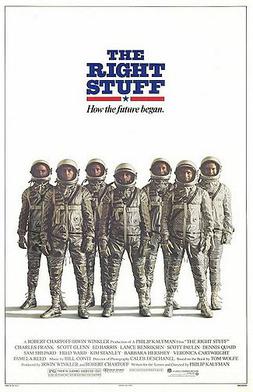
During the Cold War, the US and Russia had to fight with something – from proxy wars to chess, but most famously with Space: the competition to go further, faster and higher among the stars. The Right Stuff focuses on the Mercury Seven pilots at the centre of the US response to Soviet success including Alan Shepard (Scott Glenn), John Glenn (Ed Harris), Gus Grissom (Fred Ward) and Gordon Cooper (Dennis Quaid), a mix of the cocksure and the confident. But in a space programme where a monkey is an acceptable “pilot” for this human cannonball, do any of them have “the right stuff”? Could any of them match the skill of legendary test pilot Chuck Yeager (Sam Shepard) – one of the guys who scorned this astronaut programme for being “spam in a can”?

The Right Stuff, adapted from Tom Wolfe’s book, seemed destined to become a patriotic smash-hit. Despite its eight Oscar nominations (and four wins) it was, in fact, a catastrophic bomb. Perhaps that was because it subverted its patriotism so well. The Right Stuff is, in fact, a subtle, anti-heroic satire (told at huge length) masquerading as a patriotic yarn. It’s marketing avoided that meaning those most likely to enjoy didn’t go and see it, and those who went for that felt alienated. While largely respecting the astronauts, it suggests space race triumphalism was a sort of mass hysteria, with limited results, inflated into something mythic by political expediency, media spin and industrial might. Not the happy, flag-waving message Reaganite America expected or wanted.

Kaufman’s sympathy instead lies with an older, “truer” America. The Right Stuff is an intensely nostalgic film: but for a completely different time. It is in love with Frontier America, where men-were-men and the daring proved themselves in taming the frontier, in this case the sky itself. Our tamer is Chuck Yeager, played with a monosyllabic Gary-Cooper-charisma by Sam Shepard. Yeager is the last of the cowboys (even introduced riding a horse in the desert), taking to the skies like an old frontiersman hunting down that “demon” who lives at the sound barrier.

This is the sort of America The Right Stuff celebrates, and Yeager is the guy who has it. Unlike the Mercury programme, Yeager isn’t interested in showbiz and self-promotion (his reward for breaking the sound barrier? A free steak and a press embargo), just the quiet satisfaction of having done it. It’s the old, unflappable, quietly masculine confidence of a certain kind of American tradition and it’s totally out of step with the world the media is now celebrating with the astronauts. Instead, these effective passengers in the rocket will be hailed as the great pilots.

Kaufman’s film is a long, carefully disguised, quiet ridicule of many of the aspects of the Mercury programme. It’s conceived, in a darkened room, by a group of politicians so clumsy they can’t even work a projector. It’s head, Lyndon B Johnson (Donald Moffat on panto form) is a ludicrous figure, at one point reduced to an impotent tantrum in a car when he doesn’t get his way. The NASA recruiters are a comedy double act – Goldblum and Shearer sparking wonderfully off each other – who first suggest (in all seriousness) circus acrobats as pilots and then fail to identify Yuri Gargarin. The programme begins with a series of failed launches that travel tiny distances before exploding, culminating in one attempt ending with an impotent pop of the cap at the top of the rocket.

NASA is slightly ramshackle and clueless throughout. Far from the best and brightest, Kaufman is keen for us to remember that many of the scientists fought for the Germans in the war, that decisions were often made entirely based on what the Russians have just done, that the astronaut recruitment tests are a parade of bizarre physical tests because no one has a clue what to test for, and that the final seven selected aren’t even the best just the ones who persevered through the tests and (crucially) were small enough to fit in the capsule. That doesn’t stop the media – played by a San Francisco physical comedy troop – from turning them overnight from jobbing pilots to superstars.

The astronauts status is frequently punctured. Scott Glenn’s granite-faced Shepard is strapped into the cockpit for hours on his first flight, until finally he begs to pee (followed by a montage of coffee being slurped, hose pipes blasting and taps dripping) before being instructed to release his bladder into his suit, meaning he heads into space sitting in a puddle of his own piss. Dennis Quaid’s cocksure Cooper has an over-inflated idea of his skills and is prone to dumb, blow-hard statements (arriving at Yeager’s Air Force base he non-ironically states he’ll soon have his picture up on the deceased pilot’s memorial wall). Fred Ward’s Gus Grissom is a slightly sleazy chancer – controversially The Right Stuff presents him as panicking on re-entry from his first mission, blowing his hatch and sinking his ship, something he categorically denied (and was later proved not to have done).

Even John Glenn, played with a sincerity and decency by Ed Harris (if this had been a hit, Harris’ career of playing hard-heard would have been totally different), is subtly lampooned. So straight-laced he literally can’t swear (his attempt to say ‘fuck’ never gets past a strained Ffff), he’s introduced via a ludicrous TV quiz show and his square-jawed morals frequently tip into puritan self-importance. Undergoing physical tests, Kaufman even cuts from his grimacing face to a grinning chimp on the same test (and who will beat him into space). Compared to Yeager, who can correct a plane on a desperate nose dive and beat the skies into submission (and has the only outright heroic refrain in Bill Conti’s Oscar-winning score), none of them have that right stuff.

Do they get it? In a way: but their triumph is establishing their character, not their skills. Kaufman uses Yeager to point us towards this (his seal of approval is vital for the film): after Grissom’s debacle, he defends him in the bar and praises their courage in essentially sitting on top of a massive bomb.
Tellingly, the astronauts’ most courageous moment in the film isn’t in the cockpit at all: it’s Glenn supporting his stammering wife’s refusal to go on air with LBJ, despite the pressure from NASA bigwigs – and the other astronauts uniting in fury when Glenn is threatened with being dumped from the next flight. The others become more noble through maturing and casting aside fame’s temptations.
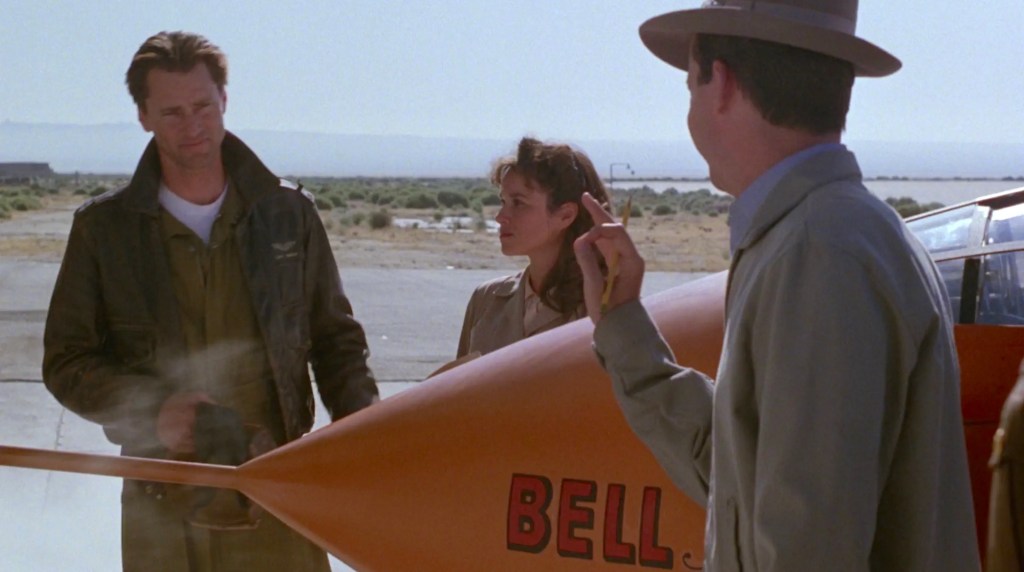
In a way they prove their spurs, even if Kaufman’s film makes clear none of them can match Yeager’s traditional values. The film ends with Yeager, maverick to the last, undertaking an unauthorised test flight in a desperate attempt to keep funding for his jet programme going. Even with this final flight – dressed in a bastardised version of a space suit – Yeager shows he’s not lost it, a man so undeniably superhuman in his American resilience that even a bit of fire won’t slow him down.

The Right Stuff celebrates Yeager, but he’s the B-story – and the film frames him as a forgotten figure, left behind by a world obsessed with the bright and shiny. The Right Stuff has to centre the astronauts but it doesn’t focus on the missions (which, apart from Glenn’s, barely receive any screen time – certainly not compared to the time given to Yeager’s flights) or the glory, only quietly implies there was a slight air of pointlessness about the whole thing – that the space race was perhaps just a dick-waggling competition between superpowers. It makes for interesting – if overlong – viewing, but as punch-the-air entertainment, no sir. No wonder it bombed.
Apollo 13 (1995)

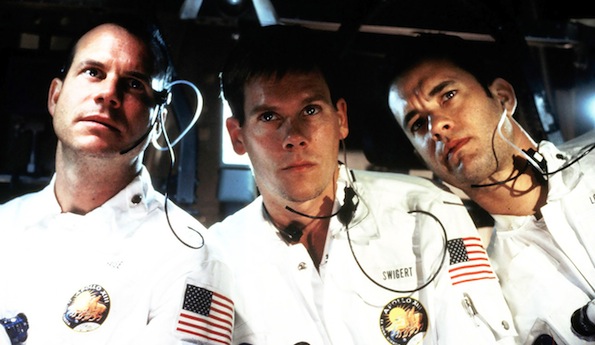
Bill Paxon, Kevin Bacon and Tom Hanks are stranded in space in Apollo 13

Director: Ron Howard

Cast: Tom Hanks (Jim Lovell), Kevin Bacon (Jack Swigert), Bill Paxton (Fred Haise), Gary Sinise (Ken Mattingly), Ed Harris (Gene Kranz), Kathleen Quinlan (Marilyn Lovell), Chris Ellis (Deke Slayton), Joe Spano (NASA Director) Xander Berkeley (Henry Hunt), Marc McClure (Glenn Lunney), Clint Howard (Sy Libergot), Ray McKinnon (Jerry Bostwick), David Andrews (Pete Conrad), Christian Clemenson (Dr Charles Berry), Brett Cullen (CAPCOM1)

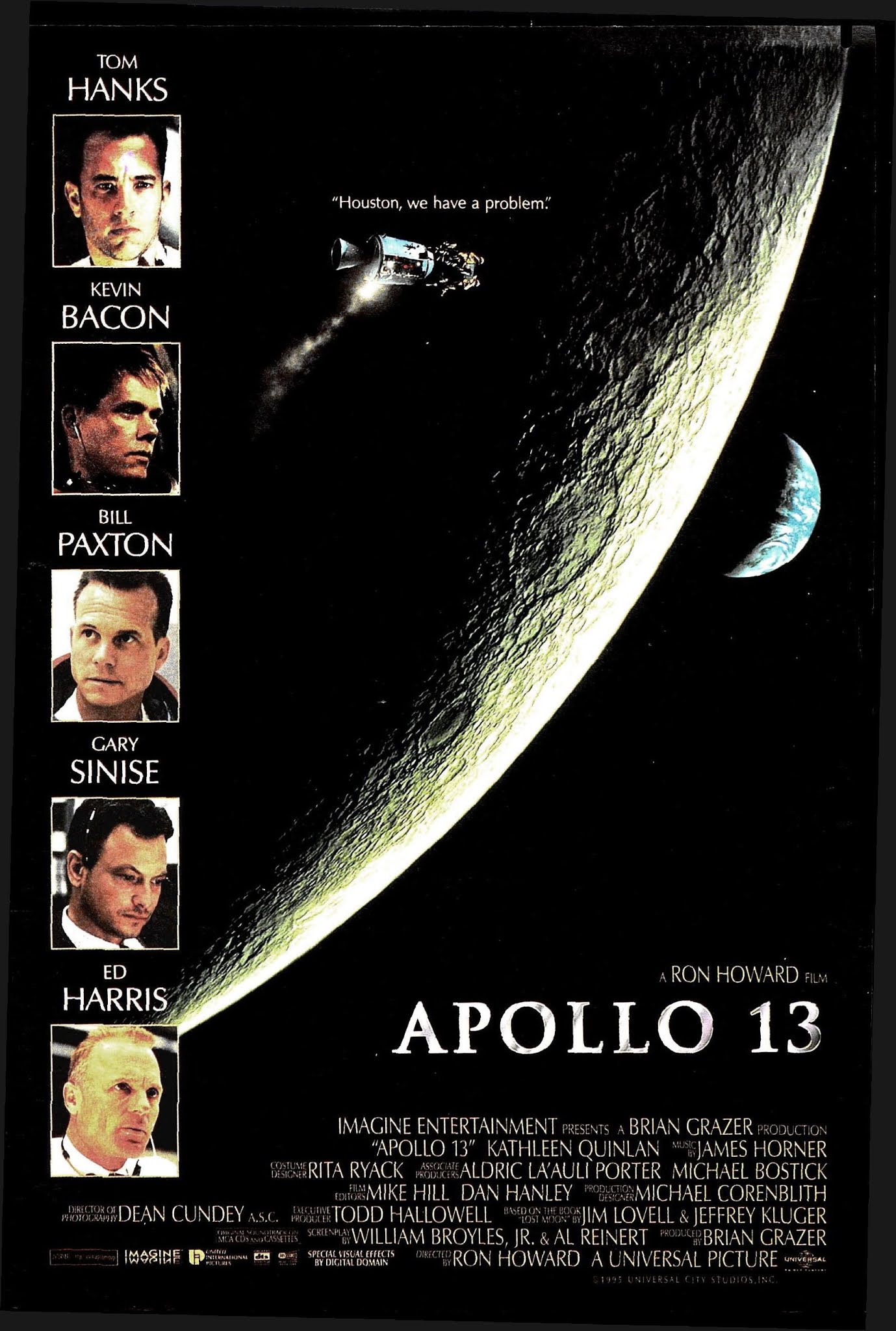
“Houston we have a problem”. Those calmly spoken words coat an ocean of disaster in Ron Howard’s brilliant reconstruction of the disaster-that-very-nearly-was, Apollo 13. Without a shadow of a doubt Howard’s finest film, this is brilliantly tense and hugely engaging that builds an edge-of-the-seat tension around a true story. You can’t watch it without being filled with breathless admiration for the ingenuity of those in mission control and the courage of those in space as they worked together to bring the mission home. Truly “Failure is not an option”.

On a mission to the moon, Mission Commander Jim Lovell (Tom Hanks) and crew Fred Haize (Bill Paxton) and late replacement Jack Swigert (Kevin Bacon) are left desperately trying to salvage their ship after an accident strikes. Meanwhile back in Houston, Flight Director Gene Kranz (Ed Harris) and replaced crewman Ken Mattingley (Gary Sinise) lead a dedicated team juggling every inch of mathematical, scientific and practical knowledge they have to bring the ship home.

Apollo 13 is a masterpiece of reconstruction. Every inch of the NASA space programme is reassembled in perfect detail. Every nut and bolt, from procedures to the interplay between the astronauts and Ground Control. There isn’t a single false note, and every single element of the production, photography and editing is carefully placed to support this total immersion in period. Howard’s technical direction is brilliantly done, intercutting with a fabulous sense of pacing between the crew in space and Ground Control back here on Earth. It becomes one of the most engrossing and involving true-life stories you can imagine.

I love this film. I love every second of it. Every single time I see it – and I must have watched it at least once a year since 1996 – I get wrapped up in the tension and, perhaps even more than that, the inventiveness needed to solve problems in space. The film throws conundrums at us time and time again. The command module needs to be restarted to land the ship – but only has enough power to keep a coffee machine running for a few hours. A vital course correction, that a computer could calculate and perform, needs to be carried out by hand. The weight of moon rocks needs to be replicated in the landing module. And, most brilliant of all, the NASA boffins need to work out literallyhow to fit a round peg into a square hole in order to replace a CO2 filter – using nothing but the pile of equipment on the spaceship.

These problems all need to be solved by people low on sleep, high on stress and – in three obvious cases – stranded, cold and alone in space, and each one is carefully explained by the film’s very natural but highly detailed script and then relayed into nail-biting efforts to solve them. (James Horner’s score also works wonders here, communicating the awe of space and our vulnerability in that black void expertly.) In no other film can the tearing of a plastic bag have you gasping at the impact it could have on life or death.

Added to the impact of this, is the engrossing excitement of watching brilliantly trained professionals tackle the sort of situations that would reduce you or I to sweaty panic. Other than a brief moment of recrimination between Haise and Swigert (authoritatively quashed by Lovell’s “Gentlemen, we are not doing this”), everyone stays more cool, calm and collected than you could possibly expect. This also means that flashes of urgency or emotion carry huge impact in communicating stress: when Libergot stresses powering down the ship is the only way for the crew to survive or Lovell is caught on radio ranting he is “well aware of the Goddamn gimbels” while trying to pilot a ship leaking oxygen through a barrage of debris to a soundtrack of alarms, the pressures they are trying to cope with come thundering home to us.

The extraordinary work of the actors also goes a long way towards the film’s success. If any film cemented Tom Hanks’ everyman quality, it was this one. His Jim Lovell is calm, controlled and extremely grounded, a professional with a realistic outlet, a devoted family man and overwhelmingly ordinary for all the extraordinary things he’s done. Hanks brings the role a huge authority and acres of empathy and relatability. He seems both vulnerable, human and professionally assured. I’d trade both his Oscar-winning performances for this one.

The whole cast follows his lead. Bacon and Paxton are very good as the rest of the crew, juggling moments of fear, frustration and black humour. Ed Harris became a star character actor overnight with his brilliant performance as Kranz, another committed professional who refuses to countenance failure and guides the ground team through super-human efforts, while keeping his own emotions carefully under control. Kathleen Quinlan is impressive as Lovell’s wife, keeping the morale of those left behind as high as she can while barely controlling her own fear. Gary Sinise’s Ken Mattingley channels his resentment at being benched from the mission into a Herculean commitment to bringing them home.

It’s that commitment on the ground that Howard’s film so brilliantly understands. A lesser film would have focused overwhelmingly on the courage of the astronauts alone, and heightened their struggles to pilot the spacecraft and survive. Apollo 13 understands above all that this was a team effort – and the casting and scripting feeds brilliantly into this. No one is the “hero”, no one “saves the day”. Every character focuses on their own small piece of the puzzle and has to trust all the others worked out. The film gives huge amounts of time over to the boffins and geniuses of Mission Control – all brilliantly played by a host of character actors – and its respect for these unsung heroes is as great as it is for Lovell and his crew.

Howard also understands exactly when to up the music, editing and effects and when to slow the film down and let events quietly play out. Moments in space where the actors have to quietly reflect, or when we check in on the fears and concerns of the families back home, contrast perfectly (and carry even more impact) when they sit alongside the scenes of failures and rushes to save lives. As for that re-entry scene… is there any more tense scene in a true story film than that long, long wait to see if Apollo 13 will return from space? There are certainly fewer moments that will get those specks of dust irritating your eyes – I get a lump in my throat just thinking about it.

Everything in Apollo 13 is spot on. I would go further and say I’m not sure there is a single wrong beat in it. It’s Howard’s masterpiece – his infamous snubbing for an Oscar nomination is inexplicable, his direction here is vastly superior to winner Mel Gibson’s work on Braveheart. It turns a true-life story into an impossibly tense, deeply involving, hugely emotional story. The actors – some of whom shot for weeks in a “vomit comet” plane to replicate weightlessness, an effect that works superbly – are outstanding. Every single technical aspect of the film is spot on. Its emotional impact is as absolute as the admiration and respect you’ll feel for the real NASA crews that guided this mission home. Apollo 13 is a classic. I can’t imagine anyone not finding something in it to like – not many films you can say that about.

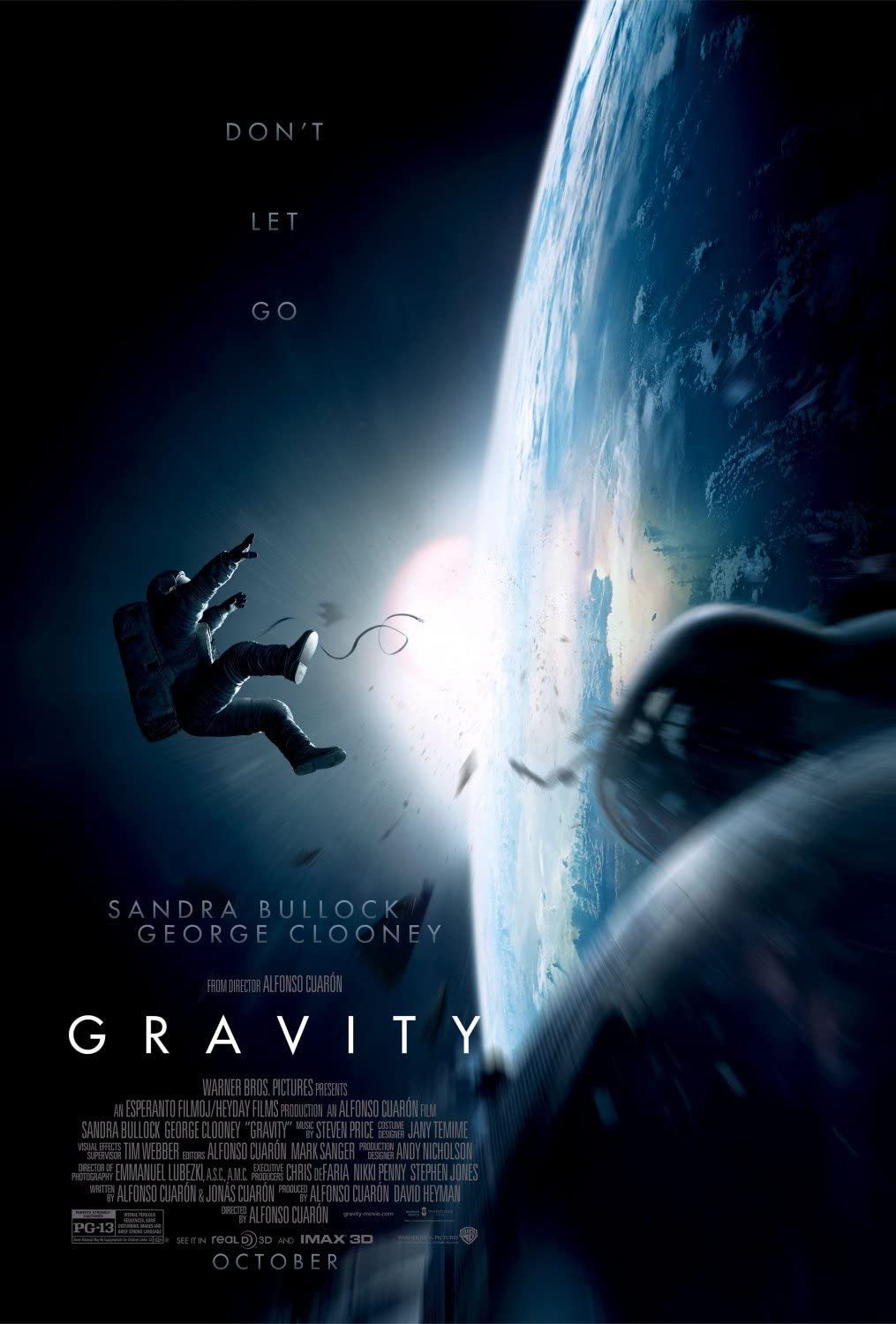
Gravity (2013)

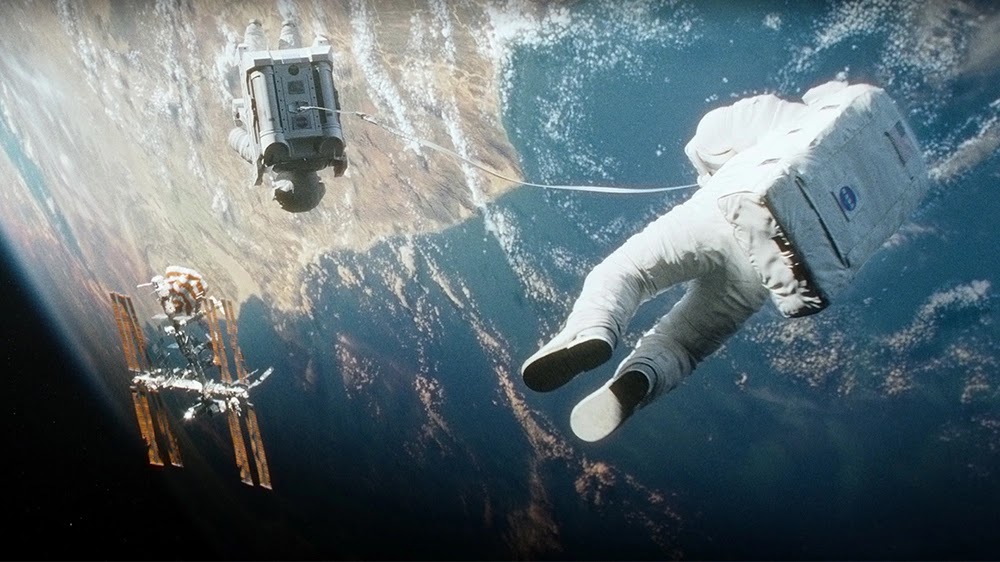
Sandra Bullock is stranded in space in Gravity

Director: Alfonso Cuarón

Cast: Sandra Bullock (Ryan Stone), George Clooney (Matt Kowalski), Ed Harris (Voice of Mission Control)

It’s often been said space is mankind’s final frontier. It’s beautiful and awe-inspiring. But it’s also a terrible place, a void where the normal rules that dictate how our bodies operate are completely suspended. We can only breathe what we carry with us and the lack of any atmosphere or gravity means a few metres might as well be a million miles. It’s in many ways the perfect conditions for a survival film – which, at its heart, is what Gravity is.

On a mission in space to repair the Hubble telescope, a collapsed satellite triggers a chain reaction of space debris hurtling in orbit at extreme velocities. Turned into a vast number of deadly bullets flying completing an orbit once every 90 minutes. This shrapnel destroys the mission, leaving specialist Dr Ryan Stone (Sandra Bullock) and mission commander Matt Kowalski (George Clooney) as the only survivors – and left with their only chance of return to Earth being to travel somehow to one of the other space stations in orbit and hitch a ride home on one of their escape pods.

Cuarón’s film is an engrossing and edge-of-the-seat 90 minute thrill ride, combined with a quietly meditative reflection on how our internal pain can make us drift through life. The film is titled Gravity but it’s there to draw attention to what is missing in the film. Not only the obvious – the lack of pull on her body – but also the lack of grounding in Stone herself. In mourning for the loss of a child, Stone has very little ties to earth or indeed anything. She is drifting through her life emotionally, much as she drifts through space itself. When asked why she likes it up in space, she replies “the silence”. She’s a woman untethered from life on earth in more ways than one.

So this is a film that is not just a survival but also a rebirth. We see Stone go through immense, dangerous moments of tension and terror, battling against all the odds to survive and return home. At the same time, the film carries an emotional weight because it’s also about Stone making a conscious decision to survive, to decide to re-engage with and commit to the world – to choose life if you like. Someone suffering from grief and depression as she does at the start of the film, may well have understandably embraced despair. Instead, the film is her coming to terms with the loss of her daughter, and a resolve to live her life for her.

All of this happens of course in the vast majesty of space, a vision beautifully captured by Cuarón. Filmed in an immersive style, with several long takes that don’t draw attention to themselves – a shot length that serves the purpose of the story not vice versa – and Cuarón is happy to use quicker cuts where needed. The camera follows the journey of Stone in epic and intimate detail, with shots exchanged between vast panamas of the astronauts as dots in space, to extreme close ups that bore into Stone’s eyes and capture her emotions from guilt, to hope, to terror. 

The long opening shot, that ducks and weaves around the weighless astronauts in space as they repair the Hubble telescope is of course a technical marvel, but it also brilliantly established the situation and the joy and fear of being an astronaut, of being allowing in the darkness and emptiness of space. It sets the scene perfectly from later shots that throw you into the adrenalin burning terror of spinning wildly in space with no resistance to slow you down or dodging debris moving at thousands of kilometres per second through space.

In fact the film is almost unbelievably tense – probably the most tense space film since Apollo 13 and in that we actually knew they were coming home alive (in a nice nod to that film, Ed Harris ‘reprises’ his role as mission controller in a voice-only cameo). With its brilliant immersive style, and the emotional bond it swiftly builds with the viewer, it means you will find you hardly draw breath along with the heroes. I’ve seen the film three times and each time after the first viewing I was sure it wouldn’t have the impact the first viewing had. But goddamn it, it works every time. The film is quick – at little under 90 mins – but you won’t feel it (in fact if anything you might be relieved).

Cuarón won the Oscar for direction, and the film is not just a load of flash and technical marvel (although it has a lot of both). It’s grounded in a very simple emotional story of survival, matched with an internal story (not overplayed) of resolving and dealing with grief. A lot of that works from the effectively unflashy performance from Sandra Bullock, who is very good in a part that requires not just physical but also emotional commitment. She’s well supported by George Clooney, who is perfect as the charming but calm and controlled mission commander who mentors her through the early stages of survival in space.

The film has a series of breathtaking set pieces – collapsing Hubbles, spinning astronauts in space, desperate space walks trying to grab any inch of objects to stop them drifting into space, collapsing space stations, burning up on re-entry – all of them shot with an elegance that marries technical excellence and dazzling camerawork and vision with a powerful story. A bag of tricks but one that is delivered with real heart.

First Man (2018)

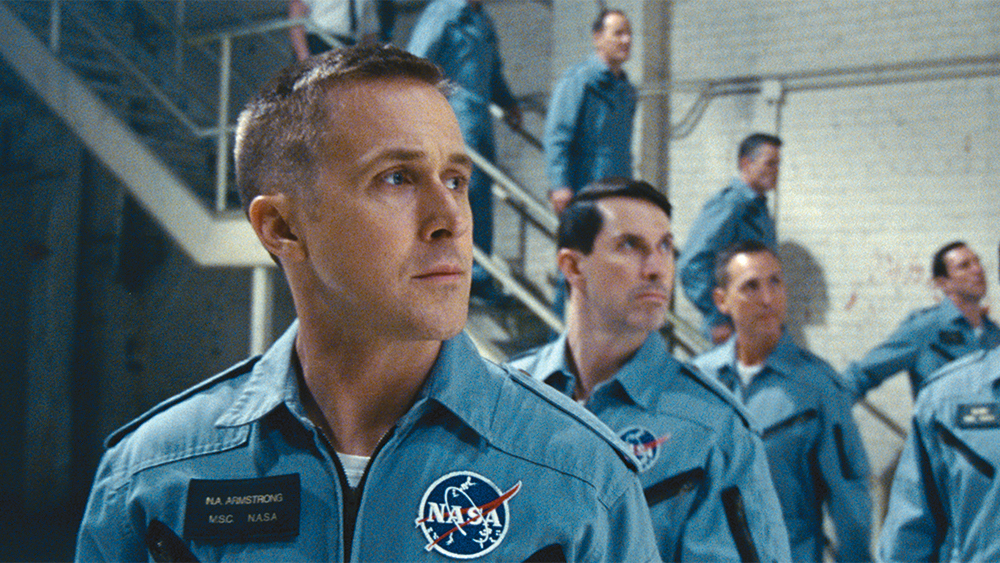
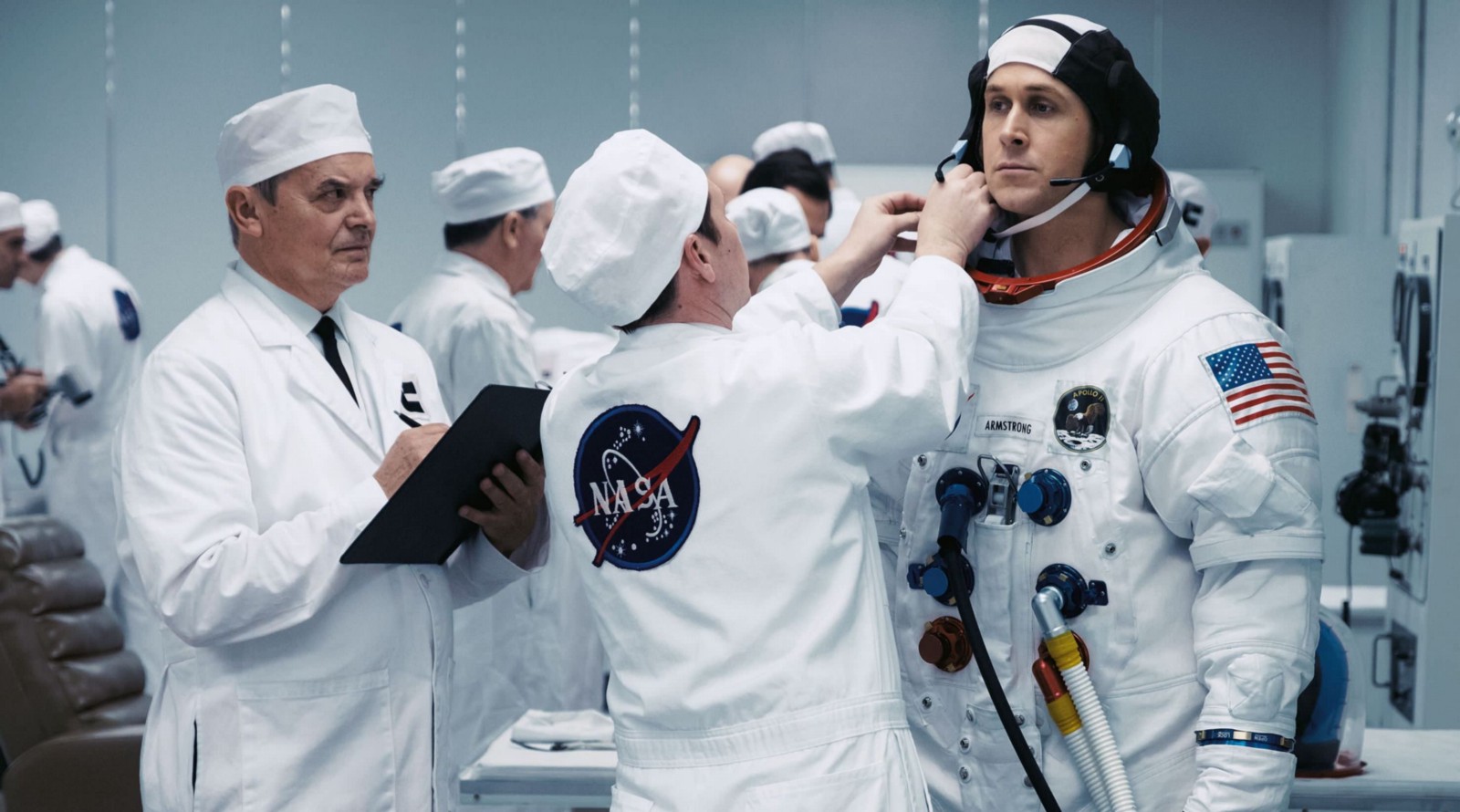
Ryan Gosling as an unreadable Neil Armstrong in the engrossing but cold First Man

Director: Damien Chazelle

Cast: Ryan Gosling (Neil Armstrong), Claire Foy (Janet Armstrong), Jason Clarke (Ed White), Kyle Chandler (Deke Slayton), Corey Stoll (Buzz Aldrin), Pablo Schreiber (Jim Lovell), Christopher Abbott (David Scott), Patrick Fugit (Elliot See), Lukas Haas (Michael Collins), Shea Whigham (Gus Grissom), Brian d’Arcy James (Joseph Walker), Cory Michael Smith (Roger Chaffee), Ciaran Hinds (Robert R Gilruth)

About halfway through this film, it struck me: Neil Armstrong is a not particularly interesting man who experienced the most interesting thing ever. It’s a problem that First Man, an otherwise exemplary film, struggles with: Armstrong himself, put bluntly, is unknowable, undefinable and, in the end, an enigma I’m not sure there is much to unwrap. Which is not to detract one iota from Armstrong’s amazing achievements, or his legendary calmness under pressure or his courage and perseverance. It just doesn’t always make for good storytelling.

First Man charts the years 1961-1969. During these years of professional triumph, Armstrong has success as test pilot, an astronaut on the Gemini programme (including command of Gemini 8, carrying out the first docking in space then saving his own life and the life of his pilot with his quick thinking when the mission nearly encounters disaster) and then the Apollo programme and his own first steps upon the moon. But Armstrong’s life is dogged by loss and tragedy, first his five-year old daughter to cancer, then a string of friends in accidents during the hazardous early days of the NASA space programme, including the deaths of Gus Grissom, Ed White and Roger Chaffee in the Apollo 1 fire. Armstrong becomes a man burdened with these losses.

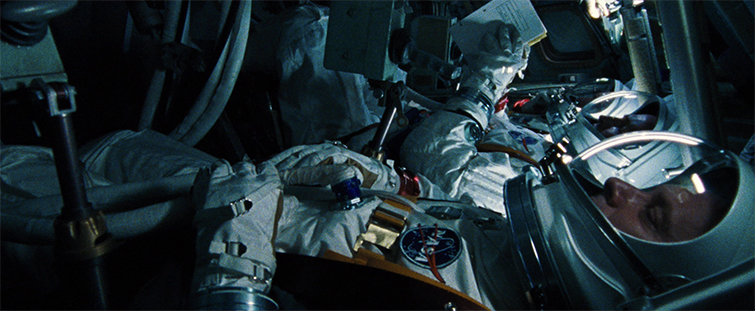
There is very little to fault in the making of First Man – in fact it’s further evidence that Chazelle is a gifted filmmaker with a glittering future of great movies ahead. There are two things this film absolutely nails: the supreme majesty and awe of space and the terrifyingly rickety nature of the spacecraft we send men up into it in. 

Helped hugely by a superb score by Justin Hurwitz, which makes extensive and beautiful use of a theremin, the film captures the sense of mankind’s smallness, our vulnerability, in the face of the overwhelming vastness of space. Mixing goose-bump inducing wailing solos with orchestral sweep, and encapsulating the feeling of how small and lonely man in space is, the score goes a long way to match up with the visuals in creating a sense of space. The Oscar-winning visual effects – mixing computer graphics with some ingenious practical effects – never intrude but bring out the gritty reality of tin cans in space. 

Chazelle also really understands the impact of being so far beyond anything we can imagine, and his moon landing sequence is a thing of beauty. He expertly uses a number of close ups in the confined, claustrophobic campaign and largely eschews exterior shots (most of which only use the perspective of the crew’s view from the tiny windows, or of the cameras mounted on the side of the spacecraft). The moon landing follows suit, as we are thrown in alongside Armstrong and Aldrin as the lunar landing module takes its place on the moon – until the hatch opens with a whoosh of air (and sound) escaping the picture. And with that whoosh, the camera flies out of the hatch and switches – in an astonishing visual trick – from wide screen to IMAX shot to give us our first view of the vastness of space filling the frame. Suddenly, space fills the entire screen and the shocking beauty of the moon is a beautiful touch. We get as close as we can visually to experiencing the switch for Armstrong from confined spaces and beeping switches to vast panoramas and all-consuming silence.

And we really feel the switch, because Chazelle has so completely immersed us into the dangers and insecurities of the space programme. The spacecraft are repeatedly shown as alarmingly shaky, screwed together (the camera frequently pans along lines of bolts inside the cabins), thin, tiny, vulnerable capsules that shake, groan, whine and seem barely able to survive the stresses and strains they are put under. Any doubts about the risks the astronauts are under are dispelled in the opening sequence when Armstrong’s X-15 rocket twice bounces off the atmosphere and the internal cockpit around him glows orange under the extreme heat. But it’s the same on every flight we see – these craft don’t look safe enough for a short hop to the Isle of Wight, let alone hundreds of thousands of miles to the moon and back.

And that’s clear as well from the danger that lurks around every corner of the space programme. Death is a constant companion for these pilots and can come at any time. Armstrong himself escapes only due to a combination of luck and skill. When luck disappears, death follows swiftly for many of his co-pilots. Off-screen crashes claim the lives of three of his friends. Chazelle sensitively handles the horrifying Apollo 1 fire (news reaches Armstrong of the death of several friends, including his closest Ed White, while wining and dining politicians at the White House), and the terrible cost of this tragedy hangs over every single second of the moon programme. Fate or chance at any moment could claim lives. This grim air of mortality hangs over the whole film, a melancholic reminder of the cost of going further and faster to expand mankind’s horizons.

This grief also runs through Armstrong’s life and shapes him into the man he becomes. The death of Armstrong’s daughter at the start of the film sets the tone – the shocking loss of a child at such a young age is tangible – and it seems (in the film) as if this was the moment that led to Armstrong hardening himself against the world. He weeps uncontrollably at the death of his daughter, but later deaths are met with stoic coolness. Armstrong in this film is a cool enigma, who by the end of the film treats concerned questions from his children about whether he will return alive from the moon mission with the same detachment he shows at the official NASA press conference. “We have every confidence in the mission” he tells these two pre-teens, “Any further questions?”

It’s the film’s main problem that in making Armstrong such an unreadable man, who buttons up and represses all emotion, that it also drains some of the drama and human interest from the story. While you can respect Armstrong’s professionalism and coolness under pressure, his icy unrelatability makes him hard to really root for over the course of two hours. The film also strangely only sketches in the vaguest of personalities for the other astronauts (Aldrin gets the most screentime, but is presented as an arrogant, insensitive blowhard) so we hardly feel the loss of the deaths. Its part of the attitude towards Armstrong as a man chiselled from marble, so lofty that the film doesn’t dare to really delve inside his own inner world or feelings but builds a careful front around him to avoid analysis.

It’s not helped by Ryan Gosling, whose skill for blankness makes him somewhat miscast here. Try as he might, he can’t suggest a deeper world of emotional torment below the calm surface, no matter how soulful his eyes. It’s a role you feel needed a British actor, who could really understand this culture of repressed stiff-upper-lipness. Indeed Claire Foy fares much better as his patient, loyal wife who holds her composure (more or less) for the whole film under the same pressures of grief as Armstrong. Gosling just can’t communicate this inner depth, and his blankness eventually begins to crush the film and our investment in its lead character.

First Man in almost every other respect is a great piece of film-making and another sign of Chazelle’s brilliance. But it’s never as dramatic as you feel it should be. Armstrong’s life doesn’t carry enough event outside his moon landing experience, and the film can’t make an emotional connection with the man, for all the loss and suffering it shows for him. For a film that is so close to so perfect on space and the Apollo programme it’s a shame – but makes this more a brilliant dramatized documentary than perhaps a drama.

Hidden Figures (2016)


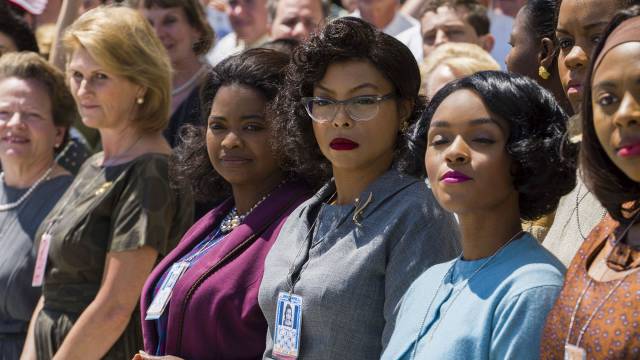
Octavia Spencer, Taraji P. Henson and Janelle Monáe are trying to make their way in a white man’s world

Director: Theodore Melfi

Cast: Taraji P. Henson (Katherine Goble), Octavia Spencer (Dorothy Vaughan), Janelle Monáe (Mary Jackson), Kevin Costner (Al Harrison), Kirsten Dunst (Vivian Mitchell), Jim Parsons (Paul Stafford), Glen Powell (John Glenn), Mahershala Ali (Colonel Jim Johnson)

The Space Race has a certain mysticism in American culture, epitomising a time of hope, where humanity literally touched the stars. And yet, amidst all this hope and aspiration, a whole section of America’s own population was being oppressed by racial segregation and prejudice. Hidden Figures brings these two aspects together by telling the stories of some of the black women who struggled against adversity to help send a man to the moon.

Hidden Figures is the sort of film Hollywood does very well: a warm, unfussy crowd-pleaser pushing all the expected emotional buttons, presenting an inspiring “based on true events” story . The film focuses on three black women pioneers at NASA. Katherine Goble (Taraji P. Henson) is a mathematical genius and widowed mother, promoted to work as a figures checker – and struggles to gain acceptance and equality with her fellow workers. Dorothy Vaughan (Octavia Spencer) is the team leader in all but name (and pay) of a group of black female checkers, who decides to make herself invaluable as a computer expert. Mary Jackson (Janelle Monáe) works as an assistant to the engineering team, but struggles to gain the formal qualifications she needs to progress.

Truth be told, it isn’t anything special – it knows how to serve up its moments in an affecting way, but it’s filmed with a workmanlike flatness. Its structure and events are predictable – the standard arc of adversity, struggle, acceptance and triumph. But it’s still affecting for all that, and well made. It becomes a decent feel-good movie, and manages to never succumb to overt seriousness or heavy handed self-importance: it keeps the tone pretty light.

It’s a film about racial and sexual discrimination, but it avoids introducing an actual villain. The real opponent is “the way things are” – no single white character is particularly racist or unpleasant, just used to the system being what it is and, feeling only the benefits of it, feel no obligation to change it. It’s not just the white characters either – even Ali’s Colonel Johnson struggles to believe Katherine works at NASA as a mathematician, and this everyday sexism is as much a barrier to the women as race.

Melfi astutely picks a handful of key moments to showcase discrimination: from little moments like Goble being handed a bin to empty when she arrives on her first day, to the careful hierarchical games played as Dorothy addresses Kirstin Dunst’s supervisor as “Miss Mitchell”, while always being called “Dorothy” in return. This sits alongside more overt moments: Hidden Figures probably has a claim to fame as being the only film to feature a toilet trip as its dramatic highlight – Gobley having to run over 15 minutes across the campus to use the “Coloured Women’s” bathroom, a situation only resolved by the intervention of her grizzled boss (an effective Kevin Costner). The design also works well to help visually make the woman stand out as different in the sea of white NASA men around them.

Spot the odd one out in NASA

If the characters do fall into a standard pattern (the quiet professional one, the motherly one, the firebrand), the acting is still extremely good. Henson is terrific as the quiet anchor of the film – it’s particularly admirable as the role largely isn’t showy or flashy. But she brings a quiet, assured professionalism, making Goble a woman who knuckles down and gets on with it, whose quiet assurance wins eventual respect. The love story between her and Ali’s Colonel Johnson is also very sweet. Spencer is very good as Vaughan, particularly the way she suggests resentment just below the surface of her motherly exterior. Monáe has the least interesting role, but her bolshiness serves as a nice contrast to the other leads.

The tricky thing when a film purports to be a piece of history, is when you find out much of what you watched didn’t actually happen. The racial segregation we see so prevalent in NASA just wasn’t quite the case in real life. The obstacles and barriers placed before our heroines largely didn’t happen. Even segregated bathrooms (a key motif in the film) were not an issue at NASA. Many of the events we see didn’t happen – or not like this – and the vast majority of the supporting characters are composite inventions. After investing in the struggles of the three characters, it’s easy to feel that the revelation that it was (almost) all made-up has cheapened the impact of the story.

However, what is true is: even if NASA wasn’t as bad as this, most of the rest of America was. So even if this film makes working in NASA look a lot worse in the 1960s than it in fact was, it does feel very true if taken as a general impression of what life in America was like back then for black Americans. So although the film has to brush up and embellish things that actually happened, it does feel very true to the general experience of being both black and a woman in the 1960s. All of which is a way of giving the film a bit of a pass for its inaccuracy. It might be gilding the lily of the struggles these women had in NASA, but it is certainly a real impression of what black women experienced in America at the time – in fact the reality was almost certainly worse.

Hidden Figures is a charming enough film, even though it’s a pretty predictable and unsurprising one. It pushes all the Hollywood buttons you would expect with confidence, and while its story arcs don’t deviate much from the “inspiring movie” template, they do work very well. Its historical accuracy is ropey, but it does feel like it gives a very good sense of the attitudes of the time – capturing both the almost atmosphere of hope in 1960s America, and also the everyday horrors of segregation and racial oppression. It also has some terrific performances. It may be a safe, crowd-pleaser of a film – but it does please the crowds well.