Category: Sports film

Moneyball (2011)

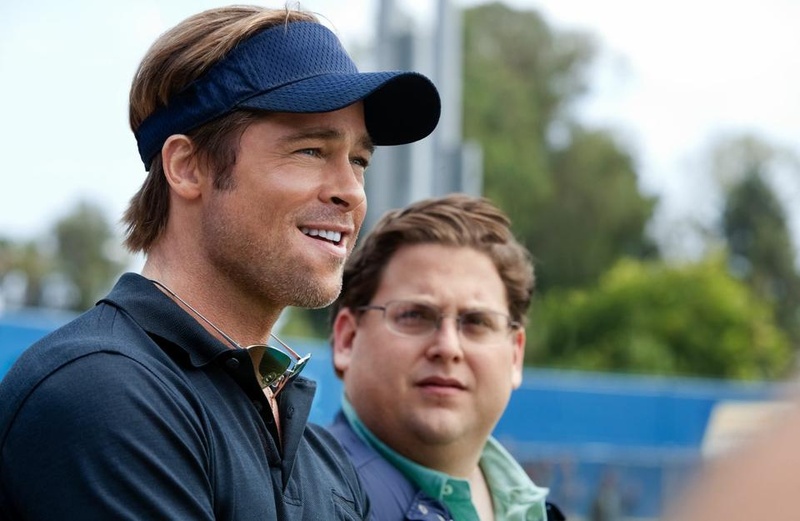
Brad Pitt and Jonah Hill take on maths and baseball (in that order) in Moneyball

Director: Bennett Miller

Cast: Brad Pitt (Billy Beane), Jonah Hill (Peter Brand), Philip Seymour Hoffman (Art Howe), Robin Wright (Sharon), Chris Pratt (Scott Hatteberg), Stephen Bishop (David Justice), Reed Diamond (Mark Shapiro), Brent Jennings (Ron Washington)

Chances are, if I tell you this is a film (a) about baseball and (b) also about sabermetric economics, I’ll lose a lot of you before a single second of the film has rolled. Which would be a shame in this case, as Moneyball is an entertaining, rather affecting yarn that manages to turn subjects that really feel like they should be impossibly dull into a sprightly against-the-odds drama.

In 2002, Oakland A’s general manager Billy Beane (Brad Pitt) has a problem. The As are struggling to pull together a competitive team for the new season, with their best players having been cherry picked away by the larger (and crucially richer) teams, and the money to buy replacements proving incredibly sparse. But after a chance meeting at the Cleveland Indians with young Harvard economics graduate Peter Brand (Jonah Hill), Beane stumbles across another way of building a team. Realising that if he tries to compete on finances with the bigger teams he will always lose, Beane is persuaded by Brand to research player statistics to unearth players undervalued by the big teams. By focusing on specific playing statistics – crucially their on-base percentage – rather than more showy skills, Beane starts to build a successful team, despite the push-back from the more conservative scouts and coaches at the club.

Yes it’s the backroom side of sports, the boardroom politics and business dealings, that come to the fore in this film. But rather than bore, it actually zings along very effectively due, in no small part, to some cracking trademark rat-a-tat dialogue from Aaron Sorkin (polishing a script by Steven Zallian), which elevates conversations about percentages and statistics into something so entertaining you don’t even notice you barely see any actual playing of baseball. 

But then the film comes into shape because who hasn’t wanted to be the visionary, to be the one who tells a stuffy room of old-timers that they are out of date and hell fire I don’t care what you say we’re going to do it the new way or be damned? Based on Michael Lewis’ book, written in heavy collaboration with Billy Beane, the film may well (as some have claimed) play up the conservative prejudices of the follow-your-gut scout and coaches (in particular its portrayal of coach Art Howe as some sort of lumbering dinosaur) but it does make for some damn fine scenes.

And there is a point in there that these coaches feel – perhaps slightly justifiably – that their experience is being disregarded in favour of burying your nose into an online almanac. Crucially, they are proved right (although the film plays it down) when they identify one of the Beane’s signings in advance as a party-hard troublemaker. The film also shows that, while numbers help recruit the players, what actually makes them perform is Beane’s reluctantly taking on the mantle of man-management: talking to the players, explaining what he is doing and motivating them personally. While it’s a film about pushing the boundaries, it also takes moments to show that we can’t junk everything that’s past to build our future.

Moneyball largely manages to make scenes like this dramatic, which is pretty damn good going

A lot of this comes out of Beane’s own personality. It’s a gift of a part for Brad Pitt, who is excellent, mining the deep vein of loneliness and isolation in Beane, whose past is littered with regrets and mistakes. His own baseball career flamed out after early promise, due to his inability to adapt to a higher level of play (Brand wins Beane’s trust by telling him that, based on statistics, he would have picked him very late in the draft not first). It’s an experience that gives Beane a ready-made scepticism for “gut instinct”, but also explains his own unwillingness to get to know the players who (if he needs to) he’ll need to trade in an instant for the good of the club.

Pitt gives Beane this inner sadness, but also a level of warmth fired by competitive zeal. He’s unable to watch the games (so driven is he to win) and he treats his negotiations with other teams and managers with the sort of no-holds barred testosterone that you’d expect he played with. He’s a passionate man who loses his temper and has no time for fools. But he has a deep love for his daughter (of course!), keeps on good terms with his ex-wife and understands deep down that making life decisions is based on a lot more than money.

This also adds a level of bravery to his decision to fly in the face of decades of baseball knowledge – get this wrong and his head will be on the block. This brings added tensions to heated discussions with scouts, frenzied phone calls to secure at the right price the most statistically advantageous players, and clashes with coaches about how to pick a team that has been selected for very specific skills. It adds a human element and guts to the drama.

With super dialogue, a fine performance from Brad Pitt and some good supporting work from Jonah Hill as the (semi-fictionalised) numbers-guy slowly building in confidence, Moneyball has more than enough to recommend it. Sure not much concession is made to baseball muggles, but there’s more than enough heart and drama here to overcome the lack of explanation of how baseball works and what these percentages actually mean – the fact is it works.

I, Tonya (2017)

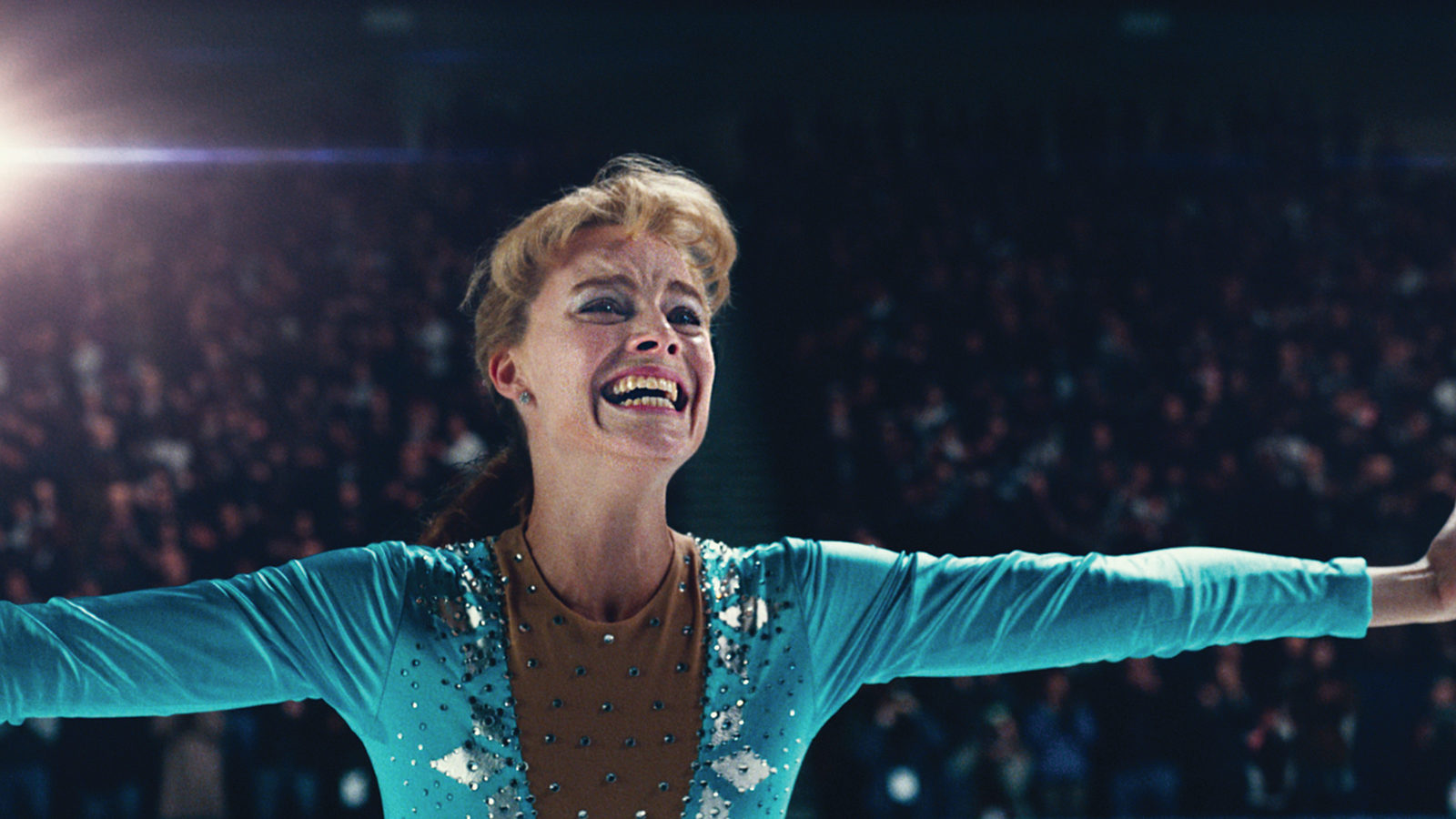
Margot Robbie triumphs as Tonya Harding in I, Tonya

Director:  Craig Gillespie

Cast: Margot Robbie (Tonya Harding), Sebastian Stan (Jeff Gillooly), Allison Janney (LaVona Golden), Julianne Nicholson (Diane Rawlinson), Bobby Carnavale (Martin Maddox), Paul Walter Hauser (Shawn Eckhardt), Caitlin Carver (Nancy Kerrigan), Bojana Novakovic (Dody Teachman)

In 1994, Tonya Harding (Margot Robbie) is the bad-girl of ice skating. From a working-class Portland background, with a domineering mother (Allison Janney), she struggles to be accepted in the upper-class world of ice skating. After some success, including becoming the first American ice skater to complete two triple axel jumps, she constantly finds success undermined by her own failings and indiscipline, and the influence of her wastrel, abusive husband Jeff (Sebastian Stan). When competing with rival Nancy Kerrigan for a place on the 1994 Winter Olympic team, Tonya encourages her husband to send Kerrigan threatening letters to put her off. What happens instead is an attack on Kerrigan that breaks her knee – and the fallout will have devastating consequences.

I,Tonya is much more than a film about an attack on a rival skater. Tonya (in the film) complains that the event (which she claims to have had so little to do with) has overshadowed her whole life, but that’s not a mistake the film makes. The film is instead a brilliant deconstruction of class and media in America. Tonya struggles in the world of ice skating because she comes from a working-class, trailer-trash background. This leads her to grow up with several chips on her shoulder, aggressively acting out against judges and fellow competitors, because she wants to belong but never feels she does. In a country that likes to pride itself that it doesn’t have the sort of class system the UK has, it’s a striking commentary on how Tonya completely fails to escape the impact of her poor, violent background – and uses it as a justification and excuse for everything that happens to her in the film.

Her background also makes it every easy for the media to cast Tonya as a villain, first as the difficult punk of ice skating, later as the Machiavellian arch schemer of a vile plot. The worst part of this is – like the reality stars of the 00s who would follow her – Tonya feels she needs to keep playing a role in order to “stay in the public eye”. In turn, the media – largely embodied here by Bobby Cannavale’s delighted media commentator, who gleefully recounts every key moment of the film in a smug series of talking head interviews – keeps the pressure on, puffing her up into whatever it requires her to be to fill a 24 hours news cycle. It’s surely no accident that the film ends with camera moving away from Jeff’s house, while news of OJ Simpson’s arrest plays on the television.

And why does Tonya fit herself into this role? Because, the film suggests, she is a victim who has confusingly absorbed her victim status into her personal relationships and self-value. Treated appallingly be her domineering mother, and hit constantly by her worthless husband, Tonya clearly believes that she is personally of very little worth. If she is so used to being an angry, raging punchbag at home, is it any wonder that she settles into that role publically? To the extent that, throughout, Tonya constantly sidelines or pushes away the more supportive people around her, like Julianne Nicholson’s (who is very good) dedicated coach.

The film handles this range of complex psychological and social themes with aplomb. In a neat touch, the film acknowledges that the events of its narrative are so controversial that everyone in it has a different view. The film is framed through a series of talking head interviews with the leading players (played by the actors) twenty years on. Each of them tells a contradictory version of the story and around the “incident”. The film, bravely, gives some weight to all these viewpoints. It’s brilliantly handled, as we see certain scenes from the perspectives of different characters, which makes them much easier to relate to. Gillespie also has a lot of fun with the film leaning on the fourth wall – frequently characters turn to the camera mid-scene for a few words of commentary, sometimes to stress a point, other times to deny the thing we have just watched ever happened. 

The eclectic and dynamic storytelling works an absolute treat, and Gillespie gets the tone absolutely right. While dealing with serious themes, the film is also blissfully funny. Much of the fourth wall humour is brilliant. While taking the characters seriously, the film is also written with a real dark wit. And (once you remind yourself that Kerrigan’s career was not seriously affected by the attack), the build up to the scheme itself, and the feeble cover up, is hilarious. Everyone in the chain of events is stupider than the person above them. Tonya is no genius, her weak husband is a clumsy fool, his friend Shawn an idiotic fantasist, the men hired to attack Kerrigan almost unbelievably stupid. The inevitable crumbling of the plot is hilarious in its disintegration.

It works as well because of the strength of the acting. Margot Robbie is superb as Tonya. She fills her performance with empathy for Tonya, but never lets her off the hook – Tonya never takes responsibility at any point for anything she does. Robbie gets the balance just right between the “little girl looking for love” vulnerability of Tonya, mixed with the bitterness and rage that always lurks just below the surface. She acutely understands the messed up psychology of someone who has been treated badly by everyone around her, and then finds it impossible to form a healthy relationship with the world.

On Oscar-winning form, Allison Janney rips into the sort of part that must have (rightly) looked like a total gift on the page. It’s a scene-stealing role: Harding’s mother is a foul-mouthed bully whose every other line is a zinging put down or resentment-filled burst of cruelty. Janney, however, keeps the part real: there is always a sense that somewhere in there, she genuinely feels she is doing what’s best for her daughter, even if her methods are completely misguided. Sebastian Stan is equally good as Tonya’s weak-willed, not-too-smart husband and Paul Walter Hauser is hilarious (as well as a remarkable physical match) as Shawn. 

I, Tonya is a very smart, very funny piece of social satire mixed with tragedy. While being very funny, it’s also sad and rather moving. It has some terrific acting in it and is directed with confident, but not overly flashy, aplomb by Gillespie. As a commentary on the media it’s well judged, and as a look at the impact of class at America it feels fresher than ever.

Creed II (2018)

Sylvester Stallone and Michael B Jordan take to the ring once more in Rocky IV/Creed remake Creed II

Director: Steven Caple Jr

Cast: Michael B Jordan (Adonis Creed), Sylvester Stallone (Rocky Balboa), Tessa Thompson (Bianca Taylor), Dolph Lundgren (Ivan Drago), Florian Munteanu (Viktor Drago), Phylicia Rashad (Mary Anne Creed), Andre Ward (Danny “Stuntman” Wheeler), Wood Harris (Tony “Little Duke” Evers), Brigitte Nielsen (Ludmila Drago), Milo Ventimiglia (Robert Balboa), Russell Hornsby (Buddy Marcelle)

After eight films, in a franchise that has been running for over 40 years, you have to ask if there are any original stories left to tell in the Rocky universe. The answer? Yes there probably are. Does this film tell one? Well no not really, even if there are moments where you feel it wants to. Instead it basically gives us the formula we expected going into it.

Adonis Creed (Michael B Jordan) is finally heavyweight champion of the world – but why is he so glum? Maybe because he still can’t seem to shake off the shadow of his deceased father Apollo Creed. So he finds it hard to resist when Ivan Drago (Dolph Lundgren), the man who killed Apollo, emerges from disgrace in the Ukraine (I’m not sure the makers of this film realise that the Ukraine is different country to Russia). Drago brings with him his super-fighter son Viktor (Florian Munteanu, virtually mute for the whole film) who challenges Adonis to a title fight. Rocky (Sylvester Stallone) doesn’t approve and wants nothing to do with it. Adonis’ pregnant wife Bianca (Tessa Thompson) isn’t sure it’s a good idea. But Adonis gives it a go – and is left hospitalised after a mauling, though Viktor is disqualified in the fight on a technicality. Adonis has to rebuild his confidence from nothing, lay to rest his daddy issues and, of course, take on Viktor in a rematch – stop me if you have heard any of this before.

Because you almost certainly have. This is a film that repackages themes from Creed, the basic plot structure of Rocky IV ,and mixes in elements from several other films to come up with a sort of Frankenstein’s monster that feels familiar rather than fresh. Practically every beat can be predicted in advance, and there are no surprises or challenges to your expectations. Essentially everything plays out so closely to what you might expect, and is so clearly signposted in the film, that it’s almost impossible to spoil. 

Which is a shame as there is a better, more intelligent film in here which is thrashing around trying to get out. There was a film to be made here about the shadows fathers cast over us. After all, Adonis and Viktor are basically fighting the battles of their fathers and adopted fathers rather than their own. For Adonis in particular, his struggles to live in the shadow of his father is hammered home with decreasing subtly as the film goes on. Director Steven Caple Jnr was clearly so pleased with his framing of a shot where Adonis trains while a window with a picture of his father towers above him that he repeated it several times in the film. It’s as far as the film goes to questioning the wisdom of these people being weighed down by legacies.

Because this is a film that is trying to have its cake and eat it. All of the characters close to Adonis oppose his first fight with Viktor – Rocky even tells him it’s not his fight – but come the second fight all these characters are cheering him on in the rematch. It seems the only way to escape your father’s shadow… is to climb deeper under it. (Interesting note: all references to Creed being the son of a girlfriend of Creed’s rather than with his wife are deleted in the film, which feels odd.)

You know what would have been interesting? Perhaps Adonis thinking he doesn’t need to win the fight to match his father’s achievements. Or perhaps Adonis deciding that fighting alone proved his point, and he didn’t need to match Rocky’s success in Rocky IV. Or deciding that he didn’t need to rise to the bait. Instead the film shows him pushing against his father’s legacy – and finally doubling down on it in order to create his own legacy. Thinking about it doesn’t make a load of sense.

It would also have been nice if the intervening years had changed Ivan Drago in some way – but he’s established very early on as a villain, and that’s it. Of course this is partly due to Lundgren’s limitations as an actor – wisely it’s nearly half an hour before Ivan speaks, and he does only one scene in English – but it would have been nice if Drago perhaps expressed some regret to suggest he has changed in some way since 1986. Viktor has an equally unclear trajectory – Ivan’s determination to reclaim glory via his son seems to be leading towards some bust up between them, but it never does (is it just me or does Viktor seem like he almost hates his domineering father?). The film tries to pay this off with a moment of familial affection between the two but it comes from nowhere and seems unclear.

So the story is predictable. So predictable by the way, that the film seriously sags in the middle as we wait (with no tension) for Adonis to decide he will get into the ring again and fight Viktor. It also has a slightly manipulative relationship between Bianca and Adonis (Tessa Thompson is wasted again in a bit of a nothing role – and her musician character is saddled with some of the worst music you’ll ever hear). But it’s still a well made film. The fight scenes in the ring are of course excellent as always. The main actors are all good – Jordan is very convincing and Stallone continues to get a load of pathos from the ageing Rocky.

But it’s just a little bit dull and familiar. There is too much of the same old same old here. Where are the new ideas? Even all these father themes were explored to a conclusion in Creed – why retread it all again? What does this do that is new and different – nothing really. It’s another chapter in their lives. But nothing else. And with the birth of Adonis’ daughter we’ve got to get ready for a whole new series of films in 30 years, as Amora Creed takes on Clubber Lang’s grandson’s nephew in Kid Creed. Or something like that.

Creed (2015)

Sylvester Stallone and Michael B Jordan keep the flag flying in Rocky relaunch Creed

Director: Ryan Coogler

Cast: Michael B Jordan (Adonis Creed), Sylvester Stallone (Rocky Balboa), Tessa Thompson (Bianca), Phylicia Rashad (Mary Anne Creed), Graham McTavish (Tommy Holiday), Wood Harris (Tony “Little Duke” Evans), Ritchie Coster (Pete Sporino), Anthony Bellow (“Pretty” Ricky Conlan)

Remember Rocky IV? It’s a bizarre film that opens with the plot twist of Apollo Creed, Rocky’s rival-turned-friend, slain in the ring by a Russian fighting monstrosity. Well that film, for all its rubbishness, partly redeems itself by being the jumping-off point for this spirited and well-made re-launch of the series. (Strange as it is for a film as grounded as this one to bounce off from such a bizarre piece of 1980s nonsense as Rocky IV.)

Adonis Creed (Michael B Jordan) is the son of Apollo  Creed from an extramarital affair. Adopted as a young boy by Creed’s widow Mary Anne (Phylicia Rashad), Creed grows up to be a man who yearns to fight as a boxer – although whether this is motivated by a desire to get closer to his father or to try and outdo him the film subtly plays around with as a major theme. He approaches Rocky Balboa (Sylvester Stallone) to train him, who eventually reluctantly agrees, inspired by seeing something of himself in the young man. When Creed unexpectantly lands a title shot – while Rocky deals with increasing ill health – both men have to come together to fight for their pride and future. 

Creed is a film that captures what works about this franchise, and repackages basically a very familiar story (this is almost point-for-point a Rocky remake) with a great deal of dynamism. Coogler, a talented and original director, brings imagination and intelligence to essentially pulpy material and makes something old seem new again. It does this while still homaging the previous films (even the rubbish ones!) at several points, from small stills on the walls of Rocky’s restaurant, to bit-part characters, to the marvellously beguiling score that gently riffs on the familiar motifs from the series.

It’s also helped by a fine performance from Michael B Jordan with a pretty much spot-on re-interpretation of the Rocky character in a new form. Jordan’s Creed is impulsive and quick-tempered, but also kind and charming. In fact it’s refreshing to have such a clean-living and well-brought up hero centring a film! Jordan gets some intelligent and subtle character work over Creed’s mixed feelings for his father: both resentful of never knowing him and also desperate to gain a sort of posthumous approval. It’s a basic daddy-problems story line but it’s done with a lot of subtlety.

Stallone’s performance as the ageing, slightly world-weary, lonely Rocky is another stand-out. This film’s Rocky is punched out, weighted down by life and unable to get over the sadness of his wife’s death; he sees young Creed as both a chance to find a new family and a reminder of his guilt over Apollo’s death. It’s a fine performance he gives here, detailed, moving and pretty much perfectly judged, with real moments of humour among the pathos. There is also an extraordinarily subtle make-up job on Stallone to make him appear far weaker and vulnerable than he actually is. It’s probably his best performance since the original film.

Coogler’s direction is spot-on, the pacing of the film is pretty much perfect. He shoots the fight scenes with particular freshness, the camera darting in and around the fighters as they beat each other in the ring. This immediacy adds a lot to these sequences – although the heavily choreographed fights, while great cinema, barely resemble a real boxing match! The film also balances really well both the training montages (many of which affectionately homage similar sequences from the early films) with a sensitive and well-constructed romance plotline between Creed and singer Bianca (well played by Tessa Thompson, who makes a lot of what is on paper quite an underwritten part).

It’s not perfect, don’t get me wrong. The decision to cast actual boxers in pivotal roles doesn’t always pan out, not least Anthony Bellow as Creed’s title rival (surely it’s easier to train up an actor than try to teach a boxer to act). For the English viewers it’s hard not to feel a few sniggers at the slightly strange sight of a title fight taking place at Goodison Park of all places (surely this film is the closest any Everton fan has got to seeing major silverware). 

But its affectionate reworking of the tropes of the series works really well, it’s extremely well-acted, it has intelligent character work for both Creed and Balboa who become fully rounded and intriguing characters, and it’s very well directed. It becomes a film about the importance of family as much as it is about legacy, about the two lead characters having to come to terms with the loss of their loved ones and build a new family. For all that the events in the film are pretty close to a straight re-tread of Rocky, this is such a lovely, heartfelt film it’s hard not to like it a lot.

Rocky IV (1985)

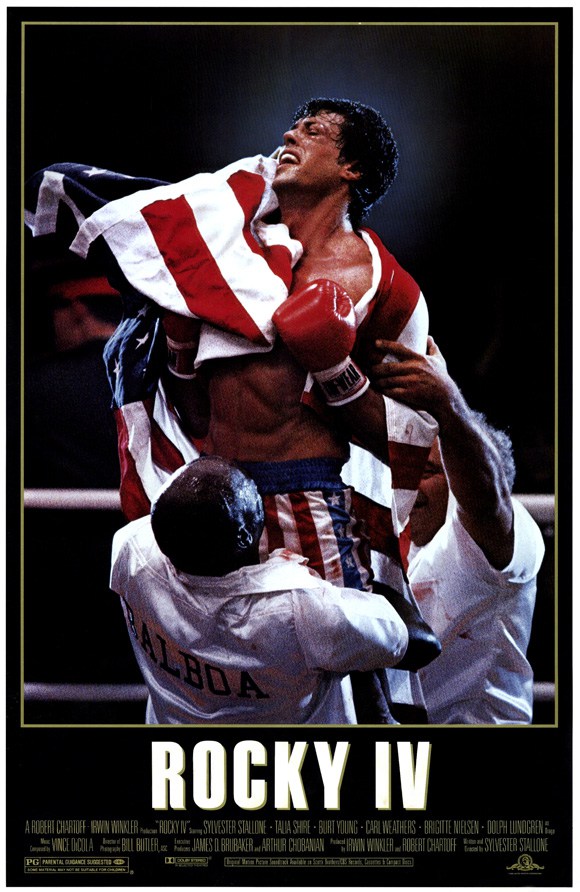
Sly Stallone takes on the towering Dolph in Cold War ending boxing fable Rocky IV

Director: Sylvester Stallone

Cast: Sylvester Stallone (Rocky Balboa), Talia Shire (Adrian Balboa), Burt Young (Paulie Pennino), Carl Weathers (Apollo Creed), Dolph Lundgren (Ivan Drago), Brigitte Nielsen (Ludmilla Drago), Tony Burton (“Duke” Evers), Michael Pataki (Nicolai Koloff)

By 1985, Rocky Balboa had come from behind to overcome adversity through sheer willpower no fewer than three times. We’d seen him come from obscurity to fight Apollo Creed, lose his money, fight Creed again, win, get shamed in the ring and lose his belt and trainer on the same night, then come storming back to beat Mr T. We’d had training montages aplenty as, for every major fight, Rocky needed to learn how to box in a new way. We’d seen him take punishment like nobody’s business in the ring as better opponents pummelled him before coming up against Rocky’s iron will. So in Rocky IV we got… well, more or less exactly all that. Again. But in Russia.

The ideas had gone, the inspiration had tanked. There was nothing new to do. Rocky IV is a very short film – and it could easily be shorter again if the padding had been removed. Apollo Creed (Carl Weathers) takes on Russian uber-fighter Ivan Drago (Dolph Lundgren) in the ring in a charity match. Drago is a mountain of Soviet athletic engineering and he beats Creed so badly, Creed dies. In Rocky’s arms of course. So Rocky Balboa (Sylvester Stallone) does what a man has to do – he’ll fly to Siberia and he’ll fight Drago on his own turf, all to avenge the memory of Creed. And for American pride. And along the way he’ll only go and get the Russians to rethink this whole Cold War thing.

Rocky IV is so painfully short of ideas, you’ll feel like you’ve seen it even before you’ve seen it. In fact, at least 10 minutes of it you have. The film opens with essentially a complete recap of Rocky III, including the closing scenes of that film. Later Rocky goes driving to the airport. Along the way he hits the radio in his Lamborghini (the product placement in this film is shockingly crude) and listens to the whole of No Easy Way Out by Robert Tepper, while the film plays a montage that recaps all three of the previous films. The scene might as well end with the title of the song appearing in the bottom left hand corner like an old MTV video. (Stallone’s rolodex was obviously well thumbed, as James Brown later pops up to deliver a rendition of the whole of Living in America.) This sort of stuff pads the plot absurdly.

Either side of that, we have two long training montages comparing the homespun honesty of Rocky’s training with the naughty, doping inspired, technological training of Drago. But then this is not a subtle film. Any film that opens with two boxing gloves – one American, one Soviet – flying towards each other and exploding isn’t exactly pulling its punches on the subtlety front. The political commentary in the film is laughably naïve, from Creed’s inane chatter about American pride, to the laughable depiction of the Soviet officials as distant Bond villains, to Rocky’s closing speech after his victory (spoilers) with its infamous “If I can change, you can change!” refrain. Did the makers think they were putting a hammer to the Berlin Wall here or something?

Most of the rest of the film moves between padding and the bizarre. Almost every single scene ends with a freeze frame, possibly one of the most clunky visual devices you could hope to see. Stallone as director focuses his camera with such loving intensity on his own chiselled frame that it’s almost a sort of camp classic. Some of the conversation and physicality between Creed and Rocky is almost laughable in its inadvertent homoeroticism. 

Then there is plenty of dumb stuff as well. I’d totally forgotten this film showpieces a robot servant whom Rocky’s brother-in-law Paulie (Burt Young) spends most the film treating like a hen-pecking wife. This robot is a bizarre sci-fi addition to the story, which seems to have walked in from a different film.

The fighting when it comes is pretty good, I’ll give it that. Yes literally everything in the boxing ring is so predictable you could write it down in advance, but as always there is something quite moving about watching Rocky take such punishment to emerge as victor. Heck even the Soviet crowd start chanting his name (take that Cold War!). But it’s fine. Drago isn’t even a character (he doesn’t even really have any lines), but that doesn’t really matter as its Lundgren’s size and strength that sells the show (he towers over famously titchy Stallone).

Rocky IV is predictable hokum, that offers precisely zero surprises and must have taken a wet weekend to write. Its bizarre robot sub plot, matched with the endless music videos, montages and flashbacks to old movies, shows that the well was pretty much dry by the time this film came around. But you know the formula still sorta works, and you still cheer as Rocky turns an epic pummelling into triumph. Carl Weathers is pretty good, Creed’s death is as strangely affecting as it is totally ludicrous (never in a million years, by the way, would either of the fights in this film be allowed to continue) but Rocky IV’s okay. And of course it ended the Cold War.

This Sporting Life (1963)

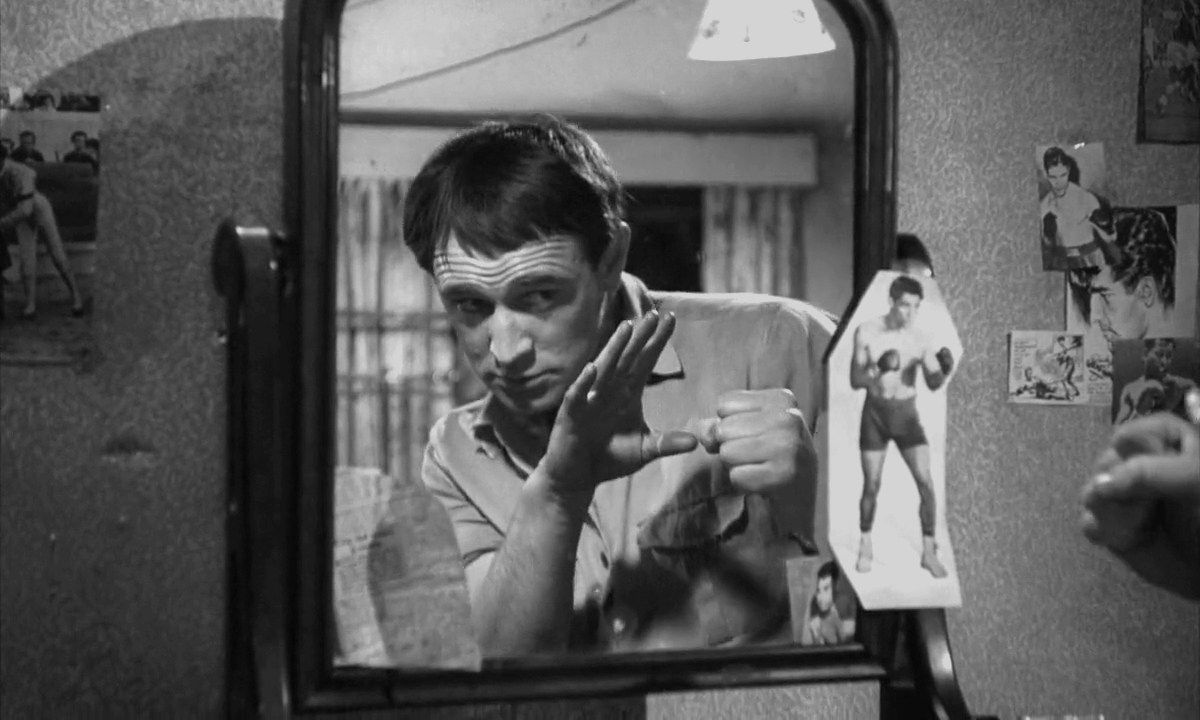
Rachel Roberts and Richard Harris excel in brutal kitchen-sink drama This Sporting Life

Director: Lindsay Anderson

Cast: Richard Harris (Frank Machin), Rachel Roberts (Margaret Hammond), Alan Badel (Weaver), William Hartnell (“Dad” Johnson), Colin Blakely (Maurice Braithwaite), Arthur Lowe (Slomer), Vanda Godsell (Mrs Weaver), Jack Watson (Lennox), Harry Markham (Wade), George Sewell (Jeff), Leonard Rossiter (Phillips), Anne Cunningham (Judith)

The British New Wave of the early 1960s embraced working-class stories. They centred on chippy, confident, crowd-pleasing working-class young men (it was always men) from regional towns, doing blue collar work, thumbing their nose at the establishment and fighting to find their own way. This Sporting Life takes a similar route – but its central character, Frank Machin, is a furious, resentful and selfish man, who seems hellbent on destroying everything he touches. Unlike Arthur Seaton or Billy Fisher, he’s hard to like – and the film hits as hard as scrum of rugby players. 

Frank Machin (Richard Harris) is a miner turned professional rugby player – not that he has any love for the game (“I only enjoy it if I get paid for it!” he contemptuously states). Machin is an articulate brute of a man, a pugilistic whirligig of resentments, barely expressed or understood desires, and a deep-rooted and chronic insecurity that cries out for love while pushing it away. He’s in love with his landlady, widowed mother of two young children Margaret Hammond (Rachael Roberts). They begin an affair of sorts – but it can barely survive her trauma and Machlin’s self-destructive rage.

Lindsay Anderson’s films are notable for their anger and bitter satire, so it’s no surprise he directed the least crowd-pleasing, angriest angry-young-man film of all – or that This Sporting Life killed the genre. The film is a series of hits, aimed far and wide, from the deference of the players to the owners who treat the clubs like playthings (the “amateur fair play” British attitudes to sport from the patronising owners gets a kicking), to the hypocritical judgemental attitudes of the working class. Even its romantic story features two characters so unable to engage with or understand their feelings that they only really seem able to communicate fully when raging at each other. 

Anderson’s new-wave, kitchen sink aesthetic creates a film that feels like a series of battles. From Machlin moving in local clubs to visiting the home of creepy closeted club owner Weaver (a smooth and unsettlingly cruel Alan Badel), whether rebuffing the advances of Weaver’s wife or at a Christmas party, he always seems ready for violence. The rugby matches are filmed like mud covered fights, with players piling into each other like sledgehammers. Even the “romantic” (and I use that word advisedly) scenes between Roberts and Harris feel like conflicts (they frequently tip into nerve-shreddingly raw emotional outbursts). 

Anderson’s film takes everything you expect from the Saturday Night and Sunday Morning expectations and amps up the danger, anger and tension. Machlin barrels through scenes, conversations and relationships in the same way he charges through the rugby pitch. The whole film is a sharp warning of the danger of unrestrained masculinity, pushing all softer emotions to one side. Machlin wants so desperately to be a man that everything must be a battle, at all times displaying his most manly qualities. The tragedy is that you can tell there is a far more sensitive and intriguing personality below the surface.

All this comes together in Richard Harris’ searing performance in the lead role. His career break – he won the Best Actor award at Cannes and was nominated for an Oscar – Harris was possibly never better. He’s a brooding force of nature in this film, utterly convincing as a man who bottles up his feelings until it is way too late. He hits out at everything, but you feel he is really running scared from the vulnerability in his own personality. With children, Machlin is tender and gentle, but with adults he is unable to express his feelings. His emotions for Margaret are based around suggestions of a need for a mother figure, sexual desire – and a desire for an answer to the emptiness he feels in himself. Harris is like an Irish Brando here, a marvellous, emotional, dangerous, brutal figure.

Rachel Roberts (also Oscar-nominated) is just as good, giving another extraordinary performance (to match the similarish role she played in Saturday Night and Sunday Morning) as Margaret. Grieving her husband, terrified of commitment, aware of her own position, as incapable in her own way of expressing her emotions and feelings as Machlin is, Margaret is as much a damaged and combative character. Roberts’ performance suggests years of disappointment and struggle behind the eyes, and she has a rawness and humane anguish in her scenes with Harris that sear the eyeballs. The scenes between these two are difficult to watch but engrossing.

The film is stuffed with excellent performances. William Hartnell is heartbreakingly tragic as the closeted talent scout who spots Machlin, only to be dropped by the new star. Colin Blakely is excellent as Machlin’s more grounded and engaging teammate. Vanda Godsell is the face of female corruption as Weaver’s sexually possessive wife. Arthur Lowe (who went on to work with Anderson several times) is very good as a stuffy but shrewd board member. All of this is beautifully filmed in black and white, with an urgency mixed with flashes of impressionistic grimness.

Anderson’s film, though, is primarily a working-class tragedy, about a man unable (until far too late) to really understand what he wants. Why is this? Because of failings in himself, but also failings in his upbringing, where qualities of self-understanding and expression are not encouraged, where pressure is placed on men to be men, where class and stuffy attitudes look to stamp out any real sense of self-knowledge. It’s an angry young man film that is truly, really angry. No wonder it flopped at the box office. But no wonder it lasts in many ways better than other films from this genre. It feels like a film that wants to say something, that has an urgent message. And it has at two extraordinary performances.

Concussion (2015)

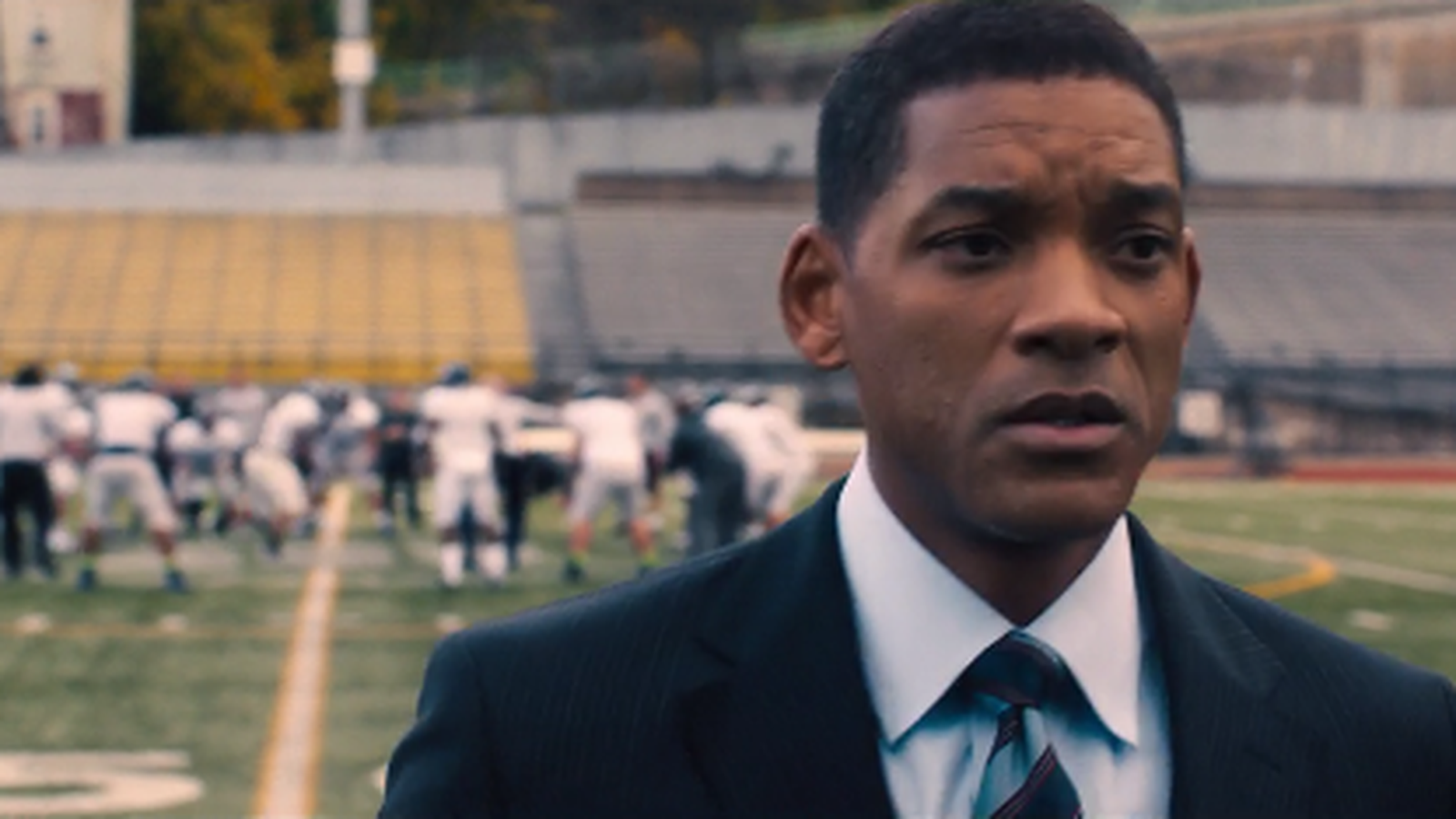
Will Smith takes on the NFL in solid but uninspired true-life story Concussion

Director: Peter Landesman

Cast: Will Smith (Dr Bennet Omalu), Alec Baldwin (Dr Julian Bailes), Albert Brooks (Dr Cyril Wecht), Gugu Mbatha-Raw (Prema Mutiso), David Morse (Mike Webster), Arliss Howard (Dr Joseph Maroon), Mike O’Malley (Daniel Sullivan), Eddie Marsan (Dr Steven T DeKosky), Adewale Akinnuoye-Agbaje (Dave Duerson), Stephen Moyer (Dr Ron Hamilton), Richard T Jones (Andre Waters), Paul Reiser (Elliot Pellman), Luke Wilson (Roger Goodell)

In 2002, Pittsburgh pathologist Dr Bennet Omalu (Will Smith) carried out an autopsy on deceased former Pittsburgh Steelers centre (and American Football legend) Mike Webster (David Morse). What he discovered – that the high speed impacts of American football massively increased the chances of players suffering serious brain damage and debilitating mental conditions – was to change his life, and lead to a six-year battle to get his research acknowledged by the NFL. This film dramatizes this story – with the obligatory inventions and dramatic changes (Landesman describes the film as “emotionally true” if not “factually true”).

Concussion is a fairly straight-forward, rather uninspired “one man’s struggle” kind of film. There isn’t much in it, to be honest, that is particularly unique or different from films of this type we’ve seen before. We’ve pretty much all seen the trope of a man pushing to get himself heard against the scorn, disbelief and anger of those who need to hear him the most. Does Concussionadd anything new to that? No not really.

Peter Landesman shoots the film with a methodical, workmanship that hits all the expected beats. The whole film plays like Michael Mann’s The Insider-lite: with the difference that the NFL never really convinces as an actual threat in the way Big Tobacco does in that film. The film falls over itself to repeatedly tell us how powerful the NFL is but never really shows us in the film how that power might work. When the FBI drum up charges against Omalu’s mentor, you never get the sense that this is being directed by the NFL themselves. They are simply never that dangerous an opponent.

Maybe because this is a film that doesn’t want to run the risk of saying America’s beloved sport is dangerous. It wants to blame bad eggs rather than an institutional failure – hence the repurposing of former player Dave Duerson as a sort of braggart bully. The characters playing the NFL heads are relegated to TV screens in the corner. It never wants to really look at the risks of this institution wilfully burying evidence their sport is dangerous, or question whether this sport is even a good idea. Throughout the world of sport, there are ungoing debates about the health risks of sport, from the danger of heart conditions to early onset dementia in football players from heading the ball. This film fails to really tap into any of this.

As such, there isn’t really any dramatic force behind the film: it doesn’t manage to suggest Omalu is in danger and it doesn’t want to turn the NFL into actual antagonists. It treads a weary middle ground. If the NFL was really positioned as a threat, then the pervasive presence of its stadium in Pittsburgh would be sinister. It isn’t for all Landesman tries to shoot it in that way.

Despite this though, Will Smith is very good as Omalu. The film’s version of the doctor seems a little different from the quirky, socially awkward real-life Omalu. But Smith nails the home-run scenes of Omalu raging at his research being disregarded. (In real life it was easy for the NFL to dismiss Omalu by using his Nigerian heritage (his ‘otherness’) quietly against him. The film doesn’t touch upon this by the way.) Smith has all the charisma the role needs and brings it a certain James-Stewartish moral decency.

The rest of the cast don’t get much else to play with. Alec Baldwin is pretty good as a former NFL doctor trying to ease his conscience (although his accent got some criticism). Gugu Mbatha-Raw has a fairly thankless role as the supportive wife, but does it well. Albert Brooks might be a bit too much at times as Cyril Wecht, but David Morse plays Mike Webster with sensitivity.

The film is not always that subtle. Shots of Webster haunting Omalu are a bit much. Omalu’s unhappiness and frustration are telegraphed using familiar clichés, from raging impotently at stony faced law officers, to trashing a room in his still-under-construction dream home in Pittsburgh (having read the source book it’s hard to believe the real Omalu ever did something like this). The timeline of the film isn’t always clear. There is a little too much lingering on funerals and tear-stained relatives for easy emotional hits.

The main issue is that Concussiondoes nothing special and doesn’t manage to make its familiar structure feel particularly fresh. It’s just a very, very familiar type of story told with no real unique imagination. Although Smith is very good, it’s not quite enough.

Chariots of Fire (1981)


Celebrations abound in triumphant running flick Chariots of Fire

Director: Hugh Hudson

Cast: Ben Cross (Harold Abrahams), Ian Charleson (Eric Liddell), Nicholas Farrell (Aubrey Montague), Nigel Havers (Lord Andrew Linsley), Ian Holm (Sam Mussabini), John Gielgud (Master of Trinity), Lindsay Anderson (Master of Caius), Cheryl Campbell (Jennie Liddell), Alice Krige (Sybil Gordon), Struan Rodger (Sandy McGrath), Nigel Davenpot (Lord Birkenhead), Patrick Magee (Lord Carogan), David Yelland (Prince of Wales), Peter Egan (Duke of Sutherland), Daniel Gerroll (Henry Stallard), Dennis Christopher (Charley Paddock), Brad Davis (Jackson Scholz)

Dun-da-da-da da-da dun-da-da-Da-Da DA. Hum that theme tune and you know straight away what film it is: you can’t resist the temptation to mime out running (in slow motion of course), arms swinging gracefully from side-to-side. There aren’t many more movies with more iconic, instantly recognisable themes than Chariots of Fire

If there is one thing everyone remembers, it’s the young athletes running along the beaches of St. Andrews, spray flying up from their bare feet. Nicholas Farrell sprinting with upper-class determination. Nigel Havers wiping spray from his face with glee. Ian Charleson full of serene joy. Ben Cross with fixed, rigid focus. The opening of Chariots is a master-class in quickly established character, tone, mood and era. The cross-fade from the funeral oration from an ageing Nigel Havers into this slow-motion, halcyon-days reflection tells you we are in the land of memory – and sets right up for the feel-good triumph the film becomes.

The film follows the key athletes of the British 1924 Olympics team. Harold Abrahams (Ben Cross) is a second-generation Jewish grammar-school boy who runs to prove he belongs and can excel. Eric Liddell (Ian Charleson) is a Presbyterian Scot, who runs to celebrate God and whose religion prevents him running in a vital Sunday qualifying heat. Both characters are, in their own ways, outsiders – and their underdog status makes them perfect to root for in this extremely well-made crowd pleaser.

Chariots is often seen as a slightly undeserving Oscar-winner. But that’s to overlook the panache it’s made with and how emotionally uplifting and engaging it is. Hugh Hudson had never directed a film before this one. His background was in commercials and he brings many of the strengths of that background to Chariots. The film is wonderfully assembled, a perfect combination of montage, cross-cutting, longer tracking shots and cross-fading. 

That opening scene tells you a lot with its swift economy. But he handles others just as well: Abrahams’ 100m winning race is played first in real time, then again, cross-cut with Abrahams’ reaction to victory. The first moment is one of triumph, but the immediate repeat allows an opportunity for the viewer to understand the mixed feelings that achieving everything you aimed for can bring. Abrahams’ slightly shocked, underpowered reaction gives the slow-motion repeat of the race a hazy, post-match analysis feel – as if Abrahams is still running the race in his mind. As if he knows that his whole life was building to that one moment, and now he needs to find a new focus.

Hudson’s mastery of moments like this is impressive. Sequences are fabulously assembled. The famous “one minute” dash around the Trinity court (actually Eton) is brilliant, and a great example of how the film sells tent-pole moments. It also masters quieter character moments. One of its stand-out moments simply allows Abrahams’ coach Mussabini (a scene-stealing Ian Holm) to react to Abrahams win (a victory he has not seen due to being banned from the stadium) by quietly rising to attention, then sitting on his bed, gleefully punching through his hat and quietly whispering “my son”. Other scenes – such as those where Abrahams confronts quiet anti-Semitism from Cambridge scholars (nice bitchy cameos from John Gielgud and famed director Lindsay Anderson), or Liddell is quietly pressured into running on Sunday – simmer with good acting and restrained direction.

It’s these scenes that really make the film work. Ben Cross is superb as a chippy, frustrated Abrahams who feels he must justify his place in England’s oppressive class system. He’s constantly glowering, tense and uncertain – but Cross mixes this with a boyish charm, a gentleness (most notably in his shy romance with an unrecognisable Alice Krige) – and a warmth and genuineness that he shows with friends. Nicholas Farrell’s boyish Aubrey Montague (a love-struck best friend if ever I saw one!) helps a lot here – if someone as obviously nice as him likes Abrahams, then gosh darn it we should as well.

Ian Charleson is equally impressive as the devout, charming but coolly determined Eric Liddell who has decided his course in life and nothing is going to shake him from it. The film has a refreshingly considerate view of Liddell’s Christianity – and, furthermore, praises him for sticking to his devout principles. Charleson wrote many of his speeches himself, and he brings a charming honesty to his character. How can you not love this guy? He’s the perfect ambassador for the Church.

The film tackles plenty of clashes for Liddell which sizzle in a quiet way. Cheryl Campbell is very good as his partly proud, partly concerned sister, worried that his missionary work is being sacrificed for his running. His confrontation with the Olympic committee over his crucial decision not to run – is there any other film where not working on a Sunday is the dramatic centre piece? – is nicely underplayed. It’s clear that they (including a very good Nigel Davenport as an understanding Chair) want him to run, and it’s equally clear Liddell is determined he won’t.

It’s the moments like this that make the film so triumphantly feel-good. Both Abrahams and Liddell are at heart immensely likeable, the upper classes and elites who frown at them in their way rather boo-able. The running scenes are great (despite the sweetly dated lack of grace!), the film really capturing the exhilarating energy of pushing yourself to the limit. Watching Abrahams training under the expert eyes of Mussabini (worth repeating again that Holm is the heart of this film, as the fatherly, wise trainer struggling against prejudice against both Italians and professionalism), or Liddell winning from behind after being pushed over in a race are simply hugely uplifting.

Strangely the one thing that does seem a little odd today is the Vangelis score. Yes the Chariots march is outstanding – but the 80s electronic beat to the rest of the score now sounds very dated. Yes it is interesting to overlay (then) modern music over a period piece – but nothing dates quicker than music (except perhaps haircuts) and that is the case here. It sounds odd and jarring with the action at times – but then that main theme is so brilliant (but also the most classical of Vangelis’ compositions) that it still sort of works.

The sad thing is that Chariots didn’t lead to great new things for most involved. When he won the Oscar for best original screenplay, Colin Welland famously cried “the British are coming!”. Sadly he wasn’t really right. Within four years two flop films had all but ended Hudson’s career. Producer David Puttnam took over Columbia Pictures, only to be dismissed within a year after disastrous results. Many of the stars of the film never got the breaks this film promised (Charleson died tragically young – the first major star in England to openly acknowledge his cause of death as AIDS). Even the star Americans introduced to play the yank athletes (Brad Davis and Dennis Christopher) never had a hit film again. As David Thomson put it, within ten years of all the major players only Ian Holm “had any professional credibility left”.

But Chariots is still a bit of lightening caught in a bottle. A strange idea to spin an entire film out of an event lasting less than 10 seconds, but which married up so well with universal themes of class and struggle. It knows exactly what it is, and exactly what it is doing. It really worked then and it really works now. It’s not pretending to be high art, or to really make profound statements – just to entertain. And it really does. Fetch your running shoes and start that Vangelis theme!

Eddie the Eagle (2016)


Some more comic escapades in the not-really-true-at-all film of Eddie the Eagle’s life

Director: Dexter Fletcher

Cast: Taron Egerton (‘Eddie’ Edwards), Hugh Jackman (Bronson Peary), Iris Berben (Petra), Keith Allen (Terry Edwards), Jo Hartley (Janette Edwards), Tim McInnerny (Dustin Target), Mark Benton (Richmond), Jim Broadbent (BBC Commentator), Christopher Walken (Warren Sharp), Rune Temte (Bjørn), Edvin Endre (Matti Nykänen)

Watching Eddie the Eagle, it’s interesting to think that Edwards was ahead of his time. An unqualified ski jumper with a certain natural talent and a lot of dedication, his unspun, naïve enthusiasm effectively made him a perfect YouTube sensation, 15 years before that term existed. His joyous reactions and “just pleased to be here” manner while coming last in two ski-jumping competitions at the Olympics meant the public couldn’t get enough of him (then or now it seems) and he’s probably about the only thing anyone can really remember about the 1988 Winter Olympics.

I found my heart completely unwarmed by this lamely predictable film, a virtual remake of Cool Runnings and Rocky, which can barely move from scene to scene without tripping over clichés. In other sports films, the snobbery against the underdog feels unjust because we know they deserve to be there. Edwards doesn’t deserve to be there, and doesn’t prove himself anything other than a brave novelty act. Perverse as it sounds, the one area where the film deviates from its predictable formula is the part that makes everything else not really work.

It’s not a particularly funny film. That may be partly because every single comic beat in it is taken from somewhere else, but joke after joke falls flat. Scenes meander towards limp conclusions that can be seen coming a mile off. Every single character is either a cliché, mildly annoying or both. Jackman strolls through the film barely trying. Taron Egerton plays Eddie as virtually a man child, a naïve mummy’s boy, an innocent in the world of men, curiously sexless, but a cheery enthusiast with a never-say-never attitude. However, I often found him less endearing and more mildly irritating.

Virtually nothing in the film is actually true. This doesn’t necessarily matter, but I felt it made the film slightly dishonest. It leaves us with the impression Edwards was set to go on to success in his career – he wasn’t. It doesn’t mention the Olympic committee changed the rules to prevent amateurs taking part in this highly dangerous sport at this level. It doesn’t even begin to mention that almost the entire cast are invented supporting characters, or that many of the real characters (such as Edwards’ father) have had their personalities totally reimagined.

It also reshuffles the truth to make Edwards seem far more incompetent and unlikely than he actually was. In reality an accomplished amateur athlete and skier who just missed the Olympic team, he’s here reinvented as a barely proficient, uncoordinated klutz, a buffoon on skis. Egerton’s otherworldly naivety (at times his childish outlook on the world borders on the mentally deficient) is to be honest rather grating. By hammering up his ineptitude, it’s hard to really think that he should be clinging to these dreams that he’s not suited to perform.

Channel 4 run a TV reality ski-jump show called The Jump. Several celebrities who have taken part in it have suffered serious injuries. With that in mind, is it really wrong to wonder if a sport isn’t right in saying “the unqualified and the amateur shouldn’t be attempting this”? Yes the Olympics is partly about competing in the right manner – but shouldn’t that mean also protecting people from themselves?

The one slightly brave move the film makes is to briefly toy with the idea that Edwards is fundamentally misguided. Before the Olympics begins, his trainer pleads with him to continue his training, wait four years and qualify as a proper athlete rather than a novelty, to have a future of several Olympics rather than cheating into one. Edwards (and the film) ignores him, but I found I was thinking “you know what, he’s right”. The film never manages to remove from Edwards the whiff of the joke act.

I’ve been incredibly hard on this film – it’s not like it’s trying to do anything serious or meaningful. It just wants to tell a nice story about a nice guy. It prides itself on being a bland formulaic piece of film making. But I didn’t find it moving or heartwarming and I didn’t warm to Edwards. I admire his determination, but he’s like those deluded singers chasing their dream on X Factor. The characterisation of Edwards makes him hard to relate to and his final “success” doesn’t mean anything as the film never escapes the feeling that he is being laughed at rather than with. Add the fundamental dishonesty of the film and I found it really unsatisfying.

Give it a miss. Watch Cool Runnings instead. That’s full of invention too of course, but the invention is truer to the facts and the spirit of the truth, and the film itself is far funnier and more satisfying than this one.