Category: Survivalist film

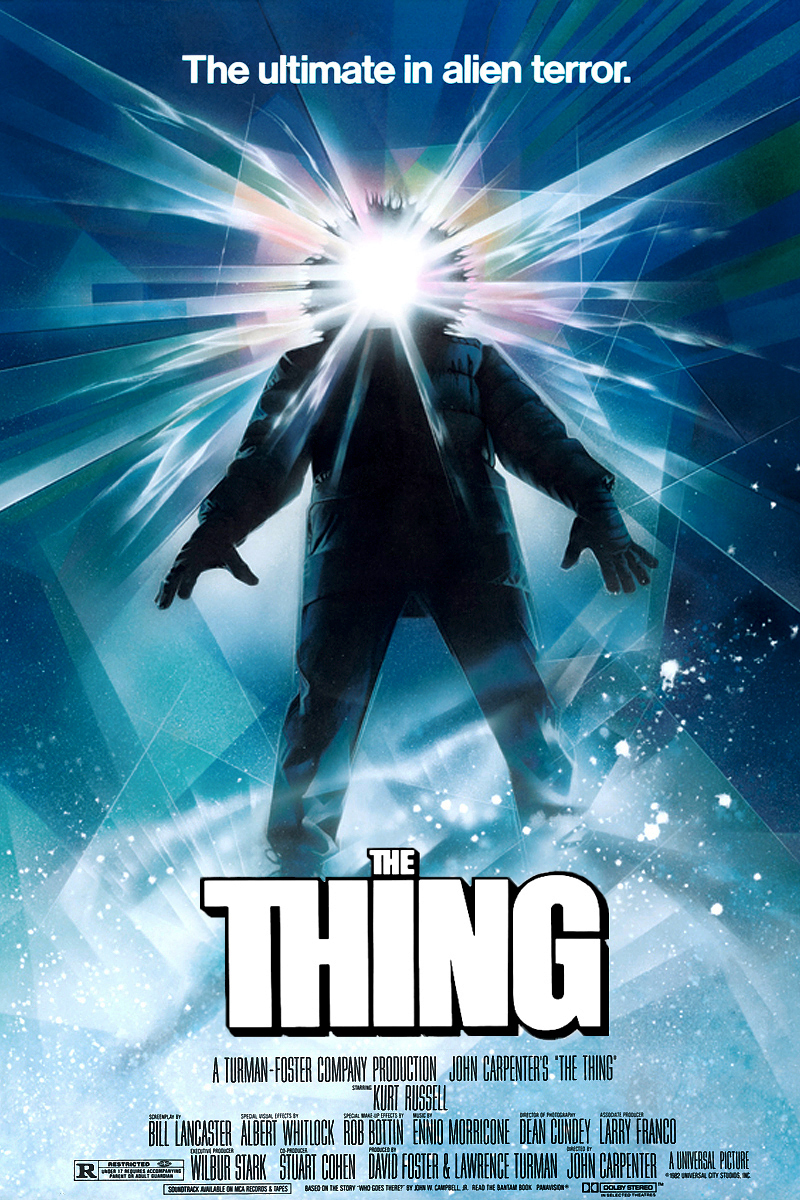
The Thing (1982)


The men of an Antarctic base encounter a deadly force from space in The Thing

Director: John Carpenter

Cast: Kurt Russell (MacReady), Wilford Brimley (Blair), TK Carter (Nauls), David Clennon (Palmer), Keith David (Childs), Richard Dysart (Dr. Copper), Charles Hallahan (Norris), Peter Maloney (Bennings), Richard Masur (Clark), Donald Moffat (Garry), Joel Polis (Fuchs), Thomas Waites (Windows)

In a curious coincidence, The Thing was released on the same day as Blade Runner. Both have since gone on to become landmark science fiction films, hugely influential to future film makers. Both have scenes that linger in the memory, and have ambiguous endings fans have discussed for decades. Both were also disastrous box office bombs and with negative critical reactions.

The Thing is a creeping masterpiece of sci-fi, body horror and paranoia. On an Antarctic base, an American research team rescues a dog being pursued by two Norwegians from a base close-by (the two Norwegians are both killed, one accidentally, one shot dead after firing at the Americans). Investigating the Norwegian base to see what happened, they find it destroyed and a series of grisly corpses, including one with two faces. Soon it becomes clear the Norwegians fell victim to an alien who has the power to perfectly copy and replace living organisms. The Americans realise they are trapped on the camp, with no idea who them may now be a “Thing” rather than human.

John Carpenter’s creepy, atmospheric horror film is an endlessly gripping thriller that rewards constant rewatching. Its shot with an unnerving simplicity of movement, with the focus getting tighter and tighter. We start with an unsettling helicopter shot taking in the panorama of Antarctica but, before long, the action is confined to single rooms in the American camp, with our leads shouting suspiciously at each other. The whole film is underplayed by an eerie Ennio Morricone score that really gets under your skin with its haunting electronic strains. It’s a classic by any definition of the word, and it never, ever gets old or tired: I’ve seen it a dozen times, and each time new small moments grab me, shots enchant me – and it never fails to be tense, unnerving and scary.

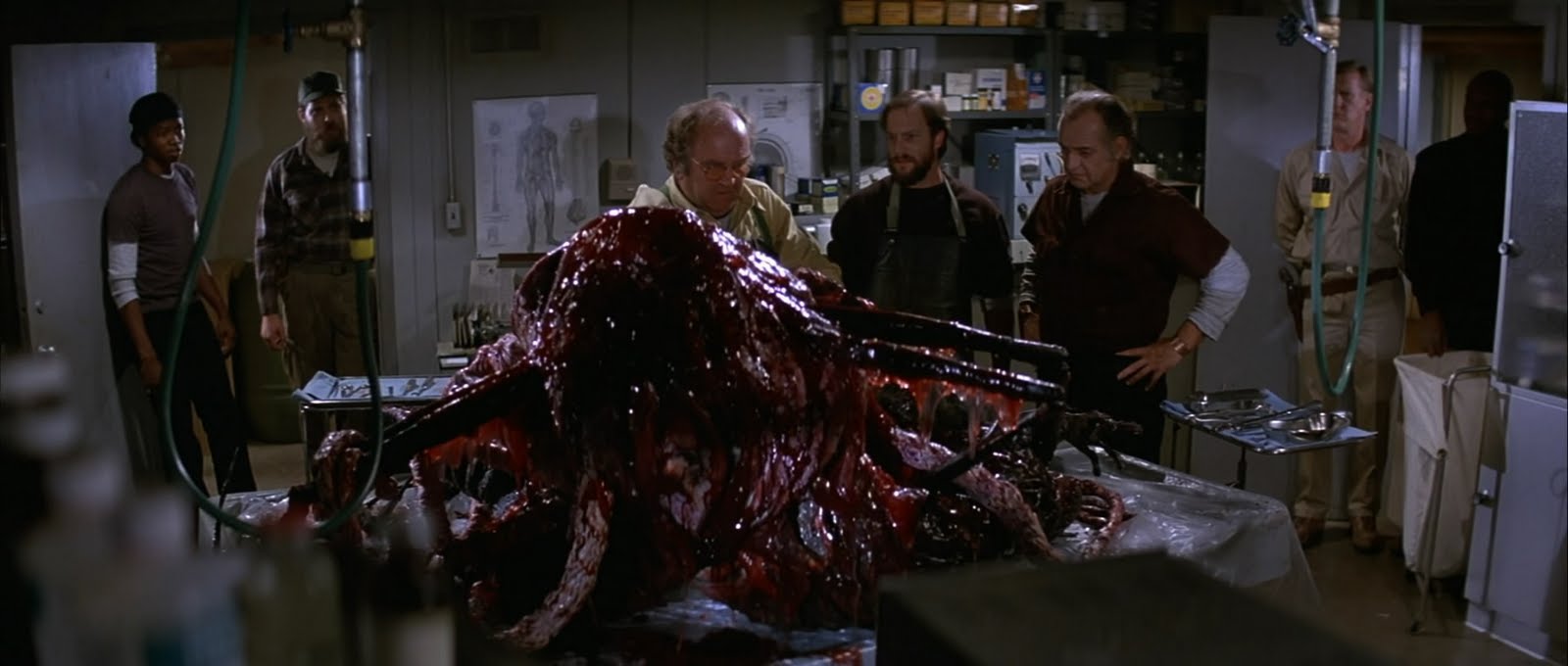
“You’ve got to be fucking kidding” a character states at one point. It’s pretty easy to imagine that this was the reaction of the critics at the time, at the onslaught of body horror. The Thing’s process of absorption is not only disgusting (usually involving flesh and skin peeling back to reveal all sorts of crazy shit), but its defence mechanisms involve similar depths of insane grossness. By the time our heroes are incinerating replacements with a ruthless lack of concern, we’ve already seen chests turn into massive tooth jaws, a dog Thing peel its own face off, and a head of a Thing separate itself from a burning body, grow spider legs and scuttle away. You’ve got to be fucking kidding indeed.

The Thing is pretty much a landmark in prosthetic work (you’ve never seen anything like this before). And the body horror still packs a major punch – I couldn’t eat my sticky bun while the Dog Thing ripped itself apart in the middle of a kennel early on (those poor other dogs by the way…). Some of the most effective stuff is actually the smaller scale moments – there is a great moment where a Thing grabs another character by the face and hand and face merge together. It has a truly yucky feeling to it. It’s all so carefully constructed and inventive that it haunts and fascinates. But if it was just a parade of gross images and nightmare fuel it wouldn’t have lasted. What makes it work is that it has a cracking story and a great set of characters. 

Carpenter collects a terrific group of actors, headlined by Kurt Russell. Russell’s MacReady is the perfect lead for this sort of film, a grizzled maverick slacker who reveals (when the shit hits the fan) the natural charisma of the born leader, the only man there able to make the hard calls. He even has a perfect little introduction scene, playing chess with a computer (whose voice makes it the only female character in the film incidentally). Having narrowly lost the game against a tactically more cunning opponent, he pours his drink into its workings, effectively destroying the game board. That gives you a pretty accurate idea of where the film is going. The whole film is Macready’s struggle against an opponent who is cunning, brilliant and (almost literally) faceless – is it any wonder he decides that destruction could be the only way to win? 

The rest of the cast give a lot of depth to their otherwise trope-based characters. In particular, Dysart, Brimley, David, Hallahan, Moffat and Masur stand out for creating unique feeling characters, each of them feeding into the growing paranoia that infects the camp. Because that’s what makes this film last: it’s a brilliant study of paranoia, suspicion and a group of macho men (to varying degrees) squabbling aggressively with each other in a confined space. Carpenter really captures this sense of twisted group dynamics – establishing plenty of tensions and personality flaws and clashes even before the horror begins. It feels like a real cold war movie: interlopers in our midst, but we don’t know who they are. It’s a slow burn that really pays off when the action explodes in the second half of the movie. 

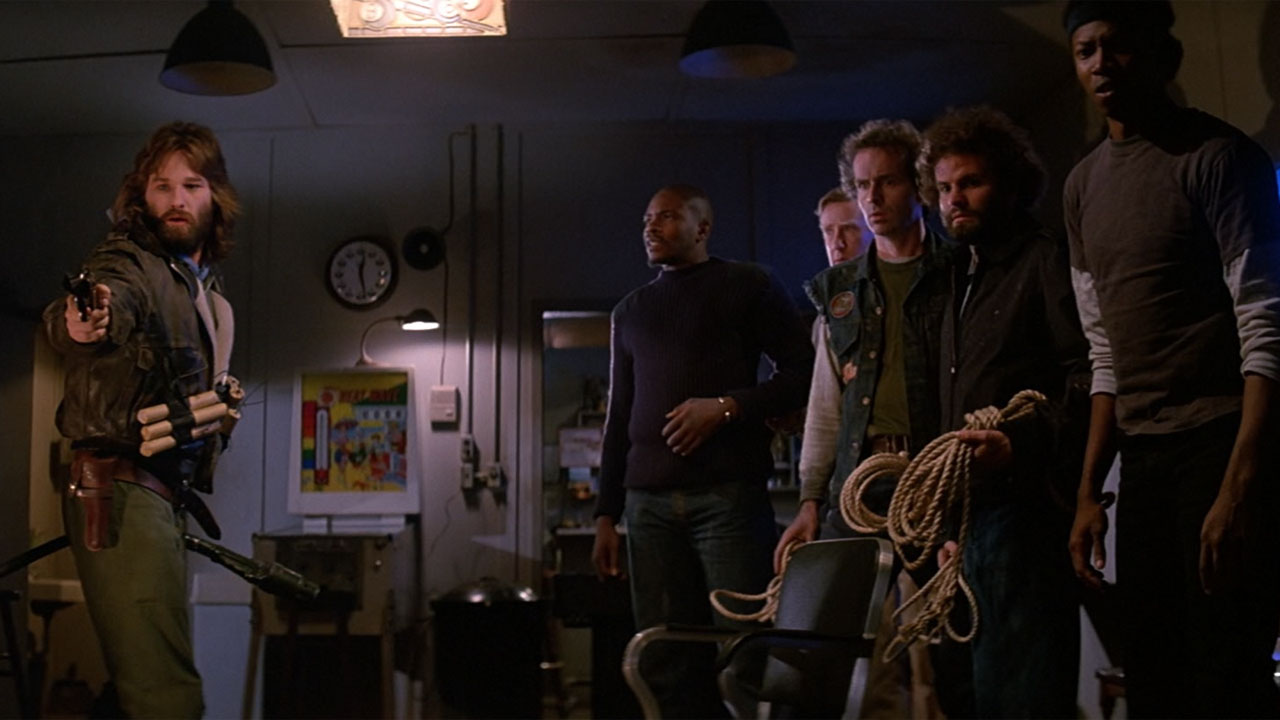
And that pay-off is compelling. A particularly masterful sequence involves a series of blood tests (now a hoary old stable of these things, but at the time something really new). MacReady essentially ties up all the other remaining characters (living and dead) and sticks a scolding hot wire into a blood sample from each man. The idea being the blood of any Thing will react aggressively to the “attack”. Carpenter really lets this scene build slowly – not least because MacReady is holding all the men at dynamite and gun point. The slow build-up reveals a few innocent men, each untied to help Macready. Then just as MacReady (and the audience) begin to relax – someone fails the test and the scene jumps into body horror chaos. Completing the tests after that is a near wordless sequence of jump cuts from test to test, with the number of untied men slowly growing. It’s brilliantly done: slow – quick – slow. Perfect tension drama. It’s the centrepiece of the whole damn movie.

The other thing Carpenter really understands is that set-ups like this are perfect discussion fodder for fans. Just as we love to debate whether Deckard is a replicant or not, there are plenty of similar points in this film. Most of this revolves around Blair, the first to work out the danger the Thing will cause if it reaches civilisation: when does he become infected? How many of his actions are human, how many Thing? At one point MacReady visits him (isolated in a hut) and finds him sitting calmly asking to come back in. Creepily beside him, an unused noose hangs from the roof: it’s not commented on in the scene at all, but it speaks volumes for possible interpretations. This sort of stuff throws itself open to a debate for the ages – the film enigmatically provides enough clues without definitive answers. It does this for a number of events – deaths go unexplained, materials are destroyed and we never find out by whom. The film is full of shady events, of key moments happening off camera, of mysteries going as unanswered for the characters as they do for the audience. Ripe for you to add your own interpretation.

The final scene of the film continues this: the surviving characters sit in the burning wreckage of their base. For all they know, either or neither of them may, or may not, be Things. But it hardly matters: the cold is coming in and we (and they) know anyone left in these conditions will be frozen in a matter of hours. So you get this brilliantly low-key, weary but charged exchange:

Survivor #1: Maybe we shouldn’t.

Survivor #2: If you’re worried about me…

Survivor #1: If we’ve got any surprises for each other, I don’t think we’re in much shape to do anything about it.

Survivor #2: Well, what do we do?

Survivor #1: Why don’t we just… wait here for a little while… see what happens?

So – the question stands? Who is a Thing and who isn’t? It’s a perfect, unsettling, final frame discussion point – and one that has kept feeding debate for years.

The Thing is a nasty, grimy, tense, unsettling, gruesome, gory, yucky, scary, paranoia-inducing masterpiece. It’s easily the best thing John Carpenter ever made (its failure at the box office seemed to break the director’s spirit, as nothing he did ever again reached this). As a slow-burn, cold war flavoured conspiracy and suspicion story it’s out of the top drawer – it captures perfectly the psychosis and fear that can be brought on by trapped isolation. It’s crammed with perfectly formed scenes. It has a terrific, nearly nihilistic feel to it – even the most competent of the men (MacReady) is way out of his depth here. Our alien nemesis is a master of psychology and tactics. So is the film.

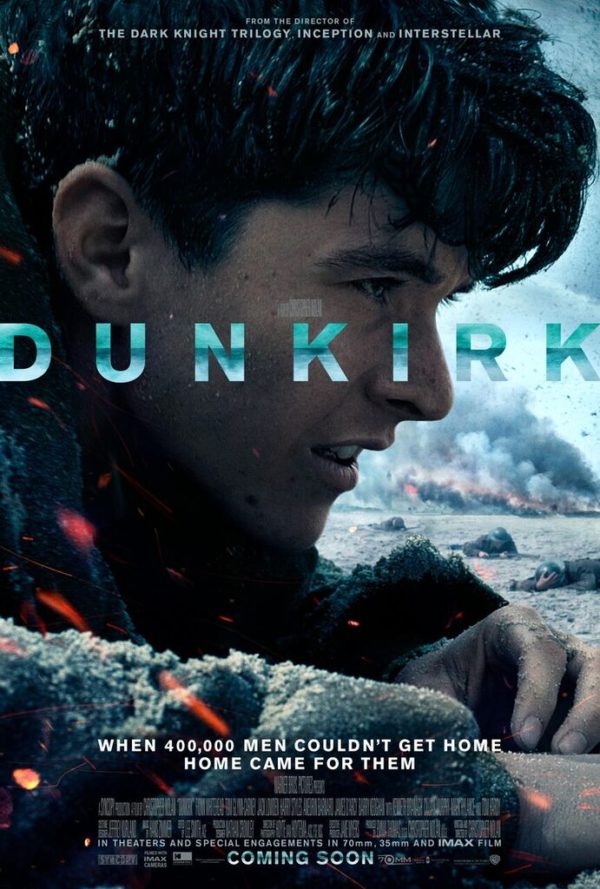
Dunkirk (2017)


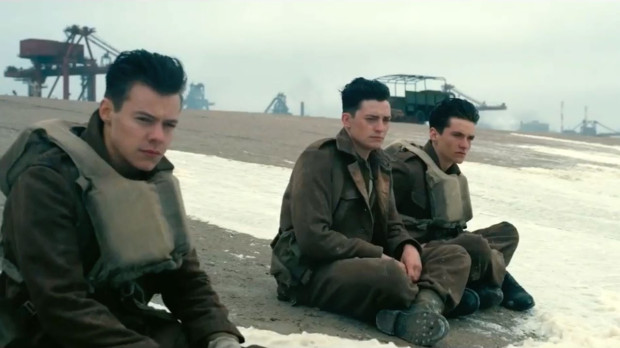
Harry Styles, Aneurin Barnard and Fionn Whitehead are three ordinary soldiers trying to get home in Christopher Nolan’s epic Dunkirk

Director: Christopher Nolan

Cast: Fionn Whitehead (Tommy), Tom Glynn-Carney (Peter Dawson), Jack Lowden (Collins), Harry Styles (Alex), Aneurin Barnard (Gibson), James D’Arcy (Colonel Winnant), Barry Keoghan (George Mills), Kenneth Branagh (Commander Bolton), Cillian Murphy (Shivering Soldier), Mark Rylance (Mr Dawson), Tom Hardy (Farrier)

“We must be very careful not to assign to this deliverance the attributes of a victory. Wars are not won by evacuations. But there was a victory inside this deliverance, which should be noted.” – Winston Churchill

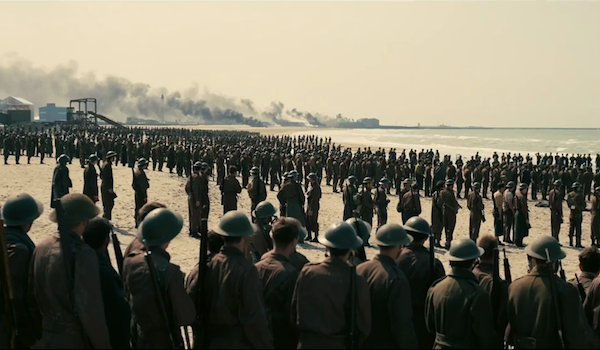
The evacuation of Dunkirk is a very British triumph. Beaten and encircled by the Germans, British forces were stranded in a small pocket around Dunkirk. The country looked certain to lose almost 400,000 men to death or imprisonment – the core of its professional army. The fact that almost 340,000 soldiers were evacuated was more than a triumph: it was almost a miracle. Christopher Nolan’s epic new film brings the triumph and adversity of this campaign to the big screen.

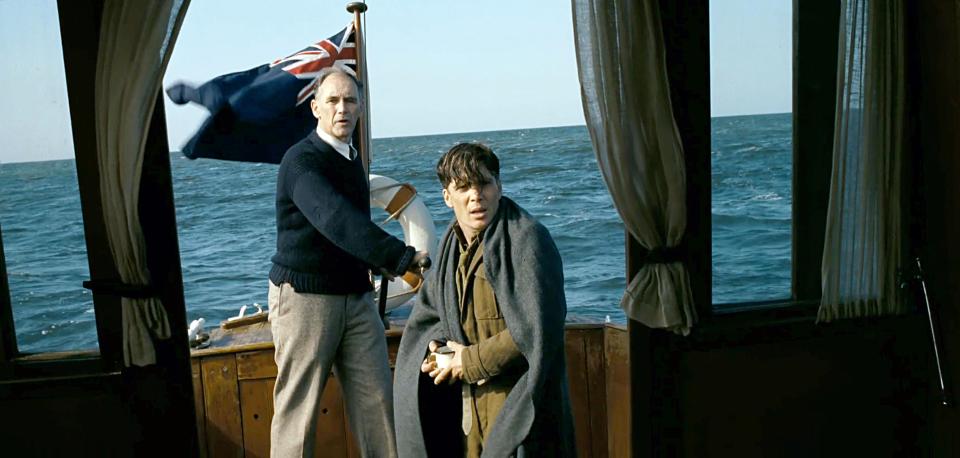
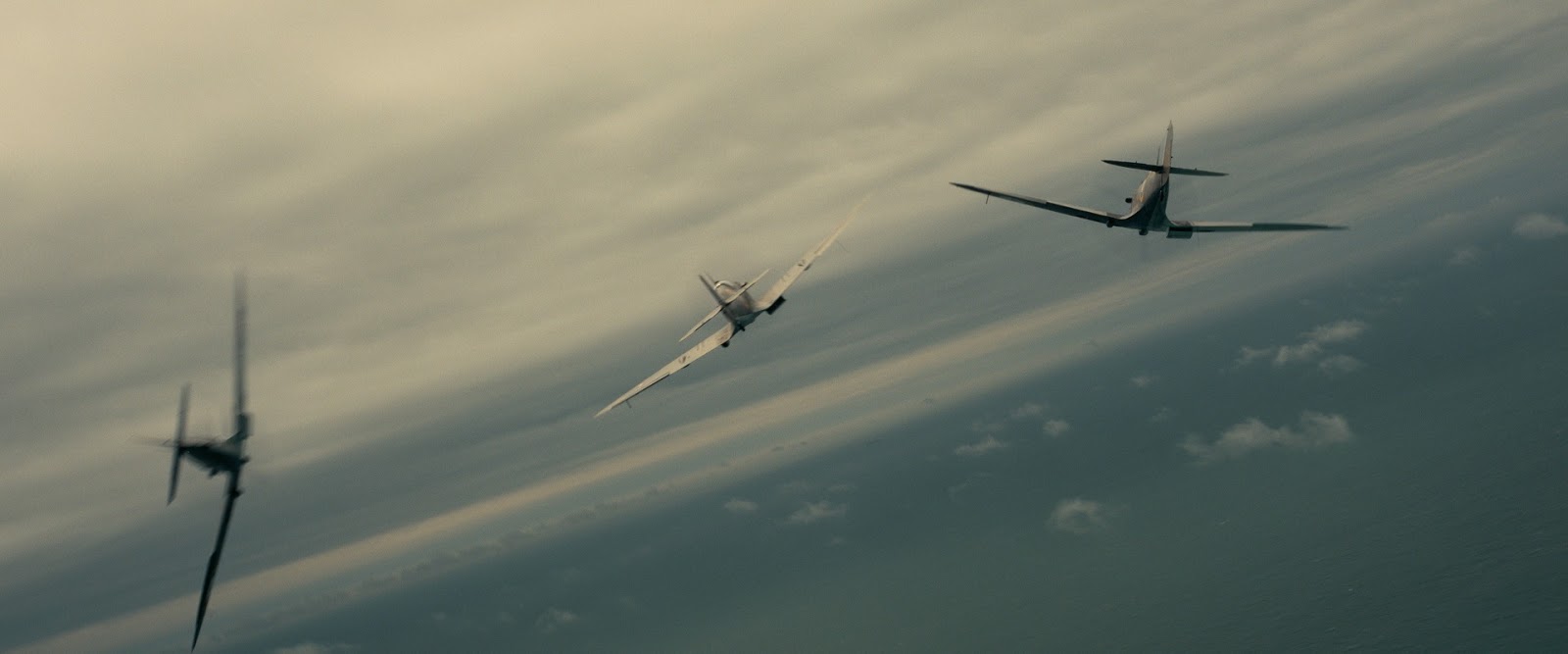
The action unfolds over a week around the evacuation of Dunkirk. On the beach Tommy (Fionn Whitehead), Gibson (Aneurin Barnard) and Alex (Harry Styles) are desperate to escape the chaos on the beach, where the evacuation is being managed from the one standing pier by Commander Bolton (Kenneth Branagh). On the sea, Mr Dawson (Mark Rylance) and his son Tom (Peter Dawson) head to Dunkirk in their small pleasure boat to help with the evacuation, picking up a traumatised soldier on the way (Cillian Murphy). In the air, Farrier (Tom Hardy) and Collins (Jack Lowden) fly a one-hour mission over Dunkirk to provide air support to the stranded soldiers.

As a director, Nolan’s calling cards are playing with narrative forms and timelines, while allowing personal stories play out on extremely grand canvases. Dunkirk feels like a summation of some kind of his career: its multi-layered timelines are gracefully and intelligently threaded together, and while the canvas is enormous, the human stories don’t get lost. The human interest running through the film is particularly impressive, as there is so little dialogue. It’s pretty close to “experience cinema” – it throws the audience into an immersive explosion of events, giving as much of an impression as it’s possible to give of the claustrophobia, tension and terror of being trapped on that beach.

The film-making is impeccable in creating this overbearing feeling. Hans Zimmer’s score thunders over the film, bearing down with a constant pressure and making excellent use of metronome ticking to keep hammering home the time pressure. Nolan brilliantly inverts scale in his filming to create a sense of claustrophobia – we constantly see sweeping shots of but the scale of our surroundings only forces home the seeming impossibility of what the British are trying to do. Individual soldiers seem tiny – how can one man possibly have a chance of escaping? It’s a brilliant mixture of sound and imagery to make the large seem small, the epic seem entrapping.

What Nolan does really well in this grand scale is to create a series of “ordinary soldier” characters. Despite the fact that we learn virtually nothing about them, these characters feel human and desperate. Again, they are such small, ordinary Everyman cogs in the giant machine of the army, that they become hugely relatable. It’s a hugely neat trick by Nolan, another brilliant inversion – just as he turns epic to claustrophobic, he turns ciphers into characters.

Recognising the need for balance between the overbearing impact of the Dunkirk beach sequences, the film allows a mix of story-telling and character types in its other two plotlines. So Mark Rylance’s boat captain voices much of the film’s humanitarianism, in a sequence that plays like a chamber piece – four people discussing duty and the impact of war in a confined space. Meanwhile Tom Hardy’s Spitfire pilot carries more of the traditional “war film” man-on-a-mission dynamics, engaging in a series of dog fights in the sky. Interweaving these stories offers not only relief to the audience, but also narrative contrast.

The interwoven storylines are also brilliantly done since they all take place in very different timespans. The plot at “the Mole” takes place over a week, “the sea” in one day, and “the sky” in one hour. Each of these timelines interlocks and unfolds in the film simultaneously, and characters move at points from one timeline to another.

Okay, writing it down, it sounds impossibly confusing and difficult to follow right? Who could keep track of all that? But the film is so brilliantly assembled that it always make perfect sense. Nolan uses several key markers – a boat, the fate of certain characters – to constantly allow us to see where we are in the story’s timeline. So we understand when we have moved from one timeline to another when we see a ship still on the beach that we’ve seen sinking elsewhere. This also increases the tension – we know at points what will happen before the characters do, because we’ve already seen the after-effects. Again, put it into words it sounds wanky and difficult to follow, but it really isn’t – and the film is put together with such confidence that it never feels the need to show off its narrative gymnastics. Nolan is confident enough to be clever without drawing our attention to it – a very difficult trick to pull off.

All this forceful story telling never prevents the story from also being at many points immensely moving and stirring. The arrival of the boats at Dunkirk is a genuine “lump in the throat” moment. The simple decency of Rylance’s boat captain gives a low-key impression of a very British sort of heroism, of quietly doing one’s duty while valuing every life and wearing your own grief lightly.

The film’s more action-based sequences are equally stirring and moving, because Nolan brilliantly establishes character with only a few brief notes. It’s made clear early on that Hardy’s pilot has only a limited fuel supply: every second he stays above Dunkirk protecting the men and ships below, he reduces his chances of getting home. It’s another sort of heroic self-sacrifice, and in a film that generally doesn’t shy away from showing the deadly consequences of war, Nolan is happy to give us some more traditional, fist-pumping heroics.

Nolan gets the maximum emotion from the more dialogue-heavy parts by hiring some terrific actors: Rylance, as mentioned is superb, and Cillian Murphy is very good as a shell shocked captain. Kenneth Branagh is perfect for conveying the weight of responsibility on the shoulders of the naval commander in charge of the evacuation. And elsewhere, Whitehead, Bernard and Styles all invest their ordinary Tommies with a great deal of emotion and empathy.

Dunkirk is a marvel of cinematic technique and accomplishment, which brings enough moral and emotional force to the drama to keep you engaged in the plights of its characters. You can marvel at the film making tour-de-force of its executions, but you never feel disengaged from it. It’s a marvellous film.

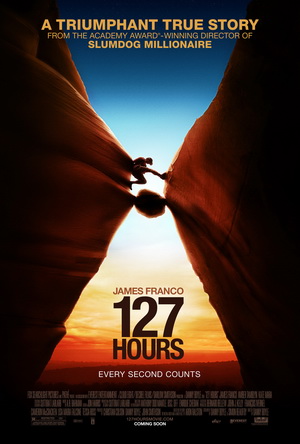
127 Hours (2010)

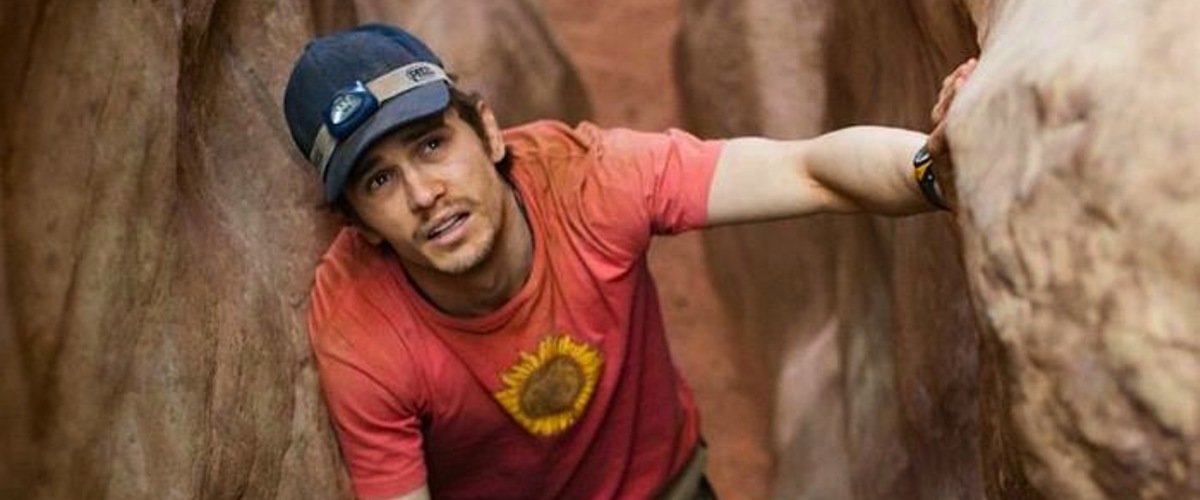
James Franco is literally stuck between a rock and a hard place in this mesmeric film from Danny Boyle
Director: Danny Boyle

Cast: James Franco (Aron Ralston), Kate Mara (Kristi Moore), Amber Tamblyn (Megan McBride), Clémence Poésy (Rana), Lizzy Caplan (Sonja Rolston), Kate Burton (Donna Ralston), Treat Williams (Larry Ralston)

Even people who’ve never heard of Aron Ralston, surely know this as “that film where James Franco cuts his arm off” (as my wife called it when I said I’d watched it). But, with the inspired direction of Danny Boyle and brilliant performance from James Franco, this is so much more than just a film about cutting an arm off.

Aron Ralston (James Franco) is an adventurous free-spirit, who loves nothing better than solitary journeys in isolated places. He’s asking for trouble – and ‘Ooops!’ (as he puts) one day he gets it, falling into a crevice where his arm is crushed in place by a boulder. Ralston is trapped for 127 hours, with limited food and water and only the contents of his rucksack to help. There is no chance of anyone finding him for weeks. Eventually the only option left for Ralston is the unthinkable: to disconnect his body from his trapped (and already dead) arm.

Possibly only Danny Boyle could make a film as dynamic, visually exciting and fun as this, about a man who spends the entire time stuck behind a rock. Ralston is such a vibrant personality that Boyle’s visual inventiveness works perfectly for the material. Boyle finds a host of brilliant angles and editing tricks to film, not only Ralston’s trapped positon, but also the host of day dreams and (increasingly) hallucinations Ralston experiences.

The film doesn’t rush us into Ralston’s trap either. The first 20 minutes show Ralston’s life as he lives it – independent, friendly, adventurous and essentially focused on himself. It also shows us how exciting and fun exploring can be – something we really need to know, so as not to think “Why are you even doing this, you idiot!” later.

When the event happens (and the film mines a lot of good-natured tension as we constantly wait for it to happen) it’s both sudden and low-key. Ralston’s first reaction (and yes it’s partly shock) is surprised irritation. Then the film swiftly tightens in on the small world this adventurer is now restricted to. The crevice, the boulder, a strip of sky, the contents of his rucksack – all of which (despite his best efforts) are inadequate for getting him free. Boyle’s immersive skill in staging Ralston’s claustrophobic position is so great that you feel the same unnerved surprise as Ralston does when he is finally free, after watching him fixed in place for over an hour.

The film gets a certain dark humour from the foreknowledge almost anyone watching has. Some of the very first shots, show Ralston’s hand reaching into a cupboard looking for his pen knife (the want of which he later heavily regrets), the knife close to the camera, just out of Ralston’s casual reach. Later, there is an extra agony watching him chip away uselessly at the rock (with a utility knife he establishes is not sharp enough to cut his thumb), knowing every blow is making this knife blunter and blunter –making what we know he will have to use it for later harder and harder to do.

Ralston finds himself in an impossible situation (from his own hubris and overconfidence), but not only keeps hold of his sense of hope and humanity but also makes profound discoveries about himself and his life. That’s the focus Boyle keeps his story on – and each of the flashbacks and hallucinations focus on Ralston reviewing his past mistakes he’s made and reflecting (without heavy handed dialogue) on how (if he escapes) he could change his life.

A lot of the film’s success is based on James Franco’s exceptional performance. It’s is as alive and throbbing as the movie, and he really understands the charismatic fire in Ralston, the egotism and cockiness matched with resourcefulness and determination. He’s every inch the guy cocky enough to go it alone in the wilderness, and skilled enough to explore every angle for escape. He’s not an idiot, but not a hero – he’s a guy who grows to understand mistakes he has made, while never wallowing in self-pity, who can make the kind of calls most of us would find unthinkable.

As for that scene? Well yes it’s tricky to watch (to say the least), but not because it’s graphic or unpleasant – but because Boyle makes carrying out such an act so logical, so necessary, that you look down at your own arm and wonder if you would have the guts to do the same. The premonition Ralston reported of seeing his own yet-to-be-conceived son, giving him the determination to do the deed, is staged by Boyle with a dreamy lyricism. This is picked up in AR Rahman’s score, which slowly build in intensity to consume the scene. As Ralston cuts each of the nerve endings in his arm, the music jars in a way that tells us more about pain than any level of screaming would do.

So yes the central event is hard to watch – but this is not exploitative or gross-out. Instead it’s a rich, rewarding and engaging film, dynamically filmed – for a film about a guy trapped in one place, it constantly feels like it is on the move. It’s a story about the human spirit, and how we can conquer impossible odds – especially when we feel, as Ralston did, that he wasn’t doing this just for himself but for his family. Far from an endurance trip, this is a heartfelt and moving story that left me feeling uplifted. I think it might be Boyle’s best film since Trainspotting.

Sully: Miracle on the Hudson (2016)


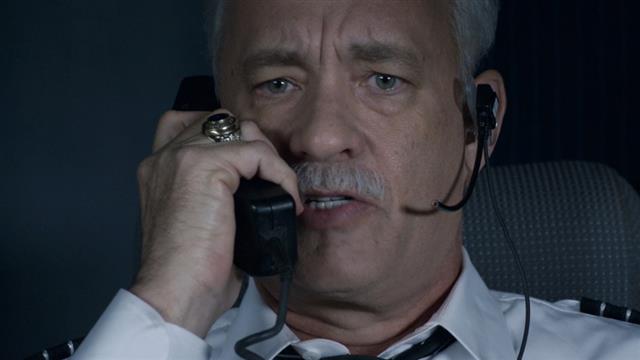
Tom Hanks braces for impact as heroically normal hero pilot Chesley Sullenberger

Director: Clint Eastwood

Cast: Tom Hanks (Chesley “Sully” Sullenberger), Aaron Eckhart (Jeff Skiles), Laura Linney (Lorraine Sullenberger), Anna Gunn (Dr Elizabeth Davis), Autumn Reeser (Tess Soza), Ann Cusack (Donna Dent), Holt McCallany (Mike Cleary), Mike O’Malley (Charles Porter), Jamey Sheridan (Ben Edwards)

On January 15th 2009, a miracle happened in New York. A plane struck birds, causing double engine failure. Captain Chesley “Sully” Sullenberger, left with no options, decided to land the plane on the Hudson River. Amazingly, all 155 passengers and crew survived unharmed.

Eastwood’s emotional, skilfully made film brilliantly recreates this true-life event, with Hanks taking on the lead as Sully. The framing device Eastwood uses is the National Transportation Safety Board investigation into the crash, here re-imagined as an almost persecution, convinced that pilot error and failure to react quickly enough were the causes.

What’s most striking for me is this film’s tribute to the professionalism and heroism of everyone involved. Just as Sully states during his hearing, this was a team effort, not the work of a lone hero. This comes across strongly here. Air hostess is a profession which, god knows, it’s easy to mock: but this film shows their unflappable bravery, calmness and leadership. Similarly, the first responders are dedicated and compassionate. I’m not ashamed to say I felt myself choke up at one point, when a first responder tell one waterlogged passenger “no one dies today”. The film ends with a tribute to New York coming together to save lives – and it’s a message ringing through the film.

Eastwood knows the drama of the film is directly linked to the crash, so weaves this event throughout the film, returning to it at least four times from different angles. He opens the film with Sully’s nightmare of what could have happened if he had flown towards an airport (the plane ploughing into New York) – a grim reminder of what could have been, which hangs over the rest of the runtime. The evacuation of the downed plane is gripping, and is filmed with a restraint that lets the events speak for themselves. The emotional force throughout these sequences is compelling.

Tom Hanks is perfectly cast as the low-key everyday hero achieving the impossible with only quiet courage and years of experience behind him. To be honest, it’s a role Hanks could probably play standing on his head, but his quiet everyman quality is essential to the film’s success. He’s well supported by Eckhart and other members of the cast.

It’s good Hanks is so assured, as he is required to anchor much of the film’s plot. The plot is where the film struggles as, to put it simply, the story away from the crash isn’t actually that dramatic or interesting. An attempt has been made to make the investigation into the crash into a sort of inquisition into Sully’s actions, but it never really rings true (it largely wasn’t) and it’s never really interesting enough, certainly not when compared to the crash itself.

In fact, it’s hard not to think that there is some sort of message being built into the film here, contrasting the low-key individual Sully with the faceless, procedural suits who can’t imagine the importance of the human element. Maybe that’s reading a bit much into it, but either way it’s average drama: there is never any doubt in the viewer’s mind that Sully will be completely exonerated. It’s an attempt to add dramatic tension to a story everyone already knows.

Furthermore, Sully is too “normal” a man to sustain a drama around his life: in another film inspired by these events, Flight, Denzel Washington played a drunken pilot who saved an aeroplane in a moment of inspired flying. The drama of that film was based on the film’s exploration of Washington’s character’s lack of responsibility vs. his act of heroism. Sully doesn’t have this, so we don’t get that sense of conflict within the character or with others. Put simply, Sully is such a regular decent, guy that, outside these unique circumstances, he is not really a dramatically interesting character – and the film can’t create a plot that brings drama out of his situation.

So Sully is a mixed bag of a film. Hanks gives his best as ever, but the film can’t really get over the fact that it’s recreating a moment in history, and fails to give that moment an effective dramatic framework. There is some good supporting work, although many of the other roles are thankless (Laura Linney’s role in particular is literally phoned in), but the film only flies when the plane doesn’t. The reconstruction of the event, and the people who were involved in it, is inspiring and stirring – but the rest of the film is little more than a humdrum courtroom drama.

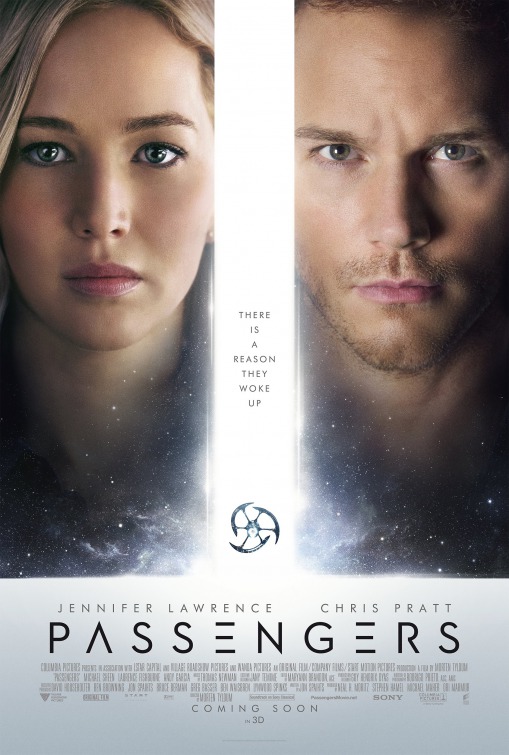
Passengers (2016)


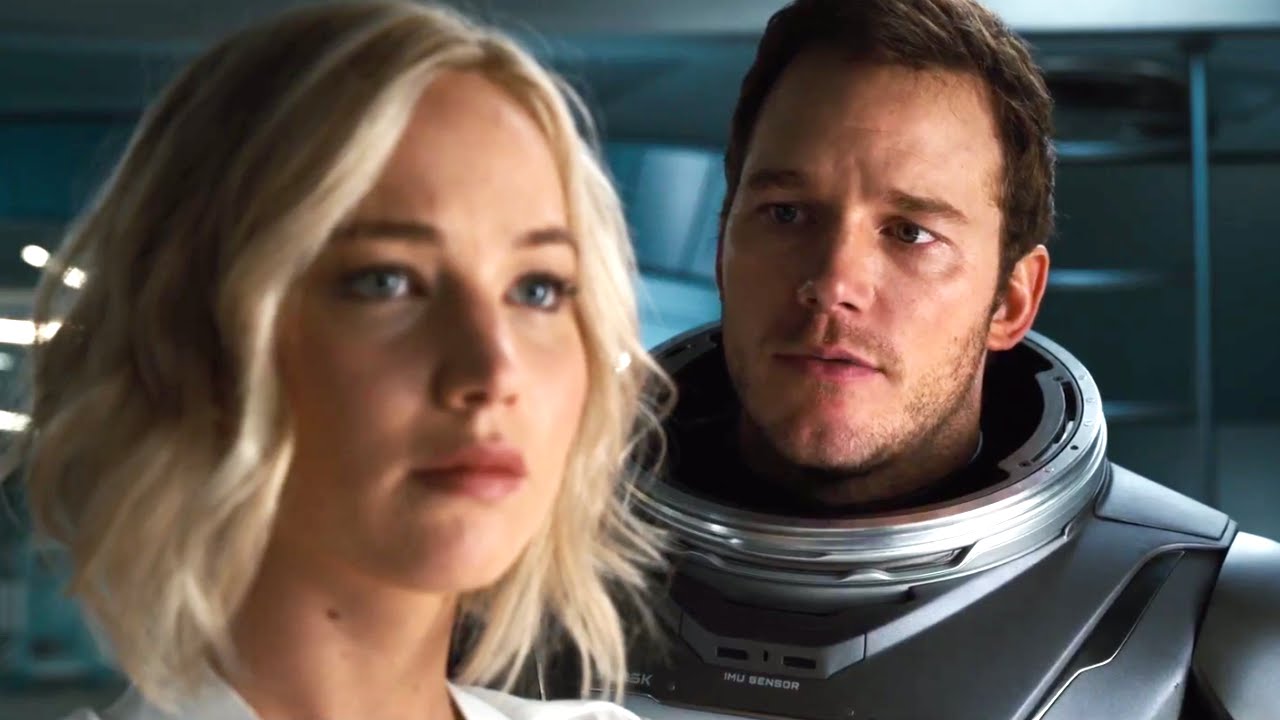
Jennifer Lawrence and Chris Pratt juggle moral dilemmas in the surprisingly dark Passengers

Director: Morten Tyldum

Cast: Jennifer Lawrence (Aurora Lane), Chris Pratt (Jim Preston), Michael Sheen (Arthur), Laurence Fishburne (Gus Mancuso)

The Avalon is a spaceship carrying over 5,000 passengers and crew to a new planet for resettlement. With the flight due to last 120 years, everyone is in suspended animation. After an accident, passenger Jim Preston (Chris Pratt) is woken 90 years early. Trapped on the ship, unable to return to cyrosleep or change the direction of the ship, and with the round-trip time for messages to Earth being 76 years, Jim faces living the rest of his life alone on a spaceship. After over a year of isolation, with only android bartender Arthur (Michael Sheen) for company, Jim succumbs to temptation and wakes another passenger, Aurora (Jennifer Lawrence), for companionship. They fall in love over time – but how will Aurora react when she finds out the truth?

Passengers was a film that received a negative reaction perhaps because it managed to successfully not spoiler its plot in advance. While the trailer seemed to promise this would combine mystery and romance in a space setting, it’s actually more about the effects of isolation and the moral quandary of relieving your own despair by placing someone else in the same position. While the film is never going to win awards for its exploration of psychosis, it certainly tries to tackle this idea and explain – but not excuse – why Jim takes the decision he does.

A lot of people felt this suggested Aurora effectively falls in love with her kidnapper-cum-stalker, and that Jim’s actions are glossed over. Well I’d argue against this. Firstly, the film never shirks the repercussions of Jim’s decisions – indeed that’s really what the film is about: can you forgive the unforgiveable? A large chunk of the film is a build up to Jim taking a decision he acknowledges is wrong, and feels tremendous guilt and shame about. The later section of the film revolves around the impact of this action coming to light. Discovery of the truth destroys Aurora and Jim’s relationship, and it’s uncertain for much of the rest of the film whether there will ever be any forgiveness for Jim. If the film had shelved the issue, or Jim had been forgiven within minutes of screentime, that would be another question.

Secondly, the film works hard to show the savage psychological impact of complete isolation, and (after a year of this) the dangerous temptation of having a companion a push of a button away. Jim is clearly not in his right mind when he makes his decision – and later when Aurora faces the prospect of similar isolation, she responds with similar despair. If there is a fault with this, it is that the film shies away from defining the time progression explicitly enough – and doesn’t quite have the courage to increase its timeline (imagine if Jim had been alone for 3-5 years rather than one. Imagine if Jim and Aurora had not spoken for 2-3 years rather than one etc. Straightaway, I think the actions in this film could have been more readily understood by people).

Thirdly, these questions of isolation and morality are not as black and white as your casual internet moaner would like. Trapped alone with no human interaction, with literally zero chance of being rescued, is a psychological situation it’s just impossible to comprehend. Expecting people to behave as they would normally is simply unreasonable. Jim and Aurora do not fall in love after the truth comes out – they fall in love well before this (sure Aurora doesn’t know what Jim has done, but her feelings for him are real) – so it becomes a question of forgiving someone you love who, in extraordinary circumstances, has done something they normally would never do.

As such, Passengers is actually the sort of film where it will benefit you to discover more about what the film is going to be about before you go into it (and how often do you hear that?). Because, once you know the sort of film you are going to get, it’s not that bad a film. It’s handling of these moral issues is, I’ll readily admit, not the most effective or thought provoking (and the lack of mention of it before the film’s release, and its slight fudging through the film, suggests the “suits” weren’t happy with it either) but at least this is a film with some ideas behind it. If it had really seized the effect of isolation as its theme, and really explored the moral issues behind Jim’s actions, it might well have avoided much of the criticism. But it does enough to make some of that criticism unfair.

Away from this main plot point, Passengers is an entertaining, high-budget, character piece. Whatever your view of the character, you can’t argue against Pratt’s charisma and wit as a performer and Lawrence is also good. It’s not their best work, but they make the relationship – with all its peaks and troughs – work, and it’s endearing or tense as required. Michael Sheen is also excellent as the humanish-but-not-human-enough android bartender. The design of the ship is imaginative and the film looks gorgeous. The second half of the film delivers a fine series of tense set-ups (even if many of them are echoes of things we have seen before), and Tyldum does well to ensure that the often swiftly changing mood of the film (despair-romance-anger-tension-danger-terror etc.) seems like a smooth progression rather than a jarring one.

Passengers doesn’t have the courage of its convictions to really explore its “Ben Gunn in Space” set-up, and much of the criticism of its plot stems from its not-completely-committed exploration of the effects of isolation. But, if you know what you are going to get, it’s an entertaining film.

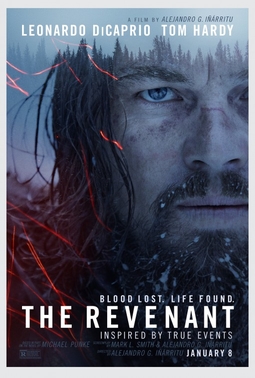
The Revenant (2015)

Leonardo DiCaprio conquers the wilderness

Director: Alejandro González Iñárritu

Cast: Leonardo DiCaprio (Hugh Glass), Tom Hardy (John Fitzgerald), Domhnall Gleeson (Andrew Henry), Will Poulter (Jim Bridger), Forrest Goodluck (Hawk), Duane Howard (Elk Dog), Arthur Redcloud (Hikuc), Melaw Nakehk’o (Powaqa), Grace Dove (Glass’s wife), Lukas Haas (Jones), Paul Anderson (Anderson)

The Revenant may have been one of the hardest films ever made. Iñárritu’s bleak survivalist masterpiece may not be the easiest watch – and certainly not the most fun – but it is something really unique and interesting, an attempt to completely submerse the audience in one character’s experience, with little interest in narrative, context or characterisation.

In 1823, Hugh Glass (Leonardo DiCaprio) is mawled by a bear while leading a group of trappers away from an Indian ambush. Slowing the rest of the men down, he is left in the care of a small party led by Fitzgerald (Tom Hardy). Fitzgerald abandons Glass to save his own skin – murdering Glass’ young son, he leaves Glass for dead, alone in the frozen wilderness.

This is a true experience film, that’s probably easier to admire and respect than it is to love, or even enjoy. As a technical accomplishment it is outstanding: it looks absolutely fantastic. Apparently all lit by natural light, the film has a dusk/dawn beauty to it throughout its running time that perfectly captures the harshness of the setting. The camera also unstintingly follows the burdens of its central character, close and personal with the action, often using hand held and Steadicam to throw us into the action: the three major “action” sequences have an almost unbearable intensity to them.

Iñárritu’s direction is masterful – this is a splendidly directed piece of cinema, a bravura display of accomplishment, which has the confidence to largely not draw attention to itself. In fact, that’s a major strength of the film – its technical brilliance, its striking editing and wonderful photography all serve the purpose of bringing us closer to the experience of Glass, throwing us into the world. The opening attack of the Indians on the trapper probably deserves a host of Oscars by itself, a frighteningly vivid, desperate conflict that the film throws the viewer right into the middle of. Similarly the fateful bear attack has a brutal efficiency about it that makes the viewer feel every bite and blow on DiCaprio’s battered body.

It’s well known that Leonardo DiCaprio won the Oscar for his role in the film. Possibly this was as much (if not more) a testament to his fierce commitment to this role than the actual performance. There is certainly no debate about that. Never mind the freezing cold conditions, DiCaprio spends a third of the film bound to a filthy stretcher before being swept down rapids, eating a raw fish from a lake, and climbing naked inside the guts of a dead (hopefully prop) horse… Throughout all this, a combination of his isolation and wounds means he says very little, but only growls and groans. It’s not an acting performance in the sense of a character creation – you learn very little about Glass, and other than his strength of will and hunger for revenge, little of what motivates him – but it is a complete physical performance. And DiCaprio probably deserves some sort of reward for leaving nothing in the dressing room in playing it.

The “character” acting is left far more to Tom Hardy as the weak, arrogant, blindly wilful Fitzgerald. Hardy’s performance was a little overlooked here, but it’s as fiercely committed as DiCaprio’s and, in many ways, is a more complex and intriguing character – a man with the force of will to lead but without the courage and integrity that makes a true leader of men. Yes he mumbles the dialogue – at times I did find it a little unclear what he was saying – but it is a very accomplished exercise in character creation from slight material. The rest of the cast are all equally strong – Will Poulter is terrific as a naïve Bridger, as is Domhnall Gleeson as the rigid Captain.

But the film is possibly so triumphant in its mise en scene that it overpowers the themes and narrative of the film. It is surprisingly easy to forget that Glass is a man powered by revenge, so completely is the focus on his survival. His past grief over his deceased wife is murky and unclear on first watching, not enough focus or context given to it by Iñárritu’s storytelling. Many of the “narrative” encounters that Glass has over the film are not particularly new or unique. Iñárritu’s film here is not really about the story, but the telling of it. And in focusing on the detail of delivering the story, it loses the heart and investment that a real story needs. Glass’s journey is terrible, his suffering huge, his perseverance and will striking – but I can’t say that I felt particularly emotionally involved with his struggle or got a sense of his emotional pain.

As such, this increasingly becomes a film that is easier to respect and admire than it is to love. Despite DiCaprio’s commitment and bravery as an actor, Glass is largely an enigma and the film itself is an immersion in an environment rather than a piece of drama. As a viewing experience it grips during its duration, but I’d be fascinated to see when I watch it again, will this be enough to make it last? Will a familiarity with the story allow the themes it attempts to deal with – revenge, grief etc. etc. – come out more strongly? Either way, any film that requires a second viewing is one that deserves recommendation.