Category: Terrible Films

Anonymous (2011)


Did the Earl of Oxford write Shakespeare (spoilers: No of course he didn’t.)

Director: Roland Emmerich

Cast: Rhys Ifans (Edward de Vere, Earl of Oxford), Vanessa Redgrave (Queen Elizabeth I), Sebastian Armesto (Ben Jonson), Rafe Spall (William Shakespeare), David Thewlis (Lord Burghley), Edward Hogg (Robert Cecil), Xavier Samuel (Earl of Southampton), Sam Reid (Earl of Essex), Jamie Campbell Bower (Young Oxford), Joely Richardson (Young Elizabeth I), Derek Jacobi (Himself), Mark Rylance (Henry Condell), Helen Baxandale (Anne de Vere)
Many people would say that, for as long as there has been Shakespeare, there have been arguments about who wrote him. But that would be wrong. Because at the time everyone knew it was Shakespeare. Murmurings grew in the nineteenth century, but it’s only in our bizarre more recent times, when everyone wants to feel that they are smarter than anyone else, that conspiracy theories have taken hold. This film dramatizes one of the most famous conspiracy theories – and takes it to the bonkers extreme, chucking in royal incest, bastard claimants to the throne and blood purity, like it’s desperate to be some sort of poetry-circle Game of Thrones.

Edward de Vere, Earl of Oxford (Rhys Ifans) is a genius. He has written hundreds of plays, despite never (it seems) setting foot in a theatre. When he does one day, he suddenly thinks – hang about I should get these on the stage! Looking for someone to put their name to the work, he approaches a reluctant Ben Jonson (Sebastian Armesto) before credit is high-jacked mid performance by drunken dullard William Shakespeare (Rafe Spall). Oxford continues producing the plays through Shakespeare, carefully using them to influence the crowd to support the Earl of Essex’s (Sam Reid) campaign to succeed Queen Elizabeth (Vanessa Redgrave) and win her away from the influence of the Cecils (David Thewlis and Edward Hogg). 

It’s not often you get a film that is both a stinking, insulting piece of propaganda garbage, but on top of that is also a terrible film full stop. Anonymous is such a film. This mind-numbingly stupid, childishly idiotic film is probably the best case that Shakespeare wrote Shakespeare to come out of Hollywood. Because, after watching this film, you’ll sure as shit be convinced it wasn’t someone as tedious, pompous and arrogant as Edward de Vere, Earl of Oxford. Unbelievably Emmerich and co thought they were making a film that would reset the table of Shakespeare debate. The only thing that will need resetting will be your table after you’ve overturned it in fury.

Our film’s Shakespeare goes crowd surfing in an Elizabethan mosh pit. Seriously.

The Oxfordian theory is yet another garbage “alternative history” that puts forward a candidate claimed to have “really wrote Shakespeare”. The central conceit usually goes something like this: Shakespeare was from a middle-class background, grammar school educated, never travelled and generally lacked the academic chops to write the plays. He was simply too common to be a genius. Ergo someone super smart must have done so instead.

The Oxford theory was put forward at the turn of the last century by (and I’m not making this up) Thomas Looney (yes it is literally a Looney Theory). It argues that Oxford was well travelled, well-educated and known as a poet so must have written the plays and poems. Shakespeare was hired to put his name on the plays because it was too shameful for an Earl to write for the theatre. Of course this doesn’t explain why Oxford had the sonnets released under Shakespeare’s name while allowing his own (not so good) poems to circulate freely – but facts never stopped these people. Oxford also inconveniently died in 1604, before the likely composition (and first performance) of over a third of the plays, but again never mind eh? 

Anyway, I’ll get into the film in a second, but I’ll leave you with this. All contemporary evidence points to Shakespeare being the author of Shakespeare’s plays. All evidence we have indicates he was recognised as the writer by his contemporaries. The much vaunted travel knowledge rests on a few well-known city names and landmarks (who could possibly have known Venice had a bridge called the Rialto? Oh I don’t know, maybe anyone hanging out in taverns in international trading-hub London?) and includes howlers like Bohemia having a coastline and it being possible to sail between Milan and Verona. All evidence of research (far too hard work for the Looneys) into typography and the composition of the plays points to Shakespeare or at least that many of the works were composed after Oxford’s death. I would also add that the bollocks (which this film explores) of Shakespeare not spelling consistently is no great surprise when standardisation of spelling was still over 100 years away. Anyway…

The clueless bumbling playwrights of the time.

Anonymous is well designed. It’s well shot. There are some decent costumes. Rafe Spall is okay as a ludicrously crude, shallow and dumb Shakespeare. Nothing and nobody else emerges from the film with any credit. It’s got the intellectual rigour of a child. It understands virtually nothing about the Elizabethan state. It even turns Elizabeth I (played direly by Vanessa Redgrave and a little bit better by Joely Richardson in flashback) into a hormonal idiot, a sex-obsessed harlot banging out bastards left, right and centre while wailing about how much she needs the man she loves. Even its understanding of theatre is crap. It is crap.

At the forefront of this steaming pile of manure is Rhys Ifans, utterly mis-cast from start to finish as super-genius Oxford. Ifans is bland, disengaged and bottled up, his manic potential completely wasted. Oxford comes across as an arrogant arsehole, talking down to fellow playwrights, ignoring his daughter, soaking up vicarious adulation from the crowd as if it was his right, and merrily putting his full weight behind an agenda stressing government should be left to those born to it, rather than the nouveaux rich Cecils. If an unpleasant prick like Oxford was soul of the age, it’s just as well time has moved on.

This viewpoint is all part of the film’s charmless embracing of the Looney theory that the plays are all a carefully constructed pro-Essex, pro-elitist propaganda machine, designed to manipulate the masses into staying in their place. To make this work, the film plays merry hell with history. Because nothing works better for a film claiming to be “true” history than to change established historical facts to better fit its story. Essex is repositioned as anti-James VI of Scotland, while the Cecils are shown to be advocates for his succession from day one. It hardly seems necessary to say that this was the complete opposite of their positions. The film can’t claim to be telling us the “real story” while simultaneously changing events left, right and centre to better fit its agenda.

Historical fast-and-looseness continues with Elizabeth I. Needless to say, half the male cast are her children – Essex, Southampton and (of course) even Oxford. This allows for lots of icky sex as an unknowing young Elizabeth and Oxford bump-and-grind. Even without the incest, this scene would still be revolting beyond belief. If this film has any claim to fame, it will be remembered as the film where the Virgin Queen performed fellatio on young Oxford (a weaselly Jamie Campbell Bower, dire as ever) while he recited Shakespearean sonnets. I watched this with a group of friends and this scene was met by horrified mass shrieking.

Mother and son share a post-coital moment

The land of the Elizabethan theatre doesn’t fare much better. Shakespeare’s contemporary playwrights are, to a man, plodding mediocrities dumb-founded that a play can be written entirely in verse. Poor Ben Johnson (Sebastian Armesto struggling manfully with a terrible part) in particular gets it in the neck, Oxford haughtily telling him he “has no voice”. Shakespeare is not only an idiot, he’s also money-grubbing, illiterate and (the film heavily implies) even murders Christopher Marlowe when he “works out the truth”. 

But that’s the thing about this film: it really doesn’t give a shit about facts. By the time we reach the Essex rebellion and the film has changed the one categorical fact we have linking Shakespeare to the rebellion (his company performed Richard II privately for Essex’s friends the night before) you’ll have ceased to care. (The film substitutes Richard III instead and claims the hunchbacked king was created as a portrait of Robert Cecil – never mind that the character had already appeared in two plays by this point…) The Tower is the centre of some sort of all-powerful police state that alternates between scarily efficient and ludicrously incompetent depending on the demands of the script.

Amidst this firebombing of history, the film weaves its pointless conspiracy theory. So of course, Oxford is not only the greatest writer ever, but as Elizabeth’s son he’s also the true King of England. He is such a special snowflake genius, he’s even (in the film’s most stupid scene) shown writing and performing (as Puck) A Midsummer Night’s Dream aged 14. In a skin-crawlingly shite scene, Oxford searches for a play to give to Johnson while the camera pans along shelves of masterpieces he has casually knocked out. I would argue the plays have clearly been written by someone with an intimate understanding not only of theatre but the strengths and weaknesses of the company of actors originally performing them – but then this is a film that turns Richard Burbage into a harassed theatre manager, so what would be the point. By the end of the film, the announcement is made that all evidence linking Oxford to the plays will be destroyed and he will be forgotten. So you see the very fact that there is no evidence that this ever happened, is in itself evidence.

I realise I’ve not even mentioned the framing device of this film. The film opens in a Broadway theatre – and rips off the idea from Henry V that we are watching a play performance that becomes ever more realistic. Notable Oxfordian Derek Jacobi (playing himself) even narrates, neatly shitting on the memory of the same function he served in Branagh’s Henry. I love Sir Derek, but honestly a little of that love died during this film as he sonorously intones this lunatic nonsense. He’s not the only one of course – Mark Rylance (another believer) shamelessly pops up for a cameo. Needless to say, at the end of the “performance” the crowd in the Broadway theatre leave in stunned silence. I like to think that, rather than having their perceptions of the world shaken, they were just stunned such an epic pile of fuckwitterey garbage made it to the stage.

Oh Sir Derek. How could you? How could you?

Or the screen for that matter. This is a dire, stupid film, poorly acted and woefully directed by a tone deaf director. Roland Emmerich, hie thee back to disaster porn! Everyone in it is pretty awful, the script not only stinks, it makes no sense, half the scenes are borderline embarrassing. Even if it wasn’t about a pretty distasteful Shakespearean authorship theory, this would still be a truly terrible film, a narrative and performance disaster. The only good thing about it is, the film is so bad, its conspiracy theory so unbelievably ludicrous, its fast-and-looseness with history so plain that, far from re-setting the table for Shakespearean studies, it seems to have fatally holed the Oxfordian theory below the water line. It’s offensive because it wants to peddle its bizarre agenda as true history, while simultaneously changing the historical events at every opportunity. Just fucking awful.

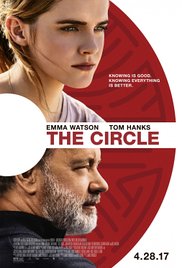
The Circle (2017)


Emma Watson struggles against the surveillance state in shockingly bad adaptation The Circle

Director: James Ponsoldt

Cast: Mae Holland (Emma Watson), Tom Hanks (Eamon Bailey), John Boyega (Ty Lafitte/Kalden), Karen Gillan (Annie Allerton), Ellar Coltrane (Mercer), Patton Oswalt (Tom Stenton), Bill Paxton (Vinnie Holland), Glenne Headly (Bonnie Holland)

Is there anything sadder than seeing a book you thought was fantastic get totally screwed up by film producers? Worst of all, Dave Eggers, the book’s author, even gets a screenwriting credit here. I hope to God his contribution was a rejected earlier draft, rather than the bland, aimless drivel on display here. It would be too depressing to think he gutted his own work and then mutilated its corpse.

Mae (Emma Watson) is thrilled to land a job at The Circle, an all-powerful, Google-style corporation with a virtual monopoly over the internet. However, she discovers while she works at the Circle that there are (of course!) dark secrets at the heart of the company, and that its charismatic CEO Eamon Bailey (Tom Hanks) may not be all that he seems.

Imagine an adaptation of 1984 at the end of which Winston Smith defeats Big Brother but decides there are positive sides to living under a dictatorship, so carries on doing so. That’s exactly as ballsed-up as this total misreading of Egger’s gripping critique of our internet age. In this terrible adaptation, the novel is neutered beyond recognition into just another bland “Big Corporations Acting All Corporation-y” nonsense. The film is pretty much exactly as awful as the book is brilliant.

Where did it all go so completely and utterly wrong? Did they not understand the book? The novel is not only a critique of the pervasive power of its shady Google-like organisation. It’s also a savage attack on our own tweeting, social media obsessed world – the sort of world where private actions are theft as they rob everyone else from experiencing them vicariously through tweets, photos and posts. It’s this part of the story the film completely (and almost wilfully) misses the point of.

They seem terrified at the thought that the social media Twitteratti might take against the film if it too openly attacks the actual users of systems like this, with their (at times) shallow, demanding and entitled pushing of their own opinions, and intrusions into others’ lives. Instead the film gives a complete pass to all the users of the systems, while attacking the corporation providing them. So we get the bizarre set up of a film that seems to say it’s totally fine for normal people to record everything and push it all onto the internet, turning their world into a judgemental surveillance state, but it’s evil for a corporation to create the devices they use to do it.

Even the film’s criticism of corporations isn’t very clear, largely because we never get a sense of the Circle’s power and its hunger for getting more and more control. The film throws away its involvement in politics and its control over everyday lives. Perhaps because it knows so many of the viewership love gadgets, there is no exploration of the creepy, controlling aspect of the many tracking and recording devices the Circlers wear throughout the film, as there is in the novel. Instead the target is the shady business people at the top (not that we learn anything about what they want) because everyone hates businessmen don’t they? Nice easy target. I can tweet my loathing of them very easily.

It’s a film devoid of any challenge. A character’s suicide from the book is changed to an accidental death. The more vulnerable and desperate of the characters from the book have been deleted. The obsessive self-definition the Circlers gain from what other people tweet about them is downplayed. The ending of the film completely inverts the novel, and leaves us with a bizarre final image of our hero kayaking on the lake, but warmly smiling at the drones watching her, even after she has destroyed the “villains” who run them. It makes no sense whatsoever. My jaw literally dropped when this happened by the way.

Mae is a character who now has no consistency. Her growing obsession with the power of social media – and the destructive effect it has on her actual human relationships – is completely ignored. It’s the key part of her character from the book, and its removed here to try her as traditionally ‘likeable’ as possible. An anti-hero becomes a flat out hero. The film shows the impact of actions she carries out in the book – particularly on Annie – but removes these actions from the film. Why do people slip into depression or depart from the film? Who knows. Left with nothing to work with from the original book, Emma Watson gives a bland and forgettable performance. No one else really makes an impact, playing dull, neutered versions of the characters from the source material, devoid of depth or interest.

The Circle might be one of the worst literary adaptations I’ve ever seen. It guts the original book and removes any of the most challenging and interesting content. It’s terrified of criticising in any way anyone who might be watching. It’s a satire on the social media age that has no satire in it, and is desperate not to talk about social media. Worst of all it will discourage people from reading the original novel. In the words of the modern age: #uttershit.

Independence Day: Resurgence (2016)


Independence Day 2: Not a Resurgence but a wake.

Director: Roland Emmerich

Cast: Liam Hemsworth (Jake Morrison), Jeff Goldblum (David Levinson), Jessie Usher (Dylan Hiller), Bill Pullman (President Tom Whitmore), Maika Monroe (Patricia Whitmore), Sela Ward (President Elizabeth Lanford), William Fichtner (General Joshua Adams), Judd Hirsch (Julius Levinson), Brent Spiner (Dr Brakish Okun), Charlotte Gainsbourg (Dr Catherine Marceaux)

Sometimes your first instincts in films are great. They help you to try new things and unearth new favourites that can find a place in your heart. And sometimes your first instincts are bollocks. You see a film and, for whatever reason, you were in the right mood and you think “well that was great!” Then you come back to watch it a few months later and your second reaction is “What the hell was I thinking?”. Such a film was Independence Day: Resurgence for me.

The plot is alarmingly simple. Probably because it’s essentially the same plot as the first film. Twenty years after the events of Independence Day, mankind lives in peace and prosperity and has rebuilt the world, with a new global military armed with alien technology ready to repel any future attacks. Of course the attack comes… Soon mankind is on a ticking clock (“We were wrong. We only have 1 hour left to save the world!”)…

Okay. I did enjoy this in the cinema. I confess. Then I watched it again and released it was complete bollocks. Totally pointless sequel that adds literally nothing to the first film.

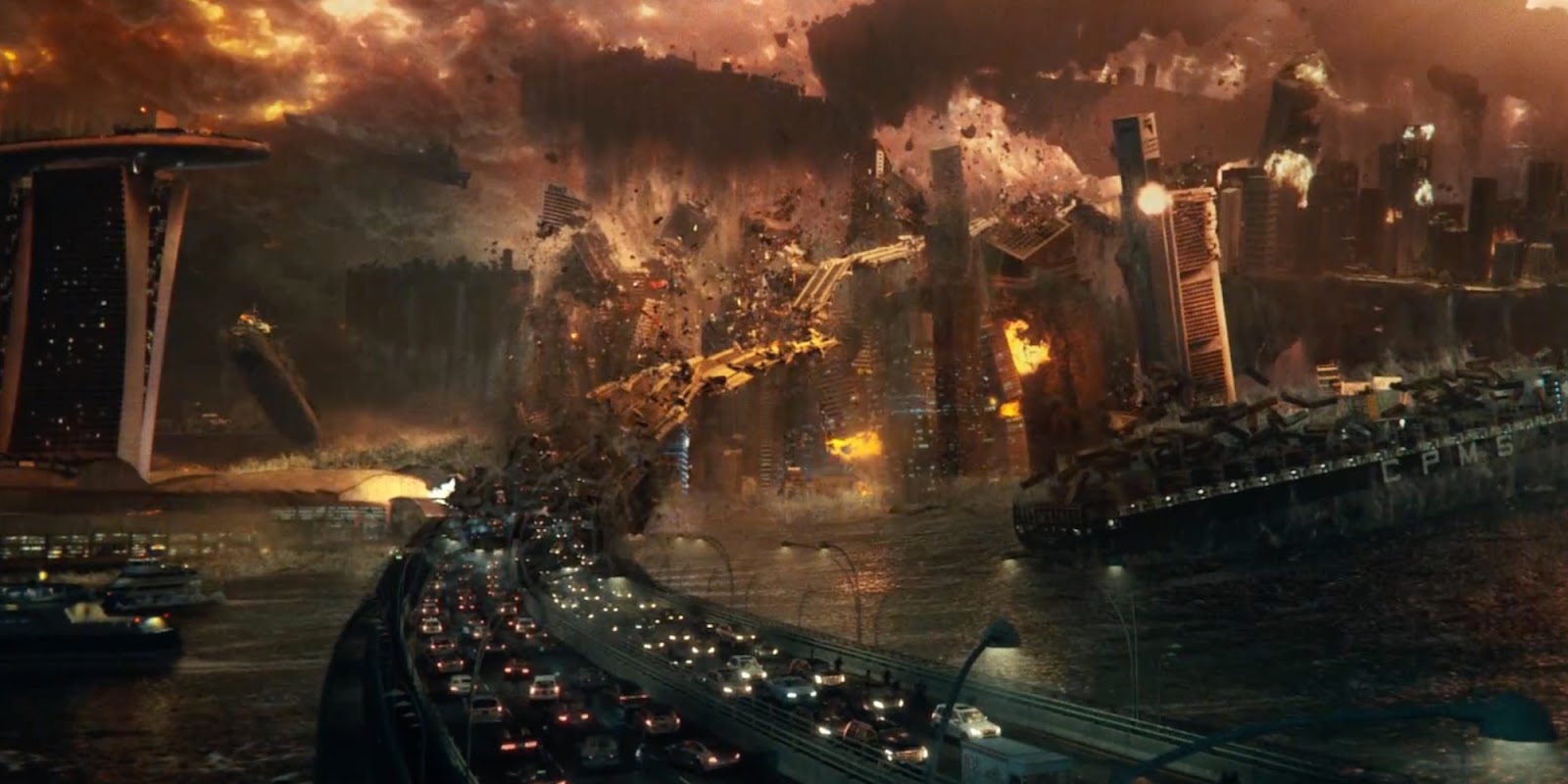
First off this film is essentially a remake rather than a sequel. A first alien ship (different species) arrives and there is panic. An attempt at communication rebuffed (theirs not ours this time). Warnings about an imminent attack are ignored. The aliens destroys several cities (mankind has been busy, as many of the landmarks destroyed in the first film have been reconstructed in perfect detail to get mashed again). A human counterattack ends in dismal failure. Even the goddamn ending of the film is once again a final battle at the salt flats, with the clock ticking. One of our heroes sacrifices themselves. It’s the Fourth of July – need I go on?

The only things that they haven’t carried across are the charm and thrills of the original. In fact there is nothing here to interest anyone who doesn’t have fond memories of the first film: the new characters are largely forgettable, most of the sequences are commentaries on the first film. Resurgence captures none of the twisted sense of awe and wonder of the original Independence Day – the shock of seeing aliens arrive, the terror they unleash, the helplessness of mankind. The action sequences (particularly the assault on the alien spaceship) have none of the sense of danger that makes the same sequences in the original so exciting – it just makes you want to re-watch the first film but not in a good way.

Instead the film aims BIG. Everything is BIGGER. Mankind has planes that fly in space, ray guns and moon bases. The aliens have a ship that’s not the size of city, but the size of a continent! Half the world is wiped out in minutes! The alien attack all takes place in one day! We’ve only got one hour to save the world from having its core drained! It’s all pushing to make the film more EXCITING! It fails. Not only is everything familiar, but everything is so rushed that there are none of the moments for reflection the first film has. Half the world is wiped out in this film and no-one takes even a minute to think about the impact of that.

It’s not just content from the last film that is familiar. This film reveals the aliens are a sort of hive mind with – you guessed it – a Queen. Is it essential for every single bloody alien film to have a queen? Ever since Aliens the idea has been done to absolute death. Needless to say, our heroes (having seen films before) work out that if they take down the Queen, all the other aliens will shut down. Familiar? Only to everyone who has ever seen a film before.

The film’s sexual politics are also all over the shop. It proudly boasted in advance it would feature a gay relationship. But the gay couple in this are safely sexless: not a single line of dialogue hints too heavily at their homosexuality and the closest they get to showing physical affection is to hold hands briefly (the point being of course, if they were too gay it wouldn’t sell abroad).

Secondly, and even more uncomfortably, at some point it was clearly decided a cross-racial relationship wouldn’t play well either. It would make sense to me if the two children from the first film had grown into love interests for each other – and if they were both white I am certain this would have happened. But this film introduces a whole new (white) suitor for Whitmore’s daughter. Hiller’s adopted son? No love interest for him at all. In fact Dylan is relegated to the role of the charisma-free straight-shooter, with Liam Hemsworth given the coveted role of the charismatic maverick who has the courage to think outside of the box and save us all. This is even more cowardly than the film’s shyness around its gay characters.

Independence Day: Resurgence is a lifeless film. It has just enough fun about it for those who remember the first film to watch it with a sense of nostalgic glee. But it has none of that film’s wit, none of its tension, none of its sense of mankind overcoming impossible odds. Despite all the hand-waving towards the unity of the world, even more than the first film this might as well be “America Vs. Aliens”. It caught me in a good mood at the cinema, with the right nostalgic mindset. But whereas Jurassic World(for instance) mixes nostalgia with genuine wit and excitement, this is a film that never comes to life. It’s DOA. Far from a resurgence, it’s a wake.

It’s also pretty hard to forgive it for this marketing abomination. Daley Blind for starters has not won twenty league titles. As for Wayne’s acting. Jesus Christ…

The Amazing Spider-Man 2 (2014)


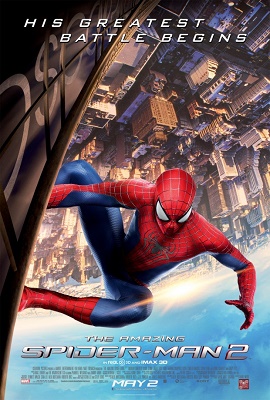
Spider-Man retreats in full flight from the shocking explosion of this film behind him

Director: Marc Webb

Cast: Andrew Garfield (Peter Parker/Spider-Man), Emma Stone (Gwen Stacy), Jamie Foxx (Max Dillon/Electro), Dane DeHaan (Harry Osborn/Green Goblin), Colm Feore (Donald Menken), Felicity Jones (Felicia Hardy), Paul Giamatti (Aleksei Sytsevich/Rhino), Sally Field (Aunt May), Campbell Scott (Richard Parker), Embeth Davidtz (Mary Parker), Marton Csorkas (Dr Kafka), Chris Cooper (Norman Osborn)

The Amazing Spider-Man 2 was set to launch a Spider-Manfranchise that “would last a THOUSAND YEARS!!!”. It didn’t. In fact this bloated, poorly constructed, overlong mess killed those plans stone dead. It says a lot that a film which took $709 million worldwide is considered a flop. But the reaction to the film was so mehthat there was no desire to see any further films about this Spider-Man. On every count the film is a catastrophic failure.

Peter Parker (Andrew Garfield) is enjoying the life of a super-hero, while struggling to maintain his relationship with Gwen Stacy (Emma Stone) due to his guilt over her father’s death. That sentence, by the way, demonstrates how schizophrenic this film’s tone is: a hero who loves life and simultaneously is plagued with guilt? He’s also obsessed by finding out what happened to his parents (killed off in a superfluous pre-credits flashback, setting up a mystery the film loses all interest in). At the same time, he must take on obsessive loner fan Max turned supervillain Electro (Jamie Foxx), and old friend Harry Osborn turned supervillain Green Goblin (Dane DeHaan).

After a so-so remake of Sam Raimi’s first Spider-Man, Sony seemingly decided to skip Spider-Man 2 and jump straight to a remake of the reviled Spider-Man 3. Many of that film’s disastrous mistakes are made again: romantic tension that never feels real, action sequences that feel like trailers and, worst of all, stuffing the film to the gills with villains (at least four characters can lay claim to being major primary or secondary antagonists). It also makes its own mistakes, chucking in endless references to a dull, confusing ‘mystery’ around Peter’s parents (that will never now be resolved).

On top of all that, there is something so nakedly grasping about Amazing Spider-Man 2 it’s almost impossible to love. It’s such a greedy film that almost every conversation and stray camera shot tries to set-up potential future movies (the low point being a camera pan down a room full of devices that will become the weapons of future baddies). The plot gets constantly drifts down side alleys as it frantically tries to establish enough plots for the studio to keep churning out films over the next five years. This also means it goes on forever without any real sense of impetus developing in the story.  The action is so nakedly shot with an eye on the trailer, that nearly each fight is literally shot with a crowd of people watching behind barriers, cheering events on.

Whatever happened to the trick of making a successful franchise being to make a good movie? Imagine a film focused on a single villain plotline, and played that off against a relationship drama (something like, say, Spider-Man 2). That might have been something worth seeing, that might have made you think “well I enjoyed that, I wouldn’t mind seeing another one”. But this film is little more than an extended trailer for films to come – it’s as soulless and empty as a piece of marketing puff.

Any ‘emotional’ moments are placed so blatantly as filler between the action that they carry no resonance. Does anyone give a toss if Gwen Stacy goes to London or not? Was anyone actually moved at all when she (spoiler!) dies at the end? For all of Spider-Man 3’s faults, at least when Harry Osborn went bad it resonated, as audiences had seen his and Peter’s relationship play out over two films. Here Harry is introduced, the next scene he and Peter openly say they are best friends, then they barely spend any further time together before Harry’s “shocking” volte-face. If the film can’t be bothered to spend any time earning it, why should I spend any time investing in it?

Andrew Garfield’s Peter Parker has his fans, but I’ve found him (in both films) an insufferable, cocky prick. Garfield is a very good actor, but his direction to play Parker as a young buck completely fails. His wisecracking persona works as Spider-Man, but falls flat as Peter, who never seems particularly sweet, relatable or endearing in a way Tobey Maguire managed so well. The parental plotline doesn’t help here either: having spent the first film not really giving a toss about the death of Uncle Ben, here he outright obsesses over his parents in a way that just doesn’t ring true, particularly as it carries with it an implicit rejection of Aunt May. His borderline controlling/stalkerish behaviour with Gwen Stacy is also pretty hard to stomach (he spends half the film telling her what to do, the other half either following her or openly stating he will never let her go – okay weirdo…)

It’s quite damning that despite all this, Garfield (and to be fair, Emma Stone) is the best thing in this lifeless pile of stodge. Jamie Foxx is so hilariously miscast as Electro it skewers the whole movie (surely part of the reason why he is in it so little). Foxx can’t resist showing the audience all the time that he (the actor) is far smarter, cooler and popular than the character – his contempt for the role drips off the screen. DeHaan overacts wildly as Harry, bested only by Giamatti’s cartoonish overblown shouting. Field cashes her cheque with professionalism as Aunt May.

People aren’t stupid. They can tell when they are being ripped off. And they can tell when a studio flings bangs and bucks at the screen with no heart and soul behind them, when a film’s been made by people who want to fleece fanboys, rather than create something that speaks to their love of the material. It’s the problem with both of these Garfield Spider-Man films (and to a certain extent Raimi’s last one). They are soulless, dead films made by committees. They listen to all the worst cries of the fans and then try to give them everything at once. They end up giving them nothing. Which is what this film is: a big, empty pile of nothing.

Wild at Heart (1990)


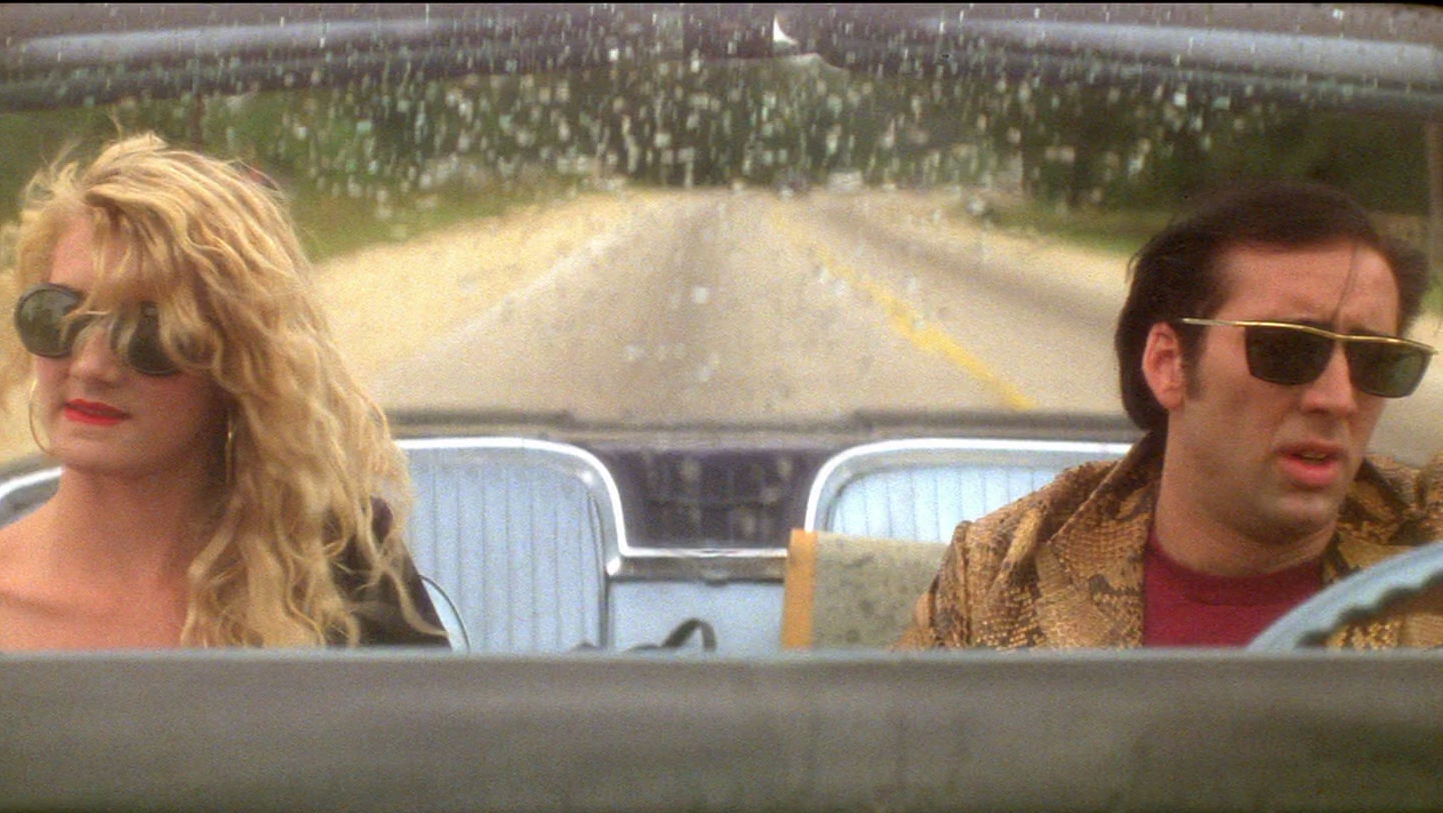
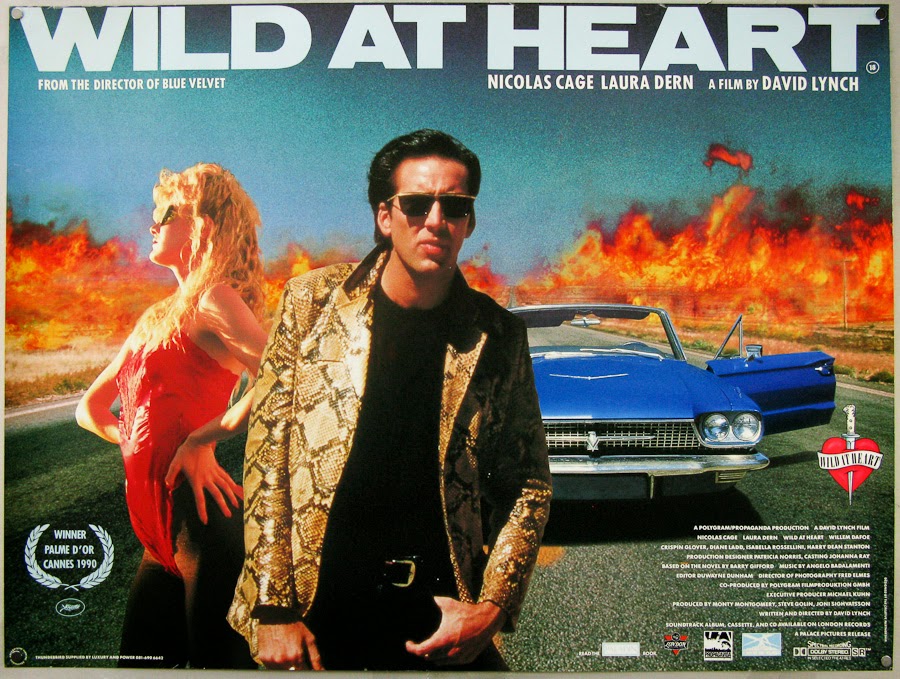
Laura Dern and Nicolas Cage in the hideously empty Wild at Heart

Director: David Lynch

Cast: Nicolas Cage (Sailor Ripley), Laura Dern (Lula Pace Fortune), Diane Ladd (Marietta Fortune), Harry Dean Stanton (Johnnie Farragut), J.E. Freeman (Marcello Santos), W. Morgan Sheppard (Mr Reindeer), Willem Dafoe (Bobby Peru), Crispin Glover (Dell), Isabella Rossellini (Perdita Durango), Sherilyn Fenn (Car Accident Girl), Sheryl Lee (Good Witch)

David Lynch is an eccentric film director. I think that is a fair comment. At his best, he combines his “view askew” look at the world with genuine comedy and pathos. At other times, his films disappear down a self-reverential rabbit-hole that seems designed to frustrate and alienate the viewer. Wild at Heart is the latter type of movie.

Sailor Ripley (Nicolas Cage) is released from prison after his self-defence response to a knife-wielding man at a party turns into a homicidal fury. The knifeman may (or may not) have been hired by Marietta (Diane Ladd), mother to Sailor’s “girl” Lula Pace Fortune (Laura Dern, Ladd’s real life daughter) a woman with a sexually troubled background of abuse, who is in the middle of a sexual awakening. Together they go on a road trip to – well just kinda to get away I guess.

I’ve got to confess I really hated this movie. I only stuck with it to the end, because (a) it wasn’t that long and (b) I wanted to have actually watched the whole thing before I laid into it in this review. This film is the absolute worst elements of Lynchian oddness and gore mixed with pop-culture references to the 1930s through to the 1950s.

In fact it’s a film that is so totally obsessed with these two things that there is literally no room in it for any real plot or emotion. Instead it’s full of pointless, smug and irritating visual and audio quotes from Elvis to The Wizard of Oz, and empty characters played by showboating actors giving massive performances under ostentatious make-up, all to hide the fact that the film (for all its bombast) is a shallow as a puddle. It’s a horrible piece of intellectual fakery, that pretends to be about deep profound themes about love and death but tells us nothing about them. In the end it gets more delight from Dafoe blowing his head off with a shotgun than it does from anything to do with its so-called themes.

Lynch piles on the violence for the sake of it, all in the name of parodying the aggression that lies under his apple-pie surface Americana. This worked in Blue Velvetbecause the contrast was so great, and the characters (for all their larger-than-life qualities) felt real. Here, everything feels artificial. A constant visual image of fire and flames runs through the story – it’s a reference back to the murder (it’s not a surprise to say) of Lula’s father (burnt alive on the orders of his wife it turns out). This adds nothing at all to our understanding of anything – particularly since Marietta is the most obviously corrupt and hypocritical character from the start, drawing attention in such a ham fisted way to her past misdeeds, and the impact of them, hardly seems necessary.

The film is full of signs of man’s inhumanity – the brutal shootings, the torture of Harry Dean Stanton’s luckless PI (toned down considerably from the original cut), Sailor’s brutal murder at the start, a road accident peopled with twisted bodies – but it’s all so bloody obvious. We get it David, the world is bad and people suck. Just because you’ve shot this with some tricky angles and carry it across with a tongue-in-cheek delight at your own naughtiness doesn’t make this a masterpiece. It just highlights the shallow emptiness you are peddling as art.

The rampant self-indulgence spreads to the actors. You’d think Cage would be perfect for Lynch right? Wrong. His hideously self-conscious performance of overt oddity here just makes his performance all the more unbearable. Diane Ladd gives the sort of performance many call brave, but is really just about shouting and smearing lipstick all over her face. By the time Willem Dafoe turns up with ludicrous teeth, ripping into the scenery, you’ve lost all patience. The only person who emerges with any credit is Laura Dern, who at least invests her characters with some level of humanity and sweetness. Everyone else (everyone!) is a stock cartoon drawing.

But even Dern is cursed with Lynch’s awful sexual abuse sub-plot, which is genuinely offensive in its trite shallowness and in its suggestion that having sex with your uncle as a young teenager will turn you into a real goer later in life. Did he really deal with the same themes with such sensitivity in Twin Peaks? As for the so-called romantic happy ending – it’s unearned in any way by the film, which has treated the subject with scorn. The film’s dark wit isn’t even particularly funny – everything is so dialed up to eleven, that all the comic beats get smothered in over acting or over stylised dialogue and action.

Wild at Heart won a flipping Palme d’Or (to be fair the announcement was booed). But don’t be fooled. This is a film pretending an intellectual depth it never gets anywhere near to achieving. It’s a horrible, pathetic, cruel and empty film that thinks it’s a satire on the dark heart that lies at America’s soul. It’s not. It’s just a cartooney, self-important lecture which mistakes oddity and eccentricity for heart. Lynch is a talent for sure, but here his talents are sorely misdirected into indulgent, childish emptiness and faux profundity. Don’t watch it.

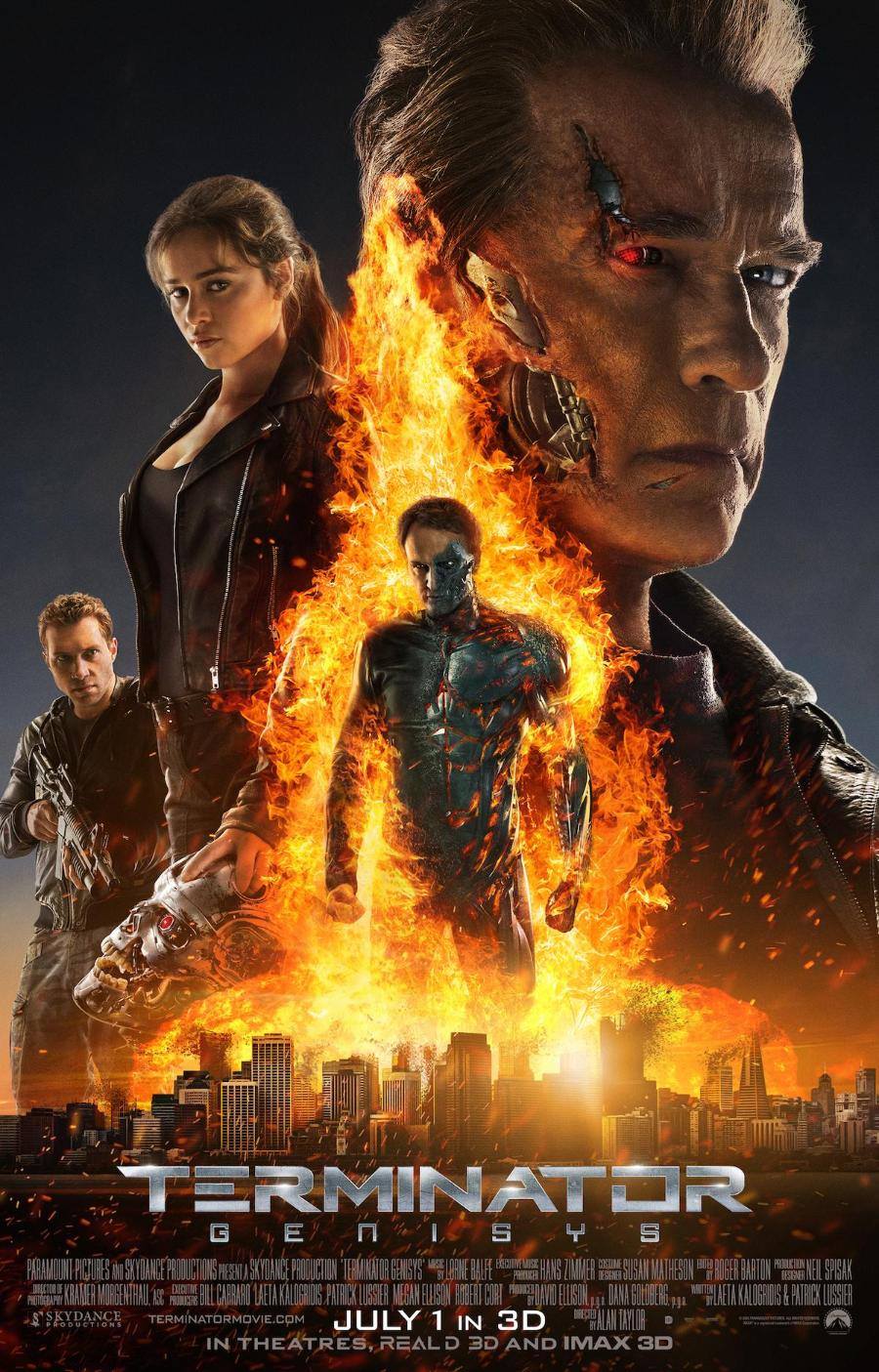
Terminator Genisys (2015)


Arnie saddles up (again) as The Terminator, this time with Emilia Clarke in tow. Reboot or remake?

Director: Alan Taylor

Cast: Arnold Schwarzenegger (Pops), Jai Courtenay (Kyle Reese), Emilia Clarke (Sarah Connor), Jason Clarke (John Connor), JK Simmons (O’Brien), Dayo Okeniyi (Danny Dyson), Matt Smith (Alex/Skynet), Courtenay B Vance (Miles Dyson), Byung Hun Lee (T-1000)

Every few years, Hollywood convinces itself the Terminator franchise is a licence to print money just waiting for exploitation. Since the late 90s, three movies and one TV series have attempted to relaunch the franchise. Each has underperformed, and left plans for sequels abandoned. Terminator: Genisys is the latest in this trend, the first in a planned trilogy that will never be made. As such, it’s a type of curiosity, a film that sets up a new timeline and introduces mysteries never to be answered.

Once again, the film starts with John Connor (Jason Clarke) sending Kyle Reece (Jai Courtenay) back in time to save his mother Sarah (Emilia Clarke) from deadly Terminators sent to destroy her and prevent Connor from being born. But when Reece arrives, he finds the past he was expecting altered and that Sarah was already saved years before from a first Terminator, by a re-programmed one nicknamed Pops (Arnold Schwarzenegger). Our heroes find themselves adrift in a timeline dramatically altered from the one they expected, and transport themselves to 2017 to combat Skynet once more.

It says a lot that the most original and daring thing about this movie is that no-one at any point says “Hasta La Vista, Baby”. Aside from that, the film is a Frankenstein’s monster, assembled from the off-cuts of previous franchise entries. The familiar lines are trotted out once more: I’ll Be Back, Come With Me if You Want to Live, Get Out and many more. The structure of the film limply settles into the same basic set-up we’ve seen since Terminator 2, while the big set pieces have an air of inevitability about them. This is a lazy, half-baked claim to re-invent the franchise that essentially copies and repeats everything from previous films with only a few small changes of angle. You can admire briefly the skill that has re-created moments from the original film, and be impressed by the effects that show a newly-young Schwarzenegger fighting his grizzled future self – but it will largely just make you want to watch the first film again.

This stench of familiarity is despite the huge, seemingly-inventive loopholes that the film, Bourne Legacy like, jumps through in order to try and justify its existence. The Terminator franchise has become so scrambled with alternative timelines, paths not taken, and film series cancelled that it spends almost the first hour carefully recreating events from previous movies, with some major tweaks and changes to allow a new “timeline” to burst up and act as a jumping off point for this movie. By the time the complex timeline politics has been put in place, the film has barely an hour of its run time left – at which point it needs to introduce its two antagonists and give our heroes a mission. The timeline is truncated, the villain is under-developed and the mission the dullest retread of the plot of Terminator 2 possible: a race to get to a building to blow it up. Yawn.

Is it any wonder that people shrugged at this movie? Even it can’t imagine a world outside the confines of its franchise rules. It reminds you what a small world the Terminator universe is. There’s little more than 3-4 characters, Skynet is always the adversary, time travel always seems to involve variations on the same people, the future is always the same blasted wasteland. The films always degenerate into long chases, compromised by our heroes’ attempts to change the future. So many Arnie Terminators have been reprogrammed by the resistance now, you wonder if any of them are left fighting for Skynet. What seemed fresh and daring in the first two films, now feels constrained and predictable. To find life in this franchise, it needs to do something genuinely different, not go over the same old ground over and over again.

The tragedy of this film is that the one unique thing it had – the identity of its main villain – was blown in the trailer of the film. Taylor was apparently furious at this undermining of a twist his film takes time building up. It ought to have been a shock for audiences to find out the franchise’s saviour-figure, John Connor, was instead the film’s villain – instead anyone who’d seen a trailer knew all about it before the opening credits even rolled. They even put it on the flipping poster! On top of which, the trailer carefully checks off all the major set pieces up to the final  30 minutes. Is it any wonder so many people gave it a miss at the cinema? Shocks left unspoiled, such as Matt Smith (strangely billed as Matthew Smith) revealed to be the embodiment of Skynet, are so dull and predictable they hardly counted as twists.

There is little in there to bolster the plot. The action is shot with a dull efficiency. The film is edited together with a plodding mundanity. Schwarzenegger once again goes through the familiar motions, but surely we have now seen enough of this character, which could in fact be holding the franchise back. Emilia Clarke looks bored, Jai Courtenay (an actor who came to prominence with a warm and intelligent performance in Spartacus: Blood and Sand) is again cast as a charisma free lunkhead, with attempts to add shading to his character only adding dullness. Jason Clarke lacks the charisma for the cursed role of John Connor (every film has seen a new actor take on the role).

Reviews claimed the plot was too complex for the audience: not the case. The plot is clear enough – it’s just dull and engaging. It never gives the viewer a reason to invest in the story. Terminator: Genysis is a ploddingly safe, predictable and routine piece of film-making, from a franchise that desperately needed reinvention. But so long as average and uninventive filmmakers – Jonathan Mostow, McG, Alan Taylor – are entrusted with its future, it will always be a franchise with no future. It’s time it was terminated. Hasta La Vista, Baby.

Fifty Shades of Grey (2015)


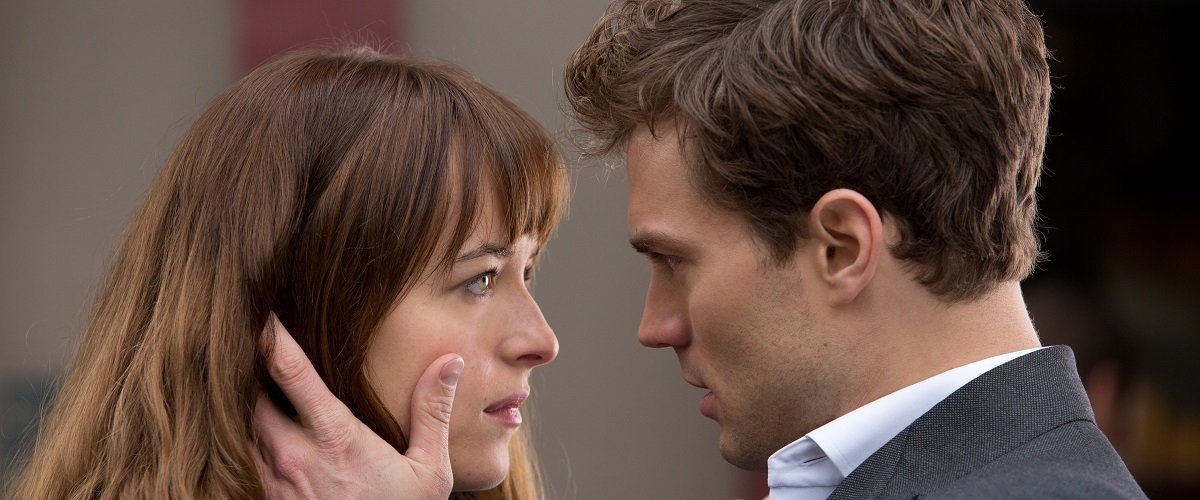
Dakota Johnson and Jamie Dornan struggle with their obvious discomfort in this ghastly, hellish, joyless film

Director: Sam Taylor-Johnson

Cast: Dakota Johnson (Anastasia Steele), Jamie Dornan (Christian Grey), Eloise Mumford (Kate Kavanagh), Jennifer Ehle (Carla Wilks), Marcia Gay Harden (Dr. Grace Trevelyan-Grey)

For some reason, about ten years ago everyone got wildly turned on by reading a series of books ripped off from Twilight, which followed the adventures of a timid student and her induction into the world of sexual spanking by a controlling billionaire. It was like tepid porn you could read in the open and talk about in the office. The entire genre of “mom porn” (now to be spotted in every supermarket book section) was born.

Anyway, it came at last (so to speak): the film of the book. With it came EL James’ atrocious dialogue (full disclosure here: I’ve not read the book, but I looked up some quotes and read the synopsis on Wikipedia, so I reckon that’s probably better than reading it), paper thin characters and event-less action. Along, of course, with the sex. Anastasia Steele (Dakota Johnson) is a young student who encounters Christian Grey (Jamie Dornan), a mysterious billionaire. He likes spanking. She’s never done anything down there (“You’re a virgin”, “yes”, “but you’ve done other stuff?” “no” “oh my god” – goes one classic exchange between the two). Bless, she doesn’t even know what a butt-plug is. I guess she will find out.

I’ll be blunt. This is possibly one of the worst, most offensive, horrible films I’ve ever seen. I’m actually rather angry I watched it. Nearly everything about it stinks: the acting and film-making craft are as vile, tasteless and revolting as the ideas behind it. First and foremost, Jamie Dornan honestly looks like he vomited with shame after completing every scene. Dakota Johnson does a reasonable job with a character who is as well-developed as the stains on Grey’s bedding, but since she is merely required to look alternately sad, timid or (god help us) “aroused” (expressions which bear a distinct resemblance to each other, mostly involving biting her lip and opening her eyes really wide beneath her “frumpy geek girl” fringe), she hardly needed to be much more than competent to bring this sad excuse for a protagonist to life. Ehle and Harden hopefully picked up big paycheques for selling their talents to this dreck.

As a relationship film, this is awful. Imagine Pretty Woman, but if Richard Gere could only get it up by smacking Julia Roberts in the mouth. It’s that charming. Factor in if their sex scenes had been shot with all the creativity of high-end porn, with the actors unconvincingly panting and sighing throughout and you get an idea of how sexy this film is.

The original author of the novels, EL James, had unprecedented creative control, and the tension between her demands for the film and the film-makers’ ideas is evident throughout. The film is a real hotch-potch: James had rejected one script by Patrick Marber (of Closer fame) for deviating too strongly from the book. That script presumably attracted Taylor-Johnson’s involvement as director – she wanted, it seemed, to make a serious relationship drama. EL James wanted an illustrated edition of her book. While I respect James’ insistence to get what she wrote on screen, I would also say she’s not a film-maker, and has no idea about what works on screen. What ends up here is a compromised mess – about half a Taylor-Johnson/Marber style “serious exploration of an unsuitable relationship” film, half James’ soft-porn spankathon shit.

The sex is one of the main problems with this film – there is nothing remotely enjoyable, titillating or even amusing about the joyless couplings in this film. Jamie Dornan looks like he’d rather be literally anywhere else during the sequences, a constant expression of embarrassment behind his eyes. The poor guy looks like he’s desperate to take Anastasia home to meet his mother. Both the sex and the spanking in this film are pretty tame, but he sets about both with a grim eyed determination, as if he was already thinking of getting back to his trailer and phoning his real life wife and kids. In fact, the film would make a perfect cold bath – I simply can’t imagine ever wanting to have sex again watching this film, let alone indulge in any of the “erotic” games it features, which it manages to make look as enticing as root canal.

The big thing missing from this film is any fun whatsoever. A large slice of the blame for this must go to Taylor-Johnson. I suspect she wanted to make a film that was a serious examination of relationships, and the unexpected dangers desire can lead us into. However, she was pushing against the source material (and the all-powerful author), and her efforts were always going to be doomed. This is taken from a book that is, to put it bluntly, a piece of sub-Cinderellesque shit with extra spanking. What it really needed was not an artistic approach, but more of the camp “I know this is rubbish, just enjoy it” direction – in other words, it needed an efficient (even knowing) hack director, not an artist at the helm.

By trying to look at the dynamics of power relationships in a serious way at least part of the time, Taylor-Johnson (assisted by Dornan’s fantastically awkward performance) manages to highlight what a humourless, manipulative, controlling wanker Christian Grey is. By any objective measures, he is clearly a controlling and abusive boyfriend. Filmed entirely seriously, with moody music in the background half the time and none of book-Anastasia’s laughably cheesy descriptions of the latest antics of her “inner goddess” (usually to be found dancing the hula or turning cartwheels), this film throws into sharp relief what is actually happening in this story: an experienced, controlling man finds a naïve, inexperienced younger woman and coerces her into servicing his desires. The “negotiation” talk is one of the most uncomfortable examples of this: “we can negotiate” says the man who holds all the cards, to the girl who doesn’t even know what she can or should ask for. 

Throw in the fact that he is multi-billionaire who gets his rocks off by fucking his girlfriends the same way he (presumably) fucks his business rivals, only makes him seem even more of an unredeemable asshole. His ostentatious gifts of new cars, his controlling forbidding of Anastasia to drink on her nights out with friends, his insistence on coming to remove her from one of these nights out when she’s only met him twice and has not asked for his help or his presence, his demand for her to sign a contract, his following her to her parents’, his not taking no for an answer…  Need I go on? The more the film focuses on these darker sides of the relationship, the more you look at Grey less as a messed up Prince Charming, and more like an abusive predator. 

Grey is also clearly purchasing his new part-time live-in mistress like a piece of meat, and he treats her like a piece of property throughout. Tragically (and I’m not sure the film realises this) Anastasia is so sweet and vulnerable she seems to think that she just has to accept all this spanking and rope game malarkey as just part and parcel of having a boyfriend (“Do we still get to go to the theatre” she rather sadly asks when enquiring into the new rules of their relationship). I don’t get overwhelmed with sympathy with her though: every hesitancy is overcome by a new extravagant display of Grey’s wealth. The film does build towards her walking away – but she hardly does this with any decisiveness. Despite the film’s best efforts, she in no way comes across as an equal partner or a strong character. 

So the film’s serious tone is a major problem in that sense. It’s also a major problem as Taylor-Johnson just ends up turning this into a totally dull, lifeless film. Almost nothing happens in this film. Trivial events and dull conversations are interrupted occasionally by the actors rutting with all the passion of two people eating a microwave meal. The film’s sex scenes are, incidentally, totally unbalanced: throughout his session in the red room, we see endless shots of Johnson’s assets but Dornan politely keeps his jeans on almost throughout. The camera’s perfunctory, joyless efforts to capture Johnson’s nipples in every scene it can (never miss a chance to edge them in at the corner of a shot!) just builds this feeling of no-one enjoying their work, but shovelling onto the screen what the readers might want so they can all go home.

The only way this fucking piece of garbage could ever have really worked on the screen is if someone had basically accepted it for what it was: a steaming pile of manure written to titillate those scared of searching the Internet for real porn. If it had been treated like the ghastly, campy piece of crap it was, then the film itself could have been the ultimate “bad” film. But Taylor-Johnson’s attempt to create a serious relationship drama crashes up against EL James’ dire, pig-eared prose and depthless characters, and instead creates a film both tedious in the extreme and offensive. 

Honestly, not even as a camp watch will this work – it is dull, horrible and awful. It thinks it’s a dark Cinderella tale. It’s just a dark story about a horrible man. Avoid, avoid, avoid.

Zero Dark Thirty (2012)


Zero Dark Thirty tries to raise questions and views, but dodges many of them

Director: Kathryn Bigelow

Cast: Jessica Chastain (Maya), Jason Clarke (Dan), Jennifer Ehle (Jessica), Mark Strong (George), Kyle Chandler (Joseph Bradley), James Gandolfini (CIA Director), Stephen Dillane (National Security Advisor), Harold Perrineau (Jack), Mark Duplass (Steve), John Barrowman (Jeremy), Joel Edgerton (Patrick), Chris Pratt (Justin)

Zero Dark Thirty is a deeply troubling film: a journalistic investigation into the hunt for Bin Laden, shot with an action thriller film ethos. It wears its factual accuracy and research with an ostentatious pride on its sleeve, but ducks out of making any judgement on the issues it presents, as if afraid to pollute the events it displays with editorialising. But some events demand discussion and a point of view: as one critic said, you wouldn’t make a film about slavery that focuses on the cotton output. Similarly, a film that drives us towards the killing of the vile Bin Laden should also challenge us more about the methods used to capture him, the extent to which we “became what we hunted”.

And I don’t buy that the film is challenging us to recognise this ourselves. It starts with recordings from the 9/11 flights (a moment which made me feel uneasy to say the least and many family members were also unhappy with), its lead character Maya is caught up in two bombings and an assassination attempt, her best friend (well played by Jennifer Ehle) is killed in a suicide bombing. All of this, along with the film’s omission of any exploration of the terrorists themselves, is encouraging us to look at a particular side of the argument. Cementing this is the end of the film which, despite caveats, has a “mission accomplished” feeling – it may not be flag waving, but it does want us to feel the professionalism of a job well done, reinforced by the tearful release of 12 years of tension from Maya. We are not being encouraged to question the attitudes or assumptions of the characters in front of us; we are being steered towards a particular view of these characters and events. Without an explicit endorsement, but implicit suggestions that ends may well have justified means.

Of course, 9/11 was an abomination – but setting the deck the way the film does means it makes it easier to condone the terrible things that the CIA do in this film to get the results it got. That’s the problem with the film’s “stanceless stance” – its patting itself on the back for not taking sides means it doesn’t acknowledge any depths to its facts, it gives no context. There are many, many issues and motivations, from both sides, behind the events we see here – but we don’t learn anything about any of them. Instead the film is like a Wikipedia page with brilliant photography and editing: a skilfully presented PPT deck that shows us what happens, but doesn’t feel like it tells us anything about why or how it happened.

Torture is of course the main issue here. The film opens with a gruelling extended torture sequence of almost 25 minutes. The information it yields directly is questionable, but it does eventually lead to a crucial name, which is backed up later by Maya watching videos of others undergoing “extreme interrogation” and saying the same name. Now, torture in something like 24 feels different: there at least (a) the whole world was a cartoon, (b) the danger was immediate (“a nuclear bomb will go off in thirty minutes dammit!”) and (c) there was a sense of conflict in its perpetrators. Neither is the case here.

That’s not a defence of 24, but here it’s full on psychological and physical assault over a sustained period of time with no identified imminent threat and no real sense that the torturers feel they are doing anything wrong (I guess the film is suggesting they have become deadened to it, but still would it hurt to say something along those lines?). And it actually happened, and not just to bombers and terrorist kingpins, but (in this film) to couriers and bankers. Surely that demands some sort of acknowledgement in the film that it was wrong? Instead the film fudges this and the torture of suspects is shown to contribute in some way to the successful delivery of Bin Laden; there is no real questioning of whether the value of the information it directly obtained justified its use.

Part of the problem of the film is that it was originally commissioned as a film about the hunt for Bin Laden – the US actually finding him rather screwed up the narrative. There are elements of that original film in there: a hunt for a chimera, an obsession with one man that blinds us all to the bigger picture: “You’re chasing a ghost while the whole fucking network grows all around you” Kyle Chandler’s character cries out with frustration at one point. Maya (and the film) slaps him down – it never questions whether Bin Laden was worth the focus and expense. But it hints at the repurposed nature of the film, which would have had to tackle this question head on before Bin Laden was found. Was this the best use of their efforts? Was there a benefit to the war on terror outside of the satisfaction of punishing Bin Laden? How in control was Bin Laden of the jihad by then?

It feels to me that this film is two films uneasily mixed together. One film wants to explore the nature of obsession, and wants to question if it’s worth catching one man at the cost of diverting attention from hundreds of others. The other film is a triumphant story of patience and dedication rewarded. You can’t help but feel that a film released prior to Bin Laden’s killing might have been a more interesting and profound piece of work, which could have looked at the nature and cost of obsession. Instead, history itself pushes the film into saying “well it had ups and downs but the ends justified the means eventually”.

None of this doubt about the final film is of course an apology for the appalling crimes of Bin Laden and his followers. And Zero Dark Thirty is, however you cut it, a very well made film and Bigelow is an extremely good director. Jessica Chastain invests a character almost devoid of personality, about whom we learn almost nothing, with an emblematic depth that makes her feel like a profound embodiment of American determination and will, like some sort of morally conflicted female Gary Cooper. The film also does feel like it has something to tell us about an America under siege – although again, by shying away from editorialising, it loses the chance to present a specific commentary on how 9/11 affected the country, and its sudden sense of vulnerability and unease in the world.

It’s a troubling film, a film that seems to be dodging taking a moral stand on areas. It could still have said “some of things that were done were bad but the end result was good”: that would have been fine. But by not making any statement at all, it feels like it’s dodging the issue, not challenging us.

Rules of Engagement (2000)


Our heroes “Can’t Handle The Truth!” That’s okay though they don’t need to deal with it

Director: William Friedkin

Cast: Tommy Lee Jones (Col Hays Lawrence “Hodge” Hodges II), Samuel L. Jackson (Col Terry L. Childers), Guy Pearce (Maj Mark Biggs), Ben Kingsley (Ambassador Mourain), Bruce Greenwood (National Security Advisor Bill Sokal), Anne Archer (Mrs. Mourain), Blair Underwood (Capt Lee)

Jones and Jackson together! At least that was the cry at the time for this morally repugnant military courtroom drama. On a mission to rescue an ambassador from an embassy under siege, after a few marines are wounded (three are announced later as KIA), Jackson’s Colonel fires on a crowd of protesting civilians (a scheduled protest that has gone out of hand) killing 83 and wounding dozens more. Horrified, the suits at home decide to put him on trial for murder. Jones is his alcoholic (for plot reasons) lawyer, who tries to uncover the truth around a missing surveillance video which may (or may not) prove the crowd was armed.

This was a film that I think I’ve hated more and more since I watched it. In its defence: Friedkin directs the opening embassy siege well. The siege itself (denounced as racist at the time) comes across as enormously prescient considering the Arab Spring etc that we’ve seen since. Jones is pretty good, I guess, despite looking far too old for the part (he’s only two years younger than his supposed mother!). Jackson does the fireworks that are asked of him. It’s pretty well filmed in general.

Everything else in this film leaves a taste like three-week-old field rations. The courtroom dynamics are boring. The film doesn’t want Jackson to be a villain so repositions Greenwood and Kingsley’s characters as villains. Despite their best efforts, any sane person watching this film could not defend Jackson’s character’s actions here. The logic of the courtroom is ridiculous: a non-existent video tape overrules all other evidence, including a complete lack of bullet holes from guns from the street direction? I suppose you could argue the film wants us to make our own judgement on subjective recollections: but its stirring music and heroic worship of Jackson tell us firmly who we should be believing here. Basically the message seems to be: Embassies are American soil, raise a gun at them and you deserve everything you got coming.

The film tries to stack the decks overwhelmingly in support of its central character, but it just leaves an unpleasant taste in the mouth. For a start, our hero is cleared on a technicality – “There must be a surveillance tape and that tape might have cleared the Colonel so you should let him off” – that we are meant to cheer, but is in fact exactly the sort of closed ranks, protect-our-own cover-up that the supposedly villainous National Security Adviser denounces in the first place. It’s not even a good argument: all the actual available evidence clearly shows he’s guilty and Jackson even admits it on the witness stand! Ever heard of the Amritsar massacre? It’s a comparable event to this and one of our most shameful colonial actions. On the logic of this film it should be our finest hour.

On top of that, the film asks us to believe that a proportional response to being under fire from gunmen in a crowd full of civilians (including women and children) is to fire automatic weapons directly into the crowd. But that’s fine because Jackson’s character has a dream where he sees the Yemeni civilians all shooting up at him (didn’t see that the first time you showed it Friedkin!) including the photogenic one-legged girl the film has gone back to several times. So you go Samuel! Shoot up that crowd!

I could go on with the wonky morals of this horrible little film. The first thing we see Jackson’s character do on screen was to execute an unarmed prisoner (our hero, ladies and gentlemen!). Naturally the film has to exonerate him for this, so we have the Vietnamese officer who witnessed this turn up at the courtroom and say he would have done the same, then have the two of them tearfully salute each other outside the courtroom. So that’s fine then. It’s just another part of the film’s unpleasant attitude that you can’t even begin to question right or wrong in combat because, man, you weren’t there. Well I’m sorry but that doesn’t wash.

What is the moral of this unpleasant story? Well it seems to be that you can do almost anything you like so long as you can argue you have in someway saved lives (especially if they are American lives). Oh and that by extension, 1 American Marine’s life is worth just about 28 Yemeni lives. Go figure.

Left Behind (2014)


Nicolas Cage snores through this disaster of a movie

Director: Vic Armstrong

Cast: Nicolas Cage (Rayford Steele), Chad Michael Murray (Cameron “Buck” Williams), Cassi Thomson (Chloe Steele), Nicky Whelan (Hattie Durham), Jordin Sparks (Shasta Carvell), Lea Thompson (Irene Steele)

Christian film making. Bible dramatisations can have a certain strength and weight to them. But when it tries to reach into the realm of the blockbuster (inevitably involving the Antichrist somewhere along the line – he would have popped up in the never-made sequel to this piece of excrement) – it never gets it right, po-faced amateurishness taking over as it tries to tell a story that “will appeal to the kids”.

I can hardly bear to remember it, but Left Behind is about the Rapture. In a flash of light, the good people and all the kids in the world disappear leaving only their clothes behind (heaven is a naked place apparently). The bad and the unbelievers (shame on them!) are LEFT BEHIND!!!! The film focuses on some people on a plane. The plane flies around a bit while they panic. Then it lands. Then the film finally ends. There is no plot as such. Every character has been plucked from a stock catalogue: the lothario pilot, the slutty stewardess, the wisecracking New Yorker, the savvy journalist, the plucky daughter… Drinking is essential for viewing the film.

This is an incomprehensible, pointless film devoid of plot or suspense that drifts clumsily from event to event, never building towards any point or resolution. It was clearly intended as the first film in a series, and therefore feels no need to attempt to function as a stand-alone film. In fact the entire film feels like an extended first act – and with tighter story telling it could have been that. What actually happens in this movie? A bunch of people disappear. Cage lands a plane. That’s it. Nothing else really happens. Even the concept of the Rapture having even taken place is basically only a guess by some of the characters: they haven’t got a clue.

In fact, that’s another reason why this film is both terrible and dull. Because bugger all else happens in the story, it’s promoted as the “Rapture movie”. So we at home know straightaway what has happened, but the film drags out its protagonists working it out and then suddenly has them reaching a conclusion based on the watch inscription of a vanished co-pilot and a “BIBLE STUDY” note in the diary of a vanished stewardess. The wait for them to work it out is dull – and then the reasons for their conclusions so swiftly raced through they make no sense.

For a Christian film, as well, the story alternates between heavy handed dwelling on crosses and other paraphernalia, and a bizarre presentation of the overtly religious, who all seem to be either cranks, sanctimonious or both. The film is so ineptly made that it’s clearly not their intention to present the religious like this – it just comes out that way.

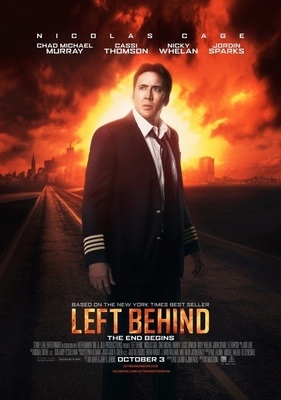
Nicolas Cage stars in this film. I can only assume that this was in the midst of his financial problems and that the offer for a huge slice of the budget was too good. Never mind autopilot, he’s barely awake, plodding through the film with a dead-eyed stare, mouthing the direlogue and clearly wishing he could be raptured out of the movie. Even on the poster he looks bemused and confused about why he’s there. The rest of the actors are so non-descript that this turd is basically their career highlight.

Leaving aside the acting, it’s a hideously made, cheap-as-chips movie with D-list actors stumbling around wobbly sets. It has no sense of humour, no sparkle but is directed with a hamfisted seriousness. The “action” and “thrills” are laughably flat and have less pazzaazz than an episode of Thunderbirds. But taking pot shots at this crap is like shooting dead fish floating in a barrel. It is horribly, horribly, horribly bad, bordering on inept. Even the most blindly devout Christian couldn’t find a message in this. With friends like these God doesn’t need enemies.