Category: Terrorism films

Body of Lies (2008)

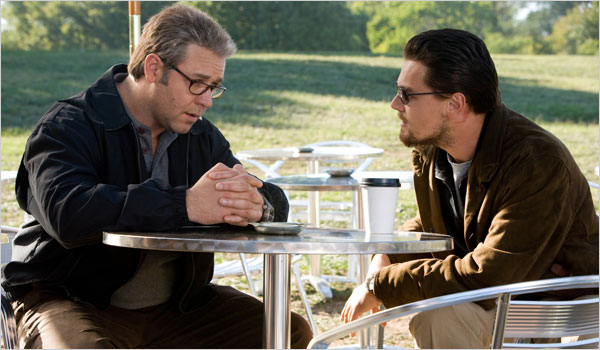
Russell Crowe and Leonardo DiCaprio fail to master the Middle East in Ridley Scott’s spy thriller Body of Lies

Director: Ridley Scott

Cast: Leonardo DiCaprio (Roger Ferris), Russell Crowe (Ed Hoffman), Mark Strong (Hani Salaam), Golshifteh Farahani (Aisha), Oscar Isaac (Bassam), Ali Suliman (Omar Sadiki), Alon Abutbul (Al-Saleem), Vince Colosimo (Skip), Simon McBurney (Garland), Lubna Azabal (Cala)

Ridley Scott is a bit of a curate’s egg as a director. You can always expect a film with a certain visual flair, as well as a story that attempts to tackle big themes and engaging topics. However, it doesn’t always produce an end result that really grips or feels like something that particularly stands out from the crowd. That’s what you end up with Body of Lies, a film that constantly feels like it is on the cusp of saying something important or interesting about the relationship between East and West, but constantly falls back on the sort of spy movie tropes it initially feels like it wants to debunk.

In the Middle East, Roger Ferris (Leonardo DiCaprio) is a dedicated CIA operative, with an intricate knowledge of the cultures and issues of the region. He constantly finds himself frustrated and undermined by his boss Ed Hoffman (Russell Crowe), based in Langley, who is constantly willing to sacrifice long-term gains for short-term political pay-offs. Assigned to Jordan, Ferris begins an investigation into a terrorist cell, working closely with head of Jordanian security Hani Salaam (Mark Strong) – but Hoffman’s intercessions increasingly cause tension.

Scott’s film is stylish and well assembled, with a great sense of pace and place. The contrasts between DiCaprio on the ground (in the dirt, facing dangers and tackling everything from terrorists to rabid dogs) and Crowe back in the States (rarely if ever seen without a hands-free phone set dangling from his ear, viewing everything at a distance with no understanding of the intricacies) is well drawn. The sense of complete cultural misunderstanding and lack of connection between East and West is established early, and attempts to cross it generally lead to disaster. The patience and expertise of the Jordanian security forces is contrasted constantly with the more slap-dash, hasty efforts of the CIA to meet the same goals. It’s all set for something quite interesting.

But then the film somehow doesn’t quite come together. Its episodic structure increasingly stretches out as action moves back and forth from Jordan to Langley and back again. A particularly wild scheme by Ferris (which, to the viewer not the film, suggests he is as incompetent and reckless as Hoffman) turns the film towards the sort of kidnap/torture/nick-of-time-rescue plotline that wouldn’t look out of place in 24 or James Bond. Basically, the plot turns on the film transitioning from something with a genuine political statement to make into the sort of disposal rent-a-spy-thriller that you forget pretty quickly. 

DiCaprio gets a lot of “big” moments to juggle with, as well as a rather forced romance with a Jordanian nurse (something that he and Golshifteh Farahani play very well, but seems to have wandered in from an even more conventional film) but the film works hard to paint him as the “hero” who knows better than his superiors, despite the film chronicling a string of mistakes. Crowe enjoys himself as self-important windbag behind a computer, as uncaring as the institutions he represents.

The real star of the show however is Mark Strong, excellent as the suave head of Jordanian intelligence, seemingly the only character who has any understanding about what is going on. With a cool sharpness, slightly playful politeness and a slight chill of threat, Strong is the film’s most interesting character. There is a striking point made here that the most effective person in the film is a Jordanian spy chief with a mixed reputation – but the film largely shirks the possibility of really using this to demonstrate how out-of-their-depth the CIA agents are, as if worried that flagging up their manifest incompetence at every turn would sell badly Stateside.

It’s part of the film’s general lack of soul behind the skill of its construction. I know Scott is deeply interested in these themes of East vs West and the culture clashes that develop from it, but it just doesn’t come out here at all. There was a film to be made here about how the war on terror has thrown the CIA and the West into a setting they don’t understand, playing by rules they haven’t been briefed on. But all too often the film instead settles for telling us the same-old-same-old, padding out its runtime with spy story clichés and thriller plotting. Scott himself even uses visual tricks – surveillance drone shots and 24 style action – which suggest that somewhere along the line his heart wasn’t really in it. Body of Lies could have been a really interesting thriller about the world today. Instead it’s just another spy thriller about the war on terror.

American Sniper (2014)

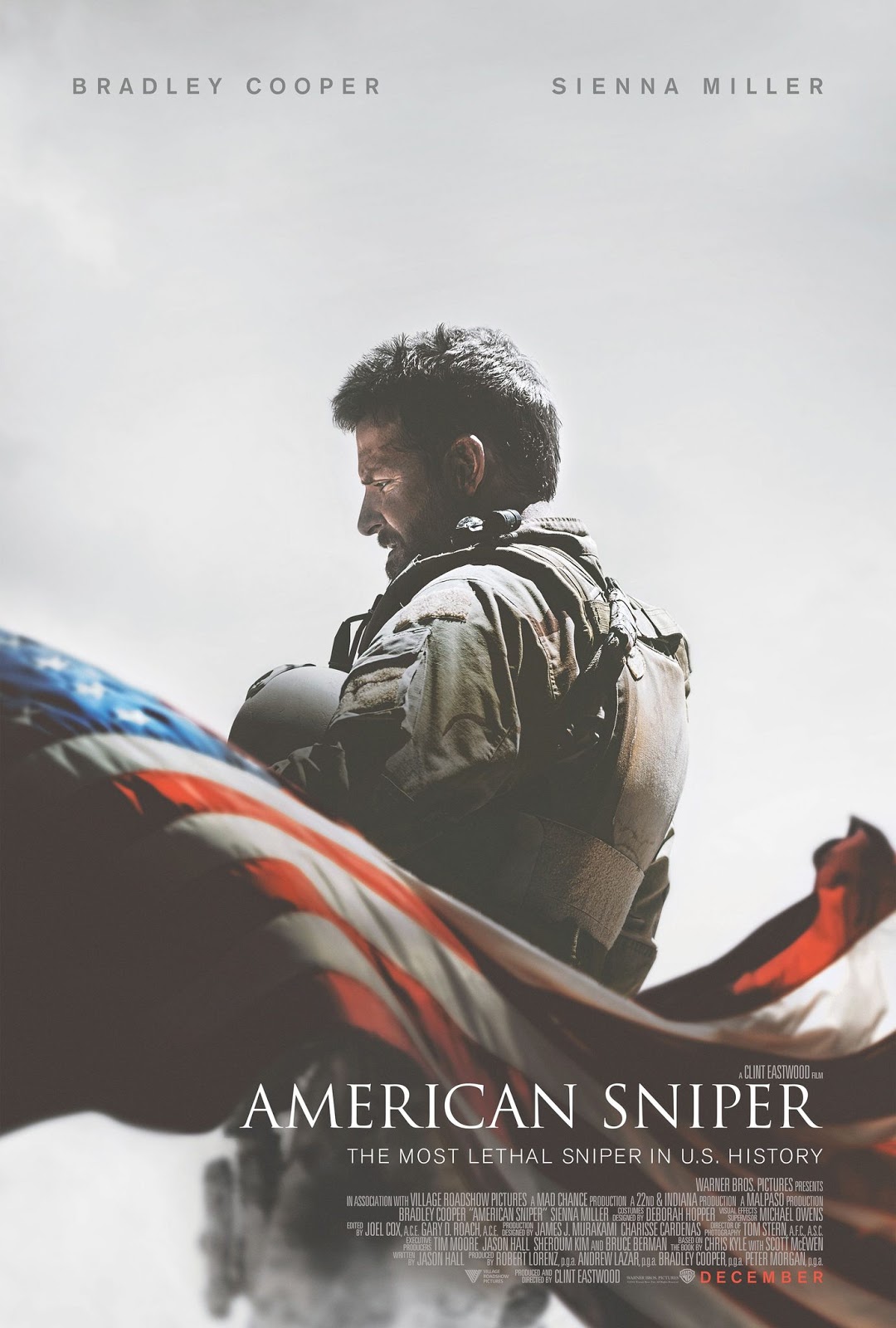
Bradley Cooper takes aim as the American Sniper in Eastwood’s surprisingly thoughtful war film

Director: Clint Eastwood

Cast: Bradley Cooper (Chris Kyle), Sienna Miller (Taya Kyle), Luke Grimes (Marc Lee), Jake McDorman (Ryan “Biggles” Job), Cory Hardrict (D), Kevin Lacz (Dauber), Navid Negahban (Sheikh Al-Obodi), Keir O’Donnell (Jeff Kyle), Sammy Sheik (Mustafa), Mido Hamada (The Butcher), Eric Close (Agent Snead)

All war films walk a fine line: too far one way, and you glorify the violence of conflict; too far the other way and demean the bravery of the soldiers sent to fight it. It’s a tricky balance, but one American Sniper handles with real confidence, astutely putting together a film that can celebrate the bravery, skill and professionalism of its lead character but deplore the psychological impact killing has on him, while subtly suggesting the war he was fighting was scarcely worth the sacrifice.

Chris Kyle (played by an almost unrecognisably beefed up Bradley Cooper) is a Navy SEAL sniper stationed in Iraq. Kyle’s role as a sniper is to protect the troops on the ground from threats they can’t see, and it’s a job he treats with immense seriousness, believing he has a duty to protect others. Kyle soon builds up an astonishing number of kills (a record for US soldiers), but increasingly the burden of killing from a distance impacts Kyle more and more. Over the course of four tours in Iraq, Kyle becomes distant and withdrawn at home from his wife Taya (Sienna Miller) and children. Only after his final tour does he begin to seek help, finding a new purpose in life in helping other veterans suffering from post-traumatic stress. Which, tragically, leads to Kyle’s death, as he is killed in February 2013 by a veteran whom he was trying to help.

Eastwood directs with his expected unfussy smoothness and American Sniper is one of his finest films, a largely unsentimental, gritty look at the true cost of war physically and emotionally. Eastwood balances respecting Kyle’s skill and deploring the impact using that skill had on him. The film stresses the perverse necessity for empathy the role of sniper demands. Kyle is so good at the role because he will go the extra mile to protect his brothers-in-arms on the ground. The psychological impact is heavy because this man, hard-wired to protect others, has to do so by gunning down hundreds of people. Is it any wonder it has such a huge impact on him?

The sequences set in Iraq have the grimy air of reality to them, with dust, dirt, sweat and glare dominating every frame. Eastwood pulls no punches on the impact of bullets from distance on bodies, the violence of direct combat, the terror of being pinned down by enemy fire or the waste of lives (both civilian and military). While the film celebrates the bravery of frontline soldiers, it’s telling we see very few officers at all, but stay with the grunts, and the film is one of their stories and their choices. The politics behind why the soldiers are even there are barely touched upon and, as the tours tick by, the feeling of being there because they are there permeates the film. There is always another insurgent leader to take out, another target to find, and the soldiers make so little progress towards their actual target (locating al-Zarqawi) that he’s barely even mentioned.

Eastwood still subtly suggests our cause in Iraq hardly helps to win over hearts and minds. The soldiers’ interactions with the population are consumed with tension and violence, usually involving scared soldiers shouting at unarmed people, cable-tying men on the floor and failing to relate to or understand the cultures they are in. Any attempts to do so usually end with poor consequences, and the closest to a bond Kyle forms with someone outside of the soldier circle leads to a tragic ending. It’s not a film that has an affinity with the consequences of war, or the impact it has on lives.

If you have any doubt about that, then watching the slow breakdown of Kyle over the course of the film (manfully shrugged off and denied for as long as possible by the man himself) should shake that. Much of the impact of this comes from the excellent performance of Bradley Cooper, who slowly turns the light, fun and intelligent man we meet at the start of the film into someone sullen, withdrawn and permanently on the edge of anger, unwilling to even to begin to think about the possibility that anything he has seen has had any lasting impact on him. There is even some questioning of the damage extreme masculinity and an unwillingness to be open about your problems has on people (themes that Eastwood has always been far more interested in than he is given credit for). 

In fact, excellently assembled as the sequences in Iraq are (especially the tension around a semi-duel between Kyle and an insurgent sniper known only as “Mustafa”), I could actually have had more time given over at the end of the film to exploring how this man with such a warm empathy in him discovered a new purpose in his life. Kyle’s other heroism – and perhaps the secret to the regard he was held in by so many when he was murdered – was his commitment to helping people any way he could. His refocusing his life to help veterans deal with PTSD and physical disabilities could have been brought out into greater focus. Kyle’s greatest strength was his empathy and he became so open about his own problems, and his struggle to readjust, that it helped inspire many others to do the same – and it’s a plot thread I feel deserved a few more minutes at the end of the film.

It does however make a wise call by ending the morning of the day that Kyle was killed, with him leaving his family to spend a few hours with the veteran who killed him. Kyle had been involved in the development of the film, and it stands as a fitting, honest, tribute to him. Powered by Cooper’s superb performance, well supported by Sienna Miller as the wife who wants him to acknowledge the impact war is having on him, Eastwood assembles a fine war film, that acknowledges the sacrifices and heroism of soldiers, but also deplores the horrors conflict enacts on their psyche. It’s a mature, intelligent and well-handled film and well worth your time and effort.

The Hurt Locker (2009)

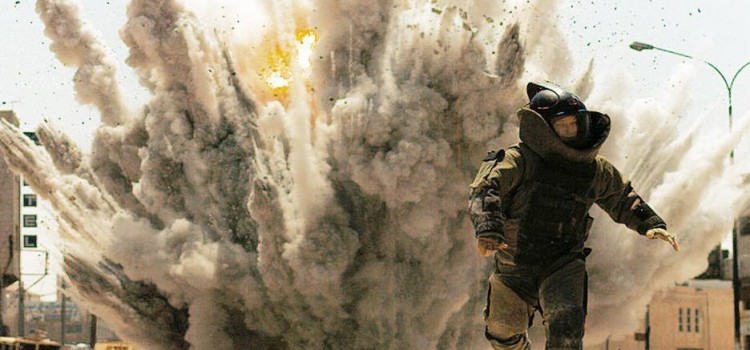
Danger awaits round every corner in the shocking The Hurt Locker

Director: Kathryn Bigelow

Cast: Jeremy Renner (Sgt William James), Anthony Mackie (Sgt JT Sanborn), Brian Geraghty (Specialist Owen Eldridge), Guy Pearce (Staff Sgt Matthew Thompson), Christian Camargo (Lt Colonel John Cambridge), David Morse (Colonel Reed), Ralph Fiennes (British Mercenary), Evangeline Lilly (Connie James), Sam Spruell (Contractor Charlie)

There have been few wars in history as controversial as the Iraq war. Despite this, it’s hard to think of a film that really has nailed the complex social, political and military causes behind the war – or managed to engage with the deep unease much of the Western world feels for the campaign. While there have been great films about Vietnam, that other opinion-dividing conflict of the last 50 years, there hasn’t been one about Iraq yet – perhaps because the wound is still so fresh. The Hurt Locker gets closest by far – largely because it is a film that makes war its subject, not Iraq; it could just as easily be set in the fields of France as the streets of Baghdad.

After the death of their Staff Sergeant (Guy Pearce) while defusing an IED in Baghdad, Explosive Ordnance Disposal (EOD) unit members Sgt Sanborn (Anthony Mackie) and Specialist Eldridge (Brian Geraghty) are joined by a new team leader Sgt William James (Jeremy Renner). However, they both – particularly the by-the-book Sanborn – grow increasingly concerned about James’ maverick methods and willingness to take personal risks to defuse bombs. Slowly, tensions rise in the team.

The Hurt Locker makes no comment whatsoever on the controversy behind the decision to intervene in Iraq. Instead, its focus is entirely on the psychology of those who go to war, and the sorts of personalities it can attract, from those with a keen desire to do their duty to others who get a certain “buzz” from risk and conflict that they cannot find elsewhere in their lives. As the film’s opening words say, “War is a Drug”. And there are few characters more afflicted by an addiction to that drug than Sgt William James.

Not that James is a villain. One of the film’s many strengths is that he is far from a lunatic. Played with a career-defining charisma and intensity by a then almost-unknown Jeremy Renner, James takes personal risks (defusing bombs without the huge rubber safety suits, turning off his comms to concentrate, returning to bombsites to collect trophies or lost items) but he also shows concern and empathy for his fellow soldiers and (largely) avoids putting them in danger. With the team pinned down by snipers in the desert, he calmly reassures Eldridge and talks Sanborn quietly through taking down the snipers. He develops bonds with people and later in the film shows great compassion and willingness to put himself in danger to save a man unwillingly attached to a suicide vest.

James’ struggles are to deal with the modern world and its shallow obsessions compared to the thrill of putting your life on the line (as the film brilliantly illustrates with a final vignette of James back home at the end of rotation, staring blankly at a wall of cereal boxes in a supermarket). On campaign, he talks dismissively of his child and claims to not know or understand his relationship with his wife. But this is a front – it’s clear his family life is far more settled than he suggests – and is actually more connected to his guilt at enjoying his time on military posting more than he does the neutered warmth of family life. Renner excels at all this complex psychology, crafting a man who is aware of his addiction, can’t combat it but feels a deep guilt for it.

The Hurt Locker is about how this rush of war can be more compelling and life-affirming than hearth and home. It’s also perhaps a commentary on how we ourselves get a rush from watching action and war films – that it’s only a few steps from enjoying watching the excitement of conflict, to enjoying being in the middle of that kind of action. Is James really that bad? Defusing bombs is a difficult and demanding job – and James knows (rightly) that he is one of the best at doing it. And shouldn’t a man enjoy his job? Renner’s glee at a job well done is balanced by guilty awareness that he shouldn’t be enjoying himself as much as this.

Kathryn Bigelow is in her element directing this burst of male testosterone, assembling a film that is gripping, tense and hugely exciting. It’s essentially constructed around a series of set-pieces, each of them more unsettling than the one before. Bigelow’s direction is impeccable, as each of these sequences is both unique in tone and utterly compelling. Bigelow became the first woman to win Best Director at the Oscars – and her acute understanding of men enamoured with the buzz of adrenalin is what gives the film much of its narrative force.

It also helps that the film she has assembled here is a technical marvel, brilliantly shot by Barry Ackroyd with a scintillating display of hand-held cameras, cleverly focused details and immersive story telling. The Hurt Locker is a film both drenched in sun and darkness, with burning yellows and oppressive greys. It’s a film that captures the incredibly alien, heat-stoked insanity of Iraq, and the journalistic style and camerawork make everything we watch feel even more immediate.

In the middle of this, the psychological drama between the maverick James and the cautious, procedure-led Sanborn (played by an equally impressive Anthony Mackie, whose every moment buzzes with frustration and anger at the dangers he sees James inflict on them) plays out wonderfully. Bigelow has an immediate understanding of how the adrenalin and testosterone of combat quickly bubble up into violence and aggression off the battlefield, with these two men often becoming like rutting stags, struggling to place their own supremacy on the team – with Brian Geraghty’s weaker Eldridge the pawn between the two.

The Hurt Locker does what it does so well that it’s easy to overlook its flaws. Its narrative is so pure that you regret it gives barely a second to addressing the issues in Iraq or how the behaviour and attitude of the soldiers there (mostly angry and abusive towards the local population) may be contributing to the problems. It also struggles to add much narrative originality to the story, beyond its set-pieces – in particular James’ friendship with a young Iraqi boy seems like the forced stuff of movie convention in a film that prides itself on reality. When dialogue takes over from action, many of the psychological points it raises have been seen in countless films past. You could argue that the film is largely at its weakest when it tackles any questions of plot at all, and that what Bigelow has really done here is make one of the finest boots-on-the-ground immersions you are going to see.

And if The Hurt Locker is just that then, you know what, that’s fine too. Because when it does this it’s one of the best in the game. Brilliantly assembled, shot and edited (those many Oscars were well deserved) it’s a gripping war film that relies a little too much on some of the conventions of war and combat films, while also focusing very intently on how war affects the psychology of the men at the sharp end. It gives a truly unique perspective of the dangers (in every sense) and is brought to life by a series of fine performances, with Renner and Mackie outstanding. Wonderfully directed, and smashingly tense, it’s a worthy contender in the upper echelons of any list made of great war films.

The Battle of Algiers (1966)

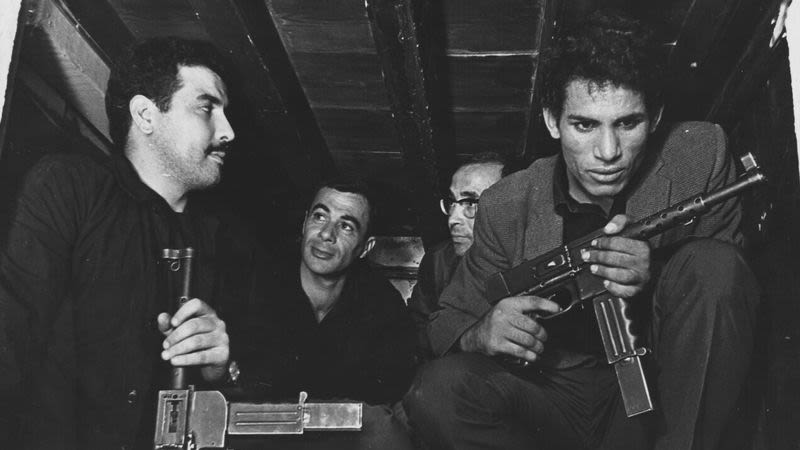
The French military move into Algiers in Pontecorvo’s neo-realist masterpiece The Battle of Algiers

Director: Gillo Pontecorvo

Cast: Jean Martin (Colonel Mathieu), Yacef Saadi (Djafar), Brahim Hadjadi (Ali La Pointe), Tommaso Neri (Captain). Ugo Palette (Captain), Fusia El Kader (Halima), Mohamed Ben Kassen (Petit Omar)

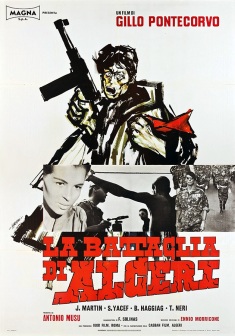
Sometimes, when watching The Battle of Algiers, you have to catch yourself and remember everything you are watching was staged rather than real footage. That right there is the greatest strength of this film, and its ongoing legacy. It feels more real than the news, it looks more authentic than reality. Match that with the fact that (and it says a lot for the world that this is the case) its themes remain painfully resonant today, and you can see why it has had such a lasting and profound impact on film-makers.

Pontecorvo’s film dramatises (although that almost feels like the wrong word) events in Algiers, capital city of French Algeria, from November 1954 to December 1957 when the Algerian War of Independence turned the city into a near warzone, with its hub being an increasingly brutal struggle for control of the Casbah between the French authorities (and then army) and the Algerian National Liberation Front (FLN) cells. 

That description only gets a flavour of the film, which reconstructs the story with a truly awe-inspiring immediacy that feels like a slice of real life. The film has a fearless willingness to depict the dangerous struggle and violence in a combat between terrorists and soldiers. So we get violence on both sides, torture, murder, beatings, bombings of young civilians and other acts of brutality, all chronicled with a documentary realism that never feels exploitative or distasteful.

The film is often hailed as being scrupulously even-handed. I’d argue it isn’t quite – what it does do is recognise that both sides are human. The cause of Algerian independence is clearly one the film finds sympathetic, and while it shows acts of terror from the Algerians, the real acts of violence and prejudice come from the French authorities and citizens. The film doesn’t turn the Algerian terrorists into unspoilt martyrs, but it certainly regards their cause as right. So it can show them killing civilians and engaged in acts of violence, but still admire their cause (the film was made with the involvement of several former members of the NLF both in front of and behind the camera).

The film’s depiction of the French soldiers also gives more of an impression of even-handedness. These soldiers are not brutal or sadistic, but functionaries doing about a job (just following orders?) with a ruthless efficiency. The casting of Jean Martin (the only professional actor in the film) as French commando leader Colonel Mathieu also perhaps weights things, as Martin gives an engaging, morally conflicted performance, and the film lays great stress on Mathieu’s own experiences during the Second World War in the French Resistance and (it’s implied) in a concentration camp. 

The French soldiers go about their task of pacifying the terrorists with a campaign of capture, enhanced interrogation and systematic elimination of cell leaders, using their superior resources and training, in a way that the CIA (which screened the film for its agents in 2003 to help them understand terrorist cells) described as being a complete success militarily, but a total failure politically. It stamps out the Algerians in the Casbah, in a way that reduces casualties and restores order – but totally fails to win over the precious hearts and minds.

And Pontecorvo knows it’s hearts and minds that his film is all about. His camera immerses us in the heat and tension of the Casbah, picking out the faces of the non-professional extras (and actors) that populate his film, showing the bubbling tensions and resentment slowly building in a population that doesn’t start out as bitter and extremist, but becomes more and more so as the French stamp out the Algerian independence movement. People swirl around the action, increasingly objecting to the strict control procedures that segregate the Casbah from the rest of the city, and at several points crowding into potentially violent mobs, spurred on by some members of the NLF.

The NLF also has little compunction in the tactics it has to employ in order to stand any chance against the French. Pontecorvo frames the film around the experiences of Ali la Pointe (a striking performance from non-professional Brahim Hadjadi). It opens with la Pointe trapped by the French soldiers, flashing back to his initial recruitment, radicalisation and increasingly pivotal role as a cell leader under more the more urbane and political Djafar (Yacef Saadi, another non-professional playing a version of himself). 

La Pointe is our audience surrogate – and it’s surprising how we find ourselves drawn towards him. Especially since within the first 15 minutes he’s moved quickly from murdering gangsters in the Casbah to shooting cops and leading riots. Pontecorvo shoots and edits these moments of terrorist action and planning with a Hitchcockian skill. One particularly brilliant sequence follows three NLF women being selected, prepared for, traveling to and carrying out a series of bombings of cafes and bars in Algiers (the victims at one seem to be exclusively teenagers and young people).

The film is full of moments like this, all filmed with a gripping down-to-earth black-and-white realism, buzzing with tension. It’s brilliantly assembled and totally compelling, a documentary slice of Italian neo-realism that presents a fascinating look at the dangerous politics of resistance and occupation. The French military’s heavy-handed tactics are totally effective – even torture is shown to yield enough results to justify its use – but they are also completely wrong, morally repugnant but executed by soldiers going about their duty with no bitterness (Mathieu frequently tells the press that he hopes for a bright future for Algiers and even doubts the wisdom of occupation in the long run).

Pontecorvo’s film remains alarmingly prescient and relevant today – and it’s actually a little scary how little the world has changed. You can just as easily imagine the same events happening in Iraq or Afghanistan today. It’s told here with no sensationalism but a mostly objective even-handedness, that makes clear the side it favours but doesn’t demonise the other. As a slice of history turned into film it’s impeccable.

Eye in the Sky (2015)


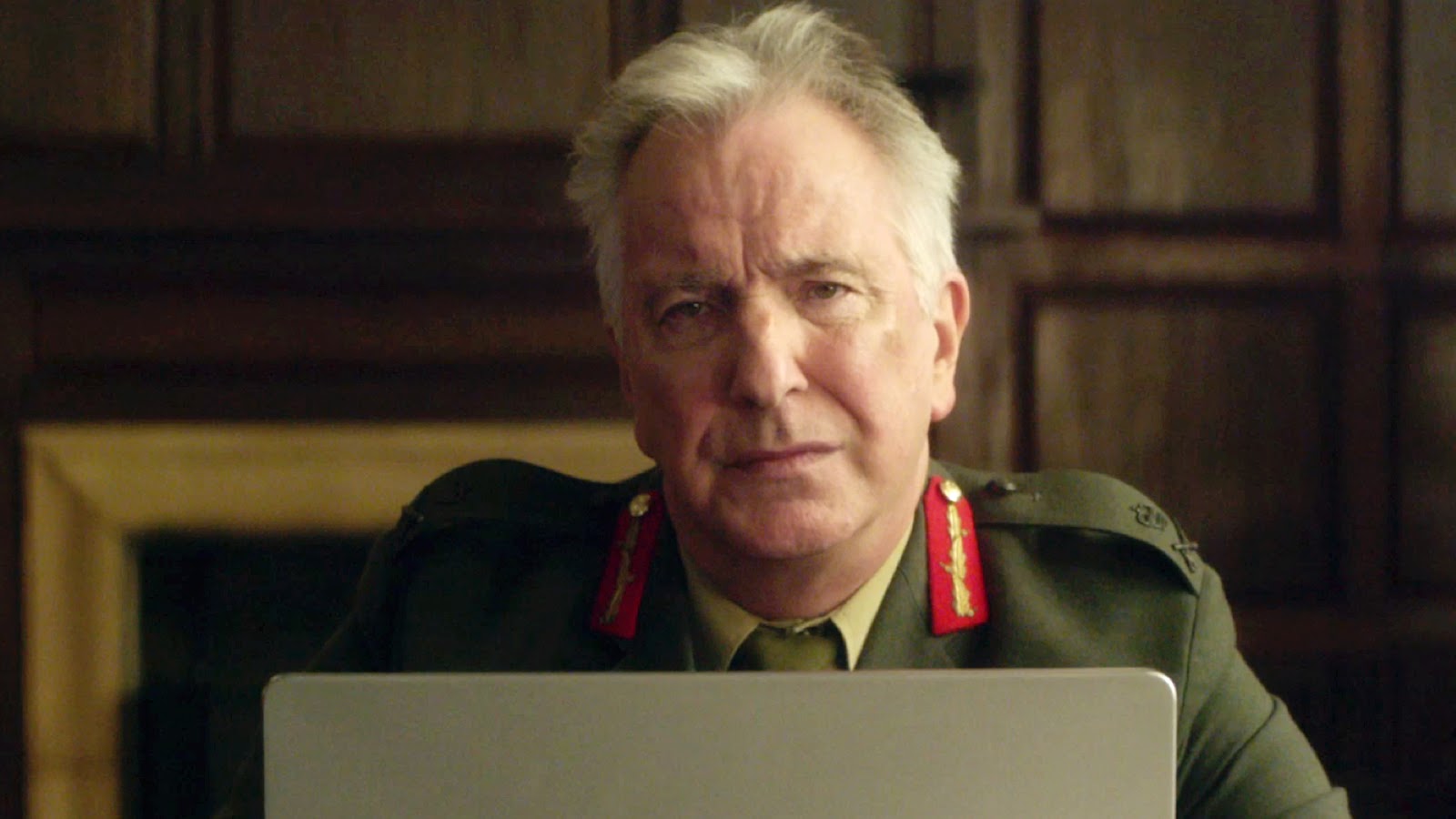
The great Alan Rickman is an exasperated General, in drone-strike moral fable Eye in the Sky

Director: Gavin Hood

Cast: Helen Mirren (Colonel Katherine Powell), Aaron Paul (Lt. Steve Watts), Alan Rickman (Lt. General Frank Benson), Barkhad Abdi (Jama Farah), Jeremy Northam (Brian Woodale), Iain Glen (Foreign Secretary), Monica Dolan (Angela Northman), Richard McCabe (George Matheson), Phoebe Fox (Carrie Gershon), Babou Ceesay (Sgt. Mushtz Saddiq), John Heffernan (Major Howard Webb)

As Shakespeare said, sometimes we are urged: “to do a great right, do a little wrong”. Eye in the Sky is a film about that dilemma. Numbers 2, 4 and 5 on the terrorist “Most Wanted” list are meeting in a house in Kenya. They are preparing suicide bombers. A series of attacks could be minutes away. A drone strike will probably save hundreds of lives. Seems obvious doesn’t it? Unfortunately, sitting in the fatality zone is an innocent young girl, just trying to sell bread. Take out the bombers and you’ll save dozens of other children – but you’ll almost certainly kill this one child.

Your initial reaction to this sort of situation would probably be “thank goodness that’s not my decision”. Problem is, you get the feeling many of our elective representatives feel the same: as the situation escalates (from capture, to kill, to controlled strike, to a certainty of civilian casualties) so does the buck-passing, from politician to politician all unwilling to make a call.

Guy Hibbert’s well researched and thought-provoking script combined with Gavin Hood’s taut direction make this a gripping conversation thriller about the impossibility of moral debates. Hibbert’s script brilliantly piles moral debate on moral debate – just as we accept the desirability of one action, the circumstances change with bewildering speed. Everything, from a change of travel plans to battery failure on a vital piece of equipment, amps up the pressure and makes the situation more morally unpalatable.

The buck-passing becomes almost a dark farce in this expert script. A put-upon civil servant is repeatedly sent to communicate with a string of senior leaders, from the Foreign Secretary to the Prime Minister. Later a crucial decision takes place over a conference call, with an ever-expanding series of international attendees. It’s like a deadly serious Yes, Minister, with Jeremy Northam’s junior minister a flummoxed and vacillating Jim Hacker.

The military seems equally divided – senior officers focus on the big picture, aware of the evil they must do but seeing it as a necessity to prevent worse acts, but the junior ranks actually executing the strikes push back with increasing distress. Mirren’s colonel pressures a sergeant into effectively falsifying a fatality prediction for the girl, to push her superiors into authorising the strike on this vital target. A shallower film would have played great play of this. But Hood and Hibbert never take that easy route.

The film also explores distance conflict. Nearly all the participants are based thousands of miles away, watching on screens and pushing buttons. Rickman’s General has a knock-out final speech about his first-hand experiences of the horror of suicide bombings – and compares this to the moral objections of the greatest opponent of military action in the film, who has watched it all play out with “coffee and biscuits”. Remote warfare is neither in itself good or bad – and those objecting to actions are not angels, just as those pushing for action have their own moral reasons for doing so, and the film demonstrates that amidst all this, the “right answer” (if there is such a thing) can be almost impossible to identify.

Conversation thrillers like this are dependent on the quality of the actors – so it’s lucky we’ve got a great cast here. A gimlet-eyed Helen Mirren is as tough as you’ve seen her as the field commander who suppresses all doubt in pursuit of the greater good. In his last on-screen role, Alan Rickman gives one of his best performances as a wry, humane general who has come to terms with the hideous moral cost soldiers have to bear. His increased exasperation at the procrastination of his political masters adds some black comedy, but he also gives the character a wonderful humanity (a prologue in which he struggles to buy his grandchild a present is not only wonderfully witty, but humanises the character immediately).

Few actors do tortured conscience under the surface better than Aaron Paul – and his drone pilot turned reluctant killer provides much of the moral force of the film. Paul’s sensitive and anguished divide between following orders and living with the knowledge he’s wilfully condemning a child to death is beautifully done. Barkhard Abdi grounds his field operative not only with much of the film’s more conventional derring-do, but also layers the character with dedication and selflessness.

Eye in the Sky is a marvellous piece of tense and layered film-making. It makes high drama out of moral quandaries, and really makes us pause to stop and think about the impact of our decisions both in a wider context, and a very painful immediate one. The professional military figures – even Mirren’s cold Colonel Powell – are motivated by a painful familiarity with acceptable loss, rather than gung-ho aggression. The politicians struggle to reach a decision not only through reluctance, but with empathy for their potential victims. It overeggs the pudding with its final shots of the young girl who has unwittingly been at the centre of a major international incident, but other than that it hardly puts a foot wrong.

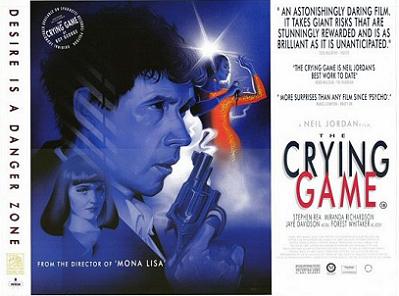
The Crying Game (1992)


Jaye Davidson and Stephen Rea play a dangerous game of attraction

Director: Neil Jordan

Cast: Stephen Rea (Fergus), Miranda Richardson (Jude), Forest Whitaker (Jody), Jaye Davidson (Dil), Adrian Dunbar (Peter Maguire), Tony Slattery (Deveroux), Jim Broadbent (Col), Ralph Brown (Dave)

The Crying Game is one of those little movies that could: a small scale British/Irish drama about human nature and dangerous relationships, which suddenly burst into the world big, was nominated for five Oscars and won one for its creator, turning him into a widely respected writer/director.

The film follows Fergus (Stephen Rea), an IRA soldier who, over a long night, bonds deeply with Jody (Forest Whitaker) a British soldier his unit are holding hostage with the intent of killing him if their comrades are not released. When Jody is accidentally killed trying to escape his execution, and British soldiers wipe out his cell, Fergus escapes to a new life in London, aiming to track down Jody’s girlfriend Dil (Jaye Davidson) whom Jody asked him to find. Fergus discovers things about himself and Jody in London he little anticipated – and also finds that his IRA companions, especially the dangerous Jude (Miranda Richardson), are not as deceased as he believed.

When it was first released in the UK, The Crying Game was a critical and box-office disaster. This was linked to its IRA plotline, largely on account of the film’s unwillingness to stick an unequivocally clear condemnatory label on the IRA. Of course, the film is not a film about terrorism at all – and whatever it says about the rights and wrongs of the British presence in Ireland (very little indeed), I think it’s pretty clear that it shows killing and violence are completely wrong. However, the film was saved by its huge success in America. There, its subject matter didn’t provoke the same level of controversy it was re-marketed as the biggest “twist” film since Psycho.

And ever since then I would say it has stayed in that list of great “twist” films – up there with The Usual Suspects, The Sixth Sense, Planet of the Apes, Fight Club and of course Psycho, among many others. Most of its mystique at the time was due to the fact that the twist was revealed just over halfway through the film and was based around a theme that has gained far more familiarity to us today. I won’t say what the twist is (just in case), as seeing it unfold is a pleasant surprise that turns what we think we know about several of the characters on its head. I’ll simply say that it is a question of identify and leave it at that.

Identity is appropriate, as that’s what this film is about: the images we build about ourselves and how we project those to the people around us. The way our environment, and the people we spend time with, help to shape the people we are. The sometimes unexpected depths that we discover within ourselves. The film is dramatically opposed to label altogether: hence it can present a gunman for the IRA who is a sensitive and kindly soul, whose relationships with others are based on gentleness (and Fergus is just one of three characters in the film who turn out to be very different from our initial perception of them). Many of these reveals are connected to understanding how love and affection can overlap with feelings of attraction and how we express these feelings. This is all parts of the film’s fundamentally humanitarian outlook.

The film has a poetic, at times almost dreamlike, quality about it. There is a lyrical ambience to many of the scenes, with the camera drifting comfortably through the action. Visions of Jody plague Fergus throughout, both day-to-day and (tellingly) during a sexual encounter with Dil. Jody’s image haunts the film, ghost-like, through the many photos of him in Dil’s flat. Many of the events have a similarly haunting sense of being a few degrees out of reality. It’s got the sense of a violent bedtime story or fairy tale in London.

Jordan’s script is outstanding – humane, witty, deeply felt – and the actors embrace the opportunity to play such multi-levelled, difficult-to-pigeonhole characters. It’s also brilliantly constructed into three clear acts, each of which comment upon and deepen the others: we have Fergus and Jody together in Ireland, a tragic growth of friendship and respect between two men; Fergus and Dil in London, a sweet and tentative romance built on secrets; and finally the return of the IRA to London, a destructive thriller. Each act feels like a natural development and there are no juddering changes of tone, as Jordan keeps the focus on the characters and their personal stories and feelings.

A large part of the film’s success is linked to Stephen Rea’s thoughtful and sensitive performance as Fergus, a man who has clearly stumbled into a life of violence despite his sensitive and rather tender nature (and our underlying natures guiding our actions is a major theme of the film). He’s a true lost soul, and his deep (and sudden) friendship with the kidnapped Jody has an ease about it that reveals depths about his character. His relationship with Dil has a sweetness to it, while Fergus is engagingly nervous and tentative of openly expressed love (not to mention that he lies to her – non-maliciously – from the start, as he knows far more about her than she realises). It’s a low-key but commanding performance with a real depth of feeling, and Jordan gives the character a powerful redemptive arc that Rea plays to the hilt.

There is also terrific work from the rest of the cast. This is one of only two films Jaye Davidson ever made, and the untrained naturalness of the acting adds a huge amount to the mystique of the character, as well as making Dil truly sympathetic and intriguing. Davidson’s short career also preserved the unique mystery around the character that was so essential to the film’s success. Forest Whitaker’s English accent is an up-hill battle, but the actor brings his force-of-nature charisma to the part so completely you overlook that he isn’t convincing as a Londoner, a solider or a cricketer. What you do believe is his connection with Fergus, while Whitaker is able to suggest dark hints throughout that his bond with Fergus is as least part manipulation.

Miranda Richardson has the grandest role as a death-dealing IRA hitwoman, which she delivers with aplomb, her dark eyed fanatical fury making her a dangerous antagonist for the film. Jim Broadbent also shines in an early role as an enigmatic barman, but there is hardly a bum note in the acting, although Tony Slattery is perhaps a little too broad as Fergus’ worksite boss.

The Crying Game is a hugely rewarding film to watch, a deep and thoughtful film, packed with wonderful scenes, great acting and guaranteed to lead to discussion and debate after it has finished. Yes it’s a film with a famous twist – but it is not a film defined by that twist. Instead that is only part of the rich tapestry of the film’s exploration of identity, desire and self-knowledge, in which the images we are present to others are as difficult to interpret as the images we present to ourselves.

Zero Dark Thirty (2012)


Zero Dark Thirty tries to raise questions and views, but dodges many of them

Director: Kathryn Bigelow

Cast: Jessica Chastain (Maya), Jason Clarke (Dan), Jennifer Ehle (Jessica), Mark Strong (George), Kyle Chandler (Joseph Bradley), James Gandolfini (CIA Director), Stephen Dillane (National Security Advisor), Harold Perrineau (Jack), Mark Duplass (Steve), John Barrowman (Jeremy), Joel Edgerton (Patrick), Chris Pratt (Justin)

Zero Dark Thirty is a deeply troubling film: a journalistic investigation into the hunt for Bin Laden, shot with an action thriller film ethos. It wears its factual accuracy and research with an ostentatious pride on its sleeve, but ducks out of making any judgement on the issues it presents, as if afraid to pollute the events it displays with editorialising. But some events demand discussion and a point of view: as one critic said, you wouldn’t make a film about slavery that focuses on the cotton output. Similarly, a film that drives us towards the killing of the vile Bin Laden should also challenge us more about the methods used to capture him, the extent to which we “became what we hunted”.

And I don’t buy that the film is challenging us to recognise this ourselves. It starts with recordings from the 9/11 flights (a moment which made me feel uneasy to say the least and many family members were also unhappy with), its lead character Maya is caught up in two bombings and an assassination attempt, her best friend (well played by Jennifer Ehle) is killed in a suicide bombing. All of this, along with the film’s omission of any exploration of the terrorists themselves, is encouraging us to look at a particular side of the argument. Cementing this is the end of the film which, despite caveats, has a “mission accomplished” feeling – it may not be flag waving, but it does want us to feel the professionalism of a job well done, reinforced by the tearful release of 12 years of tension from Maya. We are not being encouraged to question the attitudes or assumptions of the characters in front of us; we are being steered towards a particular view of these characters and events. Without an explicit endorsement, but implicit suggestions that ends may well have justified means.

Of course, 9/11 was an abomination – but setting the deck the way the film does means it makes it easier to condone the terrible things that the CIA do in this film to get the results it got. That’s the problem with the film’s “stanceless stance” – its patting itself on the back for not taking sides means it doesn’t acknowledge any depths to its facts, it gives no context. There are many, many issues and motivations, from both sides, behind the events we see here – but we don’t learn anything about any of them. Instead the film is like a Wikipedia page with brilliant photography and editing: a skilfully presented PPT deck that shows us what happens, but doesn’t feel like it tells us anything about why or how it happened.

Torture is of course the main issue here. The film opens with a gruelling extended torture sequence of almost 25 minutes. The information it yields directly is questionable, but it does eventually lead to a crucial name, which is backed up later by Maya watching videos of others undergoing “extreme interrogation” and saying the same name. Now, torture in something like 24 feels different: there at least (a) the whole world was a cartoon, (b) the danger was immediate (“a nuclear bomb will go off in thirty minutes dammit!”) and (c) there was a sense of conflict in its perpetrators. Neither is the case here.

That’s not a defence of 24, but here it’s full on psychological and physical assault over a sustained period of time with no identified imminent threat and no real sense that the torturers feel they are doing anything wrong (I guess the film is suggesting they have become deadened to it, but still would it hurt to say something along those lines?). And it actually happened, and not just to bombers and terrorist kingpins, but (in this film) to couriers and bankers. Surely that demands some sort of acknowledgement in the film that it was wrong? Instead the film fudges this and the torture of suspects is shown to contribute in some way to the successful delivery of Bin Laden; there is no real questioning of whether the value of the information it directly obtained justified its use.

Part of the problem of the film is that it was originally commissioned as a film about the hunt for Bin Laden – the US actually finding him rather screwed up the narrative. There are elements of that original film in there: a hunt for a chimera, an obsession with one man that blinds us all to the bigger picture: “You’re chasing a ghost while the whole fucking network grows all around you” Kyle Chandler’s character cries out with frustration at one point. Maya (and the film) slaps him down – it never questions whether Bin Laden was worth the focus and expense. But it hints at the repurposed nature of the film, which would have had to tackle this question head on before Bin Laden was found. Was this the best use of their efforts? Was there a benefit to the war on terror outside of the satisfaction of punishing Bin Laden? How in control was Bin Laden of the jihad by then?

It feels to me that this film is two films uneasily mixed together. One film wants to explore the nature of obsession, and wants to question if it’s worth catching one man at the cost of diverting attention from hundreds of others. The other film is a triumphant story of patience and dedication rewarded. You can’t help but feel that a film released prior to Bin Laden’s killing might have been a more interesting and profound piece of work, which could have looked at the nature and cost of obsession. Instead, history itself pushes the film into saying “well it had ups and downs but the ends justified the means eventually”.

None of this doubt about the final film is of course an apology for the appalling crimes of Bin Laden and his followers. And Zero Dark Thirty is, however you cut it, a very well made film and Bigelow is an extremely good director. Jessica Chastain invests a character almost devoid of personality, about whom we learn almost nothing, with an emblematic depth that makes her feel like a profound embodiment of American determination and will, like some sort of morally conflicted female Gary Cooper. The film also does feel like it has something to tell us about an America under siege – although again, by shying away from editorialising, it loses the chance to present a specific commentary on how 9/11 affected the country, and its sudden sense of vulnerability and unease in the world.

It’s a troubling film, a film that seems to be dodging taking a moral stand on areas. It could still have said “some of things that were done were bad but the end result was good”: that would have been fine. But by not making any statement at all, it feels like it’s dodging the issue, not challenging us.