Category: Theatre Adaptation

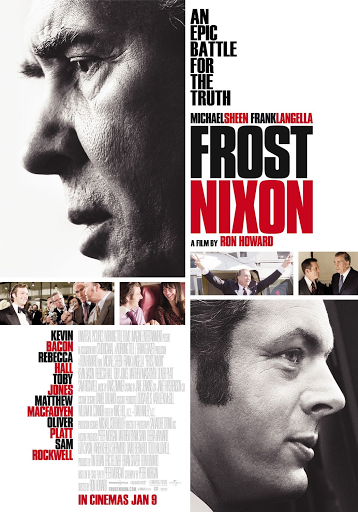
Frost/Nixon (2008)

Frost Nixon header
Frank Langella and Michael Sheen face-off in famous interviews in Frost/Nixon

Director: Ron Howard

Cast: Frank Langella (Richard M Nixon), Michael Sheen (David Frost), Kevin Bacon (Jack Brennan), Rebecca Hall (Caroline Cushing), Toby Jones (Irving “Swifty” Lazar), Matthew MacFadyen (John Birt), Oliver Platt (Bob Zelnick), Sam Rockwell (James Reston Jnr), Clint Howard (Lloyd Davis)

If there is a bogeyman in American politics, it will always be disgraced President Richard Nixon. Because, however divisive Donald Trump is, Nixon will always be the king who was toppled, the man some consider a crook and a war criminal, others a gifted politician and negotiator. The truth is somewhere, as always, in the middle – but what seems inarguable is that Nixon was a man of deep personal flaws, which contributed considerably to his fall. Peter Morgan’s play explored the complexities of Nixon’s character through his famous TV interviews with British talk show host David Frost, a man with a few chips of his own. Ron Howard takes what was already a fairly cinematic script by Morgan, and produces a smoothly professional, entertaining and very well acted film.

After Richard Nixon (Frank Langella) has been forced into resigning, he is in the political wilderness. Watergate engrossed the world, with hundreds of millions of people tuning in to follow every detail. Who in television could resist those numbers? Certainly not David Frost (Michael Sheen), who believes if he can secure an exclusive interview with Nixon he could have a television package that could pull in millions of viewers, make Frost a fortune, and catapult him into the front ranks of TV interviewers. Slowly the project comes together. But both participants have a lot to prove: for Nixon this could be a chance of redemption; for Frost to prove he is more than a chat show host better suited to grilling the Bee Gees than the President. With both men underestimating each other, who will emerge on top in the interviews?

One of Ron Howard’s greatest strengths as a director is his ability to elicit fine performances from good actors. This is the real bonus he brings to this faithful adaptation of Morgan’s award-winning play. He presents it with a highly skilled professionalism and a refreshing lack of distraction that allows the audience to focus on the acting and the dialogue, its real strengths. Frost/Nixon is sharply written – with Peter Morgan’s expected mix of careful research and dramatic licence (most especially in a late-night phone call between the two men before the final day’s filming) – crammed with fine lines, well drawn characters and fascinating insights into both politics and television.

Perhaps Howard’s finest decision was to ensure the two stars of the play (in both the West End and Broadway) were retained for the film. Langella and Sheen’s performances – already brilliant in the stage version, which I was lucky enough to see – are outstanding here, both of them completely inhabiting their characters. The comfort and familiarity between the two performers are crucial – and ensure that the vital scenes between the two characters carry an electric charge.

Langella brilliantly captures the physicality and voice of Nixon, but also finds deep insights into the President’s tortured soul. He communicates Nixon’s sense of inadequacy and bitterness, his resentment at having to fight all his life for things others have been gifted. He balances this with Nixon’s pride and paranoia that constantly leads him to cheat others first. Langella’s Nixon, lost and bored in retirement, is desperate to regain his statue, but also tortured by a guilt and regret he can hardly bring himself to name. Under his robustness and confidence, lies deep shame and sorrow. It’s a brilliant capturing of perhaps the most psychologically complex leader America ever had.

Sheen is just as superb as Frost. As you would expect from an accomplished mimic, the voice is almost alarmingly accurate (he makes a better Frost than Frost did!). But just as insightful is his understanding of Frost’s psychology. Just like Nixon, Frost is a hard-working lad from a poorer background who has had to fight for everything he has. Sheen’s Frost is a phenomenal hard worker – producer, financier and star of his own career – who works hardest of all to appear an effortlessly confident dilettante. Sheen’s Frost balances immense pressures – facing personal and financial ruin – with an assured smile, keeping every plate spinning by never allowing a moment of doubt.

It leads into fascinatingly different attitudes to the interviews themselves. Nixon prepares in detail – and determines his best strategy is long winded answers that present his case and prevent attack. Frost is so focused on delivering the interviews that he sacrifices his actual interview preparation (certainly more so than he did in real life). Morgan uses the conventions of boxing dramas – corners, breaks between ‘rounds’, advice from their trainers – to capture a sense of gladiatorial combat.

However, the play is more complex than this. The reason why Frost struggles to land a glove on Nixon in earlier interviews on his domestic and foreign policies is that Nixon genuinely believes he is in the right – but (perhaps as Frost understood) the final interviews based on Watergate will see a more vulnerable Nixon as on that subject he knows he’s in the wrong. I suspect the real Frost knew that to get to Nixon on that final topic, he needed to be ‘softened up’ first to feel comfortable and produce a revelation.

Because the film is refreshingly positive in its view of television. A medium that films often attack for being trivial and boiling things down to soundbites and snippets, here acknowledges the strengths that can bring. A single snippet of an apologetic and crushed Nixon is worth thousands of words – and small moments can turn a TV programme from a failure to an event. Howard uses the power of the close-up at these moments to demonstrate how TV can zero in with a merciless gaze on a single moment. It’s a defence of the power of TV and its ability to reduce things down to moments.

Howard’s understanding of the strengths that lie at the heart of the play – and to tell the story simply – is what makes an already cinematic play translate wonderfully to the screen. With Langella and Sheen outstanding (with the supporting cast all equally excellent), the film entertainingly demonstrates the preparation and delivery of the interviews, while offering shrewd psychological insights into two men who had a lot more at a stake – and in common – than at first appeared. Professional, handsome and captivating, this is Hollywood movie making at its best.

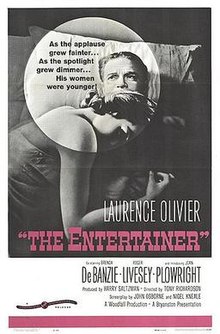
The Entertainer (1960)

Laurence Olivier excels as a faded music hall star in The Entertainer

Director: Tony Richardson

Cast: Laurence Olivier (Archie Rice), Brenda de Banzie (Phoebe Rice), Roger Livesey (Billy Rice), Joan Plowright (Jean Rice), Alan Bates (Frank Rice), Daniel Massey (Graham), Shirley Anne Field (Tina Lapford), Thora Hird (Mrs Lapford), Albert Finney (Mick Rice)

In the late 1950s Laurence Olivier was worried about his career. While he was still doing Shakespeare and Coward comedies (intermixed with the odd film), the world of acting and theatre was moving on. Not least as John Osborne’s Look Back in Anger was taking the West End by storm. Olivier seemed the polar opposite of the “Angry Young Men” of British theatre, a dusty relic. So Olivier changed gears – and his entire life – by asking to be cast in the lead role of Osborne’s next play The Entertainer. Olivier’s sensational stage performance – captured here on film – radically changed the path of both his career and his life, with his long-troubled marriage to Vivien Leigh broking down during it. But he also cemented himself as the leading British actor.

Olivier plays Archie Rice, a failing never-has-been end-of-pier comedy performer at an unnamed Seaside town in 1956. Rice’s routines are old-and-tired, his comedy tinged with desperation and he’s all but broke. Archie’s audiences are tired, bored and unamused. His home life, with his faded former beauty champ wife (Brenda de Banzie) is on the ropes due to his constant infidelity. His father (Roger Livesey) – a music hall celebrity with real talent – loves him but thinks he’s a disasater waiting to happen. His son Frank (Alan Bates) adores him but his daughter Jean (Joan Plowright) is more realistic. Archie through continues to peddle the idea of a success being round the corner, trying to put together a hit revue starring his latest mistress (Shirley Anne Field) and funded by her parents. Things will not end well.

The Entertainer’s main claim to historical note is that it captures that sensational stage performance of Laurence Olivier in the lead role. Olivier had always liked to claim that, with a few zigs and zags in his career, he would have become a third-rate comedian. His performance – with its ingratiating patter, it’s seedy sexually ambivalent campness, his selfishness and self-obsession and greed – is brilliant. Archie’s entire life is a desperate struggle to get himself the career he wants – while trying to shut his eyes to his own lack of talent (of which he is painfully aware). Olivier captures superbly not only the front of a man bent on self-promotion, but also the dead-eyed horror of a man who is aware all the time that he is dying inside.

Olivier’s eyes are drill-holes of death, and his life is an exhibition of selfish patter, with a constant sense of performance in every inch of Archie’s life. He’s a run-down, finished and disillusioned man trying to pluck what few moments of pleasure he can from a life he is only going through the motions in. All of it covered with a coating of self-delusion that quickly crumbles into sweaty desperation. While the film can only give a taste of the Olivier stage performance, it re-enforces Olivier’s energy, creativity and bravery. Olivier’s both bravura and tragically tired music hall performances alone are worth the price of admission.

Away from Olivier’s exceptional capturing of the washed up patter of the sleazy loser, it’s easy to overlook most of the rest of the film. But it’s directed with a kitchen-sink freshness by Tony Richardson, who brilliantly captures the faded grandeur and grubby failure of a failing seaside resort. Osborne’s play used the decline of music hall as a metaphor for the decline of the British Empire and while the film (for all its Suez references) doesn’t quite convey this, favouring instead domestic tragedy, it still perfectly captures the crumbling world of Rice and his ilk. Rice’s father – Roger Livesey, excellent and about a year older than Olivier – is a relic of the success of this era, and still carries some of its glamour, but still lives as a virtual tenant in the Rice home, eating spare cake where he can.

While the film is dominated by Olivier, this presentation of the play as a domestic tragedy works rather well. Brenda de Banzie (also reprising her role from stage) is very good as an ex-glamour puss (and former mistress of Archie) now turned into a faded, depressed matron, drunkenly bitter about what her life has (not) led to. Joan Plowright is excellent as the knowing daughter, alternately sympathetic and appalled at her father. Shirley Anne Field’s naïve lover is suitably naïve, under the control of her battleaxe mother, well played by Thora Hird. The cast is rounded out with Alan Bates and Albert Finney (both in debuts) as Archie’s sons.

While the film feels a little overlong at times, and is perhaps too much in thrall to Olivier, it offers a neat kitchen-sink view of failure and corruption in British life of the 1950s. There is, of course, no hope and no second chances here. Only the long, wearying decline and rotting as Archie’s life disintegrates under pressure and his own incompetent self-delusion. 

The Lion in Winter (1968)

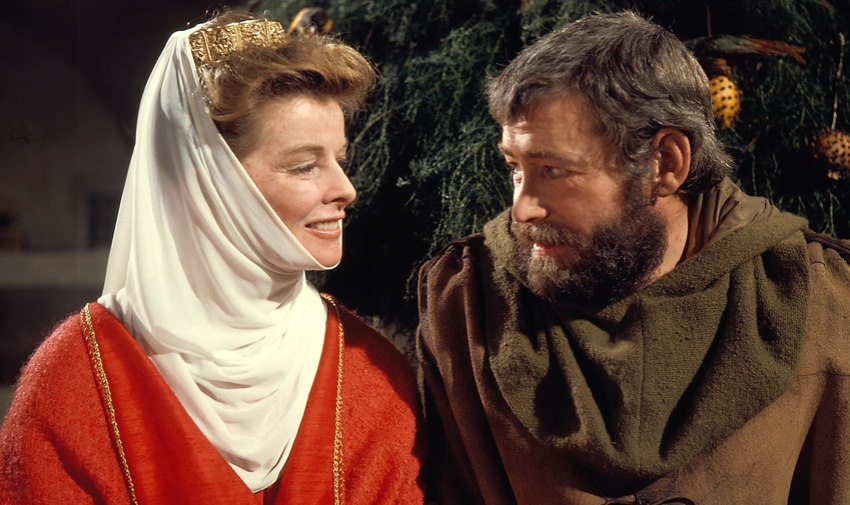
Katharine Hepburn and Peter O’Toole are the feuding royals in The Lion in Winter

Director: Anthony Harvey

Cast: Peter O’Toole (Henry II), Katharine Hepburn (Eleanor of Aquitaine), Anthony Hopkins (Richard the Lionhard), John Castle (Prince Geoffrey), Nigel Terry (Prince John), Timothy Dalton (Philip II), Jane Merrow (Alais), Nigel Stock (Captain William Marshall)

James Goldman’s play The Lion in Winter did solid but not spectacular business on Broadway. But when it came to film, it surfed a wave of popularity for stories about British history and became one of the most financially successful films of its year, winning three Oscars (including for Goldman). Even more than that, it went on to be West Wing President Jed Bartlett’s favourite movie of all time. I think we know which prize is the most treasured.

Christmas 1183 (including an ahistorical Christmas tree and gift wrapped presents and all) and Henry II (Peter O’Toole), king of England and huge chunks of France, wants nothing more than family around him to mark the occasion. Problem is, this is possibly the more dysfunctional family ever. His Queen Eleanor of Aquitaine (Katharine Hepburn) has been under “home arrest” for ten years in her castle, and his children Richard (Anthony Hopkins), Geoffrey (John Castle) and John (Nigel Terry) seem to take it in turns to conspire against their father, their allegiances shifting faster than even they can sometimes follow. For added complexity, Henry is living with his late eldest son’s intended Alais (Jane Merrow) as husband and wife and her half-brother the new King of France Philip II (Timothy Dalton) is joining the family for Christmas. Over one night, this family will fight, feud and change pacts and allegiances until hardly anyone knows where the games end and the hate begins.

Anthony Harvey’s film is a stately, often wordy, faithful reconstruction of Goldman’s script that gives front-and-centre to the often scintillating dialogue between the family members, that leans just the right side of ahistorical (sample line: “Hush dear, Mummy’s fighting”) but frequently allows it’s top-of-the-line cast to let rip on some glorious speeches and dialogue duets crammed with ideas, wordplay, character and wit. Harvey therefore basically decides to sit back as much as possible and allow the actors do the work, using a mixture of medium shots and close-ups to bring the focus as much as possible to the Broadway-style staging or into the actor’s faces. He also uses the strength of the performers to allow for a series of long takes as they burn through pages of Goldman’s dialogue. The fact that there is hardly an interesting shot in the film, and its visual language never matches it’s verbal fire is a shame, but a price the film thinks worth paying.

And it matters little when Harvey is able to work as well with actors as he does here. All the performers are at the top of their game. Katharine Hepburn (winning her fourth Oscar, in a tie with Barbra Streisand in Funny Girl) has the perfect level of acute intelligence and imperious arrogance for Eleanor. But Harvey encourages from her a softness at crucial moments, that in-between the barn-storming speeches and verbal putdowns, Hepburn finds moments of quiet sadness and loneliness – a sense that sometimes ten years of imprisonment means she has had enough of all this – that are some of her most affecting work on screen. She’s hilarious but deeply moving – and totally believable as one of the most powerful women of the middle ages. 

She also is matched perfectly with O’Toole. Playing a 50-year old King at 35, O’Toole brings all the fire and charisma of his personality to the part, in a film where he perfectly balances the larger-than-life gusto of Henry II with his own personal disappointments, guilt and sorrow. O’Toole had already triumphed once as the charismatically brilliant king in Becket (for which he was also Oscar nominated, as he was here), but this performance is even better. Not only is his facility with the dialogue faultless, he also utterly convinces as the sort of awe-inspiring figure who dominates every room he’s in not just with force of character but the acuity and sharpness of his intellect. This might be his finest screen performance – and the one where he was most cheated of the Oscar (losing to a highly active campaign, criticised at the time, from Cliff Robertson in Charly).

To fill the cast out around these pros at the top of their game, Harvey raided British theatre to pluck some promising gems from British Theatre, more or less all of them here in their film debut. Anthony Hopkins is marvellously proud, forceful but just a few beats behind most of the others as a Richard who says what he means and sticks to it. Timothy Dalton is his polar opposite (and equally brilliant) as a Philip II who never says what he means and manipulates with a playful ease everyone he meets. John Castle (an actor who never had the career he should have had) is smugly unlikeable and coldly superior as the unliked middle-brother Geoffrey, while Nigel Terry is a snivelling punching bag as two-faced coward John. Jane Merrow is heartfelt and earnest as Alais, the only unquestionably kind and good person in this bunch.

These characters rotate sides and allegiances over the course of one evening, raging at each other like a medieval Who’s Afraid of Virginia Woolf? The brilliance of the dialogue never stops entertaining – although towards the end the film loses a bit of energy (it probably peaks with Henry’s loud double bluff of dragging the family in the middle of the night to a wedding he has no intention of seeing performed), perhaps partly because the film itself never really comes to flight as something cinematic. This is despite the decision to downplay the glamour – costumes are simple and look lived in (the cast wore them for hours off set to make them look lived in) and sets are far from pristine. It perhaps contributes to the slightly mundane feel of the filmmaking.

But the tricks are all in the dialogue and perhaps the film works best with an interval and a chance to take stock. There are several marvellous scenes, even if the constant feuding and side changing does wear you out after a while. But it’s a treat for the acting. Hepburn and O’Toole are simply at the top of their game, and the rest of the cast more than keep up with them. With an excellently imposing score from John Barry (also Oscar-winning), it’s a shame the film itself is a little too flatly and uninspiringly filmed with a murky lack of visual interest, but there are more than enough qualities for you to issue a pardon.

Born Yesterday (1950)

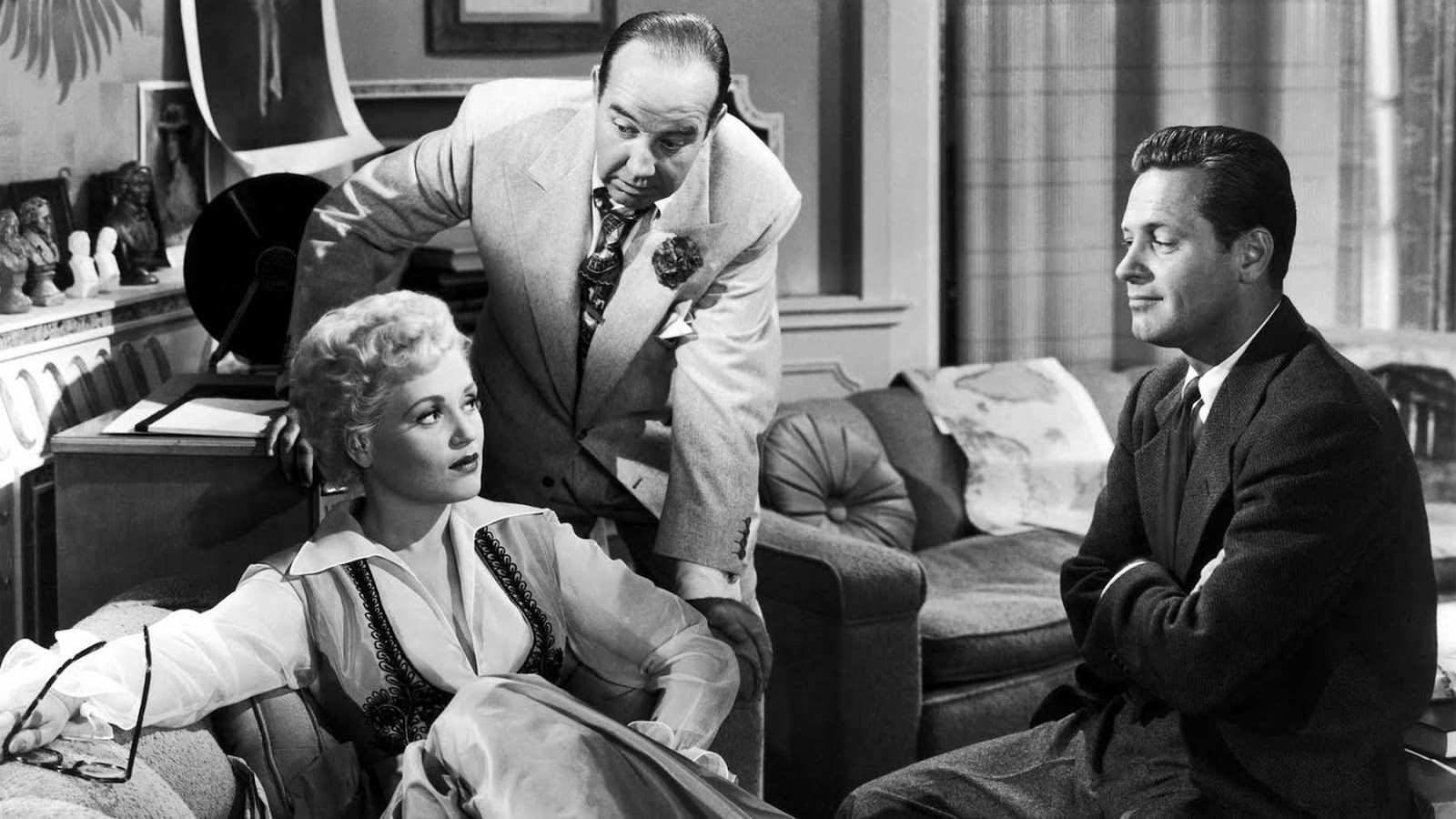
Judy Holliday gets a tutorial in class from William Holden – much to the chagrin of Broderick Crawford – in Born Yesterday

Director: George Cukor

Cast: Judy Holliday (Billie Dawn), Broderick Crawford (Harry Brock), William Holden (Paul Verrall), Howard St John (Jim Devery) Frank Otto (Eddie), Larry Oliver (Congressman Hedges)

Perhaps George Bernard Shaw should have tried to copyright the Pygmalion concept. After all no end of films and plays have tried their best to replicate the magic of having one working class classless type (usually the woman) learning how to use their own natural intelligence effectively by a wiser tutor (usually the man). Born Yesterday is a near text-book example of this – she’s as ill-informed as a young baby so might as well have been “born yesterday” y’see – that offers very little in the way of surprises, but a lot in the way of charm – most particularly from Judy Holliday who carries the entire the film with aplomb.

Harry Brock (Broderick Crawford) is a corrupt, uneducated businessman who has arrived in Washington to buy up a few congressmen. Brock may be a boreish bully, but he’s worried that his mistress, former Chorus-girl Billie Dawn (Judy Holliday), is so brash and ill-educated that she will show him up in front of his new political contacts. So he hires investigative journalist Paul Verrall (William Holden) to educate her. But Paul and Billie have an immediate romantic frisson – and as she learns about politics, literature and the state of the world Billie starts to realise that maybe all those shares she holds in her own name (for tax purposes) in Brock’s dodgy dealings might give her the chance to put his wrongs right.

Born Yesterday was an adaptation of Broadway hit that had made Judy Holliday a star. Written by Garson Kanin, bullying Harry Brock was allegedly based on Colombia Pictures head Harry Cohn. He clearly didn’t care when he smelt a hit – and even confirmed some suspicions by ordering Kanin to do re-writes of the rewritten script for no extra payment. Cohn had been deeply uncertain about bringing the unknown Holliday along for the ride (she had made only three small appearances beforehand) so Cukor cast her in a key role in Adam’s Rib (where Hepburn generously ceded many scenes to her) to prove Holliday could make it on the big screen.

Thank goodness she did make it to the film, as Holliday makes the film. Winning the Oscar – famously beating Bette Davis and Anne Baxter in All About Eve and Gloria Swanson in Sunset Boulevard – Holliday is superb in the role. Billie Dawn may be brassy, may be load, she might have the sort of screeching Brooklyn accent that sometimes feels like nails on a blackboard – but she’s not dumb. She’s smart – as she shows by repeatedly beating Harry with ease at games of gin rummy – she’s capable and she cares. She just hasn’t learned any better, and having spent her life being told that her opinions don’t matter, she’s decided to not mention them.

But Holliday shows Billie is a woman fast – and eager to learn – and a week or so with Paul won’t turn her into a genius, but she’s more than sharp enough to work out what’s wrong about her life and her sugar daddy, and to give her the oomph to do something about it. Holliday demonstrates this endearing growth of engagement and curiosity with a superb lightness – her comic timing is faultless – and a touching sweetness. 

The script gives Billie a hilarious tendency towards malapropism and her wide-eyed innocence and desire to do her best works wonderfully in getting us onside. While she is often the source of jokes she is never the butt of them, and Holliday makes clear her decency and sharpness is innate. She’s far from a dumb blonde – although she certainly looks and sounds like it – and watching her apply good-old fashioned Hollywood liberal ideas to confound boreish businessmen is good fun.

Her co-stars give sterling performances. Broderick Crawford channels his Oscar winning turn from the year earlier as corrupt bullying Willie Stark in All the King’s Men as the loud, bullying and dim Harry Brock. Throw-away lines suggest he has killed in the past – and at one point he strikes Billie – but he’s always a comic blusterer rather than a real threat. William Holden generously cedes much of the ground to Holliday as her Henry Higgins, although unlike that guy he’s humble, supportive and pleasingly democratic (quite the year for Holden, having also played a similar supplicant role in Sunset Boulvard).

Cukor directs with his usual lack of flash, quietly setting the camera in place and letting the actor’s go about their business meaning, for all the location shooting in Washington, this still feels very much like a Broadway piece. Cukor does skilfully manage to smuggle a lot under the censor wire – not least that Billie is clearly Harry’s mistress – and keeps a fine romantic tension between Billie and Paul, even if having the pair of them kiss early on does undermine some of the “will-they-won’t-they” magic.

But then basically this is a very straight forward film that just looks to entertain. There are some dirty dealings in Washington – but it’s all sorted out very easily and we are reassuringly told that there are only a very few bad apples in this barrel, and we can trust in the decency of our leaders. It’s no surprise who ends up with who, and no real revelations in character. The most surprising character in many ways is Harry’s disillusioned, self-loathing lawyer played by Howard St John, constantly on the verge of alcoholic self-disgust.

The film is really a showcase for its star though – and Holliday delivers with a terrifically entertaining performance that hammers home even more the sad fact that she passed away at 43 with only a handful of films to her name. Pygmalion Goes to Washington it maybe, but this is still a lovely epitaph to a talented actress.

Dangerous Liaisons (1988)

Glenn Close and John Malkovich play games of lust and sex in Dangerous Liaisons

Director: Stephen Frears

Cast: Glenn Close (Marquise Isabelle du Merteuil), John Malkovich (Vicomte Sébastian de Valmont), Michelle Pfeiffer (Madame Marie du Tourvel), Uma Thurman (Cécile de Volanges), Swoosie Kurtz (Madame de Volanges), Keanu Reeves (Raphael Danceny), Mildred Natwick (Madame du Rosemonde), Peter Capaldi (Azolan), Valerie Gogan (Julie)

Christopher Hampton’s adaptation of Pierre Choderlos de Laclos Les liaisons Dangereuses had been a stunning success in the West End and on Broadway – so a film adaptation of this lusciously set story of sex was inevitable. Stephen Frears’ film keeps the story grounded in its setting of pre-Revolutionary France, but deliberately encourages a modern looseness, even archness, from its actors that makes it feel grounded and modern.

The Marquise du Merteuil (Glenn Close) and Vicomte de Valmont (John Malkovich) are two French aristocrats who fill their time with seductions and sexual manipulation of other people, while conducting a dance of attraction around each other. Du Mertuil wants revenge against her ex-lover by getting Valmont to seduce the lover’s innocent intended bride Cécile de Volanges (Uma Thurman). But Valmont is more interested in setting himself the challenge of seducing the unimpeachable Madame du Tourvel (Michelle Pfeiffer) – du Merteuil so convinced the task will be impossible that she bets him if he seduces du Tourvel, she will sleep with him as well. These games of sexual manipulation develop with disastrous consequences for all involved, as unexpectedly real emotions of love and affection intrude on the heartlessness and contempt.

Frears’ film won three Oscars for its most striking elements: production design, costumes and Hampton’s script. Hampton’s script provides a series of striking scenes and tongue-lashing dialogue for its stars. Meanwhile the film looks marvellous, it’s use of French locations superb in creating the world of decadence that these characters move in, while the costumes are so strikingly, elaborately intricate they practically become characters themselves. The film opens and closes with scenes of dressing and de-dressing: the opening sequence shows Merteuil and Valmont being dressed in their elaborate finery, a sequence uncannily reminiscent of knights being dressed for war, ending with shots of their defiantly cold faces starring down the lens. The film bookends this with the film’s key survivor, brokenly wiping away from their made-up “public face” probably forever. It’s a film that uses the intricacy of the period, to strongly suggest modern, dynamic tones and emotions. 

The film is shot with a series of tight shots, intermixed with the odd long shot, that is designed to bring us in close with the film’s serial seductions and envy-powered clashes. This brings us straight into the middle of the events, giving them an immediacy and suddenness that makes this feel like anything but a traditional costume drama. Seductions have a steamy immediacy, while the growing moments of tension in the relationship between Mertuil and Valmont is similarly bought in close to us, to allow us to see the mix of emotions these two have for each other – both a deeply, unexpressed, love and a strange sense of loathing linked together with a possessive jealousy.

Frears makes marvellous use of mirrors in the film. These reflective surfaces appear in multiple shots and frequently expand the world, mirrors reflecting characters as others discuss them, or forcing into shot (usually between two other characters) the subject of conversations. They reveal (to the viewers) eavesdroppers hiding and, in one striking shot, as Valmont and Mertuil’s latest lover argue she is framed in reflection hanging above them on the wall mirror. There’s a reason why one of the film’s final sequences revolves around the smashing of a mirror in grief. 

The film’s modernism also stems from its use of very modern American actors – apeing the success of Milos Forman’s Amadeus – with everyone using their own accents. Glenn Close is superb as Mertueil, a woman projecting a cold, manipulative authority but does so to suppress and hide her own emotional vulnerability. Mertueil has convinced herself that she is a champion of her sex, but her every action seems to be motivated by finding indiscriminate revenge on all those who have found the sort of happiness she has been denied (or denied herself). Close lets little moments – wonderfully captured by the intimacy of Frears’ camerawork – where moments of micro-emotions and pain flash briefly across her face, only to be wiped away.

Malkovich is an unusual choice as Valmont – and his serpentine swagger and arch mannered style at first feels quite a disconnect with a character renowned as the most successful lover in France. But Malkovich’s eccentricity, his very oddity, in a way makes him believable as a man women would find intriguingly irresistible. Malkovich, while naturally perfect for the coldness of the character, is also highly skilled at expressing the slow, non-continuous growth of conscience and feeling in Valmont, as his feelings for Tourvel dance an uncertain line between manipulation and genuine feeling – and while his confused feelings for Mertuil alternate from possessive devotion to revulsion.

The whole cast respond well to Frears guidance, and his ability to draw relaxed performances from an odd selection of actors. Michelle Pfeiffer is particularly fine in a role that on paper could be very dull – the perfect, kind woman – but which she invest with such a seam of emotional truth and longing for deeper connections, combined with naked emotional honesty that she becomes the most compelling character in the film. Uma Thuman is very good as a naïve young girl, Kurtz and Natwick suitably arch as society bigwigs, Peter Capaldi creepily willing as a manipulative servant and even Keanu Reeves has a certain sweetness about him, even if he is at the height of his “Woah” dudeness.

The film’s principle problem is perhaps the very archness and coldness that makes it affecting. While it’s intriguing and intelligent, it is never perhaps as engaging as it should be and its characters are so jet-black, deceitful and cruel that it becomes hard at points to really invest in this chilling story of unpleasant people using other unpleasant people and manipulating innocent ones. It becomes a film easier to admire, perhaps carrying too much of the freezing chill of imperial French greed and selfishness. Come the denoument for all the skill it is played with the actors, it is hard to feel your emotions invested or your heart moved by any of the fates of the characters. Perhaps, in presenting a heartless world of selfishness and lies, it does its job too well.

Who’s Afraid of Virginia Woolf? (1966)

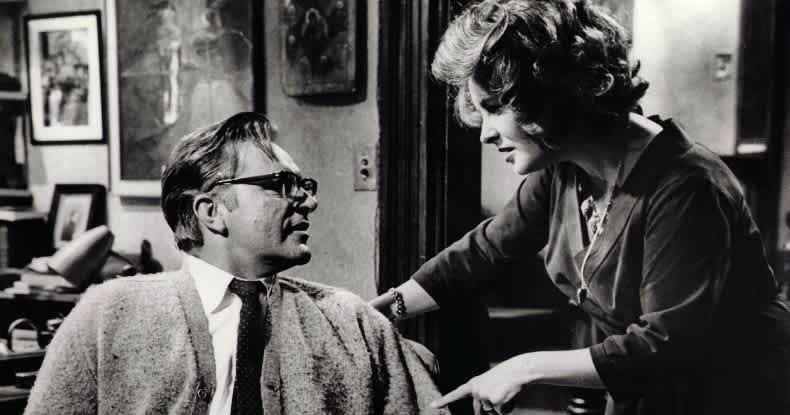
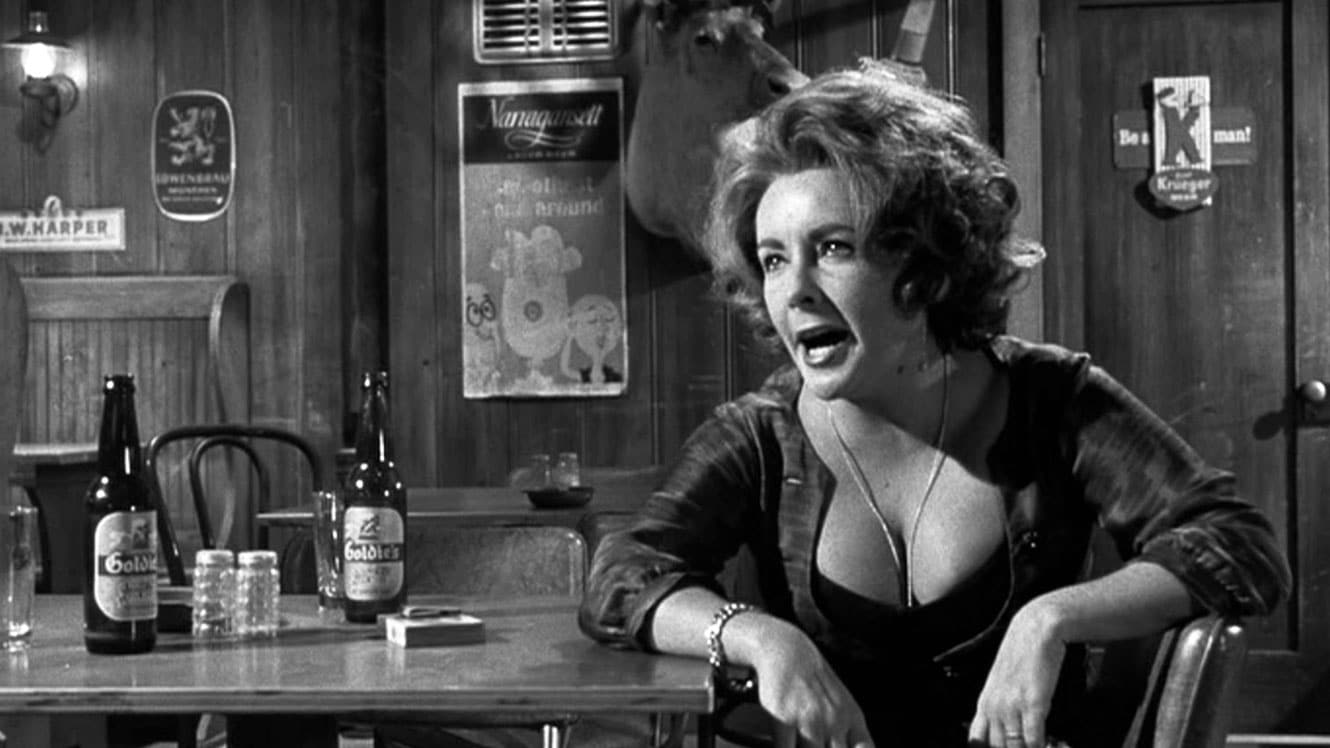
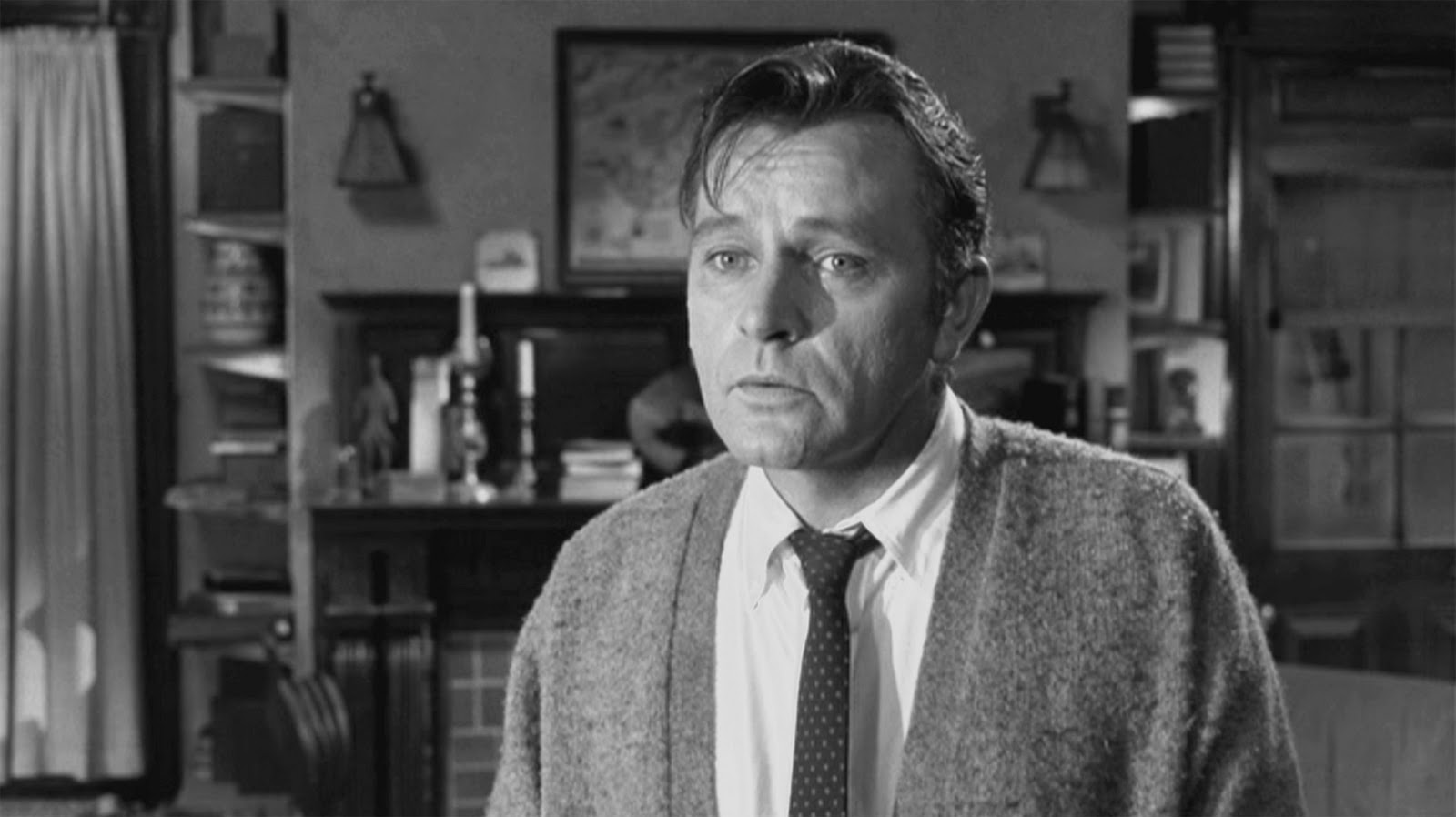
Burton and Taylor play a feuding couple in Who’s Afraid of Virginia Woolf?

Director: Mike Nichols

Cast: Elizabeth Taylor (Martha), Richard Burton (George), George Segal (Nick), Sandy Dennis (Honey)

In 1966, Hollywood was only just emerging from the strict rules of the Hays Code. These governed everything from the themes a film could explore to the language you could use while doing it. But in the permissive 60s, it was finally beginning to crack – and Who’s Afraid of Virginia Woolf? was one of the first films to really push it over the edge. This film helped usher in 70s Hollywood, where filmmakers finally felt empowered to explore darker themes and to do so with sex, violence and bad language. Five years after this film came out, something like A Clockwork Orange could become a box-office smash and a Best Picture nominee. Talk about the changing of the guard.

Mike Nichols’ film debut is a faithful adaptation of Edward Albee’s Broadway smash, which had been controversial enough on stage for its full and frank exploration of a marriage consumed with bitterness, feuding and pain. Not to mention its open acknowledgement of extra marital sex, abortion and alcoholism all delivered with a literal “screw you!”. Elizabeth Taylor is Martha, daughter of the president of a small New England college, whose husband George (Richard Burton) is a failed associate history professor. The couple are locked into a dysfunctional marriage that mixes recrimination and a perverse, shared sense of humour. Drunkenly returning home after a party, they welcome a new professor (George Segal) and his wife (Sandy Dennis) to their home for a nightcap. There they quickly rope the couple into a series of increasingly personal “games” with an edge of cruelty and lashings of verbal abuse.

Today, Who’s Afraid of Virginia Woolf? has not always aged well, coming across at times as rather forced and overbearing, as is often the way with films that pushed the boundaries so effectively back in the day. Nichols has the confidence to avoid “opening up” the play too much – its single setting on stage is augmented here only with a brief drunken excursion out to a late night bar – and instead focuses on drawing out four superb performances from its actors (all Oscar nominated) and letting the camera move intricately around the confined rooms where the action takes place.

What Nichols really draws superbly from this film is the control of the film’s continual pattern of simmer, tension and release. The play is effectively a series of psychological games that George and Martha play between themselves. The film is like a drunken, truly mean-spirited version of Noel Coward’s Hay Fever, where the self-absorbed hosts similarly play elaborate ”games” with their confused guests. Most games involves Martha and George turning on each other, viciously attacking the other for everything from failure to drunkenness, with their guests used as the jury, mixed with “get the guests” interludes as the couple turn on the sexual and marital issues in their guests’ lives.

It makes for a series of compellingly delivered sequences – even if the constant thrum of tension and heightened half-mock, half-real fury Martha and George keep up for most of the film finally starts to bear down on the viewer. The film starts banging its points with a transgressive pride, which looks like increasingly like a lot of sound and fury over quite minor issues. But then that’s always the way with convention defying films – so many following films have buried these conventions, that the attention grabbing way this film does it looks quite tired and overworked today.

As Martha and George, Nichols was able to cast the most famous married couple on the planet at the time, in Elizabeth Taylor and Richard Burton. With these titanic personalities working – for perhaps the only time – with a director who had the skill and authority to tame them, the two of them delivered probably their finest performances on film. It also adds to the illicit sense for the audience – like Nick and Honey – that we are trapped into seeing a series of personal and intense conversations and arguments. 

Finally accepting the sort of intense and challenging material he often overlooked for well-paid gigs, Burton is superb as George: a mass of passive aggression, condescending to everyone around him, capable of great cruelty but also a crushed, disappointed and vulnerable man, desperate for affection.

Elizabeth Taylor was similarly sensational – and Oscar-winning: puffy faced, blowsy and domineering as Martha, who similarly has buried her pain and loneliness under a never ending onslaught of aggression, mockery, tartiness and loudness. Brassy and bold, Martha at first seems the controlling, even abusive force in the relationship, but she is also isolated, scared and overwhelmed with pain. 

What’s brilliant about the relationship between the couple is at first it seems like George and Martha are a deeply unhappy couple, fuelled by hate. However, it becomes clear their feuding and contempt for each other is in fact part of a relationship grounded on mutual love and need (the final shot is their hands joined together), revolving around their mutual shared pain on their failure to have children. The couple’s primary “game” is a private one – a fictional child, invented to compensate for their mutual infertility – discussion of whom early on by Martha opens the door to the fury that follows. But it gives an insight into their relationship, actually kept fresh by their feuding.

By contrast, it’s the seemingly happier young couple who have serious problems. Nick, very well played by George Segal, is a dashing young buck who is actually selfish and, with a dream of sleeping his way to the top (despite his possible impotence), whose lack of depth is routinely savaged by both Martha and George. Despite this, Nick doesn’t seem to realise that this he’s in the middle of a series of games. He’s married his wife out of obligation for her pregnancy. Honey – an Oscar-winning turn by Sandy Dennis – on the other hand seems to be aware she’s out of his depth here, and reverts into an almost childish passiveness, mixed with awkward horror which slowly peels away to reveal her misery and depression. Slowly we realise Nick and Honey have nothing in common.

It’s a complex and intriguing play, brilliantly bought to the screen by Nichols whose camera (in stark black and white) bobs and weaves through the action, involving each actor in every scene (the camera often focuses on reactions as much as dialogue delivery). All four of the actors are great, but Burton and Taylor are nothing less than sensational (ironically their careers never seemed to recover from the amount they put out there, with more than a few speculating that their own marriage was but a few degrees different from George and Martha) and the film itself, while overbearing, is also still compelling in its complexity and stark insight into human relationships.

The Two Popes (2019)

Hopkins and Pryce excel in Fernando Merielles’ witty and thought-provoking The Two Popes

Director: Fernando Meirelles

Cast: Jonathan Pryce (Cardinal Jorge Mario Bergoglio/Pope Francis), Anthony Hopkins (Cardinal Joseph Ratzinger/Pope Benedict XVI)

Hollywood loves a buddy movie. And what buddy movie could be more off the wall than Two Popes: one a German traditionalist with a reputation for rigid interpretation of church law who reads Latin for fun, the other an easy-going Argentinian reformer with a love of football and tango. So that’s what you get with The Two Popes, a surprisingly funny and engaging film about Papal politics, dashed with a pleasingly even-handed perspective on its two central characters.

In 2012, Cardinal Jorge Mario Bergoglio (Jonathan Pryce) is planning to hand in his resignation as Archbishop of Buenos Aires to Pope Benedict XVI (Anthony Hopkins), now in his seventh year of Pope. Bergoglio feels that he has little left to offer the church, and this own reformist ideas are out of step with the current leadership. He feels his best calling would be to return to a simpler, parish priest life. But Benedict XVI summons him to the Vatican to dissuade him – leading to a series of prolonged heart-to-heart conversations between the two that see a thaw in their relationship, heartfelt confessions from both men on their failings, and Benedict’s revelation that he plans to resign from the Pontificate – and wants Bergoglio to succeed him, as Bergoglio can offer the reform to the church that Benedict cannot.

The Two Popes is a terrific adaptation by Anthony McCarten of his own stage play. It shows us Benedict’s conservative, safety-first policies (towards everything from financial scandals to child abuse scandals) and Bergoglio’s more modern, inclusive church, but largely avoids holding one up as wholly superior to the other, or turning the story into a simple good guy/bad guy conflict. Instead it focuses on showing the faults and positives of both men, and how both men felt a calling and need for their service at different times – and how this loss of calling (something both men suffer from at the start of the film) can be reborn through patience, listening and reflection. Meirelles directs this very theatrical piece sharply, with a keen eye for expanding it into film with a combination of intriguing angles, visual style and confident editing.

Unfolding over the course of several increasingly heartfelt conversations – which progress from awkwardly blunt confrontation, through thawing openness, to something near to a confessional – this is a film that uses the Hollywood convention of a mismatched couple to allow an intriguing exploration of the price and value of faith and the difficulty of duty. Sharp commentary is made on the backgrounds of both men – Benedict growing up in Nazi Germany, the sharp criticism of Bergoglio’s perceived lack of action during the Military Junta coup, which led to his dismissal as head of the Jesuit order in Argentina. Both express guilt, regret and even touches of self-loathing – but both also react to those feelings in the other with patience and support.

It also helps that these conversations around church politics and religious intent are told with plenty of fresh and entertaining jokes. There is always a lot of mileage to be had from seeing people like the Pope delightedly watching trashy TV or failing to recognise either ABBA or the Beatles, while Bergoglio’s homespun openness and willingness to talk with anyone about anything (not to mention his passion for football) throw open no end of comic possibilities from seeing this prince of the Church insist on being treated as just a regular joe.

It also gives loads of opportunities for its two stars, arguably Wales’ leading actors (both highly deserving of their Oscar nods). Hopkins, given his best material in years, is brilliant as Benedict: irascible, imposing, morally certain and firm but also playful just below the surface and a man profoundly aware of his own mistakes and failings. Hopkins delivers the lines with just the right touch of twinkle in his eye. 

He also bounces wonderfully off Pryce who is possibly at a career best as Bergoglio. A brilliant physical match for Pope Francis, Pryce’s performance captures perfectly the unaffected humility of the man, but also his intensely sharp personal reflection and the burdens of guilt, as well as the shying away from confrontation that is Bergoglio’s greatest failing. Pryce’s comic timing is impeccable, but he also carries the movie’s heart and soul with affecting skill, pulling off the difficult trick of making a good man a compelling one.

Meirelles’ film is a talky affair – and its construction is a little pat at times, like a very well assembled production line buddy movie and biopic. It never completely escapes the clichés of two-very-different-people-coming-together that is one of its heartbeats, but it does it all so well, with such grace and wit – and two such terrific performances – that it hardly matters. Another big success for Netflix.

Henry V (1944)

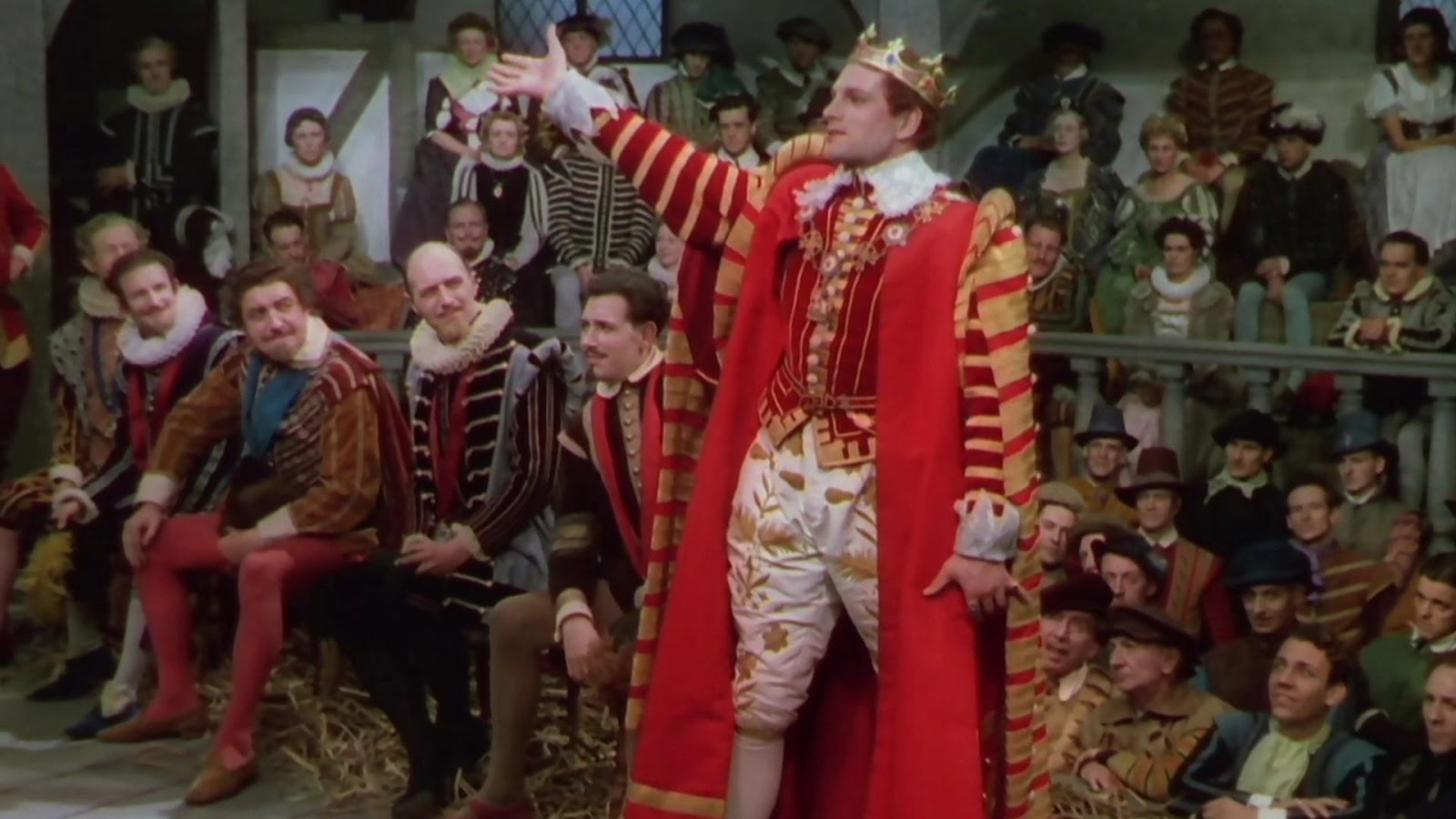
Once more unto the breach with Laurence Olivier as Henry V

Director: Laurence Olivier

Cast: Laurence Olivier (Henry V), Renée Asherson (Princess Katherine), Robert Newton (Pistol), Leslie Banks (Chorus), Felix Aylmer (Archbishop of Canterbury), Robert Helpmann (Bishop of Ely), Nicholas Hannen (Exeter), Ernest Thesiger (Duke of Berri), Frederick Cooper (Nym), Roy Emerton (Bardolph), Freda Jackson (Mistress Quickly), George Cole (Boy), Harcourt Williams (King Charles VI), Russell Thorndike (Duke of Bourbon), Leo Genn (Constable of France), Francis Lister (Orleans), Max Adrian (The Dauphin), Esmond Knight (Fluellen), Michael Shepley (Gower), John Laurie (Jamy), Niall McGinnis (MacMorris), Valentine Dyall (Burgandy)

Olivier’s pre-eminence as the leader of the acting profession in Britain for a large chunk of the last century probably found its roots in his imperiously sublime production of Henry V, the first time he directed a film, but also the point where it seemed that Olivier and the country of Britain seemed to be almost one and the same. Filmed as a propaganda piece, heralding the indomitable spirit of the British in the face of foreign wars, Olivier’s film is a triumph that also set the tone for what the public expected from Shakespeare films for decades to come. 

Originally Oliver balked at the idea of directing the film, approaching William Wyler to take the job on. But Wyler, rightly, knew he could never bring the Shakespearean understanding to it that Olivier could, so the soon-to-be Sir Laurence took the job on himself – meaning he directed, co-produced, co-adapted and starred in the film. I’m not sure anyone else could have done it – or invested the entire project with such certainty, such confidence, such power of personality that the entire project flies together into a sweeping, brightly technicolour treat of pageantry and theatre.

Olivier’s concept for the film is ingenious – and influential. Taking as its cue the words of the chorus (delivered with a archly bombastic confidence by Leslie Banks), the call to “let your imaginary forces work”, the film is set initially in a genuine Elizabethan era staging of Henry V (including unfortunate rain downpour after the first scene).Slowly, it develops over the course of the film from set to cinematic sound stage (still designed with influence from medieval illustrations) and finally into a realistic location setting for the Battle of Agincourt, before turning heel and repeating the journey back until the film ends again in the Globe theatre, with the actors taking their bow (and the female characters now played by fresh-faced boys). It’s marvellously done, and a neat play on the limitations of both film and theatre, and a testament to the powers that imagination can have to expand the world of what we are presented with.

The style of the play develops as we watch it, becoming more natural and restrained as we get closer to Agincourt, then progressing gently back the other way. The opening scenes play Canterbury and Ely’s long-winded legal argument in favour of war for laughs (with neat comic timing by Felix Aylmer and Robert Helpmann), with an avalanche of papers across the stage, Canterbury frequently lost in his exposition and Ely (and even Henry) having to prompt him with precise points. This is a nice set-up for the comic characters of the play, Falstaff’s old retainers here are the very picture of high-spirited, rowdy common folk (though I must say Robert Newton’s high-energy, gurning Pistol is a bit of a trial, even if it perfectly captures the playing-to-the-cheap-seats mania the role seems to require). 

This comic exuberance (and the stuff with Canterbury is genuinely quite funny) gives a perfect counterpoint for Laurence Olivier to perform Henry at his imperious best. Olivier was an actor who invested his Shakespearean delivery with far more naturalism than he is often given credit for, and his Henry here has more than enough true feeling, emotion, determination, courage, bravery and nobility behind his almost sanctified greatness. And of course you get Olivier’s outstanding delivery, that wonderfully rich voice with just a hint of sharpness, delivering the lines not as just poetry, but as true moments of invention. Olivier also has the mastery of the small moments – and Henry doesn’t get much of those – with two particular favourites being the small cough in the wings to clear his throat before entering for his first scene, and that satisfied, exuberant smile at the curtain call at the play’s end. His Henry – the true warrior king of virtue – cemented perception of the character for decades to come.

True, Olivier never touches on Henry’s darker side. Olivier neatly cut anything that could introduce any shades of grey into the character: gone is the summary execution of the traitors at Southampton, cut are the references to naked newborn babes being spitted on pikes before Harfleur, nowhere do you hear the order to execute all prisoners at Agincourt. This is film-making with a purpose, to pushing the message of England, for good, against all. 

As a director, Olivier revelled in the possibilities of cinema, marrying it to theatre. For the large speeches, Olivier invariably starts small and close, and then pans sharply and widely out to turn the cinema into a theatre – also allowing the actors (often to be fair, himself) to not feel restrained by the intimacy of the camera, but to deliver the speeches as intended, larger than life and bursting with impact. Olivier’s confidence with the camera is striking, his film a celebration of sweeping shots, of carefully placed tracking shots, of well-delivered acting. The camera work in the Globe is beautifully done, a series of carefully selected angles and shots. The long panning shot over a model of London leading to the Globe that book-ends the film is beautifully done, and the confidence with which Olivier slowly transitions from artifice to reality is superbly well done.

The style of the piece is extraordinary, with its primary colours like a medieval book brought to life. There is some pleasing comic mileage from the French court, reduced almost to a man to being a bunch of camp moral weaklings. The courting of Princess Katherine (Renée Asherson, in a role intended for Vivien Leigh) has a playful charm to it (even if, as in the play, it’s probably a scene too far after the highpoint of Agincourt). But the heart of it is that long build to the campaign, for Agincourt to be brought to life (at huge expense at the time), a beautiful rendering and explosion of reality after the careful artificiality of the rest of the film, as if we really have got our imaginations working and brought it to life before us as the Chorus instructed.

The film established a regular Olivier company that would work with him on films to come. William Walton’s score seems to capture that mood of England at war and believing it was in the right. The cast – plucked from English theatre by Olivier – give striking performances, from Leo Genn’s stern Constable to Max Adrian’s bitter Dauphin, with Esmond Knight’s pernickety Fluellen leading the way for the English. Olivier is of course at the centre as the master conductor, a man who fitted so naturally into the role of leader that he basically seemed ready to take it on for the whole country, never mind just the film. Is there an actor around who was more suited and natural in positions of authority than Olivier? Who was so easily able to inspire and dalliance with genius? 

Turning Henry Vinto a patriotic celebration of England was what was needed, but turning Shakespeare into something that worked on film, that married the theatrical qualities with the cinematic sweep of the camera was exactly what the Bard needed to find a life on screen. Olivier’s daring was to strip down the play and work out what would work on screen and how to make that come to life. Doing so, he defined Shakespeare films for a generation.

Pygmalion (1938)

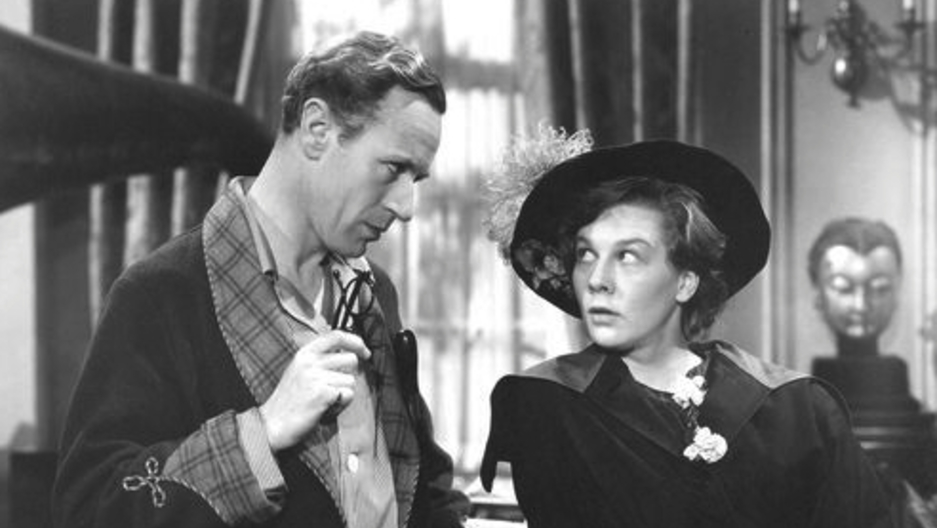
Leslie Howard and Wendy Hiller excel in Bernard Shaw’s own adaptation of Pygmalion

Director: Anthony Asquith, Leslie Howard

Cast: Leslie Howard (Professor Henry Higgins), Wendy Hiller (Eliza Doolittle), Wilfrid Lawson (Alfred Doolittle), Marie Lohr (Mrs Higgins), Scott Sunderland (Colonel George Pickering), Jean Cadell (Mrs Pearce), David Tree (Freddy Eynsford-Hill), Everley Gregg (Mrs Eynsford-Hill)

“It’s an insult for them to offer me an honour, as if they have ever heard of me – and it’s very likely they never have. They might as well send some honour to George [VI] for being King of England.” That was George Bernard Shaw’s reaction when he heard that he had won Best Adapted Screenplay at the Oscars. Now that’s a reaction that would have burned Twitter up today. Mind you Shaw wasn’t adverse to taking the film world’s money for bringing Pygmalion to the screen – and also means he is one half of a nifty pub quiz question (who is the only other person to win BOTH an Oscar and the Nobel Prize for literature?).

Pygmalion, always one of Shaw’s most popular plays, seemed a logical choice to begin for producer Gabriel Pascal’s dream of bringing a cannon of the playwright’s complete work to the cinema screens. Shaw agreed – so long as he had was on board as the screenwriter and with a personal supervision of the adaptation. He missed a trick by not insisting on creative control. Shaw re-wrote and restructured much of the play for the screen – and it’s this screenplay that forms the basis of My Fair Lady. So closely so, that it’s the most familiar version of the play – and so close does the dialogue cut that you end up wondering where the songs are.

Anthony Asquith was bought on board as the director, and Shaw oversaw the assembly of the cast. Leslie Howard was cast over Shaw’s original choice, Charles Laughton, and also given a co-director credit (although there are some disagreements about what this meant, with some claiming it was basically some on-set notes to actors). Asquith was a director with a gift for opening out literary adaptations onto the big screen, and he succeeds here in capturing much of the atmosphere and mood of Shaw’s comedy of manners. There was also a young whippersnapper called David Lean on hand to direct the montage sequences that showed Eliza’s training.

Leslie Howard was a major matinee idol, but also an accomplished stage actor – and both qualities come to the fore here in what is surely the best Higgins captured on screen (with apologies to Rex Harrison). His Higgins is a rough-edged, somewhat scruffy, eccentric who speaks before he thinks, treats everything with an absent-minded, off-the-cuff bluntness and is almost professionally rude. He’s never straight-forwardly charming, indeed sometimes he’s outright cruel and bullying, but there is a professorial lack of harm to him that makes him reassuringly British and decent. And he gives the final act a real sense of vulnerability and emotional repression that is vital.

If Leslie Howard makes a very good Higgins, I do think there is very little doubt that Wendy Hiller is the definitive Eliza Doolittle. Handpicked by Shaw, she is superb here. Her Eliza has all the fragility, worry and working-class chippiness you expect, but Hiller laces it with such a real streak of humanity that you end up deeply investing in her. Her flourishing sense of personality, of her growing strength of personality and feelings of independence dominate much of the final act of the play, and Hiller mixes it with notes of genuine hurt and sadness about the dismissive treatment she is receiving from Higgins. It’s a performance overflowing with nuance and pain – and the moment when a pained Eliza responds with a pained dignity when Higgins suggests she marry someone else that “we sold flowers….we did not sell ourselves” is a truly wonderful moment.

But this is also a very well made, cinematic movie with some really outstandingly funny sequences. The scene where Eliza – newly trained to talk “proper”, but with no idea about what makes for decent polite conversation – regales a dinner party in earnestly, perfectly accented English about her belief that “they done [that] old woman in” at great length is hilariously funny, as is Howard’s wryily amused response. There is also equal comic mileage to be got from Wilfrid Lawson’s very funny performance as Eliza’s selfish, street-smart father, the dustbinman with the mind of philosopher. 

Asquith’s film is very well shot and assembled, helped a great deal by this inventively made and very structured montage sequences contributed by Lean (who also edited the film). It’s done with real snap, and Asquith’s camera movements and invention of framing dwarf’s the far more staid and flat production of My Fair Lady that would win many Oscars 25 years later. He knows when to go for low, static shots – particularly in those moments when Eliza realises she is just a toy for Higgins – and also close-ups and one-two shots that give even greater energy and dynamism to Shaw’s wonderful dialogue (again the final argument sequence benefits hugely from this).

Shaw didn’t go for creative control, so he failed to prevent the happy ending that was added to his play, as Eliza returns to Higgins (after seeming to leave to marry Freddy), and the Professor continues his pretence of indifference – which thanks to Howard’s excellent performance earlier we know is just that. To be honest, even with the performances of the leads, Eliza’s devotion to Higgins still seems to come from left-field (just as it does in the musical) and there isn’t much in the way of romantic chemistry between them. But it works for many people, even if it never works for me (or Shaw).

Pygmalion is a fine film, far superior to My Fair Lady (better made, better acted, better written, funnier, smarter, more moving and more heartwarming). It deserves to live a life outside of its shadow.

And that other Nobel and Oscar winner? Why Bob Dylan of course.

My Fair Lady (1964)

Audrey Hepburn and Rex Harrison cover how to speak proper in My Fair Lady

Director: George Cukor

Cast: Audrey Hepburn (Eliza Doolittle), Rex Harrison (Professor Henry Higgins), Stanley Holloway (Alfred P Doolittle), Wilfrid Hyde-White (Colonel Hugh Pickering), Gladys Cooper (Mrs Higgins), Jeremy Brett (Freddy Eynsford-Hill), Theodore Bikel (Zoltan Karpathy), Mona Washbourne (Mrs Pearce), Isobel Elsom (Mrs Eynsford-Hill), Henry Daniell (British Ambassador)

My Fair Lady is possibly one of the most popular musicals of all time. A singing-and-dancing adaptation of George Bernard Shaw’s most popular play, a satire on self-improvement and sexual politics, the original Broadway production ran for over six years and 2,717 performances, while the original cast-recording album was a smash hit bestseller. It was a question of when rather than if a film version would be made. When it finally happened, the film was garlanded with Oscars aplenty, not least Best Picture, Best Director and Best Actor.

The musical follows the story of Eliza Doolittle (Audrey Hepburn), a cockney flower girl in Victorian London, whose life is changed after a chance encounter with linguistics genius Professor Henry Higgins (Rex Harrison). Higgins has a bet with his colleague Colonel Pickering (Wilfrid Hyde-White) – he can change Eliza’s accent and manners so much that the shrill cockney girl will pass for a society belle. The bet will not only change their lives, but also those of Eliza’s father, sage-like binman Alfred (Stanley Holloway), and lovestruck romantic young gentleman Freddy Eynsford-Hill (Jeremy Brett). 

From the start, producer Jack L Warner wanted to develop a new verison of the film, fresh and different from the stage production. George Cukor, the esteemed director from Hollywood’s Golden Years, was brought on board as a safe pair of hands – but it was clear Warner was calling the shots. How to put your own stamp on a massive hit musical? Well you start by getting a fresh cast in. Julie Andrews had made the role her own in the original production, so Hollywood was stunned when she was overlooked for the part. Instead Audrey Hepburn was hired – while Julie Andrews got the consolation price of being able to accept Disney’s offer of the role of Mary Poppins. Warner knew who he wanted for Higgins – and Cary Grant was swiftly courted for the role. But Grant refused, allegedly responding that he wouldn’t even see the film unless Rex Harrison was retained in his signature role.

So Harrison owes him a drink or two, because the film allowed him to leave a permanent record of a stage role he had played over 1,000 times on Broadway and in the West End. Harrison had taken a revolutionary approach to musicals, by basically not singing. Instead he sort of spoke the songs rhythmically – an approach that every other performer of the role has stuck to. The film is a brilliant capture of this unique and authoritative performance, and while Harrison is not exactly fresh he’s certainly charismatic, delivering every scene with confidence and well-rehearsed bombast.

Harrison’s steely lack of willingness to compromise also lead indirectly to a revolution in sound recording in the movies. Harrison refused to obey the custom at the time to lip-sync on set to a pre-recorded soundtrack. Harrison insisted that his performance was subtly different every time so he could never lip-sync accurately. Instead the technicians were forced to invent a sort of wireless microphone that could be disguised in the over-sized neck ties Harrison wears. This also means that at least one musical number has the bizarre situation of Harrison singing live, Hyde-White lip-syncing and Audrey Hepburn being dubbed.

Ah yes Hepburn. If there is one thing everyone remembers about Hepburn’s performance in this film, it is that she doesn’t sing a single note of the final film. Her actual singing was quickly considered by Warner to be not up to snuff, and so she is replaced by voice-double-to-the-stars Marnie Nixon. It’s always a mark against Hepburn, whose performance is often rather shrill, stagy and (whisper it) even a little bit irritating. In fact, she’s pretty much miscast as the cockney flower girl, never convincing as a bit of rough from the streets, and is so horrendously misstyled throughout that she also jarringly looks like a 1960s fashion icon floated into a period film.

Having hired the male star of the Broadway production – not to mention Stanley Holloway also being retained from the original cast after James Cagney refused to be drawn out from retirement – the film quickly settles down into being a straight Broadway musical captured as faithfully as possible on the big-screen. My Fair Lady is a film crushed under the pressure of its design, and watching it today it looks unbearably studio-bound and flat. In every scene you can never forget you are watching the action take place on enormous sets, with the camera pulled back to try and get as much of the expensive soundstage work in frame as possible.

As a dance musical, it’s pretty flat – Holloway’s numbers in particular are strikingly lifeless in their dancing, which makes you regret even more that Cagney couldn’t be lured to star in it – and much of the singing feels forced or over-performed. Even Harrison’s numbers feel pretty by-the-numbers from Harrison’s constant repetition of them. Even the more impressive scenes – such as the race track sequence – feel artificial and over-designed, the money chucked at the careful period detail and over-elaborate costumes and set (designs courtesy of Cecil Beaton, who allegedly drew the designs and then disappeared to leave them to be interpreted by others) seeming more and more dated as the years pass by.

But then this was a film that probably felt dated at the time it was made – it beat Dr Strangelove for best picture, and in five years’ time Midnight Cowboy was lifting the Oscar – never more so than in Cukor’s direction. One wonders at times what Cukor really did: Warner cast the film and led on the design and staging. Harrison and Holloway had played their roles literally thousands of times already. The camera work is as conservative and unimaginative as you can expect, with the film dryly set up to give you the perfect view from the stalls. Several touches – such as the staging (complete with blurry focus edges) of Eliza’s fantasies of the domineering Higgins being punished by firing squad – are clumsy and obvious. It’s a film made with no real independent personality whatsoever.

Not to mention the fact that it completely fails to draw any chemistry from the Higgins/Doolittle relationship whatsoever. It’s an odd one, as the musical takes on a romantic ending of the two characters together – an ending, by the way, that Shaw famously hated when a suggestion of it was added to the original Pygmalion production. Here, this comes from nowhere, and feels unbelievably forced and artificial as Harrison has demonstrated no interest at all (other than irritation) for Hepburn, and she in turn offers little back. When they come back together it’s hard to care.

But they cared back then as this was a huge box office smash. It’s very odd to imagine it now – because this isn’t a great film, it’s a decently done one that carries some charm but never finds an identity for itself as film away from its musical roots and never brings anything unique and imaginative to the table. It’s extraordinarily flat as a piece of film-making and seems increasingly more and more dated in its performances, its atmosphere and its staging. It’s got some charm, but I’m not sure if it’s got enough.