Category: Writer biographer

Capote (2005)

Philip Seymour Hoffman excels as the morally complex author in Capote

Director: Bennett Miller

Cast: Philip Seymour Hoffman (Truman Capote), Catherine Kenner (Nelle Harper Lee), Clifton Collins Jnr (Perry Smith), Chris Cooper (Alvin Dewey), Bob Balaban (William Shawn), Bruce Greenwood (Jack Dunphy), Katherine Shindle (Rose), Amy Ryan (Marie Dewey), Mark Pellegrino (Dick Hickock)

What profits a man if he gains the whole world but loses his own soul? It’s the sort of summation that I imagine Truman Capote himself would object to as trite and obvious. But it’s a question at the heart of Bennett Miller’s thoughtful, low-key biographical drama that seems to capture not only the agony of writing and creation, but also something of the soul of its lead.

In November 1959, two drifters Perry Smith (Clifton Collins Jnr) and Dick Hickock (Mark Pellegrino) kill an entire family in a remote farmhouse in Kansas. News of this is spotted by Truman Capote (Philip Seymour Hoffman), a brilliant novelist and New York intellectual, looking for his new project. Heading to Kansas, with assistant, novelist and lifelong friend Harper Lee (Catherine Keener), Capote’s initial plan for an article on the reaction of small-time America to unspeakable violence balloons into a full scale book, fuelled by his growing fascination for Perry Smith. While the book takes years – and the trial and appeals of the killer take longer and longer to resolve, the entire experience has an increasingly haunting effect on Capote himself.

Miller’s quietly and professionally assembled film, with a superbly haunting, autumnal feel to it that immediately echoes the blackness of the crime, and the traumatic effect being involved in it has on Capote. It’s also a superb film that understands how writers often work – the seizing of inspiration, the quiet observation, the shaping of moments and titbits of conversation into perfectly captured sentences that can be reproduced in the book. It helps that Capote has – despite his larger than life unusualness and eccentricity – a sort of unusual chameleon like ability, or rather the ability of the charismatically self-obsessed to make all others yearn for his attention and approval.

It’s all part of the many facets of the Capote’s personality that is brought out in Hoffman’s superb performance. Winning the Oscar – and almost every other award going – Hoffman perfectly captures not just every single physical and vocal attribute of Capote, but also seems to seize part of his soul as well. This is such a masterful examination of a person’s psyche, mixed desires and conflicting feelings that Hoffman’s psychological insight seems totally legitimate. Hoffman’s performance is strikingly perfect, transformative in the way few actors manage.

Hoffman’s Capote is a man who flits between arrogance and a caring tenderness, self-doubt and ruthless, consideration and selfishness, who slowly becomes more and more unnerved not only perhaps by his fascination with a brutal killer, but also the own moral depths he is willing to go to. He’s manipulative, emotionally intelligent and genuine enough to gain the confidence of a wide range of people – from Chris Cooper’s gimlet-eyed agent investigating the case (won other by his wife’s fondness for Capote’s novels and Capote’s starry Hollywood anecdotes) to Perry Smith’s would-be intellectual and sensitive soul who is also a hardened killer. 

It’s that relationship with Smith that is the heart of the film, Captoe’s growing closeness with him akin to a seduction, Smith the willing talker, flattered to share his insights into life with the famous writer, Capote eager to gain secret confessions of what was flashing through Smith’s mind while he committed the killings. But it goes deeper than that: Capote grows – or persuades himself he does, so great is his deception – a genuine affection and regard for Smith, wanting perhaps to see that there is more to him than appears. Nursing Smith through a hunger-strike he feeds him by hand. He spends hours in his cell. He reads every scrap Smith gives him of his writing. There is a slight breathless tension to their scenes together, and Capote agonises over the idea of Smith being executed, even as he begins to be repelled by the influence of letting someone else into his life is having over him, and his ability to finish the book.

Because finishing the book is his aim, and his every action is based around getting to that goal. Every moment of flattery and openness gains some other advantage, every second of his time in Kansas is based around soaking up the information he needs to complete the work. But the book will never be complete and finished, because Capote himself has become such a part of the story – by becoming a part of Smith’s life – it seems to almost start draining Capote himself. Writing the book, is like writing his own life, pulling out elements of his own psyche, his own darkness, you feel Capote would rather not explore.

Because as much as he enjoys the recognition and glory readings of the book bring him – he is increasingly unnerved by his own ruthless treatment of Smith. Lying to Smith about the progress of the book, lying about the title, ignoring his phone calls, finally brow beating Smith into telling all of his story about the killing by disparaging all of Smith’s “insight” by claiming there is no concept or idea that Smith can express that has not already occurred to Capote. Smith is a killer, but he is also somehow a sort of lost boy – Collins performance brings a lot out of the strange innocence and promise in Smith – and it still alarms Capote privately that he can so use Smith, lie so completely to him and still feel such overwhelming unnerved grief – or fear or something – when Smith is executed, and execution he has done nothing to help prevent despite his promises to the contrary.

Capote feels equal mixed feelings about fellow writers. His partner Jack Dunphy (Bruce Greenwood in a very good performance) seems to accept his role as the lesser light – and their relationship works all the better for it. Easier than the friendship between himself and Harper Lee, superbly played by Catherine Keener. Keener and Hoffman have a natural chemistry, reflecting Capote and Lee who know each other so well they can literally finish each other’s sentences and completely understand each other. Capote however cannot accept Lee’s success of her own, striking a wedge in the relationship – just as Lee begins to believe that Capote is manipulating real people like fictional tools for his journalistic novel.

Capote tackles complex and fascinating ideas in a coolly well-assembled, extremely well directed, framework that gets some sense of the difficulties and challenges involved in artistic creation – and the moral compromises that some people are driven to make to achieve them. Not to mention the way we are can make ourselves increasingly more and more uncomfortable as we discover more and more about our own personalities and flaws.

All is True (2018)

Kenneth Branagh plays the Bard himself in this engrossing, and rather moving, biography

Director: Kenneth Branagh

Cast: Kenneth Branagh (William Shakespeare), Judi Dench (Anne Hathaway), Ian McKellen (Earl of Southampton), Kathryn Wilder (Judith Shakespeare), Lydia Wilson (Susannah Shakespeare), Hadley Fraser (John Hall), Jack Colgrave Hirst (Tom Quiney), Gerard Horan (Ben Jonson)

There are few actors alive associated as much with Shakespeare as Kenneth Branagh. So it was probably only a matter of time before he played the man himself. Returning to smaller, more intimate projects after some colossal Hollywood epics, Branagh’s film is a beautifully shot, gentle and elegiac drama about loss and family life.

After the burning down of the Globe Theatre in June 1613 during a production of Shakespeare’s final play Henry VIII (otherwise known as All is True), William Shakespeare (Kenneth Branagh) returns home to Stratford-upon-Avon. There he must confront long-existing tensions with his wife Anne (Judi Dench) and daughters Judith (Kathryn Wilder) and Susannah (Lydia Wilson), and face the raw grief of the loss of his son Hamnet 18 years ago.

The script is intelligent and well thought out by Ben Elton, weaving a bit of fiction and sensitive theorising between the lines of what we know about Shakespeare’s final days. It makes for something that I will admit is not always awash with pace or events, but does have a quiet, magnetic emotional force that eventually casts a sort of spell.

It’s a film that gently explores the dynamics and tensions of family, and the all-pervading power of grief and how it can colour the relations between those left behind. Made worse of course by the patriarch of this family having effectively lived on another planet for the last 30 years, coming back so rarely from London that he now hardly knows the people he left behind (a sense of isolation that several skilful shots at the start establish). Especially when that patriarch is a genius, who is out of place and uncertain about where he lies in relation to the family. Nearing the end of his career, Shakespeare wants to know what it has been for and who will inherit whatever legacy he has left.

And that is particularly complex in the sense that he has no son to continue the family name, and no-one in his family (most of whom are illiterate) who can continue his artistic legacy. In death, young Hamnet has been sanctified by Shakespeare, made into a young proto-genius, a perfect son who was has set to continue his legacy. It’s blinded him to the qualities or depths of his other children, and powered an obsession in many of his later works with the loss of children. While the rest of the family have learned to set Hamnet aside, Shakespeare still mourns him as if he died yesterday – griefs that seem as tied in with the lack of future he sees ahead for his heirless family. 

So we get a series of heart-felt and universal vignettes as Shakespeare channels his loss into building a garden for Hamnet, and is eventually forced into confronting deep-rooted truths about himself and his family. The film is punctuated with his speaking to the ghost of his lost son, but he seems as unable to understand him still as he is to understand his family. His conversations with them are based around lost memories, faded past and a total inability to see the people they have become. He seems equally lost in the petty dynamics of the town, so alien to him from the larger concerns of London.

Much of this works so well as the film is so beautifully played by an exceptionally assembled cast. Branagh leads the film superbly with a restrained, quiet, contemplative performance with elements of comedy in among the sensitive touches. The make-up job takes a few beats to get used to, but once you are past that, the film focuses in on “the truth” below the surface with Shakespeare. Branagh gives Shakespeare a rich, sad inner life, a life that faces two traumas – the loss of the theatre he built, leading on to finally confronting the truths behind the loss of his son and the damage it has caused his family. Proud, intelligent, sensitive but also blind to so much, Branagh’s Shakespeare is an exquisite performance of great intellect, married to very everyday concerns.

It’s a balance that is explored in one of the film’s finest scenes, in which Shakespeare meets with the Earl of Southampton, played with scene-stealing charisma by Ian McKellen. Southampton for his part questions the Bard’s obsession with such middle-class concerns as status and money (from his comfortable position of being loaded) and clearly understands the greatness of Shakespeare in the way no one else really can. Shakespeare can’t feel in the same way that he has led a small life, and the film clearly addresses head-on his own sexual attraction to Southampton, present from the start in his giddy excitement at the Earl’s arrival. Southampton, aged, seems surprised and almost touched by Shakespeare’s continued love – gently turning him down. It’s part of the complex interior world that film explores around the poet – a man obsessed with social position and concerns of others, who was still willing to express his love for another man.

The film draws superb performances from the rest of the cast as well, with Judi Dench extremely good as the sensible, dedicated, long-suffering Anne. Kathryn Wilder is superb as Shakespeare’s overlooked daughter Judith with Lydia Wilson also fine as the more conventional Susannah. The rest of the cast are equally strong.

The film is beautifully shot, with the interiors lit with candles and the outside shots showing a marvellous inspiration from paintings that mount the film with a handsome beauty. While the film is not always blessed with pace, and has a feel at time of a sort of heritage-laced Bergman film, it carries without a certain emotional force that really ends up delivering a tender picture of difficult family dynamics and a man who has spent his life telling stories beginning to understand the story of his own life. Directed with a real measured passion from Branagh, and very well acted, there is a richness and depth to this that makes it one of Branagh’s finest films.

Trumbo (2015)

Bryan Cranston is the put-upon idealist Trumbo under the scornful eye of Helen Mirren

Director: Jay Roach

Cast: Bryan Cranston (Dalton Trumbo), Diane Lane (Cleo Trumbo), Helen Mirren (Hedda Hopper), Louis CK (Arlen Hird), Elle Fanning (Nikola Trumbo), John Goodman (Frank King), Michael Stuhlbarg (Edward G Robinson), Alan Tudyk (Ian McLellan Hunter), Adewale Akinnuoye-Agbaje (Virgil Brooks), Dean O’Gorman (Kirk Douglas), Stephen Root (Hymie King), Roger Bart (Buddy Ross), David James Elliott (John Wayne), Christian Berkel (Otto Preminger)

Hollywood loves to make movies about itself. It particularly loves to make movies where Hollywood is seen to be working on a higher moral plane. Trumbo is a film about the Hollywood Ten – the ten major screenwriters, directors and actors in Hollywood whom the industry blacklisted in the 1940s because of their sympathy for communism. Their leading light was Dalton Trumbo (Bryan Cranston), a rich screenwriter who finds himself imprisoned and unemployable. Trumbo encourages the writers to group together and write under pseudonyms for cheap film studios – although the right-wing in Hollywood continues to persecute them. Trumbo cannot reveal his identity as a writer – even after winning two Oscars – until 1960 when Kirk Douglas gives him a credit for Spartacus.

Trumbo is a very earnest, straightforward and rather bland re-tread of a key moment in Hollywood. It’s made with very little imagination, and remixes the world of 1940s politics into something that bears more resemblance to the political situation now than it does to the time. That’s not to defend the House Committee on Un American Activities (HUAC), the Congress Committee that led the campaign against communist subversion in Hollywood. Their persecution of communists flew in the face of American ideals of free speech, and their ruin of the lives of innumerable actors, writers and directors not found to be ideological pure is appalling.

But this is a film that simplifies its politics into a world of good and bad. It also works hard to try and whitewash Hollywood. Watch this film and you would believe it was Congress that had worked overtime in order to ban certain Hollywood creatives from working. Not so: the black list was put forward by the movie studios themselves and endorsed by the various guilds. Famous actors and directors, such as Humphrey Bogart and John Huston, furiously dropped their support for the Hollywood Ten after feeling they had been deceived by the Ten about their Communist associations. The film mentions none of this of course, running with a Hollywood-vs-Congress story line and crowbarring in people like McCarthy and Nixon who had very little to do with HUAC.

The main Hollywood figures campaigning against the Black List are either faceless Motion Picture Alliance for the Preservation of American Ideals types, or lip-smacking, practically mustachio-twirling gossip columnist Hedda Hopper (played with ludicrous OTT camp wickedness by Helen Mirren). John Wayne is the only recognisable Hollywood “legend” shown on the side of these guys – and, while he does get mocked for his non-war-record early on by Trumbo, he is quickly shown to be a moderate pushing for forgiveness for those who repent (and is noticeably absent from the villainy of the organisation later in the film) – Hollywood doesn’t want to be too harsh on one of its own.

Roach’s political simplicity also affects the actors who found themselves in an impossible position. As Michael Stuhlbarg’s Edward G Robinson points out, writers can work under a pseudonym, actors can’t. I was reminded of when Elia Kazan won an honorary Oscar and several famous Hollywood actors refused to applaud him, as Kazan had “named names” (or rather confirmed names HUAC already knew) when pulled before the committee. Robinson here is rammed into the same position, denounced as a snitch and a traitor for confirming the names of the Hollywood Ten when many of them are already in prison. As at the Oscars, I’m not sure it’s our place to judge. It’s cosy to assume “I would have told them no” but who can say if we would have or not? And can we really judge those who decided they didn’t want to go to the wall for a communist cause they didn’t believe in (as Kazan and Robinson didn’t, being more left-wing sympathisers than Stalinists like Trumbo)?

It’s another part of the film’s simplicity that Communism is not of course interrogated any further. Watch this film and the political views of Trumbo and his colleagues come across as nothing more than a more idealistic version of Obama-ism. In reality, Trumbo was a Stalinist who pushed for non-intervention in World War II until Russia was attacked by Hitler. This is not mentioned or explored in the film at all. In fact, the complexity of these idealists climbing into bed with a regime soaked red with blood that was suppressing freedom across large chunks of the globe isn’t even raised. Roach wants to tell a story about good-old-fashioned-Hollywood-democrats being persecuted by nasty right-wingers.

Away from the film’s simplicity it’s nothing special. Roach does competent work and there is the odd good scene. Trumbo himself is basically a rather selfish arsehole, who judges everyone around him and frequently ignores his put-upon family. Cranston does a decent job as Trumbo – but you can’t help but feel his generous Oscar nomination was in part a recognition for his work on Breaking Bad. Dean O’Gorman and Christian Berkel get some of the best scenes as Kirk Douglas and Otto Preminger working with Trumbo on Spartacus and Exodus. Bizarrely, the film totally avoids diving into the themes of Spartacus– or exploring what Trumbo was thinking about when he wrote “I’m Spartacus”, that paen to unity from the pen of a man abandoned by everyone, surely a hugely personal line not in the original source material – and instead skirts only on the surface, ticking off events. It kinda sums the film up: a solid enough to watch, but basically forgettable, that never engages with the inner lives of the men it claims to understand.

The Pumpkin Eater (1964)

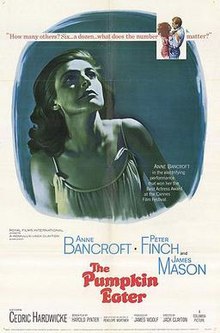
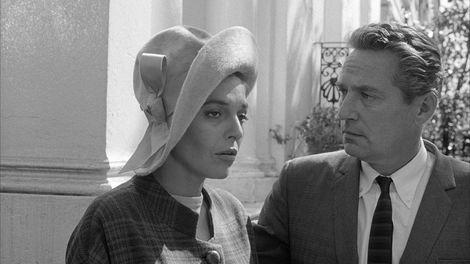
Anne Bancroft and Peter Finch in an unhappy marriage in the overlooked The Pumpkin Eater

Director: Jack Clayton

Cast: Anne Bancroft (Jo Armitage), Peter Finch (Jake Armitage), James Mason (Bob Conway), Cedric Hardwicke (Mr James), Richard Johnson (Giles), Eric Porter (Psychiatrist), Rosalind Atkinson (Mrs James), Frances White (Older Dinah), Alan Webb (Mr Armitage), Cyril Luckham (Doctor), Yootha Joyce (Woman at Hairdressers), Maggie Smith (Philpot)

Released in 1964, The Pumpkin Eater was rather unfairly seen as too strongly aping the new-wave of European film-making, in particular Michelangelo Antonioni and Ingmar Bergman. It’s a strange trend in British culture to ruthlessly lambast anything seen to be too good or too well made, as if trying too hard is vulgar and flies in the face of our love for the amateur. This is supremely unfair for The Pumpkin Eater (which I will say is weighed down by a pretty terrible title – Scenes From a Marriage would have been better, but that one got nabbed by Bergman) which is a little classic of a film.

Based on a semi-autobiographical novel by Penelope Mortimer about her marriage to lawyer-turned-writer John Mortimer (creator of Rumpole), Anne Bancroft (with an impeccable British accent) plays Jo Armitage: an intelligent woman, suffering from depression, with a huge number of children from three marriages. Her new husband, Jake (Peter Finch), is a charming man, a hard working screenwriter, an excellent father to all the children – and, alas, a selfish serial adulterer. The film charts the ups and downs of their marriage, often in a non-linear way, including Jo’s battle with depression and the fallout from Jake’s affair with the wife of a film producer Bob Conway (James Mason).

Shot in sumptuous black-and-white, The Pumpkin Eater is so well made by Jack Clayton it became almost a stick to beat it with. One contemporary review even mentioned it was “irritatingly without flaws” in its film-making, as if this was a bad thing! Clayton’s direction is detailed, precise and beautifully done and throws a host of fascinating images at the screen, as well as drawing out some simply superb performances from the cast. Clayton chooses interesting angles and visual mirrors – events from scenes are reflected and repeated, in different contexts, in later scenes. The camera takes up unusual positions, not least a zoom in on James Mason’s mouth as his character spits out vile insinuations.

Clayton’s direction also captures a superb sense of empathy with his characters. His depiction of depression and ennui in Jo Armitage captures the sense of drift beautifully. Early in the film, she is captured in shot aimlessly standing in the shade of a car port. At her lowest she seems to get almost stuck in the frame. The film’s most famous moment features Jo breaking down in despair in Harrods – a wonderful sequence that uses a combination of POV, overhead shots, a camera attached to Anne Bancroft as she works, and a crashing close up on Bancroft’s face (also repeated later in the film) that all serve to stress her isolation, her despair and the mixed to hostile reaction to her tears from the shoppers around her. 

But the film doesn’t solely take Jo’s side. It’s interesting how many contemporary reviewers – men and women – found Jo a tiresome and selfish woman (she’s not, just an unhappy one). That’s partly due to the film’s success in making Jake a fully rounded character. Sure he’s charming and fun, but he’s also clearly a great dad and genuinely cares for Jo – it’s just that he can’t help himself doing things that end up hurting her. The film is also careful to suggest that, deplorable as some of his actions are, he has a point about the pressure of adding another child to a family which already has about seven (two of them at least have been farmed off to boarding schools, and it’s clear in one late sad scene that Jo now hardly knows them). How are they meant to cope? How are they going to be able to support another baby?

The film works as well because both Bancroft and Finch give extraordinary, fully rounded performances in the lead roles. Bancroft had just won the Oscar for Best Actress, and it’s quite something to think that committing to this British picture was her next gig. But she immerses herself in the character, and sells every single one of the complex emotional ups and downs Jo goes through. She’s perfect at drawing us deeply into Jo’s sorrow and uncertainty, but also her brittleness and anger. She’s not afraid to acknowledge that sometimes depressed people are immensely difficult and frustrating – or that they are also intensely vulnerable and fragile. Peter Finch is equally good as a hail-fellow-well-met, whose selfishness doesn’t quite fit into his self-image as a good guy but who is overflowing with good intentions and small moments of kindness.

Both actors are helped immeasurably by a very strong script by Harold Pinter. Pinter’s structure intelligently draws out great depths from the material, as well as playing smart games with structure and timeline that provoke thought. He is the master of the stand-out scene, and the film is crammed with smaller moments that stand out in the memory. Maggie Smith has a brilliant cameo as a shallow, gossipy house guest who may or may not be having an affair with Jake. In one extraordinary sequence, Jo is accosted at a hairdressers by a total stranger (played by Yootha Grace) who recognises her from a magazine article about Jake, who oscillates between wanting to be her friend and vicious bitterness that she isn’t. 

It’s a sign of the gift parts that this film gives to actors. Stand-out amongst the remaining cameos is the great James Mason, whose cuckolded husband at first seems to be a decent, if overly bombastic life-of-the-party type, who reveals himself to have unending reserves of bitterness and poison and delights in pouring anger and suspicion into Jo’s ears.

Clayton and Pinter’s work dovetails perfectly here into a sharply intelligent, haunting film which throws you into a marriage that refuses to paint either side as either completely wrong or completely right (Clayton was even concerned the film may have gone too far in making Jake sympathetic to the detriment of Jo). A compelling storyline, in a beautifully made film crammed with intelligent lines and wonderful moments, The Pumpkin Eater can rightly claim to be an overlooked classic of British cinema.

Shadowlands (1993)

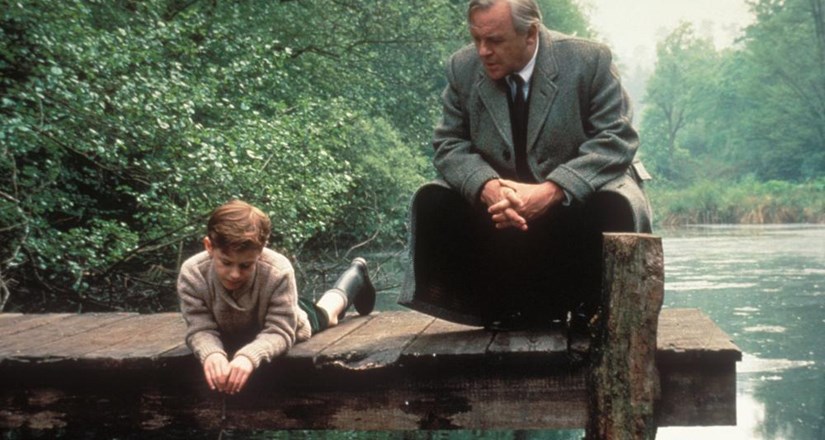
Debra Winger and Anthony Hopkins sublime in the moving Shadowlands

Director: Richard Attenborough

Cast: Anthony Hopkins (CS “Jack” Lewis), Debra Winger (Joy Davidman), Edward Hardwicke (Warnie Lewis), Joseph Mazzello (Douglas Gresham), John Woods (Dr Christopher Riley), Michael Denison (Harry Harrington), James Frain (Peter Whistler), Julian Fellowes (Desmond Arding), Peter Firth (Dr Craig), Roger Ashton-Griffiths (Dr Eddie Monk)

“We can’t have the happiness of yesterday without the pain of today. That’s the deal”. It’s a sentiment that runs through Shadowlands, a beautifully made, deeply heartfelt, incredibly moving tear-jerker based on the (largely) true story of how the man who invented Narnia, CS Lewis (Anthony Hopkins), fell in love very late in life with an American poet Joy Davidman (Debra Winger) only for her to succumb to cancer early in their marriage.

The story had a been a life-long investment from William Nicholson, who had developed the story first into a radio play, a TV drama (with Joss Ackland and a BAFTA winning Claire Bloom) and then a stage play (which won Nigel Hawthorne several awards in the lead role, including a Tony Award) and finally into this film. A wonderfully tender, profound and genuine exploration of the not only grief but the joy and delight that opening yourself up to love can bring you, Nicholson’s Oscar nominated script was brought to the screen by Richard Attenborough.

Looking back over Attenborough’s CV you immediately notice the vast majority of films he directed were massive, all-star, huge scope epics – A Bridge Too Far, Gandhi – which were as much triumphs of logistics and studio managements as they were displays of directing. Shadowlands is one of the smallest scale, most personal films he ever made – and it’s enough to make you wish that Attenborough had allowed himself to make more intimate chamber pieces like this. It’s a wonderful reminder, not only of how skilled he is at pacing and story-telling, but also what a sublime actor’s director he is. Dealing with material that in lesser hands could have become sentimental, Attenborough turns out a film that is realistic, tender, sad but also laced throughout with a warmth and (figurative and literal) Joy.

And of course the involvement of Attenborough also meant the involvement of his regular collaborator Anthony Hopkins. At the start of the 90s Hopkins was in such a run of form he could plausibly claim to be the best actor in the world. In all of this though, Shadowlands might be one of his finest accomplishments. Superbly detailed, perfectly restrained, gentle, tender, hugely vulnerable and intensily scared (under it all) of connecting with the wider world or allowing himself to feel genuine emotions, Hopkins’ CS Lewis is simply exceptional. With all the discipline of a great actor he never once goes for the easy option, but gently allows emotions to play behind his eyes (the eyes by the way that he can hardly bring himself to settle on other people until half way through the film). And those moments where he weeps – three times in the film, and each increasingly more emotional – are simply beautiful in every way from acting to filming.

Lewis is bashful and repressed, so it’s all the moving to see his face start to relax into excitement and joy when he spots Joy in the audience at a lecture he is giving, or him simply enjoying the intelligence and challenge that she brings to her conversation with him. Debra Winger as Joy Davidman matches Hopkins step-for-step, in a sublime performance of prickily New York attitudes at first out of touch in Oxford, but whose humanity shines through. It takes her time perhaps to feel the love Lewis does (but can’t admit too), but when she does start to feel more for Lewis, she has no patience for his repressed unwillingness to acknowledge them. On top of which, Winger is very funny in the role – she has little truck with the sheltered, clubbish snobbiness of some of Lewis’ friends and takes a wicked delight in shocking the stuffy, unchallenged intellectuals.

The chemistry between these two actors is sublime, and the slightly autumnal relationship between the two of them that builds feels wonderfully genuine. Nicholson’s script makes an astute examination of Lewis’ personality and Christianity. Throughout the film, we are brought back again and again to a lecture Lewis gives – with increasingly less and less disconnection – on why God allows suffering and pain in the world. Pleasingly Lewis’ faith in the film isn’t challenged – only his rather pleased-with-itself lack of doubt and his complacent lack of experience. Experiencing love and loss himself, makes him question the views he has held – and leads him to develop a richer, more genuine understanding of the world.

Which all makes the film sound very heavy, and it’s not. It’s a delightfully light done story that never once leans too hard on the tragedy. Instead it punctures several moments with touches of humour (much of it from Joy’s American clashes with high-table Britishness) and moments of sweet affection. The film gains a lot of balance from Edward Hardwicke’s delightful performance as Lewis’ Dr Watson-ish brother Warnie, a bluff ex-army officer turned academic who reveals himself over the course of a film to have a great deal of hidden love, affection and empathy. It also has a delightful performance from Joseph Mazzello as Douglas Gresham, a child performance that brilliantly avoids all cloying sweetness and feels very real as a shy, nervous boy dealing with his mother dying.

But then, Lewis is also a shy nervous boy (both he and Warnie never really got over the death of their mother as boys – a moment that both wordlessly acknowledge while observing Joy with her son at the hospital), and the film follows him becoming something more than that, a man wh has loved and lost and can deal with it. A neat subplot around James Frain’s difficult working-class student demonstrates his growing ability to relate and empathise with others. A large chunk of the film builds towards Lewis’ tearful outpouring of grief (a scene impossible to watch dry eyed), a reaction that seemed impossible in the opening moments.

But then that’s what the film is saying: We have to accept that the joy of loving people, the wonder and warmth that they bring to our life, will inevitably one day lead to us losing them. Allowing us to experience love and joy is counter balanced by the pain we will feel when they go. It’s a deal – and if it is a deal, it’s the price we pay for having our life enriched. Attenborough’s simply beautiful, romantic film covers all this gently and brilliantly: it’s a film to treasure and hold tight.

Wilde (1997)


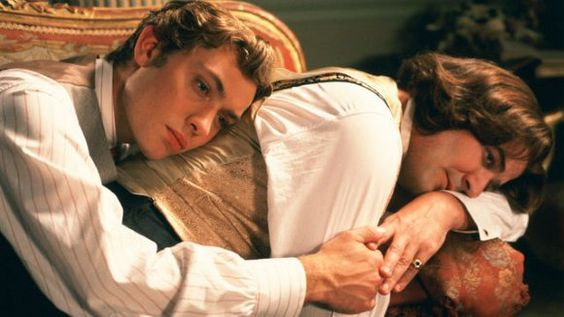
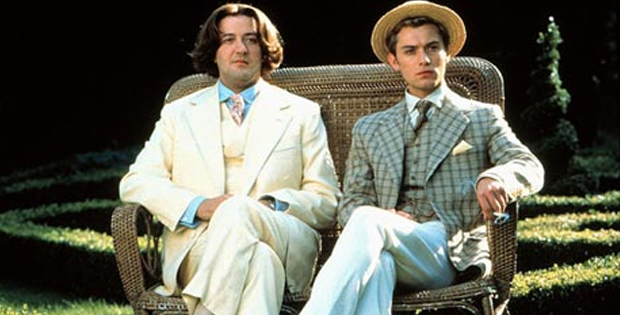
Jude Law and Stephen Fry in a disastrous love affair in sensitive biopic Wilde

Director: Brian Gilbert

Cast: Stephen Fry (Oscar Wilde), Jude Law (Lord Alfred “Bosie” Douglas), Jennifer Ehle (Constance Lloyd Wilde), Vanessa Redgrave (Jane Francesca Agnes “Speranza” Wilde), Gemma Jones (Sibyl Douglas), Judy Parfitt (Lady Mount-Temple), Michael Sheen (Robbie Ross), Zoë Wanamaker (Ada Leverson), Tom Wilkinson (Marquess of Queensbury), Ioan Gruffudd (John Gray)

Could there be a more perfect piece of casting than Stephen Fry as Oscar Wilde? Not only is Fry the spitting image of the famed Irishman, but Fry’s own mercurial talent, his enormous outpouring of novels, articles and screenplays, his skill as a raconteur and his general ubiquitous presence as a personality make him a pretty good modern equivalent of Oscar Wilde. A lifelong admirer of Wilde – and an increasingly vocal proponent of gay rights and mental health awareness – Wilde’s life plugs into many of Fry’s own outlooks on the world. So yeah, perfect casting!

Opening in 1882 with Wilde’s tour of America (he effortlessly charms a group of clichéd “yee-haw!” silver miners – who literally fire their guns into the air in delight at his bon-mots in the film’s crudest touch), the film covers Wilde’s growing career, but focuses on his personal relationships. Unaware of his homosexuality, he marries Constance (Jennifer Ehle), but discovers his true nature with her friend Robbie Ross (Michael Sheen). However, this leads to his destructive, obsessive love for alternately petulant and caring Lord Alfred Douglas (Jude Law), his beloved “Bosie”. When he is accused publically of sodomy by Bosie’s father, the Marquess of Queensbury (a raging Tom Wilkinson, chewing the scenery), Wilde takes the matter to court – a disastrous decision that destroys his life.

Brian Gilbert’s film is a sensitive and lovingly crafted slice of period drama, that movingly demonstrates the hypocrisy of Victorian values. Wilde is celebrated by the public, despite the open secret of his and Bosie’s relationship, while rent boys (including a one-line appearance from Orlando Bloom!) and discrete gay relationships are common place. Wilde is a gentle, naïve man for whom emotional closeness is more important than physical love. He charms a society only too aware of his nature. However, the instant he causes a stink, his reputation is ruined and his life collapses. What the film does so well is give us a sense of the inner vulnerability, doubt and desire for affection at the heart of a man who, perhaps more than any other, lived his life as a public exhibition.

Halliwell’s Film Guide claimed the film attempted to reposition Wilde as a family man, a grossly unfair view of the film’s stance. As if a man who discovers he is gay could not love his children, or that he could no longer care for his wife. Similarly, accusations that the film shows Wilde’s homosexuality as the roots of his downfall are similarly misguided – Robbie Ross is unaffected by legal troubles and he’s openly gay. No, the film is making a far more conventional (in a way) point – Wilde was brought low because he fell hopelessly in love with the wrong guy.

Jude Law’s big break was in this film – and watching it again is a reminder of what a firebrand, dynamic actor he can be. He makes Bosie half monster, half emotionally vulnerable child. He alternates (sometimes within the same scene) between affection, devotion, kindness and wildly petulant rage. He’s overwhelmingly selfish and self-obsessed – even as Wilde’s life collapses, he can only whine that he is furious his father is winning – but then remorseful and guilt-stricken when the consequences of his actions become clear (but not enough to not do it again). Law juggles all these contradictions with astonishing skill – it’s an assured, magnetic performance of brilliance. We can see why Wilde adores him, while at the same time wanting to wring his neck.

It’s also clear why all the other characters around Wilde find him so appalling. Ross (and Sheen is similarly superb as Wilde’s tragically “friend-zoned” devoted admirer) can’t bear the appalling influence Bosie has, but knows he’s powerless to do anything about it. In one great scene, Bosie haughtily says he knows Ross always hated him, before cruelly saying it’s because Wilde loved Bosie, but Ross was only “one of his boys” – the look of pain on Sheen’s face is brilliantly moving. Wilde himself seems almost sadly (if inevitably) drawn into Bosie’s tastes for casual sex and rough trade – often playing voyeur at these events, while sadly accepting Bosie doesn’t find him physically attractive. Wilde’s basically the victim of an abusive relationship – and the film does a brilliant job of demonstrating why a man otherwise so blessed with intelligence can’t see it.

Julian Mitchell’s excellent screenplay (based on Richard Ellman’s award-winning biography) uses Wilde’s The Selfish Giant as a framing device – subtly comparing Wilde and Bosie respectively to the giant and the child. It also brilliantly constructs a sense of Wilde’s quick wit and staggering intelligence, and provides a host of sparkling cameos for some fine character actors. The production design and photography are spot-on, and while Gilbert may be slightly workmanlike in his filming, he certainly lets the story tell itself.

The focus on Wilde’s family life is also reassuringly different – it’s brilliant to see Wilde’s obvious adoration for his children, and plenty of indication that he was actually (much of the time) a very good husband and father. Mitchell’s script softens Constance’s reaction to Wilde’s conviction (she wasn’t as forgiving and forward-thinking in her views as she seems to be here) but it does mean that we are allowed to see the full story of Wilde’s life, rather than having him defined by his sexuality. Jennifer Ehle also does a marvellous job with very little material, and her quiet dignity and support for her husband (despite her anger at his obsession with Bosie) is very affecting.

But at the centre of all this is that perfect casting of Stephen Fry. In all the rest of his career, Fry will never be better than he is here. His Wilde is intellectual, mildly arrogant, but also naïve, gentle and almost unworldly. His voice is perfect for the aphorisms, and he is really striking physically. Above all though, he brings a deep, emotional empathy to the part – you feel how personal this is for Fry the actor, and you feel how closely he identifies with a man who discovered his sexuality late. His besotted, blind love for Bosie is as affecting as it is frustrating. His vulnerability in Reading gaol is deeply moving. It’s a quite marvellous performance, anchoring a movie that is gentle, kindly, caring and sensitive in exploring the inner life of a very public man.

Denial (2016)


Timothy Spall as Holocaust denier David Irving in this misfiring courtroom drama

Director: Mick Jackson

Cast: Rachel Weisz (Deborah Lipstadt), Tom Wilkinson (Richard Rampton), Timothy Spall (David Irving), Andrew Scott (Anthony Julius), Jack Lowden (James Libson), Caren Pistorius (Laura Tyler), Alex Jennings (Sir Charles Gray), Mark Gatiss (Professor Robert Jan van Pelt), Harriet Walter (Vera Reich), John Sessions (Professor Richard J. Evans)

In 2000, historian David Irving (here played by Timothy Spall) was exposed as a Holocaust denier who forged and distorted historical records to help his pro-Hitler agenda. This came after his unsuccessful attempt to sue American historian Deborah Lipstadt (Rachel Weisz) for accusing him of Holocaust denial in her book Denying the Holocaust. The decision led to the destruction of Irving’s reputation, career and financial wealth. This film tells the story of this case. Lipstadt’s legal team are played by Andrew Scott (solicitor Anthony Julius), and Tom Wilkinson (barrister Richard Rampton). The publicity-hungry Irving famously acted as his own lawyer.

Denial has a fascinating story at its core, but bungles it by getting the focus wrong. Now I’ll admit I might know more about this trial than the regular guy-on-the-street. But the drama here was in the detail of the debunking of Irving’s denier bullshit. The film benches most of this, reducing Irving’s career of historical re-adjustments into a few simple sound bites. The fascination of this trial was the dissection of denier myths – but the film aims for more conventionally “drama”, by introducing a series of “could Irving win?” moments that never ring true. Not only does this detract from the drama – it also, arguably, makes it easier for Holocaust deniers out there to claim the film doesn’t give the appallingIrving a fair crack of the whip.

It’s a shame, as when the focus is on the facts of the case, it’s very good. Tom Wilkinson is excellent as the maverick Rampton, whose abrasiveness hides his humanitarianism. The drama skirts over the trial’s cut and thrust, but when it does tackle these moments it’s very interesting. The sequence where Rampton pins Irving to the floor over theories that the gas chambers were de-lousing stations for dead bodies (“then why are there bolts on the outside of the doors?”) or air raid shelters (“are we to imagine the SS running 2.5 miles from their barracks to a shelter in an air raid?”) are compelling, and far more interesting than anything else in the film. Even the Cliff’s Notes version of Irving and his views in this film is enough to repulse any sane viewer, and watching him skewered on the witness stand is fascinating and satisfying. There just isn’t enough of it.

One of the film’s greatest problems is pushing Lipstadt front and centre. This seems logical on paper but, as her lawyer says, “this trial is happening to you, it’s not about you”. Lipstadt was deliberately not part of the trial strategy, to keep the focus on Irving. But the film can’t accepts her “story” was to do nothing. It keeps wanting to give her a ‘Hollywood moment’, but the facts can’t provide one – so we get lots of scenes of Lipstadt jogging, or feeding her dog, or watching news reports – time that could have been much better spent elsewhere.

Despite this, Weisz’s performance is very good –she bravely makes Lipstadt prickly and hard to like . Similarly, Andrew Scott is excellent as Julius, but his character is poorly explained (“He’s using you for the publicity” Lipstadt is told – we see no indication for this anywhere) and his decision to exclude Holocaust survivors from the witness list to prevent them being harangued by Irving is botchily explained, the film not wanting to admit that this was a wise decision.

I feel a lot of the film ended up on the cutting room floor. Short scenes pop up now and again around paralegal Laura making you feel she must have been a more important character at some point. I feel huge parts of courtroom reconstruction got trimmed. I suspect there was more around Harriet Walter’s Holocaust survivor. Even Irving feels heavily trimmed – Spall is very good (and subtly vile, but with a persuasive old school charm) as the faux-historian, but the film needs more of him, if only to explore his views more, rather than just treating him like a demon.

That sums the film up: it’s ham fisted. Too much dialogue thunkingly introduces historical events or legal procedures. The film talks about the importance of research, but relies on characters “cracking the case” with flashes of inspiration. It handles the research trip at Auschwitz sensitively (and daringly, shows Rampton taking an aggressive questioning stance of the guides to prepare for the case) – but then the film can’t help throwing in Lipstadt imagining victims clawing at the gas chamber door for escape. I hated the final shot, lingering on the disputed holes in the gas chamber roof used to drop in Xyklon-B, as if we needed this to be confident that, yes, the Holocaust did happen.

I really wanted to like Denial, but it’s no more than an adequate dramatisation of a fascinating court case. It’s brilliantly acted, in particular the four principles. There is an interesting film to be made here about the increasing struggle we have with the abuse of free speech to give equal importance to views that are offensive or just plain wrong. But Denial never really becomes that film – instead it turns its fascinating historical event into a run-of-the-mill Hollywood tale of a plucky heroine vanquishing the bad guy.

The Hours (2002)

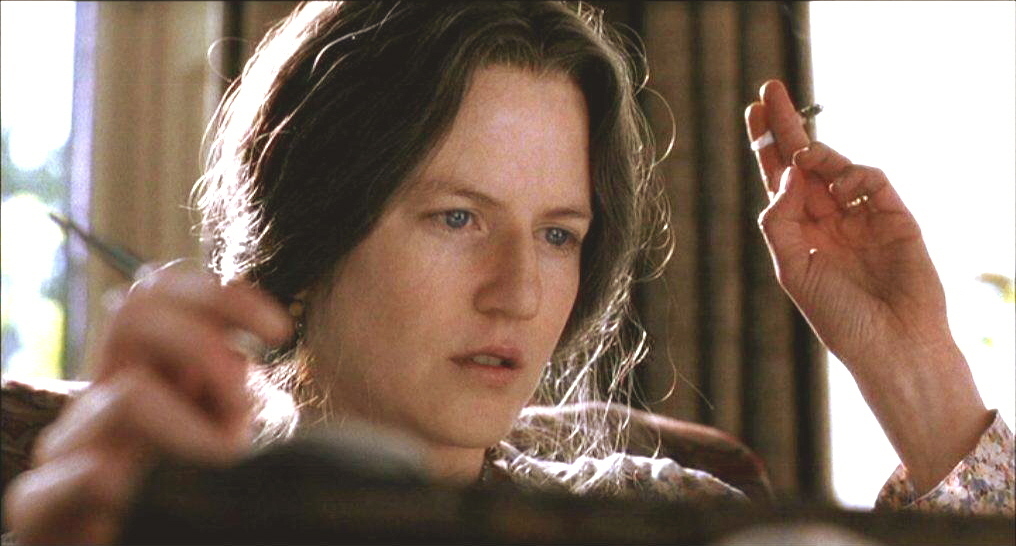
Nicole Kidman’s Oscar winning role produced a gallery of nose based puns, everyone convinced they could sniff out comedy gold

Director: Stephen Daldry
Cast: Nicole Kidman (Virginia Woolf), Julianne Moore (Laura Brown), Meryl Streep (Clarrisa Vaughan), Stephen Dillane (Leonard Woolf), Ed Harris (Richie Brown), Allison Janney (Sally Lester), Claire Danes (Julia Vaughan), Jeff Daniels (Louis Waters), John C Reilly (Dan Brown), Toni Collette (Kitty), Miranda Richardson (Vanessa Bell)

I remember when this film was released that it was garlanded with much praise as an intelligent and compassionate piece of filmmaking and a literate masterpiece. Well I’ve never seen it before and I have to say it holds up pretty well, even though it’s much more of a solid, impressive piece of professional film making than anything you might call a masterpiece.

The film covers three time periods each looking at one day in the life of three different women.  Inspired by Virginia Woolf’s novel Mrs. Dalloway, the day we see encapsulates in microcosm the life of each women. So we have Nicole Kidman as Virginia Woolf struggling to deal with depression while working on Mrs.Dalloway; Julianne Moore as a depressed 1950s housewife trapped in a suburban marriage; finally Meryl Streep as an editor in the 200s who has dedicated her life to looking after a poet friend who is dying of AIDS.

Each of these three plot lines are carefully intercut with both sharp scriptwriting and patient direction (Hare and Daldry’s stage experience here is a real boon for a concept that is actually quite theatrical). Although the opening sequence of the film suggests we might be in for a dizzying series of intercuts (the time period in this sequence switches almost every shot) it soon settles down into some well structured conversation scenes, moving almost in a cycle from our plot lines to another and only rarely directly cutting mid scene from time line to time line.

Of the plot lines I found Meryl Streep’s more modern day plot the most engaging and that Streep’s performance as the patient martyr carried the heart of the film. This was despite Ed Harris’ overblown performance as the dying poet, one of those two scene cameos that draw far more praise than they deserve. But this story has a tragic simplicity and Streep brings a lifetime of vicarious hopes and dreams out from every beat of the day.

Nicole Kidman however won the notice and awards as Woolf. Well deserved as these notices were, this is a more traditional part with clearer “award worthy” acting moments. While these are excellently done (Stephen Dillane is terrific as Leonard Woolf), the Woolf parts don’t quite link with the two other plot lines and, for me, didn’t carry the same emotional force that the tragedy of normal lifes did in the later plot lines.

Julianne Moore also does great work as a depressed housewife who lacks the emotional articulacy to fully understand her feelings, though the decision to introduce a direct link between the 1950s and 1990s plot lines later in the film does mean that the Woolf plot line feels even more like a slightly disconnected story. But this section of the film crackles with claustrophobia and Moore demonstrates the confused sexuality below the surface of Americana.I feel like I’ve been hard on this film, which is a very professional piece of work with some great performances and some real emotional high points. There are some great cameos from classy actors like Toni Collette, Jeff Daniels, Miranda Richardson, John C Reilly, Claire Danes and Allison Janney. It also is a very sensitive exploration of the pressure sexuality and emotions can press on people – even in the 1990s where homosexuality isn’t a dirty secret, Streep’s character still has more than enough confused emotional hang ups to sort out.

It’s a very good film but it’s so professionally done and smoothly assembled, the acting so sharp and on the money, that I’m not sure if there is as much heart behind the scenes in its making than appears on screen.