The Letter (1940)

Bette Davis plots doom and death in The Letter. Can she be caught?

Director: William Wyler

Cast: Bette Davis (Leslie Crosbie), Herbert Marshall (Robert Crosbie), James Stephenson (Howard Joyce), Frieda Inescort (Dorothy Joyce), Gale Sondergaard (Mrs Hammond), Bruce Lester (John Withers), Elizabeth Earl (Adele Ainsworth), Cecil Kellaway (Prescott), Sen Yung (Ong Chi Seng)
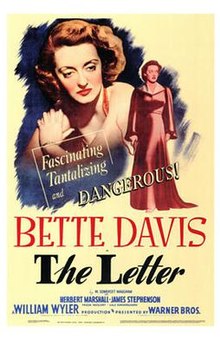
The “woman’s picture” was a popular genre of the 1940s, a catch-all for stories that centred around women dealing with domestic issues in the home or in relationships, with the lady herself the driving force of the narrative. There were several stars who excelled in this wide-ranging genre, but the best was perhaps Bette Davis. This melodrama is a superb example of exactly this sort of female-led narrative, focusing in on its heroine making catastrophic decisions that lead to terrible consequences.

On a plantation in Malaya, in the late 1930s, Leslie Crosbie (Bette Davis) the wife of gentle plantation owner Robert (Herbert Marshall) guns down a man, Geoff Hammond, who comes to visit her in her home alone. She insists to her husband, and their lawyer Howard Joyce (James Stephenson), that she was defending her honour. The trial for murder feels like a formality – until Joyce’s clerk Ong Chi Seng (Sen Yung) informs him that Hammond had a Eurasian wife (Gale Sondergaard) who has a letter from Leslie to the dead man which casts a very different light on the affair. Because “affair” is the right word: the letter implies Leslie invited the man to visit her while her husband was out. Mrs Hammond will hand the letters over to the authority – unless Leslie and Joyce cough up a huge sum of money to stop her.

The Letter is a film with two marvellous book-end scenes. The first is a beautifully shot and assembled murder sequence, where Wyler’s camera moodily pans through the sleeping native workers on the plantation – dappled by moonlight – until it finds itself drawn towards the steps of the plantation house by the sounds of gunfire. It’s a superbly marshalled sequence that mixes stillness and quiet from the start with a sudden explosion of noise, reflected in the shift in editing from slow camera movements to fast cuts. Nothing else in the film quite matches it until we reach the final sequence that mirrors it with Bette Davis heading back outside into the moonlight, where a terrible and violent surprise awaits her.

And you can enjoy that because no-one did these brutal, arrogant, high-society queens as well as Bette Davis. Davis is superb here, bringing just the right touch of melodrama to balance the intensity of Leslie’s selfish desperation to get away with what we immediately know is an act of murder. Leslie Crosbie is entitled, arch and a natural liar who carefully builds a series of alternative stories (each of them less believable than the one before) which she spins carefully with a mix of vulnerability and a dash of feminine weakness, to try and get away with murder. It’s a domineeringly strong performance that powers the entire film and Wyler draws a wonderful arch cruelty from her, just below the surface of her acceptable female hobbies of knitting and dinner planning. 

Wyler balances this with the two men around her, both of whom are under her spell to different degrees. Herbert Marshall is very good as her husband, a generous, loving, naïve soul who believes his wife without question until he later realises he shouldn’t. Marshall does an excellent job with making this hen-pecked weakling intriguing, not least in his later passive-aggressive response when discovering most of his fortune has been blown to save his wife from a certain death sentence.

The other man is her lawyer Howard Joyce, played with a patrician reserve by James Stephenson. Oscar-nominated for the role, Stephenson’s Joyce doubts everything he is told from the very start, but somehow allows himself to be dragged along with the cover-up that slowly develops. Whether this is out of pride, or whether this is because he is himself somehow under some sort of erotic spell that she emits is left open to question. Either way, Stephenson puts a wonderful growing aghast horror behind the role as his professional and moral scruples are challenged more and more.

The chicanery of Davis’ character in the film is of course helped by her being white and rich, and prejudices against Hammond (not to mention the reception his Eurasian wife expects to gets if she comes forward) are most of the mainstay of the case in her defence. Joyce basically speaks platitudes about professional integrity, while all but knowingly defending a murderer (he in fact goes out of his way to give himself plausible denial and avoids questions). The film manages to present the native workers on the plantation – and Joyce’s clerk – as something a bit more than this, as perhaps the only people in the film with actual integrity.

But of course Davis gets away with it, because she can pay to do so, but the film finds other ways to punish her (as these women’s pictures usually do for adultery). The film’s final sequences see Davis’ character slowly collapse from arrogant certainty into moral and mental torture, before almost willingly marching towards certain danger. Wyler’s film is a great vehicle for her, but it’s also superbly made and shot and captures the sweaty lack of justice in the British Empire with perfection.
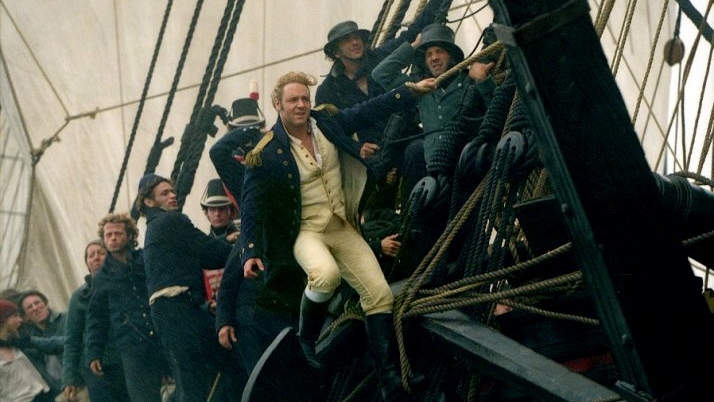

Master and Commander: The Far Side of the World (2003)

Russell Crowe captains in the marvellous Master and Commander: The Far Side of the World

Director: Peter Weir

Cast: Russell Crowe (Captain Jack Aubrey), Paul Bettany (Dr Stephen Maturin), James D’Arcy (First Lt Thomas Pullings), Robert Pugh (Master John Allen), Max Pirkis (Midshipman Lord William Blakeney), Max Benitz (Midshipman Peter Myles Calamy), Lee Ingleby (Midshipman Hollom), Richard McCabe (Mr Higgins), David Threlfall (Preserved Killick), Billy Boyd (Barret Bonden), Bryan Dick (Joseph Nagle), Joseph Morgan (William Warley), George Innes (Joe Plaice), Mark Lewis Jones (Mr Hogg)

There’s a reason so much of our everyday language comes from naval terms. There was a time when Britannia ruled the waves: and for almost as long we’ve had a history of stories of great fictional sailors. If your archetype is Hornblower, then following close behind is Patrick O’Brian’s 21-novel sequence following the career of Captain Jack Aubrey and his surgeon/spy friend and colleague Stephen Maturin. There have been many, many attempts to bring this series to the screen, but you could never have expected that the eventual film would be as triumphant as this. I saw this film on my birthday years ago – the same day I was thrown a surprise birthday party – and I enjoyed it so much that just seeing that would have been treat enough, even without the surprise party (which was also marvellous).

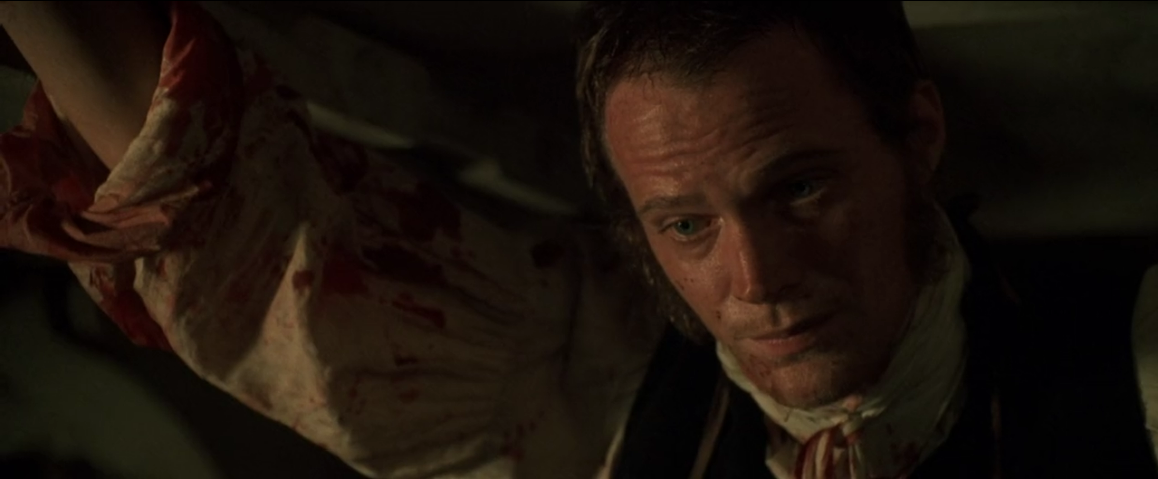
It adapts elements from several O’Brian books – principally elements of the first, Master and Commander,and the tenth, The Far Side of the World, (hence the unwieldy title). The film throws us into the mid-point of Aubrey’s (Russell Crowe) career, with the captain of the Surprise tasked with protecting British interests in the Southern oceans from the onslaught of the French ship Acheron during the Napoleonic wars. Early skirmishes find Aubrey and the Surprise on the back foot, out-matched and out-gunned by the more modern, sleeker, more powerful French ship (quickly known as “the Ghost” by the crew, stunned at her ability to catch the Surprise on the hop). As well as following Aubrey’s struggle to best the Acheron, the film also explores the complex relationships on board during the dangerous mission, and specifically Aubrey’s close friendship with Stephen Maturin (Paul Bettany), ship’s surgeon, naturalist, sceptic and his confident.

Peter Weir’s film is, I’ll say it here, a masterpiece of both boys-own adventure and action, but also of the intriguingly warm and human relationships (and also the stresses and strains) that come when you throw a group of nearly two hundred men in close confines together for months at a time. It’s also a masterclass in authentic world creation. You can see in seconds the time, effort, research and imagination that have gone into recreating the world, the rules and the structure of the ship and its crew – and it has paid off in spades. There is not a foot put wrong, either in the recreation of the ship described in the books (the early shots of the film, the camera panning through the decks of the ship, capture everything from the geography of the ship to the names of the individual cannons) or the world of the navy. 

Weir’s film is technically superb. The photography is beautiful, the sound and editing totally immersive. Weir understands the detail counts for nothing, if the actual action of sailing, the dramatization of man’s struggle with the wind and water, isn’t engrossing. Not a single sequence in the film that shows the ship at sea – struggling with wind, tides, storms, fog and mist – falls flat. You feel like you are there, being buffeted by wind and rain, living every beat of the dangers the men face from the elements. The professionalism and skill of the sailors is brilliantly captured by the actors – who practically lived as sailors for the months of filming – and, with the music superbly worked to complement the adversity the sailors overcome, the scenes of naval skill are brilliantly done. I love them – it almost makes me want to become a sailor (almost). 

Master and Commander also works as a superb study of men, and brilliantly brings to life the two heroes from the book. Russell Crowe is wonderful as Aubrey, the film expertly using his charisma. Aubrey is a natural leader who adjusts and adapts his style to meet the needs of the men he deals with. He’ll share pun-filled gags at the dining table about his personal encounters with Nelson – but follow it up with a sincere anecdote of Nelson’s patriotism when he sees that something else is needed to avoid disappointing a young midshipman. With some men he’ll take a firm line, with others he will try words of encouragement. He’s an inventive and flexible thinker, able to adapt his plans and ways of working to meet new challenges and shows no pride or rigidity in his planning.

We also find out much about him from his genuine, heartfelt friendship with Stephen Maturin, his intellectual surgeon. Embodied damn-near perfectly by Paul Bettany, in one of those performances that feels like the character has literally walked from the pages of the book. Maturin and Aubrey’s friendship gives the film its heart. Genuinely close, with the one often teasing the other (usually around naval rules and regulations, around which Maturin displays a playful lack of understanding) they also speak freely to each other, and with honesty. When Maturin feels Aubrey is pushing the crew too hard in his obsession to best the Archeron he will speak up; when Aubrey feels the need to remind Maturin that a promised naturalist trip to the Galapagos will need to be cancelled due to the demands of war (“We do not have time for your damn hobbies sir!”) he feels no reluctance to say so. It’s a friendship that bobs and weaves through the tensions that come from almost permanent contact, but it’s a true, very strong bond that sees both men going to great lengths in the film to make sacrifices of the things they hold dearest for the sake of each other. 

And we see a lot of how they think in their shared mentorship of young midshipman (barely a teenager) Lord Blakeney, played with a superb assurance by Max Pirkis. From Aubrey, Blakeney learns the confidence, authority and flexibility needed for command. From Maturin he learns the intellectual curiosity and humanity that broadens and widens his horizons. It’s a reflection that, as a team, the two men make one marvellous man. 

Weir’s film also shows that the pressures of command and responsibility, worn so lightly (it seems at times) by Aubrey, can also crush men. As if in contrast to Blakeney’s growing confidence, the film also throws in Midshipman Hollom (played with tragic weakness by Lee Ingleby), a man approaching his thirties who has missed all the opportunities to become the man he would want to be. Nervous, weak, eager to please but insecure and uncertain of himself – exactly the qualities that automatically alienate sailors yearning to put their faith and trust into a leader – Hollom is a man who can listen to everything Aubrey has to say about becoming a leader, but has not the strength of character to implement it. And, strikingly, the film also shows that this weakness alienates not only the men who look to him for leadership, but also his companions and even (to a degree) Aubrey himself. In a single storyline, the weaknesses and dangers of this self-contained world (and the impact it can have on people) are superbly captured.

The film works alongside all this because its sense of adventure, of derring-do, of gripping, fist pumping bravery, skill and excitement of high-seas adventure grip the audience completely. There has never been a better film made about naval warfare or ships at sea (and there probably never will be). Mix that in with a superb story of personal relationships and men under pressure at sea (and the cast is uniformly brilliant), with sacrifice and also good fellowship at every turn, and you’ve got a simply faultless film. Master and Commander failed to launch a new franchise – and that has to be one of the greatest losses to film history that I can imagine. Weir’s direction is simply superb, Crowe and Bettany are perfect and the film is a brilliant adventure. I could watch it every day and never get tired of it.

The Boxer (1997)

Daniel Day-Lewis returns from 14 years in prison in this passionate but obvious film about the Troubles in Ireland, The Boxer

Director: Jim Sheridan

Cast: Daniel Day-Lewis (Danny Flynn), Emily Watson (Maggie), Brian Cox (Joe Hamill), Ken Stott (Ike Weir), Gerard McSorley (Harry), David Hayman (Hamill’s aide), Ciaran Fitzgerald (Liam)

Daniel Day-Lewis and Jim Sheridan collaborated before this on the stirring, passionate and angry In the Name of the Father, a film that acutely analysed the impact of the Troubles on ordinary people. That film was about a miscarriage of justice that ruined lives. This film tries to cover similar ground, but somehow the force of the narrative never really comes together as much as it should.

The Boxer himself Danny Flynn (Daniel Day-Lewis) is released from prison after 14 years, due to his peripheral involvement with the IRA. He’s guilty for sure, but has played the game inside and refused to name names. He comes out still in love with Maggie (Emily Watson) – but she is married to another man currently in prison (putting her out of bounds by the code pushed by the IRA). Making things more complex, her father Joe (Brian Cox) is a leading IRA man currently part of negotiations with the British government. Danny and his former trainer Ike (Ken Stott), now a struggling alcoholic, decide to reopen the local boxing gym, making it a denomination free facility for all the community. But their efforts to try and build bridges are not welcomed by all – not least local IRA enforcer Harry (Gerard McSorley) who makes it his mission to destroy Danny.

Why does The Boxer not work as well it should do? It’s got nothing to do with the commitment of the cast, all of whom offer excellent performances. Day-Lewis, inevitably, spent almost three years in preparation learning to be a boxer. It’s just a shame that the script doesn’t really give anyone here something interesting to play with. Instead it makes fairly familiar points about the dangers when we let hatred govern our lives, and carefully sorts and packages most of its characters into goodies and baddies, while making sure in every single scene we are always told exactly what we should be thinking and feeling.

It’s a flaw that I’ve often found in other of Sheridan’s films. He’s a passionate but rather blunt director, full of righteous anger and a determination to make films that carry a social message. But he often makes these points without subtlety or imagination. Here we get an Ireland shot almost completely in a washed-out blue, with the tensions of a community increasingly simplified down into rotten apples playing on the fears and resentments of different groups to continue the spiral of hate.

In the middle of this, Sheridan places a love story between Day-Lewis and Watson’s character that both of them play with a tender commitment and an emotional vulnerability, but which never really invests the audience. It always feels too heavily built on cinematic contrivance – with its long separation, new relationships and social obstacles put in the way. Much as Day-Lewis and Watson give it their all, they never manage to make it feel anything other than it is – a rather tired “movie” love story, that moves it characters through familiar beats.

More interesting than this by far are the real tensions in a community that is tired of violence and wants to move on, but keeps on getting dragged back into old ways because there is simply too much history to overcome. The most interesting character by far is Brian Cox’s IRA bigwig, a man carrying a burden of blood from the past but has an actual desire to see the country change. A film about a man like this, trying to walk a tightrope between negotiations with the British and keeping his own furious foot-soldiers in line (when all they want to do is to bomb something) would have carried real impact. Sadly, it’s too often relegated to the margins of the story while the film follows the immediate social impact of Danny trying to find a third way between war and surrender.

Peaceful co-operation is what Danny wants, and the gym for all people in the Belfast community is how he intends to go about it. Boxing itself is peripheral to the film – what really matters is that idea of bringing people together, of giving them something they can all own and feel some pride in. It’s an idea that Ike believes in above all things, and the prospect of recreating it with Danny’s release from prison gives his life real meaning (Ken Stott is very good as a character who is something of a cliché but still carries a real emotional wallop). Ike and Danny’s vision offers the community a possibility of moving on – something some are not ready to take on.

Not least Harry, played by a quietly fuming Gerard McSorley, prowling scenes like a man who can’t wait to hit someone. The film does at time suggest that there are “good” IRA and “bad” IRA chaps (with Harry firmly in the bad), but it does at least show that these extremists are a danger to everyone, not least the people they claim to protect. Harry’s prejudice towards Danny is motivated above all by his fear of Ireland’s way of life changing, and in that way it forms a decent expression of the film’s core message about the difficulty – but essentialness – of moving on.

Sheridan’s film is a cry for hope and opportunity at a difficult time – and its alarming watching it now to remember what a ghastly place Northern Ireland was at this time, when it’s so well known today as the Game of Thrones backlot. It’s just a shame that the story feels like such a – well – story. The film feels like a slightly over-cooked melodrama, and as the character clashes you expect and the twists you can see coming start to work their way into the narrative, it feels like the central story of a man wanting to make a better life for himself and his neighbourhood gets lost in the mix.

And it does. That’s the basic weakness of The Boxer in the end. For all of Day-Lewis’ skill and Watson’s emotional truth, their story just ends up feeling not that important, you feel that the more interesting things are happening on the margins: Cox’s IRA man feels more worthy of a film, while Stott gets some of the most electric moments of emoting. Sheridan’s film has fire in it, but it ends up burning up his main narrative, while the story relies too heavily on melodrama and cliché. Eventually it fizzles out and you end up not feeling as outraged as you should. Where the true story of In the Name of the Father helped control Sheridan’s spoon-feeding tendencies, here the fictional story allows full reign for the sort of narrative twists that end up feeling a little too tired and obvious.

Blue Jasmine (2013)

Cate Blanchett dominates the screen in Blue Jasmine

Director: Woody Allen

Cast: Cate Blanchett (Jasmine Francis), Sally Hawkins (Ginger), Alec Baldwin (Hal Francis), Peter Sarsgaard (Dwight Westlake), Louis CK (Al Munsinger), Andrew Dice Clay (Augie), Bobby Cannavale (Chili), Michael Stuhlbarg (Dr Flicker), Aldren Ehrenreich (Danny Francis)

Every so often an actor intersects with a director and, such is the actor’s brilliance, they seem to take the film by the scruff of the neck and almost carry the director along to success. Such is the case with Blue Jasmine, a film so seized upon, so wonderfully played and brilliantly observed by a truly phenomenal (she won every award going) Cate Blanchett, you feel Woody Allen just let the camera record her work and carefully built the film around her.

Allen’s film, easily one of his best of his troubled later years, is a modernised remix of Streetcar Named Desire. After a Ponzi scheme scandal leads to her husband Hal’s (Alec Baldwin) arrest and suicide, Jasmine (Cate Blanchett) finds herself landing in the poor end of San Francisco and sharing a house with her sister Ginger (Sally Hawkins). Ginger’s marriage to Augie (Andrew Dice Clay) collapsed after Hal’s dirty dealings destroyed their lottery win landfall. Jasmine, teetering on the edge of a nervous breakdown, living half in the present and half in an imagined version of her own past, soon clashes with Ginger’s new boyfriend Chili (Bobby Cannavale) and eventually finds hope for a second chance with diplomat Dwight (Peter Sarsgaard) who is oblivious to her background.

The parallels between Blue Jasmine and Streetcar should be pretty clear to anyone reading that summary, and Allen draws some neat modernisation parallels (and thankfully, and wisely, drops the rape plotline that ends that play) between the two. Placing Blanche/Jasmine as the trophy wife of a corrupt businessman, who has shut her eyes to his dealings and let her own intellect drain away in shallow frippery, works really well. Not least dramatizing very well the cultural shift from this extreme wealth (detailed in a series of cleverly interwoven flashbacks) to the relative poverty of normal life.

But the film really works from the super-intelligent, hyper-brilliant, eye-catching wonderfulness of Cate Blanchett in the lead role. This is one of those performances for the ages, a tour-de-force of fragility, self-pity, self-deception, hostility, undirected anger, desperation and pain that dominates and shapes the entire movie. Blanchett is particularly effective because she never, ever overplays the role, but let’s these complex, contradictory emotions play constantly behind her eyes and slowly seem to dribble out until they dominate her entire body. Several times, Allen plants the camera and allows us to simply watch Blanchett go through various stages of mental collapse in front of our very eyes, with this amazing actress able to seemingly fall apart in slow motion in front of us.

Jasmine is a complex and fascinating character, in some ways hugely unsympathetic. She’s a massive snob, she certainly feels the world owes her something (she flies into San Francisco first class complaining she has had to sell everything just to make ends meet, while dragging Louis Vuitton luggage behind her), she lies when she needs to and treats everyone around her with a slight air of condescension. But she’s also  incredibly vulnerable, and carrying a great deal of guilt and pain, as well as only barely able to deal not only with the loss of her privileged lifestyle, but also her growing (but denied) realisation that the price of the lifestyle wasn’t worth the having it. 

The film throws her into a series of contexts that show her at her best and worst, as victim and as fantasist. Getting a job at a dentist’s reception desk – a job she seems to only barely have the patience or aptitude for – she is forced to see off the unwelcome advances of her creepy boss (played with a passive aggressive sleaziness by Michael Stuhlbarg) with horror. Later though, she wilfully deceives Dwight (a fine performance of assured arrogance by Peter Sarsgaard) about her background and character. She is partly right in her assessment of her sister Ginger having a very low opinion of herself, so only pairing herself with men who treat her badly; but Chili is also right about her having no regard or time for her sister when she was wealthy.

The use of flashbacks throughout the film works very well to show us Jasmine before and after her economic crash. What’s fascinating is that her fragility is an ever-present, kept suppressed under a shower of gifts, but quickly coming to the fore when Hal’s (has there been a better role for Baldwin than this jovial, greedy cheat?) serial infidelity is bought to her attention. It also serves to remind us to keep Jasmine at a certain distance, her own evaluations of what her past life was like frequently not squaring with the version we see.

All of this hinges on Blanchett’s brilliant work, but she’s not alone in delivering a fine performance. As her blousy sister, moving like a weathervane from person to person, changing her opinions quickly depending on her recent experiences, Sally Hawkins is possibly at her best here as well. Andrew Dice Clay is excellent as an honest Joe who hovers over the film like an object of destiny. Bobby Cannavale does some very good work as a feckless but sort-of honest Stanley Kowalski.

Allen’s direction is calm and almost in awe of Blanchett, and that’s fair enough because whatever you look at, it comes back to her striking genius in the film. Blue Jasmine may remove some of the depth that Blanche has (with her life of pain and guilt in the play’s backstory) but it substitutes that with a gripping exploration of a long-running mental collapse that is so movingly and superbly brought to life by Blanchett you can’t help but be engrossed by it.

Foreign Correspondent (1940)

Foreign Correspondent (1940)

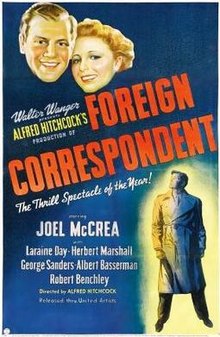
Hitchcock’s thriller is a stunning adventure story and a passionate call for action

Director: Alfred Hitchcock

Cast: Joel McCrea (John Jones/Huntley Havestock), Laraine Day (Carol Fisher), Herbert Marshall (Stephen Fisher), George Sanders (Scott ffolliott), Albert Basserman (Van Meer), Robert Benchley (Stebbins), Edmund Gwenn (Rowley), Eduardo Cianelli (Mr King), Harry Davenport (Mr Powers), Edward Conrad (Latvian)

In 1940, Hitchcock was new in America, after a parade of successes in Britain. 1940 was a red-letter year for the master, directing not one but two of the films up for Best Picture. The Oscar was carried home for his masterful gothic adaptation of Du Maurier’s Rebecca, but equally memorable was Foreign Correspondent, a stirring, heartfelt thriller about the build-up to war in Britain, a passionate cry for American intervention and brilliant propaganda contribution to the British war effort (even Joseph Goebbels tipped his hat to it).

John Jones (Joel McCrea) is the new foreign correspondent in Europe for the New York Morning Globe. Given the pseudonym “Huntley Havestock” (because it sounds better), Jones is picked out because he’s a hard-boiled crime journalist, practised at winkling out a story, rather than the cozy posh boys usually sent out to Europe. In Amsterdam, Jones attends a peace conference hosted by leader of the British peace party Stephen Fisher (Herbert Marshall), where eminent Dutch diplomat and architect of the fragile European peace Van Meer (Albert Basserman) is due to speak. While Jones falls in love with Fisher’s daughter Carol (Laraine Day), Van Meer mysteriously falls to show at the dinner – and arrives at the conference the next day only to fail to recognise Jones and immediately get assassinated. Suddenly Jones finds himself in the middle of a dangerous game of spies with only British journalist Scott ffolliott (George Sanders) and Carol to help him.

Hitchcock’s Foreign Correspondent is a masterful spy caper, in the style of many of his early successful works such as The Thirty-Nine Steps, superbly assembled by a genius at the top of his game, with access to funding and techniques beyond what he had in Britain. Hitchcock went through several versions of the script – there were no fewer than nine writers who worked on this film, four of whom are credited – but it matters not a jot when the script they finally came up with matched such superb, zingy, screw-ball style dialogue with such brilliant set-pieces.

The film also had a serious purpose as well. From the start, this is a cry of one of Britain’s most prominent ex-pats to his newly adopted nation to join the effort to preserve Western civilisation against the onslaught of Nazi oppression. Joel McCrea’s Jones – a part written for Gary Cooper, who forever regretted turning the role down – is the quintessential American, disinterested in the world, sure of America’s place in it, who has his eyes opened and passion ignited by seeing up-close and personal the dangers from the agents of totalitarianism. The agents of the enemy nation – probably Germany, a country that is referenced in passing, but the film deliberately keeps it shady in an attempt to appear even-handed – are ruthless, brutal and unscrupulous. Their plans are fiendish and they are bent on world domination. But all this is worn very lightly within a caper framework that has as much interest in Jones falling in love with Carol as it does with foiling the baddies.

It also plays neatly on Jones’ very old-school American obsession with fair-play, and bringing down the baddies no matter what. Witnessing Van Meer assassinated before his very eyes, Jones is determined to go to any lengths to ensure both that justice is done and he is the man who gets the story. At the same time, Jones also has an honest and homely sense of romanticism about him. The film gets a tonne of comic and romantic mileage out of the cracking dialogue between McCrea and Loraine Day as Carol, with the sort of intelligent, witty banter that wouldn’t seem out of place in a screwball comedy, with Jones’ blunt “I say what I mean” attitude crashing beautifully against Carol’s more English rectitude. 

Hitchcock shows himself a brilliantly adept director of comedy – something he doesn’t get enough credit for – in these sequences between the two of them sparring over the course of the movie. And it’s not just them, but also his work with George Sanders – cast against type as a cool, noble British agent – brilliantly hilarious as the curiously named “ffiolliott” (the sequence, mid car chase, where he calmly explains to the befuddled Jones while bullets fly why his name has no capital letter is hilarious). Comedy is a rich vein in Foreign Correspondent and it works so well here because it lightens both the drama of the thriller elements and the political message of “pro-intervention”.

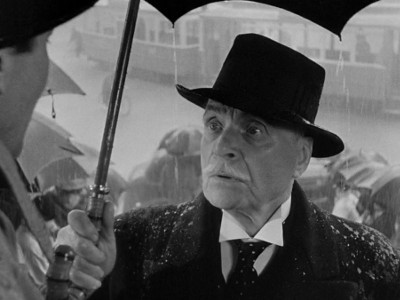
The thriller sequences are just as superb. The assassination sequence is a stand-out, a shooting on a rain soaked series of steps outside a conference, with the assassin making his retreat through a crowd of on-lookers carrying umbrellas under hot-pursuit from Jones. Hitchcock takes his camera above the crowd, meaning we only follow its progress through the disruption of the umbrellas, before the two men emerge (bullets flying) and move straight into a breathless car chase through the Dutch countryside. It’s a masterful sequence.

And it’s far from the last. The film has a superb series of tension-filled sequences, from Jones playing an elaborate game of cat-and-mouse in a Dutch windmill, trying to avoid being seen by the German agents occupying it while finding out as much as he can about their plans, to Jones reporting what he has found to a man we already know is a double agent. Edmund Gwenn, cast well-against type as a jovial, remorseless assassin, gets a brilliant sequence of attempts to kill Jones without putting him on guard, culminating in a vertigo inducing sequence at the top of Westminster Tower. It’s the second such sequence, Jones already having to climb over the roof of a hotel in Amsterdam to escape assassins (along the way brilliantly hitting the neon sign of the Hotel Europe so that it reads “Hot Europe”). Hitchcock tops it all with a brilliant plane-crash sequence shot with chutzpah and daring and is a technical marvel considering the resources available in 1940.

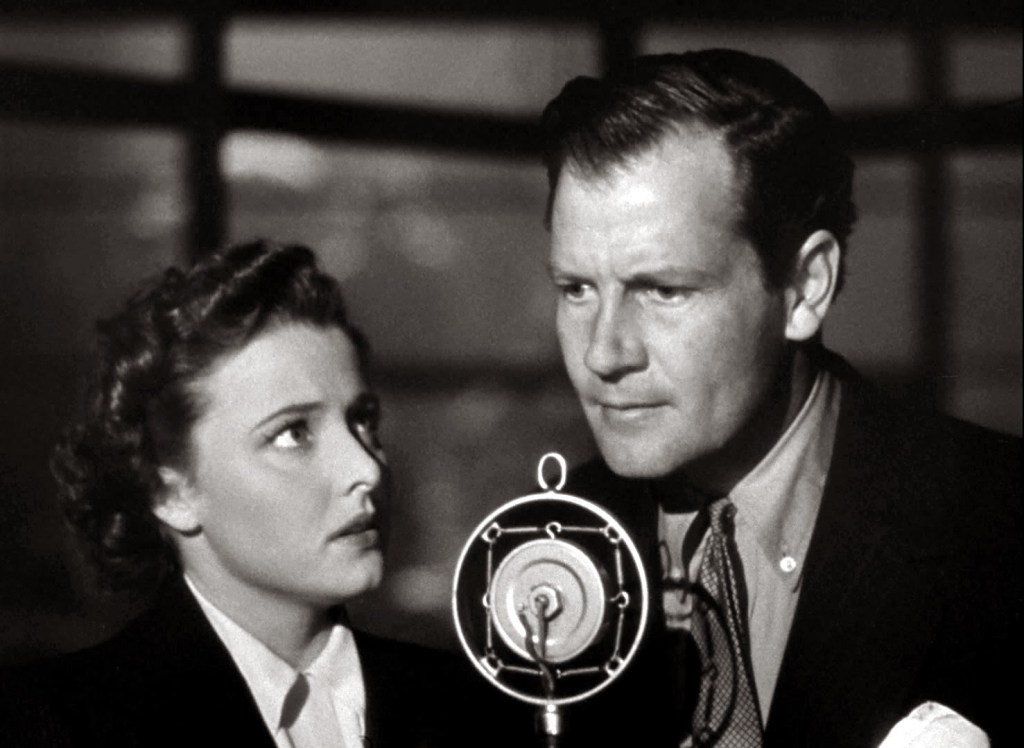
All this excitement and adventure helps to deliver the message of the film as strongly pro-interventionist to encourage the Americans to enter the war on the side of the Allies. Van Meer (a fabulous performance from Albert Bassermann of old-school nobility, made even more astonishing by the fact he didn’t speak a word of English and learned it all phonetically) has a brilliant, impassioned speech – all the more affecting for its  lack of histrionics – that condemns the brutality and violence of the dictatorships. The film is capped with Jones’ Ed Murrow-style broadcast from Blitz-besieged London. Both sequences raise genuine lumps to the throat – McCrea’s delivery is perfect – and the final sequence is all the more astonishing when you realise it was conceived and shot before the Blitz even started.

Not that the film is completely obvious in its allegiances. The turn-coat Brit in the film is a complex, even sympathetic figure who is merely serving his actual home country in the best way possible. He’s largely presented as reluctant to commit crimes, but believing that they must be done and is even allowed a heroic death. His identity perhaps is fairly guessable (he even has a Germanic dog!) but it still works very well in the film.

Hitchcock draws superb performances from the cast – helped by that script of zingers. McCrea is just about perfect, Day very sweet, Sanders is brilliant, Herbert Marshall’s Stephen Fisher a brilliant portrait of arrogance and tortured duty, Robert Benchley very funny (and writing his own scenes) as Jones’ colleague who’s struggling to stay on the wagon, Harry Davenport superb as Jones’ His Girl Fridayish editor. Basserman was Oscar nominated – and deserves it for his big speech – but it could have been any of the cast who got that nod, such is the quality here. Foreign Correspondent is often overlooked among the master’s many, many triumphs. But any pro-interventionist, anti-German film that has even Joseph Goebbels singing its praises must have a fair bit going for it.

Lilith (1964)

Jean Seberg lures Warren Beatty and Peter Fonda into a psychologically dangerous web in Lilith

Director: Robert Rossen

Cast: Warren Beatty (Vincent Bruce), Jean Seberg (Lilith Arthur), Peter Fonda (Stephen Evshevsky), Kim Hunter (Dr Bea Brice), Anne Meacham (Mrs Meaghan), Jessica Walter (Laura), Gene Hackman (Norman), James Patterson (De Lavrier), Robert Reilly (Bob Clayfield)

Movies have long had a fascination with mental illness – in particular the impact of mental illness on women. Lilith is an intriguing, elliptical, somewhat cold but intriguing film that looks at the impact isolation, loneliness and seclusion can have on people and how these damaged psyches can sprawl out and cause further pain and suffering for others. However, it’s also a difficult, unclear and occasionally hard to like film, that deliberately clouds so many of its points in a veil of doubt and uncertainty that it’s difficult to really embrace it.

Returning from an undisclosed war (possibly Korea), Vincent Bruce (Warren Beatty), a lonely, slightly troubled young man, drifts into a job as a counsellor at a private mental hospital, under the supervision of Dr Brice (Kim Hunter). Bruce is empathetic and keen to understand and help the patients, but he finds himself slowly drawn towards Lilith Arthur (Jean Seberg), a sensual and seductive patient at the institute. Encouraged to spend more time with Lilith – as only Vincent seems able to draw her out of a fantasy world to engage with the real one – he increasingly finds himself infatuated with her, increasingly bending any personal or professional ethics to fuel his emotional and sexual need for her.

Just in case you are in any doubt from reading that, it’s pretty clear from early on in the film that the real person in need of help is Vincent. Played with a methody introspection and brooding insecurity by Beatty (he impassively and wordlessly drifts through several scenes or merely watches, and only rarely shows any emotional engagement), Vincent is frequently framed by Rossen alone, lost in the centre and sides of frames, or walking seemingly aimlessly forward. The camera often drifts towards him, if only to stress his lack of real engagement with the things he is seeing in front of him. His obsessive qualities are there from the very start, with his fixations switching between his mother, a former girlfriend (played with a flirtatious seductiveness by Jessica Walter) and finally settling, overwhelmingly, on Lilith whom he follows with the glazed eyes of a potential killer. Beatty struggled with the part – and I can see why, as our central character is such a distant cipher that he becomes someone very hard for the audience to invest any interest in.

Lilith herself is an intriguing if, it seems, unknowable character – almost impossible to tell if she is a truly destructive force or someone who simply behaves as she feels in the moment with no understanding of the impact her actions have. She is frequently callous and cruel, and then will revert to sadness, vulnerability and insecurity. She looks for love – or at least affection and loyalty – at every turn, but then also seems unable to understand any personal relationship except through the filter of sex. Starting the film placing an erotic spell around sensitive fellow patient Steve (Peter Fonda, vulnerable and rather sweet) she quickly switches all her efforts to wrapping Vincent in a web of enchantment (as the film rather clumsily stresses to us in a scene where a doctor explicitly compares her to a spider).

Lilith is increasingly seen as an unsettling, indiscriminate figure. No sooner does Vincent become her lover, than she begins flaunting a sexual relationship she is having with another female patient. (Lesbianism was quite radical for a film at the time). Even more surprisingly the patient is a staid, rather imperious middle-aged woman (played imposingly by Anne Meacham), and the relationship seems to be partly conducted to get a rise (of one sort or another) out of Vincent. Earlier, Lilith flirts disturbingly and erotically with a very young child (who seems disturbed) – although the viewer is perhaps even more disturbed by Vincent’s blank watching of the whole scene. At every point we are reminded of Lilith’s erotic allure – and the framing of the film, and its beautiful photography by Eugene Schufftan helps to create this mystic image. Lilith is often shown behind grills and bars earlier on, before she emerges into the outside world and one enchanting image sees her kissing her reflection in a lake, the very act reducing the reflection to shimmering ripples on the surface: can anyone know her?

The part leans on being borderline sexist, the idea of the enchanting, liberated woman as somehow being a dangerous (almost evil) threat to the safety and mental security of the men around her, deliberately endangering the decent world with her sexual openness. It largely manages to avoid this due to the performance of Jean Seberg, who gives Lilith a vulnerability and suggestions of deep psychological trauma that underpin her surface sexuality, flirtation and predatory nature. It’s no surprise that she is so completely able to overwhelm the repressed, inverted Vincent, or that he becomes such a willing slave to her whims and spur-of-the-moment suggestions.

Much of this disintegration of Vincent underpins the second half of the film, as he and Lilith engage in a dance that ends up having overwhelmingly negative consequences for each of them and for many of those around them. Intriguingly, Rossen’s vision of this mental institute as a more bohemian organisation suggests that the staff all seem aware of (and even tacitly encourage) the relationship – although whether this is part of a treatment or some sort of bizarre other motive is unclear. However, all this doesn’t help to make either character one we really care about, or make the story crystallise into something that carries real impact.

That captures the central problem of the film – Rossen deliberately builds the story with an elliptical sense of mystery in which the actions and motives of characters remain deliberately unclear, and the world they live in takes on elements of the dreamlike fantasy world that Lilith herself sometimes lives in (complete with her own language). Events seems to move with little sense of time. There are surreal interludes, not least an extended sequence where Vincent takes Lilith to a jousting competition (yes you read that right). It’s perhaps all a part of understanding how the personalities of the two lead characters slowly collapse over time into themselves, but it also serves to keep a distance between the film and the viewer. The final tragic outcomes are predictable from the very start of the film, but there is still a certain power to them. As a study of what slow mental disintegration may look like, Lilith is an intriguing little picture, but basically a little too hard to invest in emotionally to carry real impact.

On the Basis of Sex (2018)

Felicity Jones does earnest, dedicated work in an earnest, dedicated film: On the Basis of Sex

Director: Mimi Leder

Cast: Felicity Jones (Ruth Bader Ginsburg), Armie Hammer (Martin Ginsburg), Justin Theroux (Mel Wulf), Kathy Bates (Dorothy Kenyon), Sam Waterston (Erin Griswold), Cailee Spaeny (Jane C Gisnburg), Jack Raynor (James H Bozath), Stephen Root (Professor Brown)

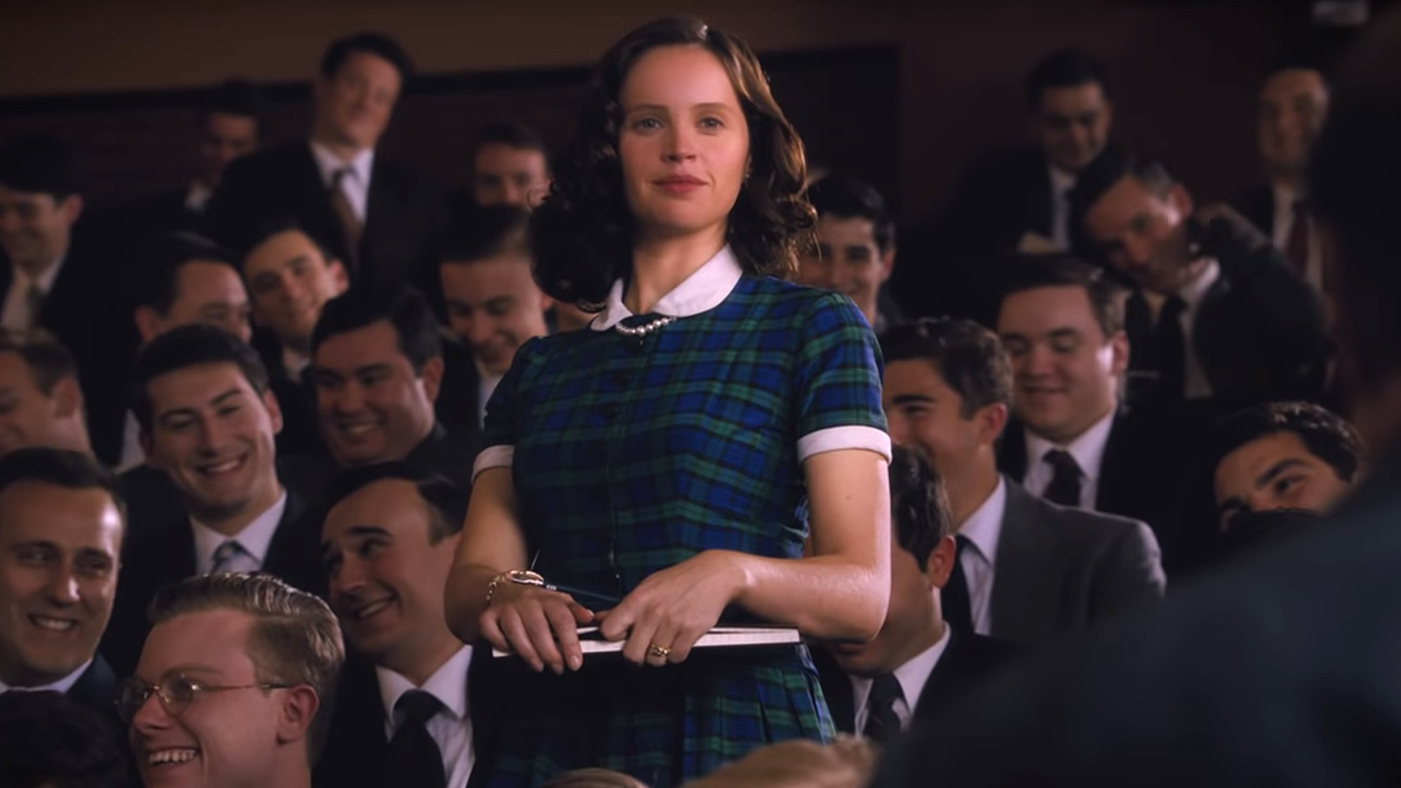
Ruth Bader Ginsburg is an extraordinary person, her pioneering work to bring about sexual equality in the USA something that has made an actual, permanent change to her country for the better. This biopic covers the early years of this campaign in the 1970s, and if it at times gets a little too bogged down in the conventions of these sort of biopics, it does tackle them with genuine passion.

At Harvard in the mid-1950s, Ruth Bader Ginsburg (Felicity Jones) is one of the first women allowed in to study law – and finds that she faces a battle to constantly prove that she deserves to be there. Her husband Martin Ginsburg (Armie Hammer), himself an accomplished lawyer, is endlessly supportive and encouraging, but Ruth continues to find that she struggles to be treated as an equal in the male dominated legal world of the 1950s and 60s. All this changes when her husband brings to her attention a tax case that discriminates against a male carer – and she realises this could be a vehicle to establish a precedent that American laws are unconstitutional when they discriminate on the basis of sex.

Mimi Leder directs a film full of warmth, respect and feeling for the importance of the story it is trying to tell. While it at times seems a tiny bit overwhelmed by the responsibility of bringing such a pioneering person’s story to the screen, it still manages to bring enough character and flair to it to make it an engaging watch. Perhaps you might feel at times you are only beginning to scratch the surface of RBG’s extraordinary life – but the film still treats you with the respect to assume that you can follow the legal arguments being outlined, even as it structures much of the film with clichés.

It does have some fine sequences in it though, not least a running visual image of Ruth walking up steps towards important buildings. The opening sees her lost in a crush of young male Harvard students, struggling to find her own space in a male dominated world. Later she climbs the steps outside the Court of Appeals, this time at the head of a progress of men following her behind. And finally the film bookends its opening Harvard steps sequence with Ruth – this time alone – climbing the steps of the supreme court: shots and cuts echo the opening of the film as Felicity Jones is slowly replaced by the real Ruth Bader Ginsburg.

Felicity Jones does a decent job as Ginsburg, although she struggles with a slightly awkward make-up job to age her up. She however captures the fire in Ginsburg’s belly and her passion to right wrongs, as well as the demanding intellectual ability that at times made her a domineering and difficult person. She doesn’t always find much wit in the role, but she really wins the empathy of the audience with the injustice she faces – not least from the very start having to justify why she has taken a place at Harvard from a man in the first place.

It helps as well that she has such a fine scene partner for so much of the film in Armie Hammer, who is excellent as her supportive, way-ahead-of-his-time husband Martin. Taking on most of the domestic chores – and combined with his own brilliant career – Martin was as much a fascinating figure as Ruth. Hammer plays with a joyful, charismatic relish, perfectly mixing intellectual curiosity with an innate decency. It’s also a generous performance that complements Jones perfectly.

The relationship between these two is the emotional heart of the film, frequently raising warm smiles from the audience. An early scene where Martin is diagnosed with cancer after collapsing during a game of charades tugs at the heartstrings, not least for the sudden pained look of panic that crosses Martin’s face as he collapses, and Ruth’s protective rush to his side. These two argue once in the film – and that an argument based around Martin encouraging Ruth to live the life she wants – and the film goes out of its way to show that their life together was an equal partnership, where both were determined to support and protect the other.

It’s a lovely relationship to place at the film’s centre – even if Hammer is essentially playing the supportive wife role that so many biopics of men have featured (Felicity Jones in The Theory of Everything for starters springs to mind!). That points at one of the weaknesses of the film: its predictability. Structurally it follows the route of many of these sort of biopics, with initial struggle, a cause, set-backs, pep-talks, sudden nerves before the eventual demonstration of triumph. Frankly nothing in the film narratively is remotely surprising, and Leder, despite a few touches of flair, largely directs with a workmanlike assurance.

Workmanlike is a little harsh, but is probably the film’s main weakness. While it’s well-played and has an excellent story – and, I will say it again, a script that largely expects its viewers to follow the legal points – it also can’t quite figure out a way to tell the story that doesn’t squeeze it into the biopic clichés that you’ve seen dozens of times before. Is that necessarily a bad thing? Not exactly: but it also makes the film at heart an engaging middle-brow drama, which seems a shame when Ruth Bader Ginsburg is anything but.

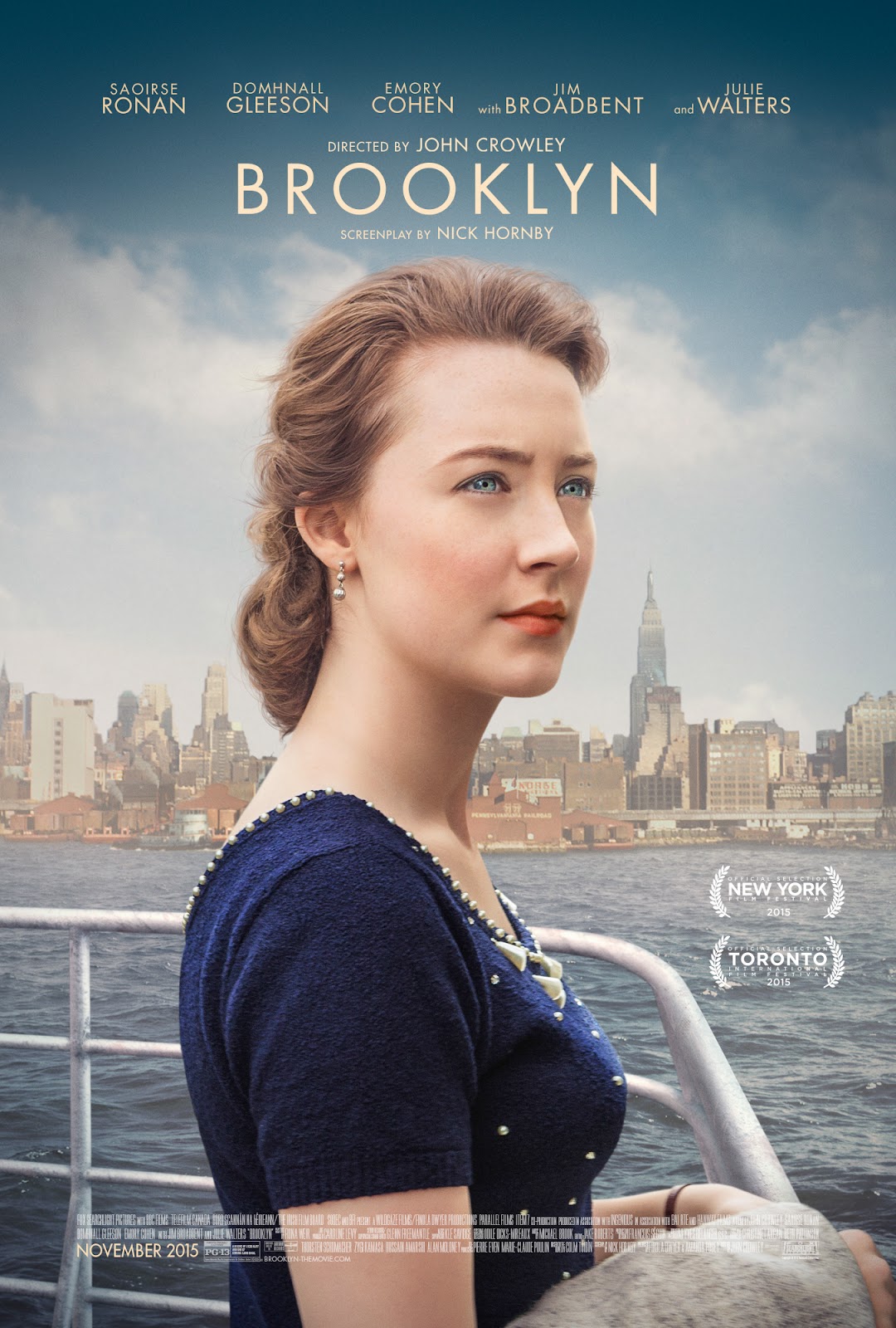
Brooklyn (2015)

Saoirse Ronan excels as an Irish immigrant in the USA, torn between two loves

Director: John Crowley

Cast: Saoirse Ronan (Ellis Lacey), Emory Cohen (Tony Fiorello), Domhnall Gleeson (Jim Farrell), Jim Broadbent (Father Flood), Julie Walters (Mrs Kehoe), Brid Brennan (Miss Kelly), Eva Birthistle (Georgina), Fiona Glascott (Rose Lacey), Jane Brennan (Mrs Lacey), Jessica Paré (Miss Fortini), Emily Bett Rickards (Patty), Nora-Jane Noone (Shelia), Eve Macklin (Diana), Jenn Murray (Dolores), Eileen O’Higgins (Nancy)

In the 1950s, Irish immigrants flocked to Brooklyn to build themselves a new life. Those who made the move often found themselves torn between two worlds – the lure of the new life they were building across the water, and the pull of the land of their fathers. Brooklyn, based on a successful novel by Colm Tóibín, places this conundrum in an intensely dramatic context by making the conflicting calls on its central character as much romantic as they are emotional.

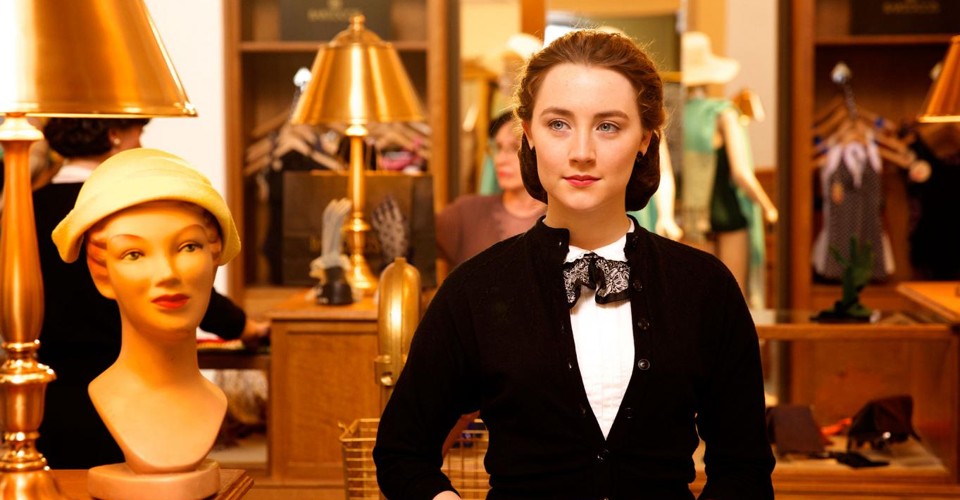
Ellis Lacey (Saoirse Ronan) is our homesick young woman, eager to build a new life in America. Sponsored by kindly priest Father Flood (Jim Broadbent, with more than a passing resemblance to Tóibín) and living in the boarding house of kindly-but-no-nonsense Mrs Kehoe (Julie Walters, in a role surely written for her) she finds work in a department store and trains at night as book keeper. She meets and falls in love with a sweet Italian American plumber Tony (Emory Cohen), but when tragedy occurs back in Ireland, on her return there she is strongly drawn to her homeland and to kindly, handsome Jim Farrell (Domhnall Gleeson). Which life will Ellis choose?

You can see why Brooklyn was so popular with Oscar voters, and why it struck such a chord with so many people. It’s reassuringly, warmly, old-fashioned, a big-hearted, brightly filmed, gorgeously mounted “woman’s picture”, the sort of story that Hollywood studios churned out in the 1940s and 1950s (you know, those sort of “who will she choose!” films). Crowley pulls the material together however with real emotional force, married with an interestingly different (if gently touched upon) theme of the immigrant experience.

Helped by a very good script by Nick Hornby, Brooklyn is not only emotionally moving but also much funnier than you might expect. Part of this is deliberate choice, expanding parts of the novel (particularly the dry humour of Mrs Kehoe, seized upon with relish by Julie Walters) that bring the funny, but also from the warmth, regard and humanity it invests its characters in. Ellis is a character so well drawn, whose feelings are so real, that we end up feeling deeply invested in her, and all the more ready to respond to her quick intelligence and dry (but gentle) wit. 

It’s a gift of a part for Saoirse Ronan, who is quite simply outstanding as a quiet, sheltered woman who grows, changes and decides to create her own destiny before our very eyes. (Helped by Hornby’s script again, which uses the Ireland-USA-Ireland structure to pinpoint many dramatic bookends and contrasts that Crowley subtly, and not forcefully, brings to the screen.) Ronan’s intelligence and her conflicting desires are clear in every scene, while her eyes seem able to communicate reserves of emotional depth. In two cultures where it isn’t easy for a woman to define her own destiny, Ronan brilliantly shows the difficulties many woman had in understanding or expressing what they want, in a world where they haven’t been set-up to think like that.

The film also doesn’t make it easier for her by making her two suitors – while radically different men – both such charming, lovely guys. Cohen’s Tony is a boyish enthusiast, full of hopes and dreams, who seems to represent everything that America has to offer Ellis. Domhnall Gleeson’s Jim is decent, honourable, kind, old-fashioned man who represents everything that she realises her Irish culture has for her – tradition, decency and a sense of self. It also speaks to how well drawn Ellis is by the film, and how deeply well-though out Ronan’s performance is, that it makes perfect sense that these two very different men would be drawn to her, and that both bring out different parts of her personality, which never feel contradictory.

It works as well because we’ve lived through everything Ellis has. She is present in nearly every scene in the film, and we see her change from a shy, scared, frightened woman on the boat from Ireland who needs to be cared for by an experienced emigrant fellow passenger (a very good cameo from Eva Birthistle) to a woman who flourishes in her new surroundings and the opportunities she is given. We need to feel that connection with her, since some of her behaviour (if it came from a man) would probably be seen as quite shabby indeed. But because we have such an understanding of her inner life – and because Ronan has such an empathetic and expressive face – we understand the reasons for her conundrum.

It’s that conundrum that lies at the centre of the film, and to be honest what dominates it. It works because it is done with such emotional truth (aided by Michael Brook’s excellent, heart-string tugging score that mixes American sounds with Irish folk to glorious affect), but the film is primarily a nostalgia romance. While it’s very setting makes you think about the immigrant life, it has very little to say really about either the cultural phenomenon or the impact it has on either the USA or Ireland (a charity Christmas meal for former Irish railway workers now all homeless is as close as it gets to talking about long-term integration). It doesn’t really matter, because the central story sweeps you up so much, but it does make the film more of a romance than the grander claims made for it by some as some sort of commentary on Irish immigration.

But there’s nothing wrong with such a handsome, romantic, emotional drama, or one that feels so reassuringly old-fashioned, even as it is made with touches of wit and confidence. Making some welcome comments on feminism, and led by Saoirse Ronan at her finest, it’s still a triumph of old-style, romantic, women’s pictures that you’d have to be pretty cold not to feel some sort of warming in your cockles by the end of it.

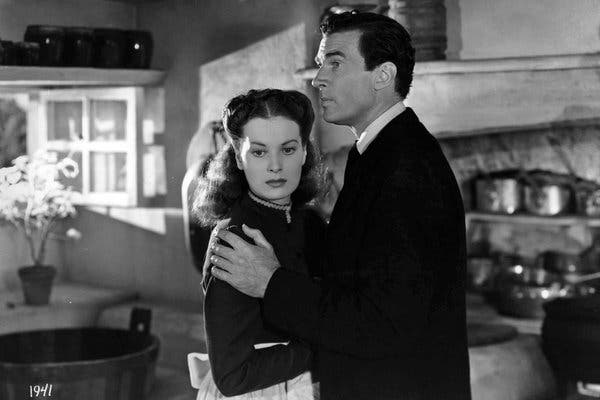
How Green Was My Valley (1941)

Donald Crisp and Sara Allgood raise Roddy McDowell in How Green Was My Valley

Director: John Ford

Cast: Walter Pidgeon (Mr Gruffydd), Maureen O’Hara (Angharad Morgan), Donald Crisp (Gwilym Morgan), Roddy McDowell (Huw Morgan), Sara Allgood (Beth Morgan), Anna Lee (Bronwyn), Patric Knowles (Ivor), John Loder (Ianto), Barry Fitzgerald (Cyfartha), Rhys Williams (Dai Bando), Morton Lowry (Mr Jonas), Arthur Shields (Mr Parry), Richard Fraser (Davy), Frederick Worlock (Dr Richards)

John Ford is by far-and-away best known for his Westerns, many of which are classics. So it’s a bit of a surprise that Ford always claimed the film closest to his heart was this occasionally sentimental drama about a young boy growing up in a Victorian Welsh mining town. Perhaps it was partly because, despite winning four Best Director Oscars, this was the only time Ford directed a Best Picture winner.

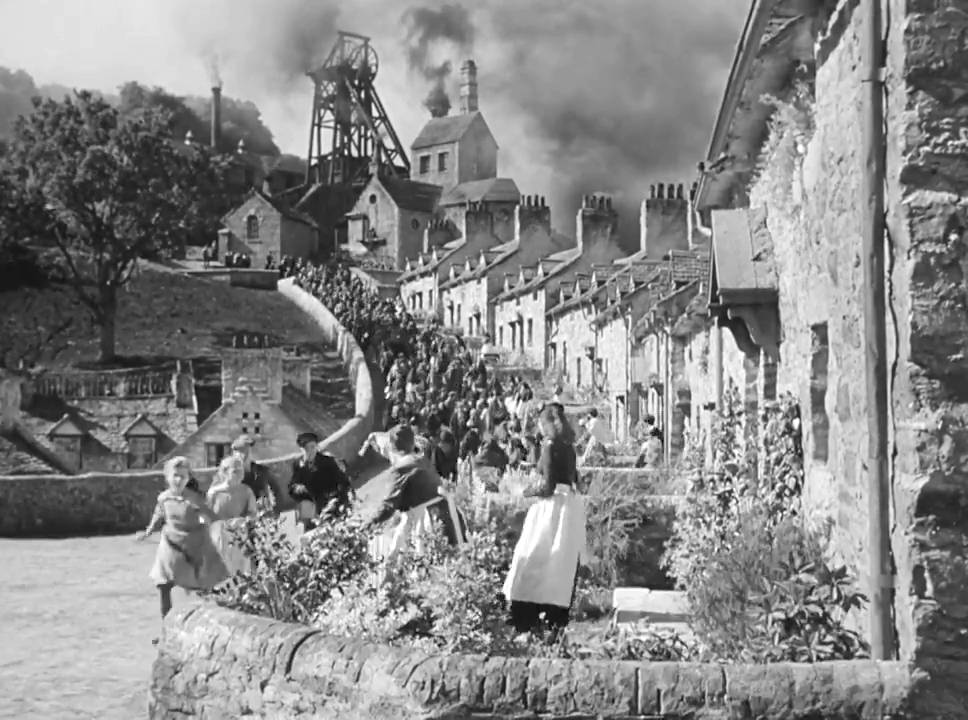
Following the remembrances of young Huw Morgan (Roddy McDowell), the youngest son (of several) of Gwilym Morgan (Donald Crisp), long-running foreman at the mine. The village is beautiful and life seems idyllic – until harsh economic conditions start to take their toll on the village. Wages are cut, moves towards unionisation are harshly resisted by the management, one-by-one the sons are laid off in favour of cheaper labour and the slag of the mine slowly turns the village into a dirty, stained mess. At the same time, the village is shown to be increasingly insular and judgemental, distrusting of outsiders, and suspicious of the preacher Mr Gruffydd (Walter Pidgeon) and the attraction between him and Huw’s sister Angharad (Maureen O’Hara) – made worse after she marries. Huw’s youthful innocence and naivety are met with an increasing attack from reality.

Ford’s film is today a controversial choice for Best Picture – among the films it beat were The Maltese Falcon and, most strikingly of all, Citizen Kane. It’s tough for any film to hold onto the same level of public affection, when it’s widely seen to have robbed a film commonly held up as one of the best (if not the best) of all time. But How Green Was My Valley is no travesty of an Oscar-winner. On its own merits it’s a solid, impressive, sentimental piece of episodic film-making that won’t disappoint you, even if it doesn’t inspire as much as it should.

John Ford directs a handsomely mounted film, full of luscious monochrome shots. It’s a shame that the original plans for the film – to shoot on location in Wales in technicolour – were prevented by World War Two, as the sweep of the real locations would have added a real epic scope to the drama, not to mention make the decline of the village even more obvious visually. But the recreation of the Welsh mining village they planned to film in (in Malibu of all places!) is faultlessly impressive, and Ford creates a real Celtic charm in his shooting of the film.

Celtic is perhaps the key word here as, along with the location, the other thing that ended up jettisoned in the film was its Welshness. There is precious little – if anything – Welsh about this film. It contains one Welsh actor (Rhys Williams), and Ford’s cast use a parade of actors ranging from an attempt at Welsh from Crisp to an imperious mid-Atlantic drawl from Walter Pidgeon. Most actors however settle solidly for something close to Irish – and it’s pretty clear to me that Ford, proud of his own Irish heritage, basically saw this a story of the old country forcing its sons to head to the new country, in the same way his own parents emigrated. It also makes sense for casting the film – there seemed to be precious few Welsh actors in Hollywood at the time, but a parade of Irish actors. 

But look past the film’s complete lack of Welshness – not to mention its presentation of the Morgan’s family home as far more clear and spacious than it would have been in real life – and pretend this is an almost Irish story, and you can focus on the film’s strengths. Although presented with sentiment and nostalgia, How Green is actually a more coldly realistic film than that. While shot with a luscious regard for the past, the film’s themes work to undermine this as much as possible – dealing with disillusionment, depression, unemployment and societal collapse. While Huw may remember the past as being a glorious country, we can see from the tumoils of his family that it was far more complex than that.

Of his siblings, most lose their jobs at the mines and are forced to emigrate. One who remains loses his life due to the mine’s working practices. Their father buries his head in the sand, and refuses to support any moves towards unionisation or the worker’s attempt to improve their lot. The family relies totally on the mine, but by the end of the film have been more-or-less destroyed by it. Even Huw’s sister Angharad, who has a good marriage to the son of the mine owner, finds herself trapped in a loveless marriage with her affections for Gruffydd the source of cruel comment from the village. The valley may be green on the surface, but it’s far darker underneath. 

And poor Huw either doesn’t notice, or doesn’t care. After struggling through bullying from a teacher at school, he finishes school and is awarded a scholarship – only to reject it in favour of remaining to work in the mine, having learned all the wrong lessons from his life (and to the horror of his father). Ford stresses Huw’s youthful naivety by not ageing up Roddy McDowell (very good) at all as Huw – Huw remains forever a 12-year-old-boy, even as events race on. It’s a neat capturing of both the older Huw (who narrates) imagination of what he was like, and also serves to stress how Huw’s nostalgia is framing the story we are seeing. It also makes Huw seem even weaker and vulnerable than he is – a shot of Huw labouring in the mine behind a seemingly giant cart hammers home his weakness – Ford shoots many scenes with low-angle lenses to make us visually emphasise with Huw and to see the world from his perspective.

How Green’s main weakness is its hesitation to commit to either the cold reality, or the hazy nostalgia that the film’s filming style uses. It lands between the two stools, wanting to tell us the truth while also wanting us to leave with a warm feeling towards the simpler times of the past. It’s perhaps not helped in this by the episodic nature of the script, which moves from event to event without much in the way of overarching narrative. It makes for a film that leans even more towards a slightly maudlin view of the past as a series of entertaining stories, which serves to cover even more the darker themes of the film.

Ford’s cast are a mixed bag. Donald Crisp is superb as the father, part imperious patriarch, part loving father – and won the Oscar. Equally good is Sara Allgood as his wife, the ideal loving mother that a son would remember, but with a spine of steel. Maureen O’Hara brings a passionate romanticism to Angharad, while Barry Fitzgerald and Rhys Williams are entertaining as a drunken trainer and his boxer protégé. Mnay of the rest of the cast though are weaker, with Walter Pidgeon rather stolid as Gruffydd and many of the actors playing Huw’s brothers reduced to balsawood under the burden of odd accents and earnest characterisation.

Ford’s film is a very good one that, if it catches you in the right mood, will certainly move you. I am not sure it caught me in the right mood on any of the occasions I saw it, but I appreciate its technical assurance and excellent direction. It fails to really find an effective balance between its darker tones and its nostalgic outlook, but it still works for all that. It’s not Welsh but it is a good film.

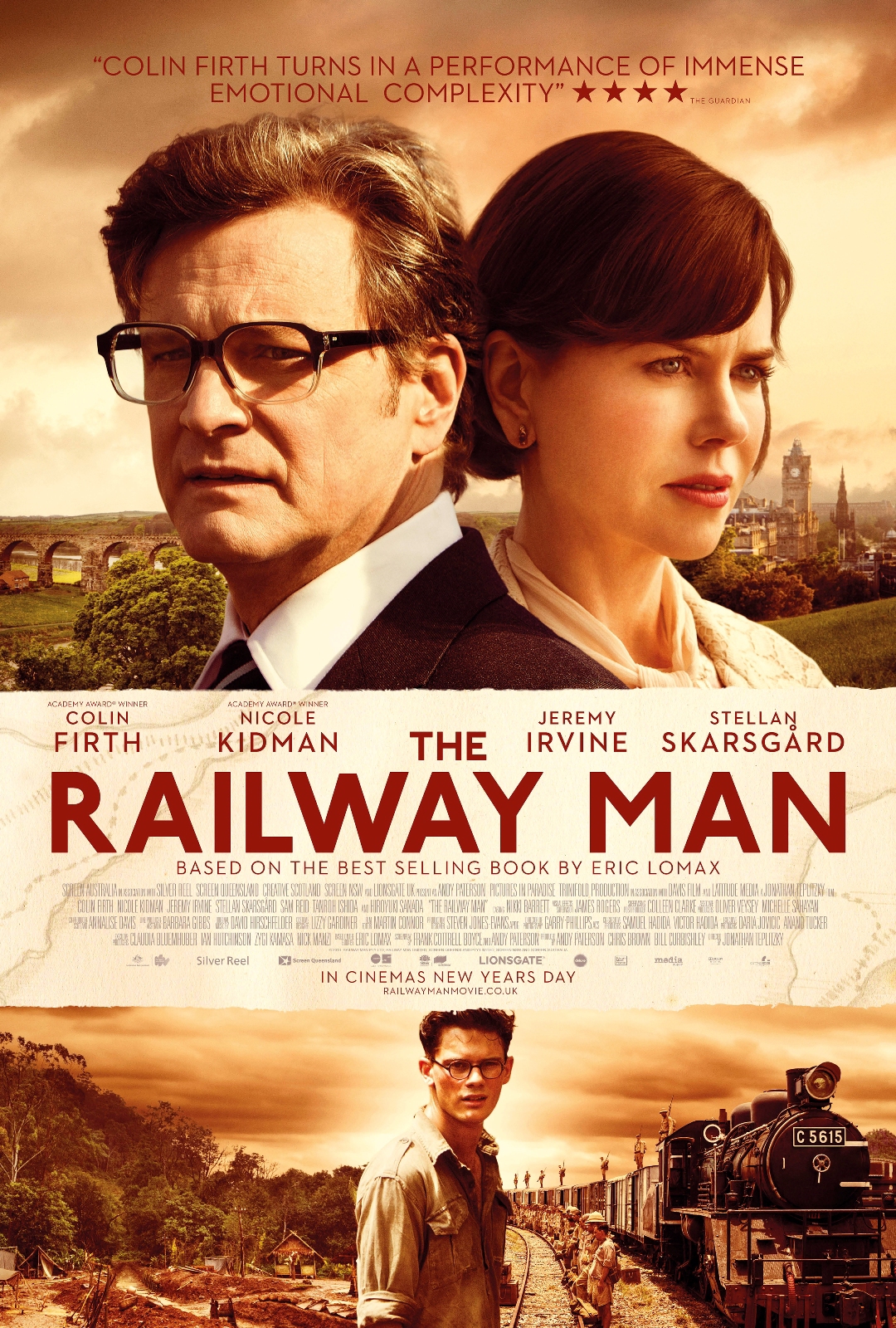
The Railway Man (2013)

Colin Firth is haunted by the past in The Railway Man

Director: Jonathan Teplitzky

Cast: Colin Firth (Eric Lomax), Nicole Kidman (Patricia Lomax), Stellan Skarsgård (Finlay), Hiroyuki Sanada (Takashi Nagase), Jeremy Irvine (Young Eric Lomax), Sam Reid (Young Finlay), Tanroh Ishida (Young Takashi Nagase)

There is perhaps nothing harder to do in life than to put the past behind you and forgive. We all seem to be hot wired to want revenge and to seek it against all odds. It’s rare indeed the man who learns to put the rage against the past behind him and to extend the hand of friendship.

Such a man was Eric Lomax (played here by Colin Firth). In the 1970s Eric meets and falls in love with Patricia (Nicole Kidman). The two are married, but Patricia soon discovers Eric is still plagued by memories of his imprisonment as a young man (played by Jeremy Irvine) by the Japanese during the Second World War, and in particular a prolonged period he spent being tortured by the Japanese secret police for building a radio. Lomax is unable to begin to talk about his experiences, even as trauma causes his life to deteriorate. Fellow ex-POW Finlay (Stellan Skarsgård – very good in a small but vital role) is the only one who has even the faintest idea of his experience, but cannot persuade him to even speak about his past or try and move on. After discovering his torturer Takashi Nagase (Hiroyuki Sanada) is alive and well and working as a tourist guide in the very camp where Lomax was tortured, he travels to Japan, torn about what he should do.

Teplitzy’s film is powered by several marvellous performances, not least Colin Firth who is excellent in the lead role as the deeply repressed, tormented Lomax who in his heart has never left the prison where he suffered unbelievable torment. The film is a carefully structured, and deeply moving, character study of how atrocious and inhumane actions trap us all – both the victims and perpetrators – in patterns of suffering where we feel our own humanity drain away. Even handed, honest and generous, like Lomax’s book, it’s an engaging and moving tribute to the strength of the human spirit and our capacity for generosity.

Not least because when we finally meet the aged Nagase, he is far from the monster we expected. Like Lomax he too is haunted by the past, but where Lomax cannot escape the horrors he suffered, Nagase is plagued by guilt and disgust as he realises his actions as a young man were far from those of a righteous soldier, but rather a brainwashed pawn in a brutal army. Nagase, like Lomax, is desperate to purge himself of memories of this past, and has worked his whole life to try and make amends for the suffering he has caused. No simple good guys and bad guys here – both torturer and tortured are dehumanised, scarred and traumatised by the actions they have carried out. 

Teplitzky films that torture with an unflinching honesty, that leaves you in no doubt about why it has had such impact on Lomax. Jeremy Irvine is very good as the young Lomax, scared, vulnerable but brave and self-sacrificing who puts himself in the way of danger to try and protect his friends and then goes through savage beatings, interrogations and water boarding for information he doesn’t have. It’s difficult to watch, but never sensationalised and the traumatic pointlessness of these methods is abundantly clear. 

These memories, slowly revealed, are all too apparent in any case in Firth’s blasted face.  The film slowly reveals his psychological damage, with the opening sequence in fact suggesting a far lighter film ahead. The opening follows the meeting of Lomax and Patricia on a chance train journey. Playful and charming, these scenes work so well due to the wonderful chemistry between Firth and Kidman. It plays off in spadeas the plot gets darker and more disturbing. Kidman is very easy to overlook here in the “wife” role, but she invests it with an emotional honesty, a supportive woman eventually driven to the edge of her capabilities.

After the lightness of the opening, Terplitzky introduces the past literally like ghosts, with Lomax caught in a sudden delusion of himself being dragged through the hotel on his honeymoon, screaming in panic, to be carried to his torture danger. Throughout the film, the image of his torturer as a young man appears at various points (including at one point in a field as a train passes behind him), a constant reminder of how the past is here and now for Lomax.

It builds towards a sensational series of scenes as Lomax confronts Nagase, powered by two exceptional performances from Firth (barely able to control his anger, rage and pain) and a beaten down, distressed performance of shame from Hiroyuki Sanada, who matches him step for step. Sanada is superb as a man who confronts his nightmare – a man from his past – but also overwhelmed with the opportunity this gives him for amends. 

That’s what the film captures so well. This tension between past and present encapsulates the universal theme of our desire for revenge and our human need to connect coming together. Lomax and Nagase had every reason to kill each other, but their reaction to seeing each other is surprising, moving and a deep tribute to the human capacity to connect and move on. Grief and the past will destroy us all if we let it. The heroic examples of both Lomax and Nagase show us this doesn’t need to be the case.