Control (2007)

Sam Riley excels in this heartbreak life story of Ian Curtis

Director: Anton Corbijn

Cast: Sam Riley (Ian Curtis), Samantha Morton (Deborah Curtis), Alexandra Maria Lara (Annik Honoré), Joe Anderson (Peter Hook), Toby Kebbell (Rob Gretton), Craig Parkinson (Tony Wilson), James Anthony Pearson (Bernard Sumner), Harry Treadaway (Stephen Morris), Andrew Sheridan (Terry Mason), Matthew McNulty (Nick Jackson)
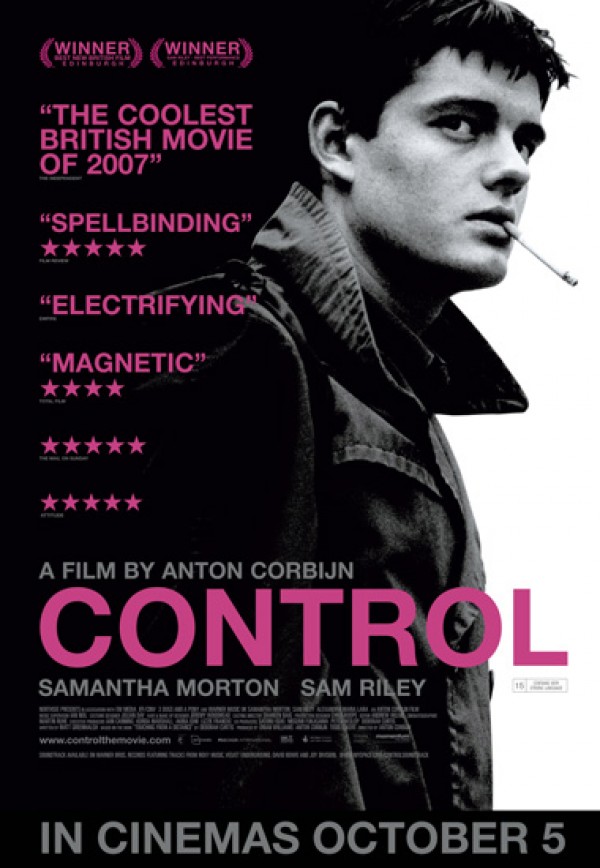
Depression is no respecter of fame or success. You can have everything many people would give their right arm for, and still find the prospect of life overwhelming. Control is a heartfelt, deeply affecting film about Joy Division lead singer Ian Curtis, who committed suicide shortly before a career-changing tour of America. Anton Corbijn knew Curtis and the band personally, and his deep connection with this story is obvious in every frame of this beautifully shot film.

In 1975, fresh out of school, Ian Curtis (Sam Riley) marries Deborah Woodruff (Samantha Morton). Curtis is a would-be poet, but finds his interest piqued when he attends a gig by the Sex Pistols and quickly forms a band – Joy Division – with a group of friends. Powered by Curtis’ imaginative lyrics, the group starts to make a name for itself, taking on a manager Rob Gretton (Toby Kebbell) and winning the attention of the influential Tony Wilson (Craig Parkinson). However, all is not well with Curtis: beginning to suffer increasingly from epilepsy, Curtis is also falling in love with a young Belgian journalist Annik Honoré (Alexandra Maria Lara) while still in love with – although increasingly lacking in mutual understanding with – Deborah. These pressures slowly build up on Curtis.

Control is a film about a person’s longing to have security and a sense of mastery over their own life, but finding they lack both this and the emotional strength to deal with the consequences. Curtis is a man buffeted by competing pressures and desires, as well as a paralysing fear that epilepsy will eventually claim his life. He is frequently unable to relax, and tries his utmost to divorce himself from the reality of his situation by living as much as he can in the moment, ignoring until it is impossible the burdens of making choices about his life and relationships.

Living in the moment is what, for Curtis, makes it all possible. You can see it in reflection in his performances of Joy Division songs – the intense focus, mixed with the channelling of his own epileptic fits into a series of mesmeric on-stage dances, filled with wild and jerky movements. The entire film suggests much of Curtis’ output could be retrospectively seen as a cry for help, many of his lyrics about concerns that would eventually lead to him taking his own life. At one point, Curtis sings heartbreakingly of his isolation in a recording studio booth – with Corbijn cutting straight to the rest of the band and studio technicians talking and going about their business in the studio, oblivious to the underlying desperation that runs through it.

Because the film makes clear no one knew how to help Curtis or even how to identify his problem. To his manager and the band, its all part of the rough and tumble of rock ‘n’ roll. To his studio, it’s the artistic personality. Doctors seem to barely understand how to treat his epilepsy and miss all the signs of the personal stress it places on him. Neither his wife nor girlfriend can imagine that his guilt and self-loathing run as deep as they do. 

Corbijn’s beautifully evocative black and white photography adds hugely to this sense of dream-like non-reality around Curtis’ life, against the backdrop of some beautifully rendered Macclesfield locations. It helps wonderfully capture the sense of Curtis’ life somehow never coming fully into colour, as well as adding a deeply affecting air of melancholy over every frame. It’s also perfect for capturing the atmosphere of the 1970s clubs and bars that the band experienced.

The photography gives the film a feeling of the classic kitchen-sink dramas of the 1960s, and that is no bad thing, adding a certain depth to the tragedy of a working-class lad swept up by success and largely unable to cope with the burdens of expectation. Curtis is shown to be constantly overwhelmed by the pressure of live performance and the expectations of fans and viewers, yet also desperate to continue to have this channel to express himself.

Corbijn doesn’t give him a free pass though, and shows how he deliberately distanced himself from Deborah and their child. Often silent and disengaged, with a glazed look of a man who would rather be anywhere else than having to support a wife and child before he was 20, Curtis and Deborah’s marriage is one of affection but no shared interests of outlook. Deborah clearly provides Curtis with no kindred-spirit feeling, but he uses her as an emotional prop. Simultaneously he uses Annik for the same, while conducting an affair that clearly gives him a deep sense of shame, but finds impossible to resist. It’s living in the moment again: clearly, at every point, he would rather forget the other woman altogether, and is incapable of making the final life-altering decision needed.

This balance works so well because Sam Riley is astonishingly good as Curtis – real, pained, gentle, tender, selfish, with eyes that seem to have the life and will to go on drain out of them as the film goes on. Riley’s performance is pitch-perfect, and his empathetic brilliance for this man who did not know how to express his own feelings clearly is deeply moving. Over the film you see a sensitive man slowly fall apart in self-loathing, feeling trapped in his own life and unable to break free.

The film is stuffed with excellent performances, with Samantha Morton very good as Curtis’ deeply caring wife who unwittingly smothers him with demands – demands that are more than fair considering she is left frequently to hold the baby while her husband disappears for days on end. Alexandra Maria Lara has less to work with, but does a lot with Annik. Toby Kebbell provides some much needed lightness as Joy Divison’s manager, a blistering, foul-mouthed force of nature who can’t even begin to entertain the idea that his lead singer might consider ending his life.

The final sequence of the film, as Curtis (off camera) decides to follow-through on committing suicide (his second attempt to do so, another clear sign of those around him being totally unable to respond to the signals) is unbearably sad, ending with a beautifully evocative, tear-inducing shot of the crematorium releasing its ash – the last vestige of this lost life – into the sky to drift and disperse freely in a way Curtis never could. Control is a modern classic of British realism and possibly one of the finest music biopics ever made. Corbijn has the soul and eye of an artist, and brings all this to bear on a deeply heartfelt and moving film.

All is True (2018)

Kenneth Branagh plays the Bard himself in this engrossing, and rather moving, biography

Director: Kenneth Branagh

Cast: Kenneth Branagh (William Shakespeare), Judi Dench (Anne Hathaway), Ian McKellen (Earl of Southampton), Kathryn Wilder (Judith Shakespeare), Lydia Wilson (Susannah Shakespeare), Hadley Fraser (John Hall), Jack Colgrave Hirst (Tom Quiney), Gerard Horan (Ben Jonson)

There are few actors alive associated as much with Shakespeare as Kenneth Branagh. So it was probably only a matter of time before he played the man himself. Returning to smaller, more intimate projects after some colossal Hollywood epics, Branagh’s film is a beautifully shot, gentle and elegiac drama about loss and family life.

After the burning down of the Globe Theatre in June 1613 during a production of Shakespeare’s final play Henry VIII (otherwise known as All is True), William Shakespeare (Kenneth Branagh) returns home to Stratford-upon-Avon. There he must confront long-existing tensions with his wife Anne (Judi Dench) and daughters Judith (Kathryn Wilder) and Susannah (Lydia Wilson), and face the raw grief of the loss of his son Hamnet 18 years ago.

The script is intelligent and well thought out by Ben Elton, weaving a bit of fiction and sensitive theorising between the lines of what we know about Shakespeare’s final days. It makes for something that I will admit is not always awash with pace or events, but does have a quiet, magnetic emotional force that eventually casts a sort of spell.

It’s a film that gently explores the dynamics and tensions of family, and the all-pervading power of grief and how it can colour the relations between those left behind. Made worse of course by the patriarch of this family having effectively lived on another planet for the last 30 years, coming back so rarely from London that he now hardly knows the people he left behind (a sense of isolation that several skilful shots at the start establish). Especially when that patriarch is a genius, who is out of place and uncertain about where he lies in relation to the family. Nearing the end of his career, Shakespeare wants to know what it has been for and who will inherit whatever legacy he has left.

And that is particularly complex in the sense that he has no son to continue the family name, and no-one in his family (most of whom are illiterate) who can continue his artistic legacy. In death, young Hamnet has been sanctified by Shakespeare, made into a young proto-genius, a perfect son who was has set to continue his legacy. It’s blinded him to the qualities or depths of his other children, and powered an obsession in many of his later works with the loss of children. While the rest of the family have learned to set Hamnet aside, Shakespeare still mourns him as if he died yesterday – griefs that seem as tied in with the lack of future he sees ahead for his heirless family. 

So we get a series of heart-felt and universal vignettes as Shakespeare channels his loss into building a garden for Hamnet, and is eventually forced into confronting deep-rooted truths about himself and his family. The film is punctuated with his speaking to the ghost of his lost son, but he seems as unable to understand him still as he is to understand his family. His conversations with them are based around lost memories, faded past and a total inability to see the people they have become. He seems equally lost in the petty dynamics of the town, so alien to him from the larger concerns of London.

Much of this works so well as the film is so beautifully played by an exceptionally assembled cast. Branagh leads the film superbly with a restrained, quiet, contemplative performance with elements of comedy in among the sensitive touches. The make-up job takes a few beats to get used to, but once you are past that, the film focuses in on “the truth” below the surface with Shakespeare. Branagh gives Shakespeare a rich, sad inner life, a life that faces two traumas – the loss of the theatre he built, leading on to finally confronting the truths behind the loss of his son and the damage it has caused his family. Proud, intelligent, sensitive but also blind to so much, Branagh’s Shakespeare is an exquisite performance of great intellect, married to very everyday concerns.

It’s a balance that is explored in one of the film’s finest scenes, in which Shakespeare meets with the Earl of Southampton, played with scene-stealing charisma by Ian McKellen. Southampton for his part questions the Bard’s obsession with such middle-class concerns as status and money (from his comfortable position of being loaded) and clearly understands the greatness of Shakespeare in the way no one else really can. Shakespeare can’t feel in the same way that he has led a small life, and the film clearly addresses head-on his own sexual attraction to Southampton, present from the start in his giddy excitement at the Earl’s arrival. Southampton, aged, seems surprised and almost touched by Shakespeare’s continued love – gently turning him down. It’s part of the complex interior world that film explores around the poet – a man obsessed with social position and concerns of others, who was still willing to express his love for another man.

The film draws superb performances from the rest of the cast as well, with Judi Dench extremely good as the sensible, dedicated, long-suffering Anne. Kathryn Wilder is superb as Shakespeare’s overlooked daughter Judith with Lydia Wilson also fine as the more conventional Susannah. The rest of the cast are equally strong.

The film is beautifully shot, with the interiors lit with candles and the outside shots showing a marvellous inspiration from paintings that mount the film with a handsome beauty. While the film is not always blessed with pace, and has a feel at time of a sort of heritage-laced Bergman film, it carries without a certain emotional force that really ends up delivering a tender picture of difficult family dynamics and a man who has spent his life telling stories beginning to understand the story of his own life. Directed with a real measured passion from Branagh, and very well acted, there is a richness and depth to this that makes it one of Branagh’s finest films.

Cold Mountain (2003)

Nicole Kidman and Jude Law are souls in love separated by war in Cold Mountain

Director: Anthony Minghella

Cast: Jude Law (WP Inman), Nicole Kidman (Ada Monroe), Renée Zellweger (Ruby Thewes), Eileen Atkins (Maddy), Kathy Baker (Sally Swanger), James Gammon (Esco Swanger), Brendan Gleeson (Stobrod Thewes), Philip Seymour Hoffman (Reverend Veasey), Natalie Portman (Sara), Giovanni Ribisi (Junior), Lucas Black (Oakley), Donald Sutherland (Reverend Monroe), Cillian Murphy (Bardolph), Jack White (Georgia), Ray Winstone (Teague), Melora Walters (Lila), Charlie Hunnam (Bosie)

There was no difficult novel Anthony Minghella couldn’t adapt for the big screen. Cold Mountain is as beautiful and handsome a film as any he made, and his masterful scripting of a complex story is testament to his skill. So why is Cold Mountain not more loved? Is it because it’s almost too well made, too handsomely mounted, too literary and intelligent? Is it, actually, trying a little too hard? Is it a Cold Mountain itself, a giant structure of beauty but with an icy heart?

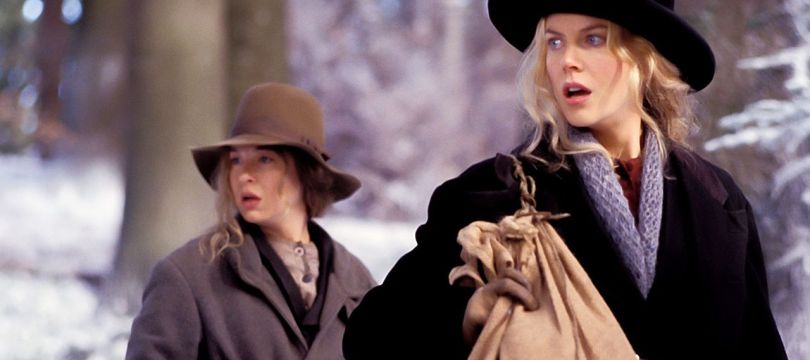
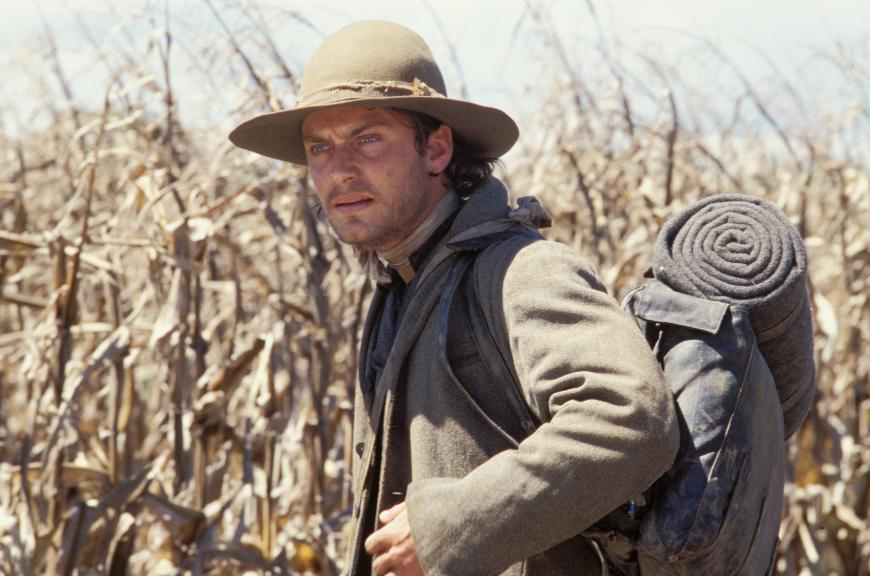
Based on Charles Frazier’s novel, set in the final days of the American Civil War, confederate soldier Inman (Jude Law), knowing the war is lost, deserts to return to the woman he loves, Ada Monroe (Nicole Kidman). The two of them have only spoken a few times but they feel a deep personal bond. During the years of war, poverty has hit preacher’s daughter Ada, although she has crafted a life-changing friendship with 18th century trailer trash Ruby Thewes (Renée Zellweger) which has helped her survive. As Inman’s odyssey home leads to him encountering a number of different vignettes that show the despair Civil War has brought to America, Ada struggles to survive and avoid the sinister attentions of home guard enforcer Teague (Ray Winstone).

There is so much to admire in Cold Mountain I want to start there. The photography is beautiful, and the film is assembled with a striking grace and skill. Walter Murch’s editing and sound design is perfect, with each shot of the film being fabulously composed and each carrying a specific message and purpose that contributes to the overall impact. The use of music – a collaboration between T Bone Burnett and Gabriel Yared – is perfect, a series of wonderful period compositions and impactful orchestral pieces. 

Everything about how Minghella captures the feel of the time, the mood of the South heading into war, and the disintegration of social conventions as the war takes hold and lays waste to the land, rings completely true. From the celebrations of the young men at the film’s start, to the increasingly haunted, tragic look of Jude Law’s Inman as he discovers new horrors at every point in his journey, you know war is hell. Minghella ironically opens the film with a catastrophic defeat for the North – but the slaughter disgusts Inman, and his burial under mounds of rubble during an explosion leads to a spiritual rebirths with Inman deciding senseless killing isn’t worth the candle any more. In a war of willing volunteers, how do we respond when these volunteers don’t want to keep fighting?

And why should they, as each of the various vignettes Inman walks through is a wasteland of moral collapse? From a sex-obsessed preacher (an amusing performance by Philip Seymour Hoffman) who has lost his morals to a tragic widow desperately trying to feed her baby (Natalie Portman, effectively stealing the whole show with an intense performance of utter desolation), everything Inman sees shows that nothing is worth all this. The film gets a very good sense of the drive that pushes Inman forward: constantly moving, he’s rarely seen sitting or resting. Each of the Odyssey-inspired stories gives him something to reflect on, or another opportunity for moral and emotional torment , from dragging bodies in a chain gang to avoiding the lustful advances of a group of hillbilly sirens who trap deserters for money.

Meanwhile, things ain’t much better on the homefront, where corrupt bullies like Teague (a slightly too obvious Ray Winstone) are enforcing their own law at the expense of justice. Poverty is also the impact of war, and poor Ada suffers hugely from this, as supplies run low and eventually out. Minghella’s swift and skilful establishment of character shows from the start how Ada is a stranger in a strange land, a middle-class town girl who is completely unsuited for country life and utterly unready to fend for herself when the chips are down without support. 

Is it any wonder in this world, that Inman and Ada cling to memories? Part of the film’s effect depends on how you respond to the romantic bond between these two clinging to a few brief moments (a few exchanges and one immensely passionate kiss on the day of Inman’s departure). It’s an old-fashioned, sweeping, love story and it depends on you relating to that old-fashioned mythic love story. I’m not sure that the film quite sells this as effectively as it could do. Somehow, perhaps because Inman is so insular and Ada a little too difficult to relate to, the passion between them can’t quite carry the sweep that the film demands, even as Minghella skilfully intercuts between them.

Nicole Kidman in particular feels miscast as Ada. Kidman is too intelligent, too determined and strong a performer to convince as a woman who is unable to look after herself and nearly succumbs to fear – she’s just not an actress I can picture cowering in fear in front of an angry rooster. Kidman does her best, but the character never really wins the sympathy that we need for the performance to work. Jude Law has much more to work with as Inman, brilliantly communication a whole world of feeling with very little dialogue. 

What works less well with Law is that his plotline just doesn’t quite grip enough. The vignettes are often entertaining, but feel like episodic sketches, and the sense of a building picture of the despair of the South doesn’t quite come into shape as much in practice as it does in theory. Frankly, after a while, you are ready for Inman’s journey to come to an end and for him to intersect with Ada’s plotline back at Cold Mountain (which is built around a consistent group of characters who engage our interest).

In the home front storyline you’ll be relieved with the entrance (almost an hour into the film) of Renée Zellweger’s blowsy Ruby, a loud-mouthed, trailer-trash woman with a heart of gold and a mastery of farming who effectively saves Ada’s life. It’s a loud, big, Oscar-winning performance from Zellweger that plays with being a little broad, but is skilfully balanced by the slow reveal that this personality is a cover that Ruby uses to hide her own pain. Added to this depth, her heart-warming presence carries such simple pleasure and colour compared to the more muted performances from the leads that you welcome it. 

Because Inman and Ada don’t quite work as a romantic couple. There is something slightly cold about them, slightly hard to relate to. And for all the intense and brilliant construction and filming of the film – and the mastery of Minghella’s writing and direction – it never makes them into the sort of classic romantic couple you care for. You want to connect with it more than you ever really do, and whether that is down to miscasting or the lack of intense chemistry between them I’m not sure, but it means Cold Mountain never becomes the great romantic tragedy it should be. You want a film this good to be as good as it feels – and it never quite is.

Legend (2011)

Tom Hardy plays with himself in Legend

Director: Brian Helgeland

Cast: Tom Hardy (Ronnie Kray/Reggie Kray), Emily Browning (Frances Shea), Christopher Eccleston (Superintendent Leonard “Nipper” Read), David Thewlis (Leslie Payne), Taron Egerton (Edward “Mad Teddy” Smith), Chazz Palminteri (Angelo Bruno), Paul Bettany (Charlie Richardson), Colin Morgan (Frankie Shea), Tara Fitzgerald (Mrs Shea), Paul Anderson (Albert Donoghue), Sam Spruell (Jack McVitie), John Sessions (Lord Boothby), Kevin McNally (Harold Wilson)

Tom Hardy is the sort of actor who, if you could find a role for him in your film, you certainly would. So how about getting the chance to cast him twice? That’s the happy situation Brian Helgeland was in here, with the chance for Hardy to play not one but both of the Kray twins. The buzz around Hardy taking on both roles was so strong that the film itself was almost completely forgotten in the crush. This was perhaps easy to do since the film is pretty mediocre at best, a confused mess that can’t decide if it wants to wallow in the undeserved glamour of the Krays or whether it wants to explore the darker currents below the surface.

The film covers most of the career of the Kray brothers – the seemingly more grounded, ambitious Reggie and then the more impulsive Ronnie, recently released from psychiatric prison. The Kray brothers balance competing demands: Ronnie is essentially happy where he is, king of a small pond, while Reggie has dreams of expanding a criminal empire across the Atlantic in partnership with the Mafia. Meanwhile, various gangland opponents and the police stalk the brothers, while Reggie’s relationship and later marriage to Frances Shea (Emily Browning) slowly collapses.

Helgeland’s film is a fairly bland piece of film-making that wants to have its cake and eat it. It wants to enjoy the criminal undertakings of the Krays, their clubland cool, charisma and charm. But it also wants to make clear that these are violent criminals who have very few moral qualms about anything they do. It’s a printing and an exploration of the legend, but the problem is that it never actually becomes particularly interesting, despite the best efforts of everyone involved. Perhaps everyone became too blinded by the pyrotechnics and undoubted skill of Hardy’s double performance that the overall film itself got a bit lost.

Hardy is superb, turning the brothers into two highly distinctive personalities who both seem like two halves of the same shattered personality, whose character traits slowly merge and even swap over the course of the film. Hardy also develops a key physicality and style for both characters that is very similar but also clearly different in both cases. So you get Ronnie, Churchill-bulldog like, with a muscular, growling heaviness that stinks of paranoia. And Reggie, smart-suited and slicked back, with a confident thrusting demeanour that falls apart over the film into a weasily fury.

Both these progressions make perfect sense, and Hardy is so skilled at playing both halves of many conversations that you forget while watching the film that you are looking at one actor playing two roles. Astonishingly – and perhaps the biggest trick he pulls – he turns this tour-de-force double role into something that feels so natural you don’t notice it happening. And the bond that ties the two brothers together into a descent into hell is so strong that even when beating the crap out of each other they still seem like two halves of one messed up personality.

Hardy is of course so brilliant, the rest of the skilled cast basically only get a few beats to sketch out various gangland figures and coppers. Excellent actors – Eccleston, Thewlis, Bettany, Anderson – are picked out to do this, but none make much of an impression. The thrust is always the strange dance of personality between the Krays, two brothers who effectively destroy each other with their actions, but are so closely bound together that the one cannot survive without the other.

It’s psychology like this that you wish the film could explore, especially as Hardy takes both brothers to dark and bitter places that makes both of them openly vile and terrifying to imagine meeting. Helgeland chooses to explore much of this – particularly Reggie’s darkness – through a rather tired voiceover led structure via Emily Browning’s Frances Shea. There is nothing wrong with Browning’s performance, but the predictable and rather traditional structure that this gives the story – not to mention the rather clumsy scripting – ends up dragging the film along.

Helgeland makes a decent job of directing this film, and it looks fine, but it is strangely underpowered and unengaging at every turn, a bland piece of gangland history that only really catches fire when both Hardys take the stage and this superstar actor lets rip. Away from him, there is a soft-focus nostalgia in its look back at the sixties, which confuses the attitude the film has towards the Krays, and a ticking off of historical events that gets in the way of creating a compelling narrative.

Hardy overshadows the film and he deserves to as he is more or less the only reason to watch it.

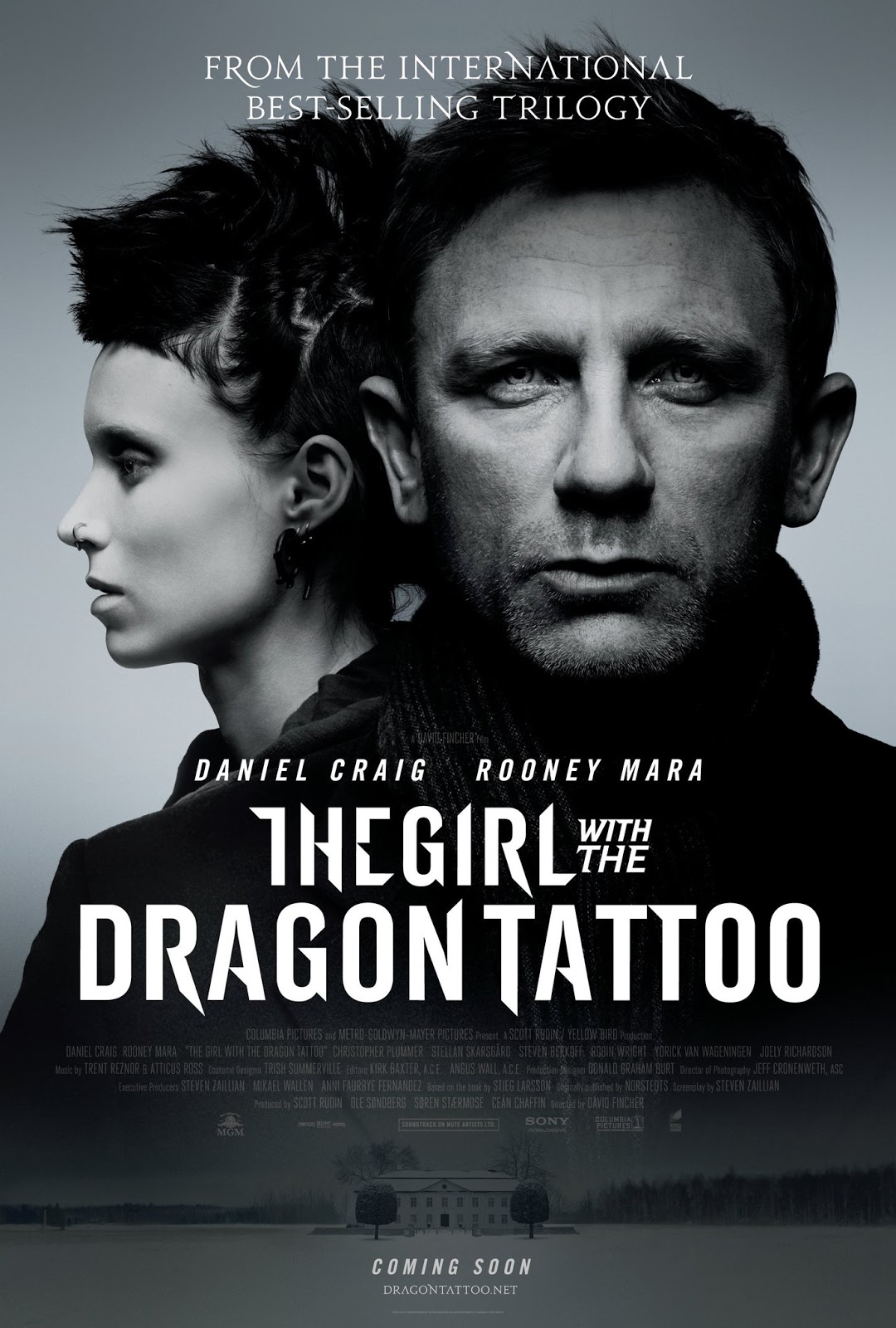
The Girl with the Dragon Tattoo (2011)

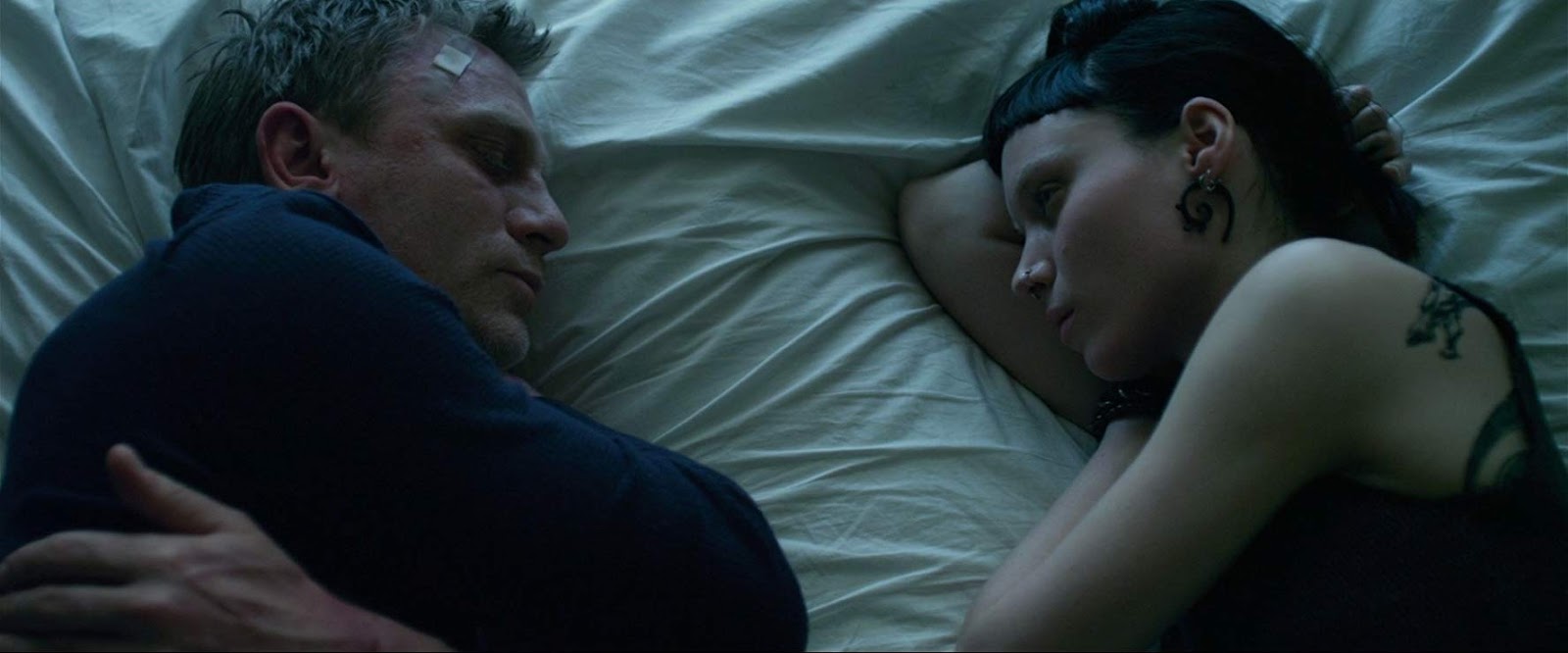
Rooney Mara and Daniel Craig investigate unspeakable evil in David Fincher’s superb The Girl with the Dragon Tattoo adaptation

Director: David Fincher

Cast: Daniel Craig (Mikael Blomkvist), Rooney Mara (Lisbeth Slander), Christopher Plummer (Henrik Vanger), Stellan Skarsgård (Martin Vanger), Steven Berkoff (Dirch Frode), Robin Wright (Erika Berger), Yorick van Wageningen (Nils Bjurman), Joely Richardson (Anita Vanger), Goran Višnjić (Dragan Armansky), Donald Sumpter (Detective Morell), Ulf Friberg (Hans-Erik Wennerström), Geraldine James (Cecilia Vanger), Embeth Davidtz (Annik Giannini), Julian Sands (Young Henrik Vanger), David Dencik (Young Morell), Tony Way (Plague), Alan Dale (Detective Isaksson)

At the time of its release, there was a slightly cool reaction to David Fincher’s The Girl with the Dragon Tattoo. Most reviewers were already familiar with the story twice over, firstly as the best-selling thriller then as the Swedish film starring Noomi Rapace. Perhaps fans were similarly slightly indifferent, while newbies had already declined the first two options, as the film struggled to crawl its way to breakeven. However, rewatching it, I feel this intriguingly well-made film deserves to be mentioned in the same discussion as another adaptation of a pulp thriller made 20 years earlier: The Silence of the Lambs.

Mikael Blomqvist (Daniel Craig) is a crusading financial journalist and co-owner of Millenniummagazine, whose career is in ruins after his article about the CEO of a major company leads to him losing a costly legal battle for libel. He is approached by retired businessman Henrik Vanger (Christopher Plummer), who asks him to investigate the 40-year-old disappearance of his niece Harriet Vanger, who vanished on their privately owned island estate. Blomqvist is hired after an exhaustive investigation into his personal life by emotionally challenged hacker and private investigator Lisbeth Slander (Rooney Mara), who is facing her own problems of gaining her independence from her position as a ward of the state, represented by her vile guardian Nils Bjurman (Yorick van Wageningen). As Blomqvist investigates, eventually with the help of Lisbeth, the trail takes a very dark turn suggesting a sinister hand behind the disappearance not only of Harriet but also of a number of other women around Sweden.

Fincher’s crisply made, icily cold movie embraces the coldness not only of wintery Sweden, but also the film’s chilling subject matter. There are very rarely – if ever – flashes of colour or light, with the world taking on an oppressive blackness and grey or windswept bleakness. It’s a perfect metaphor for the horror of what people do to each other. It’s brilliantly assembled, as you would expect from Fincher, and made with such consummate skill and excellence that its professional chill becomes almost oppressively unsettling, much like the plot itself.

Re-watching it I was put very much in mind of The Silence of the Lambs. That too was a masterfully made adaptation of a pulp novel that found a poetry and depth in the book, framing it around a series of unconventional relationships, with a female lead pushed into a role that sharply defies expectations. Both have at their centre a dangerous figure whose interests align with the other characters. Brilliantly, here the role of dangerously unpredictable genius and unexpected female role are both taken by Lisbeth Slander. (In fact Lisbeth is like a fusing of Clarice and Lector into one character). 

Like Lambs, which tapped into the 1990s obsession with the power of psychiatry and self-analysis and used it as the key to uncovering and defeating criminals, this takes our fascination with computers and the internet and uses that as silver bullet for finding criminals. Just as in the 1990s psychiatrists seemed to have access to some sort of mystical alchemy no one else could understand, so the film shows Lisbeth’s hacker skills as some sort of super power that can blow down secrets and accomplish things no one else can do. 

The film also echoes Lambs in its fascinating look at the place of women in the world. The film revolves around historical violence against women – when we finally have the killer unveiled he confirms women have only ever been his targets – and the film is heavy (in often wordlessly narrated flashbacks) with ominous feelings of danger from a domineering male culture. The world clearly hasn’t changed that much either. The killer continues to operate, everyone in a position of influence we see is an ageing man, Lisbeth’s ward is a vile sexual abuser. But, in this milieu of threat to women, Lisbeth becomes a sort of icon of a woman living life on her terms and taking control of her own life.

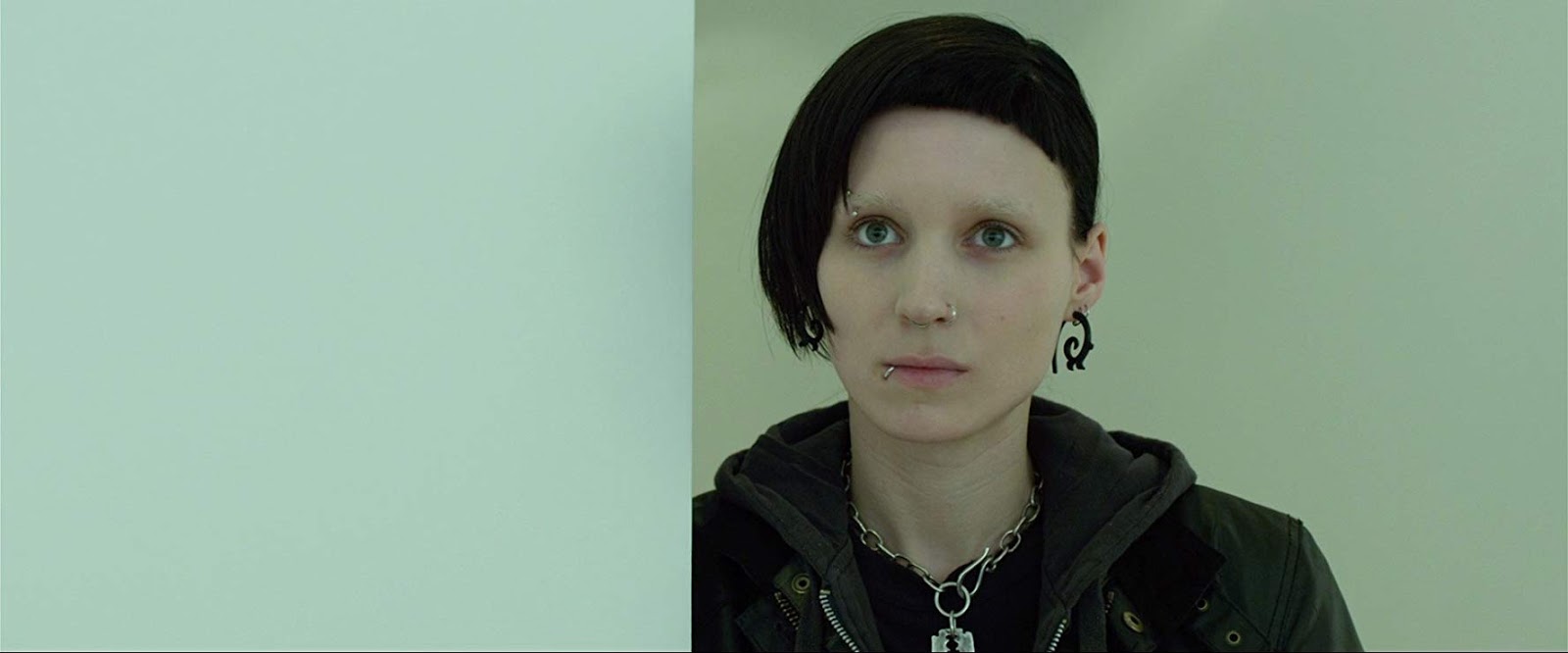
Impressively embodied by an Oscar-nominated Rooney Mara, Lisbeth is the sort of character you would normally expect to be a man: surly, anti-social, difficult, prone to violence, sexually indiscriminate, determined to always be in control and decisive in her relationships. She quickly takes the lead in her relationship with Mikael, professionally and later sexually (right down to her telling him where to put his hands during their passionate but also functional sex scenes). Mikael meanwhile takes far more the traditional “female” role: dedicated, hard-working, maternal, competent but better placed as the assistant to a true genius. Daniel Craig gives him a slightly rumpled middle-age quality, combined with a feckless recklessness that lands him in trouble.

The film is Lisbeth’s though, and Fincher brilliantly uses early scenes to establish her defiant, independent character. From snatching her bag back (brutally) from a would-be mugger on the underground, to a surly, blunt lack of respect she shows to a client, she’s painted clearly as a person who will respond how she wants, regardless of any “rules”. But Fincher also makes time to show her vulnerability. Lonely and insecure, she has worked hard to kill any vulnerability in her and protect herself from emotional pain. To see the small notes of tenderness she allows out – from her reaction to a former guardian suffering a stroke to her increasing emotional investment in Mikael – is strikingly engaging.

And we definitely see her suffering. If we had any doubts about one of the themes of this film being about how powerful men abuse and control women, the sub-plot of Lisbeth’s abusive warden (played with the pathetic, creepy relish of the small man enjoying what control he has by Yorick van Wageningen) hammers it home. The four key scenes between these characters cover a mini-arc in themselves from abuse of power, assault, revenge and power shift. Lisbeth may suffer terribly – more than she expects, much to her shock – but the sequence not only shows her ability to survive but also to turn the tables to her advantage. You could argue that this sort of rape-revenge fantasy might trivialise the impact rape has on real people – but it’s crucial for the theme of the film that there is hope that the sort of scum that abuse their positions can be stopped and that victims can survive and thrive. 

And you’ll need this as the film expands both into the past and the present day into a series of increasingly grim cases of historical abuse and murder. Fincher presents all this with the same brilliant, non-exploitative control that Jonathan Demme managed in Lambs. Despite the horrors of the themes, there is no lingering on anything graphic. Instead Fincher uses the tension of slowness, of steady camera work, of careful pacing to let tension and unease build up as we feel something is horribly wrong but never can be quite sure what. The final confrontation with the killer is not only deeply unsettling for it being one of the most brightly lit sequences of the film, but also for the middle-class banality of the villain’s taste (you’ll never listen to Orinoco Flow in the same way again) and the fascinatingly business-like approach he brings to his deeds of slaughter. 

The Girl with the Dragan Tattoo is such a well-made film that perhaps that’s its greatest weakness. It’s a little too easy to see a lack of personality in it, a professionalism, a clean perfection, a master craftsman quality, that you feel you are watching a studio picture made by a great director. And maybe you are: but then you could say the same about many of Hitchcock’s film, a director Fincher consciously echoes here. Superbly acted not just by the leads but by the whole cast (Plummer, Skarsgård and Wright are excellent while even Berkoff gives a restrained performance) The Girl with the Dragon Tattoo is the sort of film that will surely only be considered in a warmer and warmer light as time goes by.

The Wolverine (2013)

Hugh Jackman brings out the claws once more for The Wolverine

Director: James Mangold

Cast: Hugh Jackman (Logan/Wolverine), Hiroyuki Sanada (Shingen Yashida), Tak Okamoto (Mariko Yashida), Rila Fukushima (Yukio), Famke Janssen (Jean Grey), Will Yun Lee (Kenuichio Harada), Svetlana Khodchenkova (Dr Green/Viper), Haruhiko Yamanouchi (Ichiro Yashida), Brian Tee (Noburo Mori), Ken Yamamura (Young Ichiro Yashida)

Before James Mangold and Hugh Jackman teamed up for their triumphant 2017 Wolverine capper Logan, they first made The Wolverine. Adapting one of the most popular comic books to feature the clawed superhero, The Wolverine is set in Japan where Logan’s Ronin-like personality comes into contact with a culture he has more than a little sympathy for. 

Opening with the bombing of Nagasaki in 1945, Logan saves the life of young soldier Ichiro Yashida. Over 60 years later, the ageing Ichiro (Hauhiko Yamanouchi), now a tech billionaire, asks Logan to see him before he dies. He offers Logan the chance to give up his regenerative powers and live a “normal” life. Logan is unsure – but when Yashida dies, he suddenly finds his power gone and that he is embroiled in an inheritance war between Ichiro’s son Shingen (Hiroyuki Sanada) and granddaughter Mariko (Tak Okamoto), with uncertain aid/opposition from Yashida retainers Yukio (Rila Fukushima) and Harada (Will Yun Lee).

The Wolverine wants to be a dark character study, an attempt to drill down into the psyche of its hero. It doesn’t really succeed in doing this. Following on directly from the little-loved X-Men: The Last Stand, the present day section of the film opens with Logan still consumed with guilt over his euthanasia of Jean Grey (Famke Janssen), haunted by dreams of her. Living rough – and of course with the beard of tragedy looming large – the film aims to use the Japanese setting to bring Logan into a greater understanding of himself. In other words to accept the two halves of his personality: Logan and Wolverine. It’s no surprise to say this is what happens, but it fails to really get a sense of the clash between the two halves, or a sense of internal struggle of Logan wanting to reject the Wolverine personae.

Put simply, the film doesn’t manage to give us an idea of the internal war in Logan. He talks of wanting to leave violence behind him, but the sort of existential torment this requires would get in the way too much of the sort of claw-slashing action the fans are handing over their ticket money to see. On top of this, the sort of Samurai-inspired, still semi-feudal Japanese setting (with established families and loyal retainers) doesn’t really end up relating too much to the action. The sort of “masterless samurai” story the film is trying to tell requires a sense of deep honour and duty – themes which are there but don’t really come together into something really coherent. 

Basically, Japanese culture is, by and large, pretty irrelevant to the actual setting. Samurai culture is trivialised down to something that lacks any real thematic depth – the only thing that really matters is Logan learning a Japanese sword is a two-handed weapon – and the clash between Western greed and old-fashioned values of duty, honour and service is barely more than inferred. Effectively, for all the locations, the film could basically have been set anywhere at all, the entire cast replaced with Russians or Ghanaians or French and barely a word of the script would have needed to change.

Alongside this, the action, when we see it, has been watered down to the safest, PG-rated level you can imagine. There is barely any blood seen on the screen. Characters are hacked and slashed but all of it with smooth cleanliness. Action scenes switch between being shot far too closely, and with too much of an admiring air for choreography, or with a super-shiny gloss of special effects. There is a pretty good sequence on top of a bullet train, with Logan and his opponents tumbling and buffeted in the wind, but even this feels a little over produced. By the time the film hits its final battle, it’s hard not to be a little bit bored as Logan takes on a massive special effect, in a battle where the stakes are not altogether clear.

But then that’s the problem of this film, a sort of overly-complex Diet Coke of a film. The film has no fewer than three potential villains, none of whom end up being particularly interesting. It heads towards a final resolution that doesn’t feel like it helps us – or Logan – learn anything new about themselves. “I am the Wolverine” Logan growls at one point – but this claiming of his identity never really feels that earned. It’s a statement, a suggestion of depth, rather than depth itself.

This is hard on the film, and really there is nothing that wrong with it. It’s perfectly entertaining and passes the time. But it leaves the viewer with nothing after it finishes. It happens and then it is not happening and to be honest you won’t really notice the difference. It lands fairly in the middle of the franchise, a bland but not offensive effort that had the potential to be something greater but ends up firmly safe and middle-brow, avoiding diving too far down into its lead character’s psyche or showing us real action. Jackman is still good, much of the cast are fine, and Mangold is a solid director – but it never sets alight. Perhaps the sense of missed opportunity here is what ended up powering a much darker, grittier and engrossing film in Logan?

Contagion (2011)

Laurence Fishburne leads the drive to fight a pandemic in Soderbergh’s outbreak thriller Contagion

Director: Steven Soderbergh

Cast: Marion Cotillard (Dr Leonara Orantes), Matt Damon (Mitch Emhoff), Laurence Fishburne (Dr Ellis Cheever), Jude Law (Alan Krumwiede), Gwyneth Paltrow (Beth Emhoff), Kate Winslet (Dr Erin Mears), Jennifer Ehle (Dr Ally Hextall), Elliott Gould (Dr Ian Sussman), Chin Han (Sun Feng), Bryan Cranston (Rear Admiral Lyle Haggerty), John Hawkes (Roger), Enrico Colantoni (Dennis French)

It’s a fear that has gripped the world several times this century: the pandemic that will wipe us all out. It’s the theme of Steven Soderbergh’s impressively mounted epidemic drama, which mixes in an astute commentary on how the modern world is likely to respond to an event that could herald the end of times.

Beth Emhoff (Gwyneth Paltrow) is a businesswoman flying back to Minneapolis from Hong Kong (with a stopover in Chicago for a bit of rumpy-pumpy with an ex-boyfriend) who becomes Patient Zero for an outbreak of a virulent strain of swine and bat flu that proves near fatal for the immune system. While her stunned husband Mitch (Matt Damon) is immune, most of the population aren’t. Across the world, health organisations swing to action – from Dr Ellis Cheever (Laurence Fishburne) and Dr Ally Hextall (Jennifer Ehle) at the CDC, to Dr Erin Mears (Kate Winslet) running things on the ground in Minneapolis to Dr Leonara Orantes (Marion Cotillard) investigating for the WHO in Switzerland and Hong Kong. As populations panic, conspiracy-theorist blogger Alan Krumwiede (Jude Law) sees this as an opportunity for personal promotion and enrichment.

Soderbergh’s clinical filming approach makes for a chillingly realistic piece of cinema realitie, possibly one of the director’s finest films in his oddly-uneven career. Soderbergh presents events as they are, laying out the film like a giant Pandemic board. Captions regularly tell us what day we are on from initial outbreak, as well as the populations of the various cities the plot lands us in. The film is shot with a documentary lack of fussiness, and largely avoids either sensationalism or the sort of Hollywood virus clichés of films like Outbreak. It also succeeds in largely avoiding heroes or villains (even the usual baddies for this sort of film, Big Phama companies, are shown as part of a potential solution not the problem) – even the outbreak is largely an act of chance, prompted by mankind’s actions, but there is no reveal that shady suits or military types are behind it all.

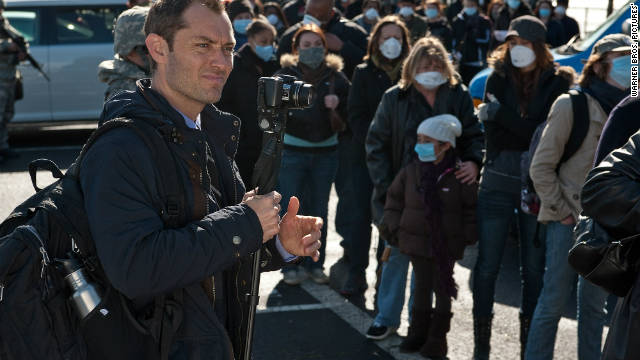
Watching the film today in the light of Brexit and Trump it actually appears strikingly profound and prescient in its depiction of the knee-jerk paranoia and wilful blindness of internet and media pundits who believe every opinion is equal and valid regardless of expertise. Alan Krumwiede (a slightly pantomime performance from Jude Law, complete with bad hair, bad teeth and an Aussie accent perhaps intended to echo Julian Assange) all but denounces the views of experts as “fake news”, claims his opinions on the causes and treatment of the disease are as valid as the expert professionals (all but saying “I think we have had enough of so-called experts”), uses his unique hit count as evidence for the validity of his (bogus) conspiracy theories and makes a fortune peddling a snake-oil natural cure which he claims saved his life (and leads to millions of people ignoring the proper precautions and treatments recommended by the WHO and CDC). 

Soderbergh shows that this sort of crap is as much a dangerous pandemic as the disease itself, encouraging an atmosphere of fear and hostility. At the time it just seemed a bit snide to say “a blog is not writing, it’s graffiti with punctuation”, but today, as websites spout up presenting all sorts of horseshit as legitimate fact, this film looks more and more ahead of the curve in its analysis of a public disillusioned and untrusting of authorities can turn their attention and trust to a venal liar who claims to be a tribune of the people, but is interested only in lining his own pocket. 

But then that’s one of this film’s interesting psychological points. If there is an antagonist in this film, it’s human nature itself. The “wisdom of crowds” is continuously a dangerous thing, as areas devolve into rioting and looting. The bureaucracy of local and international governments causes as many problems as the disease: even as bodies pile up in Minneapolis, Kate Winslet’s on-site CDC crisis manager must bat away furious lackeys of the State Governor, demanding to know if the federal government will cover the extra medical precautions. Announcements of public danger are pushed back until after Thanksgiving, so as not to have a negative impact on the holiday. The decent Dr Cheever, who unwisely leaks news of a lockdown of Chicago to his fiancée, is thrown to the dogs by the government who need some sort of scapegoat they can blame the whole mess on.

If our enemies are red tape and the selfish rumour-mongering of the unqualified and the self-important, acts of heroism here are generally rogue moments of rule-benders. A scientist at a private pharmaceutical company continues his work after being ordered to destroy his samples (and then shares his crucial findings about the disease with the world, free of charge). CDC scientist Ally Hextall tests a crucial antibody on herself because there simply isn’t time to go through the lengthy trials needed (needless to say Krumwiede uses this as further evidence that the outbreak is a government stitch-up). 

Alongside all this, Soderbergh’s detailed direction and editing chillingly chart the spread of the disease. Having explained carefully how it can be spread by touch, the camera details every move of infected people, carefully lingering for half a second on every touched item, with the implication clear that everyone else who will touch these objects soon (such as door handles) will themselves become infected. The film pulls no punches in showing the grim effects of the disease (poor Gwyneth Paltrow!) and the resulting chaos as the pandemic progresses, with social structure breaking down, chaos only held in check by mobilising army forces and imposing curfews and a national lottery for cure distribution, with areas off-limits for those not carrying a wristband barcode identifying them as inoculated.

Soderbergh assembles a fine cast for this drama, helping to put human faces to characters who often have to spout reams of scientific and medicinal dialogue. Fishburne is particularly good as a noble and reasonable head of the CDC, who succumbs only once to putting his loved ones first. Matt Damon is the face of “regular joes” as a father going to any lengths to protect his last surviving child. As one reviewer said the “undercard” of the cast is particularly strong, with Jennifer Ehle perhaps the outstanding performer as the eccentrically driven CDC research scientist. Cranston, Gould, Han, Hawkes and Colantoni are also equally fine.

Soderbergh’s film was a bit overlooked at the time, but rewatching it again, the more I think it might be strikingly intelligent analysis of our modern world, ahead of its time in understanding how new media and human nature can interact with government and society, and how this can lead to a spiralling in times of crisis. One of his best.

The Illusionist (2006)

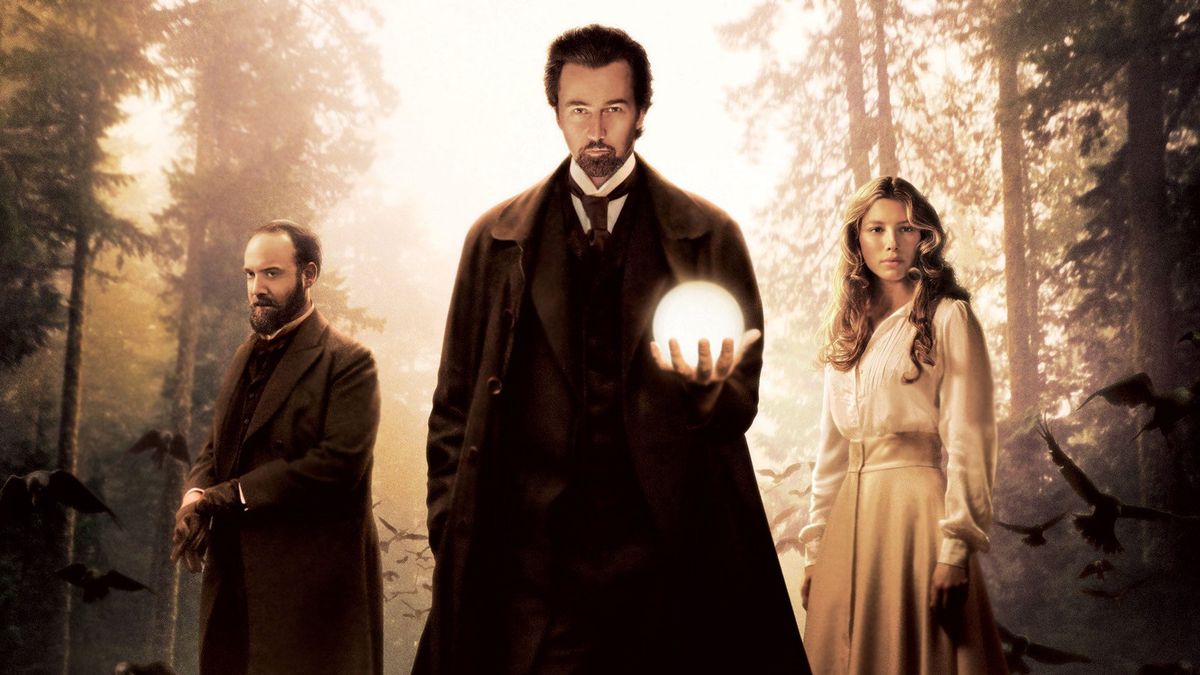
Ed Norton, Paul Giamatti and Jessica Biel are wrapped up in the tricks of The Illusionist

Director: Neil Burger

Cast: Edward Norton (Eisenheim), Jessica Biel (Sophie), Paul Giamatti (Inspector Uhl), Rufus Sewell (Crown Prince Leopold), Eddie Marsan (Josef Fischer), Jake Wood (Jurka), Tom Fisher (Willigut), Aaron Taylor-Johnson (Young Eisenheim), Eleanor Tomlinson (Young Sophie), Karl Johnson (Doctor)

In 2006, The Illusionist was the other film about nineteenth-century magicians that wasn’t Christopher Nolan’s The Prestige. As such it got rather overlooked, which is unfair as this is a handsomely made, intriguing little puzzle which doesn’t reinvent the wheel but does what it does with a fair amount of invention and beauty.

In turn-of-the-century Vienna, the illusionist Eisenheim (Edward Norton) is a revelation – a mystery character whose past is investigated by Police Inspector Uhl (Paul Giamatti) under the orders of Crown Prince Leopold (Rufus Sewell). The Crown Prince feels Eisenheim’s illusions – which suggest at times dark truths in the Prince’s own personal life – are a serious risk to his position. On top of which, there is a secret past romance between Eisenheim and the Prince’s intended wife Countess Sophie (Jessica Biel), and the Prince is not a man to be crossed. So begins a cat-and-mouse game of trick and illusions between Uhl and Eisenheim.

The greatest thing about Neil Burger’s period piece is the grace and beauty with which it has been filmed. Dick Pope’s mixture of sepia tones and candlelit blacks makes for a series of gorgeous images, contrasted perfectly with Philip Glass’ beautiful score. Both contribute hugely to creating an atmosphere of mystical unknowingness around the Vienna locations, and give the film something in every scene to delight the senses.

What works less well is the slightly routine scripting and filmmaking that pulls the film together. For all the beauty with which it is presented, there isn’t quite enough of the original or – for want of a better word – the magical about what we see on the screen. The story is just ever so slightly too familiar, the points it intends to made – be it about the nature of power, or magic, or love, or hope – never quite coalesce into a coherent and clear message that really feels like you are being told something or shown something you haven’t seen in several movies before. 

Instead we see that behind the eyes of even the most obscure and unreadable conjurer there is deep and abiding love – love that will push them to do wild, even morally questionable, things. For others like the Crown Prince, that love is tied in altogether with possession and power and that there is no place for truth. Illusion is in all things: from Eisenheim’s entire life to the Prince’s front as a man of the modern world and his desire to become a dictator. Maybe that might be as close as the film gets to a deeper meaning – that illusion hides and protects our truths. 

As Eisenheim’s tricks get closer and closer to mesmerism and séance, the film suggests that it is a human need to want to see the truth behind tricks. The crowds who see Eisenheim raise the dead in flickering images want to believe it, that they could talk to their own deceased loved ones. Even in his early magic tricks, the less poetic characters of the film see value in the tricks only when they feel they have worked out the illusion behind it. Both are looking for a form of truth in the illusion, but the truth behind the trick is often deeper and more complex than the mechanical process by which it is done.

It’s a shame the film doesn’t tackle these ideas more, and settles for a more traditional “love across the divide” romance, but perhaps it doesn’t quite engage because Eisenheim and Sophie aren’t really interesting enough characters. Edward Norton plays Eisenheim with grace and intelligence, and draws a lot of depth and emotion from scenes that often require him to wordlessly stare. But juggling a character who deliberately conceals the truth and his intentions at every single turn seems slightly to have straitjacketed Norton, an elliptical actor at the best of times. There is something unknowable about him in this film which, while perfect for the character, makes him one you can’t really invest in. Similarly, Jessica Biel (a last minute replacement for Liv Tyler after filming had started) certainly looks the part, and gives Sophie a warmth, but she never really makes an impression as a character. Rooting for these two star-crossed lovers is difficult because we never get a sense of who they are.

Instead the film is dominated by hard-nosed rationalist Inspector Uhl, a man with a curiosity for conjuring, an appetite for power, a determination to get things done, but finally more than a bit of humanity. Paul Giamatti is excellent in the part, playing a role that emerges as the audience surrogate, trying as hard as we are to work out what is real and what is illusion. He doesn’t put a foot wrong with Uhl’s affable professionalism nor his ability to switch to business-like harshness. He’s also adept at playing a man who is the third smartest character in the film, but believes himself to be the smartest. You could also the same for Rufus Sewell’s (also great and clearly having a ball) Crown Prince, a bully who thinks he is an enlightened man.

It’s Uhl whom the film finally bonds with the most, and it’s his attempts to piece together what’s going on that becomes the most engaging thing in the second half of the film. For all the beauty of its making, and the skill that has gone into creating the optical illusions (some of Norton’s sleight of hand tricks in this movie are extraordinary), it’s a film that doesn’t quite satisfy. When the final reveal occurs in the film’s closing moments, you won’t quite be as satisfied as you would expect, perhaps because you won’t really care about Eisenheim or Sophie. Burger has made a handsomely mounted but strangely cold film.

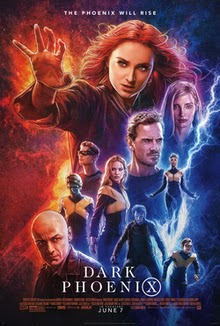
X-Men: Dark Phoenix (2019)

Sophie Turner does her best with a franchise that has finally seen better days in Dark Phoenix

Director: Simon Kinberg

Cast: James McAvoy (Charles Xavier), Michael Fassbender (Erik Lensherr/Magneto), Jennifer Lawrence (Raven Darkholme/Mystique), Nicholas Hoult (Hank McCoy/Beast), Sophie Turner (Jean Grey), Tye Sheridan (Scott Summers/Cyclops), Alexandra Shipp (Ororo Monroe/Storm), Kodi Smit-McPhee (Kurt Wagner/Nightcrawler), Evan Peters (Peter Maximoff/Quicksilver), Jessica Chastain (Vuk), Ato Essandoh (Jones)

As Dark Phoenix limps out of a cinema near you, losing the studio almost $100 million and finally consigning to oblivion for evermore an X-Men franchise that has lasted almost twenty years, it would be easy to think this must be one of the worst films in comic book history. It’s not. But then again it’s not the best. Dark Phoenix’s main problem is not really that it’s bad, more that it’s a bit meh. After umpteen films, I’m not sure there was anything new to show or tell about these mutant superheroes – and this film certainly failed to find it.

It’s 1992 and the X-Men are international heroes – something that may be going to the head of Charles Xavier (James McAvoy) who gets feted at major events and has a direct hotline to the President. On a mission into space to save a stranded space shuttle crew, powerful telepath Jean Grey (Sophie Turner) is hit by a strange cloud of glowing space power – and when she returns to Earth she finds herself struggling with a split personality, with a dangerous darker side of her personality taking control of her actions. It’s encouraged by a mysterious alien Vuk (Jessica Chastain) who wants the power in Jean Grey for her own ends. Can the X-men overcome conflict and tragedy to come together once again and save the world and Jean Grey herself from her demons?

Simon Kinberg finally takes the helm after producing and writing several other films in the series – although his promotion feels more like a failure to find anyone else interested in doing the job. General lack of real interest permeates the film, as if most of the stars only came on board because they felt an obligation to put a cap on the series. Jennifer Lawrence presumably came back in order to be killed off (no spoilers, it’s in all the trailers) while Michael Fassbender gives off the air of a man who’d rather be anywhere else. 

It’s not a huge surprise since the script goes through the motions, retelling a comic book storyline around Jean Grey’s “Dark Phoenix” personae that had already been done once (disastrously) already in X-Men: The Last Stand. Retreading the action here, this is certainly a better film (at least Simon Kinberg understands the characters and what makes them tick in a way Brett Ratner on that film didn’t) but it’s still a lot of the same story beats, similar types of location and brings it all together into a series of set pieces and moral conundrums that quite frankly we’ve seen before.

On top of which, Kinberg is not an imaginative enough visual stylist to make any of it look new. He’s not a bad director by any shot, but he’s a thoroughly middle brow one and he puts together a film that echoes and repeats stuff from the previous films in a way that never really feels fresh. Instead every single action beat or emotional moment feels like a quote from a previous film in the series, and never does the film really take fire and become its own thing.

This needed something special or new to bring the franchise roaring out in a blaze of glory. Instead it sort of meanders towards a resolution most people watching can probably already guess. Kinberg’s version of the story here also throws in several mistreads, most notably a plot line involving aliens and mystical clouds from space. Now I’m reliably told this fits with comic book lore. But much like in Spider Man 3 (remember that?!) when a blob of black alien space goo infected Peter Parker, introducing aliens into this series that has always seem grounded on Earth seems a bit – well – silly if I’m honest. Again it reminds you how slowly and carefully Marvel built up its universe stretching sand box. This ham-fistedly throws aliens of uncertain provenance into its world and somehow, despite this film featuring a hero who can shoot lasers out of his eyes, it feels a bit silly. 

It’s not helped that the aliens plot line is confused and their aims unclear or that Jessica Chastain looks non-plussed to be in the thing at all, as if she lost a bet or something. It does mean that we get a (reasonably) happy ending of our heroes coming together to fight an external threat – but even this feels like a tacked on reason to throw into the mix a clear antagonist, instead of dealing with the sort of shade-of-grey (no pun intended) antagonist who is also still sort of one of the good guys.

It’s telling that the film works best when it focuses more on character. Sophie Turner does a pretty decent job as Jean Grey, despite not being given masses to work with. James McAvoy enjoys the best storyline, of a Charles who has lost his way slightly and been seduced by fame – but deep down is still the humane, caring and loving character he has always been. It’s a new light to see the character in.

I think the main problem with this film is its lack of anything really original other than the odd beat like that. Everything as been seen before and, like X-Men Apocalypse despite the world-shaking events everything feels a bit rushed and lacking impact. Dark Phoenix is a decent enough entry into a long-running franchise and doesn’t short change you of the sort of thing you’d expect from an X-Men film. But that’s really it’s a problem. It’s a solid, average, okay entry into a long-running franchise but not the final hurrah the series needed to go out on an earth-shattering high.

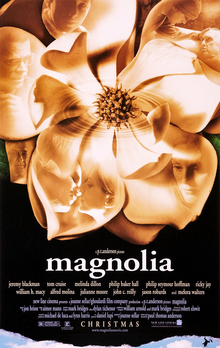
Magnolia (1999)

Family dramas come together in Paul Thomas Anderson’s beloved Magnolia

Director: Paul Thomas Anderson

Cast: Jeremy Blackman (Stanley Spector), Tom Cruise (Frank TJ Mackey), Melinda Dillon (Rose Gator), April Grace (Gwenovier), Luiz Guzman (Luiz), Philip Baker Hall (Jimmy Gator), Philip Seymour Hoffman (Phil Parma), Ricky Jay (Burt Ramsey), William H Macy (“Quiz Kid” Donnie Smith), Alfred Molina (Solomon Solomon), Julianne Moore (Linda Partridge), Michael Murphy (Alan Kligman), John C. Reilly (Officer Jim Kurring), Jason Robards (Earl Patridge), Melora Walters (Claudia Wilson Gator), Felicity Huffman (Cynthia), Eileen Ryan (Mary), Michael Bowen (Rick Spector)

After the success of Boogie Nights, Paul Thomas Anderson landed a terrific deal: he could make what he wanted, about anything at all, at any length he liked. “I was in a position I will never ever be in again” is how Anderson remembers it. And thus was born Magnolia, a beautifully assembled labour of love, an imaginative remix of Robert Altman’s Short Cuts with biblical imagery. A sprawling collection of short stories, which leans into high tragedy and melodrama, Anderson’s Magnolia is the sort of film that is always going to find a special place on a film buff’s list of favourite films.

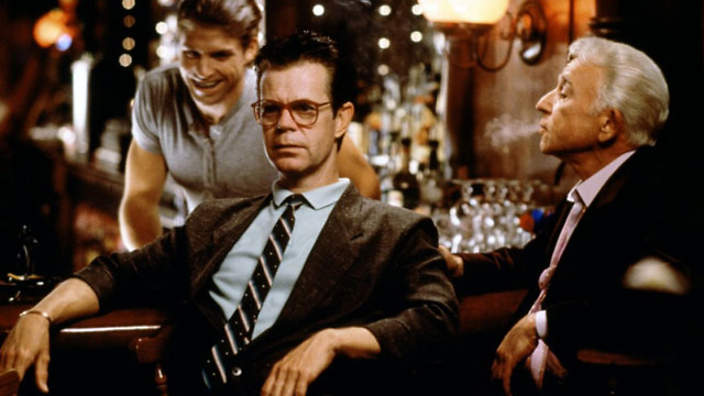
The film follows the lives of several people over a single day in LA. Legendary host of long running quiz show What Do Kids Know? Jimmy Gator (Philip Baker Hall) is dying of cancer and desperate to reconcile with his traumatised daughter Claudia (Melora Walters). Claudia is tentatively starting a relationship with devout and kindly police officer Jim Kurring (John C Reilly). Former champion of Gator’s show, “Quiz Kid” Donnie Smith’s (William H Macy) life is a disaster after his parents stole his winnings, and he’s struggling to hold down even the most basic of jobs. Former producer of the show Earl Partridge (Jason Robards) is also dying  of cancer, cared for by his dedicated nurse Phil (Philip Seymour Hoffman). Earl’s wife Linda (Julianne Moore) is wracked with guilt, while Earl himself is desperate to reconcile with his estranged son Frank Mackey (Tom Cruise), now a self-help guru who coaches men on how to pick up women. 

If you can’t see the links between the works of Robert Altman here, then you clearly need to look again. But it’s well worth it, as Anderson is a worthy successor to the master. He directs with a fluid confidence that comes from a director making a picture to please himself. Magnolia is frequently self-indulgent in its style and quirks, but it doesn’t matter when the effect of watching the film is so rewarding. From long takes to having the characters (all of them in different locations) sing along with Aimee Mann’s “Wise Up” at a key moment in the film, there are flourishes here that will annoy some but will be precisely what others fall in love with the film for.

And that love is deserved as this is a thoughtful and intelligent film about the impact the past (and specifically our parents) can have on us. As the man said, “they fuck you up, your Mum and Dad”. Certainly the case here. From “Quiz Kid” Donnie Smith to Claudia Gator, the film is crammed at every level with children (young and old) who have had their lives negatively affected by their upbringings. The past is a heavy burden, and it’s near impossible to shake-off – and in the cases of Donnie and Claudia brings with it a heavy dose of self-loathing. 

But what’s striking is that problems with the past don’t result in the same outcomes for people. Who would have thought that seemingly misogynistic motivational speaker Mackey’s beef with his dad is that Earl walked out on him and his dying mother when Mackey was a teenager? Part of the fascinating psychology of the film is how a son who loved and cared for his mother grew up to encourage men to treat women just as his father treated his mother. Is this some sort of perverse way to feel closer to the father who abandoned him? Perhaps Mackey has defined his life around hatred for his father, along with a deep longing for love – and perhaps his inability to deal with these feelings led to a professional career espousing the exact opposite? One of the neat things about Anderson’s film is that it largely avoids pat answers to this sort of thing. It’s left up to us to decide for ourselves – and perhaps reflect on how every person is an unanswerable riddle.

Whatever the answers are, it’s clear that parental problems are being paid-forward. The new Quiz Kid champion Stanley Spencer is a precocious child genius, being treated as an ATM by his father, who brags about his son while passive-aggressively demanding Stanley keep winning to continue funding his failing acting career. Stanley is a desperately unhappy child, more than smart enough to realise he is a performing monkey but unable to escape. And how can you get out of knots like that? After all, the film shows us one possible future for Stanley with Donnie – but walks a deft tightrope on whether the same life of loneliness and disappointment is inevitable for Stanley or not.

These familial clashes are introduced in the first hour and then simmer with exquisite timing during the film’s second hour. Anderson’s brilliant decision to build the film around a live recording of Gator’s quiz show means we are constantly reminded (as the show plays in the background throughout other scenes) that everything we are seeing is happening at the same time. The second hour of the film is a superbly deft cross-cutting from storyline to storyline, each building in tension. The desperation and entrapment in each scene beautifully spark off and contrast with each other. The sequence is at times marginally undermined by a slightly oppressive music score, but it’s beautifully assembled and shot and carries a real power – a superb balancing act of almost real time action that plays out for a nearly the whole of the second act. 

And Anderson knows skilfully to balance the gloom with real sparks of humanity and decency. Two characters in the film – Reilly’s cop and Hoffman’s nurse – are decent, kind and generous souls who have an overwhelmingly positive impact on every character they encounter. Both characters – and both actors are superb in these roles – are quiet, low-key but humane people who offer a quiet absolution to a host of characters, and opportunities to move on from the burdens of the past. Hoffman’s Phil is a genuinely kind person, who puts others before himself while Reilly’s Jim (surely the best performance of the actor’s career) is such a sweet, well-meaning, honest guy, that you understand why so many people feel bound to unburden themselves to him.

There is a lot to unburden in this film, and some of these moments tip over into melodrama at points. There are tear stained deathbed confessions, and angry, tearful moments of resentment and guilt bursting to the surface. At times, Magnolia is a little in love with these big moments, and indulges them too much, but it offers so many moments of quiet pain that you forgive it.

Not that the film is perfect. Today, even Anderson says it’s too long – and it really is. Unlike Altman, Anderson is less deft at pulling together all the threads in an overlapping story. This is effectively a series of short films intercut into one – the plot lines don’t overlap nearly as much as you might expect, with only Jim moving clearly from one plotline to another. It’s also a film that is driven largely by men. Of the few female characters, all are defined by their relationship to a man (and an older dying man at that), and not one of the female characters isn’t some form of victim. 

Anderson’s failure to really wrap the stories together means you can imagine unpicking the threads and reducing the runtime. Julianne Moore’s role as Earl’s guilty, unfaithful trophy wife (is she unaware of Earl’s own past of infidelity?) could have been easily shed from the film. Moore, much as I like her, gives a rather hysterical, mannered performance that feels out of touch with some of the more naturalistic work happening elsewhere in the film. The most melodramatic of the plots (every scene features Moore shouting, weeping, shrieking or all three), it also ends with the most contrived pat “hopeful ending”. It’s a weaker story that lags whenever it appears on screen.

Magnolia starts with a discussion of coincidence, but it’s not really about that – and the coincidence of all these people seems largely in the film to be reduced to the fact that they are all living in the same city with similar problems. It’s a slightly odd note to hit, as if Anderson slightly shifted the focus away from lives moving into and out of each other, in favour of a series of more self-contained linear stories. (That opening montage discussion of three (fictional) moments of fate and chance, while beautifully done, could also easily be trimmed from the film).

But then, these tweaks wouldn’t change the fact that Magnolia is a superbly made film, or that Anderson is a great filmmaker, even if he doesn’t quite manage to create the sprawling, interweaving, state of the nation piece he’s aiming for here. But as a collection of beautifully done short stories, it’s great. And the acting is superb. Tom Cruise drew most of the plaudits for an electric performance of egotism and triumphalism hiding pain and vulnerability near the surface, Anderson using Cruise’s physicality and intelligence as a performer better than perhaps any other director. Among the rest of the cast, Hall is superb as the guilt ridden Gator, Macy very moving as the desperate Donnie and Melora Walters heartrending as the film’s emotional centre, who ends the film breaking the fourth wall with a tender smile, that is perhaps one of the most beautiful final shots of modern cinema.

All this and it rains frogs at the end as well. But that introduction of biblical bizarreness is both strangely profound and fitting for Anderson’s stirring and inspiring film.