John Wick Chapter 3: Parabellum (2019)

Keanu Reeves, Halle Berry and some very, very mean dogs in John Wick Chapter 3

Director: Chad Stahelski

Cast: Keanu Reeves (John Wick), Ian McShane (Winston), Mark Dacascos (Zero), Laurence Fishbourne (The Bowery King), Asia Kate Dillon (The Adjucator), Halle Berry (Sofia), Lance Reddick (Charon), Anjelica Huston (The Director), Saïd Taghmaoui (The Elder), Jerome Flynn (Berrada)

Early on in the film, John Wick (Keanu Reeves in a role he might have been born to play) builds a gun from scratch components of other weapons to fire some outsized ammunition, throws an axe across a room to take out an assassin, and then effectively reloads a horse, using its rear leg kicks to dispatch two more luckless assassins. It’s a dizzying 20 minutes or so of pure balls-to-the-wall action fun full of invention and black humour. The film never gets near repeating it, despite much trying.

John Wick: Chapter 3 – Parabellum doesn’t have much in the way of plot. Instead it’s effectively a two-hour series of fight sequences. What plot there is pops up around the edges of all this imaginative blood-letting. That plot doesn’t really make much sense, and can basically be summarised as John has been declared excommunicado by “The High Table”, the shady organisation that runs the criminal underworld, meaning he is a target for every assassin in the world, and he is trying to reverse that decision. That’s kind of it, and any other subplots are basically slightly confusing or narratively empty detours from that central idea.

If you cut out all the fight sequences from the film, it wouldn’t run a lot longer than 15 minutes. There isn’t really any interest in the talking stuff or the characters, which seems to be fine for the likes of Laurence Fishbourne, who is wheeled out for three scenes of badass scenery chewing, but does mean that motivations and reasons for why anyone is doing anything at all remain completely unclear. There is a key subplot involving Ian McShane’s management of the Continental, the criminal “neutral zone” hotel in the centre of New York, that involves so many changes of allegiance and intentions that it winds up making no real sense.

But then people ain’t going to this for a character study. They are there for the fights. And, as I say, these are really inventive and entertaining. The first 20 minutes – with John haring through New York, trying to stay one step ahead of a blizzard of killers – is brilliant. It’s designed to be watched with large groups of people in the same mood, encouraging you to laugh, wince and shout out with the people around you. You can’t fault the work that has gone into the filming of this or the commitment of the actors or the genius of the choreographers. All of this is pretty faultless. And, no matter what extended fight you watch, you know you will see something different in every single one.

The problem is, the vast number of fights begins to pummel the audience into submission as well. Seeing Keanu Reeves involved in a series of three-in-a-row mixed martial arts sequences, each lasting well over 5-10 minutes, you start to let the whole thing drift over you. Put bluntly, after the initial explosion of action, the film hits a level it tries to sustain for almost an hour. And it’s too much. You just can’t keep that same level of engagement. I actually nearly dropped off at one point, which is not a good sign. How much action can one film take? 

There needs to be a balance. And without any real investment in what we are seeing, John Wick 3 is another of those films designed for YouTube. I can imagine watching most of these fights as little five-minute videos on the Internet in the future. Actually broken down like this I will probably enjoy it a lot more. But as a single film, there is nothing there to link it together.

The first film had a simple, but very pure, storyline that we could all relate to. A man loses his beloved wife, who on her deathbed gifts him a dog to care for. Said dog is then killed in a senseless break-in by some arrogant criminals. John Wick’s revenge is against those who thoughtlessly took from him the last piece of the only woman he loved. Everyone can relate to that – and it grounded everything we saw and immediately put us on John’s side. This film however is a confused motivation-less mess. If the series originally presented us with a John unwillingly dragged back into this world, since then (and here) he seems like a character with no inner life. 

The film attempts vaguely to add one, suggesting that John must make a choice between being a killer or the better man. Problem is choosing to be the better man isn’t really a platform for fights. So we lose what the film really needs, which is John struggling between his good and bad demons. Instead his motivations are a confused mess and the film spends more time showing us the brutal groin attacks of Halle Berry’s dogs (those things fight with no honour let me tell you) than giving us a lead character with a coherent personality.

It makes John Wick 3 not a lot more than a YouTube compilation, and giving Ian McShane some Latin to drop to explain the film’s title, or trying to change a character in Act 4 into a personal rival for John, doesn’t suddenly give it depth or interest. It’s fun in small chunks, but this is way too long and seems to have lost at least half of what made the first film such a guilty pleasure.
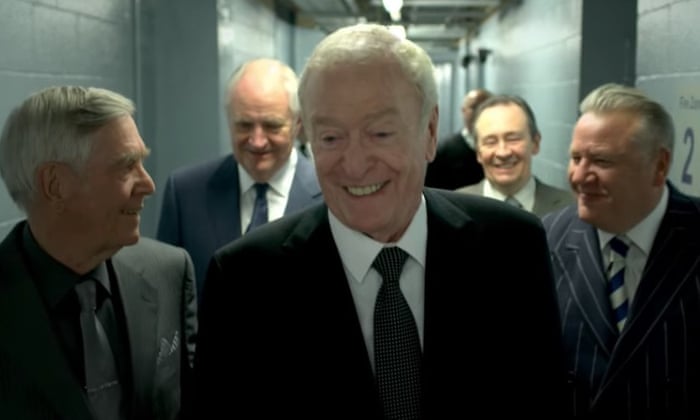
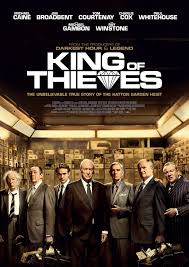
King of Thieves (2018)

Michael Caine leads the Old Lags on one last hurrah in the misjudged King of Thieves

Director: James Marsh

Cast: Michael Caine (Brian Reader), Jim Broadbent (Terry Perkins), Tom Courtenay (John Kenny Collins), Charlie Cox (Basil/Michael Seed), Paul Whitehouse (Carl Wood), Michael Gambon (Billy “The Fish” Lincoln), Ray Winstone (Danny Jones), Francesca Annis (Lynne Reader)

In 2015, a group of old lags robbed a safety deposit company in Hatton Garden. Over the Easter weekend, the gang broke while the facility was empty, drilled through a wall, climbed into the safe and cleared out almost £14 million in cash, diamonds and other goods. The crime captured the public imagination largely because the robbers, bar one member of the gang, were all over 60. This country has a certain nostalgia for rogues, and a tendency towards a condescending affection for the aged. In real life, the only thing remotely charming about these hardened criminals, many of them with extremely violent backgrounds, was their age.

James Marsh pulls together a great cast of actors for his heist caper. Brian Reader, the brains behind the operation, is played with gravitas by Michael Caine. Terry Perkins, the man who cuts Reader out of the profits, is played by Jim Broadbent. Tom Courtenay, Ray Winstone, Paul Whitehouse and Michael Gambon play the rest of the lags while Charlie Cox is the young tech expert who brings the possibility of the heist to Reader’s attention. With a cast like this, it’s a shame the overall film is a complete mess from start to finish.

I watched this film after first watching ITV’s forensically detailed four-part series, Hatton Garden, covering the heist in full detail. That drama was far from perfect, but it was vastly superior to this. The main strength of Hatton Garden was that it never, ever lost sight of the fact that this was not a victimless crime. Real-life small businesses went bust due to property lost in the heist. Families lost priceless, irreplaceable heirlooms. Items of hugely sentimental value have never been recovered. Lives were damaged. On top of that, Hatton Garden stresses the grimy lack of glamour to these thieves, their greed, their paranoia, their aggression and their capacity for violence. Far from charming rogues, they are selfish, greedy old men who fall over themselves to betray each other and are clueless about the powers and abilities of the modern police force.

King of Thieves occasionally tries to remind people that these were hardened career criminals. But it also wants us to have a great time watching actors we love carry out a heist against the odds, like some sort of Ocean’s OAPs. James Marsh never manages to make a consistent decision on the angle he is taking on these men or the crime they carried out. It’s half a comedy, half a drama and the tone and attitude towards the burglars yo-yos violently from scene to scene. The end result, basically, is to let them off with a slap on the wrist.

“It’s patronising” rages Reader at one point at the media coverage of the crime, annoyed at how it stresses their age as if that somehow makes it a jolly jaunt. Never mind that the film does the same. The score contributes atrociously to this, a series of jazzy, caperish tunes that echo the 60s heydays of these violent men (Reader and Perkins had both stood trial for murders, and were lucky to get off) punctured with some cheesily predictable songs. Tom Jones plays as our heroes comes together, and Shirley Bassey warbles The Party’s Over as things fall apart. The old men banter and bicker about the confusions of the modern world like a series of talking heads from Grumpy Old Men and the general mood is one of light comedy.

The film does try and darken the tone in the second half, post-robbery, as things start to fall apart and tensions erupt in the gang. Here we get a little bit of the mettle of the actors involved in this. Jim Broadbent, in particular, goes way against type as Perkins’ capacity of violence (even at a diabetes-wracked 67) starts to emerge. Tom Courtenay’s Kenny Collins emerges as manipulative liar, playing off the robbers against each other. Ray Winstone sprays foul language around with a pitbull aggression. Even Michael Caine roars a few death threats, furious at being betrayed by the gang.

But it never really takes, because the film never throws in any sense of the victims of this crime. Blood is never drawn in this slightly darker sequence of the film. Even the clashes between the gang are played at times for light relief. Anything outside the gang is ignored. The victims? Who cares. The cops? There is barely a policeman in this film who has a line.

The film undermines the whole point it might be trying to make – that these were dangerous men – by succumbing to romanticism at its very end. As the captured old lags await trial, we first see them laughing and joking with each other as they prep for court and then, as they walk towards the dock, the film throws up old footage of the actors from the 60s, 70s and 80s, stressing their romanticism. Look, the film seems to be saying: these were criminals, but they were old fashioned criminals, remember when Britain used to make its own underdog crims instead of being awash with hardened, violent gangs? It’s hard to take. And it’s like the whole film. A tonal mess that finally absolves the robbers who ruined lives and who still haven’t returned almost £10 million of ordinary people’s goods. King of Thieves isn’t charming. It’s alarming.

Godzilla (2014)

Godzilla the only character this film is truly interested in.

Director: Gareth Edwards

Cast: Aaron Taylor-Johnson (Ford Brody), Ken Watanabe (Dr Ishiro Serizawa), Bryan Cranston (Joe Brody), Elisabeth Olsen (Elle Brody), Juliette Binoche (Sandra Brody), Sally Hawkins (Dr Vivienne Graham), David Strathairn (Admiral William Stenz)

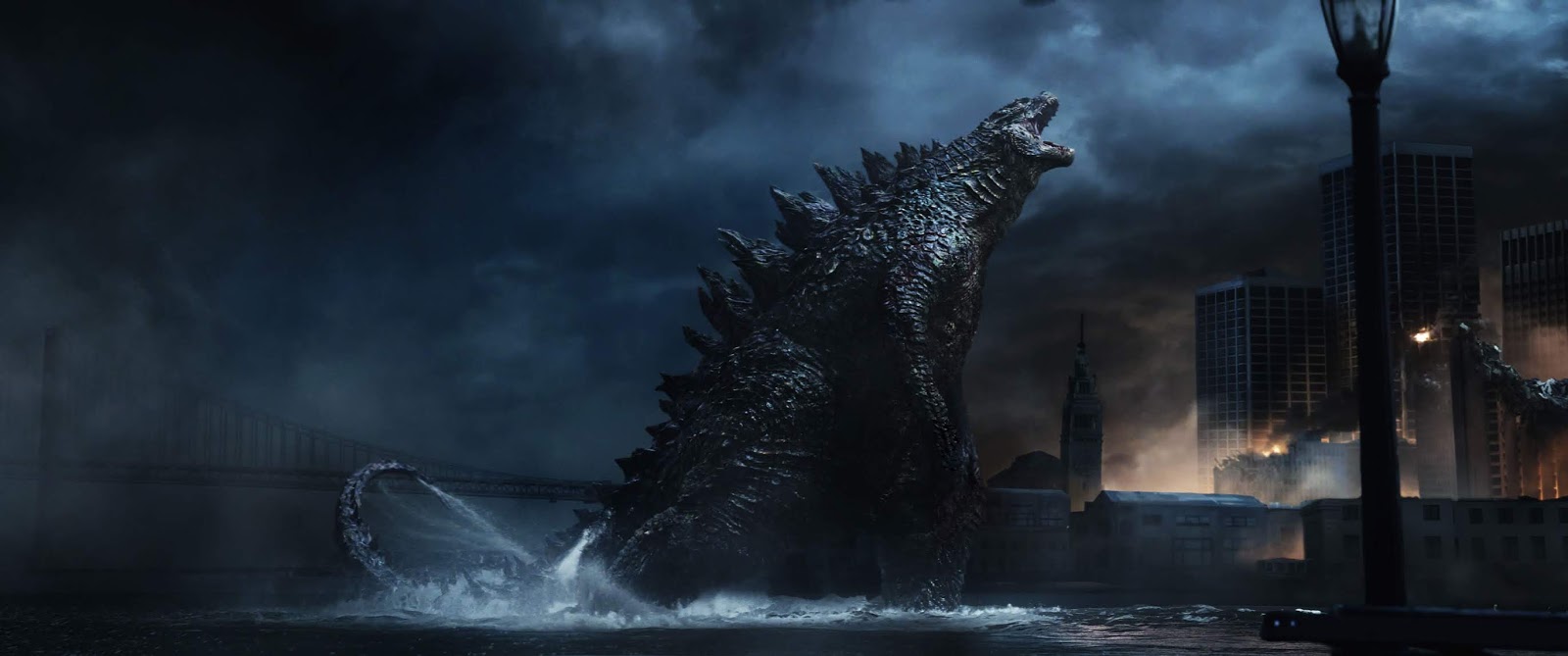
There is a lot of affection out there for Godzilla. I’ve never quite felt it myself, so I guess I was the wrong person to watch this film. This is a film celebrating the legend of a series of films from Japan about a guy in a rubber suit hitting other guys in rubber suits in a set designed to look like a miniature city. Gareth Edwards’ has directed an affectionate homage that at times flirts with being a more interesting film but never really commits to it.

In 1999, Joe Brody (Bryan Cranston) is forced to watch his wife Sandra (Juliette Binoche) die in front of him in a mysterious accident at the nuclear plant in Japan they work at. Fifteen years later, his now grown-up estranged son Ford (Aaron Taylor-Johnson), a bomb disposal expert, is called to Japan after Joe trespasses into the exclusion zone. There Ford and Joe discover there is no fall-out at the accident site – and that the accident was actually linked to a series of mighty beasts from prehistoric times who feed off radiation. The beasts are being investigated and monitored by a global organisation called Monarch – and they are starting to stir. Soon cities are at risk and our only chance of survival may be from alpha-predator Godzilla bashing the other monster out of existence.

Godzilla starts with a brilliant human interest story – a husband forced to sacrifice his wife to save hundreds of thousands of others. But around the halfway mark it loses all interest in its human characters, who become mere spectators to the mighty monsters hitting each other. By the final act, your interest in the action will depend on how much you can invest in a huge CGI monster hitting another huge CGI monster. With nary a character in sight, I’m not sure how much I could. 

Gareth Edwards does a good job directing the film. It’s intelligently and imaginatively framed and Edwards shows some wonderful restraint in showing Godzilla himself, gently avoiding showing too much too soon (the monster doesn’t appear full in camera for well over an hour into the film). In fact, Edwards has a lot more interest in showing the perspective of ordinary people watching the rampage, running or simply standing in awe starring upwards at these mighty beasts. It immediately hammers home the scale and awe of these creatures. Edwards often films from the perspective of those on the ground, with the camera craning upwards seeing the colossal beasts.

It’s a shame that the film doesn’t lavish as much attention on the cardboard cut-out characters who are running around beneath the beasts. A fine company of actors are assembled, most of whom are relegated for much of the first half of the film to spouting exposition and the second half of the film to staring upwards in awe. Remember when Edwards made his breakthrough film Monsters? This film, sure, had monsters in it but it was a human interest story about two very different people thrown together after cataclysmic events. Edwards’ film worked because it was above all about people and their problems. Hollywood came calling.

And Hollywood of course missed the point. Edwards is a director who I think has some truly interesting work in him. Watch the scene as Cranston is forced to slam the safety doors on Binoche. This is a scene crammed with more drama, emotional investment and tragedy than the whole of the rest of the runtimes of Godzilla and Edwards’ Rogue One. Both of those films are well-made but derivative bits of geek chic, pandering towards the crowds by giving them parts of what they think they want, homage-stuffed retreads of other films that focus on bashes and toys rather than on people and characters. Edwards is becoming a purveyor of B-movie thrills, well made, but basically empty. 

That’s your Godzilla movie here. Well-made but rubbish. Full of spectacle wonderfully filmed, but fundamentally empty. A film that is careful about what it shows you and when, but is basically lacking any real soul.

Our Kind of Traitor (2016)

Stellan Skarsgård is the Russian traitor whose secrets pose a danger for the British elite in Our Kind of Traitor

Director: Susanna White

Cast: Ewan McGregor (Perry MacKendrick), Stellan Skarsgård (Dima), Damian Lewis (Hector), Naomie Harris (Gail MacKendrick), Jeremy Northam (Aubrey Longrigg), Khalid Abdalla (Luke), Velibor Topic (Emilio Del Oro), Alicia von Rittberg (Natasha), Mark Gatiss (Billy Matlock), Mark Stanley (Ollie)

John Le Carré’s works often revolve around a dark, cynical view of government agencies as corrupt, indolent and focused on petty or personal concerns rather than doing what’s best for the country and its people. Is it any wonder that there has been such a burst of interest in adaptations on film and television of his work? 

Our Kind of Traitor is straight out of the Le Carré wheelhouse. On a holiday to save their marriage (after his infidelity), Perry (Ewan McGregor) and Gail (Naomi Harris) bump into charismatic Russian gangster Dima (Stellan Skarsgård). Perry and he strike up a surprising friendship – and before he knows it Perry is agreeing to carry information from Dima to the British intelligence services. This attracts the attention of MI6 officer Hector (Damian Lewis) who sees this as an opportunity to expose the corrupt links between Russian criminals and high-level British bankers and politicians. Dima, however, will only hand over the goods if he is promised asylum for his family – something the British authorities, aware of the mess his revelations could cause, are not happy to allow…

Susanna White, veteran of some excellent television series of the last few years, puts together a confidently mounted and generally well-paced drama, with many of the expected Le Carré twists and turns. If she leans a little too heavily on the murk – the green and blue filters on the camera get a big workout here – it does at least mean that we get a real sense of the twilight world the characters operate in, meaning flashes of wide open space and bright daylight carry real impact. She also really understands how violence is often more shocking when we see the reaction of witnesses rather than the deed itself – all the most violent and tragic events in the film are seen at least partly from the perspective of the reactions of those witnessing them. The sense of danger on the edges of every action, stays with us while watching this unjust nightmare unravel.

It also works really well with one of the core themes of the movie: our ability to feel empathy for other people and how it affects our choices. Dima is driven towards defection because of his distaste for the increasing violence of the next generation of Russian criminals, and their lack of discrimination about who they harm. He’s all but adopted the orphaned children of a previous victim of violence, and his motivation at all points is to insure his family’s safety. Hector, our case officer, is motivated overwhelmingly by a sense of tragic, impotent fury about his rival ensuring Hector’s son is serving a long sentence in prison for drug smuggling.

And Perry is pulled into all this because he has a strong protective streak – something that eventually saves his marriage. Perry frequently throws himself forward to protect the weak, with no regard for his safety, from his unending efforts to protect Dima’s family to throwing himself in fury at a mobster roughing up a young woman. His intense empathy and protective streak motor all his actions and run through the whole movie.

It’s a shame then that his actual character isn’t quite interesting enough to hold the story together. Nothing wrong with McGregor’s performance, the character itself is rather sketchily written. Aside from his protectiveness we don’t get much of a sense of him and – naturally enough – he’s often a passenger or witness to events around him. Similarly, Naomie Harris does her best with a character that barely exists.

Instead the plaudits (and meaty parts) go to Skarsgård and Lewis. Skarsgård dominates the film with an exuberant, larger than life character who never feels like a caricature and reveals increasing depths of humanity and vulnerability beneath the surface. Lewis matches him just as well, at first seeming like a buttoned-up George Smiley type, but with his own tragic background motivating a long-term career man to slowly build his own conscience.

Our Kind of Traitor handles many of these personal themes very well, but it doesn’t quite manage to tie them into something that really feels special. Instead this feels a bit more like a Le Carré-by- numbers. We get the shady secret services, government greed, good people trapped in the middle – even some of the characters, from the foul-mouthed spook played by Mark Gatiss to Jeremy Northam’s jet black Aubrey, seem like they could have appeared in any number of his novels. 

There is a film here that is wanting to be made about the invasion of the UK by dirty Russian money – but it never quite comes out as this Dante-esque, Miltonian spiral. Instead the film too often settles for more functional thrills, a more traditional or middle-brow approach that works very well while you watch it, but doesn’t go the extra mile to turn this into something you will really remember.

The Blind Side (2009)

Sandra Bullock sets her own rules, campaigning for a better life for a young black man in The Blind Side

Director: John Lee Hancock

Cast: Sandra Bullock (Leigh Anne Tuohy), Tim McGraw (Sean Tuohy), Quinton Aaron (Michael Oher Tuohy), Jae Head (SJ Tuohy), Lily Collins (Collins Tuohy), Ray McKinnon (Coach Cotton), Kathy Bates (Miss Sue), Kim Dickens (Mrs Boswell)

Sandra Bullock won an Oscar for this sweet but unchallenging film, the sort of thing you could have expected to see on TV in the 1990s as a “movie of the week”. She plays Leigh Anne Tuohy, a determined and driven woman who adopts and mentors Michael Oher (Quinton Aaaron), a gentle giant of a teenager who has grown up in foster care and who struggles with shyness. Michael has been accepted by his school for his potential skill, but the school can’t cater for his requirements for a less traditional teaching model (he struggles with reading and confidence). All that changes as Leigh Anne pushes for Michael to get the support he needs and encourages him to excel as a footballer.

This is the sort of naked crowd pleaser that will leave a smile on your face – and probably escape your mind after a few days. It’s devoid of challenge and ticks every single box you would expect this kind of rags-to-riches story to cover – the initial struggle, the growth in confidence, the setback, the rebound, the happy ending. It’s all there – and packaged very well by Hancock (heck the film won a surprise nomination for Best Picture).

It’s powered above all by a forceful, larger-than-life performance by Bullock, the sort of “personality” part that the actor has always excelled at (there is no doubt she’s a hugely engaging performer and always has been). Bullock grips the film by the horns and rips through the expected scenes. She’s a glamourous rich woman who isn’t afraid to go toe-to-toe with the local gangsters! She’s wealthy but she’s still in touch with her roots! She’s beautiful but she wears the trousers in the household! It’s everything you would probably expect, and Bullock can more or less play it standing on her head. She brings all her expert comic timing and exuberance to bear and mixes it with an emotional concern and empathy rarely called for in the romcoms that have made up much of her career. In a weak year (Carey Mulligan in An Education was her only plausible rival for the little gold man) she took the prize.

It’s probably the only thing that The Blind Side will be remembered for, however much most people will enjoy it when watching it. Its story of good triumphant and a disadvantaged young man getting the chance to come to peace with himself and turn his life around, are bound to put a smile on most faces. There are lots of funny lines, and Leigh Anne is such a powerhouse she makes a chalk-and-cheese partnership with anyone she shares a scene with. But it’s basically not got a lot more to it than just showing you a rags-to-riches tale, with a few slight notes of racial tension thrown in (and then barely even explored in any depth). A more interesting film might have taken more note of the differences between the Tuohy’s background and the poverty of Michael’s childhood neighbourhood and the fate of the rest of the people who grew up (none of whom had his advantages). But this is more interested in presenting an unlikely, balsy, champion of the underdog promote his life.

I suppose you could say that this film tells the story of the troubled background and eventual success of a young black man and not only filters all this through the experience of a family of wealthy white people, but also suggests that the chances of a black man achieving this without the support of a white family was practically impossible. But, then this isn’t a film with a political agenda. It’s just trying to tell a charming, uplifting story. Take it on those terms and it’s enjoyable. Try to delve into it any deeper and it will puff up and disappear in a burst of feelgood warmth. But the only reason it will be remembered – the only reason why it even remotely stands out – is as the film Sandra Bullock won an Oscar for.

Now You See Me (2013)

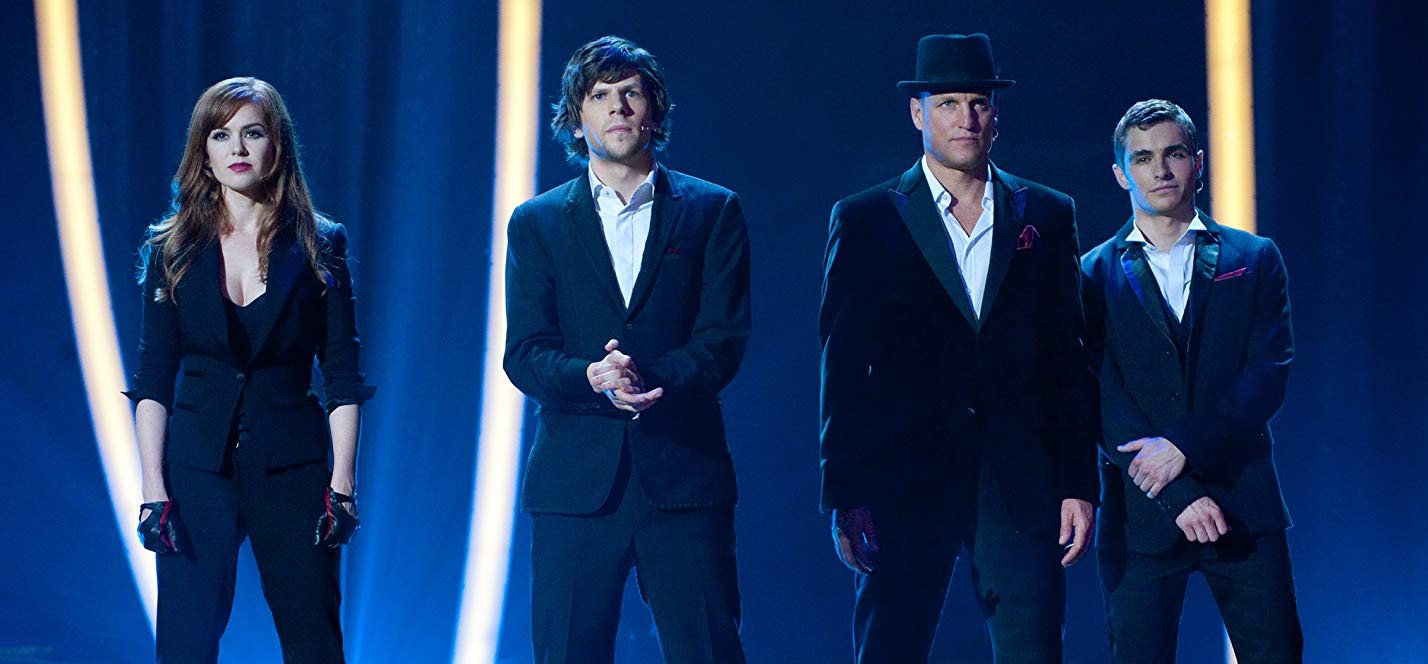
A gang of magicians get up to all sorts of antics in light and empty caper Now You See Me

Director: Louis Leterrier

Cast: Jesse Eisenberg (J Daniel Atlas), Woody Harrelson (Merritt McKinney), Isla Fisher (Henley Reeves), Dave Franco (Jack Wilder), Mark Ruffalo (Agent Dylan Rhodes), Mélanie Laurent (Agent Alma Dray), Morgan Freeman (Thaddeus Bradley), Michael Caine (Arthur Tressler), Michael Kelly (Agent Fuller), Common (Agent Evans)

Sometimes the simplest tricks are the best. Remember David Blaine? All his huge illusions and stunts weren’t worth thruppence compared to the simple awe of watching him perform card tricks in front of stunned regular folks in the streets. This film is pretty much the same, a dazzlingly shot con-trick of a film that wants to reveal a stream of tricks that it was holding up its sleeves over its runtime, each twist being less and less impactful. The most magic thing in this is the sleight of hand card trick Jesse Eisenberg performs at the start of the film – after that it’s like watching your soul drain away over two hours under an onslaught of wham-bam twists.

Anyway, J Daniel Atlas (Jesse Eisenberg), Merritt McKinney (Woody Harrelson), Henley Reeves (Isla Fisher) and Jack Wilder (Dave Franco) are a ragtag bunch of professional magicians, hypnotists, stunt performers and conmen who are recruited by a shadowy magical organisation known only as The Eye for reasons unknown. One year later they are performing huge stadium gigs, with the support of millionaire insurance man Arthur Tressler (Michael Caine), as The Four Horseman. During their first show they magic millions of Euros out of a bank in Paris while performing in Las Vegas – a stunt that attracts the attention of the FBI and Interpol who send agents Dylan Rhodes (Mark Ruffalo) and Alma Dray (Mélanie Laurent) to investigate. Meanwhile, the Horsemen are on the run from the law, and still working towards ends unknown, while dodging magic debunker Thaddeus Bradley (Morgan Freeman). But is anything as it seems?

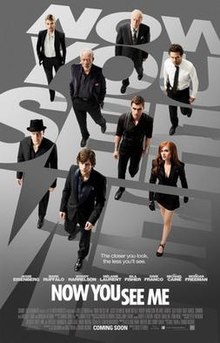
The answer of course is no. But then what do you expect from a film that proudly announces (frequently) “the closer you look, the less you will see”. It’s a pretty good message for the film – but not in a good way – as Now You See Me is as insubstantial as air, a puff of showmanship so pleased with its twists and tricks that it completely fails to have a heart. By the time we get to the end of the film and realise almost everything we saw over its runtime wasn’t real you’ll feel disconnected rather than engaged.

In fact, as a heist/con movie, this isn’t that good. The formula depends on you thinking you’ve got it worked out and then BOOM you realise you didn’t. It also by and large depends on charming, playful leads (think Newman and Redford in The Sting) and on a sort of consistent logic where you get the satisfaction of pieces you didn’t even notice falling into place as vital clues. Now You See Me does none of this.

In fact, it’s so pleased to tell you that it pulled the wool over your eyes that it rushes several of its reveals with an indecent haste. It largely fails to sprinkle clues throughout the film and basically plays unfair with the whole audience. There are things you can never hope to work out as they are based on not being shown vital clues early on. Characters and the film carefully never reveal any hints of true allegiances or motivations until the last possible minute.

In fact it’s one of those films where most of the characters are, for large chunks of time, really pretending to be someone else. This can work, but it doesn’t here as most of the Horsemen are basically rather unlikeable arrogant arseholes. The four actors mostly coast through basic set-ups, and you’ll be pleased when they fade into the background in the second half of the move (all four of them are basically decoy protagonists, and the film shelves them when it can no longer think of a way of hiding their true motivations in plain sight any more). The real lead is actually Mark Ruffalo’s FBI agent, and Ruffalo is a charming, likeable, schleppy presence that you can root for, even if the plot takes us on a character journey with him that makes no real sense (the clue for this is the film’s references to a magician who buried a card in a tree years earlier for one trick). 

It’s flashy in its film making, and Leterrier has a workmanlike touch with making things look cooland putting the camera in interesting places. He has no real idea of character or pacing – the film is frequently quick, quick, slow – and he creates a film here that has nowhere near the brains it thinks it has. It’s all flash and no substance. Look too closely and you’ll see nothing there.

Amores Perros (2000)

Dogs, love and car crashes in Alejandro González Iñárritu’s debut feature Amores Perros

Director: Alejandro González Iñárritu

Cast: Emilio Echevarría (El Chivo), Gael García Bernal (Octavio), Goya Toledo (Valeria), Álvaro Guerrero (Daniel), Vanessa Bauche (Susana), Jorge Salinas (Luis), Adriana Barraza (Octavio’s mother), Marco Pérez (Ramiro)

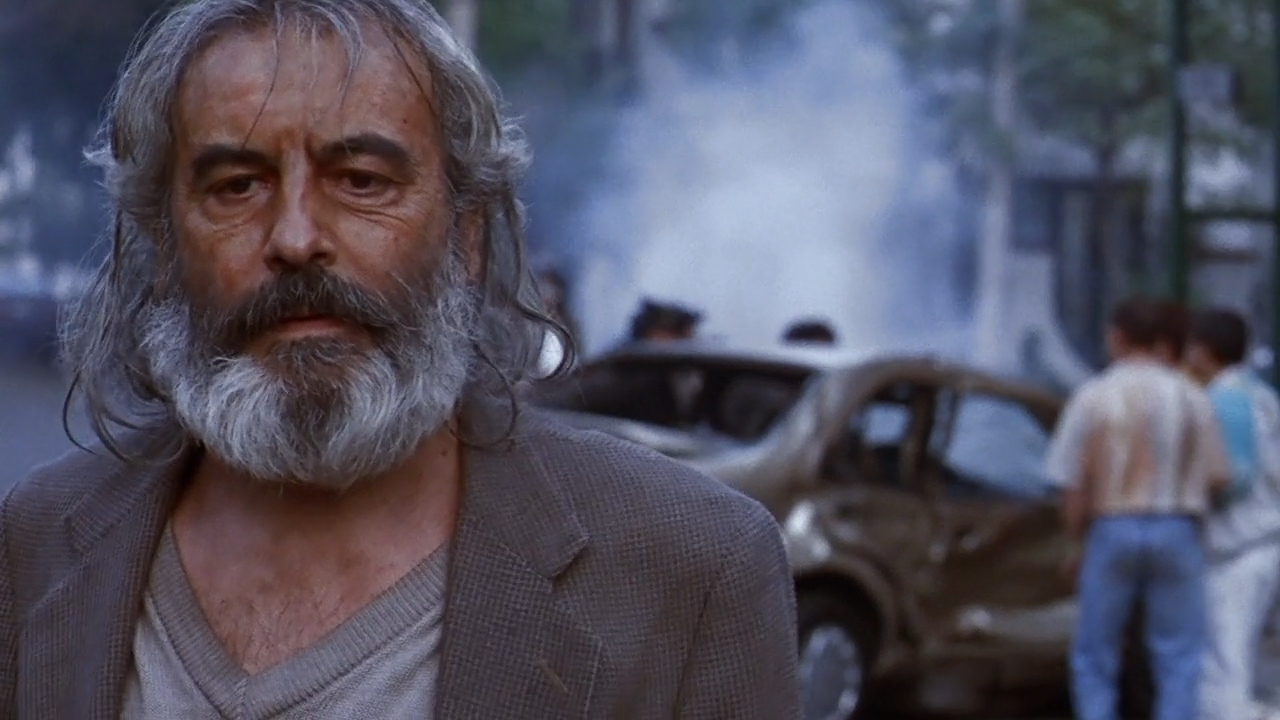
What links playboy kid Octavio (Gael García Bernal), model Valeria (Goya Toledo) whose career is so high it can only go downhill, and El Chivo (Emilio Echevarría) a hitman who lives like a scruffy hobo? Love of course! Well that and a near-fatal car accident that has life-changing effects for all three of them. And dogs too. They all love dogs. Iñárritu’s debut film plays like a mixture of Altman and Tarantino, throwing together three small-scale stories into something that feels electric and fast, but also strangely empty, as if it is skirting the surface of its characters without really delving into them.

Its interesting re-watching this film now, after Iñárritu has become a double Oscar winner and one of the world’s leading directors. The mastery of technique is all there in Amores Perros. Iñárritu’s style with the camera is fluid, intense and engrossing, and he uses a wide combination of fast-cut editing tricks, stylish camera work and handheld cameras that immerses the audience in the seedy underworld of Mexico City. As part of a wave of Latin American films made at the time, Amores Perros perhaps comes second only to City of God as an example of how to bring the danger and reality of the streets to the screen. Shot with a drained out style that makes everything feel even more grim, dirty and depressing than it probably is, Amores Perros is as sharp a dog bite of cinema as you could expect. 

Within this brilliant evocation of urban cinema work, Iñárritu crafts a series of three morality tales so universal in their structure and themes that they could just as easily been pulled from Chaucer or Boccaccio. It works as well, these three short films linked by common themes, cleverly structured narratively so that we learn more about each story as the other two unfold. Iñárritu structures the pivot of the story being the car crash that opens the film. The causes leading up to it are covered in the first story, with the events of the second story hinging on its effect on model Valeria in the other car, and the third spinning out the change of lifestyle it helps push on hitman El Chivo. Each story starts at different places in relation to others and each expands and deepens the overall picture we get of Mexico.

And it’s a place with its own underworld economy, powered by everything from murder and robbery to dog fighting. Octavio is a low-rent criminal (as is his brother) who ends up sucked into pitching his vicious Rottweiler into dog fighting. El Chivo lives in filth and dirt and takes commissions from corrupt cops to knock off targets. Both these stories hinge on inequality and desperation: Octavio and his family are working-class and have remarkably little. El Chivo is literally a tramp, a man who has turned his back on his old affluent life in disgust. The people they deal with are hoodlums and criminals and the few middle-class people who intrude into their lives do so with contempt. It’s all particularly obvious when, in the middle chapter, we head into the world of model Valeria and her lover, magazine editor Daniel – although even they are struggling to make ends meet.

It’s this middle story that actually makes for a fascinating centre point in the story. Valeria is crippled in the car accident, bed-ridden and disabled in the very week that Daniel has finally left his wife and children to be with her. Daniel (well played with a growing frustration and disappointment by Álvaro Guerrero) increasingly finds it hard to keep his patience with the disappointed and increasingly despairing Valeria (affecting work by Goya Toledo). This story of romantic, illicit love turned far too quickly into a burdensome marriage filled with dependencies has a universal tragedy to it. Their problems hinge around the disappearance of Valeria’s beloved dog, which may or may not be trapped under the damaged floorboards of the flat, a despair that becomes an obsession for Valeria and a constant burden for Daniel.

Valeria’s love for a dog becomes a substitute for the disappointing, passion-free relationship that she and Daniel find themselves locked into (Daniel even takes to calling his ex-wife to hear her voice). Dogs are more of a tool to Octavio. His vicious Rottweiler is his route to the money he needs to get his brother’s wife to elope with him. Gael Garcia Bernal plays Octavio with the edgy, simmering energy that powered so many Latin American films of the era, his face a mixture of surly resentment and romantic ambition. Octavio’s passionate flings with his sister-in-law have a youthful immaturity to them, that even she seems to recognise (his brother, while a somewhat absent husband, is clearly someone she relates to far more than the sexy Octavio). Discovering his dog’s capability for violence, he moves into the underworld of dog fighting, opening himself up to a world of trouble.

This use of dogs as a tool for greed and ambition perhaps reflects Octavio’s lack of emotional maturity and understanding of the impact of building a future with his sister-in-law, no matter how much he may wish to run away. For hitman El Chivo surprisingly, dogs are instead surrogate loves and emotional partners who have replaced the family (and indeed his regard for people in general) that he gave up long ago. Played with an expert anger masking deep sadness and self-loathing by Emilio Echevarría, El Chivo loves his dogs with all the intensity and care that is lacking from his relationship with humans. It’s this that gives El Chivo the self-regard that allows him to begin to change and rebuild his life.

Iñárritu’s primal film handles these universal themes of love and despair with intelligence and energy, even if it’s essentially three tales that play out more or less as you might expect. Because this film is essentially a collection of age-old morality tales, handsomely mounted but fundamentally predictable. What might you really learn about human nature from this film? I’m not sure. Because this is a pretty standard, even narratively safe drama, for all the minor tricks it plays with timelines. I’m not joking when I say this would not look out of place in The Canterbury Tales – and the moral issues it presents are lacking in shades of grey. Adulterers are punished, cheaters do not prosper, the “bad” are generally punished and for all that one of our characters is a hitman, he’s repeatedly shown to have more depth and hinterland than most of the rest of the characters in there.

It’s an interesting reflection on Iñárritu. He is without a doubt a major director of cinema, whose skills with the camera and editing are flawless. He creates here a film that is absolutely striking in its vibrancy and cinematic technique and its immediacy. But is it also a film that is a little too much about the mechanics of the stories rather than really invested in the stories themselves? I think it might be. Iñárritu is a master showman, but not necessarily a great storyteller and I think Amores Perros is a great example of that.

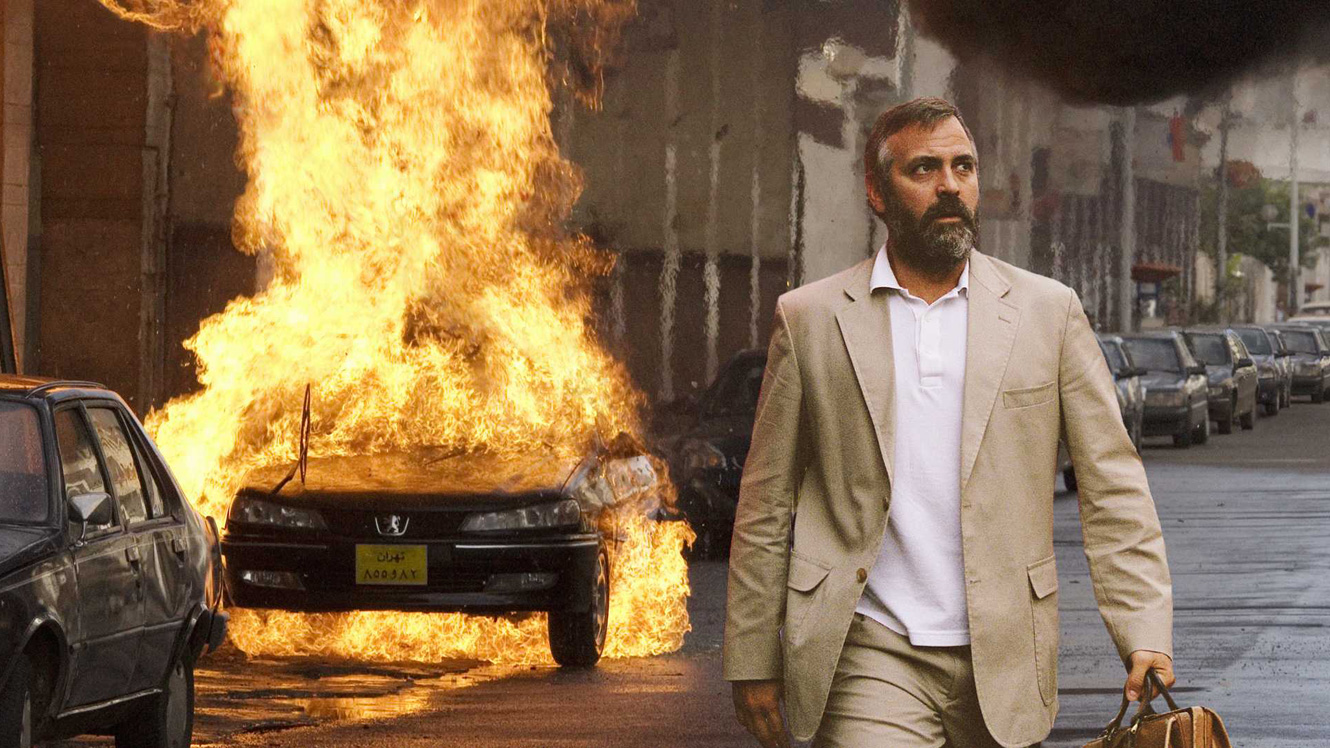
Syriana (2005)

George Clooney gets crushed by the corruption of major oil companies in Syriana

Director: Stephen Gaghan

Cast: George Clooney (Bob Barnes), Matt Damon (Bryan Woodman), Jeffrey Wright (Bennett Holiday), Christopher Plummer (Dean Whiting), Nicky Henson (Sydney Hewitt), David Clennon (Donald Farish III), Amanda Peet (Julie Woodman), Peter Gerety (Leland Janus), Chris Cooper (Jimmy Pope), Tim Blake Nelson (Danny Dalton), William Hurt (Stan Goff), Mark Strong (Mussawi), Alexander Siddig (Prince Nasir Al-Subaai), Mazhar Munir (Wasim Ahmed Khan), Nadim Sawalha (Emir Hamed Al-Subaai), Akbar Kurtha (Prince Meshal Al-Subaai)

The more I think about Syriana the more I think Stephen Gaghan was unlucky. If he had made this story today, you can be sure this would have become a ten episode series on HBO or Netflix. Instead, Gaghan made it into a film in the early 2000s. This means the bloated, over expanded plot gets crammed into two short hours at the cost of much of the emotional and political complexity it needs. Without this Syriana is an angry lecture, something that throws some interesting observations at the viewer, but basically resorts more often to shouting at them about how shit the world is. With its interlinking storylines and “serious” content it looks like intelligent filmmaking, but it’s more like a misguided opportunity.

Gaghan’s film follows four plotlines. Bob Barnes (George Clooney) is a CIA field agent, and expert on the Middle East, coming to end of his effectiveness as a field agent, struggling to get his superiors in Washington to understand the complexities of Middle Eastern oil politics. He is ordered to arrange the assassination of the eldest son of the Emir of a Persian Oil Kingdom Prince Nasir Al-Subaai (Alexander Siddig). Nasir is suspected of the States of harbouring terrorist sympathies. In fact he is a passionate reformer, desperate to modernise his country. Nasir is working with Bryan Woodman (Matt Damon) a representative of an American energy company, whose son is tragically killed by an electrical fault at one of the Emir’s estates during a business trip. The Kingdom is also being courted by a newly merged US oil company Connex-Killen for exclusive drilling rights – with attorney Bennett Holiday (Jeffrey Wright) tasked to ensure that nothing stands in the way of the merger and the riches that will follow. As these three storylines of political and economic oil matters interweave, migrant oil worker Wasim (Mazhar Munir) struggles to find work in the kingdom, and is slowly wooed by extremists.

Gaghan directs his own script and that might be his first mistake, as he is not a confident or imaginative enough director to craft something truly dramatic and engaging out of this highly researched, technical script. Instead, the script – or rather the research behind the script – drives events at every turn and leads to scenes that feel like they should be intelligent but tend to be actors reciting reams of dialogue and stats at each other. Combined with that, the film has a slightly smug preachy tone to it, desperate to let us know how shady and corrupt the world is and how trapped we are on a continual downward spiral of greed and corruption preventing us from improving and changing the world. It doesn’t always make for compelling viewing.

On top of that the complexity of the narrative is often mistaken for smartness, but often feels rather more like rushed and sudden execution of a story that doesn’t really have time to breath. Frankly the story that Gaghan wants to tell needed 8-10 hours of screen time and he doesn’t get it. Instead he throws everything and the kitchen sink into this sprawling study of oil based corruption. From Washington, to private oil firms, to intelligence agencies, to the cash rich families sitting on top of these oil geysers everyone gets a kicking as part of the same sordid mess that has led to the world being dominated by the rich and the regular guys of the middle east being left adrift and easy picking for extremists.

It feels like it should carry real weight, but it never really does because it’s hard for us to get a handle on what is going on half the time and even less harder to care once you realise the film has sacrificed character and motivation for the drive of putting together its polemical view of the world. The film is stuffed with actors, but its striking how few of the characters they play make an impression. Every part is played by a star – except of course for the inexplicable casting of jobbing 1980s Brit TV actor Nicky Henson as an arrogant oil exec, a casting so outlandishly out of place for an actor you are more likely to see in One Foot in the Grave that I kind of love the film for it – but none of the roles is really much more than a cipher.

That’s not to say there isn’t decent work. Christopher Plummer brings great heft and menace to a law firm Washington bigwig. Jeffrey Wright nailed so well playing this sort of on-the-surface meek functionary who quietly learns (albeit reluctantly) to play the game as well as the loudmouths that he has played the same role several times afterwards. Alexander Siddig owes much of his post DS9 career to his exceptional thoughtful and sympathetic performance as an Arab Prince whose forward-thinking is a disaster for the governments who want to keep using his state as an ATM. 

George Clooney won a generous Oscar (it was surely partly a compensation for not winning anything for Good Night, and Good Luck that year) but gets the meatiest role as Bob Barnes, the tired and cynical CIA agent who slowly begins to question the orders he is given and the world he has been working to build for his masters. His story contains the most actual drama, possibly why it stands out – poor George gets a rough ride here, tortured, arrested, bruised and blooded. It’s pretty straight forward stuff for an actor of his quality (Clooney plays it with a world weary outrage) but it’s also the most memorable storyline of a film straining at every moment to be important. 

It’s quite telling actually that the film’s most memorable speech is put into the mouth of Tim Blake Nelson’s oil executive (“Corruption is why we win!”) a character so lightly sketched out he barely appears other than making that speech. It’s a sign of the weakness of the film: characters serve purposes to the narrative and then disappear. These lightly sketched characters act out a lecture on world politics and economic-energy-driven corruption. Syriana needed room to breath in order to become a drama rather than a lecture. Instead it’s a decent workmanlike movie with ideas that it never manages to really express in a way that will make you care. When it tells you rich businessmen love money and powerful politicians love power you’re likely to basically say “yeah. I know. Tell me something new…”

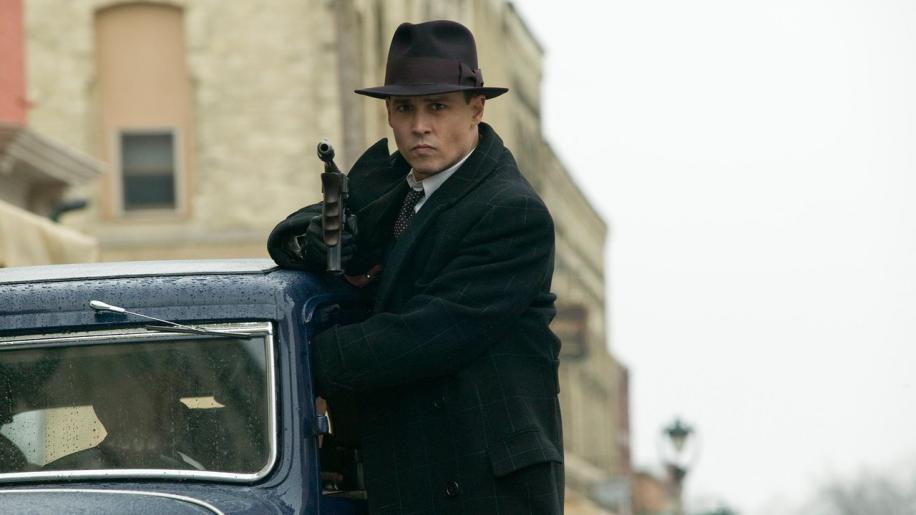
Public Enemies (2009)

Johnny Depp rides into action as John Dillinger in Michael Mann’s underwhelming Public Enemies

Director: Michael Mann

Cast: Johnny Depp (John Dillinger), Christian Bale (FBI Special Agent Melvin Purvis), Marion Cotillard (Billie Frechette), Billy Crudup (J Edgar Hoover), Stephen Dorff (Homar van Meter), Stephen Lang (Agent Charles Winstead), Stephen Graham (Baby Face Nelson), Jason Clarke (Red Hamilton), David Wenham (Harry Pierpont), Spencer Garrett (Tommy Carroll), Christian Stolte (Charles Makley), Giovanni Ribisi (Alvin Karpis), Bill Camp (Frank Nitti), Branka Katic (Anna Sage)

Michael Mann has an affinity for crime films. With Heat as one of his calling cards, Public Enemies is his attempt to do the same in the classic prohibition and bank robbery era of the 1920s. The guys going head-to-head this time?  John Dillinger (Johnny Depp), coolest robber there is, an icon of the criminal classes, and Melvin Purvis (Christian Bale) rigid and committed FBI agent. Public Enemies however fails to match Heat, falling part way between history lesson and action thriller. Covering the last few years of Dillinger’s life, and the rise of the FBI, it’s a cold, strangely uninvolving film mixed with a few stand out action scenes where tommy guns go blazing.

One of the first things it impossible to miss about the film is Mann’s decision to shoot the film using HD video cameras. The advantages of this is it gives much of the film an immediacy and modern look that throws the viewer into the middle of the action and makes this at times look and feel like a piece of news reel footage rather than a period piece. The camera choice allows Mann to put the camera right into the action, capturing every detail at a fast pace. The film has the look at times of a genuine documentary, and removing the richness of film also gives it the air of being caught on a phone, like some of this was some sort of found footage. Or rather, a phone that has been handled by a gifted cinematographer for perfect framing.

The downside of the choice of HD camera is that it makes the film at times look rather like a behind-the-scenes DVD documentary, with its untextured shadows and lack of lighting. Frankly at points it makes the film look bizarrely a little bit dull in places, or unusually unprofessional. Personally, I feel the benefits it gives in immediacy are cancelled out by this. But that’s just me.

Away from Mann’s shooting style – and his usual high octane skill of cutting and assembling action scenes – the film showpieces a strange lack of insight into its characters or any real developments of their hinterland. This is particularly so in the case of Purvis who never comes to life either in the film’s staging of him, or in Bale’s firm jawed, muted performance. When the final film caption throws up news of his later resignation and years later possible suicide it doesn’t make you question things you have seen in the film or feel like a logical progression: it just doesn’t tally up at all. 

The film does get some material out of how both sides play the media game. Purvis is a reluctant but fairly skilled player. His boss J Edgar Hoover (rather well played by Billy Crudup in one of the films best performances) is obsessed with spinning the nascent FBI to the media – half his scenes are bookended by press conferences – and his primary motivation is to exhibit himself to the media as the only logical choice for leading the FBI and the essentialness that it gains the powers it needs. Similarly, Dillinger and his fellow criminals delight in their media profile and do their damnedest to build up images of themselves as Robin Hoods (without the giving to the poor of course).

This is captured in Johnny Depp’s charismatic performance as Dillinger, a brooding, intense figure who would like to see himself as a sort of poet of the underworld. Dillinger talks about the banks money being their only interest and is frequently charming with an edge with regular people. He prefers bloodless robberies as they are cleaner and demonstrates a genuine sense of romantic openness with his girlfriend Billie. However, he is no angel. While he does not use violence as a first resort, he has no hesitation about using it as a second and will happily put bystanders at risk and rough up bank staff to get what he wants. He talks of escaping, but it’s clear that the game is an addiction for him and the danger is enjoyable – he takes an illicit thrill at one point of sitting in a cinema while his mugshot appears on the screen, wondering if anyone will dare spot him.

Depp’s performance is the finest thing in the film, a subtle and intelligent tightrope walk that teases depths that are perhaps not there, and suggests sympathies and agendas he perhaps does not have. While the character remains unknowable, you sense a great complexity and conflict there somewhere. He’s helped by being given a great actress like Marion Cottilard to play off, who makes Billie much more than just a gangster’s moll.

There is potential in the film, but it never really comes to life. For all the exciting shoot outs and drama, none of its characters are engaging or really interesting. The rest of the supporting cast feel like pieces to be moved around the board – many disappear with no real trace – and their fates pre-ordained by the demands of the plot. It makes for a rather flat experience, full of style, but never making you invest in it.

Beowulf (2007)

A CGI Ray Winstone faces off against monsters, temptation and fate in Beowulf

Director: Robert Zemeckis

Cast: Ray Winstone (Beowulf), Anthony Hopkins (King Hrothgar), John Malkovich (Unferth), Robin Wright (Queen Wealtheow), Angelina Jolie (Grendel’s Mother), Crispin Glover (Grendel), Brendan Gleeson (Wiglaf), Alison Lohman (Ursula)

Around the turn of the century a new style of film-making (and I guess acting) burst into the world of Hollywood. There had been special effects and there had been animation. We’d seen actors transplanted by CGI into any number of settings and locations. But motion-capture was something else. Its leading pioneer is of course Andy Serkis, and the art involved essentially placing a load of dots on people’s faces to record every inch of their movements and then feed this physical performance into a computer to create a CGI personality that unified actor and special effect. 

Zemeckis, always a pioneering film maker, was fascinated by the art and had used it on previous films – but Beowulf was his real push to create something that couldn’t have been done without motion capture. So Ray Winstone – a bulky middle aged actor – is here transformed through the computer into a slim, muscular man in his early thirties. Winstone plays Beowulf himself, and Zemeckis’ aim here was to bring to life in a way that had never been done before the ancient poem. And not only the humans would be motion captured: Grendel and his mother (played by Crispin Glover and Angelina Jolie) would also be powered by real-life human performances.

It makes a fascinating film visually to watch. Zemeckis’ camera work has the complete freedom to roam anywhere around the actors (every move they made was recorded into the computer from every angle). And he doesn’t hold back, with the camera swooping and sliding around every dimension and angle of the locations, often moving freely and swiftly with a series of engrossing tracking shots and fast moving sweeping panoramas. 

It also means that having real performances behind every creature in the film adds a real human dimension to even the most vile monsters. Crispin Glover’s physical commitment – not to mention the searing, twisted pain in his every moment – humanises Grendel in a way his simple monstrous appearance never could. The later dragon has a real feeling of humanity behind it, for all its scales and arrogant cruelty. Angelina Jolie reported she felt surprisingly uncomfortable when she saw the final realisation of her performance as Grendel’s mother – imagined here as an extremely seductive succubus, permanently naked with perfectly formed curves – but the entire thing works because of the performance behind the animation.

Some of the motion capture isn’t always of course completely successful. There is something still slightly too shiny, slightly too polished about the faces – part of the film being a slightly strange halfway gap between animation and real acting. The eyes suffer most – for all the efforts of the animators there is something still slightly dead behind, something not quite of the human face about them. It’s something that you can’t help but spot, and can’t help but be disconcerted about.

But it largely comes second to some of the imagination that exists in this version of the story. Zemeckis’ film making is often visceral and bloody – and the action sequences are as involving as he manages to make the other sequences are engaging. Not everything works: Beowulf fights Grendel in the nude, and the decision to have Beowulf’s ‘bits’ constantly obstructed by a series of fortuously placed items smacks somewhat of Monty Python and seems tonally off from the rest of the film. But by and large it works.

It does this because the script from Neil Gaiman and Roger Avery mixes the original poem with something reminiscent of Macbeth. One of its key themes is the seduction of power and the inner guilt of heroes who know that they have feet of clay. Grendel is reimagined as the son of Hrothgar – seduced by Grendel’s mother with offers of power, he creates with her Grendel, the living embodiment of his flaws. Grendel’s mother represents the creeping temptation of greed, ambition and the “old ways” (the film plays up the Christianisation of the Vikings in the background throughout). She’s effectively all the witches rolled into one (but much hotter).

And Beowulf is ripe ground for our temptations as it’s made clear right from the start that – while clearly a great warrior – he is also a triumphalist blowhard who enjoys repeating and expanding his own myth. A story recounted about his fighting sea monsters during an epic sea swimming competition (‘It used to be just one’ comments best friend Wilfric) is a masterpiece of puffed up self-promotion on top of genuinely impressive deeds, Beowulf’s words diverging from the story we see on screen towards in the end is a neat foreshadowing of his eventual seduction by Grendel’s mother. 

Beowulf isn’t an empty boaster though. He’s a sympathetic Macbeth who feels guilt about the “sound and fury” that his life story has become. The aged Beowulf in the second half of the film is weary, tired and full of self-loathing, his great name an oppressive weight he can’t live up to or escape from. He’s a man who knows all the time he has feet of clay, but the name of a God – and that the name is so important he can’t let anything puncture it. Wilfric twice refuses to allow Beowulf to divest his conscience: the legend is so important it’s been printed as fact.

Ray Winstone handles this all pretty well – even if a lot of this requires sorrow behind the eyes, that motion capture simply can’t provide – even if the transformation of his face makes him look more like Sean Bean than a younger version of himself. Hopkins and Malkovich embrace all the cavorting and expressive body movement of motion capture like the old hams they can be. The film’s real highlight is Robin Wright who makes a great deal of Hrothgar then Beowulf’s sad wife, unhappy, quietly aware of both her husband’s flaws and perhaps the only level headed person in the Kingdom.

Beowulf has some fine technical work, but its real lasting interest is the psychological depths it tries to explore in its hero. Far from the perfect warrior, he’s someone doubtful and doubting, whose insecurities and vulnerabilities grow throughout the film and finally – like a mix of Lear and Macbeth – only becomes fully sympathetic at the very end. It makes for an interesting remix of a story nearly older than any other in our culture.