BlacKkKlansman (2018)

Adam Driver and John David Washington infiltrate the KKK in Spike Lee’s brilliant, thought-provoking, political message film BlacKkKlansman

Director: Spike Lee

Cast: John David Washington (Detective Ron Stallworth), Adam Driver (Detective Philip Zimmerman), Laura Harrier (Patrice Dumas), Topher Grace (David Duke), Jasper Pääkkönen (Felix Kendrickson), Ryan Eggold (Walter Breachway), Paul Walter Hauser (Ivanhoe), Ashlie Atkinson (Connie Kendrickson), Corey Hawkins (Kwame Ture), Michael Buscemi (Jimmy Creek), Robert John Burke (Chief Bridges), Fred Weller (Patrolman Andy Landers), Harry Belafonte (Jerome Turner)

BlacKkKlansman feels like it would make great material for a comedy film. The true story of the first black cop in Colorado, who in the 1970s tricked the Ku Klux Klan (over the phone) to give him membership of the party, working with a white colleague for face-to-face meetings. Hard to believe but, as this film says, “Dis Joint is based on some fo’ real, fo’ real shit”. And the film has more than its share of comic beats. But Spike Lee is far smarter, and far more worried about where America is going, to simply make a film that turns the KKK into a gang of idiots. Instead this becomes a dark, terrifying vision not just of what America was but what it is.

Ron Stallworth (John David Washington) is that first black cop. Ambitious and keen to do his bit, he points out that he is perfect for some undercover work – and after first investigating some of the civil rights movement (and falling for Black Student Union Leader Patrice Dumas, played by Laura Harrier) he is motivated to turn his attention to the Klan. Cold calling local organiser Walter (Ryan Eggold), he quickly finds himself welcomed to the Klan (who are of course completely unaware of his race). Working with fellow undercover detective Zimmerman (Adam Driver), a more relaxed Jewish cop, who can handle the face-to-face meetings, Stallworth opens an investigation into extremism in the far right, with their main target being Grand Wizard David Duke (Topher Grace).

Spike Lee’s film starts as a clever balance between exploring the central comedy of this set-up – the black cop busting the KKK – and an exploration of the racial tensions that were barely concealed in America in the 1970s. Stallworth experiences a parade of suspicion and resentment of the police from his fellow African-Americans, while some of the responses from the police officers range from suspicion to outright racist distrust. It’s his brilliant handling and understanding of the racial tensions in America that power the movie – and give it the impact and importance it undoubtedly has.

The comic timing in much of Washington’s phone calls with various hard-right racists is spot on, and the film gets laughs from the gullibility and foolishness of the Klan (Duke talks at length about how he can always tell the difference vocally between a white man and a black man). But Lee knows that extremism like this fundamentally isn’t a joke – and it’s certainly not in this film, which wraps up a part cop-caper, part undercover thriller with a sharp political message.

Because no matter how stupid the KKK are, we are left in no doubt about how dangerous, violent and vile they truly are. The racist language, the repeated use over and over again of every insulting term imaginable for African Americans and Jews, the prolonged fantasy talk about lynchings and murders, the amount of guns these people have available to them, the mix of suave “public face” racists and the violence-as-a-first-resort hicks and hillbillies that follow them… It’s beyond alarming, its’ terrifying. And Lee is quite clear – give any of these people even the slightest piece of endorsement and encouragement, and they would gleefully enact another Holocaust. There ain’t nothing funny about that. 

Instead, scene after scene of Adam Driver’s undercover cop interacting with this human slime shows no amount of humanity or empathy can be found at all among this appalling crowd of people. You feel the terror of these people and Lee fills every scene with a mounting tension and horror that slowly strangles (fittingly) the initial comedy of the set-up. But then that is part of Lee’s extraordinary work on this film, an angry blast of politically motivated invective wrapped up in an entertaining story. Lee makes it clear that we are kidding ourselves if we think racism is a problem of the past, or something that can be easily wrapped up (it’s easy to see why he was so pissed off that Green Book, a far more cosy, reassuring and hopeful film about racism, scooped best picture). The film ends with an alarming flash forward to shots from Charlottesville, reactions to the murder of Heather Heyer and shots of Trump mindlessly talking about “very fine people on both sides”. The message “America First” is shouted as proudly in the 1970s plotline as it is in the real life footage of 2017.  Hammering home Lee’s fears that the KKK have never had a warmer environment to work in than they do today.

Lee’s film does struggle when it comes to the plot that he builds around the events of the film. The film makes clear that in many ways the whole investigation was for nothing and produced no lasting results: it unearthed KKK sympathisers in key government departments (all of whom were “sent to Alaska” in the words of Stallworth) but was then abruptly closed down. While this real target is referenced in a throwaway scene or two, a late fictionalised bomb plot by the KKK – which of course revolves around Stallworth’s fictional black power girlfriend – doesn’t quite ring true and feels slightly out of place.

But the real aim of the film is Lee’s political message, and on that score this film is powerful, sticks in the mind and leaves a lasting impression. Lee’s direction is also a brilliant mixture of flash and sensitively filmed set-pieces. There are superb cameos from Harry Belafonte (in a heartfelt speech) telling a story of historic lynching, and Corey Hawkins as articulate, passionate activist Kwame Ture. Both these sequences stand out, with Lee’s controlled direction knowing when to move the camera and when to hold it and let the power of the words and emotions do the work.

The cast all give outstanding performances. Driver is chameleonic (and Oscar nominated) as the cop who moves naturally between his own liberal views and his easy approximation of racism. Washington is brilliant in the lead role as the dedicated lawman, willing to prove himself among the racists of his own department. Grace and Eggold stand out as two different types of the face of “acceptable” KKK. Lee’s film builds on these performances with his own passion to create a truly lasting and important piece of filmmaking. Never believe the world has changed: this film reminds us immediately that cozy stories that talk of “how far we’ve come” are fairy tale fantasies that distract us from the danger of a racial lynching being just round the corner.

Dead Poet's Society (1989)

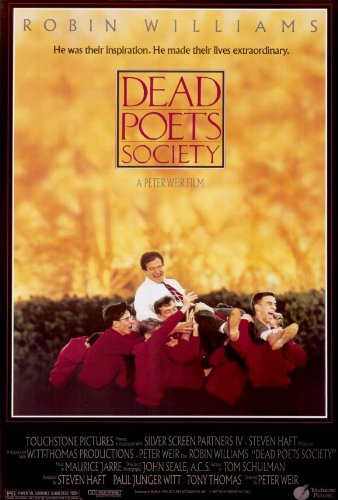
Robin Williams is an inspirational teacher (is there any other type in films?) in Dead Poet’s Society

Director: Peter Weir

Cast: Robin Williams (John Keating), Robert Sean Leonard (Neil Perry), Ethan Hawke (Todd Anderson), Josh Charles (Knox Overstreet), Gale Hansen (Charlie Dalton), Norman Lloyd (Headmaster Gale Nolan), Kurtwood Smith (Mr Perry), Dylan Kussman (Richard Cameron), James Waterson (Gerard Pitts)

“Oh Captain, My Captain!” Your feelings for Dead Poet’s Society are probably directly linked to how you react to that desk-standing ending. A triumph of emotional film-making? Or garishly over-sentimentalised nonsense? I’ll go for the latter myself, as I found myself non-plussed and unengaged with this conventional “idealistic teacher changes lives of young boys” story. Seen it all before. 

In 1959 at elite, all-male prep school Welton Academy, four young students (Robert Sean Leonard, Ethan Hawke, Josh Charles and Gale Hansen) are surprised by the unorthodox teaching methods of their new English teacher, Welton Academy old boy John Keating (Robin Williams). Rather than teach the stuffy, facts based curriculum, Keating encourages the boy to use their hearts and minds, to be creative and above all to carpe diem as much as they can. The boys start an illicit poetry club (?) and begin to explore their own artistic leanings – but their conservative parents and school won’t stand for this challenge of the orthodox and when tragedy strikes it’s Keating who gets the blame.

Dead Poet’s Society already feels a bit dated, and it’s story line treads all too familiar ground of fusty seniors struggling to understand the artistic stirrings of the youngsters inspired by the sort of maverick inspirational teacher that everyone at one time or another has dreamed of being. Naturally of course (as per the rules of films) all the other teachers are either cynical, disinterested or box tickers. For a genuine artist like Weir, I was struck by how plodding this film was in its story and construction and also its ideas and themes. It’s a struggle between generations played out at a point in history where the cultural revolution of the sixties was just about to happen. These ideas were already over twenty five years old when the film was made – and this adds nothing really too the mix.

Instead we get the standard tropes we might expect, as the students play out expected and predictable plots. Nervy Ethan Hawke, at first too shy to speak, finds the courage to express himself. Josh Charles sets out to woo the girl he loves (at times this is more than a little creepy). Proto-rebel (and no doubt soon to be sixties activist) Gale Hansen begins bucking authority and writing scurrilous articles for the School newspaper. And Robert Sean Leonard begins to defy his domineering father’s wishes to focus solely and exclusively on a medical career by landing the part of Puck in a local play and dreaming of a career in the theatre.

Despite the focus of much of the film’s promotion (and in people’s memories) on Robin Williams’ central performance, the story line is all about these boys. And I will say there are some fine performances from these four principles – three of whom went on to have notable careers. Particularly fine is Robert Sean Leonard, who gets a meaty pile to play with as a young adolescent who lacks the courage to tell his father what he really feels and carries all this with a confidence and assurance (even though his Puck performance is hardly the work of genius the film insists it is!).

It’s unfortunate that most of what they do is the totally expected collection of school yard clichés, which builds towards an inevitable and predictable, sad, sentimental, ending. Keating is the standard inspirational teacher, given to flights of fancy and eccentric touches (tearing pages from books, leading the boys in sports designed to build their poetry skills, encouraging the boys skilfully to recite their own poetry) that will either leave you wishing you had him as a teacher or leave you cold. 

Watching it now, and seeing Keating interact with his students, you can’t help but feel his increasing closeness with the boys, his encouraging them to call him “Captain” (in one skincrawling moment he doesn’t even turn around when walking until one of them addresses him as this!), his taking them to plays, his obvious favouring of a few key students would all contribute to him struggling to get CRB cleared. I actually found his character rather grating, although the film does use a good few moments to underline how Keating rebukes the boys for their more thoughtless and pointless acts of rebellion and how he urges Neil to gain the support of his father before acting.

Nothing particularly wrong with Robin Williams performance though, even though the thing you feel impressed people the most was this most energetic of funny men restraining himself in a relatively straight and low-key part. It’s a role several actors could have taken on just as well, but Williams does a sound job.

It’s a shame that the film itself is so deeply bland. Its later sentimental touches become increasingly heavy handed and overbearing, and it’s parable of betrayal and corruption in a 1950s school hits its points equally hard. There is nothing really fresh or unique here, and the film itself never brings its story to life in a way that feels fresh or unique. It’s a film widely loved, but to be honest for the uninitiated has more than enough moments of weakness for you to want to check out of this class.

Vice (2018)

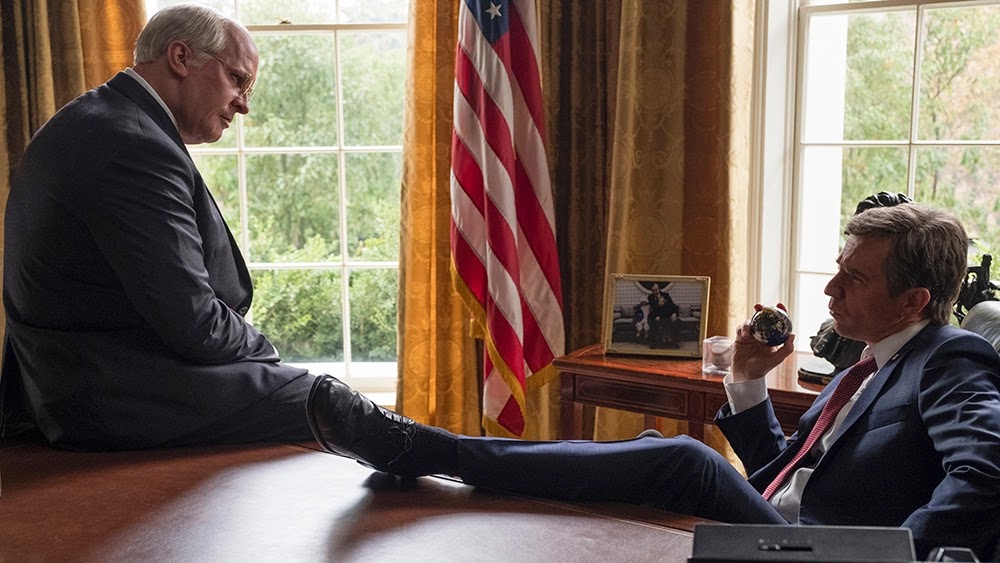
Christian Bale slaps on the make-up as Dick Cheney in Vice

Director: Adam McKay

Cast: Christian Bale (Dick Cheney), Amy Adams (Lynne Cheney), Steve Carell (Donald Rumsfield), Sam Rockwell (George W Bush), Alison Pill (Mary Cheney), Lily Rabe (Liz Cheney), Jesse Plemons (Kurt), Tyler Perry (Colin Powell), Justin Kirk (Scooter Libby), LisaGay Hamilton (Condoleezza Rice), Eddie Marsan (Paul Wolfowitz), Bill Camp (Gerald Ford), Don McManus (David Addington)

There is a film to be made about the turmoil of the Bush presidency. It’s not this film. Adam McKay’s flashy, clumsy, cartoonish, smug, tedious, overlong, arrogant and polemical film quickly outstays its welcome, drowning any legitimate ideas and theories it has under a wave of high-minded, angry shouting at the viewer, frequently mistaking flash and bombast for actual political insight and producing the sort of heavy-handed, angry political commentary that wouldn’t look out of place in a cheap student review. And flipping heck I’m on the liberal left!

Anyway, the film follows the career of Dick Cheney (Christian Bale under an impressive pile of make-up) from his early wash-out days. Told by his wife Lynne (Amy Adams) to buck his ideas up or lose her, Cheney becomes an intern for Congressman Donald Rumsfeld (Steve Carell), rising through the ranks due to his ruthless efficiency and loyalty, becoming Chief of Staff under Ford and Secretary of Defence under Bush. So he’s a natural choice for the inexperienced George W Bush (Sam Rockwell) to balance the presidential ticket. In return, though, Cheney wants control over a few areas – energy, foreign policy, defence etc. etc. – that the lazy Bush has no interest in overseeing. So a quiet, backroom politician changes the office of the Vice President to become the most powerful man in the world. Boo hiss.

McKay’s intention with this film is to reveal the hollowness, greed and utter lack of integrity in its subject. Well he never lets us forget this aim – I don’t think I’ve ever seen a film that so openly hated its lead character, which so completely refused to see any redeeming qualities in him whatsoever. Christ, even Downfall took a few minutes to show Hitler was generally kind to those who worked for him. The film is so unrelenting in its loathing for Cheney that it starts to feel like a being shouted out for over two hours by an “it’s the end of the world” fanatic on a street corner. This does not make for good entertainment.

The film has no subtlety whatsoever. Not for a single second does it even consider the remote possibility that anyone in the Republican party might, perhaps, just maybe, even if it was only some of the time, believe that they were doing something for a principled reason, even if it was a principle those on the left don’t agree with. Instead, all the characters are shown as selfish, greedy and corrupt, using ideology solely to gain power and then using power only to enrich themselves. It’s the sort of lazy political views that turn people off liberals – the idea that anyone who doesn’t share a liberal viewpoint is by definition evil. Some of us grew out of this kneejerk assumption that everyone who doesn’t agree with us is self-serving and cruel. Not McKay. 

On top of which, McKay’s film is made with the overt flash and brio that is the hallmark of the hack director using the tools of cinema with no understanding of their proper use. Wonky camerawork, cutting between timelines, throwing in newsreel footage, breaking the fourth wall, using strange camera angles, chucking in cameo actors to amusingly comment on events (Alfred Molina and Naomi Watts principally) and editing it with flash don’t make you a great director. They make you someone who has seen a lot of films and lot of techniques, but has no understanding of how to use them to craft an overall effect, instead thinking that if you throw all of them at the wall at once, you’ll be a master craftsman.

The film is full of studenty bits of invention that must have seemed oh-so-clever on paper in McKay’s script. Forty minutes in, with Cheney’s career looking over with the end of the Bush presidency, McKay starts running the credits – only to snap back into the film with the fateful phone call from Dubya. It’s clever and raises a quick chuckle, but doesn’t add anything to a sense of turning point in Cheney’s life. It’s followed by a clumsy metaphor of moments being like tea cups balanced on top of each other (inevitably these are later shown tumbling down) to represent how key moments of history build on each other. The real nadir is a moment when Dick and Lynne fall back into cod-Shakespearean dialogue in the bedroom as they discuss a possible vice presidency. ‘We don’t have Shakespeare’s psychologically insightful dialogue’ (I paraphrase) says the voiceover, before this skin-crawling hand-in-mouth sequence that shows McKay knows as much about Shakespeare as he does subtle political commentary.

Ah yes the voiceover. Perhaps not knowing how to marshall his childish political points in actual scenes and dialogue, McKay uses a voiceover from Jesse Plemons’ ground-forces marine to spell out as bluntly and crudely as possible the basic and trivial points it wants to make. The damn film already feels like being hectored by a crank, so why not make it feel even more like a polemic by having a character bitterly explain why everything is wicked and evil at you? The narration bores – and joins the general feeling of the rest of the film, that it goes on forever and ever and ever and never, ever, ever says something really interesting or revealing.

The performances are a mixed bag. Bale gives a decent turn as Cheney, capturing his mannerisms and conveying a sense of dark ambition, but it’s a role he could play standing on his head. Amy Adams turns Lynne into a Lady Macbeth, in a reheat of her performance from Paul Thomas Anderson’s The Master. Every other performance is a crude cartoon – Carell’s Rumsfeld a putty-faced joke, Sam Rockwell’s Bush (an impossibly generous Oscar nomination) a cartoonish buffoon. Everyone else coasts through it, patting themselves on the back.

There is an argument to be made that Cheney’s legacy is far from good, and it’s certain that we are paying a heavy price for interventions in Iraq. Many of the policies were less than savoury and left a less than positive benefit. But this film hammers these points home with all the charm of a ranting, drunk politics student who has read one book and watched a lot of YouTube videos. With McKay’s soulless, clumsy, look-at-me direction layered on top, this is a flat out terrible film. Save yourself what feels like much more than its two hour run time. In fact I’ll summarise it for you: CHENEY IS EVIL AND HORRIBLE AND HE (LITERALLY) HAS NO HEART. There you go. You don’t need to see it now.

The Wife (2018)

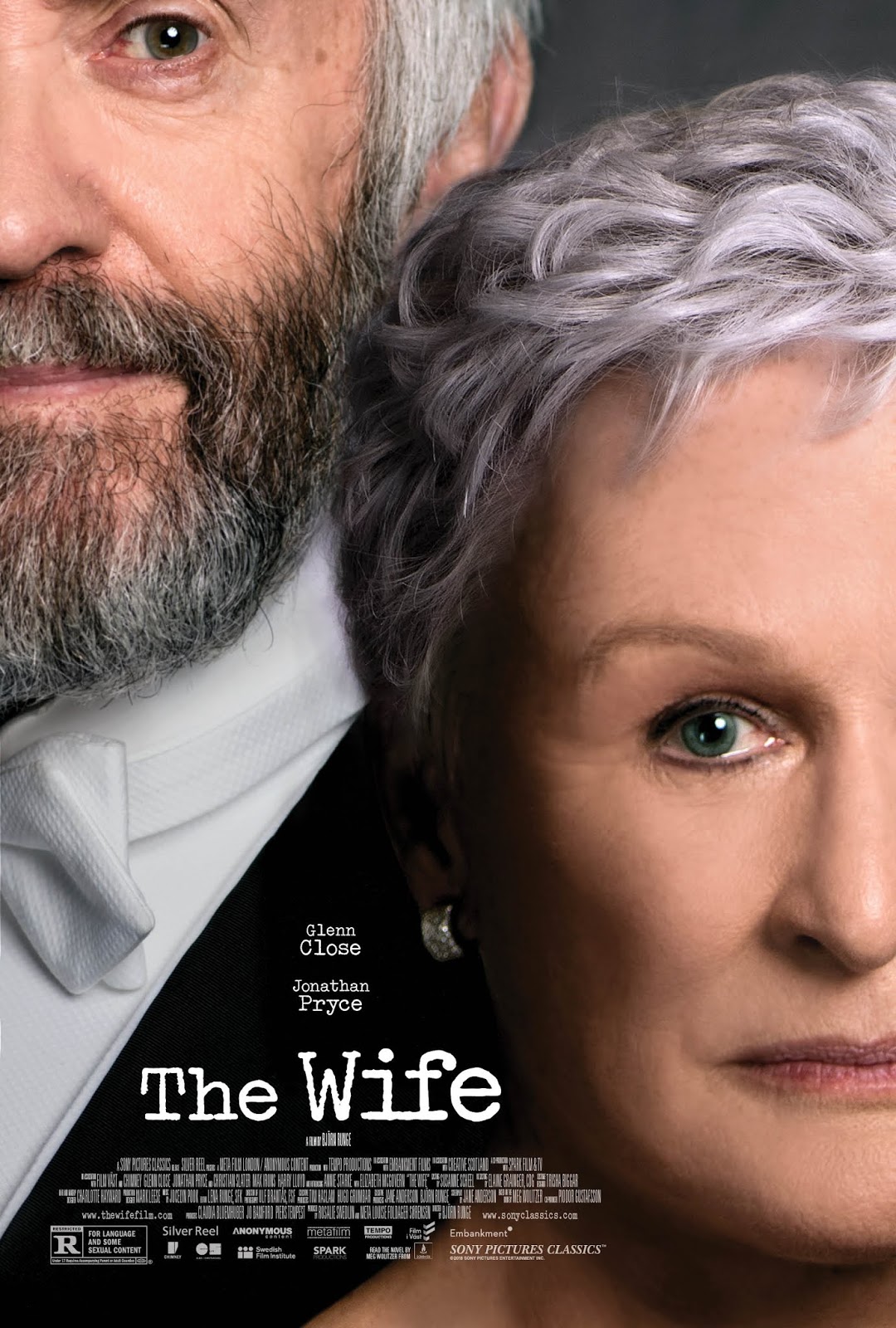
Glenn Close is the supportive but perhaps secretly resentful Wife of novelist Jonathan Pryce

Director: Björn Runge

Cast: Glenn Close (Joan Castleman), Jonathan Pryce (Joseph Castleman), Christian Slater (Nathaniel Bone), Max Irons (David Castleman), Annie Starke (Young Joan Castleman), Harry Lloyd (Young Joseph Castleman), Elizabeth McGovern (Elaine Mozell)

The old cliché used to be: behind every successful man, there’s a woman. The Wife explores just such a woman – and uses this story for a brilliantly structured, tightly written exploration of the tensions and sacrifices that underpin a partnership (and relationship) where the man is the sole public figure. In 1992, Joe Castleman (Jonathan Pryce) is a hugely successful novelist, being honoured with the Nobel Prize for Literature. Standing beside him at all times is his wife Joan (Glenn Close), silent, supportive, taking care of all her husband’s needs. But as her husband is surrounded by praise and flattery, has her patience finally begun to snap?

Much of the attention for The Wife has focused on Glenn Close’s performance as Joan. And while her performance is superb, there is much more to this film than that. This is a well written, brilliantly acted, carefully shot relationship drama that manages to explore interesting details about how sexism, gender expectations and the patriarchy turn some brilliant, intelligent and gifted women into ciphers who must hide their skills under a bushel. The Wife is an engrossing, small scale drama that leaves you with a lot to think about.

Runge’s camera is slow and subtle, carefully zooming into parts of the scene that don’t seem at first to be central, but are revealed to be so. Many of these moments centre around Joan, a woman quietly at the edge of scenes, ignored by people, responding only when required. She calmly follows her husband’s lead, while quietly tending his needs (reminding him of appointments, making sure he takes his medicine, apologising for his abruptness). 

This sort of framing requires a lot of quiet, “reaction” acting from Close – and she excels at this. Close’s performance is a masterclass in subtlety, her face a mask of micro-reactions that leave the viewer guessing at all times exactly what she is feeling about all of the events she witnesses. No scene covers this better than when she listens in on the line as her husband is informed of his Nobel prize – her face slowly, carefully, unreadably changes from delight and pride to something far more equivocal, her face frozen in a look of – well is it anger, horror, frustration? It’s impossible to tell. After that, the entire film is a study in interpreting the exact feelings this woman has for the behaviour of, and praise for, her husband. What does she feel about this? What does she really think? How far does loyalty to her husband stretch?

Muck-raking, sensationalist would-be Castleman biographer Nathaniel Bone (a wonderfully sleazy Christian Slater) has a good idea that there is a lot of anger there – and gambles in a series of offers and interjections that Joan’s loyalty only stretches so far. How far is she responsible for the literary success of her husband? Flashbacks carefully woven into the film show in the early sixties the young Joan (played very well by Close’s real life daughter Annie Starke) as a promising literary writer who falls under the influence of her charismatic professor, young Joe (Harry Lloyd a slightly awkward fit as the arrogant bohemian writer). In the boorish, Mad Men-ish 60s, Joan feels her chance of being recognised as a writer in her own right is close to zero – indeed she’s told to forget it altogether by a bitter former alumna of her Ivy League college, played archly by Elizabeth McGovern – so decides hitching her star to Joe, a promising potential author, seems the best option.

But how much of that promise can Joe actively achieve? And how much of a literary as well as a personal partnership is this marriage? And has Joe lost all track of this? It’s easy to overlook how essential Jonathan Pryce is to the success of this film, but his Joe is a wonderful creation, a bombastic, larger-than-life, selfish even slightly childish figure, everyone’s idea of the great artist, living the cliché of constant praise and a series of seductions. Pryce’s Joe is a domineeringly unattractive figure who slowly reveals his own emotional fragility wrapped in dependency – and the scenes with him and Close (that take up much of the movie) first hum with unspoken tensions and then later throb with the cathartic release of these feelings. 

Those scenes when they come – and you can tell they’re coming from the start – are fantastic. Close is on the top of her game here, utterly believable as a woman who over the course of a few days slowly begins to question every decision she has ever made in her life. What Close does so brilliantly though is to show the balance, the lack of certainty, the mixed feelings she has – that people who in some way infuriate her, also provoke great love in her. Pryce is just as fabulous as her equally aggrieved husband. There are moments in these late scenes that tip into melodrama and cliché – but the general thrust of the scenes is so strong, you feel it gets away with it.

Runge has directed a marvellous low-key piece of work that feels like it would make an excellent play. It raises questions on the place of women in the 20th century – and the film’s setting is crucial, as a Joan growing up 10 years later might well have had a very different life – and the film has a brilliant eye for the everyday sexism and patronising assumptions made by people about the wives of ‘great men’. Powered with two brilliant central performances, this film deserves to be seen as something much more than just Close’s vehicle to possible (but sadly not to be) Oscar glory.

Brideshead Revisited (2008)

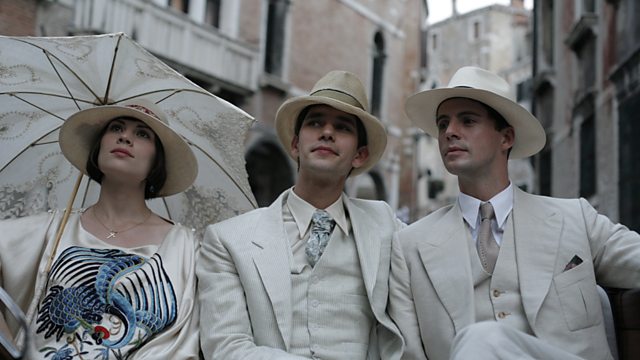
Hayley Atwell, Ben Whishaw and Matthew Goode make for a bad revisitation to Brideshead

Director: Julian Jarrold

Cast: Matthew Goode (Charles Ryder), Ben Whishaw (Lord Sebastian Flyte), Hayley Atwell (Lady Julia Flyte), Emma Thompson (Lady Marchmain), Michael Gambon (Lord Marchmain), Greta Scacchi (Cara), Patrick Malahide (Mr Ryder), Felicity Jones (Lady Cordelia Flyte), Ed Stoppard (Lord Brideshead), Jonathan Cake (Rex Mottram), Joseph Beattie (Anthony Blanche)

There are some books that have been filmed definitively and you feel just shouldn’t be touched again. Perhaps the most definitive case is Brideshead Revisited. An 11-part, almost 13-hours-long, series from the height of the mini-series era, ITV’s 1981 Brideshead Revisited dramatised literally every page and every event of the just over 300 page novel, and did it with a perfect understanding of the book’s richness and complexity. So what hope could a film have – even if it is written by that man who had such a triumph with that other definitive production, the BBC Pride and Prejudice – Andrew Davies himself?

In the 1920s in Oxford, aspiring artist Charles Ryder (Matthew Goode) falls in with the bohemian set of fellow student Lord Sebastian Flyte (Ben Whishaw). Sebastian takes Charles to his family home of Brideshead, a beautiful, entrancing family estate. But Sebastian is an unhappy man, increasingly prone to drinking, conflicted about his family’s strong Catholic faith and his own sexuality. He’s also tortured by the growing love between Charles and his sister Julia (Hayley Atwell). Their domineering mother Lady Marchmain (Emma Thompson) attempts to guide the family as she wishes, but Sebastian’s alcoholism leads to a crisis. Years later Charles and Julia restart their relationship, only to find Catholicism and fate once again intruding to complicate matters.

Brideshead Revisited is a rich, sweeping, heartfelt and profound look at so many themes it seems impossible to cover them all in a single sentence. It touches upon questions of faith, class, politics, friendship, sexuality, love – all of them sensitively and intelligently explored by Evelyn Waugh. The TV series captured all these themes with an acute, empathetic emotional intelligence. This film, forced to telescope action into two hours, simplifies and sexualises the novel to make it as boiled down and simple as possible. While this probably makes for a decent, but nothing new, film for those who don’t know the novel, for those of us who do it’s nothing less than a total travesty.

Everything is made as straight-forward and basic as possible. Subtle suggestions from the novel are turned into blunt, simplified assertions that clang out of the actors’ mouths and hit the ground. This is especially clear in the character of Charles Ryder, a fascinating observer in the novel, both a snob and a romantic, capable of great warmth and kindness and also a distant indifference. Here, he’s little more than a social climber (his lower middle class roots are stressed), constantly being asked “What do you really want?” by other characters. His attachment to Sebastian, and introduction to the Brideshead house, seems based less on a magnetic friendship and more on his unspoken desire to be part of an “in-crowd”.

Ah yes, that relationship with Sebastian. Ben Whishaw’s performance as Sebastian is, quite simply, one of the worst realisations of an iconic character you are ever going to see. The novel’s Sebastian, is an impossible glamourous, handsome, slightly effete, but magnetically charismatic figure who effortlessly wins admirers and friends everywhere – so much so, that his intensely vulnerability, sadness and self-loathing that lead to his alcoholism are spotted way too late, and then hideously mismanaged. The character Whishaw plays here is so different, he’s effectively Flyte in name only.

It all stems from the film’s longing to put the book’s suggestion of a homosexual bond between Charles and Sebastian to the forefront. So we are made perfectly aware of Flyte’s feelings, and Whishaw turns the character instead into a stereotypical, limp-wristed, effete, tragic gay man struggling with a hopelessly unrequited love for Charles that pushes him over the edge to depression. Oh yes, it has to be unrequited love because we can’t have Charles show any homosexual inclinations. Particularly as the film is desperate to reposition Charles and Julia into a “love-at-first-sight” romantic couple from the start. So of course we have Charles twice rejecting sexual advances from Sebastian (once with the cold shoulder, the second time with an angry push). 

But in sexing up the content on the surface, the film totally kills the bond between the two characters. There is, frankly, no reason for Charles and Sebastian to be friends. Sebastian is from the start a slightly pathetic figure, so you never get a sense at all why Charles is drawn towards him. This then magnifies the feeling that Charles main motivation is the house (and Julia) and that he sees Sebastian as someone he must tolerate (and whom he later feels guilty about) rather than as a friend. Sebastian himself loses all his complexity, instead becoming a slightly pathetic, tragic, overlooked figure reduced to screaming at Charles “You only wanted to be my friend because you wanted my sister!” By pumping up the subtext, the film kills the central relationship of the book – and completely undermines the tragedy of Sebastian.

But then Andrew Davies was keen – as he stated himself in interviews – to reposition the novel as a conventional great romantic novel. Now it’s true that Charles calls Sebastian in the novel the “fore runner” for his feelings for Julia (and this relationship between Julia and Charles is, I will say, one thing the TV series didn’t quite nail), but in no way was she his main focus from the start. It makes Charles’ treatment (and, let’s be honest, leading on) of Sebastian crueller, and it also crudely simplifies the novel into a “love against the odds” story that we’ve seen a thousand times before. It drains the novel of one of the factors that made it original in the start.

So we end up with a Charles who basically, rather oddly, suffers the company of Sebastian but treats him as someone he wants to shrug off. We’ve got a romantic plot line between Julia and Charles that has been reduced to the most basic, cookie-cutter, Mills and Boon romance you can imagine. And the film still struggles through to attempt to deal with the book’s (perhaps) other major theme, religion. Catholicism, guilt and the power (and domination) of faith is key to the book – but here, it’s a crude subplot that positions religion as a sort of trouble-causing piece of mummery that gets in the way of happiness. Pretty much as far as you can get from Waugh’s understanding of the complex demands of faith, denial, guilt and love.

You could say it’s unfair to continually compare the film to the book and TV series. But not only is this meant to be an adaptation, but the film chose to shoot at Castle Howard in Yorkshire, just as the TV series did. So we see scenes play out, often in the exact same location as the masterful TV series. If the film doesn’t want to try and be original and find a new location, and visually apes the TV series as much as possible, it feels fair enough to compare it – and it find it wanting.

It’s a well-made film, I’ll give it that, and I like Adrian Johnstone’s score, but it’s turned an intelligent and absorbing novel into a sub-Merchant Ivory period prestige piece, with the focus on the lovely locations and the beautiful costumes rather than anything else. Performances wise, Matthew Goode is fine (but can’t escape the shadow of Jeremy Irons), but Hayley Atwell probably comes out best as a vibrant Julia (who gets, in a way, much more to do than the book gives her). For the rest, Emma Thompson gives a far too mannered performance as the domineering Lady Marchmain (here unquestionably a villain) and Michael Gambon coasts as the dying Lord Marchmain (who here turns up literally out of the blue at the end of the film to die).

Brideshead Revisited is an irrelevant piece of celluloid that brings nothing new whatsoever to the novel or the TV series. Worse it takes the key themes of the novel and subverts, ruins or mangles them in order to try and turn the story into a straightforward heterosexual romance. In doing so, it removes everything that makes the original interesting, unique or compelling – and makes people wonder why they should bother going back to the book – surely the worst offence of all.

Heat (1995)

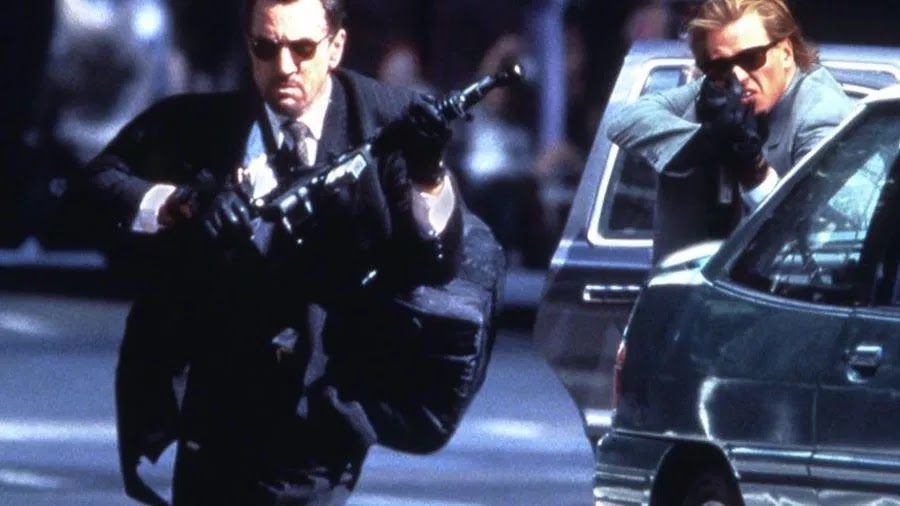
De Niro is packing Heat

Director: Michael Mann

Cast: Al Pacino (Lt Vincent Hanna), Robert De Niro (Neil McCauley), Val Kilmer (Chris Shiherlis), Jon Voight (Nate), Tom Sizemore (Michael Cheritto), Diane Venora (Justine Hanna), Amy Brenneman (Eady), Ashley Judd (Charlene Shiherlis), Mykelti Williamson (Sgt Drucker), Wes Studi (Detective Sammy Casals), Ted Levine (Detective Mike Bosko), Dennis Haysbert (Donald Breedan), William Fichtner (Roger van Zandt), Natalie Portman (Lauren Gustafson), Tom Noonan (Kelso), Kevin Gage (Waingro), Hank Azaria (Alan Marciano), Danny Trejo (Trejo), Xander Berkeley (Ralph)

In the mid-90s, Heat was the cinematic event of the year. De Niro! Pacino! Together! In one scene! The two acting heavyweights – wildly proclaimed and popular since the 1970s – had of course made The Godfather Part II together but had shared no scenes. Here, however, we’d see them both at the same time riffing off each other. The great thing is that there is so much more to Heat than just that one scene. Heat is a sort of poetic cops and robbers flick, part stunning action adventure, part profound exploration of the internal souls of men chasing down leads, both good and bad.

Neil McCauley (Robert De Niro) is a skilled career criminal who lives his life with a monastic self-denial, saying you can have nothing in your life “that you cannot walk out on in 30 seconds flat if you spot the heat around the corner”. Vincent Hanna (Al Pacino) is a bombastic, egotistical, workaholic detective with a self-destructive family life. Naturally, these two men find themselves on opposite sides, as McCauley plans his next job and Hanna works to stop him. But the men, with their similar codes dedicated to their chosen career, find that they have an increasing mutual respect – not that that will stop either of them “putting the other one down” if push comes to shove.

Heat is the pinnacle of Michael Mann’s career, and his most triumphant exploration of the conflicted, complex, masculine personalities at the heart of the high-adrenalin worlds of crime and police work. Mann has a gift for giving the simple rush and tumble of cops and robbers a sort of epic poetry, like a metropolitan Beowulf, and he achieves this again here. Heat is a film that throbs with meaning, it’s cool blue lensing and chilly, modern architecture serving as a perfect counterpoint to the cool, professional and focused personalities of its characters.

Heat also goes the extra mile by building this playground confrontation into a mythic battle of wills, a battle of principles and ways of living that seem separated only by a few degrees. Mann invests this with such sweep, such grandiosity (without pomposity), such scale that it becomes a sort of modern epic, a film where intense meaning can be mined by the viewer from every scene. Whether there is in fact any meaning there – avoid listening to Mann’s commentary which drills down so many of his elliptical character beats and open-ended scenes into the dullest, most predictable tropes that he had in mind while filming – is another issue, but Mann’s trick as always with his best work is to make something really quite small and everyday seem like a grand, timeless epic.

It all boils down to that famous coffee shop scene, where De Niro and Pacino for a few magic moments come together. It’s a scene that explicitly asks us to see cop and criminal and understand that there is in many ways very little to choose between them. It hinges on the gentle competitiveness of the actors, and the way they subtly play off each other. It also plays on our own histories of these two actors, of decades of seeing them as two sides of the same coin, both carrying so much cultural baggage for a string of iconic roles that saw them rule Hollywood for over a decade. It’s the sort of scene given extra investment, where you sense the mutual respect of the actors fuelling the strange bond that powers the scene. 

It’s also the one scene of the film that Pacino underplays in. The rest of the film he goes way bigger, powering through each scene with an explosion of shouting and drama. It’s a performance ripe for parody, with more than an edge of ham, but it just about works. Pacino turns Hanna (hilariously the character shares a name with a BBC political journalist of the 1980s) into the purest form of adrenalin junkie, a larger-than-life personality who tears through people and cases with a focused determination that allows no room for a personal life. De Niro downplays far more by contrast, apeing a sort of 1940s noir cool, a monkish insularity that prevents anyone from getting close to him, mixed with a laser-guided determination to do whatever it takes to make his score.

Mann’s film throws these two characters into a series of stunning set pieces with the bank robbery at the centre (“the one last score” that McCauley can’t pass up no matter the danger). The robbery – and the shoot out that follows it – is a triumph of action cinema, brilliantly shot and edited. The gun play is stunning, with Andy McNab having served as a consultant for the actors on the use of automatic weapons. The scene rips through the screen, spewing bullets all over the place in a ruthless, no-onlooker-spared rampage that also really pushes the limits of effective sound design. That’s just the highlight of several scenes that – with guns or otherwise – hum with tension, danger and excitement.

Mann also has enough room in this film though to skilfully establish a number of supporting characters with compelling story lines of their own. Val Kilmer is a tad wooden as McCauley’s number two, but his storyline of troubled marriage is mined for unexpecting pathos (thanks also to Ashley Judd’s fine work as his wife). Kevin Gage is very good as a psychopathic criminal unwisely brought on board to fill a slot in an early robbery. Dennis Haysbert has his own tragic plotline as a criminal trying to turn straight. Diane Venora is excellent as Hanna’s neglected wife, as is Portman as his vulnerable daughter-in-law. This isn’t to mention excellent performances from a rogues gallery of character actors, from Jon Voight to William Fichtner. 

Mann keeps all these plotlines perfectly balanced in a film that is very long but never drags for a minute. Crammed with exciting set pieces and brilliant sequences, it’s a film that manages to feel like it is about a very masculine crisis – the failures of men to balance the personal and their career, selfishly harming those around them because of their addiction to action. Mann’s film looks brilliantly at the essential emptiness and sadness this leads to – as well as the blinkered drive that never prevents men from stopping for a second and changing their lives, no matter how many reflective cups of coffee they have. Mann partners this existential, poetic feeling drama with the ultimate crash-bang cops and robbers and thriller, which will leave you on the edge of your seat no matter how many times you see it. Quite some film.

Green Book (2018)

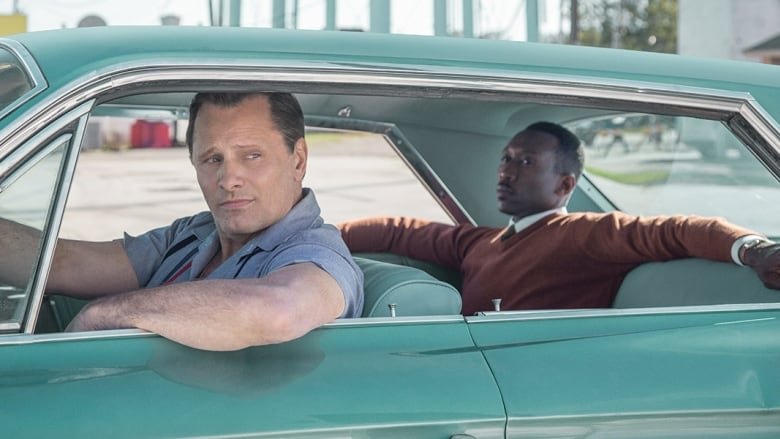
Viggo Mortensen and Mahershala Ali are Driving Dr Shirley in Green Book

Director: Peter Farrelly

Cast: Viggo Mortensen (Frank “Tony Lip” Vallelonga), Mahershala Ali (Don Shirley), Linda Cardellini (Dolores Vallelonga), Dimitar Marinov (Oleg), Mike Hatton (George), Iqbal Theba (Amit), Sebastian Maniscalco (Johnny Venere)

So here we are with a film that might as well be called Driving Dr Shirley. A gentle, ambling, Sunday-afternoon piece of film-making with a rudimentary message, a simplistic world-view and two very good performances at its heart doing all the lifting. Twenty years ago this would have swept the Oscars. As it is it had to settle for just three, including Best Picture, an award that already feels like a triumph of comfortable mediocrity, especially considering Spike Lee’s striking BlacKkKlansman takes such a profound and challenging view of the same issues.

Set in 1962, Green Book follows the “true-life” (heavily disputed by Shirley’s family) friendship between virtuoso classical pianist Don Shirley (Mahershala Ali) and the Italian American Copocabana bouncer Frank “Tony Lip” Vallelonga (Viggo Mortensen) he hires to be his driver for a tour around the deeply racist Deep South states. Can two such different people, over the course of a road trip, find they have more in common they think? You betcha.

Green Book is practically the definition of unchallenging viewing. It tells a lovely, gentle story about two lovely people who, while dealing with the problems of racism in 1960s America, basically have a lovely time bar a few scraps. The film coasts through with a Edward Hopperish nostalgia-tinged views of 60s America peppered with a dash of racist unpleasantness from the people they meet along the way. All this is told with an anecdotal casualness – you can totally tell that the film was inspired by Tony Lip’s son wanting to turn his Dad’s old stories into a film.

And he creates a film where Tony Lip is the hero, and the world of the racist South only truly comes into focus through this white man witnessing the prejudice his black friend must endure (with dignity). While it’s good to have an anti-racist film – however much this film largely focuses on the genteel, country club racism of the upper classes and never dares to go anywhere near the lynch mobs and murders of the Deep South – this is a film that never dives deep with anything and in the end wraps up the instinctive racism and suspicion of Tony’s family in a neat bow and a family dinner with the whole cast. To this film, progress is the name of the game and racism a problem that we are well on the way to solving (again the contrast between this and Spike Lee’s work is really, really striking).

Since the whole film is told from the perspective of Tony – and since the film makers never bothered to consult with Shirley’s family at all, basing all their research on only one side of the story – we never get a real feeling of knowing exactly how Don Shirley might have felt about the attitudes he dealt with, or the reasons behind why he chose to undertake a tour of the Deep South to deal with them, or what he hoped to gain from it. In what should be his own story, he’s a supporting character.

Worse than this, it’s Don who largely seems to need to learn lessons. A dignifed, rarified, dandyish, upper-middle-class near-snob, it’s Don who the film suggest doesn’t understand black culture. It falls to Tony to teach him about everything from black culture: Don’s never heard of Aretha Franklin or Little Richard, never eaten fried chicken, and is deeply uncomfortable around any other black person he meets (unlike Tony’s easy rapport with his fellow drivers, all black). There is a fascinating film to be made here about a man who was at multiple different junctions of minorities – an upper-class black man out of touch with his fellows, a gay man in 1960s America, a black man in the Deep South – but the film doesn’t want to tell that story. I’m also going to leave it out there that only very short shrift is given to black culture (defined by 3-4 things) or Don’s argument that not all black people ipso-facto should like the same things.

Tony on the other hand doesn’t really need to learn anything. An opening scene has him uncomfortably throwing away two glasses used by black-handymen working in his home. But this is literally the last racist action or thought he has in the film – and seems like something that comes completely out of left field. He has no objection to working for Shirley, gets on fine with black people, reacts with increasing anger to racially tinged threats and insults etc. I can understand a son writing a script about his father not wanting to show anything unsympathetic, but the glass scene clumsily sets up an obstacle in Tony’s character that never needs to be overcome.

Instead Tony’s real problems with Shirley are based around class. He thinks he’s a snob. As soon as Shirley lightens up a bit, Tony treats him fine. He even happily accepts his homosexuality and playfully accepts some tutoring to improve his gentility. Tony is an overwhelming force for good who rarely says or does anything remotely unsympathetic.

Farrelly’s film is simple and forgettable in the extreme, but it’s enjoyable enough and passes the time. This is largely because of the two leads. Mortensen’s performance skirts around parody but has such larger than life joie de vivre you hardly mind. He’s very funny and also rather endearing and utterly convincing. Ali mixes in some genuine emotion and loneliness in amongst the more obvious class-based imperiousness. It’s enough that you wish we had got to see that slightly more interesting story under the surface. Green Book is utterly unchallenging and totally gentle. Nothing wrong with that, but it will fade from your memory as soon as the credits roll. Except with its bizarre Best Picture win it’s now a permanent piece of film history.

Star Wars Episode II: Attack of the Clones (2002)

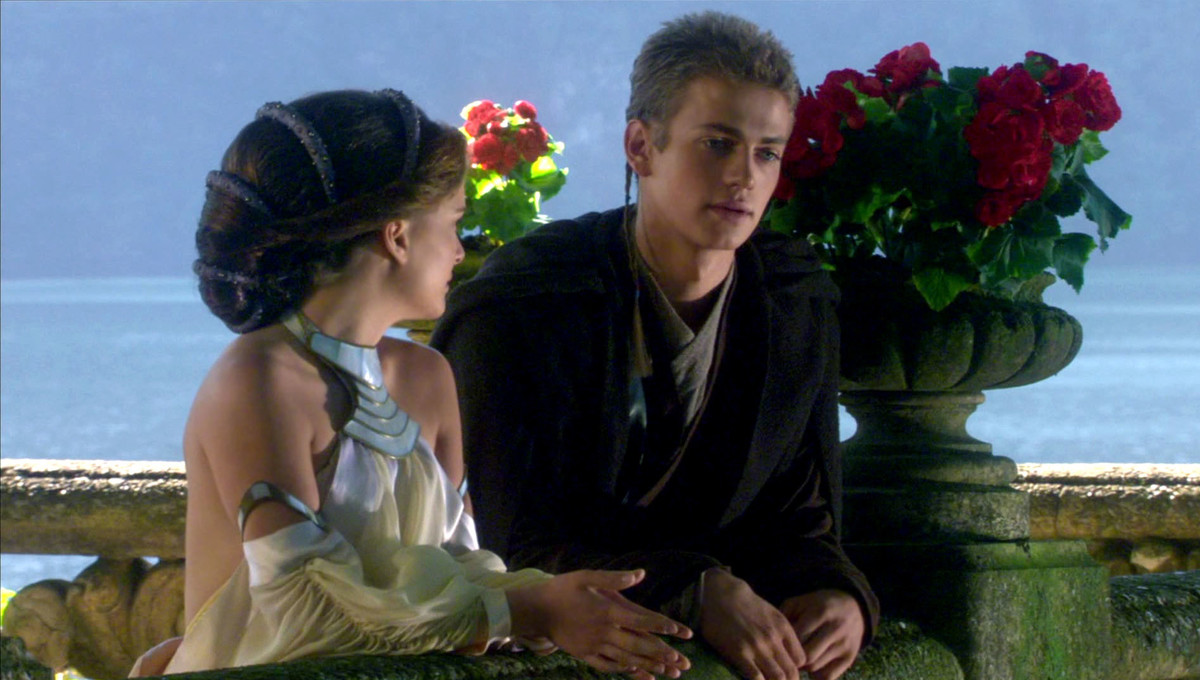
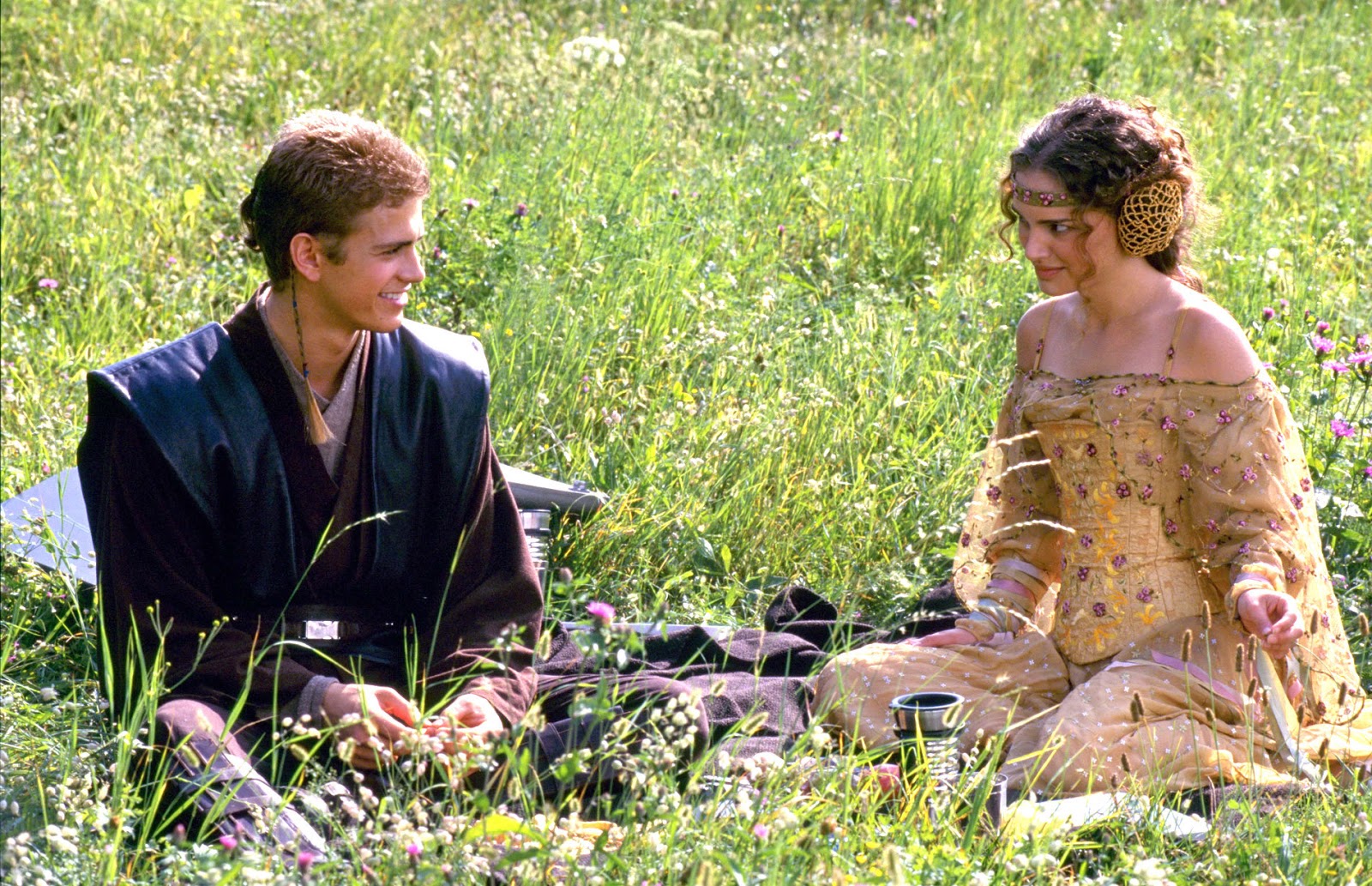
He hates sand you know. Anakin puts the moves on Padmé in Attack of the Clones

Director: George Lucas

Cast: Ewan McGregor (Obi-Wan Kenobi), Hayden Christensen (Anakin Skywalker), Natalie Portman (Senator Padmé Amidala), Ian McDiarmid (Chancellor Palpatine), Christopher Lee (Count Dooku), Samuel L. Jackson (Mace Windu), Temuera Morrison (Jango Fett), Frank Oz (Yoda), Anthony Daniels (C-3PO), Kenny Baker (R2 D2), Jimmy Smits (Bail Organa), Ahmed Best (Jar Jar Binks), Pernilla August (Shmi Skywalker), Joel Edgerton (Owen Lars), Silas Carson (Nute Gunray/Ki-Adi-Mundi)

Nothing could be as bad as The Phantom Menace. Surely? Well, umm, Attack of the Clones is pretty bad, but it’s not quite as stodgy and racist as the first one. It really isn’t. But don’t get me wrong, it’s still tone death, poorly written, crappily directed, poorly assembled, textbook bad film-making disguised under a lot of money.

Anyway, ten years have crawled by since Phantom Menace. Padmé (Natalie Portman) is now a senator campaigning against a revolutionary Separatist movement in the Republic, led by mysterious former Jedi Count Dooku (Christopher Lee). After a failed assassination attempt, Jedi Knight Obi-Wan Kenobi (Ewan McGregor) and his Padewan pupil Anakin Skywalker (Hayden Christiansen) are assigned to protect her. After another assassination attempt throws up a strange link to a mysterious planet of industrial cloners, Obi-Wan investigates leaving Padmé in Anakin’s care: but the two of them are falling in love, strictly against the rules of the Jedi order.

Sigh. Attack of the Clones is once again a mess, overly computer engineered, badly directed by a director with no knack for visual storytelling other than throwing special effects at the screen. It has a densely disinteresting plot about shady dealings around a mysterious Clone army that eventually the film doesn’t bother to resolve. Lucas shoots the entire film in a shiny, sterile, entirely computer generated environment that looks worse and worse the older the film gets. It builds towards a series of clashes at the end that have impressive spectacle on first viewing, but are hugely empty viewing experiences the more you come back to them. But all this isn’t even the film’s main problem.

First and foremost, the most egregious problem with this film is the romance at its heart. This romance, whose impact is meant to be felt through every film is to come, is as clumsy and unconvincing as anything you are likely to see. Not for one second are you convinced that this couple could ever actually be a thing. For starters Anakin is a whiny, preening, chippy rather dull man who over the course of the film murders a village full of people. Hardly the sort of character to make women swoon. On top of this, his romantic banter and tendency of staring blankly and possessively at Padmé has all the charm of a would-be stalker, mentally planning out the dimensions of the basement he’ll imprison his love in. 

Padmé is hardly much more engaging. Her way of handling this love-struck young man, who she claims she doesn’t want to encourage? To flirt with him in a series of increasingly revealing costumes, while constantly telling him “no we can’t do anything” – for unspecified reasons. But then as she says “you’ll always be that 12 year old boy to me” (Oh yuck George!). Portman looks she can barely raise any interest in holding Anakin’s hand, let alone conceiving future generations of Skywalkers. The desperate attempt to create a sense of “love across the divide” falls flat, flat, flat with all the sweep of a Casualty romance of the week. Put it frankly, we are never ever given any reason at all for us to think that they have any reason to be in love.

Despite all this the film desperately tries to throw them together into a series of clichéd romantic encounters, from candle-lit meals to gondola cruises around the lakes of Naboo. Jesus the film even throws in a flirtatious picnic (in which, true to form, Anakin espouses the benefits of totalitarianism, hardly the sort of thing to get a young girl’s heart fluttering!) followed by a roll around in the long grass after a bit of horseplay. To be honest it’s sickening and all the fancy dressing in the world never disguises the utter lack of chemistry between either characters or actors. And you’ll suffer with the actors who are trawling through the appalling “romantic” dialogue. The infamous “I don’t like sand. It’s coarse and rough and irritating and it gets everywhere. Not like here. Here everything is soft and smooth” sums it up – especially as Anakin ends it with stroking Amidala’s exposed shoulder possessively. Late in the film Padmé says “I’ve been dying inside since you came back into my life” – I know how she fuckin’ feels.

But then to be honest nothing really works in this simply terrible film. Of course a lot of the blame rests with Lucas whose overwhelming ineptitude as a writer and director is exposed in scene after scene. Most of the dialogue lacks any wit or lightness at all, constantly straining for a grandeur it can’t deliver and reads like George simply knocked out the first draft and left it at that. As for his directing: the camera positioning lacks any imagination what-so-ever. Most scenes that don’t have lightsabers feature characters sitting talking at each other to fill in plot details (I’m not joking here, there are so many different designs of chairs in this film it’s like strolling around IKEA). Sometimes George spices it up by having characters work slowly and aimlessly from A to B telling each other the plot (I’m failing to resist saying this is a pretty decent metaphor from the film).

The film shakes this up with a few action sequences which either tediously ape things we’ve seen before, but not-as-good (a chase through an asteroid field smacks of Empire Strikes Back) or having a computer game realism to them that never involves you. A prolonged sequence in a battle droid factory literally looks like a computer game from its hideously shiny lack of realism, to its logic, to the way George shoots it with the conveyor belt moving relentlessly forward visually like a dated platform game.

In fact computer game is a pretty good way of thinking about this film. When making this film, Lucas was convinced this would be the start of a new age: that only dull, traditional directors would be building sets and that all the cool kids would make everything in computers. Watching this film today in hi-def blu-ray does it no favours. Lucas’ computer generated sets (in most shots everything except the actors and their costumes are not real) look ridiculously shiny and unrealistic. There is no weight and reality to anything. Instead it all looks like some sort of bizarre, wonky computer visuals. How can you invest in anything in this film when even the goddamn sofa they are sitting on is a visual effect? How can anything have any weight or meaning? Compared to the lived in appearance of the Millennium Falcon, nothing looks realistic or carries any weight at all.

George Lucas isn’t really a director of action either. It’s hard not to compare the epic battles here with the style and substance of the (equally effects filled world) of Lord of the Rings being released at the same time. There, the battle scenes not only carry real emotional weight and peril but also have at least some sense of tactics and story-telling. This is just a collection of special effects being thrown at each other, like an exploding fart in a special effects lab. This makes for events that look impressive when you first see them, but carry no lasting impact: when you revisit the film, nothing feels important or dangerous or coherent – instead it’s just a lot of stuff happening, loudly.

This goes for the famous Yoda-Dooku light saber duel. Sure when I first saw this, seeing a computer generated muppet take on a stunt double with an octogenarian’s face super-imposed on his felt really exciting. But again, on repeated viewings, it’s just a load of wham and bang that kind of leaves you cold (not least because the fight is a showy bore-draw). It’s as ridiculously over-made and over stuffed as half a dozen other fights in the film. It’s almost representative of how crude these prequels are: a character always defined by his intellect and patience in Yoda reduced to a bouncy special effect for a moment of cheap “wow” for the fans. I’ll also throw in the lousy fan service of turning Boba Fett (a character who has a fascination for a lot of fans for no real reason) into an integral part of the Star Wars backstory – as if George intended this character at any point to be so popular, until he released the merchandising opportunities…

Lucas’ direction fails time and time and time again. Even small scenes fall with a splat or feature moments that get the wrong type of chuckles. The moment where Anakin embraces his dying mother? Forever ruined by the snigger worthy collapse of Pernilla August’s Shmi in his arms, looking like a primary school child miming playing dead (tongue out and all) in a school play. Obi-Wan and Anakin’s chase through the skies of Coruscant packed with “jokey” attempted buddy cop lines that never ring true. The film has even more skin crawlingly embarrassing scenes than Phantom Menace, from a sickeningly cutesy room of “younglings” learning Jedi skills to Obi-Wan’s bizarre encounter with a greasy alien in some sort of American diner. There is precisely one moment of wit in the film (Obi-Wan using the force to tell a drug dealer to “You want to go home and rethink your life”). Other than that – nope, it’s poorly made, poorly written, poorly assembled rubbish.

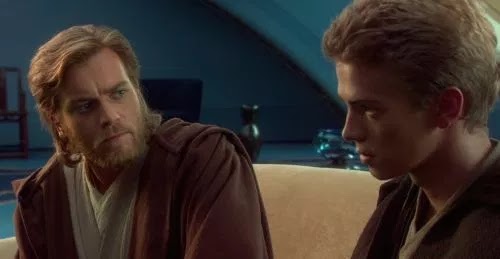
None of the actors emerge with credit. Pity poor old Hayden Christiansen, left to his own devices by Lucas’s inept, direction free, direction. But he is absolutely, drop-down, unreedemably awful in this film. In fact Anakin, far from being a jumping off point, was the death-knell of his career. Was there really no other young actor with charisma who could have stepped in to take this role instead? Portman fairs a tiny bit better, while at least McGregor, Jackson and Lee have enough experience to take care of themselves. But there is no sense of relationship between any of these characters. The two most important relationships Anakin has in the film contain no chemistry: he and Padme and he and Obi-Wan (neither of whom seem to particularly like each other).

Attack of the Clones could never be as disappointing as Phantom Menace (what could?) but it’s far, far, far away from being a good film. It’s got a simply terrible script, is directed with a dull flatness that all the CGI flair and shouting can’t distract you from. There is nothing in there for you to invest emotionally in. It’s built around a relationship that quite frankly doesn’t work at all on any levels. It builds to a random ending that feels like George ran out of ideas rather than because it meets any thematic reason. How could it all have gone so wrong?

The Anderson Tapes (1971)

Sean Connery plans the perfect crime under the noses of the government in The Anderson Tapes

Director: Sidney Lumet

Cast: Sean Connery (John “Duke” Anderson), Dyan Cannon (Ingrid Everleigh), Martin Balsam (Tommy Haskins), Ralph Meeker (Captain Delaney), Alan King (Pat Angelo), Christopher Walken (The Kid), Val Avery (“Socks” Parelli), Dick Anthony Williams (Edward Spencer), Garrett Morris (Everson), Stan Gottleib (“Pop”)

Everywhere we go now we kind of know that we are being watched. There are cameras everywhere. Satellite links build into our cars. Heck we all carry everywhere we go a portable tracking and recording device that can be listened into. So the idea of surveillance being ever present wouldn’t be a surprise to us. But in 1971, the idea that the government could be listening all the time, at any time was something that couldn’t cross anyone’s mind. 

It certainly doesn’t occur to John “Duke” Anderson (Sean Connery) just out of chokey after a ten year stretch. He’s back into a world he hardly understands, but it doesn’t take longer than five minutes in the swanky apartment block of his girlfriend Ingrid (Dyan Cannon) for him to case the joint and plan to do it over – all the apartments at once. Putting a crew together, Duke plans to clean out all the whole block of all its valuable property in one go, with financial backing from the Mafia (who owe him for unspecified reasons). Problem is, Duke’s entire plan is being recorded and monitored by different government agencies from top to bottom who – even if they aren’t speaking to each other – are in position to wreck his plans the instant anyone puts the clues together…

The Anderson Tapes is part crime thriller, part black comedy caper. It generally plays it pretty light – with flashes of violence or danger – and throws in some satire on the surveillance age. The tapes in question are different levels of surveillance at every location Duke seems to stop at. His time in the apartment is recorded by a PI following his girlfriend. The feds bugging his mafia contacts. Most of his criminal gang are being watched by the cops. All this recording creates a load of trees which block the view of the forest. Not one of these agencies thinks about joining up their thinking, meaning the actual robbery comes as a complete surprise to all of them. It’s a neat satirical mark on the incompetence of administrative led organisations – when the robbery is finally being reported by a ham radio operator, the news almost doesn’t get through because of a refusal by the 911 operator to transfer a call without an agreement on who will pay the charges for the call.

In all this surveillance Duke is like a romantic hangover from a by-gone time. As played by Sean Connery he’s a romantic figure, like some sort of working-class Raffles, living by the principles of a gentleman thief. He abhors violence, gets on well with all races and creeds, respects his victims and protects them (so long as they don’t get in his way) and runs operations designed to be clean, quick and painless. He justifies his thievery with talk of how most of the property he nicks is just sitting pointlessly in safes, that the insurance will pay out and that in a way he’s giving a bit of excitement to bored middle-class people. Connery is rather good in this role, channelling this rogueishness and expertly maintaining Lumet’s light tone.

Lumet’s direction is competent, professional and assured. Lumet did not hold the film in high regard – it was one he did “for the money” – but he expertly constructs the film, keeps it tight and brings more than enough intriguing directorial flourishes to it. The action frequently pauses in the criminals conversation for a jump cut to the feds listening to the recordings, having paused the recordings themselves (the paused action even uses voiceover from the feds asking for confirmation of who they are listening to). Later, Lumet uses a similar device in the robbery interjecting flash forwards to the people in the apartment bloc being interviewed on site by the police, commenting on events we have often just seen while the aftermath plays out behind them, that throws in plenty of narrative curve balls and misdirects as the action pans out.

The film is dated in places. Quincy Jones’ score often uses a jarring series of electronic beeps that are meant to echo the surveillance of the piece, but actually sounds impossibly dated and jarring. An opening monologue of Connery on the thrill of safe cracking uncomfortably sounds like he is comparing it to non-consensual sex, Martin Balsam’s gang member is an impossibly limp-wristed antiques expert (although he is immediately believable as someone who wouldn’t be questioned surveying apartments for architectural improvements while he is actually casing the joint). There are other moments – but the film gets by because it never leans too hard on any of these attitudes. Indeed the apartment concierge, is depicted as inflatteringly racist and homophobic, in stark contrast to the multi-ethnic, un-prejudiced gang carrying out the robbery.

The Anderson Tapes is an enjoyable, is very 1970s, piece of work that has more than enough to entertain you. It has a clever structure and makes some sound points on surveillance which probably make it more relevant today than it even was then. Connery is very good in the lead role and there is some excellent support (Christopher Walken is strikingly charismatic in one of his first roles). It’s not in the first rank of its director’s films, but it’s still a very fine caper thriller.

Can You Ever Forgive Me? (2018)

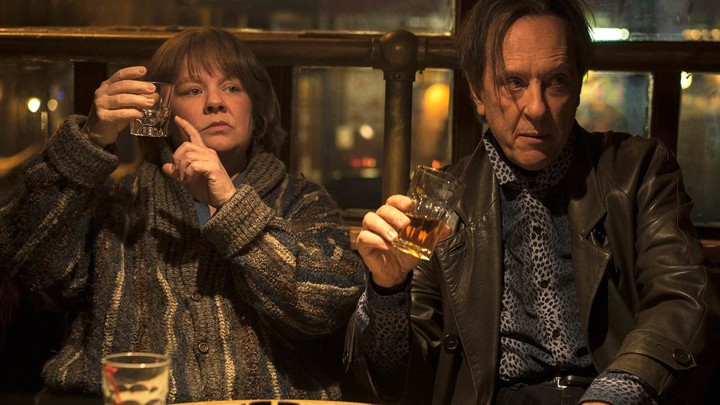
Melissa McCarthy and Richard E. Grant excel in Can You Ever Forgive Me?

Director: Marielle Heller

Cast: Melissa McCarthy (Lee Israel), Richard E. Grant (Jack Hock), Dolly Wells (Anna), Jane Curtin (Marjorie), Anna Deavere Smith (Elaine), Stephen Spinella (Paul), Ben Falcone (Alan Schmidt)

There is a certain pleasure in seeing the pretensions of the pompous being pricked. Is there anyone more pompous than the self-conscious exhibitionism of the literary collector? You know the sort – the kind who talk about how witty and true “dear Noël and Dorothy” were, and will pay a fortune in order to prominently display (show off) typewritten and signed epistles from their literary heroes, eager to be touching just a hint of the greatness of others. It’s a market failed writer Lee Israel managed to find herself immersed in – the difference being Israel was turning out brilliantly written pastiches, with forged signatures, that she was selling on to dealers.

Lee Israel (Melissa McCarthy) is a bad-tempered, difficult personality with a chip on her shoulder and a horror at the idea of letting anyone get too close to her. Struggling to make ends meet, she stumbles across some letters from Fanny Brice. Trying to sell them, she finds they sell for a lot more if she uses the blank space at the bottom of the letter to add a witty, more personal PS. From there she starts writing whole correspondences from scratch, covering authors as varied as Noël Coward, Dorothy Parker and Ernest Hemingway, her dedicated research producing letters that feel real and genuine. She’s aided and abetted by her sole friend, a drunken, seedy British homosexual Jack Hock (Richard E. Grant), who mixes genuine warmth and friendship with casual lies and betrayals. But how long can this criminal enterprise last?

Can You Ever Forgive Me? is an entertaining, well made part caper, part comedy, part sad little tragedy of a lonely woman struggling against the world. Lee Israel is blunt, rude, aggressive and speaks her mind and steadfastly refuses to live the kind of life required to get ahead in the literary world. She’s barely tolerated by her agent, and almost impossible to make friends with. Saying that, McCarthy’s trick is to make her far more of a Victor Meldrew character, railing against the petty rudeness and snobbery of the world, rather than an outright bully. It’s notable that the people she is most rude to are all cruel to her first.

All this helps you to invest in Israel, and feel sorry for a frightened, lonely woman who won’t let anyone into her life apart from her cat and feels only bitterness and frustration at where her career has taken her. Sure she may be difficult and even irritating to know personally, but Marielle Heller’s well-made film invests her with a great deal of empathy. Heller’s direction is shrewd, gentle and manages to turn a difficult woman into someone we end up feeling sorry for.

It also helps that this is a really warm, rather touching, relationship film that covers two best friends – and that it might well feature career best performances from the Oscar-nominated pair Melissa McCarthy and Richard E Grant. McCarthy (looking like a frumpy Annette Badland) is exceptional as Israel, vulnerable but defiant who makes more trouble for herself than she needs. Heller introduces a fictionalised semi-romantic interest from one of her literary dealers, a sensitive, kind would-be writer Anna (played well by Dolly Wells). It’s a relationship that shows Israel’s emotional frostiness, her instinctive defensiveness towards any personal interest – as well as hints of her guilt for essentially defrauding this woman. McCarthy’s performance – often caustically funny – is also deeply affecting for its fragility and desperation, too socially awkward to build relationships.

It also sparks brilliantly well off Grant’s superb performance as transient semi con-man Jack Hock. Grant channels elements of Withnail in the character’s bohemian alcoholism, but Jack is far more complicated than that. A wonderful contrast with Israel, Hock is immediately able to form bonds with people, patient, kind, gentle, an amusing raconteur and a man who takes pride in dressing up. Grant’s performance is humane, sensitive but also deeply funny with a long streak of selfishness and self-destructive compulsion. The relationship between these two is the heart of the film, an entertaining and endearing odd couple, with Hock getting closer than anyone to thawing Israel’s defences. Grant’s not only wildly funny, but also deeply moving – often in smaller moments, where he gently comforts Israel or (later) asks for forgiveness.

The warmth between the two friends is what makes the film work above anything else. It’s the heart of the movie – and the film is perhaps reliant on the excellence of the two actors and their chemistry. The story around them is, at times, rather slight and generally the film itself is so gentle to verge on being a little forgettable – but you never lose your focus because it has more than enough wit and those two brilliant lead performances to keep it going. Career best work in a well made film, makes this film more than worth catching.