Avengers: Infinity War (2018)

Josh Brolin is hero-villain Thanos in the latest chapter (and it really is a chapter) of the Marvel franchise Avengers: Infinity War

Director: Anthony & Joe Russo

Cast: Robert Downey Jnr (Tony Stark), Chris Hemsworth (Thor), Mark Ruffalo (Bruce Banner), Chris Evans (Steve Rogers), Scarlett Johansson (Natasha Romanoff), Josh Brolin (Thanos), Chris Pratt (Peter Quill), Benedict Cumberbatch (Dr Stephen Strange), Don Cheadle (James Rhodes), Tom Holland (Peter Parker), Chadwick Boseman (T’Challa), Paul Bettany (Vision), Elizabeth Olsen (Wanda Maximoff), Anthony Mackie (Sam Wilson), Sebastian Stan (Bucky Barnes), Tom Hiddleston (Loki), Idris Elba (Heimdall), Peter Dinklage (Eitri), Benedict Wong (Wong), Pom Klementieff (Mantis), Karen Gillan (Nebula), Dave Bautista (Deax), Zoe Saldana (Gamora), Vin Diesel (Groot), Bradley Cooper (Rocket), Gwyneth Paltrow (Pepper Potts), Benecio del Toro (Collector), William Hurt (Thaddeus Ross), Danai Gurira (Okota), Letita Wright (Shuri)
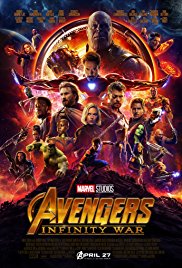
Well this is what it has all been building towards. Or at the very least, this is the start of what it has been building towards, since the film ends on a (slightly underwhelming as soon as you think about it) cliffhanger leadinginto the next film. You never reach the end in these movies – each one, while serving some of the story, is also a jumping-off point for the next one. Marvel’s Cinematic Universe is a triumph of long-form storytelling and juggling characters – but it’s also like a shark moving forward, promising us even more thrills and spills if we tune in next time.

This time the Avengers come together (and overcome inevitable personality clashes) to defeat Thanos (a motion-captured Josh Brolin). Thanos is a lunking purple beast who believes the universe is vastly overpopulated. The solution? Why kill half the universe’s population, so the other half can lead lives of perfect contentment on the remaining resources. How? Well he needs the Infinity Stones, six all-powerful gems that, together, will give him control of time and space. He just needs to wrestle them from their various hiding places.

Avengers: Infinity War has been called less of film and more an episode in a long running TV series. I think that’s fair. This film is in no way designed for anyone new to the saga to step in – half of the expansive cast are not even fully introduced. And actually it’s a good thing: we’re almost 20 films in now into this expanded universe, and if you are one of those critics sniffing that there wasn’t any concession made to the newcomer, well tough. One of the film’s strengths is that it understanding its playing to the galleries of long-established fans. Your enjoyment of the film will only increase the more Marvel films you’ve seen.

Unfortunately this sort of “dive straight in and to hell with the consequences” approach is also the root of the film’s weaknesses. This film’s primary aim is to juggle all its characters successfully, balancing its huge number of events and locations so they remain coherent, throwing in enough set pieces along the way for whoops and cheers. What it manifestly is not for is to tell a story about character or to give us striking visual images.

It’s like a mega, mega, mega budget all-action crossover episode of something. The excitement for the viewer is, say, Iron Man and Doctor Strange butting heads or Thor and the Guardians of the Galaxy exchanging comic riffs. It’s not designed for us to learn anything new about these heroes. In fact, the character beats are pretty formulaic. A standard arc generally goes like this: brief individual introduction doing something everyday, a meeting where much plot is quickly exchanged, bickering, a huge battle and some self sacrifice. Repeat. The film does nothing fresh on this formula which Joss Whedon introduced so well in The Avengers. If it ain’t broke, don’t fix it.
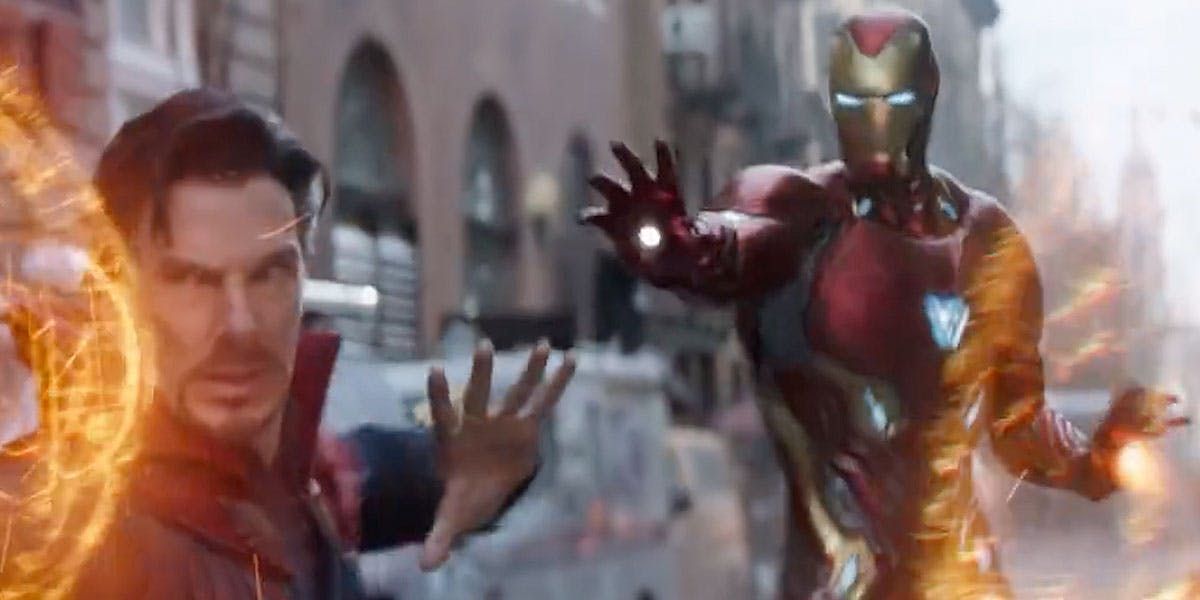
The difference with The Avengers was that it felt like a real novelty, and there was a smaller number of characters to bring together (it seems almost timid now to remember the original Avengers gang was only 6-7 strong – it’s almost 20+ now). Each character had more time and we got a much better sense of how their individual personalities affected the other. Here the Russos have to try and deal with the vast number of heroes by effectively breaking them up into 3-4 silos, giving even the most prominent ones probably no more than 20 minutes of screen time.

On top of which, despite the much vaunted “all bets are off” promotion of the movie, the action still has a stakes-free weightlessness to it. Yes some characters die, and while 1-2 of these might well stick, by the end of the film the main question is how many of the deaths will be reversed, not the impact of them. In fact the final sequence (which sees several deaths) slowly carries less and less weight the more you realise these deaths are really serving as a cheeky “how will they get out of that” moment.

Which is the dark secret of Avengers: Infinity War: it’s really nothing more than a trailer for its sequel. At the end of its vast running time – after all the functionally filmed action and odd decent one liner – you realise you have watched an extended prologue for the next film. That’s the one we’ve all been building for. The events of this film, in the long run, are the long road we need to take to get there.

This is not to say the film doesn’t have moments of enjoyment. The spectacle may not be filmed with much more than a derivative traditionalism, but it can’t help but be enjoyable. There isn’t much imagination about the implications of these heroes’ powers, in the way of say X-Men 2, but it’s still impressive to watch. Thor and Captain America get some pretty cool entrances. 

But I got the impression it must have been pretty boring to act in. Most of the vast cast have very little to do except a few one-liners and then punching. The character who most emerges as a three-dimensional figure is Thanos. Josh Brolin’s interpretation of the character as a sort of misguided humanitarian, who feels to do a great right he must do a greater wrong, yearns not for control of the universe but (in a perverse way) to save it. His quest for these stones is built like some sort of Arthurian epic, involving sacrifice and struggle. It would have been easy to make Thanos a sadistic maniac, but making him someone who believes he is doing the right thing is much more interesting. Essentially he’s the main character of the film.

Of the rest those that get the most to do are those with a connection with Thanos. Zoe Saldana as his adopted daughter turned foe Gamora gets some meaty emotional material, as does Chris Pratt as her would-be boyfriend Peter Quill (Pratt is the actor who probably gets the most “actorly” material in the film by far). Paul Bettany as Vision (the robot with an infinity stone in his head) gets to centre a plot that balances self-sacrifice with his love for Wanda Maximoff (Elisabeth Olson pretty good, even if her character oscillates between bad assery and weeping).

For the rest, it’s just their actor’s charisma that carries them through. Robert Downey Jnr gets a touching moment or two (most notably his reaction to another character’s distressed fear on facing death). Benedict Cumberbatch is great value as Strange. Chris Hemsworth gets to continue flexing his comic muscle as Thor. Others like Chris Evans are criminally wasted.

But then their time will come. Because there is another film in the pipeline – and if our heroes still feel slightly like they can survive anything up to and including getting crushed by a moon, it’s because we know that there are still movies to be made, and money for Marvel to take to the bank. And that’s probably the real nemesis of these expansive, bombastic films: the lack of danger is only going to continue while the studio doesn’t want to kill anyone major off. Hopefully that will change, but without it it’s still a film of the invulnerable hitting the inevitable.

Avengers: Infinity War is pretty good – but largely as a spectacle and because it superficially pays off what you were being hyped up to see in its action and character partnerships. But give it a year or so – and repeat viewings – and I think its stock will fall.  Because it doesn’t really do anything that unexpected, and most of its more daring movies are designed with loopholes to undo them. There are enough bright lights to entertain you (and I mostly was) but I don’t think there is much depth for you to swim in when you come back for a second dip.
Deadpool (2016)

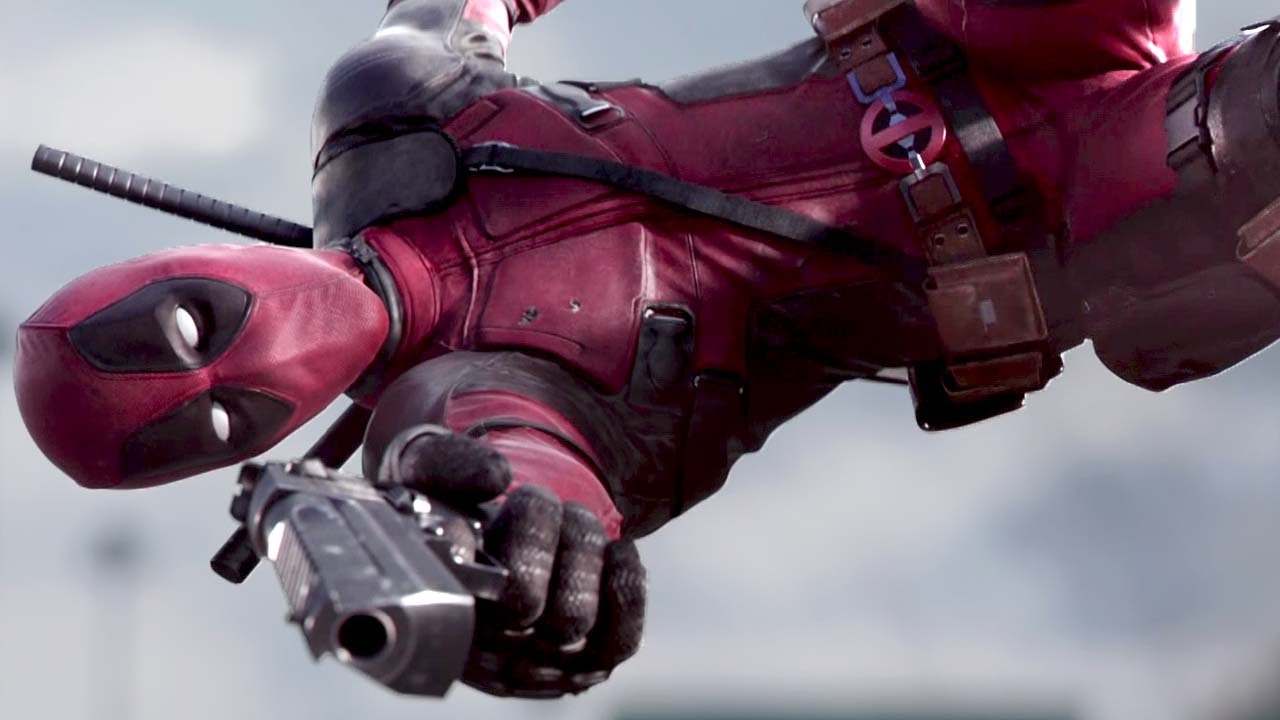
Ryan Reynold swings into action in slightly-pleased-with-itself comicbook satire Deadpool

Director: Tim Miller

Cast: Ryan Reynolds (Wade Wilson/Deadpool), Morena Baccarin (Vanessa), Ed Skrein (Francis Freeman/Ajax), TJ Miller (Weasel), Gina Carano (Angel Dust), Brianna Hildebrand (Negasonic Teenager Warhead), Stefan Kapičić (Colossus), Leslie Uggams (Blind Al)

One day (soon?) we’ll reach critical mass with comic book films. Eventually, when every single character who’s ever appeared in a frame of a DC or Marvel comic has appeared on the screen, we’ll surely wonder if we will ever see anything new again. Some may already feel this, so perhaps that explains why Deadpool, which, for all its faults, is a comic book film doing something different, made such a big impact.

Wade Wilson (Ryan Reynolds) is a mercenary who meets and falls in love with Vanessa (Morena Baccarin). Discovering he has terminal cancer, he leaves her so she does not have to watch him die, and signs up to a gruesome medical procedure designed to bring out dormant mutant genes that may cure him. It works but leaves him hideously deformed. Wanting revenge, he names himself Deadpool and hunts for a cure to his deformity – scared Vanessa would reject him without it.

What Deadpool does well is wittily flag up the familiar tropes of comic book movies. The film in fact follows each trope to the letter – but at least it has a foul-mouthed cheeky commentary. The big question you have to ask is, can a film really be that smart and different if it basically does something very traditional? If I tell you I’m going to perform a tired magic trick you’ve seen before, but I’ll do it while pointing up every single cliché of delivery, with panache, does it matter the magic trick is still as tired as I said it was at the start?

That’s what Deadpool is – the same old ideas, re-packaged in a different way, so juvenile and cheeky that for a beat or two it feels like something new, which it manifestly isn’t. It might not take itself seriously, but it also doesn’t really develop into something unique. The film opens with a neat comic riff on credits, listing not the actors but their generic character traits (“Love Interest”, “Brit Baddie”, “Comic relief” etc. etc.) – sure this is funny and smart, but doesn’t change the fact that the characters themselves are exactly that. 

Deadpool is a faux-clever film. It’s a cheeky piece of college humour: an X-Men film with swearing, sex, fourth wall breaking and gags about other films. There is a sort of witty enjoyment from Deadpool reminding us he knows he is in a movie. But most of the time, he basically behaves exactly like dozens of other lead characters in dozens of other films: he has an emotional arc of fear of rejection and embracing who he is that you’ve seen so many times before.

But the market is so saturated with films like this that the difference of presentation makes you feel for a moment you are seeing something new or clever – rather than essentially a very high budget, end-of-the-pier routine full of cheeky humour. Much of this is pretty funny by the way, but don’t kid yourself that it’s anything clever. And I don’t really think many of the gags here would stand up to repeated viewing – it’s basically just swearing and shocks. The writing is not great, its punchlines and shock beats giving the illusion of intelligent scripting.

Most of its success (in more ways than one) comes down to Ryan Reynolds. Reynolds campaigned for the film to be made for nearly a decade, and he totally nails the character. He thought up many of the best gags, and delivers the entire thing with whipper-snapper quickness and likeability. He gets the balance generally just right, and lands all the film’s big laughs. He’s very good.

But it’s an elevation of material that plays at being clever, while really just being an effective repackaging of the same-old, same-old. Remove the jokes and everything you would expect from a superhero origins story is present and correct. 

So maybe everyone was a little tired of the same old, same old from Marvel et al and wanted something different. That’s the explanation I can think of for why a pretty average film ended up so damn popular. The action when we get it is pretty good, there is some imagination behind the cameras, but it’s basically a teenager’s idea of the best film, like, ever rather than an actually very good film. It’s not reinventing the wheel, but it puts a nice shiny new tyre on it.

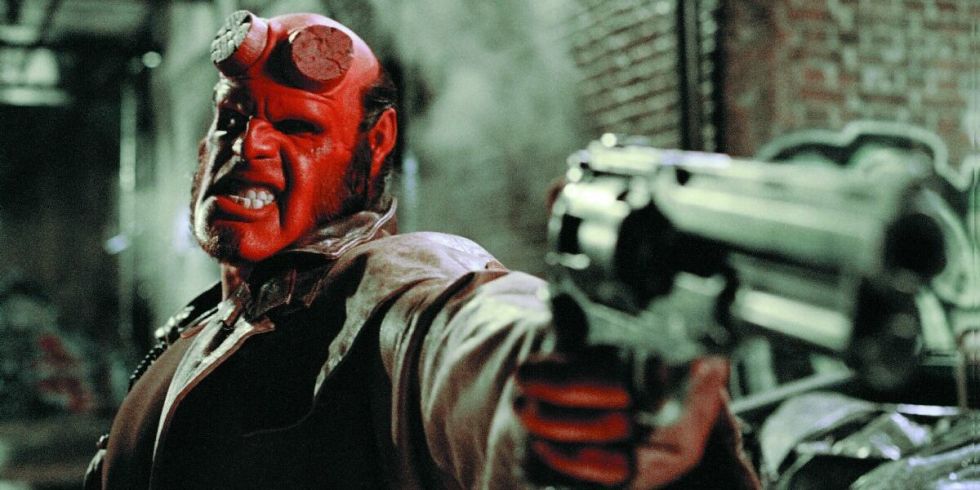
Hellboy (2004)

Ron Perlman fights the darkness in curio del Toro comic book flick Hellboy

Director: Guillermo del Toro

Cast: Ron Perlman (Hellboy), Selma Blair (Liz Sherman), Rupert Evans (John Thaddeus), John Hurt (Dr Trevor Bruttenholm), Karel Roden (Rasputin), Jeffrey Tambor (Tom Manning), Doug Jones (Abe Sapien), Brian Steele (Sammael), Ladislav Beran (Karl Ruprecht Kroenen), Bridget Hodson (Ilsa Haupstein), Corey Johnson (Agent Clay)

As little as 10 years ago, outside a few core characters like Batman, the X-Men or Spiderman, comic book movies were an odd curio hard to place in the mass market. Today of course, you can virtually get any character who has appeared in a cartoon strip up on the screen with a budget of millions. But back in 2004, Guillermo del Toro had to squeeze this project out on a smaller budget in order to get the studio to agree to make the film.

Hellboy has a particularly demented story. In 1945, the Nazis, working in partnership with Rasputin (Karel Roden) – yes thatRasputin, don’t even ask – attempt to open a portal to hell to, well I’m not quite sure what they want to do, but it probably involves the destruction of the world. Anyway, some humble GIs stop them and the only thing that comes through the portal is a little demon with an enormous stone fist. Raised by paranormal expert Dr Trevor Bruttenholm (John Hurt), this creature grows up into cigar-chomping secret-agent-for-the-FBI Hellboy (Ron Perlman), working on paranormal investigations. But when Rasputin returns from the dead it looks like all hell (literally) is about to break out.

Okay it should be pretty clear to you from that that Hellboy is an odd film. It’s very much from del Toro’s B-movie heart, and he invests this nonsense material with a great deal of directorial style and heart – a real “geek-boy-artist” job. Del Toro has a great deal of imagination and is able to strike a happy balance between enjoying the material and not taking it all too seriously. So he lets the film barrel along, throwing plenty of nonsense at the screen without worrying about trying to make it make real-world sense. In fact Del Toro is clearly so fond of the material that he basically shoots the whole thing like a comic book come to life. 

So the film is crammed with bright primary colours mixed with murky blacks, and Del Toro frames many key moments like comic book panels. It’s a film packed with striking images and scenes built around stuff that feels like it should teeter over into ridiculous camp all the time but never quite does. Its steam-punky styling instead manages to feel somehow both strikingly original visually and also strangely packed with integrity – like Del Toro made a very personal big-budget movie for his childhood, the sort of bizarro cult film that’s actually-quite-good and it’s going to win a huge following once people can find it for themselves (which is indeed what happened).

Del Toro’s other great principled stand was to ensure that Ron Perlman played the lead. Hellboy is a bizarre character – over six feet, red, horns, a tail – but what Perlman and Del Toro do so well is to make him some sort of Brooklynish chippy blue-collar worker with a kitchen-sink earthy wit. Perlman is clearly having a whale of a time playing this temperamental demon like some sort of longshoreman Han Solo, a brattish teenager and rebel with a world-weary cynicism. He’s crammed with contradictions (the demon who fights for good!) that Del Toro is keen to explore – and makes consistently interesting.

Because he’s such a different character, he energises a fairly traditional story and his character’s pretty standard personal-struggle-plotline (will he do the right or the wrong thing?). Perlman juggles all this really well, and gives a performance that is both dry and funny but also has moments of real heart and emotion. He even manages to sell his rather possessive love for Selma Blair’s (also pretty good) fellow orphan with pyrotechnical abilities as something heartfelt and caring, despite the fact that at one point he basically stalks her. It’s a rather wonderful performance.

The rest of the cast are a bit more of a mixed bag. Rupert Evans is saddled with the audience surrogate role – asking the questions we can’t ask – while Karel Roden’s lipsmacking performance as Rasputin never quite engages as a villain. Stronger roles come from Jeffrey Tambor as an officious FBI director and especially from John Hurt as Hellboy’s father-figure, the kind of quintessential ageing mentor that you can imagine his wards adoring. 

The rather silly plot doesn’t really matter. The importance here is the gothic chill of Del Toro’s style, mixed with his crazy “larger-than-life” dark comic book tone. And it works really well: the film is fun and witty, and if the storyline never really feels like it earns the “end of the world” threat (and builds towards an uninvolving duking out with a giant CGI monster), there are enough enjoyments along the way to make you want to make the journey.

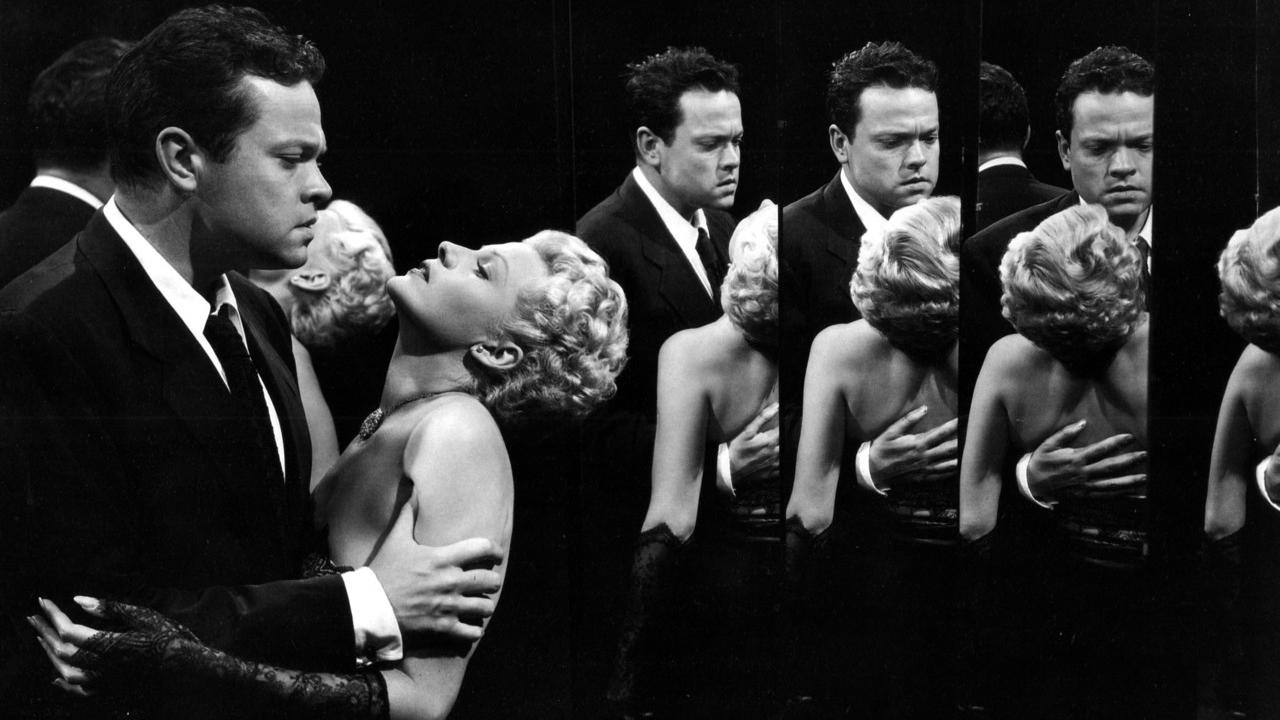
The Lady from Shanghai (1947)

Orson Welles and Rita Hayworth in hall of mirror mystery The Lady from Shanghai

Director: Orson Welles

Cast: Rita Hayworth (Elsa Bannister), Orson Welles (Michael O’Hara), Everett Sloane (Arthur Bannister), Glenn Anders (George Grisby), Ted de Corsia (Sidney Broome), Erskine Schilling (“Goldie” Goldfish), Carl Frank (DA Galloway)

Orson Welles’ career is littered with coulda, woulda, shoulda moments. The Lady from Shanghai is perhaps the most telling lost opportunity in all his extensive CV of recut products and studio interference. Unlike Touch of Evil, there remains no trace of the footage removed from the film by the studio – instead we are left with the remains of the picture that escaped rejigging.

Michael O’Hara (Orson Welles) is an Irish drifter, who saves the glamourous Elsa Bannister (Rita Hayworth) from muggers in a park. Attracted to him (perhaps), as he is to her, she hires him to work on a yacht she and her husband, famed lawyer Arthur Bannister (Everett Sloane), are sailing around the coast. During the voyage, O’Hara is approached by Bannister’s business partner George Grisby (Glenn Anders) with a deadly proposition – and is sucked into a web of cross and double cross.

The Lady from Shanghai is an odd curiosity. At the time it was condemned by critics as a scarcely coherent film noir, struggling to involve the audience in its ins and outs. Today it’s seen more as a missed opportunity classic, which Welles nearly managed to turn into a landmark film before the studio heads recut the entire thing over his head. The reality is probably somewhere in between.

Welles agreed to do the movie for nothing, in return for funding for his stage production of a Cole Porter musical based on Around the World in 80 Days. Stories change depend on who you talk to, but essentially Welles agreed to do the first piece of work that was chucked his way – which happened to be this moderate plot-boiler. Welles shot a lot of the film with an imaginative eye and provided several fascinating set-pieces. But was he really that interested in the film?

It’s hard to say. Certainly it makes you wonder when you look at his rather disengaged performance. Welles (unwisely) takes on an Irish accent and basically feels distracted and bored throughout – as if he felt the whole thing was beneath him. O’Hara becomes a pretty bland character whom it’s impossible to really develop an affinity for. Welles hardly looks cut out for the fighting he’s called on to do – has an actor in a good movie thrown a less convincing punches in a scuffle before?

Because the rest of the film is fairly good, by and large. The plot is almost impossible to follow, but that is partly the point – the growing number of double crosses are designed to feel like we are spiralling down a rabbit hole with O’Hara. But it’s the style it’s told with – brash and exciting camera shots, and an edgy jaggedness in performance and storytelling that alternates with a dreamy sense of unreality. Welles throws this all the wall, but somehow manages to hold it more or less together – perhaps helped by the fact that he treated it like a slightly disposable piece of pulp.

The film’s final act culminates in an extraordinary shoot-out in a hall of mirrors, with characters replicated over and over again in reflection, lines of them appearing as if from nowhere. There is a quirky surrealness about this, with reflections superimposed over each other, or armies of a single character marching towards the camera. Bannister’s walking stick movement, stiff and awkward, also really helps here as he starts to look like a pack of spiders. 

Of course Welles intended this sequence to be almost twice the length, but it was cut down by a bewildered studio. They also insisted that Welles insert a parade of close-ups of characters, in particular of Rita Hayworth, which was exactly contrary to Welles’ intention to use as many distancing long and medium shots. Welles’ original plan for the score was also ditched in favour of a rather flat, dull, traditional score.

But then there are the moments of exotic, heated sex that Welles managed to leave in. As our heroes sail off into the tropics, the bubbling sexual tension between O’Hara and Elsa boils over. It bubbles over into other relationships as well – does every man desire Elsa? Or are there other elements at play? The final offers for murder and money are almost deliberately hard to follow – is it all a summertime madness? As the plot becomes more and more odd, so the film begins to become more bizarre in its setting, finally heading into Chinatown and then an abandoned funfair.

Away from Welles’ weaker turn in the lead, there are some strong performances. Everett Sloane is fantastic as the sinister lawyer, propelling himself forward with walking sticks, his motives impossible to read. Glenn Anders is wonderfully slimy as a creepy lawyer, whose every line has some sort of cackling insinuation. Rita Hayworth brings a sexual charge to the film, mixing manipulation and genuine feeling.

These performances fit neatly into the film, which continues forward with its bamboozling plot. This story never quite engages the audience – and there isn’t quite enough in the film itself that has been left us to be sure that, even with the cut material put back in, it could have been a classic. But there are enough interesting notes in there to keep you watching – and the final sequence is extraordinary and haunting in its extravagant oddness. But I’m still not sure this is a major work – rather it seems to be a curiosity from a great director.

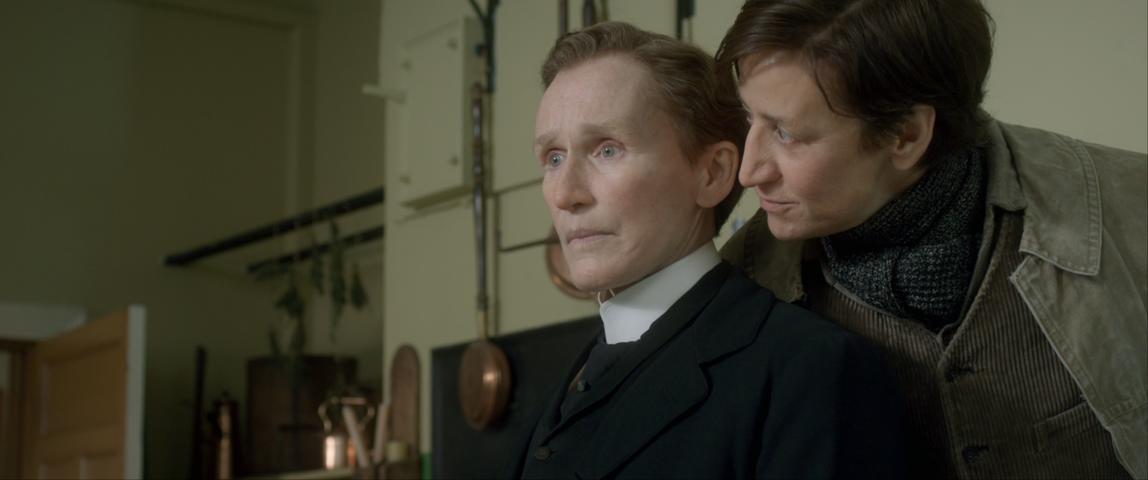
Albert Nobbs (2011)

Glenn Close plays a woman pretending to be a man in the curiously empty Albert Nobbs

Director: Rodrigo Garcia

Cast: Glenn Close (Albert Nobbs), Mia Wasikowska (Helen Dawes), Aaron Taylor-Johnson (Joe Mackins), Janet McTeer (Hubert Page), Pauline Collins (Mrs Baker), Brenda Fricker (Polly), Jonathan Rhys Meyers (Viscount Yarrell), Brendan Gleeson (Dr Holloran), Maria Doyle Kennedy (Mary), Mark Williams (Sean), Bronagh Gallagher (Cathleen Page)

Passion projects are funny things. Everyone has them. And sometimes, when you put them together, other people struggle to see what all the fuss was about. Few films fit that bill more readily than Albert Nobbs. This cross-dressing, Victorian gender curio was something Glenn Close spent decades trying to bring to the screen, after starring in the original play off-Broadway.

Albert Nobbs (Glenn Close) works as a butler at a middling hotel in late 19th-century Dublin. Nobbs keeps himself to himself and saves his tips and wages with the dream of buying his own tobacco shop. Nobbs also has another reason to cling to privacy: Nobbs is actually a woman, masquerading as a man in order to find work. Everyone at the hotel is totally fooled – but his world slowly begins to shift when he meets decorator Hubert Page (Janet McTeer), who similarly is a woman living as man, but who has her own business and a wife and family home. Page’s experiences make Nobbs begin to question this life of isolation – with disastrous consequences.

Albert Nobbs is a carefully filmed, respectful, dry and dull film. It’s nominally a film you might expect to have something to say about gender and sexuality – but its shyness around such matters, its lack of insight, its bashful awkwardness means it already looks like a museum piece. On top of which, most of the characters and situations it covers are frankly not particularly inspiring, dynamic or engaging. There isn’t actually much there to spark your attention.

Which it makes it even more surprising that Close was so drawn to this material. Why? It’s hard to say, as even her performance seems as buttoned up, oblique and distanced as the character she is playing (it doesn’t help that Nobbs is neither an interesting or engaging character, coming across like a person with an ill-formed personality, whom the viewer struggles to understand). You would expect her to have some sort of deep emotional bond with this character – but I’m not sure that really comes across.

The film fundamentally lacks the courage it needs to tackle issues of gender complexity. Nobbs has a troubled background of abuse and rape – but the story never really tackles this, instead using it as a lazy attempt to explain a confused sexuality. The film never really engages with the issue of whether Nobbs likes being a man or feels forced to do to make ends meet. It throws in a curveball scene where Nobbs relaxes on a beach walk wearing women’s clothes. But it never takes any step – even the most tentative ones – of Nobbs laying claim to relating more to being one gender or another. 

Nobbs doesn’t seem to identify as a trans man, a cis-gender woman disguising herself as a man for practical reasons in a patriarchal world, or as someone trying to live outside traditional gender constructs all together. It feels pretty uncomfortable with virtually any formulation along these lines, so avoids exploring any of them. It wants Nobbs to feel comfortable in women’s clothes, but also wants to admire Nobbs for living as a man, while also suggesting Nobbs is trapped by society. It’s a confused film.

In any case, the more time you spend with Nobbs the creepier Nobbs seems. It’s unfortunate that a large chunk of the film is given over to Nobbs’ confusingly motivated courtship of Mia Wasikowska’s maid. Throughout, Nobbs is strangely incapable of understanding any sort of emotional link between two people, and here seems unable to comprehend that Helen may have her own emotions and desires that don’t marry with Nobbs’ functional desire for a wife. This pursuit (seemingly to complete the picture of a desired future) creates an image of a stalker rather than someone really seeking a romantic connection. The fact that Helen and her rakish beau plan to swindle Nobbs hardly helps to make these characters likeable either.

Close’s performance doesn’t help with its locked in reverence. So it’s just as well that Janet McTeer bursts into the film with energy, (literally) baring all in seconds and bringing more vibrancy, dynamism and engagement in her scenes than the rest of the film put together. While Nobbs is a rather dull, empty vessel of a person, Page is a lesbian in a loving relationship, escaping marriage by pretending to be a man. That is a story I can get interested in, that can have relevance today: Nobbs’ isn’t. McTeer is excellent, and I wish the film her been about her.

Albert Nobbs is a worthy, but flat film shot with a slow reverence and delivering a story that promises much but completely fails to deliver. Aside from Janet McTeer’s wonderful performance there is very little reason to visit this film. In fact today its avoidance of even engaging with questions of gender and identity actually make it look rather gutless and pointless. A passion project that really makes no real sense.

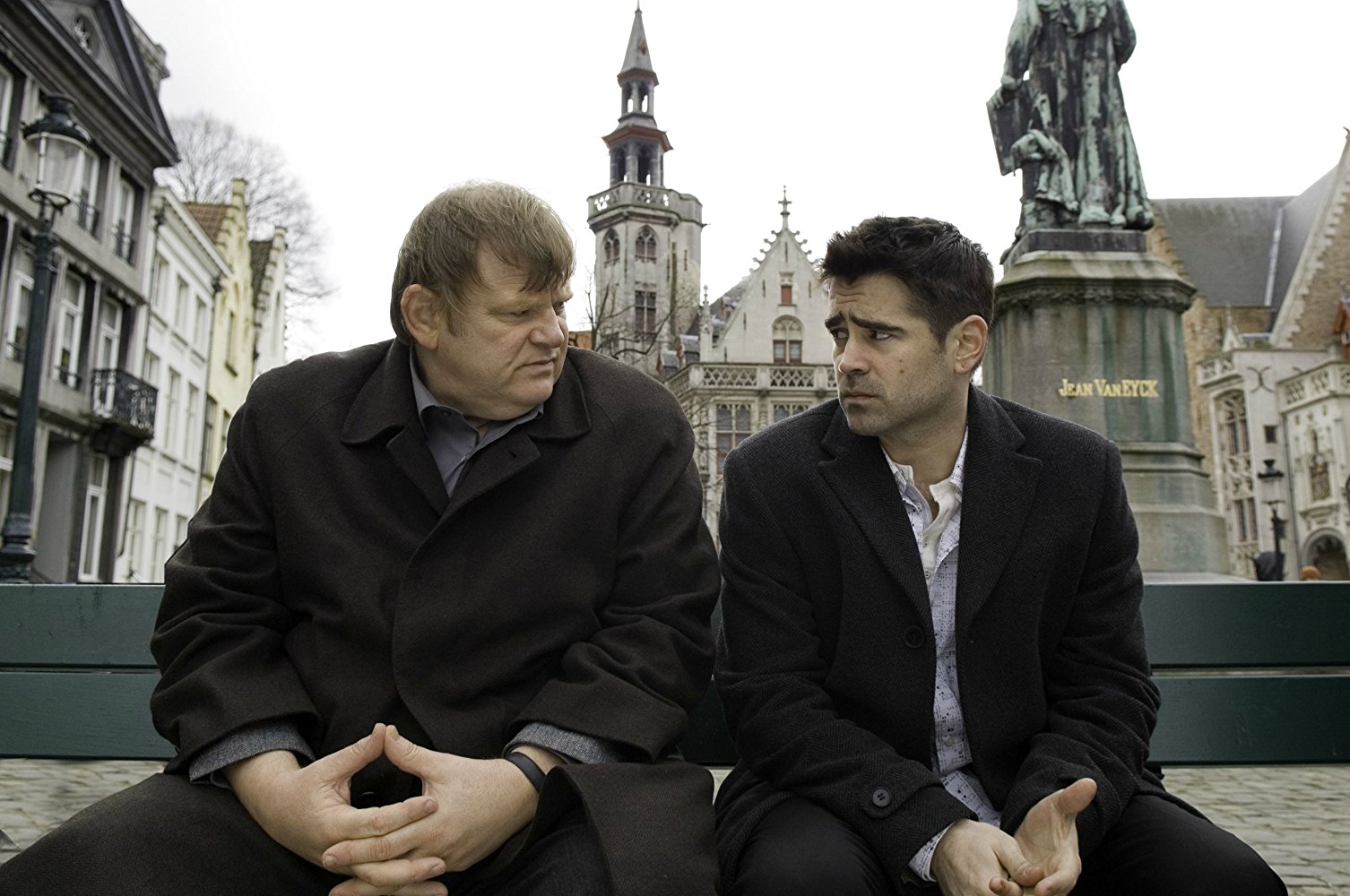
In Bruges (2008)

Brendan Gleeson and Colin Farell excel in hitman comedy In Bruges

Director: Martin McDonagh

Cast: Colin Farrell (Ray), Brendan Gleeson (Ken Daley), Ralph Fiennes (Harry Waters), Clémence Poésy (Chloë Villette), Jordan Prentice (Jimmy), Thekla Reuten (Marie), Jérémie Renier (Elrik), Anna Madeley (Denise), Elizabeth Berrington (Natalie Walters), Eric Godon (Yuri), Željiko Ivanek (Canadian)

Who hasn’t been dragged somewhere for sightseeing and culture, and longed to be somewhere else (anywhere else?). Most of us right? So how many of us are hitmen hiding out after a job gone wrong? Probably not that many (I hope!). It’s this mixture of the everyday and the bizarre that Martin McDonagh nails so well in his debut film, a sharp as nails, laugh-out-loud but also moving piece of work, possibly one of the sharpest written, well-made debut films you’ll find.

Ray (Colin Farrell) and Ken (Brendan Gleeson) have been sent to Bruges to hide out for a few weeks after a job gone horribly wrong in Dublin. Ken is fascinated by the city, its culture and buildings and enthusiastically buys a guide book. Ray responds like a surly, miserable kid and is desperately unimpressed with everything he sees. Their long weekend in the city becomes increasingly unusual and dangerous as they encounter angry tourists, a racist dwarf (Jordan Prentice) and a drug-dealing film assistant (Clémence Poésy), and dodge the rage of their boss Harry Waters (Ralph Fiennes).

In Bruges is a hilarious piece of film-making, with every scene featuring some moment of black humour, wry observation or un-PC laugh-out-loud comedy. It’s foul-mouthed, sometimes violent, very rude – but also deals with profound feelings of guilt and regret with a real humanity. McDonagh’s work expertly combines jet black comedy, with a warmth for its deeply flawed characters. It’s got a compelling, masterful story that packs character development, incident and intricate plot threads together with assured expertise.

McDonagh’s gift is to make you relate for all of these characters, all of whom are made to feel very real and human. It skilfully leads you to overlook their many flaws and embrace them as people. It says a lot that the most sympathetic, likeable person in the film is a multiple murderer with an (implied) cocaine habit. Everything we learn or see about the characters is designed to make us understand and relate to them more.

Ray initially seems little more than a foul-mouthed thug. But as the film progress – and thanks to Colin Farrell’s masterful performance of brashness covering deep insecurity and vulnerability – we learn he is a rather sweet, even loving man who has stumbled into a career he is deeply unsuited to. Farrell gets these switches perfectly – and his childishness is hugely endearing. From stropping around like a sulky teenager to bouncing up to a film shoot with a childish, excited shriek of joy, he defies expectations. McDonagh throws in a perfect note of tragedy once we find out the mistake Ray made – and suddenly Farrell’s performance overflows with guilt, self-loathing and an unbearable regret that makes you re-evaluate everything you’ve seen him do.

But then that is the whole film right there: it makes you laugh uproariously, then chucks you a curveball and before you know it you are hugely emotionally invested, with a huge sense of empathy for their slowly revealed depths. That goes for every character – even the nominal villains have a sadness, or a firm set of principles, or a certain dignity to them that makes you care. It’s a brilliant piece of writing and directing – and masterfully acted.

Brendan Gleeson plays the other lead in Ken: and few other actors could surely have managed to turn Ken into such a warm avuncular figure, a gentle giant who feels he has come to terms with his choice of career but experiences a subtle shift over the course of the film. Gleeson’s performance is sublime, warm and witty with a careful thread of sadness underneath it – it’s some of his best work. 

But then the whole cast is great. Prentice’s bitterness as the angry Jimmy is brilliant – and he is very funny – while Poésy’s gentle bad-girl is a terrific, radiant performance. The film also has third act dynamite with Ralph Fiennes’ Harry Waters, a foul-mouthed, furiously angry, tour-de-force character who shakes up the whole film – but who has a strange sense of nobility about him, even while he is (hilariously) effing and blinding left, right and centre.

And the film has a brilliantly anti-PC vein of humour. Jokes about drug-taking and dwarves. Foul-mouthed gags about every subject under the sun. Brilliant encounters with “large” American tourists (brilliantly paid off later in the film), jobsworth ticket sellers, angry tourists in restaurants – the film is crammed with hilarious moments. All of it is brilliantly funny because it comes naturally out of characters who feel real.

It’s also so thematically rich. As the characters stand in front of Hieronymus Bosch’s The Last Judgement, you realise that the entire film is a metaphor for purgatory, with Bruges’ medieval beauty carefully chosen to reflect this. Our heroes, laden down with sins, wait in Bruges for an unspecified length of time to discover where they will head next. Amends have to be paid, sins have to be reconciled – and all these threads come together brilliantly in a final, dream-like sequence that you suddenly realise the whole film has been carefully building towards from the start.

So the film, after a scabrous, brilliantly hilarious, darkly foul-mouthed start, slowly becomes something which (while still hilarious) is also a discussion of morality, principles and guilt. We see characters do things we might never have imagined them doing at the start, some are redeemed, others make principled decisions. And it’s really funny. I’m not sure Colin Farrell or Brendan Gleeson will ever be better than they are here. It’s a brilliant play script turned into a wonderful film. A classic.

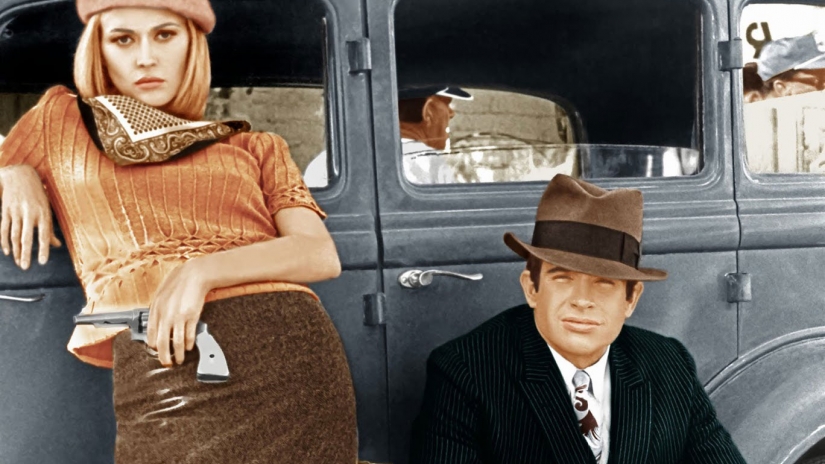
Bonnie and Clyde (1967)

Faye Dunaway and Warren Beatty are the shallow, violent romantics Bonnie and Clyde

Director: Arthur Penn

Cast: Warren Beatty (Clyde Barrow), Faye Dunaway (Bonnie Parker), Michael J Pollard (CW Moss), Gene Hackman (Buck Barrow), Estelle Parsons (Blanche Barrow), Denver Pyle (Marshal Frank Hamer), Dub Taylor (Ivan Moss), Gene Wilder (Eugene Grizzard), Evans Evans (Velma Davis)

Bonnie and Clyde can lay claim to being one of the most influential American films ever made. It came out of a seismic cultural change in America, as old style Hollywood royalty faded out and a new generation stormed the barricades to make films that felt rougher, rawer and told complex stories in shades of grey. 

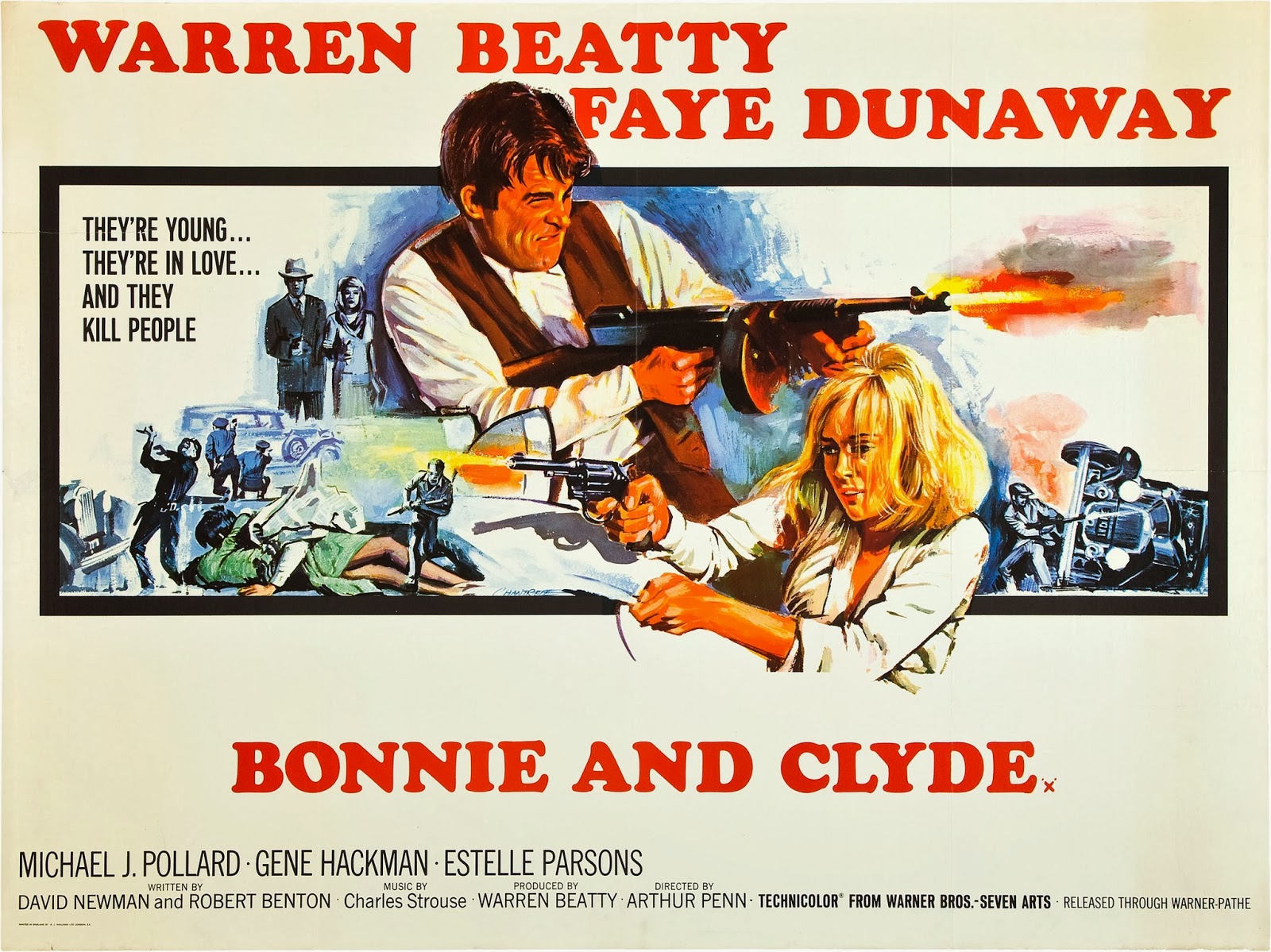
Clyde Barrow (Warren Beatty) and Bonnie Parker (Faye Dunaway): drifting youngsters, not interested in accepting a conventional life. They want to go where they please and take what they please. And if some people get hurt – well they can justify that to themselves. As the poster famously said: “They’re young. They’re in love. And they kill people”. In a deliberately disjointed narrative, where time is unclear, the two meet, head out together, commit crimes, stay on the run and are eventually killed by law enforcement. The story is simple – it’s the telling of it that matters.

Bonnie and Clyde latches on to a counter-culture vibe that was growing in strength at the time. But what the film does so brilliantly is subvert this. It invites us to identify to with the romantic, Byronic yearnings of its heroes, who see themselves as free spirits, living a life of idealistic, unconstrained excitement. But the film also has a clear eye on the trail of violence they leave behind them, their lack of regard for this and the impact on the victims. Because make no mistake, these dreamy killers get more and more violent as they go on.

The film turns these two killers into would-be celebrities – guys who want to project a certain image of themselves to the world (down to mailing the papers photos and poems about themselves). They enjoy the notoriety and their self-proclaimed mythology. Clyde walks into banks and gleefully announces he’s with the “Barrow gang”, as if half expecting someone to ask for his autograph. Later in the film, as Clyde reads their press coverage out loud, with CW Moss like a star-struck groupie, the film never forgets the two of them were basically nobodies, who wanted to feel like somebodies.

And it lets you enjoy the romance of this. There is something fairy-tale like in the film about Clyde picking up Bonnie from outside of her home, taking her into town for flirting and robbery. The whole film continues this dreamy logic, with time jumps and scenes that don’t necessarily link up directly with each other. 

But then the violence takes over. Wow is Bonnie and Clyde a film that lets you know about the impact of bullets. Gun shots don’t just maim or wing, they rip bodies apart. The japey feeling of their bank robberies gets dispelled about half an hour into the film when Clyde shoots a bank teller in the head from point blank range (“him or me”, he later tells his brother). The gang are so incompetent, that the film is frequently punctured by shoot-outs in which no mercy is shown to anyone. 

This is of course hard for the gang to reconcile with their self-image as Robin Hoods, so they mostly forget about it. Clyde won’t steal money from ordinary people (though he’ll happily steal cars, or beat a grocery store clerk into a coma). They playfully tease and taunt a captive US Marshal – until he spits in Bonnie’s face at which point violence ensues. Only at points do the gang seem to have the slightest idea of the dangers: after kidnapping Gene Wilder’s nervy car-owner and his fiancé, a happy-go-lucky Evan Evans (both excellent), merry conversations in the car with the gang are suddenly halted when Wilder admits he’s an undertaker – Bonnie immediately demands they are thrown out and the next shot is her weeping in a field. She doesn’t seem to understand the connection, but we can.

The film is superbly put together. Warren Beatty produced the movie practically from its inception. Robert Benton and David Newman’s script was intended as a French New Wave film – evident in its looseness, its lack of old-school values, its violence, its focus on naïve dreamers who choose the easy way out – but Beatty took the script, re-crafted it with Robert Towne (billed as special advisor) and decided the film needed an American director, not a Truffaut or Godard. He brought on board Arthur Penn, and the two worked together (fought together) closely to bring this radical, edgy, jittery, electric film to the screen. 

Penn and Beatty pushed themselves to some of their best work. Beatty is terrific as the vainglorious Clyde – whose determination in crime is matched by his impotence in the sack (the film wisely doesn’t overplay Clyde’s impotence as an ironic theme, but lets the audience draw its own conclusions). He also produced the film expertly. Penn’s direction is sublime, marrying the finest elements of French New Wave cinema with old-style Westerns.

The film is restless and energetic, and intermixes moments of fun and frivolity among the gang with ominous danger and violence. The camera jitters and shakes, while throwing us into the action – the film is masterfully edited – while at other points sailing on like a neutral observer. The film has a neat satiric edge, and Penn uses banjo music masterfully to ironically contrast with much of the action we see on the screen. The characters – all of them – seem to spend so much time talking about their press coverage because they have so little to say to each other. Even the lovers only really seem to find a moment of quiet devotion shortly before their death. It give you violence as entertainment, but also tells you effectively and quietly how appalling and dangerous violence is.

The acting is similarly extraordinary. Beatty is wonderful, as is Dunaway as an impossibly young, romantic Bonnie who adapts with alarming swiftness to killing and robbing. Michael J Pollard is excellent as the slightly simple, eager young car mechanic who hero-worships the couple. Hackman and Parsons are both excellent as Barrow’s older-but-not-wiser brother, and his wife who seesaws between resentment, fear and an imperious delight in her new-found infamy.

Penn’s brilliant film deconstructs the mythology of criminals to show the emptiness underneath, their shallow self-regard and lack of insight. It does this while still managing somehow to remain affectionate towards these two murderous dreamers. Bonnie and Clyde is a sublime modern Western, a commentary on fame, a dissection of violence and a great black comedy. Shot with youthful energy and an influential lack of traditionalism, it’s a film that always feels modern and necessary.

Fantastic Beasts and Where to Find Them (2016)

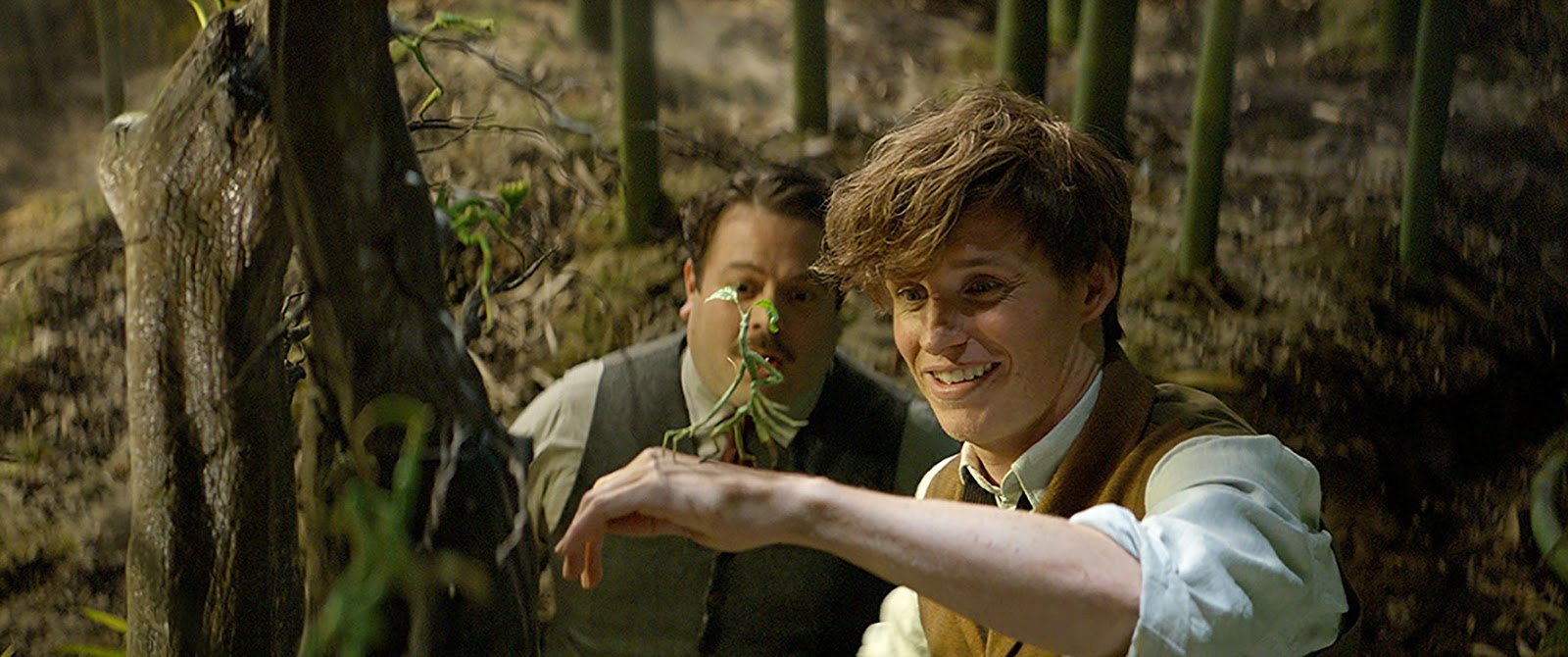
Eddie Redmayne and Dan Fogler uncover some Fantastic Beasts

Director: David Yates

Cast: Eddie Redmayne (Newt Scamander), Katherine Waterston (Tina Goldstein), Dan Fogler (Jacob Kowalski), Alison Sudol (Queenie Goldstein), Colin Farrell (Percival Graves), Ezra Miller (Credence Barebone), Samantha Morton (Mary Lou Barebone), Jon Voight (Henry Shaw Snr), Carmen Ejogo (President Seraphona Picquery), Ron Perlman (Gnarlack), Ronan Raftery (Langdon Shaw), Josh Cowdery (Henry Shaw Jnr), Johnny Depp (Gellert Grindelwald)

Eventually the gravy train had to come to an end. The Harry Potter franchise laid golden eggs for over a decade, until Rowling’s books came to an end. Just as well then that the incomparable JK Rowling had tonnes of invention left up her sleeve, and was keen to look at other elements of the Potterverse. So we got the creation of this sideways prequel, set in the rich backstory of the Harry Potter novels. And it is a bit of a treat.

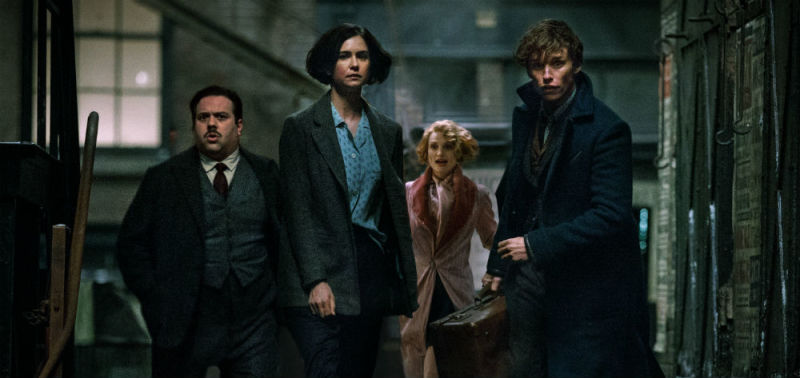
In the 1920s, Newt Scamander (Eddie Redmayne) arrives in New York with a suitcase full of fantastic beasts. He’s there to return one of them home – but after a mix-up at a bank his suitcase ends up in the hands of muggle (or as the Americans put it “No-Maj”) and would-be baker Jacob Kowalski (Dan Fogler). As the escaped beasts cause chaos, demoted Auror Tina Goldstein (Katherine Waterston) works with Newt and Jacob to try and recapture the creatures, with the aid of Tina’s mind-reading sister Queenie (Alison Sodel). But is all the destruction truly caused by Newt’s creatures? Or are there darker forces at work? 

Fantastic Beasts is a charming spin-off, sustained by some endearing performances, its warm heart and stylish design. Whether the plot is quite strong enough to reward constant viewing as much as many of the Harry Potter films do, I’m not sure (I didn’t find its story particularly gripping the second time around), but I think there are enough incidental pleasures there to keep you coming back for more. It’s actually a film which will be interesting to re-evaluate after the later sequels emerge – there are many suggested threads set up in this one for exploration later.

It’s not a surprise that the initial plot around chasing and collecting the beasts is fairly basic, since it’s based on a slim handbook (itself based on a reference from the original Harry Potter stories) that Rowling published as a Comic Relief fundraiser. Besides the chasing around to capture the animals, it’s only really the backdrop for sight-gags, cute animals and (most importantly) our window for getting to know our leads.

And these leads are certainly well worth getting to know, with a string of excellent performances from the four principals. Redmayne anchors the film very well as the slightly dotty, professorial, socially awkward Newt, whose coy, bashful charm really endears him to the viewer. Dan Fogler is possibly even better as our viewer surrogate, an average New Yorker thrown into a mad world of magic who somehow manages to take it all in his stride and whose growing excitement and embracing of this demented wizard world makes you fall in love with him. He’s helped by a sweet, gentle and touching romance with the effervescent but lonely Queenie (a magnetic Alison Sudol). Katherine Waterston gets the trickiest part as the earnest, try-hard, play-by-the-rules Tina – but her growing fondness for Newt and his creatures works very well.

The moments of the film that focus on the interaction between these four are the finest of the film – as are those that allow us a glimpse of Newt’s wonderful creatures. Housed in a Mary Poppins-ish suitcase of infinite TARDIS-like depth, these beasts are brilliantly designed and wonderfully individual, from a cute mole-like Niffler (naughtily stealing shiny things like a magpie), to a horny Erumpent (like a hippo and rhino mixed), to the majestic Thunderbird, a sort of Eagle-Phoenix, soaring through the plains in Newt’s suitcase. Even the small Bowtruckle Newt carries in his pocket gets to develop a sense of personality. (And yes I had to look all these names up).

These creatures are both individualistic but also used for very specific purposes in the film, from lock-picking to a sort of bizarre self-defence weapon. Despite their horrific appearances, the film treats them with as much understanding sweetness as Newt does – even the dangerous ones are only dangerous when riled or threatened, and Newt’s protective nature helps us to feel as fond of them as he does.

Away from the beasts, the film largely focuses on setting up threads (and threats) for future films. A major sub-plot revolves around an anti-Magical society run by a stern-faced Samantha Morton. The film heads into darker territories here, with its references to both cults and the ill-treatment of children. Ezra Miller does well as Morton’s awkward, ill-treated adopted son, unable to escape from his oppression or express his frustration. Someone in this family is a powerful magical being called an Obscurus, and the film plays a neat game of bluff and double bluff around this.

It continues this game as it fills out the political magical world around Carmen Ejogo’s regal magical President. What game is Colin Farrell’s authoritarian Perceval Graves playing? What of the film’s opening references to dark wizard Grindelwald, and the suggested war that is bubbling under the surface in the magical world? All this darker stuff sits around the edges and margins of Newt’s beast-collecting storyline, occasionally seeping in (let’s not forget at one point Newt and Tina are literally sentenced to death for supposed crimes), but doesn’t overwhelm the lightness.

David Yates directs with a professionalism that comes from being hugely familiar with this world. His later sequences of Obscurus destruction are not always particularly different from other city-smashing scenes from other films. Not every plotline feels fully explored – Jon Voight playing a newspaper mogul and his two contrasting sons seems like a plot we could do without – but Yates does keep the film moving pacily forward, he gets the tone of light slapstick and family warmth and he still shoots the wonder of magic better than almost anyone.

Fantastic Beasts is a film that is perhaps a little too light and frothy to really be a classic – it juggles too many plots and doesn’t always bring them together well. It’s mixture of darkness and lightness is a little eclectic, and it sometimes feel very much like a film designed to set up future films effectively. But when it focuses on its four leads, it’s very strong indeed and all of them – particularly Fogler – are people you want to see more of. It even manages to end the film on both a genuine laugh and a heart-warming bit of romance, tinged with sadness. It’s a fine start to a new franchise.

Three Days of the Condor (1975)

Robert Redford goes on the run in conspiracy thriller Three Days of the Condor

Director: Sydney Pollack

Cast: Robert Redford (Joseph Turner), Faye Dunaway (Kathy Hale), Cliff Robertson (Director Higgins), Max von Sydow (Joubert), John Houseman (Wabash), Addison Powell (Leonard Atwood), Walter McGinn (Sam Barber), Tina Chen (Janice), Michael Kane (SW Wicks), Don McHenry (Dr Lappe)

Three Days of the Condor never leaves you in any doubt that the real villains are those in power – and the possibility of escaping the reach of organisations like the CIA is beyond all of us. Condor is damn well-made though – Pollack’s direction is nearly faultless in its taut claustrophobia – even if the film itself gets a bit lost in its confusing obliqueness.

Joseph Turner (Robert Redford) is a quiet, boyish, Robert-Redfordish academic whose job is to read books published all over the world and report back to the CIA any familiarities with any secret operations past or present, or any good ideas from operations. One day, while out fetching lunch for his colleagues, he returns to find they have all been murdered by a hit-team led by a shadowy foreigner (Max von Sydow). Calling in the CIA, he finds he can’t trust anyone – and is forced to hide out by kidnapping a woman, Kathy Hale (Faye Dunaway), whom he bumps into in a shop.

Three Days of the Condor opens with an electric pace. The build-up to the assassination of Turner’s co-workers is extremely tense, while the immediate after effects – and Turner’s lost, confused terror – is brilliantly involving. The stream of conspiracy-laced events, and the unsettling lack of security about who to trust creates a terrific mood of paranoia. Pollack’s editing is tight, and the photography keeps the action naturalistic and eerily involving. It creates an unsettling drama where no one can be trusted. 

It taps perfectly into that 1970s vibe of the state being omniscient and inhumane – Turner’s CIA contact will only talk to him using his code name, shows no human interest in his deceased comrades and only asks if Condor himself is “damaged”. Later Turner chippily asks why a senior agent is addressed by his name, while he is only called Condor. 

Redford is very good as Turner – perfectly convincing as the bookish man thrust into circumstances where he is out of his depth, but whose innate abilities to think fast and adapt allow him to believably keep one step ahead of those pursuing him. The film has a love for the grimy Le Carre-ish detail of espionage, which it mixes well with its James Bondish elements of hitmen, violence and sex. The script has good lines, and several excellent set-pieces that trade in that queasy feeling of being out-of-depth.

The momentum of the first half however eventually gets bogged down in the “working out” of the conspiracy. This is a bit hampered by the early acts of the movie being focused more on atmosphere than on plot build-up. With the exact purpose and function of Redford’s CIA role only really being loosely explained quite late on – and the various inter-relationships of the assorted CIA bigwigs we see also not really being that clear – the final reveal of the wrong uns is murky and doesn’t quite justify the build-up. 

Part of this is the film’s 1970s vibe – its sense that the resolution is, in a way, less important than the downer atmosphere and conspiracy tension – but it’s also a bit of a narrative flaw. It’s hard to invest in a story that never really gets put together or explained properly, and doesn’t really give us a sense of the major stakes at play or the reasons why various characters do what they do. 

Other factors also have dated the film, principally the relationship of Faye Dunaway’s Kathy and Redford’s Turner. Now there is an odd Stockholm syndrome relationship if ever I saw one. From Kathy tearfully fearing rape and assault for most of the first ten minutes of their screen time together – and with no reason to believe the story Turner is peddling – sure enough within a few hours of knowing each other this pair end up in bed together. The film attempts to suggest Turner’s ability to understand her personality (in a way no-one else ever has naturally) through her photographs brings them together –but nevertheless it’s basically a hostage falling into bed with her kidnapper, about 20 seconds after she stopped crying, after he has just released her from being tied up and gagged in her own bathroom. 

I guess it helps when your kidnapper looks like Robert Redford – and the film uses Redford’s innate trustability well – but it’s a little unsettling. Kathy swiftly becomes Turner’s little helper – but you never really get a sense that the she is an actual character, or that the film even really needs her that much. Dunaway is a good actress and plays the part very well – but there is an unsettling submissiveness and even exploitation to her character that dates the movie (not that we have moved past films where female character’s principal role is to have sex with the hero to ease his pain). The best you can say for this character is that she has “pluck”.

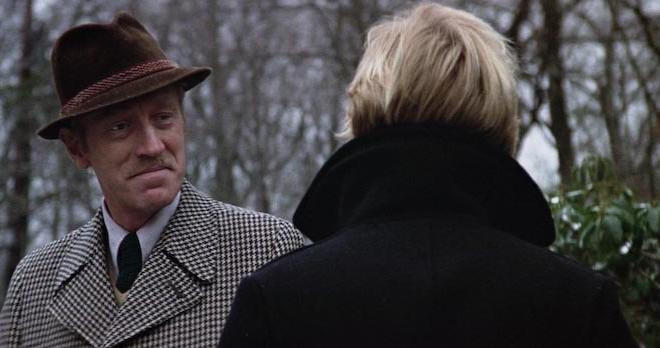
It’s dumping Turner down into Kathy’s home where the momentum leaks out of the film slightly. It’s a film that feels like it’s going to be set-up as a chase movie with a spy tinge, but it never really turns into that. On top of which, it takes time away from properly developing Turner’s enemies. His possible CIA opponents, led by Cliff Robertson and John Houseman, don’t really come into focus as characters. The performer who does stand out – largely because of the wry world-weariness he brings to the role – is Max von Sydow as the hitman Joubert, a character I’d happily see more of (where was his spin off?). 

Three Days of the Condor is a well-made triumph of atmosphere – but the later sections of the film don’t quite live up to the build-up, and the film doesn’t quite snap together as much as you would like in the second half. It gets lost in its labyrinthine schemes and then doesn’t have a resolution that seems interesting enough to make satisfying narrative sense.  It’s got some great moments in it, but it’s a flawed film.

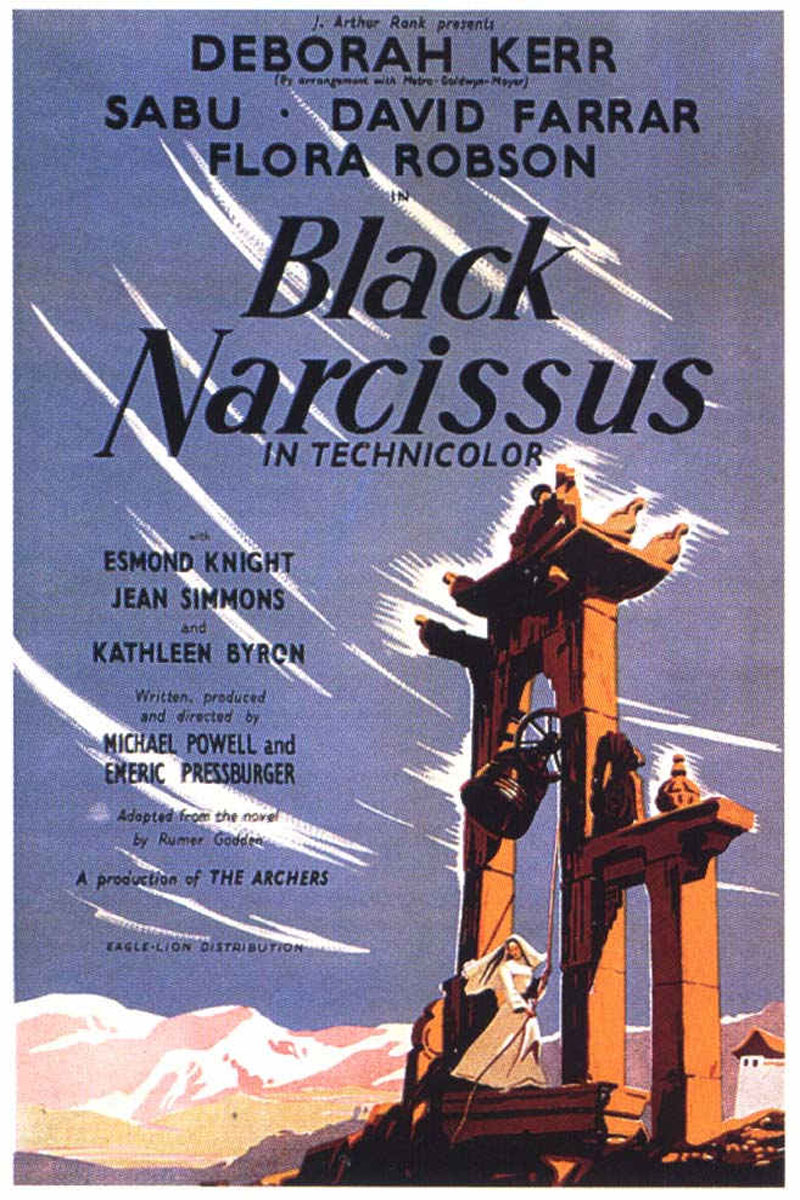
Black Narcissus (1947)

Deborah Kerr leads a community of nuns struggling with temptations in the classic Black Narcissus

Director: Michael Powell, Emeric Pressburger

Cast: Deborah Kerr (Sister Clodagh), Sabu (Young General), David Farrar (Mr Dean), Kathleen Byron (Sister Ruth), Flora Robson (Sister Philippa), Jenny Laird (Sister Honey), Judith Furse (Sister Briony), Esmond Knight (Old General), Jean Simmons (Kanchi), May Hallatt (Angu Ayah)

In 1947, people hadn’t seen anything like Black Narcissus. Its triumphant technicolour was like nothing that had been made before – and watching it now on a brand new, shiny restoration, it’s still overwhelmingly impressive. Alongside this beautifully shot action, we have a storyline surprisingly modern in its acute psychology and questioning of the strengths and weaknesses of human nature.

Sister Clodagh (Deborah Kerr) is given leadership of a group of nuns in a remote Himalayan harem building converted into a nunnery. But the isolation of the mountains and the strange atmosphere of the harem bring out weaknesses in the characters of the nuns, leading to profound challenges to their spiritual and mental well-being – not least Sister Ruth (Kathleen Byron), who becomes increasingly pre-occupied with local land captain Mr Dean (David Farrar).

Powell and Pressburger’s film is a brilliant, slightly hard to interpret, psychological gothic drama, a du Maurier-style sexually charged drama set in an exotic Indian location which the nuns struggle to understand. It’s a curious melange of scenes, often moving swiftly, sometimes only with narrow bridge scenes, meaning you soon get as lost in how much time has passed as the nuns themselves. Several key events take place off screen, and the native Indians are curious, unknowable and strangely intimidating in their distance and coolness.

All this is to help build the audience into feeling as unsettled as the characters themselves. It’s a film about the struggles between expression and repression. The two principal nuns – Sisters Clodagh and Ruth – both show elements of this. Both are drawn towards the earthy, manly but still patrician Dean, but both handle these emotions in very different ways – one by denying those feelings, another by trying to embrace them. All of this takes place in a distancing and intoxicating environment, where the convention rules of life seem suspended.

For Sister Clodagh, Dean serves as a bridge back to her own frustrated romantic feelings for an old flame – whose failure to propose guided her towards taking the veil – and elements of her warmer persona (witnessed by us in flashback). But Clodagh resolves never to make herself a slave to these feelings, and these moments of remembrance seem to make her cling all the more to her order – even while the film suggests that it is a strange mixture of pride, insecurity and fear as well as faith that motivates her.

By contrast, Sister Ruth – already acknowledged by the Mother Superior as not an obvious choice for the sisterhood – increasingly loses her grip first on her faith, then sanity, as she struggles with the feelings she clearly has for Dean. This quiet obsession has built up in her mind into representing all the desires for freedom and independence she feels while in the order. Where Clodagh resolves to cling closer to the repression of her feelings, Ruth rejects this very idea and determines to express herself – even as it costs her everything. 

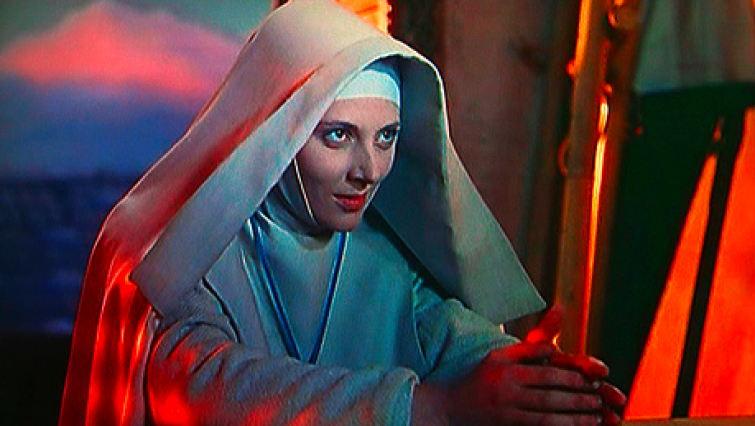
This heated growing madness is powers the film – and Kathleen Byron provides most of the drama with a stunningly unhinged performance, which builds so quietly (almost in the background of the film) that it never becomes wearing and also surprises with the extent of her unhinged delusion. One particular night-time encounter with Clodagh sizzles with rival agendas – one woman using a lipstick, the other using a Bible. 

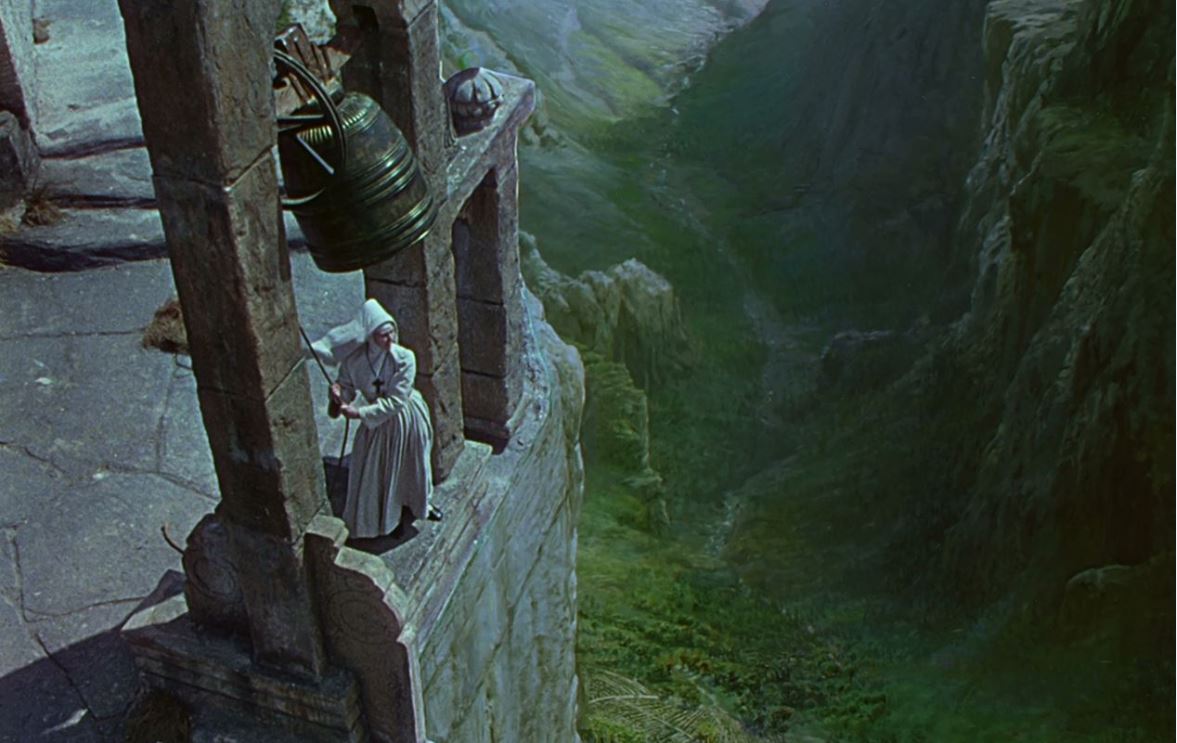
Powell (and it was Powell who largely directed these Archers pictures) uses a variety of techniques to develop this unease. Several shots are direct POV shots, with the audience becoming one of the characters, giving us the slightly unsettling feeling of being addressed by the actors. Quick tableaux editing gives us economic storytelling and a sense of events building swiftly towards a head (several sequences use a series of quick cuts of characters reacting to events). The camera uses a series of close-ups of sweaty foreheads or dizzying, vertigo inducing shots of the Himalayas to increase the unease. A later shot shows Sister Ruth moving through a shimmeringly filmed jungle, bringing a sense of confused eroticism to the picture.

Sexuality is a major theme of the film – and the characters have a series of acknowledged or unacknowledged sexual interests in each other. The music and camera work develop a sense of heated intensity on the mountain that suggests a simmering heat that unnerves the mind and throws open the temptations of physicality. Old wall paintings from the harem of bare-breasted women seem to be a constant presence – no wonder feelings are running high.

Jack Cardiff’s photography is simply extraordinary – it’s hard to believe none of this was filmed on location and most of it was shot in a studio – and this is still a film today that is hugely beautiful. The production by Alfred Junge is hugely impressive, with the nunnery a triumph of mismatched themes.

It’s not perfect. It’s a bit awkward to see actors blacking up. Some of the acting is quite OTT or stagy – in particular May Hallatt at points – and the film’s occasional delight in its visual appeal means its themes don’t always get the exploration that they deserve. One of the disadvantages of its deliberately vague timeline is that sometimes events happen too soon – or we don’t get enough sense of why they are happening. But these are blemishes.

This is a masterfully made picture, still beautiful to look at with impressive performances from Kerr, Byron, Farrar and many of the rest of the cast. It’s a surprisingly gothic melodrama by the end, with reds splashed across the screen with an imposing sense of threat. Still one that needs to be seen: and the end is so melodramatically gothic considering where the film started that the fact it doesn’t seem hugely jarring is an enormous tribute to the talents of those involved.