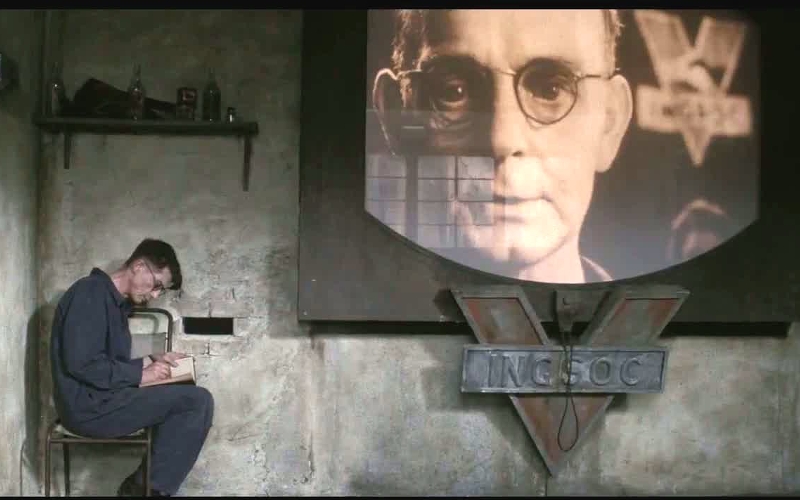
1984 (1984)


John Hurt is simply perfect as Winston Smith, in Michael Radford’s faithful Orwell adaptation 1984

Director: Michael Radford

Cast: John Hurt (Winston Smith), Richard Burton (O’Brien), Suzanna Hamilton (Julia), Cyril Cusack (Mr Charrington), Gregor Fisher (Parsons), James Walker (Syme), Andrew Wilde (Tillotson), Phyllis Logan (Announcer)

Few novels of the 20th century have had such a far-ranging impact as George Orwell’s 1984. Its concepts and ideas have dominated the popular language around topics from politics to reality television. Orwell’s idea of a dystopia, ruled by a controlling government, has inspired virtually every other story in a similar setting since. Hell, Orwellian is now an actual word.

Michael Radford had dreamed for years of bringing a film version of Orwell’s last masterpiece to the screen. This film is the end-result, shot (as it proudly announces at the end) in the exact times and locations the original novel was set in. Radford has created a hugely faithful adaptation that strains at the leash to cover all the complex political, philosophical and personal questions Orwell’s novel explores. From the opening sequence, expertly recreating the books “Two-minute-hate”, it’s immediately clear that Radford knows (and loves) this book.

Winston Smith (John Hurt) is a party worker in Oceania (a sort of super country consisting of North America, Britain and Ireland), whose role is to edit and adjust the historical records to ensure that everything the ruling Party has ever said was always accurate and correct. Unpeople are removed from old newspaper cuttings, economic targets are edited to match the final results. In his heart he has sincere doubts about the system and yearns for freedom – but it is not until a chance meeting with Julia (Suzanna Hamilton) that he finds a way to express his individuality through their love affair. But what does Inner Party member O’Brien (Richard Burton) have planned for him?

Radford’s film is a marvel of design. Its look and feel could have been ripped from the pages of Orwell. Today we’d call it almost steam-punk – every piece of technology is made of antiquated and repurposed pieces of equipment (such as phone dials or computer screens) that have a rusty, poorly maintained feeling that immediately communicates the run-down crapsack world the film is set in. Every building seems to be crumbling, collapsing, poorly made, unpleasant, dirty – every street is littered with wreckage. Who on earth would want to live anywhere like this?

The oppression of the design – all dark blues, greys, blacks and crumbling stone and rusty metal – is contrasted at key points. The (relative) opulence of O’Brien’s apartment – with actual comfortable chairs, plastered and painted walls and decent furniture – really stands out (as does Burton’s well-tailored boiler suit compared to the uncomfortable rags of the others). Roger Deakin’s photography also really mixes up the grime of London with the sweeping vistas of the countryside, the only place we see greens or brighter blues. 

Radford’s adaptation of the novel manages to hit every beat from the original. I’m not sure if it is quite accessible to someone who hasn’t read the novel: there is a lot of information only briefly communicated here, and the film makes no real effort to set up or establish the situation in Oceania. Some moments work a lot better if you know the book – the nature of Winston’s job most especially. However, Radford really captures the spirit of the original – and he really understands the contrasts in the book between its gloom and oppression and the free spirit of Julia, and what their love affair represents to Winston. 

The film contains a lot of nudity in these scenes (Suzanna Hamilton does full frontal several times –John Hurt’s bottom similarly appears a fair bit) – but it’s kind of vital. The characters are literally (and figuratively) laying themselves bare. It’s a clear visual sign of how they are rejecting the rules, systems and crushing control of the state itself. Alone they can shed the burden of being controlled and truly be themselves. It’s one of the few films where extensive nudity actually feels completely essential to the plot – and vital to communicating the character’s desire for openness.
Radford also draws some neat (inferred) visual parallels from the material of the book, most notably around Winston’s fear of rats. In the book, this visceral fear is never fully explored, but here in the film Radford has Winston plagued with dreams and flashbacks of stealing chocolate as a child from his starving mother – and returning to an empty room full of rats. Rats are linked in Winston’s mind with betrayal and inhumanity, the very qualities he most fears in the real world – and the impact of these animals psychologically on Winston seems all the more clear.

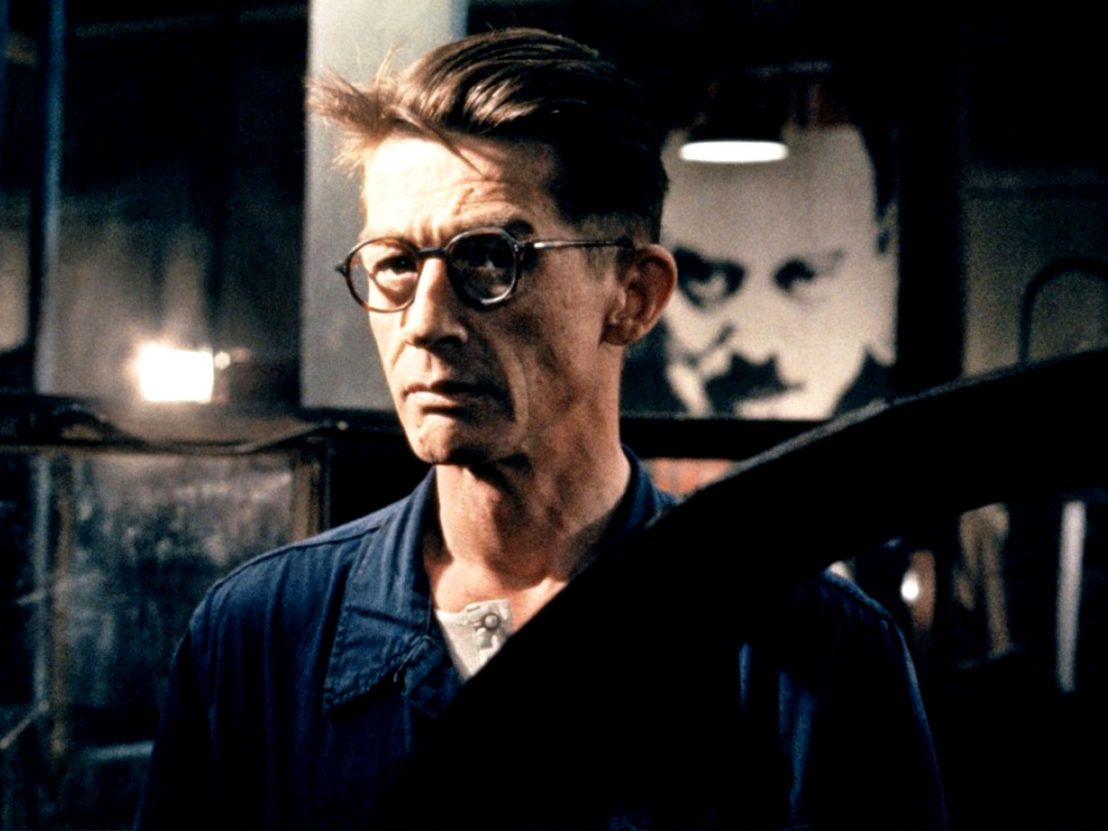
The film is further helped by the casting of John Hurt as Winston Smith. If ever an actor was born to play this role, it was John Hurt. Not only does Hunt’s gaunt face, emaciated frame and pale cragginess fit perfectly (he also looks a lot like Orwell), but Hurt’s gift as an actor was his empathy for suffering. His finest parts were people who undergo great loss and torment, so Winston Smith was perfect. He gives the role a great deal of damaged humanity, a naïve dream-like yearning, a desire for something he can barely understand. There’s a real gentleness to him, a vulnerability – and it makes Winston Smith hugely moving.
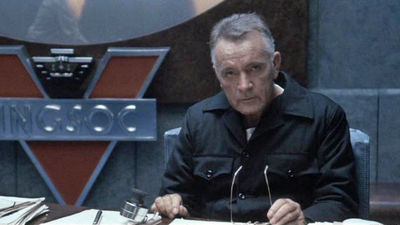
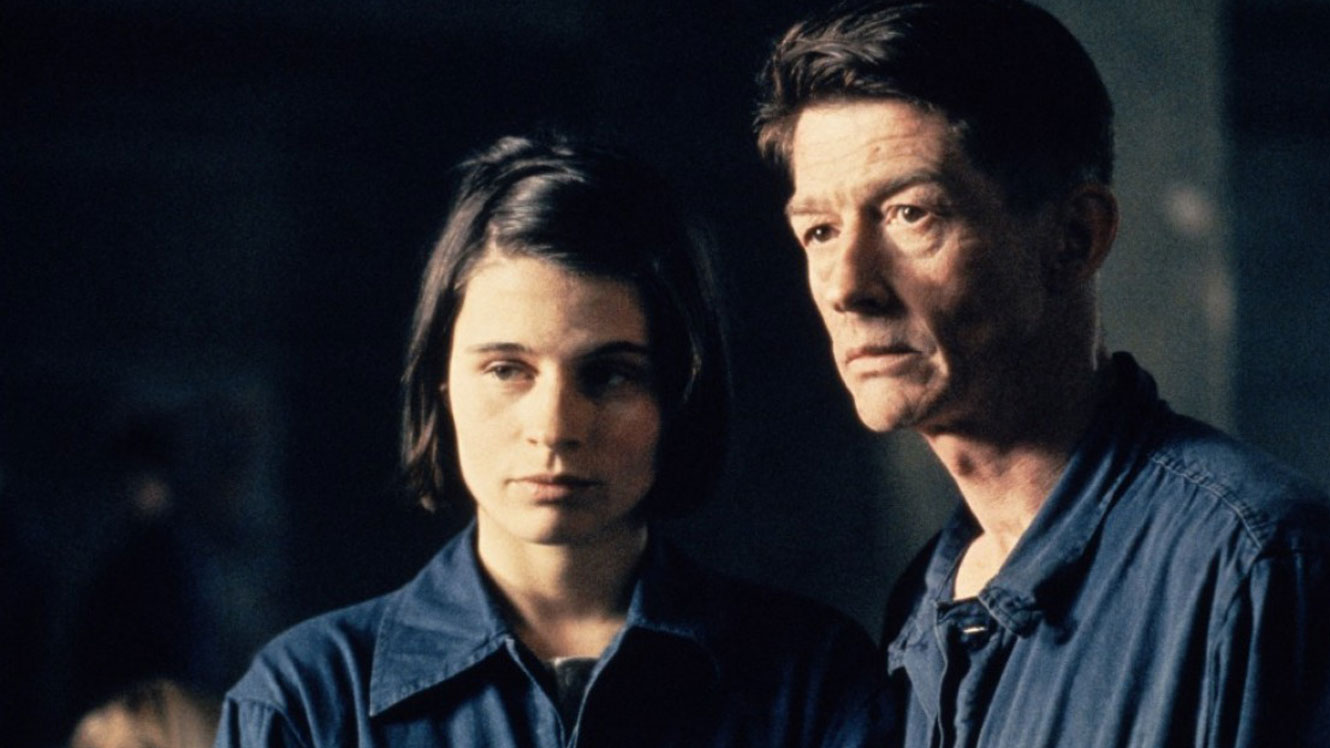
Suzanna Hamilton (in a break-out role) is a great contrast, as a confident, controlled, brave Julia – again there is something tomboyish about her that really works for the part. She’s both certain about what she is doing, but also unwise and naïve. It’s a shame her performance often gets overlooked behind Hurt and Richard Burton. This was Burton’s final film – and while he clearly looks frail, he gives O’Brien all the imposing authority of the melodious voice: you could believe Burton as both a secret rebel and as the face of the state. He’s really good here, hugely menacing and sinister.

1984 is perhaps one of the most faithful and lovingly assembled tributes to its source material you can imagine. In fact that’s the root of its two biggest flaws. Radford had an electronic score by the Eurythmics imposed upon the film (the band was unaware that Dominic Muldowney had spent almost a year working on a score rejected by the producers). This electronic, slightly popish soundtrack feels completely out of whack with the tone and style of the rest of the film. It’s very 1980s electronic tone doesn’t match the novel and it looks even worse today. That’s the danger when your passion project can only get finance from a record company!
The other problem is the film is very much an adaptation: wonderfully done, brilliantly designed and acted, but it exists best as a companion piece. In fact the full enjoyment of the film pretty much relies on having read the book – and it has virtually no appeal to someone who didn’t already know the book (even the 2-minute hate that opens the film isn’t explained). Historically I think the film is very easy to overlook as it came out at a very similar time to Terry Gilliam’s Brazil. Brazil doesn’t adapt the plot of Orwell’s book – but in all other senses it’s an adaptation of the heart of that novel, told with greater artistry and imagination than here. It’s a thematic adaptation that is its own beast not just a page-to-screen version. That’s what 1984 is and, however well done, it will always be in the shadow of the original.

Radford’s labour of love is still a very good film. Somehow what was pretty bleak on the page is even more traumatising on screen. A lot of this is due to Radford’s balance between oppression and freedom, and the film’s perfect adaptation of the book’s themes. But a lot of it is due to Hurt’s heartfelt, sympathetic and perfect performance in the lead role. Literally no-one else could have played this role: and from the opening shots of him at a party rally, through scenes of love, torture and traumatised aftermath, he’s simply wonderful. Read the book: but once you do enjoy (if you can!) the film.
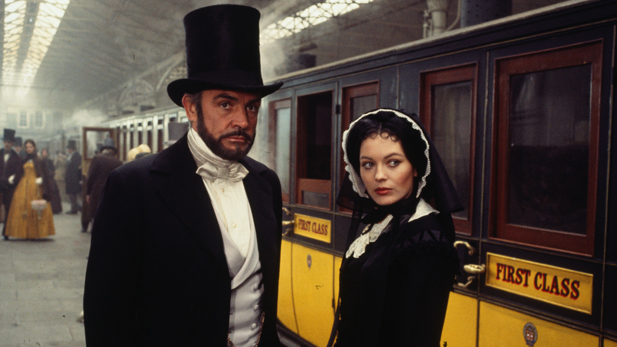
The First Great Train Robbery (1978)


Sean Connery and Lesley-Anne Down grab a train ride in The First Great Train Robbery

Director: Michael Crichton

Cast: Sean Connery (Edward Pierce), Donald Sutherland (Robert Agar), Lesley-Anne Down (Miriam) Alan Webb (Trent), Malcolm Terris (Henry Fowler), Robert Lang (Inspector Sharp), Michael Elphick (Burgess), Wayne Sleep (Clean Willy), Pamela Salem (Emily Trent), Gabrielle Lloyd (Elizabeth Trent), James Cossins (Harranby), André Morell (Judge)

When you think about Michael Crichton, it’s easy to forget he had many more strings to his bow than just writing airport plot boilers. He created ER, he wrote and directed a number of films (most famously WestWorld) – and one of his best books is actually a piece of semi-history, The Great Train Robbery. This book – a brilliantly researched and entertaining part history, part fictionalisation – covers the story of the Great Gold Robbery of 1855, a train-based gold heist. 

Crichton’s film of this book takes a slightly different tone – its realism is toned down slightly, its nose-thumbing anti-establishmentism shaved off, in favour of a lighter comic farce, a caper movie. It makes for an enjoyable movie – but it’s less interesting than the book’s documentary realism and its careful construction of the vast number of obstacles the criminals needed to ingeniously overcome.

Edward Pierce (Sean Connery) is a professional criminal who can pose as an upper-class gent. Having befriended a number of senior people from a leading city bank, he plans a daring heist on a train carrying gold from London to Dover – gold bound for the Crimean war. Pierce puts together a detailed plan – that involves gaining possession of copies of four keys essential for getting access to the safe on the train containing the gold – and recruits a team including expert locksmith and pickpocket Robert Agar (Donald Sutherland) and cunning courtesan Miriam (Lesley-Anne Down). 

The First Great Train Robbery is a caper – and it has all the structure and energy you would expect. From Jerry Goldsmith’s lyrical score to the framing device that constantly returns to Pierce’s key box getting fuller and fuller (like fingers flying up when recruiting The Magnificent Seven), the whole shebang is told with real lightness. Nothing is too serious – the criminals’ actions aren’t designed to hurt anyone (apart from one of their number who turns informant) – and the overall mood is a lark, with the criminals engaging in a boys’ own adventure.

This is helped by the excellent light-comedic playing from Sean Connery and Donald Sutherland as the two main architects of the crime. Connery uses his smoothness (hiding a chippy edge) extremely well – he’s the charming man you’d want to spend time with, and he wraps you up in his own sense of fun. Any obstacles are usually met with a wry smile – like some sort of period Danny Ocean, Pierce is always one-step ahead of the game. Sutherland – with an odd, half Irish accent – makes a very good put-upon wingman, grumbling but still enjoying the ride.

Most of the rest of the cast don’t make much of an impact. Lesley Anne-Down gets some comedic business – particularly a seduction that is designed to go wrong to gain possession of a key – but not a lot else to do. Malcolm Terris and Alan Webb bluster as arrogant dupes. Robert Lang growls as an angry cop. Wayne Sleep of all people pops up as an expert burglar.

The film sweeps from set-up to set-up, very competently filmed, with some decent design and photography (it was the last film of legendary photographer Geoffrey Unsworth). Crichton is a decent director, and if some moments look a bit dated or are a little too much (some make-up for Sutherland at one point looks rubbish) it’s still pretty good.

The real problem is that you lose the sense that, by-and-large, a lot of this actually happened – I mean, sure, it was probably with less banter and jokes, but people really did a lot of this stuff. The film doesn’t always dwell enough on the problems the thieves face, and doesn’t always explain why these obstacles are so vital to overcome. It misses a trick here with its eagerness to keep barrelling forward.

What this means is that film sometimes misses the sense of triumph and satisfaction of overcoming real hurdles – or the frisson of having it clear that a lot of these were real solutions that a real person came up with. The film also rushes its final conclusions. Historically we don’t know what happened to the gold and there was a trial of some of those involved – but the film never really makes that clear. Its conclusion zeroes in again on some hi-jinks, but it doesn’t really make clear the impact, the consequences or what happened to the Macguffin at its centre. You also don’t get the sense of hypocrisy the book mines so well, with the corruption of the upper classes being glossed over by society, but the thievery of the working classes being outright condemned. I missed that a lot from the film – fun as it is.

It’s an entertaining film but, to be honest, it’s not as good as the book – which is actually really worth a read. Crichton is a man with more talent than people give him credit for.

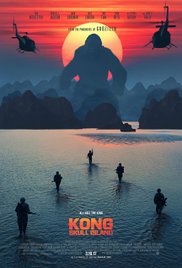
Kong: Skull Island (2017)


The ape headlines and all other parts of the movie get crushed in Kong: Skull Island

Director: Jordan Vogt-Roberts

Cast: Tom Hiddleston (James Conrad), Samuel L. Jackson (Colonel Preston Packard), John Goodman (Bill Randa), Brie Larson (Mason Weaver), John C Reilly (Hank Marlow), Corey Hawkins (Houston Brooks), Toby Kebbell (Major Jack Chapman), John Ortiz (Victor Nieves), Jing Tian (San Lin), Jason Mitchell (Glenn Mills), Shea Whigham (Earl Cole), Thomas Mann (Reg Slivko), Richard Jenkins (Senator Al Willis)

Kong: Skull Islandis another attempt to kickstart a monster franchise (rumours abound that eventually Kong and Godzilla duke it out. I’d start worrying about all those major landmarks.). So anyway, Kong: Skull Island sees a team of explorers head towards the mysterious Skull Island to… well to poke around I think. Actually the aims of the expedition rarely trouble the screenwriters so they shouldn’t trouble us. Anyway, Kong (larger than ever) is deeply pissed at this invasion of his territory so trashes every helicopter going. Our heroes are stranded on the island, while their incursion releases numerous monsters who endanger the whole world that only Kong can stop.

This pretty feeble film is a crumby repackage of numerous (much better) films – and yet another example of a generation of film-makers producing films whose only points of reference are older, better movies. This one plays like Apocalypse Now humped by King Kong. Perhaps one day we’ll actually get some truly original, distinctive films that make their own points rather than reworking others. And perhaps we’ll still get genre films that actually are interested in character and development, rather than bashing and blowing things up.

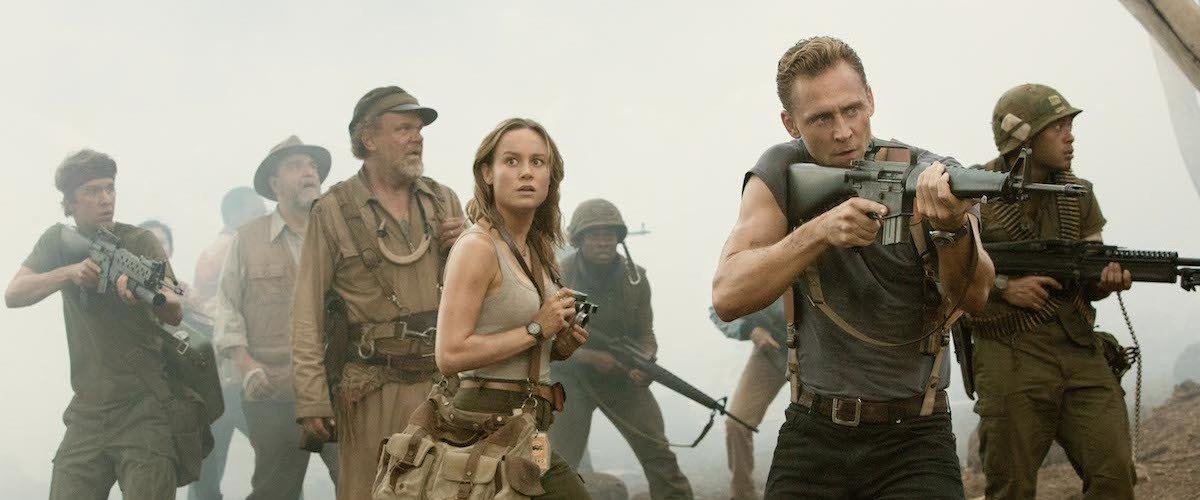
Anyway, the human characters are almost completely pointless in this B-movie retread. I was wondering how they persuaded such an illustrious cast of actors to come on board. This mystery was solved when I watched a remarkably bland DVD-feature – Tom Hiddleston’s video diary. This was basically shots of Hiddleston talking about having a great couple of weeks in Hawaii flying in helicopters, four weeks sunning himself in Australia and three weeks of travelling down a Vietnamese river. And he got paid millions of dollars to do it. No wonder he ends the video saying he’d recommend this life to anyone.

It certainly wasn’t the character that lured him in. Conrad is interesting for precisely one scene – as a troubled drunk in the bar – before he reverts into clean shaven, upright and heroic. His vaunted skills as a tracker are never used. His set-up as the natural survivor and leader never comes to fruition. His relationship with Brie Larson is based solely on them being the two most attractive members of the cast. As for Larson: has an Oscar-winning actress ever followed up her win with such a truly pointless, empty, non-part? 

The film is completely uninterested in human beings – it can’t even bother to make those that buy it early in the film distinctive individuals. Even the ones left at the end barely pass as people we know. Only John C Reilly crafts a truly engaging character as a sort of Ben Gunn figure. Samuel L Jackson gets the “soldier maddened by war” so that we have the typical “the real danger is man” sub-plot, but everything is by the numbers. The characters are so mix-and-match that you feel no peril at any point. It’s so cynical that it can even drop in a Chinese scientist from nowhere (who does nothing at all in the film) solely to try and sell the film to that market.

Our nominal heroes: most of them I’ve already forgotten

Kong is the real focus of the movie – and there is limited interest you can get out of a gigantic ape bashing and ripping things apart. Protracted battles go on and on and on. You really see the difference between the work of Andy Serkis and Peter Jackson in their Kong movie and this one. That Kong actually felt like a character you could bond with. This is just the wet-dream of a boy who grew up watching too many Harryhausen pictures, a behemoth who everyone stares at with wonder but whom the audience never feels any emotional investment in. And for all the faults of Jackson’s Kong, it was a film with brains, with heart, made with artistry and which understood character and emotion give meaning to spectacle, rather than being dull speed bumps a film needs to get over.

The film aims sometimes for an Apocalypse Now-style dread of humanity and the madness of war etc. etc. – but nearly always misses. The humans (and their aims) are such non-event blanks that we can’t care less about the danger of humanity. The film itself has none of the poetry of Apocalypse Now, and instead just wants a lot of (PG rated) violence and a bit of madness. Some of the madness even seems a bit uncomfortable – a tribe of natives are treated as humble exotics. It’s aiming to piggy-back on an attitude of America being humbled by Vietnam and lashing out – but never adds any material in the story to actually take this idea anywhere. Calling characters Conrad and Marlow doesn’t suddenly give it a Heart of Darkness depth – it just makes you think the screenwriters thumbed through CliffNotes before naming their characters. 

Instead the film winds on, never really getting entertaining, boring us with the characters and taking way too long lingering over monsters and bashings. The only thing the film loves is the bang, the buck and the “ain’t it SO COOL” shots of a monster ape hitting things. It’s totally empty, boring trash and it has all the grace and skill of a child’s home movie. Don’t get me wrong, it’s professionally made – but totally empty. Nothing in there is designed to stick with the audience or even remotely make them think. Harryhausen movies had a depth and magic to them that inspired a generation. Films, like this one, churned out by today’s imitators are empty light shows that won’t last a week in the imagination.

Alfie (1966)


Michael Caine excels as amoral cockney moralist lothario Alfie

Director: Lewis Gilbert

Cast: Michael Caine (Alfie), Shelley Winters (Ruby), Millicent Martin (Siddie), Julia Foster (Gilda), Jane Asher (Annie), Shirley Anne Field (Carla), Vivien Merchant (Lily), Eleanor Bron (Doctor), Denholm Elliott (Abortionist), Alfie Bass (Harry), Murray Melvin (Nat)

Is there a more “swinging Sixties” film than Alfie – the story of a cockney wideboy interested only in “birds” and having a good time? On the surface it captures the attitude of the 1960s, with free love, thumbing your nose at authority, and having the sort of fun the wartime generation frowned on. But it’s a more interesting film than this, which criticises the emptiness of the 1960s by showing us Alfie’s selfishness and loneliness. Sure he has a good time now and again – but would anyone really want to live like this forever?

Alfie (Michael Caine) is a handsome chauffeur with a never-ending stream of affairs, commitment constantly avoided. The film follows these entanglements, starting with his needy girlfriend Gilda (Julia Foster), the mother of his child, whom he constantly cheats on. When Gilda finally leaves him – and Alfie loses touch with the son he has become fond of – a medical condition ends up with him in a convalescent home, where his affairs include the wife of a fellow patient, Lily (Vivien Merchant). Later relationships with a young hitchhiker (Jane Asher) and a rich American woman (Shelley Winters) similarly lead to disappointment.

The main thing that makes Alfie last (possibly the only thing) is Michael Caine’s sublime performance. Caine is on screen the whole time, and the film is spotted throughout with his casual direct-to-camera addresses. Caine’s charm and likeability work perfectly for this device, winning the audience over. But Caine never falls for Alfie – even if many audience members clearly did. Caine’s constantly demonstrates Alfie’s hypocrisy, shallowness, meanness and selfishness. Sure he recounts his actions with wit, but most of these actions are extremely shitty. But right from the start there is a charismatic, lothario swagger to him – and a cheeky charm – that makes you like him.

But his general shittiness is more obvious today than back in the 1960s. Then the amount of sex probably shocked viewers the most. Today it’s Alfie’s inability in to refer to women as anything but “it”, like some smooth Richard Keys. His attitude to women is appalling – he describes Jane Asher’s hitchhiker like some sort of floor-cleaning, bed-sharing car. Alfie avoids any sort of emotional connection at all with his conquests, and the film makes clear that this has left him empty and lonely, feelings he buries deep down.

In fact, the film is most telling at the moments when Alfie doesn’t turn to us with that confident grin and place a self-serving spin on what just happened. Seeing his son being warmly embraced by Gilda’s new husband (at the christening of their new child), Alfie can only skulk quietly at the back of the church – as scared to meet our eyes as he is those of this family he could have had. His love for his son is something Alfie refuses to accept himself – but his feelings are all too clear at his physical collapse on losing access to his child, and his later tear-stained reaction to Lily’s abortion.

Ah yes the abortion scene. Probably the highlight of the film – if only because its intense seriousness is so different from the rest of the film, and Alfie’s wheedling weakness and whiny self-justification become all the clearer. His complete lack of principle in sleeping with his only friend’s wife (“Well what harm can it do?”) of course results in her pregnancy. And Alfie is all at sea, firstly with Vivien Merchant’s expert portrayal of distress, pain, shame and guilt as Lily – and with Denholm Elliot’s perfect cameo of grimy, resentful disillusionment as a struck-off doctor turned back-street abortionist. Just to bang the nail on the head, Alfie leaves Lily alone after the operation (telling the audience that there’s nothing he can do anyway, right?). He may be horrified later at what he has done, and may feel moments of empathy – but has he really learned anything?

The film is full of these moments where we are invited to understand that Alfie is not leading a life for us to aspire to, but one we need to avoid. It’s left Alfie alone, miserable and abandoned. For all the jaunty 1960s vibe, and Alfie’s charming cheek, he’s not a happy man but a desperately shallow one. And he’s even got a shelf life for this way of life: “He’s younger than you are” one of his lovers tells him late in the film, as she leaves him. Because what has Alfie got in his life? When he runs through a checklist in the film’s closing monologue (“a bob or two, some decent clothes, a car. I’ve got my health back and I ain’t attached. But I ain’t got my peace of mind”) the emptiness of his life is all too clear.

Caine’s brilliance is to make this tragic, empty, selfish man seem attractive and exciting – while also never losing sight of what a complete shit he is. It’s a great performance and he dominates the entire film. He plugs perfectly into the hip, light touch that Lewis Gilbert directs the film with, and the entire film has a layer of cool on it that works rather well. What makes the film last today though is its shrewd analysis of the empty, soulless, coldness that underpins living your life like this – and how the sort of shallow, no consequences, no emotional investment bouncing around Alfie has just leaves you alone and growing old.

“What’s it all about?” You can argue the answers are buried in this film – but Alfie never spots them.

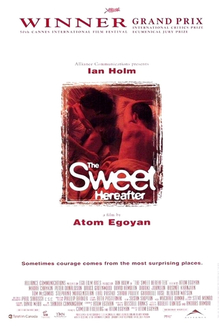
The Sweet Hereafter (1997)


Sarah Polley and Ian Holm are outstanding in this heartfelt story of grief The Sweet Hereafter

Director: Atom Egoyan

Cast: Ian Holm (Mitchell Stephens), Sarah Polley (Nicole Burnell), Bruce Greenwood (Billy Ansel), Tom McCamus (Sam Burnell), Alberta Watson (Risa Walker), Maury Chaykin (Wendell Walker), Gabrielle Rose (Dolores Driscoll), Stepheanie Morgenstern (Allison O’Donnell), Caethan Banks (Zoe Stephens), Arsinée Khanjian (Wanda Otto), Earl Pastko (Hartley Otto)

Atom Egoyan’s melancholic, wintery The Sweet Hereafter is a small-scale masterpiece about grief and mourning and the impact a calamitous accident has on a community. Told across three delicately interwoven timelines, it explores how the loss of a child can affect us and how a community can be broken apart by trauma. 

In a remote Canadian town, an accident to a school bus leaves most of the town’s children killed. The only survivors are bus driver Dolores (Gabrielle Rose) and 15-year-old Nicole Burnell (Sarah Polley) who has been left paralysed from the waist. Mitchell Stephens (Ian Holm), is a lawyer looking to start a case against the bus company or the local authority or anyone else he can think of who might be to blame. Stephens himself suffers from the “loss” of his daughter, a hopeless drug addict who contacts him intermittently for money.

Egoyan’s film has a beautiful elegiac quality, the camera mixing intimate close-ups of tormented actors with sweeping vistas of snowy wilderness. The film has a medieval-style pipe score, suggesting an old medieval morality tale. Egoyan builds on this by introducing the recurring theme of the Pied Piper throughout the film – just like Hamelin, the town has lost all its children (bar one child). Nicole seems obviously the one remaining child – but is she more than that? Is Dolores or the bus the pied piper? Is it fate itself? Is Mitchell Stephens another Pied Piper, promising to solve all the town’s problems?

Either way it’s a beautifully heartfelt look at grief, loss and the impact it has on small communities. Everyone is aware of each other’s business, but this town still has secrets, from affairs to suggestions of dark family issues. But the overwhelming feeling is how grief affects us in different ways – how it turns some to depression, some to anger, some to melancholy and some to isolation. It also show how suspicion and resentment can start to bubble up and rend the community – and how finger-pointing and blame can be an inevitable consequence.

This theme is helped by the immaculate acting. There is not a false step in the entire cast. Bruce Greenwood is wonderfully bitter and deeply pained as the father who has lost both his children and his wife in quick succession and wants nothing more than to forget. Alberta Watson is lifeless and going through the motions as a mother who has lost her sole reason for living. Arsinée Khanjian burns with undirected fury at losing her beloved adopted son. The interplay between these and other characters is sublime, Egoyan asking profound questions of love and trust.

Into all this appears our lawyer. In a simply superb performance by Ian Holm, Stephens is both an ambulance chaser and also a man who seems to need this court case to fill a void within himself. Stephens skilfully adjusts his pitch for each member of the town he meets, adroitly recognising and playing on the different emotions he sees to sign them up for a group lawsuit. But how much does his daughter’s own disastrous life tie into his mantra that “someone” is always to blame, that someone has cut corners to save a buck? Does this same mantra help him to deal with his daughter’s failures – that they are not his or hers but some external force? 

Stephens is the classic interloper in the town – it’s easy to see why Greenwood’s Ansell sees him as feeding off the tragedy. Holm leaves the question brilliantly open in a wonderfully subtle performance: how much does he care and how much does he want the money? He talks to the Ottos with real empathy and concern, but then runs to his car in haste to get an agreement for them to sign. Egoyan’s film asks throughout whether Stephen’s presence is, in its way, equally damaging to the town: this Pied Piper offers to take away their pain, but at what price? Will this crusade stop the town from putting the dreadful event behind them?

Interweaving timelines here work very effectively – it’s a good hour into the film before the timeline following the day of the accident finally reaches the accident itself. By this point this accident has so dominated the film that we have become all too familiar with the painful mundanity of grief and the emptiness of carrying on. Egoyan shows us the accident: but not all of it. We see it largely from Ansell’s reaction – and while we see the bus tumbling towards the frozen lake, we never see what makes it swerve. The point perhaps is to put us in the same position as the rest of the town: we can never know if it was an accident, act of God, or if someone was certainly to blame.It’s the balance between blame and moving on that this film dwells on.

The Sweet Hereafter of the film is that netherworld after loss, that “living death” of carrying on after a loved one has left forever. Any doubt that Stephens himself isn’t stuck in the same condition is dispelled in the film’s third contrasting plotline. Two years later, Stephens is a on a plane journey to collect his daughter from another treatment clinic. On the plane he finds himself by chance sitting next to his daughter’s childhood friend. The conversation between them slowly reveals more and more the immense loss, emptiness and longing for family in Stephens. How much of this feeling did he recognise in the town: and how much did his own feelings allow him to exploit the feelings of the town?

Holm is again sublime in these sequences, his eyes little pin holes of sadness, his tight-lipped firmness holding back waves of emotion. In one stand-out sequence, he tells a heart-rendering monologue of a time when his daughter as a child was bitten by a black widow spider. Rushing her to the hospital, Stephens had to keep her calm to prevent her throat swelling up, while simultaneously standing by to perform an emergency tracheotomy. The point of the story for Stephens is his own fear, and the film asks: is this fear also linked to his own regret that this was the last time he could truly keep his daughter safe? And does he also look back on it and wonder why he saved his daughter then so she could die of drug addiction today?

The other daughter in the film is Nicole, played with a mature distance by Sarah Polley. Nicole, the last surviving child, slowly turns into a pivotal figure in the film, her decisions affected by both her relationship with her father (an unsettlingly hipsterish Tom McCamus) and perhaps her wish to do what is best for the town. McCamus is equally good as a loving father whose interest in his daughter is not healthy – and it’s one of many complex questions in the film as to how far Nicole is unsettled or enamoured with his attentions. 

The Sweet Hereafter is a beautifully made, wonderful film – perhaps one of the best you’ll see about small town grief and pity. It may also be one of the best acted films you’ll see – every performance is simply spot-on, heartfelt and true. It may well be Ian Holm’s finest hour, in the most complex leading role he ever got in his career. Egoyan’s emotional and heartfelt story has so much to tell you about grief and mourning that it can’t help but be a sad, melancholic, but thought-provoking and engrossing watch.

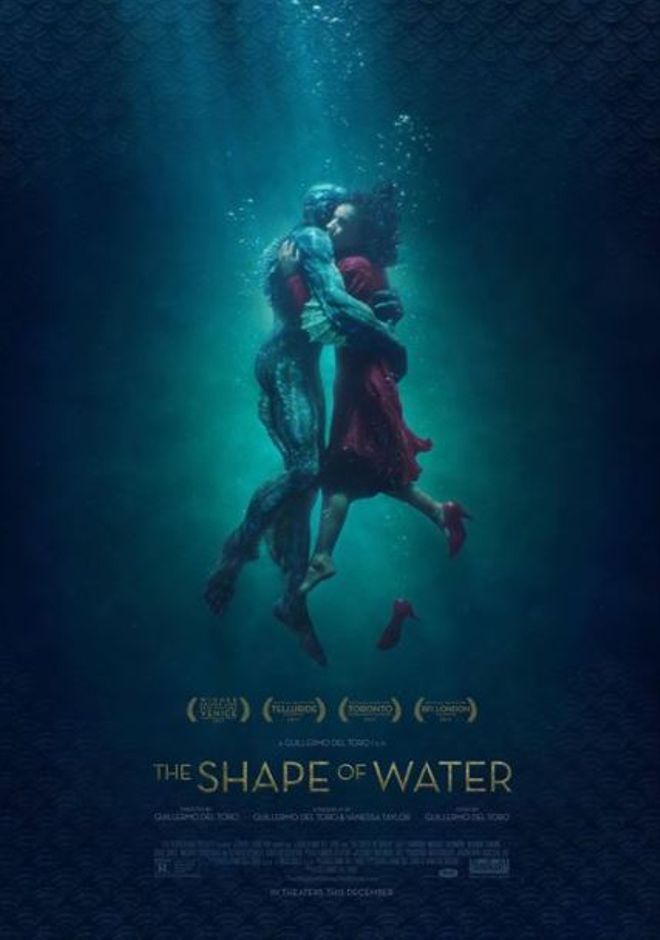
The Shape of Water (2017)


Sally Hawkins and Octavia Spencer work together to save a misunderstood creature in The Shape of Water

Director: Guillermo del Toro

Cast: Sally Hawkins (Elisa Esposito), Michael Shannon (Colonel Richard Strickland), Richard Jenkins (Giles), Doug Jones (The Creature), Michael Stuhlbarg (Dr Robert Hoffstetler), Octavia Spencer (Zelda Delilah Fuller), Nick Searcy (General Frank Hoyt), David Hewlett (Fleming), Lauren Lee Smith (Elaine Strickland)

Guillermo del Toro: part arthouse director, part thumping action director, who else could have made both Pan’s Labyrinth and Pacific Rim? The Shape of Water falls firmly into the former category, and continues the director’s long-standing interest in fairy-tales and fables, creating adult bedtime stories filled with romance and wonder, but laced with violence and human horror (and it’s always the humans who are the monsters). The Shape of Water has been garlanded with huge praise – but yet I’m not quite sure about it. Just not quite sure.

In 1962 in Baltimore, Elisa Esposito (Sally Hawkins) is a mute cleaner working in a government facility with her colleague, friend and effective translator Zelda (Octavia Spencer). Her only other friend is her neighbour, a gay out-of-work advert artist Giles (Richard Jenkins). The research facility takes delivery of a strange amphibious creature (Doug Jones), captured in the wild by sinister CIA man Richard Strickland (Michael Shannon). While Strickland and lead scientist Dr Hoffstetler (Michael Stuhlbarg) conduct tests on the creature, Elisa befriends it – the two of them drawn together by their isolation and inability to communicate verbally. When the decision comes from above to dissect the creature, Elisa decides to help it escape. 

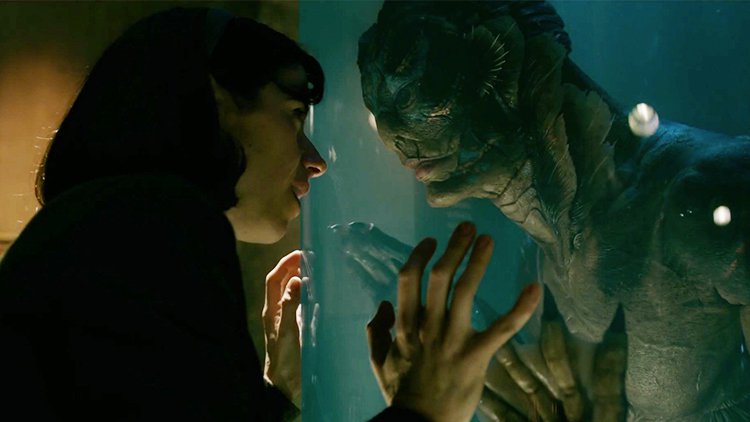
The Shape of Wateris an adult fairy-tale that uses the structure, rules and heightened reality of the bedtime story. So we have Elisa as “the Princess without a voice”, the government facility as the evil castle, the creature as a mixture of damsel in distress and knight errant, and Michael Shannon’s vile government spook as a sort of perverted evil Queen. While the film is set in 1962, it’s aiming for a fantasy world feeling: Elisa and Giles even live above an old-school movie cinema, while the facility itself is a dank, subterranean concrete prison, part medieval dungeon, part industrial complex, dressed in a retro-1950s style. There’s no denying the film looks fantastically impressive.

The plot hinges on the growing bond between Elisa and the creature, which flourishes first into a mutual friendship, then semi-romance and finally into a full-blown relationship. If there is one part of the movie which I felt didn’t quite work, it was the build between friendship and love. While del Toro does some excellent work showing these two bonding over a common lack of language – she teaches him some basic sign language, they both share a love of music – I felt the jump between friendship and sexual attraction seemed a little big.

Del Toro films it all beautifully – and his empathy for both characters is very moving. But the film wants us to feel this deep connection for (and between) the two characters – and I’m just not sure I did. I’m not sure the film gives the time it needs for this development. Great as Michael Stuhlbarg’s (and excellent as his conflicted performance is) character is, could the film have removed his sub-plot and invested more time in the relationship? Yes it could – and I think this could have made a stronger movie. This is of course a personal reaction – I’m sure plenty of people will be bowled over by the romance of the film – but I didn’t quite buy it. For all the soulfulness of the film, I just didn’t find myself investing in this relationship as it built as much as I should.

This is despite Sally Hawkins’ expressive acting as Elisa. I find Hawkins a bit of an acquired taste: she is a little too twee, something about her eyes and vulnerable smile is a little too head-girlish. Of course that sprightly gentleness works perfectly here, but the character is more interesting when del Toro explores her depths, her desire and well-concealed resentfulness under a cheery exterior (practically the first thing we see her do is masturbate in the bath – a daily ritual timed to the second via egg timer, functionally getting these feelings out of the way before the day ahead). Hawkins mixes this gentle exterior and passionate interior extremely well throughout the film.

The principal supports are also excellent. It’s no coincidence that del Toro makes our heroes all outsiders: a mute, a black servant and an ageing gay man. As well as showing why these characters might be drawn together, it’s also a neat parallel commentary on attitudes of the time – Octavia Spencer in particular makes a huge amount out of a character that is effectively a voice for Elisa half the time, investing the part with a huge sisterly warmth.

Richard Jenkins is both very funny and rather sweet as a man scared of being alone and frightened about doing the right thing. Most of the film’s laughs come from him – but so does a large degree of its heart. Jenkins gets some fantastic material – from hints that he has been fired for social and sexual misdemeanors from his Mad Men-ish former job, to his growing realisation that his hand-drawn art is being left behind in a world embracing photography (“I think it’s my best work” has never sounded like a sadder mantra), and above all his hopelessly sad infatuation with the friendly barman at a local diner (the sort of hopeless crush you feel he must realise isn’t going to go anywhere good – but still manages to be endearing before it gets there).

Del Toro’s dreamy fable has plenty of potential monsters and obstacles in it – from government suits to Russian heavies – but the main antagonist is Shannon’s Strickland. Great as Shannon is in this role as a menacing heavy with a hinterland of insecurities and self-doubt, it’s a character that feels a little obvious. He’s the monster, you see! It’s a heavy-handedness the film sometimes uses – not least in its occasional references to the race politics of the era – that weights the deck, and tries to do a little too much of the work for the audience. Again, a film with one fewer sub-plot might have allowed this character greater depth. As it is, his vileness is established from the first second, which means the metaphor of his hand with its increasingly rotten, gangrenous fingers seems a little to on-the-nose.

But The Shape of Water is a labour of love, and a testament to love – and del Toro reminds us all what a luscious and romantic filmmaker he can be. The later romantic moments between Elisa and the Creature have a beauty to them – not least the moments when they immerse themselves together in water. Other moments are too obvious: an imagined song-and-dance routine is so signposted in advance that it carries little emotional impact. In fact, the film’s main fault may be it is too predictable: most of its plot developments I worked out within the first few minutes – but it sort of still works. After all, fairy-tales are predictable aren’t they?

Del Toro has made one from the heart here. It’s not a perfect film – it’s not a masterpiece, and I think it’s a less complex and affecting work than the brilliant Pan’s Labyrinth – but it’s made with a lot of love and a lot of lyrical romanticism. It looks absolutely astounding. It’s actually surprisingly funny and wonderfully acted: Richard Jenkins probably stands out, and my respect for Octavia Spencer continues to grow. Del Toro is gifted filmmaker, and he is working overtime here to make a romantic, sweeping, monster movie cum adult fairy-tale. All the ingredients are there: but somehow I didn’t fall in love. Did I miss it? Maybe I did. And I can’t think of much higher praise than I’m more than willing to go back and look again and see if I get more of a bond with it next time. But, for all its moments of genius, I found the delight was on the margins rather than the centre.

King Arthur (2004)


Clive Owen leads his merry men in clumsy would-be Arthurian epic King Arthur

Director: Antoine Fuqua

Cast: Clive Owen (Arthur), Ioan Gruffudd (Lancelot), Keira Knightley (Guinevere), Stellan Skarsgård (Cerdric), Ray Winstone (Bors), Mads Mikkelsen (Tristan), Joel Edgerton (Gawain), Hugh Dancy (Galahad), Ray Stevenson (Dagonet), Stephen Dillane (Merlin), Til Schweiger (Cyrnic)

The story of King Arthur has entertained generations for so long, it’s actually a bit of a surprise that there hasn’t been a great movie made about it. Sure there have been entertaining guilty pleasures (like my love for the bobbins Excalibur) but there hasn’t been a great action adventure made about the legendary king. And this Jerry Bruckheimer actioner sure ain’t it. But it re-enforces my seemingly never-ending appetite for distinctly poor, big-budget, epic films.

Arthur (Clive Owen) is a half-Celtic Roman cavalry officer who commands a Sarmatian cavalry unit, serving a fixed term of service with Rome. They help to guard Hadrian’s Wall against rebel native Britons. Before their discharge, the knights are given one last job: go behind enemy lines to rescue a prominent Roman citizen living beyond the wall. Once they arrive, they find he has enslaved the local Brits – including imprisoning a young woman named Guinevere (Keira Knightley). Knowing a Saxon invasion force lead by the fearsome Cerdric (Stellan Skarsgård) is ravaging Britain – and that the Romans are withdrawing from the empire – Arthur decides to lead the whole group back to the wall and safety.

King Arthur isn’t a terrible film, just a totally mediocre one. It’s an uninspired coupling together of half-a-dozen other better movie: from its Dirty Dozen line-up, through its Gladiator style score (Hans Zimmer rips himself off again), to its remix of a thousand period sword epics from Spartacus on, mixed with its Braveheart style design and battle scenes. It’s almost completely unoriginal from start to finish. There is no inspiration here at all – it’s made by people who have seen other films and based everything on that rather than wanting to make a film themselves.

It even wraps itself up with an unseemly haste, as if all involved knew they hadn’t nailed it so decided the best thing to was to knock the whole thing on the head and call it a bad job.

The film probably stumbles from the start with its claim to present a sort of “true historical story” of King Arthur. Now I’m not one to get hung up on historical accuracy too much – except when it’s making extravagant claims which are just not true – but the “true story” here is bobbins. Nothing really feels right – from the Roman politics to the idea of a group of loaded Roman settlers setting up a huge estate deep into Scotland (I mean what the fuck was Hadrian’s Wall for eh?). The knights bear very little resemblance indeed to their legendary counterpoints. In fact it’s almost as if they had a script about a brave band of Roman soldiers and just stuck the name King Arthur on it for the name recognition (perish the thought!).

The idea of a group of seasoned, grizzled warriors isn’t a bad one – and it works rather well here because most of the actors in these roles are pretty good (particularly Mads Mikkelsen as a sort of Samurai Tristan). It makes for some interesting dynamics and always some fine character work – the best arc going to Ray Stevenson’s Dagonet as a knight who finds something to fight for. It also contrasts rather well with Stellan Skarsgard’s world-weary villain, who’s seen it all and finds it hard to get excited about ravaging and pillaging anymore.

But it’s a shame that this promising set-up gets wasted. After a good start, when we get to see all our heroes’ personalities reflected in their fighting styles as they repel an attack on a bishop, these dynamics quickly settle down into the usual tropes: you’ve got the joker, the cocky one, the reluctant one who’s only out for himself… Fortunately the Director’s Cut (which I watched) deletes the worst of Ray Winstone’s comic “banter”, but it’s still pretty standard stuff.

The mission behind the wall then pretty much follows the pattern you would expect: the guy they go to rescue is an unsympathetic bastard, they find themselves protecting the weak, it’s a dangerous journey back to safety, blah-blah-blah. Although a battle on the ice has some genuine excitement to it, there isn’t anything new here at all. Everyone just feels like they are going through the motions. 

When the battles kick off in earnest, they are pretty well mounted – even if they are hugely reminiscent of the opening battle of Gladiator and the low-camera, immersive battles of Braveheart. Sure there is a smoky immediacy about them, like a sword wielding Saving Private Ryan, but it’s still pretty much what you would expect. The action pans out with no real surprises – our heroes and villains even match up for the expected clashes.

Clive Owen is a fine actor, but he is manifestly wrong for the role of a classical hero and the awe-inspiring battlefield heroics he is called to carry out here. He’s too modern an actor, with too much of the world-weary smoothness to him, for him to really convince as this hardened medieval warrior. Owen’s delivery and style is so restrained he can’t bring the bombast or elemental force the part requires. Allegedly he was cast because Bruckheimer believed he would be the next James Bond – the actor they turned down for Arthur? Daniel Craig… 

Nope. Sorry.

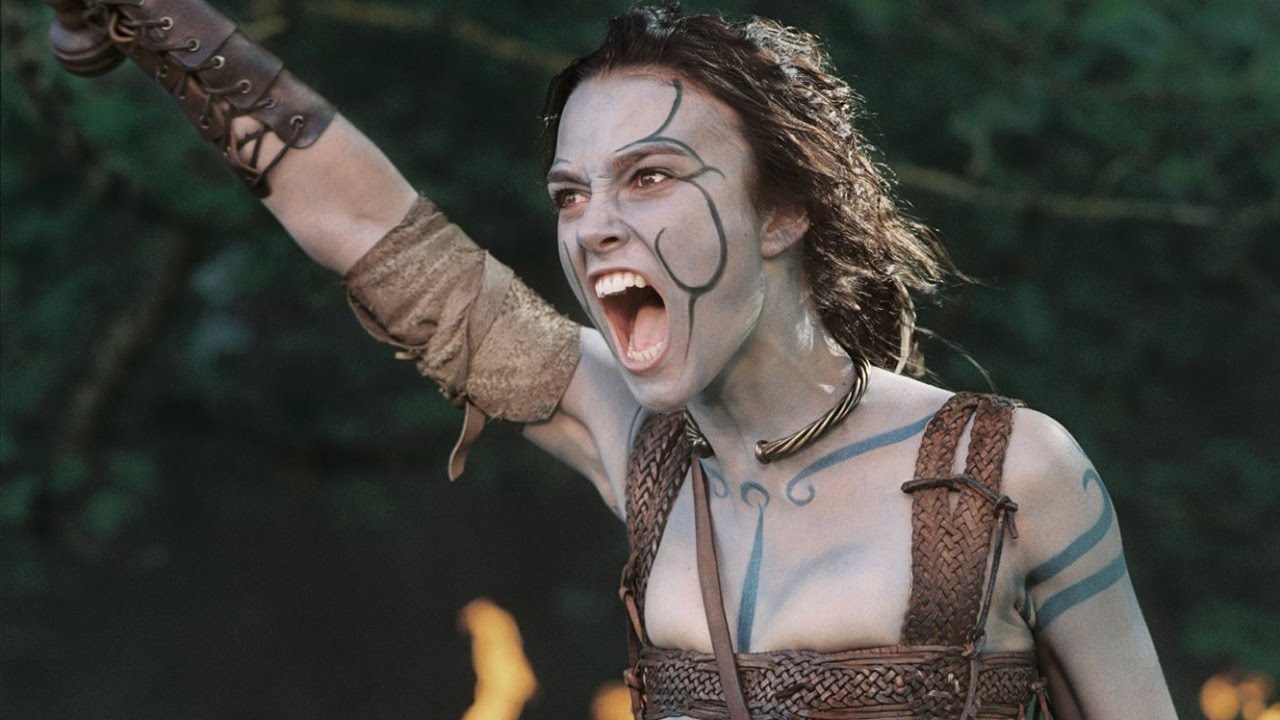
Similarly Kiera Knightley is just as miscast. Let’s put aside the fact that she is half Owen’s age. There is a prep school headgirlishness to her that just doesn’t work when we are asked to buy her as woad-covered warrior princess. She’s too strait-laced, too polite, too sophisticated. When she does step into the full-on Boudicca look, you’ll giggle rather than tremble. For all her exertion, she’s not convincing in the role either.

But then that’s King Arthur all over: trying hard but not convincing, with such a tenuous link back to the original myth that the fact they are just using the Arthur name to flog some more tickets is all the more obvious. Major elements of the legend are missing – in particular the Arthur-Lancelot-Guinevere love triangle is cut down to the merest of suggestions, enough for it to be noticed but not enough for it to feel like a real plot – and other elements (Merlin, the Sword in the Stone, the Round Table) seem shoe-horned in for no real effect. It’s basically just a bombastic B-movie, a sort of Gladiator rip-off without the poetry. Moments of fun, but still not that good.

Dracula Untold (2014)


Luke Evans rises above another terrible film in this first terrible attempt to launch a “Dark Universe”

Director: Gary Shore

Cast: Luke Evans (Vlad the Impaler/Dracula), Dominic Cooper (Sultan Mehmet III), Sarah Gadon (Mirena), Art Parkinson (Ingeras), Charles Dance (Master Vampire), William Houston (Cazan), Diarmaid Murtagh (Dumitru), Noah Huntley (Captain Petru), Paul Kaye (Brother Lucian)

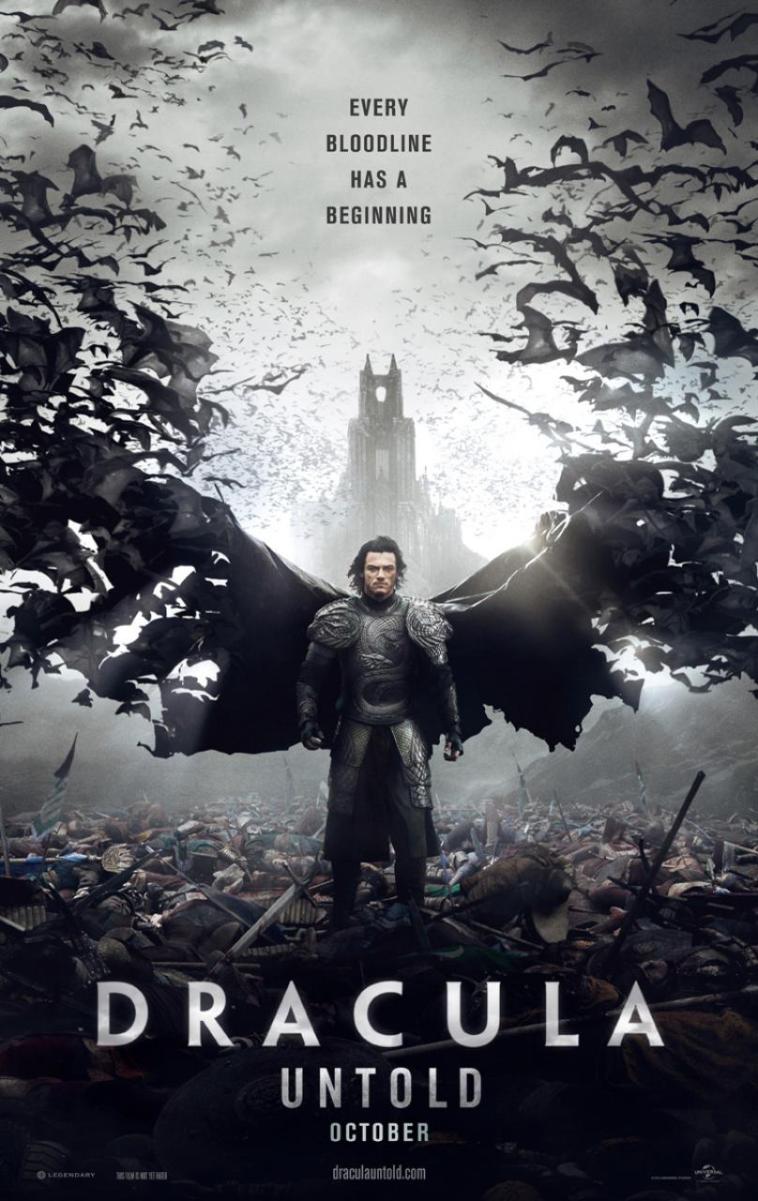
Every studio wants its own Cinematic Universe. Because the lesson from Marvel’s patient and excellent build of an entire world is that people will come and see every single film you make in a series. Right? Perhaps that explains the painful attempts of Universal to turn one of their few recognisable assets – monster movies – into some sort of bizarre linked universe. The project is currently in terminal decline after the flop of Tom Cruise’s The Mummy. But before that, a reboot had already been attempted with this bizarre retelling of the Dracula origins story.

Vlad the Impaler (Luke Evans) is a guy who wants to put his life of impaling behind him. All he wants is to lead his people peacefully in Transylvania. So imagine his disappointment when his boyhood rival Sultan Mehmet III (Dominic Cooper) arrives and demands the tribute of the first born sons of Transylvania – including Vlad’s son Ingeras (Art Parkinson). Vlad umms and ahs and then he decides – y’know what – not on his watch. But how can he keep his people, his son and wife (Sarah Gadon) safe? Well the only solution is to take on the mighty Power of the Vampire from a mysterious cave-dwelling creature (Charles Dance). Vlad now has unlimited strength for three days – but can he resist the craving for human blood that will make the transformation permanent? And will the powers last long enough to repel the Turks?

Okay. So obviously this film is complete rubbish. I mean it really is. It’s hilariously overshot – the action sequences are frequently hard to follow, so swiftly does the camera swoop and swirl like the bats Vlad can transform into. Shore is in love with showy shots – one battle is seen through the reflection on a CGI sword that is thrown in the air and twirls in an arc downwards (yes it is as complex and unengaging as I made it sound).

The plot is complete bobbins. It’s all “Forsooth my lord” and “We make for the monastery!” (a building, by the way, of unlimited size that seems genuinely able to accommodate most of the population of Transylvania). The film wants us to remember that Vlad is a cool bad-ass but also that he is ashamed of his life of sticking people on poles (needless to say, his signature move breaks out eventually). Vlad is a vampire and a monster – but he is also someone we need to root for, so he is portrayed as a lovable family man who never really seems that tormented by urgings for blood.

Luke Evans. One day he will be a star. If you could find a good performance in a terrible, stupid film it would be his. He is fully committed and he gives the part so much emotional depth – way more than is in the script. He really, really sells Vlad’s humanity and makes his character feel like a warm, lovable guy – but he mixes it with an edge behind the noble call of duty. Evans is genuinely rather good in this. The guy deserves so much better.

I’ll give a pass as well to Sarah Gadon and Art Parkinson, who at least treat the parts with a certain respect. Charles Dance has fun under bizarre make-up as a wizened monster. Everyone else is here to be as over-the-top and stupid as possible – not least Dominic Cooper, whose ludicrous accent, utterly unimposing frame and inexplicable sudden detailed knowledge of vampires makes for a deeply stupid, bad performance. But then everyone is going for it – Paul Kaye leaves no piece of scenery unchewed in his brief performances – and going for it badly. Everyone comes out of it badly.

The plot makes no sense: a strange gypsy emerges from nowhere to try and serve Vlad (why?) and then only returns at the end to help set up a sequel-that-never-came. Every decision Vlad makes is terrible. The villagers oscillate wildly from pathetically grateful yokels to “burn him!” lunatics to – well it would be spoilers, but let’s just say there is quite the body count. In fact, the only thing really interesting about the story is wondering what will make Vlad remain a vampire (which we all know he will do) – of course it is a “noble sacrifice”.

The biggest problem with the film is that Vlad is both far too powerful and far too noble. Since he can literally kill thousands of people single handed, why does he waste time taking his people into the woods – why not ride out single handed to meet the Turkish force and take them out? If he is so noble that he is never tempted once to keep the powers of a vampire for selfish reasons, where is the dramatic tension?
The film eventually ends in another overblown, stupid fight scene with bats and invulnerable vampires flying about the place. That’s before we head into an unearned coda in the modern age which sets up a sequel that is not coming, and includes a few groan-worthy references back to the original novel. But then this is a cartoon made by people who thought that they didn’t need to bother to make a good movie at all if they slapped the Dracula name on it.  I suppose you could say it’s just trying to entertain: but with no real interest in doing anything other than making more movies off it later, it’s a bit of a pointless mess.

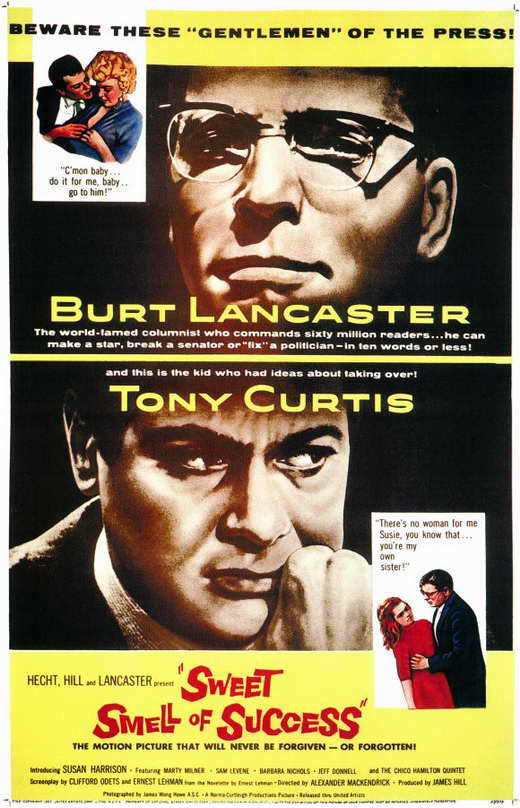
Sweet Smell of Success (1957)


Tony Curtis and Burt Lancaster have no scruples and no morals in the dark exploration of American culture, Sweet Smell of Success

Director: Alexander Mackendrick

Cast: Burt Lancaster (JJ Hunsecker), Tony Curtis (Sidney Falco), Susan Harrison (Susan Hunsucker), Martin Milner (Steve Dallas), Sam Levene (Frank D’Angelo), Barbara Nichols (Rita), David White (Elwell), Jeff Donnell (Sally), Joe Frisco (Herbie Temple), Emilie Meyer (Lt Harry Kello)

Is there a more cynical film in all the world than Sweet Smell of Success? Is it any wonder that the preview audiences, settling down to watch what they expected to be a Tony Curtis light comedy, went crazy? But Sweet Smell of Success is a film that captures the sweaty desperation of show-business, and the cut-throat ambitions of Manhattan. It’s a brutal, sharp, vicious black comedy, in which all our heroes are vile and everything can be bought and sold.

JJ Hunsecker (Burt Lancaster) is a newspaper columnist, so influential that the slightest mention in his column can make or break careers. He rules the New York politics and arts scene with a ruthless fist – and press agents like Sidney Falco (Tony Curtis) will do anything to get even the slightest sniff of a mention in the column. Hunsucker has a job for Falco: Hunsecker’s sister Susan (Susan Harrison) wants to marry jazz musician Steve Dallas (Martin Milner), and Hunsecker doesn’t approve – he wants the relationship finished. Falco may feel some qualms – but they don’t last long, and he’ll do anything he can to wreck the couple’s happiness.

Sweet Smell of Successis all about the grimy effort and lack of morals that sit under the surface of getting to that success. Because to achieve it in the big time you need to be as sinister, controlling and bullying as Hunsecker – and to try and get up there you need to be as conniving and weaselly as Falco. Both these characters are, in their own ways, almost totally reprehensible – and the film makes no attempt whatsoever to mitigate this. The film is appallingly ruthless and cynical, and its two lead characters are, to put it bluntly, complete shits and total bastards.

It’s a film that says the American Dream doesn’t even remotely exist in the way we like to think it can – that there is as much class and control in America as there ever was in the old world. And being decent and honest doesn’t get you anywhere – and sometimes even being conniving and doing whatever you’re told to do doesn’t either. It totally captures the bitter, cruel and imposing mood of New York high society at the time – unwelcoming, unfriendly, judgemental and brutal. For all its glamourous New York location, who on earth would look at this and say “I fancy a piece of that” – it’s the exact opposite of what American films often try to do.

This was Alexander Mackendrick’s first American film, and it’s perhaps his outsider’s eye that really helps the film to really go for it. Mackendrick’s Ealing films weren’t afraid to pull their punches – from the commentary on the corruption of big business in The Man in the White Suit to the dark comedy of The Ladykillers – and (working with genius cinematographer James Wong Howe) he creates one of the darkest (in every sense) film noirs ever. His camera prowls along the streets and he wonderfully captures both the bustle of New York clubs, and the menace of New York behind the glamour. He also shoots both Curtis and Lancaster in a way they never had been shot before – and both of them rise to the richness of the material to give possibly their finest performances.

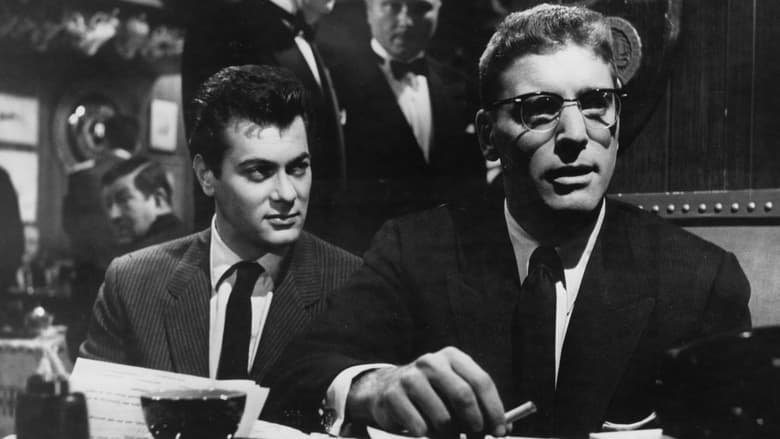
Burt Lancaster’s Hunsecker is a total monster: a bully and a sadist, vicious and aloof. Lancaster’s stillness here really sells the part – he doesn’t move, everyone else does – and the film brilliantly uses his slightly patrician voice. Hunsecker’s cold, dead-eyed stare pierces through character and desperation, and the contempt he feels for Falco (and every other character) is there in every moment, from looks to subtle physical put-downs (even lighting a cigarette is a power play, laced with an almost sexual sense of control). He “loves this city” because he owns the place, lock stock and barrel. Hunsecker only has one weak point – his clearly incestuous love for his sister – but even that is just the excuse for more controlling, domineering behaviour in which people are only objects for his manipulation.

And no-one is more willing to be manipulated than Tony Curtis’ brilliantly sycophantic Sidney Falco. Hunsecker is vile, but Falco might be worse. Is there a less likeable lead in a movie? Falco has no principles, no morals, no conscious – he’s the worst sort of follower, the sort of kid who stands behind the bully and laughs loudest at every joke. On top of that, Curtis is incompetent and untrusted – the scene where he attempts to blackmail another columnist and is firmly smacked down is wonderful for its discomfort. Curtis is twitchy, desperate, always on the move and will do anything – from lying to planting evidence to openly pimping his secretary. Far from the “young man working his way up” that you might expect, he’s a ruthless, unprincipled opportunist, perhaps the best inverted presentation of American can-do ambition you’ll see on screen.

That’s where the film really works: the scenes between Hunsecker and Falco are simply marvellous: Hunsecker savouring every verbal blow and smooth smackdown – and Falco sitting, edgy and jittery, on the edge, laughing loudly to try and make sure he doesn’t become the target. The marvellous restaurant scenes – with Hunsecker barely able to bring himself to acknowledge Falco’s existence – are the film’s heartbeat: brutal battles where Hunsecker wins everything and lives are destroyed. “A man has just been sentenced to death” Falco gleefully points out – “You’re dead son. Get yourself buried” is Hunsecker’s smoother version.

Ah yes that dialogue. Written by Clifford Odets at incredibly short notice (pages were literally taken straight from the typewriter to the actors’ hands in front of the camera), this might be one of the sharpest, waspiest films ever written. So many quotable lines, with Curtis and Lancaster relishing every dynamic and scintillating one-liner that the script gives them (and there are many). “I’d hate to take a bite out of you. You’re a cookie full of arsenic” – who wouldn’t want dialogue like that? It’s a sensationally written film, and every scene offers a new delight.

It’s not perfect of course. Milton and Harrison are as lightweight and forgettable as Lancaster and Curtis are sensational, too strait-laced and conventional to really seize the interest. The second half of the movie is weaker than the first: the pay-off doesn’t quite match the build-up. Really a film that just followed Hunsecker and Falco about as they went about their daily work, without the sister plotline, might have been even more effective. But it’s probably a quibble on a film that works every time – and has such dense, wonderful dialogue you’ll want to wind back most of the scenes to watch them again. And those two lead performances: simply perfect.

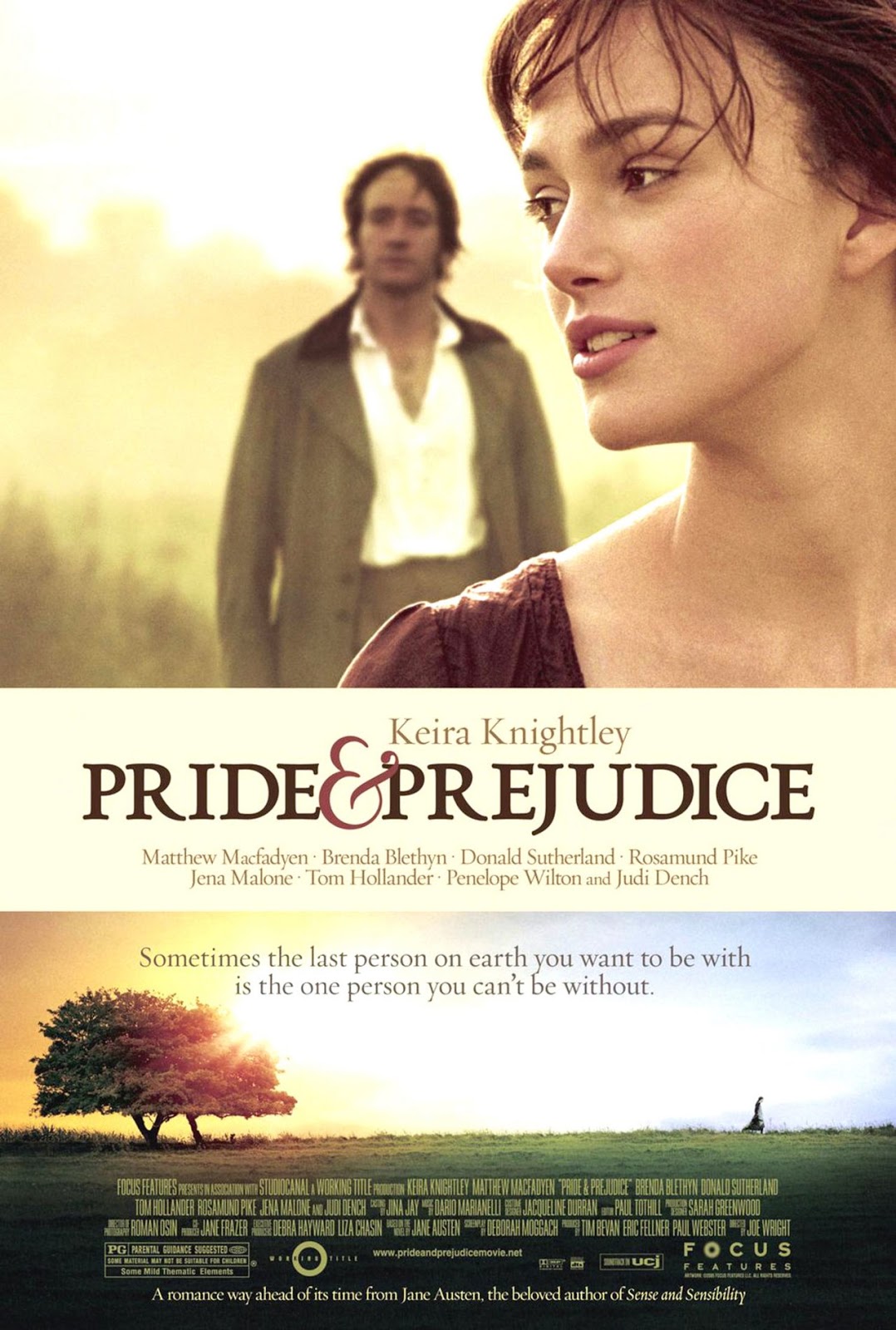
Pride and Prejudice (2005)


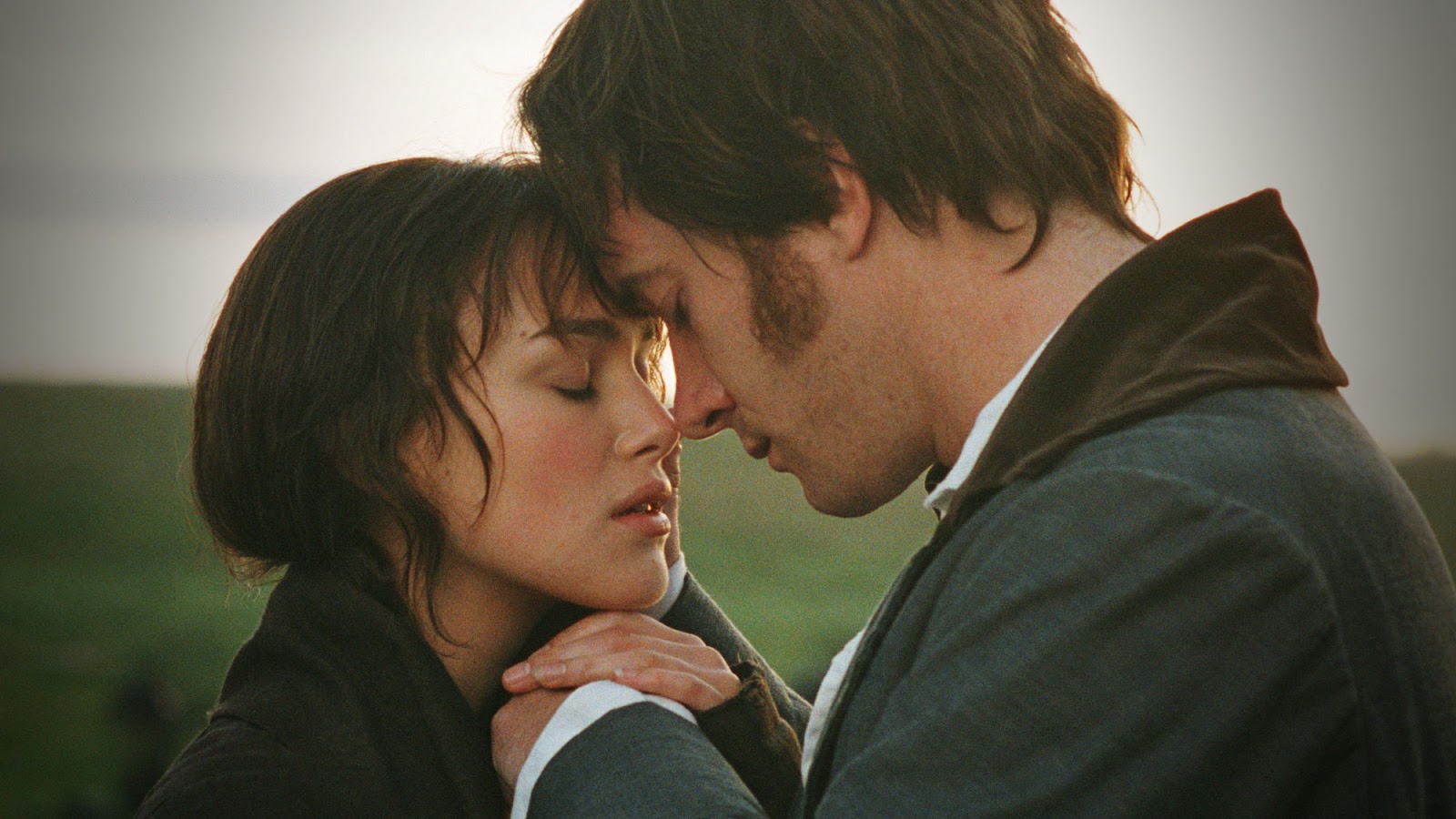
Keira Knightley and Matthew Macfadyen are drowned in the shadow of the BBC adaptation of Pride and Prejudice

Director: Joe Wright

Cast: Keira Knightley (Elizabeth Bennet), Matthew Macfadyen (Mr Darcy), Brenda Blethyn (Mrs Bennet), Donald Sutherland (Mr Bennet), Tom Hollander (Mr Collins), Rosamund Pike (Jane Bennet), Carey Mulligan (Kitty Bennet), Jena Malone (Lydia Bennet), Talulah Riley (Mary Bennet), Judi Dench (Lady Catherine de Bourgh), Simon Woods (Mr Bingley), Tamzin Merchant (Georgiana Darcy), Claudie Blakely (Charlotte Lucas), Kelly Reilly (Caroline Bingley), Rupert Friend (Mr Wickham), Penelope Wilton (Mrs Gardner), Peter Wight (Mr Gardiner)

I’ve written before about certain books having been adapted so successfully there feels very little point rolling out another. If ever an adaptation set this principle, it’s the 1995 BBC adaptation of Pride and Prejudice. Not only did it perfectly capture the spirit and style of the book, with perfect scripting and direction, but the two lead actors – Jennifer Ehle and especially Colin Firth – were simply perfect (for all his achievements, the first line of Firth’s obituary will forever be “Darcy Dies”.)

So Joe Wright and his team were already climbing a mountain when they announced plans to make a new adaptation of Jane Austen’s most beloved novel. What they’ve produced in the end is a well-made, handsomely mounted film full of visual invention – that has been pretty much rejected by nearly everyone I know who loves Austen. It’s a film that, in attempting to plough its own furlough, has ended up not really pleasing anyone: for the casual viewer it’s an entertaining but forgettable watch. For the Austen fan it’s just plain not right.

Structurally the film places Elizabeth’s relationship with Darcy slap bang at the centre, and has little to no interest in anything else. This leads to major themes and relationships being neglected or outright abandoned in some bizarre cut choices. The film wants to front-and-centre Lizzy’s increasing isolation – so Jane is dispatched from the film for almost over an hour. Even more oddly, Wickham is cut down to a few spare scenes – which makes her passionate sympathy for him and anger against Darcy make very little sense. All this isolation also means we never really understand the social implications and importance of marriage – in fact the whole thing is basically turned into a Cinderella romance: Rich Man Meets Poor Girl (And No One Else Matters). 

Which means a lot of the focus for the film lands on Keira Knightley. Is there a more controversial actor in film than Knightley? Oscar-nominated for the role, among my Austen-loving friends I have found only revulsion against her performance. She plays it with spirit but too much of a modern sensibility. She’s fine, but she’s just not convincing: she doesn’t look like her, she doesn’t have her warmth and wit and seems more like she’s wandered in from some sort of “flirty girls” comedy. Nothing really communicates the character’s intelligence and wit – and Knightley probably looks a little too modern for the whole thing to work. 

On top of that the film doesn’t want her to be too unsympathetic at any point, so dials down her judgemental nature, and also reduces any possibility of us judging her partiality for Wickham by mostly removing him from the film. However, this also removes many of the obstacles from the plot that stand in the way of romance.

Matthew MacFadyen does a decent job as “Nice Guy In A Period Drama”, but the character is just wrong for Darcy. Like Lizzy’s tendency to rush to judgement, Darcy’s apparent coldness and snobbery have been watered down to almost invisibility. His first announcement of love is so genuine, so gentle, so loving that you are amazed that Elizabeth dismisses him out of hand. It’s no surprise this Darcy turns out to be a decent bloke, the edges of the character have been completely shaved off. This puts a big old dent in the plot, reduces his character development, and ruins the impact of sweet later moments like Darcy’s uncertainty when the two meet at Pemberley. 

There are some good performances though. Tom Hollander is very funny as a social-climbing Mr Collins. Donald Sutherland gets so much warmth and twinkly good humour out of Mr Bennet that Wright even ends the film on him (another odd choice, but never mind). Judi Dench could play Lady Catherine standing on her head. Rosamund Pike is rather good as Jane – she totally feels right for the period. Brenda Blethyn largely manages to avoid turning Mrs Bennet into a complete stereotype. Saying that, Simon Woods portrays a version of Bingley so bumbling, tittering and awkward you are amazed either Jane or Darcy could be interested in him, let alone bear to spend time with him.

But then large chunks of the film feel odd. The screenplay works overtime to turn the film into a straight-forward star-crossed lovers story: so it’s Darcy and Elizabeth all the way, and the film is desperate to make them both likeable from the off. And if that means that, in a film called Pride and Prejudice, both the pride and the prejudice have to be junked to make sure even the stupidest audience member will like the hero and heroine, well that’s apparently a price worth paying. Lowering the Bennets’ social status as far as the film does, also turns the story into a full-on Cinderella territory. Darcy and Bingley are so posh an entire room falls silent when they walk in – in comparison the Bennets are so poor they share their house with pigs.

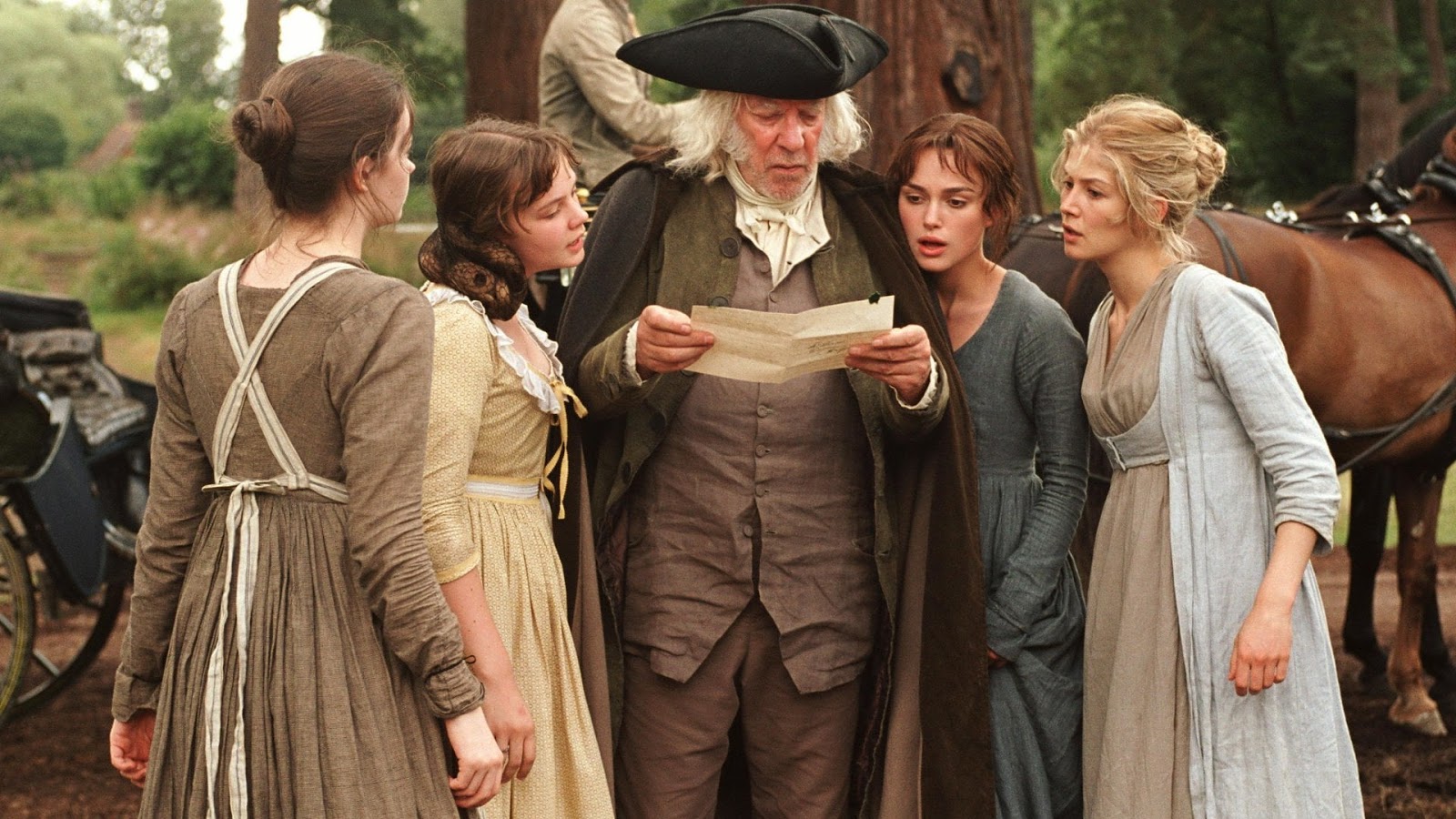
Ah yes the pigs. Why? The Bennets aren’t paupers. If they were, why would Collins want the place? Why would they be invited to the ball? Why would Bingley and Darcy even consider them as partners? Why would a family so aware of impressions have a home that is literallyfull of shit all the time? Why is Mr Bennet scruffy and unshaven – and why doesn’t anyone care? Who designed this? If the Bennets are so fixated on getting good marriages why do they literally live in a pig sty? It’s a visual idea that undermines the whole story.

I’m not joking. Here is a pig walking through the Bennet house.

It’s full of things like this that don’t feel right. The film junks most of the language of the original book, which makes it sound jarring (it even re-works Darcy’s first proposal: “in vain I have struggled, it will not do…” – large numbers of Austen lovers I know can recite those lines verbatim. This film apparently thought it could create a better version. It couldn’t). Large chunks of the film happen in the rain like some sort of version of Wuthering Heights. Why is that? Is it because professions of love in the rain are romantic in a Mills and Boonish sort of way? Or is it an echo back to Firth’s wet shirt?

Emma Thompson’s sublime adaptation of Sense and Sensibility demonstrated that it is completely possible to adapt an Austen novel into a two-hour film and still preserve the characters, relationships, major events and themes of the book, while also making a story that stands on its own two feet for non-Austen-ites. This film bungles its attempt to do the same. 

But there are things Wright gets right. The camera work and transitions are lovely. A long tracking shot that weaves in and around the ball early in the film, taking in every single character is not only a technical marvel but really gets across a feeling of what these hectic and bustling social events are like. There is a beautiful time transition at Longbourn, as Elizabeth rotates on a screen and the camera takes on a POV shot, showing the seasons changing each time the camera revolves around through 180 degrees. The cinematography is luscious and Wright – his first film – shows he was more than ready for the step-up from TV.

It’s just a shame that the film they made doesn’t quite work. It doesn’t capture the sense of the book. It doesn’t capture the sense of the characters. It makes bizarre and just plain wrong choices. It’s a decent film, but it is not a good adaptation of the novel. And that’s a major problem, because if you are going to adapt something as widely loved and revered as this, you better bloody well understand the novel – and I don’t think enough people here did. It’s told with a sweeping romantic style – but they are adapting the perception of Pride and Prejudice rather than the actual story. The chemistry and romance aren’t there: the film even ends with an odd sequence of Sutherland and Knightley, probably because there was better chemistry between these two than the two leads. It’s a film that basically doesn’t work at all.