The Hours (2002)

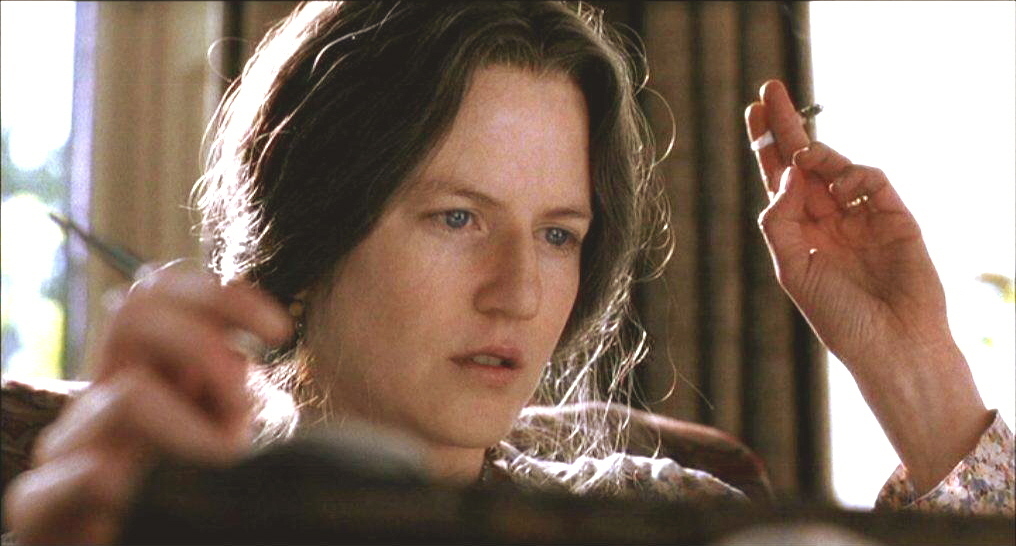
Nicole Kidman’s Oscar winning role produced a gallery of nose based puns, everyone convinced they could sniff out comedy gold

Director: Stephen Daldry
Cast: Nicole Kidman (Virginia Woolf), Julianne Moore (Laura Brown), Meryl Streep (Clarrisa Vaughan), Stephen Dillane (Leonard Woolf), Ed Harris (Richie Brown), Allison Janney (Sally Lester), Claire Danes (Julia Vaughan), Jeff Daniels (Louis Waters), John C Reilly (Dan Brown), Toni Collette (Kitty), Miranda Richardson (Vanessa Bell)

I remember when this film was released that it was garlanded with much praise as an intelligent and compassionate piece of filmmaking and a literate masterpiece. Well I’ve never seen it before and I have to say it holds up pretty well, even though it’s much more of a solid, impressive piece of professional film making than anything you might call a masterpiece.

The film covers three time periods each looking at one day in the life of three different women.  Inspired by Virginia Woolf’s novel Mrs. Dalloway, the day we see encapsulates in microcosm the life of each women. So we have Nicole Kidman as Virginia Woolf struggling to deal with depression while working on Mrs.Dalloway; Julianne Moore as a depressed 1950s housewife trapped in a suburban marriage; finally Meryl Streep as an editor in the 200s who has dedicated her life to looking after a poet friend who is dying of AIDS.

Each of these three plot lines are carefully intercut with both sharp scriptwriting and patient direction (Hare and Daldry’s stage experience here is a real boon for a concept that is actually quite theatrical). Although the opening sequence of the film suggests we might be in for a dizzying series of intercuts (the time period in this sequence switches almost every shot) it soon settles down into some well structured conversation scenes, moving almost in a cycle from our plot lines to another and only rarely directly cutting mid scene from time line to time line.

Of the plot lines I found Meryl Streep’s more modern day plot the most engaging and that Streep’s performance as the patient martyr carried the heart of the film. This was despite Ed Harris’ overblown performance as the dying poet, one of those two scene cameos that draw far more praise than they deserve. But this story has a tragic simplicity and Streep brings a lifetime of vicarious hopes and dreams out from every beat of the day.

Nicole Kidman however won the notice and awards as Woolf. Well deserved as these notices were, this is a more traditional part with clearer “award worthy” acting moments. While these are excellently done (Stephen Dillane is terrific as Leonard Woolf), the Woolf parts don’t quite link with the two other plot lines and, for me, didn’t carry the same emotional force that the tragedy of normal lifes did in the later plot lines.

Julianne Moore also does great work as a depressed housewife who lacks the emotional articulacy to fully understand her feelings, though the decision to introduce a direct link between the 1950s and 1990s plot lines later in the film does mean that the Woolf plot line feels even more like a slightly disconnected story. But this section of the film crackles with claustrophobia and Moore demonstrates the confused sexuality below the surface of Americana.I feel like I’ve been hard on this film, which is a very professional piece of work with some great performances and some real emotional high points. There are some great cameos from classy actors like Toni Collette, Jeff Daniels, Miranda Richardson, John C Reilly, Claire Danes and Allison Janney. It also is a very sensitive exploration of the pressure sexuality and emotions can press on people – even in the 1990s where homosexuality isn’t a dirty secret, Streep’s character still has more than enough confused emotional hang ups to sort out.

It’s a very good film but it’s so professionally done and smoothly assembled, the acting so sharp and on the money, that I’m not sure if there is as much heart behind the scenes in its making than appears on screen.

Gods of Egypt (2016)

Just your standard Giant Meets Boy Gets Chased by Female Assassins Riding Giant Worms Story. Really didn’t anyone learn anything from Dune?

Director: Alex Proyas
Cast: Nikolaj Coster-Waldau (Horus), Gerard Butler (Set), Geoffrey Rush (Ra), Benton Thwaites (Bek), Chadwick Boseman (Thoth), Elodie Yung (Hathar), Courtenay Eaton (Zaya), Rufus Sewell (Urshu), Bryan Brown (Osiris)

Oh good lord where to begin. It’s not so much that this is a terrible film – although it is. It’s not offensive or unpleasant. It’s just a film that is almost impossible to take seriously whatever. It’s a fat, bloated, overblown mess where the plot makes almost no sense, the design is totally ridiculous, the acting bored or unengaging, and the directing totally lacking any charisma. It’s a film you can only laugh it, except for the fact that it’s so lamentably badly that it’s not even that funny. There is so little joy in the making of this bloated fart of a picture, that even as a joke it falls flat.

As far as I can tell, in a fictionalised ancient Egypt the Gods live among men. Horus’ coronation as the new king is interrupted by his uncle Set who seizes the throne, removes Horus’ eyes and sets about turning the realm into a dictatorship. He has some sort of overall plan but I’m really not sure what it was. Something to do with immortality or something. The film barely cares so neither should you. Set is a baddie. Horus is supposed to be a goodie, I guess, but he is such a humourless, arrogant, cold and (above all) boring God you probably won’t give a toss about him.

The film is a disaster almost from start to finish. In a decision that guarantees giggles every few minutes, the Gods are all 9 feet high, making the humans look like chippy midgets. Poor forced perspective hammers home this ridiculousness every few seconds. If this didn’t make the Gods silly enough, they also have some bizarre metal “battle modes” they transform into, which along with some piss poor special effects makes them look like refugees from Mighty Morphin Power Rangers. The colours are bright and primary and the sets all have the sheen of CGI, lacking any substance. The design decisions cross swiftly from daring into dumb. If you ever wanted to see a flying chariot pulled by winged scarabs or to see mix and match female hitmen ride giant worms chasing a giant and his normal sized friend, well hallelujah your day has come, this is the film for you.

The script, such as it is, is a loosely connected series of incoherent events. The acting is simply awful. Coster-Waldau completely lacks the big screen presence to carry the movie, his upper crust arrogance from Game of Thrones here comes across as insufferable and dull. Thwaites comic relief is about as funny as a hernia and his quest to save his true love has all the drama of running to catch a bus. Boseman aims for wisdom and grace but delivers camp and affectation in a truly terrible performance. Butler does at least have a bit of charisma, even though Set is such a poorly defined character he’s impossible to get interested in. Various other actors chip in autopilot performances for the cash. The female characters are little more than props. Geoffrey Rush needs a new agent: seriously how much money does he need?

The biggest problem though is it isn’t quite ridiculous, campy or shite enough to be a camp classic. Instead it’s just boring. It doesn’t have the sort of cosmic sweep or visual splendour to give you something to look at. Instead it’s loud, boring and stinks like animal droppings. That’s the worst thing of all: not even as a camp classic will this be remembered. Simply crap.

The Lone Ranger (2013)

Johnny Depp works overtime to make this film unpopular. He succeeded.

Director: Gore Verbinski
Cast: Johnny Depp (Tonto), Armie Hammer (John Reid), William Fichtner (Butch Cavendish), Tom Wilkinson (Latham Cole), Ruth Wilson (Rebecca Reid), Helena Bonham-Carter (Red Harrington), James Badge Dale (Dan Reid), Barry Pepper (Captain Jay Fuller)

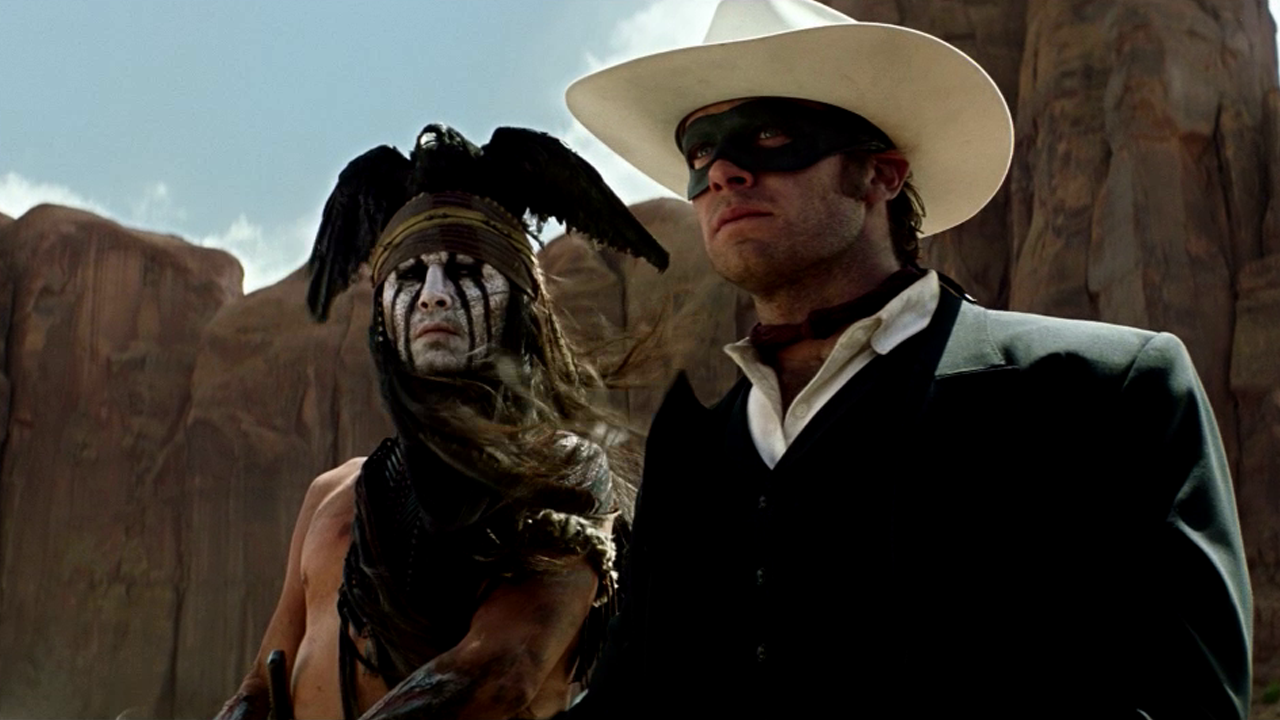
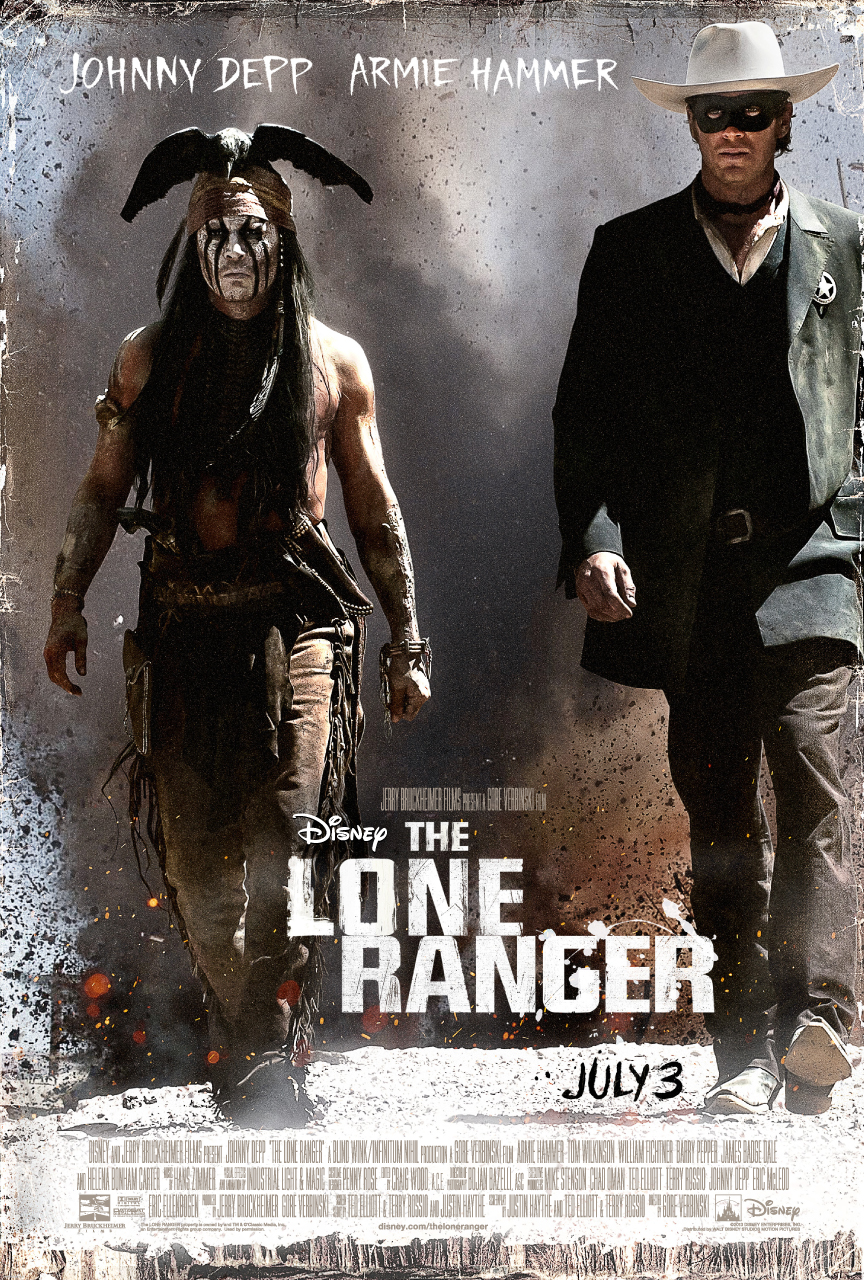
In 2013 this big budget misfire produced a record loss for Disney. Spiralling out of control the film cost a bomb then blew up like one at the box office much to the delight of film critics and audiences alike who enjoy nothing more than watching some suits and A-list stars fall flat on their face. Reviews were damning and the film took its place as one of the ultimate box office turkeys.

All of which is a little unfair, as to be honest this isn’t really that bad a film. Which is not to say it’s that good either, because it ain’t. It’s an average B picture with a huge budget and an over inflated running time, but it has a decent Act 1 and Act 3 and ends with an excellent train chase sequence that I enjoyed so much I watched it again immediately after the film finished.

So what are the problems? The main one for me is Johnny Depp, who here is at the absolute peak of his wave of replacing acting with a bunch of mannerisms and quirky moments. This is one of the most irritating Depp performances on film, his Tonto a pile of odd costumes, muttered gags and winks to the audience. I can see Depp is amused, but I’m not sure anyone else is. I also suspect Depp announced this was how he was going to play the role and if Verbinski didn’t like it he could get stuffed.

But other than that, Armie Hammer is rather sweet and endearing as the straight as an arrow Ranger, displaying a lot more wit than Depp’s painted showing off. Ruth Wilson does her best with a truly thankless damsel in distress role. Tom Wilkinson, William Fichtner and Barry Pepper present three very different villains. Helena Bonham Carter gives a bizarre performance as a madam with ivory legs (yes you read that right.).

The film’s main problem is it is far too long and too poorly structured. The opening act is engaging and introduces the characters effectively with a decent action scene or two, but it starts to overdo its welcome after 40 minutes or so. A framing device of Tonto narrating the story to a child in the 1920s offers nothing more than padding and more Depp showing off. Act 2 meanders around slowly, working up to showing that all the suspicious people in the film are working together, draining the momentum out of the film. Shock baddie reveals are only surprising to those of us who have never seen a film before.

However the film is partly redeemed by its final 30 minutes, in particular an astonishingly high octane, exciting and fun train chase sequence, brilliantly cut to the Lone Ranger theme that gives every character a chance to shine and both grips the viewer and leaves them with a smile on their face. Shame the rest of the film can’t match it, but it’s still better than many others manage.

A single sequence doesn’t make it a classic, and an engaging actor (Hammer) who creates a character that you care about doesn’t keep the attention throughout the whole 140 minutes, but it’s far from a disaster and much better than many successful big budget hits. Shame about Depp. And sorry for those who loved turkeys. This is just an average film. In about 10 years it will probably be getting a re-evaluation.

Sherlock Holmes in Washington (1943)

Holmes and Watson have a few more tourist destinations pointed out to them. Altogether now: “Magnificent!”

Director: Roy William Neill
Cast: Basil Rathbone (Sherlock Holmes), Nigel Bruce (Dr. John Watson), Marjorie Lord (Nancy Partridge), Henry Daniell (William Easter), George Zucco (Heinrich Hinkel), John Archer (Lt. Peter Merriam)

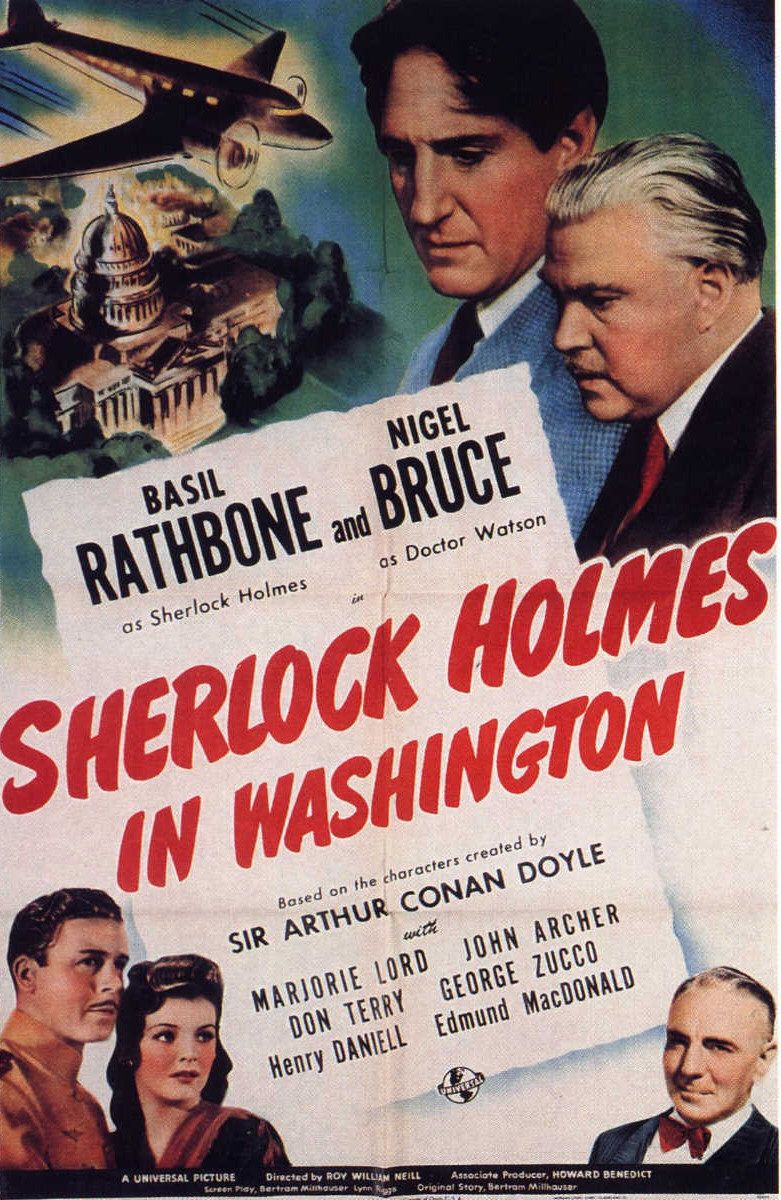
With Sherlock back on our televisions, it’s always great to revisit the old Basil Rathbone classics for a neat comparison. They also serve as reminders to us that setting the stories in the modern day is far from a new idea as, in this picture Holmes takes on a Nazi spy ring in the heart of the American capital.

Of course anyone watching with even an ounce of experience of watching films will quickly suss out nearly everything in the film within seconds. A British agent goes missing en route to Washington carrying some crucial government secrets (in a rather nifty opening sequence we follow our antagonists trying to work out who among the passengers on a train is the British agent). Holmes is called in and the trail soon leads to Washington. The game’s afoot!

It’s all quite good fun clearly inspired by Hitchcock and Chandler, odd as it is to see Holmes running around with American gumshoes or flick Watson a thumbs up. Rathbone carries it all off with style although his deductions are elementary to say the least  (the British agents home is full of photography and microfilm equipment – I wonder what he might have done the letters…) and he has a lot of fun with a few snide put downs and later when disguised as a bumbling Brit in a antiques shop (don’t ask). His smooth, cool authority makes the final scenes really work.

There is also some quite effective comic relief from Nigel Bruce’s Watson, here obsessed with Americana, seen picking up slang, slurping milkshakes and chewing gum. In fact there is a touching pride from the film makers for their travelogue sections, the camera lingering on aerial shots of buildings and stills of famous buildingw. Holmes arrival sequence is almost completely given over to shots of Washington landmarks followed by Rathbone stressing their “magnificance” to Watson and the audience. Later of course Rathbone sings America’s praises and uses a Churchill quote to show that “we are all allies together”. Yay for the allies!

This is silly stuff and highly predictable, but it’s professionally made and bounds along. A sequence at a party mines a lot of humour from the casual passing around of a match book containing the vital microfilm. Most of the American support is pretty forgettable (although Clarence Muse gives a great cameo as a bus boy), but Henry Daniell makes a good heavy and George Zucco’s late introduction as a master agent makes a decent antagonist. Rathbone is authoritative amongst the nonsense and Bruce actually quite fun (though his Watson remains a moron). It’s a fast moving, totally predictable, rather silly spy film that happens to have Sherlock Holmes in it. You’ll enjoy it. And if you forget it don’t worry – you’ll work it all out again as soon as you see it.

The Lost Weekend (1945)

One more for the road: Ray Milland spend the rest of his life reassuring people he wasn’t an alcoholic. Talk about the film that keeps on giving.

Director: Billy Wilder
Cast: Ray Milland (Don Birnam), Jane Wyman (Helen St. James), Philip Terry (Wick Birnam), Howard da Silva (Nat), Doris Dowling (Gloria), Frank Faylen (‘Bim’ Nolan)

It opens like a counter view of the American Dream: a long pan down through the New York skyline. A voiceover leads us through the window (via a shot of a bottle hanging out of the window) onto a pair of brothers packing for a weekend away. Only of course the bottle is really the third character here, and it’s all that one of the brothers has on his mind.

The Lost Weekend is simply that: a long weekend in which we see alcoholic would-be author Don Birnam (Ray Milland) lie, cheat and steal with a shabby English charm through the bright lights of the city, occasionally resolving to quit the demon booze, but constantly drawn back by its siren charm. Other characters drop in and out of his story: an almost fanatically supportive girlfriend Helen (Jane Wyman), his weary brother Wick (Philip Terry), an ambiguousbartender (Howard da Silva – very good), a naïve hooker (Doris Dowling – innocent in the way only Hollywood golden age hookers can be) and finally a truth-telling male nurse Bim (Frank Faylen).

Probably what’s most remarkable about this film is that it was made at all, especially considering that this was when Hollywood’s “morality” dictates ruled. Film historians have suggested that Wilder’s introduction of an obvious hooker, and the suggestions of the Nurse’s homosexuality, so focused the Hays Code’s attention that they let slide that the central character is a lying, shifty drunk who feels only slight shame and very little regret for his actions, and whose announcement at the end that he has changed is potentially just the beginning of another cycle of sobriety in the addicted alcoholic.

Wilder’s genius here in filming is, instead of judging him or pitying, the camera sticks firmly with Don and makes us a co-conspirator in his low cunning and desperation to obtain alcohol. Don is a man who, during the course of the film, pawns several valuable possessions (some not his own), trashes his own apartment in search of booze, fleeces money from people with sympathetic-sounding grandiose stories, and is reduced to attempting public theft. But instead of placing us in the perspective of the (overly) saintly girlfriend frustrating us by striving to reform Don, we stick with Don and are invited to see those standing between him and the booze as the antagonists that Don perceives them to be.

Wilder also skilfully suggests that the same earnest help that Helen (and to a lesser extent Wick) are piling on Don is actually contributing to pushing him further into desperate addiction by smothering him. Don doesn’t seem to be ready to listen to anyone until, sunk to near rock bottom and hospitalised in the drunks’ ward, nurse Bim tells him out right that he is a self-destructive loser who is controlled by his addiction (I’ll also point out this doesn’t stop Don trying to bribe him to facilitate his escape from the ward). I’m also going to mention here a popular theory from film critics that Bim is a figment of Don’s imagination (his name is a near anagram of Don’s, he talks only to Don in the film, seems to know everything about Don’s inner thoughts, and his coded homosexuality links to Don’s own suggested homosexuality in the original book – the underlying cause of his addiction).

The film also has a wonderful noirish quality, capturing of the seedy world of the drunk: the bars and pawnshops that are Don’s world, and the impressionistic lighting used to dramatise Don’s drunken states. In one shot I particularly enjoyed, Don searches desperately for a bottle he hid while drunk the night before – he can’t remember where he hid it because he was pissed, but we know it’s hidden in the lightshade. The camera frames Don and his search with the lampshade constantly in shot above him. A later agonising sequence captures a hideously hungover Don staggering down Third Avenue to reach the pawnbrokers – only to find on arrival (in another moment of black comedy that permeates the film) that it, and all other pawnbrokers, are closed for the day.

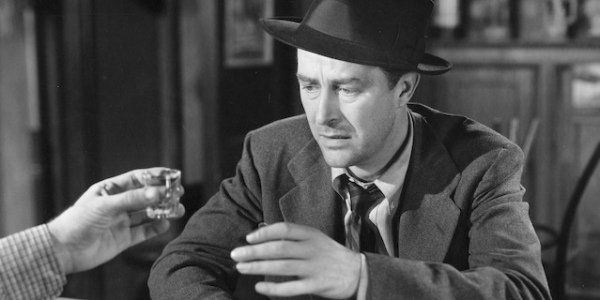
The film wouldn’t work though without the excellent performance of Ray Milland in a role that he never matched again. Milland, an ex-pat Welshman with a theatre background, has just the right edge of shabby nobility to make you believe that everyone would continue to find this man endearing and constantly want to give him that second, third, fourth chance. Milland and Wilder are also not afraid to show us that Don’s only real creativity with language comes from drink – his inspired, poetic speeches grow with fervour the more beer he consumes, while his attempts to write without a drink get little further than the front page. Don is sympathetic to us, because I feel we all recognise our failures in him and our self loathing. Hating Don would almost be like hating ourselves – after all who hasn’t looked at their life and thought (to quote another classic) “I coulda been a contender”?

Brilliantly directed and with a fantastic central performance, this is perhaps one of the most empathetic films made about addiction. It’s not perfect – Wilder I think does his best to suggest that the rather sudden happy ending could be the start of another cycle of recovery and collapse, but I’m not sure if there is quite enough in the film to suggest this. Similarly Jane Wyman’s loving girlfriend is so cloyingly devoted you can well imagine she would drive a man to desperation – it’s a very dated character, and hard for a modern viewer not to see her as a facilitating doormat. But all that aside, this is a film packed with beautiful moments, great images and a knock-out performance by Milland. Recommended!

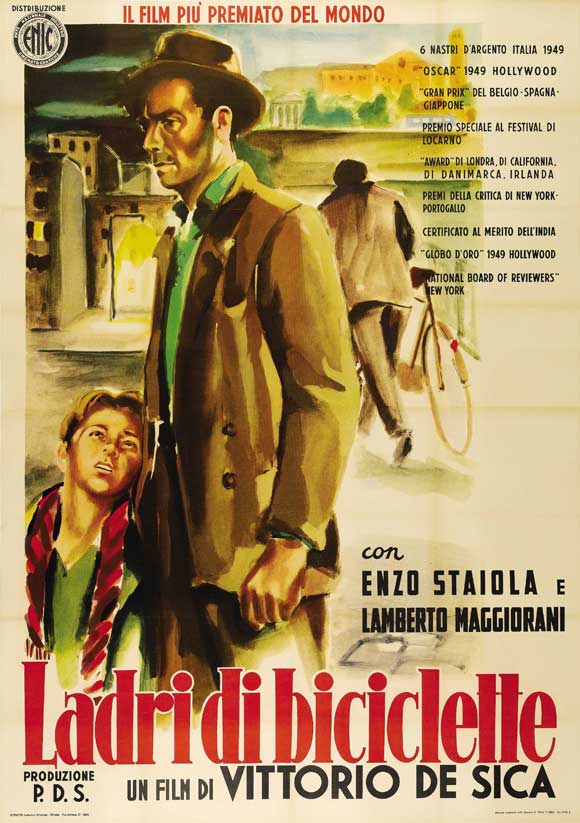
Bicycle Thieves (1948)

Waiting for Bike-o: Father and son search in vain in war-torn Rome

Director: Vittorio de Sica
Cast: Lamberto Maggiorani (Antonio Ricci), Enzo Staiola (Bruno Ricci), Lianella Carell (Maria Ricci), Gino Saltamerenda (Baiocco), Vittorio Antonucci (Alfredo Catelli), Giulio Chiari (Beggar), Elena Altieri (Charitable Lady)

Sometimes the simple stories are the best, and I don’t think you can get much simpler than this: Man loses bike. Man searches for bike. Man doesn’t find bike. This film is a perfect little fairy tale, a wonderfully moving family story, perhaps one of the best “father-son” films placed on film. Who could resist the patience and understanding the son has for the father – and who can fail to be moved by the son’s disappointment with the father, or his eventual forgiveness for the father’s failings. Because the father himself is a failure – yes he is a victim of the economic system, but he is also a strangely passive, ineffectual man barely able to help himself.

In post-war, recession-hit Rome, jobs and income are at an absolute premium. Antonio (Lamberto Maggiorani, an amateur actor who barely worked again, unable to escape the shadow of this role) is offered a job pasting up Rita Hayworth posters (could there be a bigger contrast between glamour and squalor in the movies?). There is one condition: he must have a bike. With a sign of his later ineffectiveness, Antonio claims he cannot accept the vital job due to pawning the bike. Not standing for this, his wife pawns all the bedding in the house to reclaim the bike. Antonio heads to work but within less than half a day his bike is stolen. Accompanied by his son Bruno, Antonio searches for the next two days through Rome for the bike.

De Sica’s film is the most famous of the films from the neo-realist movement. This movement aimed to make films entirely on location, using only non-professional actors, aiming to present the real world on camera within the framework of the stories told by cinema. De Sica certainly manages to capture the sense of post-war Rome: a parade of dingy streets and untidy squares, with debris and rubbish at almost every turn, weeds punching through steps, and crowds of working class Romans a constant presence.

The beauty of using De Sica’s realism is that we get a real sense of how important this bicycle is – the presence of so many people almost begging for this job means the audience knows that this bike is absolutely crucial. De Sica even teases us – we know the bike is going to get stolen, it’s in the title – by having Antonio leave the bike unattended at least three times before the thing is stolen. Personally, I felt very tense whenever Antonio let that bike out of his sight, practically begging De Sica to allow at least the camera to keep an eye on it. The documenting of poverty before this is beautifully done – not overplayed I hasten to add, but a gentle, uncommented-on present. There is a beautiful shot of the pawnbrokers, where the bedding is deposited – the pawnbroker literally climbs up a mountain of pawned bedding, a quiet visual testimony to the fact that this is a story that has been told several times over away from the movie camera.

The heart of the film, though, is the relationship between Antonio and his son Bruno, both beautifully played. De Sica keeps the visual poetry of this relationship throughout – Bruno is clearly full of love for his father, as his father is for him, but their relationship is not completely easy. At one point Bruno falls in a puddle – Antonio literally doesn’t notice. This is a neat shadowing for their argument later in the film, and Bruno’s tearful reaction to a slap. Later when Antonio fears Bruno drowned after a separation (he’s not!) his despair and panic speaks volumes for his love – but even their reconciliation is undermined by Antonio being sucked back into self-pitying despair, Bruno patiently setting his meal aside to listen (and perform some mental arithmetic) for his father.

The final sequence of the film brings all these themes to the fore brilliantly: Antonio finally considers stealing to replace his long lost bike. Carefully he sends his son away, too ashamed to have his crime witnessed – but like everything else in the film he attempts, Antonio bungles it. As our heroes depart and disappear in the crowd, Antonio is distracted and fighting tears – but Bruno takes his hands in a perfect moment of acceptance and forgiveness.

This is a quest film, very moving but in a way almost a slight of hand. A policeman tells Antonio from the start his search is hopeless – and the audience know it must be hopeless (finding a bike in Rome? Come on!) – but De Sica makes us hope, makes us believe it might be possible. It’s a tribute to how real the characters feel that the viewer is desperate for them to find this precious bike. And a testament to the beauty of the film that they can fail to find it and still be very moved by the film.

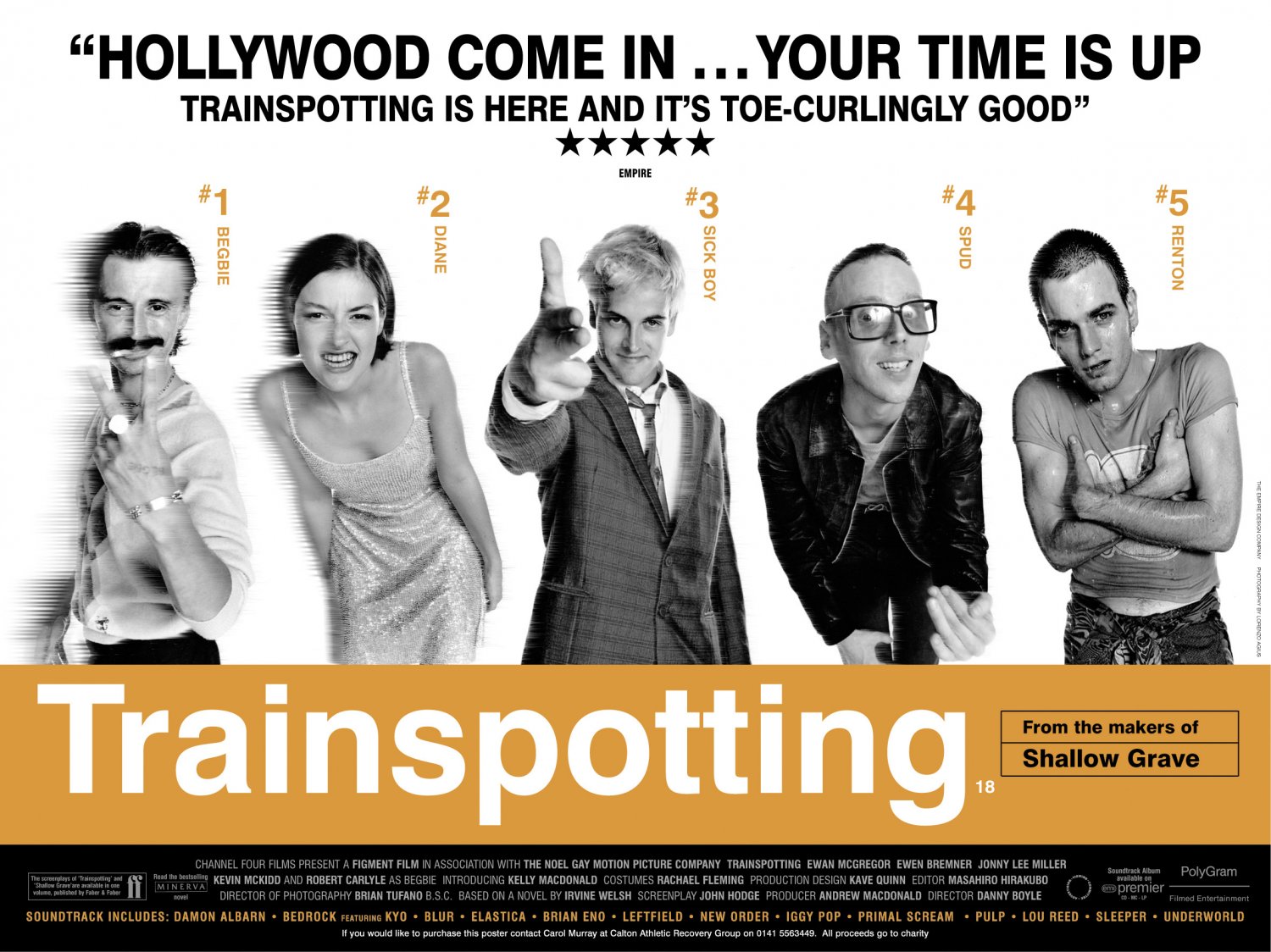
Trainspotting (1996)

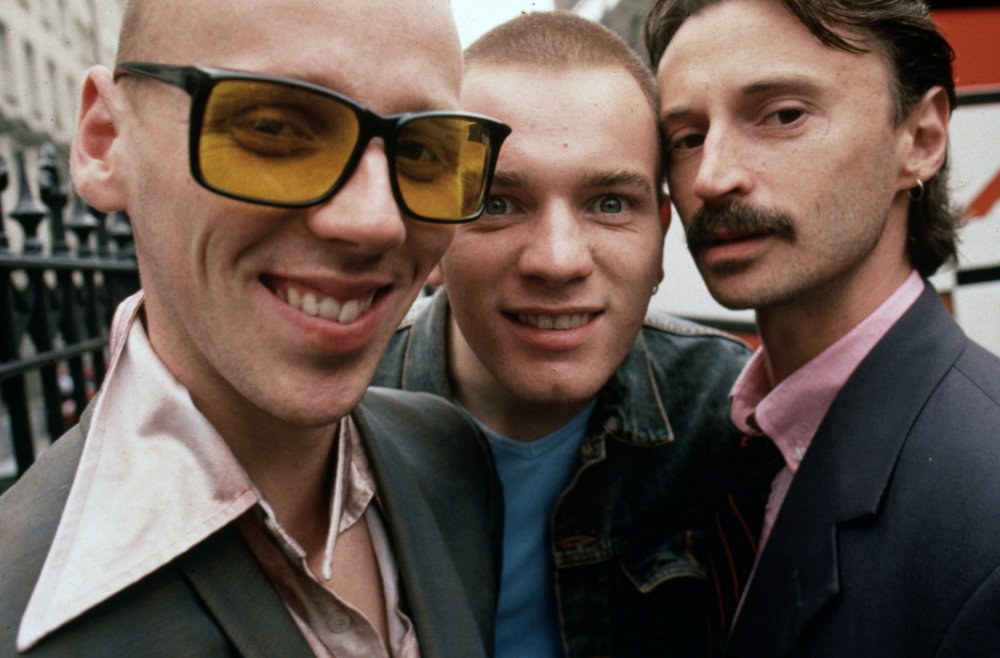
Another happy day in Edinburgh… Ewen Bremner, Ewan McGregor and Robert Carlyle define their careers in the mid-1990s phenomenen

Director: Danny Boyle

Cast: Ewan McGregor (Renton), Ewen Bremner (Spud), Jonny Lee Miller (Sick Boy), Robert Carlyle (Begbie), Kevin McKidd (Tommy), Kelly Macdonald (Diane), Peter Mullan (Mother Superior), Eileen Nicholas (Mrs. Renton), James Cosmo (Mr. Renton), Shirley Henderson (Gail Houston), Stuart McQuarrie (Gav), Irvine Welsh (Mikey)

Surprise, surprise the Drug’s Don’t Work. They just make you worse. Honestly, watching Trainspotting you would have to be a Grade A moron or wilfully missing the point to ever imagine that this film could, in any way what-so-ever, be endorsing the life of heroin addiction. The unbalanced, unreliable, sickly-looking, soul crushingly blank-eyed losers in this film are no-ones idea of an aspiration. The fate of Tommy alone, starting the film as a health freak and ending it as a smacked out, paper thin, wasting AIDS victim could only encourage the truly unbalanced to take up drugs.

You must know the story: Ewan McGregor is our “hero” Renton, a junkie with delusions every so often (the film implies this has occurred multiple times) of going clean, kicking the habit only to find that he is always drawn back in – largely it seems due to his own weak personality. Fellow junkies include Spud (Ewan Bremner), Sick Boy (Jonny Lee Miller) and later (tragically) Tommy (Kevin McKidd). On the edge of their junkie circle (not a user) is psychotic Begbie (Robert Carlyle) who doesn’t need drugs when he can get a high from starting a bar fight. The basic plot is slim in this whipper sharp film where experience is all – Renton goes clean, gets sucked back in, misses prison, goes cold turkey, escapes to London, gets sucked back into a drug deal. That’s basically it. What’s important here is the experience.

This is possibly one of the best films about addiction ever seen (I watched it in a double bill with The Lost Weekend which actually works out as a pretty natural combo). Boyle and screenwriter Andrew Hodge aren’t scared to show that drugs at times can be fun (after all if they didn’t make you feel good part of the time why would you do them?) and they can give colour to life (particularly to the shallow non entities this film centres on). The is even a strange family warmth to Renton and friends getting smacked out in an otherwise disgusting dilapidated drug pit, listening to Sick Boy dissect the Sean Connery Bond films. This is then brilliantly counterbalanced by the appalling lows – from the truly unsettling dead baby, abandoned and unfed in said drug den, to Renton’s appalling cold turkey. 

Perhaps the most remarkable thing here is that Danny Boyle directs with such verve and with a gleeful delight for every single shooting and editing trick in the book, but the film never feels like a triumph of style over substance, or as if the tricks are the centre of the director’s attention. Instead throughout the whole film you can tell the heart of the film makers – and therefore the heart of the viewer – is also focused on the story and the characters. So we get a film that crackles with energy, with a sense of youthful vitality (that is vital to understanding its characters), has an attractive anti-society message – but also reminds us that the perils of following this kind of counter culture life can be truly horrifying.

At the centre of this film is Ewan McGregor, who I don’t think has ever found a role that he could seize and bring to life as successfully as he did with this one. McGregor is captivating, managing to skilfully demonstrate without any judgement a man who believes he is strong, but is in fact desperately weak. His performance is so charismatic that you hardly notice that Renton is, actually, a pretty nasty person. High or not he has a barely concealed contempt for nearly everyone around him, his reaction to the baby death is shockingly cold, his treatment of Tommy laced with indifference, his pronouncements to the audience overflow with self-regard and delusion. But you just don’t notice.

What you do notice is that Robert Carlyle’s Begbie is a total nutter. Just like McGregor, I think Carlyle struggled to find a role that matched this one, probably not helped by the string of psychos he was offered by casting directors. Carlyle again actually isn’t in the film that much, but he nails how terrifying total self belief can be when matched with a complete lack of any moral sense. In fact most of the cast have hardly ever been better. Excellent support also comes from Peter Mullan, Eileen Nicholas, James Cosmo, Shirley Henderson and Stuart McQuarrie while Irvine Welsh pops up as low rent dealer.

Electric film making with a heart, I don’t think even Danny Boyle has topped this. There is something strangely perfect about this film – anything more and it might out stay it’s welcome, but every scene has something magic in it, some little touch that stays in the mind – either performance, dialogue, direction or all three. It looks fantastic and seemed to define its era. So fingers crossed for the sequel. No pressure…