The Broadway Melody (1929)

The Broadway Melody (1929)

Forgettable Best Picture winner, the musical that helped bring sound to Hollywood looks simplistic today

Director: Harry Beaumont

Cast: Anita Page (Queenie Mahoney), Bessie Love (“Hank” Mahoney), Charles King (Eddie Kearns), Jed Prouty (Uncle Jed), Kenneth Thomson (Jacques Warriner), Eddie Kane (Zanefield), Edward Dillon (Stage Manager)
The early years of sound in Hollywood were difficult. Before sound, movies were often visual treats, crammed with inventive and imaginative camera moves. Watch some of the silent movie masters, and you’ll be blown away by the majesty and creativity of their vision. Then came sound. And to capture sound on movies, you held the camera as still as possible while the clunky sound recording equipment struggled to work. For years, all that visual invention was history and movies became flat, dull looking and clumsy.

But that didn’t affect the thrill audiences had at hearing synchronised sound. I mean wow! Could you imagine a painting talking to you? That would be incredible. Imagine it singing and dancing. You’d be blown away. It’s that context you need to bear in mind when watching The Broadway Melody. How did this fundamentally average, largely forgotten, flatly shot film win Best Picture? Because, quite simply, no one had seen anything like it before. This revolutionised cinema – and while that might look inexplicable now, it was like splitting the atom as far as Hollywood was concerned.

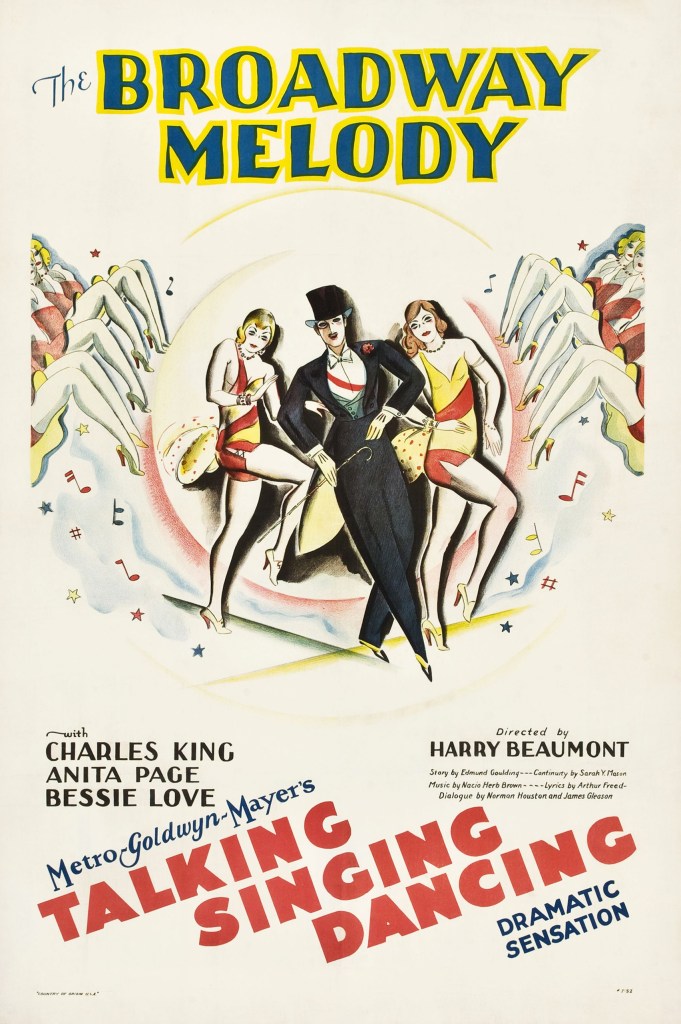
The plot, such as it is, is very minor. The Mahoney sisters, Queenie (Anita Page) and Hank (Bessie Love) arrive on Broadway to become stars with the support of Eddie Kearns (Charles King) who is engaged to Hank. But, don’t you know it, Eddie falls in love with Queenie and she with him. Who will end up with whom? And will the sister’s close relationship survive their love for the same man?

The Broadway Melody starts with an orgy of overlapping sound, music and speech all filling a Broadway office, as if trying to hammer home to the viewers how amazing all this is. And it probably was amazing. The filmmakers literally had to work out how to record sound as they went. Sets were rebuilt after takes to improve the sound conditions. Technology was tweaked and reworked. The actors performed their scenes over and over again to get the best recording. It must have been punishing to make.

Visually it’s hugely un-interesting. Shot almost entirely in mid-shot, the actors stand as still as possible so that the microphones can pick up every word (moving and talking was almost impossible). There are moments dialogue is less clear, in particular when actors turn away from camera. Storytelling is hugely influenced by silent cinema – there are even intertitle cards to announce different locations. The script is often just an excuse to move from one musical number to another. The film even stops to effectively stage a Broadway show, including shots of the programme introducing each act.

None of the songs comment on the actions and emotions of the characters. Instead, they are all established by the actor’s saying words to the effect of “I heard a great song – wanna hear it?”. Some of the songs are good and the singing of Kearns and Love in particular is fine. But they are snippable moments, not storytelling. It was to be a few years before film musicals did something more than filmed karaoke, and used songs to express character’s inner emotions.

There is a certain charm about The Broadway Melody though, for all its faults and it’s not the turkey you might have been led to believe. Sure, it’s primitive, but it has a certain bounce to it and the playing of the three leads is surprisingly committed. Its attitudes are surprisingly modern, reflecting its pre-code status. It doesn’t punish its characters for their ‘transgressions’ and is quite emotionally honest about the impact of a man falling in love with the beloved sister of his fiancée on all concerned. Other things have dated less well, in particular a camp costumier and Uncle Jed’s comic stammer, both played for dubious laughs.

But the romance plotline is surprisingly complex. There are moments of rawness in The Broadway Melody. Queenie (well played by Anita Page) is plunged into a self-loathing depression by her feelings for her sister’s fiancée, spiralling into the arms of a playboy – not the sort of reaction you expect from someone presented as “the sensible one”. Hank who reacts not with fury, but with a genuinely quite moving emotional desolation at realising her very existence is keeping the two people she loves most from being happy.

The real love story here might be between the two sisters, both desperate not to hurt each other. Bessie Love gives a very fine (Oscar-nominated) performance as Hank, torn up with guilt and surprisingly vulnerable, who eventually makes huge sacrifices. There is a very effective late breakdown scene for Love, after she deliberately burns her bridges with Eddie for her sister’s sake. The films finest moments are covered in the sad, regretful guilt between these two sisters, and a film focused more on this and less on the musical numbers would have more going for it today. As it is it manages at points to elevate its conventional love triangle.

The musical numbers are the real problem though: very much staged exactly as if the camera was filming an actual Broadway show from the middle of the stalls. In mid-shot, the camera is pointed at the numbers and the actors dance their way through them. You better like the title song by the way, because you are going to hear it performed three times in the first 40 minutes. It’s not really storytelling – and all of the dancing would be effortlessly bested by other films in the next few years. None of the numbers have zing or interest and end up bumping up the runtime.

It’s easy to be critical of The Broadway Melody. Sadly, time has dated it since the one thing that made it stand out was the sound. Now that we have literally heard-it-all-before and better in the decades since, the actual thing that now draws attention is its dull filming, middling story and repetitive musical numbers. Not a disaster as some claim, but a very forgettable film – one for completists.

Blonde (2022)

Blonde (2022)

Exploitative biopic of Marilyn Monroe that doubles down on misery, discomfort and leaves you feeling rather like a Peeping Tom

Director: Andrew Dominik

Cast: Ana de Armas (Norma Jeane Mortenson/Marilyn Monroe), Adrien Brody (The Playwright), Bobby Cannavale (Ex-Athlete), Xavier Samuel (Cass Chaplin), Julianne Nicholson (Gladys Pearl Baker), Evan Williams (Edward G Robinson Jnr), Toby Huss (Whitey), David Warshofsky (Mr Z), Caspar Phillipson (Mr President), Dan Butler (IE Shinn), Sara Paxton (Miss Flynn)

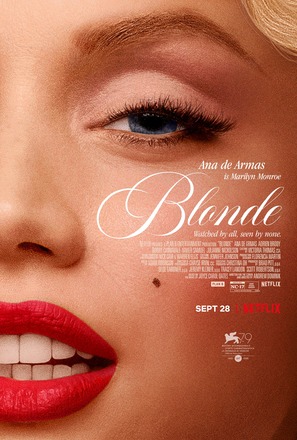
Few icons had such cultural impact in the 20th century as Marilyn Monroe. Maybe Elvis – coincidentally also the subject of a 2022 biopic. Even people who have never seen a Monroe film can impersonate her or knows about that dress being blown up around her. It’s also pretty widely know she had a difficult life, troubled family and some disastrous marriages culminating in her tragically early death from an overdose. Blonde, based on a novel by Joyce Carol Oates, dives into a heavily fictionalised account of Monroe’s life, focusing overwhelmingly on anything that could be seen as miserable, shocking and traumatic to the exclusion of almost everything else.

In doing so it’s hard not to think that, for all its attempts to shine a light on the difficulties of Monroe’s life, it’s not also partly exploiting her as well, turning her into a sort of misery porn entertainment. Over the course of nearly three hours, we see her raped at least three times, beaten, fall victim to elaborate revenge plots, forced through two blood-soaked abortions, pumped full of drugs to get her through film shoots and constantly at the centre of slavering piles of male filmgoers who scream for her attention and call her a whore the second she walks past. To say Blonde is a miserable film that’s tough to watch is putting it lightly.

Why does Marilyn put herself through it? The film offers no real answers, beyond the simplest, crudest flashes of pop-psychology possible: Daddy issues. Growing up not knowing who her father is, Marilyn’s life is a quest to find either her father or an acceptable substitute. That could be the audience, the husbands she calls “Daddy” or the hope that the person claiming to be her father who sends her a letters, might one day meet her. This is about as far as the insight goes. How issues influenced her choices and decisions is left frustratingly untold.

The film skims over the creative control she gained over her movies, the production company she set up and her skill as comic actor (it focuses much more on her dramatic Actor’s Studio work). It never once tries to understand why she continues in a career she hates so much – she had plenty of chances, even in this film, to back out – or what lured her to the silver screen and a quest for superstardom in the first place. It’s as if acknowledging Monroe worked hard to get her career would undermine the victimhood the film is determined to define her with.

The film suggests “Marilyn Monroe” is a persona put on by Norma Jean. This is another crude piece of psychology. We completely skip the years Norma Jean must have spent creating this persona and we never learn what influences it or get an understanding of “who” this Marilyn is. I suppose it’s “Marilyn” who smiles at film premieres or appears on screen: but we get little sense of how Norma Jean might have used this alternative persona to get her through the day. For all the time we spend with her, we never understand her beyond someone desperate for love with severe Daddy issues.

The film is so clumsily mishandled, its makers were reduced to stating it was not intended as an anti-abortion movie. This despite both abortions being horrifying experiences (one with a drugged Marilyn begging that she’s changed her mind, the other a late blood-soaked possible-fantasy where Marilyn is kidnapped has an implied Kennedy baby removed). Worse than this, the film Marilyn hammers home Marilyn’s sense of guilt. During her first abortion she imagines herself in a house burning down around her and later imagines a conversation with a giant foetus, which asks “Mummy why did you kill me?” and begs her not to do the same for her future babies. Not exactly the sort of messaging you expect from a #metoo film.

On top of this, Blonde is a film almost unbearably pleased with itself. This is Art with a capital A, R and T. Dominik shifts from colour to black-and-white, changes film stock and constantly shifts and changes the aspect ratio from shot-to-shot. In almost three hours, only once could I see any logic in this: as Marilyn agrees to marry Joe DiMaggio, the frame closes in on her from 2.35:1 to 4:3, a neat visual metaphor for the constricting marriage she has signed up for. Other than that, there is no rhyme or reason for any of these visual changes in the film. It doesn’t comment on the action, reflect emotional beats, delineate between reality or fantasy… it just smacks of an overindulged director using all the flashy tools for the sake of it. It becomes intensely irritating.

There is a committed lead performance from Ana de Armas (even if her Cuban accent does sneak through), who captures beautifully Monroe’s physical and vocal traits and sells what emotional titbits she is given in the salacious, muck-raking framing of the film. Her traumatic relationship with her disturbed mother, a sex-filled thruple with Hollywood princes Cass Chaplin and Eddy Robinson Jnr, raped by Darryl F Zanuck and a surprisingly-vile John Kennedy (while a TV in the background shows missiles rising – boom boom), knocked about by a jealous Joe DiMaggio (in real life he remined close to her and organised her funeral, but hey ho)… it’s all meant to be shocking but it’s all dialled up with glee of a two-bit muck-rag, flogging the hot goss.

That’s standard for the whole film, a flashy, pleased-with-itself epic that focuses on misery and pain for its subject at the cost of everything else and ends up telling us very little about her or her inner life, instead leaving us feel slightly like peeping toms for watching.

Secrets and Lies (1996)

Secrets and Lies (1996)

Hard truths and deep emotion combine with Mike Leigh’s warmth and humanism in this powerful, spectacular film

Director: Mike Leigh

Cast: Timothy Spall (Maurice), Phyllis Logan (Monica), Brenda Blethyn (Cynthia), Claire Rushbrook (Roxanne), Marianne Jean-Baptiste (Hortense), Elizabeth Berrington (Jane), Michele Austin (Dionne), Lee Ross (Paul), Lesley Manville (Social worker), Ron Cook (Stuart), Emma Amos (Scarred girl)

“Secrets and lies. We’re all in pain! Why can’t we share our pain?”. These words come from family photographer Maurice (Timothy Spall), fighting a losing battle against his own pain while doing his best to hold his family together. It’s the mission statement for one of Mike Leigh’s most powerful films, a heart-rending drama that left me tearful. This is as gut-wrenching as Leigh can get, with actors delivering performances that feel ripped from their souls. Despite this, it gets me because this is a hopeful film about the power of love, whose anguish builds from watching what could (and should) be a loving family, failing (almost until the end) to share pain long suppressed due to shame.

That family are the Purley’s. Maurice is a successful photographer with a charming house in suburbia, dotingly maintained by his perfectionist wife Monica (Phyllis Logan). Sister Cynthia, who effectively raised Maurice, remains a working-class single-Mum to 21-year-old Roxanne (Claire Rushbrook). This class difference fuels resentments between Cynthia and Monica.

Unspoken secrets abound. But our first introduction is middle-class black optometrist played by Marianne Jean-Baptiste, Hortense Cumberbatch. (A running joke in the film is everyone’s unfamiliarity with this surname – how times change!). Hortense was adopted and now, with both her parents dead, wants to make contact with her birth mother. That birth mother – to her shock – is Cynthia, who gave birth to Hortense at 15. The relationship between Hortense and Cynthia becomes a catalyst for searing revelations, and shattering of emotional barriers, in the Purley family.

Leigh’s film is a triumph of his quiet, observational, unobtrusive directorial style, grounded on a deep and profound understanding of people and their strengths and foibles. As with his earlier films, the characters were developed after an intensive rehearsal process, with the actors given information only when their characters were. Secrets and Lies takes his approach to everyday life to its zenith, finding levels of tragedy (and warmth) in the simple pain of carrying on that other dramas can only dream of.

It is about how hopes can be both sustaining and damaging. A refrain heard in the movie is “You can’t miss what you’ve never had”. Au contrarie. The film is stuffed with people deep in grief about, or desperate to find, things they’ve never had. Hortense wants to discover where she came from. Cynthia’s life is one of lonely disappointment, resenting the domestic contentment of Maurice and Monica. Maurice and Monica are anguished by their childless marriage, Monica resenting Cynthia for having had the child she longs for. Roxanne wants a stable family, resenting her mother’s clumsy confirmation seemingly everyday that her birth was an accident (even if not a regretted one).

But, in typical British style, no one can talk about any of this. Instead, the Purleys cling to impressions of what the other family members are like. Monica sees Cynthia as a hopeless deadbeat, who can’t care for her children. Cynthia sees Monica as a snob, who stopped Maurice having a child. Roxanne sees Cynthia as constantly disappointed in her, Cynthia sees her as difficult, rebellious young woman unable to look after herself. And Maurice attempts to hold all this together, positioning himself as a jovial head-of-the-family, and whacking down any pain of his own.

Hortense, by comparison, is a model of well-adjusted upbringing. Leigh’s film doesn’t let us see much of her family – we witness her (non-adopted) siblings feuding over an inheritance – but the film constantly enforces the love she got from her parents, from the film’s beautifully staged opening at her mother’s funeral to her smiling reminiscences of parents (flaws and all) who did their best, were honest with her and taught her she was loved. Seen in conversation with her best friend Dionne (a neat single scene cameo by Michele Austin), she’s humane, warm and self-aware enough about her hopes and failings.

But she also has the fixated determination of the middle-classes – the sort of go-getting attitude completely alien to Cynthia, to whom events always happen rather than being something she starts. She disregards the advice of a social worker (a wonderful cameo of rushed professionalism, tinged with just enough genuine care by Lesley Manville) to make contact through social services and instead takes the plunge to contact Cynthia herself.

One of Secrets and Lies many strengths is its open-eyed honesty about the joy and pain of adoption. Hortense, as noted, found a loving family through adoption. But still she wants to know, why did her mother not even hold her when she was born? The answer isn’t simple, as Cynthia’s devastated reaction to the question shows: because if she held her, she would never have let go. This is the emotional centre-piece of an emotionally devastating but deeply uplifting scene at the centre of the movie as Hortense and Cynthia meet for the first time.

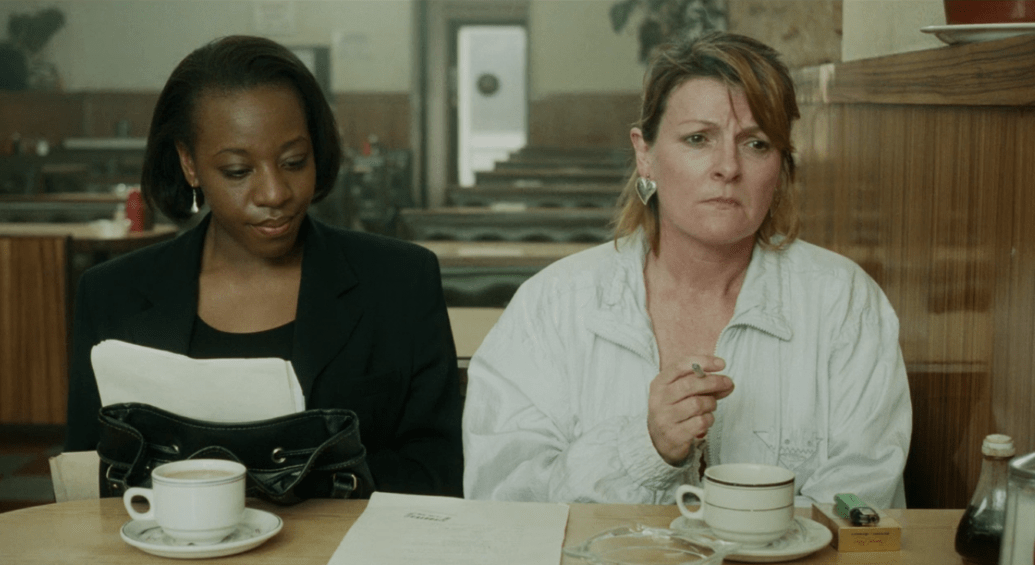
Shot in a café in a single near-seven-minute uninterrupted take with a stationary camera (a stylistic choice Leigh repeats at a family BBQ later in the film, as we wait for inevitable secrets to flood out), this is an acting masterpiece. Blethyn and Jean-Baptiste (both Oscar-nominated) give extraordinary performances throughout, but achieve the sublime here. Blethyn delivers nearly every line as if it was being pulled out of her soul by pliers, at points convulsed with teary shame unable to look Hortense in the eye: Jean-Baptiste, so assured throughout, is quiet, almost abashed but clinging to a professionalism to help resolve facing emotion head-on (right down to sitting next to Cynthia rather than opposite her).

Emotionally truthful performances run throughout. Spall is superb as a man who is no pushover – he quietly but determinedly shrugs off a drunken former mentor (a neat cameo from Ron Cook) asking to be given a chance – but who will bend over backwards to accommodate those he loves. Logan battens down hysterical guilt and grief under a house-proud fussiness. Rushbrook is a cauldron of resentments under a surly exterior. The relationship between Cynthia and Hortense – beautifully played by both actresses – quickly becomes one of genuine affection, for all their vast differences.

The film builds towards a celebratory BBQ for Roxanne’s birthday – which Cynthia brings Hortense to, claiming her as work friend. Leigh uses a long take as the family eats (we, the audience, constantly awaiting the emotional walls to break) before a devastating sequence as one after another family secrets come tumbling out, shattering emotional reserves, characters clinging to each other for comfort in floods of repressed tears, stunned onlookers open-mouthed.

It’s a scene of huge emotional impact – I cried – as regrets, loss and resentments built from years of understanding tumble out. But it’s hopeful, uplifting almost, because this is not the end. It’s a start. It’s very clear that, having finally said what they are really feeling, the extended family can move in a way that was impossible at the start. That they are closer now than ever. Hortense is the agent of positivity, and Leigh’s film closes with a quiet scene with Roxanne that suggests they have every chance of forming a warm, genuine, relationship.

Secrets and Lies is a superb film, a masterclass observation and domestic near-tragedy, powered by extraordinary performances of lived-in reality from the actors, that carries emotional strength but also has a rich vein of hope running through it. It is one of Leigh’s masterpieces.

The Grand Budapest Hotel (2014)

The Grand Budapest Hotel (2014)

Luscious visuals, hilarious gags mix with an air of sadness and regret in Wes Anderson’s masterpiece

Director: Wes Anderson

Cast: Ralph Fiennes (M. Gustav), Tony Revolori (Zero), F. Murray Abraham (Mr Moustafa), Mathieu Amalric (Serge X), Adrien Brody (Dmitri), Willem Dafoe (Jopling), Jeff Goldblum (Deputy Kovacs), Harvey Keitel (Ludwig), Jude Law (Young Writer), Bill Murray (M. Ivan), Edward Norton (Inspector Henckels), Saoirse Ronan (Agatha), Jason Schwartzman (M. Jean), Léa Seydoux (Clotilde), Tilda Swinton (Madame D), Tom Wilkinson (Author), Owen Wilson (M. Chuck)

I wrote recently I could forgive the flaws I’ve found in Kurosawa’s work, for the majesty of Seven Samurai. I can totally say the same again for Wes Anderson. He is a director I’ve sometimes found quirky, mannered and artificial – but God almighty he deserves a place in the pantheon for directing a film as near to perfection as The Grand Budapest Hotel, a delight from start to finish, as beautiful to look at as it is whipper-snap funny, as heart-warming to bathe in as it is coldly, sadly bittersweet. After three viewings I can say it is, without a doubt, a masterpiece.

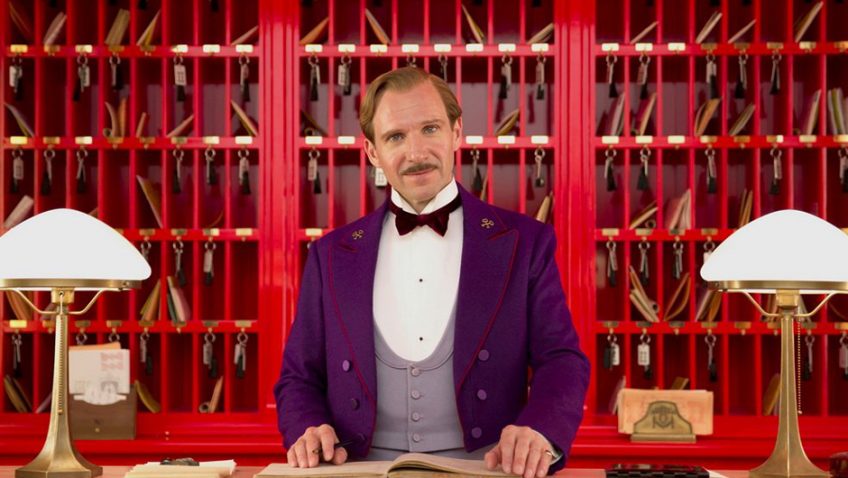
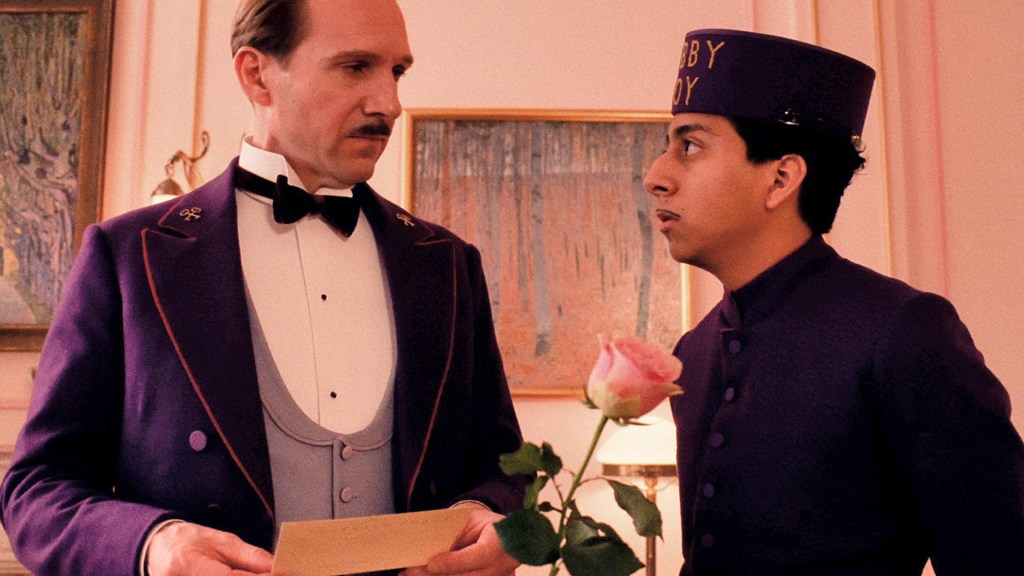
Like many Wes Anderson films, its storyline is eccentric, halfway between fantasy and absurdity. In 1932, in an opulent hotel, The Grand Budapest, concierge Monsieur Gustav (Ralph Fiennes) is the pinnacle of his trade: precise, fastidious, perfectionist, he can fix anything anywhere – opera tickets, the perfect table placement and a night of passion at any time for the elderly widows who visit his hotel. When one of them, Madame D (Tilda Swinton) dies leaving him a priceless painting, Boy with Apple he suddenly finds himself framed for her murder. Only his ingenuity, and the dedicated help of his protégé, best friend and surrogate brother/son, lobby boy Zero (Tony Revolori) will save him.

You can’t escape on the first viewing that The Grand Budapest Hotel is an extraordinarily funny film. Crammed with superb one-liners, it’s a showcase for a breathtakingly, blissfully funny performance from Ralph Fiennes whose comic timing is exquisite and whose mastery of the perfectly structured monologue of flowery language is as spot-on as his ability to deliver a crude punch-line. Anderson fills the film with clever sight-gags, bounce and a supreme sense of fun. You’ll laugh out loud (I frequently do, and I remember most of the gags) and wind back to watch them again.

But what lifts this is the wonderfully evocative, elegiac piece this beautiful film is. For all its comic zip, it unfolds in a romanticised past already a relic in 1932. We can’t escape the rise of Fascism that fills the film. Jack-booted soldiers accost and hunt Gustav and Zero. Adrien Brody’s furious heir to Madame D looks like a Gestapo officer, and his vicious heavy Jopling (Willem Dafoe so weathered, he looks like he’s been beaten by a carpet duster) has a stormtrooper menace. En route to Madame D’s funeral, Zero is nearly dragged off the train to be lynched by fascist thugs for being an immigrant and The Grand Budapest is taken over by this dreadful movement, filled with Mussolini-inspired ZZ insignia and blackshirts.

Under the jokes, the world Gustav represents has already died and been buried. We are never allowed to forget we are marching, inexorably, towards a very real-world war that will rip apart this fictional country and leave millions dead. Gustav’s gentile old-school charm ended with 1920s: and he sort of knows it. Fiennes, under the suaveness, conveys a man who falls back into potty language when he can no longer maintain his assured confidence that a straight-backed, polite assurance will solve any problem or a poetic reflection will allow them to put any unpleasantness behind them. Those days are gone and it makes for a deep, rich vein of sadness just under the surface.

It’s particularly acute because it’s made clear this is a memory piece. Anderson constructs the film like a memory box. It has no less than three framing devices. It opens and closes with a young woman in 2014 visiting a monument to a great writer, the author of the book The Grand Budapest Hotel. From there we flash back to the author (a droll Tom Wilkinson) in 1985 recounting how he met the man who inspired the novel, before heading again to a flashback to the 1960s where the young author (Jude Law) meets the man we discover is an older Zero (F Murray Abraham) who recounts the story we then watch. Each layer of the film descends deeper into Anderson’s artificial, carefully structured visual style, with its heightened sense of reality.

Old Zero – beautifully played by F. Murray Abraham – is introduced as a man of acute loneliness and sadness, who tells us early on the woman his young self loves, Agatha (a radiant Saoirse Ronan) will die and shuffles around the nearly abandoned The Grand Budapest (now a concrete nightmare of Communist architecture) with only his memories for comfort. No matter how jovial and bright the events of the 1930s are, we can’t forget that these are the reflections of a man full of regrets.

When old Zero’s narration turns to remembering Agatha, the lights around him dim: Agatha even enters the narrative almost by the side door: Gustav is arrested and imprisoned before she appears, along with a series of flashbacks-within-flashbacks to Zero and her meeting and her first meeting with Gustav, as if Zero had to steel himself to remember her (as reflected in Abraham’s tear-stained face). Later, when remembering the fates of Gustav (his best friend) and Agatha (the love of his life) he almost draws a veil over it (even their final scenes in flashback play out in monochrome). There is a deep, moving sense of humanity here, a powerful thread of grief that adds immense richness.

But don’t forget this is also a funny film! Anderson is an inventive visual and narrative director at the best of times, and here every single beat of his playful style pays off in spades. The entire 1930s section of the film (the overwhelming bulk of the narrative) plays out in 4:3 ratio, which to many other directors would be restrictive, but seems a perfect fit for a director who often composes his visuals with the skill of an expert cartoonist. The frame is frequently filled in every direction when within the grandeur of the hotel, but then feels marvellously restrictive for Gustav’s prison cell or the train compartments that seem to constantly carry Zero and him to disaster.

Anderson’s wonderfully precise camera movements also reach their zenith here. His camera is deceptively static, often placed in a series of perfectly staged compositions that places the characters at their heart, frequently looking at us. But then the camera will turn – frequently in a fluid single-plain ninety degrees to reveal a new image of character. There are Steadicam tracking shots that are a dream to watch. It’s combined with some truly astounding model shots (parts of the set are not-even-disguised animated models and miniatures, adding to the sense of fantasia) and the detail of every inch of the design (astounding work from Adam Stockhausen and Anna Pinnock) is perfection. The film is an opulent visual delight.

It’s a film of belly laughs and then moments of haunting sadness. But also, a wonderful celebration of friendship. The bond between Gustav and Zero is profound, natural and deeply moving – grounded, fittingly, in adversity from the agents of a hostile, oppressive state – and carries real emotional force. Newcomer Tony Revolori is hugely endearing as naïve but brave Zero, making his way in this new world (fitting the theme, he left his homeland after his family was destroyed by war) and sparks superbly with Fiennes and Ronan.

There is a wonderful beating heart in The Grand Budapest Hotel, amongst the farce, perfectly timed gags and cheekiness, that makes it a rich film you can luxuriate in. Anderson’s direction is faultless, Fiennes is a breathtaking revelation, both hilarious, affronted, decent and fighting the good fight. Gorgeous to look at, thought-provoking and laugh-out loud funny it’s a dream of a film.

Pickpocket (1959)

Pickpocket (1959)

Bresson’s fascinating message of hope, simply but superbly deconstructs the addiction of a life of crime

Director: Robert Bresson

Cast: Martin Lasalle (Michel), Marika Green (Jeanne), Jean Pelegri (Police Inspector), Dolly Scal (Michel’s mother), Pierre Leymarie (Jacques), Kassagi (First Accomplice), Pierre Etaix (Second Accomplice), Cesar Cattegno (Inspector)

A man watches with fixed eyes, breathless and tense, as another man’s hands artfully dodge out from beneath his newspaper to caress the lapels of his fellow train passenger, coming away with a wallet clasped between the folds of his paper. It has a clammy sense of the illicit, a tempting underbelly of the world, where the normal rules don’t apply and the special can take advantage of others because they deserve the world’s benefits more. It’s about being a pickpocket, but it could be about any shadowy world just under what society permits, where the attraction is being part of the club more than any of the actual awards from the act.

No wonder pickpocket Michel (Martin Lasalle) starts to believe his own pumped-up hype: he’s no ordinary man, but a superman, an uber-mensch who has a right to help himself to the gains of others. Getting caught? It will never happen: after all just fools and little people stumble into that trap. Instead, Michel walks through the streets of Paris with the fixed glare of the addict, who can’t wait for his next stealing fix. He’ll take from anyone (even his own mother), ignore the pleas of friends, taunt a police inspector and hoard his gains in a secret nook under his bed. Even the glances that come his way from the daughter of his mother’s landlord, Jeanne (Marika Green), can’t win him away from his longing for the buzz of crime.

Bresson’s perfectly formed novella of a film (it clocks in at a trim 74 minutes) turns this into a profound journey into one man’s soul, where he will constantly dance between temptation and redemption. Loosely inspired by Dostoyevsky’s Crime and Punishment (the criminal who thinks he is a better man, the police officer he engages in a battle of wits), Bresson uses this underlying idea to craft a profound, articulate and focused study of the emptiness behind indulging our worst instincts.

Because that’s what Michel is doing. He’s clearly smart enough to find a proper job, casting aside the offers of his friend Jacques to fix him up. But he can’t raise the passion for a normal life. Bresson, whose style embraced the rawness of unnatural performers, almost literally plucked Martin Lasalle from the streets. Carefully tutored by Bresson, all artificial effects were hammered out of him, leaving Lasalle a blank and exact performer. It works perfectly for Bresson’s concept of the criminal as a dysfunctional human, unable to relate to or understand others, unable to engage in the world, coming to life for his crimes and plodding through the rest of time with monotony and a striking lack of emotional engagement. (It admittedly works less well for those scenes where Lasalle must demonstrate emotion, which he plays with a mechanical dutifulness.)

Michel can’t bring himself to see his dying mother, dropping money off with Jeanne to pass over for him (money, it later transpires, he had stolen from her in any case). His friendship with Jacques sees him go blandly through the emotions. We constantly see him trudging up and down stairs, opening and closing his door, moving his few possessions around, all of it with clockwork regularity that seems relentless. He falls in with fellow pickpockets but doesn’t even learn their names. The most he ever seems engaged is during his sly exchanges with a police inspector (avuncular Jean Pelegri) who seems certain he’s a thief.

Perhaps Michel is so relatively animated in these exchanges because he’s desperate to be caught. Because how can you be a superman, if no one can really see what you are doing? The bitter irony is, your genius for theft can only be publicly acknowledged by being caught, the greatest failure of any thief. But Michel longs, in some part of himself, for recognition, praise and to stand-out. His life – in a grimy bedsit, wearing the same ill-fitting suit (which hangs about him, as if exaggerating his blankness) – is strikingly un-special. His best attribute as a pickpocket is that he’s a non-entity you wouldn’t look at twice. Is there a bigger slap in the face for the man who would be king, that his greatest strength is his ability to not be seen?

It must be particularly harsh, as Bresson makes clear Michel isn’t even a particularly adept pickpocket. He fluffs his first few attempts, his heart pounding so much that he can’t bring about the steady hands needed. His early crimes are clumsy and ineffective. At a race meet that opens the film, he filches cash from a lady’s handbag and only a lack of evidence saves him when he is immediately picked up. When he is finally found by his expert accomplice (played by real-life thief, and master of sleight-of-hand, Kassagi), his crude techniques are ruthlessly exposed.

This would-be superman never reaches the heights of Kassagi. Bresson’s shooting of the pickpocket’s crimes are edited like the greatest heist thrillers, tense moments of balletic beauty. We see hands carefully unbutton jackets from behind. Wallets knocked out of pockets and caught as they slide down a person’s body. Wrists are clasped and stroked as watches are removed. The pickpockets work in a team of three: one takes the wallet, passes it to a second who palms it instantly to a third who escapes. All this is caught by Bresson with all the grace of Gene Kelly. It’s exciting, dynamic – and also (you can’t escape it) sensual. You can see why Michel gets such a thrill out of it.

But he’s also the least of his team of three – and when the other two get nicked, he really should take the hint. He practises at length to make his fingers more supple, his ability to grasp watches and wallets more fluid. But his movements are never quite graceful enough, his face always a little too sweaty, his eyes flicking a little too much as if worried about being caught in an assignation. Later he travels to London but returns penniless, too inept to keep hold of his cash from card-sharps.

Bresson’s film reaches, gently but highly effectively, for a spiritual message. What joy or grace is there for Michel? Crime and the dreams of being someone special fill a void in his life. That void has no room for friends or family. Not even for God, who he’s touched by “for three minutes” at his mother’s funeral. Even the (to us) evident love of Jeanne can’t really touch him enough to change his ways. Or at least, perhaps not until he hits rock bottom where, like Paul on the road to Damascus, he will have a sudden vision, trapped behind bars, that life can be different.

To give that impact, Bresson has to show (and understand) the lurid temptation of a life beyond the rules and the norms. Pickpocketing was his tool – and it perfectly conveys the addictive glamour of feeling superior to others – but really it could have been the buzz of any addiction, the thieves hunting each other out with the knowing eyes of fellow addicts. These sensual delights are false though, engaging and absorbing as they are. Told without melodrama, it’s a stunning, hard-boiled thriller that ripens into a profound, subtle and intelligent parable, assembled with a cool, exact genius that makes filmmaking look simple.

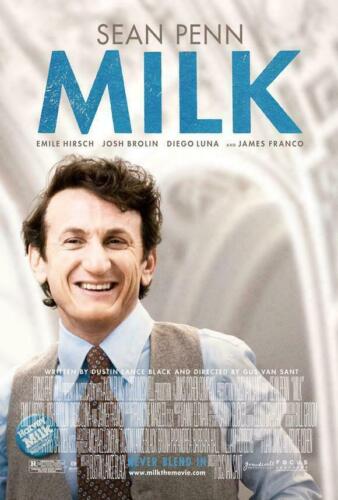
Milk (2008)

Milk (2008)

A political pioneer is lovingly paid tribute to in van Sant’s heartfelt biopic

Director: Gus van Sant

Cast: Sean Penn (Harvey Milk), Emile Hirsch (Cleve Jones), Josh Brolin (Dan White), Diego Luna (Jack Lira), James Franco (Scott Smith), Alison Pill (Anne Kronenberg), Victor Garber (Major George Mascone), Denis O’Hare (State Senator John Briggs), Joseph Cross (Dick Pabich), Stephen Spinella (Rick Stokes), Lucas Grabeel (Danny Nicoletta)

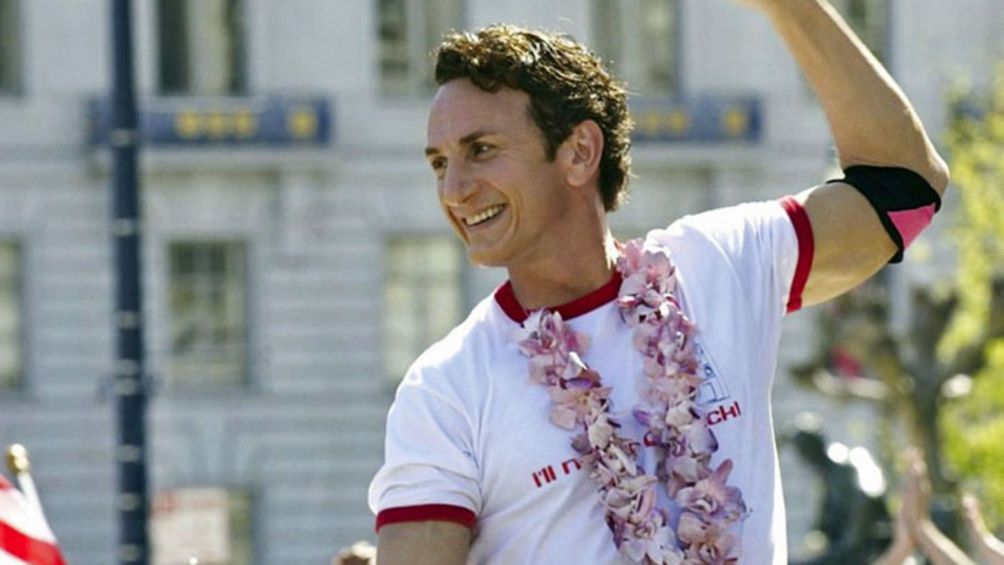
Harvey Milk was the first openly gay man elected to public office in the United States. Milk is a passionate, accessible and lovingly crafted biopic from Gus van Sant, which aims to restore this crucial figure back to the heart of public consciousness. van Sant covers a lot, but he crafts a film that hums with respect and a great deal of life. It also gains a huge amount from Sean Penn’s extraordinary and compassionate Oscar-winning performance, which embodies the spirit of this political pioneer.

Milk, in many ways, takes a traditional biopic approach, attempting to capture all the major events of Milk’s life in just over two hours. We follow Milk (Sean Penn) from closeted office worker, starting a relationship with Scott Smith (James Franco) to San Francisco and becoming part of a vibrant gay community – although one still facing an onslaught of discrimination and persecution from the authorities. Milk determines to change things, eventually elected as City Supervisor in 1977. From there he fights against the anti-gay Proposition 6 and pushes for change, until his murder by fellow City Supervisor Dan White (Josh Brolin) in November 1978.

Milk makes a strong statement about the dangers faced by the gay community in this period of American history. It opens with a montage of newsreel footage showing the impact of raids and the reaction to Milk’s murder. It explores in detail the vicious backlash against gay rights across America, with Florida among several states passing legislation to repeal rights. There is a creeping sense of danger throughout, from Milk walking down a dark street looking over his shoulder, to the everyday prejudice characters encounter on the streets. Above all perhaps, it strongly demonstrates the powerful sense of shame people were driven into about their sexuality, most powerfully in a young man who cold-calls Milk begging for help. Milk fascinatingly explores the tensions within the gay community and its representatives – split between radicals, like Milk and his friends, and the more traditional elite worried someone “too gay” will alienate people.

It’s a beautifully shot, loving recreation of 1970s San Francisco, fast-paced, insightful and informative. As Harvey Milk, Sean Penn gives an extraordinary, transformative performance. Penn’s careful study has beautifully reproduced Milk’s mannerisms and vocal tics, but above all he has captured a sense of the man’s soul. Penn presents Milk as fiery but caring, loving but sometimes selfish, passionate but reasoned, both an activist and a politician. He’s a man determined to make life better, so young men don’t feel the shame he felt growing up – not a hero or a superman, just someone who feels he can (and should) make a difference. Penn’s energetic performance mixes gentleness with a justified vein of anger at injustice.

And he has a lot to be angry about. The film’s finest sequence is Milk’s duel with Senator John Briggs (waspishly played by Denis O’Hare) over Proposition 6. van Sant skilfully re-constructs the debate, but also carefully elucidates the high stakes and the impact its passing would have had. van Sant’s film is frequently strong not only at reconstruction but also in using drama to inform and, above all, to bring to life the sense of hope people had that the struggle could lead to change.

The film grounds Milk firmly within his relationships and friendships, while exploring clearly the issues that motivated him so strongly. To do this, the film shies away from Milk’s polyamorous relationships, grounding him in a series of long-term relationships, some functional and some not. It presents Scott Smith (sensitively played by James Franco) as Milk’s lost “soul-mate” (the couple split over Milk’s all-consuming focus on campaigning) – perhaps van Sant’s attempt to keep the film as accessible as possible by introducing a more traditional element. Smith is contrasted with Jack Lira (Diego Luna), a sulky and immature man equally alienated by Milk’s focus.

Those personal relationships are extended to explore the tensions and fractured friendship between Milk and his eventual murderer Dan White. You’d expect the film to recraft White as a homophobic killer. Instead, it acknowledges White’s crime was largely motivated by factors other than gay rights, primarily his mental collapse and his sense of aggrievement over a workplace dispute. Sensitively played by Josh Brolin, White is presented as a man’s man suffering from a deep sense of inadequacy and insecurity (the film openly suggests he may have been closeted himself). Milk’s mistake is misunderstanding the depths of this man’s insecurities and never imagining the lengths they might drive him to. Brolin is very good as this troubled, if finally unsympathetic, man.

Milk of course fully anticipated being murdered – it was just he expected a homophobic slaying at a rally, rather than an office shooting by an aggrieved co-worker. One of the clumsier devices used in the film is its framing device of Milk recording his will a few days before his unexpected murder, a device that seems to exist solely to allow Penn to pop up and explain things more fully at points the film can’t find another way to expand. But again, it might be another deliberate attempt by van Sant and writer Dustin Lance Black to make a film as accessible as possible, by falling back on traditional biopic devices (including its semi-cradle-to-grave structure), just as he aims to shoot the film in a vibrant but linear and visually clear style, avoiding overt flash and snappy camera and editing tricks.

Perhaps that’s because the film generally knows it doesn’t need to overplay its hand to capture emotion (when it does, it’s less effective: you could argue its slow-mo murder of Milk to the sound of Tosca is far less affecting than the look of shock and horror that crosses Penn’s face a moment earlier when he realises what is about to happen – a cut to black might have worked more effectively here). Actual footage of the candlelit vigil after his murder, mixed with reconstruction, is simple but carries real impact. Throughout the film, real-life stories pop-up time and again of prejudice and pain, which move with their honesty. Above all, it becomes a beautiful tribute to a passionate, brave and extraordinary man who left the world a better place than he found it.

The Banshees of Inisherin (2022)

The Banshees of Inisherin (2022)

Director: Martin McDonagh

Cast: Colin Farrell (Pádraic Súilleabháin), Brendan Gleeson (Colm Doherty), Kerry Condon (Siobhan Súilleabháin), Barry Keoghan (Dominic Kearney), Pat Shortt (Jonjo Devine), Jon Kenny (Gerry), Brid Ni Neachtain (Mrs O’Riordan), Gary Lydon (Paedar Kearney), Aaron Monaghan (Declan), Shelia Fitton (Mrs McCormick), David Pearse (Priest)

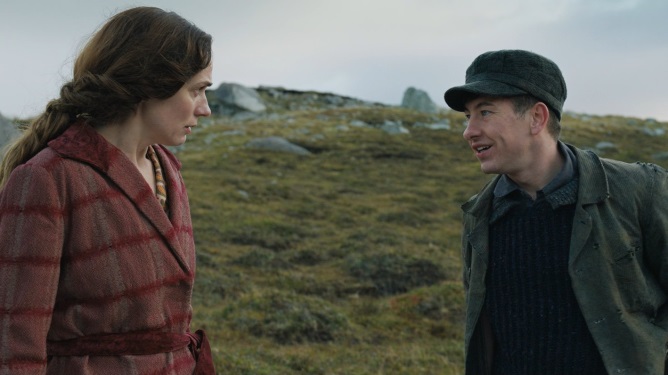
Pádraic (Colin Farrell) and Colm (Brendan Gleeson) are life-long friends on the small Irish island of Inisherin. Until one day, in 1923, Colm bluntly says he won’t speak to Pádraic again as “I just don’t like ya no more”. What on earth has led to this seemingly permanent severance? Did Pádraic do something wrong? The torment of not knowing will create a huge strain on Padraic, who prides himself on “being nice” and can’t understand why the older Colm doesn’t want to chat him. Just as Colm can’t understand why Pádraic can’t leave him alone, especially as he is almost universally agreed to be dull. Eventually this blunt stop to a friendship swiftly escalates out of all control.

McDonagh’s film is packed with the scintillating dialogue you would expect, and he combines it with an intriguing, tragedy-tinged character study where two sympathetic characters tip themselves into destruction through the unwillingness of either of them to compromise. It’s no coincidence that the film is set during the Irish Civil War. Cut off from the mainland on their tranquil island (where life feels like it hasn’t changed for the best part of 100 years), the characters are disturbed from their own civil war, every now and again, by the sound of gunfire and explosions from the mainland. The Banshees of Inisherin can be seen as a commentary on civil wars: don’t they all start, essentially, from someone deciding they have had enough and “just don’t like ya” anymore?

This marvellously rich film boils down a whole country tearing itself apart over what sort of future it wants, into one personal clash over two people’s future. The future increasingly obsesses Colm, a man preoccupied with mortality (who assumes his life can now be counted in years rather than decades), suffering from depression, worried he will disappear leaving no mark. A talented fiddle player, he wants to be like Mozart, remembered decades later – and he can’t do that wasting time every day for hours on end listening to Pádraic talking about his “wee donkey’s shite”.

It’s a perspective on the future, that Pádraic just can’t understand. For him, what does it matter what people you’ll never meet think about you? What matters to him is that the people around him like him and remember him as a “nice fella”. Not in a million years does legacy occur to him: the familiarity of everyday being the same is the most comforting thing, and change a horrific and terrifying thing to be avoided as much as possible.

You can see all this instantly in Colin Farrell’s heart-rending performance as this gentle, fragile but unimaginative soul, heart-broken at the inexplicable loss of his best friend. The film is a striking reminder that, contrary to his looks, Farrell’s best work is in embodying lost souls, the sort of people never ready for the life’s hurdles. Pádraic certainly isn’t, and his attempt to process what has happened defeats him. A man who considers his pet goat his next best friend and is as reliant as a child on his sister, doesn’t have the ability to understand what Colm is driving at about mortality, assuming instead he will stumble across the right words to be welcomed back into Colm’s company. He becomes the unstoppable object, trying to batter down Colm’s wall of silence.

He’s onto a losing battle, as Colm reveals himself to be – either due to his depression or his just not caring any more – the immovable force. Wonderfully played with a tinge of sadness and a depression-induced monomania, by Brendan Gleeson, Colm is a decent guy in many ways but fails to appreciate or consider the effect his actions will have on others. Instead he is focused on achieving at least something notable from his life. It leads to dramatic steps to drive Pádraic away, Colm threatening to cut off one of his fiddle playing fingers every time Pádraic bothers him, a threat he transpires to be more than willing to carry out.

And so civil war breaks out. As well as the parallels with Ireland’s war, I also felt strong echoes of our own poisoned social-media discourse. By his own lights, Colm believes his sudden severing of contact with Pádraic is perfectly reasonable. Many people who have “ghosted” others no doubt feel the same. Colm is reasonable when he explains it, and he still steps in with silent acts of comfort and support when Pádraic falls foul of the island’s brutish police office. But he never considers the traumatic impact this unexplained change will have on Pádraic – or how flashes of kindness can be as cruel as hours of non-acknowledgement.

Radicalism, in civil war and social media, quickly takes hold. What else can you call Colm’s threat to slice off his own fingers (the fingers he needs to live his dream of fiddle-playing legacy)? Just like people blowing hard on Twitter, he needs to deliver or lose face. Pádraic makes angry, passionate condemnations of Colm in the pub, like he’s posting rants online. Things escalate to a point where no-one feels they can step away or backdown.

That’s the tragedy McDonagh identifies here. This one decision of Colm’s – no matter the motives – ends up having disastrous effects on both men. Pádraic changes from a gentle soul to someone capable of wrathful fury and lifelong grudges. Colm literally disfigures himself, guaranteeing he will never achieve the very thing he started this for. Could there be a better parable for the destructive nature of civil combat? Neither Colm or Pádraic are willing to compromise: what if Colm said he would only see Pádraic once or twice a week, eh? Just like Ireland, they burn the world down.

This all takes place in a rich framework, with McDonagh skilfully working in clever, challenging sub-plots. The legend of the banshee, who foretold death and enjoyed watching destruction, is woven throughout, embodied by the sinister Mrs McCormick (a ghostly Shelia Fitton). The most forward-looking person on the island is Pádraic’s sister Siobhan – brilliantly played by Kerry Condon – who finds herself wondering why on earth she stays in such a self-destructive small-world. Barry Keoghan (also superb) plays the universally acknowledged village dunce, who (if you stop and listen to him) quotes French and poetry and (for all his crudeness and lack of social graces) is clearly a man stunted under the heel of his abusive father, the village policeman.

As events escalate and rush out of control – McDonagh’s pacing is very effective here – the film slows for carefully judged moments of emotional power, from the burial of a beloved pet to a character weeping in bed at the painful choices that must be made. McDonagh has created a powerful universal metaphor for the dangers of extreme, definitive choices and a total rejection of compromise by boiling it down to the smallest scale possible.

And your sympathies ebb and flow, due to the beautiful performances from its leads. Farrell is heartbreaking, a memory you carry as he becomes more vengeful. Gleeson is coldly reasonable, even as we grow to understand his crushing sense of mortality and character-altering depression. These two actors power an intelligent and thought-provoking film that achieves a huge amount with subtle and rewarding brushstrokes.

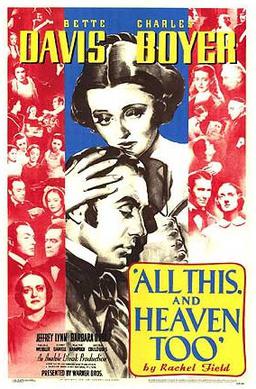
All This and Heaven Too (1940)

All This and Heaven Too (1940)

Illicit romance, murder, scandal… it should all be so much more exciting than this film makes it

Director: Anatole Litvak

Cast: Bette Davis (Henriette Deluzy-Desportes), Charles Boyer (Duke Charles de-Praslin), Barbara O’Neil (Fanny Sebastiani de-Praslin), June Lockhart (Isabelle de Choiseul-Praslin), Virginia Weidler (Louise de Choiseul-Praslin), Jeffrey Lynn (Reverend Henry Martin Field), George Coulouris (Charpentier, Harry Davenport (Pierre), Montagu Love (Army General Horace Sebastiani), Helen Westley (Mme LeMarie), Henry Daniell (Broussais)

In the 1840s, Henriette (Bette Davis) arrives as governess at the home of the Count de-Praslin (Charles Boyer). She’s calm, collected, patient and caring: in short she’s everything that the count’s wife Fanny (Barbara O’Neil) is not, and it doesn’t take the count long to work it out. With Henriette swiftly becoming a second mother to his four children, the count and Henriette find themselves falling, unspokenly, in love. But Fanny isn’t fooled – and neither is the gutter press – and as scandal brews, the count takes drastic action to stop his wife, leading to a legal case that will shock France.

All This, and Heaven Too was conceived as a sweeping romance to rival Gone with the Wind. Money was lavishly splashed on sets and costumes (Bette Davis has no fewer than 37 costumes in the film, averaging at one every five minutes). Based on a famous murder case – that some felt had contributed towards the anti-monarchy atmosphere that led to the revolution of 1848 – All This, and Heaven Too had everything on paper to challenge Gone with the Wind in romance stakes. So why doesn’t it?

There is something too restrained, too slow and controlled about the film. It’s overlong – the original cut was over three hours, reduced to 2 hours 20 minutes – and takes a very long time to get going. The two stars underplay very effectively – with Davis cast very successfully against type as a mousey, rather timid Jane Eyre-ish figure – but it also means that the sort of grand romance the film is aiming for never quite takes fire, for all the careful shots of burning flames between the two lovers as they discuss their romantic predicaments in roundabout terms.

Litvak’s film saddles itself with a framing device that, while accurate to the real-life story, adds very little. The film opens with Henriette teaching children in America – children who have no respect for her, having heard whispers of her scandalous past – which leads into her telling the story to them (and us) about her past. The film returns to this framing device at the end, but as a whole it provides very little insight or interest to the core thrust of the film’s action. The film also wastes time on Jeffrey Lynn’s Reverend (Heinrette’s future husband), a relationship that seems largely in there to absolve Henriette of any possible indirect responsibility for the murder (she can’t be a hussy, she marries a man of the cloth!).

A large chunk of the film is designed to minimise what was a major scandal that rocked French society. This was a (possible) sexual affair between an unhappily married aristocrat and the governess to his children. It culminated in the countess being stabbed and beaten to death and her blood-stained husband found on the scene, claiming he had fought and chased away an intruder (which, writing it down, is basically the plot of The Fugitive). He never confessed, but committed suicide via arsenic in prison a few months later. Henriette was arrested as an accessory (presumably for encouraging the count to kill his wife) but released.

This should have been racy, racy stuff – but the film shies away from it. It’s probably linked to the expectation that the Hays Code would never accept the idea of Henriette as an adulteress who never goes unpunished. The possible Therese Raquin style set-up is instead translated into a more Jane Eyre model, with the employer in love but the servant too noble to act on her feelings and expose herself to disgrace. The film does pull no punches in making clear that the count committed the crime (the camera zooming in on Boyer’s starring eyes as he advances on his pleading wife) but since he was always destined to meet a historical punishment (he helpfully absolves Henriette on his deathbed) there were no concerns there.

All This, and Heaven Too can’t have a passionate, lusty drama so it avoids any overt spark between Boyer and Davis. Both actors play this unspoken attraction extremely well, but the film has to work overtime to get drama out of their several scenes of standing carefully apart or side-by-side, talking about everything except their own feelings. Boyer, as ever, is first class: his expressive eyes and beautiful ability to listen and react is as perfect for an unspoken romance, as it is for a man who becomes convinced murder is his only escape. Davis’ meeker, Joan Fontainesque role suits her extremely well, even if it disappoints those expecting fireworks.

Those fireworks come from Barbara O’Neil instead, raving and unreasonable as a woman driven to the edge by this semi-imagined affair, in an energetic performance that gained one of the film’s three Oscar nominations. But the film’s strange momentum affects her too: she is left to repeatedly hit the same notes over again, as the film repeats its established set-up over and over for 90 minutes before she is murdered (then squashes everything connected to the historical scandal and the murder trial into the final 40 minutes).

It’s productions standards are high and it’s well shot by Gone with the Wind cameraman Ernest Haller. There is some beautiful use of shadows and several ball scenes are expanded with some gorgeous use of mirrors. It ticks many of the boxes you expect a period romance to have, but is fatally hampered by its caution and by its restrictive narrative choices. It ends up feeling long and drifts too often through its build-up, forcing it to rush its pay-off. All of this contributes to its lack of challenge to GWTW in the romance stakes.

Get Carter (1971)

Get Carter (1971)

Brutal, dark and nihilistic British gangster film removes any chance that you might fancy trying a life of crime

Director: Mike Hodges

Cast: Michael Caine (Jack Carter), Ian Hendry (Eric), John Osborne (Kinnear), Britt Ekland (Anna), Brian Mosley (Cliff Brumby), George Sewell (Con McCarty), Tony Beckley (Peter the Dutchman), Glynn Edwards (Albert Swift), Alun Armstrong (Keith), Bernard Hepton (Thorpe), Petra Markham (Doreen), Geraldine Moffat (Glenda), Dorothy White (Margaret)

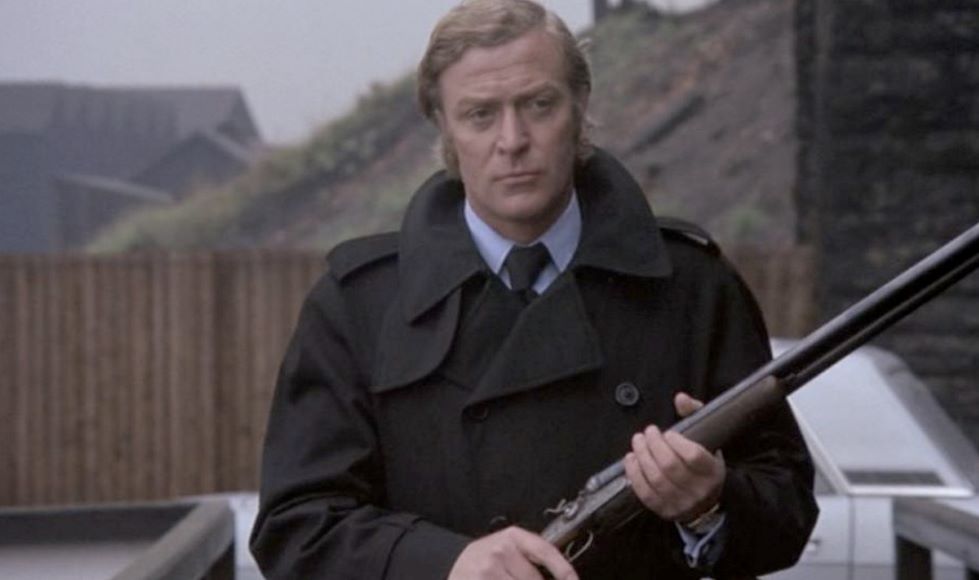
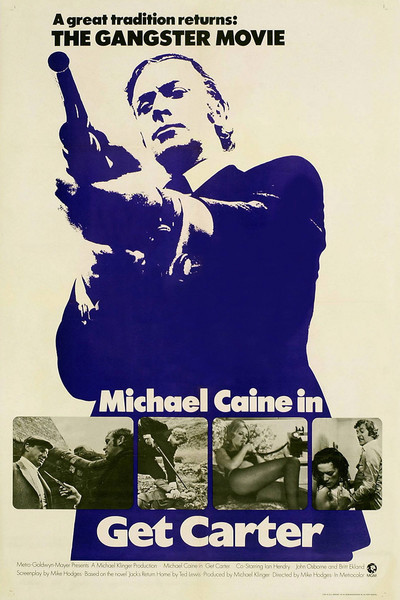
It’s probably the finest British gangster film ever made. Get Carter is a cold, dark, grimy film – a punch to the solar plexus, which completely rejects any sense of charm in its gangster characters. Michael Caine called Jack Carter a shadow Caine, the man he could have become if his life had broken out slightly differently. It’s set in an unremittingly bleak Newcastle, but it feels like it might be happening in an anti-chamber of hell, with its thoroughly amoral lead barely aware he’s spiralling towards destruction. It’s a sociopathic, Jacobean revenge tragedy set among the dirt filled suburbs of Newcastle.

Jack Carter (Michael Caine) is a professional fixer for London gangster brothers. He returns to his childhood home of Newcastle after the sudden death of his brother. But he’s not satisfied with the official explanation. Instead, he dives into an investigation, in which he cares not a jot about the collateral damage he causes or the likely reaction of the underworld powers that be as he rocks the boat to destruction, trashing the lives of everyone he meets, good and bad.

Powered by an extraordinary performance of blank nihilism and cold, unexpressed fury by Caine, nominally Jack is a man motivated by the harm done to his family. However, Hodges film is so cold-eyed and realistic about the mentality of gangsters, we know it’s just an excuse. Carter is never heart-broken, he’s annoyed. His brother may have been punished and his niece (it transpires) misused, but fundamentally what motivates Carter is the affront. By taking a pop at his family, he feels they really think they can take a pop at him. How dare they: he’s Jack Carter.

Any charm Carter has, solely comes from residual affection for Caine. By any measure, Carter is an awful man (even if he has a good turn of phrase). He is a sociopath with no concern for anyone. When friendly Keith (a young Alun Armstrong) is beaten black and blue for helping Carter, how does our hero respond? Tosses a few bank notes on his bed and tells him “buy some karate lessons”. Carter sees the world solely as made up of debts, which can be discharged by money, never mind the situation. His niece throws beer over a friend? He’ll pay for the dry-clean. Keith gets bashed up: take a roll of twenties, what’s your problem?

Carter directly kills four people (and is responsible for several other deaths), all with a blank-eyed lack of reaction. There isn’t any sadism to what he does – the deaths are mostly efficient and to his mind, justified, because by taking actions against his family they disrespected him. When he locks a woman in the boot of his car, and a pair of heavies push the car into the Tyne he doesn’t bat an eyelid at her inevitable death (never mind he slept with her hours before). People who find themselves close to Jack, or drawn into his circle, suffer terribly and he literally couldn’t care less.

Get Carter is the bleakest of all gangster films, shot with an imaginative kitchen-sink beauty by Mike Hodges, which actually carries a lot more visual glory than you might expect. Drained out colours abound – there are virtually no bright primary colours in this, with the whole of Newcastle a mix of muddy browns, soot-stained greys and filthy charcoals. Hodges’ film is also dynamic and fast-paced: he throws in striking aerial and crane shots (there is a beautiful shot that follows a car chase from a bird’s eye view), but also gets down and dirty in this grainy world.

It’s an urgent, lean and mean film constantly kicking you in the shins, but told with skill and artistry. Hodges pieces together a marvellous early scene, where Carter visits local heavy Kinnear (a suave, chillingly well-spoken John Osborne): simultaneously, in one single location, two scenes (both with vital information) play out at the same time – Carter chats to Kinnear’s moll Glenda (Geraldine Moffat), picking up vital information while on the same sofa Kinnear beats his guests at cards. Everything though is perfectly clear: masterful stuff. It’s also a film crammed with small details that reward careful viewing: Carter’s bed has a cross-stitch of “What would Jesus say?” above it (I dread to think) and on his train journey, look out for a fellow passenger with a distinctive ring.

So confidently is this put together, it’s amazing to think Hodges was a first-time director. This is a film dripping with menace, but also a horrifyingly immersive camera. We are frequently thrown into the midst of the action. Carter frequently looms over the camera or is filmed in violent motion moving towards his next goal. There is not a jot of romanticism around the film: neither about the gangsters or the bleak world they operate in. Newcastle is pre-Thatcherite hellhole, with precious little glamour. Even the gangster locales – the clubs and pubs – are bashed-up and unpleasant.

Across the board, the gangsters are exposed as cruel, heartless and vile. Touches of class are ruined by everyone’s fundamental lack of class. Cliff Brumby’s (Brian Mosley) planned classy restaurant sits atop a concrete multi-story car-park. Kinnear’s (John Osborne) fancy country house is the setting of the grimmest, most depressing orgy you’re likely to see. Carter is trying his best to dress classily, but his cruelty always punctures the illusion. He’s introduced watching a porn film with his bosses in London and the film revolves around the seamy underworld of homemade porn.

The women in the film are primarily used by the gangster as props for these films, and Get Carter doesn’t shy away from the exploitative fate for women in this world. However, you can’t disagree that it takes in a bit of exploitation itself. Britt Ekland has high billing for her single scene, where she lies mostly naked on a bed pantily having phone sex with Carter (who goes about this, as all things, with a functional efficiency, at least as interested in the excited reaction of his middle-aged landlady who is sitting in the room with him while he chats on the phone). It’s undeniably a moment for us to gawp but it still feels less cold and cruel than those awful porn films.

Carter discovers his niece has found her way into these. He even sheds a tear over this: but he doesn’t care because of what has happened to her. Again it’s all about him: Carter couldn’t care less about the morals and is perfectly happy for porn to soak up other women. He’s not really that interested in his niece: it’s all about the damage to him, that a “made man” like him should have a member of his family getting boffed like a slag for others entertainment. How bloody dare they?

Get Carter understands this is a dark and soulless world, and is a film bereft of hope. Its hero is a revenge obsessed sociopath, who only smiles in the film after he has burnt everything around him down. Gangsters destroy everything they touch and care about nothing other than themselves. All debts can be settled with money, all women are toys to be used and thrown away. Death means nothing and the world is a drained-out hell of shabby houses and dirty clubs. It’s the grimmest and finest British gangster film out there. Who would want to be gangster after seeing this?

Triangle of Sadness (2022)

Triangle of Sadness (2022)

Östlund’s super-rich satire lines up straight-forward targets to easily knock down

Director: Ruben Östlund

Cast: Harris Dickinson (Carl), Charlbi Dean (Yaya), Dolly de Leon (Abigail), Zlatko Burić (Dimitry), Iris Berben (Therese), Vicki Berlin (Paula), Henrik Dorsin (Jarmo), Woody Harrelson (Captain Thomas Smith), Alicia Eriksson (Alicia), Jean-Christophe Folly (Nelson), Amanda Walker (Clementine), Oliver Ford Davies (Winston), Sunnyi Melles (Vera)

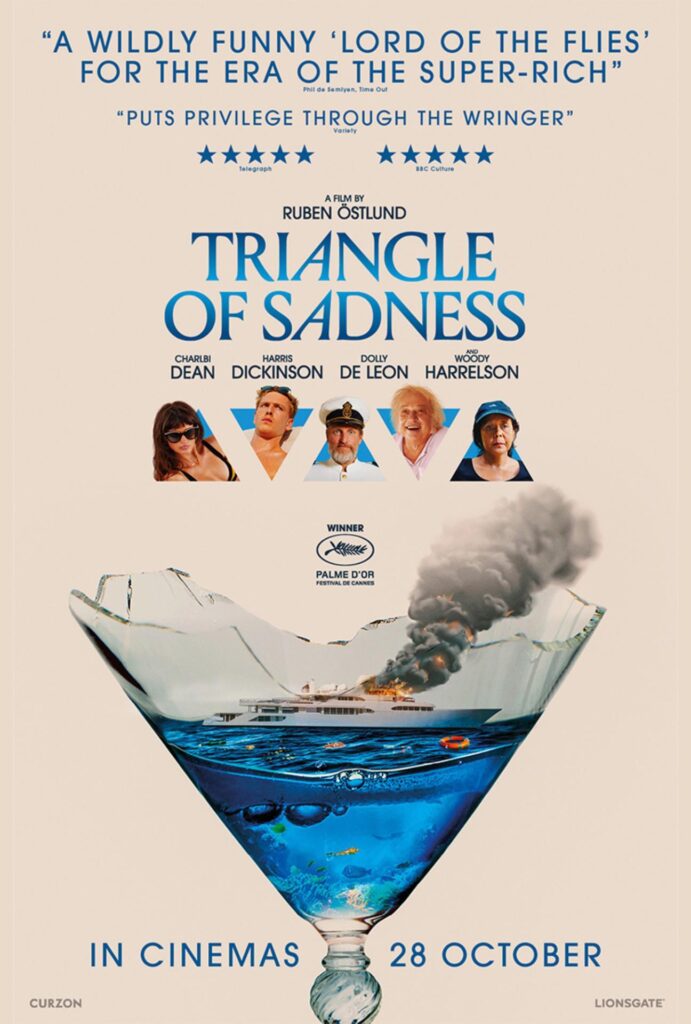
In my review of The Square, Östlund’s previous Palme d’Or winner, I described its targets as “so obvious, the entire film might as well be footage of fish being shot in barrels”. If only I’d known: Triangle of Sadness, his satire on the super-rich, takes this to the Nth degree: it’s an entire film of Östlund spraying machine gun bullets into an aquarium of drugged fish. That’s not to say there ain’t good jokes in here and several of its sequences are cheeky, engaging and funny. It’s well-made and high quality: but it’s also obvious and is in a such a rush to make its oh-so-clever satirical points that it frequently blunts its own impact.

The film revolves around a luxury cruise liner. On board: the self-obsessed, selfish, greedy representatives of the world’s oligarchs. A Russian who repeatedly amuses himself by bragging that he sells “shit” (fertiliser), a Danish app builder who splashes his cash, a married couple of British arms-traders who jovially bemoan how UN restriction on landmines made for tough financial years… you get the idea. Also on board: Instagram influencer supermodel Yaya (Charlbi Dean) and her insecure male model boyfriend Carl (Harris Dickinson). All of them treat the staff like slaves. But when the ship sinks after a storm and an attack by Somali pirates, the surviving passengers find they entirely lack the skills needed to survive on an island, unlike toilet-cleaner Abigail (Dolly de Leon) who rockets from the bottom to the top of the social hierarchy.

Östlund’s film lays into the emptiness, greed and selfishness of the super-rich with glee, even if it hardly tells us anything we don’t already know. The rich are only interested in their own needs and can only see others as tools for their own pleasure: who knew? Wanting to expand his satirical targets even further, Östlund also takes a pop at the social media generation. Apparently, they are shallow and interested only in commodifying their own lives. Who knew? It’s the sort of stuff that makes for a punchy student revue, but you want something a little bit more challenging that moves above cheap shots from a Palme d’Or winner.

In many ways the film’s most interesting section (and most subtle ideas) take place before we even reach the boat. The film’s first chapter exclusively follows Carl and Yaya. Carl auditions for a modelling job where he’s treated like a piece of meat (hilariously they mutter about him needing botox). At a fashion show, staff pleasantly demand three people move out of their seats to make way for VIPS – who immediately ask for one more seat. Everyone shuffles along one (the camera following this with a neat tracking shot), leaving Carl seatless. This is a more subtle commentary on the self-obsessive focus of the super-rich than anything that follows.

Carl and Yaya are in an interesting position: they are both part of the beautiful super-rich and not (they don’t have any money). That early act opener balloons from a disagreement over who pays for a meal into Carl inarticulately arguing for sexual-equality and mutual partnerships that defy gender roles. It’s more interesting than almost anything that follows, because it’s multi-layered and raises genuine issues we all face (to varying degrees).

But the film abandons multi-layered the second it steps foot on the boat. There are fun set pieces. Carl unwittingly gets a pool attendant fired because he’s jealous of Yaya’s admiration for his topless body. The staff on the boat gee themselves up for days of enthusiastic deference with a tip-expectant-group-chant. A Russian lady demands the staff all swim in the sea so they can have as much fun as she is having (and to show how ‘normal’ she is). The film’s most infamous set-piece occurs as a storm coincides with the captain’s dinner (with the fish courses under-cooked due to the aforementioned obligatory staff swim) leading to nearly all the passengers projectile vomiting across the state room, then sliding around the floors of the swaying ship in their own filth.

Amusing as that can be in its guignol excess, it tells you how subtle the film is. The film is awash with obvious, lazy jokes – of course the polite arms trading couple are called Winston and Clementine! To hammer home the social issues the film whacks us over the head with, the Captain (an awkward performance from Woody Harrelson) an alcoholic Marxist spends the storm pissed in his cabin, reading Noam Chomsky and his own anti-capitalist ravings over the ship’s tannoy. This takes up a huge amount of screen-time and manages to be both obvious and not very funny.

The film enjoys taking these pot-shots so much, it ends up feeling rushed when we arrive at the island. If we had seen more of Dolly de Leon’s Abigail earlier in the film (in actuality, the film sidelines her as much as the characters do, barely allowing her more than a minute of screentime in its first hour), the shift in social hierarchy would have carried more impact. If Östlund’s film had more patience to show the passengers expectation that shipwrecked life would be identical to that on the boat, then Abigail taking charge after a few days that would have carried more impact. Instead, Abigail takes command from arrival, and then essentially behaves (in a way I’m not sure the film quite understands) with exactly the same self-entitled greed as the passengers did. She takes the best cabin, establishes a hierarchy, keeps most of the food and turns Carl into a sex toy.

Because we’ve not really seen Abigail earlier in the film, we don’t get a sense of her earlier mistreatment (really, most of the film would have been better told from her point-of-view) or join her satisfaction at the tables being turned. The film also exhausts its commentary on the super-rich leaving it with little to say about in its third act Lord of the Flies set-up. Instead, the film dawdles its way to a conclusion and cliffhanger ending that feels unearned.

It makes you regret the loss of its earlier more subtle commentary on Instagrammers Carl and Yaya (good performances from Harris Dickinson and the tragically late Charlbi Dean) who are drowning-not-waving in a world where they must commodify their bodies but have no power over them, struggling to work-out where they fit in a world. It throws this overboard to go for some (admittedly at times funny) gags about greed and very obvious social commentary. If it had committed to its social underclass uprising earlier – or carried on with its more subtle themes from the opening prologue – it would have been a better film. Instead it’s as subtle and probing as the faceful of vomit it serves up halfway through.