The Last Metro (1980)

The Last Metro (1980)

Passion, privacy, tension and terror all come to head in Truffaut’s stately theatrical occupation epic

Director: François Truffaut

Cast: Catherine Deneuve (Marion Steiner), Gérard Depardieu (Bernard Granger), Jean Poiret (Jean-Loup Cottins), Heinz Bennent (Lucas Steiner), Andréa Ferréol (Arlette Guillaume), Paulette Dubost (Germaine Fabre), Sabine Haudepin (Nadine Marsac), Jean-Louis Richard (Daxiat), Maurice Risch (Raymond Boursier)

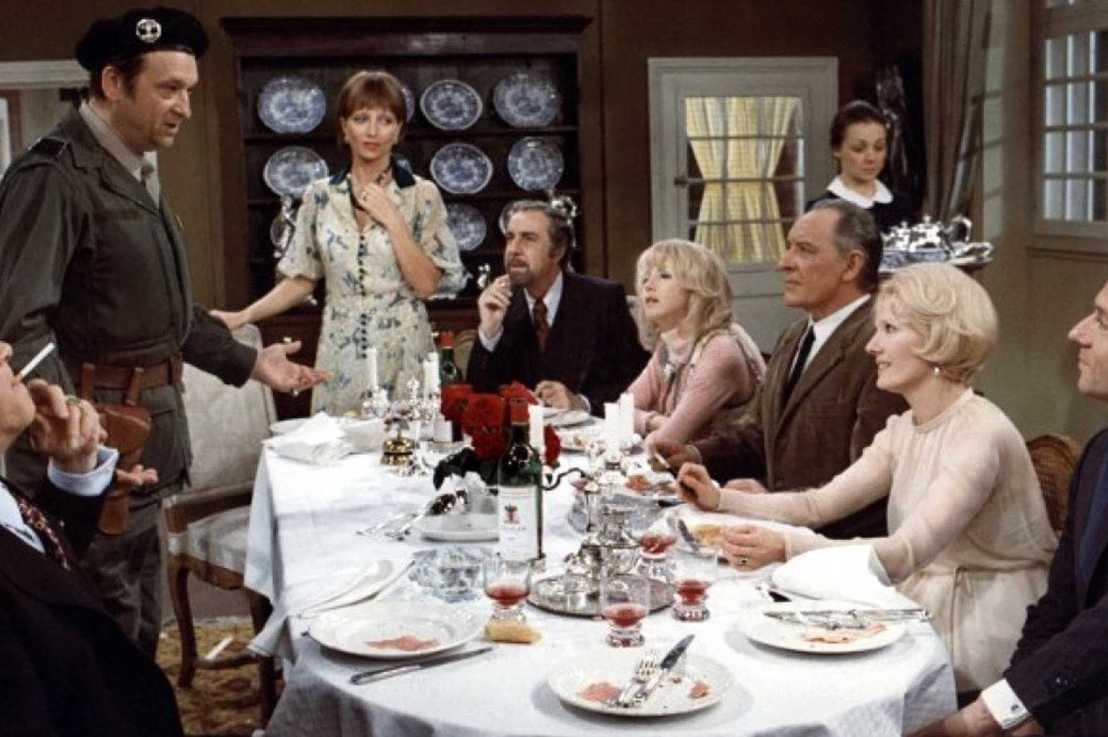
The curtain parts and we are introduced to a magic world of imagination and drama play out before us on stage. But how can the actors immerse themselves in this, while such huge drama plays out in the real world? It’s the dilemma of the Montmatre theatrical troupe in Paris during the Occupation. With war raging with all its complex moral choices and dangers, how can you focus on the art within – or for the matter process the complex emotional entanglements in an already claustrophobic profession only made worse by the perils of Nazi occupied Paris and their pet collaborators.

Truffaut’s film is called The Last Metro as it recalls a period during the occupation when hundreds of thousands of people crowded into Parisian theatres to stay warm at night before rushing to catch the final train home before the curfew. The Montmatre Theatre is run by Marion Steiner (Catherine Deneuve), a film star turned stage actor struggling to keep the theatre going in the absence of her Jewish theatre-director husband Lucas (Heinz Bennett) – who, unknown to anyone else, is hiding in the theatre basement. Bernard Granger (Gérard Depardieu) is her new lead actor for their latest Ibsenesque production: but his presence will stir powerful feelings in the embattled Marion.

Truffaut’s film steers away from his other more famous work – the sort of vibrancy and romance of earlier films like Jules et Jim or The Four Hundred Blows or the inventive playfulness of Day for Night. Instead, The Last Metro is a more formal, classically shot, interior piece that revels in small moments and touches of emotional investment so subtle and glancing some viewers might not even notice them. It’s also – surprisingly for cinema’s leading cineaste – a film deeply in love with the mechanics and backstage drama of theatre, subtly contrasting the claustrophobia and intensity of such spaces with the oppressive world-shrinking and glance-over-your-shoulder anxiety of occupation.

It’s also a superb character study, with a quite brilliantly complex and compelling performance from Catherine Deneuve. A starlet with a double burden – not only keeping the theatre alive, but also her husband – Marion is a woman pulled so hard and so overwhelmingly in so many competing directions, it’s taking every ounce of her control to hold herself together. Facing financial pressures, censorship pressures and the constant fear that a single wrong word could see her theatre ripped away from her and her husband discovered and killed, she maintains a cold and professional veneer that rarely, if ever, slips.

So little does it, that Bernard – played with an effortlessly underplayed grace and charm by Gérard Depardieu that belies his Rugby-player bellicosity – is, for the most part, blissfully unaware of Marion’s growing, unspoken, attraction to him. A love she seems hardly able to acknowledge herself, not least because it feels like an even deeper betrayal now of her husband, hiding out in the basement and utterly dependent on her, than it would in peacetime.

Lucas – a wonderful Heinz Bennent – is himself teetering on the edge of falling apart from the sustained effects of acute cabin pressure. Never leaving the damp theatre basement – apart from surreptitious trips to the stage late at night – Lucas’ attitude to his enforced imprisonment moves from a larkish boys-own adventure into an increasingly bitter resentment. Directing the show from afar – a drain has been hooked up so he can listen in on rehearsals – he provides late night feedback to Marion to accompany the detailed handwritten notes he ‘left behind’. Mapping out future productions on his cell walls, Lucas avoids the suspicion that the constant pressure of concealing him has tipped their relationship from romance to one of anxiety-ridden responsibility.

It contrasts with the play the company is performing: where, in typical Ibsen style, the lead is a tragedy tinged woman, suffering memory loss, who falls into a deep but mutually painful love with her son’s tutor. Even from the rehearsals, Marion begins to feel some bleed of this dramatic relationship into her real world: she asks Bernard to not touch her during rehearsals, as if worried that this moment of physicality could lead to consequences she cannot control.

Touch is a key sensation in The Last Metro – as if moments of physical contact and intimacy carry even more weight in a world where no one can be trusted and every word must be carefully watched. Bernard uses a repeated routine of palm reading to try and seduce (with mixed results) a series of women (most notably lesbian production designer Arlette – strikingly played by Andréa Ferréol – who, in a lovely flourish, he describes as longing for “like a warm croissant”). Physical contact – the light caress of a face and hands – is crucial to the film. Truffaut’s camera zooms in on moments where hands take each other, either in longing, understanding or – in a sequence where Marion journeys to Gestapo headquarters – with the threat of imminent violence.

Closing distance is particularly important in a period where all contact must be carefully judged and measured. Collaborators, like powerful press chief Daxiat, will use the smallest slight or word out of place to justify pulling your world down. Played with a hissable vileness by Jean-Louis Richard, Daxiat is a pompous, self-important, two-faced and vindictive man parroting Nazi slogans and revelling in his power to destroy careers. But, small man though he is, the Occupation gives him power – when Bernard angrily confronts him for his rudeness about Marion in his review, its Bernard who Marion is furious at for his recklessness.

It’s because hanging over every moment – and constantly playing in Deneuve’s expressive eyes – is the dread of what will be found if her theatre is searched or how doomed her husband will be if it is closed. Finding a play that passes muster with the censors and pleases the masses is literally a matter of life and death.

Truffaut echoes the claustrophobia of occupied France in his shooting of the cramped backstage world – and he and Suzanne Schiffman in their screenplay add to this with their look at backstage politics and affections between actors, stagehands and crew. Even the outside is shot like an interior – and Truffaut never bothers to make the locations feel like anything other than sets, as if the whole world is a claustrophobic theatre – with extensive use of mid and close-up shots and subtle tracking shots that maintain the theatrical effect.

It does make for a film that can feel stately and a little too heritage – and its undeniable you miss some of the energy of Truffaut’s other films (you can’t imagine his idol Hitchcock ever shooting a frame of The Last Metro­ – or what he would have made of its luxurious pace). Its subtle energy is sometimes so easy-to-miss that it can be easy for parts of the film to pass you by. Plotlines – such as Bernard’s support of the resistance – sit awkwardly at times within the framework, and the film’s boiling down of Vichy France to (essentially) one bad apple told a story about Occupation that was very pleasing to the French self-image (no wonder if was a massive hit).

The Last Metro is at times a little too in-love with its cultural heritage and the quiet professional skill of its making. But, it counter-balances this with some involving and subtle work from all its principles and director: and in Denevue (especially) and Depardieu it had two of the greatest actors in French cinema at the top of their game. Multi-layered and demanding, it’s a film that makes you work from its newsreel opening to its fourth-wall, metatextual ending, riffing on romantic entanglements, art, burdens and the oppression of occupation. Perhaps too knowingly prestige to be great, but still an essential watch.

Top Gun: Maverick (2022)

Top Gun: Maverick (2022)

You’ll feel the need for speed in this triumphant better-than-the-original sequel

Director: Joseph Kosinski

Cast: Tom Cruise (Captain Pete “Maverick” Mitchell), Miles Teller (Lt Bradley “Rooster” Bradshaw), Jennifer Connelly (Penny Benjamin), Jon Hamm (Vice Admiral Beau “Cyclone” Simpson), Glen Powell (Lt Jack “Hangman” Seresin), Monica Barbaro (Lt Natasha “Phoenix” Trace), Lewis Pullman (Lt Robert “Bob” Floyd), Ed Harris (Rear Admiral Chester “Hammer” Cain), Val Kilmer (Admiral Tom “Iceman” Kazansky), Charles Parnell (Rear Admiral Solomon “Warlock” Bates)

It’s been 38 years since Tom Cruise last felt that need for speed. Top Gun is a sentimental favourite, partially because its the ultimate brash, loud, Reaganite 1980s Hollywood film. But (whisper it), it’s not actually – and never has been – a very good film. Perhaps though that’s all for the best: Top Gun has so little of merit in it, it offers an almost completely blank canvas for a sequel. It helps the team create Top Gun: Maverick, a film so insanely entertaining it should carry some sort of health warning.

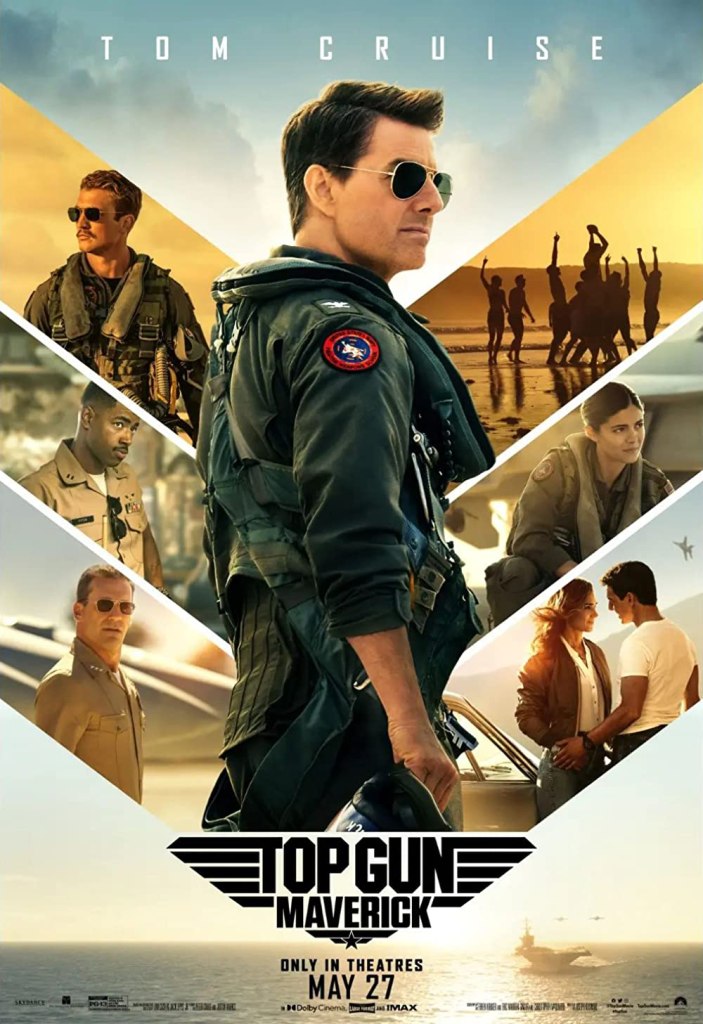
Decades have passed and Pete “Maverick” Mitchell (Tom Cruise) is pretty much the greatest pilot in the world, deliriously skilled at everything in the cockpit and pretty much hopeless at anything outside it. He’s distrusted by all his superiors except his old wingman Iceman (Val Kilmer). Thanks to Iceman he is selected to train the next generation of pilots at TOP GUN for an impossible mission to take out a nuclear plant in a “hostile nation” (clearly Iran). One of that next generation is Bradley “Rooster” Bradshaw (Miles Teller), son of Maverick’s late best friend “Goose”, the guilt for whose death Maverick never recovered from. After Maverick tried to prevent Rooster from following in his father’s footsteps – not able to stand the thought of being responsible for the deaths of both his surrogate brother and son – can the two overcome their problems?

Top Gun: Maverick was delayed from hitting cinema screens for nearly two years thanks to Covid. Cruise resisted all opportunities to sell it to streaming: a decision vindicated by the supreme big-screen entertainment it offers. This one you really do need to see on the big screen. Its aerial footage is so stunning it makes the original look like tricycles on training wheels. Combined with that though, and unlike the original, Maverick has a thoughtful and engaging emotional storyline, with characters who change through well thought out emotional arcs.

But I’ll be honest, the staggering, visceral enjoyment of these plane sequences is probably the principal thing you’ll immediately take out of the film. Working from a training programme partly devised by Cruise, the film shows the impact of punishing G-forces by… actually putting the actors in planes travelling at these huge speeds. Unlike Top Gun, with its blue-screen cockpit shots, there is no doubt Cruise, Teller et al are actually in the planes as they bank at impossible speeds. Partially shot by the actors themselves – sitting the camera up in their cockpits – the film literally shows you the scenery flashing by. It’s Cruise’s mantra of doing it for real taken to a stunning degree. It’s the simple old-fashioned joy of knowing almost everything you see is real.

The mission this time is far more detailed: effectively it’s a steal from Star Wars, our heroes required to fly through a narrow ravine (below the radars of surface to air missiles) before climbing a steep bank and using their laser targeting to successfully blast a small access port. (It won’t surprise you to hear that on the final mission one character has to “use the force” when their targeting laser fails). Maverick’s training programme pushes the pilots to the limit, while his extraordinary flight skills quickly win their awe (in the first session he challenges all the pilots to take him down in a simulated dogfight, with everyone shot down doing 200 press-ups – Maverick does zero, everyone else 200+). Kosinski shoots with a cool clarity that makes you feel you are being punched by G-force.

But Top Gun: Maverick would just be a showcase for cool planes without its emotional heart. And it’s the intelligent and involving story that makes it work. Cruise is at his charismatic movie star best as Maverick – he knows exactly how to win the audience over – but his cocksure confidence is underpinned by a growing sense of fear at the risks he puts others through. Unlike the navy, his main concern is to get the pilots back alive and his guilt-ridden treasured memory of Goose is the hallmark of a man who never managed to put ends before means. He’ll take any risk himself, but balks at taking chances with anyone else’s life.

It’s what drives his troubled relationship with Rooster. The two have a surrogate father-son relationship, fractured by Maverick’s attempt to keep Rooster safe out of the cockpit. (Pleasingly, Rooster does not hold Maverick responsible for his father’s death, only for derailing his career.) The relationship between these two – Cruise’s Maverick quietly desperate to rebuild some sort of familial connection and Rooster shouldering resentment for a father-figure he clearly still loves – is handled with a great deal of tact and honesty. It really works to carry a wallop.

It’s also part of how Maverick’s place in the world, and decisions in life, are being questioned. As made clear in a prologue where he thumbs his nose at a sceptical Admiral (no one scowls like Ed Harris) by taking a prototype jet out for test run, he’s both a relic and a guy who doesn’t know when to stop (he wrecks the jet by pushing past the target of 10 Mach by trying to go another .2 faster). Unlike Iceman – a touching cameo from a very ill Val Kilmer that leaves a lump in the throat – Maverick never fit in within a military organisation (“They’re called orders Maverick”). He’s lonely, his past failed relationship with Jennifer Connelly’s Penny just one of many roads-not-taken. (There is no mention of Kelly McGillis’ character.) In a world of digital drones, he’s an analogue pilot flying by instinct: his days are numbered.

This is proper, meaty, thematic stuff explored in a series of involving personal arcs which by the end not only leaves you gripped because of the aerial drama, but also genuinely concerned about the characters. I can’t say that about the original. Top Gun: Maverick is not only a thematically and emotionally richer story – carried with super-star charisma by Cruise – than the original, it’s also more exciting and more punch-the-air feelgood. This sort of thing really is what the big screen is for.

The Discreet Charm of the Bourgeoisie (1972)

The Discreet Charm of the Bourgeoisie (1972)

Dinner dates never happen in Buñuel’s playfully witty, absurdist satire

Director: Luis Buñuel

Cast: Fernando Rey (Rafael Acosta), Paul Frankeur (François Thévenot), Delphine Seyrig (Simone Thévenot), Bulle Ogier (Florence Thévenot), Stéphane Audran (Alice Sénéchal), Jean-Pierre Cassel (Henri Sénéchal), Julien Bertheau (Monsignor Dufour), Milena Vukotic (Inès), Claude Piéplu (The Colonel), Maria Gabriella Maione (Terrorist), Muni (Peasant), Michel Piccoli (Interior Minister), Pierre Maguelon (Brigadier Sanglant), François Maistre (Commissaire Delecluze)

Six very bourgeoisie Parisian friends try to have dinner; but circumstances keep getting in the way. Circumstances that become increasingly bizarre, surreal and absurdist and half of which may or may not be dreams (or even dreams within dreams). This is the jumping off point for Buñuel’s engagingly light and witty, but also profound, intriguing and defying interpretation. The Discreet Charms of the Bourgeoisie. In the hands of a dogmatic artist, it would be heavy-handed trash: in Buñuel’s it maintains a playfulness making it entertainingly (if at times infuriatingly) mystifyingly unreadable.

Those six friends are a shallow, self-obsessed bunch who talk the snobby talk of class and culture, but their knowledge is skin-deep and their lifestyle funded by cocaine smuggling. That cocaine is trafficked into Paris in the diplomatic bag of Ambassador Rafel Acosta (Fernando Rey), representative of the (fictional) Latin American Republic of Miranda. It’s sold by his friends, François Thévenot (Paul Frankeur) and Henri Sénéchal (Jean-Pierre Cassel), and its these three – along with their wives Alice Sénéchal (Stéphane Audran) and Simeone Thévenot (Delphine Seyrig) and Simone’s sister Florence (Bulle Ogier) – who keep trying to have dinner.

Those dinners are constantly interrupted by a series of increasingly outlandish events, that the guests accept with the sort of blasé insouciance this sort of people pride themselves on. Things escalate on successive nights from Henri forgetting he has invited their guests to dinner, to a dead landlord of a country inn, the Sénéchals slipping out to the garden to have sex, a Bishop (Julien Bertheau) who longs to be a gardener, a café that runs out of tea and coffee, an army division on military manoeuvres, their arrest by the police… That’s not mentioning the onslaught of dreams as the characters imagine yet more meals interrupted by murder, terrorism and even their dining room turning into a stage in front of an audience where they don’t know their lines.

If that sounds pretentious… I suppose that’s fair. But the point is that Buñuel never hectors or overplays his hand. Instead, the film is an absurdist light comedy, a whimsical road-to-nowhere (like the country road we frequently see the six characters walking down in cutaways) that, in its structure, aims to expose the shallowness and hypocrisy of an entire class. Our ‘heroes’ are overwhelmingly concerned, time and again, with their own basest needs – mostly food and sex – and are more than happen to call in a chauffeur so they can mock him for not knowing how to drink a cocktail correctly (doesn’t stop him enjoying the cocktail way more than any of them do). They encapsulate a whole class, concerned only with tucking in and making sure everyone can see they are unshaken by events, no matter how outlandish they seem.

Into this mix, Buñuel throws an astonishing and inventive selection of dreams that increasingly dominate the second half of the film. (And in fact, makes you wonder after a while whether everything we’ve seen in the film is some sort of crazy, unlikely fever dream). Buñuel used to joke he slipped in dreams when he needed to expand a films runtime, but it’s wonderful here how often the dreams comment subtly on the characters and their perceptions of each other: and how little they seem to learn or be aware of the implications of this.

The most surreal dream of all is Henri’s fantasy of entering a house – a house with walls painted with false perspective images of other rooms – where the group encounter rubber food and then a curtain sweeps aside to find an expectant audience watching them. Despite the prompts for their lines, the characters flee in sweaty nervous panic. Do they realise the meaning of this exposure of their sense of unbelonging? You can be sure they don’t.

In fact, in a stroke of daring by Buñuel, they are so remote from understanding this that Henri is in fact having a dream inside François’ dream: as if François can only vicariously confront his fear of unbelonging by dreaming about another man dreaming about it. That worry of mockery and isolation in society is then continued in François’ dream, as he dreams of Henri waking from a dream and arriving at a party at a Colonel’s house where the mockery and ignorance of Rafael’s home country becomes so overbearing, Rafael shoots the Colonel dead. As if, again, François can only imagine being pushed to extremes vicariously.

Perhaps he’s simply jealous of Rafael, who is blatantly conducting an affair with his wife. Rafael’s a man of class, obsessed with greed and lust. He’s also a sneaky coward and a creepy opportunist, not above trying to seduce a female terrorist who tries to kill him (and then having her shipped off by his security when she turns him down). Doesn’t make him different from anyone else: the Thévenots are arrogant upper-classes scorning those below them, Florence a shallow, selfish drunk, the Sénéchals full of hedonistic entitlement.

Buñuel’s film gently deconstructs the code and hypocrisies of this society – with its unspoken rules, strange hierarchies and lusts – not with lectures but with the tools of farcical theatre. The film repeatedly feels like a left-field Cowardian drawing room comedy, mixed with Moliere farce. A cheating wife is interrupted by the sudden arrival of her husband, a Bishop borrows the clothes of a gardener so no one believes he is a priest, sudden entrances and exits constantly interrupt scenes. This is all told with a light, revealing wit: with subtle playing and controlled, skilful direction, we learn about these characters depth (or lack of them) while enjoying the frequently bizarre circumstances.

It doesn’t just touch them either. When the characters are arrested, they are released on the orders of the Interior Minister for reasons that we are don’t hear three times because of traffic noise. Outside noise jumps in at several key points to undermine key information and interrupt events – the characters indifference to this as constant as their general ambivalent uncaring coolness to everything else. It’s also funny.

There are also darker dreams, told by soldiers and police officers, haunted by mauled bodies and murderous consequences. A soldier tells a dream of a ghostly encounter of his dead mother, urging him to avenge the death of his parents (its left unclear if this is a false memory or a dream). A policeman sees a vision of his dead body releasing his prisoners – after an interrogation of a young man that sees a piano transformed into an electric chair.

Not to mention a world where suave class and violence sit side by side. Rafael’s readiness to use guns – shooting a wind-up toy of a terrorist from across the street, his apartment littered with hidden firearms – is matched by the Bishop who mixes forgiveness and revenge for the man who killed his father. Much of this taking place in the classiest and most well-observed of environments.

There are excellent peformances across the board, but this is a triumph from Buñuel. It’s a film that defies easy interpretation and understanding, that wraps its insight up in intriguing, unreadable and bizarre dreams and events which strike a magical balance between both possible and impossible. It explores a whole class and its hypocrisies, but does so in a series of light, even playful, scenes which feel more like light-comedy. It’s the work of an inventive master working with the medium in a unique and unrepeatable way, who can be both surrealist enigma and master of farce. You could watch it multiple times, drawing different shades and interpretations every time.

Top Gun (1986)

Top Gun (1986)

Cruise flies into movie super-stardom in this fun-but-much-worse-than-you-remember flying film

Director: Tony Scott

Cast: Tom Cruise (Lt Pete “Maverick” Mitchell), Kelly McGillis (Charlie Blackwood), Val Kilmer (Lt Tom “Iceman” Kazansky), Anthony Edwards (Lt Nick “Goose” Bradshaw), Tom Skerritt (CDR Mike “Viper” Mitchell), Michael Ironside (LCDR Rick “Jester” Heatherly), John Stockwell (Lt Bill “Cougar” Cortell), Barry Tubb (Lt Leonard ”Wolfman” Wolfe), Rick Rossovich (Lt Ron “Slider” Kerner), Tim Robbins (Lt Sam “Merlin” Wells), James Tolkan (Cdr Tom “Stinger” Jardian), Meg Ryan (Carole Bradshaw)

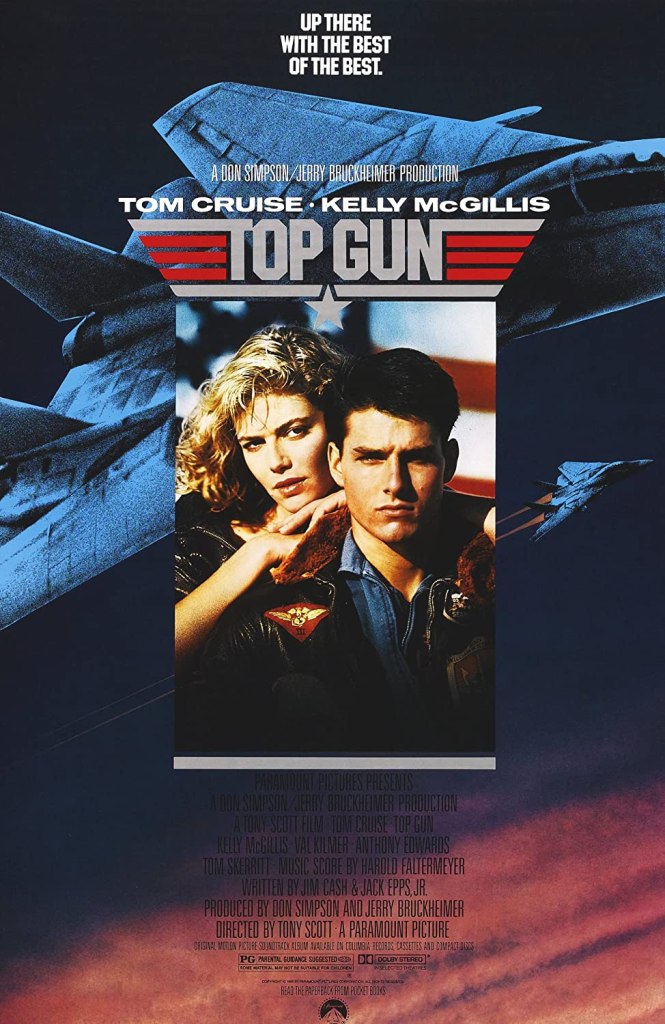
“I feel the need: the need for speed!” Those words lit up mid-80s cinema screens with one of the biggest hits of the decade. Top Gun is still one of Cruise’s most iconic films, its blasting rock-and-roll soundtrack, beautifully backlit romance and cocksure go-getting self-confidence making it one of the definitive Reaganite 80s films ever made. Its legacy is so all-consuming, it’s always a surprise when you sit down to watch it what a fundamentally average it is.

Its plot, such as it is, can be summarised thus: Tom Cruise cockily flies planes and romances Kelly McGillis until Goose dies. Then he flies planes with the same level of skill but slightly more humility and commits to Kelly McGillis. It all takes place in TOPGUN, the navy’s dog-fight training school for elite pilots. Cruise is Pete “Maverick” Mitchell, super-confident best-of-the-best. Kelly McGillis is the astrophysicist and civilian instructor on the course whose heart melts for Tom’s boyish charms. Anthony Edwards is the doomed Goose (he might as well have a skull and crossbones hanging over him – he’s even got a loving wife and son back home). Val Kilmer is Cruise’s rival pilot, super-professional “Iceman”. The training is fast-paced, macho and culminates in a clash with a (conveniently unnamed) country that definitely isn’t the USSR.

There are three things undeniably great about Top Gun. The songs from Kenny Loggins and Berlin are top notch, full of soft-rock sing-along bombast. Scott shoots the hell out of scenes and the sun-kissed beauty framing the various airplanes and aircraft carriers is superb. With its fetishistic worship of the manly glory of the navy and its equipment, the film had full military backing, a huge boon it exploited for wonderfully executed scenes of dogfights and faster-than-sound planes (Scott even paid $25k to get an aircraft carrier to change course – writing a cheque there and then – so a sunset shot would look better). And of course there is Tom Cruise.

Top Gun is the foundation stone in the Church of Tom Cruise, defining a persona Cruise would effectively riff on for huge chunks of his career. Pete Mitchell is so cocksure he’s even called Maverick. But, as well as being arrogant and over-confident, he’s preternaturally skilled, boyishly enthusiastic, strangely vulnerable, yearns for affection, wins people over with a grin and goes through a crisis of confidence that sands down his negative qualities while never touching his courage, skill and likeability. Cruise cemented his eye-catching charisma and relatability: audiences wanted to be him or be with him. A huge chunk of its massive success is down almost exclusively to what a star Cruise is and how easily he makes this hackneyed stuff work.

The rest is a bizarre mix of half-formed plot ideas, weakly sketched characters and a plot so shallow it almost doesn’t deserve the name. Top Gun is all about a cool guy flying planes accompanied by some excellent songs. There is no depth to its character exploration. There is a dim suggestion Maverick needs to mature (with Goose as the sacrificial lamb to prompt that development) but it’s barely explored. It has no shrewdness in its look at the risk-taking intensity of flying or the type of personalities it might attract. The training is awash with familiar tropes: hotshots, grizzled trainers (two of them in Skerritt and Ironside!) mixing growls with behind-his-back grins at Maverick’s pluck. His rival is the anthesis of Maverick, but (gosh darn it!) he eventually learns to respect him.

The central romance seems thrown in because a film like this needs it – it’s very much An Officer and a Gentlemen in the skies. Maverick’s true emotional love story is with Goose – this surrogate brother/uncle providing Maverick’s only friendship and the vicarious family this Cruise archetype character secretly longs for. But gosh darnit, it’s Hollywood so gotta have a beautiful woman for our hero to manfully seduce. Poor Kelly McGillis looks rather uncomfortable in her ill-shaped and poorly developed character, while her love scenes with Cruise are acted with a slobbering over-intensity that suggests both of them are trying too hard (he constantly kisses her tongue first, which is gross). Perhaps they wanted to really go for it in the hope viewers would overlook the obvious homoerotic tensions of most of the film.

Oh those tensions! Top Gun drips with gleaming, tanned half-naked men squaring up to each other in dressing rooms – and that’s not even mentioning the infamous volleyball sequence (where only Edwards, bless him, wears a t-shirt). Characters forever utter variations on “I’ll nail his ass” lines. Iceman and Maverick take part in a homoerotic-tension fuelled rivalry that culminates in an explosive dog-fight climax and a loving embrace on the deck of an aircraft carrier.

It’s hard to tell how much all this was a joke, and how much Scott, Bruckheimer and Simpson just didn’t notice in the middle of all their glistening, back-lit, fast-paced shooting of military muscle (in every sense) how gay it might look. Maybe they thought people wouldn’t notice either amongst all the military machinery (this must be Michael Bay’s favourite ever film). Top Gun’s aerial footage is super impressive (though it is funny noticing now that famous daredevil Cruise clearly does all his cockpit shots in front of a green screen) even if the whole film feels like an MTV video to promote its knock-out songs.

Top Gun is still fun, even if that’s mostly mocking the nonsense and emptiness it’s built upon. Nothing much really happens, its plot so flimsy it barely stands up against the Mach-9 force of its planes. But it’s got Cruise at his blockbuster best – and when you’ve got that you don’t really need anything else. It’s poorly written, junkfood trash all framed in a fetishistic beauty – but it’s sort of goofy, stupid, empty fun.

The Poseidon Adventure (1972)

The Poseidon Adventure (1972)

Our heroes climb up an overturned cruise liner in the film that launched a thousand enjoyable disaster movie clichés

Director: Ronald Neame (Irwin Allen)

Cast: Gene Hackman (Reverend Frank Scott), Ernest Borgnine (Mike Rogo), Red Buttons (James Martin), Shelley Winters (Belle Rosen), Jack Albertson (Manny Rosen), Carol Lynley (Nonnie Parry), Roddy McDowell (Acres), Stella Stevens (Linda Rogo), Pamela Sue Martin (Susan Shelby), Arthur O’Connell (Chaplain John), Eric Shea (Robin Shelby), Leslie Nielsen (Captain Harrison)

New Year’s Eve on the biggest cruise liner in the world and the money men have ordered “Full steam ahead!” into a storm – after all, it would be terrible publicity to arrive late at harbour. Needless to say, it’s a terrible idea, as the Poseidon is hit by a tsunami and flipped upside down. Everyone at the top of the ship is killed, leaving only the party goers in the promenade room alive. Who is going to make it out from the one of the most famous disaster films of all time?

Produced by the Master of Disaster himself Irwin Allen – he personally staked half the budget and made a fortune – the ship’s passenger log is a host of Oscar-winning stars, each balancing soapy plotlines. Gene Hackman is the maverick priest, body pumping with muscular Christianity, who believes God helps those who help themselves. Ernest Borgnine is a grumpy police chief, on a long-delayed holiday with his ex-call girl wife Stella Stevens. Shelley Winters and Jack Albertson are a retired couple heading to Israel to see their grandson for the first time. Red Buttons is an unlucky-in-love fitness freak, Roddy McDowell a plucky steward. Pamela Sue Martin and Eric Shea are two (unbearable) kids travelling to join their parents while Carol Lynley is the ship’s terrified singer.

The Poseidon Adventure cemented the tropes you’d come to know and love in disaster films. The maverick leader, the grouchy contrarian, a plucky pensioner with a vital skill, adorably brave kids, a self-sacrificing nice guy… They’re all in here, the actors playing these cardboard cut-out characters with gusto as they climb up the endurance obstacle course set of an upside-down cruise liner.

Allen’s film takes a while to get going: a quarter of the run time is dedicated to setting up the various character dilemmas. Is a member of the crew a former client of Stevens’ Linda? Will Gene Hackman find new purpose in his faith? Will Red Buttons find love? Neame shoots these opening exchanges with the uninspired professionalism the exposition-filled dialogue demands (there are several variations on “What am I doing on this ship? Let me tell you…” lines). But what makes the best of these films work is when the soapy shallowness manages to make the characters endearing. It’s what happens here: the cast could do these scenes standing on their head, but gosh darn it we end up hoping the Rosens will live to see their grandson at the foot of Mount Sinai.

The film of course “starts” proper with that wave hitting. At which point, Allen (and Neame) knows exactly what works. He makes the stakes clear, the target simple (climb up, get out) and taps into common fears of falling, drowning etc. He knows how to make us thrill at the stunts – that tipping ballroom, with various stuntmen plunging downwards – and throw in the odd moment to remind us how tragic it all is (like Red Buttons sadly laying his jacket across some poor soul).

It also understands that we need to feel smarter than the crowd of extras caught up in the drama. When Gene Hackman earnestly tells everyone their only chance of survival is up, we want to feel that we’d be smart enough to go with him, rather than join the sheeple listening to the literally-out-of-his-depth purser (“What you’re suggesting is suicide!”). Allen knows we need to feel smarter so much he later throws in another group led by a confident-but-wrong authority figure (the ship’s doctor) blithely walking downhill to the flooded aft, ignoring Hackman’s cries that they are striding to a watery grave.

No, we’d definitely be with the plucky stars. After all Hackman can’t be wrong! (Gene Hackman’s priest, for all his bluster, is remarkably unpersuasive – he even only just holds onto authority in the group). The stunt work and production design as the battered stars climb up the overturned ship to the hull are remarkable – not for nothing did this scoop nine Oscar nominations – and while the film is undeniably slightly cheesy, it’s played with an absolute earnest seriousness by the cast (Hackman, to his eternal credit, acts as if his life depended on it – which considering it’s clearly a pay cheque role other actors would have coasted through is admirable).

The set pieces are superb. As the cast is whittled down, the deaths carry a certain weight – again conveyed by the honesty of the grief from those left behind. Shelley Winters bagged the best role – and the most iconic scene – as an overweight old lady with a Chekhov’s skill, performing (at great cost) an act of heroism no one else could manage. (She landed an Oscar nomination, largely for this stand-up-and-cheer moment with a sting). Most get a moment to shine – although Carol Lynley’s pathetic, panicking singer (she can’t swim or climb or hold her breath or run…) who spends her time shrieking tries your patience no end.

The film is so much about the experience of seeing this group of people overcome death-defying climbs, swims and flames that when the survivors stagger into the sunlight, the film abruptly ends. It’s all about the ride, with most of the plot points established earlier settled by someone dying on the way up. But it’s entertaining and lands just the right side of involving. The characters may be artificial, but we still care about them.

The Poseidon Adventure was a massive hit and still the best maritime disaster film made (certainly much better than its belated, lame, remake). Allen cements a formula where swiftly sketched characters, played by recognisable actors, go through endurance tests in front of us via terrifying set-ups and death-defying stunts. It’s grand, old-fashioned entertainment, perhaps taking itself a little too seriously, but giving us lots to gasp and cheer at.

WaterWorld (1995)

WaterWorld (1995)

As the waters rise, the world sinks down – and WaterWorld went down with it in the very average mega-budget sci-fi

Director: Kevin Reynolds

Cast: Kevin Costner (The Mariner), Dennis Hopper (The Deacon), Jeanne Tripplehorn (Helen), Tina Marjorino (Enola), Michael Jeter (Old Gregor), Gerard Murphy (The Nord), RD Call (Atoll Enforcer), Kim Coates (Drifter #2), John Fleck (Smoker Doctor), Robert Joy (Smoker Ledger), Jack Black (Smoker Pilot), Zakes Mokae (Priam)

In 1995 they called it “Kevin’s Gate”. Costner cashed all – and I pretty much mean all – his superstar chips to make Waterworld, a sort of water-logged Mad Max crossed with a Leone Western, starring himself as a nameless mutant with gills behind his ears. You needed to be the Biggest Box Office Star in the World to get that one up and running. But then Costner’s last “all-in” bet had been Dances with Wolves – and that won seven Oscars. What could do wrong?

Waterworld has been pretty much defined – then and now – as the (at the time) most expensive film ever made, which went on to be a damp squip, a box-office stinker. It’s not that: it’s a solid, entertaining-enough B-movie with some neat Dystopian ideas. In 2500, the world has been completely flooded after the polar ice caps melted. Mankind exists in rusted boats and small floating camps on the ocean. Dry land is a myth and actual soil is worth a fortune. Costner’s Mariner ends up protecting Helen (Jeanne Tripplehorn) and her adopted daughter Enola (Tina Marjorino), as Enola has (handily tattooed on her back) a map to the last piece of dryland left in the world. But Enola’s map is hunted by the Smokers, and their maniacal leader The Deacon (Dennis Hopper), who want to claim Dry Land for themselves.

Waterworld largely lives on as a hugely successful stunt show at Universal Studios (I’ve seen it and it is amazing – all the exciting bits of the film, done in about fifteen minutes) that has been running non-stop since 1995 (other shows, based on more successful movies, have long since disappeared). It focuses on all the stuff that’s good about the film. Kevin Reynolds’ can shoot the heck out of action scenes and professional stuntmen really know their business. The best sequences in Waterworld involve pounding action – jet ski chases, the Mariner’s transforming trimaran, jet skis flying over walls and diving under water, stunning boat chases – and they are great.

They also exploit, in their rusted crap-sack props, one of the film’s other triumphs, it’s detailed world-building design. Sure, it owes a heavy-debt to the cobbled-together semi-steam-punk of Mad Max, with rust that covers everything, adapted wet-suits and rags (augmented with various pieces of fishing equipment and light fabrics) that characters wear, the bashed out colours contrasted with the glorious blue of the water. But the film never looks anything less than an outre mad-house. Throw in James Newton Howard’s very effective score – romantic and mournful when required, but then pounding with heroic action beat – and you’ve got elements of a decent movie.

But decent is all it ever is. Because, aside from the novelty of being set on water (a hugely time- and money-consuming expense, that partly explained why the film went zillions of dollars over budget), there isn’t anything that new about the story. A gruff outsider is roped into grudgingly protecting a mother and a daughter, but then his heart-is-melted – just as the villains turn up to snatch the daughter away. The villains are cartoonish monsters (Dennis Hopper seems to be on a mission to counter the water-logged misery of most of the rest of the performers by acting as much as possible), who are either ingenious or incompetent depending on the requirements of the script. The quest for the land-of-plenty is so familiar, you could scribble it down on a postcard in advance.

The question is, why did Costner want to make this? It’s not even a part that showcases him very well. I’ve always found Costner’s mega-stardom a bit of a mystery: once he graduated from more young, naïve parts (such as in The Untouchables), action films more and more exposed his slightly blank sulkiness as an actor. Perhaps due to the pressure of Waterworld (he worked non-stop, six day weeks, mostly on or in the water, for six months), perhaps due to his inability to find any warmth in a role he clearly sees as an Eastwoodish man-with-no-name, he largely comes across as sullen and hard-to-engage with. This is double hard for a film set in a dystopian future, where we really need to understand and relate to the hero in order to get into the world.

The rest of the cast follow his lead – no one, apart from maybe Hopper, really looks like they want to be there and most of them give of a sense of suffering under the constant threat of accidentally drowning. Tripplehorn isn’t helped by playing a dull, functionary, by-the-numbers character although Marjorino does get to have a bit of spark as plucky Enola. None of the characters step out of the formulaic surroundings of the film they have been trapped in.

You can have a bit of fun with the film’s wonky science. The Mariner is introduced pissing into a bucket and converting the piss into drinking water: cool character establishing moment, but since the salt quota of piss is higher than sea water, why not just convert the sea water? (I’m staggered at the idea that, in 500 years, no one has discovered a way to make sea water drinkable). If the polar ice caps melted, they would not flood the world as much as this. Would an oil tanker and fleet of jet skis really have managed to eek out the 235k cubic metres of oil it carried for 500 years? (How do they even convert it into petrol?) Where are all the fish? Why is the Mariner the only one with deep sea diving equipment – especially when he has flipping gills and doesn’t need it?

But hey, it’s only a movie. Waterworld eventually became profitable: but not till after it had cemented itself in the public perception as an uber-stinker. Really, it’s not that different from Avatar in its functional story, it just made a worse job of selling its big-budget effects as must-see moments. Costner’s alleged megalomania on set didn’t help (re-writing scenes, ordering special effects cover his receding hairline, falling out with Reynolds during editing – so much so Reynolds walked out), but really Waterworld isn’t terrible, just a huge lump of soggy okay. But that Universal Stunt Show? It’s the bee’s knees.

Zorba the Greek (1964)

Zorba the Greek (1964)

The popular image of Greece gets largely defined, for better and worse, in this flawed, over-long, tonally confused film

Director: Michael Cacoyannis

Cast: Anthony Quinn (Alexis Zorba), Alan Bates (Basil), Irene Papas (The Widow), Lila Kedrova (Madame Hortense), Sotiris Moustakas (Mimithos), Anna Kyriakou (Soul), Eleni Anousaki (Lola), George Voyagjis (Pavlo), Takis Emmanuel (Manolakas), George Foundas (Mavrandoni)

Basil (Alan Bates) a Greek-British writer, returns to Crete to try and make a success of his late father’s lignite mine and rediscover his roots. Joining him is Zorba (Anthony Quinn), a gregarious peasant, who believes in confronting the world’s pain with a defiant joie de vivre. In the Cretan village, their friendship grows and they become involved (with unhappy results) with two women: Basil with the Widow (Irene Papas), lusted after by half the village, and Zorba with ageing French former-courtesan Madame Hortense (Lila Kedrova).

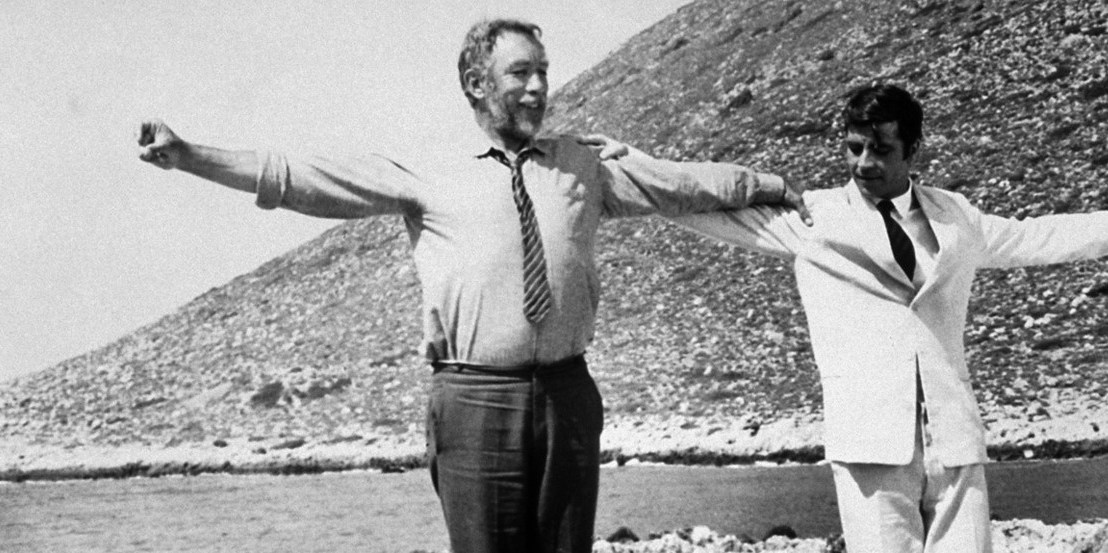
Zorba the Greek was based on a best-seller by Nikos Kazantzakis, directed by Greece’s leading film director Michael Cacoyannis. Matched with Anthony Quinn’s exuberant performance, it pretty much cemented in people’s mind what “being Greek” means. So much so the actual film has been slightly air-brushed in the cultural memory. Think about it and you picture Quinn dancing on luscious Greek beaches. There is a lot of that: but it’s married up with a darker, more critical view of Greek culture that sits awkwardly with the picture-postcard tourist-attracting lens used for Crete.

Nominally it’s a familiar structure: the stuffed-shirt, emotionally reserved, timid and sheltered, is encouraged into a bit of carpe diem by a larger-than-life maverick. As is often the case, he needs t build the courage for romance and work on an impossible dream. Zorba the Greek however inverts this structure: the main lessons Zorba teaches is that you have to meet disaster just as you would meet triumph: with a shrug, a smile and a dance. It’s decently explored – and it lands largely due to Quinn’s barnstorming iconic performance – but also slight message. And Cacoyannis never quite marries it up successfully with the tragic consequences in the film.

Shocking and cruel events happen to the two female characters. The Widow – never named in the film – is loathed and loved by the men of the village, because (how dare she!) she’s not interested in sleeping with them. Played with an imperial distance by Irene Papas, she is condemned as a slut the second she does make a choice about who she welcomes into her bed (Basil, once). Madame Hortense (played with a grandstanding vulnerability by Oscar-winner Lila Kedrova) enters into a one-sided relationship with Zorba. Led to believe (by Basil) Zorba intends marriage, she becomes a joke in the village. Both women’s plot end with shocking, even savage, results.

A braver and more challenging film than Zorba the Greek would have used these events to counter-balance the light comedy and romance of the Greek vistas and Mikis Theodorakis’ brilliantly evocative score, by more clearly commenting on the darkness and prejudice at the heart of the village. In this Cretan backwater, lynching is perfectly legit, women are public property and even our heroes powerlessly accept what happens as the way of things. A smarter film would have pointed out that, in a savage land, Zorba’s ideology is essential or had Basil question his romantic view of Greece once confronted with the barbarism it’s capable of. Neither happens. Instead, the fate of these women is just another of life’s curveballs – the very thing that Zorba has been trying to train Basil to look past. They become learning points on our heroes journey.

Cacoyannis’ rambling script makes a decent fist at trying to capture the mix of Greek life and philosophical reflection that filled Kazantzakis novel. But he fails to bring events into focus or make any real point other than a series of picaresque anecdotes. Tonally the film shifts widely: a boat journey to Crete is played as slapstick, the eventual fate of the Widow chilling horror, the relationship between Zorba and Basil a buddy-movie tinged with the homoerotic. It’s a film that tries to cover everything and ends up not quite exploring any of its successfully.

It’s most interesting note today is homoeroticism. Helped by the casting of Bates, an actor whose screen presence was always sexually fluid (and who is excellent here), it’s hard not to think that Basil and Zorba are most interested in each other. Basil gets jealous, moody and lonely when Zorba leaves for weeks to fetch “supplies” from a local town. Zorba is equally fascinated by the twitchy and shy Basil, coming alive with him in a way completely different to the gruffness he shows to the other characters. Most happy in each other’s companies, there’s a fascinating homoerotic pull here that the film skirts around (not least by making sure both men have female love interests).

Basil is a curious character, strangely undefined and ineffective who listens a lot to Zorba’s messages but seems to learn very little. When the village turns on the Widow he watches like a lost boy. Zorba effectively takes over his home. The one time he tries to live life to the full, it leads to disaster. He remains strangely unchanged by events, which I am sure is not the films intention.

This misbalance is because the film really should be about him and the changes made to his life. It isn’t, because Quinn dominates the screen. A Latin American who most people thought was Italian or Arabic, here becomes the definitive screen Greek. Quinn’s performance here is his signature, grand, performative but also sensitive and strangely noble under the surface, a bon vivant just the right side of ham. He makes Zorba magnetic and hugely engaging and it says a lot that the Greeks effectively claimed him as one of their own. But he does seize control of the film and tips its balance away from its central figure.

Zorba the Greek is a crowd-pleaser, show-casing Greece, that skims on making a more profound impact on how beauty and savagery can live so close together. It doesn’t want to sacrifice the romance too much by staring too hard at the brutality. Tonally, Cacoyannis doesn’t successfully balance the film and its overextended runtime stretches its slight message. But, with its marvellous iconic score and wonderful performances, it’s got its moments.

Jurassic World: Dominion (2022)

Jurassic World: Dominion (2022)

It squeezes so many characters in, it totally forgets to make room for plot, invention or anything new at all

Director: Colin Trevorrow

Cast: Chris Pratt (Owen Grady), Bryce Dallas Howard (Claire Dearing), Laura Dern (Dr Ellie Sattler), Jeff Goldblum (Dr Ian Malcolm), Sam Neill (Dr Alan Grant), Isabella Sermon (Maisie Lockwood), DeWanda Wise (Kayla Watts), Mamoudou Athie (Ramsay Cole), Campbell Scott (Dr Lewis Dodgson), BD Wong (Dr Henry Wu), Omar Sy (Barry Sembène), Justice Smith (Franklin Webb), Daniella Pineda (Dr Zia Rodriguez)

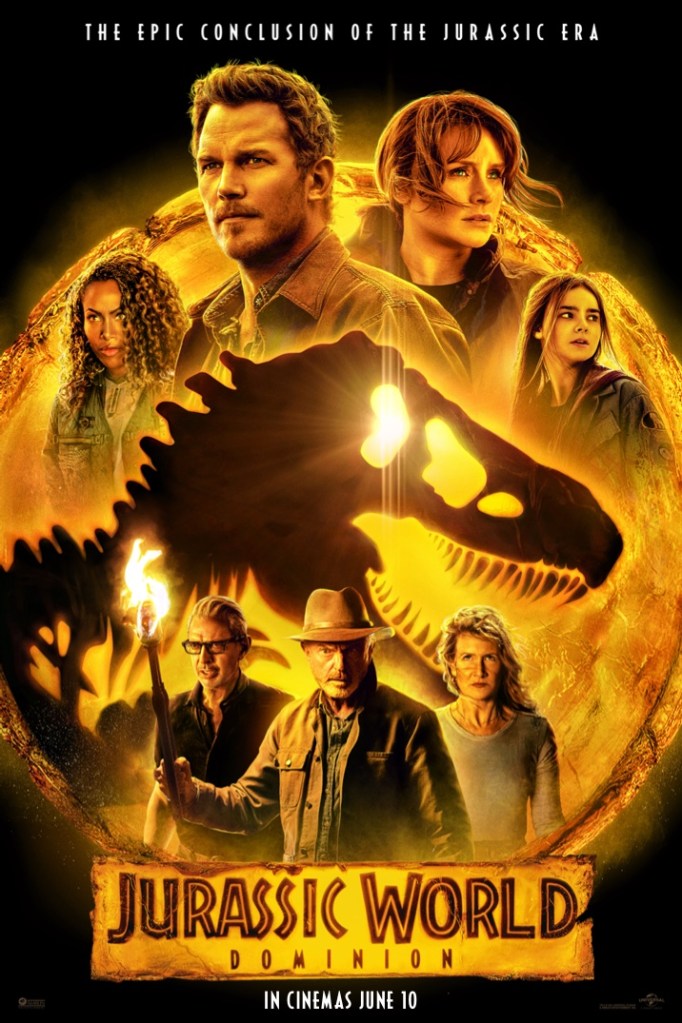
As I was leaving the cinema, I heard a twelve-year old talking about which of the dinosaurs in the movie was their favourite. Then they said: “it was a bit samey though wasn’t it?”. I’m not sure I can beat that precocious nail-on-the-head judgement. Nothing happens in Jurassic World: Dominion you’ve not seen many times before in the franchise. Underneath the flash, Jurassic World: Dominion is a tired retread, crowbarring in references from better films left, right and centre, all to hide that there are no new ideas here.

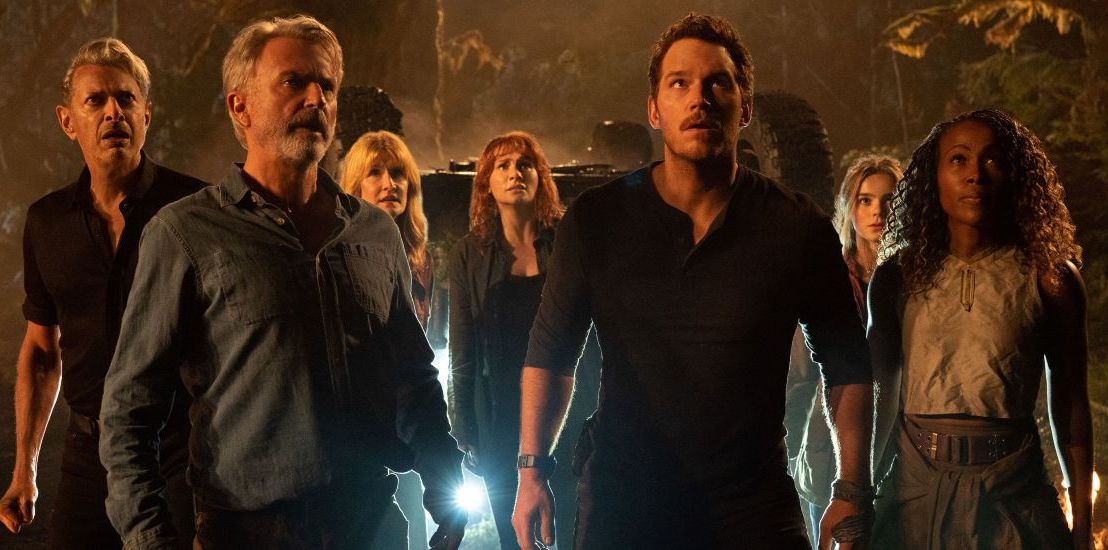
Owen Grady (Chris Pratt) and Claire Dearing (Bryce Dallas Howard) have dedicated their lives to protecting human clone Maisie Lockwood (Isabella Sermon) from the grasp of corporations. When she’s kidnapped by foot-soldiers of clearly-evil-corp BioSyn (they even have “Sin” in their name), they pull out all the stops to get her back from BioSyn’sNorthern Italy research compound. Meanwhile, Drs Ellie Sattler (Laura Dern) and Alan Grant (Sam Neill) are investigating genetically modified locusts which are destroying every crop in the Southern USA – except those using BioSyn seed. All roads lead to that Italian compound – where Dr Ian Malcolm (Jeff Goldblum) is employed as a contrarian philosopher – to try and stop BioSyn’s nefarious schemes.

You know what struck me when I wrote that summary? I didn’t use the word dinosaurs. The prehistoric beasties are pretty superfluous. Sure, they down a plane and our heroes dodge them in various places (BioSyn’s compound doubles as a dinosaur refuge). But, seeing as the last film ended with dinosaurs escaping into the wild and becoming part of our everyday lives… this sequel takes the concept nowhere. Bar an opening news report montage (showing, among other things, pterodactyls – yes, I know they’re not dinosaurs – stealing a bride’s bouquet) and a Star Wars style under-ground market where dino-pets and fighting-pit beasties are traded on the black market, Dominion finds almost nothing to do with this.

In fact, Dominion struggles to find anything to do at all. It’s an extremely loosely plotted mess of a film that feels like two vaguely (very, very vaguely) connected plotlines rammed together in a way designed to shoe-horn in as many legacy characters and call-backs as possible. Laura Dern gets the bulkiest (and only plot essential) role among the returning trio. Sam Neill feels dragged along for the ride (Grant serves literally no narrative purpose) and, while Goldblum gets most of the best lines (delivered in his trademark, improvisational oddness), Malcolm merely splits the role of “inside man” with another character so cursorily introduced and vaguely motivated he feels like he was only there because covid made some of the other actors unavailable for parts of the filming.

The legacy framing is so lazy that all three of these characters essentially wear the same costumes as they did in Jurassic Park. Everyone in universe seems to know who they are (Which I find highly unlikely) and the film bends over backwards to introduce clumsy links between them and the characters from the first two Jurassic World films in ways that feel forced.

The film slowly consumes itself with references back to previous films, linked by sequences that feel ripped out from other hits. Owen and Claire’s opening plotline plays out like an odd Mission: Impossible spy thriller, including a Bourne-ish roof top chase (with Owen haring away on his trademark motorbike from killer velociraptors – the film’s only exciting set-piece, and even that is ripped from other films) with Claire transformed into a semi-adept free-runner. The dino-market is essentially Mos Eisley, by way of that Kamono Dragon fighting pit from Skyfall. By the end a host of famous set-pieces from Jurassic Park and Jurassic World are effectively re-staged or openly referenced and props (such as Nedry’s shaving foam can) are reverentially pulled out.

Any interesting ideas raised are swiftly crushed. Maisie’s concern that, as a clone, she isn’t a real person is fascinating, but the film forgets it in seconds. The villain (a neat Steve Jobs parody from Campbell Scott) spends a fortune capturing Maisie – but when she escapes (thanks to a key to her cage being helpfully left on a table in front of her) he makes literally no attempt at all to recapture her. It’s stressed to us that the whole world is looking for Maisie and that if she is found it will be dangerous for her – by the end of the film she’s doing a press conference and no one gives a damn. The moral implications of a ‘mother’ cloning herself and curing her clone child of a life-ending disease in the womb, is thrown on the table and then ignored.

The whole film revolves around ridiculous coincidences. Villains run away and then helpfully return to ludicrously unsafe places, purely because the plot requires it. Stupid decisions are made right, left and centre. Plot armour ruthlessly protects the expected. The dinosaurs are just irrelevant set dressing: we are told no less than three times the Gigantasaurus is “the biggest hunter there’s ever been”: solely to build up an inevitable face-off with the T-Rex. The deadly locust plot is such a naked attempt to motivate shoe-horning in legacy characters, the film doesn’t even bother to explain what it’s about or what the baddies plan was.

At one point Laura Dern says something to the effect of “we shouldn’t live in the past, we should aim for the future”. Imagine if this slightly lumpen rehash of its better predecessors had done the same.

La Dolce Vita (1960)

La Dolce Vita (1960)

Ennui, emptiness and envy in Fellini’s coolly satirical portrait of a hedonistic Rome

Director: Federico Fellini

Cast: Marcello Mastroianni (Marcello Rubini), Anita Ekberg (Sylvia Rank), Anouk Aimée (Maddalena), Yvonne Furneaux (Emma), Walter Santesso (Paparazzo), Lex Barker (Robert), Magali Noël (as Fanny), Alain Cuny (Steiner), Nadia Gray (Nadia), Jacques Sernas (Divo), Laura Betti (Laura), Valeria Ciangottini (Paola)

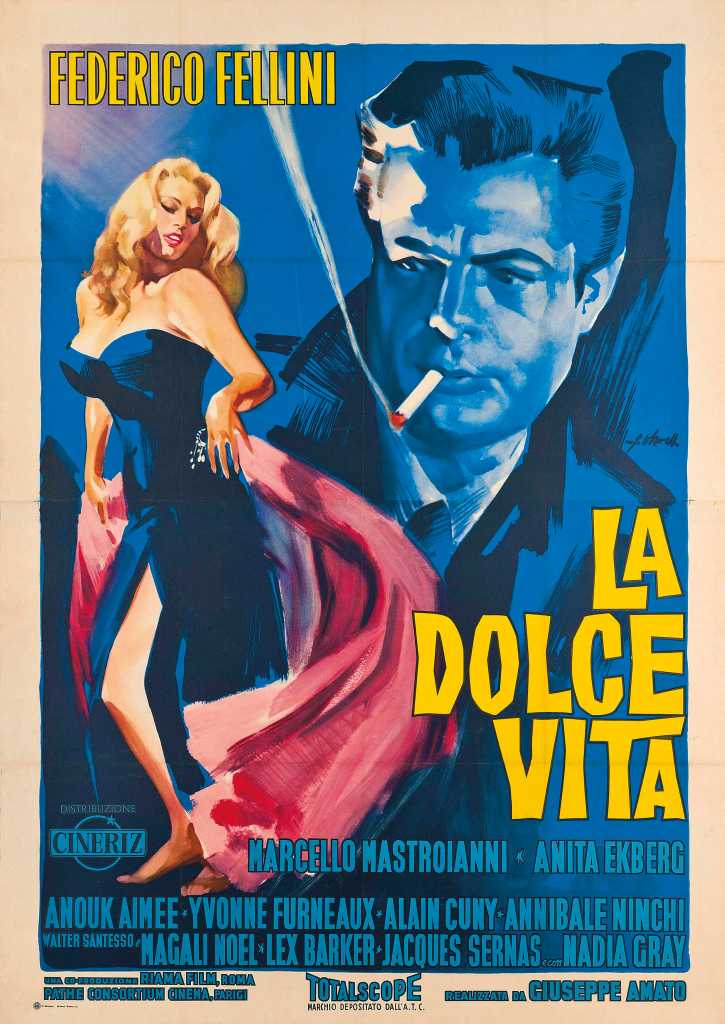
It’s one of those films as much about everything as it is nothing. Fellini’s omnibus of interconnected shaggy-dog short stories follows Marcello (Marcello Mastroianni), a would-be novelist writing a gossip column, as he mixes with the great and the good in Rome. Casual affairs, Hollywood stars, nightclubs, drunken parties and would-be orgies – Rome is a whirligig of the shallow and meaningless, all wrapped up in a classic façade. La Dolce Vita was gloriously popular and hugely influential – it seemed to be casting a cynical eye over the 60s, even as they were kicking off – and remains possibly Fellini’s best-known and most popular film.

At its heart is Marcello. Gloriously played with a shallow suaveness smothering deep self-loathing by Mastroianni, Marcello has enough insight to understand the world he occupies is an empty and meaningless one – but not enough drive, discipline or determination to do anything about it. For all his dreams of becoming a novelist and artist, he’s all too easily seduced by the glamour and the hedonistic pleasures of Roman high society. When presented with choices, he invariably takes the easier one. He has enough soul to wish he had more of one.

Fellini lays out his journey through Roman night-life with a painterly skill – the frame is often full of fresco like images, taking in multiple characters at once, all preoccupied and busy with their own needs and wants. Fellini uses a superb mix of shifting POV shots to constantly place us in and then immediately out of Marcello’s shoes. Characters stare direct at the camera – are they looking at us or Marcello? Marcello arrives at Steiner’s house in a POV shot – but then Marcello walks into the shot and suddenly we are witnesses again. It’s a film where we are always reminded we are on the outside, like participants in a dream.

La Dolce Vita is long, but also spry. This is a city of people universally keeping ennui at bay, by a never-ending parade of parties and sex. While we might see and hear life-changing statements – declarations of love, resolutions to build a better life, the severing of personal relationships – these lead to nothing. Fundamental relationships and patterns of living remain unchanged across the (unspecified) period of time the film covers. Words come and go as easily as parties.

La Dolce Vita is constructed from seven short stories, each exploring a different aspect of Marcello’s empty, hedonistic existence. They cover: a sexual encounter with society heiress Maddalena (Anouk Aimée) in the water-logged flat of a prostitute; a night Marcelo spends trailing Hollywood star Sylvia (Anita Ekberg) across Rome; Marcello and other reporters reporting on a ‘miracle’ just outside Rome; a visit from Marcello’s estranged father; a party at an aristocrat’ faded palazzo with a failed encounter with Maddelena; finally a beach-house party where a jaded Marcello fails to initiate an orgy and collapses into something akin to a mini-breakdown, which he shrugs off. Intercut with this is Marcello’s friendship with Steiner (Alain Cury), the intellectual family-man Marcello aspires to be, who transpires to be as depressed and trapped as Marcello – with disastrous consequences.

These encounters are open to multiple interpretations: and part of the film’s strength is Fellini’s lightness in telling the story. Interpretation and significance isn’t forced upon the film: it’s long because it is stressing the repetition of its cycles. Each ‘short story’ is told with a pace and skill, frequently shifting in tone. Fellini will make you hoot with laughter or swoon with sensuality in one scene – and then shift uncomfortably in your chair the next.

Part of La Dolca Vita’s aim is to move Rome on from the tourist-centred attractiveness it had been given by a host of films from Roman Holiday on. It’s essentially marrying films like that with Rome Open City and Bicycle Thieves. It’s Fellini’s attempt to compare (and perhaps question) Rome’s classical cultural background with the hedonistic casualness of today’s world. It opens with a statue of Jesus being helicoptered across the outskirts of Rome towards St Peter’s. The statue is a glorious reminder of the power of Rome’s religious significance: but what follows it? A second helicopter, flown by Marcello and Paparazzo (his photographer), smirking and trying to pick up the numbers of the sun-bathing women waving up at them. New and old Rome intermixed, and not favourably.

The film is full of moments like this. The party at the aristocrat’s palazzo takes place in gorgeous grounds and rooms lined with busts of Roman emperors. At first it feels like a comparison between class and classlessness. But then you remember that ancient Rome was a hub of orgies and violence, and everything at this party would probably look pretty tame to the emperors watching.

The false miracle suggests affectations of Christianity are stage-managed and willingly performed at the dictates of the media. A priest may denounce the whole thing, but it doesn’t stop an army of people desperate to grab a piece of the action – from the media to ostentatious worshippers – descending on a small field, all of them willingly playing their expected parts. It only takes a downpour of rain to turn this devotional crowd into a panicked mass of people, blindly charging from shelter to shelter – with tragic results for one pilgrim. TV journalists stage-manage the crowd, give lines to members it and turn the whole place into a film-set.

As the film progresses, elements of classical Roman architecture slowly drift out, replaced by the harsher modernist buildings and blocks of flat (we’re subtly reminded, particularly with the arrival of Marcello’s father, mysteriously ‘absent’ for much of Marcello’s childhood, that a lot of these buildings were fascist in origin). Ironically the most famous sequence buries itself in classical architecture: Marcello’s night vainly following Sylvia (an alluringly playful Anita Ekberg, channelling Marilyn Monroe) in the hope of a sexual encounter (she remains wilfully oblivious of this). It culminates in Ekberg’s famous Trevi fountain dance – inspiring millions of would-be imitators.

Marcello’s life takes place in nightclubs and drunken parties, where social and sexual morals are modern and casual. Marcello’s most significant relationships are with Maddalena (Aimée is wonderfully archly cold), who toys with a profession of love only to instantly sleep with another man, and fiancée Emma (a clingy and desperate Yvonne Furnaux), who Marcello dutifully maintains a relationship with. Marcello wishes to see himself as a glamourous playboy, but he’s frequently on the backhand – picked up when wanted by Maddalena, played with by Anita and oppressed by Emma. We see him as often ignored and rejected as we do conquering.

Who Marcello really wants to be is the intellectual Steiner, who seems to have it all: fame, respect, and a loving family. It’s after meeting Steiner that we see Marcello doing the only novel writing in the film. Sitting in a beach café, he chats with a young waitress, Paola, who he compares to an angel in Umbrian paintings. Paola is also the last face we see in the film: waving to Marcello from a distance after his depressingly bitter failed orgy, as the guests gather around a leviathan washed up on a beach. She seems to be trying to ask him how the writing is going: he fails to understand and walks away. Paola feels like a moment of hope – a representative of a more fulfilled life of creativity and meaning – rejected by Marcello in favour of wallowing in pleasure. Fellini ends the film with Paola staring directly at the camera: is she making the offer of meaning to us instead?

It’s open to interpretation – as is the whole film. A big part of Fellini’s skill is not to hammer his points home, but let events speak for themselves, leaving the film open to interpretation. I see it as a sort of Dantesque parallel. Nearly every story is framed with characters moving up and down stairs – like the circular descent of Dante through Hell. Its structure seems to be broken into Cantos. And each step sees Marcello descend a little bit further – culminating in Mastroianni impotently ripping up pillows and spraying feathers over a laughing woman.

Is modern Rome hell? That might be a little bit too far. But it’s definitely a soulless purgatory. Paparazzo doesn’t care who he hurts to get the photo – a dead child or a grieving mother are all game. Marcello’s uses what talents he has for empty and cynical purposes and to seduce women. Everyone thinks only about their next hedonistic encounter. It’s a wonder that Fellini makes this as strangely enjoyable as it is: but then he is a master. And La Dolce Vita remains his most popular and most recognised work.

The Lost Daughter (2021)

The Lost Daughter (2021)

Motherhood, loss and guilt are at the heart of this over-extended drama that doesn’t feel like it focuses on the right things

Director: Maggie Gyllenhaal

Cast: Olivia Colman (Leda Caruso), Jessie Buckley (Young Leda Caruso), Dakota Johnson (Nina), Ed Harris (Lyle), Dagmara Dominczyk (Callie), Paul Mescal (Will), Peter Sarsgaard (Professor Hardy), Jack Farthing (Joe), Oliver Jackson-Cohen (Toni), Athena Martin (Elena), Robyn Elwell (Bianca), Ellie Blake (Martha)

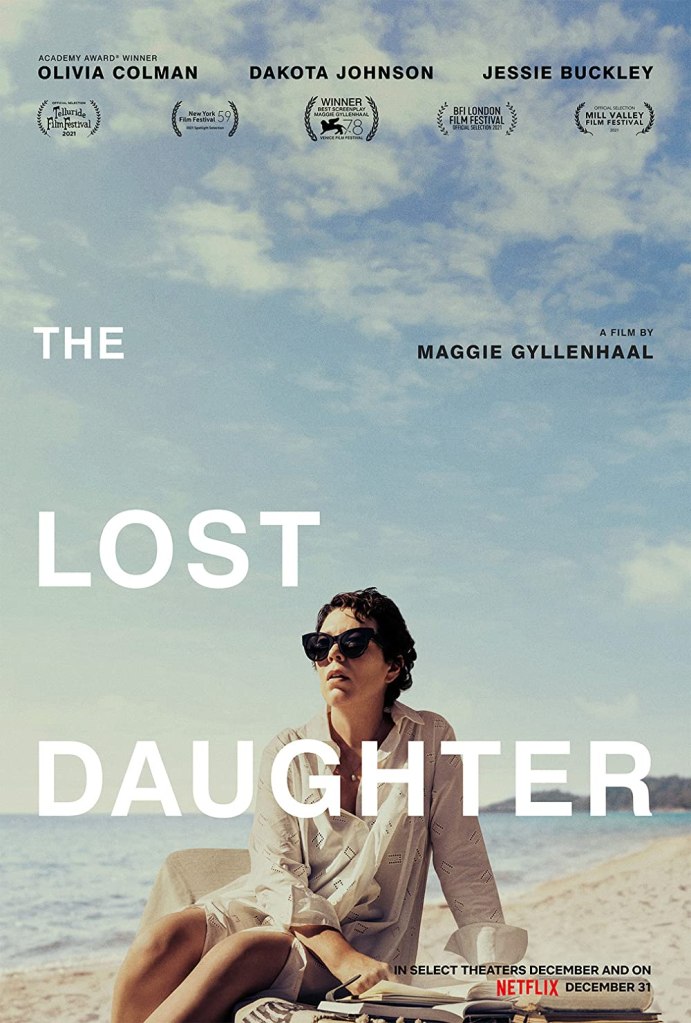
Leda (Olivia Colman), a professor of Italian Literature, holidays in Greece. That holiday is disturbed by the arrival of a noisy, aggressive family from Queens. A member of that family, unhappy young mother Nina (Dakota Johnson) loses her daughter on a beach. Leda finds her, but it triggers her own unhappy memories of motherhood (Jessie Buckley plays the young Leda). She impulsively steals the child’s beloved doll, as her paranoia and mournful reflections grow.

Maggie Gyllenhaal’s directorial debut is a confident, assured piece of film-making, but I found it a cold and slightly unsatisfying film. There is a fascinating subject here, that the film fails to really tackle. One of life’s great unspoken expectations is that everyone should find being a parent – especially being a mother – hugely rewarding. This film studies a woman who didn’t, but still wants to reassure us of the love and happiness found in the bond with a child, no matter your mistakes as a parent. In doing so, it marginally ducks an important societal issue and reaches conclusions that feel predictable, for all the ambiguity the film ends with.

Colman’s expressive face and ability to suggest acres of unhappiness in a forced smile or gallons of frustration with a single intake of breath, are used to maximum effect. Leda is a woman comfortable with her own company, forced and uncomfortable in conversation, her eyes flicking away as if looking for an exit. She seems confused about how to respond to the quiet advances of handyman Lyle (a gentle Ed Harris) and increasingly resents the intrusion into her holiday of outsiders.

How much is this slightly misanthropic, isolated view of the world her natural personality, and how much has it grown from her choices in the past? Flashbacks reveal her struggles as a mother – and the strained relationship with her children today – and it’s clear Leda is a bubble of confused emotions, uncertain about what she thinks and feels.

That past, to me, is the real area of interest, rather than the distant, cold woman those choices have created. I’d argue a stronger film – and one that would feel like it was really making a unique point – would have focused on the younger Leda. Expertly played by an Oscar-nominated Jessie Buckley –brittle and growing in claustrophobic depression – she loves her two girls. But, most of the time, finds them overbearing, all-consuming and more than a little irritating. She’ll laugh at their jokes and be terrified when one of them gets lost, while still resenting their domineering impact on her life.

When she wants to work, they demand attention. When her daughter has a small cut on her finger, Leda is repeatedly asked to kiss it better like a broken record. Leda gives her other daughter her own childhood doll – and then throws it out of a window in fit of hurt fury when the daughter covers it in crayon and says she doesn’t like it. The kids get in the way of everything: be it work (she retreats behind headphones to focus), holidays, sex with her husband or even masturbation.

Her feelings go beyond post-natal depression. She is someone who genuinely loves her children, but can’t bear the idea of mothering them. This is the meat of the film, far more than the present-day narrative. Gyllenhaal sensitively tackles a rarely discussed topic: what can we do if we find parenthood was a mistake? Knuckle down or give up and run away? A film exploring this could have been compelling: but it only takes up a quarter of an over-extended film.

Instead, by focusing on the maladjusted present-day Leda, the film presents her motherhood difficulties as the root cause of her problems. Leda sees a potential kindred spirit in young mother Nina – a brash and exhausted Dakota Fanning – who seems equally frustrated by parenting. But Leda is so insular and self-obsessed, is she only seeing what she wants to see? If she thinks Nina is also failing as a mother, will that make her feel better about her own failures?

The Lost Daughter is an unreliable narrator film – and Gyllenhaal expertly suggests much of what we see are Leda’s perceptions rather than necessarily the truth. The menace from Nina’s loud and aggressive extended family is a constant presence: but is it real, or just Lena’s paranoia. Does the family really cover every tree with a missing poster for a child’s lost doll, or does it just that way to Leda? Does Nina share Leda’s own resentments with motherhood, or does Leda just want her to?

It’s a subtle ambiguity that continues until the film’s close. It leaves many questions unanswered and open to the viewers interpretation. Different viewers will take very different messages from it. But for me, the film wasn’t quite interesting enough – and shied away from exploring the questions of guilt and doubt about parenthood. At no point does Leda even voice the possibility that she regrets having kids – for all that she surely does – which feels odd. For me the film takes a long time to not quite say as much as I feel it could have done.