The Love Parade (1929)

The Love Parade (1929)

Lubitsch’s delightful early musical mixes European class with battle of the sexes wit

Director: Ernst Lubitsch

Cast: Maurice Chevalier (Count Alfred Renard), Jeanette MacDonald (Queen Louise), Lupino Lane (Jacques), Lillian Roth (Lulu), Eugene Pallette (Minister of War), E. H. Calvert (Sylvanian Ambassador), Edgar Norton (Master of Ceremonies), Lionel Belmore (Prime Minister)

Sylvania has a problem with its ambassador in France, Count Alfred Renard (Maurice Chevalier) – largely that he can’t stop seducing anything that moves. Renard is swiftly recalled to his homeland… where he catches the eye of young, unmarried Queen Louise (Jeannette MacDonald), who immediately thinks he might just be the man for her. Renard isn’t averse to marrying into royalty, but quickly finds himself chafing in the role of Prince Consort – this isn’t what marriage is supposed to be, the husband doesn’t defer to the wife!

It is of course a slightly dated version of marriage, and The Love Parade could be seen as a very light piece of Taming of the Shrew style-action where a strong woman learns true happiness is sometimes being the number two. The fact that, despite this, The Love Parade is still charming, funny and more than a little delightful is partly due to the immensely skilled lightness it’s directed with by Lubitsch (it feels the whole sweet confection could burst with a puff of strong air) and the huge charm of its leads. After all, Chevalier is no-one’s idea of a Petruchio while Jeanette MacDonald manages to marry up romantic longing with being tired of the restrictive burdens of royalty, that you believe she’d be happy to share some of it out.

The Love Parade was one of the first ‘talkie-musicals’ and it’s assembled with such pace and energy by Lubitsch (at his very best) that you almost don’t notice how often its forced into static framing for the talking and singing (where couples frequently sit or stand opposite each other to burst into song). That’s because the film is awash with swift intercutting between different locations, often to great comic effect (not least cut aways to groups of ministers, soldiers and servants excitedly commentating from afar on the lead’s first date) and intermixes this with smoothly seductive tracking shots through grand Habsburg-style sets.

Lubitsch’s film however uses sound effectively and remarkably imaginatively. Establishing his confidence with it, it opens with us overhearing dialogue from outside a room before the door swings open and we see Chevalier stride in and confide directly to us. Sound is used throughout for comic effect, either in its presence – the highly suggestive ‘400 cannon blasts’ on the night of the wedding or the frustrated drumming of fingers on the table our happy couple do in the midst of an early row to the awkwardly quiet march-past of a group of soldiers trying not to disturb the Queen’s lie-in. It’s creative stuff, considering the limitations at the time, and bounces effectively off the parade of songs and witty dialogue that powers the film.

Alongside that, the film works because it’s such an interesting exploration of social mores and etiquette, not to mention a cheeky love of the sort of content code-Hollywood would have frowned on. The opening sequence revolves around the aftermath of one of Renard’s seductions, with shots of garters, a furious husband and a gun loaded with blanks (Renard seems to have a drawer full of these for just such occasions). Queen Louise is all too clearly extremely aroused by reading about Renard’s string of sexual conquests, immediately running into her dressing room to apply more make-up before she can greet him with all the coquetteish excitement she can manage.

There is innuendo throughout (“My wife has told me everything” one of Renard’s embassy colleagues announces, something Chevalier’s face tells us is clearly far from true). Lubitsch uses visual humour expertly, cutting away from Renard’s delighted recounting of one of his adventures to a shot outside where we watch Renard and his audience talking silently from the other side a window, with only their reactions clueing us into how saucy the story is. All this is classic ‘Lubitsch touch’, which thrives among these gorgeously grand sets and costumes.

The Love Parade manages to keep us feel sympathy for the likeable Renard, not least once he discovers, as Prince Consort, his duties seem to be little more than shaving (because, as he tells Louisa, he looks terrible in a beard) and resting (so he’s nice and ready for the evening’s fun later). He literally can’t eat a meal until Louisa arrives to eat first (he’s reduced to plucking an apple from a tree to beat off hunger) and finds his advice is instantly handed back to him unread by one of Louisa’s many court flunkies. Sure, you’d prefer that The Love Parade works its way into a proper partnership at the end, rather than just reversing the power to it’s ‘natural order’ but at least you can see Renard has a point.

It’s interesting that a more natural partnership actually seems to develop between their two servants, Renard’s valet Jacques (Lupino Lane) and Louisa’s maid Lulu (Lilian Roth). Lane and Roth give energetically charming comedic performances – and also by far the most engaging and dynamic musical sequences. The highlight here is ‘Let’s be common’, that brilliantly uses Lupino’s double-jointed flexibility to stage the film’s most overtly entertaining number. There is a Mozartian quality to these super-smart servants – so much so, I’d willingly trade a few of Chevalier or MacDonald’s numbers for a couple more with them.

Which isn’t to disparage the stars. Chevalier’s comic skills are exploited to the max here – his reaction to ‘being shot’ in the opening sequence is a masterclass in timing – and it’s a part he invests with huge charm which sells Renard’s slight selfishness as genuine likeability. Lubitsch throws in a few neat gags about his accent, not least Renard’s penchant to voice his frustrations in perfect, rat-a-tat French to bewildered Sylvanians (he’s deeply disappointed when he asks one obstructive courtier if he speaks French only to get the answer ‘yes’). Jeannette MacDonald is also skilfully sharp and just frustrating enough, from her opening scene where she is poutishly pissed that he flunkies can’t find her a consort (despite the fact she doesn’t want one) to her mix of romanticism and imperiousness that runs through the film.

The Love Parade is an engaging and funny Lubitsch masterclass in his particular genre of sophisticated comedy, as well as a strikingly original use of sound and music. It remains engaging and entertaining today.

2010: The Year We Make Contact (1984)

2010: The Year We Make Contact (1984)

Solid film stuck forever in the shadow of a landmark, all answers and no mystery

Director: Peter Hyams

Cast: Roy Scheider (Heywood Floyd), John Lithgow (Walter Curnow), Helen Mirren (Tanya Kirbuk), Bob Balaban (R. Chandra), Keir Dullea (Dave Bowman), Douglas Rain (HAL 9000), Madolyn Smith (Caroline Floyd), Elya Baskin (Maxim Brailovsky), Dana Elcar (Dimitri Moisevitch), James McEachin (Victor Milson), Natasha Shneider (Irina Yakunina), Vladimir Skomarovsky (Yuri Svetlanov), Mary Jo Deschanel (Betty Fernandez)

2010 is the film 2001 could have been. That’s not really a good thing. Where 2001 was invested with such Kubrickian mystique that is has engrossed and bewitched audiences for decades with its elliptical structure, haunting experience and complete lack of definitive answers or interpretations, 2010 is nothing but answers. Don’t get me wrong: 2001 is a tough act to follow, but 2010 is rather like rolling from looking at a Picasso to checking out a talented local artist. One produces art that you would happily hang on your wall – the other produces a priceless, timeless masterpiece that will define its medium for decades to come.

That’s the thankless position for Peter Hyam’s solid and basically perfectly fine science-fiction. In many ways, without the existence of 2001, it’s sensitive exploration of the deep-space thawing of Cold War relations, exploration of how more unites mankind than divides us, musing on questions of what makes us human would have felt quite hefty. 2010 however, forever in comparison to 2001, feels more like a well-made info dump, dedicated to answering any questions left over. As Heywood Floyd (Roy Schieder) takes part in a joint US-USSR mission to find the Discovery we are painstakingly told what the monoliths are, what they were for, what happened to Dave, why HAL went loco, where mankind goes next… all wrapped around a world teetering on nuclear war and the creation of a new star raced through in under two hours so swiftly that barely a scene goes by without breathless exposition.

It’s fine. Although anyone who sat through 2001 and wanted to know the exact science of the monoliths and the exact reasons for HAL’s psychosis may well have missed the point. Hyams film is a solid, decent, noble attempt to follow-up on a landmark that manages to pay a respect to the original (despite cringe worthy touches like a magazine cover in which Clarke and Kubrick cameo as the faces of the superpowers leaders – one of two wonky Kubrick references alongside Mirren’s character’s barely discussed anagram name) without wrecking its legacy. Dutifully the film replicates a few shots and throws in some already iconic sound cues. But it’s done in a way that manages to lift 2010 with some of the haunting poetry of the original, rather than dragging it down.

There is some decent stuff in 2010 a film swimming in Cold War tensions. The US and USSR crews start with an abrasive suspicion of each other, which refreshingly thaws out in a shared sense of team and there being no borders in space (despite the best efforts of their governments). A big part of this is the warmly-drawn relationship (with more than a touch of the romantic) between John Lithgow’s nervous engineer, on his first mission in space, and Elya Baskin’s deeply endearing experienced cosmonaut who takes him under his wing. More time is allowed to let this grow as a human relationship than any other pairing in the film, and it pays off in capturing on a personal level the film’s hopeful sense that tensions between two nations intent on MAD could thaw.

But the film mostly riffs on the original. The haunting presence of Kier Dullea’s Dave Bowman – now something beyond human – is effectively used at several points (a series of appearances to Roy Scheider’s Floyd inevitably sees Dullea rattle from shot-to-shot through every make-up stage he went through in Kubrick’s haunting conclusion to 2001, as 2010 continues to tug its forelock at its progenitor). The Discovery – now a dust covered relic in space – is fairly well re-created (even if the scale of the model is ludicrously off-beam in several shots featuring space-walking astronauts). Bob Balaban – bizarrely playing an Indian scientist, though thankfully without dubious make-up – has several scenes recreating Dullea’s floating in HAL’s innards, slightly undermined by the fact Balaban looks like he’s uncomfortably hanging upside down.

Tension is drawn from whether HAL himself – once again voiced with brilliantly subtle emotion just under his monotone earnestness by Douglas Rain – will once again flip out, but 2010’s generally hopeful alignment along with its ‘no answer left unturned’ attitude does rather undermine this tension. Just as we are never really left in doubt that Helen Mirren’s no-nonsense commander and Roy Scheider’s guilt-laden Floyd (who has had a character transplant from the coldly inhumane bureaucrat of 2001) will find a way to both respect each other and work together. You can however agree that 2010 does find more room for human feeling and interaction than 2001. Nowhere in that film could you imagine the hero sharing his anxiety about a risky space manoeuvre, huddled with an equally fearful Russian cosmonaut. Or 2001s version of Dave visiting his wife, or any of the characters entering into any sort of discussion on the morality or not of sacrificing HAL.

2010 also has some striking imagery among its cascade of answers and facts, But finally it’s only really a sort of epilogue or footnote to something truly ground-breaking. A curiosity of complete competence, which never really does anything wrong but also never really does anything astounding either. You’ve got to respect Hyams guts in even attempting it (I’m sure plenty of other directors flinched at the idea of recreating Kubrick) but you’ve also got to acknowledge that it falls into the traps of conventionality that 2001 avoided doing. 2010 is, at heart, really like a dozen other films rather than something particularly unique. Unfortunately for it, that was never going to be enough.

HMS Defiant (1962)

HMS Defiant (1962)

Interpersonal conflict on the high seas, in this serviceable romp upon the high seas

Director: Lewis Gilbert

Cast: Alec Guinness (Captain Henry Crawford), Dirk Bogarde (Lt Scott-Padgett), Anthony Quayle (Vizard), Tom Bell (Evans), Murray Melvin (Wagstaffe), Maurice Denham (Dr Goss), Nigel Stock (Mdspman Kilpatrick), David Robinson (Mdspman Crawford), Bryan Pringle (Sgt Kneebone), Richard Carpenter (Lt Ponsonby), Peter Gill (Lt D’Arbly)

HMS Defiant, despite what its poster suggests, isn’t really non-stop rollicking adventures on the high seas. Instead, it’s about internal conflict: between officers and crew, between captain and first officer, between sailors and admiralty. In 1797, Britain is sailing into war with Napoleon and the press gang is seizing sailors off the streets. But no-one is getting paid fairly, something a proto-trade union of sailors led by Vizard (Anthony Quayle) is determined to sort out even if that involves mutiny. Mutinous thoughts abound on his ship Defiant, as stoic Captain Crawford (Alec Guinness) is engaged in a battle of wills with his ambitious and vicious first officer Lt Scott-Padgett (Dirk Bogarde), with Crawford’s son (a young midshipman on board) caught in the middle and paying a heavy price.

Interestingly, both of its two leads would probably have preferred it if the film had sunk to the bottom with trace. Guinness considered it one of the worst films he was involved in, while Bogarde saw it as little more than a pay cheque with sails, the sort of box-office he needed to do to pay for films like Victim. That’s harsh on a perfectly serviceable slice of Forrester-inspired nonsense, the sort of film that has become a staple of Bank Holiday TV. There is nothing wrong with HMS Defiant (God knows you’ll see a lot worse) and if it’s not inspired, it’s also not a disgrace.

It’s competently assembled by Lewis Gilbert, who ticks off the various nautical boxes with aplomb. Over the course of the film we get multiple floggings, a man falling from the yardarm (an all-too-obvious dummy), sails puffed with wind, cannon-firing action against the French, an amputation, cutlass-shivering feuds, grumbling below decks and a parade of fists slammed into hands behind backs. Everything you have grown to expect from Hornblower is here, all put together with an assured professionalism that means you are never anything less than entertained.

The action, when it comes, as ship goes against ship, is actually less interesting than the complex inter-personal dynamics on board. It’s perhaps one of the most interesting films in presenting a Naval ship as an insular little world, a sort of boarding school on the seas, with head boys and scroungers. At its heart is the clash between two potential headmasters: Alec Guinness’ decent Crawford, who leads through a sort of unimpeachable example of British reserve, and Bogarde’s Scott-Padgett a charismatic bully who is basically a sort of Flashman of the Seas.

They both have very different ideas of what the boat should be. Crawford sees it as a tool to deliver the Admiralties orders, with everyone fitting perfectly into their assigned role and never for a moment thinking outside it. Scott-Padgett sees it as an opportunity for social climbing, who feels since he’s uniquely special the rules shouldn’t apply to him and will go to all manner of petty ends to get what he wants, not giving a damn who gets hurt. Crawford would govern with a firm but fair hand, letting a cross word communicate his displeasure. Scott-Padgett walks around deck with a coiled rope in his hand to literally whip the sailors on, handing out thrashings like their going out of business.

He’ll also pick on the vulnerable, roping bullies like Nigel Stock’s ageing senior midshipman (a man who reeks of failure) to hand out beatings to those who can’t protect themselves. And, like the sort of unpleasant reader of men he is, Scott-Padgett works out the Captain’s pressure point is to line up Crawford’s son for as many beating as possible and subtly threaten more unless he basically gets his way on the ship. It’s a sort of under-hand dealing that the decent Crawford is totally unprepared for, a complete disregard for form and rules of conduct that’s outside of his experience.

It’s telling that Crawford has more in common with Vizard. Anthony Quayle, in the film’s finest performance, is cut from the same cloth: a reasonable man with a sense of fair play who feels a petition and a careful argument placed to the Admiralty will get everything he wants with no chance of violence rearing his head. It’s not that much of a stretch for the audience to guess he might be wrong, not least because his number two is the increasingly bitter, class-conscious Evans, played with a surly mean streak by Tom Bell. Not least since the quick to anger Evans is also happy for other men to take the rap for his actions and never considers anyone’s needs but himself. Vizard’s number two shares more than a few characteristics with his bête noire Scott-Padgett (one of many ways Vizard and Crawford are alike).

It leads to an inexorable show-down, with Bogarde’s patrician contempt and self-satisfied assurance like a red rag to everyone he encounters. (You could say HMS Defiant is an interesting warm-up for Bogarde before he tackled the satanic butler in The Servant). Guinness fares less well, probably because he has a much less delicious part, all to clearly struggling to raise any interest in the character he’s playing (HMS Defiant is one of the best examples of Guinness on terminally-bored autopilot, rarely stirring himself to do anything other than go through the motions).

But it’s still an entertaining film, in a Sunday afternoon sort of way (the exact time I watched it). There is something endearing about the sailors’ naïve plans to win their rights, just as there is something wonderfully pantomimically hissable in Bogarde’s odious lieutenant, a lovely embodiment of upper-class entitlement that literally makes every situation worse. Sure, nothing is re-invented, but as a vessel for some interesting character beats and some serviceable naval action, it more than holds water.

La Ronde (1950)

La Ronde (1950)

Ophüls masterful film is a cheeky end-of-pier comedy in smart clothes and subtle musing on filmmaking

Director: Max Ophüls

Cast: Anton Walbrook (Master of Ceremonies), Simone Signoret (Léocadie, the Prostitute), Serge Reggiani (Franz, the Soldier), Simone Simon (Marie, the Chambermaid), Daniel Gélin (Alfred, the Young Man), Danielle Darrieux (Emma Breitkopf, the Married Woman), Fernand Gravey (Charles Breitkopf, the Husband), Odette Joyeux (Anna, the Young Woman), Jean-Louis Barrault (Robert Kuhlenkampf, the Poet), Isa Miranda (Charlotte, the Actress), Gérard Philipe (the Count)

La Ronde is the sort of film many would describe as elegant and sophisticated, with its Edwardian Viennese setting, gorgeously expansive costumes and luxuriant sets. Which is perhaps part of Max Ophüls’ joke: because, in many ways, La Ronde is a sublimely naughty end-of-the-pier show where a suave Master of Ceremies (a gloriously arch Anton Walbrook, standing in for Ophüls himself), manipulates events and people to present a chain of sexual encounters that eventually loop back round through the partners to the prostitute (Simeone Signoret) who started it all. Only of course she didn’t start it, since Walbrook’s MC instructed her exactly which soldier she was to invite for a romantic knee-trembler. La Ronde is a sex comedy of manners – but it’s also an intriguing commentary on the act of film-making.

Walbrook’s MC is essentially the film’s director. He all but tells us this, as Ophüls camera (in one of the director’s signature long, roving camera moves) tracks him walking in evening garb in front of what looks suspiciously like a painted backdrop… and then is immediately revealed to indeed be one as Walbrook guides us past a film camera onto another set, changes his clothes and begins handing out instruction to actors. Over the course of the film, Walbrook will guide characters between sets (through a blatant back-stage area), take on a series of small roles to directly intercede in the action and even snip out the film of La Ronde’s most smutty part. He’ll even cue the sun to rise. Walbrook’s archly artificial performance is crammed with assurance, charm and a supremely entertaining streak of naughtiness: for what is a film director but a sort of enthusiastic child who enjoys playing out his stories for us.

It makes sense that La Ronde takes place in a curiously artificial world, that often seems to be only populated by whichever pair of lovers Walbrook happens to have introduced. Its design echoes the circular narrative of the piece. Ophüls camera frequently moves through circular tracking shots, while the frame is stuffed with circles. From the merry-go-round the MC rides on, circles are everywhere: courtyards and rooms are circular, stair-cases and walkways roll round on themselves, characters are framed through chandeliers or circular gaps in ormolu clocks. The set seems to loop around as much as the story does, characters being forced into rotation, as if they were constantly riding the merry-go-round (which indeed we see, at one point, kitted out with a whole dinner service) not in control of their own fate but driven forward by endless momentum.

It’s an endless momentum that crashes only once, the MC’s roundabout breaking down when a young lover suffers from a bout of impotence. It’s telling that, during this sequence, we get the closest we get to an adult conversation between two lovers, Daniel Gélin’s eager-to-please young man and the relaxed worldliness of Danielle Darrieux’s married woman. Just as it’s telling that the only encounter not punctuated by sex, but instead by an earnest conversation that there are more important things in a marriage than the buzz of passion, is between Darrieux and Fernand Gravey’s fusty but strangely vulnerable Husband. Aside from that, these encounters have a constant frission of desire beneath them, only rarely punctuated by more complex emotions.

In fact, there is something very stereotypically French about a film that essentially says a constant parade of sexual encounters between willing partners is perfectly harmless, so long as eyes are open and honesty prevails. It’s also striking how, from encounter-to-encounter, characters switch from seduced to seducer.  Simone Simon’s Chambermaid goes from the arms of Serge Reggiani’s enthusiastic soldier (whose interest in her declines almost immediately after the deed), to shamelessly provoking the lust of Gélin’s young man who then immediately, enthusiastically, courts Darrieux. Odette Joyeux coquettishly plays along with Gravey’s extra-marital tumble and then finds herself swept up with Barrault’s poet who is putty in the hands of Miranda’s actress.

It all eventually loops us back round to Simone Signoret’s prostitute: and if there is anything in La Ronde about the cost of love, it seems fitting it should be connected to the loneliness of the only person to whom this is a professional obligation rather than a choice. Signoret makes the woman surprisingly melancholy and regretful, more desperate perhaps than anyone else for a taste of genuine connection: be it from Reggiani’s soldier (to whom she offers a free romantic encounter, which he only accepts so long as it doesn’t involve a ten minute walk to her apartment) or later from Philipe’s count, where she seems not even surprised that he awakens claiming to not remember a thing about the night before. La Ronde bookends a frequently light, sexy, cheeky film with its most tragic character (another sign of Signoret’s skill at pained neglect).

Aside from this, it’s a surprisingly light, playful and cheeky confection – one which relies on its impact from the masterfully graceful filming it receives from Ophüls, at the top of his game here. No point is made too forcefully, every scene smoothly but relentlessly builds towards a comic highlight, each shot is framed to perfection, from the gliding tracking shots to the Dutch angles and circulatory framing. This is a director’s film like few others: so, its immensely fitting it should, with Walbrook’s character, effectively make the director the key character, delightedly telling us every part of his design, guiding our eyes where to look and manipulating and positioning the other characters so they add to our enjoyment. There are few films quite like La Ronde in that all this is done with an astonishing lightness of touch. Nothing here is to be taken too seriously, or to be hammered home too hard. Instead, it’s a whimsical naughty story intended to leave you with a grin on your face when you recount it to friends.

28 Years Later (2025)

28 Years Later (2025)

Belated sequel successfully compliments gore with thoughtfulness and surprising sensitivity

Director: Danny Boyle

Cast: Alfie Williams (Spike), Jodie Comer (Isla), Aaron Taylor-Johnson (Jamie), Ralph Fiennes (Dr Kelson), Edvin Ryding (Erik), Chi Lewis-Parry (Samson), Christopher Fulford (Sam), Amy Cameron (Rose), Stella Gonet (Jenny), Jack O’Connell (Jimmy)

Following on not quite 28 years since the original (23 Years Later wouldn’t have had the same ring to it), 28 Years Later sees Danny Boyle return to the post-apocalyptic hell-scape that is a Britain over-run by rage-infected, super-fast, permanently-furious, adrenaline-filled humans (don’t call them zombies!). But those expecting a visceral, gut-punch of blood-soaked violence may be in for a surprise. 28 Years Later is a quieter, more thoughtful film, where the battlefield is for the sort of values to embrace in a world gone to hell.

After a viciously terrifying opening set on the day of the original outbreak – in which vicar’s son Jimmy flees, terrified, from his home after a gang of infected literally rip-apart or infect his family sand terrified telly-tubby-watching friends – we flash-forward decades. Britain is now quarantined and nature has reclaimed large chunks of the land. The few remaining survivors live in protected communities, like a group on Lindisfarne, protected by a causeway flooded at high tide. In the community, 12-year-old Spike (Alfie Williams), is taken to the mainland by his father Jamie (Aaron Taylor-Johnson) to claim his first infected kill, while his confused and ill mother Isla (Jodie Comer) sits at home. But Spike will learn things about himself and his father on the mainland – enough for him to decide to risk taking his mother to meet with the mysterious Dr Kelson (a magnetically eccentric and softly-spoken Ralph Fiennes, in a performance that defies all expectations), who lives in isolation and may just know how to cure her.

Boyle’s film is kinetic and vicious at points, but also has a magnetic beauty as his camera flows across a world in some-ways unchanged from 2002 and in others utterly alien. Scavenged supplies are full of technology from the earlier noughties. The remains of things like Happy Eater restaurants are everywhere, and (proving not everything is bad) the Sycamore Gap tree remains standing. Buildings and villages are overgrown with plant-life and trees. Colossal herds of deer – enough to shake the earth – roam the countryside. In many ways the future is once more the green and pleasant land, with the Lindisfarne community sharing supplies and relearning skills like farming and archery (echoing the days of Henry V, with Boyle calling back to this with a series of shots from OIivier’s film, it’s a compulsory skill as the safest way to kill infected).

There is no chance of salvation or change here. That’s made very clear to us, with the Act Two arrival of Edvin Ryding’s scared Swedish soldier who tells us plainly that being stranded on the island is a death sentence. The world has left Britian behind and they way Erik describes it, all iPhones and Amazon deliveries, is as familiar to us as it is utterly incomprehensible to young Spike. This is not a film about fixing, averting or liberating the island. It’s a film about existing in a permanent state where mankind is no longer the apex predator.

Boyle’s film, with an excellent and thoughtful script by Alex Garland, is therefore all about defying expectation. Spike’s journey with his father is less about a terrifying chase from hordes of infected (though there is plenty of that), or him hardening himself in a brutal world. Instead, it’s about Spike’s nagging doubts about his father being confirmed. Aaron Taylor-Johnson is a very good as a man who is brave and protective, but morally weak and desperate for approval. He’s the sort of man who harangues his son into executing restrained infected (even children) and takes every opportunity in between dutiful caring for his wife, to slip off to his girlfriend. A man who brags on their return as if his son was some sort of Hercules, when Spike knew he spent most of his time missing with his arrows and in a constant state of terror.

28 Years Later captures that sinking feeling children can have when they realise beyond doubt that their parents aren’t perfect. Alfie Williams is excellent as a caring boy, who doesn’t see sensitivity and humanity as weaknesses in the way you suspect his father does. Who sees through his father’s need to promote himself and is disgusted by it. And finds himself drawn closer to his sick mother (a carefully vulnerable performance from Jodie Comer) and finding he has more affinity for a world that still has a place in it for decency, where going back to help someone is not written off as foolishness.

It’s a film that raises fascinating questions about the infected themselves. While millions of infected passed away – their rage filled minds unable to carry out basic tasks like eating or drinking – the small percentage who survived, seemed to retain enough of themselves to maintain some sort of life. They move in herds – or, as some of the obese ground-crawlers do, in a bizarre family unit – and they even have leaders. ‘Alphas’ – those who the disease caused to grow to humongous proportions (in every organ) – direct their charges. And they have intelligence: our main Alpha ‘Samson’ enraged at the death of his comrades, holds back from an attack until the moment is right, mourns the loss of a female infected and maintains a relentless pursuit for reasons we’d recognise from thousands of movies.

28 Years Later uses this to force us to ask questions about ourselves and when human life ceases to matter. To Jamie, the infected have ceased to be human and killing them a duty. But Spike is forced to start to ask: what right do we have to decide there are less human than us, these people who were like us perhaps moments before? Beyond self-defence, is killing them as noble as all that? 28 Days and Weeks Later featured the instant slaughter of anyone with even a suspicion of infection. Years questions this like never before. Everyone on this island is a victim, and the infected deserve just as much memoralizing as victims as the uninfected.

It makes for a surprisingly quiet and meditative drama – even if it is punctuated by moments of shocking blood and gore, from heads and spinal cords being ripped out to a blood-spatted TellyTubbies screening in a vicarage – and one that demands you think almost more than it demands you be thrilled. With exceptional performances, especially from Alfie Williams, it’s a different but mature sequel that redefines aspects of the series. And, based on its jaw-droppingly bizarre ending, its sequel will only take this thinking further.

2001: A Space Odyssey (1968)

2001: A Space Odyssey (1968)

Kubrick’s enigmatic masterpiece will open your mind in the same way as its mysterious monoliths

Director: Stanley Kubrick

Cast: Keir Dullea (Dr. Dave Bowman), Gary Lockwood (Dr. Frank Poole), William Sylvester (Dr. Floyd Heywod), Douglas Rain (HAL 900), Daniel Richter (Moon-Watcher), Leonard Rossiter (Dr. Andrei Smyslov), Margaret Tyzack (Elena), Robert Beatty (Dr. Ralph Halvorsen), Sean Sullivan (Dr. Bill Michaels)

When I first sat down to watch 2001: A Space Odyssey I was a teenager. It quickly became clear I had no idea what I was getting into. Somewhere in my mind I pictured an experience a bit like Star Wars. What I wasn’t ready for was the enigma wrapped in a mystery Kubrick actually made. Watching it was rather like a teenager chugging back a fine red wine as their first drink: I spat it out and reached for a can of Fosters. Appreciation for that sort of stuff has to grow with age. Today, for all Kubrick can be self-important, this is visionary, individualistic, ground-breaking film-making. A truly unique piece of film artistry and a masterclass in sound and vision, presenting something unanswerably different. No wonder its impact has stretched through film, like the monolith’s on mankind.

2001 could arguably be about everything and nothing. It was developed by Kubrick and Arthur C Clarke, working in tandem to produce both script and Clarke’s novel. But Kubrick flew in a radically different direction. While he and Clarke populated the novel treatment with greater context, Kubrick felt (as the film reached its conclusion) that explanations weakened the film. Its power lay in maintain the mystery. Kubrick cut a voiceover, trimmed out characters, sliced out dialogue and removed all references to aliens behind events: he left the film itself as a mysterious artifact, the viewer could touch it and experience their own unique odyssey into the unknown.

Split into four chapters, we are taken from the dawn of our civilisation to (perhaps) the dawn of our next civilisation. A prologue shows the arrival of a mysterious monolith on prehistoric Earth, where a group of ape-like humanoids encounter it and learn to use tools (namely to hunt and kill). Millions of years later, mankind’s early colonisation of space discovers another mysterious monolith, buried millions of years earlier. A mission is sent to Jupiter years to find out more about its origins. On that mission, all the crew bar Dr Dave Bowman (Kier Dullea) are killed when on-board computer HAL seems to malfunction. Bowman is left alone to encounter a monolith circling Jupiter which takes him into the infinite, a whole lifetime lived in minutes in a dream-like French drawing room, before his rebirth into a giant space baby.

What’s extraordinary about all this, is that Kubrick does nothing to place any of this into an understandable context. 2001 is a sort of Last Year at Marienbad in Space, a journey into a series of questions with no answers – but yet somehow never feels unsatisfying. It’s also fascinating as a work that feels profoundly philosophical, but with very little actual philosophy or insight in it. Instead, what the film supplies is a sort of raw, elemental power that makes you tremble to your very bones. You can feel it worming inside you, its unfathomable imagery, haunting audioscape and sometimes impenetrable logic making it even more engrossing.

It’s often been said the only character in 2001 Kubrick related to was HAL, the emotionless but sinister computer. In fact, I’d say the character Kubrick most relates to is the Monolith. For, essentially, what is it but a film director: a master manipulator holding all the cards, knowing all the answers and choosing what to share with us? We understand nothing in a film without the director’s guiding hand. Like the Monolith, 2001 has such overwhelming awe and majesty that people are drawn to it while barely understanding it. That’s a Godlike power I feel Kubrick relates to.

2001 is a master-class of the director’s art. The visionary beauty of its imagery is breath-taking. From its sweepingly empty vistas of the barren rocks of pre-historic Earth to the serene majesty of space, this is a film filled with indelible images. There is a true power in the geometrical perfect, bottomlessly black Monoliths that make them something you instantly can’t look away from. And don’t forget that 2001 has one of the two greatest jump cuts in history (the other, of course, being in Lawrence of Arabia), as an ape celebrates victory by flinging a bone into the air that cuts suddenly into a similarly shaped space craft as it falls.

Kubrick’s imagery of planets in mysterious line-ups, or the sun emerging over the top of the Moon have helped define how we think of space. His vision of mankind’s future, full of pristine surfaces, corridors that curve and rotate to create gravity has a power behind the simplicity of its design. So mind-bending is Kubrick’s vision of entering the Monolith – a kaleidoscope of colours hurtling towards the camera – that only the knowledge of his control freak self would let you believe that he (unlike many of the film’s viewers) never once dropped acid.

But the real genius Kubrick used was to match the stately, patient beauty of his images – and you can’t deny that 2001 is a film that frequently takes its time – with striking, perfectly selected classical music. You can argue what Kubrick does here is piggy-back emotional and spiritual effect from the work of others. But his choice of musical score is unfailingly, undeniably perfect: there is no chance Alex North’s rejected score could have had the same power. The deep rumblings of Richard Strauss’ Also sprach Zarathustra so perfectly captures the endlessly, unknowable power of space, time and the Monolith itself that it’s now become a landmark piece. The scenes of the ships in space are given a balletic beauty by being perfectly cut to Johan Strauss’ The Blue Danube. Could the Monolith have had both the power and unsettling sense of the unknowable without the sound of Ligeti’s Reqiuem? There is not a single decision to combine sound and visuals in 2001 that isn’t perfect.

And it only adds to the mysterious power of a film that can be deeply unsettling. If there is a transparent philosophical idea in 2001, it’s that mankind uses tools for conquest; the Monolith at first inspires a progression from the empty posturing of rival ape-tribes, into head-smashing violence. And, millions of years later, mankind is still two tribes (East and West), with weapons that could blow each other out of existence. But, whether that was the aim of the Monolith we never know. Just as we never really know what’s going on with Bowman’s fast track life through his neoclassical hotel (though I find something terrifying at Bowman encountering increasingly older versions of himself in silent trepidation).

Is 2001 optimistic or pessimistic about the future? I think Kubrick is aiming for letting us make up our in mind – after all this is our own private communion with his monolith. It matches his own natural inclination for distance. The humans in 2001 are almost impossibly stoic: space travel is no more exciting to them than a plane trip to a frequent flyer (the curved space station is basically an airport, which the character’s treat with the same time-killing blaseness as we do at a terminal). Messages from family members are twice watched by different figures with impassiveness. HAL’s control of the ship is so total, you wonder what the crew is for. Has the Monolith-inspired technology stunted mankind – now we are so dependent on machine that we just cogs in their workings, has progress stalled? 2001 could really be about mankind’s rebirth for a new life.

The HAL sequence – a precursor in many ways to The Shining in its unsettlingly invasive atmosphere – sticks in the mind as it has easily the most dialogue, plot and overt drama. HAL is a brilliant creation – Douglas Rain’s emotionless voice subtly shifting from strangely sweet to terrifyingly relentless to surprisingly sympathetic when he meets his end – and the sheer terror of these technological marvels turning against us (a space probe that shifts into a sort of monster, followed by a jump cut to HAL’s glowing red eye is just breathtakingly brilliant).

But if 2001 is short of narrative drive, surely that was Kubrick’s point? To keep 2001 as a mysterious encounter with no real answers. It opens and closes with two thirty-minute sequences devoid of any dialogue (the last word we here is “mystery”) and gives us such a blast of the senses that it feels more like being flung into a void of unanswerable questions. I was certainly not ready for that when I first watched it. But now, I just have to bow before Kubrick’s mastery. This inspired so many, its power is felt in thousands of works of art since. And it does this because it balances awe, wonder and mystery in a masterful way few other films can. You learn nothing in 2001. It has no real message, argument, or philosophical points, But yet it leaves you utterly satisfied, bursting at the seams with the power of your own imagination. That’s masterful film-making.

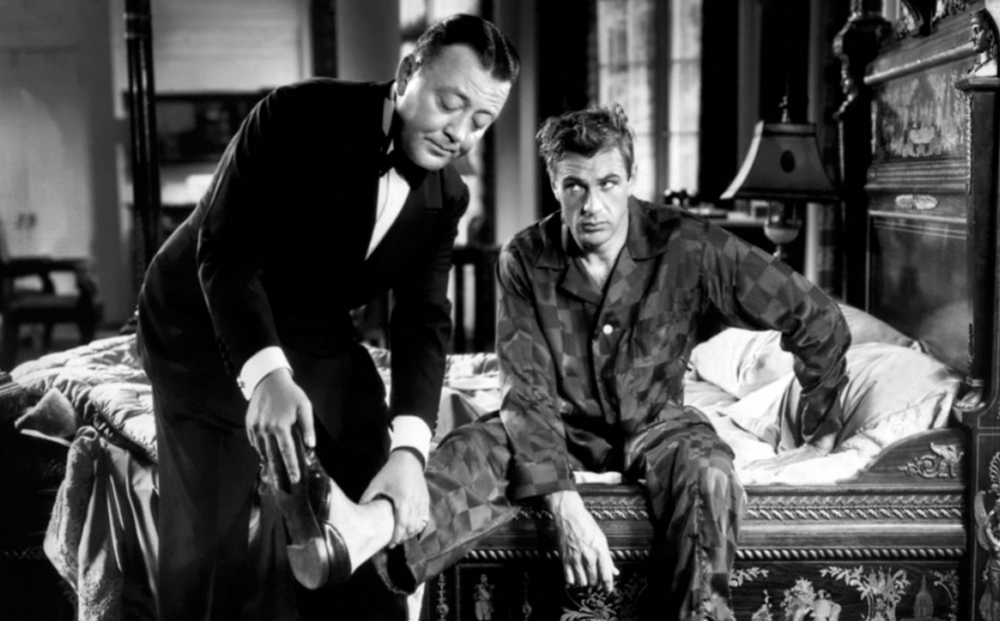
Sergeant York (1941)

Sergeant York (1941)

Patriotic flag-waver with a great performance from Cooper and plenty of genuine heart

Director: Howard Hawks

Cast: Gary Cooper (Alvin C. York), Walter Brennan (Pastor Rosier Pile), Joan Leslie (Gracie Williams), George Tobias (“Pusher” Ross), Stanley Ridges (Major Buxton), Margaret Wycherly (Mother York), Ward Bond (Ike Botkin), Noah Beery Jr. (Buck Lipscomb), June Lockhart (Rosie York), Dickie Moore (George York), Clem Bevans (Zeke), Howard Da Silva (Lem), Charles Trowbridge (Cordell Hull)

In 1941, after Japanese bombs landed on Pearl Harbor, America needed patriotic big-screen heroes. Few stood out more than Alvin York. A young man (over ten years younger than Gary Cooper) who had lived a youth of drunken rough-and-tumble before he found the light. When America joined the First World War, the 30-year-old York was called up. A gifted sharp-shooter, York was perfect for soldiering – but had to wrestle with his conviction to stick to the Commandments from the Good Book. Finding a solution to his moral quandary, York fought in France where his sharp-shooting instincts saw him almost single handedly capture a German machine gun embankment and 132 Germans (it’s an achievement that sounds pure Hollywood, but is in fact entirely true).

It’s an inspiring hero story that Warner Brothers bought to the screen at the perfect time, it’s release seeing tales of streams of young men walking from the cinema straight to the enlistment office. Producer Jesse L Lasky spent no less than twenty-two years attempting to persuade the notoriously publicity-shy and modest York (just as in the film, the real York couldn’t wait to leave the glitz and glamour of his triumphant homecoming behind and return to his fiancé, farm and work with the Church) to grant him the film rights to his life. York agreed only with the advance of Hitler, a hefty payment to his Church and a promise that no-less than Gary Cooper would play.

Cooper was reluctant – pointing out he was far too old to play this national hero – but really no other actor could have done it. Cooper won his first Oscar for the role, and it’s his understated sincerity and decency that really sells the film. He turns what could otherwise by a potentially cloyingly perfect man into someone utterly sympathetic and endearing. There is an aw shucks quality to Cooper, as he captures York’s modesty, his shrugging off his accomplishments as no more than his duty, his palpable discomfort with attention (be it from congressmen or his fellow Tennessee farmers commending his shooting) and a deep-rooted genuineness in his love for his beau Gracie (Joan Leslie giving a commendable performance of endearing brightness that helps you overlook she was 24 years younger than Cooper – thankfully she doesn’t look it).

Cooper’s performance powers a sprightly, very enjoyable film by Howard Hawks (who picked up his only Oscar nomination for this) that manages to transcend the danger of being an overbearing flag-waver. (Don’t get me wrong though – this film waves the flag so much, you can practically feel the strain in its arms). Hawks produces a film that in many ways owes as much to The Adventures of Robin Hood as an heroic All Quiet on the Western Front. Despite the patriotic focus being the final few Acts, as York carries out his act of astonishing heroism, the film’s real heart is in the opening half and the conversion of a man who is never-too-naughty into one who casts aside the demon drink, works hard to earn what he has, and puts his faith and the good of others before his own concerns.

Hawks shoots this part of the film with a palpable energy and a rough-and-tumble sense of humour. It’s there from the film’s opening as Walter Brennan (in a role he invests with all his wheezy, twinkly dignity) finds his sermon constantly interrupted by the gunplay of the drunken York and his buddies. There is a light humour when Margaret Wycherly – a little too ethereal for my taste as York’s saintly mum (although her casting does make York and White Heat’s Cody Jarrett siblings) – archly observes that, even when drunk, her son’s accuracy with a shooter is second to none. That’s the skill of Sergeant York there: in it’s end is it’s beginning, York is already deeply skilled and as his slightly embarrassed reaction shows when he sobers up, reformation is not a long journey.

A large part of the success is making York one of us. Striving to save the money he needs to buy the farmland of his dreams, Hawks provides a sweet montage of York undertaking no end of backbreaking, thankless work and returning home to tick off his slowly accumulating dollars under the smiling approval of Ma. When, after all his work, he finds the land has nevertheless been sold (because the owner never believed this previously idle lush could hold on to his hard-earned pennies), his outrage at the breaking of another man’s word is a clarion call to all of us who have played by the rules and been shafted. When his conversion comes, it’s not as out-of-the-blue as it could seem, but a logical conclusion for a journey we’ve watched him go on.

It’s undercut with scenes that drip with Hawksian skill. A marksmanship competition is crammed with a playful Robin Hoodesque skill. A bar-fight that the drunken York gets wrapped up in is so full of comedic tumbles and prat falls it’s hilarious. York’s constantly being fetched for various tasks by his kid brother is expertly played for subtle laughs. Alongside this, the romance between York and Gracie (and the off-screen slapping he hands out to a rival who treats her with disrespect) is beautifully handled.

The only real Hawksian touch missing is that little slice of cynicism, that ability to look under the skin of a legend (like with Wayne in Red River) and see a more flawed person. York basically is perfect, and in a film dripping with patriotism there can’t be any fault with either the army or the moral question of whether gunning down your fellow humans is alright in the service of your country. There is a version of Sergeant York where his commanding officer’s invitation that he take some time and read his way through the history of America (a replacement good book) was an act of naked manipulation of a guileless man. Or where we see the sort of guilt at his taking of life that the real York felt, play out across Cooper’s face. There’s none of that here.

In fact, after the vibrant, playful, heartfelt first few acts, you feel Hawks felt less interested in the war itself. There is a functionality about the final acts of Sergeant York as York aces his shooting tests on the range (although the flabbergasted reaction of his training officer and York’s apologetic manner at his failure to only manage five dead-on bulls-eyes on his first time using an army-issue rifle are funny). Hawks spices it up with York’s turkey-shoot metaphor, and a warm supporting turn from George Tobias (as a New Yorker soldier) and York’s gobble-gobbles to distract his German opponents. But, for all the realism of the trenches, there is an air of duty about this sequence.

But then Sergeant York works not because of the deed, but the man. And the film’s success in investing us in a man who could very easily have been all-too-perfect, in a playful and energetic first half works wonders. With a very fine, perfectly judged performance by Gary Cooper, this may not be Hawks most characterful work – but as the sort of film to showcase a man who inspires you to achieve acts of heroism, it hits the target perfectly.

Mickey 17 (2025)

Mickey 17 (2025)

Indulgent, over-long satire that mixes painfully obvious political targets with on-the-nose comedy

Director: Bong Joon-Ho

Cast: Robert Pattinson (Mickey 17/Mickey 18), Naomi Ackie (Nasha Barridge), Steven Yeun (Timo), Toni Collette (Ylfa Marshall), Mark Ruffalo (Kenneth Marshall), Patsy Ferran (Dorothy), Cameron Britton (Arkady), Daniel Henshall (Preston), Stephen Park (Agent Zeke), Anamaria Vartolomei (Kai Katz), Holliday Grainger (Red Haired recruiter)

In 2050, everyone on the colony ship to the planet Niflheim has a job. Even a washed-up loser like Mickey (Robert Pattinson). His job is the most loserish of all: he’s an ‘expendable’, hired to die repeatedly in all forms of dangerous mission or twisted scientific and medical experiments, with a new body containing all his backed-up memories rolling out of the human body printer. The one rule is there can never be more than one Mickey at a time – so it’s a problem when 17 is thought dead and the more assertive 18 is printed: especially as they are flung into a clash between the colonisers and Niflheim’s giant grub-resembling lifeforms ‘Creepers’. Can Mickey(s) prevent a war that the colony’s leader, a failed politician and TV-star Kenneth Marshall (Mark Ruffalo) and his socialite wife Ylfa (Toni Collette), want to provoke?

It’s all thrown together in Bong Joon-Ho’s follow-up to Parasite which trades that film’s sharp, dark social satire and insidious sense of danger for something more-like a brash, loud, obvious joke in the vein of (but grossly inferior to) his Snowpiercer. Mickey 17 is awash in potentially interesting ideas, nearly all of which feel underexplored and poorly exploited over the film’s whoppingly indulgent runtime of nearly two-and-a-half hours, and Bong lines up political targets so thuddingly obvious that you couldn’t miss these fish-in-a-barrel with a half-power pea-shooter.

Mickey 17 actually has more of a feel of a director cutting-lose for a crowd-pleaser, after some intense work. Mickey 17 is almost a knock-about farce, helped a lot by Robert Pattinson’s winning performance as the weakly obliging Mickey 17 who grows both a spine and sense of self-worth. A sense of self-worth that has, not surprisingly, been crushed after a lifetime of failure on Earth leads him to series of blackly-comic deaths (the film’s most successful sequence) that has seen him irradiated and mutilated in space, gassed with a noxious chemical, crushed, incinerated and several other fates.

Not surprisingly, there is a bit of social commentary here: Mickey is essentially a zero-hours contract worker, treated as sub-human by the businessmen and scientists who run this corporate-space-trip. It’s an idea you wish the film had run with more: the darkly comic idea of people so desperate to find a new life that they willingly agree to have that life ended over-and-over again as the price. It’s not something Mickey 17 really explores though: right down to having Mickey sign on due to his lack of attention to contract detail (how interesting would it have been to see a wave of migrant workers actively pushing for the job as their only hope of landing some sort of green card?).

Mickey 17 similarly shirks ideas around the nature of life and death. Questions of how ‘real’ Mickey is – like the Ship of Theseus, if all his parts are replaced is he still the ship? – don’t trouble the film. Neither does it explore an interesting idea that each clone is subtly different: we’ve already got a clear difference between the more ‘Mickey’ like 17 and his assertively defiant 18, and 17 references that other clones have been more biddable, anxious or decisive. Again, it’s a throwaway comment the film doesn’t grasp. Neither, despite the many references to Mickey’s unique experience of death (and the many times he is asked about it) do questions of mortality come into shape: perhaps because Mickey is simply not articulate or imaginative enough to answer them.

Either way, it feels like a series of missed opportunities to say something truly interesting among the knock-about farce of Mickey copies flopping to the floor out of the printer, or resignedly accepting his (many) fates. Especially since what the film does dedicate time to, is a painfully (almost unwatchably so) on-the-nose attack on a certain US leader with Mark Ruffalo’s performance so transparent, they might as well have named the character Tonald Drump. Ruffalo’s performance is the worst kind-of satire: smug, superior and treats it’s target like an idiot, who only morons could support. It’s a large cartoony performance of buck-teeth, preening dialogue matched only by Toni Collette’s equally overblown, ludicrous performance as his cuisine-obsessed wife.

Endless scenes are given to these two, for the film to sneer at them (and, by extension, the millions of people who voted Trump). Now I don’t care for Trump at all, but this sort of clumsy, lazy, arrogant satire essentially only does him a favour by reminding us all how smugly superior Hollywood types can be. So RuffaTrump fakes devout evangelical views, obsesses about being the centre of attention, dreams of his place in the history books while his wife is horrified about shooting Mickey because blood will get on her Persian carpet. It’s the most obvious of obvious targets.

It’s made worse that the film’s corporate satire is as compromised and fake as the conclusion of Minority Report. It’s a film where a colonialist corporate elite defers to a preening autocrat, keeps its colonists on rationed food and sex and sacrifices workers left-and-right for profit. But guess which body eventually emerges to save the day? Yup, those very corporate committee once they learn ‘the truth’. Mickey 17 essentially settles down into the sort of predictably safe Hollywood ending, with all corporate malfeasance rotten apples punished. For a film that starts with big anti-corporate swings, it ends safely certain those in charge will always do the right thing when given the chance.

Much of the rest of Mickey 17 is crammed with ideas that usually pad out a semi-decent 45 minute episode of Doctor Who. Of course, the deadly, giant insect-like aliens are going to turn out to be decent, humanitarian souls – just as inevitable as the mankind bosses being the baddies. It’s as obvious, as the film’s continual divide of its cast list into goodies and baddies.

Mickey 17’s overlong, slow pacing doesn’t help. An elongated sequence with Anamaria Vartolomei’s security guard who has the hots for Mickey 17 (every female in the film, except maybe Collette, fancies him proving even losers get girls if they look like Robert Pattinson) could (and should) have been cut – especially as that would also involve losing an interminable dinner-party scene with Ruffalo and Collette. The final sequence aims for anti-populist messaging and action – but is really just a long series of characters saying obvious things to each other. Despite Pattinson’s fine performance – and some good work from Ackie – Mickey 17 is a huge let-down which, despite flashes of Bong’s skill, feels like a great director cruising on self-indulgent autopilot, taking every opportunity for gags over depth or heart. Not a success.

Five Easy Pieces (1970)

Five Easy Pieces (1970)

Nicholson gives a scintillating performance as a self-loathing soul in this searing drama

Director: Bob Rafelson

Cast: Jack Nicholson (Robert Eroica Dupea), Karen Black (Rayette Dipesto), Susan Anspach (Catherine Van Oost), Lois Smith (Partita Dupea), Ralph Waite (Carl Fidelio Dupea), Billy “Green” Bush (Elton), Irene Dailey (Samia Glavia), Toni Basil (Terry Grouse), Helena Kallianiotes (Palm Apodaca), William Challee (Nicholas Dupea), John Ryan (Spicer)

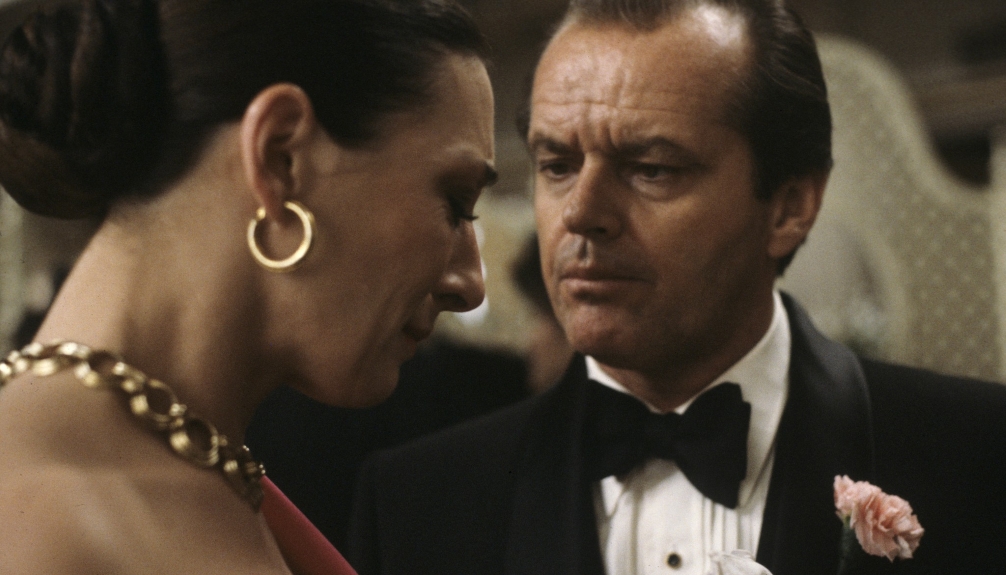
Robert Dupea (Jack Nicholson) is a man out of place. From a family of musical prodigies, groomed from childhood to become a leading concert pianist, he now works as an oil rigger out West. Turns out Robert isn’t content anywhere: he’s too rebellious for the upper-classes, too contemptuous to be part of the working classes. His life is one of running away, moving from place-to-place, avoiding emotional responsibilities, commitment and honesty, constantly seething with feelings he lacks the ability to process, unable to know what he wants with a self-destructive chasm a mile wide that swallows anyone that gets near it.

Five Easy Pieces is an intelligent, quiet, thoughtful character-study of a man who defies all possible labels and doesn’t fit comfortably into any pigeon-holes. Heavily influenced by the European artistes of the 60s, it’s a film that engages with class alienation in America more than almost any other, placing at its heart a man who refuses to compromise with anyone (to his own detriment) and whose selfishness and willingness to hurt other people constantly challenges the level of sympathy we are willing to give him. Despite this though, Rafelson has created a quiet domestic tragedy, with a man at its heart who is both unbearably selfish and unendingly vulnerable and scared at the world, who only knows how to react with bursts of resentful anger and whose instinct is to run away when things get either too tough or too involved.

Five Easy Pieces splits into three acts: the first sees Robert quietly snobbily bucking up against the working-class environment he’s chosen to live in; the second the long car journey to his family home while he struggles to find outlets for his tension; the third his return to the upper-class environs of his family where he can’t hide his contempt for their closeted privilege. What’s consistent is Robert is as constantly ashamed of himself as he is of his environs: a man of class and culture who longs to be working joe, a manual worker who yearns for sophistication around him. Robert’s tragedy is he can never square this circle.

It’s a role that calls for an actor at the top of his game, which it gets with Jack Nicholson. There is a moment near the start, where Nicholson does a little half-pivot skip while going round a corner into this home. It’s a small moment, but it’s a flash of something playfully real and endearingly childish that explains why we bear with him, even while he’s blowing things up around him. Nicholson’s performance is extraordinary. Robert has a constant simmering tension to him, but it’s a born of deep personal discontent. Nicholson perfectly brings to life a man constantly trying to seem assured, carefree and cool – but always with a nervous fear of what people think of him. Do the workers, and his friend Elton, realise he’s as posh as he is? Will his family look down on his waitress girlfriend?

One of the things Nicholson brings so brilliantly to Robert is his unease with talking: sure, he can barnstorm a self-righteous speech, but when it comes to actual conversation or talk about personal emotions he’s as timid and lost as a child. The idea of having roots is anathema to him (he’s perfectly willing to abandon Rayette when he thinks she’s pregnant) but it’s clear he also wants to belong somewhere. His tragedy is, as soon as he finds himself part a community all he feels is contempt for them – as if, like Groucho Marx, he can’t imagine joining a club that would have him as a member.

In fact, it becomes clear, Robert probably hates himself. He dismisses his accomplishments: inveigled into playing piano by his brother’s fiancée Catherine (a lovely performance of misguided sensitivity by Susan Anspach) he responds to her emotional reaction with dismissive rage, belittling his playing and questioning her feelings. It’s a mark, again, of the vulnerability and sensitivity Nicholson balances in this tempestuous, angry man that after this takedown we still believe she goes to bed with him. The tension of Robert’s loathing of himself never needs much to be released in anger against strangers: be it ranting at cars pointlessly blaring horns in traffic jams or an argument with a waitress who refuses to bring him toast that ends with glasses thrown petulantly across the floor. Nicholson never lets the pain of dealing with the world escape from Robert’s eyes, even when he’s at his most abrasive.

Robert’s inability to place himself in either world is perfectly captured in his relationship with waitress and would-be country singer Rayette, played with an endearing honesty and affection by Karen Black. If Robert could compromise, they would be well-suited: they both love music and share a sense of rootlessness. But he makes no real room for her. He can’t hide her contempt for her liking the wrong sort of music (country is no Chopin), he fills their house with little touches of art and scoffs at her inability to appreciate them; then he defends her working-class-honesty against his family’s snobbish friends while also being mortified by her artless, uneducated conversation among his family.

Fundamentally, Robert only cares for Rayette in relation to how she makes him feel about himself in the moment. She is a safe, undemanding comfort blanket – someone who will accept anything from him. His first instinct before returning to his family is to ditch her. Nicholson (in a superb sequence) shamefacedly mutters apologies between angry self-justifications while packing his bags – before a burst of self-loathing in his car sees him return. He then drags her across country only to park her at a motel while he sees ‘how things are’, clearly hoping she may decide to head home without him. When she instead turns up, he’s as ashamed of her as he as of his family’s wealth.

Like his siblings, Robert has never really grown up. His kindly sister Tita (a beautiful performance by Lois Smith) bounces around with enthusiasm, twiddles with a ping-pong bat with teenage glee while she flirts with her father’s nurse and seems utterly cossetted from the outside world. His brother Carl (Ralph Waite, very funny) has the distracted air of a natural eccentric, who has never had to engage with reality. But are they that different from Robert, who has a childish tantrum when he loses a bowling match? Five Easy Pieces suggests a difficult, distant relationship with his domineering father (now confined to silence in a wheelchair) in an astonishingly raw scene from Nicholson – but goes far from giving Robert a pass, his self-destructive self-loathing being far more of an inbuilt character flaw.

In fact, Robert suffers from an ennui that suggests he will never be happy wherever he lands – and he lacks either the self-knowledge or willingness to change. Above all, and it’s clear in every frame of Nicholson’s searing performance, Robert is a man who despises some part of himself so much, that all he can feel for those who show him warmth is contempt. After all, if he doesn’t care for him, why would anyone do so? It’s a pattern that is destined to leave him forever unhappy, forever hurting people, for ever lashing out. It’s a brutal honesty that makes Five Easy Pieces in some ways one of the bleakest, least hopeful of American films.

Hold Back the Dawn (1941)

Hold Back the Dawn (1941)

A potentially cynical drama becomes a sweet romance, with three excellent lead performances

Director: Mitchell Leisen

Cast: Charles Boyer (Georges Iscovescu), Olivia de Havilland (Emmy Brown), Paulette Goddard (Antia Dixon), Victor Francen (Professor van der Luecken), Walter Abel (Inspector Hummock), Curt Bois (Bonbois), Rosemary DeCamp (Berta Kurz), Eric Feldary (Josef Kurz), Nestor Paiva (Fred Flores)

Refugees flock at the USA-Mexican border, desperate to squeeze into the Land of the Free, only to meet with a stringent border control and tight rules on immigration quotas. No, it’s not a story from today – it’s from the 1940s, with Mexico awash with refugees from Europe, fleeing Hitler. But the USA only has a certain quota of refugees it will accept from each country – and Romanian Georges Iscovescu (Charles Boyer) finds he’s got no less than a five to eight year wait before his quota number will come up. His ex-flame Anita (Paulette Goddard) suggests there might be a way around this: if Georges can get married to an American citizen, he will fly through the border on a green card. Georges sets his eye on spinsterish teacher Emmy Brown (Olivia de Havilland) marrying her in a whirlwind romance – only to find feelings of guilt and growing affection for Emmy making his plan more difficult.

Hold Back the Dawn is well-assembled, well-paced mix of romance and black-comedy which pulls its jet-black punches in favour of a more conventional happy ending. Perhaps that’s why it was the last Billy Wilder script (working with regular collaborator Charles Brackett) he didn’t direct himself. You can imagine a director as prone to the cynical as Wilder, may not have settled quite as happily for the more optimistic and reassuring film Hold Back the Dawn becomes. Wilder was also unhappy with how he felt the film pruned back the more cutting political criticism of America’s immigration policy. As a refugee from Hitler himself, Wilder knew of what he was talking about.

However, that’s not to say Hold Back the Dawn isn’t awash with Wilder and Brackett’s patented mix of waspish character comedy and sharp dialogue tinted with more than a touch of arch cynicism. Mitchell Leisen’s success here, is to smooth the wheels to allow enough of this mix of black and absurdist humour to carry through a film you feel the studio has attempted to shoe-horn into being a conventional ‘love conquers all’ narrative (not least with its ending, which has the look and feel of a mix of hurried re-shoots and re-purposed footage to create a late upbeat ending, filmed after de Havilland was no longer available from her loan from Warner Brothers).

Hold Back the Dawn doesn’t shirk on the vicious, oppressive cycle of being stuck in a holding pattern waiting to be allowed into the US. Georges only gains his room in the overstuffed hotel because the previous tenant hangs himself (the manager matter-of-factly says he’ll have the room ready shortly). There is quite a lot of both dark humour (from Georges and Anita’s nakedly opportunist cadism) to little touches of high farce (a pregnant woman gaming the system to give birth on US soil) and the faintly surreal (a would-be refugee who might just be a descendant of honorary US citizen Lafayette). Throughout most of Hold Back the Dawn this never feels out of keeping with the slow-burning romance between Georges and Emmy.

A lot of this is also due to Charles Boyer’s highly successful performance in the lead role. Few actors were as skilled at mixing suave European class and louche rotter-ness than Boyer, and Georges is a gift of a part. A playboy stuck in a boring, dead-end purgatory of a town (one he aimlessly walks around time and time again to kill the hours), Boyer makes Georges believable charm personified – certainly enough to back the film’s implication he keeps himself afloat as a gigolo for tourists. Boyer’s arch voiceover relays every-step of the nakedly self-centred plan he initiates to squirm his way over the border. His performance is full of charm, tender shyness and love-struck adoration to Emmy, punctured throughout by Boyer’s canny side-eye to check on the effect of his shameless lies (there is a glorious moment when Boyer checks himself and cocks an eye when walking down a street, to make sure Emmy is following him).

The character works though because Boyer is a master at balancing this ruthless, self-serving charm with a general decency just below the surface that, no matter how hard he tries, he can never quite dampen down. It excels in the film’s middle act as the couple’s ‘spontaneous’ (so Georges can escape the notice of Walter Abel’s excellently shrewd immigration inspector) honeymoon in Mexico. Boyer brilliantly demonstrates through the slightest of vocal inflections and subtle shifts in body language (there is a point during a village fiesta where his face lights up with a genuine smile the like of which we have never seen before) that make us totally believe this is a man who, much to his surprise, is actually falling in love.

It helps with this that he shares scenes with such a winning presence as Olivia de Havilland as Emmy. Oscar-nominated, de Havilland takes a role (a spinsterish frump, who has never been loved) that could be ridiculous and makes it utterly and completely real. Throughout Georges initially cynical courting, there is a little sense of doubt throughout in de Havilland’s manner (she knows instant love is too good to be true), but such is her loneliness we can see and feel her willing herself into belief. As she does so, de Havilland lets the shy Emmy flourish into a woman of greater confidence, wit and burgeoning sexual desire (hilariously, the increasingly shamed Georges begins to event injuries to put off the consummation of this marriage). De Havilland makes Emmy a living, breathing person, someone miles away from the joke she is set up as initially: instead she is a genuine, true-hearted, increasingly brave woman whose decency and sense of warmth we grow to love as much as Georges does.

She makes an excellent contrast with Paulette Goddard’s ruthlessly amoral Anita. In one of her finest performances outside of her work with Chaplin, Goddard makes Anita utterly ruthless in seeking out what she wants and full of a hilariously honesty about her willingness to use anyone and anything to get it. She’s Georges even darker reflection, Goddard’s dialogue awash with brutal firecracker one-liners. But even she is capable at points of depth, a late act of petty cruelty awakening in her underlying feelings of sympathy and empathy that seem to surprise even her. It’s a lovely performance of darkly comedic ruthlessness.

These three leads all elevate a film that at times compromises on its vision of the harshness of the system these people are all stuck in. Hold Back the Dawn doesn’t want to make a statement as such – it wants to offer a more reassuring vision of hope and decency. This it does well: the film is even built around Georges pitching it as a possible film project to the actual Mitchell Leisen (effectively playing himself, on set shooting a real film with the real Veronica Lake and Brian Donlevy). After a start that suggests something darker and more dangerous, it ends as a comforting and safe picture – but one that works extremely well.