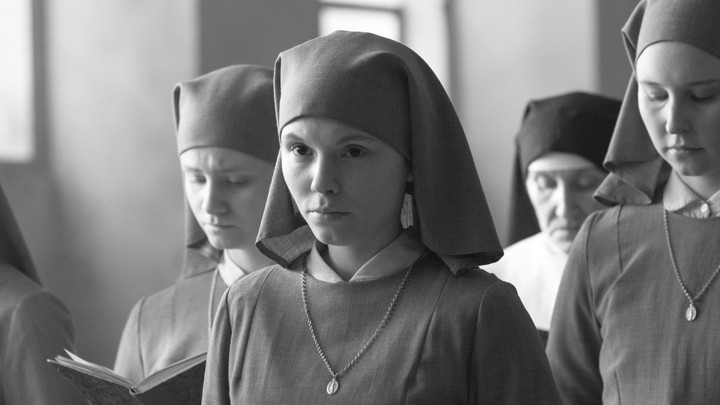
Little Women (2019)

March Sisters: Assemble! For Greta Gerwig’s superlative adaptation of Little Women

Director: Greta Gerwig

Cast: Saoirse Ronan (Jo March), Emma Watson (Meg March), Florence Pugh (Amy March), Eliza Scanlen (Beth March), Laura Dern (Marmee March), Timothée Chalamet (Laurie), Meryl Streep (Aunt March), Tracy Letts (Mr Dashwood), Bob Odenkirk (Father March), James Norton (John Brooke), Louis Garrel (Professor Friedrich Bhaer), Chris Cooper (Mr Laurence)

Spoilers: Such as they are but discussion of the film’s ending (or rather Greta Gerwig’s interpretation of it) can be found herein…

There are few novels as well beloved as Louisa May Alcott’s Little Women. So much so – and so successful have been the numerable adaptations, not least Gillian Armstrong’s 1994 version – that it’s hard to see what a new adaptation could bring to the story that hasn’t been covered before. A new window on the story is triumphantly found though in Greta Gerwig’s fresh and vibrant adaptation, blessed with some terrific performances, and telling its own very distinctive version of the story.

Gerwig’s version crucially starts off in the sisters’ adult lives: Jo (Saoirse Ronan) in New York struggling to make it as a writer, while Meg (Emma Watson) nurses the ill Beth (Eliza Scanlon) back home with Marmee (Laura Dern), and Amy (Florence Pugh) encounters their childhood friend Laurie (Timothée Chalamet) in Paris. This is intercut with the story of their growing up in Massachusetts, with the past story line eventually catching up with the present day. 

If that sounds like it should make the story hard to follow, don’t worry – this is astonishingly confident work from Gerwig, wonderfully directed with zest, fire and imagination (making her exclusion from the Best Director list at the Oscars even more inexplicable – chalk that up I guess to sexism against pictures about “girls” and the fact it’s not as overtly flashy as the rest of this year’s nominees). This takes a familiar book, and fires it up with all the energy of independent, modern cinema, creating something that feels hugely fresh and dynamic. The cross cutting between the two timelines work beautifully – not only is it always perfectly clear, but it also makes for some wonderful contrasts between events in the past and present. None less than the recovery of Beth from TB being followed (with an almost shot-by-shot echo in its filming) by the reactions to Beth’s death. Inventions like this add even greater depth and meaning to the moments and hammer home some terrific emotional high points. 

Gerwig’s style throughout the film invests the story with a great energy, particularly in creating the warm bohemian attitude of the March family. This really feels like a family – conversations between them are fast, people talk relaxedly over each other, the chemistry is completely real, and the camera captures in its movement the warmth and energy of these characters who are completely comfortable in each other’s presence. It’s no surprise that Laurie is taken so quickly with this family, or wants to be part of it. Gerwig invests the family with a dynamic, excited sense of freedom and urgency. Helped by the warm glow that the childhood sections of the film are shot with, these scenes hum with a glorious sense of familial warmth and excitement. 

The camera often moves with careful, but perfectly planned, movement through scenes, mixed in with moments of fast movement – following Jo through streets, or the playful exuberance of Jo and Laurie’s first meeting (and dance) at a society ball. It’s a vibe that carries across to the performances, anchored by Saoirse Ronan’s fabulous performance as Jo. Fervent, intelligent, idealistic but also stubborn, prickly and difficult, Ronan’s Jo carries large chunks of the film, with the character skilfully mixed in with elements of Louisa May Alcott. Ronan most impressively suggests a warmth and familial love for Laurie at all times, that never (on her side) tips into a real romantic feeling. She also has superb chemistry in any case with the excellent Timothée Chalamet, who is just about perfect as a dreamy, but quietly conventional in his way, Laurie.

Gerwig’s primary rejig – and a reflection of the new structure she is chosen – is to allow more screen time to Amy, usually the least popular of the four sisters. She’s also helped by a sensational performance by the Oscar-nominated Florence Pugh as Amy, who not only plays a character perfectly from her mid-teens to her early twenties, but also invests the character with huge amounts of light and shade. The film gives a great deal of time to Amy’s time in Paris – her frustration with living in Jo’s shadow, her longing for her own artistic career (and recognition of her conventional talent – brilliantly established by a wordless glance Pugh gives an impressionist painting compared to her own literal effort) and her own romantic feelings and dreams. Cross cutting this with her past actions – her more temperamental and less sympathetic moments (burning Jo’s book!) that have pained generations – gives the audience far more sympathy and understanding for her. Pugh is also pretty much flawless in the film.

There are a host of superb performances though, with Watson capturing the duller sense of conventional duty in Meg, but spicing it with a sad regret for chances lost; Laura Dern is wonderfully warm as Marmee, but mixes in a loneliness and isolation below the surface; Chris Cooper and Meryl Streep sparkle in cameos. There is barely a false step in the case.

All the action eventually boils towards the ending – and Gerwig’s bravest and most unconventional decisions, in subtly adjusting the final conclusion of the story. At first it seems that the cross cutting of the story has short changed heavily the Bhaer-Jo relationship (Bhaer appears only in the first half an hour of the film and the end), as it cannot lean too heavily on romance when many in the audience will still be expecting a Jo-Laurie match up. 

But Gerwig actually uses this as a skilful deconstruction of the novel. Always feeling that Alcott desired Jo to be a single author – but inserted the marriage to Bhaer at the end to help sell the book – Gerwig effectively has Jo do the same thing. At a crucial moment in the final scenes, we cut to Jo negotiating with her publisher (a droll cameo by Tracey Letts), who insists on a happy ending. Cue a “movie style” chase to intercept a departing Bhaer (shot with the golden hue of the past, while Jo’s meeting with the publisher has the colder colours of the present). Our final shot shows Jo watching her book being printed, cross cut with a golden hued vision of “Jo’s” school with husband in tow. 

It’s a genius little touch, as it’s subtle enough to allow viewers to take the happy ending as it appears in the surface, but smart and clever enough to make the movie unique and different from the other versions (and that ending from the 1994 version is hard to top!). It may undermine the final relationship – and offend those who like the idea of Jo deciding she wants something different than she at first thought – but in its freshness it can’t be challenged. It also makes for a film from Gerwig that is both fresh and exciting and also bracingly and thrillingly in love with Alcott and her work.
Ford v Ferrari (Le Mans '66) (2019)

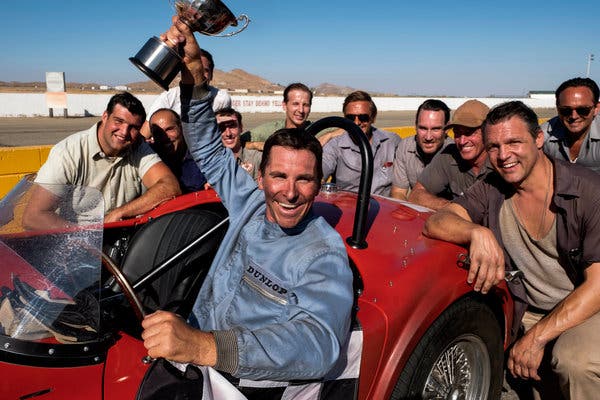
Christian Bale as maverick driver Ken Miles in the functional but fun Ford v Ferrari

Director: James Mangold

Cast: Matt Damon (Caroll Shelby), Christian Bale (Ken Miles), Jon Bernthal (Lee Iacocca), Caitriona Balfe (Mollie Miles), Tracy Letts (Henry Ford II), Josh Lucas (Leo Beebe), Noah Jupe (Peter Miles), Remo Girone (Enzo Ferrari), Ray McKinnon (Phil Remington), JJ Feild (Roy Lunn), Jack McMullen (Charlie Agapiou)

There are few more exhilarating things than going really, really damn fast. It’s a primal glee that James Mangold’s racing film Ford v Ferrari (or Le Mans ’66 as it seems to be known over here) taps into, roaring with exciting, fast-paced energy lashed onto a good old buddy movie as two plucky underdogs get the chance to overturn the champs and claim the title. It’s the story of any number of sports movies, but it still works here. It ain’t broke, after all.

It’s the early 1960s and the sales of the Ford Company are down: the baby boomers don’t want to be driving the dull, safe cars of their parents. They want something super sexy. Despite his hesitation Henry Ford II (Tracy Letts) is persuaded the best way to get that sexy image is to get a racing car – and if he can’t buy Enzo Ferrari’s (Remo Girone) company, then by hell he’ll spend whatever it takes to give Ford the best racing team in the world. Targeting the Le Mans 24 hour race, he recruits retired-driver-turned-designer Caroll Shelby (Matt Damon) to mastermind building a car – and Shelby recruits demanding, prickly, maverick Brit driver Ken Miles (Christian Bale) to help him design it and then drive the thing. But what to do when Miles’ blunt plain-speaking and individuality looks like it won’t make him the best spokesman for selling Ford cars?

On the surface Ford v Ferrari is pretty much your standard Sports film. Two teams, an underdog and a champion, a pair of mavericks who think outside the box, the struggle for success – met with initial failure before victory – all told through a familiar structure of brothers-in-arms, obstructing suits, supportive wives at home and plenty of carefully detailed expert recreation of sporting events. It’s a collection of familiar ingredients, but very well mixed together by Mangold (one of Hollywood’s finest middle-rank directors, a sort of heir to Lumet).

The real twist however is that the rivalry is not really about Ford and Ferrari. In fact the film might have been better titled Ford vs Ford. Because the main thing standing in the way of Shelby and Miles isn’t Ferrari – with whom they actually have a rivalry built on mutual respect – but with the bottom-line, sales-first suits who are backing them. It’s a parallel with everything where sales and the buck count more than anything, but you feel Mangold might well have related it most to Hollywood producers. What is Ken Miles, but the genius auteur director who the money-men just won’t trust to churn out the mass-market product they need to lift the share price? Henry Ford (very drily played by Tracy Letts) may have one visceral moment of excitement when placed in the passenger seat of a fast car – but fundamentally he doesn’t give a damn about the sport at all, except how it could help him shift a few more Mustangs.

Shelby and Miles’ struggles are not with the car, the engineering problems or Ferrari – they’re with the Ford VPS (in particular Josh Lucas’ incomparably smarmy Leo Beebe, a corporate man to his fingertips who probably bleeds stock tips) who want a product they can sell, far more than a product that can win. Obstacles are constantly thrown towards Shelby and Miles from their bosses – everything from engine design to race strategy receives a series of notes, comments and instructions from the Ford hierarchy. The choice of driver is most important of all – and they don’t want the demanding Ken Miles behind the wheel of their car. Because mavericks like that don’t sell Mustangs.

As Miles, Christian Bale gives a performance of pure enjoyment. Juggling a version of his own natural accent (which sounds odd – part cockney, part scouse – but works brilliantly) Bale gives the part just the right amount of that peculiar chippy Britishness, that resentment of people in authority, that hostile reaction to the stench of bullshit. Driven, determined but totally unwilling to suffer fools – exhibited almost immediately with him dressing down a prat who isn’t a good enough driver to handle the sports car he’s purchased – Miles is clearly never going to be the company man Ford wants. But with his passion for “that perfect lap”, his determination to work night and day to achieve that and – in a nice change – his warmth for his family and equal decision making with his wife (a slightly thankless part for Catriona Balfe) he’s a character you quickly take to your heart. It’s a great, charisma-led performance from Bale, who also gets nearly all the best lines.

It does suck a bit of the oxygen from Damon, who plays the straight-man as Shelby who is just as passionate but can (just about) speak Corporatese. With a Texan drawl, Damon does the legwork of the movie extremely generously, quietly driving many of the scenes and handling much of the more emotional arc of the movie. The two actors form a superb chemistry – peaking with a hilarious fight scene, your chance to see Batman clobber Jason Bourne with a loaf of bread (both actors, famous for muscular fight scenes, clearly enjoy a fight scene straight out of Bridget Jones). It’s a bromance that really works – and carries at certain points a genuine emotional force.

Mangold packages this material perfectly – and the racing sequences are brilliantly done, engrossing, speaker-shaking displays of racing, fabulously edited. The film itself is probably too long, and the sections away from the race track are sometimes so familiar in their structure and tone that they sometimes drag a little bit, as if the fierce momentum of the racing scenes can’t carry across to the rest of the film. But with fine performances and expert handling, this is certainly a number you’ll be happy to test drive.

Jojo Rabbit (2019)

Taika Waititi directs and is an imaginary Hitler in his coming-of-age/Nazi Germany satire Jojo Rabbit

Director: Taika Waititi

Cast: Roman Griffin Davis (Johannes “Jojo Rabbit” Betzler), Thomasin McKenzie (Elsa Korr), Scarlett Johansson (Rosie Betzler), Taika Waititi (Adolf Hitler), Sam Rockwell (Captain Klenzendorf), Rebel Wilson (Fraulain Rahm), Alfie Allen (Lt Finkel), Stephen Merchant (Deertz), Archie Yates (Yorki)

A comedy set in Nazi Germany? Well if there is one thing you need to get right, it’s the tone. Taika Waititi’s comedy about a boy with an imaginary friend who just happens to be a version of Adolf Hitler more or less does so – although I’d argue it’s less a comedy and more of a terrifying condemnation of the horrific powers of indoctrination. But that sells a lot less well in trailers doesn’t it?

Set in late 1944, the boy in question is Johannes (Roman Griffin Davis – a revelatory performance) a ten-year old who wants to be a passionate Nazi but is undone by his own underlying sweetness. Not that it stops him believing everything he’s told by the regime and its theories around Jews, re-enforced by his imaginary best friend, a childishly stroppy version of Adolf Hitler (played by Waititi himself). Nicknamed Jojo Rabbit after his failure to kill a rabbit on a Hitler Youth indoctrination camp, then later blowing himself with a grenade meaning he can no longer qualify for military service, Jojo sees his dreams of becoming the ultimate Aryan fading away. Things become even more conflicted when he discovers his secretly anti-Nazi mother Rosie (Scarlett Johansson) is hiding a teenage Jewish girl Elsa (Thomasin McKenzie) in the walls of his late sister’s bedroom.

Waititi’s film returns to his affectionate roots of coming-of-age stories but in an entirely different setting – here the child must grow up by learning to reject the vile ideologies that have been hammered into him by the system. Waititi shoots the entire film from the perspective of the child’s view of the world, meaning the horrors of the war are kept largely at a distance from us (until a sudden and terrible event brings them overwhelmingly into frame). The Nazi world around Jojo looks like some glorious Enid Blyton summer, the colour of which only gradually disappears from the film as event proceed. It’s a neat visual way of capturing the child’s innocence.

This also means many of the characters are seen from Jojo’s perspective. Most obviously Adolf Hitler (the imaginary one), played with gleeful comic gusto by Waititi, is far from the actual dictator but is a sort of ten-year-old’s idea of what he might be like, childish, oddly innocent in places, prone to strops – but also has enough darkness in him (which emerges more and more as the film goes on) to show that he is still part of the hateful ideology the real Hitler promoted. Similarly, Jojo’s first impression of Elsa is shot and framed like some sort of creepy horror film – matching the ideas that have been indoctrinated into him by the regime that the Jews are a near-Satanic threat.

That indoctrination is a big part of the film’s primary themes. An early sequence at a Hitler Youth camp is less funny – even if it does have moments of brash comedy and some good jokes – more horrifying for the mantra of violence, race hate and slaughter that the regime is preaching almost every second that its representatives appear on screen. It’s actually chilling seeing this group of impressionable kids succumbing so completely to the excitement of this relentless onslaught of propaganda. The passion that the Nazis inspire is wonderfully caught by Waititi in the credits, with Leni Reifenstahl footage beautifully recut to the Beatles singing in German – it’s hard to miss the parallels. (The film makes some neat use of modern music, with David Bowie also popping up).

Jojo however is still a sweet, kind, generous boy under the surface – however much he has swallowed the constant message from his government that he should aspire to being a cold eyed killer. Waititi’s message is that there is still hope in the roots of next generation, however much the current generation does it’s best to mess that up. It’s something that his mother – exquisitely played by an Oscar-nominated Scarlett Johansson with a wonderful sense of playfulness hiding an intense sadness – clings to desperately, knowing the sweet boy she loves is still largely there, however twisted he is by a cruel ideology.

It’s the relationship with Elsa that helps bring that out, with Thomasin McKenzie wonderful as an initially hostile young girl, determined to never be a victim, who softens and thaws as she senses the kindness in this boy. Her hiding is all part of Rosie’s own defiance of the regime and its oppression, the horrors of which – from random searches to executions – slowly begin to creep into the film. 

If there is a problem with the film, it is that the darker elements of this film – and there are many – often play a little awkwardly against the more comedic and even farcical elements. Waititi as an actor gets the tone right – but others, particularly Rebel Wilson as an oppressive Nazi – head too far into unfunny, tonally flat farce. Sam Rockwell does a decent job as a German army officer, even if his obvious bitterness for the war effort and contempt for Nazism makes him an unlikely candidate to be running an indoctrination camp, but even he veers sometimes too far onto the side of flat farce. Other than Waititi, only Stephen Merchant as an officious Nazi official – including a running joke of continuous Heil Hitler greetings – gets the balance right between comedy and darkness.

It’s a balance the film doesn’t always make very successfully – but it’s balanced by the warmth that it feels for Jojo, the excellence of Griffin Davis and McKenzie’s performances, and the moments of genuine shock and trauma that surprise the viewers and head the film openly into very darker territory. Less a comedy and more a plea to allow children to be children, not victims of the views and desires of adults, it’s a thought provoking film.

1917 (2019)

George MacKay is lost in the horrors of war in Sam Mendes’ one-shot 1917

Director: Sam Mendes

Cast: George MacKay (Lance Corporal Will Schofield), Dean-Charles Chapman (Lance Corporal Tom Blake), Benedict Cumberbatch (Colonel Mackenzie), Colin Firth (General Erinmore), Richard Madden (Captain Blake), Andrew Scott (Lt. Leslie), Mark Strong (Captain Smith), Claire Duburcq (Lauri), Daniel Mays (Sgt Saunders), Adrian Scarborough (Major Hepburn), Jamie Parker (Lt Richards), Michael Jibson (Lt Hutton), Richard McCabe (Colonel Collins)

No film can even begin to capture the unspeakable horror of war, and those of us who have never been in the middle of it can only imagine what it must have been like for those who have. Based on the experiences of his grandfather Alfred, Sam Mendes’ World War I story tries to immerse the viewers in the experience by staging a film designed to play out in real time, in two epic takes (actually a series of very long takes seamlessly spliced together). It’s a technical accomplishment, but also a film partly dominated by the precision of its construction rather than the emotion of its telling.

One day in April 1917, two young Lance-Corporals, brave and selfless Tom Blake (Dean-Charles Chapman) and more war-weary Will Schofield (George MacKay) are tasked with a desperate mission by General Erinmore (Colin Firth). The next morning, a British regiment will walk into a trap set by German forces. Blake and Schofield must take a message through no-man’s land, cancelling the regiment’s planned attack, or 1,600 men will die – including Blake’s brother who is serving with the regiment. 

Mendes’ film is a triumph whenever it is in motion. The time-limited race to travel across miles of hostile land – through no-man’s land, booby-trapped abandoned trenches, hazardous open fields and ruined towns that have become battlegrounds – works a treat whenever our heroes are constantly moving forward. Drawing a strange inspiration from Lord of the Rings, with its quest structure and Schofield as a Samwise to Blake’s Bilbo, the film is compellingly completed with the over-the-shoulder, walking-alongside intimacy of the camera work that follows every step of this journey, that never pulls ahead or shows us something that the soldiers can’t see and keeps us nearly constantly (bar one stunning shot of a ruined town lit only by firelight and early dawn) at the level of the soldiers.

It’s an epic experience film, and Mendes’ camerawork and ingenuity in the shooting create the impression of a one-take film – some shots seem to travel at least a mile, through winding trenches, with our heroes. The effect is justified by the desire of the film to throw us into the experience of the soldiers and to create the impression that we are sharing a journey with them – and hammers home the time pressure these men are operating under as we experience everything first hand, including the only undisguised cut (and time jump) in the film. The horrors of the war are superbly shown – dead bodies, many bloated or deformed by exposure, litter the frame but tellingly bring little comment from the soldiers, demonstrating how accustomed they have become to such sights. Each frame seems covered with muddy surfaces, and sharp freezing chills. Technically it’s a marvel, and you have to admire Mendes’ ambition in even attempting such a thing. 

Perhaps, though, that is one problem with the film. You are so impressed with the showy intelligence and grace of the camera movements, the ingenuity needed to keep the camera rolling through takes lasting ten minutes or more and travelling miles at a time, that move in and around confined rooms and trenches, that you at time spend as much (if not more) time marvelling at the brilliance of the film making as you do feeling the emotion of the story. While the long takes add immeasurably to the many moments of peril, dread and terror that the characters go through (helped also by Thomas Newman’s eerily unsettling score), they also become as much about admiring the technical brilliance as they are investing in the story.

Of course, the story has been boiled down to something very simple and elemental – and it avoids many clichés you half-expect from the start. But the film itself gets slightly less interesting when the relentless march forward stops, when the characters slow down or take moments of reflection. A section in the middle of the film where the action pauses around a young French woman hiding in a bombed out French town doesn’t quite work, and has a slight air of spinning plates – you could have allowed a longer break in the single take effect to take us from one event to another. In fact you wonder if a film that had more of a time jump or had been constructed around 3-4 clear long takes with time jumps might have worked better.

This is not to criticise the two actors who embody the leads. George MacKay is superb as a soldier who experiences immense suffering and torment on a journey he is less than willing to undertake from the first, and finds himself opening up his emotions and feelings more and more as the film progresses. Dean-Charles Chapman is a good match as a slightly more naïve youngster, desperate to do the right thing and selfless in his courage. These two move on a journey that essentially sees them handed over from one big-star cameo to another (something that is sometimes a little distracting, if necessary to allow these brief appearances to have character impact) with Firth, Strong, Cumberbatch, Madden et al all delivering terrific work in a few short minutes on screen.

Mendes’ direction technically is faultless, and the style chosen really adds huge and unrepeatable visual benefits, all superbly caught by Roger Deakins’ sublimely beautiful photography. At one moment a flare is fired – and we see it arch out of shot and then repair behind us in real time as the characters move forward. At another, an aerial dogfight goes from distant to alarmingly close. The countryside recedes hauntingly as a ride is hitched from a motorised regiment. 

The single-take effect does make it far easier to relate in these moments to the soldiers. It works less well at smaller moments – and arguably could have been replaced by a more conventional style here to give even more impact to the rest – but its execution is perfect. Maybe too perfect, as it doesn’t always make room for the heart. Hollywood’s directors seem more and more drawn to the long take for the immersive, big-screen quality they carry – four of the last five Oscars have gone to directors whose films are almost entirely made up with them. But they create – as is sometimes the case with 1917 – something that is a product for the largest screen, immersive experiences that perhaps lack rewarding depth on later revisits.

The Greatest Showman (2017)

Hugh Jackman excels in The Greatest Showman, like a Broadway show bought straight to film

Director: Michael Gracey

Cast: Hugh Jackman (PT Barnum), Michelle Williams (Charity Hallett-Barnum), Zac Efron (Philip Carlyle), Rebecca Ferguson (Jenny Lind), Zendaya (Anne Wheeler), Keala Settle (Lettie Lutz), Yahya Abdul-Mateen II (WD Wheeler), Natasha Liu Bordizzo (Deng Yan), Paul Sparks (James Gordon Bennett), Sam Humphrey (Charles Stratton)

In early 2018, the whole world seemed to go crazy for The Greatest Showman. A big old-fashioned film musical that wouldn’t look out of place with Gene Kelly in the lead, people went to the cinema again and again to see this escapist song-and-dance epic. Based loosely on the life of PT Barnum (Hugh Jackman), covering his marriage to childhood love Charity (Michelle Williams) and the creation of his Museum of Curiosities (funded through some chicanery with banks), he staffs the museum with “freaks” whom he encourages to embrace their nature and entertain the crowds. The “circus” is a huge success, but will Barnum be seduced by his desire for greater fame and acceptance in the cultural high circles that have no time for his mass entertainment? And how will his fascination with opera singer Jennie Lind (Rebecca Ferguson) affect his marriage?

If you get the idea from that plot summary that this is rather safe and unchallenging plot-wise, you would be right. Structurally this doesn’t offer anything more than hundreds of musicals before it – a hero aims for the stars, loses his roots on the way, only to triumphantly rediscover them and remember why he got into this business in the first place. Yup that’s your classic Hollywood plot here. And it doesn’t matter a damn.

Because The Greatest Showman, like the shows Barnum offered the crowds, knows exactly what it is: an old-fashioned Hollywood musical, shot like a classic piece of Broadway spectacle, crammed to the gills with hugely exciting and dynamic musicals performers ripping through a series of impressive songs and some stunningly choreographed numbers. Who gives a damn if you’ve seen the story before, when it’s so well done, the actors so engaging and the highlights on the way to brilliant to watch. Come to this with your mind set for the West End, and you’ll love it. Expect to see La La Land and you are in for a disappointment (or a pleasant surprise!)

Gracey’s film is unashamedly old-fashioned, and shot with a confident stillness that puts the actors, dancers and singers front-and-centre rather than the flourishes of a director. In contrast to some over-directed musical numbers, Gracey is happy to place the camera so we can see all the numbers perfectly. And why wouldn’t he when all the actors can dance as well as this? I want to see every step of the intricate choreography (that would have thrilled Kelly) from Jackman and Efron in The Other Side. I want to see every step of the thrilling group dance number From Now On. I want to marvel at Efron and Zendaya soaring through the skies on trapeze ropes in Rewrite the Stars.

It’s a musical that chose its cast carefully, requiring that they should all be capable of the sort of feats of physical and musical perfection that we all enjoy watching on Strictly every week. In all this, the snubs of the critics seems neither here nor there – hilariously the film always commentates on its own terrible reviews in advance (!) in the character of James Gordon Bennett, a humourless snobby theatre reviewer – it’s a film that is shot in the arm of pure entertainment. 

I mean you’d need to have a heart of pure cold not to feel some serious emotions during Jackman and Williams’ beautiful rooftop ballet during A Million Dreams. What I particularly liked about this was its unabashed, carefully designed artificiality – like a blast of 1950s Minnelli musicals, this uses painted backdrops and studio locations to beautiful effect to create a larger-than-life, theatrical world of hyper reality. It really helps you to get even more swept up by it all.

But then you also get swept up from having an actor as charismatic as Hugh Jackman in the lead. Oozing charm and grace from every pore, Jackman is riveting in the role, his grin a mile wide, his skills as a singer and (most especially) a dancer shown off to stunning effect. He turns moments that could have rogueish qualities into sweetness, he is impossible not to root for. Sure as an actor he’s not stretched with the conventional arc Barnum has, but does that matter when he is giving this all he has. It’s a hugely, overwhelmingly enjoyable performance of pure charisma that I can’t imagine any other actor in Hollywood having the chutzpah to pull off. It’s so skilled that he never overwhelms the film but you could move the whole performance into a 1,000-seater theatre and it would still work perfectly.

The rest of the cast all lift their considerable game to match the commitment and expertise of the lead. Williams showcases her own musical talents, while Efron and Zendaya have a truly affecting romance at the heart of the film (while also being considerably compelling musical performers). Rebecca Ferguson has the least rewarding role (and is also dubbed for the high soprano singing), but does a decent job as someone you could imagine turning Barnum’s head. The rest of the cast playing assorted circus performers create a truly family atmosphere, with Keala Settle and Sam Humphrey particularly fine.

You could argue that the film – with its message of acceptance and lack of judgement – flies a little bit in the face of the real Barnum (“there’s a sucker born every minute”) who probably was partly exploiting his acts for cash. The treatment of Jennie Lind as an increasingly scheming would-be-seductress is a sad slur on a woman who gave most of her earnings to charity. In fact you wish allthe names had been changed to distance us from reality.

But the film gets away with it because it is basically a heartfelt and genuine piece of work that, most of all, like a huge Broadway musical just wants to entertain the audience. And on that score it works – you’ll get invested in the characters and their story and you’ll find yourself humming the songs afterwards and trying (failing) to dance those steps. Go into it in the right mindset, and you’ll find a delight.

The Two Popes (2019)

Hopkins and Pryce excel in Fernando Merielles’ witty and thought-provoking The Two Popes

Director: Fernando Meirelles

Cast: Jonathan Pryce (Cardinal Jorge Mario Bergoglio/Pope Francis), Anthony Hopkins (Cardinal Joseph Ratzinger/Pope Benedict XVI)

Hollywood loves a buddy movie. And what buddy movie could be more off the wall than Two Popes: one a German traditionalist with a reputation for rigid interpretation of church law who reads Latin for fun, the other an easy-going Argentinian reformer with a love of football and tango. So that’s what you get with The Two Popes, a surprisingly funny and engaging film about Papal politics, dashed with a pleasingly even-handed perspective on its two central characters.

In 2012, Cardinal Jorge Mario Bergoglio (Jonathan Pryce) is planning to hand in his resignation as Archbishop of Buenos Aires to Pope Benedict XVI (Anthony Hopkins), now in his seventh year of Pope. Bergoglio feels that he has little left to offer the church, and this own reformist ideas are out of step with the current leadership. He feels his best calling would be to return to a simpler, parish priest life. But Benedict XVI summons him to the Vatican to dissuade him – leading to a series of prolonged heart-to-heart conversations between the two that see a thaw in their relationship, heartfelt confessions from both men on their failings, and Benedict’s revelation that he plans to resign from the Pontificate – and wants Bergoglio to succeed him, as Bergoglio can offer the reform to the church that Benedict cannot.

The Two Popes is a terrific adaptation by Anthony McCarten of his own stage play. It shows us Benedict’s conservative, safety-first policies (towards everything from financial scandals to child abuse scandals) and Bergoglio’s more modern, inclusive church, but largely avoids holding one up as wholly superior to the other, or turning the story into a simple good guy/bad guy conflict. Instead it focuses on showing the faults and positives of both men, and how both men felt a calling and need for their service at different times – and how this loss of calling (something both men suffer from at the start of the film) can be reborn through patience, listening and reflection. Meirelles directs this very theatrical piece sharply, with a keen eye for expanding it into film with a combination of intriguing angles, visual style and confident editing.

Unfolding over the course of several increasingly heartfelt conversations – which progress from awkwardly blunt confrontation, through thawing openness, to something near to a confessional – this is a film that uses the Hollywood convention of a mismatched couple to allow an intriguing exploration of the price and value of faith and the difficulty of duty. Sharp commentary is made on the backgrounds of both men – Benedict growing up in Nazi Germany, the sharp criticism of Bergoglio’s perceived lack of action during the Military Junta coup, which led to his dismissal as head of the Jesuit order in Argentina. Both express guilt, regret and even touches of self-loathing – but both also react to those feelings in the other with patience and support.

It also helps that these conversations around church politics and religious intent are told with plenty of fresh and entertaining jokes. There is always a lot of mileage to be had from seeing people like the Pope delightedly watching trashy TV or failing to recognise either ABBA or the Beatles, while Bergoglio’s homespun openness and willingness to talk with anyone about anything (not to mention his passion for football) throw open no end of comic possibilities from seeing this prince of the Church insist on being treated as just a regular joe.

It also gives loads of opportunities for its two stars, arguably Wales’ leading actors (both highly deserving of their Oscar nods). Hopkins, given his best material in years, is brilliant as Benedict: irascible, imposing, morally certain and firm but also playful just below the surface and a man profoundly aware of his own mistakes and failings. Hopkins delivers the lines with just the right touch of twinkle in his eye. 

He also bounces wonderfully off Pryce who is possibly at a career best as Bergoglio. A brilliant physical match for Pope Francis, Pryce’s performance captures perfectly the unaffected humility of the man, but also his intensely sharp personal reflection and the burdens of guilt, as well as the shying away from confrontation that is Bergoglio’s greatest failing. Pryce’s comic timing is impeccable, but he also carries the movie’s heart and soul with affecting skill, pulling off the difficult trick of making a good man a compelling one.

Meirelles’ film is a talky affair – and its construction is a little pat at times, like a very well assembled production line buddy movie and biopic. It never completely escapes the clichés of two-very-different-people-coming-together that is one of its heartbeats, but it does it all so well, with such grace and wit – and two such terrific performances – that it hardly matters. Another big success for Netflix.

Boyhood (2014)

Ellar Coltrane grows up before our eyes in Richard Linklater’s 12-years-in-the-making Boyhood

Director: Richard Linklater

Cast: Ellar Coltrane (Mason Evans Jr), Patricia Arquette (Olivia), Ethan Hawke (Mason Evans), Lorelei Linklater (Samantha Evans), Libby Villari (Catherine), Marco Perella (Bill Welbrock), Brad Hawkins (Jim), Zoe Graham (Sheena)

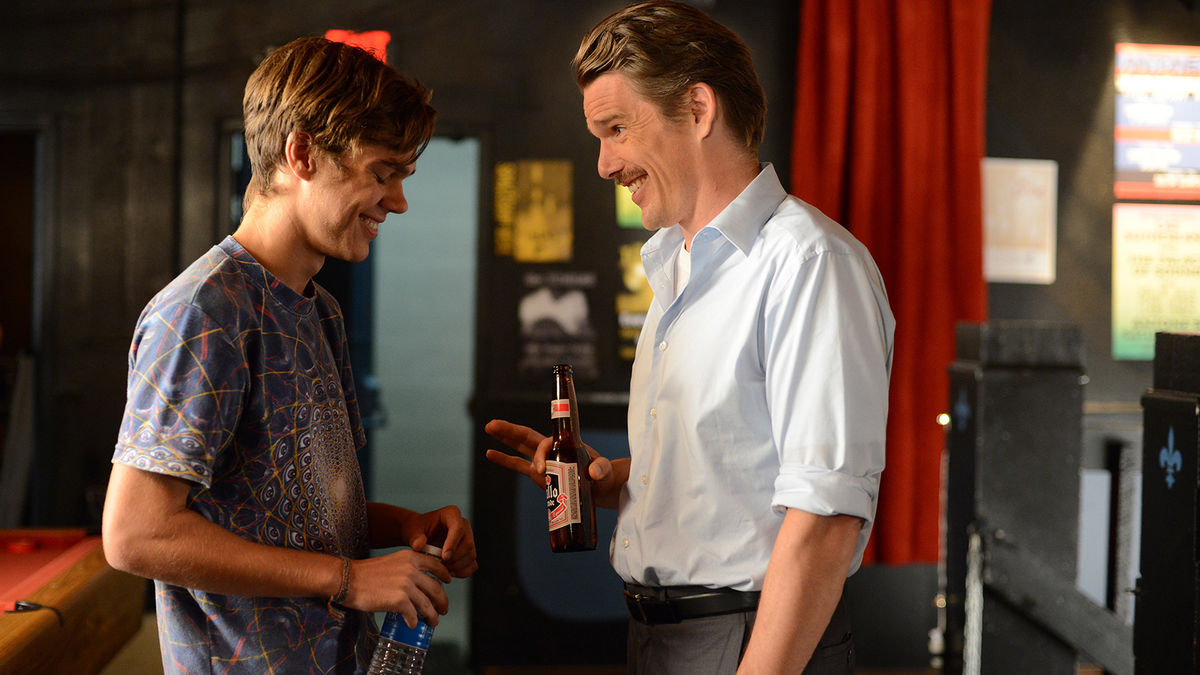
If there is one thing we can all relate to, it’s the trials and tribulations of growing up, that shift from being a child to an adult. It’s the subject of Richard Linklater’s film Boyhood, which follows the growing up of Mason Evans (Ellar Coltrane) from the age of 6 to 18 and his relationship with his divorced parents Olivia (Patricia Arquette) and Mason (Ethan Hawke) and his sister Samantha (Lorelei Linklater). What is however most striking about Linklater’s film is that it was shot over a staggering period of time, 12 years in fact, meaning that Ellar Coltrane and Lorelei Linklater literally grow up on screen before our eyes.

It makes for an almost unrepeatable power over any other film dealing with the same subject, by letting all the actors naturally grow older over the length of the film. Suddenly it becomes not just a film dealing with an idea, but instead a real life dramatisation of the process of ageing, becoming some sort of emotional scrap-book or album, a type of film version of the trick of making a drawing move by quickly flicking the pages of a notebook. It adds an air of depth and reality to the whole film that gives it a universal strength and appeal. It’s an actual slice of real life, it’s unrepeatable and profoundly well done and immersive.

Linklater was given near creative freedom to shoot the film – with the small yearly budget for shooting the film being squirrelled away into various studio accounts. Linklater creates a film with a lack of actual drama that makes it feel even more like a part of life. There are precious few “narrative points” or dramatic tools in the overall film, with the exception maybe of Olivia’s hard drinking second husband Marco (Bill Welbrock). Instead, the issues that Mason (and Samantha) deal with have a universal relevance. These are the sort of events – the sort of conversations – that any child could have growing up. Far from making the film dull, this serves to increase its power.

Linklater based each year’s filming script on the events and feelings that were going on in the life of Ellar Coltrane at the time (although he had a clear idea of the final scene and shot), which perhaps also helped to draw such a series of deeply felt and real performances from Coltrane. The intimacy of the story also brilliantly makes each scene feel engrossingly real, precisely because everything is grounded in reality and nothing in some sort of overarching film narrative.

It’s a film entirely about capturing the rhythms and beats of real life and Linklater’s style allows moments of spontaneity, of naturalness and reality. Nothing in the film ever feels forced. You could argue that it also leads to a film that is almost restrainingly unambitious – it’s about as grounded as you can get, and barely has a structure as such at all beyond time passing. But that would be to miss the point – and the very fact that the film ignores virtually all the clichés of filmmaking narrative and storytelling is something to be praised than to be criticised. 

The film works so well due to the commitment of all involved, not least Arquette and Hawke as the parents. Arquette won nearly every award going (including the Oscar) as the mother, and her performance is a testament to the film’s strengths. It totally eschews the loud moments of acting, the look-at-me Oscar bait that the role could have had, to instead focus on a quiet, sad dignity – but also warmth and loving regard for her children. There is no studied pretence to the role at all, but instead Arquette seems to play instead the moments of joy, tinged with disappointment at moments and chances lost from early motherhood, that you can imagine everyone feeling. It’s a bravely real performance, stuffed with moments of searing, heartfelt emotional truth.

Hawke is just as good as the father, a man who slowly comes to terms with his own responsibilities and adulthood over the course of the film. Starting as still something of a would-be beatnik and playboy, we see him slowly – especially after a second marriage – grow up and accept the role of an adult and a parent, while still clinging to the idea of dispensing fatherly/brotherly wisdom to his son.

If Linklater’s film does have a flaw it’s on this focus of father-son. There really was nothing to stop this from being Childhood rather than Boyhood, but instead it’s the story of the son (and with a particular stress on his bond with his absent father) that is at the heart of the film. It’s perhaps reflecting the angle that Linklater himself bought to the story, but its shame the film doesn’t try and be more even handed by allowing us to get a greater sense of how time and childhood affected both Mason and Samantha, rather than filtering Samantha’s experience through Mason’s perspective. It also means that Mason’s relationship with his mother is downplayed in favour of the bond between father and son, a general preoccupation with male relationships that runs through the film.

It’s a minor flaw I suppose, more of a missed opportunity – and less tasteless than a clumsy sequence where Oliva inadvertently motivates a Mexican immigrant to change his life, something he is profoundly grateful for years later but which she seems uncomfortably unaware of – but then this is a film that gets so much else right. Linklater’s live-action time-lapse film is a work of art that is probably unrepeatable, and is so low-key and normal that it carries a force and relevance few other films can.

Star Wars: The Rise of Skywalker (2019)

Our heroes prepare for one final adventure in Star Wars: The Rise of Skywalker

Director: JJ Abrams

Cast: Carrie Fisher (Leia Organa), Mark Hamill (Luke Skywalker), Adam Driver (Kylo Ren), Daisy Ridley (Rey), John Boyega (Finn), Oscar Isaac (Poe Dameron), Ian McDiarmid (Palpatine), Billy Dee Williams (Lando Calrissian), Anthony Daniels (C-3PO), Naomi Ackie (Jannah), Domhnall Gleeson (General Hux), Richard E. Grant (Allegiant General Pryde), Lupita Nyong’o (Maz Kanata), Keri Russell (Zorii Bliss), Joonas Suotamo (Chewbecca), Kelly Marie Tran (Rose Tico)

When Disney took over the control of the Star Wars franchise, they had in mind an epic continuation of George Lucas’ space opera that would take in everything from more tales from the renamed “Skywalker saga” to standalone entries like Rogue One and Solo. Well, we are almost seven years into this journey now, and the series has delivered some hits but also the first flop Star Wars film (Solo) and the most divisive entry for the fandom ever in The Last Jedi. So where does Rise of Skywalker fall in its plans to cap the third (and they claim final, but let’s see…) trilogy?

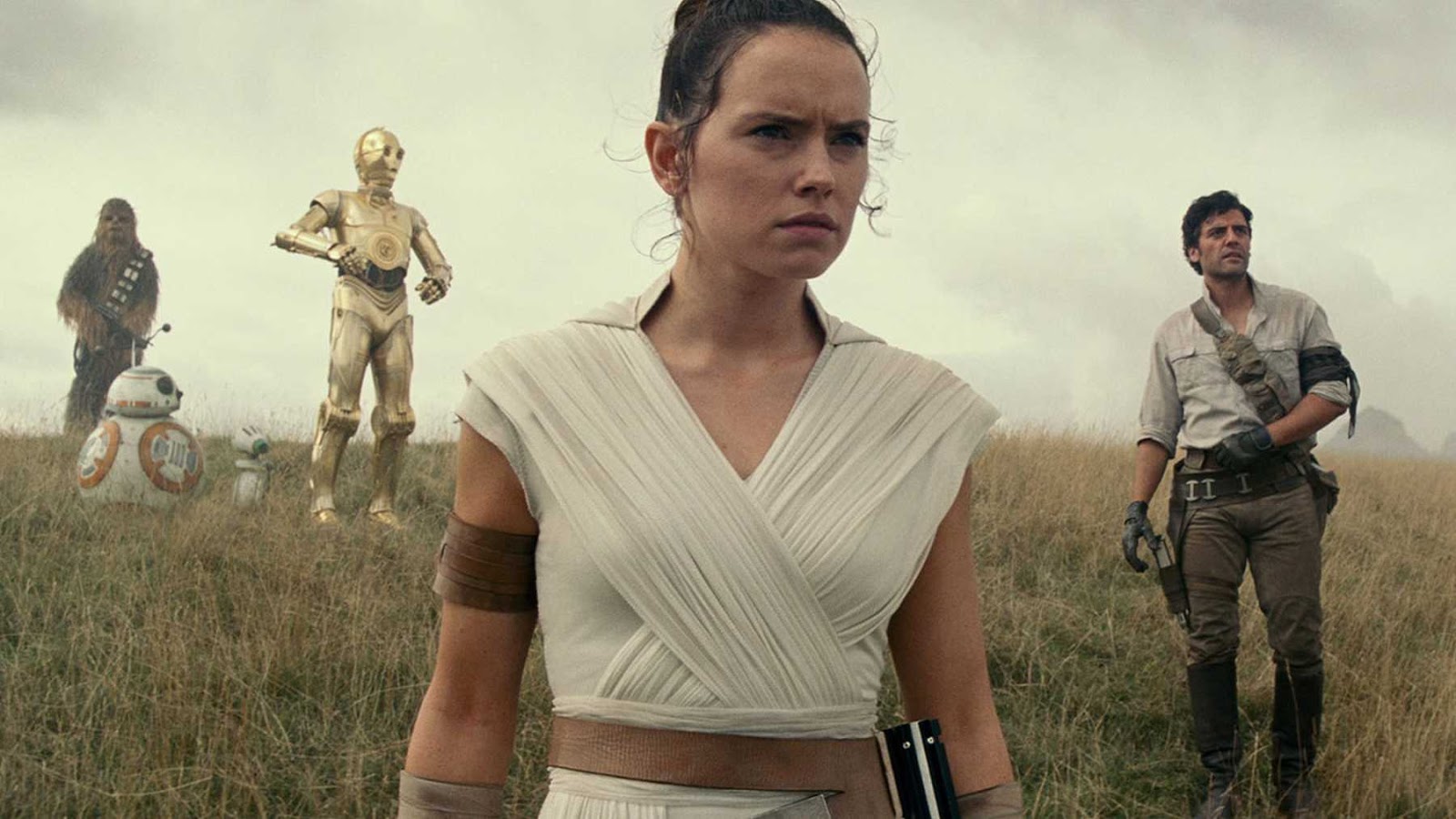
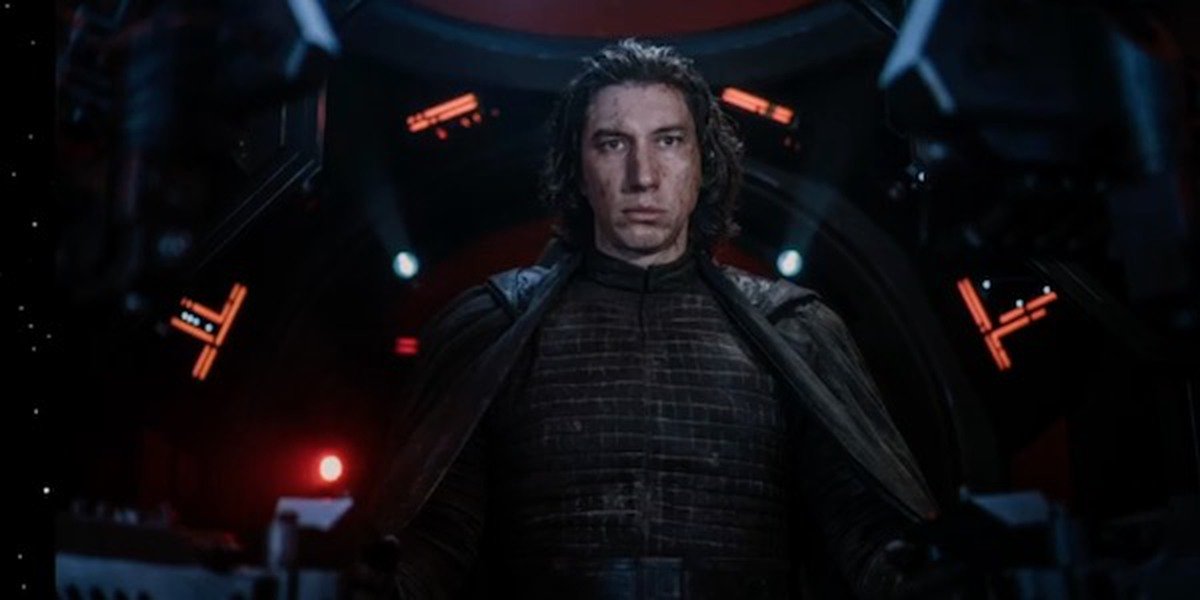
Set a year after The Last Jedi, the Resistance has rebuilt itself under the leadership of Leia Organa (Carrie Fisher), who has also been training Rey (Daisy Ridley) in the Jedi arts. Imagine their horror when a message from the not-so-late Emperor Palpatine (Ian McDiarmid) rings out across the Galaxy, threatening revenge. Kylo Ren (Adam Driver) has been searching for Palpatine and forms a deal – Palpatine will make him emperor of the galaxy, if Ren will kill Rey. Meanwhile Rey heads out into the galaxy with Finn (John Boyega) and Poe (Oscar Isaac) in a race against time to find the location of Palpatine and his armada, before the late Emperor can launch a deadly attack.

JJ Abrams’ return to the franchise is also a return to the fun-focused, action-packed, fast-paced explosion of entertainment and thrills that he offered with the excellent (and still best film in this new trilogy) The Force Awakens. It will excite you, entertain you, and offers some terrific work from many of its players, not least Daisy Ridley (who has grown and grown with each film as an actress confident in carrying a huge franchise) as Rey and Adam Driver as a morally conflicted Kylo Ren. JJ Abrams gently handles the death of Carrie Fisher, skilfully using off-cuts and deleted scenes from past Star Wars films to retroactively create a series of scenes using what dialogue they had from the actress to give her arc some sort of resolution.

It’s one of many things the film gets right here, along with its electric pace and sense of excitement, that never lets up and takes you on such a gripping thrill ride that you hardly notice that most of the film makes very little if any sense (so little sense, I didn’t really understand whether the baddies were the First Order, the old Empire or the Final Order or whatever they were meant to be). It’s a top-to-bottom piece of entertainment, designed to thrill the initiate and the casual fan and give all that you might want to the superfan.

In fact you could say it’s more or less a course correction from the deeply unpopular (with certain elements of the fandom, although its box office success was huge) The Last Jedi. Rise of Skywalker lacks all the iconoclastic “forget the past” attitudes of Rian Johnson’s film. In fact it goes out of its way to ignore as much as possible everything that happened in that film – to the extent that, apart from the growing bond between Rey and Ren and the initial training of Rey, you could more or less skip over it if you wished when viewing the trilogy. I’m not sure how I feel about this – or the fact that the franchise feels it has effectively side-stepped by-far-and-away the most interesting and different film it has produced in favour of a safe-return to familiar stories.

It does mean that Rise of Skywalker is a far less brave film than Johnson’s – and one that avoids doing anything new as well. Many elements from The Last Jedi are disregarded, and all the plot hooks that film are ignored are firmly, and hurridly, reinstated. It means that Rise of Skywalker rushes from revelation to revelation, from plot point to plot point, hardly stopping to draw breath, so eager it is to give the fans what it feels they want. It’s probably a testament to fan power – but also to the savviness of film producers, working out the vast majority of people will come and see any Star Wars film, but the hardened fans will only support a film that matches their agenda.

So it reckons the fans wanted to see answers to questions raised in Force Awakens, lots and lots of cameos and call backs, and plenty of action and space battles. So Rise of Skywalker is a film almost exclusively made up of these things. While there are flaws in this approach, it does mean that this film is a joyfully fun piece of excitement, with lots of great set pieces and some terrific gags among the screenplay. JJ Abrams is a wonderfully confident director of this sort of action, and while the film often feels like it never takes a second to really explain any of its plot dynamics, he is also able to create a narrative that is much more fun and exciting than The Last Jedi, for all its faults of pacing, narrative and characterisation.

What this film does the most is hammer home the bizarre fact that Disney set about making a franchise of three films – guaranteed three films! – with no coherent thought at all about how all these three films would work together either in terms of tone or plot. Now that all three are assembled there is no sense of them having any particular themes, or that they connect together to form an overarching story. The conclusions reached in this film are only faintly threaded in Force Awakens and all but contradicted in The Last Jedi. It’s this lack of planning that underwhelms the film – fun as it is, these are more like three loosely linked films rather than ones that progress one to the other, or feel connected to the original three films.

It’s of course made worse by the ignoring of The Last Jedi – Rose Tico, a character that film spent a lot of time building and establishing gets less than three minutes of screen time – and a re-focusing of the film on the “family of three” in Rey, Poe and Finn that mirrors the first film. This relationship is now far warmer and closer than we ever saw developing in Last Jedi (a film they never appeared in together until the final seconds) – and also laced with an odd, almost queer-baiting sexual tension, where they seem at times like a borderline thruple. (The film offers a cop out on LGBTQ people in Star Wars by having two background characters kiss at one point, a blink-and-you’ll-miss-it shot, cut in China.)

It’s part of a general lack of imagination in the film as a whole, which leans often on bringing back people from the previous trilogy and even sidelines the villains of the rest of the trilogy to shoe-horn back in Palpatine (a reintroduction that is barely explained – like much of the film – and also rather undermines the ending of Return of the Jedi) as the big-bad, and which again doubles down on many of the tropes of the first trilogy. JJ Abrams often mistakes bigger for better – and this film is big, with races against time, fleets beyond imagining, planet destroying tech that can be put into a single star destroyer, Sith powers that can stretch over thousands of miles etc. etc. He takes the same approach with the film, throwing so much of the old trilogy in that it becomes more of a surprise that stuff is missing rather than appearing (I was shocked Yoda wasn’t in this one).

But it’s what the film is going for, offering something safe and recognisable, something that is a thrill ride like you remember rather than the different path the trilogy seemed to be heading towards. There is nothing wrong with that of course at all, but it feels like a missed opportunity. For all its faults, The Last Jedi tried to do something new. This doubles down on the things it knows fans will love, and offers all the entertainment it suspects the casual viewer wants. And maybe that’s enough.

Quiz Show (1994)

Ralph Fiennes excels as the man who as the answers he shouldn’t have in Quiz Show

Director: Robert Redford

Cast: John Turturro (Herb Stempel), Rob Morrow (Richard Goodwin), Ralph Fiennes (Charles Van Doren), David Paymer (Dan Enright), Paul Scofield (Mark Van Doren), Hank Azaria (Albert Freedman), Christopher McDonald (Jack Barry), Elizabeth Wilson (Dorothy Van Doren), Mira Sorvino (Sandra Goodwin), Allan Rich (Robert Kintner), George Martin (Chairman Oren Harris), Paul Guilfoyle (Lishman), Martin Scorsese (Martin Rittenhome), Barry Levinson (Dave Garroway)

Imagine, if you can, a time when we trusted everything we saw on television. When whole nations crowded around to watch a show, and would run home to make sure they didn’t miss it. When the people appearing on the box in the corner were like members of the family invited into our home. In our cynical age of streaming and distrust, such ideas are impossible to imagine. Now we doubt anything we are shown on the box – and the first brick in that wall fell into place with the rigged quiz show scandals on American television in the 1950s.

Twenty-One is the biggest hit on NBC, with reigning champion Herb Stempel (John Turturro) correctly answering every question that comes his way. But the show’s sponsor, Geritol, is worried: Stempel’s ratings are at a plateau, and they feel the show needs a new champion. So producers Dan Enright (David Paymer) and Albert Freedman (Hank Azaria) look to recruit the sort of face of Twenty-One the sponsors want – and find him in clean-cut, Ivy league, charming Columbia League instructor (or “Professor” as they insist on calling him – and Van Doren’s move from reminding him he hasn’t qualified for that title, to happily accepting it is telling in itself) Charles Van Doren (Ralph Fiennes). 

They offer Van Doren the chance to win the show by telling him the answers in advance, while offering Stempel a career in television if he will agree to throw the next edition of the programme. Both men are plagued with indecision, but Stempel throws the game and Van Doren provides the correct answer to his final question – the exact same question he had been asked at his audition. Van Doren, seduced by the fame, quickly agrees to be given the answers in advance of the show, but the unreliable Stemple is dropped by NBC and instigates Grand Jury proceedings. The records are sealed but this piques the interest of Congressional lawyer Richard Goodwin (Rob Morrow), who begins to see the potential to “put television on trial” – while being deeply conflicted by his growing friendship with Van Doren, keen to be seen as co-operating with any investigation.

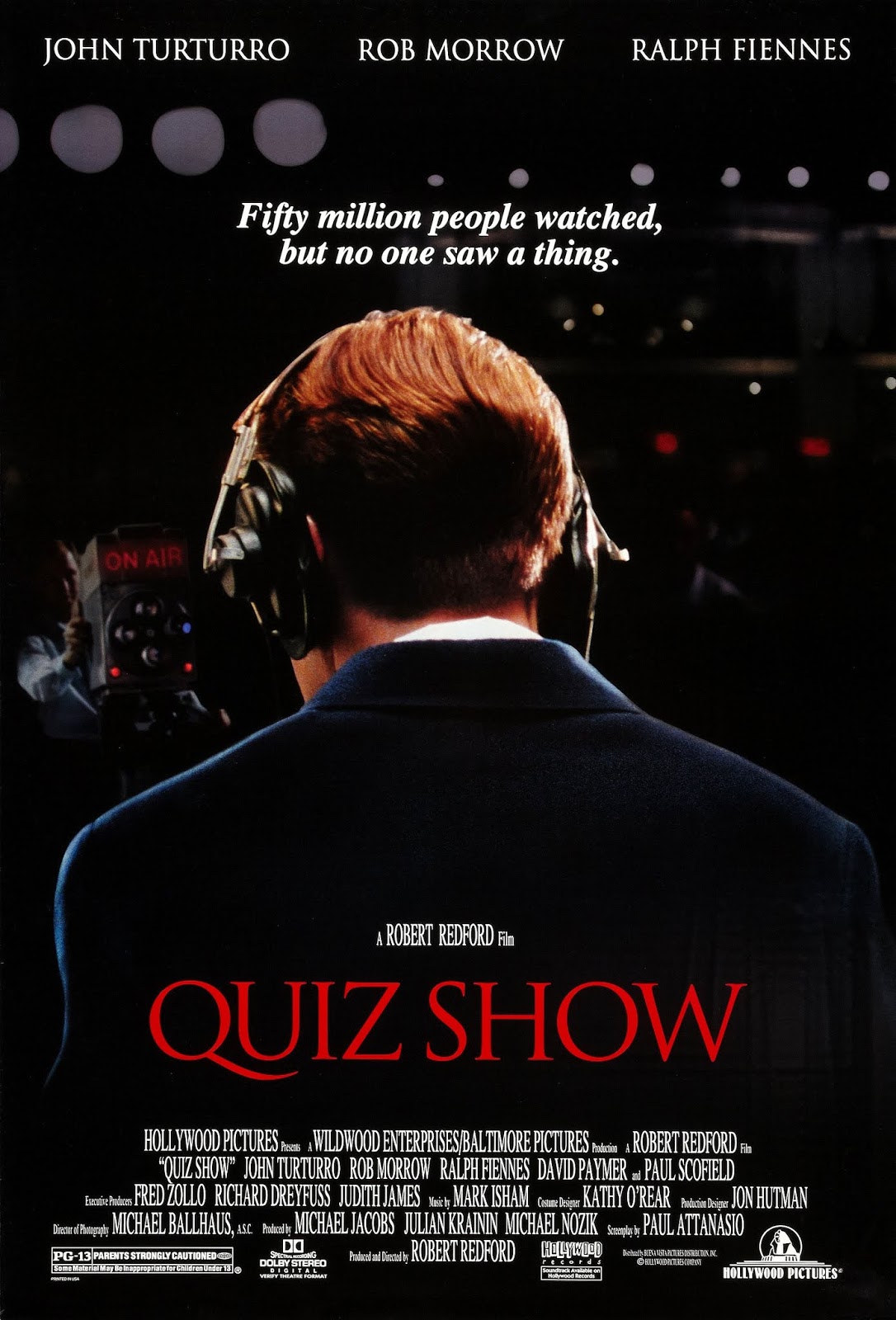
Quiz Show remains Redford’s finest directorial achievement by far, a rich, fascinating, beautifully made film with a profoundly rewarding and engrossing reflection on fame, television and the media in 20th-century America. Told at a gentle but compelling pace, probably the strongest weapon in its arsenal is a fantastically literate, well-constructed, dryly amusing and affecting script by Paul Attanasio. Scenes are beautifully assembled, crammed with well observed character beats and wonderfully quotable lines. It’s a script that would stand up extraordinarily well as a play itself, and Redford allows it plenty of room to breathe in his assured, unshowy and perfectly judged direction.

This is a film that analyses exactly how truth and entertainment are supposed to be inter-related. The rigging of quiz shows – and it was systematic across a range of shows on all channels – was a detailed lie to the American people. But, the film asks, what was the real harm of this? What are these quiz shows for? Tests of intellectual attainment or pieces of entertainment for the masses? As Scorsese’s Geritol executive says, people weren’t watching the questions, they were watching the money. 

And money is where the villainy lies in this film. For a film rich in period detail, Redford makes clear that there is a definite sense of class that underlies all the action. Decisions are made on the show based on selling things – advertising hours and Geritol products. And there are people in this show – the heads of corporations like NBC – who are making millions out of peddling rigged entertainment shows to the people. And when the chips come crashing down, it’s not these executives who are in the firing lines; it’s the little people who were the face of the enterprise – the contestants themselves – who pay the price.

It’s the exact opposite of what Goodwin wishes to achieve when he starts his investigation. He wants to add some moral force, some legislative control, to what you can and cannot present as fact and fiction on television. What he fails to understand – and what the film does – is that deep down people don’t want this. They want the excitement and the thrills – and at the end of the day wouldn’t care less if they never found out everything presented to them was carefully scripted. This lasts today: do we care that comedy sketches are not improvised but carefully scripted? Do we care if game show contestants are carefully pre-selected? Again, as Scorsese’s sponsor representative states, all any investigation will accomplish is TV shows figuring out other ways to get the high ratings: and simpler questions and less erudite competitors will be the way to go.

Because it’s all the glamour and excitement and drama we like to watch, not displays of intellectual accomplishment. It’s something the film understands – and something that comes across very clearly in Ralph Fiennes’ exquisitely well-judged performance as Charles van Doren. A genuinely intelligent, decent man, Fiennes’ performance works so well because he makes clear that under the WASPish, patrician decency of van Doren is a fundamental shallowness, a laziness and hunger for the quick buck and easy success. Constantly, Fiennes’ confident grin and easy manner hide his unease and guilt at his conduct. But he clearly can’t help himself, a Faust wrapped up in his pact.

After all what would his father – the famous poet and academic Mark van Doren, played with a beautiful ease, grace, intelligence and iron-clad honesty by Paul Scofield, a sublime actor at the top of his game – think of this all if he found out? The scenes between the two men – one the proud, loving but quietly demanding father, the other the successful, shallow, quietly desperate son – are the film’s strongest moments, consumed with the tension of the unspoken. We can see the pressure of familial expectations reflected elsewhere in Herb Stempel’s wife’s disappointment at finding that Stempel himself was a coached as much as van Doren.

John Turturro goes larger as Stempel, a bitter and frustrated man addicted to the attention and glamour TV has bought him which he has always felt has been denied him. Stempel’s desire for fame, his assumption of a persona in the public eye which is part studied, part eagerness to please his audience, gets to the heart of TV’s power. It’s the box in every room, and it can turn the ordinary into the extraordinary. It’s a box with the potential to weave magic – and it’s the tricks behind the magic that are difficult to see. For all we know the magician doesn’t saw the assistant in half (as Hank Azaria’s crude producer puts it), it makes it hard to enjoy the trick when you know it is one.

It’s ideas like this that the film gets to  so cleverly, and which turns the American quiz show into an intelligent metaphor for the corrupted ambition of America itself. The dream is to get to the top, and this was a way of offering a short cut for it – and all to help big business sell its products and make money. This is the subversive truth at the heart of Quiz Show, but it’s easy to forget as we, like the American people, have the obvious villains of the ordinary contestants be crucified by the media, rather than those who really profited. Redford’s film is smart enough to constantly remind us of this, to humanise the contestants and to show the darker elements underneath. Quiz Show is a great film.

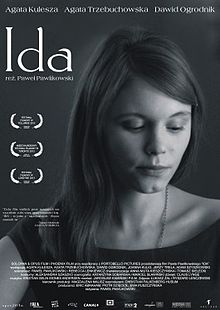
Ida (2014)

Agata Kulesza as a young Nun facing a crisis in engrossing Polish film Ida

Director: Paweł Pawlikowski

Cast: Agata Kulesza (Wanda Gruz), Agata Trzebuchowska (Anna/Ida Lebenstein), Dawid Ogrodnik (Lis), Adam Szyszkowski (Feliks Skiba), Jerzy Trela (Szymon Skiba), Joanna Kulig (Singer)

We are lucky. Growing up in a Western country, free of conquest and suppression, we don’t have the past weighing on every breath and step of our lives. But travel to other parts of Europe and you will find that the past is as unspokenly present in every moment as the present is, and that the two practically coexist side-by-side. Poland in the 1960s was such a country – a land so weighed down by the horrors it had seen throughout the century that there is no need for them to be given a name.

Anna (Agata Trzebuchowska) is a young novice nun told by her prioress that before she can take her vows she must meet with her aunt, Wanda Gruz (Agata Kulesza), a last surviving relative she had never even heard of until that day. Visiting Wanda, Anna is shocked to discover that Anna’s real name is Ida and that she is the daughter of Jewish parents murdered during the Second World War. Wanda, a resistance fighter during the war, later became a feared State Prosecutor but is now a judge struggling with unspoken guilt and succumbing frequently to alcoholism and one-night stands. Together Wanda and Ida travel to try and trace what exactly happened to Ida’s parents – discovering profound truths about themselves and their country as they travel.

Pawlikowski, a Polish director who grew up in London, directs his first Polish language film – and I think it’s fair to say he has produced a small-scale masterpiece here. Shot in beautiful black-and-white – a sublime choice for the chilling weight of the past that hangs over every shot of this film – Pawlikowski’s film is a lean, trim, perfectly weighted 78 minutes that covers more thematic depth and richness than films three times its length. It’s done with a beautifully low-key, quiet power that gives you plenty to richly mull over.

Its genius is capturing the weight of the past and the impact that it has at both a personal and a national level. So traumatic is the past of Poland that words like Holocaust and Stalinism need not be mentioned – over the course of a decade, millions of Poles (many of them Jews) were killed by Nazis, Soviet police and other Poles. This is a country lying deep in a post-traumatic haze, guilt, fear and sorrow the base below many social interactions. Pawlikowski captures all this beautifully, the oppressive gloom of sadness lying across every single frame. 

There is no demand for retribution and apology – and the one moment of guilty confession is beautifully underplayed and affecting for its relative lack of reaction from the witnesses – and the past is not expressed as an evil secret. Rather, people – good and bad – are shown as just people, many of them acting out of fear, or for what they felt was best, or ignorance. There is no easy viciousness and evil in the past, just the sad facts of life. The film’s atmosphere is coated in the horrors of the past, but lives roundly in the present. There are few – if any – dramatic moments of tears, recriminations and accusations. Instead the pressure of the past is met with sad, reflective shame and weary acceptance of the impossibility of going back.

Every shot is carefully chosen to reflect this theme. Pawlikowski frequently shoots Ida and Wanda just off centre of the frame, or even low down in the frame, allowing much of the shot to frequently be filled with the architecture and nature of Poland – much of both, rundown, crumbling, cold and bleak. The old “academy” ratio of 4:3 works perfectly for this look, old-fashioned but also boxed in. Not a single shot is wasted or overlong, and each of them serves a perfect purpose. Pawlikowski uses the structure of the road movie to serve itself as a semi-voyage into the past of Poland, as well as brilliantly allowing for the emotional expansion of its lead characters.

Both these leads are beautifully played by the two leads. Agata Trzebuchowska, a non-actor (now a journalist and film director herself) was plucked from almost nowhere in the Polish film industry to play Ida (she accepted due to her love for Pawlikowski’s film My Summer of Love) and she is perfectly suited to the role, investing Ida with a certainty from the start that slowly adapts and adjusts as she learns more and more about both her own past and her country’s. 

Agata Kulesza is extraordinarily good as Wanda, whose intense feelings of guilt at the many mistakes she feels were made in her past consume every thought, but who presents to the world a bullish confidence and freedom of expression. Her underlying vulnerability is what allows Ida in – and what will fundamentally change her outlook on the world, and both give expression to and dominate her melancholy.

Both these characters are shifted and changed forever by their joint exploration of the seemingly simple facts of their background – and the idea of continuing life in a world after this seems impossible. But Pawlikowski’s film doesn’t seem without hope. There is another generation coming to Poland – represented by a jazz band, led by Lis (Dawid Ogrodnik), a hitchhiker they pick up – and for these, the past seems just that. It’s not an everyday presence that haunts their decisions, or hangs over their life, and for this generation coming “life as usual” seems not a burden but an accepted fact. Is this a good or a bad thing? Maybe both, but it at least shows that that the country has some hope of moving on and forging a future even while the scars of the past remain.