Sunshine (2007)

Astronauts head out to restart the sun in Danny Boyle’s Sunshine

Director: Danny Boyle

Cast: Cillian Murphy (Robert Capa), Chris Evans (James Mace), Rose Byrne (Cassie), Michelle Yeoh (Corazon), Cliff Curtis (Searle), Troy Garity (Harvey), Hiroyuki Sanada (Kaneda), Benedict Wong (Trey), Chipo Chung (Icarus), Mark Strong (Pinbacker)

Spoilers: Last act surprises are discussed here. Although they did put them in the trailer at the time as well

What would we do if the sun decided to pack it in? To be fair, probably not build a bomb the size of Manhattan out of all the world’s fissile material and then fly it up to the Sun in a huge spaceship to jump start the sun’s core. Because that idea is pretty much like trying to restart a volcano with a match. To be fair, Professor Brian Cox (for it was he) did come up with an actual concept that did work – something involving a Q-Ball in the sun, whatever the hell that is – that the film never mentions. But then who really cares about the science, we only care about the simple idea of restarting the sun’s engine with a massive nuke. That’s an idea I don’t need a staff pass at the Large Hardron Collider to understand.

Mankind’s final fate is in the hand of a team pulled from across the world’s space agencies, with Professor Robert Capa (played by Cillian Murphy as a figure inspired heavily by Brian Cox himself in looks and style) as the boffin whose job is to blow the bomb when the time comes. The mission, Icarus II, is under the command of Captain Taneka (Hiroyuki Sanada), with engineer Mace (Chris Evans), pilot Cassie (Rose Byrne), biologist Corazon (Michelle Yeoh) whose job is to maintain the oxygen garden, psychiatrist Searle (Cliff Curtis), navigator Trey (Benedict Wong) and second-in-command and comms officer Harvey (Troy Garity). Entering the final days of the mission, near Mercury, the crew discover traces of the first missing mission that carried the first payload to restart the sun, Icarus I. Deciding two payloads are better than one, the crew divert to intercept – and of course from there everything slowly falls apart into increasing chaos, destruction and horror.

Boyle’s film was marketed as a sort of slasher-in-space – which to be fair it only really becomes in its final act, as the crew accidentally take on board captain of Icarus I, Pinbacker (Mark Strong), a man driven mad by proximity to the sun, deluded in the belief that it is God’s will that mankind perish with the sun. In fact for the bulk of its runtime – and its primary themes – are really about the psychological impact of prolonged isolation in space with only a small group of people for company (a heightened submarine claustrophobia), the dangers and damage that obsession can cause and the moral complexities that emerge when the fate of mankind is literally in the hands of eight people.

With an intelligent script by Alex Garland, Boyle’s film is smart, superior sci-fi which asks searching questions of how we might respond in the situations this crew are thrown into. How quickly would you make decisions about who is expendable and who is not when you are mankind’s last chance? How quickly would you be willing to sacrifice yourself? What moral qualms would you feel if the fate of the one was balanced against the many? And how are all these feelings heightened by the intense claustrophobia and isolation of prolonged space travel, interacting with the same few people day-in and day-out in a ship of which every inch you would be intimately familiar within the first few months of a mission lasting years?

It’s a wonder more people don’t go crazy in the film. Boyle’s film makes excellent use of the terrifyingly awesome, good-like power of the sun. Its rays are so intense at the range of the ship, that any exposure over about 2% of its full strength is lethal. But there is something about its mighty power, its all-consuming presence, that draws characters too it like moths to a flame. Psychiatrist Searle (impressively played by Cliff Curtis) already seems to be becoming slowly a slave to an obsession with our star, his skin peeling from too many hours in the ship’s solar observation lounge. Pinbacker (a curiously accented performance of intense insanity from Mark Strong) lost his mind in sun worship, his mind seemingly snapped by coming face-to-face with the powers of the heaven compared to the mini-presence of man.

But it’s that presence of mankind that drives the mission, and lies behind all decisions. Hard-ass engineer Mace (Chris Evans, very good) seems like a jerk, but he simply applies Spock’s maxim of the needs of the many to a logical extreme (correctly) objecting to every course of action that invites unknowns into the equation that endanger the mission. And Mace doesn’t hesitate at any time in the film when asked to balance his own safety against the success of the mission. Each crew member – with the exception of Harvey – places their own survival a distant second behind the completion of the mission, and the film is littered with moments of self-sacrifice and self-imperilment.

It’s this humanistic core to the film, of accepting the world is it and that mankind must be preserved within that, which leads to some of the film’s more weighted points around faith and religion. The film has little time for anything away from pure science, and an interest in higher powers and staring too closely at the bright light, is mixed in heavily with a dangerous fundamentalism that eventually leads to the film’s only spiritual figure Pinbacker becoming a psychopath determined to follow what he sees as God’s plan at the cost of all human life. It’s not a subtle picture of religion – and the film could have balanced it with at least one of these characters expressing some faith in some sort of religion on the ship or gently questioning how humbling being this close to the face of God might feel. The film has no time for that.

But then I suppose this is really a psychologically intense mission film, a sort of big-themes action sci-fi that is the sort of ideas based film you wish was made more often. Boyle’s direction is pinsharp as always, and the moments of dreamy awe and shattering power of the sun (as bodies are vapourised, parts of the ship crumble) or the freezing vastness of space (as one character discovers to their cost) provide a series of haunting scenes. Shooting Pinbacker with a juddering out-of-focus intensity – intended to ape the feeling of starring directly at the sun – is effective in making the character chillingly unknowable.  This moments work very well, as does the superb cast which has not a weak link among them (Cillian Murphy in particular anchors the entire thing extremely well). Sunshine is a thought-provoking and blistering science-fiction film that manages to balance big themes and ideas with horror house jumps and haunting moments of tension.

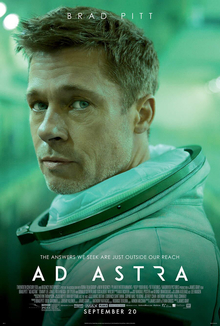
Ad Astra (2019)

Brad Pitt goes out to the stars in Ad Astra

Director: James Gray

Cast: Brad Pitt (Roy McBride), Tommy Lee Jones (H. Clifford McBride), Ruth Negga (Helen Lantos), Liv Tyler (Eve McBride), Donald Sutherland (Colonel Pruitt), John Ortiz (Lt General Rivas

Man has looked up at the stars for as long as we can remember and imagined what lies out there. From Gods to other intelligent life form, every culture has been drawn to imagine beyond the bounds of Earth and dream of finding what is out there. It’s a dream that powers the life of leading US Astronaut H. Clifford McBride (Tommy Lee Jones), who in “the near future” led “The Lima Project” to Neptune to try and find intelligent life beyond the Solar System. Now missing 17 years, Clifford’s son Roy (Brad Pitt) has become a leading astronaut, tasked with leading efforts to find his father after a series of devastating power surges damaging the planet and killing thousands are traced back to the Lima. So Roy embarks on an epic voyage, from Earth to mankind’s bases on the Moon and Mars to Neptune in quest of his father.

James Gray’s artfully made film yearns for a moral and thematic depth that it doesn’t quite manage to achieve. Its structure is heavily inspired by Hearts of Darkness, with Marlow and Kurtz twisted into a Son-Father dynamic and many of the stop offs on the way McBride encounters eerily reminiscent of the adventures of Marlow. Is there a longer trek down the river than crossing the Solar System? 

Within this framework, Gray throws in an earnest meditation on the nature of mankind’s yearnings and how our instincts collide between our dreams for an unattainable unknown and the world around us. All of this accompanied by Pitt’s Conradesque voiceover, as McBride muses over his own internal struggles, doubts, inadequacies, frustrations and sorry all bubbling beneath his calmly controlled exterior.

Its Pitt’s film and Ad Astra is a reminder that he is an actor who looks to push himself to his absolute limits. Here he carries the whole film, for long stretches alone, his eyes conveying the cool professionalism and self-control of McBride, along with his own far-more-fragile-than-appears psyche. Carrying burdens of loss and regret, McBride seems to see crises that he encounters in space as relief from his own internal struggles. Whenever the shit hits the fan, McBride is the coolest man in the room (his commanding officers admiringly state his pulse rate never seems to go above about 80 in even the most life-threatening situations) and from tumbling from the outer atmosphere, evading pirates in a moon buggy in space or manually landing a spacecraft, he never fails at his professional duty. Only when confronted with the emotions of his own life is he left with his composure fractured.

Pitt conveys the isolation and pain of McBride extremely well, with acting and expressions so subtle they carry all the more emotional force. It’s a controlled and perfectly judged performance that powers the entire film, and bears a lot of the thematic weight of Gray’s invention. 

Gray’s direction is powered by clear memories of 2001 and Solaris (although I also felt echoes of Danny Boyle’s space horror Sunshine in its fascination with the dread and danger of the vastness of space not to mention Christopher Nolan’s Interstellar). It looks fantastic with a wonderful score, ambitiously grasping for importance.

Episodic as it moves from location to location, Gray’s film creates a convincing world of the future, where mankind has disputed colonies on the moon (space pirates roam between bases, taking hostages like Somalian pirates), space travel is commercialised (by Virgin of course) and people live and die on a far-flung underground base on Mars. While I did briefly think about the enormous cost of all this space travel with its huge fuel consumption and debris of discarded rocket sections (how on earth is this commercially viable?), not to mention the trouble that would be involved in erecting giant neon cowboys on the Moon, it’s convincing.

Gray’s film wants to delve into the mysteries of humanity, and McBride Snr’s entire life has been dedicated to the quest for finding out that we are part of something larger than ourselves, that we are not alone. Gray wonders perhaps if this shark-like desire we have for moving forward, the ruthlessness we display in leaving the past behind in quest for the future, perhaps mars us as a species, prevents us from finding contentment around us and leads to us damaging this world we have been given in our search to make it larger.

But the more Gray’s film closes its grip, the more themes seem to slip through its fingers. The journey is compelling in its creation of a series of worlds, Brad Pitt’s dedicated performance, and the sense of danger and the array of questions that the film throws up. But while 2001 in many ways manages to feel like it is about everything and nothing, so wonderfully engrained is the magical poetry in its soul, here it feels like the film gets less and less engaging the further the journey goes. The destination sadly cannot match the voyage, however beautifully filmed that voyage is.

Instead when the film arrives, we find it becoming more and more bogged down in father-son issues that feel just cheaper and less interesting than the more spiritual and enigmatic concerns the film has for much of the rest of its running time. Not helped by a disengaged performance from Tommy Lee Jones, the more the film heads into this territory the more it seems to lose the depth it aimed for earlier. Late attempts to restore the enigma, mystery and universality don’t succeed to completely restore the feeling that this is classic science-fiction poetry. It’s a shame as Gray’s film as many wonderful moments, beautiful craft in its making and a wonderful performance by Pitt – but it feels in the end as about much less than it could have been. But for all this, there is a magic unknowingness about it that could have it hailed as a classic in years to come.

M*A*S*H (1970)

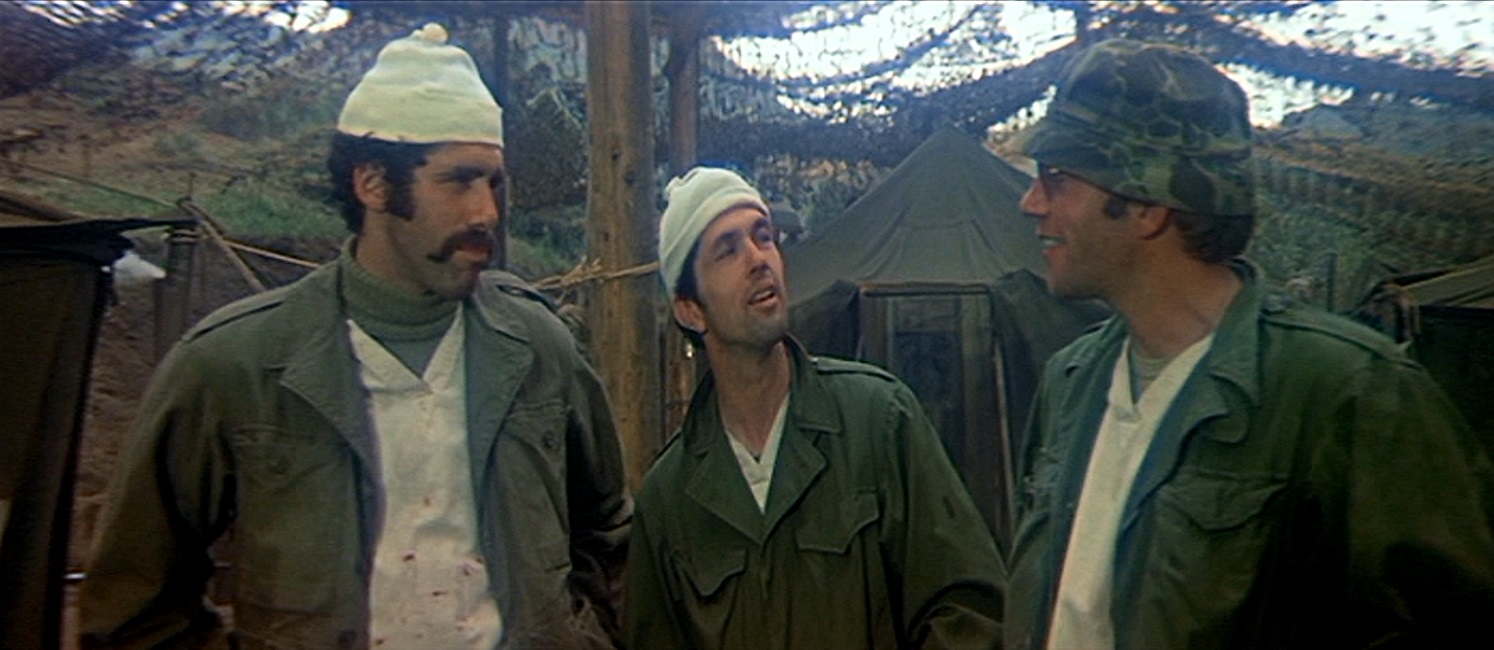
Elliott Gould, Tom Skerritt and Donald Sutherland are three madcap surgeons in Robert Altman’s M*A*S*H  a film that looks less screwball and more misogynist every day

Director: Robert Altman

Cast: Donald Sutherland (Captain “Hawkeye” Pierce), Elliott Gould (Captain “Trapper” John McIntyre), Tom Skerritt (Captain “Duke” Bedford), Sally Kellerman (Major Margaret Hoolihan), Robert Duvall (Major Frank Burns), Roger Bowen (Lt Col Henry Blake), Rene Auberjonois (Father Mulcahy), David Arkin (SSgt Wade Vollmer), Jo Ann Pflug (Lt Maria “Dish” Schneider), Jon Schuck (Captain “The Painless Pole” Waldowski), Carl Gottlieb (Captain “Ugly John” Black)

Robert Altman’s counter-culture M*A*S*H was his first (and probably only) unreserved smash hit, the film where Altman cemented his style as a director. Although set in the Korean War, the film was clearly more about attitudes towards Vietnam. Today M*A*S*H is probably more well known as the filmic spring board for the extremely long-running TV show starring Alan Alda (which, at 11 years, lasted seven years longer than the war it was set in). 

M*A*S*H (like the series) covers the mad-cap antics of the doctors at the 4077thmedicine outpost near the frontlines of the Korean war, a casualty clearing station where young men are patched up and either sent back to the front line or sent home. While the base is a military operation, most of the doctors serving there are drafted civilian doctors rankled by rigid military discipline. The leaders of this prickly bunch are “Hawkeye” Pierce (Donald Sutherland), “Trapper” John (Elliot Gould) and “Duke” Bedford (Tom Skerritt), with their targets ranging from generals to the stiff-backed military figures on the base, specifically the officious but less-competent surgeon Frank Burns (Robert Duvall) and Head Nurse Major Hollihan (Sally Kellerman).

M*A*S*H is the first expression of what became Robert Altman’s signature style as a director. The film has a grimy immediacy that throws the audience into the middle of the action, and is cut with an edgy lack of artifice that at the time was seen as barely competent film-making. That didn’t outrage people as much as Altman’s willingness to allow a lack of conventional discipline in dialogue delivery, with actors overlapping wildly, some dialogue drifting out of earshot or not being captured on screen, no real story being developed through it. It’s a deliberately scrappy, scratchy, almost clumsy film shot with a great deal of artistic discipline (including a spot on The Last Supper parody) but cut and sound-edited with a casual precision that makes it feel extraordinarily experimental.

It infuriated its screenwriter Ring Lardner Jnr (no doubt the Oscar that he received soothed his pain), and Altman’s loose, improvisational style and unwillingness to go for conventional framing and style also alienated his leading actors. Altman and Sutherland (with Gould’s support) each pushed for the other to be dismissed from the film (Sutherland has claimed to have never seen the film, and ton have never understood its success; Gould later apologised by letter to Altman and worked with him several times again) and the whole film’s final style – its influential fly-on-the-wall vibe and nose-thumbing lack of formal discipline – can be attributed completely to Altman’s vision and artistic independence.

The film is important as a key landmark in film-making style and in Altman’s development as a director – but there is no other way of saying it, it has dated extraordinarily badly. For those more familiar with the TV show, its tone is going to come as quite a shock. The TV show is a lighter, sillier, more socially conscious creation (increasingly so in its later years) where the tone was more japery and deadpan silliness. The film is cruel, and its lead characters are swaggering, alpha jocks and bullies, whose meanness and astonishing levels of misogyny are constantly celebrated and rewarded. For those who remember Alan Alda as Hawkeye, Donald Sutherland’s viciousness is coming to come as quite a shock!

Hawkeye and Trapper John’s vileness at frequent intervals is pretty hard to stomach (the less said about the racist, unpleasant Duke the better). The film is really keen to show that all this rampant cruel practical jokery is a survival mechanism against the horrors of war, and the difficulty of dealing with patching young soldiers up to send them back out to die. But the film never really gives us a sense of the war, and the surgery scenes (while effective in their bloodiness and counterpointing the frat house atmosphere of the rest of the film) fail to create that ominous sense of senseless never-ending conflict that the film needs to balance out the vileness of the humour. Further, while Hawkeye and Trapper John are both shown to be dedicated and gifted professionals, they also remain two-dimensional figures, never really shown to have an emotional hinterland that expands their work. They are instead more like Wall Street stockbrokers: excellent at their job, but still a pair of arseholes.

Their attitude to women – and the film’s attitude – is beyond troubling today, it’s flat out offensive. The nurses on station are treated as no more than snacks for the men to enjoy, that they are entitled to pick up as often as they like, and who are barely given any character at all. Sex is as much an entitlement as rations. On his promotion to Chief Surgeon, Trapper John demands (half-jokingly) sex, while Hawkeye “volunteers” a woman to help “cure” another character who fears he has turned homosexual and is considering suicide. Counter culture against the war is celebrated throughout – but it shown in this film to be overwhelmingly a masculine campaign, in which women have no place and no equality. Men can feel the war is terrible, and men can rebel against authority, but women exist only to service their needs.

All of this boils down into a real bad taste in the film’s treatment of ultra-professional Major Hoolihan. Reviled by Hawkeye, Trapper John and Duke for the twin crimes of taking her military career seriously and not being interested in sex with Hawkeye, Hoolihan is systematically degraded and humiliated throughout the film. From having her sex with humourless prig and fellow disciplinarian Frank Burns broadcast around the camp (giving her the nickname “Hot Lips” from her pillowtalk, a title she never escapes) to having the shower tent collapsed around her in front of the whole camp to settle a bet about whether she is a “real blonde” or not – her reaction to which we are misogynistically encouraged to view as hysteria, as dismissed by her commanding officer – it’s tough to watch. The one compliment she gets in the film on being a good nurse is accompanied by her insulting nickname, and by the end of the film she has been reduced to being depicted as an air-headed cheerleader at a football game. Even her credits picture shows her ultimate moment of humiliation. She’s seen as a Blue Stocking, unnatural because she is attractive but not willing to be sexually available to men. This is the sort of treatment that could drive a person to suicide, here treated for laughs. It’s impossible to watch with a smile today.

And it’s the dated part of the film as Hawkeye and Trapper are never questioned for this behaviour – indeed they are celebrated and encouraged throughout as fun, cool guys – when in fact they are the worst sort of jock bullies and their antics the sort of tedious frathouse rubbish that blights too many all-male clubs. They are working class Bullingdon boys, who value nothing, with the film giving them passes because they are great surgeons. Sutherland in particular isn’t charming, he’s creepy and unsettlingly cruel, while Gould at least has a madcap goofiness with touches of humanity. 

Two hours with these arseholes is a long time, and the film just plain isn’t funny enough for what it is trying to do – neither does it convey the horrors of war enough, or the men’s understanding of it. More time shown on the surgeons at least acknowledging the horrors might have helped wonders – but the film assumes that we know what they are feeling and just rolls with it. You could generously say they are cruel in a cruel world. But the film never acknowledges the essential meanness of the humour here, and tries to involve us all in it with no sense of conflict or concern. It’s a troubling film to watch today, its rampant sexist cruelty is offensive and its lack of charm purely unintentional. Time will continue to be cruel to it.

High Noon (1952)

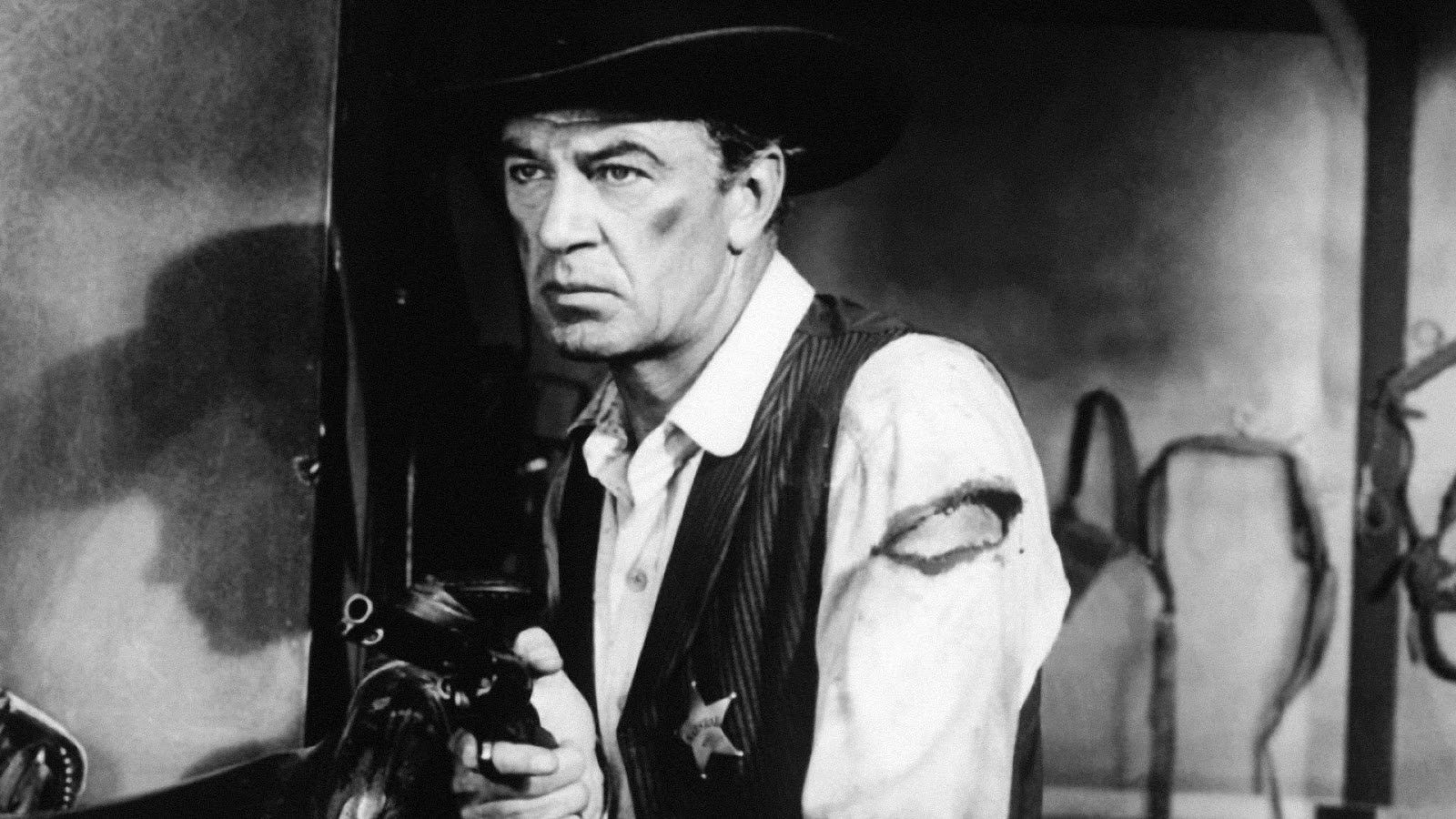
Gary Cooper stands alone in High Noon

Director: Fred Zinnemann

Cast: Gary Cooper (Marshal Will Kane), Grace Kelly (Amy Fowler Kane), Thomas Mitchell (Mayor Jonas Henderson), Lloyd Bridges (Deputy Marshal Harvey Pell), Katy Jurado (Helen Ramirez), Otto Kruger (Judge Percy Mettrick), Lon Chaney Jny (Marshal Martin Howe), Eve McVeagh (Mildred Fuller), Harry Morgan (Sam Fuller), Morgan Farley (Minister Mahin), Ian MacDonald (Frank Miller), Lee Van Cleef (Jack Colby)

It’s 10:35 am on the day of the wedding of retiring Marshal Will Kane (Gary Cooper) to Quaker Amy Fowler (Grace Kelly). It should be the happiest day of his life – but events are interrupted by news that Frank Miller (Ian MacDonald), a killer Kane put away, has been released and will arrive on the midday train with his gang to kill Kane. Kane’s first instinct – and the town’s – is for Kane to flee the town: but Kane doesn’t want to spend his life looking over his shoulder, and besides his friends and colleagues in the town will stand with him right? He decides to make his stand – to the outrage of his pacifist wife – only to find one-by-one the citizens of the town excuse themselves from helping Kane. After all, who wants to die?

Playing out like a Western 24, Kane has got a little under 90 minutes to put together a posse to give himself a fighting chance against these hardened killers. Zinnemann’s film is full of carefully placed shots of clocks that hammer home the ominous approach of Kane’s seemingly inevitable death. In a brilliant use of contrasts, Kane walks with growing desperation in virtually every shot through the increasingly abandoned town, mixed with clever cut-backs to the Miller gang waiting patiently at the train station (with deep focus shots of the train lines stretching on forever) for Miller to arrive and kick off the killing. Using a wonderful combination of low-angles, tracking shots and one superb crane shot that pulls out and away to show Kane stranded alone in the abandoned town, Zinnemann’s film stresses Kane’s isolation, anxiety and growing desperation.

Because Kane is scared. And why shouldn’t he be? He’s past-his-best and over-the-hill, a long-serving hero on his last day in the job, outmatched by his opponent. Why on earth wouldn’t he be desperate for help? John Wayne and Howard Hawks hated the film, loathed its perceived anti-American-spirit and, most of all, couldn’t stand the idea of a Western hero being scared and desperate for help. They even made a twist on the film, Rio Bravo, where Wayne played a marshal turning down any and all help in order to do what a man needs to do alone. For them that was a Western hero, and this self-doubting, anxious pussy Kane – the man even cries at one point! – was an abomination.

Cooper seemed to be no-one’s choice for the film – Heston, Brando, Fonda, Douglas, Clift and Lancaster all turned it down – but scooped the Oscar as Kane. Then 51, his obvious age and vulnerability – at one point Lloyd Bridges almost beats the crap out of him – make him feel even more at risk from this threat. In a performance devoid of vanity – other than perhaps Kane landing the radiant (and thirty years younger) Grace Kelly as his wife – Cooper is sweaty, nervous, twitchy and a mix of All-American duty and genuine nerves, resentment and terror at what feels almost certain to be his end. Kane knows why he must do it, but to Wayne’s disgust, he still doesn’t like it.

Carl Foreman, the screenwriter, was to be pulled before the House of Un-American Activities for his communist sympathies. And the entire film is pretty clearly a commentary on the McCarthyite era, specifically the abandonment of those pulled before the house by those who seemed to be their friends. Like the blacklisted Hollywood writers and actors, Kane opens the film with admirers and friends all of whom eulogise his greatness and decency: and all of them turn their back on him as the chips go crumbling down.

Most of the film is given over to Kane desperately going from ally to ally, only to find that he is offered only platitudes, excuses and outright cowardice. His deputy demands a recommendation for Kane’s job, and chucks in his star when Kane refuses. Old friends hide in their houses and refuse to come out when Kane comes calling. Lon Chaney Jnr’s retired marshal pleads illness. The judge rides straight out of town and suggests Kane does the same. At a town meeting in the church, the voices calling to help Kane are few and far between, and Mayor Thomas Mitchell praises Kane to the skies, before concluding the town would be better off if he could ride away and not come back. The one man who volunteers backs down when he finds out no one else has volunteered, and the only person eager to fight is a 14 year old boy. 

So much for loyalty and the American way. When the chips are down, words mean nothing and it’s the actions that show the man. Customers in the saloon talk about how life wasn’t that bad when the Millers ruled the town (to show how wrong this is, literally their first action when riding into town is to steal something from a milliners). Others moan that all this law enforcement from Kane has actually made business a bit worse for the town. Why do the hard thing, why make the stand, when it’s so much easier to just look down, keep quiet and let the just suffer while your life ticks on.

Cooper’s Kane is masterfully low-key, subtle, using only the slightest gestures to show deep-rooted, only barely hidden resentment and bitterness, covering fear. What he’s doing he’d give anything not to do, but he sees no choice. There is no other Western where the hero writes a will, and quietly weeps with his head on his hands on his desk. There is no other Western where the hero spends so long trying to make a manly task easier to do. There is no other Western where the self-serving cowardice and hypocrisy of the townsfolk are more blatant. No wonder Cooper – in the final insult for Wayne – drops his tin star in the dirt at the film’s end, as the townsfolk rush out to congratulate him on winning the duel. This is a film that looks at America as it really is – and many people didn’t like that one little bit.

Zinnemann’s direction is spot on, a perfect blend of tension build and technical mastery, mixed with superb dialogue from Carl Foreman. Not a word or shot is wasted, and every single character and event is carefully sketched in, established and build up with no effort at all. Cooper is superb, Grace Kelly just as good in a thankless role as the humourless Quaker wife who struggles with her life-long principles against her love for her husband. Beautifully filmed, with a wonderful score with Dimitri Tiomkin, High Noon is a classic for a reason, a masterpiece of slow-build and enlightened social commentary.

Capote (2005)

Philip Seymour Hoffman excels as the morally complex author in Capote

Director: Bennett Miller

Cast: Philip Seymour Hoffman (Truman Capote), Catherine Kenner (Nelle Harper Lee), Clifton Collins Jnr (Perry Smith), Chris Cooper (Alvin Dewey), Bob Balaban (William Shawn), Bruce Greenwood (Jack Dunphy), Katherine Shindle (Rose), Amy Ryan (Marie Dewey), Mark Pellegrino (Dick Hickock)

What profits a man if he gains the whole world but loses his own soul? It’s the sort of summation that I imagine Truman Capote himself would object to as trite and obvious. But it’s a question at the heart of Bennett Miller’s thoughtful, low-key biographical drama that seems to capture not only the agony of writing and creation, but also something of the soul of its lead.

In November 1959, two drifters Perry Smith (Clifton Collins Jnr) and Dick Hickock (Mark Pellegrino) kill an entire family in a remote farmhouse in Kansas. News of this is spotted by Truman Capote (Philip Seymour Hoffman), a brilliant novelist and New York intellectual, looking for his new project. Heading to Kansas, with assistant, novelist and lifelong friend Harper Lee (Catherine Keener), Capote’s initial plan for an article on the reaction of small-time America to unspeakable violence balloons into a full scale book, fuelled by his growing fascination for Perry Smith. While the book takes years – and the trial and appeals of the killer take longer and longer to resolve, the entire experience has an increasingly haunting effect on Capote himself.

Miller’s quietly and professionally assembled film, with a superbly haunting, autumnal feel to it that immediately echoes the blackness of the crime, and the traumatic effect being involved in it has on Capote. It’s also a superb film that understands how writers often work – the seizing of inspiration, the quiet observation, the shaping of moments and titbits of conversation into perfectly captured sentences that can be reproduced in the book. It helps that Capote has – despite his larger than life unusualness and eccentricity – a sort of unusual chameleon like ability, or rather the ability of the charismatically self-obsessed to make all others yearn for his attention and approval.

It’s all part of the many facets of the Capote’s personality that is brought out in Hoffman’s superb performance. Winning the Oscar – and almost every other award going – Hoffman perfectly captures not just every single physical and vocal attribute of Capote, but also seems to seize part of his soul as well. This is such a masterful examination of a person’s psyche, mixed desires and conflicting feelings that Hoffman’s psychological insight seems totally legitimate. Hoffman’s performance is strikingly perfect, transformative in the way few actors manage.

Hoffman’s Capote is a man who flits between arrogance and a caring tenderness, self-doubt and ruthless, consideration and selfishness, who slowly becomes more and more unnerved not only perhaps by his fascination with a brutal killer, but also the own moral depths he is willing to go to. He’s manipulative, emotionally intelligent and genuine enough to gain the confidence of a wide range of people – from Chris Cooper’s gimlet-eyed agent investigating the case (won other by his wife’s fondness for Capote’s novels and Capote’s starry Hollywood anecdotes) to Perry Smith’s would-be intellectual and sensitive soul who is also a hardened killer. 

It’s that relationship with Smith that is the heart of the film, Captoe’s growing closeness with him akin to a seduction, Smith the willing talker, flattered to share his insights into life with the famous writer, Capote eager to gain secret confessions of what was flashing through Smith’s mind while he committed the killings. But it goes deeper than that: Capote grows – or persuades himself he does, so great is his deception – a genuine affection and regard for Smith, wanting perhaps to see that there is more to him than appears. Nursing Smith through a hunger-strike he feeds him by hand. He spends hours in his cell. He reads every scrap Smith gives him of his writing. There is a slight breathless tension to their scenes together, and Capote agonises over the idea of Smith being executed, even as he begins to be repelled by the influence of letting someone else into his life is having over him, and his ability to finish the book.

Because finishing the book is his aim, and his every action is based around getting to that goal. Every moment of flattery and openness gains some other advantage, every second of his time in Kansas is based around soaking up the information he needs to complete the work. But the book will never be complete and finished, because Capote himself has become such a part of the story – by becoming a part of Smith’s life – it seems to almost start draining Capote himself. Writing the book, is like writing his own life, pulling out elements of his own psyche, his own darkness, you feel Capote would rather not explore.

Because as much as he enjoys the recognition and glory readings of the book bring him – he is increasingly unnerved by his own ruthless treatment of Smith. Lying to Smith about the progress of the book, lying about the title, ignoring his phone calls, finally brow beating Smith into telling all of his story about the killing by disparaging all of Smith’s “insight” by claiming there is no concept or idea that Smith can express that has not already occurred to Capote. Smith is a killer, but he is also somehow a sort of lost boy – Collins performance brings a lot out of the strange innocence and promise in Smith – and it still alarms Capote privately that he can so use Smith, lie so completely to him and still feel such overwhelming unnerved grief – or fear or something – when Smith is executed, and execution he has done nothing to help prevent despite his promises to the contrary.

Capote feels equal mixed feelings about fellow writers. His partner Jack Dunphy (Bruce Greenwood in a very good performance) seems to accept his role as the lesser light – and their relationship works all the better for it. Easier than the friendship between himself and Harper Lee, superbly played by Catherine Keener. Keener and Hoffman have a natural chemistry, reflecting Capote and Lee who know each other so well they can literally finish each other’s sentences and completely understand each other. Capote however cannot accept Lee’s success of her own, striking a wedge in the relationship – just as Lee begins to believe that Capote is manipulating real people like fictional tools for his journalistic novel.

Capote tackles complex and fascinating ideas in a coolly well-assembled, extremely well directed, framework that gets some sense of the difficulties and challenges involved in artistic creation – and the moral compromises that some people are driven to make to achieve them. Not to mention the way we are can make ourselves increasingly more and more uncomfortable as we discover more and more about our own personalities and flaws.

Bumblebee (2018)

A heart warming double bill in surprising “genuinely good Transformers film” Bumblebee

Director: Travis Knight

Cast: Hailee Steinfeld (Charlie Watson), John Cena (Colonel Jack Burns), Jorge Lendeborg Jnr (“Memo” Gutierrez), John Ortiz (Dr Powell), Jason Drucker (Otis Watson), Pamela Adlon (Sally Watson), Stephen Schneider (Ron), Glynn Turman (General Whalen), Len Cariou (Hank), Dylan O’Brien (Bumblebee), Peter Cullen (Optimus Prime), Angela Bassett (Shatter), Justin Theroux (Dropkick)

Michael Bay started making Transformers films in 2007. These massive, action-packed, technological marvels are testament to the skill of special effects gurus to create live-action versions of these transforming robots – and a testament to the lack of soul in Michael Bay as the films became increasingly empty, sprawling, noisy, pornographic (not in that sense!), tasteless, sexist efforts that leave a bad taste in the mouth. Bumblebee is a soft-reboot of the franchise – and the very first time it feels like this is a Transformers film that those growing up with the cartoons could recognise, and that you would be happy to show to kids.

In 1987, Cybertron has fallen and the Autobots have scattered across the galaxy. Young Bumblebee (voiced by Dylan O’Brien) is sent to Earth, where he loses his voice, his memory and nearly his life combating a Decepticon. Taking refuge as a beat up Volkswagen Beetle, Bumblebee is found by Charlie Watson (Hailee Steinfeld) a young car mechanic enthusiast mourning the sudden death of his father and struggling with her mother (Sally Watson) starting to move on with a new boyfriend Ron (Stephen Schneider). While Charlie and Bumblebee bond, more Decepticons – on the hunt for Bumblebee who they hope can lead them to Optimus Prime – arrive on Earth and join forces with anti-Transformer agency Sector 7, represented by Colonel Jack Burns (John Cena), to track Bumblebee down.

Travis Knight came to the film from directing several successful animation films – and his understanding of the nuances of inflection and character that you need in order to bond with animated characters. He also brings back an innocence, a dignity and a sense of honour to the franchise. Where the Autobots in past films had increasingly become brash blowhards or brutal warriors (not least Optimus Prime who seemed to become more psychotic as the series went on) this film made them again the noble defenders of the weak that they were in the comics and cartoons. It’s not an exaggeration to say if the fans were waiting for a film that got closer to the spirit of the original, they had been waiting for this one.

Knight’s mastery of animation makes Bumblebee a true character, an endearing, bumbling (sorry), accident-prone, scared little kid who is also a tender, caring and understanding friend. With Bumblebee mute for most of the film, the character communicates solely through his body language – and his hugely expressive eyes – and Knight has redesigned the character to have a larger, more open face that immediately makes him a warmer character. Knight also has a brilliant line in visual comedy, with Bumblebee hilariously trashing a house at one point in a stumbling display of silent comedy that works extremely well. 

It also helps that Knight has such a strong, marvellous performance from Hailee Steinfeld as Bumblebee’s carer and protector. Seeing Steinfeld in this film is a real reminder of what brash, very male, figures Shia LaBeouf and Mark Wahlberg cut in the past few films, where women were even objects of tasteless ogling or rebellious kids to be protected by men. All that is thrown out of the window here (thank goodness), with this being the first film in the series written by a woman, Christina Hodson. Steinfeld is allowed to develop a character who is not a Tomboy, a hot scientist or a teenage girl stereotype, but someone who feels very real and hugely charming. Steinfeld brilliantly creates a bond with Bumblebee – no mean feat for a creature that is not there – and the film hinges perfectly on her growing emergence from the shell of trauma and loss at the death of her father, through finding a new purpose with Bumblebee. It’s a great performance anchoring a film full of special effects.

Knight’s film can still handle all the action you want – but unlike with Bay, where spectacle and violence is always considered way more important than story and character, his action scenes are shot with a simpleness and clarity that put character at the forefront. In fact character is what every scene is about, not the shattering punching and tastelessly sadistic, pornographic violence of robotic dismemberment that Bay’s film’s degenerated into. This is a film which feels inspired by the vibe of ET, about two damaged souls who come together to protect each other and find themselves. It’s a film that is about friendship and affection, and Knight’s action scenes carry a sense of these qualities, this desire to protect people, into them.

With the film’s light comic touch – not least from John Cena who is on good form as a Colonel with a grudge against all Transformers (“They literally call themselves Decepticons. That doesn’t set off any red flags?”) and Jorge Lendeborg Jnr, very endearing as Charlie’s would-be love interest – it feels like a film genuinely made by people who loved the original and loved it’s innocent, good-vs-bad themes. Knight also returns the design of the characters back far closer to the look of the 1980s – the opening on Cybertron, with all the characters appearing as souped up versions of their 1980s cartoon form is virtually a love letter to anyone who grew up watching these characters. Knight not only gets the visuals right, with a warmth and depth of character none of the rest of the films have had, he also understands the bravery and heroism of the Autobots in a way Bay never did – Knight’s Optimus Prime is a million miles from the prisoner-executing loonie Bay created.

Bumblebee for sure is no Citizen Kane (although it has lashings of Spielberg in it, not least ET). But it’s on a different planet to the rest of the series, and a film with tonnes in it to enjoy. With its careful balancing of themes from loss to survivor guilt it also has more to it than meets the eye.

Philomena (2013)

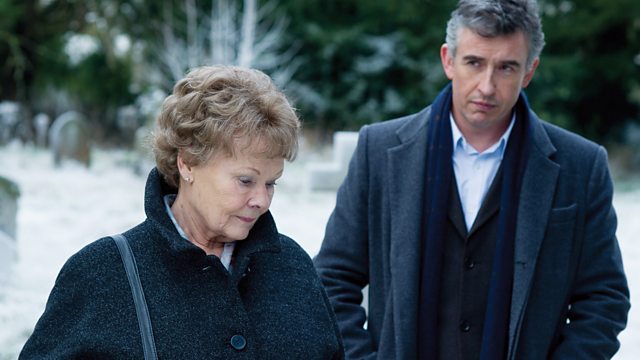
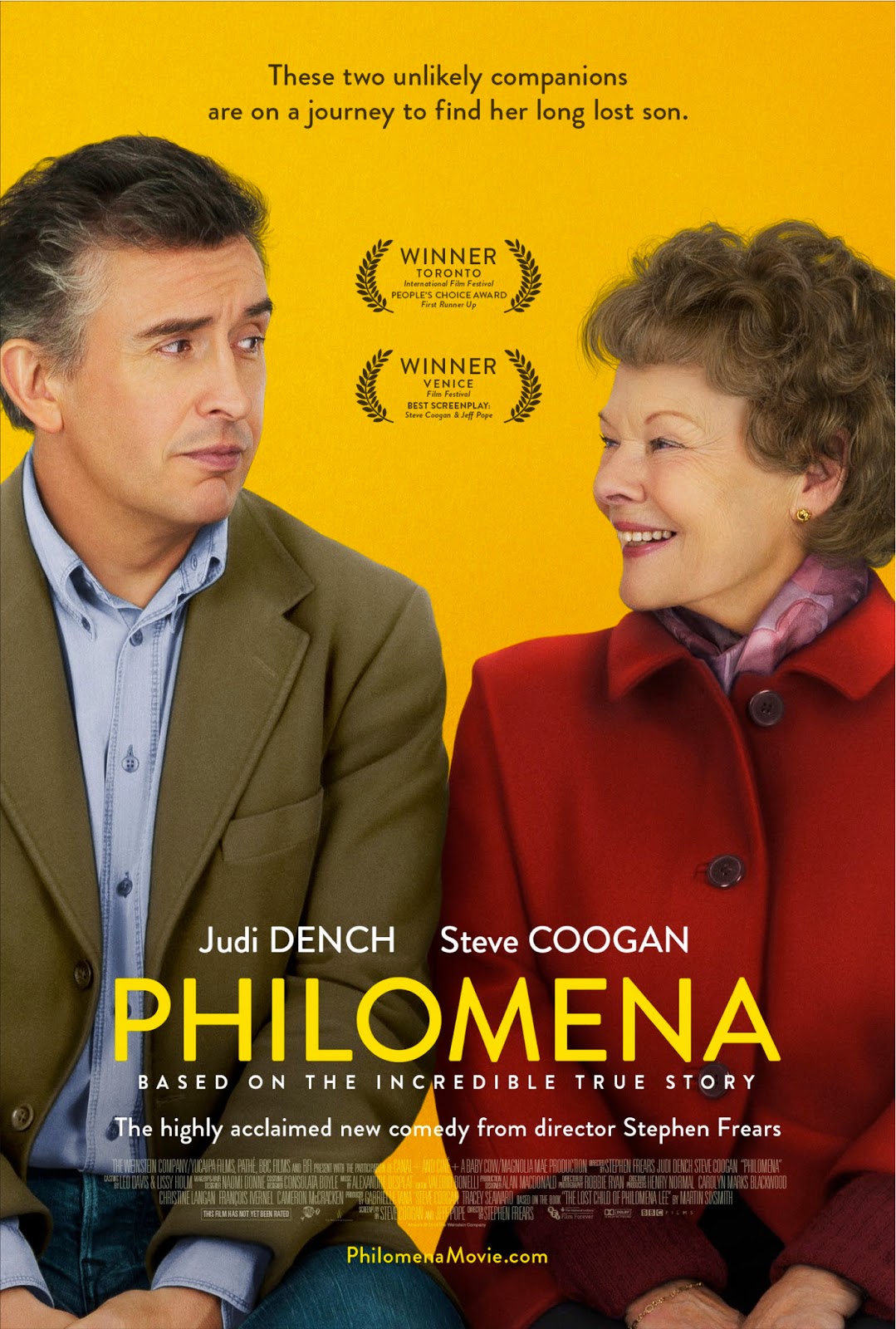
Judi Dench and Steve Coogan go on a road trip into the past in Philomena

Director: Stephen Frears

Cast: Judi Dench (Philomena Lee), Steve Coogan (Martin Sixsmith), Michelle Fairley (Sally Mitchell), Barbara Jefford (Sister Hildegarde), Anna Maxwell Martin (Jane), Mare Winningham (Mare), Sophie Kennedy Clarke (Young Philomena), Kate Fleetwood (Young Sister Hildegarde), Sean Mahon (Michael Hess), Peter Hermann (Pete Olsen)

Describing Philomena as a sort of odd-couple buddy road movie with a heart seems like exactly the sort of trite journalistic spin that Coogan’s Martin Sixsmith spends most of the film deriding. But it’s a pretty accurate label, in this heartfelt and entertaining film that mixes looking at Irish church scandals, with both the shallowness and promise of journalism and a heartfelt meditation on the virtues of forgiveness.

Martin Sixsmith (Steve Coogan), a former government spin doctor, dismissed from his position is struggling to find a new purpose for himself in writing and journalism. After a chance meeting with waitress Jane (Anna Maxwell Martin) at his editor’s New Year party, he is introduced to her mother Philomena Lee (Judi Dench) an Irish woman whose son was given up for adoption by the convent Philomena had been sent to over 50 years ago. She has spent years trying to find him, but made no progress. At first Sixsmith is dismissive of this human interest story, but slowly begins to invest in the story, as he and Philomena travel to the US to try and find her lost son.

Philomena is a film that doesn’t pull punches in its moral outrage at the decisions made by convents in Ireland in the 1950s to separate ‘sinful’ mothers from their children and find them new homes. The distress of the young Philomena is clear, and the steps the church took to put barriers in the path of helping these children and their parents reuniting (from burning records to bare-faced lies) are as infuriating as their moral superiority is outrageous in its hypocritical cruelty. But it’s not a film that wants to make a simple or political point. 

If the film has a problem with religion, it’s with the institutions that run it, not the faith itself. For all her ill-treatment, Philomena’s faith has been unshaken by all that has happened to her, and she like the film can separate the flaws of individuals from the principle of faith. The film may take aim at the Catholic church for making people feel sex is something dirty and shameful, but it won’t turn its guns on God himself. Near the film’s conclusion, Philomena even rebukes Martin for his rage (on her behalf) against the nuns who treated her wrongly, pointing out that she is the victim not him and that how she chooses to respond to it is her business – and if she chooses reconciliation and forgiveness that is her choice.

It’s a part of the films light and shade, very well drawn out in Steve Coogan and Jeff Pope’s script that mixes serious reflections on such matters as truth, faith and forgiveness with some good jokes and entertaining banter. The film deviates considerably from the true story it was based on – Philomena in real life never went to America – but in doing so it unlocks the story as a filmic narrative. The odd mother-son type relationship that the distant and cynical Sixsmith and the warm and engaging Philomena develop as they travel America gives the film heart, not least as Philomena constantly surprises Sixsmith with her worldliness and socially moderate views. The two characters end up bonding in a way that is straight out of a Movie-101 but it stills very real and touching.

A lot of that works so well because of the chemistry between the two leads. Judi Dench is just about perfect as Philomena. Dench expertly mixes the twinkle and charm of Philomena’s incessant Irish patter and capacity for small-talk (and fascination with everything from Mills and Boon to hotel toiletry) with a devastating emotional vulnerability and aching pain at the loss of her child, which has clearly been part of her life for so long she has learned to a certain degree to live with it. In one of her greatest screen performances, Dench will have you laughing one minute then spin on a sixpence with genuine emotional devastation or a capacity for forgiveness and reconciliation that seems impossible after what she has been through. The film builds real affection for both her old-world politeness charm and Irish loquaciousness and her emotional strength of character.

She’s well matched with Coogan, who uses his deadpan archness to excellent effect as Sixsmith. Although the film is called Philomena, it’s Sixsmith who represents the audience, and it’s his expectation of being emotionally manipulated by the story that we share at the start – and his growing investment in it that we also share. Coogan keeps the details very small, but along with a skill at delivering deadpan one-lines, he also has a considerable capacity for moral outrage and genuineness (well hidden) that serves the film very well. Sixsmith starts the story as self-pitying, supercilious and interested only in selling the story – the fact he ends it so bound up in rage at the treatment of Philomena, is a testament to Coogan’s skills for subtle character development.

Frears’ directs with a small-scale sharpness of camera and lack of flash that has been at the foreground of so many of his films, letting the focus lie on story and character. The road movie sequences that this film highlights so much are little triumphs of small-scale character story-telling, and while the jokes they feature – and even the emotional points they make – are familiar they are delivered with such grace and feeling they nearly all land.

Perhaps reflecting Coogan’s experience with the British media, it’s Fleet Street that emerges as the most 2D here, with Michelle Fairley playing a tabloid editor interested only in the story, delighting in tragic twists as they will make for even better headlines. It’s the film’s only real crudeness, but packaged within such a well-acted and richly entertaining whole, that makes a strong case for forgiveness not vindication being the true path to inner peace, it doesn’t seem to matter.

The Passenger (1975)

Maria Schneider and Jack Nicholson hit the road in Antonioni’s partly frustrating, partly masterful The Passenger

Director: Michelangelo Antonioni

Cast: Jack Nicholson (David Locke), Maria Schneider (The Girl), Ian Hendy (Martin Knight), Jenny Runacre (Rachel Locke), Charles Mulvehill (David Robertson), Steven Berkoff (Stephen)

Ever wanted to jack in your life and have a go at being someone else? It’s a temptation we’ve all felt at one time or another, that chance to make a completely fresh start free of all those burdens and expectations of our own lives. 

It’s a temptation thrown in the way of David Locke (Jack Nicholson) a British-American journalist, trying to make contact with rebel groups in the deepest Sahara deserts of Chad. Returning, after a failed excursion, to his ‘hotel’ in the tiny, beat-up village in the middle of the desert he finds that the only other resident, an Englishman, has died of a heart attack. The two man have a physical similarity, enough for Locke to decide to swop places with the dead man and leave Chad under a new identity as David Robertson. Curious to follow the details left in Robertson’s appointment diary, Locke finds that he has taken the identity of an arms dealer – making sense immediately of why Robertson was also in the hotel at the time – forcing Locke to stay one-step ahead of both the arms dealers and his wife Rachel (Jenny Runacre) and producer Martin (Ian Hendry) keen to talk to him about ‘Locke’s’ death.

If that sounds like it might be an action packed thriller – you’d be wrong, because let’s not forget that this is an Antonioni film, and if there is one thing you can expect from the revered auteur of the Art-House, it’s that his films are mysteries wrapped in enigmas. The Passenger is no exception, a slow, intriguing mood piece that only partially allows the audience even half a chance to puzzle out what it’s about, mixed with striking images and haunting sequences of fundamental unknowingness. Despite the paragraph above there is almost no plot in The Passenger, with the film instead focused on themes of alienation, existentialism, destiny, fate and identity. In other words all the big stuff.

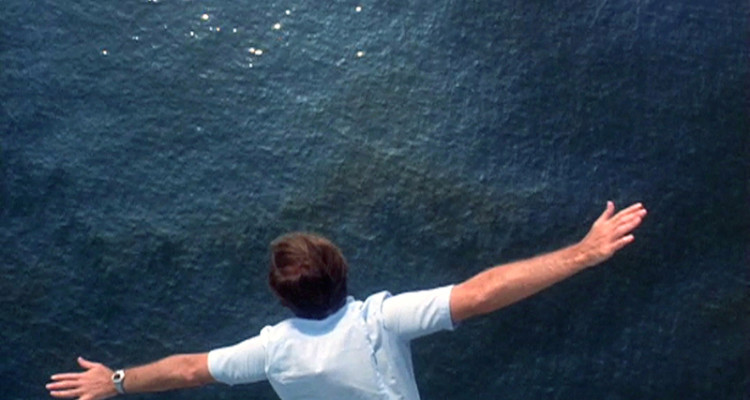
Much of this is captured in the character of Locke. Played by Jack Nicholson in a stripped-down, purged style a million miles away from the “Jack” of legend, Locke is a blank. We spend almost the entire film with him, but learn virtually nothing about him. What desires or miseries or depressions drive him to abandon his life and head out into a new life? We have only vague whispers about an unhappy marriage (with a wife having an affair with someone else) and a general listless dissatisfaction with his own life and career. Locke is a character yearning for some kind of release, some kind of higher meaning – the happiest he seems to be in the movie, is hanging over the side of a cable car, arms outstretched, pretending to fly over the waters below. It’s a freedom like that – some sort of total unshackling from the modern world altogether – that he seems to want or need.

So why doesn’t he go for it? Why doesn’t he just junk Robertson’s appointment diary and escape properly into the wide world, well beyond the reach of Chad rebels, curious wives and BBC Producers? Perhaps because he is a Passenger himself, a man who lacks the essential will and freedom of purpose to make his own destiny, to escape the structure of a world he finds so constricting? Instead, he seems bound of a wheel of fire, compelled somehow to continue following some sort of structure unable to yank himself fully free of the chains of this modern world. He wants to be a free spirit, but he remains a little man, to whom events happen, who is approached by people, who follows directions not forging his own path.

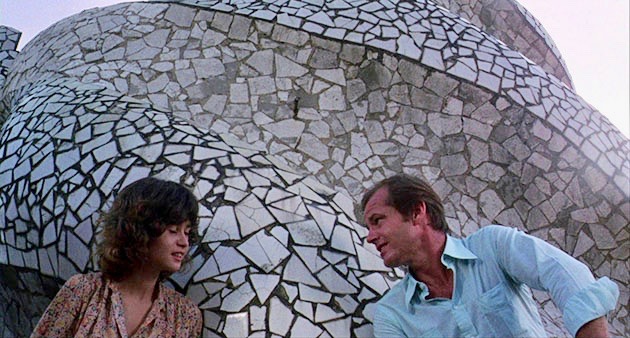
He gets as close as he can to opening up by talking to a passenger of his own, a mysterious girl (played with an unaffected naturalness by Maria Schneider that is part graceful reality, part wooden stiffness but works perfectly) he encounters while following Robertson’s trail. He first spots her sitting on a bench in London, then sees her again atop Guadi’s La Pedrera in Barcelona. Is this coincidence? Is this fate? Destiny? Or is this a curious suggestion that the girl may be more than she seems? None of these questions is answered by the film, but it fits perfectly in with the unknowing vagueness and quizzical unpredictability of its events. Hammering home the blank unknowability of Schneider’s character, she isn’t even named in the film. She joins Locke on his journey, but her motivations are as vague as his – is it escape, a bohemian lark, a curiosity that guides her? Who knows?

The film continues in this vein, showing Locke drifting from Chad to the UK to Berlin, Barcelona and Seville, never seeming to allow Locke more than a few seconds of freedom. Is the film asking if there is any such thing as true freedom, that even after swopping lives Locke still finds himself locked down into following a series of pre-arranged duties, like a train on a line? It’s not clear, but it’s beautifully filmed. Antonioni’s mastery of the camera shines throughout the film, and it’s full of haunting and immersive imagery, not least in his skilful use of locations and framing, with Locke and the Girl frequently positioned oddly or even dwarfed by the architecture and locations around them, from the plains of the desert to the towers of Gaudi.

Antonioni also saves for this film some sequences which are simply breathtaking in their cinematic mastery and beauty. His control of technique is near faultless – while his art house vagueness might have you pulling your hair out at points, these sequences will have you winding the film back just to relax in their skill and confidence again. Early in the film, we see Locke sit and fake his passport in his Chad hotel – oh for the days when identity theft was as simple as glueing a new photo into a passport – the camera smoothly moves around him, while he listens to recordings of Robertson and he meeting, until it settles onto the balcony (all this in one take) at which point Robertson walks into frame and continues the conversation, Locke following him and, there we go, Antonioni has taken us suddenly into the past. Without a single cut, the camera follows the conversation before panning back round to Locke sitting once again writing.

It’s a sequence that cineateases would be raving about, if it wasn’t dwarfed by the film’s penultimate shot, a stunning seven-minute single take that would be simplicity itself to make with CGI and Steadicam today, but was somewhere achieved without the invention of others. Starting on a single shot of Locke’s Seville hotel room, the pan slowly focuses on events outside the grilled window, the camera slowly zooming in on the outside until it passes through the grill and rotates 180 degrees back to see the room from the outside, while the Girl and other mysterious people arrive and leave outside. It’s a beautiful, brilliant, sublime, masterful piece of cinema. It’s compelling, surely one of the greatest “one-take” shots in all of cinema. Simply perfect. Directors could sit and dream of making such a shot. 

Antonioni’s masterful direction and wilfully obtuse exploration of his themes makes for a film that is at time frustratingly unreadable, but also crammed with opportunities for the viewer to insert their own views and interpretations, something that is only going to become more tempting (and rewarding) with repeated viewings. Alongside that, it’s a simply beautiful and sublimely made piece of cinema – and if for no other reason deserves your time.

Pain & Glory (2019)

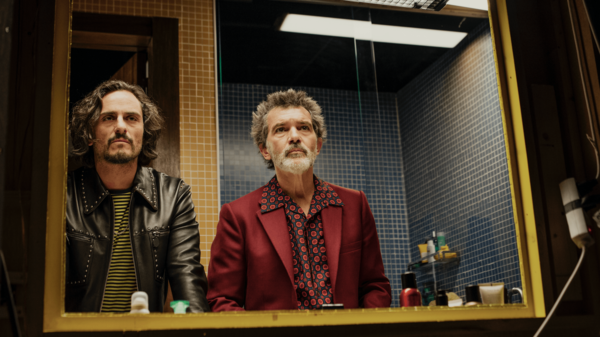
Antonio Banderas excels as a version of the director in Almodóvar’s Pain & Glory

Director: Pedro Almodóvar

Cast: Antonio Banderas (Salvador Mallo), Penélope Cruz (Jacinta Mallo), Nora Nacas (Mercedes), Asier Etxeandia (Alberto Crespo), Leonardo Sbaraglia (Federico), César Vicente (Eduardo), Cecilia Roth (Zulema), Julieta Serrano (Older Jacinta Mallo), Raúl Arévalo (Salvador’s father)

Every artist in time reflects on his roots, and many explore these reflections in their medium of choice. The master of this in the world of cinema was Fellini, and any film that riffs upon the biography of auteur directors is destined to be described as Fellini-esque. That’s an appropriate title for Pedro Almodóvar’s Pain & Glory, which explores Almodóvar’s childhood spiced with a fictionalised version of himself in the present day, struggling with lack of drive and against a series of crippling illnesses. It makes for a gently structured, quietly moving picture shot with a classic simplicity but filled with genuine emotional feeling.

Salvador Mallo (Antonio Banderas) is our Almodóvar substitute, his body falling apart from a range of illnesses and diseases that have prevented him from directing a film for years. Asked to present a screening of a classic film of his from almost thirty years ago, he contacts the lead actor of the film Alberto Crespo (Asier Etxeandia) who he has not spoken to since making the film. The two quickly re-bond – helped by Mallo’s curiosity about trying the heroin of which Crespo is a habitual user. Mallo finds the drugs not only help to ease his pain, but also bring back a flood of memories about growing up with his mother Jacinta (Penélope Cruz) as a poor peasant boy, educated in a convent school and teaching a young labourer Eduardo (César Vicente) to read and write.

Almodóvar is best known for a electric, dynamically assembled films but he is also a patient and intelligent craftsman and sensitive director with an eye for pace, and Pain & Glory is a far more meditative piece, as befitting the sense that both Almodóvar and Mallo are reflecting on their entire lives. The general structure fits in to a well-worn template of such films, with Mallo dealing with dissatisfaction and frustration in the present day but, through memories, finding a sense of peace and an ability to move on and reconnect with his life and work. But familiar as it is, it is a template that works exceptionally well – and I felt a real sadness and frustration that Mallo is drawn towards the superficial, short-term, comfort that drugs bring him when he is unable to write and direct films.

While I find some of the films attitudes towards drugs a little unsettling (Crespo seems willing to kick them at will, which I find rather hard to believe and even a bit irresponsible), it does show that this is a false nirvana for Mallo and that the more time he spends (as he eventually recognises) wallowing in this rather than finding avenues for artistic creation, is time wasted. Crespo (very well played by Asier Etxeandia, despite the character being a bit of a cliché) may well be a great actor – his performance of a Mallo short story memoir carries real emotional weight – but he is a lightweight human being, the very opposite of the far more deeper feeling (and thinking) Mallo. 

It’s that exploration of Mallo’s personality, art and how the two relate to his memories of his past that really powers the movie. Mallo is of course played by Almodóvar’s muse Antonio Banderas – and this might well be the greatest performance of Banderas’ career. I’m sure he has never been as sensitive, gentle, soft, tender and vulnerable as is here. Looking thinner and more delicate than ever before, Banderas keeps emotion carefully in check but playing constantly in the eyes. He’s fabulous, a wonderfully humane and beautiful performance.

Matching this quality, the sequences that really kick into gear in the modern storyline are those that carry real emotional meaning for Mallo/Almodóvar. The first is a meeting between Mallo and former lover Federico (Leonardo Sbaraglia, quite excellent – tender, heartbreaking and real) , which is an intensely personal, gently played, sad but also affectionate and hopeful conversation about a relationship loved and lost, which belongs in the past but which can bring a certain contentment in the future. It’s also a scene that demonstrates how the past sometimes stays better in the past, and that quieter reflections on lost relationships can be better and richer than restarting them. 

This also mixes in well with Mallo’s yearning to be free to continue his creative output, unburdened by disease and illness, mixed with a loving guilt for his mother who sacrificed so much to give him chances in life and whom he feels he failed in her final years (despite spending them caring for her in his home). The later sequences showing Mallo looking after his mother (a wonderful performance by Julieta Serrano) hum with an intimacy and emotional honesty that work all the better for the film’s careful interweaving of past and present.

Extended flashbacks – driven perhaps by Mallo’s exploration of his past fuelled by drugs – chronicle his childhood with his mother, marvellously played by Penélope Cruz, Almodóvar’s other muse. Cruz’s maternal, caring but strong-willed embodiment of Mallo’s mother is exquisite, from singing while washing laundry at the lake to sadly encouraging her son to believe convent school is his best chance of a full education. It’s clear that Mallo’s mother believes she knows what is best for her son – and, as a late sting shows, sometimes mean she takes drastic decisions without her son’s knowledge. The flashbacks cover everything from Mallo’s education to his first infatuation (and realisation of his sexuality) with a young married labourer who he teaches to read and write.

Pain & Glory explores all these memories with a touching intimacy but also a clear-eyed reality, and Almodóvar’s honesty in these scenes and with his own feelings about his past and how it has powered his art have a real emotional force to them. With superb performances throughout the cast, the film is a testament to the restraint and careful lack of flash, of a director willing to explore his life without flash or bangs. At one point Mallo opines “a great actor is not the one who cried, but the one who knows how to contain the tears”. It could be a strapline for the whole movie.

Never Look Away (2019)

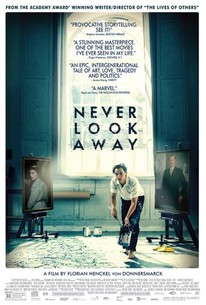
Tom Schilling excels in this shadowy Gerhard Richter biography Never Look Away

Director: Florian Henckel von Donnersmarck

Cast: Tom Schilling (Kurt Barnet), Sebastian Koch (Professor Carl Seeband), Paula Beer (Ellie Seeband), Saskia Rosendahl (Elisabeth May), Oliver Masucci (Professor Antonius van Verten), Ina Weisse (Martha Seeband), Rainer Bock (Dr Burghart Kroll), Hanno Koffler (Gunther Presueer)

In 2006 The Lives of Others propelled Florian Henckel von Donnersmarck to the fore-front of the European Arts Film circle. His follow-up, the Depp/Jolie starrer The Tourist was a disaster that sent him spiralling back. Now von Donnersmarck returns to German cinema – and the travails and divides of a country split for a large chunk of the 20th century into East and West – with Never Look Away a film heavily inspired by the life and work of famed German artist Gerhard Richter, with splashes of German history and it’s difficult relationship with both fascism and socialism.

Kurt Barnett is an artist growing up in Nazi Germany, living outside Dresden after his father lost his teaching job due to his reluctance to join the party. Barnett’s family is hit hard during the way – his two young uncles are killed, Dresden (and everyone he knows) is destroyed. Worst of all his inspirational artistic sister Elisabeth (Saskia Rosendahl) is diagnosed with schizophrenia and is quietly killed during the Nazi programme of removing “unsuitable elements” from German society. That decision is taken by Professor Carl Seeband (Sebastian Koch), a natural survivor and amoral egotist who later makes the adjustment smoothly to living in the Socialist East. Barnett (played by Tom Schilling as a young man) meanwhile goes to East German art school, falling in love with a fashion student Ellie (Paula Beer), but struggling to find his own voice in an East Germany where all art must serve a social purpose. Will escape to the West bring freedom of thought?

Never Look Away is a mantra in the film, in an epic quasi-biography that explores the dark underbelly of German history, filtering the countries struggles to find some sort of freedom through the world of Art. It also has an unflinching eye for the losses and horrors of Nazi Germany, with the film never turning away from the brutal impact of the bombings of Dresden, the death of Kurt’s uncles on the Eastern front and (toughest of all) the shuffling of his tragic aunt into a gas chamber. 

But the film also works so well as a commentary on the silent repression Germany has suffered throughout the twentieth century, from the fear of stepping out of line with a contrary opinion in Nazi Germany, to the repression of individualist thought under Communist East Germany. “Never Look Away” are the last words Elisabeth speaks to Kurt – and it’s what fuels his eventual move towards Art that comments on reality with its blurred reproductions of personal snapshots and images (see Gerard Richter’s art). 

Von Donnersmarck uses art as a neat commentary for these ideas by showing how, in each era of Germany, the comments and views of art reflect each other. The film opens with the young Kurt and Elisabeth taking a tour around a Nazi “Degenerate Art” exhibition in Dresden, which suggests the likes of Picasso and Dali are either insane, moral degenerates, perverts or all three for their failure to create art that properly reflects nature. Later at the East German art school, the same artists are denounced again for failing to carry a proper and correct social message in their work. The tables are turned in the free Germany of the 1960s, where Modern exhibitionist art is all the rage, and paint and canvas is so passeas to be almost vulgar. Three different political spectrums, three very different dictates from society about what constitutes art.

How’s a man to find himself, and his personal expression as an artist, in the middle of this? Kurt is a gifted painter and drawer, but in every era his work is moved towards what is expected of him. As a boy in Germany he hides his impressionist sketches. In East Germany he becomes a famous painter of socialist images and murals. In the art college he tries to shift his style into the experimental alleyways of his peers – work that his professor (played with a neat mixture of pretension and earnestness by Oliver Masucci) recognises his not his true voice. It takes putting his own spin on images and memories of the past – of careful reproductions than subtly blurred to reflect our own imperfect memories (a visual trick von Donnersmarck prepares us for throughout the film with Barnett watching things move in and out of focus as they happen before him) works perfectly.

The film throws together this mix of art and German history with a thick streak of melodrama, which should be ridiculous but basically seems to work. Contrivance and coincidence bring together the fates of Barnett and Professor Seeband, the man responsible for the death of his aunt, and bounds their lives together forever. It’s a narrative development that could make you groan, but somehow the film gets away with it. It probably mostly works because Sebastian Koch is excellent as Seebold, even if the man is so base, selfish, lacking in shame and principle and coldly, uncaringly ruthless that he feels at time almost like a cartoon. No deed of greed and bastardy is beneath him, and the score frequently underlines his villiany with a series of unsubtle cues. 

But it works because Koch’s Seebold is also a marvellous commentary on the flexibility of so many in Germany. Seamlessly he turns himself from proud SS sterilisation and termination doctor, into proud East German Socialist leader and finally into centre-piece of West German society as a leading surgeon. Just as art is bent and shifted, so Seebold represents how people will allow their lives and principles to adapt and shift with all the rest. It’s worth a bit of melodrama and some plot twists that lean on the unbelievable (and are based far less on reality than most of Richter’s life). 

But the sections that focus on Barnet/Richter are just as fine, and von Donnersmarck brings energy, excitement and joy to the act of art creation in the way few other film makers have done. Tom Schilling continues his excellent run of roles, as a passionate free-thinker, yearning to have the chance to find his own voice and Paula Beer is just as good as his wife, whose artistic soul is just as strong, even if she does get a (albeit moving) can-I-have-babies plotline. The relationship between these two is striking for its loving affection and genuine warmth. And it gives the film a real heart.

Never Look Away isn’t perfect, but in its marvellous expression of the joys of artistic creation and the way that art is bent and used for the needs of government and society, it has a lot to say. With excellent performances across the board – Schilling, Koch and Beer are fabulous – it is also a fascinating commentary on the schizophrenic nature of Germany itself throughout much of the twentieth century. Melodramatic and obvious at times – and even I will say overlong at nearly three hours – a thudding mix at times of points made with too much force, it’s also a marvellous exploration of art and artists. Von Donnersmarck is back.