Tag: Aaron Eckhart

The Dark Knight (2008)

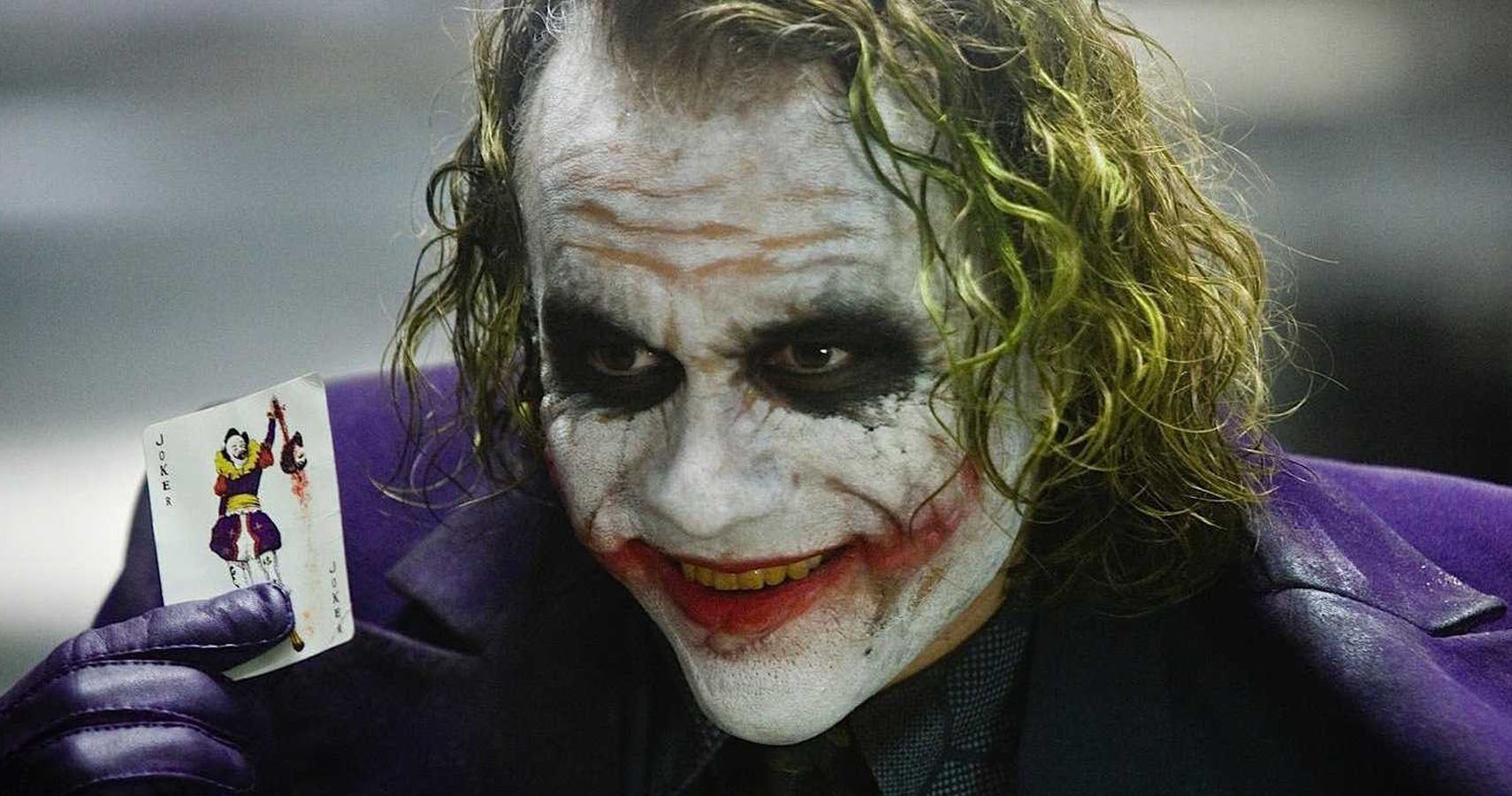
Heath Ledger leaves a great legacy as The Joker in The Dark Knight

Director: Christopher Nolan

Cast: Christian Bale (Bruce Wayne/Batman), Michael Caine (Alfred Pennyworth), Heath Ledger (The Joker), Gary Oldman (Lt James Gordon), Aaron Eckhart (Harvey Dent), Maggie Gyllenhaal (Rachel Dawes), Morgan Freeman (Lucius Fox), Eric Roberts (Sal Maroni), Monique Gabriela Curnen (Detective Ramirez), Ng Chn Han (Lau), Ritchie Oster (The Chechan), Colin McFarlane (Commissioner Loeb) Anthony Michael Hall (Mike Engel), Joshua Harto (Coleman Reese), Cillian Murphy (Scarecrow)
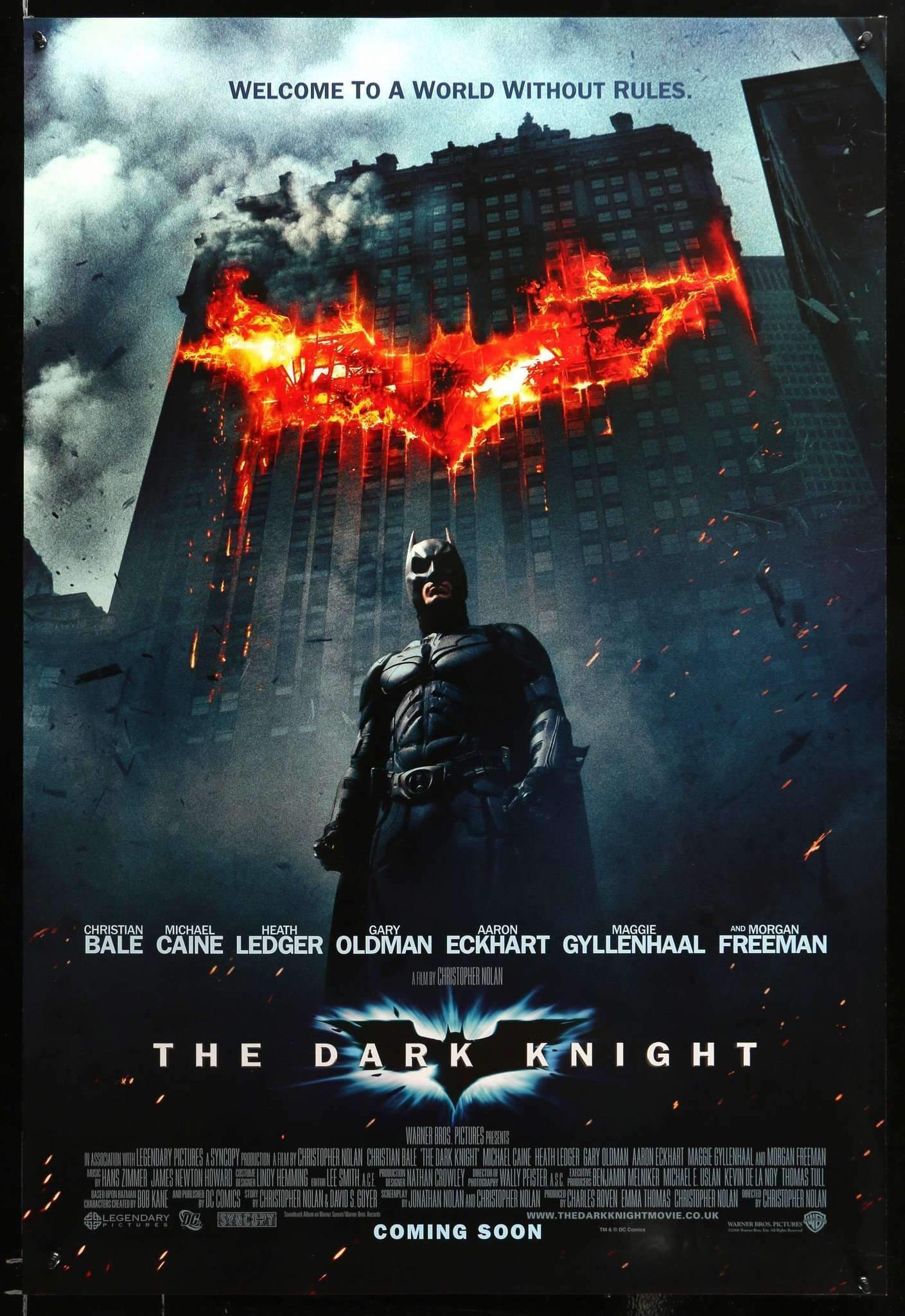
Christopher Nolan’s Batman Begins reset the table for superhero films. The Dark Knight took that table, picked it up, overturned it and rebuilt it from scratch. This influential film is certainly the greatest superhero film ever made and the calling card Nolan will carry for the rest of his life. Its exclusion from the 2008 Best Picture list at the Oscars (and Nolan’s snubbing for Best Director) was so widely condemned as snobbery (especially as the slot went to the atrocious awards-bait The Reader, a film even Oscar-host Hugh Jackman quipped he hadn’t seen) it led to the Oscars doubling the number of Best Picture Nominees (something benefiting several genre films inferior to this one). The Dark Knight declared forever superhero films could be proper films with characters, intriguing stories and interesting things to say.

It’s been a year or so since Bruce Wayne (Christian Bale) began his caped crusade as Batman, wiping out organised crime in the city. District Attorney Harvey Dent (Aaron Eckhart) – working closely with Bruce’s childhood sweetheart Rachael Dawes (Maggie Gyllenhaal) – has launched his own tough on crime crusade that has led to many mobsters landing behind bars. In the police force, Lt James Gordon (Gary Oldman – superb as a man whose good intentions lead to great harm) is straightening out the most bent police force on record. Now the gangs are desperate and in retreat – so desperate that they turn to the sort of dangerous, anarchic freak they would never usually countenance working with: a man known only as The Joker (Heath Ledger). The Joker though has his own plans for the city, for Batman and his own crazed ideas of social anarchy.

The Dark Knight is told on a huge scale: but Nolan never once loses sense of the fact this is an adventure film, while making sure that it explores ideas around society and humanity that leaves most high-brow films standing. Sumptuously made, a technical marvel it has set-pieces that stand with the greatest in cinema, dialogue that is crisp and brimming with intelligence and every performance in it excels. Nolan’s cinematic verve creates a film that always feels fresh.

It’s hard not to reflect on the film without remembering the tragic death of Heath Ledger. A controversial choice for the Joker – despite Brokeback Mountain he was seen by many as a lightweight actor – Ledger’s performance is astounding. He radically redefines the character, giving every scene an eerie edge somewhere between violence and black comedy. His Joker has the bowed head and animalistic prowling of a hyena (along with the laugh), a snake-like licking exploration of his facial wounds, a voice that switches from a deep baritone to a high-pitched giggle.

He’s dangerously, psychotically violent, with a dark, demonic delight in mayhem, a wickedness that is not funny so much as unsettlingly comic and an unpredictability laced with a sharp and intimidating intelligence. Ledger essentially redefined a character who had existed for decades. It’s an extraordinary performance, winning numerous awards, that stands as the definitive interpretation of the character as a scuzzy, streetwise hood with the willingness to do anything at all.

The Joker is the channel Nolan’s film uses to explore fascinating ideas around order and chaos, and the clash between anarchy and rules. Nolan understands that, for all his confused psyche – heading out to beat up criminals for his nightly activities – Batman is a bastion of law and order and moral righteousness. He’s a fiercely ordered and meticulous man, who plans several steps ahead of his enemies, holds rigidly to a moral code and has the confidence (arrogance?) to believe he is best placed to make the big calls for the many. They are personally traits he shares with all the films heroes: he, Gordon and Dent are all men who harvest long-term plans to deliver mass benefits.

Standing against them is their antithesis. The Joker believes principles are bunkum, with life motivated by randomness and selfishness. These are polar opposite theories of life being explored here – and the Joker’s plans (such as they are) are to show that mankind is, at heart, an awful, terrible thing that can only destroy. But the schemes of our heroes also smack of arrogance and control – a sense of almost divine certainty in their righteousness.

Basically, what we get here is a discussion on our fear of anarchy. Deep down we all like conspiracy theories, because it shows someone is in charge. Randomness is terrifying. We all like to feel there is an organising force behind events – no one wants to meet their end by the toss of coin. We feel comforted by being part of an overall plan – even if it’s a plan for our demise. The Joker’s power comes not from his skills in themselves, but his willingness to break all rules and destroy anything and anyone at any time for any reason. There is no protecting against this. And it’s terrifying.

Nolan introduces the concept – and the character’s warped way of thinking – from the very start. The stunning opening sequence features a bank heist (with a neat cameo from Heat veteran William Fichtner – a deliberate homage) where the Joker has devised a ragged, but brutal plan which involves each member of the gang offing each other in turn (not that they are aware of that!). It’s a blazingly, triumphantly cinematic opening and a brilliant entrée to Nolan’s superbly directed, engrossing film.

While juggling intelligent ideas it’s also a brilliant, edge-of-the-seat ride crammed with jaw-dropping set-pieces. Each of them is underpinned by that rich psychological clash. Bruce Wayne is trapped in tactics utterly unsuited for his opponent, his assumption that criminals are simple people motivated by greed. Even worse, the Joker delights in identifying the clear lines Batman won’t cross, and dances right across them, wiping out the psychological advantages that Batman has over other criminals: once the Joker establishes Batman will never kill him, he forever knows he has the upper-hand.
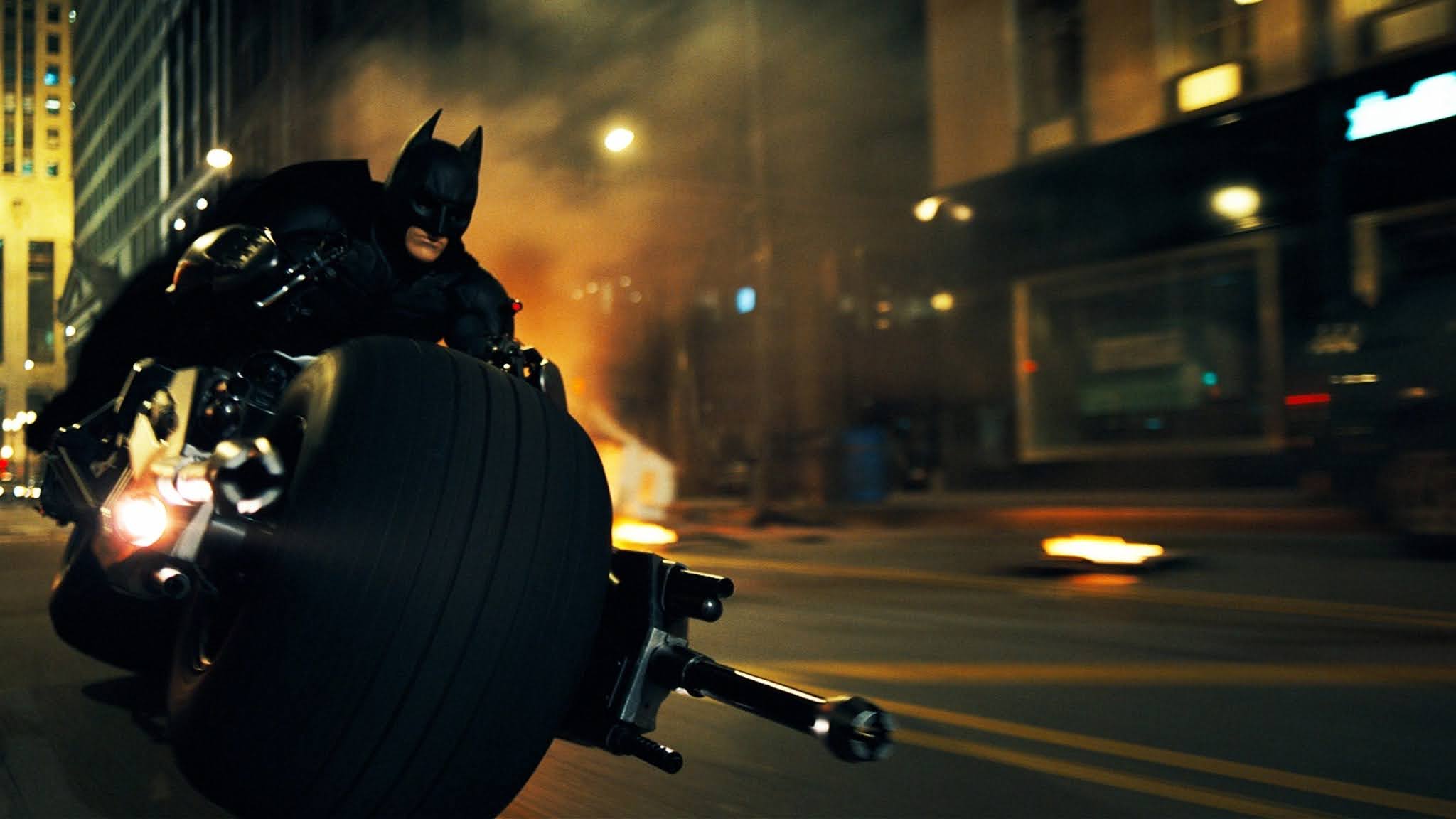
Bravely the film ends not with a bang, but a character-driven, personal three-way confrontation between its three heroes (Batman, Gordon and Dent), low-key but bubbling with resentments, fury and pain. It’s a perfect cap – and a capturing of the film’s argument that the greatest damage people like the Joker can cause is not to our property but to our souls.

It’s easy in all this to overlook Christian Bale, but he is wonderful as Wayne (and again this is a film that is as much, if not more, about Wayne than Batman). Increasingly distancing himself from people – his last links to human warmth being Alfred (Michael Caine, again in wonderful mentor form) and Rachel Dawes (re-cast to terrific effect with Maggie Gyllenhaal, who brings wonderful depth and complexity to the role) – Wayne carries a martyr complex, damaging to his psyche.

Nolan’s film is a dense and rich thematic exploration of chaos and certainty which expertly combines thills and actions with a character driven plot. Superbly acted, wonderfully paced, rich and intelligent – with a genre defining performance by Ledger – this is truly great film-making, one of the greatest blockbusters of all time.
Erin Brockovich (2000)

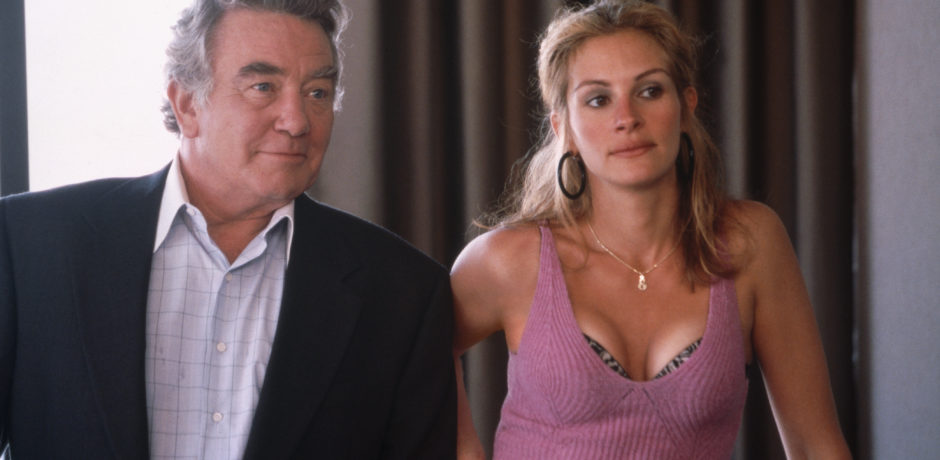
Albert Finney and Julia Roberts battle for justice in the caperish Erin Brockovich

Director: Steven Soderbergh

Cast: Julia Roberts (Erin Brockovich), Albert Finney (Edward L Masry), Aaron Eckhart (George), Marg Helgenberger (Donna Jensen), Tracey Walter (Charles Embry), Peter Coyote (Kurt Potter), Cherry Jones (Pamela Duncan), Scarlett Pomers (Shanna Jensen), Conchata Ferrell (Brenda), Michael Harney (Pete Jensen)

When Steven Soderbergh was being celebrated as the Great White Hope of arty American movie making back in the late 80s, it would probably have amazed his fans if you’d told them that 10 years later he would be directing a Julia Roberts star vehicle. But that’s what he pulled off to great effect in Erin Brockovich

Telling the true story of Erin Brockovich (Julia Roberts), the film follows her life from 1993 when she is struggling to make ends meet while bringing up three small children. After losing a court case – largely due to her brassy foul-mouthedness – she pressures her lawyer Ed Masry (Albert Finney) to give her a clerical job at his law firm. There she finds herself engaged with a simple real estate case involving PG&E, a major gas and electric company. Discovering the company has been polluting the water of the town of Hinkley in California – and left many residents with crippling health problems – Brockovich works to uncover the truth and to gets Masry to agree to build a legal case. She also finds her mouthy down-to-earthness allows her to connect with the people of Hinkley, and she soon becomes determined to get them justice.

The big thing that Erin Brockovich was about when it was released was Julia Roberts. In 2000, it was hard for heads not to be turned by seeing America’s Sweetheart wearing clothing so revealing and provocative it made her Pretty Woman character look reserved. And she swears! Frequently! The film was a triumph for Roberts, turning her from a romantic comedy queen into a serious actress. Roberts won every single Best Actress award going, up to and including the Oscar. And Roberts is very good indeed in the role. Few films have used her effervescence and warmth as a performer so well. You can’t help but side with Julia Roberts when she is firing on all cylinders, no matter what the situation – whether she is a brassy, chippy working mother, a Hollywood actress or a New York City prostitute, you find yourself on her side. 

But, looking back at the film now, this role essentially plays to all of Robert’s strengths. While it looks on the surface like a radical departure for Roberts, the film is basically very much in her wheelhouse. In fact, the whole film is almost a writ-large version of that shop scene in Pretty Woman (still one of the best scenes of modern cinema) stretched over the course of a whole movie. Julia Roberts is treated badly by snobby people, she doesn’t let it get her down, and then she returns with a triumphant flourish that puts the snobs in their place. 

That’s the whole game from Roberts: this is very much the type of performance she gave in Pretty Woman, Notting Hill and My Best Friend’s Wedding repackaged and given a novel appearance by being placed in a drama rather than a comedy. But all the little acting touches that would be familiar to you from those movies are there. There is nothing wrong with any of this, but the film in fact reinforces rather than refutes the idea that Julia Roberts (like Cary Grant) is largely a personality actor. She has a very skilful and impressive collection of acting touches, but they are pretty consistently the same across films. She performs with brilliant, luminous presence here – and commits fully to the part – but it’s more like the ultimate expression of the roles she played in the 1990s. It’s not a surprise looking back that she’s not had a hit like it since.

The rest of the film is an enjoyable mix of comedy and touches of tragic sadness. Soderbergh packages the film as a very safe entertainment, and its’ entertaining. The real Erin Brockovich claims the film is 98% accurate to what happened to her – which perhaps just makes you think that the clichés of film hew closer to real life than you might expect. Soderbergh doesn’t really have much to say here beyond big corporations and snobbery being bad and to never judge books by their cover. But it doesn’t really matter as the whole thing is presented with a confident, brassy buzz as if it is channelling Brockovich straight into celluloid.

It works all the time because you care about Erin, and you enjoy her company. It touches on some issues around sexism in the work place – although Erin is looked down as much for her working class roots as her sex – but there are elements there showing she is clearly judged by her appearance, and even the big firm lawyer brought in help fund the case can’t resist saying when he sees her “I see what you mean about a secret weapon”. Not that Erin herself isn’t ashamed to use her assets – when Ed asks how she can get people to allow her access to such confidential papers, she deadpans “they’re called boobs, Ed”.

That gives you an idea of the general comedic tone of the movie. It’s matched with a fairly predictable domestic plot-line. I suspect Soderbergh was probably making a bit of a point by turning Aaron Eckhart’s (very good in a nothing role) gentle biker, next-door neighbour, childcare provider and boyfriend into the sort of pleading “Honey please come home for dinner” non-entity that the woman often plays in films like this while her husband crusades. The film does manage to mine a bit of quiet sexual agenda from its otherwise fairly bubbly surface. It also draws attention to the way the film basically sets up Erin’s primary romantic relationship being not with a boyfriend, but with herself as she discovers the sort of person she has the potential to be.

There’s that Pretty Woman parallel again. The film is basically a dreamy re-invention saga, presented with a cool flourish. Roberts is excellent in a role that has become a calling card. She’s also got quite the double act with Albert Finney, who is brilliant as the put-upon, slightly haggard, slightly twinkly Masry who finds his own passion for justice reignited. Finney tends to get overlooked in this film, but he is superb and gives the best pure performance in the film. Soderbergh directs with a professional glossiness, and supplies plenty of heart-tugging victims (Helgenberger is very good as the main victim we see) mixed with punch-in-the-air, she’s proving herself better than them moments from Julia Roberts. It’s a very fun film, and genuinely entertaining. But like Roberts’ performance, it’s presenting old tricks in a new way, not reinventing the show.

The Core (2003)

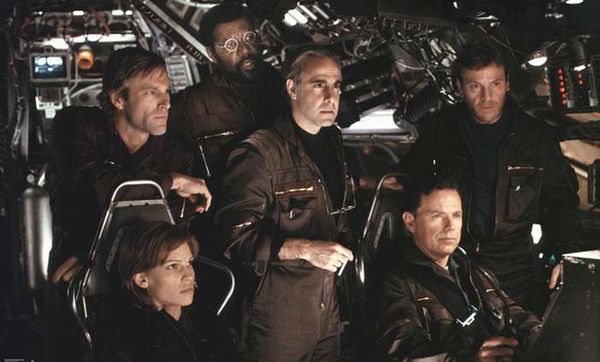
The Only Way is Down for our heroes in super silly Sci-fi disaster The Core

Director: Jon Amiel

Cast: Aaron Eckhart (Dr Josh Keyes), Hilary Swank (Major Rebecca Childs), Delroy Lindo (Dr Edward Brazzleton), Stanley Tucci (Dr Conrad Zimsky), Tchéky Karyo (Dr Serge Leveque), Bruce Greenwood (Commander Robert Iverson), DJ Qualls (“Rat”), Alfre Woodward (Dr Talma Stickley), Richard Jenkins (Lt General Thomas Purcell)

Dr Josh Keyes: “Even if we came up with a brilliant plan to fix the core of the Earth, we just can’t get there”

Dr Conrad Zimsky: “Yes, but – what if we could”

If you have any doubts about the type of film you are going to watch, then that tongue-in-cheek dialogue exchange (and the words can’t capture the playful, I-know-this-is-crap wink that Stanley Tucci tips practically to the camera) should tell you. The core of the Earth has stopped rotating. Which basically means all life on Earth is going to end in the next few months. Unless, of course, we can restart the rotation of the Earth’s core. So time to load up a team of crack scientists into a ship-cum-drill, made of metal that doesn’t buckle under pressure (this metal is, by the way, literally called unobtainium by the characters) so that they can sprinkle nuclear bombs through the centre of the Earth to kickstart the rotation of the planet and blah, blah, blah.

It’s perhaps no surprise that The Core was voted the least scientifically accurate film ever made by a poll of scientists about 10 years ago. Nothing in it makes any real sense whatsoever, and it’s all totally reliant on the sort of handwave mumbo-jumbo where you can tell getting an actual logical explanation was going to be far too much hard work, so better to roll with a bit of technobabble and prayer. Questions of mass, physics, pressure are all shoved aside. The film sort of gets away with it, with a leaning on the fourth-wall cheekiness – no fewer than three times in the film the impossible happens with a “what if we could” breeziness, as a character pulls out a theory or discovery with all the real-world authority of the fag-packet calculation.

But then scientific accuracy is hardly why we watch the movies is it? And this is just a big, dumb B-movie piece of disaster nonsense, which throws in enough death-defying thrills, predictable sacrifices and major landmarks being wiped out topside to keep the viewer entertained. In this film Rome and the Golden Gate Bridge both get taken out by spectacular disasters. Beneath the surface, the characters go through the expected personality clashes and learn the expected lessons.

The script (most of which is bumpkous rubbish) really signposts most of this personal development. Will Zimsky and Brazz rekindle their respect and overcome decades of rivalry? Will Serge, on the mission to save his wife and kids “because it’s too much to think about saving the whole world”, have to pay the ultimate sacrifice? Will Major Childs finally get the courage and determination to take command and make the hard calls? I won’t tease the fate of Mission Commander Bruce Greenwood, but he is called upon so often to reassure Childs that one day she will be ready to take command, alongside other mentoring advice, that the only surprise is that he lasts as long as he does.

So why is hard to not lay into The Core? Because, not that deep down at its core, it knows it’s a silly film. The script has enough awareness of its cliché and scientific silliness that it almost doubles down on it. And the actors play it just about right: for large chunks of it they perfectly hit the beats of sly archness that suggest just enough respect to not take the piss, but enough self-awareness of what they are making. But these are all very, very good actors and when the serious moments come, it’s remarkable how much they can shift gear – with the grisly death of one character (while the others powerlessly try and save him) played with an almost Shakespearean level of tragedy by a distraught Eckhart and Lindo. Later, as three characters juggle over who will go on a suicide mission to keep the mission on track, the bubbling emotions of shame, relief, pride, respect and buried affections are genuinely rather affecting. Its moments like this that makes me kind of love this big, dumb, stupid film.

But it remains stupid. Topside, Alfre Woodard and Richard Jenkins bumble through roles they could play standing on their heads. A hacker – Rat – is as clichéd and full of techno-nonsense as any of the science, which is even more painfully obvious to us now that we’re all so much more tech-savvy than we were in 2003. Events happen because, you know, they can. Discoveries and scientific conclusions are made because the script needs them. But the film knows this, it doubles down on it and it accepts that every problem is just a “But what if we could!” away from being solved. Stupid, but strangely loveable.

Thank You For Smoking (2006)


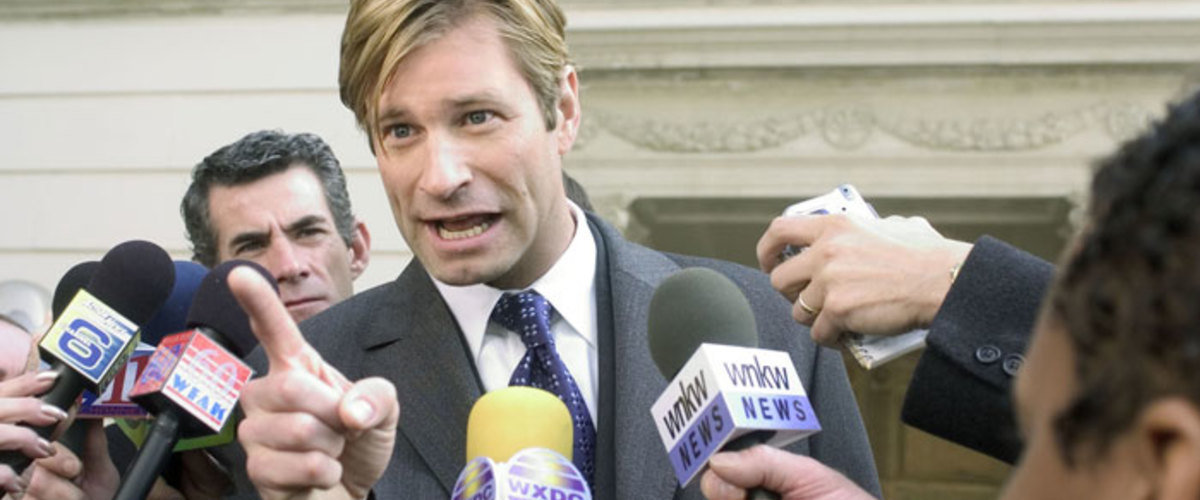
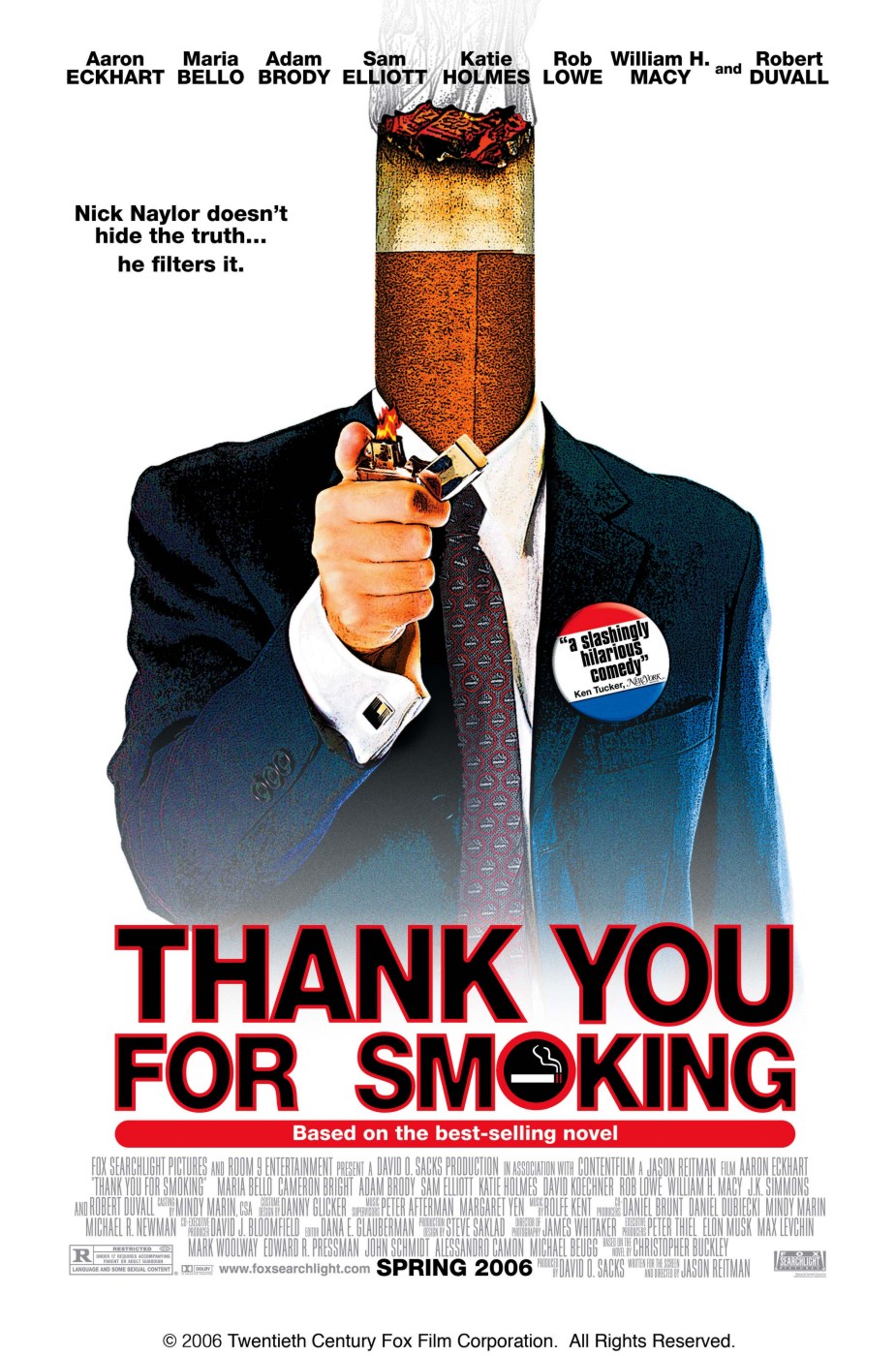
Aaron Eckhart does the big spin on Thank You For Smoking

Director: Jason Reitman

Cast: Aaron Eckhart (Nick Naylor), Cameron Bright (Joey Naylor), Katie Holmes (Heather Holloway), Maria Bello (Polly Bailey), David Koechner (Bobby Jay Bliss), William H. Macy (Senator Ortolan Finistirre), Robert Duvall (The Captain), J.K. Simmons (BR), Kim Dickens (Jill Naylor), Rob Lowe (Jeff Megall), Sam Elliott (Lorne Lutch)

Lobbyists: paid smooth talkers, whose goal is to win influence for often unattractive industries. Not a popular profession. Thank You For Smoking follows a few weeks in the life of Nick Naylor (Aaron Eckhart), a lobbyist for the tobacco industry. With senate hearings underway to place a skull-and-crossbones picture on every pack of cigarettes sold, Naylor has a host of pressures to deal with, not least rebuilding a relationship with his young son (Cameron Bright).

Thank You For Smoking is a smart and amusing satire on a pretty simple target. It’s a great showpiece for the skills of Jason Reitman, who directs his sharply written script with wit and verve. Reitman crafts a satire that’s never too heavy-handed, a well-balanced film that’s about morality and freedom of choice, without banging the righteous drum to death. He’s also got a keen eye for the quick and effective gag, meaning the film moves swiftly from punchline to punchline.

It helps a great deal that Aaron Eckhart is terrific in the lead role: handsome, cocky, charming but with a strange vulnerability. Nick Naylor a fascinating character: while he does adjust his views on issues, he is never humbled by events, and there is no “road to Damascus” moment where he denounces his career. He’s totally confident in his skin, who has come to terms with his role and doesn’t care what people think of him. And you’ve got to respect a man so skilled that he gets a 20 year-old dying of cancer from smoking to shake his hand on live television.

Similarly, the film avoids an open condemnation of smoking (it doesn’t even feature a single character smoking). If anything, the real targets for its criticism are anti-smoking campaigners (William H Macy’s sanctimonious senator is skin-crawling and unbelievably smug and petty), and the opportunistic recipients of lobbying. The film makes clear smoking is a bad habit, but also pushes the right we have to choose – if we want to poison ourselves, we should do so! I’m not sure if Reitman is willing to admit an argument like this is partially an abuse of ill-informed free speech, but at least he hopes we are smart enough to make up our own minds. It’s all part of the careful discussion of lobbying – what kind of person can be swayed by a professional counter-argument man?

There are several other terrific performances. Simmons is hilarious as Naylor’s aggressively vocal boss. Rob Lowe offers a brilliant self-parody as a smoothly empty Hollywood super-agent obsessed with Japanese culture. Maria Bello and David Koechner are both sharply witty as Naylor’s fellow lobbyists for alcohol and firearms respectively. The scenes between the three of these “Merchants of Death” (or “The MOD Squad” as they call themselves) offer a sharply funny commentary on the action throughout.

If the film has a problem though, it’s that it never feels like it develops into being much more than a framework for some good jokes. There is a thinly veiled morality tale here, but the film never really feels like it makes a point or a conclusion. Sure there are tonnes of excellent jokes and laugh-out-loud moments, but is it much more than a series of skilled sketches? Eckhart is of course brilliant in each of these, but there is often a sense of watching a series of misconnected events. Characters drop in and swiftly out of the movie. There is no overarching plot, as such.

The film largely dodges any real narrative conclusion. This is of course part of the smartness of its design – it’s not trying to make moral points, or hector us on health – but it also makes the film feel slightly empty, narratively adrift. Little changes for the characters from the start to the end of the story. Of course, the film is not so crude as to make its hero learn “a lesson”, but it also means Naylor is a more difficult character to sustain interest in over a period of time: complete lack of self-doubt does not tend to make great drama.

It’s very funny, smart, well written and acted. However, while brave enough to avoid predictability, it’s also inconsistent enough to not have a real shape. Some moments – in particular the relationship between Naylor and his son – lean heavily on cliché. Some of its more unusual moments – especially a sequence where Naylor is kidnapped by anti-smoking campaigners – fall the wrong side of surreal. But for all that it’s an imperfect film, it is certainly funny enough to justify itself and features a superb performance of alpha-male arrogance from Aaron Eckhart (I’ve asked this elsewhere, but how unlucky is this guy to not be a bigger star?). I guarantee you’ll laugh several times when you watch this – and if nothing else you’ll have a think about lobbying.

Sully: Miracle on the Hudson (2016)


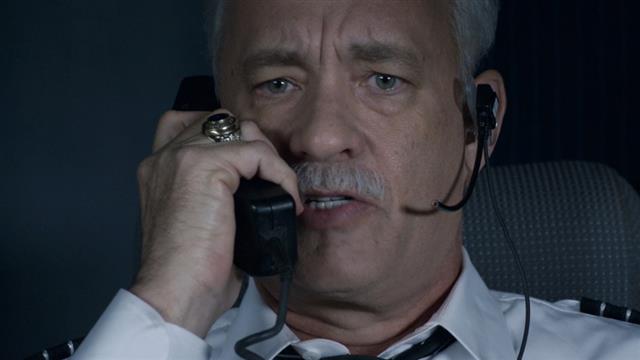
Tom Hanks braces for impact as heroically normal hero pilot Chesley Sullenberger

Director: Clint Eastwood

Cast: Tom Hanks (Chesley “Sully” Sullenberger), Aaron Eckhart (Jeff Skiles), Laura Linney (Lorraine Sullenberger), Anna Gunn (Dr Elizabeth Davis), Autumn Reeser (Tess Soza), Ann Cusack (Donna Dent), Holt McCallany (Mike Cleary), Mike O’Malley (Charles Porter), Jamey Sheridan (Ben Edwards)

On January 15th 2009, a miracle happened in New York. A plane struck birds, causing double engine failure. Captain Chesley “Sully” Sullenberger, left with no options, decided to land the plane on the Hudson River. Amazingly, all 155 passengers and crew survived unharmed.

Eastwood’s emotional, skilfully made film brilliantly recreates this true-life event, with Hanks taking on the lead as Sully. The framing device Eastwood uses is the National Transportation Safety Board investigation into the crash, here re-imagined as an almost persecution, convinced that pilot error and failure to react quickly enough were the causes.

What’s most striking for me is this film’s tribute to the professionalism and heroism of everyone involved. Just as Sully states during his hearing, this was a team effort, not the work of a lone hero. This comes across strongly here. Air hostess is a profession which, god knows, it’s easy to mock: but this film shows their unflappable bravery, calmness and leadership. Similarly, the first responders are dedicated and compassionate. I’m not ashamed to say I felt myself choke up at one point, when a first responder tell one waterlogged passenger “no one dies today”. The film ends with a tribute to New York coming together to save lives – and it’s a message ringing through the film.

Eastwood knows the drama of the film is directly linked to the crash, so weaves this event throughout the film, returning to it at least four times from different angles. He opens the film with Sully’s nightmare of what could have happened if he had flown towards an airport (the plane ploughing into New York) – a grim reminder of what could have been, which hangs over the rest of the runtime. The evacuation of the downed plane is gripping, and is filmed with a restraint that lets the events speak for themselves. The emotional force throughout these sequences is compelling.

Tom Hanks is perfectly cast as the low-key everyday hero achieving the impossible with only quiet courage and years of experience behind him. To be honest, it’s a role Hanks could probably play standing on his head, but his quiet everyman quality is essential to the film’s success. He’s well supported by Eckhart and other members of the cast.

It’s good Hanks is so assured, as he is required to anchor much of the film’s plot. The plot is where the film struggles as, to put it simply, the story away from the crash isn’t actually that dramatic or interesting. An attempt has been made to make the investigation into the crash into a sort of inquisition into Sully’s actions, but it never really rings true (it largely wasn’t) and it’s never really interesting enough, certainly not when compared to the crash itself.

In fact, it’s hard not to think that there is some sort of message being built into the film here, contrasting the low-key individual Sully with the faceless, procedural suits who can’t imagine the importance of the human element. Maybe that’s reading a bit much into it, but either way it’s average drama: there is never any doubt in the viewer’s mind that Sully will be completely exonerated. It’s an attempt to add dramatic tension to a story everyone already knows.

Furthermore, Sully is too “normal” a man to sustain a drama around his life: in another film inspired by these events, Flight, Denzel Washington played a drunken pilot who saved an aeroplane in a moment of inspired flying. The drama of that film was based on the film’s exploration of Washington’s character’s lack of responsibility vs. his act of heroism. Sully doesn’t have this, so we don’t get that sense of conflict within the character or with others. Put simply, Sully is such a regular decent, guy that, outside these unique circumstances, he is not really a dramatically interesting character – and the film can’t create a plot that brings drama out of his situation.

So Sully is a mixed bag of a film. Hanks gives his best as ever, but the film can’t really get over the fact that it’s recreating a moment in history, and fails to give that moment an effective dramatic framework. There is some good supporting work, although many of the other roles are thankless (Laura Linney’s role in particular is literally phoned in), but the film only flies when the plane doesn’t. The reconstruction of the event, and the people who were involved in it, is inspiring and stirring – but the rest of the film is little more than a humdrum courtroom drama.

Battle Los Angeles (2011)


The aliens are coming! Get ready to fight! High-octane nonsense in Battle Los Angeles

Director: Jonathan Liebesman

Cast: Aaron Eckhart (Staff Sgt. Michael Nantz), Michelle Rodriguez (TSgt Elena Santos), Ramon Rodriguez (Lt William Martinez), Bridget Moynahan (Michele), Ne-Yo (Cpl Kevin J. “Specks” Harris), Michael Peña (Joe Rincon), Lucas Till (Cpl Scott Grayston), Adetokumboh M’Cormack (HM3 Jibril A. “Doc” Adukwu)

We are not alone, and the visitors do not come in peace. But then in films like this they rarely do. They don’t even want to be taken to our leaders. They just want to kill us. An alien invasion strikes, and Los Angeles is one of several cities on the frontline against the seemingly indestructible alien hordes. Staff Sgt. Michael Nantz (Aaron Eckhart), a veteran whom many blame for leading members of his platoon to their deaths on his last tour, is hurriedly reassigned to a platoon of fresh recruits and sent into the city to rescue a group of civilians. But they quickly find themselves trapped behind enemy lines, fighting a rear-guard action against the invaders.

Battle Los Angeles has received little love from the critics. It’s not hard to see why. The characters (such as they are) are a collection of ill-defined military types, who give voice only to the purest of clichés. Literally nothing in it is new or original, with Liebesman combining the offcuts of Saving Private Ryan, Black Hawk Down and District 9 into an alien urban shoot-‘em-up cocktail. The plot is so predictable it could be comfortably guessed in advance with only a brief description of the characters. Will Aaron Eckhart’s Distant-but-Dedicated-Haunted-Sergeant win the respect and love of his men? You betcha.

So why, despite this, did I actually quite enjoy this film? Possibly because it has no pretensions at all but solely sets out to entertain. It presents its clichés with such steel-jawed commitment, it makes them fairly entertaining. It has more heart in its affection for its staple characters than a host of other, bigger blockbusters and certainly more fun. It’s a short and high-energy ride. Despite its Michael Bay-ish, fetishistic love for the military, it’s not afraid to present the marines suffering from fear and anxiety. It’s a simple, unbloated story. Sure it’s not very good at all, but it’s not offensively bad, and catch it in the right mood and you’ll enjoy its corny heroics and “man on a mission” dynamic.

Part of this probably comes from Aaron Eckhart’s acting, which is at least several degrees better than the movie deserves. Replace him with an action lunk and it would slip into militaristic tedium, but Eckhart gives his performance a certain humanity – and inspires, I think, some decent, realistic work from his fellow actors. They more than service the “Men/Women gotta do” structure – and rather winningly the film shows all the characters as competent and all willing to go the distance to help each other.

So we get a decent, B-movie cutting of a modern war film, with the frame full of bangs, crashes and chaos. Sure, many of the characters remain indistinguishable and the plot is nothing at all to write home about, but there is an unabashed, unpretentious simplicity about the film I found strangely winning. Liebesman is no artist, but he is a solid craftsman and while he lacks any originality, he does have a schlocky sense of fun that really works here.

It’s not fit to lace the boots of any of the films it’s ripping off (you can chuck in Independence Day, Aliens and almost any war film made this century) but it’s perfectly content with being a bootroom reserve. It wants to entertain you: sit back and let it do so and it probably will. Critical thinking off!

London Has Fallen (2016)

Rather appropriately Gerard Butler takes aim at us. After all the viewer is just about the only person he doesn’t kill in this film.

Director: Babak Najafi
Cast: Gerard Butler (Mike Banning), Aaron Eckhart (President Benjamin Asher), Morgan Freeman (Vice President Allan Trumbull), Alon Moni Aboutboul (Aamir Barkawi), Angela Bassett (Director Lynne Jacobs), Robert Forster (General Clegg), Melissa Leo (Secretary McMillan), Radha Mitchell (Leah Banning), Charlotte Riley (‘Jax’ Marshall), Jackie Earle Haley (DC Mason), Waleed Zuaiter (Kamran Barkawi), Colin Salmon (Com Kevin Hazard), Patrick Kennedy (John Lancaster)

Devoid of any sense of humour, decency,  charm or emotions at all this is a brainless and tasteless action film crammed to the gizoids with extreme knife based violence,  growled threats and paper thin characters none of whom are remotely interesting or engaging. It’s cast iron certainty, it’s self righteousness and brutality make it a deeply unpleasant, off-putting and unlikeable film.

Basically the UK PM is slain and the G8 assemble like besuited Avengers for the funeral. Unfortunately some terrorists have hatched a plan to wipe them out in revenge for a pre-credits missile strike and sure enough we have a series of assassinations in the opening seconds by villainous shady terrorists. Spreading the stereotypes fairly BTW the French leader is a yacht based dilantte, the Italian a geriatric lothario and the German a sour faced deadly serious Angela Merkel type.

The main problem with this is Gerard Butler. The film sinks completely under the weight of Butler’s self importance and chronic lack of humour . At no point in this film does Butler’s Mike Banning make any mistakes or offer up any form of human reaction such as fear or uncertainty. Compare him instead to John McClane and the moments of terror Willis dips into that role to humanise it. Also remember that Willis is charming and witty in that film. Butler however thinks alpha male certainty and grim faced contempt for everyone he meets (bar his bosses and a Scottish SAS captain) will endear us to his character. Instead it makes him border line terrifying – it would surely only take a wrong word, for Banning to turn his fury on an innocent bystander.

Mike Banning however is a violent psychopath, Butler thinking that brutally murdering a captive with a knife while growling some zenophobic one liner counts as wit. To be honest I’d be scared shitless if I was protected by this psycho who growls brutally from start to finish, all too clearly enjoying the mass killing. There is a vague attempt to humanise him with the introduction of a pregnant wife at home but instead you dread what values Banning is likely to invest the infant with in the future.

In fact the whole film has a horrible jingoism, xenophobia and racism running through its centre. It’s attitude to anything not American (or at a push British) is at best suspicion, at worst outright hatred. Anyone with a beef against America is twisted, evil, riven with jealousy and hatred of freedom and shucks we should cheer as Banning brutally tortures one of them in his final moments. America! Fuck Yeah! It gives patriotism a bad name.

The film passes the time if you enjoy seeing London destroyed (again) on film, and the body count of gruesome kills is high enough to satisfy anyone’s needs for violence, although the killing is so graphic and the film lingers so leeringly on each knifes plunge with the perversity of snuff film. A load of Brits (Colin Salmon, Charlotte Riley and Patrick Kennedy) dial in worried expressions from a control room (needless to say one of them is a traitor) while sportingly Morgan Freeman, Melissa Leo, Robert Forster and Jackie Earl Haley do similar jobs in a bunker in America.

But the film is almost proud of the fact it has nothing new to say at all and seems totally unaware of its fundamental unpleasantness. It’s actually a nasty, bigoted, small minded, cruel film that hates anything different. It thinks it has a Die Hard lightness of touch – but it really, really doesn’t. Butler is charmless and horrible and the film is revolting. Avoid it.