
Tag: Abbie Cornish

Elizabeth: The Golden Age (2007)

Elizabeth the golden age
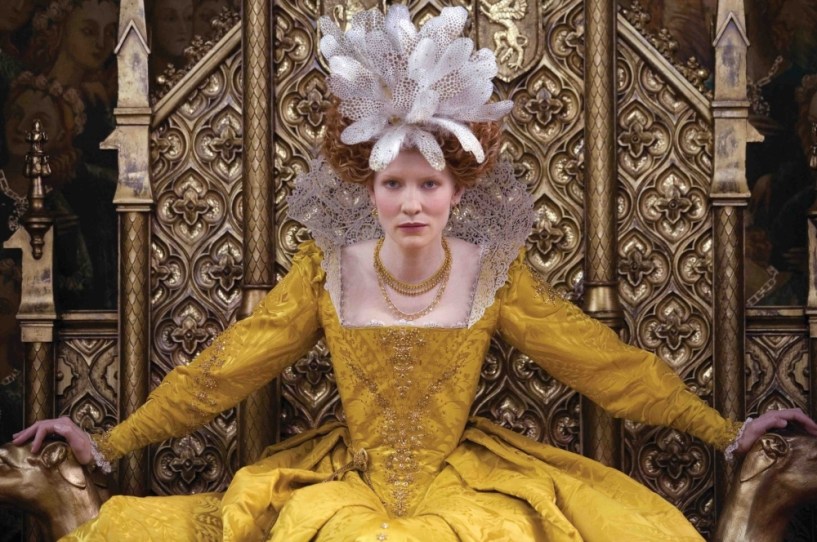
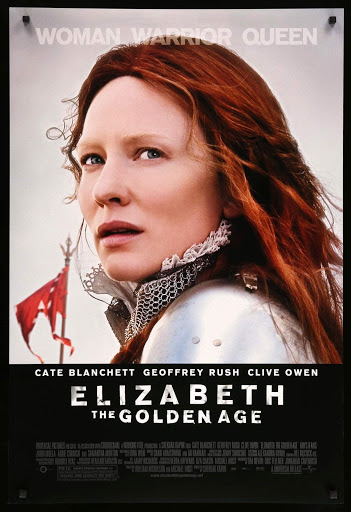
Cate Blanchett returns as Elizabeth I in the slightly underwhelming Elizabeth: The Golden Age

Director: Shekhar Kapur

Cast: Cate Blanchett (Elizabeth I), Geoffrey Rush (Sir Francis Walsingham), Clive Owen (Sir Walter Raleigh), Abbie Cornish (Bess Throckmorton), Samantha Morton (Mary Queen of Scots), Jordi Molla (King Philip II), Susan Lynch (Annette Fleming), Rhys Ifans (Robert Reston), Eddie Redmayne (Anthony Babington), Tom Hollander (Amias Paulet), David Threlfall (John Dee), Steven Robertson (Sir Francis Throckmorton), Adam Godley (William Walsingham), Laurence Fox (Sir Christopher Hatton), William Houston (Guerae de Espes)
Its 1585 and the reign of Elizabeth I (Cate Blanchett) has seen England enter a Golden Age. But tensions are rising with the Spanish and their king Philip II (Jordi Molla). The Spanish plot to replace the protestant Elizabeth on the throne with the catholic Mary Queen of Scots (Samantha Morton), sending their agents (including the likes of Rhys Ifans and Eddie Redmayne) to England to ferment rebellion. Can Elizabeth’s trusted advisor Sir Francis Walsingham (Geoffrey Rush) root out this potential rebellion? Or could this be a trap to lure England into a naval war with Spain and its chilling armada of ships?

Elizabeth: The Golden Age is a late sequel to the more influential Elizabeth, which mixed in the ruthlessness of The Godfather, with a sprinkling of sex in a darkly tinged Elizabeth England which seemed to drip conspiracy (setting the tone for costume dramas for the next ten years at least). Compared to its original, Elizabeth: The Golden Age seems a much more traditional piece of filmmaking. It’s luscious and handsomely filmed, with the darkness and oppression of the original replaced with golden hued lighting, sumptuous (Oscar-winning) costumes and some very impressive set-designs, all of which help to point up the glamour of the past in a way that seems much more similar to a 1970s epic than the more inventive work of the original.

It’s a part of the film’s idea of the country now enjoying the glory Elizabeth’s reign has bought, with the dark corridors replaced by the bright lights of peace and opulence. The film’s reimagining of Tudor history does still present some interesting perspectives, not least in the character of Elizabeth. Now firmly in middle-age – and committed to a life of celibate singledom – Cate Blanchett’s regally imperious Elizabeth is still emotionally vulnerable with a deep sense of longing in her. Unable to live the life of romantic freedom she could in her youth, she now lives an emotional life vicariously through her ladies in waiting, particularly Abbie Cornish’s sharp and knowing Bess Throckmorton.

This focuses on Elizabeth alternating between encouraging and discouraging (due to her own half-realised romantic longing) a romance between Bess and famed explorer Walter Raleigh. Played by Clive Owen at his most buccaneering (with an accent that playfully lies between Norfolk and New England, suggesting the American accent came from Raleigh), Raleigh bewitches the Queen with exciting tales of abroad – but with her unable to flirt with him fully as she wishes, Bess is encouraged to dance intimately with him among other romantic gestures. The most important thing throughout for Elizabeth is that it is she controls and dictates the relationship – and when the couple start to make their own decisions, it leads to disaster.

It’s all part of Michael Hirst’s (here sharing script writing duties with William Nicholson) imaginative reinvention of Tudor history (remixed into an exciting version of what could have happened). This also comes together very nicely in an interesting conspiracy thriller take on the Babington plot and the goals of the Spanish to use it to manipulate both Elizabeth and Mary Queen of Scots. The film is at its strongest when playing with historical expectations.

However, too often it plays into the sort of “Britain Triumphant” nonsense that made Michael Gove on release (and you imagine Laurence Fox today – here popping up as Christopher Hatton) thrilled. The British characters – Elizabeth, Raleigh, Walsingham – are brave, charismatic, ingenious and attractive. The villainous Spanish are thick-lipped, spittle flecked, bad-haired meanies with Philip II literally a sinister limping hunchback. No scene in Spain is complete without dark lighting, chanting monks, massive crucifixes and a general air of oppression. When ships sink, the camera doesn’t miss the chance to capture a crucifix sinking to the bottom of the briny. The Babington conspirators plot out of a dyers shop, where blood red dye drips all around them. The plot culminates in a “just missed her” point blank gun confrontation (the film’s most silly flourish). Subtle it ain’t.

And also it feels more Little Englander than its predecessor. Whereas the first film saw as much darkness and dirty dealing among the British as it did Europe, this film feels like a “Britain Stands Alone” against treacherous, lecherous, sanctimonious (or all three) Europeans. Sure the Armada was a terrific win for Britain – here with much of the credit reassigned to Raleigh who steers fire ships into the path of the Spanish ships (Drake is reimagined as a lumpen bureaucrat dazzled by Raleigh’s pizzazz) – but it owed as much (as even the Tudors themselves admitted) to the weather and luck as it did bravery and skill. Unlike the first film, Elizabeth: The Golden Age seems determined to define European and Catholic as suspiciously “other”. It makes for a less rewarding film.

And a less interesting one. For all its playing with psychology, this is a very much more traditional costume drama, celebrating Merrie Olde Englande where the original film challenged us to question our expectations. Kapur and Hirst settle for spectacle and style, over drama and truth. Blanchett is impressive as always – and the rest of the cast very sound – but this is a sequel that only lives as a counterpoint for the original.

Three Billboards Outside Ebbing, Missouri (2017)


Frances McDormand is looking for justice in Martin McDonagh’s razor sharp Three Billboards Outside Ebbing, Missouri

Director: Martin McDonagh

Cast: Frances McDormand (Mildred Hayes), Woody Harrelson (Sheriff Bill Willoughby), Sam Rockwell (Officer Jason Dixon), John Hawkes (Charlie Hayes), Peter Dinklage (James), Abbie Cornish (Anne Willoughby), Lucas Hedges (Robbie Hayes), Željko Ivanek (Sergeant Cedric Connolly), Caleb Landy Jones (Red Welby), Clarke Peters (Abercrombie), Samara Weaving (Penelope), Kerry Condon (Pamela), Darrell Britt-Gibson (Jerome), Amanda Warren (Denise), Kathryn Newton (Angela Hayes)

How do we deal with grief? What might it drive us to do? How does it make us behave – and what sort of person can it make us become? Martin McDonagh’s superbly scripted and directed, brilliantly acted film explores these themes in intriguing and compelling depth, consistently surprising the audience, not only with unexpected plot developments, but also wonderfully complex characters, whose personalities and decisions feel as distanced from convention as you can get.

Mildred Hayes (Frances McDormand) is a grieving mother, who feels let-down by the police and justice system as they have failed to locate and arrest the rapist who murdered her daughter. She hires three large billboards on a quiet road out of her town in Ebbing, and places on each of them a stark message: “Raped while dying”, “And still no arrests?” and “How come, Chief Willoughby?”. The billboards lead to Sherriff Bill Willoughby (Woody Harrelson) doing what he can to re-open the case – a case with no real evidence or leads. But the local community – many of whom adore Willoughby – are increasingly angered by the billboards, not least Willoughby’s semi-protégé, controversial red-neckish officer Joe Dixon (Sam Rockwell). The billboards lead to increasingly violent disagreement in the small community – and surprising allegiances developing.

McDonagh’s black comedy-drama balances immense sadness and searing rage with jet-black humour. McDonagh’s distinctive (and often foul-mouthed) style runs through the entire film. It’s a film that not only defies real categorisation, it also defies expectations. You would expect this film to be a commentary on a heart-rending grieving mother struggling against an indifferent, incompetent, racist (or all three) legal system. Perhaps even a film that will build towards a sort of “whodunit” murder mystery. All these expectations are constantly turned upon their head. Any obvious, traditional narrative development – and lord the film plays with this throughout its runtime – is diverted. You never know where the film is going – and you would certainly never have guessed its conclusion from the opening. 

Our expectations are immediately inverted when Woody Harrelson’s Sheriff meets with Frances McDormand’s mother in the opening moments. We expect him to be indifferent, annoyed or bitter – instead he’s liberal, concerned, sympathetic and hurt, while understanding why Mildred has done what she has done. Mildred, who we expect to be moved by, whose pain we expect to empathise with – instead she’s burning with fury and resentment, is amazingly confrontational and unyielding, and her ideas for investigating the crime border on the ruthlessly right-wing. Far from the predictable drama you might expect, you are thrown into something unusual – and real.

The storyline continues throughout in this vein – McDonagh never takes the expected route, but constantly pushes towards something unexpected. His trademark spikey dialogue throws you off balance – this is surely one of the few films where you’ll see a son affectionately call his mother “an old c**t”, or a happily married, middle-class couple address each other with a stunning, loving crudity. Pay-offs to plot developments are confidently unorthodox, and devoid of the expected sentimentality. The murder mystery element of the story is played with in a unique way: even the crime itself remains unexplored and unexplained, with only a few grim photos and a few hints dropped in dialogue as to what happened.

Instead, the film focuses on how grief and upheaval affects a community. All of the characters deal with a profound personal loss over the course of the story, and the impact of this on them leads not just to anger and rage, but also in some a profound reassessment of their life and choices. It’s a film that looks at the struggle we have to control the narratives of our own lives, to not be a victim but instead to give the things that have happened to us meaning and importance. Each character wants to find a way to make the things that have happen to them have meaning, and to find a sense of closure. It asks what can and can’t we forgive, and how far do we need to take actions to find a sense of closure. The film’s open-ended conclusion both points towards suggested answers to these questions, while at the same time offering few.

Frances McDormand gives a compelling performance in the lead role, as a domineering, strong-willed woman who resolutely refuses to be a victim, but wants revenge. Burning with a simmering rage at the world, and quick to respond with aggression and even violence, McDormand never allows the character to become fully sympathetic, but constantly challenges us. It’s the sharpest-edged grieving mother you’ll see on film, as full of prejudice and judgemental behaviour as she is pain and guilt. She attacks each scene like a bull in a china shop, and Mildred Hayes is a smart, ruthless woman who takes no prisoners.

The part was written especially for McDormand, as was that of Joe Dixon for Sam Rockwell. Rockwell, one of those eminently reliable supporting actors, gives an extraordinary powder-keg performance as an on-the-surface dumb, racist bully with poor impulse control, who is barely able to hide a vulnerable mummy’s-boy complex and a strangely touching sense of loyalty. Rockwell is dynamite in each scene, but constantly gives us interesting and varied line-readings, changing our perceptions of his character with each scene. 

To briefly address a controversy that has arisen about the film.  McDonagh has explored extremes like this in the past – his work in the past has humanised murderers, child-killers, terrorists and executioners, while not excusing their actions. The film has courted controversy by refusing to condemn Dixon’s racism, or for not ‘punishing’ the character enough, but it instead asks us to understand why Dixon has done or said the things he says – and to empathise with the pain, despair and anger in his own life. Is Dixon a racist? He’s a product of his time and place, I’d say he’s really just very angry, without understanding why, and without having the emotional intelligence to deal with it. He might have done unpleasant things – in the film doesn’t dodge this – but it asks us to question why he might have done this, rather than paint him as a demon.

Equally brilliant (perhaps one of his greatest performances) is Woody Harrelson as the surprisingly liberal, good-natured, patient and humane Sherriff Willoughby. Surely no one could expect the authority figure in a film of this nature to be the most sympathetic and likeable character in the film, the one with perhaps the most moving personal story. Harrelson is simply superb in the part, and his gentle, lingering regret hangs over the film.

But the whole cast is marvellous. Hawkes is a deeply troubled and pained man hiding it under anger and mid-life crisis. Dinklage is a sad eyed, lonely man. Cornish sports a slightly unusual accent but is warmly loving and very normal as Willoughby’s wife. Hedges is impressive as Mildred’s son, whose life is made increasingly difficult by his mother’s unwillingness to compromise. Landy Jones is excellent as the empathetic billboard manager, too good for this town. Peters brings a reassuring air of authority and dignity to the film. With the dialogue a gift for actors, there isn’t a weak performance in the film.

McDonagh’s fine, simple direction adds a Western-style sweep to the action and allows the story to speak for itself, working with the actors to bring out some brilliant, unique characterisations. It’s an intelligent and thought-provoking film, that constantly pushes you in unexpected directions and asks intriguing and challenging questions about profound issues, especially grief. Despite this, it’s a laugh-out-loud black comedy, that will move you and which has the courage to leave many of its plot issues open-ended and true-to-life. It asks questions, but it also acknowledges that life doesn’t give us answers. It also reminds us that we can never judge people from our initial impressions or expectations.