Tag: Action Films

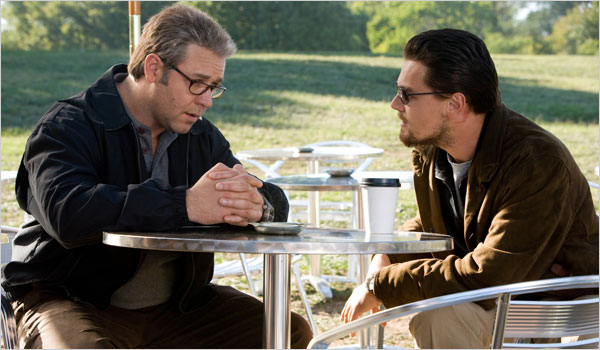
Body of Lies (2008)

Russell Crowe and Leonardo DiCaprio fail to master the Middle East in Ridley Scott’s spy thriller Body of Lies

Director: Ridley Scott

Cast: Leonardo DiCaprio (Roger Ferris), Russell Crowe (Ed Hoffman), Mark Strong (Hani Salaam), Golshifteh Farahani (Aisha), Oscar Isaac (Bassam), Ali Suliman (Omar Sadiki), Alon Abutbul (Al-Saleem), Vince Colosimo (Skip), Simon McBurney (Garland), Lubna Azabal (Cala)

Ridley Scott is a bit of a curate’s egg as a director. You can always expect a film with a certain visual flair, as well as a story that attempts to tackle big themes and engaging topics. However, it doesn’t always produce an end result that really grips or feels like something that particularly stands out from the crowd. That’s what you end up with Body of Lies, a film that constantly feels like it is on the cusp of saying something important or interesting about the relationship between East and West, but constantly falls back on the sort of spy movie tropes it initially feels like it wants to debunk.

In the Middle East, Roger Ferris (Leonardo DiCaprio) is a dedicated CIA operative, with an intricate knowledge of the cultures and issues of the region. He constantly finds himself frustrated and undermined by his boss Ed Hoffman (Russell Crowe), based in Langley, who is constantly willing to sacrifice long-term gains for short-term political pay-offs. Assigned to Jordan, Ferris begins an investigation into a terrorist cell, working closely with head of Jordanian security Hani Salaam (Mark Strong) – but Hoffman’s intercessions increasingly cause tension.

Scott’s film is stylish and well assembled, with a great sense of pace and place. The contrasts between DiCaprio on the ground (in the dirt, facing dangers and tackling everything from terrorists to rabid dogs) and Crowe back in the States (rarely if ever seen without a hands-free phone set dangling from his ear, viewing everything at a distance with no understanding of the intricacies) is well drawn. The sense of complete cultural misunderstanding and lack of connection between East and West is established early, and attempts to cross it generally lead to disaster. The patience and expertise of the Jordanian security forces is contrasted constantly with the more slap-dash, hasty efforts of the CIA to meet the same goals. It’s all set for something quite interesting.

But then the film somehow doesn’t quite come together. Its episodic structure increasingly stretches out as action moves back and forth from Jordan to Langley and back again. A particularly wild scheme by Ferris (which, to the viewer not the film, suggests he is as incompetent and reckless as Hoffman) turns the film towards the sort of kidnap/torture/nick-of-time-rescue plotline that wouldn’t look out of place in 24 or James Bond. Basically, the plot turns on the film transitioning from something with a genuine political statement to make into the sort of disposal rent-a-spy-thriller that you forget pretty quickly. 

DiCaprio gets a lot of “big” moments to juggle with, as well as a rather forced romance with a Jordanian nurse (something that he and Golshifteh Farahani play very well, but seems to have wandered in from an even more conventional film) but the film works hard to paint him as the “hero” who knows better than his superiors, despite the film chronicling a string of mistakes. Crowe enjoys himself as self-important windbag behind a computer, as uncaring as the institutions he represents.

The real star of the show however is Mark Strong, excellent as the suave head of Jordanian intelligence, seemingly the only character who has any understanding about what is going on. With a cool sharpness, slightly playful politeness and a slight chill of threat, Strong is the film’s most interesting character. There is a striking point made here that the most effective person in the film is a Jordanian spy chief with a mixed reputation – but the film largely shirks the possibility of really using this to demonstrate how out-of-their-depth the CIA agents are, as if worried that flagging up their manifest incompetence at every turn would sell badly Stateside.

It’s part of the film’s general lack of soul behind the skill of its construction. I know Scott is deeply interested in these themes of East vs West and the culture clashes that develop from it, but it just doesn’t come out here at all. There was a film to be made here about how the war on terror has thrown the CIA and the West into a setting they don’t understand, playing by rules they haven’t been briefed on. But all too often the film instead settles for telling us the same-old-same-old, padding out its runtime with spy story clichés and thriller plotting. Scott himself even uses visual tricks – surveillance drone shots and 24 style action – which suggest that somewhere along the line his heart wasn’t really in it. Body of Lies could have been a really interesting thriller about the world today. Instead it’s just another spy thriller about the war on terror.

John Wick Chapter 3: Parabellum (2019)

Keanu Reeves, Halle Berry and some very, very mean dogs in John Wick Chapter 3

Director: Chad Stahelski

Cast: Keanu Reeves (John Wick), Ian McShane (Winston), Mark Dacascos (Zero), Laurence Fishbourne (The Bowery King), Asia Kate Dillon (The Adjucator), Halle Berry (Sofia), Lance Reddick (Charon), Anjelica Huston (The Director), Saïd Taghmaoui (The Elder), Jerome Flynn (Berrada)

Early on in the film, John Wick (Keanu Reeves in a role he might have been born to play) builds a gun from scratch components of other weapons to fire some outsized ammunition, throws an axe across a room to take out an assassin, and then effectively reloads a horse, using its rear leg kicks to dispatch two more luckless assassins. It’s a dizzying 20 minutes or so of pure balls-to-the-wall action fun full of invention and black humour. The film never gets near repeating it, despite much trying.

John Wick: Chapter 3 – Parabellum doesn’t have much in the way of plot. Instead it’s effectively a two-hour series of fight sequences. What plot there is pops up around the edges of all this imaginative blood-letting. That plot doesn’t really make much sense, and can basically be summarised as John has been declared excommunicado by “The High Table”, the shady organisation that runs the criminal underworld, meaning he is a target for every assassin in the world, and he is trying to reverse that decision. That’s kind of it, and any other subplots are basically slightly confusing or narratively empty detours from that central idea.

If you cut out all the fight sequences from the film, it wouldn’t run a lot longer than 15 minutes. There isn’t really any interest in the talking stuff or the characters, which seems to be fine for the likes of Laurence Fishbourne, who is wheeled out for three scenes of badass scenery chewing, but does mean that motivations and reasons for why anyone is doing anything at all remain completely unclear. There is a key subplot involving Ian McShane’s management of the Continental, the criminal “neutral zone” hotel in the centre of New York, that involves so many changes of allegiance and intentions that it winds up making no real sense.

But then people ain’t going to this for a character study. They are there for the fights. And, as I say, these are really inventive and entertaining. The first 20 minutes – with John haring through New York, trying to stay one step ahead of a blizzard of killers – is brilliant. It’s designed to be watched with large groups of people in the same mood, encouraging you to laugh, wince and shout out with the people around you. You can’t fault the work that has gone into the filming of this or the commitment of the actors or the genius of the choreographers. All of this is pretty faultless. And, no matter what extended fight you watch, you know you will see something different in every single one.

The problem is, the vast number of fights begins to pummel the audience into submission as well. Seeing Keanu Reeves involved in a series of three-in-a-row mixed martial arts sequences, each lasting well over 5-10 minutes, you start to let the whole thing drift over you. Put bluntly, after the initial explosion of action, the film hits a level it tries to sustain for almost an hour. And it’s too much. You just can’t keep that same level of engagement. I actually nearly dropped off at one point, which is not a good sign. How much action can one film take? 

There needs to be a balance. And without any real investment in what we are seeing, John Wick 3 is another of those films designed for YouTube. I can imagine watching most of these fights as little five-minute videos on the Internet in the future. Actually broken down like this I will probably enjoy it a lot more. But as a single film, there is nothing there to link it together.

The first film had a simple, but very pure, storyline that we could all relate to. A man loses his beloved wife, who on her deathbed gifts him a dog to care for. Said dog is then killed in a senseless break-in by some arrogant criminals. John Wick’s revenge is against those who thoughtlessly took from him the last piece of the only woman he loved. Everyone can relate to that – and it grounded everything we saw and immediately put us on John’s side. This film however is a confused motivation-less mess. If the series originally presented us with a John unwillingly dragged back into this world, since then (and here) he seems like a character with no inner life. 

The film attempts vaguely to add one, suggesting that John must make a choice between being a killer or the better man. Problem is choosing to be the better man isn’t really a platform for fights. So we lose what the film really needs, which is John struggling between his good and bad demons. Instead his motivations are a confused mess and the film spends more time showing us the brutal groin attacks of Halle Berry’s dogs (those things fight with no honour let me tell you) than giving us a lead character with a coherent personality.

It makes John Wick 3 not a lot more than a YouTube compilation, and giving Ian McShane some Latin to drop to explain the film’s title, or trying to change a character in Act 4 into a personal rival for John, doesn’t suddenly give it depth or interest. It’s fun in small chunks, but this is way too long and seems to have lost at least half of what made the first film such a guilty pleasure.

The Four Feathers (1939)

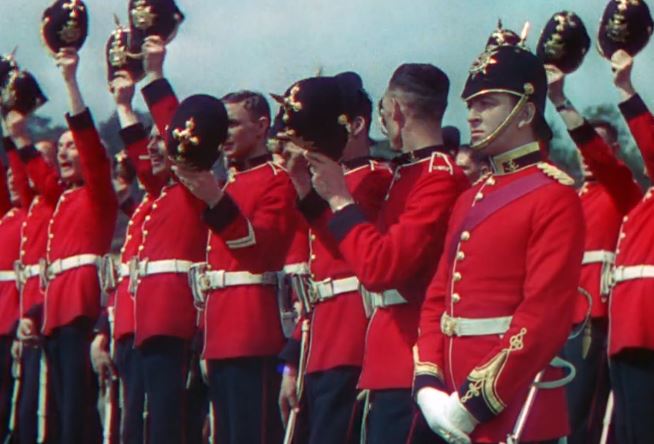
John Clements jacks in the soldier’s life, then has to prove he’s not a coward in The Four Feathers

Director: Zoltan Korda

Cast: John Clements (Harry Faversham), Ralph Richardson (Captain John Durrance), C. Aubrey Smith (General Burroughs), June Duprez (Ethne Burroughs), Allan Jeayes (Geveral Faversham), Jack Allen (Lt Thomas Willoughby), Donald Gray (Peter Burroughs), Frederick Culley (Dr Sutton), John Laurie (Khalifa)

Who doesn’t love a sweeping boys own adventure? The Four Feathers is a prime example of a classic late Victorian adventure story by AEW Mason, where stiff-upper lipped British men do what must be done for honour, Queen and country in the face of hordes of dangerous ruthless natives. Okay, you can see typing that why some of these attitudes can be seen as “troubling today” – and the film’s occasional non-PC stumbles (John Laurie blacks up – as does every other actor playing a speaking African – as radical leader Khalifa, while his army is referred to by an on-screen caption as “fuzzy-wuzzies”). But it’s a product of its time, and its attitudes are really less racist, than the sort of patronising parental colonialism, where the Khalifa has to be stopped as much because he is a danger to his fellow natives as he is the British rulers.

Anyway, putting it’s “of its time” attitudes to one side, The Four Feathers is an endearing, enjoyable and wonderfully made adventure story. After the death of General Gordon (see Charlton Heston’s epic Khartoum) in 1885, war is declared on the Khalifa in the Sudan. However young Harry Faversham (John Clements) resigns his commission on the day of the announcement that his regiment will be shipped out, feeling his obligation to join the army has ended with his father’s death and worried that he will prove a coward. His friends Durrance (Ralph Richardson), Willoughby (Jack Allen), Burroughs (Donald Gray) and fiancée Ethne Burroughs (June Duprez) are singularly unimpressed and all send him white feathers of cowardice. Realising he has led down everyone, Faversham disguises himself as mute, Sangali native (including facial brand – ouch!) and heads out to the Sudan to help his friends and regain his honour: and do they need it, as Durrance is blinded and Willoughby and Burroughs captured by the Khalifa.

The Four Feathers was shot on a huge budget at the time, with extensive on-set location shooting, and it barrels along with an old-fashioned sense of adventure that is hard not to get a little bit swept in. Of course, it’s also easy to question some of the film’s colonialist, white-man’s burden attitudes and also its opinions on what constitutes bravery and nobility (leaving the army because you never wanted to be in it in the first place is seen as yellow-bellied nonsense, which I suppose makes sense for a film made just before World War Two). 

But take it as a product of its own time, and the film works extremely well – easily the best version of the many that have been made of AEW Mason’s book. While epic, it gives us a low-key, dignified lead character who it’s easy to admire and relate to. John Clements plays the role with an expected upper-class stiffness in places, but he’s also a man bursting with desires to be something more than a soldier, then plagued with guilt and self-loathing when he believes he has betrayed all those he is closest to. Clements’ performance anchors the film extremely well, and makes Faversham into an admirable, very human protagonist, pushing himself to insane levels of deprivation and suffering to redeem himself in his own eyes, as much as in his friends.

Those friends are also not painted as arrogant buffoons or cruel, knee-jerk bullies. Ralph Richardson mines a great deal of sympathy from Durrance, a man determined to do his best but (its implied ) living under a deep sense of inadequacy and fear himself, who knows he is second best in most things, especially in love, and who accepts the ill fortunes that befall him with an eventual stoic good-nature. The film’s most successful sequence, features a wordless disguised Faversham, guiding the blind Durrance not only back to the British troops, but also helping him to find some will to carry on living. Its sterling work from Richardson, and his physical intelligence – his initial blindness is almost comically blundering, before the character trains himself to move and act almost as if he still had his sight – makes for further emotional connection.

All this is set in a sweeping, marvellously entertaining, grand-scale by Zoltan Korda. No expense was clearly spared, and the large scale sequences of battles and attacks – as well as the shots of armies moving across the desert wasteland – carry a great deal of scale and impact. The film barrels along with an impressive force, throwing events and actions at us throughout, all while juggling the personal stories of its lead characters. The technicolour shooting of the film has a classic gorgeousness about it, and the film has more than its fair share of decent lines. The film highlights a number of rather stirring battle set pieces, as red coated Englishman fight against overwhelming odds, the sort of thing that we are meant to frown at today but actually remains rather gripping.

The Four Feathers may be dated in places, but as a piece of classic entertainment from its era it’s hard to beat. The action adventure is full of bangs, shots and stiff-upper lipped Brits overcoming trials and tribulations. Faversham is a grounded and relatable character, and his doubts and fears make him admirable, not least because of the great lengths he goes to in order to overcome them. The Four Feathers still entertains today because it feels like exactly the sort of classic Sunday afternoon adventure story that appeals to boys of all ages.

The Empire Strikes Back (1980)

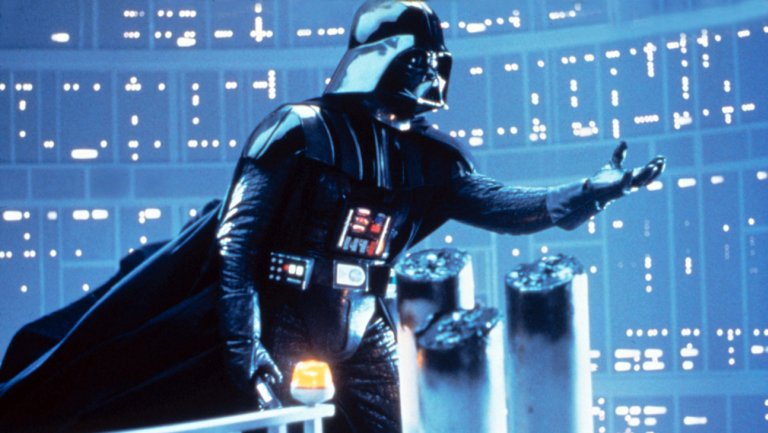
Darth Vader in the film that really made him an icon: the flawless The Empire Strikes Back

Director: Irvin Kershner

Cast: Mark Hamill (Luke Skywalker), Harrison Ford (Han Solo), Carrie Fisher (Leia Organa), Billy Dee Williams (Lando Calrissian), Anthony Daniels (C-3PO), David Prowse & James Earl Jones (Darth Vader), Peter Mayhew (Chewbacca), Kenny Baker (R2-D2), Frank Oz (Yoda), Alec Guinness (Obi-Wan Kenobi), Denis Lawson (Wedge Antilles), Kenneth Colley (Admiral Piett), Michael Sheard (Admiral Ozzel), Jeremy Bulloch (Boba Fett), Ian McDiarmid (Emperor)

As Star Wars sprawls into a massive Disney money-spinning franchise, for both fans and producers alike the original trilogy is increasingly becoming like Holy Texts, the events and characters of which must guide all future films. And of all these, none of them is holier than The Empire Strikes Back. It’s odd to think that the initial reaction to this sequel was a bit mixed at the time, since this is not only the very finest of all the Star Wars films, but also one of the best genre films ever made, one of the greatest sequels ever made – in fact one of the best, most consistently rewarding films you are ever going to see. It’s going to be loved forever, any critical view is almost superfluous. And the reason for that is surely linked to the fact that I’ve seen it hundreds of times and I still love every frame of it.

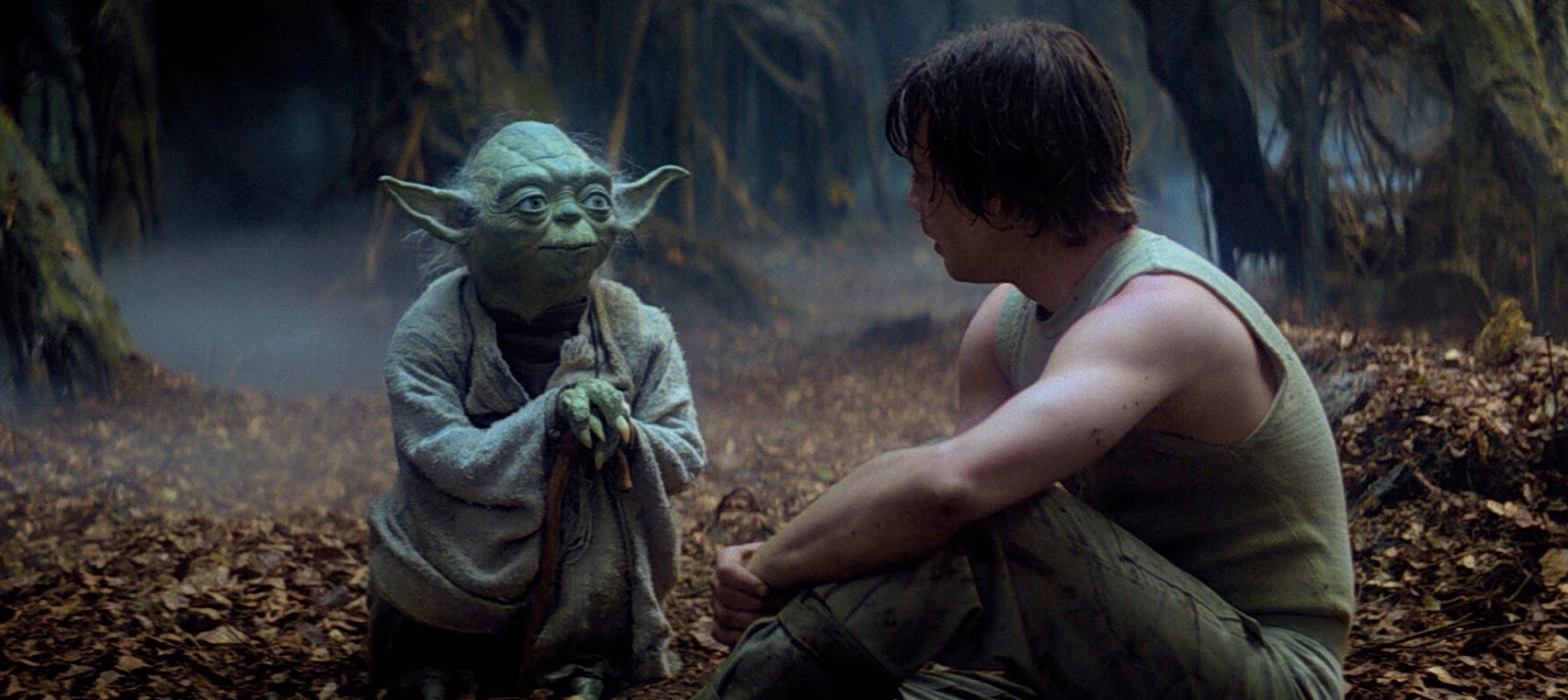
Anyway, nearly everyone must know the story. Some time has passed since the rebels successfully took out that Death Star. Now they are secure in a new base on the ice planet Hoth, being hunted by the empire in an operation commanded by the feared Darth Vader. When the Empire locates the base, our heroes are separated in the ensuing escape: Luke (Mark Hamill) is guided by the force and the ghost of his mentor Obi-Wan (Alec Guinness) to seek out the legendary trainer of Jedi Yoda (Frank Oz). Meanwhile, Han (Harrison Ford) and Leia (Carrie Fisher) are on the run in a malfunctioning Millennium Falcon, dodging Star Destroyers and eventually taking refuge in the Cloud City of Bespin, run by an old friend of Han’s, Lando Calrissian (Billy Dee Williams). But is this a safe refuge? And what is the secret reason why Vader is so determined to hunt down Luke?

So what is it that makes The Empire Strikes Back so damn good? Well it takes everything from the first film and deepens and enriches all the characters and themes that that film explored. While you could say Star Warsis the quintessential romantic space opera – part Western, part fairy tale legend – it’s also a feel-good fun ride. Empireis a rich, complex and endlessly rewarding film that takes all its characters and turns them into fully rounded and intriguing personalities. When you think about the turmoil and struggles each of them goes through in this film – from Luke, through Vader even down to C-3PO – it’s not hard to see why these characters have worked their way into the hearts of every viewer. We see them all go through huge amounts and we learn and discover things about them in every frame. It’s fascinatingly well done storytelling and brilliantly structured character building.

In fact the whole film is a triumph of investment. Even more than the first one, we get a real sense of the mighty ruthlessness of the Empire (staffed exclusively it seems by British character actors from 1970s TV), of its resources, its willingness to do anything. Even more than in the first film, the odds seem piled against the rebellion, with the limited ship, tiny fire power, the fact that our heroes spend virtually the entire film either running, hiding or captured – how can you not feel the pull of wanting to take up this romantic cause eh? 

Perhaps it works so well as Lucas handed over much of the on-the-ground-floor creativity over to other people (you only have the watch The Phantom Menace to see what happened when he took all these reins back up again). The witty, energetic, fun script – packed full of lines that trip off the tongue, and character moments that feel real and human – is by Lawrence Kasdan. Directing meanwhile is handled by Irvin Kershner, a middle-of-the-road director who taught Lucas at film school but here seems to transcend his abilities to deliver a true masterpiece, with all the thrill of a teenager finally given the keys to the big car. 

Kershner can handle all the spectacle, but like no other movie in the series Empire works because it’s rooted in the small-scale, in the reaction shot, in the camera soaking up the actors. There are so many shots of actors looking at things in this movie (I think they all have significant moments of this) while we see their thoughts and emotions play across their faces. Kershner never forgets that this is a story about people not about bangs and whizzes in space. In doing that, in making this a brilliant character drama, he really turned Star Wars into not just an adventure but a series where we invested heavily in these people. There is a reason why the modern films come back time and time to the characters from this film: Empire really made us care about them, turned them into family members, people we’d seen through highs and lows. We see them in a modern film and it’s like greeting long lost friends.

And it helps that the stars give their best work here. Harrison Ford may never have been so cocksure, so cool but also strangely vulnerable and lovable. While in Star Wars he was used to puncture the grandeur, here he’s got a put-upon vulnerability to him, a bravado in his courtship with Leia that hides his touchiness. Not to mention we are constantly reminded he’s a wanted man. Ford also gets massive comic mileage from his exasperation with the constantly malfunctioning Falcon. All this and he never looks flustered: “Never tell me the odds!” indeed! And he gets possibly the best loved line in the whole series with “I know”.

Fisher is equally good as a prickly Leia, who is afraid to let down the imperious commanding cool to let any hint of feeling and emotion show. Mark Hamill does a very easy to overlook job of emotional commitment as Luke Skywalker – particularly as he spends a large chunk of the film interacting only with a robot prop and a puppet. He sells the conflict Luke is feeling, the clash between doing action that feels right now and having the patience to build his skills. And of course, he sells the anguish of finding out that twist.

Ah yes the twist. Empire was perhaps one of the first films to impose such strict pre-production secrecy onto its key plot development. On set, only Irvin Kershner and Mark Hamill knew that Vader was Luke’s father (no spoiler warning – I think Lucasfilm have well and truly spoilt that one themselves). Dave Prowse, who was not trusted to keep it to himself, to was given a line around Obi-Wan killing Luke’s father (he must have been slightly surprised at Hamill’s reaction, which does seem a bit OTT to that news). But this moment again really, really, really works because it is both a surprise AND something that makes total sense. It doesn’t feel like hints have been dropped through the whole film in advance, but when you hear it you spot them all over the place. It’s also such a brilliant narrative rug pull it has also effectively powered the creation of the prequels and is still central to the new trilogy.

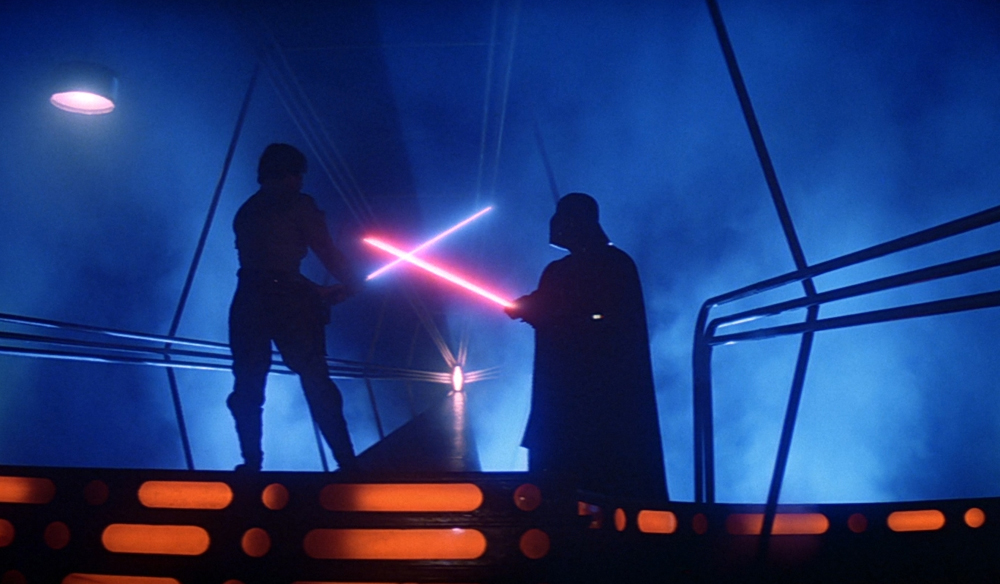
Away from all this, the film is also a masterpiece in pacing and action sequences. It took a lot of guts to put the major space battle at the start of the film, but it works an absolute treat – while also being something completely different from anything in the first film. It looks and feels really cool. And it contrasts perfectly with the smaller scale, more intimate desperation of the escape from Besbin that ends the film, matched with Luke’s battle with a never-more-imposing Vader. I’ll also mention as well that John Williams’ score for all these sequences is practically perfect in every way, adding no end of tension, emotion and excitement to all these sequences.

And it’s the fact that you get all this, mixed with a real, genuine investment in all the characters (good and bad), that really makes the film work in a way that no other Star Wars film has quite managed since, and that makes this the crown jewel in the franchise. It’s one of those serendipity projects where everything fell into place, everyone brought their best to it, and the stars aligned. It’s lightening in a bottle, and the franchise has used it ever since as its setter for everything from tone to plot developments. You will rarely find anything as fun, or widely loved, as this film.

Jason Bourne (2016)

Matt Damon swings back into action in after-thought Jason Bourne

Director: Paul Greengrass

Cast: Matt Damon (Jason Bourne), Tommy Lee Jones (Director Robert Dewey), Alicia Vikander (Heather Lee), Vincent Cassel (The Asset), Julia Stiles (Nicky Parsons), Riz Ahmed (Aaron Kalloor), Ato Essandoh (Craig Jeffers), Scott Shepherd (Edwin Russell), Bill Camp (Malcolm Smith), Vinzenz Kiefer (Christian Dassault), Gregg Henry (Richard Webb)

They say you should never go back. Producers had been begging Paul Greengrass and Matt Damon to get back together again and make another Bourne film. After all, there was hardly anyone asking for a sequel to that Jeremy Renner one was there? But Jason Bourne seems like a film that’s been made after Greengrass and Damon ran out of reasons for saying no. I can’t decide if we can blame them for that or not. But their making the film at all suggests they aren’t really losing any sleep about whether people feel this half-hearted effort has an impact on the legacy of the others.

Anyway it’s ten years later. The world is an increasingly technical place, with people living in an era of increasing social unrest and anti-government fury. Jason Bourne (Matt Damon), recovered from his amnesia, now lives off-the-grid – until of course he’s unearthed by his old colleague Nicky Parsons (Julia Stiles). Parsons is now working with a hacker commune in Iceland, and has unearthed more evidence about the shady CIA programme, Treadstone, that Bourne used to be a part of, and about Bourne’s own recruitment into it. Meeting in Athens in the middle of an anti-government riot, Parsons is killed and Bourne is set on a collision course with the CIA as well as finding out more about the mysterious death of his father 20 years before. 

Jason Bourne is basically going through the motions. There is an attempt to add another layer of mystery around Bourne’s background, but it barely seems to add much to the hinterland of Bourne we’ve already learned about in the last couple of films. Furthermore, I’m uncomfortable with a Bourne here who goes increasingly on a rampage of revenge. Part of the charm – or rather what makes Bourne different – in the previous films was that he was a man who lived in a world of violence, but didn’t care for it himself. He used brutal force only when it was absolutely necessary, and several times chose not to take a personal revenge. Here however, he dispatches at least three people, which doesn’t seem to square with the character as we’ve previously seen him.

Furthermore, the film seems to be struggling to reclaim Bourne as one of the formal good guys, a patriot and American hero. Again part of what made him different in the original trilogy was that he stood outside the government and nations, that (as Greengrass once said) “he’s on our side”. Here he’s clearly less than sympathetic to anti-government forces, and strongly opposed to exposing CIA secrets. In fact he ends up feeling rather conservative here to be honest, and more like the faceless killer that he started as rather than a renegade. 

It’s not helped by the fact that the plot is pretty meh, a remix of different elements from previous films, carefully ticked off to make sure we get everything we could expect. So we get a reworking of various car chases, fights, tense meetings in public locations etc. etc. The film-making is very well done – Greengrass rewrote the book on how to make films like this, and he carries that on here, brilliantly mixing twitchy editing, handheld camera work, immersive film-making and gloomy silences to create a really wonderfully done viewing experience. It’s just more of the same from the originals. The film just ends up living in the shadow of the originals, rather than really forging something out on its own.

Greengrass tries to tap into contemporary ideas. We get the sense of anti-establishment clashes and Internet data scams – but it never really feels like it goes anywhere or coalesces into any real point at the end of it. What is the actual message of this film? There are hints that Tommy Lee Jones’ gravelly CIA Director and Riz Ahmed’s Mark Zuckerberg-lite tech expert are planning some sort of mass intrusion on people’s privacy – but the film never explains this or explores it. It never even makes Bourne aware of it – and since Bourne is our “window” into this world, that means we never understand it either.

I mean, the film is fine other than that, but that’s all it really is. Matt Damon still hasn’t lost it as Bourne – and blimey he should have some inverted award for how little he speaks in this film – and he has not only the physicality but also the worn-down, haunted look of a man who has seen way, way too much. There are professional performances from the rest, but nothing that stretches any of the actors here, with Alicia Vikander particularly under-used as an unreadable CIA agent. 

But that sums up the whole film. Despite all the attempts to build in a modern “torn from the headlines” angle to the story, it feels more like Greengrass and Damon are quite happily (and with some enthusiasm at least) going through the motions in order to pick up a cheque. And I guess that’s fine. It just means we are probably not going to rush to see this again.

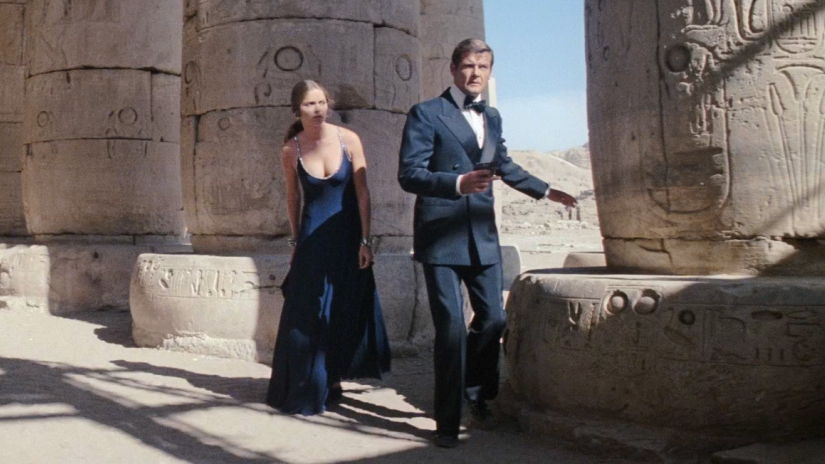
The Spy Who Loved Me (1977)

Bond finds himself in another pretty pickle in The Spy Who Loved Me

Director: Lewis Gilbert

Cast: Roger Moore (James Bond), Barbara Bach (Anya Amasova), Curd Jürgens (Karl Stromberg), Richard Kiel (Jaws), Caroline Munro (Naomi), Walter Gotell (General Gogol), Bernard Lee (M), Desmond Llewelyn (Q), Lois Maxwell (Miss Moneypenny), Geoffrey Keen (Frederick Gray), Robert Brown (Vice-Admiral Hargreaves), George Baker (Captain Benson), Michael Billington (Sergei Barsov), Vernon Dobtcheff (Max Kalba), Nadim Sawalha (Fekkesh)

Roger Moore had made two Bond films before he made The Spy Who Loved Me – but this is the one when he finally hit upon the formula that works for him. It’s also probably the moment where the Bond films became – once for all – comedy adventure capers. It was but a few more degrees from here until Bond was telling a tiger to “sit” or racing past a double-taking pigeon in the middle of St Mark’s Square. And the public loved it. For better or worse, Moore’s Bond here helped define the franchise for a whole generation.

Anyway, the story. It’s eerily familiar in many ways to Thunderball and You Only Live Twice: a power-crazed lunatic (Karl Stromberg) running a secret organisation wants to destroy the world. His plan? To capture one American and one Soviet submarine and use them to fire nuclear missiles at the nation’s two capitals, to kickstart a nuclear war, leaving only his underwater kingdom intact. Just as well then that an over-keen Stromberg (Curd Jürgens) first captures a British sub, meaning James Bond (Roger Moore) is called in to investigate. Bond will work with the USSR’s finest agent – Anya Amasova, Triple X (Barbara Bach) – to find out what’s going on and why.

TSWLM is a lot of fun, possibly the ultimate expression of what a lot of people think Bond is. It’s hugely silly, rather exciting and has almost no connection with reality whatsoever. Moore goes through the whole thing with his eyebrow forever arched, tipping the wink at the audience – “You do know, dear boy, this is all dreadfully silly stuff”. Sometimes in Bond this humour gets a bit much – but here it’s pretty much pitched perfectly. And Moore looks like he is having the time of his life.

The film is crammed with action set pieces in striking locations: the Alps! The pyramids! A converted oil tanker base! Nothing is left to the imagination, and everything is thrown at the screen. It gets the sense of excitement right from the pre-credits sequence, with Bond’s high-speed ski chase across the alps from Russian would-be hitmen. Fools – what chance did they have? I don’t know what I like most about this scene: is it the wild ski stunts? The way music and camera action combine so well? The fact that it’s crystal clear Moore probably spent precisely zero days on location for this sequence? What am I talking about, it’s got to be that insane parachute jump at the end – with the camera leaving it just long enough for you to start to think “is Bond going to get out of this one?”. (Spoilers he does.)

That’s almost nothing compared to the famous Lotus-turned-submarine car chase, which pretty much set the standard for all the car-based action (not to mention gadget filled cars) that would follow in the franchise. The idea of a car that turns into a submarine: it’s both brilliant and so overwhelmingly silly that, like Bond at its vibrant best, it seems to transcend class and logic into a higher plane of excitement.

And all this with a plot that is almost staggeringly stupid. Jurgens has a lot of arch, naughty fun as scheming monomaniac (with subtle webbed hands) Stromberg, a pompous arsehole and a great villain. Of course he wasn’t a physical threat – hence the invention of Jaws, surely the most popular henchman ever invented for Bond. Jaws is a lunking, vicious but strangely endearing brute – it’s hard to put your finger on why he’s strangely likeable, maybe it’s just the totally absurd idea of a hitman whose killer tools are metal teeth. Maybe it’s because Richard Kiel has such a dorky sense of humour – and is as good at the glance at the camera as Moore himself is.

Of course it is a dated film – and it’s always the women that show it. If this set a lot of good Bond archetypes, then it also helped to cement a few bad ones. Anya Amasova is (allegedly) the greatest agent Russia has. Not that you would know it, as she stumbles in this film from moments of staggering incompetence and stupidity to victimhood and damsel-in-distress. There is a hint of character development – Bond offs her boyfriend in that alpine chase literally without a backward glance – but that’s soon forgotten by the end under Bond’s charms. The poor woman can’t even drive stick (“That’s reverse, let’s try again shall we” says Bond with smackable smugness) and by the end of the film she’s bikini-clad and being rescued by Bond. It says a lot when the strongest thing about her character is that her name isn’t an innuendo.

But you can let it go, because the rest of the film is such good fun. Everything is nonsense of course, and you could steer a submarine through the plot holes. If Stromberg only needs two submarines to start his evil plan, why on earth does he grab a third one at the start of the final act? (Just as well he does, of course, as otherwise Bond would never get on board his base.) Stromberg is ruthless enough to eliminate three underlings and to set up a nuclear war to wipe out the world – but those captured submarine crews he keeps alive, imprisoned, with a small guard, next to the armoury on his base. Ooops. His plan is almost effortlessly undone with a radio message from Bond. But never mind. It doesn’t matter.

The point is that this is all great fun and basically set the tone for the next ten years of Bond films – until Dalton shifted gears. Moore is really good in it, as a sort of ringmaster of silliness – and he’s clearly enjoying it wildly. The Spy Who Loved Me is his best film – and for all its dumbness, its leaning into cheap humour, its ludicrous plot and sexist attitudes, it’s still up there at the top of the franchise. Because for a lot of people, all those negatives are exactly what they now expect from Bond.

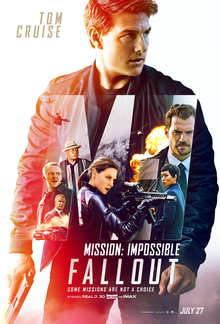
Mission: Impossible – Fallout (2018)

Tom Cruise gets the gang back together for high octane excitement in Mission: Impossible Fallout

Director: Christopher McQuarrie

Cast: Tom Cruise (Ethan Hunt), Henry Cavill (August Walker), Ving Rhames (Luther Stickell), Simon Pegg (Benji Dunn), Rebecca Ferguson (Ilsa Faust), Sean Harris (Solomon Lane), Angela Bassett (Erica Sloane), Michelle Monaghan (Julia Meade), Alec Baldwin (Alan Hunley), Vanessa Kirby (Alanna Mitsopolis/White Widow), Frederick Schmidt (Zola Mitsopolis), Wes Bentley (Patrick)

It’s probably not something many people would expect watching a Hollywood blockbuster, but part way through Mission: Impossible Fallout, as Tom Cruise motorbikes into a stream of traffic round the Champs-Élysées, I was reminded of Michael Crawford in Some Mother’s Do ‘Ave ‘Em. If there’s one thing these two have in common, it’s having a star willing to constantly go above and beyond to perform their own stunts. Which mainly makes you think as well that Crawford and Cruise are probably both a bit nuts.

Mission Impossible: Fallout picks up almost exactly where Rogue Nation left off. The villain of that film, Solomon Lane (Sean Harris), may be in custody, but the remnants of his organisation have reformed as The Apostles, chosen a new leader (known only by the pseudonym John Lark), and are trying to seize three nuclear warheads. Ethan Hunt (Tom Cruise) is deployed to stop them. During the mission, Hunt chooses to save the lives of his team rather than complete the mission – leaving the IMF force with a race against time to regain the warheads, and leading to clashes and alliances with enemies and friends old and new, including Lane and Hunt’s female counterpart Ilsa Faust (Rebecca Ferguson).

Mission: Impossible Fallout is big. By golly gosh it’s big. They aimed to make this the biggest and most stunt-filled, action-packed entry in the series – and they probably succeeded. More than any other film in the series, this one feels like a series of action sequences joined together by scenes of story and dialogue. Never has the overall aim of the villains, or their scheme, been so swiftly outlined – or essentially so inconsequential to the events we are watching. Do we need to know why the Apostles (an organisation we never even encounter in the flesh!) or Lane or any combination of the film’s baddies want to blow up three nuclear bombs in Kashmir? The film gambles that we won’t really care, that all we really care about is watching Hunt and co prevent them on a 15-minute deadline. It’s a gamble that the film more or less gets right.

The film also skims quickly, depending on you having seen the three preceding films so that it can spend time less on character re-establishment and more on those action scenes. It plays off emotions we have developed for the characters over previous episodes – and relies on us carrying across our knowledge of their past relationships. Alongside this, the film is crammed with callbacks to pretty much every film in the series – most prominently of all to Hunt’s marriage in the third film. This is a plot development, you feel, largely introduced to allow the characters to move on: it’s clear Hunt and Faust are the series intended romantic leads going forward (though Faust is never anything less than Hunt’s equal in all areas), so we need to know that Hunt isn’t cheating on a wife somewhere along the line, and that they have mutually decided to go their separate ways. The film accomplishes this – and also allows a few beats to suggest that, under the surface, all this Impossible Missioning has given Hunt the odd small emotional problem.

But not too many, as establishing Hunt’s decency is pretty central to the film. One of its themes is Hunt’s unwillingness to sacrifice any innocents or indeed anyone who doesn’t deserve it. This theme runs throughout the film, and is used to suggest that part of the reason Hunt so often instigates such insanely grandiose schemes is that he is completely unwilling to let the needs of the many outweigh the needs of the few: give him the choice of sacrificing one man to get nuclear warheads easily, or jumping through the sorts of insane loops, schemes and dangers this film throws him into, and Hunt will choose the hard option every time. (Of course I could also be mean and say that Cruise has developed a character whose only real flaw is that he cares too much.)

At least this makes him really easy to root for. Which is just as well, as Fallout throws Hunt front and centre. Perhaps more so than any film since the second one, the team feels like a one-man army. Hunt does everything difficult or dangerous – which means Cruise is dragging himself to take on a number of insane stunts, from HALO jumps, to driving against the Parisian traffic, to hanging off the bottom of a flying helicopter. Of course, we also get no fewer than six speeches praising Hunt to the heavens – but when Cruise is willing to go such insane lengths (one stunt famously left him with a broken ankle and shut down filming for eight weeks) you can’t hold it against him that much.

And like all the rest of the series, this is a very fun film. It takes a while for the sense of fun to really kick in – much of the first half-hour feels deathly serious – but eventually that sense of fun, of enjoying the lunacy, settles in and you start to run with it. A madcap chase over the roofs and office blocks of London that ends at the Tate Gallery is a perfect example of a sequence that mixes hi-jinks, death-defying stunts and tongue in cheek humour. 

And that’s really the secret of this franchise. It’s a mix of absurdly OTT action, incredible dangers, and death-defying stunts that its star throws himself into with an insane abandon all played with a certain lightness of touch. The series, for all its world-endangering excitement and merciless villains, also has a family feeling behind it. Hunt’s team is his family and it’s that warmth which underpins all the drama. Fallout is huge fun – in fact, if it has any real flaws it is that it is too big by the end, with an action sequence that never seems to end – and a great rollercoaster to climb on board.

John Wick 2 (2017)

Keanu tools up for my running, jumping and shooting in genial, but perfunctory, sequel John Wick 2

Director: Chad Stahelski

Cast: Keanu Reeves (John Wick), Riccardo Scamarcio (Santino D’Antonio), Ian McShane (Winston), Ruby Rose (Ares), Common (Cassian), Claudia Gerini (Gianna D’Antonio), Lance Reddick (Charon), Laurence Fishburne (The Bowery King), Franco Nero (Julius), Peter Stormare (Abram Tarasov)

It’s that age-old story: every time you think you’re out, they drag you back in. Well that’s what we get with John Wick (Keanu Reeves). Picking up where the last film stopped, Wick is approached by mafioso head Santino D’Antonio (Riccardo Scamarcio) who wants Wick to assassinate his sister, who has been promoted to head of the business over him. Eventually (after much pressure) Wick agrees – and quickly finds himself betrayed and on the run.

The first John Wick has a real charm about it, the sort of film you can really enjoy because tonally it gets itself absolutely spot on. It’s a lot of action fun, it manages not to take itself too seriously and it sets its hero up as someone very sympathetic who only goes on a rampage of violence under extreme provocation. The sequel attempts to double down on all of this and give us more of the same – but not always to the same impact.

Part of the issue is that there just isn’t the same engaging story at the heart of it. I totally understand John Wick in the first film, and completely got what it was that he was doing in the film – that essentially avenging his dog was about getting revenge on those who had taken the only thing he had left from his relationship with his wife. Here the lines are a lot more blurred – John basically saddles up under extreme provocation and blackmail and then basically spends the film killing people left, right and centre – first for someone else, then to get revenge for being betrayed back into this life (or something like that), and then finally because he’s just really pissed.

So that emotional grounding behind all the killing – and the thing that makes John Wick pretty likeable in the first film – gets lost. Instead he’s just a ruthlessly efficient killing machine – and while that is fun to watch, it’s not as immediately engaging as the first film. In fact, the second film (aiming to go bigger and better) is basically just three orgies of gunplay and violence, linked together by a few tongue-in-cheek dialogue scenes.

It’s another of those films made for YouTube clips. The action scenes can pretty much be watched and enjoyed without the burden of trawling through the nonsense plot, so you might as well hunt those down online and watch them alone. They’re really well done, extremely well shot and pretty exciting (if covered in claret). The rest of the film you can take or leave to be honest.

That’s despite all the best efforts of those involved. Keanu Reeves still brings a slacker charm to the role, even if it’s one that doesn’t stretch even his limited acting range. Ian McShane has a decent, fun turn as an influential member of a shadowy criminal organisation. We even get a rather dry Matrix reunion between Reeves and Fishburne. It’s very well directed and there are occasional good jokes.

However, it lacks a decent villain (Scamarcio as a Mafia baddie is singularly uninspiring), it goes on too long and, most of all, it’s just not quite as good as the first film. There the “world building” around the edges of the film was a fun aside from the action. Here it’s the focus – with strange councils and mystical rules all over the place – and that just doesn’t quite work as well.

John Wick 2 is fun, don’t get me wrong. But somehow it feels less charming and more bloated, something that is starting to feel itself a little too important and, in throwing more and more at the screen, means you lose the heart of some of the original.

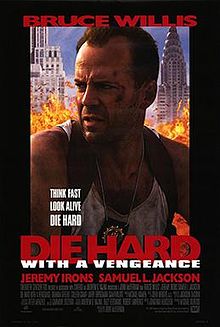
Die Hard with a Vengeance (1995)

Samuel L Jackson and Bruce Willis Die Hard with a Vengeance

Director: John McTiernan

Cast: Bruce Willis (John McClane), Jeremy Irons (Simon Gruber), Samuel L Jackson (Zeus Carver), Graham Greene (Detective Joe Lambert), Colleen Camp (Detective Connie Kowalski), Larry Bryggman (Inspector Walter Cobb), Anthony Peck (Detective Ricky Walsh), Nick Wyman (Mathias Targo), Sam Phillips (Katya)

The Die Hard franchise has spawned multiple imitators, all with the signature format of a hero taking on villains in a confined space: everything from a boat, to a train, to a plane to a bus. Of course the franchise itself had already started to head away from this in Die Hard 2, which takes place across an entire airport. Die Hard with a Vengeance pumps it up even further by setting the action in an entire city. Sure it loses some of the magic claustrophobia of the original, but then it’s got to do something different right? 

John McClane (Bruce Willis) is on suspension, with his marriage in ruins and his life on the skids. No change there then. But he’s dragged out of retirement when terrorist Simon (Jeremy Irons) detonates a bomb in New York and makes it clear he’ll keep doing so until McClane agrees to take on a series of games and challenges across New York – each with deadly penalties. In the first of these, with McClane wearing a very unfortunate sign in the middle of Harlem, he is saved by Zeus (Samuel L Jackson), a shop owner with his own problems with white people, who is forced to join McClane on Simon’s deadly game. After a bomb detonates in Wall Street, McClane starts to wonder: does Simon have an ulterior motive?

Die Hard with a Vengeance is probably most people’s second favourite Die Hard film, and it’s easy to see why. It’s got scale, bangs, loads of action and jokes. It largely takes the best things from the two previous movies and tries to replicate them: so we’ve got the bigger scale and stakes of Die Hard 2, matched with the battle of wits that powered Die Hard. At the same time, it avoids Die Hard 2’s habit of squeezing in as many references and characters from the first film as possible, and tries to make something fresher.

But yet, as I get older, I’m actually getting less keen on it. Guiltily, I think I prefer both entries 2 and 4. I just feel there is something a bit mean about Die Hard 3, something a bit brutal and vicious. Now I am no shrinking violet, but there is a lot (and I mean a lot) of angry swearing in Die Hard 3 – which actually makes it feel rather dated. Everything is “f this” and “f that”. But it’s symptomatic of a particularly 1990s action vibe about the film.Anyway it’s all angry – everyone in the film is angry most of the time. I mean sure they are stressed, but McClane was stressed in the last two films but it didn’t just project itself through fury.

McClane himself, in the first two films, may be hard as nails but he’s also a regular guy doing his best to save lives. But in this film he’s just extremely angry – probably because the character is hungover – and feels less like a police officer interested in preserving life than a vigilante acting above the law. Twice in this movie he executes people (one of whom is trying to surrender (in German)!) with no real warning. The blood and guts count seems a lot higher. The camera lingers on corpses and spurting blood. The character just feels harder to relate to. 

It’s no great surprise that the original intention of the script was for McClane to become actually more and more unhinged by events. It gets lost at the end, when the film settles for a more generic and triumphant ending rather than the unsettling, low-key one originally filmed (which feels like a much better thematic fit for the film you’ve just watched). It would have been interesting to make a film where the hero becomes as damaged and ruthless as the villain – but the studio didn’t want that, so we don’t get it.

McTiernan’s attempt to recapture the vibe of the first Die Hard film also doesn’t quite click. Simon is an odd character, who utilises brute force one minute and then inexplicably spares lives the next. His eventual heist on Wall Street is partly blood-free, partly a brutal slaughter of any resistance. McTiernan is obviously aiming for a battle of wits, but the original concept of Simon setting McClane a series of children’s riddles to solve gets lost half way through the film. Like Die Hard there is an attempt to get a sense of gleeful enjoyment from Simon’s actions, but Jeremy Iron’s character (despite his best efforts) isn’t devilishly charming enough for this to work.

But then things in the film do work. The chemistry between Willis and Jackson is very good, and Jackson really nails a character who is part cocksure, angry radical and half squeamishly out of his depth. The film’s at its most involving when it gets wrapped up in cat-and-mouse games. The first half of the film, which focuses on this, is by far the most interesting and offers the best twist on the action – from riddles about the man going to St Ives, to having to cross New York in a fraction of the time needed, or trying to defuse a bomb by putting four gallons into a five-gallon jug. The more these riddles die away in the second half and the film goes for more generic shooting and killing, the less interesting it becomes.

Not that this sort of stuff isn’t good fun. Although McClane seems more bad tempered and ruthless – and the baddies are mostly faceless goons rather than people – it’s still fun to see him take on the odds so successfully, and to see him being underestimated by the villains (the character is always smarter than he appears). McTiernan, with a huge budget, throws everything at the screen from bombs to fist fights to car chases. He doesn’t manage to create the magic sense of heroism that the first film has in such abundance, or that sense of one man doing what he must to save others, but the film still broadly works.

There is something very 1990s about this film, from its swearing to its violence to its general atmosphere of gritty comic book thrills. It is fun to hear jokes about Hillary Clinton (jokingly named as the next President – oops) and Donald Trump. But it’s that lack of moral purpose to McClane that proves the biggest problem – he’s motivated less by saving lives than by revenge. It’s a crueller film, sharper and meaner, which means for all the enjoyment it can bring, I can’t love it like I do the first film. It takes McClane to dark places, and presents a bad tempered hero it would be hard to like without the first two films. He’s already starting to feel less like a regular put-upon guy and more like an angry maverick dealer in violence. There is less to build on in this film, and perhaps that’s why we had to wait a while until nostalgia made John McClane a character we wanted to see again.

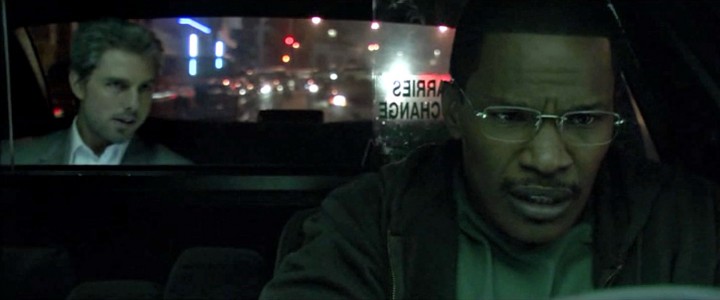
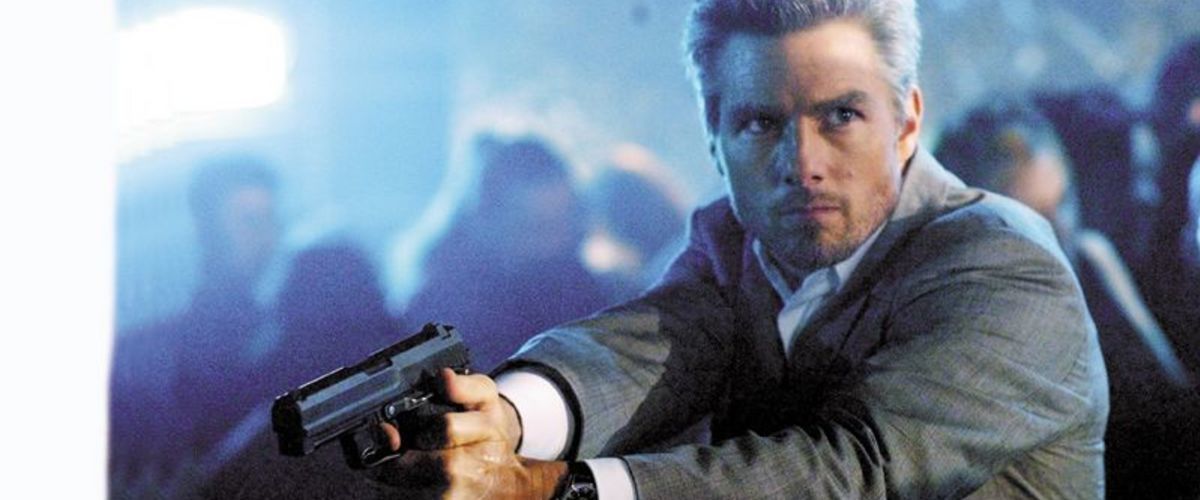
Collateral (2004)

Tom Cruise and Jamie Foxx take a long taxi ride in Michael Mann’s thriller Collateral

Director: Michael Mann

Cast: Tom Cruise (Vincent), Jamie Foxx (Max Durocher), Jada Pinkett Smith (Annie Farrell), Mark Ruffalo (Detective Ray Fanning), Peter Berg (Detective Richard Weidner), Bruce McGill (Frank Pedrosa), Irma P. Hall (Ida Durocher), Barry Shabaka Henley (Daniel Baker), Javier Bardem (Felix Reyes-Torrena)

Tom Cruise enjoys throwing us film-goers curveballs every now and again. In Collateral he pops up as a sociopathic hitman, grey of hair and suit (like a buzzcut, rampaging John Major) leaving bodies strewn about the place. It’s great to see him in Michael Mann’s lean, very enjoyable action thriller, looking as sleek and soulless as the rest of LA.

Cruise’s Vincent is a hitman in LA to knock off a list of targets. But how will he get from hit to hit? Why by hiring a taxi driver for a night: risk-averse dreamer Max (Jamie Foxx) who has been working “temporarily” as a taxi driver while he builds plans for his dream limo business for a mere 12 years. Max is thrilled to have a big spender in his car – until something goes wrong on hit #1 and a body lands on his cab. Max no has no choice but to assist Vincent – although Vincent ends up becoming more attached to Max than he might ever have imagined.

Mann shot his film on a high-definition video and it gives a very unique look at LA, really capturing the hazy yellows and cool blues of the city and giving everything in the picture a slightly grainier, starker look. But that would count for nothing if the story of the film wasn’t pretty good, and Collateral is a very effective action thriller, which doesn’t reimagine the genre but offers more than enough freshness to enliven the familiar elements it’s made up from. 

Its main assets (along with Mann’s cool, detached and pin-point sharp direction) are the performances of its two leads. Cruise is just about bang-on as a professional hitman, devoid of empathy, who finds surprising possibilities of friendship open in front of him. He’s a fascinating character, like someone who has spent so long studying people that he can just about replicate human reactions, without understanding the humanity behind them. Cruise’s obsessive preparation for his roles also help makes him flawlessly convincing as this lethal ubermensh.

Foxx however is just as good as a basically decent, friendly, low-key guy who is kidding himself that he is not drifting through life. It’s Max’s story we follow throughout the film – and it’s his sense of personal morality, his strict belief in right and wrong, that gives the film its dramatic force. Foxx also avoids undermining or laughing at Max, who is basically a man so buttoned up and cautious that (without a major push) he’ll clearly die of old age in that cab. 

These two characters thrown together have a curious chemistry – a sort of riff on the casual bonds that can develop between driver and passenger as they talk about their lives, views and interests. It’s not a friendship – certainly not in Max’s case – but it’s a strange sort of bond nevertheless. Vincent, you feel, hasn’t talked to many people like this – and while he’s still willing to threaten Max or put him at great risk, he still develops a strange protectiveness about him. It’s this quirky and different relationship that powers the film and finally makes it unique. This odd couple don’t overcome boundaries to become bosom friends, but they also don’t come together as fierce rivals. Instead they sort of work out a co-existence in that cab.

It’s the most interesting thing about a film that otherwise – to be honest – deals a pretty familiar deck with confidence. Sometimes the film plays its cards so well you overlook them – the first time I watched it, I was semi-surprised at the reveal of the final victim, but really it should be pretty obvious to anyone who has seen a movie before. The plot is full of moments like this that are played with a freshness – or with a cunning – that stops them from feeling familiar.

But that’s really what it is. The journey around LA from hit-to-hit is a familiar sounding idea. The encounters between Vincent and the targets are pretty familiar – the exception being a fascinating, and hard to read, encounter with Barry Shabaka Henley’s jazz player turned informant, which sizzles with tension – and the action scenes, while well staged, are the sort of shoot-outs we’ve seen before. Mann shoots them with a vibrant excitement, but it’s mostly B-movie stuff presented freshly.

What it comes down to is that relationship between those two characters, and the skill of director and actor in drawing out subtleties in performance. (Don’t listen by the way to the director’s commentary, which ruthlessly strips these subtleties away as Mann bangs on about heavy-handed, predictable backstories which thankfully don’t make it into the movie, but make it sound dumber than it is). Cruise and Foxx are both fantastic, Mann’s direction of this sort of icy-cold, impersonal, dangerous city is impeccable and the film itself doesn’t fail to entertain.