Tag: Alan Rickman

Harry Potter and the Chamber of Secrets (2002)


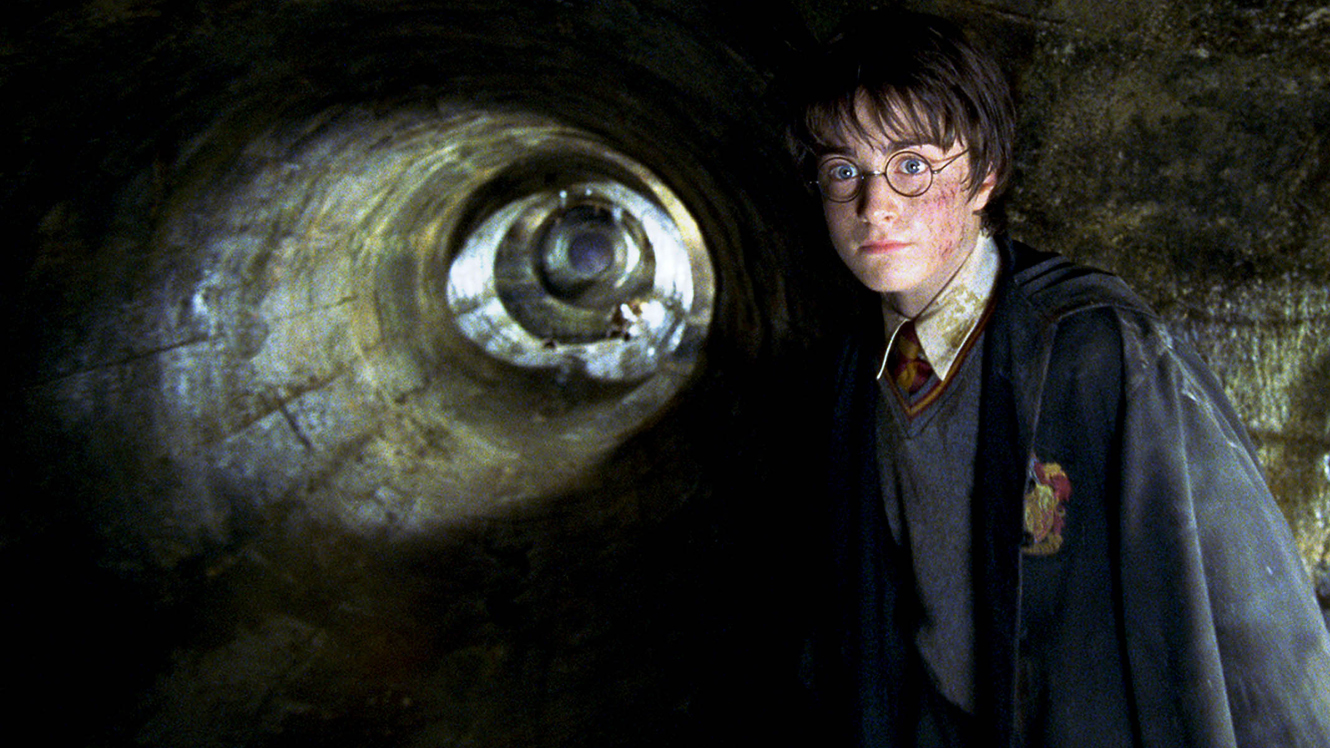
Daniel Radcliffe discovers dark goings on in the bowels of Hogwarts in Harry Potter and the Chamber of Secrets

Director: Chris Columbus

Cast: Daniel Radcliffe (Harry Potter), Rupert Grint (Ron Weasley), Emma Watson (Hermione Granger), Kenneth Branagh (Gilderoy Lockhart), John Cleese (Nearly Headless Nick), Robbie Coltrane (Rubeus Hagrid), Christian Coulson (Tom Riddle), Richard Griffiths (Vernon Dusley), Richard Harris (Albus Dumbledore), Jason Isaacs (Lucius Malfoy), Miriam Margolyes (Professor Snout), Alan Rickman (Severus Snape), Fiona Shaw (Petrunia Dursley), Maggie Smith (Minerva McGonagall), Julie Walters (Molly Weasley), Mark Williams (Arthur Weasley), Tom Felton (Draco Malfoy),  David Bradley (Argus Filch), Toby Jones (Dobby), Gemma Jones (Madam Pomfrey), Robert Hardy (Cornelius Fudge), Matthew Lewis (Neville Longbottom), Julian Glover (Aragog)
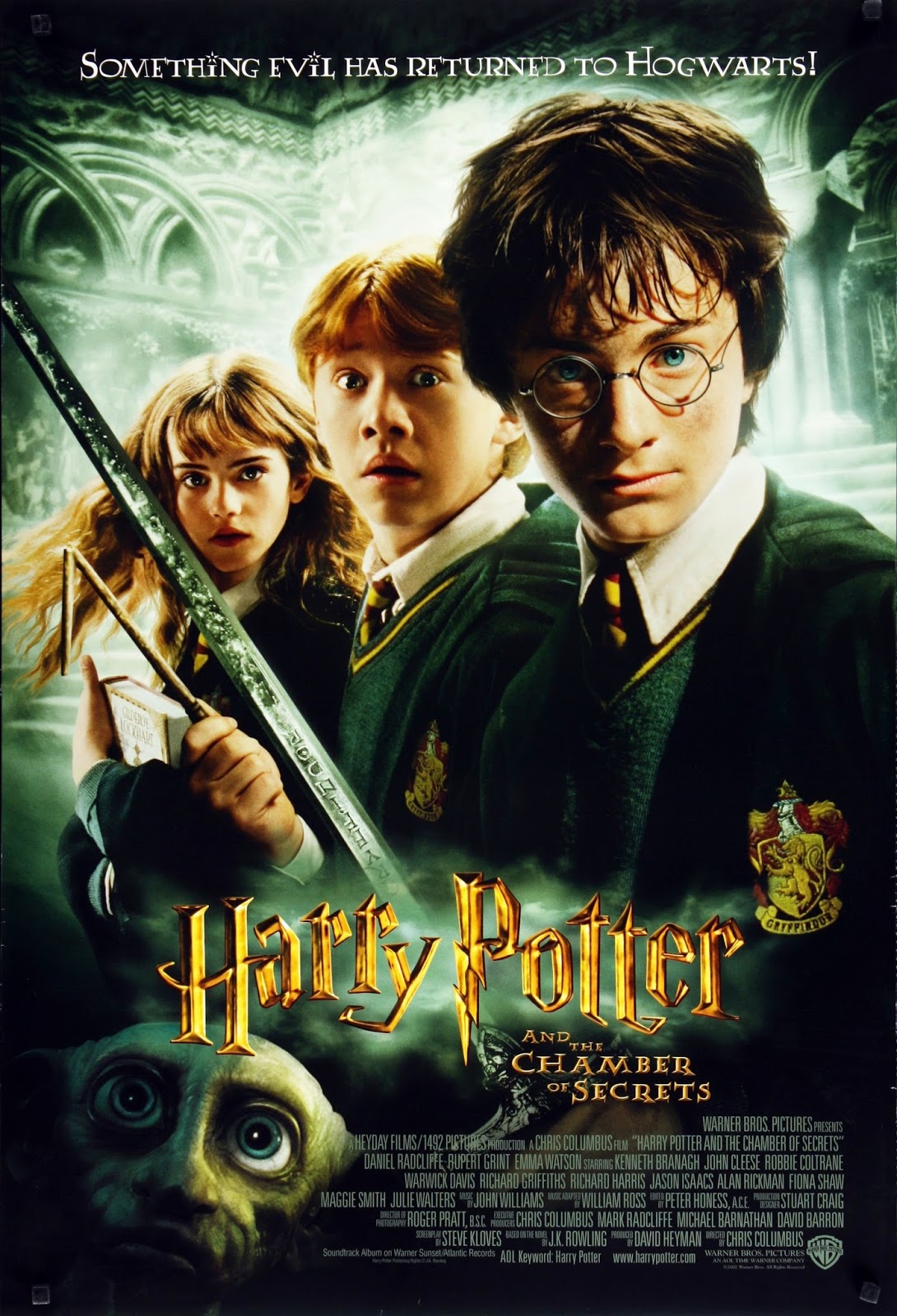
Another movie, and time for another everyday school year for Harry and friends: classes, exams, sports days and saving the entire population of the school from a grisly death. It’s a tough job but someone has to do it right? So welcome to the second Harry Potter film, that mixes the fun of flying cars and tricky elves with giant spiders and ferocious snakes.

Chris Columbus and team went virtually straight from the first film into making this one, and it’s pretty clear they had learned a lot from the last one. Sure, Columbus is still a safe pair of hands rather than an inspired director, but there is a bit more flair from cast and crew here. It also manages to look a lot less like a primary colour explosion or an illustrated version of the book, and more like a piece of film-making. Maybe this can be attributed to new cinematographer Roger Pratt, who gives the film a far more imaginative palette of darks blacks mixed with beautiful core colours (no surprise he returned to shoot Goblet of Fire). In addition, both design and costumes are far more adult and less Dickensian-robey than I remembered (though there’s still a way to go until we get to the steampunk 50s look of Prisoner of Azkaban that would dominate the rest of the films).

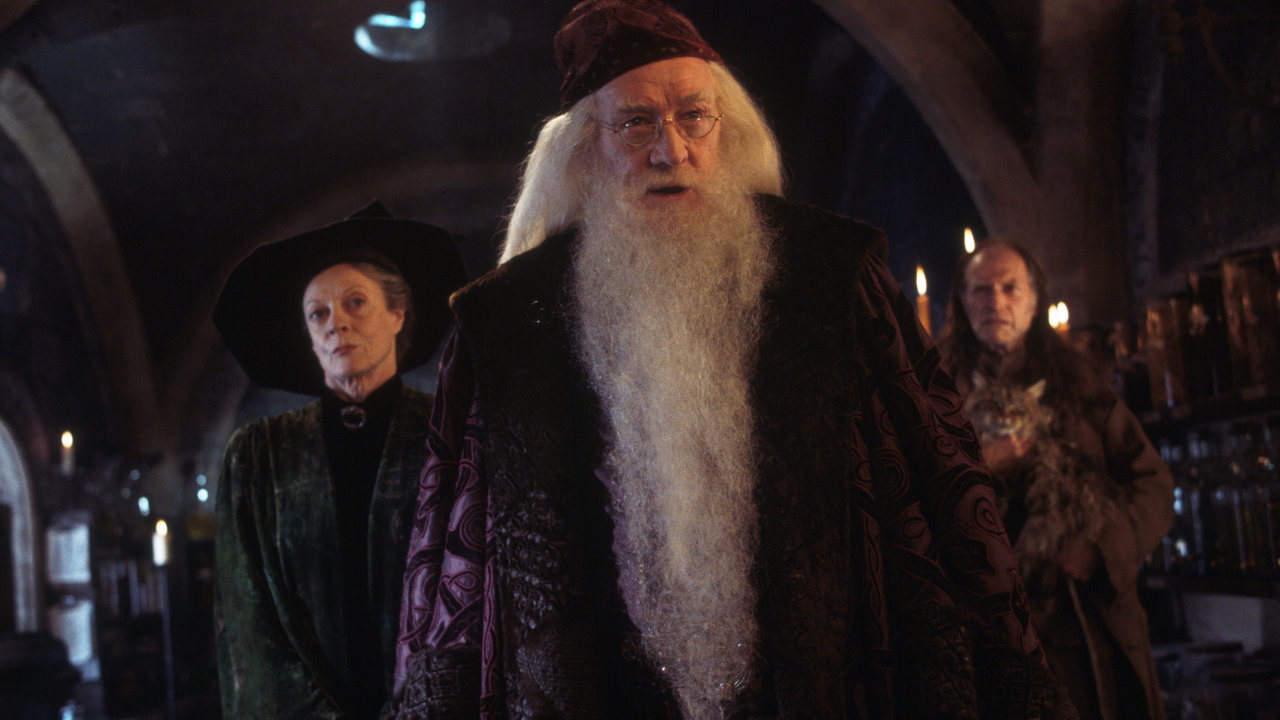
It also helps that the introduction to the wizarding world was covered so well in the first film. In fact, this is the last film where anyone felt it necessary to shoe-horn recaps into the dialogue, reminding us of who (and what) everything is. A particular moment of irritance for me is the first entry of Dumbledore and McGonagall: met with Harry breathlessly saying their names – just in case you were one of those people who didn’t contribute to the $1billion the first film made worldwide, or who hadn’t read any of the books by this point.

Anyway, Columbus got the principles out of the way in the first film so he could focus a bit more on this slightly darker, more developed story (just as Rowling was able to do in the books). The mystery of the Chamber of Secrets is more compelling than that around the Philosopher’s Stone in Potter’s first outing, and this is the film where we properly meet the series antagonist Voldemort – here played with a smarmy, casual cruelty by Christian Coulsen (it’s a shame this didn’t lead to bigger things for Coulsen). Radcliffe gets the chance to get his teeth into a decent final confrontation – and also the series’ first big action set-piece, quite well-shot with a creepy menace – as he takes on a basilisk.

In fact Radcliffe is much stronger in this movie – more relaxed, more confident and embracing Harry’s essential decency and sense of honour (the qualities that are always duller to play as an actor). He’s still struggling a bit at the moments that call for real emotion – but he does very well here indeed. Most importantly, you believe him and everything he does – which is quite something for a child actor to accomplish. 

He gets more depth and range to play with than Rupert Grint who was already being shoehorned into being gurning comic relief. There are few faces Grint isn’t asked to pull in this movie – and get used to that sad-sack downward grin, or the teeth-clench of terror, because these are going to become major weapons in his arsenal. Watson doesn’t actually get a lot in this movie, but even by this point it was becoming clear that she was pretty much a perfect fit for the character. 

The series also confirmed it had great roles for the cream of British acting – and that it was going to be a fine pension plan for most of Equity. Jason Isaacs plays the wicked Lucius Malfoy with relish and a scowling, patrician pride – no wonder he became not only a regular in the series, but one of its champions. He’s very good here indeed, as is other new addition Mark Williams, a perfectly charming shambolic dad as Arthur Weasley.

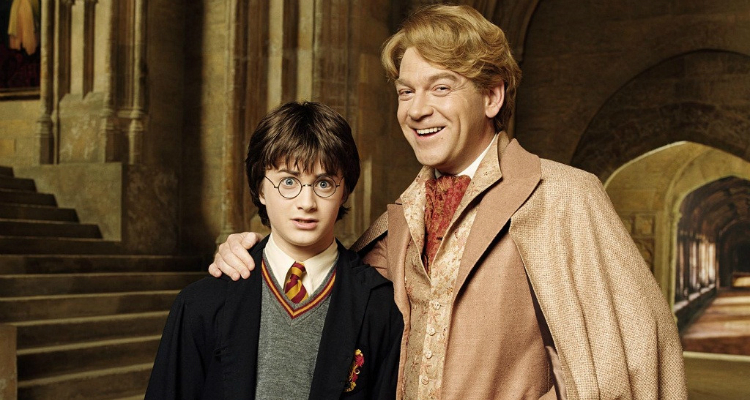
The show however is carried off by Kenneth Branagh as Gilderoy Lockhart. Branagh offers a performance close to of self-parody of his public perception, as a swaggering self-promoter, a preening egotist who can’t help but brag about his (almost non-existent) achievements and accomplishments. Branagh is deliriously funny as Lockhart, not only getting a lion’s share of the best scenes, but also bringing out some delicious comic rebuttals from the rest of the teachers – not least Rickman and Smith – who clearly can’t stand Lockhart. It’s a great performance – cocky, old-Etonianesque, full of surface charm and puffed up pride, but with a nasty selfish mean steak just below the surface.
It all feels part of the generally more free and engaging direction this film takes compared to the first one. Some of the best actors from the first film get relegated in screentime, but it shows the greater confidence the filmmakers have in the kids. The film really begins to introduce the ideas of good vs evil and the principles of friendship, humanity and love that differentiate Harry from Voldemort. Columbus isn’t quite the director to bring all this together into an epic vision, but he is good enough to deal the cards effectively. He gives it enough pace and shine so that we are never bored, though we’re also never wowed.

Despite the increased darkness and greater emotional depth, Columbus never loses track of the sense that he is making a family entertainment. He may still not be able to bring an artistic flourish to events, but he balances the light and dark very well. Not least the fact that the racism under the surface of the wizarding world emerges here. In the first film Voldemort alone was the villain, but in this one we first hear the term “mud blood” bandied about to describe Muggle-borns. We also find out that the wizarding world has its own slave class in elves (given a sometimes irritating Jar-Jar Binks-lite face by Dobby, a character with far more appeal to the kids than the parents). These are complex ideas – and all part of the world becoming richer.
Harry Potter and the Chamber of Secrets is still in the lower tier of Harry Potter films, but it’s a significant step-up from the first film. Visually it’s richer and more interesting. The stakes are higher, the themes deeper and more intriguing. It’s still very much a children’s film, and it still inclines towards being an over-faithful adaptation – it’s a bum-numbing 2 hours and 40 minutes so keen is it to not leave anything out – but this has far stronger material in it than the first film, and is a sure sign that this series was building a foundation it could flourish from.

Harry Potter and the Philosopher's Stone (2001)


Daniel Radcliffe gets sorted in the first of the franchise Harry Potter and the Philosopher’s Stone

Director: Chris Columbus

Cast: Daniel Radcliffe (Harry Potter), Rupert Grint (Ron Weasley), Emma Watson (Hermione Granger), John Cleese (Nearly Headless Nick), Robbie Coltrane (Rubeus Hagrid), Richard Griffiths (Vernon Dusley), Richard Harris (Albus Dumbledore), Ian Hart (Professor Quirrell), John Hurt (Mr Ollivander), Alan Rickman (Severus Snape), Fiona Shaw (Petrunia Dursley), Maggie Smith (Minerva McGonagall), Julie Walters (Molly Weasley), Tom Felton (Draco Malfoy),  Zoe Wanamaker (Madame Hooch), David Bradley (Argus Filch), Warwick Davis (Filius Flitwick)

In 2001, I was in my first year at university. I went to the cinema to watch this new, much-hyped children’s-fantasy film. I’d never heard of this Harry Potter fella going into it – so must have been one of the few people watching who was coming to it completely fresh. I was swept up in the film’s story when I first saw it. But how does it stand up watching it again decades later?

Well it’s a long bloody film. I was actually amazed this is nearly two-and-a-half hours long. Strewth. I mean this is the slightest and most childlike of Rowling’s books. Did it really need such a bum-numbing run-time to bring it to the screen?  I guess it needed a lot of that time, because there is a heck of a lot of backstory and wizarding world to introduce very early on – and the film explains this in very careful, loving detail. 

But Columbus’ world building here is excellent. I think it’s easy to forget how much pressure must have been riding on this film. How many imaginations worldwide did this need to satisfy? Not only that, but this had to cater for, and build towards, a host of sequels, some of which hadn’t even been written yet (other than in Rowling’s brilliant mind). But the film succeeded in bringing this wizarding world enchantingly to life. There is a delight in every magical sequence, or trick, produced in the film – so many that poor Daniel Radcliffe must have swiftly exhausted his repertoire of “awe-inspired” faces. But the film’s loving reconstruction of the world of the book is perfect, and the fact that it not only didn’t alienate people, but that so much of it has become integral to the popularity of the books as well, says a lot.

Later films would get more daring and imaginative in bringing book to screen – with Rowling’s full support – but this first one probably did need to hew pretty close to the original book in order to hook and secure that fan-base. So while Kloves’ screenplay may feel at time like a mixture of transcription and rewording rather than a true work of adaptation, it meets the needs of this first film.

The design elements of the film were also spot on. Much of the wizarding world would be radically overhauled design-wise in The Prisoner of Azkaban, but the foundations are all here. John Williams’ score was also pretty much perfect from the start so winningly constructed and so perfectly matched with the mood of the book that it has also become an integral part of the Harry Potter world.

But, watching the film back, it’s clear still that this is one of the weakest films in the series. Part of this is of course is that it’s also the most simple and childish of the books – Rowling would immeasurably enrichen and deepen the series with each book – but when placed in context with the rest of the franchise efforts, this does seem like a brighter, more colourful, Roald Dahlish, traditional children’s film. Again, a lot of this is faithful replication of the book – but considering how children embraced the later more emotionally mature films, it would not have been a disaster to include more of that material here.

The other main issue with the film is quite simply that it is averagely directed and rather mundanely filmed. It’s a bit of a shock to be reminded that Oscar-winning photographer John Searle shot this film, as it’s ludicrously over-bright and conventionally framed. In fact, it lacks any real visual interest at all, looking more like a child’s picture book than any form of motion picture. There is hardly a shot or visual image in the film that sticks in my head – and I am literally writing this as the credits roll on the movie. As a piece of visual storytelling, it’s pretty mundane.

Similarly, Chris Columbus is a solid but uninspired film maker. He marshals events on camera with a reliably safe pair of hands, unspectacular and undemonstrative. But he doesn’t have any real dynamism as a film maker – perhaps that’s why the material never really feels like his own. When the series did have a film maker with vision in Alfonso Cuaron (in Prisoner of Azkaban), the difference in imagination and vision was immediately striking – so much so the two directors who followed Cuaron effectively trod in his footprints.

But Columbus may well have been what this franchise needed at this stage: a safe pair of hands, who could work with the studio and the producers and shepherd to the screen a series of films that would be running for over a decade. Much as other names bandied around to direct at the time would have been better film-makers, I can’t imagine them having the “safe pair of hands” quality that Columbus did, providing the solid foundation from which the series could later grow – let’s be honest could you imagine Terry Gilliam successfully kick-starting a huge-franchise series like this?

And let’s not forget either the casting gifts Columbus left the film-makers with here. Have three child stars ever been better chosen than Radcliffe, Grint and Watson? And indeed all the other young actors, all but one of whom stayed with the series to the end? The triumph of choosing not just the talent, but the level headedness, was quite something. And the three actors here are very good. 

Grint probably wasn’t better than he was here – his natural comic timing becoming an overused tool in later films, but here he’s charming, likeable and endearing. Watson is raw but a good mix of know-it-all and vulnerable feeling. Radcliffe gets a rough ride in a hugely challenging part – and yeah he’s not yet an actor here – but he does very well, considering how often he is called on to look amazed, and how many deep feelings of isolation, loneliness and confusion he is called upon to show during the film. Not one kid in a thousand could do what he does here. Columbus got magnificent work from the entire child cast – and that alone is enough to give him a pass.

The adult cast is of course pretty much perfect. Robbie Coltrane is a stand-out as a loveable Hagrid, immensely cuddily and endearingly sweet – perfect casting. Rickman was of course similarly inspired casting, Smith was perfect, Harris an unusual choice but one that worked. Ian Hart’s twitchy nervousness gets a bit wearing, but it’s not an easy part. Griffiths and Shaw embrace the cartoonish Roald-Dahl-bullying of the Dursleys. Pretty much every casting choice is spot on.

Harry Potter and the Philosopher’s Stone is the least deep and rich of the Harry Potter films, but it had a hell of a difficult job to do. And what I have to remember is that I was one of the uninitiated who sat in the cinema to watch it and needed all that introduction. Any film that has to get Muggles like me up-to-speed while keeping the die-hard fans happy faces a very difficult task. I think you can say, for all the later films surpassed it, that Philosopher’s Stone managed that in spades.

Eye in the Sky (2015)


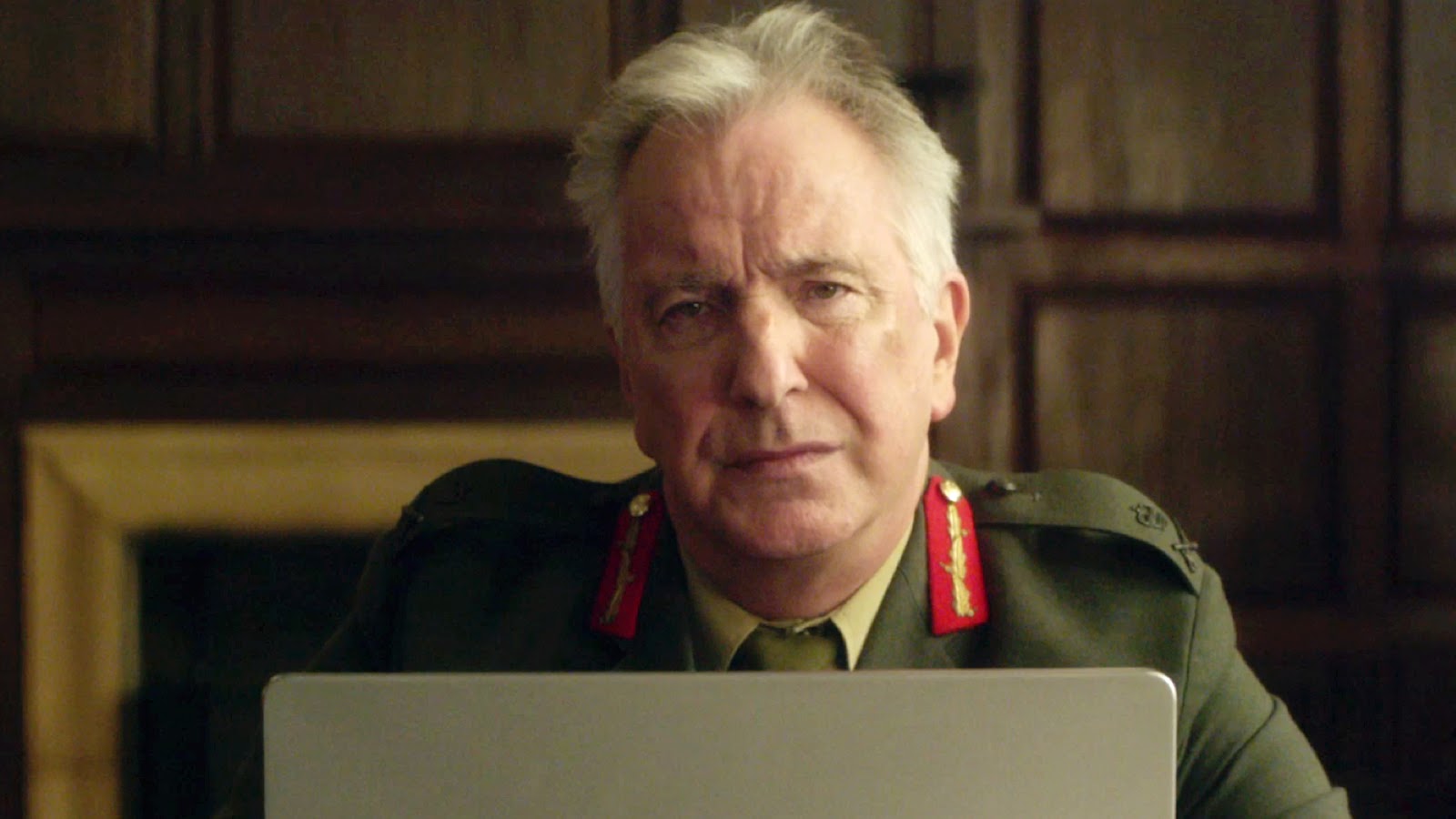
The great Alan Rickman is an exasperated General, in drone-strike moral fable Eye in the Sky

Director: Gavin Hood

Cast: Helen Mirren (Colonel Katherine Powell), Aaron Paul (Lt. Steve Watts), Alan Rickman (Lt. General Frank Benson), Barkhad Abdi (Jama Farah), Jeremy Northam (Brian Woodale), Iain Glen (Foreign Secretary), Monica Dolan (Angela Northman), Richard McCabe (George Matheson), Phoebe Fox (Carrie Gershon), Babou Ceesay (Sgt. Mushtz Saddiq), John Heffernan (Major Howard Webb)

As Shakespeare said, sometimes we are urged: “to do a great right, do a little wrong”. Eye in the Sky is a film about that dilemma. Numbers 2, 4 and 5 on the terrorist “Most Wanted” list are meeting in a house in Kenya. They are preparing suicide bombers. A series of attacks could be minutes away. A drone strike will probably save hundreds of lives. Seems obvious doesn’t it? Unfortunately, sitting in the fatality zone is an innocent young girl, just trying to sell bread. Take out the bombers and you’ll save dozens of other children – but you’ll almost certainly kill this one child.

Your initial reaction to this sort of situation would probably be “thank goodness that’s not my decision”. Problem is, you get the feeling many of our elective representatives feel the same: as the situation escalates (from capture, to kill, to controlled strike, to a certainty of civilian casualties) so does the buck-passing, from politician to politician all unwilling to make a call.

Guy Hibbert’s well researched and thought-provoking script combined with Gavin Hood’s taut direction make this a gripping conversation thriller about the impossibility of moral debates. Hibbert’s script brilliantly piles moral debate on moral debate – just as we accept the desirability of one action, the circumstances change with bewildering speed. Everything, from a change of travel plans to battery failure on a vital piece of equipment, amps up the pressure and makes the situation more morally unpalatable.

The buck-passing becomes almost a dark farce in this expert script. A put-upon civil servant is repeatedly sent to communicate with a string of senior leaders, from the Foreign Secretary to the Prime Minister. Later a crucial decision takes place over a conference call, with an ever-expanding series of international attendees. It’s like a deadly serious Yes, Minister, with Jeremy Northam’s junior minister a flummoxed and vacillating Jim Hacker.

The military seems equally divided – senior officers focus on the big picture, aware of the evil they must do but seeing it as a necessity to prevent worse acts, but the junior ranks actually executing the strikes push back with increasing distress. Mirren’s colonel pressures a sergeant into effectively falsifying a fatality prediction for the girl, to push her superiors into authorising the strike on this vital target. A shallower film would have played great play of this. But Hood and Hibbert never take that easy route.

The film also explores distance conflict. Nearly all the participants are based thousands of miles away, watching on screens and pushing buttons. Rickman’s General has a knock-out final speech about his first-hand experiences of the horror of suicide bombings – and compares this to the moral objections of the greatest opponent of military action in the film, who has watched it all play out with “coffee and biscuits”. Remote warfare is neither in itself good or bad – and those objecting to actions are not angels, just as those pushing for action have their own moral reasons for doing so, and the film demonstrates that amidst all this, the “right answer” (if there is such a thing) can be almost impossible to identify.

Conversation thrillers like this are dependent on the quality of the actors – so it’s lucky we’ve got a great cast here. A gimlet-eyed Helen Mirren is as tough as you’ve seen her as the field commander who suppresses all doubt in pursuit of the greater good. In his last on-screen role, Alan Rickman gives one of his best performances as a wry, humane general who has come to terms with the hideous moral cost soldiers have to bear. His increased exasperation at the procrastination of his political masters adds some black comedy, but he also gives the character a wonderful humanity (a prologue in which he struggles to buy his grandchild a present is not only wonderfully witty, but humanises the character immediately).

Few actors do tortured conscience under the surface better than Aaron Paul – and his drone pilot turned reluctant killer provides much of the moral force of the film. Paul’s sensitive and anguished divide between following orders and living with the knowledge he’s wilfully condemning a child to death is beautifully done. Barkhard Abdi grounds his field operative not only with much of the film’s more conventional derring-do, but also layers the character with dedication and selflessness.

Eye in the Sky is a marvellous piece of tense and layered film-making. It makes high drama out of moral quandaries, and really makes us pause to stop and think about the impact of our decisions both in a wider context, and a very painful immediate one. The professional military figures – even Mirren’s cold Colonel Powell – are motivated by a painful familiarity with acceptable loss, rather than gung-ho aggression. The politicians struggle to reach a decision not only through reluctance, but with empathy for their potential victims. It overeggs the pudding with its final shots of the young girl who has unwittingly been at the centre of a major international incident, but other than that it hardly puts a foot wrong.

The Butler (2013)


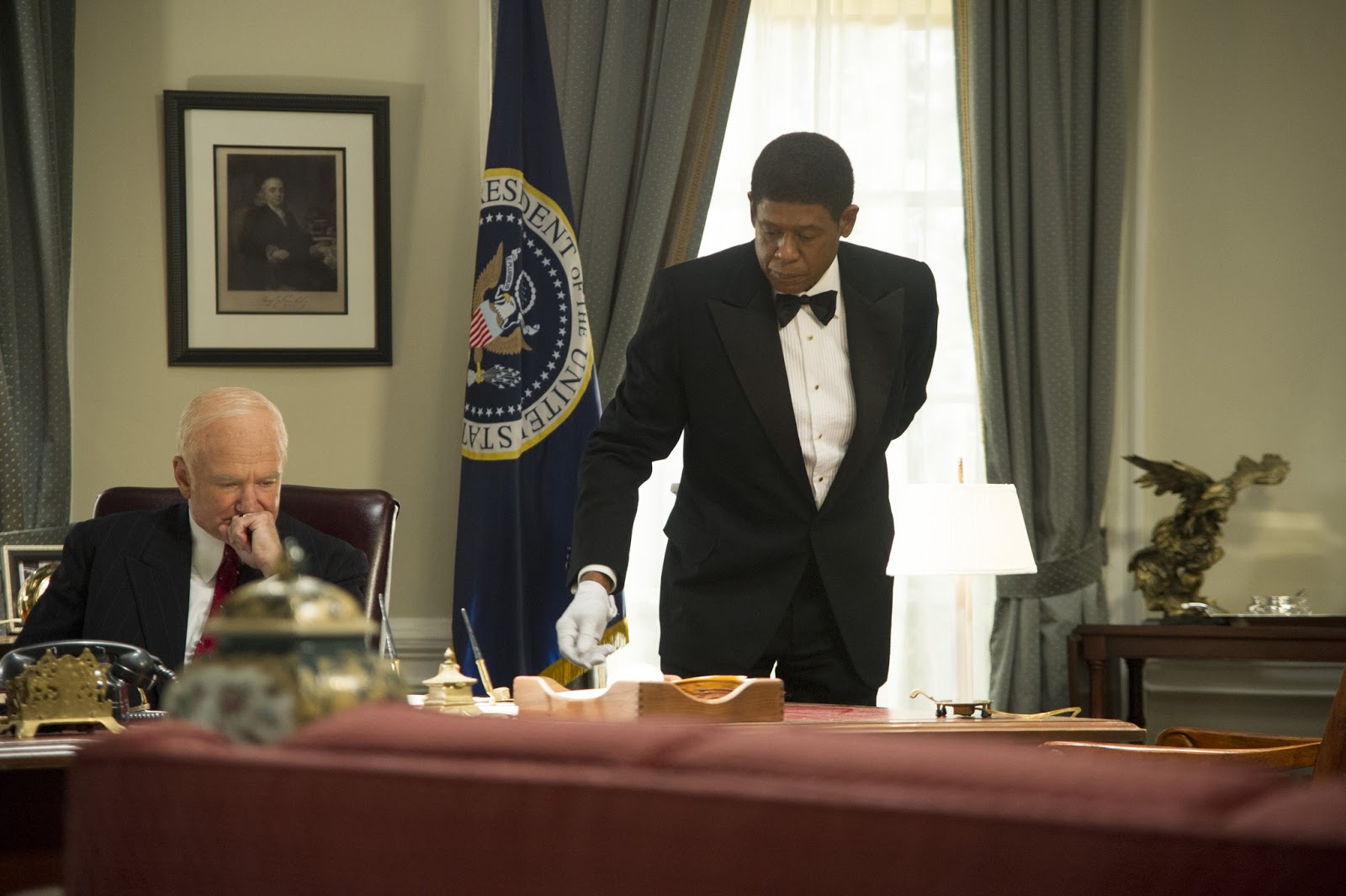
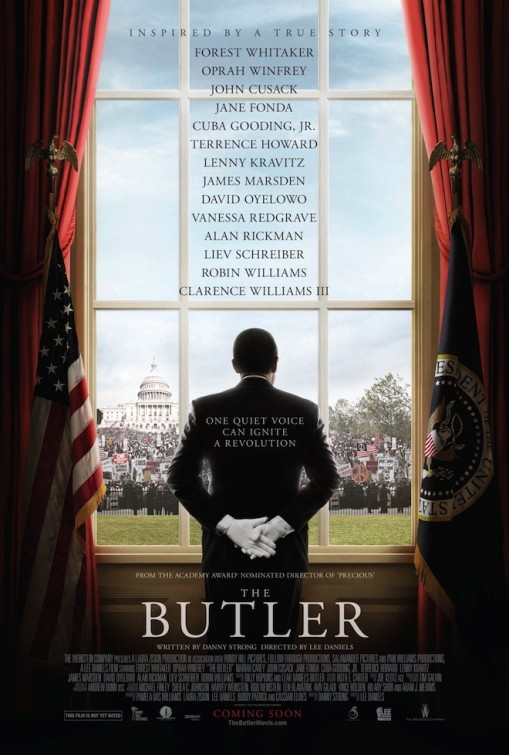
Forest Whitaker takes on a lifetime of service, as the Civil Rights movement meets Downton Abbey

Director: Lee Daniels

Cast: Forest Whitaker (Cecil Gaines), Oprah Winfrey (Gloria Gaines), David Oyelowo (Louis Gaines), Cuba Gooding Jnr (Carter Wilson), Lenny Kravitz (James Holloway), Colman Domingo (Freddie Fallows), Yaya DeCosta (Carol Hammie), Terrence Howard (Howard), Adriane Lenox (Gina), Elijah Kelley (Charlie Gaines), Clarence Williams III (Maynard), John Cusack (Richard Nixon), Jane Fonda (Nancy Reagan), James Marsden (John F. Kennedy), Vanessa Redgrave (Annabeth Westfall), Alan Rickman (Ronald Reagan), Liev Schreiber (Lyndon B. Johnson), Robin Williams (Dwight D Eisenhower)

Cecil Gaines (Forest Whitaker) grows up on a plantation in the South; after his mother is raped and his father killed by the son of the house, the family matriarch (Vanessa Redgrave) takes him on as a house servant as a token gesture of regret. His training here sets him on the path to working in a succession of increasingly wealthy hotels and, finally, the White House. Over 30 years, he serves the Presidents in office, never involving himself or commenting on policy, proud of his service to his country. This often puts him in conflict with his Civil Rights activist son Louis (David Oyelowo), with his wife Gloria (Oprah Winfrey) stuck in the middle.

This is the sort of film that feels designed to win awards. It’s based on a vague true story (it changes nearly all the events of course) and it’s about a big subject. It’s got big name actors doing acting. It aims at big themes. What it actually is, is a film that misses its marks. It’s a film that spends time with big themes but has nothing to say about them, or in fact anything interesting to say full stop. It assumes that the historical context will do the work, and leaves it at that. Instead, it settles for trite sentimentality and cliché, personal stories played on a stage that makes those stories seem slight and inconsequential rather than giving them reflective depth.

The biggest problem about the film, leaving aside its heavy-handed sentimentality and mundane predictable storytelling, is that all the way through it feels like we are following the wrong story. It’s such a vibrant and exciting period of history, so full of events, passion and struggle: and instead we follow the story of Cecil, essentially a bland passive character who achieves very little and influences even less. There are vague references to leading “the regular life” and how working in domestic service is like some sort of subversive act to demonstrate the education and hard-working possibilities of the minority, but to be honest it never really convinces.

The film promises that Cecil was a man who had a profound impact on the people he served – but this doesn’t come across at all. Instead, the parade of star turns playing US Presidents are there it seems for little more than box office: we see them speaking about Civil Rights issues or planning policy, but we get very little sense of Cecil having any bond with them. The cameos instead become a rather distracting parade, as if the film was worried (perhaps rightly) that Cecil’s story was so slight and bland that they needed the historical all-stars to drum up any interest in it. It doesn’t help that the cameos are mixed – Rickman, Schreiber and Marsden do okay with cardboard cut-out expressions, but Cusack in particular seems horribly miscast. A braver film would have kept these pointless camoes in the background and focused the narrative on Cecil and his colleagues below stairs, and their struggles to gain equal payment with their white colleagues. This film is seduced by the famous events and names it spends the rest of the time backing away from.

The performance at the centre is also difficult to engage with. Forest Whitaker is such an extreme, grand guignol actor that it’s almost sad to see him squeeze himself into a dull jobsworth such as Cecil. Whitaker seems so determined to play it down that he mumbles inaudibly at great length (it’s genuinely really difficult to understand what he is saying half the time), slouching and buttoning himself into Cecil’s character. It doesn’t come across as a great piece of character creation, more a case of miscasting. Oprah Winfrey does well as his wife, although her character is utterly inconsistent: at times a drunk depressive, at others level-headed and calm. The link of either of these characters to the hardships of life as a Black American or their role in racial politics is murkily unclear.

The star turn of the film – and virtually all its interesting content – is from David Oyelowo, who ages convincingly through the film from idealist to activist to elder statesman. His story also intersects with the actual historical events that are taking place in America and he is an active participant – unlike Cecil the passive viewer, just as likely to switch the TV off as follow the news. Often I found myself wishing the film could follow his character rather than Whitaker’s.

That’s the problem with the film: what point is it trying to make? The film seems to want to honour Cecil’s service in the White house – but the film is a slow journey towards Cecil’s sudden revelation that maybe his son’s campaigning for Civil Rights was the right thing to do. This flies in the face of the film’s tribute to Cecil’s decades of quiet, unjudging service: the film can’t make up its mind whether it wants to salute Cecil for being an unjudging, dedicated servant to a long line of Presidents, or for having the courage to take a political stance towards the end. It’s having its cake and eating it. It’s this shallow lack of stance that finally makes it an empty and rather dull viewing experience.

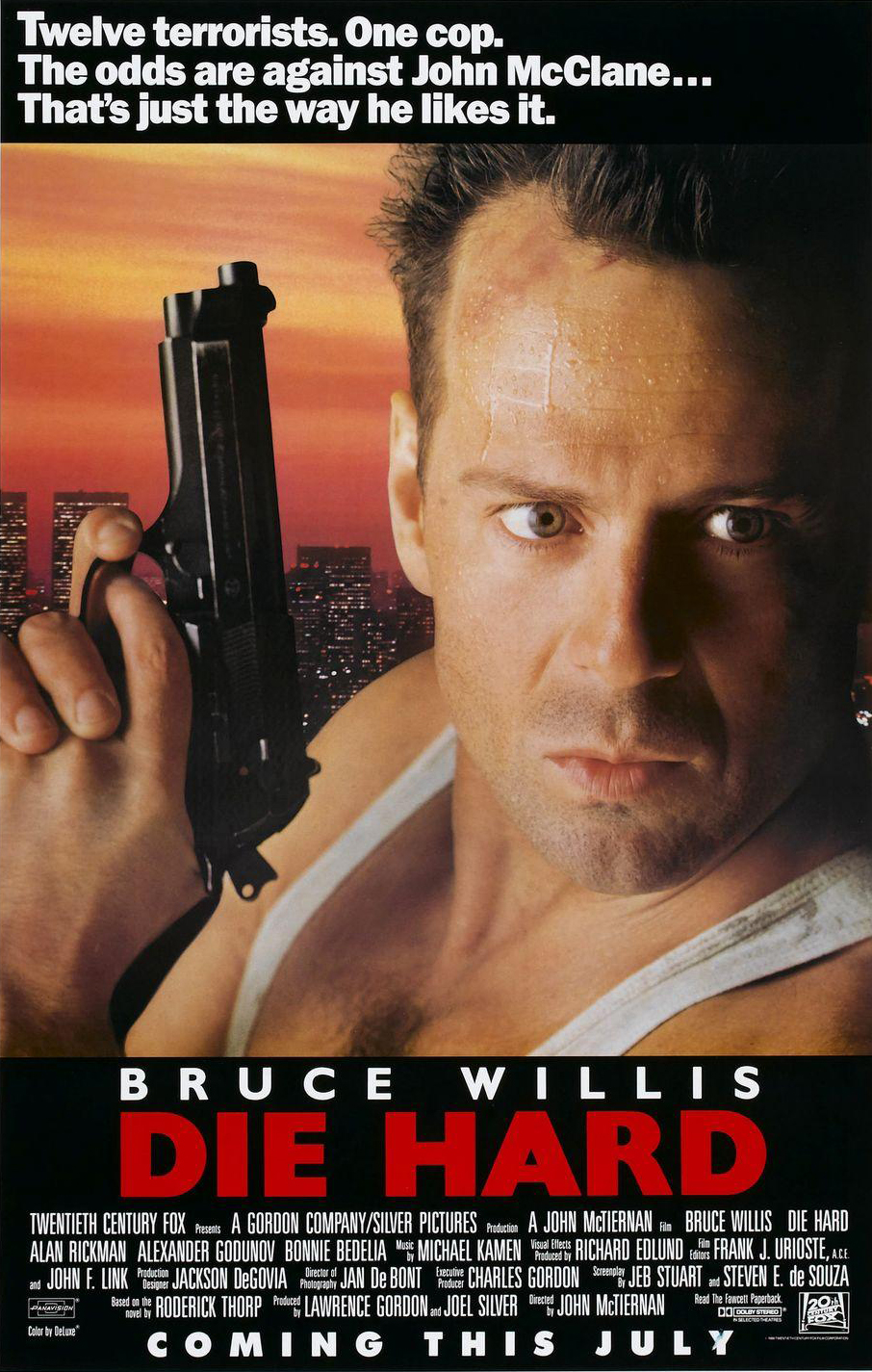
Die Hard (1988)

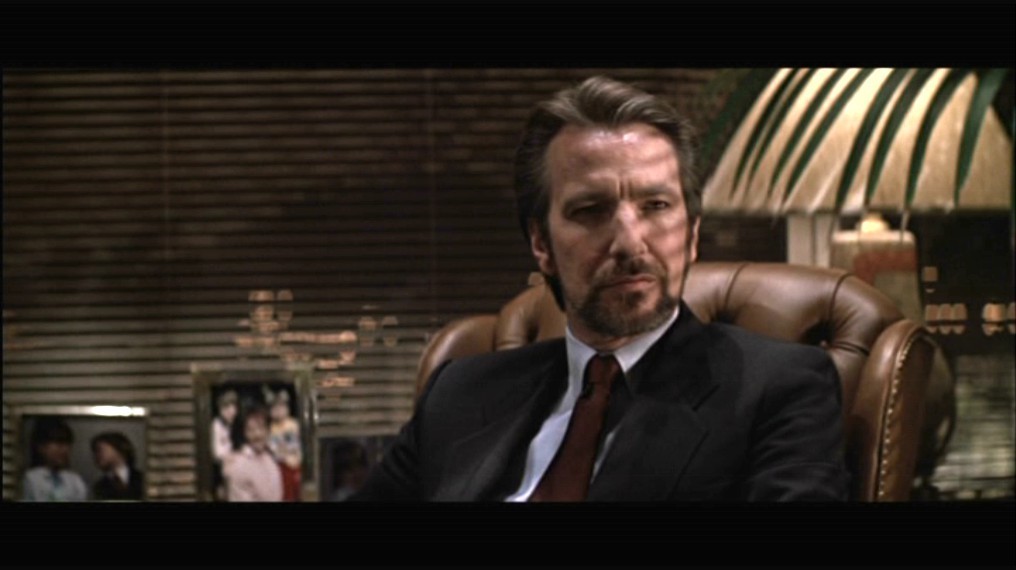
Alan Rickman sets the bar for all Hollywood villains in Die Hard

Director: John McTiernan

Cast: Bruce Willis (John McClane), Alan Rickman (Hans Gruber), Alexander Gudonov (Karl), Bonnie Bedelia (Holly Gennaro McClane), Reginal VelJohnson (Sgt Al Powell), Paul Gleason (Dwayne T. Robinson), De’Voreaux White (Argyle), William Atherton (Richard Thornburg), Clarence Gilyard (Theo), Hart Bochner (Harry Ellis), James Shigeta (Joseph Yoshinobu Takagi)

Is there a better action film ever made than Die Hard? In fact, I’m almost tempted to say: has a more influential film emerged from 1980s Hollywood than this masterpiece of tension, action, thrills and wry humour? Die Hard set the template for action: the structure of the hero and villain locked in a battle of wits, claustrophobic locations, one man (sometimes now a woman) against overwhelming odds… There is a reason so many films now have their plot explained as Die Hard on a [insert eccentric location or method of transportation here].

The plot is brilliantly simple and streamlined – so compellingly is the whole enterprise put together that you don’t notice that it was all being made up in the spot (the main hint of that being there is clearly no ambulance in the baddies’ arrival truck). If you don’t know the plot, where have you been since 1988? John McClane (Bruce Willis) is a cop who’s in LA to spend Christmas with his estranged wife Holly (Bonnie Bedelia). Joining her office party at Nakatomi Plaza, a massive skyscraper still partly under construction, their marital discord is interrupted by the building being seized by a group of European terrorists (or are they?) led by urbane sophisticate Hans Gruber (Alan Rickman). Now it’s all down to John, dressed in nothing more than a vest and trousers, without even any shoes to take on a dozen heavily armed baddies single-handed. 

Die Hard is a perfect storm – everyone involved was in the right place, at the right time of their careers, with material they were perfectly able to bend to their skills. There have been so many wonky thematic rip-offs of this film that a lot of credit should go to John McTiernan for setting such a brilliant template that proved irresistible to adapt. It goes without saying that the film is whip-sharp and rattling with tension, and that its action moments are brilliantly shot and choreographed. What makes Die Hardwork so well is that it puts character and performance at its heart. McClane is a character we can root for, a regular guy as far away from an Arnie or Sly superman as you can get; similarly Gruber is so charming and charismatic, part of you wants him to win.

Although there is plenty of blood and violence, McTiernan doesn’t dwell on it (watch the far more brutal Die Hard 2 for contrast), and there is no sadism in the editing. Instead, McTiernan invests the film with a lot of sly humour and wit – and he is not afraid to acknowledge that there is an illicit thrill in watching intelligent people like Gruber put detailed plans into place, executing them perfectly while running rings around the law. The use of Ode to Joy as Gruber’s personal theme tune is incredibly playful, and the film successfully positions itself in its narrative with Gruber as the protagonist and McClane the antagonist (with the difference that McClane is the character we root for) – as such, McClane’s reactive role in the plot constantly stresses his isolation and vulnerability, while Gruber’s control of the narrative positions him as a truly daunting opponent. A modern film would have kept the reveal of Gruber’s plan until the third or fourth reel – here Gruber tells us within five minutes of arriving that he’s there to rob the place; immediately we are connected with him and understand his aims, and understand the structure of the film coming up from the start.

The humour of the film is never heavy handed, and it’s perfectly balanced with the threat – Gruber and McClane are witty and dry but their characters are never undermined. The film never forgets its Christmas setting, which makes for a number of humourous contrasts (altogether now “Now I have a machine gun. Ho-Ho-Ho”). There is no comic relief as such, and every character serves a clear role in the plot – no fat on the bones here. I also really like the fact that the film at many points subtly undercuts machismo: the gung-ho FBI agents Johnson and Johnson are cocksure morons; as the SWAT team storms the building one of them stops to shriek “ow” after pricking his hand on a thorn. Sly comedy runs throughout – preparing to defend the building from the same SWAT attack, one of the terrorists glances around nervously before helping himself to some candy from behind a shop counter (because kidnap and murder are not a problem, but stealing sweets is really naughty). The film is packed with rich incidental moments like this that charm the viewer, even while bodies piles up and parts of the building go up in smoke.

Bruce Willis was also the perfect choice as McClane. Not only does he have the physical capability, but he has the acting skills. Long before he succumbed to the smirk or the grimace as his default settings when bored (watch Die Hard 5 – or rather don’t – to see the comparison between then and now), he makes McClane very real. Yes he’s confident and arrogant, but McClane is also laced with self-loathing (watch him beat himself up after his conversation with Holly) and under the surface he has a deep humanity, which dedicates him to saving lives (twice in this film he lambasts himself for not doing enough to save people). Willis not only takes a physical battering over the course of the film – don’t we all wince at the idea of running barefoot over a floor of glass? – but he’s also half the time desperately scared under the adrenaline, using wit and defiance as a defence mechanism. McClane does things in this film we could never do in real life (jump off an exploding building using a fire hose as rope – yup you’re dead) but Willis always feels like a regular guy – someone we can understand, relate too. He’s as far away from Arnie in, say, Predator as you can get.

Of course we’ve come all this way without mentioning arguably the film’s MVP, the incomparable Alan Rickman. Astonishingly, this was his first ever film, but Rickman is so perfectly brilliant in this film that I don’t think it’s an exaggeration to say every Hollywood villain since has been weighed against his performance here and found wanting. Rickman taps into a truth: wouldn’t we all love to be the baddie? Despite it all, Gruber is clearly enjoying himself throughout: to borrow a phrase, he’s an exceptional thief and since he’s moved up to kidnapping we should all be more polite. He’s also sharply intelligent, his invention and arrogant confidence that he has thought of everythingare actually rather thrilling – while his exasperation at both McClane and the inadequacies of his underlings are oddly charming. Rickman’s arch and clipped delivery turns lines into endlessly quotable bon-mots – he has a perfect sense of timing and says more with an arched eyebrow than other actors could with a page of dialogue.

The film’s master touch is to recognise early the strength of these two characters and to make the main duel not so much a physical fight as a battle of wits. Skilfully navigating the viewer around the building, Gruber and McClane execute move and counter move, both thinking fast on their feet while never losing sight of their main goals. The film also brilliantly allows them to engage in a running verbal battle via walkie-talkie, making their clash increasingly personal – and also allowing both characters to demonstrate their ingenuity. It also allows us to invest in the clash between them – and to make the sense of one-upmanship that runs through the film feel very alive.

The focus here has been on those two characters, who really drive the film – but every member of the rich supporting cast contributes hugely. Bonnie Bedelia is very effective in a difficult part as Holly – assertive, independent but never trying or tiresome (we see her point on McClane as well, who can be a jackass). Alexander Gudonov is perfect as the Han’s macho-but-short-sighted Number Two. William Atherton is gloriously vile as an exploitative reporter. Hart Bochner embodies the shallow, coke-fuelled, Masters of the Universe 80s as Ellis. Reginald VelJohnson adds a lot of humanity as the thoughtful Al Powell.

Okay there are one or two things wrong with the film (I’ve always found Al’s final use of his gun at the film’s end a bit uncomfortable, and I suspect from the conflicted messages of the soaring music and VelJohnson’s sad-faced acting that this was a tricky moment for the producers to get right). But this is an explosion of filmic joy that constantly rewards multiple viewings (god knows how many times I’ve seen this film). The action sequences never tire, the characters never lose their interest. I don’t think it’s a stretch to call it a masterpiece as well as a landmark piece of film-making.