Tag: Albert Basserman

The Red Shoes (1948)

The Red Shoes (1948)

Ballet and obsession go hand-in-hand in this beautiful, triumphant film

Director: Michael Powell, Emeric Pressburger

Cast: Anton Walbrook (Boris Lermontov), Marius Goring (Julian Craster), Moria Shearer (Victoria Page), Robert Helpmann (Ivan Boleslawsky), Léonide Massine (Grischa Ljubov), Albert Bassermann (Sergei Ratov), Ludmilla Tchérine (Irina Boronskaya), Esmond Knight (Livingstone Montague), Austin Trevor (Professor Palmer), Jean Short (Terry), Gordon Litmann (Ike), Eric Berry (Dimitri)

If there was a moment when “ballet” and “obsession” became synonymous in people’s minds, it might just have been the premiere of Powell and Pressburger’s The Red Shoes. The founding text in the cult of en pointe, The Red Shoes mixes technicolour beauty and fairy-tale darkness with an elaborate meditation on the struggle to balance life and art. For many it’s the peak of The Archer’s cinematic artistry. While I don’t place it that high – I have too much fondness for the beauty of A Matter of Life and Death, enjoyment for the bonkers madness of Black Narcissus and too much respect for the pleasures of The Life and Death of Colonel Blimp – there is no arguing that this is vibrant, beautiful filmmaking, two masters firing on all cylinders.

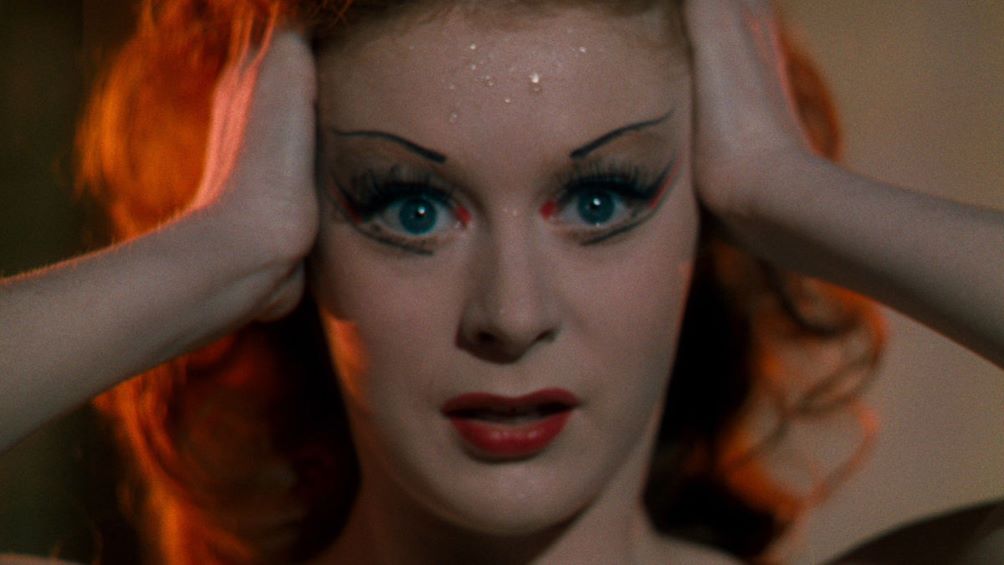
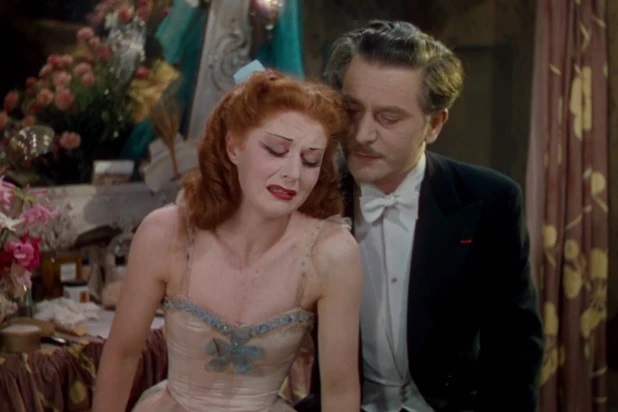
The Red Shoes is the ballet battleground for the conflicting demands of three people. Boris Lermontov (Anton Walbrook) is a Diaghilevish impresario for whom everything is secondary to art, demanding complete obedience from his protégés. Julian Craster (Marius Goring) is a gifted young composer who values life and love over art. Between them is Victoria Page (Moira Shearer), graceful once-in-a-generation ballerina talent who wants to both dedicate herself to Julian but also dance herself into legend with Boris. These three will make and break alliances on and off tour, touring Craster’s Red Shoes about ballet shoes with a mind (and dance) of their own.

On its release The Red Shoes became the most successful British film ever released in America (it even topped the end-of-year box office chart). Its popularity added even greater momentum to the wave of Hollywood musicals that turned into a tsunami. Would Gene Kelly have had the guts to end An American in Paris with a fifteen-minute ballet if Powell and Pressburger hadn’t stuck a 17 minute one in the middle of The Red Shoes first? Where The Red Shoes differs from Hollywood musicals that pirouetted in its footsteps, was it darkness and surprising bleakness, it’s clear, cold-eyed look at the limits of opportunity and the dangers of following your dream.

Because Victoria Page – played with a great deal of honesty and affecting vulnerability by professional ballet dancer Moira Shearer – is severely damaged by doing so. Inveigling her way into Lermontov’s company (despite Lermontov’s distaste at her mother’s forceful pushiness) she proves her spurs by a sensational performance in a small-scale Swan Lake at the Mercury Theatre (dancing to a recording rather than a live band) and is parachuted into a leading role in Lermontov’s productions. Vicky dreams of leaving the sort of mark few do – but she’s also human, unsuited at heart to the fierce, all-consuming obsession Lermontov expects from his stars. Shearer makes her vulnerable, gentle, lacking the force of personality to resist peer pressure.

Pressure is what Lermontov trades in. Played with a vampiric intensity by Walbrook, Lermontov is pale, Germanic and frequently retreats behind sunglasses. He commands there is no God but art and that he alone is its unquestionable high priest. He holds court in his office, where his staff come and go, rotating around his every whim and opinion. He lurks in the shadows at the rear of the theatre during rehearsals, quietly passing judgement. Vicky’s predecessor is dismissed for daring to get married. And there is the constant expectation that should he ask you for a sacrifice, it should be made in seconds.

He doesn’t care for conflict. In fact, any disagreement is met with summary dismissal. It doesn’t matter how much he’s invested in you. As Julian Craster discovers to his cost. Goring does fine work as the enthusiastic young composer (even if he is clearly a little old for the role) who we are introduced to excitedly watching his professor’s new composition for Lermontov only to discover all the melodies are his. While Lermontov is reluctant to do anything to ensure Craster gains the credit for his work (a sign of his own need to control all patronage and praise) he takes Craster on, who proves himself no flash in the plan. But no amount of time invested in Craster matters when the young composer dares to fall in love with Vicky. And even worse, she dares to love him back.

Because love and a life outside of the dance isn’t part of the plan. These ideas are all captured in The Ballet of the Red Shoes, the piece Craster composes for Vicky (the preparation for which is the catalyst for their burgeoning love affair). Based on the Hans Christian Anderson tale of the dancing shoes that had a life of their own, it neatly encapsulates Vicky’s problem. As Lermontov says summing up the story, it’s the tale of shoes that at first delight a young woman and then literally dance her to death. The entire ballet, like the film, is a grim reminder of the horrific price all-sacrificing excellence in the arts can lead to.

It’s fitting that this story is placed at the heart of such a hugely beautiful and fascinating film. Powell and Pressburger’s film are virtually a by-word for technicolour beauty. Jack Cardiff excels himself here as a photographer (only a reluctance to give this Brit outsider an Oscar two years running surely prevented even his nomination). The Red Shoes is crammed with exquisite imagery, gorgeous photography and striking, unforgettable colours. Hein Heckroth’s sets are magisterial (and Oscar winning), not least in the staging of the ballot that dominates the centre of the film.

The ballet is filmed quite unlike any other dance sequences in films. Powell in many ways breaks the cardinal rules of shooting dances. The ballet is a combination of quick edits and intricate camera moves. It is defiantly non-realistic: despite the setting, it is clearly (with its use of slow motion, super-imposed images and effects like the red shoes lacing themselves onto Vicky’s feet) not a faithful theatrical staging but highly cinematic. It beautifully, subtly suggests that we are at a tipping point between reality and imagination, that Vicky’s identification with the lead role has partially shifted her perception of the whole piece into a fairy tale turned real.

Is that partly why the whole film feels like we are walking in her own personal Hans Christian Anderson story? With Julian as the romantic prince, the theatre as a mix of enchanted forest and mysterious castle – and Lermontov as the beast who may be a prince in disguise or the wolf dressed as granny. It leads into the finales tragic ending, which blurs the line between reality, imagination and trauma into an undefinable mass. Do those red shoes exert a terrible, profound power of Vicky she hardly understands? Or are they just physical representations of her own ability to choose between the demands placed on her?

The Red Shoes is in some ways a traditional melodrama, not to mention another fable of a woman being unable to have both career and family (in the way, of course, that a man can). It is also a slim story, and the ballet – impressive as it is – depends on your relationship to that artform to work or not (I confess I find it drags slightly). But it’s also full of delightful behind the scenes sequences, from rehearsals to design meetings with Albert Bassermann’s Germanic designer to Craster’s coaching of the orchestra.

Visually rapturous, its directed with a great deal of flair and sympathy from Powell who draws some superb performances from his cast of mostly professional dancers. Although Shearer has no real chemistry with Goring, her performance as Vicky is beautifully observed and highly sympathetic and The Red Shoes is blessed with a definitive performance from Walbrook who is powerfully, imposingly domineering as Lermontov. The Red Shoes may at time dress its melodramatic heart in a little too much on-the-nose artiness, but it is also a sensational, ravishing film that lingers as long in the memories as Vicky’s prodigious dance steps.

Foreign Correspondent (1940)

Foreign Correspondent (1940)

Hitchcock’s thriller is a stunning adventure story and a passionate call for action

Director: Alfred Hitchcock

Cast: Joel McCrea (John Jones/Huntley Havestock), Laraine Day (Carol Fisher), Herbert Marshall (Stephen Fisher), George Sanders (Scott ffolliott), Albert Basserman (Van Meer), Robert Benchley (Stebbins), Edmund Gwenn (Rowley), Eduardo Cianelli (Mr King), Harry Davenport (Mr Powers), Edward Conrad (Latvian)

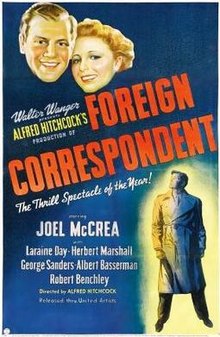
In 1940, Hitchcock was new in America, after a parade of successes in Britain. 1940 was a red-letter year for the master, directing not one but two of the films up for Best Picture. The Oscar was carried home for his masterful gothic adaptation of Du Maurier’s Rebecca, but equally memorable was Foreign Correspondent, a stirring, heartfelt thriller about the build-up to war in Britain, a passionate cry for American intervention and brilliant propaganda contribution to the British war effort (even Joseph Goebbels tipped his hat to it).

John Jones (Joel McCrea) is the new foreign correspondent in Europe for the New York Morning Globe. Given the pseudonym “Huntley Havestock” (because it sounds better), Jones is picked out because he’s a hard-boiled crime journalist, practised at winkling out a story, rather than the cozy posh boys usually sent out to Europe. In Amsterdam, Jones attends a peace conference hosted by leader of the British peace party Stephen Fisher (Herbert Marshall), where eminent Dutch diplomat and architect of the fragile European peace Van Meer (Albert Basserman) is due to speak. While Jones falls in love with Fisher’s daughter Carol (Laraine Day), Van Meer mysteriously falls to show at the dinner – and arrives at the conference the next day only to fail to recognise Jones and immediately get assassinated. Suddenly Jones finds himself in the middle of a dangerous game of spies with only British journalist Scott ffolliott (George Sanders) and Carol to help him.

Hitchcock’s Foreign Correspondent is a masterful spy caper, in the style of many of his early successful works such as The Thirty-Nine Steps, superbly assembled by a genius at the top of his game, with access to funding and techniques beyond what he had in Britain. Hitchcock went through several versions of the script – there were no fewer than nine writers who worked on this film, four of whom are credited – but it matters not a jot when the script they finally came up with matched such superb, zingy, screw-ball style dialogue with such brilliant set-pieces.

The film also had a serious purpose as well. From the start, this is a cry of one of Britain’s most prominent ex-pats to his newly adopted nation to join the effort to preserve Western civilisation against the onslaught of Nazi oppression. Joel McCrea’s Jones – a part written for Gary Cooper, who forever regretted turning the role down – is the quintessential American, disinterested in the world, sure of America’s place in it, who has his eyes opened and passion ignited by seeing up-close and personal the dangers from the agents of totalitarianism. The agents of the enemy nation – probably Germany, a country that is referenced in passing, but the film deliberately keeps it shady in an attempt to appear even-handed – are ruthless, brutal and unscrupulous. Their plans are fiendish and they are bent on world domination. But all this is worn very lightly within a caper framework that has as much interest in Jones falling in love with Carol as it does with foiling the baddies.

It also plays neatly on Jones’ very old-school American obsession with fair-play, and bringing down the baddies no matter what. Witnessing Van Meer assassinated before his very eyes, Jones is determined to go to any lengths to ensure both that justice is done and he is the man who gets the story. At the same time, Jones also has an honest and homely sense of romanticism about him. The film gets a tonne of comic and romantic mileage out of the cracking dialogue between McCrea and Loraine Day as Carol, with the sort of intelligent, witty banter that wouldn’t seem out of place in a screwball comedy, with Jones’ blunt “I say what I mean” attitude crashing beautifully against Carol’s more English rectitude. 

Hitchcock shows himself a brilliantly adept director of comedy – something he doesn’t get enough credit for – in these sequences between the two of them sparring over the course of the movie. And it’s not just them, but also his work with George Sanders – cast against type as a cool, noble British agent – brilliantly hilarious as the curiously named “ffiolliott” (the sequence, mid car chase, where he calmly explains to the befuddled Jones while bullets fly why his name has no capital letter is hilarious). Comedy is a rich vein in Foreign Correspondent and it works so well here because it lightens both the drama of the thriller elements and the political message of “pro-intervention”.

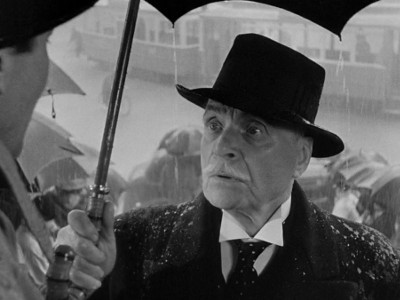
The thriller sequences are just as superb. The assassination sequence is a stand-out, a shooting on a rain soaked series of steps outside a conference, with the assassin making his retreat through a crowd of on-lookers carrying umbrellas under hot-pursuit from Jones. Hitchcock takes his camera above the crowd, meaning we only follow its progress through the disruption of the umbrellas, before the two men emerge (bullets flying) and move straight into a breathless car chase through the Dutch countryside. It’s a masterful sequence.

And it’s far from the last. The film has a superb series of tension-filled sequences, from Jones playing an elaborate game of cat-and-mouse in a Dutch windmill, trying to avoid being seen by the German agents occupying it while finding out as much as he can about their plans, to Jones reporting what he has found to a man we already know is a double agent. Edmund Gwenn, cast well-against type as a jovial, remorseless assassin, gets a brilliant sequence of attempts to kill Jones without putting him on guard, culminating in a vertigo inducing sequence at the top of Westminster Tower. It’s the second such sequence, Jones already having to climb over the roof of a hotel in Amsterdam to escape assassins (along the way brilliantly hitting the neon sign of the Hotel Europe so that it reads “Hot Europe”). Hitchcock tops it all with a brilliant plane-crash sequence shot with chutzpah and daring and is a technical marvel considering the resources available in 1940.

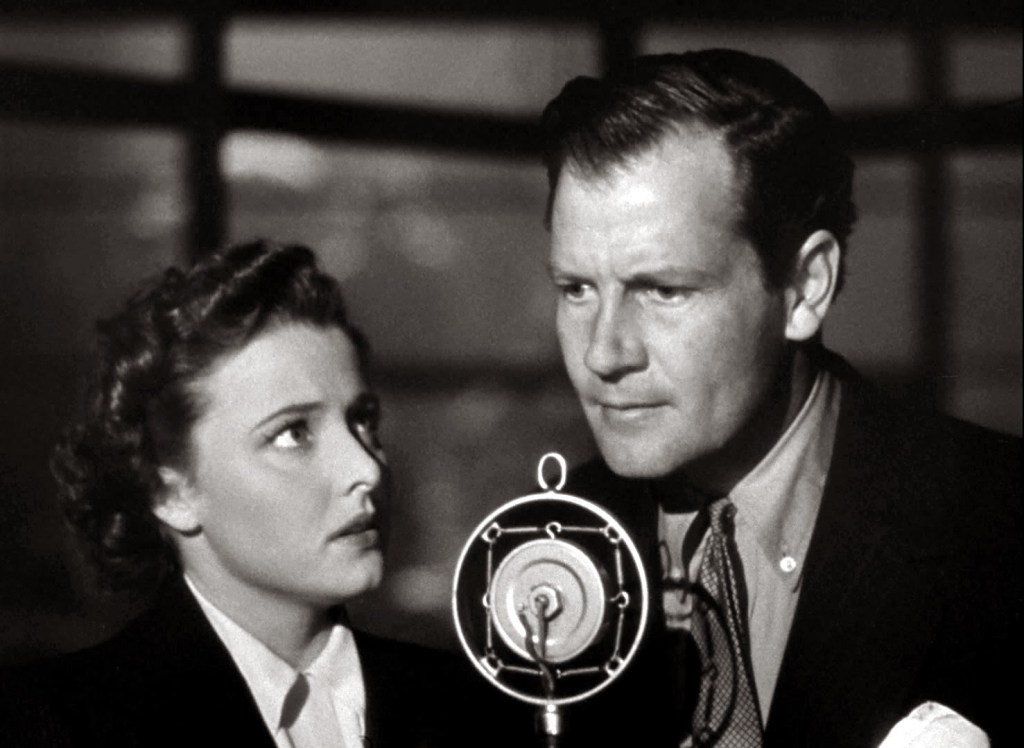
All this excitement and adventure helps to deliver the message of the film as strongly pro-interventionist to encourage the Americans to enter the war on the side of the Allies. Van Meer (a fabulous performance from Albert Bassermann of old-school nobility, made even more astonishing by the fact he didn’t speak a word of English and learned it all phonetically) has a brilliant, impassioned speech – all the more affecting for its  lack of histrionics – that condemns the brutality and violence of the dictatorships. The film is capped with Jones’ Ed Murrow-style broadcast from Blitz-besieged London. Both sequences raise genuine lumps to the throat – McCrea’s delivery is perfect – and the final sequence is all the more astonishing when you realise it was conceived and shot before the Blitz even started.

Not that the film is completely obvious in its allegiances. The turn-coat Brit in the film is a complex, even sympathetic figure who is merely serving his actual home country in the best way possible. He’s largely presented as reluctant to commit crimes, but believing that they must be done and is even allowed a heroic death. His identity perhaps is fairly guessable (he even has a Germanic dog!) but it still works very well in the film.

Hitchcock draws superb performances from the cast – helped by that script of zingers. McCrea is just about perfect, Day very sweet, Sanders is brilliant, Herbert Marshall’s Stephen Fisher a brilliant portrait of arrogance and tortured duty, Robert Benchley very funny (and writing his own scenes) as Jones’ colleague who’s struggling to stay on the wagon, Harry Davenport superb as Jones’ His Girl Fridayish editor. Basserman was Oscar nominated – and deserves it for his big speech – but it could have been any of the cast who got that nod, such is the quality here. Foreign Correspondent is often overlooked among the master’s many, many triumphs. But any pro-interventionist, anti-German film that has even Joseph Goebbels singing its praises must have a fair bit going for it.