Tag: Alejandro González Iñárritu

Babel (2006)

Babel (2006)

Iñárritu’s grandiose film aims for a big statement about humanity, but settles for something simpler

Director: Alejandro González Iñárritu

Cast: Brad Pitt (Richard Jones), Cate Blanchett (Susan Jones), Gael Garcia Bernal (Santiago), Rinko Kikuchi (Chieko Wataya), Adriana Barraza (Amelia Hernandez), Kōji Yakusho (Yasujio Wataya), Boubker Ait El Caid (Yussef), Said Tarchani (Ahmed), Mustapha Rachidi (Abdullah), Elle Fanning (Debbie Jones), Nathan Gamble (Mike Jones), Clifton Collins Jnr (Border police officer), Peter Wight (Tom), Harriet Walter (Lily), Michael Maloney (James), Satoshi Nikaido (Detective Kenji Mamiya)

“Only connect” was the epigraph of Forster’s Howards End. It’s an idea Alejandro González Iñárritu attempts to bring to the screen in Babel. Across three countries, he shows how small events in one plotline have drastic impacts in others. It makes for an undeniably beautiful film-making experience – but also a film straining for import, that hectors and belabours obvious points and relies far more on random events occurring due to foolishness and stupidity than the vagaries of fate or humanity.

In Morocco, Abdullah (Mustapha Rachidi) buys a rifle from a neighbour to protect his goats. His young sons practice with it by taking pot-shots at a tourist bus. They hit Susan (Cate Blanchett), whose husband Richard (Brad Pitt) is left desperately trying to get her medical help in a remote Moroccan village. The incident means their nanny, Amelia (Adriana Barraza) with whom they have left with their children in the US, has to take them with her to Mexico for her son’s wedding, where events at the border spiral out of control. Meanwhile, in Tokyo, the original owner of the rifle Yasujio Wataya (Kōji Yakusho) struggles as a single father with his deaf teenage daughter Chieko (Rinko Kikuchi), who is dealing with grief and her burgeoning, frustrated sexuality.

I often find Iñárritu’s films a mixed bag. Babel is no different. There is a lot to admire here. There’s also just as much to be frustrated about. First the good. Iñárritu does an excellent job intercutting a film which moves from location to location and (it becomes clear) timeline to timeline, without ever confusing the audience or revealing plot details in one timeline until it becomes vital in another. We discover one entire storyline of the film takes place not in tandem but after the events of another plotline (which concludes where the other begins). The film is beautifully shot by Rodrigo Prieto, with Morocco unexpectantly filmed with a perfectly fitting dusty blue hue, Mexico in warmer tints that become oppressive and Tokyo with a sort of neon-noir.

The film’s first half does an excellent job of world and relationship building. Abdullah’s two young sons are head-strong, rash children entrusted with a weapon they lack the maturity to handle. The family’s desperation to hide their responsibility for the tragedy they have inflicted on Richard and Susan becomes terrifyingly engrossing – not least when we see the slap-and-trigger happy casual-brutality of the investigating forces. Similarly, Brad Pitt does a sterling job as a husband driven to ever-increasing desperation, impotent rage and grief as a husband powerless to help his dying wife in a remote village with poor communication and innumerable cultural barriers.

Iñárritu turns an intriguing eye on Mexico as a land met with looks of both wonder and terror by the Amelia two young charges. Young Mike is enthralled by the sights and sounds then sickened into tears when a game of ‘catch the chicken’ ends in a brutal decapitation. Amelia’s family is warm, friendly but also prone to thoughtless impulsiveness, made worse by a justifiable feeling of persecution from their wealthy neighbours across the border. The wedding though, for all the flashes of cultural confusion, is a vibrant and joyful event shot with a lyrical beauty.

The same poetic beauty extends to the Tokyo plotline, which is a sort of pilgrim’s progress for Chieko (excellently played in a superb mix of vulnerable and resentful by an Oscar-nominated Rinko Kikuchi) through a long few days in Tokyo. From feuding, aggressively, with referees at a volleyball, to clumsy attempts to seduce boys (alienated by her deafness) and, in one staggeringly awkward scene, a very much-older (and horrified) dentist, Iñárritu follow’s Chieko stumbling attempt to discover herself, leaving the revelation of the causes of her ennui for a final, near wordless sequence. Iñárritu experiments with sound, putting us into Chieko’s deaf isolation by draining sound in and out (noticeably in a late-night disco).

Communication and language are barriers for all the characters – hence the film’s grandiose title. Grandiose feels the word, as Babel makes a big swing making a relatively simplistic statement: the world would be a better place if we all listened to each other. Unfortunately, the script repeatedly falls back on tropes and narrative contrivances to make this message work. Two of the storylines – Mexico and the Moroccan family – hinge on aggressive, macho cops as disrupters. In a series of character developments I just don’t buy, Richard’s bleeding-out wife is treated as a tedious inconvenience by a busload of Brit tourists who essentially demand Richard leaves his wife to die so they can back to their hotel for dinner (I literally cannot imagine an entire busload of people behaving like this – god knows how the world responds to them when Susan’s bleeding out in a Moroccan village inexplicably becomes a major world news story).

There is also a half-hearted attempt to suggest guns are destructive forces. While it’s true a rifle purchase is the instigating factor – and Iñárritu makes a lot of one of the kids smashing up the rifle in a scene of heavy-handed import – it doesn’t really fly. Honestly, the main message I started to take out was that immature or stressed people make stupid, impulsive decisions in stressful situations. The kids shooting live ammunition at a tourist bus is an appalling act of immaturity. Santiago – a character set up as a time bomb from the start in an edgy performance by Gael Garcia Bernal – has a disastrous, impulsive meltdown bred out of booze and bravado at the Mexican border, that ruins the lives of everyone around him. Stranded in the desert, Amelia will make an equally disastrously poor decision with terrible consequences she can never turn back.

Eventually, Babel starts to feel like a film full of contrivances that mistakes ambitious range and variety of locations for actual depth. Essentially it has very little to say about the human condition other than looking for a little love or understanding. The four plot lines are fairly tenuously linked together, and impact each other only in the sense of each instigates the events of another. The film fails to create a tapestry of cause and effect and fails to weave its events back together for a conclusion. For all there are moments of effective tension and drama, and great deal of visual and visceral beauty, everything feels a little too forced, a little too on-the-nose.

That’s not to say there aren’t great performances or moments of great flair from Iñárritu. Adriana Barraza is fabulous as a proud mother and caring nanny, driven to her absolute limits. But it’s not as complex, revelatory or revealing as it thinks it is. It makes for a film that looks and feels like epic but carries only a simple and reassuring message.

Amores Perros (2000)

Dogs, love and car crashes in Alejandro González Iñárritu’s debut feature Amores Perros

Director: Alejandro González Iñárritu

Cast: Emilio Echevarría (El Chivo), Gael García Bernal (Octavio), Goya Toledo (Valeria), Álvaro Guerrero (Daniel), Vanessa Bauche (Susana), Jorge Salinas (Luis), Adriana Barraza (Octavio’s mother), Marco Pérez (Ramiro)

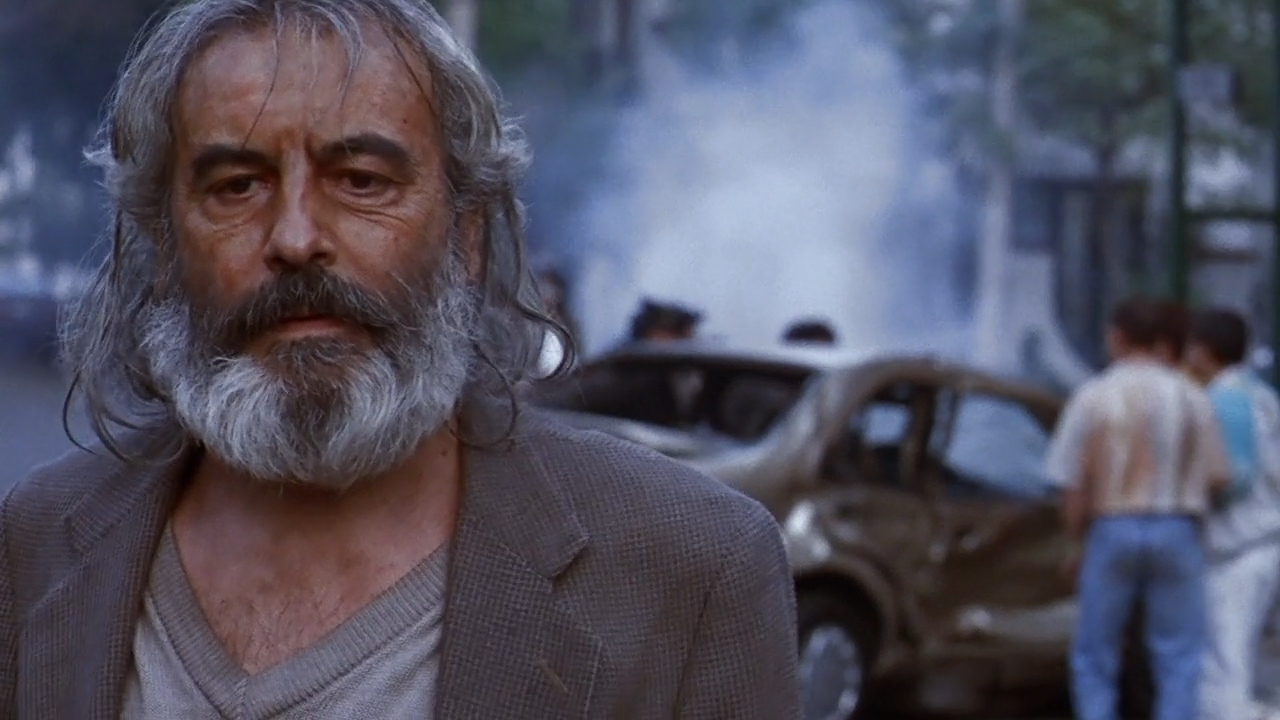
What links playboy kid Octavio (Gael García Bernal), model Valeria (Goya Toledo) whose career is so high it can only go downhill, and El Chivo (Emilio Echevarría) a hitman who lives like a scruffy hobo? Love of course! Well that and a near-fatal car accident that has life-changing effects for all three of them. And dogs too. They all love dogs. Iñárritu’s debut film plays like a mixture of Altman and Tarantino, throwing together three small-scale stories into something that feels electric and fast, but also strangely empty, as if it is skirting the surface of its characters without really delving into them.

Its interesting re-watching this film now, after Iñárritu has become a double Oscar winner and one of the world’s leading directors. The mastery of technique is all there in Amores Perros. Iñárritu’s style with the camera is fluid, intense and engrossing, and he uses a wide combination of fast-cut editing tricks, stylish camera work and handheld cameras that immerses the audience in the seedy underworld of Mexico City. As part of a wave of Latin American films made at the time, Amores Perros perhaps comes second only to City of God as an example of how to bring the danger and reality of the streets to the screen. Shot with a drained out style that makes everything feel even more grim, dirty and depressing than it probably is, Amores Perros is as sharp a dog bite of cinema as you could expect. 

Within this brilliant evocation of urban cinema work, Iñárritu crafts a series of three morality tales so universal in their structure and themes that they could just as easily been pulled from Chaucer or Boccaccio. It works as well, these three short films linked by common themes, cleverly structured narratively so that we learn more about each story as the other two unfold. Iñárritu structures the pivot of the story being the car crash that opens the film. The causes leading up to it are covered in the first story, with the events of the second story hinging on its effect on model Valeria in the other car, and the third spinning out the change of lifestyle it helps push on hitman El Chivo. Each story starts at different places in relation to others and each expands and deepens the overall picture we get of Mexico.

And it’s a place with its own underworld economy, powered by everything from murder and robbery to dog fighting. Octavio is a low-rent criminal (as is his brother) who ends up sucked into pitching his vicious Rottweiler into dog fighting. El Chivo lives in filth and dirt and takes commissions from corrupt cops to knock off targets. Both these stories hinge on inequality and desperation: Octavio and his family are working-class and have remarkably little. El Chivo is literally a tramp, a man who has turned his back on his old affluent life in disgust. The people they deal with are hoodlums and criminals and the few middle-class people who intrude into their lives do so with contempt. It’s all particularly obvious when, in the middle chapter, we head into the world of model Valeria and her lover, magazine editor Daniel – although even they are struggling to make ends meet.

It’s this middle story that actually makes for a fascinating centre point in the story. Valeria is crippled in the car accident, bed-ridden and disabled in the very week that Daniel has finally left his wife and children to be with her. Daniel (well played with a growing frustration and disappointment by Álvaro Guerrero) increasingly finds it hard to keep his patience with the disappointed and increasingly despairing Valeria (affecting work by Goya Toledo). This story of romantic, illicit love turned far too quickly into a burdensome marriage filled with dependencies has a universal tragedy to it. Their problems hinge around the disappearance of Valeria’s beloved dog, which may or may not be trapped under the damaged floorboards of the flat, a despair that becomes an obsession for Valeria and a constant burden for Daniel.

Valeria’s love for a dog becomes a substitute for the disappointing, passion-free relationship that she and Daniel find themselves locked into (Daniel even takes to calling his ex-wife to hear her voice). Dogs are more of a tool to Octavio. His vicious Rottweiler is his route to the money he needs to get his brother’s wife to elope with him. Gael Garcia Bernal plays Octavio with the edgy, simmering energy that powered so many Latin American films of the era, his face a mixture of surly resentment and romantic ambition. Octavio’s passionate flings with his sister-in-law have a youthful immaturity to them, that even she seems to recognise (his brother, while a somewhat absent husband, is clearly someone she relates to far more than the sexy Octavio). Discovering his dog’s capability for violence, he moves into the underworld of dog fighting, opening himself up to a world of trouble.

This use of dogs as a tool for greed and ambition perhaps reflects Octavio’s lack of emotional maturity and understanding of the impact of building a future with his sister-in-law, no matter how much he may wish to run away. For hitman El Chivo surprisingly, dogs are instead surrogate loves and emotional partners who have replaced the family (and indeed his regard for people in general) that he gave up long ago. Played with an expert anger masking deep sadness and self-loathing by Emilio Echevarría, El Chivo loves his dogs with all the intensity and care that is lacking from his relationship with humans. It’s this that gives El Chivo the self-regard that allows him to begin to change and rebuild his life.

Iñárritu’s primal film handles these universal themes of love and despair with intelligence and energy, even if it’s essentially three tales that play out more or less as you might expect. Because this film is essentially a collection of age-old morality tales, handsomely mounted but fundamentally predictable. What might you really learn about human nature from this film? I’m not sure. Because this is a pretty standard, even narratively safe drama, for all the minor tricks it plays with timelines. I’m not joking when I say this would not look out of place in The Canterbury Tales – and the moral issues it presents are lacking in shades of grey. Adulterers are punished, cheaters do not prosper, the “bad” are generally punished and for all that one of our characters is a hitman, he’s repeatedly shown to have more depth and hinterland than most of the rest of the characters in there.

It’s an interesting reflection on Iñárritu. He is without a doubt a major director of cinema, whose skills with the camera and editing are flawless. He creates here a film that is absolutely striking in its vibrancy and cinematic technique and its immediacy. But is it also a film that is a little too much about the mechanics of the stories rather than really invested in the stories themselves? I think it might be. Iñárritu is a master showman, but not necessarily a great storyteller and I think Amores Perros is a great example of that.

Birdman (or The Unexpected Virtue of Ignorance) (2014)


Michael Keaton is haunted by his superhero alter-ego in Iñárritu’s well made but heavy handed theatre satire

Director: Alejandro González Iñárritu

Cast: Michael Keaton (Riggan Thomson), Zach Galifianakis (Jake), Edward Norton (Mike Shiner), Andrea Riseborough (Laura Aulburn), Amy Ryan (Sylvia Thomson), Emma Stone (Sam Thomson), Naomi Watts (Lesley Truman), Lindsay Duncan (Tabitha Dickinson), Merritt Wever (Annie)

Oscar voters seem to be invariably drawn towards stories about actors and acting. Put together a decent and ambitious movie about those subjects, ideally with a sprinkling of gentle satire that pokes fun at acting but basically says at the end it is a noble profession, and you got yourself a contender. So it was with Birdman.

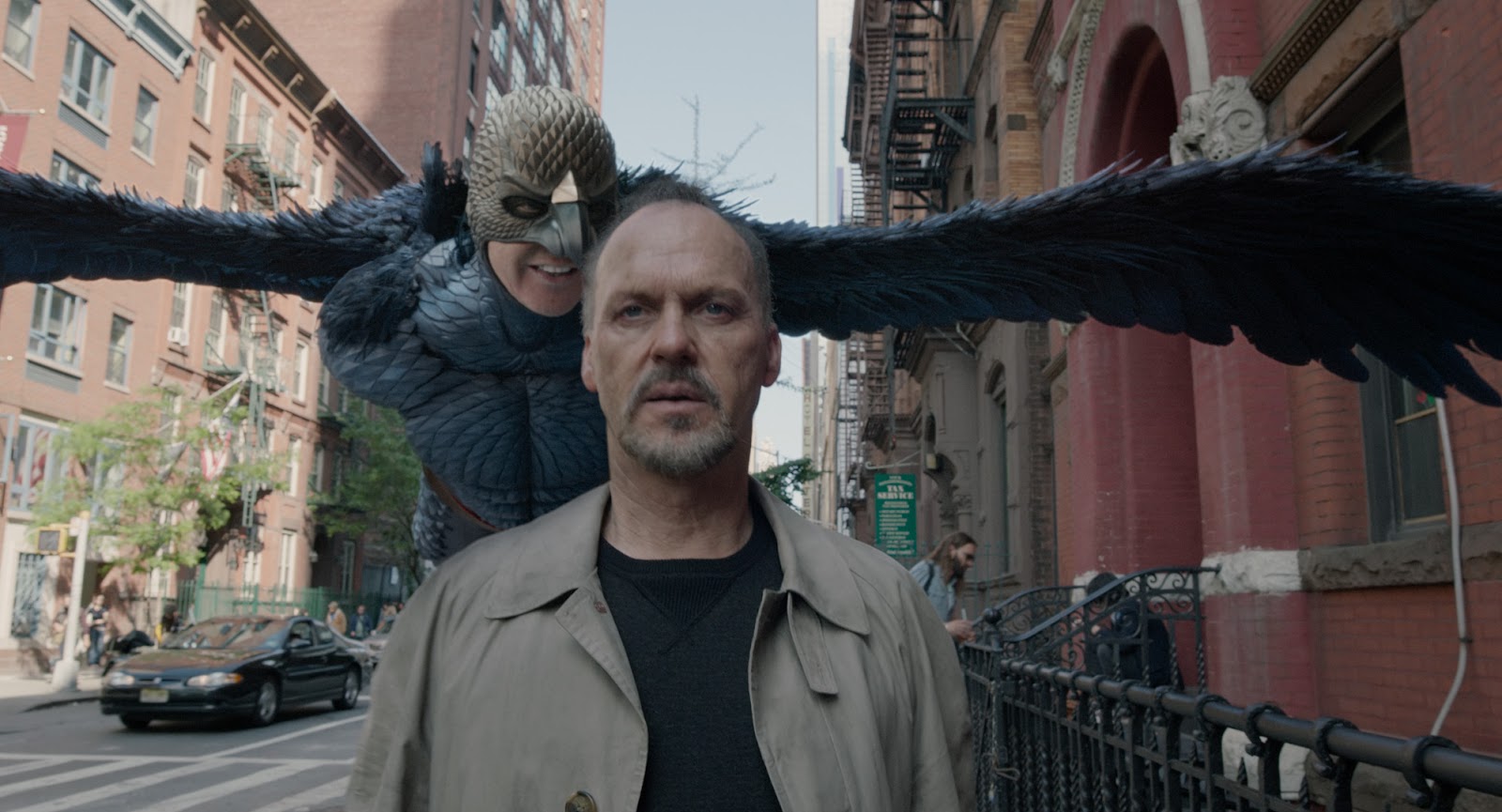
Riggan Thomson (a career revitalising role for Michael Keaton) is a faded movie star who hit celebrity 15 years ago with a series of films about a superhero, Birdman. Today he is trying to reclaim his artistic integrity by directing, adapting and starring in a Raymond Carver story on Broadway. At the same time he wants to rebuild a relationship with his daughter (Emma Stone), a recovering drug addict. The film covers the stumbling journey towards the opening night, with Thomson dealing with a demanding and difficult enfant terrible co-star (Ed Norton), a string of disasters and the haunting presence of his Birdman alter-ego, lambasting his choices and urging him to return to blockbusters.

I’m going to lay into this film a bit. It’s harsh, because it is really trying to do something different, for which it deserves credit. So I’ll start with the good stuff. The conceit of making the film look like it was done in one take is extraordinarily well done – the camera work is inventive and extraordinary. Emmanuel Lubezki is a visual genius and the technical accomplishment is astounding, a real tour-de-force. The acting is also very good. Michael Keaton embraces the best script he had in years, giving the part such commitment and emotion you overlook it’s a fairly simple part. Emma Stone is raw and tragic as his daughter. Ed Norton gives one of his finest performances as a dickish method actor (a neat self-parody) who in quieter conversations reveals real depth – and provides more insights into the passion for creativity than virtually anything else in the film.

Okay, that’s the really good stuff. It’s got some good lines as well, and its general style never stops being entertaining. But it’s also nowhere near as clever as it thinks it is. It wants to be a profound study of the nature of life and art, but it never really gets to grips with these ideas or drills down into them. For art, its contrasts are simplistic verging on hectoring. It never really gets to the heart of what acting is or means. For life it boils down into a straightforward “father wants to win back love of family” plot. The film presents all this as something deep and meaningful, and uses a lot of style and razamatazz – but the basic points remain simple or under-explored.

Part of my problem with the film is that is wears its pseudo-intelligence rather too heavily, and it ends up turning into smugness. Lubezki’s camera work is extraordinary but it also has a “look-at-me” quality that really begins to distract from the viewing of the film – even second time around the content of the film passes you by a bit. Tellingly, on the DVD Iñárritu talks about being drawn to the project because he wanted to make a film that felt like it was done in one take. Fine, but perhaps it would have been better if he had been a bit more interested in, say, the content of the film itself? Everything about the film-making demands you give it your attention, from the camerawork to the insistent drumming soundtrack. These elements are not bad in themselves – but it’s showing off rather than craft servicing the film.

The film’s themes themselves are, I think, also not as interesting or challenging as the film-makers believe them to be. The central idea of actors being shallow with chaotic home lives is so tired as to be a cliché: “Why don’t I have any self-respect?”/”You’re an actress, honey” summarises the sort of jokes you’ve seen before in other films.

I also felt the film’s attempts to analyse the nature of art and performance were formulaic and even rather empty. Lindsay Duncan plays a chilly theatre critic, determined to destroy the play, and Keaton delivers well Riggan’s rant to her on using labels and presenting opinions as facts. There isn’t any counterbalance to this offered, no exploration of, for example, criticism can service art or how opinion guides our reception of what we perceive as good art. A heavy handed fantasy sequence has his Birdman alter ego addressing the camera directly “Look at these people, at their eyes… they’re sparkling. They love this shit.” Yeah Alejandro we get it, we are shallow and deep down prefer action films than all this “ talky, depressing, philosophical bullshit” – hardly an original thought, and hardly framed originally though, is it? Do we really need to be whacked on the head with it? What point is this trying to make that we haven’t heard hundreds of times before?

But then is it any wonder that it wants to try and make points about cinema rather than theatre? For a film set exclusively in a theatre, I don’t really feel that its makers really understand the pressures or nature of theatre. Instead, it merely stands in here as a short hand for “cultural worthiness” – Riggan might as well be making an independent film or writing a novel, theatre is just a counterpoint used for blockbuster films (a genre Iñárritu clearly does understand and has opinions on). Nothing in the film really seems to capture a real sense of backstage in a theatre or what putting on a play is like, for example Peter Yates’ film of The Dresser. There is no sense of the collaborative nature of the medium or its immediacy as a performance art – it’s labelled as lazily as a vehicle for pretension and self loathing as criticism is for bitterness and failure.

The film also plays with the notion of Riggan’s (possibly) unhinged nature. Throughout the film we see him use superpowers – levitation, telekenesis, flight, control of fire. Along with his haunting by the Birdman character (done with a nice parody of the gravelly Christian Bale-Batman voice), it all ties into the possibility that Riggan is losing the ability to keep his real life and his career’s defining moment from merging into one another. The film’s ending builds on this, playfully suggesting some of what we have seen might have been real (though it also could be interpreted as a final dream sequence) – but I’m not sure what is gained by introducing these skills other than for visual flair. Riggan’s inner turmoil is never explored fully by the film and I don’t feel the film has the patience to explore his feelings or depression. As such, I find the open-ended ending doesn’t really add anything – it feels like it has been inserted to create debate, rather than acting as a culmination for your interpretation of the film, a la Inception say.

Phew. Birdman is by no means a bad film. It is a good one, but not a great one. It has much to admire, both on a technical and performance level, but (like Riggan) it is straining for an intellectual depth and thematic richness that simply isn’t there. It’s a showpiece, a brilliantly done one, really impressive to watch and it dazzles while it takes place – but there isn’t much to talk about afterwards. It is what it is. Compared to this year’s film-about-acting, La La Land, it’s both less charming and less profound, and has less to tell us about the compromises and struggles of real life. You can enjoy it, and it needs to be seen, but I can’t see it ageing well.

The Revenant (2015)

Leonardo DiCaprio conquers the wilderness

Director: Alejandro González Iñárritu

Cast: Leonardo DiCaprio (Hugh Glass), Tom Hardy (John Fitzgerald), Domhnall Gleeson (Andrew Henry), Will Poulter (Jim Bridger), Forrest Goodluck (Hawk), Duane Howard (Elk Dog), Arthur Redcloud (Hikuc), Melaw Nakehk’o (Powaqa), Grace Dove (Glass’s wife), Lukas Haas (Jones), Paul Anderson (Anderson)

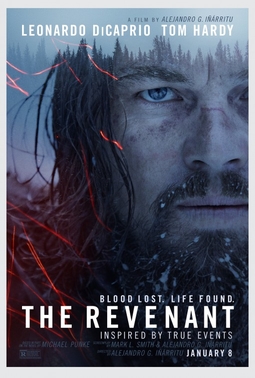
The Revenant may have been one of the hardest films ever made. Iñárritu’s bleak survivalist masterpiece may not be the easiest watch – and certainly not the most fun – but it is something really unique and interesting, an attempt to completely submerse the audience in one character’s experience, with little interest in narrative, context or characterisation.

In 1823, Hugh Glass (Leonardo DiCaprio) is mawled by a bear while leading a group of trappers away from an Indian ambush. Slowing the rest of the men down, he is left in the care of a small party led by Fitzgerald (Tom Hardy). Fitzgerald abandons Glass to save his own skin – murdering Glass’ young son, he leaves Glass for dead, alone in the frozen wilderness.

This is a true experience film, that’s probably easier to admire and respect than it is to love, or even enjoy. As a technical accomplishment it is outstanding: it looks absolutely fantastic. Apparently all lit by natural light, the film has a dusk/dawn beauty to it throughout its running time that perfectly captures the harshness of the setting. The camera also unstintingly follows the burdens of its central character, close and personal with the action, often using hand held and Steadicam to throw us into the action: the three major “action” sequences have an almost unbearable intensity to them.

Iñárritu’s direction is masterful – this is a splendidly directed piece of cinema, a bravura display of accomplishment, which has the confidence to largely not draw attention to itself. In fact, that’s a major strength of the film – its technical brilliance, its striking editing and wonderful photography all serve the purpose of bringing us closer to the experience of Glass, throwing us into the world. The opening attack of the Indians on the trapper probably deserves a host of Oscars by itself, a frighteningly vivid, desperate conflict that the film throws the viewer right into the middle of. Similarly the fateful bear attack has a brutal efficiency about it that makes the viewer feel every bite and blow on DiCaprio’s battered body.

It’s well known that Leonardo DiCaprio won the Oscar for his role in the film. Possibly this was as much (if not more) a testament to his fierce commitment to this role than the actual performance. There is certainly no debate about that. Never mind the freezing cold conditions, DiCaprio spends a third of the film bound to a filthy stretcher before being swept down rapids, eating a raw fish from a lake, and climbing naked inside the guts of a dead (hopefully prop) horse… Throughout all this, a combination of his isolation and wounds means he says very little, but only growls and groans. It’s not an acting performance in the sense of a character creation – you learn very little about Glass, and other than his strength of will and hunger for revenge, little of what motivates him – but it is a complete physical performance. And DiCaprio probably deserves some sort of reward for leaving nothing in the dressing room in playing it.

The “character” acting is left far more to Tom Hardy as the weak, arrogant, blindly wilful Fitzgerald. Hardy’s performance was a little overlooked here, but it’s as fiercely committed as DiCaprio’s and, in many ways, is a more complex and intriguing character – a man with the force of will to lead but without the courage and integrity that makes a true leader of men. Yes he mumbles the dialogue – at times I did find it a little unclear what he was saying – but it is a very accomplished exercise in character creation from slight material. The rest of the cast are all equally strong – Will Poulter is terrific as a naïve Bridger, as is Domhnall Gleeson as the rigid Captain.

But the film is possibly so triumphant in its mise en scene that it overpowers the themes and narrative of the film. It is surprisingly easy to forget that Glass is a man powered by revenge, so completely is the focus on his survival. His past grief over his deceased wife is murky and unclear on first watching, not enough focus or context given to it by Iñárritu’s storytelling. Many of the “narrative” encounters that Glass has over the film are not particularly new or unique. Iñárritu’s film here is not really about the story, but the telling of it. And in focusing on the detail of delivering the story, it loses the heart and investment that a real story needs. Glass’s journey is terrible, his suffering huge, his perseverance and will striking – but I can’t say that I felt particularly emotionally involved with his struggle or got a sense of his emotional pain.

As such, this increasingly becomes a film that is easier to respect and admire than it is to love. Despite DiCaprio’s commitment and bravery as an actor, Glass is largely an enigma and the film itself is an immersion in an environment rather than a piece of drama. As a viewing experience it grips during its duration, but I’d be fascinated to see when I watch it again, will this be enough to make it last? Will a familiarity with the story allow the themes it attempts to deal with – revenge, grief etc. etc. – come out more strongly? Either way, any film that requires a second viewing is one that deserves recommendation.