Tag: Alexander Payne

The Holdovers (2023)

The Holdovers (2023)

Alexander Payne’s hilarious Christmas-themed prep school drama is a heart-warming delight

Director: Alexander Payne

Cast: Paul Giamatti (Paul Hunham), Dominic Sessa (Angus Tully), Da’Vine Joy Randolph (Mary Lamb), Carrie Preston (Lydia Crane), Brady Hepner (Teddy Kountze), Ian Dolley (Alex Ollerman), Jim Kaplan (Ye-Joon Park), Michael Provost (Jason Smith), Andrew Garman (Dr Hardy Woodrup)
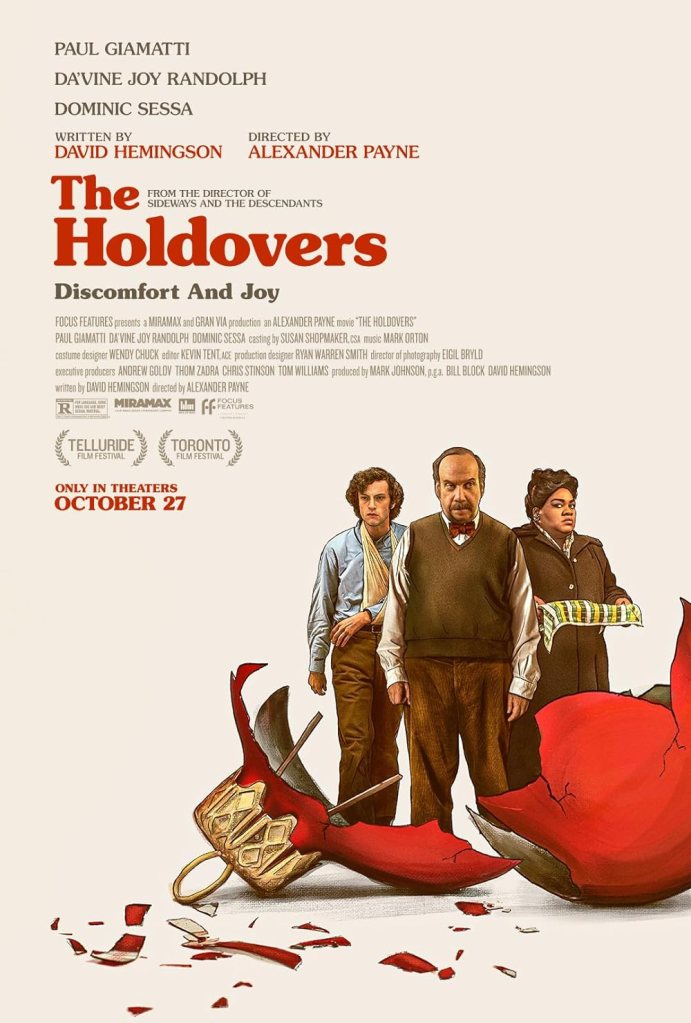
Christmas is a time when people come together – not always by choice. In 1971, Paul Hunham (Paul Giamatti) is a curmudgeonly classics teacher at Barton Academy, a New England boarding school for the wealthy which he once attended himself on a scholarship. He’s despised by teachers and students alike for his waspish wit, brutal marking and abrasive personality. As a punishment for refusing to give a donor’s son the grade needed for Princeton, Hunham must spend Christmas with “the Holdovers”, the students whose families cannot take them for Christmas. Principal among these is Angus Tully (Dominic Sessa), while Mary (Da’Vine Joy Randolph) the campus cook whose son (a former scholarship student at the school) was killed in Vietnam also remains on site. These three difficult, damaged people surprise themselves and each other as time together thaws each of them.

I found this film an absolute delight, funny, heartwarming and rather moving, a treat for any time of the year. Shot and edited with a deceptive simplicity, it’s only when you think back that you realise every scene was perfectly formed, every beat wonderfully timed and not a frame was wasted. This is serene film-making that never draws attention to itself. Payne textures the film like a missing 70s auteur piece – like other parts of his work there are strong elements of Hal Ashby, not least The Last Detail – and his measured, patient staging makes the moments of waspish or foul-mouthed humour land with as much impact as quiet moments of raw pain.

What’s really striking about The Holdovers is the warmth and regard it has for its three characters. Lesser films would set them up as standard tropes: people whose edges would be worn off due to the magic of reaching out to others. What The Holdovers does really well is establish from the start that, depressed and damaged as they are, they are all at heart kind, decent people. Paul’s hostility to his students stems from disgust at their entitlement – we’re completely with him when he hits the roof at the contemptuous “get over it” attitude one student shows to the grieving Mary. Mary’s motherly instincts express themselves in myriad ways. And Angus’ sardonic, smart-aleck waspishness doesn’t stop him comforting a vulnerable younger student.

To make this work as well it does, the acting is key and in its principals The Holdovers is blessed. Paul Giamatti is superb as the prickly Paul, who at first even we can find challenging. Like a bullying Mr Chips, Paul sets tests for Christmas, orders the holdovers to exercise and study during vacation and delights in insulting his students. But Giamatti slowly shows this is a shield for a man disappointed with life, who feels its injustice and imbalance very keenly and decides it’s best to attack life head on.

Paul is a man who really, really cares – so much so, that it’s easier to never allow himself to get close to anyone. Giamatti balances this heartfelt humanity with perfectly pitched comedy. Paul’s acidic put-downs, layered with dense classical references, are frequently hilarious but it’s also rather touching to see him trying to use the same references to try and spark small-talk with strangers (unfortunately the etymological origins of Santa Claus in Ancient Greece leave his audience baffled.). You believe him when he talks about finding the world a bitter and complicated place just as you can understand why he feels he has to respond in kind.

You can also understand why he starts to see the same traits in Angus Tully. Played with a wonderful naturalness by Dominic Sessa (in his film debut), Angus also uses humour and intelligence as a shield. Both he and Paul are sharply intelligent (Paul even grades Angus a B!), disgusted by the casual superiority of Angus’ classmates (in particular the awful – and surely not accidentally named – Kountze) and turn out to be all-but orphans struggling with the same depression. What’s delightful about Sessa’s performance though is he manages to show Angus is still just a kid – he can be vulnerable, moody but also innocent: he’s breathlessly excited when flirting with a girl at a party and bounds off to pack his bags with a whoop when Paul agrees to take him on a “field trip” to Boston.

Angus and Paul are surprising kindred spirits. They both stretch the “Barton men do not lie” mantra to the limit in a series of minor crises, from a hospital visit to a prevented barroom brawl to a meeting with Paul’s puffed up former Princeton schoolmate. The Holdovers also, refreshingly, avoids creating cheap melodrama between them. Promises that certain facts will remain entre nous are loyally kept, making the film’s close (with developments we could have an anticipated at the start) feel true.
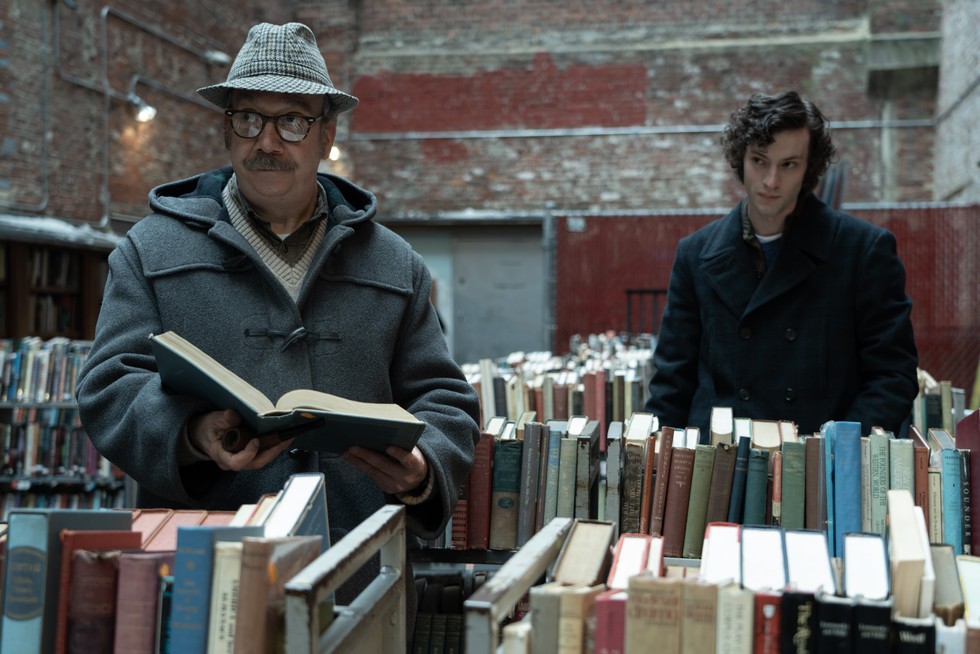
The bridge these two meet across is Da’Vine Joy Randolph’s wonderfully warm yet brittle performance as a loving woman lost in grief. Mary had clearly focused every hour on her son since his birth, his death leaving her bereft. Around her house, his possessions are stored like mini-shrines. Mary keeps up her professionalism while screaming in agony on the inside, but she’s still determined to see the best in people. All three actors are astonishingly good.

The Holdovers sparks these actors off each other in a series of scenes that are, in turn, hilarious, surprising and then, from nowhere, deeply moving. It’s a lovingly optimistic film at heart. Except for Kountze and the headmaster, every character is deep-down decent (the holdover who spontaneously – and excitedly – invites his fellow holdovers to a skiing holiday is adorable). It’s a film that finds this good in people without being cloying, possibly because the characters puncture any sentimentality with a well-timed, foul-mouthed quip. It also swerves away from predictable tropes (despite Payne cheekily teasing more than a few) to create a sense of a story that feels true.

The Holdovers is also rare in American films for taking class as a strong theme. Barton is a sort of finishing school for the rich, where the size of the library a benefactor buys is more important than the academic skill of his son. Paul is, rightly, appalled by the casual assumption of superiority of many of the students, and their smug obliviousness to their privilege. Mary’s son, due to not being able to afford college, was condemned to enlistment in Vietnam in the hope of a GI bill education. Paul’s past misfortunes are steeped in class injustice and Payne frequently stresses the plush comfort of the school compared to the working-class town it sits inside. There is something quite British about this sharp-eyed look at a “classless society”.

The Holdovers is an intelligent but also magnificently heart-warming film with just the right touch of lemony bittersweetness. With three gorgeous performances, Payne’s film superbly shows how the defences we use to protect ourselves can hurt us as much as those around us. Avoiding sentimentality, it concentrates on making us care deeply for its three damaged souls as they stumble towards understanding. It does this with sensitivity, empathy and (perhaps most importantly) a lot of humour. The Holdovers is a small-scale triumph, the sort of film I can imagine watching again and again and always bringing a small tear to the eye.
Nebraska (2013)

Bruce Dern excels in Alexander Payne’s masterful Nebraska

Director: Alexander Payne

Cast: Bruce Dern (Woody Grant), Will Forte (David Grant), June Squibb (Kate Grant), Bob Odenkirk (Ross Grant), Stacy Keach (Ed Pegram), Mary Louise Wilson (Aunt Martha), Angela McEwan (Peg Nagy), Rance Howard (Uncle Ray), Devin Ratray (Cole), Tim Driscoll (Bart)

Woody Grant (Bruce Dern) is an ageing alcoholic on the edge of senility. Receiving a circular from a magazine company, he becomes convinced he has won a million-dollar sweepstake – despite his family telling him he definitely hasn’t. Eventually, son David (Will Forte) agrees to drive him to Lincoln, Nebraska, to ‘claim’ the prize. Along the way, they visit Woody’s family in Hawthorne, Nebraska – and the whole town swallows whole the idea that Woody has won the sweepstakes. Despite the best efforts of David, his mother Kate (June Squibb) and brother Ross (Bob Odenkirk), both family members and townsfolk come forward with claims for this fictional money. All this while the family themselves come to understanding about each other and their past.

Alexander Payne’s Nebraska is gently paced, meditative, but has lasting impact. Shot in a gorgeous black-and-white, this is a road movie, an odd buddy film, a family drama and a comedy of misunderstandings. All this comes together, in a way perhaps only Payne could do it, into something that at first seems like a bitter-sweet look at a dysfunctional family, but slowly reveals itself into something far more heartfelt than you expect. Nebraska carefully builds a portrait of a family that feuds, but is fundamentally loyal, even while carrying private resentments.

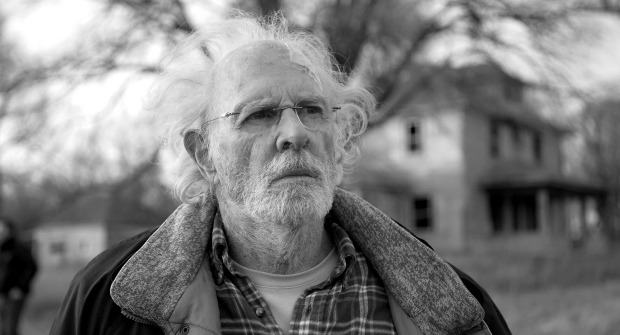
It all revolves around Woody himself, who at first seems to be the typical bad Dad: distant from his sons, dismissive of his wife, a history of drinking. His marriage to Kate seems based more on longevity rather than any love. Approaching senility has only accentuated, it seems, his stubbornness and self-obsession. He’s crochety and fixated on his own needs. But, despite all this – and this is a huge credit to Dern’s sympathetic performance – there is a gentleness to him. For all his negatives, he’s vulnerable and even naïve. He assumes people are telling him the truth. Later Kate will angrily denounce his grasping family, has Woody never said ‘no’ to anything he was asked to for. And you can believe it. He is a character who we see in more and more of a human light.

It comes across in the relationship with David. In an equally beautifully judged performance by Will Forte, David’s motivations for this road journey change. At first it seems an attempt to end an idee fixee, but it becomes more and more about spending time with a man he realises he loves more than he thought. Perhaps that’s because Forte’s sad-sack gentleness has more of an echo of the inner meekness of Dern’s Woody. David has more than a few similarities to Woody – a disappointing career, a failed relationship (unlike Woody’s generation, separation is a lot more feasible), a sense that his life has been a disappointment. But Payne’s film flourishes, because it becomes about David’s discovery of a kindred with his father he hasn’t acknowledged for years.

A lot of that comes from seeing the world his father grew up. A small American town, with more than a touch of The Last Picture Show, where everyone seems either stuck-in-a-rut or happy to drift. Everyone knows everyone, and there are no entertainments except feuds and sharing every piece of gossip. But, above that, David also discovers more about his father’s background: his hopes and dreams, his acts of kindness but also his acts of selfishness. His awkward relationship with his family, and the reasons behind his dysfunctional but strangely contented relationship with his wife.

All this comes together in that very Payne-ish way that is both heart-warming, slightly sentimental but genuinely moving. Above all it works, because everyone one in it feels very relatable and true. David is a highly understandable guy, a quiet fellow who hasn’t quite cracked how life works, but wants to rekindle a relationship with his father. Woody wants to cling to anything that might help him feel he has control over his own life. The saga of the fictional money starts as an item pushing the two men apart, but actually draws them closer as others in the town seek to take advantage (most nastily, the excellent Stacy Keach, claiming to be a former business partner).

That’s what helps make, what could have been a comedy about a clueless Quixote and his reluctant Sancha Panza, into something really moving. Payne may tease Woody – and even allow him to say some quite unpleasant things (his indifference as a young man to having children is a tough thing for any father to say to his son) – but he never makes him a joke. He’s just a man who seems to be looking back at his life, not quite sure how he got there. With David as an audience surrogate, wondering the same thing in turn – and half wondering whether he is going the same way.

And, of course, the film is funny. Woody and David make a wonderful flying trip to Mt Rushmore (“It looks unfinished…Lincoln hasn’t even got an ear” is Woody’s summary of it). June Squibb is very funny as David’s surprisingly foul-mouthed mother, for whom a road trip is a wonderful chance to remember all the conquests she might have made back in the day. David’s constant pleas for Woody to not mention his “win” – and the town’s total buying of this urban rumour – is very well done.

But it mixes with genuinely moving moments. Squibb’s Kate may be frustrated and fed-up with Woody, but she will defend him to the end and tenderly kisses his forehead while he sleeps. It mixes with genuine touches of regret: the extended Grant family sit and watch football together, mutely starring at the television, barely communicating. This isn’t nostalgic, but it is faintly sad about how life so quickly life can trap us into familiar patterns.

And the performances are of course sensational. Dern is incredibly heartfelt, communicating huge amounts of little dialogue and watery eyes. Fonte is superb as a man who believes he has had enough of his father, only to have his perceptions change. Squibb is both funny and heart-breaking, Odenkirk exasperated but tender, Keach a bully scared of his own empty life. It’s one of Payne’s signature works, a gentle character study that starts giving you one perception and develops into giving you a very different one. It’s one of his finest films.

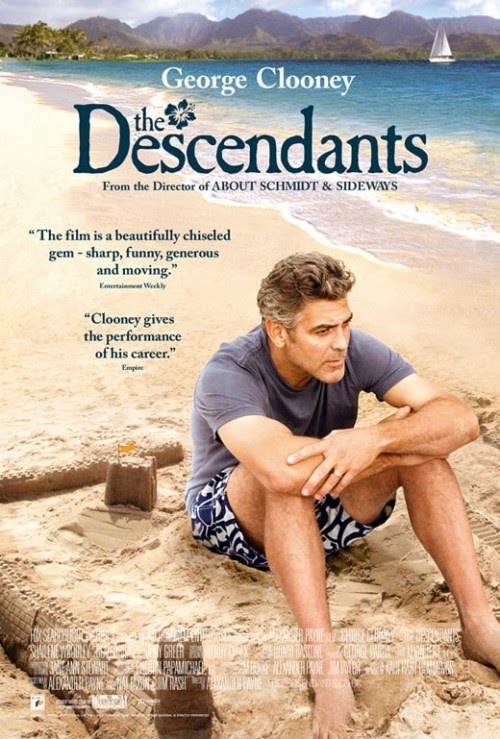
The Descendants (2011)

George Clooney is a family man dealing with difficulty from The Descendants

Director: Alexander Payne

Cast: George Clooney (Matt King), Shailene Woodley (Alex King), Amara Miller (Scottie King), Nick Krause (Sid), Beau Bridges (Hugh), Judy Greer (Julie Speer), Matthew Lillard (Brian Speer), Robert Forster (Scott), Patricia Hastie (Elizabeth King)

Anyone expecting a straight comedy hasn’t been familiar enough with Alexander Payne’s career. Payne’s movies are triumphant, slightly quirky, explorations of crisis in the lives and emotions of middle-aged, middle-class men. Few directors do it as well, bringing both a lightness of touch and a profound understanding of the tragedy that can underpin ordinary lives. He has an astute understanding of the pain of opportunities lost. And The Descendants is full of these, just as it is full of the hope you can gain from seizing new opportunities in the future.

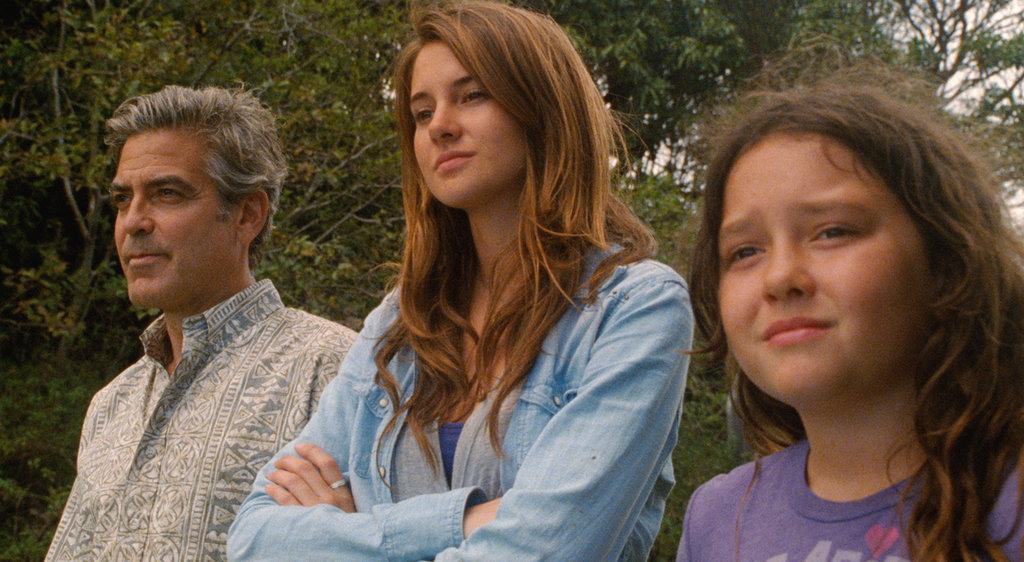
Matt King (George Clooney) is a Honolulu attorney who is the last trustee representative in his vast family for a site of 25,000 pristine acres on Kauai. With the trust due to end, Matt is under pressure from his family to sell the land for hundreds of millions and gain them all their financial security. In the middle of this, his wife suffers a boat accident that leaves her in an unrecoverable coma. Matt has to rebuild the relationship with his two daughters Alex (Shailene Woodley) and Scottie (Amara Miller) as well as deal with the reveal this his wife was planning to leave him for her lover, a married estate agent Brian Speer (Matthew Lillard).

Payne’s film is heartfelt, low-key and a marvellous showcase for George Clooney who has probably never been better as the grieving and shocked Matt, struggling to come to terms with revelations about his own life that come completely out of the blue. In particular, his own realisation that he has left far too much of his family life to his wife, and his wife has in any case a less than perfect relationship with their two troubled children. Alex (Shailene Woodley) has a history of substance abuse and hell-raising while her sister Scottie (Amara Miller) is using bullying as a way of acting out. King, its clear, has let his connection with his family drift away with his consumption in his work, a character flaw that leaves him with a serious of painful revelations about his own failures.

These revelations are expertly acted by Clooney, who gives the part a rawness and edge beneath his natural charm that becomes deeply involving. He makes Matt both desperate, bewildered and confused as well as kind, decent and forgiving. Payne’s films never present easy solutions to problems, and frequently hold up their leading characters as being the root of their own troubles. It’s the case here as well, as King must learn to realise that many of the problems he is discovering in his family life come out from his own mistakes and lack of focus. How should he respond to his discovery of his wife’s infidelity? How should he decide to react when he discovers his wife’s lover had his own family? 

It’s never the easy choice, and it’s never a clean and easy solution that wraps everything up neatly. The problems we encounter will eventually require us to make intelligent, emotional decisions and accept there are no clean answers. When we meet Brian Speer, he’s not a bad guy just a bit weak. It’s the same throughout. Every character has depth and hinterland. Robert Forster as Matt’s father-in-law may seem foreboding and harsh – but then he is perhaps right to blame Matt for his daughter’s unhappiness, even while he never holds it too harshly against him. Alex’s spaced out boyfriend Sid (Nick Krause) suddenly surprises Matt with his emotional insight into family dynamics.

And of course, his daughters who seem tearaways are in fact far more mature and supportive than might have been expected. Shailene Woodley is excellent as Alex, a young woman who doesn’t blame but demands to be part of solutions, and supports her father to make the tough calls. And the moral problems keep coming, mixed with surrealist comic touches. It’s the sort of film where Matt can make a shocking realisation about his wife, and then return to his table in his restaurant to be assailed by a garish traditional music band.

Despite all this Payne’s film captures a sense of affection and warmth without succumbing to sentimentality or easy solutions. The sort of satisfying outbursts of pain and cathartic anger are largely avoided for far more mature and realistic feelings of joint responsibility for problems and an acceptance that what our lives become are what we make of them as well as other people. It’s a sort of complex avoidance of black-and-white solutions that help to make the film feel truly real and grounded. While not many of us need to worry about the pressures of making decisions that will make us millionaires, all of us have had to deal with our own mistakes leading to others making mistakes and the emotional fallout that this can bring. 

In the centre of Payne’s emotionally intelligent film are these excellent performances, with George Clooney hugely unlucky to miss out on an Oscar for his emotionally intelligent and rich performance here. Payne’s film takes the male mid-life and family crisis and subtly analyses from a host of positions and angles, not just the man itself. We can feel sorry for a bloke who has suffered blows but also see his own decisions have contributed to his position. It makes for a delightful and heartfelt film, which is beautifully made by Payne and superb showcase for intelligent, grown up film making.

About Schmidt (2002)

Jack Nicholson is superb as beaten down Warren Schmidt in About Schmidt

Director: Alexander Payne

Cast: Jack Nicholson (Warren R Schmidt), Kathy Bates (Roberta Hertzel), Hope Davis (Jeannie Schmidt), Dermot Mulroney (Randall Hertzel), June Squibb (Helen Schmidt), Howard Hesseman (Larry Hertzel), Len Cariou (Ray Nichols)

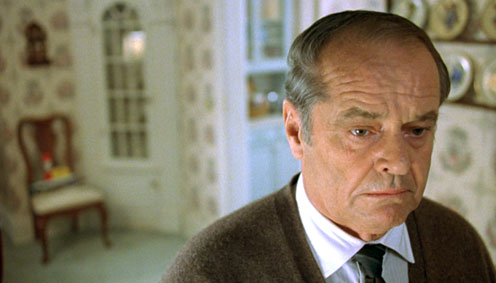
When you think about About Schmidt, it’s almost impossible not to think about Jack Nicholson. For so long Nicholson has been JACK, a personality so large, so present in the public conscious as the ultimate raging lothario, that most of his performances have been unable to escape it. He has blasted through so many films as a force of nature that what’s almost most surprising about About Schmidt is that Nicholson is so feeble, worn-out, uncharismatic and beaten down in the lead role. Did I also mention he was brilliant?

Nicholson is Warren R Schmidt, a recently retired actuary with an Insurance company in Omaha. As a young man he dreamed of a golden future, but his life has been one of crushing mundanity and boredom (albeit, I will say, clearly very well paid!). Schmidt has become a cowed, average, hollow man – the sort of man who urinates sitting down because his wife insists he does so and whose idea of defiance is to pop out for a milkshake. After his wife (June Squibb) suddenly dies, he is forced to deal with the fact that he is actually largely estranged from his idealised daughter Jeannie (Hope Davis) and that he despises her decent-but-no-hoper fiancée Randall (Dermot Mulroney). Can he make her abandon the wedding?

Alexander Payne has excelled in this style of film: a slightly off-centre social comedy with a mix of a lemony sharpness, satirical wit and genuine warmth for its characters. He perfectly captures the hopes and dreams of small-town America and the trap of mediocrity and disappointment that these sort of suburban, unremarkable lives can have. About Schmidt does this brilliantly, by counterpoising the Schmidt’s feelings of depression and being trapped with the clearly empty dreams of his daughter’s would-be husband. Not to mention taking shots at the overbearing try-too-hard irritability of Randall’s bohemian family (who seem to celebrate the very failures Warren believes his life has been made of).

Payne works in perfect synchronicity with Nicholson, keeping all the actor’s OTT gestures and mannerisms well in check and pushing him to create a quiet, timid, worn-out man who is beginning to reflect (with some bitterness) on what his life has been and been to suspect (with some dread) what it might be for his daughter. Nicholson’s comic timing and his sense of empathetic sadness are both absolutely perfect. The film uses a brilliant device to let us hear Schmidt’s inner monologue via his writing a series of letters to the African child Ndugo he is sponsoring (hilarious in that he unleashes on this no doubt uncomprehending young boy a series of bitter, reflective and sad cries from the heart).

The film is about the disappointments of life, but each point is told with a dark or wry humour. From Schmidt’s retirement party (an event that everyone seems to attend only out of duty) to the death of his wife (who collapses mid hoovering) there is a dark sense of humour throughout. Nicholson plays these moments with a world-weary sadness that keeps the character grounded. At other moments, he can let rip with a more overt comic touch as he struggles with the distaste and alarm he is far too polite to show as he stays with Randall’s bohemian family (Kathy Bates is very good as the matriarch of this clan, a woman whose laissez-faire attitude is a front for her tyranny).

The film’s plot is brilliantly simple, and is fundamentally about how far Schmidt can go in re-evaluating and re-claiming his life, giving his final years (with his actuary head on he believes he has between 10-12 years left) some sense of individuality. These attempts rotate from sad starry-night imagined conversations with his late wife to awkwardly comedic encounters with a nice couple at a camping site, whose signals he completely misreads. Schmidt is angry – and those moments when it bursts out to Ndugo are hilarious – but as much with himself as anyone else. After all, who do we have to blame more than ourselves? 

Schmidt isn’t even a bad guy. He’s spot on about Randall, a decent enough guy but a hopeless businessman and incompetent chancer. A large chunk of the film’s final act hinges on us knowing that Schmidt is right, knowing that is daughter is making a huge mistake, but also knowing that we’d be as powerless about it as Schmidt is. Because the film, in its darkly comic way, is saying that nearly all of us are on this treadmill – and that nearly all of us can see that others are as well – but we can’t do anything about it or help them get off. We can only watch the gears shifting on.

It’s a brilliant, thought-provoking film, very funny in places – and Jack Nicholson gets to remind us all that he a marvellous, clever and subtle actor, in one of his finest performances since the 1970s. Nicholson’s control and likeability are vital to making Schmidt someone whom we warm to and pity, even while he frustrates. And Payne’s wonderfully directed, empathetic story illustrates a life of tragedy without meaning and dreams, but never scoffs at those who lead them – instead it’s only wistfully sad for what might have been.

Election (1999)


Reese Witherspoon runs for office in high-school satire Election

Director: Alexander Payne

Cast: Matthew Broderick (Jim McAllister), Reese Witherspoon (Tracy Flick), Chris Klein (Paul Metzler), Jessica Campbell (Tammy Metzler), Phil Reeves (Principal Walt Hendricks), Molly Hagen (Diane McAllister), Colleen Camp (Judith Flick), Delaney Driscoll (Linda Novotny), Mark Harelik (Dave Novotny)

High school can be a great setting for films that want to comment on our adult world, because they are such exact microcosms for society. Few films get this idea as effectively as Alexander Payne’s simply superb Election.

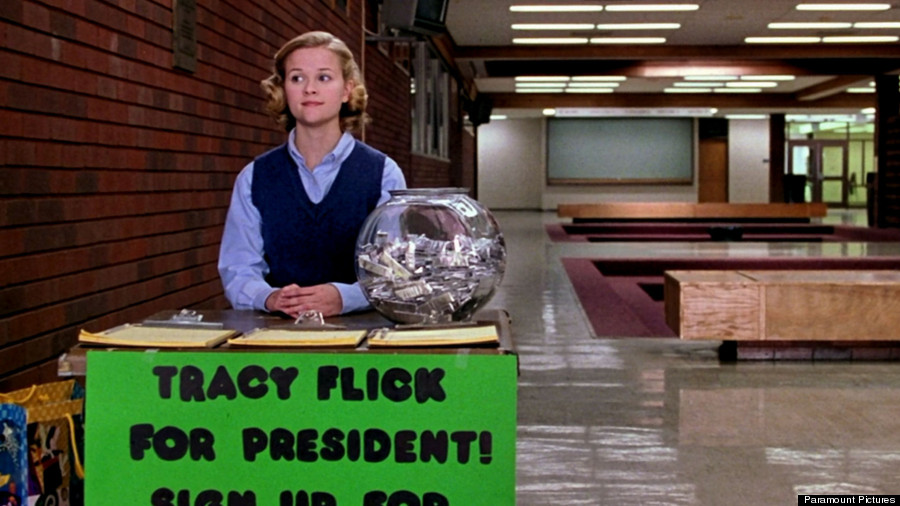
In an Illinois high school, Jim McAllister (Matthew Broderick) is a civics teacher who loves his job but is increasingly annoyed by high-achieving student Tracy Flick (Reese Witherspoon), who he also unconsciously blames for the dismissal of his friend Dave for having an affair with her. Tracy is a ruthless careerist, the sort of girl whose hand is always first up in class, and she wants more than anything to win the election to school president. Feeling it his duty to stop Tracy, McAllister persuades football star Paul Metzler (Chris Klein) to run against her – and slowly unleashes a hurricane of ruthless campaigning and dirty tricks that leads to disaster.

This sharp and brilliant satirical comedy avoids jumping to any easy conclusions: instead it ruthlessly skewers everyone involved. Other films would make McAllister a crushed victim, broken down by events and Tracy’s unstoppable force of will. Instead, Payne turns him into an increasingly self-deluding whiner whose impending mid-life crisis becomes more and more evident. There is a particularly sly decision to cast Broderick as this weak-willed, selfish, self-proclaimed victim. Who cannot think about Ferris Bueller now all grown up into a klutzy loser, ineptly trying to initiate an affair with his wife’s best friend and mentally super-imposing Tracy’s head onto his wife’s body during a routine pregnancy-focused coupling?

In fact, watching the film it’s fascinating to see how much it charts McAllister’s disintegration into bitterness and self-justification. By any measureable standard, everything he does is fairly indefensible, while his annoyance with Tracy is rooted in his barely self-acknowledged sexual fascination with her. By the end of the film, as his cheery voiceover recounts his failures and personal and professional disasters with a self-deceiving optimism, you can’t help but begin to wonder how much this manic cheerfulness infected everything McAllister has told us from the start.

It’s things like this that make the film so much more than a straight political satire. Tracy Flick may be a ruthlessly ambitious young woman, who believes she has a nearly divine right to win – but she’s also the child of an equally ruthless woman (using Tracy to relive her own life), who has been sexually exploited by one of her teachers, whose smiles and enforced cheerfulness and drive hide a volcanic anger and insecurity. She could have been simply a smiling force of political ambition – but instead she feels like a real person diverting her own problems into a domineering careerism.

All of which adds a rich hinterland to the film and helps make it even funnier than it could have been. This might be the best political satire ever made. It’s certainly one of the funniest. There are zinger lines every few minutes. The satire is pin-sharp. Tracy is the qualified political hack that the normal people can’t relate to. Paul the Bush-like jock who can speak the language of the common man but manifestly lacks all qualifications. Tammy represents the anarchic frustration and alienation so many feel for the political process. The entire election is a shrewd, subtle skewering of every campaign in politics you’ve ever seen. Even the jobsworth geeks who run these things get it in the neck – “Larry, we’re not electing the fucking Pope” McAllister snaps (at the end of his tether) as he has the ludicrously elaborate election rules explained to him again.

But the film doesn’t forget the humanity: McAllister is a deluded man, but he feels real. He’s so inept at everything from seduction to deception it’s hard not to feel a little sorry for him. (As if to visualise his uselessness, he spends the last third of the film mostly with a massive swollen eye from a bee sting). Tracy has her own problems. Paul, far from being a heartless jock, is the most sensitive and caring person in the film (even if he is as dim as a failing lightbulb). Tammy’s a touching combination of good natured cynicism and obsessive, vengeful stalker.

Of course, it also helps that the acting is outstanding, the comic timing (both in acting and direction) perfect. Reese Witherspoon might never have been better than as the ruthless Tracy, a hurricane of hilarious repeated concepts from political biographies. Chris Klein is very sweet as Paul, a guy it’s impossible not to like. Jessica Campbell is perfect. Broderick holds the entire film together with a superb schleppy moral weakness. Payne’s direction brings all these elements together brilliantly – and has a way with the freeze frame and quick edit that provides a series of striking visual gags.

Election is a classic film – a brilliant satire on politics and elections, but also human nature itself. The characters have depth and reality that makes the jokes hit home with force. The use of voiceover narration from all the main players helps bring us even closer to them, and helps expose their inner personalities even more. I think this might be the best film Payne has made – Sideways and The Descendantsreceive the greater plaudits and attention, but this is his sharpest, wittiest film, and the one that is perhaps the most rewarding of repeat viewing. It’s simply a brilliant, small scale classic.