Tag: Alexandra Maria Lara

Downfall (2004)

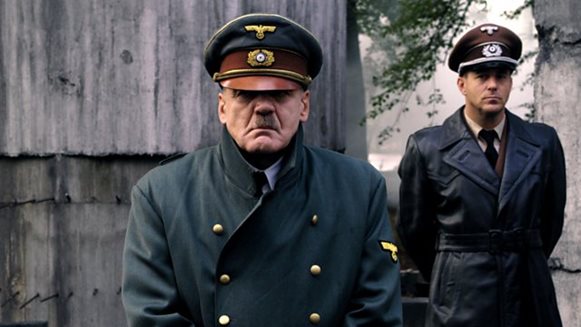
Bruno Ganz excels as Adolf Hitler in Downfall

Director: Oliver Hirschbiegel

Cast: Bruno Ganz (Adolf Hitler), Alexandra Maria Lara (Traudl Junge), Ulrich Matthes (Joseph Goebbels), Juliane Kohler (Eva Braun), Corinna Harfouch (Magda Goebbels), Heino Ferch (Albert Speer), Christian Berkel (Professor Ernst-Gunther Schenck), Matthias Habich (Professor Werner Haase), Thomas Kretschmann (Hermann Fegelein), Michael Mendl (General Weidling), Andre Hennicke (General Mohnke), Ulrich Noethen (Heinrich Himmler), Birgit Minichmayr (Gerda Christian), Rolf Kanies (General Hans Krebs), Justus von Dohnanyi (General Burgdof)

Few people had such an impact on the 20th century than Adolf Hitler. Countless dictators unleashed genocide and war, but few on Hitler’s scale. His dark presence lingers like a cancer on German history, an existential guilt the country has spent generations trying to exorcise. Chronicling the final days of Hitler in his Berlin bunker, told with cinematic verve and documentary realism, Downfall was the first German film to directly tackle Hitler. Perhaps it needed a German film to present a Hitler who felt real rather than an under-the-bed monster – and was able to look into his darkness, and the horror of his world, in a way few films have ever done.

Downfall was controversial on release for ‘humanising’ Hitler. Certainly, the film shows a man capable of consideration and even moments of warmth. But it’s never in doubt a man can be kind to a secretary or affectionate to a dog and still be a sociopath who greets news of young soldiers dying with the words “that’s what young men are for”. Can still be so wickedly egotistical he decides the entire German population should join him in immolation while manipulating with quiet emotional pressure as many of his followers as possible to join him in suicide. Watching the film, you cannot escape Hitler’s monstrous destructiveness, his complete lack of empathy and his instinctive, brutality.

Much as we might not want to face it, Hitler was human: a ruthless, megalomaniac and genocidal one. Part of the fascination of the film is watching those closest to him – Eva Braun, his secretaries, his immediate staff – try to reconcile the kinder private man they know with the one they hear screaming for his Generals to be shot and ranting about Jews and his desire to annihilate entire populations. At one point Eva Braun tells Junge that when saying those things “he is being the Fuhrer” – as if Hitler and the Fuhrer are some hideous Jekyll/Hyde monster.

Downfall charts the final spiral of Hitler as he goes through the stages of grief at his impending defeat. Self-confidence turns into carpet-chewing anger, when reality becomes unavoidable. Grief mixes with fury as Hitler blames everyone – his Generals, his followers and finally the German people themselves – except himself. Never once does the film offer the slightest shred of sympathy for Hitler, this nightmare being all his own creation, consuming him just as it consumed tens of millions before.

As Hitler, Bruno Ganz is quite simply phenomenal. Studying for months film of Hitler, Ganz captures his physicality perfectly – adding Hitler’s likely (undiagnosed) Parkinson’s, a twitching hand he constantly hides behind his back like a nervous expression of his doubt. In private conversation, Ganz’s Hitler is polite and even a little warm, but never anything less than a monster of self-absorption. His favourite topic is himself, and his quiet expectation that everyone should join him in death is matched only by his cold dismissal of those who fail to live up to his twisted standards.

This is nothing to his furious outbursts at those perceived to have betrayed him. His spittle-fuelled rants perhaps only come close to the true carpet-chewing bawlings Hitler was apparently capable of, but they are tour-de-forces of relentless fury and self-pity. Ganz plays Hitler with empathy, but makes it very clear Hitler was incapable of such an emotion himself. The suffering of others is nothing to him. He sheds tears over the death of his dog and barely bats an eyelid at the deaths of thousands: instead they are a perverse monument to himself.

Nazi Germany is the country he created, and Downfall is exceptional in showing how the last days of the Reich were like the final hours of a cult. Few things display this better than the Goebbels themselves. Ulrich Matthes chilling Goebbels is so consumed with devotion for his leader, weeping when ordered to survive and continue the fight, that he cannot imagine living without him. Like Hitler, his fury is reserved for the German people – to him the German people chose their fate and cannot complain that their throats are now being cut.

This is matched by the devotion of his wife Magda, played with a chilling, twisted sadness by Corinna Harfouch, so devoted to Nazism and Hitler she decides (with the logic of a twisted fanatic) her children should die rather than live in a world without them. In a quietly devastating, almost impossible to watch, scene she feeds them ‘medicine’ (actually a sleeping agent) – her eldest daughter, sensing something is wrong, resists desperately before being force fed – then silently breaks a cyanide capsule in each of their mouths, with a kiss to each forehead. Everyone in the bunker knows this happening, but no one stops her. In this cultish world, where death is normalised and suicide expected, it’s only natural.
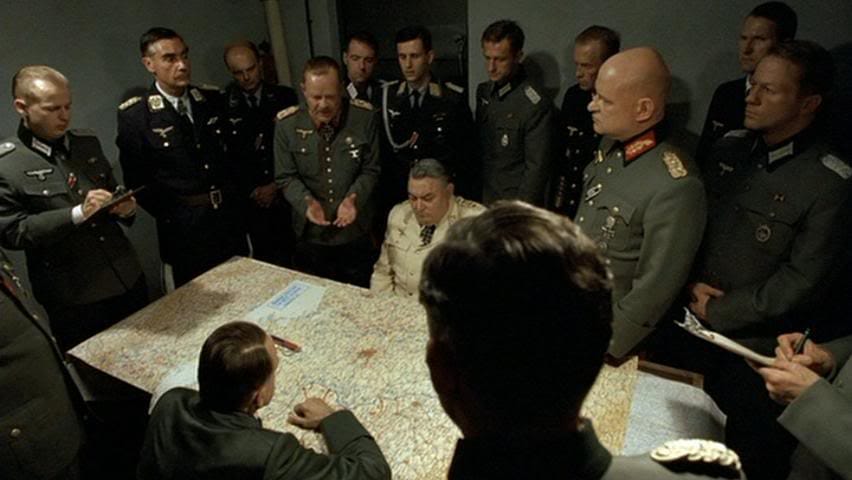
The second half of the film is a rash of suicides. A German doctor, his hands filthy with the euthanasia programme, detonates two grenades at a dinner, killing his whole family. The Goebbels shoot themselves and order their bodies cremated in a grim echo of Hitler’s own fate. As survivors plan a breakout, an officer calmly states he’s not leaving and shoots himself in the mouth – no one bats an eyelid. Hitler hands out cyanide capsules like candy, the unspoken expectation constant.

This callous brutality and nihilistic embracing of death is constant during the grim, pointless, desperate battle for the city. Indoctrinated children are press ganged into the front-lines and then choose suicide over surrender. Lynch mobs prowl the streets, executing anyone not seen to be fighting – mostly old men, disabled veterans and anyone not holding a gun. The film never suggests the German people are victims, but suggests the final target of the Nazis was Germany itself.

The film is a long spiral into an anti-chamber of hell. After the opening half hour, the Russian advance means the action retreats almost entirely underground into the bunker. In this subterranean world, the cast slowly thins out as people seize their chance to flee, leaving only the most deluded, hard-boiled and fanatical. Generals may protest Hitler’s denunciations of the ordinary soldiers, but will pull their guns on anyone who even suggests the idea of surrender.

In a country where Hitler has encouraged a denial of reality, the scheming and jockeying for position continues even in this madness. Even those who see the end is here are still deluded: Himmler firmly believes a brief chat with Eisenhower will be enough for the SS to be entrusted with maintaining the peace against Bolshevism. Only Speer (played perhaps with too much sympathy by Heino Ferch, in the film’s one mis-step) is clear eyed about what is happening.

Downfall is relentless and eye-opening in destruction of the final days of the Reich. Its reconstruction and research is faultless and acting breathtaking. Framing the device through the experiences of naïve secretary Traudl Junge (an excellent Alexandra Maria Lara), we get a sense of how the scales slowly and painfully fell from the eyes of the German people. It’s atmosphere of oppressive claustrophobia and bleakness is expertly done, with events swiftly and awfully spiralling down into one where death becomes an unremarkable inevitability. No one could come out of this either admiring Hitler or seeing anything in Nazism other than a twisted cult that consumed its followers with the same blood-curdling carelessness it did its millions of victims. Hitler may have been a human, but Downfall makes clear he was never humane.

The Reader (2008)

Kate Winslet and David Kross in the vomit-inducing The Reader

Director: Stephen Daldry

Cast: Kate Winslet (Hanna Schmitz), Ralph Fiennes (Michael Berg), David Kross (Younger Michael Berg), Bruno Ganz (Professor Rohl), Alexandra Maria Lara (Ilana Mather), Lena Olin (Rose Mather/Older Ilana Mather), Linda Bassett (Mrs Brenner)

In 1960s Germany, teenage Michael Berg (David Kross) falls in love with an older woman, Hanna Schmitz (Kate Winslet), a tram conductor who seduces him and asks him to read classic novels to her in between bouts of passionate love making. As an adult (Ralph Fiennes), Michael has never got over the effect the affair had on him. But that’s largely because, as a law student, he sat in on a trial where he discovered Hanna was a guard at Auschwitz, responsible for the gas chamber selections and later locking 300 Jewish women into a burning church.

Her co-defendants turn on Hanna – but Michael realises that Hanna is illiterate so cannot possibly be the author of the reports that her co-defendants says she wrote. Hanna is imprisoned – but years after the trial, Michael rekindles a distant contact with her, sending her recordings of books he has read, which she uses to teach herself to read. Will these embodiments of new and old Germany manage to come to terms with their shared past?

There is no way round this: The Reader is a truly dreadful film. It might be the worst film nominated for Best Picture this century (the backlash over its inclusion over The Dark Knight led to a radical change in nomination rules). It is sentimental, trite, insulting, empty, vainglorious awards-bait, shot with a heritage-stylishness. It utterly fails at almost every single thing it attempts to do: from coming-of-age drama, to questions of moral responsibility in a police state, to a country reconciling with its traumatic and criminal past. In fact, it fails so utterly and completely, you are more likely to be left open-mouthed at its crude tone-deafness than remotely moved by its emotional manipulation. It is a truly dreadful film.

Daldry’s highly average direction (Oscar-frigging-nominated!) is sickeningly twee, using a number of carefully staged moments to tweak heart-strings and point our sympathies the right way. It’s the sort of Holocaust film where the only direct engagement with the subject is a beautifully framed, poetically-scored, insultingly-genteel scene of the hero visiting Auschwitz and starring sadly at collections of shoes and the gas chambers. Presumably because, any shots of the actual Holocaust – or the crimes of Hanna, who happily confesses to selecting thousands of women and children for death – would end any chance of us feeling sorry for her.

Because this is indeed a film that feels it is challenging us to say “look again” – as if Daldry and screenwriter David Hare are sitting on our shoulder saying “Ah you think it’s all black-and-white, but see how things are more complex than that”. So we are shown a concentration camp worker whose defence really is that she was just following orders – and we are asked to sympathise! She only voluntarily signs up for the SS because, you know, it was a better job than the factories. In a crudely empty moment she asks the judges at her trial “what would you do?”. Daldry shoots like this as a “Gotcha” moment – we are clearly meant to come away from that moment feeling “ah yes, there but for the grace of God go all of us”.

Only that is, for want of a better word, bullshit. Turning your back on Jewish neighbours being taken away out of fear for your own safety would be one thing, but taking a job in a death camp, selecting people for death and then watching 300 people burn to death in front of you but doing nothing? That is quite another. And the film knows this deep down, which is why we never get a flashback, or a photo, or anything that might make us sit up and go, “hell I don’t care how much you were just a foot soldier, what you did was just wrong”. To really top it off, the film even makes it clear Hanna took this job freely (not under duress, or because she was poor and starving, or any other extenuating circumstance that might prompt complex questions about what “normal” people do under evil governments) – and she’s not sorry. Not even a little bit. Not ever at any point.

These muddied morals carry over to the vomit-inducing idea that we should feel sorry for Hanna because she is fascinated by literature but deeply ashamed of her illiteracy. So ashamed in fact that she would rather be seen as the ring-leader of a mass murder than illiterate. That very sentence alone should really give you an insight into her perverted psychology. And I love books, but I don’t think that would be much of a mitigating factor if I was also Jack the Ripper.

That’s not to mention that the film doesn’t even want to engage with the fact we are told Hanna selected sensitive, vulnerable children in the camp to read for her (and then had them killed) – and doesn’t draw a connecting line between that and her using the same tactics with Michael, seducing a vulnerable 15 year old child to control him so that he will read to her. Her behaviour is clearly not some secret shame, the product of an isolated set of circumstances that will never come again – it’s who she is, and she has made no effort to change it. Hanna is worse than a child abuser, she’s a sociopathic monster and the film’s attempt to paint her as something else is appalling.

I suppose it could have just about worked if it the film had managed to make some decent material out of its theme of Germany’s struggle with its history. But even that gets fudged. There is one decent scene, as Michael and his fellow students discuss morality with the professor (a cuddily Bruno Ganz), but other than that the idea gets lost in the cut. Instead it settles for “what would you do” confrontations and clumsy parallels between Michael’s distress about finding out the truth and his trauma and guilt leading to a struggle to emotionally connect with people.

But then he’s only matching the film which has no emotional understanding of people. It sees nothing wrong with what I am about to describe. After Hanna’s death, Michael follows the request of her will to take her life savings to the daughter of one of her victims. Not only is Michael emotionally illiterate enough to carry out this shockingly tone-deaf request, but (amazingly) the woman not only sees him in her home but keeps as a souvenir the tin Hanna kept her cash in and then puts the tin next to a her picture of her family murdered in the Holocaust. Even writing it I can hardly believe I saw it. It’s the film’s attempt to say “look there is hope” but not in any universe does any of this behaviour seem even remotely real.

The Reader instead wants to try and juggle a big theme (the Holocaust) with a cliched one (a coming-of-age for a young man) and throw in an airport-novel faux big theme (isn’t reading great!) into a syrupy, awards-winning piece of prestige cinema. It probably deserves some sort of award for getting everything about this catastrophically wrong. By the time Hanna climbs on a pile of books she has made to hang herself, you’ll be desperate to give her a shove.

Oh, Kate Winslet won an Oscar. She’s does her usual excellent job. But the film is utter dogshit.

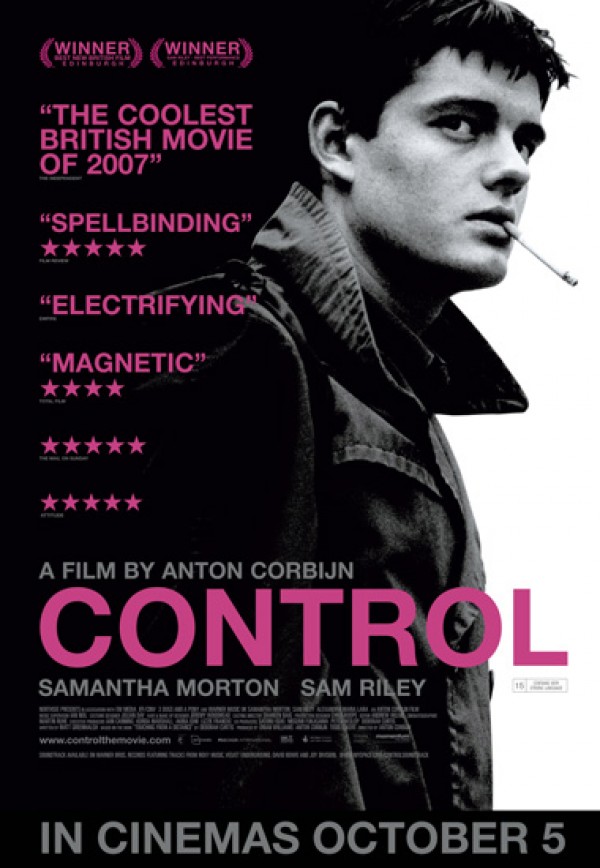
Control (2007)

Sam Riley excels in this heartbreak life story of Ian Curtis

Director: Anton Corbijn

Cast: Sam Riley (Ian Curtis), Samantha Morton (Deborah Curtis), Alexandra Maria Lara (Annik Honoré), Joe Anderson (Peter Hook), Toby Kebbell (Rob Gretton), Craig Parkinson (Tony Wilson), James Anthony Pearson (Bernard Sumner), Harry Treadaway (Stephen Morris), Andrew Sheridan (Terry Mason), Matthew McNulty (Nick Jackson)

Depression is no respecter of fame or success. You can have everything many people would give their right arm for, and still find the prospect of life overwhelming. Control is a heartfelt, deeply affecting film about Joy Division lead singer Ian Curtis, who committed suicide shortly before a career-changing tour of America. Anton Corbijn knew Curtis and the band personally, and his deep connection with this story is obvious in every frame of this beautifully shot film.

In 1975, fresh out of school, Ian Curtis (Sam Riley) marries Deborah Woodruff (Samantha Morton). Curtis is a would-be poet, but finds his interest piqued when he attends a gig by the Sex Pistols and quickly forms a band – Joy Division – with a group of friends. Powered by Curtis’ imaginative lyrics, the group starts to make a name for itself, taking on a manager Rob Gretton (Toby Kebbell) and winning the attention of the influential Tony Wilson (Craig Parkinson). However, all is not well with Curtis: beginning to suffer increasingly from epilepsy, Curtis is also falling in love with a young Belgian journalist Annik Honoré (Alexandra Maria Lara) while still in love with – although increasingly lacking in mutual understanding with – Deborah. These pressures slowly build up on Curtis.

Control is a film about a person’s longing to have security and a sense of mastery over their own life, but finding they lack both this and the emotional strength to deal with the consequences. Curtis is a man buffeted by competing pressures and desires, as well as a paralysing fear that epilepsy will eventually claim his life. He is frequently unable to relax, and tries his utmost to divorce himself from the reality of his situation by living as much as he can in the moment, ignoring until it is impossible the burdens of making choices about his life and relationships.

Living in the moment is what, for Curtis, makes it all possible. You can see it in reflection in his performances of Joy Division songs – the intense focus, mixed with the channelling of his own epileptic fits into a series of mesmeric on-stage dances, filled with wild and jerky movements. The entire film suggests much of Curtis’ output could be retrospectively seen as a cry for help, many of his lyrics about concerns that would eventually lead to him taking his own life. At one point, Curtis sings heartbreakingly of his isolation in a recording studio booth – with Corbijn cutting straight to the rest of the band and studio technicians talking and going about their business in the studio, oblivious to the underlying desperation that runs through it.

Because the film makes clear no one knew how to help Curtis or even how to identify his problem. To his manager and the band, its all part of the rough and tumble of rock ‘n’ roll. To his studio, it’s the artistic personality. Doctors seem to barely understand how to treat his epilepsy and miss all the signs of the personal stress it places on him. Neither his wife nor girlfriend can imagine that his guilt and self-loathing run as deep as they do. 

Corbijn’s beautifully evocative black and white photography adds hugely to this sense of dream-like non-reality around Curtis’ life, against the backdrop of some beautifully rendered Macclesfield locations. It helps wonderfully capture the sense of Curtis’ life somehow never coming fully into colour, as well as adding a deeply affecting air of melancholy over every frame. It’s also perfect for capturing the atmosphere of the 1970s clubs and bars that the band experienced.

The photography gives the film a feeling of the classic kitchen-sink dramas of the 1960s, and that is no bad thing, adding a certain depth to the tragedy of a working-class lad swept up by success and largely unable to cope with the burdens of expectation. Curtis is shown to be constantly overwhelmed by the pressure of live performance and the expectations of fans and viewers, yet also desperate to continue to have this channel to express himself.

Corbijn doesn’t give him a free pass though, and shows how he deliberately distanced himself from Deborah and their child. Often silent and disengaged, with a glazed look of a man who would rather be anywhere else than having to support a wife and child before he was 20, Curtis and Deborah’s marriage is one of affection but no shared interests of outlook. Deborah clearly provides Curtis with no kindred-spirit feeling, but he uses her as an emotional prop. Simultaneously he uses Annik for the same, while conducting an affair that clearly gives him a deep sense of shame, but finds impossible to resist. It’s living in the moment again: clearly, at every point, he would rather forget the other woman altogether, and is incapable of making the final life-altering decision needed.

This balance works so well because Sam Riley is astonishingly good as Curtis – real, pained, gentle, tender, selfish, with eyes that seem to have the life and will to go on drain out of them as the film goes on. Riley’s performance is pitch-perfect, and his empathetic brilliance for this man who did not know how to express his own feelings clearly is deeply moving. Over the film you see a sensitive man slowly fall apart in self-loathing, feeling trapped in his own life and unable to break free.

The film is stuffed with excellent performances, with Samantha Morton very good as Curtis’ deeply caring wife who unwittingly smothers him with demands – demands that are more than fair considering she is left frequently to hold the baby while her husband disappears for days on end. Alexandra Maria Lara has less to work with, but does a lot with Annik. Toby Kebbell provides some much needed lightness as Joy Divison’s manager, a blistering, foul-mouthed force of nature who can’t even begin to entertain the idea that his lead singer might consider ending his life.

The final sequence of the film, as Curtis (off camera) decides to follow-through on committing suicide (his second attempt to do so, another clear sign of those around him being totally unable to respond to the signals) is unbearably sad, ending with a beautifully evocative, tear-inducing shot of the crematorium releasing its ash – the last vestige of this lost life – into the sky to drift and disperse freely in a way Curtis never could. Control is a modern classic of British realism and possibly one of the finest music biopics ever made. Corbijn has the soul and eye of an artist, and brings all this to bear on a deeply heartfelt and moving film.

Suite Française (2015)

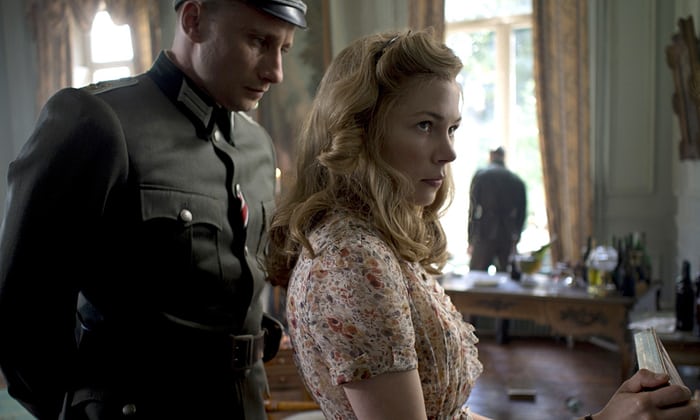
Matthias Schoenaerts and Michelle Williams love across the divide in this disappointing French Occupation epic

Director: Saul Dibb

Cast: Michelle Williams (Lucile Angellier), Kristin Scott Thomas (Madame Angellier), Matthias Schoenaerts (Oberleutnant Bruno van Falk), Sam Riley (Benoit), Ruth Wilson (Madeleine), Margot Robbie (Celine), Lambert Wilson (Viscount de Montmort), Harriet Walter (Viscountess de Montmort), Clare Holman (Marthe), Alexandra Maria Lara (Leah), Tom Schilling (Oberleutnant Kurt Bonnet), Eric Godon (Monsieur Joseph), Deborah Findlay (Madame Joseph)

The story behind the writing of Suite Française is compelling. Living in Nazi-occupied France, Irène Némirovsky began work on a five-novel series, Suite Française, which she intended to depict life in her homeland under German rule. She had only written two of the five books when she was arrested by the Gestapo as a Jew, and tragically died in Auschwitz. The books were written in a small notebook and kept by Némirovsky’s daughter while she moved from hiding place to hiding place evading the Nazis. Sixty years later, donating her mother’s papers to an archive, she deciphered the notebook and discovered the novels. They were published as a single volume to great success in 2004, regarded as an accomplished piece of literary fiction and a remarkable work of contemporary witness. 

The short summary of the novel’s richness and complexity provided by this film can’t really compete. Based on the second of the two novels, the story takes place in a small French village in 1940. Following the arrival of the Germans, officers are billeted in people’s homes: Lucile Angellier (Michelle Williams) and her mother-in-law (Kristin Scott-Thomas) are assigned sensitive musician Bruno van Falk (Matthias Schoenaerts), while their neighbours, farmers Benoit and Madeleine (Sam Riley and Ruth Wilson), are forced to accommodate bullying officer Kurt Bonnet (Tom Schilling). As hostilities between the French residents and the German occupiers grow, so does the attraction between Lucile and Bruno, but Bonnet’s pursuit of Madeleine threatens to ignite the simmering tensions in the community.

Suite Française manages to turn its promising material into a conventional, chocolate box wartime romance – you can’t help but think that it does a great deal of disservice to the original novel. It’s filmed in an unremarkable style (there are at best 1-2 imaginatively done shots and sequences) and poorly paced. With its short runtime (barely more than an hour and a half), it constantly feels rushed. Quite simply it’s a story about simmering tensions in a confined environment – it needed more time for us to get a sense of the drama building, of the resentments between the Germans and the French growing. Because the film is so short we don’t get that at all.

Most notably, in a film about a romance between a French woman and a German officer, there is no sense at all of the risks that French women who started relationships with German officers were running. Besides a few small throw away lines, there is no sense of the physical danger and the social stigma that would be applied to these women. Instead, the tension of Lucile falling for Bruno seems to be based more on whether her mother-in-law will discover that she’s considering cheating on her (absent, unfaithful) husband. Even Celine the promiscuous farmgirl (a wasted Margot Robbie in a terrible wig) doesn’t seem to be running any risks of reprisals from the villagers when she’s banging a German officer in the woods.

This, however, is where the film’s rushing undermines it. If it had allowed us to develop a sense of the resentment, shame and loathing the occupied French felt for their German oppressors, a feeling of the whole town being willing to close doors on anyone they perceive as being too close to the  Germans, we could have felt a real danger for Lucile in flirting with a dalliance with Bruno. As well as giving the situation a bit of stakes, it would have made it a lot more emotionally engaging too. We could have witnessed her inner conflict at considering a romance with the enemy, and the emerging feelings between them would have had the conflict of a forbidden love. Instead the film rushes us as quickly as it can towards getting Bruno and Lucile into a passionate clinch, at times taking giant unsupported leaps forward in their relationship, so when it arrives it packs no punch.

This passionate clinch undermines the film. If it wasn’t going to take the time to really build the relationship through lingering glances and brief moments, convincingly charting the journey from hostility and suspicion to a forbidden attraction, it should have cut the relationship down to being something that tempts them both but which they cannot express. Have these two recognise a deep bond between them, a bond that in another time would have brought them together but cannot in the time of war. It’s a film where the only physical contact between them should feel like a window on what might have been – not a passionate locking of lips and sexy fondle or two. Think how much more affecting that might have been.

It would also have fit the structure of the film far better. As Lucile finally finds herself having to choose a side – deciding whether to help a renegade hunted by the Germans or not – her decision to sacrifice her chance of love with Bruno might have worked much better. Similarly, Bruno having to revert to the soldier taking responsibility for the growing persecution of the villagers would have been more affecting. (It further doesn’t help that the film doesn’t give time for Williams and Schoenaerts to build up an effective chemistry.) By chucking them into a clinch as soon as it can, the film undermines its message and also manages to make itself feel more like “Mills and Boon in Occupied France” than the serious tragedy it could have been.

When the film finally focuses on the battles between the French and Germans in its final third, it’s much more interesting than the slightly tired romance. Here we get tensions, stakes, drama – and finally a sense of the danger that being in this situation could have. After the rather soft focus romance that comes before, it really seizes the attention.

Williams does a decent job as Lucile, Scott Thomas could play her austere mother-in-law with hidden depths standing on her head (the film fumbles the unexpected alliance between these characters late on). Schoenaerts is a bit wasted in an underwritten role but does good work. The best performances largely come from the second tier: Lambert Wilson is excellent as the local Viscount who wants to try and work with the Germans but quickly finds himself out of his depth. Harriet Walter is similarly strong as his wife, as is Ruth Wilson.

But Suite Française could have been so much better than the movie that it actually becomes. A film that focused on the dangers of occupation and the tensions of a small community would have been great. A film that rushes through a Romeo and Juliet style romance, without building the sense of forbidden love, is a film that just doesn’t work.