Tag: Alfonso Cuarón

Children of Men (2006)

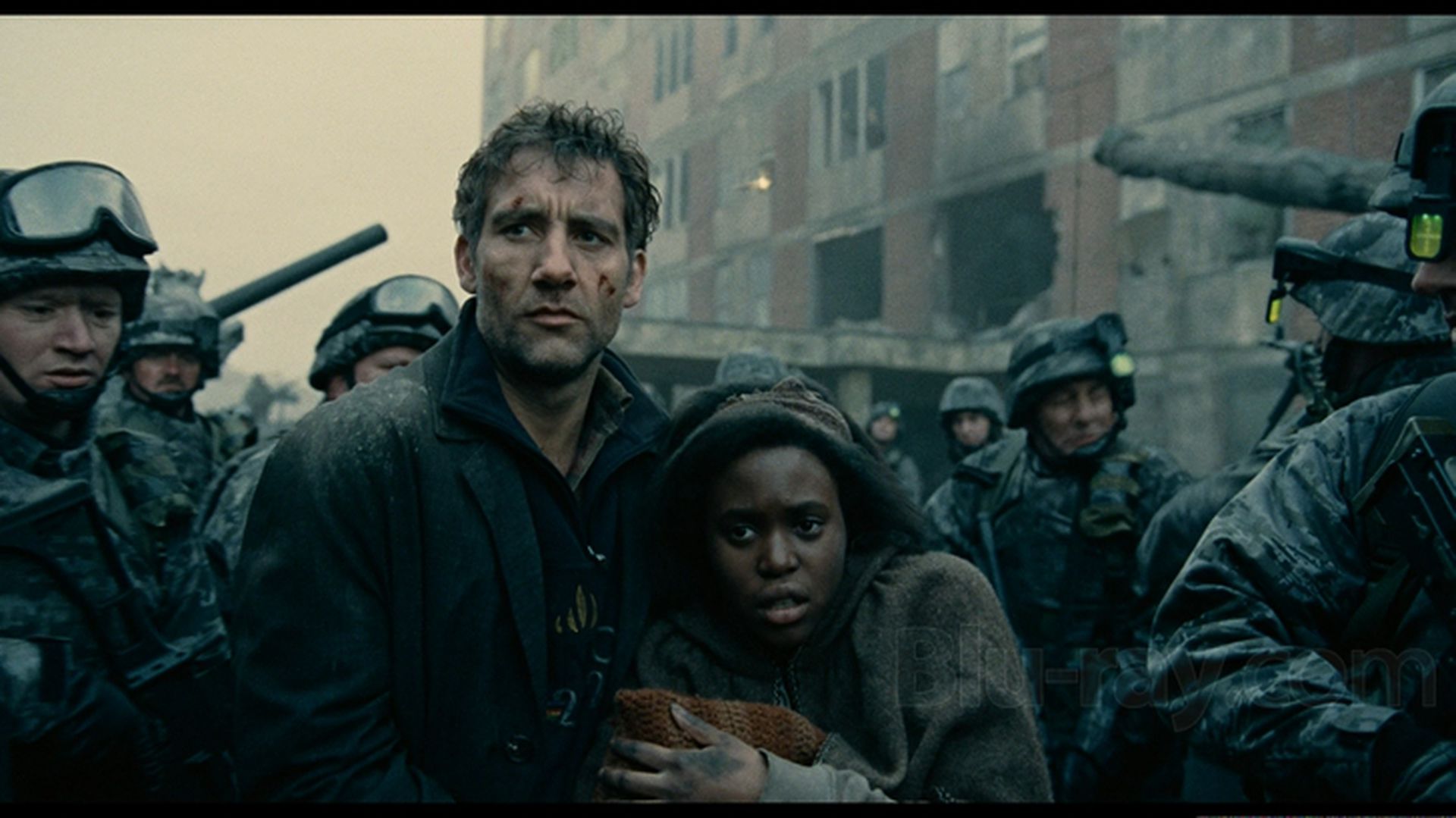
Clive Owen and Claire-Hope Ashitey could be the last hope for mankind in the masterful Children of Men

Director: Alfonso Cuarón

Cast: Clive Owen (Theo Faron), Julianne Moore (Julian Taylor), Claire-Hope Ashitey (Kee), Michael Caine (Jasper Palmer), Chiwetel Ejiofor (Luke), Charlie Hunnam (Patric), Pam Ferris (Miriam), Peter Mullan (Syd), Danny Huston (Nigel)

Children of Men was overlooked on release. But the more it ages, the more it clearly hasn’t aged it at all. Criminally ignored at the major awards, this might well be the finest film of 2006 and certainly one of the best movies of the noughties. Rich in thought-provoking content and cinematic skill, this is truly great-film-making from Alfonso Cuarón. Dark, grim, edgy but also laced with hope, faith and kindness, Children of Men grows in statue with each viewing, rewarding you more and more.

It’s 2027 and the world has gone to hell. Mysteriously mankind became infertile 18 years ago, and faced with the despair that the extinction of the human race is inevitable, society has collapsed. Cities lie in ruins and war has torn countries apart: Britain “stands alone”, one of the few with a functioning government – even though that government is a totalitarian, nationalist police state. Aggressive campaigns are waged against refugees from around the world, who are herded into hellish concentration camps. In this chaos, Theo (Clive Owen) is a disaffected civil rights activist, now plodding through a dead-end job and smoking weed with his friend, ex-newspaper cartoonist Jasper (Michael Owen). All this changes when he is entrusted by his activist/’terrorist’ estranged wife Julian (Julianne Moore) to protect Kee (Claire-Hope Ashitey) who carries inside her something that could change the whole of humanity: an unborn child.

Today Children of Men seems alarmingly prescient. In a world of migrant crises, Brexit, Trump and coronavirus (the film even refers to a flu pandemic of 2008!) the vision of the future it presents seems only a few degrees away from our reality. Rather than a hellish view, it seems more and more like something that could happen. Everything is worn out and grubby. Streets are lined with rubbish, buildings coated with graffiti. Televisions and advertising screens alternate between demands to report immigrants with promotions for “Quietus”, a suicide pill. Fences, armed police, barbed wire and crowds of filthy, terrified and brutalised people are common. Humanity has given-up: there is no hope in the world.

It’s that collapse of any sense of hope and optimism that has driven this collapse of society in Cuarón’s vision. In a world where the extinction of mankind is inevitable, what’s the point contributing to society or worrying about your legacy or the future? Why preserve anything when no-one will be around to see it in a hundred years? By such fragile threads, does society hold itself together. The crushing depression of knowing you live in the final days of humanity is everywhere. There is not a single person alive in their teens: a fact hammered home by the characters visiting a deserted and derelict school. Everyone has lost any sense of purpose, with life a grim daily grind.

Perhaps that’s also why physically the world hasn’t changed much. Unlike most “future set” dramas, this view of 2027 could be 2006, just dirtier and with a few more electronic screens (in fact this has helped hugely in not dating the film). It’s like all life has stagnated. And liberals like Theo have turned into apathetic drunks, drifting blithely through life not bothering to engage or change anything about the shit show all around them

All this makes the film sound impossibly grim – and Cuarón is superb in building this world (including the genius stroke of never explaining, even in the smallest detail, what has caused this pandemic of infertility – the film is refreshingly free of any clumsy scene setting) – but it works because it’s a film laced with hope and a belief in the fundamental goodness of people. The story has overtones of a religious fable: Theo and Kee as a sort of Joseph and Mary travelling to protect an unborn child whose birth could save the world. Specially composed choral music, rife with religious overtones, underplays key moments and scenes subtly leaning into this spiritual journey.

And the goodness that people find in themselves is inspiring. Theo, brilliantly played by Clive Owen who has just the right dissolute cynicism hiding crusading courage, may have given up but actually he’s a deeply empathetic and caring man. Animals instinctively love him. He’s a natural protector, who shows concern in all sorts of ways for people him, who puts himself at risk to protect people and refuses to ever accept defeat. But he’s a million miles away from a super-man, getting increasingly dishevelled, bashed and brutalised, while his struggles with footwear (he carries out action sequences  wearing just socks, then flip-flops and finally barefoot) is both a neat little gag and also a sign of how vulnerable he is in this dangerous world.
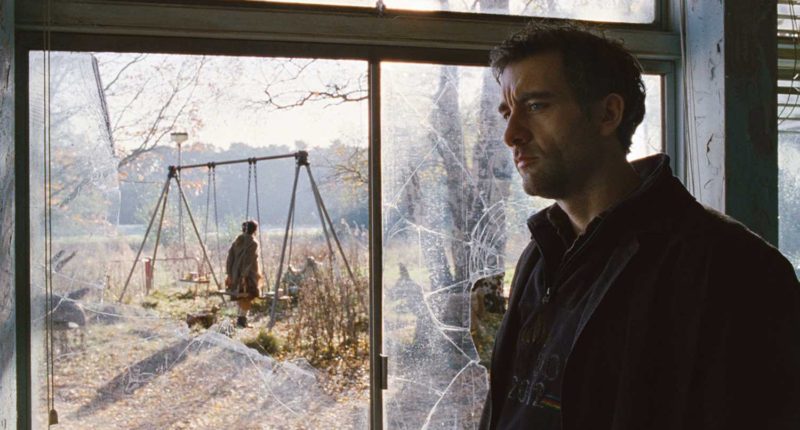
Cuarón’s film builds brilliantly on his empathy to carefully and beautifully build the growing understanding and trust between Theo and Kee (equally well played by Claire-Hope Ashitey). Again, it stems first from his protectiveness (Theo also works hard to protect people around him from disturbing sights, twice urging Kee not to look back and that whoever has been left behind is fine), but also from her instinctive trust in him as a good man and above the only one who seems to have her interests at heart (everyone else is concerned only with what Kee can symbolise – Ejiofor’s vigilante Luke can’t even get the sex of the baby right). Kee is vulnerable, but strong and determined, someone trying to carry the burden of being the hope of mankind.

She’s also brilliantly a member of the very migrant community that the government is trying to destroy. Cuarón’s film wants us all to remember that we are all the same deep down, that what happens to one affects us all. The horrors of what the British government are doing in the war-torn slums of migrant prisons (all of Bexhill has become a lawless hell hole, where executions and riots are daily occurrences) reek of everything from Auschwitz to Guantanamo. But amongst these migrants come the only strangers who seek to help Theo and Kee out of simple goodness and humanity. Strangers put themselves at huge risk, and in many cases sacrifice their lives, to help them. It makes a stark contrast with the revolutionaries who claim to fight for the migrants (but show no compunction in shooting them when needed), but really are only interested in their own selfish battles with no understanding of the bigger picture.

This bigger picture is very much like the thematic richness of the film that was missed on its released. It’s almost a victim of its own technical brilliance, which attracted much more attention at the time. Cuarón constructs several sequences to appear as single-takes, and the stunning camera work really helps establish this grimy, brutal world. It’s a wonderfully immersive film, a technical marvel. Every single part of the photography and design is pitch-perfect, and the key sequences are stomach-churningly tense, inspired by everything from The Battle of Algiers to A Clockwork Orange.

But the film works because it is underpinned by faith and trust in the human spirit. Mankind is being challenged like never before, but Cuarón shows us that the human spirit can survive. That simple acts of kindness can still happen. That there is a chance of hope. The final conclusion of the film is both sad but also upliftingly hopeful. Cuarón’s direction is just-about perfect, as are the performers (not just Owen and Ashitey but also an almost unrecognisible Caine as an ageing Hippie). With its acute and brilliant analysis of humanity – both in its grimness and capacity for goodness and selflessness – and with its prescient look at how easily our world could collapse, Children of Men is vibrant, brilliant, essential film-making.

Gravity (2013)

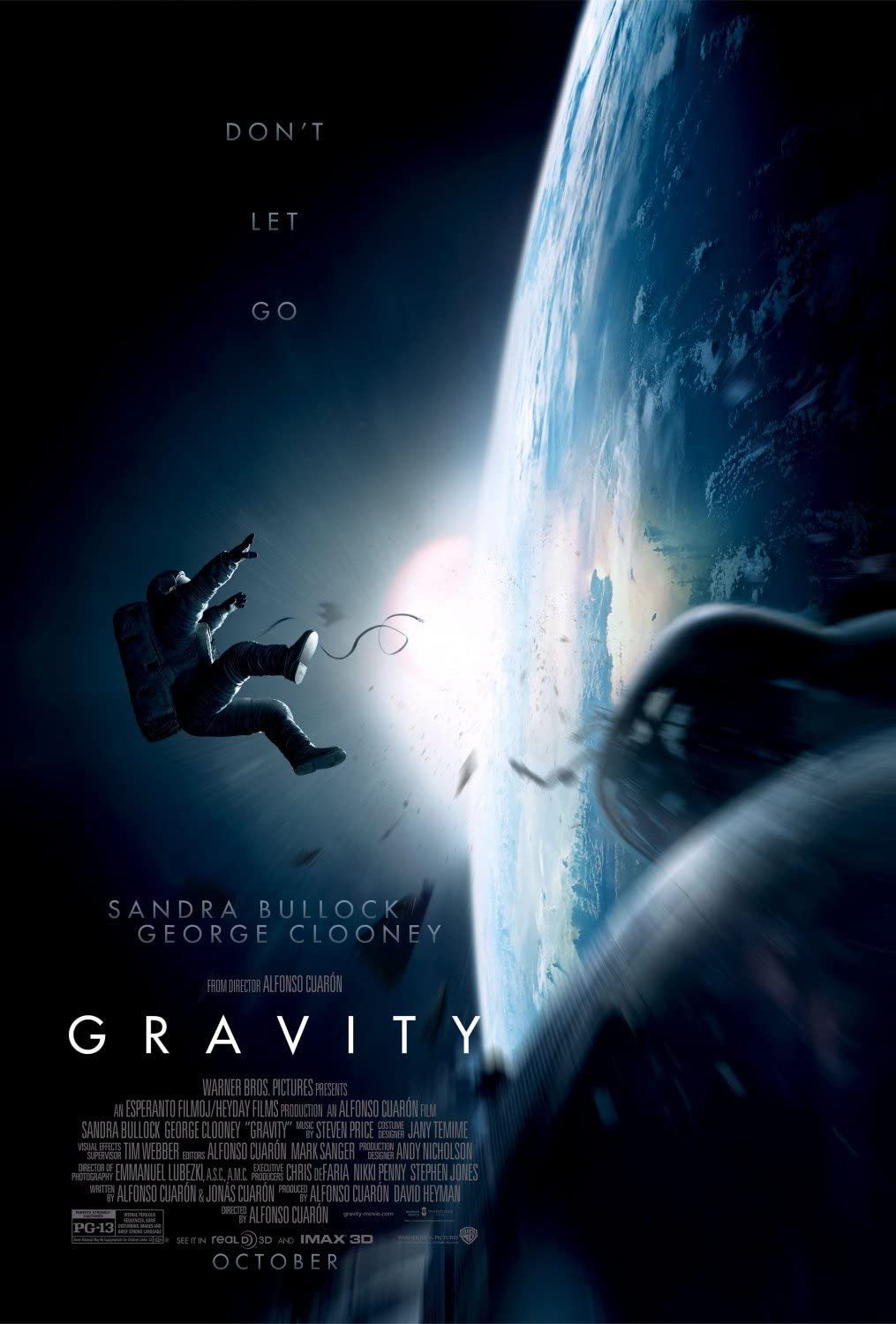
Sandra Bullock is stranded in space in Gravity

Director: Alfonso Cuarón

Cast: Sandra Bullock (Ryan Stone), George Clooney (Matt Kowalski), Ed Harris (Voice of Mission Control)

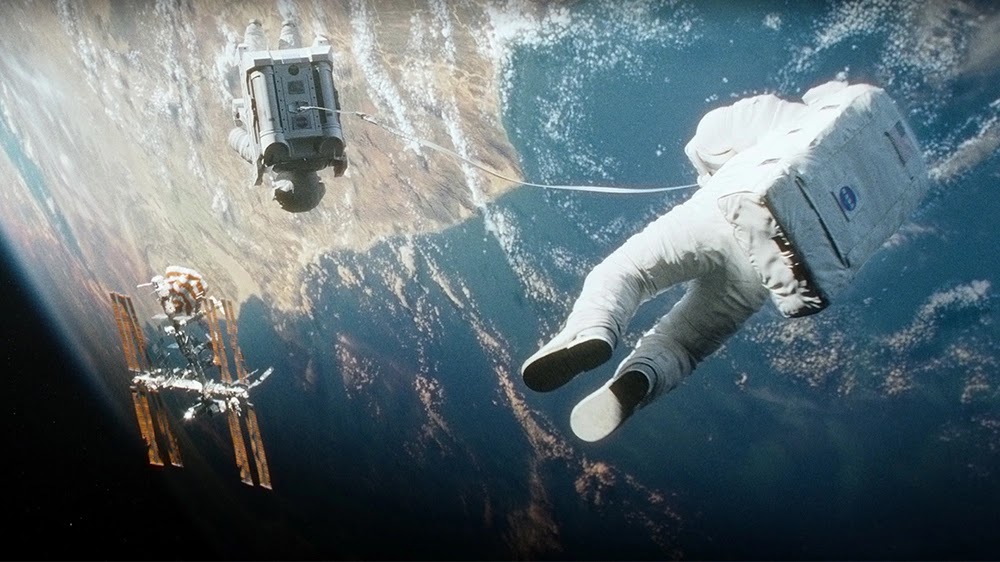
It’s often been said space is mankind’s final frontier. It’s beautiful and awe-inspiring. But it’s also a terrible place, a void where the normal rules that dictate how our bodies operate are completely suspended. We can only breathe what we carry with us and the lack of any atmosphere or gravity means a few metres might as well be a million miles. It’s in many ways the perfect conditions for a survival film – which, at its heart, is what Gravity is.

On a mission in space to repair the Hubble telescope, a collapsed satellite triggers a chain reaction of space debris hurtling in orbit at extreme velocities. Turned into a vast number of deadly bullets flying completing an orbit once every 90 minutes. This shrapnel destroys the mission, leaving specialist Dr Ryan Stone (Sandra Bullock) and mission commander Matt Kowalski (George Clooney) as the only survivors – and left with their only chance of return to Earth being to travel somehow to one of the other space stations in orbit and hitch a ride home on one of their escape pods.

Cuarón’s film is an engrossing and edge-of-the-seat 90 minute thrill ride, combined with a quietly meditative reflection on how our internal pain can make us drift through life. The film is titled Gravity but it’s there to draw attention to what is missing in the film. Not only the obvious – the lack of pull on her body – but also the lack of grounding in Stone herself. In mourning for the loss of a child, Stone has very little ties to earth or indeed anything. She is drifting through her life emotionally, much as she drifts through space itself. When asked why she likes it up in space, she replies “the silence”. She’s a woman untethered from life on earth in more ways than one.

So this is a film that is not just a survival but also a rebirth. We see Stone go through immense, dangerous moments of tension and terror, battling against all the odds to survive and return home. At the same time, the film carries an emotional weight because it’s also about Stone making a conscious decision to survive, to decide to re-engage with and commit to the world – to choose life if you like. Someone suffering from grief and depression as she does at the start of the film, may well have understandably embraced despair. Instead, the film is her coming to terms with the loss of her daughter, and a resolve to live her life for her.

All of this happens of course in the vast majesty of space, a vision beautifully captured by Cuarón. Filmed in an immersive style, with several long takes that don’t draw attention to themselves – a shot length that serves the purpose of the story not vice versa – and Cuarón is happy to use quicker cuts where needed. The camera follows the journey of Stone in epic and intimate detail, with shots exchanged between vast panamas of the astronauts as dots in space, to extreme close ups that bore into Stone’s eyes and capture her emotions from guilt, to hope, to terror. 

The long opening shot, that ducks and weaves around the weighless astronauts in space as they repair the Hubble telescope is of course a technical marvel, but it also brilliantly established the situation and the joy and fear of being an astronaut, of being allowing in the darkness and emptiness of space. It sets the scene perfectly from later shots that throw you into the adrenalin burning terror of spinning wildly in space with no resistance to slow you down or dodging debris moving at thousands of kilometres per second through space.

In fact the film is almost unbelievably tense – probably the most tense space film since Apollo 13 and in that we actually knew they were coming home alive (in a nice nod to that film, Ed Harris ‘reprises’ his role as mission controller in a voice-only cameo). With its brilliant immersive style, and the emotional bond it swiftly builds with the viewer, it means you will find you hardly draw breath along with the heroes. I’ve seen the film three times and each time after the first viewing I was sure it wouldn’t have the impact the first viewing had. But goddamn it, it works every time. The film is quick – at little under 90 mins – but you won’t feel it (in fact if anything you might be relieved).

Cuarón won the Oscar for direction, and the film is not just a load of flash and technical marvel (although it has a lot of both). It’s grounded in a very simple emotional story of survival, matched with an internal story (not overplayed) of resolving and dealing with grief. A lot of that works from the effectively unflashy performance from Sandra Bullock, who is very good in a part that requires not just physical but also emotional commitment. She’s well supported by George Clooney, who is perfect as the charming but calm and controlled mission commander who mentors her through the early stages of survival in space.

The film has a series of breathtaking set pieces – collapsing Hubbles, spinning astronauts in space, desperate space walks trying to grab any inch of objects to stop them drifting into space, collapsing space stations, burning up on re-entry – all of them shot with an elegance that marries technical excellence and dazzling camerawork and vision with a powerful story. A bag of tricks but one that is delivered with real heart.

Roma (2018)

Alfonso Cuarón’s beautifully filmed semi-auto-biography

Director: Alfonso Cuarón

Cast: Yalitza Aparicio (Cleo), Marina de Tavira (Sofia), Fernando Grediaga (Antonio), Jorge Antonio Guerrero (Fermín), Marco Graf (Pepe), Daniela Demesa (Sofi), Diego Cortina Autrey (Toño), Carlos Peralta (Paco), Nancy García (Adela), Verónica García (Teresa), José Manuel Guerrero Mendoza (Ramón)

All great artists come from somewhere. Experiences fashioned and moulded them. And great storytellers often feel an urge to dramatise and explore their own backgrounds, to bring these events that formed them as artists to life for a wider audience. It’s what Alfonso Cuarón does here with his semi-autobiographical Roma, a Federico Fellini-inspired meditation on events from his own childhood and upbringing, filmed with magnificent, patient lushness.

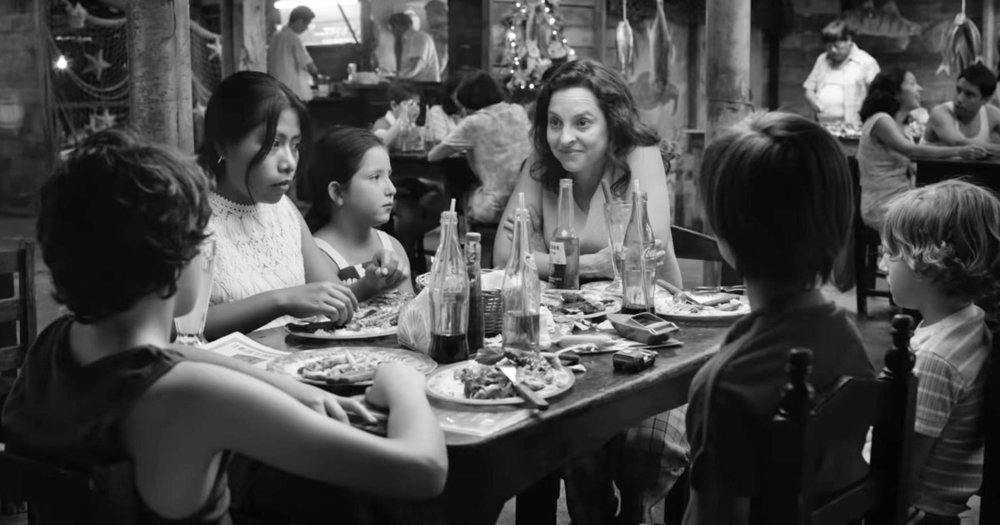
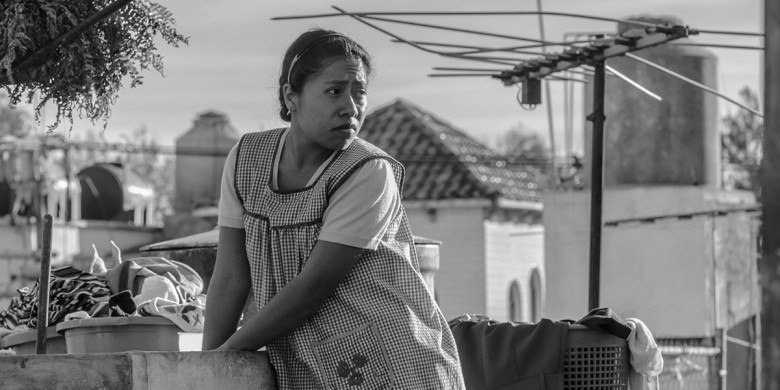
Despite its semi-autobiographical nature, Roma actually revolves not around the young version of Cuarón (he in fact is hard to identify in the film, but is probably the imaginative younger son Pepe) but Cleo, the family’s live-in maid. Set in 1970-1, the household comprises a middle-class Mexican family (husband a doctor, wife a chemist) and three live-in servants. The film follows a year or so in the life of the family and Cleo, including her surprise pregnancy and the repercussions of that on Cleo, as well as the impact of troubles in the marriage of the parents Antonio and Sofia. 

Cuarón’s debt to Fellini’s semi-autobiographical films, which turned his own childhood and career into a sort of filmmaker’s fable, is clear – heck even the title itself is a clear nod to Fellini’s own childhood story also titled Roma. It’s a poetic presenting of a version of events that may have happened to the filmmaker, and it feels personal and filled with meaning.

This Roma is a lusciously filmed, gorgeously meditative, visual treat. Shot in crisp and clear black and white, the camerawork is sublime – slow and gentle, carefully following events. Several shots use a slow dolly shot in an arc, to give the feeling of your head turning to take in scenes and the events within them. Cuarón presents a string of arresting and beautiful images, and the film’s lyrical observational tone – like a gentle Mexican Mike Leigh fable – lets the action soak over the viewer and lure you into caring for the characters and the events. 

I say that, because actually very little happens for large chunks of this film, other than following the lives of the family and the everyday events they deal with, from cleaning up dog’s mess from the drive, to trips to the cinema. It’s this air of ordinariness, this lack of event, that gives the themes bubbling under the surface a lot of their strength – namely the shock pregnancy of Cleo and the clear marriage break-up taking place between the two parents. These darker themes – as well as the potential political radicalism of one minor character – are dangerous undercurrents that threaten, but don’t overwhelm, the normality of many of the events. Cuarón lets them play as subtext, while keeping the event and drama to a minimum – this helps make the drama feel extremely real.

However, it also means that when these themes start to pay off into more traditionally dramatic events in the final quarter of the film, it carries a surprising and sudden emotional force that caught me off guard. Somehow, from just living in and among this extended family, and essentially observing their day-to-day life, it set me up to invest even more in the turmoil that threatens their happiness, as those darker currents that had been kept under the family’s (and the film’s) radar burst up onto the surface. So suddenly, at the end of the film, I found myself actually choking back a few tears at the genuine and real emotion that the film suddenly gives us.

This is helped by the naturalistic performances of the cast of non-professional actors. I often feel that the reality of performances like this, this neo-realism approach of encouraging people to play versions of themselves, a la Bicycle Thieves, is as much to a tribute to the patient, gentle and subtle direction of the film-makers as it is to the actors. Cuarón certainly worked with his cast here – shooting the film sequentially to help the actors develop their performances as the film’s story itself develops. Saying that, Yalitza Aparicio is intriguing as the dedicated maid and I was extremely taken by the strength of Marina de Tavira as the mother holding her family together.

What I found less successful about the film was the fact that this story is meant to be about Cleo, but I’m not sure what we really learn about her. Cuarón partly covers her lack of experience by reducing her dialogue to a minimum and letting her eyes convey her story. It’s just I’m not sure what story there really is. Events happen to her – and clearly take an emotional toll – but it never feels (to me) that we get an insight into her character, to her real inner life. We get glimpses but she remains a slight cipher for events that happen to her: what impact do they have on her? How does she change? What does she learn? Crude as “learning” can be in drama, Cleo feels basically the same at the end of the film as she does at the beginning. 

In fact if this film was in English, or set in England, I can imagine it being savaged for its presentation of the servant as a woman who seems to define nearly all her life by her dedication and service to her employers. There is a certain sweetness at Cleo being treated like one of the family, and covered in warmth and affection, but she still gets ordered to clear dog shit off the drive. If Downton Abbey is often criticised for the paternalistic view the employers have of the lower classes (sweet as it is to see the care and concern Sofia treats Cleo with), surely this film is guilty of it as well? The film also flips this with those same lower classes integrating their own contentment with those of their masters. At times Roma feels like a man paying tribute to his nanny by saying “she went through terrible things, but the important thing was she was always there for us”. Which somehow points exactly at how much he really knew about this person, even if the film seems to show the warts and all of her life. 

Roma is a beautiful and poetic exploration of a childhood – but it feels like it has the understanding of a child. It doesn’t really scratch below the surface to give us the adult perspective, to interpret what the adults are thinking and feeling. It treats the audience like the children – we see things, but we don’t get down into the emotional depths of its characters’ stories. Don’t get me wrong – there are scenes laced with emotional force – but it’s because scenes such as tragic childbirth or danger to children are going to carry emotional force regardless. It doesn’t feel like the depth is connected to the characters. For all the time we spend with Cleo, I couldn’t describe at all what she is like or who she really is (except maybe “long suffering”, “dedicated” or “kind”). For all the film’s beauty, charm, poetry and joy it’s somehow, ever so slightly, empty.

Harry Potter and the Prisoner of Azkaban (2004)


Harry Potter friends confront wanted killer Sirius Black in Harry Potter and the Prisoner of Azkaban

Director: Alfonso Cuarón

Cast: Daniel Radcliffe (Harry Potter), Rupert Grint (Ron Weasley), Emma Watson (Hermione Granger), Julie Christie (Madam Rosmerta), Robbie Coltrane (Rubeus Hagrid), Michael Gambon (Albus Dumbledore), Richard Griffiths (Vernon Dusley), Gary Oldman (Sirius Black), Alan Rickman (Severus Snape), Fiona Shaw (Petrunia Dursley), Maggie Smith (Minerva McGonagall), Timothy Spall (Peter Pettigrew), David Thewlis (Remus Lupin), Emma Thompson (Sybill Trewlawney), Julie Walters (Molly Weasley), Mark Williams (Arthur Weasley), Tom Felton (Draco Malfoy), David Bradley (Argus Filch), Robert Hardy (Cornelius Fudge), Pam Ferris (Marge Dursley)

Well this is more like it. The first two films set the tone and established the universe. But Prisoner of Azkaban – filmed after a year’s break from the back-to-back filming of the first two films – is such a notable step-up in quality from the previous films, it completely stands alone as a marvellous piece of cinematic storytelling, not just as part of a franchise.

Why is this? Well I think the answer is pretty clear. After the solid, but unspectacular, direction from Chris Columbus, the reins were handed to a gifted filmmaker in Alfonso Cuarón. Harry Potter and the Prisoner of Azkaban has all the visual invention and dynamism the first two films lacked. Alongside that, Cuarón tells the story with a brilliant mixture of light and dark. For the first time, the adaptation also escaped the need to dramatise everything in the book onto the screen – this film is a good 20 minutes shorter than Chamber of Secrets but immeasurably superior.

Prisoner of Azkaban looks fantastically gorgeous, and is brilliantly shot. The production and costume design has been spruced up, to give the film a sort of steam-punk 1950s look, as if the wizarding world had slightly arrested a few decades behind the rest of the world. Cuarón was also one of the first directors in the series who seemed relaxed enough to let the children act like children – so we get scenes of them mucking around in the dormitory or dressed with a teenage coolness. Hogwarts becomes a castle of shadows and gloom, in a magical, wintry whiteness and Scottish Highlands shades of greens and blues. More than any of the previous films, its a world that feels ‘real’ and lived in. It’s a style that would dominate all the remaining films: Cuarón essentially set the tone for the rest of the series to come.

It also helps that Cuarón was blessed with perhaps the strongest of Rowling’s stand-alone stories, a tight and taut thriller that reaches a surprising conclusion and features playful use of things like time travel and illicit magic. Cuarón, however, really embraces the emotional core of that story, and allows all these characters to expand in richness and depth. Harry faces real torment and anger when confronted with the story of the death of his parents, and his desperate yearning to have some sort of connection with them is a key thread that runs through almost every scene.

The film highlights the growing flirtation and connection between Ron and Hermione. Hermione herself is increasingly shown as a level-headed, empathetic young woman, who really understands the feelings of her friends. Several other characters are allowed to show depths: don’t forget this is the film where we see Snape’s first reaction when confronted with a werewolf is to put himself between it and the children. Rickman, by the way, is brilliant in this film, giving us the first hints of the deep and abiding feelings Snape held for Harry’s mother in his bitter anger at Sirius.

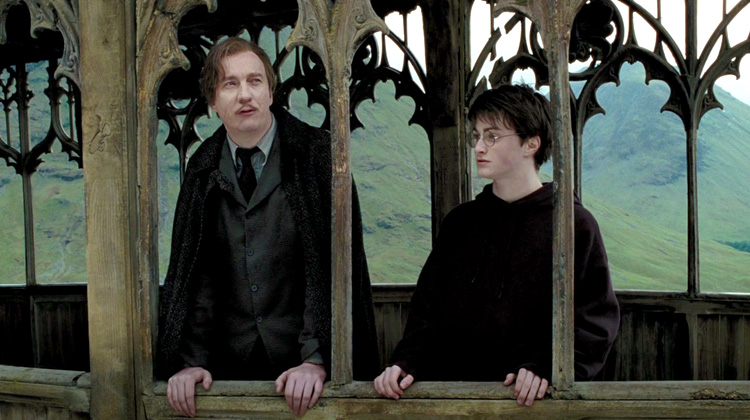
As always the film introduces some fantastic new characters into the mix. Gary Oldman is simply superb as Sirius Black, bringing to life his torment and rage, but most especially Blacks warmth and generosity (as well as his boyish enthusiasm). It was a major change of pace for Oldman, who has credited the film with changing his image in Hollywood away from one-note villain. Emma Thompson is very funny as (possibly) delusional divination teacher Sybil Trelawney. David Thewlis though waltzes off with the movie as a sad-eyed Remus Lupin, a man who clearly has known great losses. Thewlis plays Lupin with a caring, scruffy charm, an ideal teacher and mentor – generous but also firm when needed. It’s impossible not to end the film caring deeply for him. He’s terrific – it’s a real shame he never got another real showpiece scene in the rest of the franchise.

This is also our first introduction to Michael Gambon as Dumbledore – a replacement for the late Richard Harris. Gambon plays the part with a curious twinkly cheekiness, and a greater physical robustness, along with a faint Irish twang which feels like a homage to Harris. It’s a slightly uncertain start, but Gambon’s unusual, slightly-faded-hippie take on the part stands out from Harris’ austere wise-man very nicely. His lightness makes the moments of power all the more awe-inspiring. It also rather fits in with the tone of Cuarón’s slightly off-beat style.

Cuarón has a real eye for the offbeat gag – from a cleaner almost being blown away by a monster’s howl in the Leaky Cauldron, to the kids eating animal sweets in their dormitory, to Dumbledore’s off-camera delay tactics with Fudge (“Well it is a very long name minister” he says when asked to sign something), there are many delightful sight and sound gags throughout the film to make it a joy to discover. His balance of this with the heart of the story is brilliant: the inflation of Pam Ferris’ vile Aunt Marge is both brilliantly funny, but also clearly motivated by the revolting things she openly says to Harry about his parents. It’s a great balance the film pulls off time and time again.

The film is wonderfully structured and beautifully paced. It’s got a very clear five act structure, and thematic thread running through the whole film of grief and needing friends to help cope with this. The parts of the book that don’t contribute to this have been skilfully trimmed down. Cuarón then brilliantly interweaves set-piece moments, many of them introduced with an off-the-wall inventiveness, such as the umbrella dancing in the wind before the storm-swept Quiddich match (is there any health and safety in this school at all by the way?).

By the time you hit the final sequences, thanks to the film’s structure, you’ve no doubt about the revolting dangers of the Dementors. These spectral creatures are returned to again and again by Cuarón’s careful editing, as we see them drifting around the borders of Hogwarts, killing flowers and freezing lakes by their very presence. These terrifying creatures are the creepy stuff of nightmares – and Cuarón doesn’t flinch from this. It also makes Harry’s successful conjuring of a Patronus at the film’s conclusion a stirring and triumphant moment, a suitable triumphal ending to the film.

Cuarón’s direction of this film re-set the table for the entire franchise. Both Mike Newell and David Yates would follow in his footsteps, and present the world as Cuarón imagined it: dark blacks, and muted primary colours, as much a world of creepy, unsettling threat and danger, as it was of delight and wonder. From this point on the films would start to stand on their own feet, focusing on exploring the themes and emotions of Rowling’s story, rather than covering every scene. Prisoner of Azkaban is the best of the Harry Potter films and the most important landmark in the series. It’s not just a great Harry Potter film, or a great fantasy film or kids’ film. It’s a great film.