
Tag: Alfre Woodard

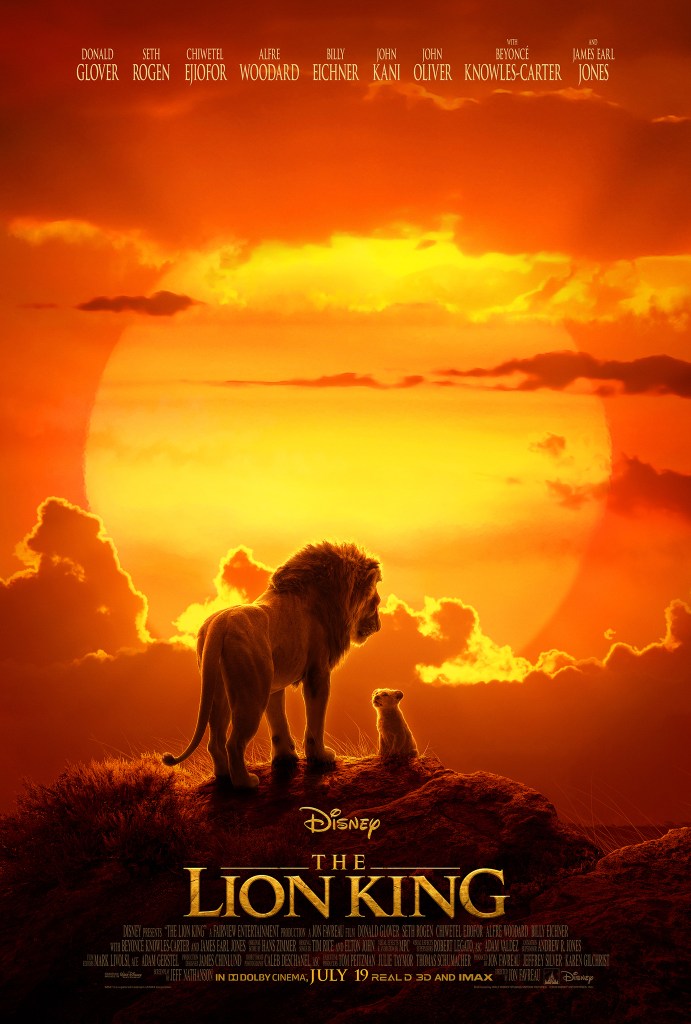
The Lion King (2019)

The Lion King (2019)

Soulless, heartless remake designed to make Disney as much money as possible

Director: Jon Favreau

Cast: Donald Glover (Simba), Beyoncé Knowles-Carter (Nala), Seth Rogan (Pumbaa), Chiwetel Ejiofor (Scar), James Earl Jones (Mufasa), Alfre Woodard (Sarabi), Billy Eichnor (Timon), John Kani (Rafiki), John Oliver (Zazu), Florence Kasumba (Shenzi), Keegan-Michael Key (Kamari), Eric André (Azizi)
We all like to pretend Disney is the custodian of our childhood dreams – that they exist on to give us even more gorgeous memories to treasure. Bollocks. It’s a corporate enterprise existing solely to create more money for shareholders. If you were in any doubt, cast your eyes across The Lion King, a bottomless collection bucket for the God of Mammon. There is literally no reason for this film’s existence, other than to lure people into the cinema for the express purpose of removing their pennies from their pockets and dropping them into Disney’s McDuck vault for the next time the shareholders want to take a dip.

Seen the original? Then you know the plot. At least Disney’s previous nakedly commercial “live-action” remakes of Beauty and the Beast and Aladdin had the decency to introduce a few new plot elements so there was at least a little bit of surprise content. Even if it was tedious stuff like the Beast’s Tardis mirror to the past or the Genie’s love interest. Here the extra 15 minutes is made up solely of padding, dreadful unfunny comic and utterly unnecessary extra characters who make literally no impression (Timon and Pumbaa now run a sort of hippie commune).

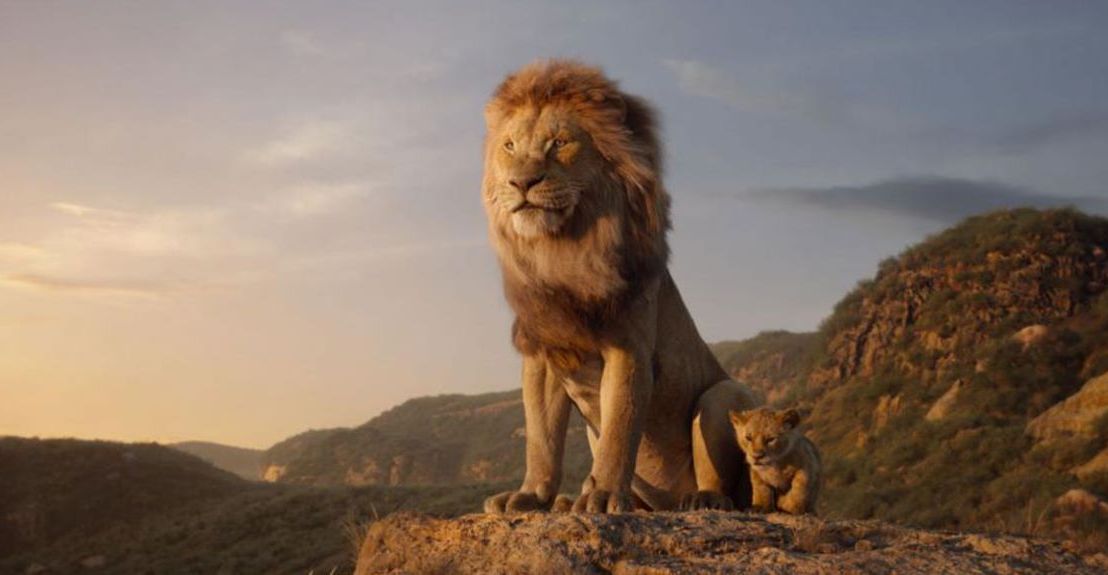
Disney made huge play out of the fact this is a “live action” Lion King. That’s the selling point. So proud of this were they, that they were hilariously pissed off when the Golden Globes nominated the film for Best Animated Film. But nothing in this film is real, or live action – except, as Favreau later bragged, the first shot of the film showing the sunrise. Everything you see here is created in a computer: from the tufts of Mufasa’s mane to the grass that dances in the breeze. Far from watching a live-action film, this is an orgy of CGI wizardry that constantly pats itself on its back for the hard work and detail that went into its creation. Who cares if the result has no heart?

Because that’s the case. The Lion King is a soulless cultural abomination. It is almost entirely a shot-by-shot remake, with the only changes being the occasional introduction of new (less good) dialogue. The characters have the same conversations, with less snap, laughs and emotion. It’s the sort of film-making karaoke some people like to call affectionate homage, but instead feels like pandering and no-one having the guts to change even the slightest moment from the original. How hard would it have been to match the plot, but find new ways to film it? This however matches shots, camera moves, angles, edits – the whole damn thing. If you had a choice between seeing the Mona Lisa or watching a computer do a Mona Lisa paint-by-numbers, which would you choose?

It also feels like no one stopped for a second during their self-congratulatory film-making to ask one or two obvious questions. Firstly, I don’t think its racist to say this, but to my eyes most lions look the same. No real effort has been made to distinguish any of them from each other (with the obvious exception of Scar) – this particularly effects the lionesses who all essentially look the same. Secondly, one of the first things you’ll notice about most animals is that they have inexpressive faces that do not display emotion and that they have mouths that have not been designed for talking.

With an animated lion you can get round this. You can draw a look of fear on Mufasa’s face because you aren’t limited to only using the facial movements that a real lion can. Their faces can shift and change to match the emotions of a real person – they can look happy or sad, cynical or sarcastic, joyful or mournful. You can’t do this with a real animal, because animals don’t have expressive faces. The whole cast of The Lion King have stiff, stationary faces that never react to the emotional events around them. They often can’t even move their mouths to properly replicate speech (Favreau starts to get round this by having as much of the dialogue delivered off camera as possible).

What you end up with is a series of robotically cold shots of animals not emoting, mechanically going through the emotions to replicate a masterpiece. Mind you, perhaps it’s a good thing that the film tries to rip-off the original as much as possible because whenever it does its own thing it thuds face-first into a pile of animal dung. Pumbaa is given a hideously on-the-nose line about “I can’t stand bullies” (to replace his “they call me Mr Pig!” battle cry). Eichhorn, Oliver and Rogen litter the film with unfunny fourth-wall-leaning references which stink of over-indulged recording booth improv. A few songs are butchered (most noticeably Be Prepared) and several musical cues are reworked in a way that dramatically reduces their impact. Even the obligatory new song is lacklustre and weirdly tonally wrong for the moment it’s used.

The cast struggle, never quite sure how they should approach the content. Spare a little sympathy for Ejiofor, stuck trying to follow one of the greatest vocal performances of all time – but his response to this is to bend himself into all sorts of shapes to be as different from Jeremy Irons as possible. The result is an underwhelming Scar, who lacks presence, menace, or the glorious manipulativeness of the original. Other actors are flat-out fails, most particularly Eichhorn who turns Timon an unlikeable bitchey whiner. Only John Kani really does something that feels like a good mix of homage and original work as Raffiki – he’s one of the few genuinely African voices in a film that loudly “prided” itself on its mostly African-American cast, but still has all the lions speaking in reassuringly American accents – and casts white actors into almost every non-lion role.  

But that’s a side note. The Lion King is a ruthlessly, exploitative attempt to make money. Which it managed to do to an enormous degree. So, I guess it hardly matters that surely no-one will be watching it in five years’ time. Or that its CGI created lions are expression-free automatons existing in a shiny world of non-reality. Or that the entire enterprise is a heartless, soulless, nakedly commercial stare deep into the belly of a conglomerate that sees people as nothing more than ATM machines. The Lion King is an abomination and will take pride of place in Hell’s multiplex for all time.
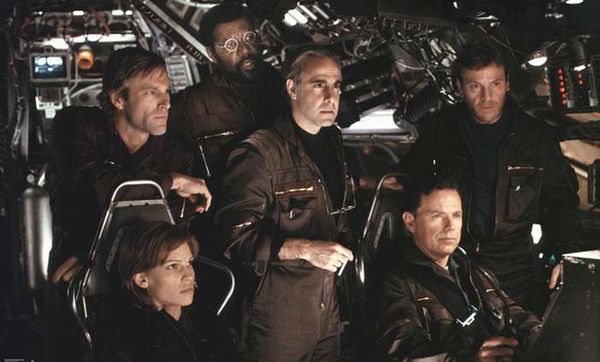
The Core (2003)

The Only Way is Down for our heroes in super silly Sci-fi disaster The Core

Director: Jon Amiel

Cast: Aaron Eckhart (Dr Josh Keyes), Hilary Swank (Major Rebecca Childs), Delroy Lindo (Dr Edward Brazzleton), Stanley Tucci (Dr Conrad Zimsky), Tchéky Karyo (Dr Serge Leveque), Bruce Greenwood (Commander Robert Iverson), DJ Qualls (“Rat”), Alfre Woodward (Dr Talma Stickley), Richard Jenkins (Lt General Thomas Purcell)

Dr Josh Keyes: “Even if we came up with a brilliant plan to fix the core of the Earth, we just can’t get there”

Dr Conrad Zimsky: “Yes, but – what if we could”

If you have any doubts about the type of film you are going to watch, then that tongue-in-cheek dialogue exchange (and the words can’t capture the playful, I-know-this-is-crap wink that Stanley Tucci tips practically to the camera) should tell you. The core of the Earth has stopped rotating. Which basically means all life on Earth is going to end in the next few months. Unless, of course, we can restart the rotation of the Earth’s core. So time to load up a team of crack scientists into a ship-cum-drill, made of metal that doesn’t buckle under pressure (this metal is, by the way, literally called unobtainium by the characters) so that they can sprinkle nuclear bombs through the centre of the Earth to kickstart the rotation of the planet and blah, blah, blah.

It’s perhaps no surprise that The Core was voted the least scientifically accurate film ever made by a poll of scientists about 10 years ago. Nothing in it makes any real sense whatsoever, and it’s all totally reliant on the sort of handwave mumbo-jumbo where you can tell getting an actual logical explanation was going to be far too much hard work, so better to roll with a bit of technobabble and prayer. Questions of mass, physics, pressure are all shoved aside. The film sort of gets away with it, with a leaning on the fourth-wall cheekiness – no fewer than three times in the film the impossible happens with a “what if we could” breeziness, as a character pulls out a theory or discovery with all the real-world authority of the fag-packet calculation.

But then scientific accuracy is hardly why we watch the movies is it? And this is just a big, dumb B-movie piece of disaster nonsense, which throws in enough death-defying thrills, predictable sacrifices and major landmarks being wiped out topside to keep the viewer entertained. In this film Rome and the Golden Gate Bridge both get taken out by spectacular disasters. Beneath the surface, the characters go through the expected personality clashes and learn the expected lessons.

The script (most of which is bumpkous rubbish) really signposts most of this personal development. Will Zimsky and Brazz rekindle their respect and overcome decades of rivalry? Will Serge, on the mission to save his wife and kids “because it’s too much to think about saving the whole world”, have to pay the ultimate sacrifice? Will Major Childs finally get the courage and determination to take command and make the hard calls? I won’t tease the fate of Mission Commander Bruce Greenwood, but he is called upon so often to reassure Childs that one day she will be ready to take command, alongside other mentoring advice, that the only surprise is that he lasts as long as he does.

So why is hard to not lay into The Core? Because, not that deep down at its core, it knows it’s a silly film. The script has enough awareness of its cliché and scientific silliness that it almost doubles down on it. And the actors play it just about right: for large chunks of it they perfectly hit the beats of sly archness that suggest just enough respect to not take the piss, but enough self-awareness of what they are making. But these are all very, very good actors and when the serious moments come, it’s remarkable how much they can shift gear – with the grisly death of one character (while the others powerlessly try and save him) played with an almost Shakespearean level of tragedy by a distraught Eckhart and Lindo. Later, as three characters juggle over who will go on a suicide mission to keep the mission on track, the bubbling emotions of shame, relief, pride, respect and buried affections are genuinely rather affecting. Its moments like this that makes me kind of love this big, dumb, stupid film.

But it remains stupid. Topside, Alfre Woodard and Richard Jenkins bumble through roles they could play standing on their heads. A hacker – Rat – is as clichéd and full of techno-nonsense as any of the science, which is even more painfully obvious to us now that we’re all so much more tech-savvy than we were in 2003. Events happen because, you know, they can. Discoveries and scientific conclusions are made because the script needs them. But the film knows this, it doubles down on it and it accepts that every problem is just a “But what if we could!” away from being solved. Stupid, but strangely loveable.

Primal Fear (1996)


Richard Gere prepares an impossible defence for unbalanced Edward Norton. Twist ahoy!

Director: Gregory Hoblit

Cast: Richard Gere (Martin Vail), Laura Linney (Janet Venable), John Mahoney (John Shaughnessy), Alfre Woodard (Judge Shoat), Frances McDormand (Dr Molly Arrington), Edward Norton (Aaron Stampler), Terry O’Quinn (Bud Yancy), Andre Braugher (Tommy Goodman)

Courtroom dramas are the bread and butter of film drama. You get to deal with good vs evil, right vs wrong – and you even have two advocates on each side there duelling it out on camera for you. Primal Fear came at a time when John Grisham and his like were ruling the bestseller charts, and it’s a fine demonstration of that very late 80s to mid 90s genre: the all-star court case film.

After the murder of a beloved archbishop in Chicago, bloodied altar-boy Aaron Stampler (Edward Norton) is found near the scene. There seems no doubt that he’s guilty. Top city lawyer Martin Vail (Richard Gere) takes his case for the publicity of a big trial, but finds himself believing the boy to be innocent. As the trial begins though, Vail’s psychiatric investigation reveals Stampler has a split personality – his gentle main persona and a violent defensive personality, “Roy”, who admits to the crime.

This is an advanced, well-written trial thriller which, through a combination of some neat lines and some very good performers, manages to bring a lot of life and originality to what could have been a collection of stock characters. Instead, each character in the film feels real and their actions seem part of a coherent personality. The mechanics of the plot also move very smoothly, with a well-handled twist. And as a bonus it has something to say about human nature, about our need to believe in something and how easy it is to tell lies about ourselves and believe them from others.

The film is shot with a good eye for grimy real-life locations and muddy shade-of-grey morality. Hoblit’s direction is crisp and straightforward and he avoids getting any pyrotechnics in the way of the actors – here the performances are the special effects. It’s also a brilliant twist movie that doesn’t telegraph the fact it contains a twist until it suddenly pulls the rug out from under your feet. Hoblit doesn’t give us any advantages over the characters and has the restraint not to show his hand too early – instead he sucker punches us with a sudden downer ending. It’s a masterpiece of genre craft film-making.

Richard Gere at first glance is playing well within his range – a smirking hotshot focused on the win, willing to defend anyone and anything. However, what Gere does really well here is play his persona as an actual persona of the character. The “real” Martin Vail, it becomes clear, is actually almost naïve in his underlying faith in the justice system. He has a touching faith in people and the twist of the film works because we believe how much Vail unwittingly allows himself too be manipulated and conned. He’s the sort of true believer who can playfully mock his faith because his belief in it is absolute. It’s even more crushing, then, when that faith is so cruelly used and abused. The final shot of him alone on the street all but screams “My God, what have I done?”.

But though this film has some of Gere’s best work, this is Ed Norton’s movie. Incredibly, this was Norton’s first ever film, and he seizes the film absolutely by the scruff of the neck. Re-watching the film now, it’s less of a surprise when Aaron’s “Roy” personality bursts out – Norton is so well known now you are almost waiting for him to really let rip – but he nails the contrasts between the stammering, gentle Aaron and the ferocious Roy. You always know which one he is at any time – and even better than that, Norton drops subtle hints throughout to set up the film’s twist (which I won’t give away). His performance is largely a triumph of masterful control of acting tricks and a brilliant demonstration of range, as well as a swaggering display of confidence, rather than a subtle piece of character work, but it’s still an absolute knock out for all that – and totally believable.

Strong performances also come from Laura Linney, making an awful lot of the role of Gere’s courtroom nemesis and part-time lover. Andre Braugher is particularly good as an investigating officer. Alfre Woodward is stern and authoritative but fair minded and just as the judge. Frances McDormand makes what could have been a wet liberal doctor feel like a genuinely caring and dedicated intelligent professional. There isn’t a weak link in the cast, and every character beat feels well observed and natural. How many genre films have failed to manage that?

It all works extremely well and offers all the courtroom fireworks you could want with maximum efficiency. All the actors are working at the top of their game, and the direction keeps the action taut and intriguing. Here’s the thing: the plot makes little sense if you think about it, and Norton’s plan depends on so many variables he could never have known that it would success. But the film is made with such confidence and assurance that it never really matters. The twist still has a lot of impact today – and the film bravely offers no happy endings, only hammers home the system’s corruptness. A very good example (perhaps one of the best) of the courtroom genre.