Tag: Alison Sudol

Fantastic Beasts: The Secrets of Dumbledore (2022)

Fantastic Beasts: The Secrets of Dumbledore (2022)

The Potterverse goes through its death throws in this anaemic offering in a misguided franchise

Director: David Yates

Cast: Eddie Redmayne (Newt Scamander), Jude Law (Albus Dumbledore), Mads Mikkelsen (Gellert Gindelwald), Ezra Miller (Credence Barebone/Aurelius Dumbledore), Dan Fogler (Jacob Kowalski), Alison Sudol (Queenie Goldstein), William Nadylam (Yusof Kama), Callum Turner (Theseus Scamander), Jessica Williams (Lally Hicks), Victoria Yeates (Bunty), Richard Coyle (Aberforth Dumbledore), Poppy Corby-Tuech (Vinda Rosier), Fiona Glascott (Minerva McGonagall), Katherine Waterston (Tina Goldstein)

If the House of Potter teetered after the not-very-good Crimes of Grindelwald, it collapsed with the release of The Secrets of Dumbledore to waves of indifference. It’s proof that if you super-size your series not because you have a genuine story reason but because you think a fat goose will lay even more golden eggs than a thin one, you’ll eventually end up with a dead obese goose.

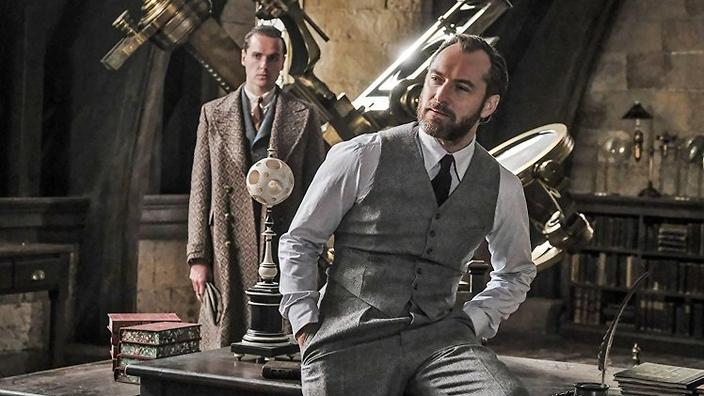
A year or something has passed and Dumbledore (Jude Law) and Grindelwald (now Mads Mikkelsen, thank God) continue circling, neither quite willing to end their ‘friendship’. Grindelwald is determined though to seize control of the Wizarding World by manipulating the election for the Supreme Leader to launch his anti-Muggle war. Dumbledore recruits a team, led by Newt (Eddie Redmayne), to stop him – but with Grindelwald’s new power to see the future, seized from a Fantastic Beast, Dumbledore can’t tell anyone his plan (plus ca change). Meanwhile Credence (Ezra Miller), is groomed by Grindelwald to destroy Hogwarts’ favourite professor.

The Secrets of Dumbledore may be flabby, over-extended and frequently meander down alleyways and byways that feel frustratingly pointless – but it is a better film than The Crimes of Grindelwald. Its problem is, it’s nowhere near good enough to win back the massive loss of audience faith that complete shit-show (combined with all sorts of social media storms) caused.

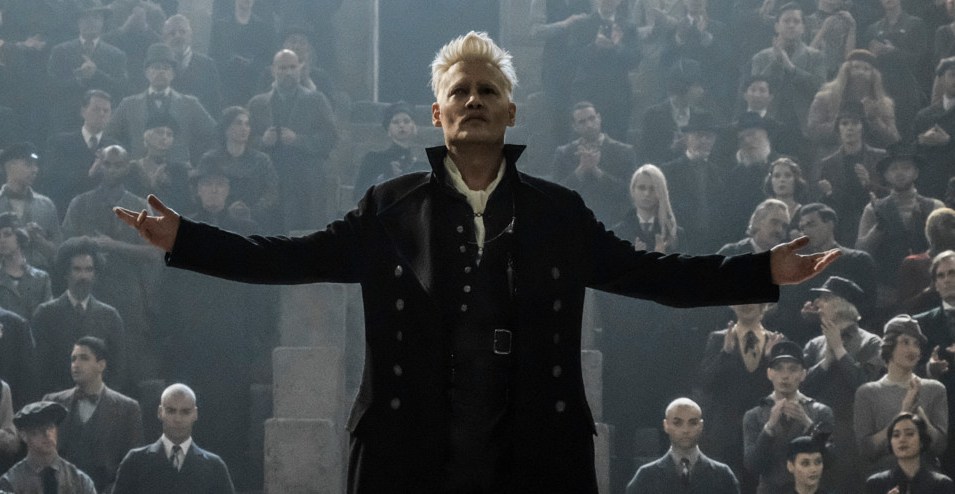
The Secrets of Dumbledore’s major positive is the arrival of Mikkelsen as Grindelwald. Replacing Johnny Depp (and his “personal problems”), he gives the film an automatic upgrade. If you want an arrogant, sinister, manipulative, but also dashing, romantic villain, why in God’s name wouldn’t you have cast Mikkelsen in the first place? The film is more daring on the Dumbledore and Grindelwald relationship than any other Potter film before – we even hear the “L” word.

Anything focused on these two – either together or alone – is invariably the good stuff. The two of them (Jude Law is equally good) semi-threatening, semi-reminiscing, semi-flirting in a café at the start is the finest scene, and the genuine regret between them is rather well done. Rowling also writes in, pretty much direct from the final book, the entire tragic Dumbledore-backstory reveal which the final Deathly Hallows film bizarrely cut (perhaps she thought it was as terrible an idea as I did?). Law plays this little moment to perfection.
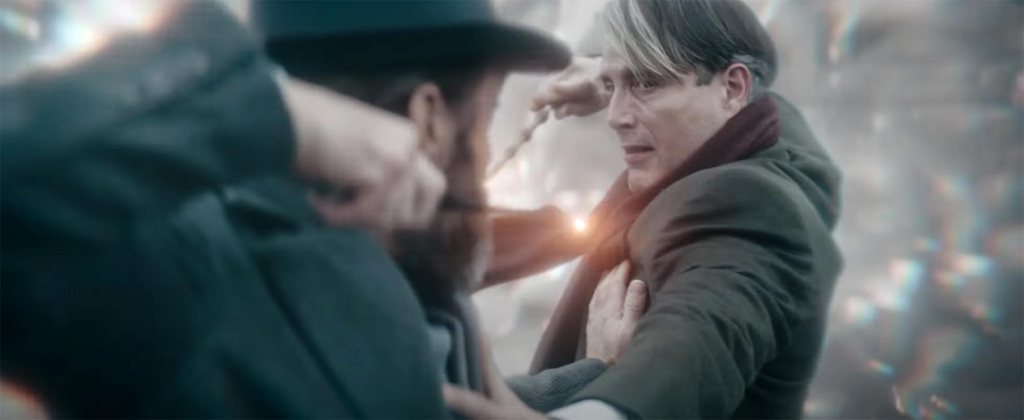
You end up wishing the film was a more personal story between these two. Unfortunately, we get this over-inflated mess. The most bizarre thing about Secrets of Dumbledore is that simultaneously loads is going and the plot feels incredibly slight and mostly pointless. Frequently events bend down alleys or fizzle out into pointlessness. Far from being full of secrets, Dumbledore and his brother fall over themselves to share their secrets at every opportunity to keep the plot moving forward.

After the money-grabbing decision to squeeze as much cash out of this franchise (five movies!) as possible, The Secrets of Dumbledore feels like it has taken on a lot of padding to get up to length. Rowling, to put it frankly, isn’t that great at structuring a screenplay (it’s telling Steven Kloves was bought back to help bang this into shape). It’s a reminder it’s a very different set of skills telling a coherent story, full of twists, turns and universe building over 2 hours compared to 700 pages.

Grindelwald’s plan involves the complex and poorly explained, killing and resurrection of a magic goat. There is a lot of talk of “the people getting a say” in the election: an election where no one gets a say, since the leader of this civilisation is chosen on the whim of said magic goat. Our heroes go to the German Ministry of Magic solely, it seems, so Newt’s brother can be captured. A “spy” is planted among Grindelwald’s forces who does no spying, has parts of his memory wiped for no reason and then rejoins the heroes. Two characters communicate via a magic mirror, even though they’ve never met and couldn’t know who the other is. A labyrinthine plot about an assassination has so many hastily explained twists I genuinely have no idea what was going on. At regular intervals the heroes reconvene with Dumbledore, like players in a video game being given a brief for the next level.

Even more than the last one, the “Fantastic Beasts” idea feels like a burden. They’d have done better just starting a new “Dumbledore vs Grindelwald” franchise. The plot sort of revolves around a poorly explained magic animal. Theseus is whacked in a prison guarded by a deadly scorpion. In a bizarre tonal zig-zag, Newt distracts this beast’s scorpion-y minions by doing a funny dance – interrupted every so often by it grabbing a “political prisoner”, eating them alive and then spitting out the half-chewed corpse for its minions to consume. Remember when this felt like this series was going to be about the charming adventures of a naïve zoologist?

The legacy characters stumble through with little to do. Redmayne’s Newt is a character so bizarrely ill-conceived as the lead in a prelude-to-war series he’s often quietly relegated to side missions. Dan Fogler’s Jacob and Alison Sudol’s Queenie continue a nonsensical emotional journey (she, let’s not forget, defected to Grindelwald – the man who wants to destroy Muggles – because she wasn’t allowed to marry a Muggle). Katherine Waterston’s Tina is relegated to a cameo.

Then there’s Credence. This character, the central Macguffin of the last two films, is here relegated to the role of heavy whose long-hyped clash with Dumbledore is a little more than a dull one-sided scuffle. It’s hard not to think the character has been reduced to glorified extra due to the increasingly toxic public image of Ezra Miller (has there ever been a franchise more unlucky in its casting?). But the unceremonious dumping of this entire plotline so crucial to films one and two hammers home the feeling that there is no consistent planning going on here at all.

I said in Crimes of Grindelwald this franchise in need of a new creative eye. David Yates directs his seventh Potter film and, while he does nothing wrong, I don’t think he’s got a single new idea in the tank. The look and feel of this film, its visuals, the effects, its tone, its colour palette – all of it is now achingly familiar, making it feel even more like something tipped carelessly off a production line. It also looks shockingly over-processed: I know it’s about magic but by Merlin’s Beard nothing looks real. Does it feel magic to be back at Hogwarts? No, it looks like a freaking CGI nightmare.

The lack of freshness surely contributed to its death at the box-office. No one seems to have stopped and asked “would someone who hasn’t been working on Potter full time for over 12 years care about this?”. I don’t think they did. If you work the Golden Goose night and day, demanding it produces an egg a day, eventually it will keel over. It didn’t have to be like this, but there is more chance of Depp returning than anyone making the next two films in this misbegotten series.

Fantastic Beasts: The Crimes of Grindelwald (2018)

Eddie Redmaynes wades his way through the murky Crimes of Grindelwald

Director: David Yates

Cast: Eddie Redmayne (Newt Scamander), Katherine Waterston (Tina Goldstein), Dan Fogler (Jacob Kowalski), Alison Sudol (Queenie Goldstein), Jude Law (Albus Dumbledore), Johnny Depp (Gellert Grindelwald), Ezra Miller (Credence Barebone), Zoë Kravitz (Leta Lestrange), Callum Turner (Theseus Scamander), Carmen Ejogo (Seraphina Picquery), Claudia Kim (Nagini), William Nadylum (Yusuf Kama), Kevin Guthrie (Abernathy), Brontis Jodorowsky (Nicolas Flamel), Derek Riddell (Torquil Travers)

What were the Crimes of Grindelwald? Well the main one is this film. Grindelwald does what we thought might have been impossible – he features prominently in the first flat-out bad Harry Potter film. Fantastic Beasts: The Crimes of Grindelwald is a near incomprehensible mess of clumsy set-up for future plots, tedious side-plots, poorly executed drama and a vast array of not particularly interesting characters struggling through not particularly interesting events with low stakes. I feel asleep twice for a few moments in the film. There is very little in it to recommend.

Dark wizard Grindelwald (Johnny Depp) opens the film by escaping from captivity and flees to Paris. There he plans to – well to be honest I’m not terribly sure what he is planning to do at all. I think it involves something about world domination. Also it involves locating and winning to his side mysterious young wizard Credence (Ezra Miller) from the first film. Meanwhile Grindelwald’s old friend (or was it more? The film ain’t saying) Albus Dumbledore (Jude Law) sends Newt Scamander (Eddie Redmayne) to Paris to find Credence first. Lots of things sort of happen after that, but most of them are building up to the next three (three!) films.

Three films? Seriously? Was that something they had in mind from the start? It feels a lot more likely it’s an idea that came out of the financial success of the first film, rather than any artistic decision. It’s certainly very hard indeed to see many narrative, tonal or thematic links from the first film carrying across to this one. This one feels like it comes from a completely different type of story. More than anything, the film-makers seemed to desperately want to forget the whole “fantastic beasts” angle we started this damn thing with. The odd beast is thrown in every so often to keep ticking the title box, but this flies off (or tries to) into such different, would-be darker, stakes that the beasts never feel a natural link. This is a film that wants – with its muted palette, murders, darkness and (in one supremely misjudged moment) a Holocaust reference – to set us on a dark path to future misery and war. Whatever happened to chasing beasts around to catch them in a suitcase?

Instead the film doubles down on Potter-lore.  You virtually need a PhD in the Potterverse to keep on top of what’s going on. Spells, objects, phrases, charms and incantations are thrown in all over the place, with very little explanation for the audience. Now I can roll with this a certain amount, hell we’ve all read the books and seen the films, but there are at least a few things in here that could desperately do with some reminders for the audience (what is an obscurus again?) so that we can understand their contextual importance. Instead the film barrels along, throwing plot points all over the place and ramming information into our ears.

In fact, most of the film is like an epic info-dump of material designed to set up stuff for later films. Again, you can’t help but feel that they suddenly realised after completing the first film that if they were going to spin this out into another multi-volume series, there were lots and lots and lots of plot threads they hadn’t even attempted to introduce at the start. Instead of taking a bit of time to build these things in and make us care about them, this film throws them into the mix as quickly as possible to make up for lost time.

In all this mass pile of information thrown at us, the film could really do with less going on. There is a massive, red-herring- filled plot about a character’s family history that takes up loads of screen time and eventually turns out to mean absolutely nothing at all. This is a misdirection that could work well in a book – but in a film as crammed and packed as this one, it makes you tear your hair out. How long did we spend on this and it means naff all at the end!

In fact, you can’t help but feel that Rowling as tried to write a book here rather than a film. These sprawling bits of wizarding lore, universe building, red herrings and other plots would have worked really well if she had 500 pages of prose to explore and build them in. But she’s not experienced enough a screenwriter to make them work well here. If another scriptwriter had adapted her ideas into something that works as a screenplay – the sort of focused work that changed the sprawling Order of the Phoenix into a tightly focused couple of hours – the film would be far better.

But instead, the film feels like everyone has got far too used to producing these epics, to a certain style of making the films. There is a lack of fresh ideas here, with a lack of independent or new eyes to see the whole and suggest how an outsider could see it. This also extends to David Yates’ direction which, while competent and well managed as ever, now feels like he has run out of ideas of how to film this wizarding stuff in a new way, which is fair enough after five films. It’s a film that desperately needs fresh new blood in it, and a universe that needs the sort of creative kick-up-the-backside that Alfonso Cuaron gave in The Prisoner of Azkaban.

You feel sorry for some of the actors carried across from the first film. Dan Fogler has so little to do that he would have been better off not being in the film. His absence (for instance, if his memory wipe from the previous film had stuck) would at least have been motivation for the actions of Queenie in this film, who gets a rushed and nonsensical character arc that seems to completely change the character we got to know in the first film. Katherine Waterston is saddled with virtually nothing as Tina.

Instead, far more time is given over to Johnny Depp. Depp’s casting was controversial to say the least – and not worth it. Depp gives one of his truly lazy, eccentric performances – aiming possibly for brooding intensity, he instead lands out dull and underwhelming, a charisma vacuum. It’s hard to see him leading hundreds of followers in a revolution. Jude Law does far better as a twinkly Dumbledore (even if his performance bears little resemblance to Gambon or Harris), and his scenes are the highlights of the film. The film, by the way, shies cowardly away from any real depiction at all at the alleged love affair (which Rowling talks about) between Dumbledore and Grindelwald, presumably because it would make the film a harder sell in China.

And what of our hero? Well Eddie Redmayne is still charming, but his character feels out of step with the increasingly darker tone the film aims for. He’s also saddled with a supremely dull and unengaging sort of love-triangle with his brother (a forgettable Callum Turner) and ex-girlfriend and brother’s fiancée Leta Lestrange (an out of her depth Zoë Kravitz). The film talks a bit about the troubled relationship of the Scaramander brothers – but is so rushed it never has time to really show us any of this, so instead has to tell us about it, even though everything we see basically shows their relationship as being reserved but loving.

But then that’s just par for the course of this underwhelming and deeply uninvolving film. The stakes should feel really high, but they never do because to be honest you are never really sure what they are. The film ends with the expected fire filled wizarding special effects stuff – but honest to God I had no idea what was going on, why it was happening, what was the danger or where it came from. It just felt like the film needed to end with a bang. There are moments of this film that should have had some emotional force but they don’t because it’s so crammed to the margins with plots, superfluous characters (many of whom are introduced with fanfare and then barely appear in the film) and pointless digressions that when things happen to characters we care about from the first film, it doesn’t carry the force it should. Five films of this? I’m not sure on the basis of this I’d want to see another five minutes. A major, major, major misfire.

Fantastic Beasts and Where to Find Them (2016)

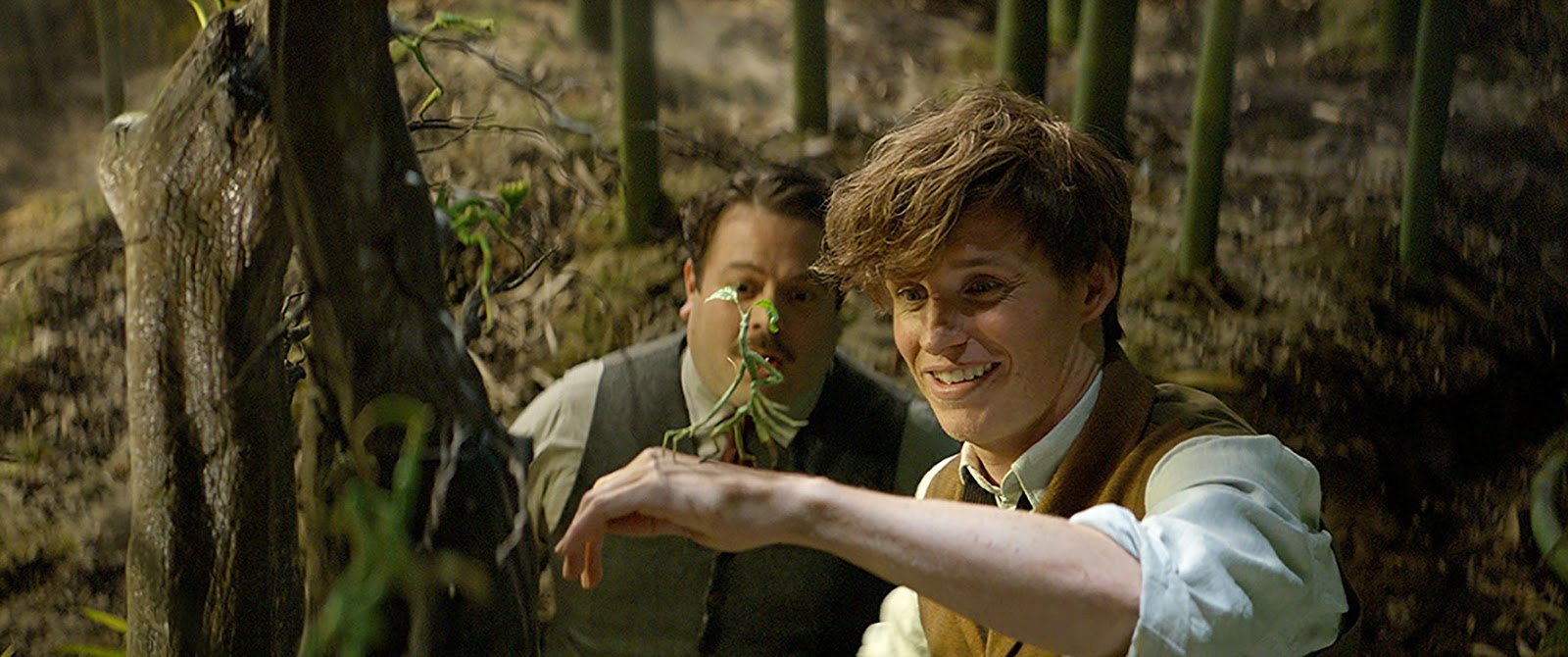
Eddie Redmayne and Dan Fogler uncover some Fantastic Beasts

Director: David Yates

Cast: Eddie Redmayne (Newt Scamander), Katherine Waterston (Tina Goldstein), Dan Fogler (Jacob Kowalski), Alison Sudol (Queenie Goldstein), Colin Farrell (Percival Graves), Ezra Miller (Credence Barebone), Samantha Morton (Mary Lou Barebone), Jon Voight (Henry Shaw Snr), Carmen Ejogo (President Seraphona Picquery), Ron Perlman (Gnarlack), Ronan Raftery (Langdon Shaw), Josh Cowdery (Henry Shaw Jnr), Johnny Depp (Gellert Grindelwald)

Eventually the gravy train had to come to an end. The Harry Potter franchise laid golden eggs for over a decade, until Rowling’s books came to an end. Just as well then that the incomparable JK Rowling had tonnes of invention left up her sleeve, and was keen to look at other elements of the Potterverse. So we got the creation of this sideways prequel, set in the rich backstory of the Harry Potter novels. And it is a bit of a treat.

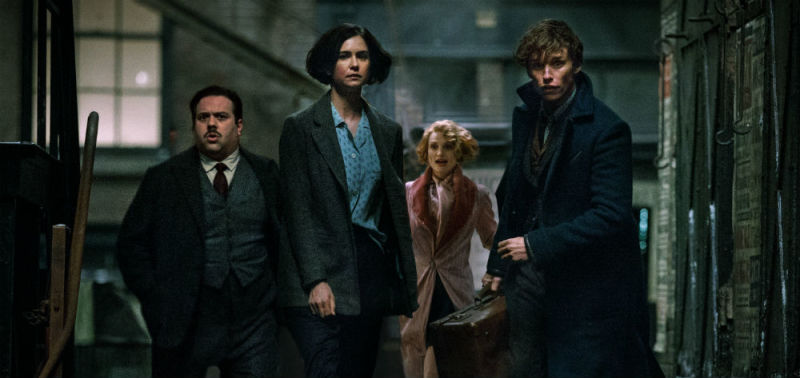
In the 1920s, Newt Scamander (Eddie Redmayne) arrives in New York with a suitcase full of fantastic beasts. He’s there to return one of them home – but after a mix-up at a bank his suitcase ends up in the hands of muggle (or as the Americans put it “No-Maj”) and would-be baker Jacob Kowalski (Dan Fogler). As the escaped beasts cause chaos, demoted Auror Tina Goldstein (Katherine Waterston) works with Newt and Jacob to try and recapture the creatures, with the aid of Tina’s mind-reading sister Queenie (Alison Sodel). But is all the destruction truly caused by Newt’s creatures? Or are there darker forces at work? 

Fantastic Beasts is a charming spin-off, sustained by some endearing performances, its warm heart and stylish design. Whether the plot is quite strong enough to reward constant viewing as much as many of the Harry Potter films do, I’m not sure (I didn’t find its story particularly gripping the second time around), but I think there are enough incidental pleasures there to keep you coming back for more. It’s actually a film which will be interesting to re-evaluate after the later sequels emerge – there are many suggested threads set up in this one for exploration later.

It’s not a surprise that the initial plot around chasing and collecting the beasts is fairly basic, since it’s based on a slim handbook (itself based on a reference from the original Harry Potter stories) that Rowling published as a Comic Relief fundraiser. Besides the chasing around to capture the animals, it’s only really the backdrop for sight-gags, cute animals and (most importantly) our window for getting to know our leads.

And these leads are certainly well worth getting to know, with a string of excellent performances from the four principals. Redmayne anchors the film very well as the slightly dotty, professorial, socially awkward Newt, whose coy, bashful charm really endears him to the viewer. Dan Fogler is possibly even better as our viewer surrogate, an average New Yorker thrown into a mad world of magic who somehow manages to take it all in his stride and whose growing excitement and embracing of this demented wizard world makes you fall in love with him. He’s helped by a sweet, gentle and touching romance with the effervescent but lonely Queenie (a magnetic Alison Sudol). Katherine Waterston gets the trickiest part as the earnest, try-hard, play-by-the-rules Tina – but her growing fondness for Newt and his creatures works very well.

The moments of the film that focus on the interaction between these four are the finest of the film – as are those that allow us a glimpse of Newt’s wonderful creatures. Housed in a Mary Poppins-ish suitcase of infinite TARDIS-like depth, these beasts are brilliantly designed and wonderfully individual, from a cute mole-like Niffler (naughtily stealing shiny things like a magpie), to a horny Erumpent (like a hippo and rhino mixed), to the majestic Thunderbird, a sort of Eagle-Phoenix, soaring through the plains in Newt’s suitcase. Even the small Bowtruckle Newt carries in his pocket gets to develop a sense of personality. (And yes I had to look all these names up).

These creatures are both individualistic but also used for very specific purposes in the film, from lock-picking to a sort of bizarre self-defence weapon. Despite their horrific appearances, the film treats them with as much understanding sweetness as Newt does – even the dangerous ones are only dangerous when riled or threatened, and Newt’s protective nature helps us to feel as fond of them as he does.

Away from the beasts, the film largely focuses on setting up threads (and threats) for future films. A major sub-plot revolves around an anti-Magical society run by a stern-faced Samantha Morton. The film heads into darker territories here, with its references to both cults and the ill-treatment of children. Ezra Miller does well as Morton’s awkward, ill-treated adopted son, unable to escape from his oppression or express his frustration. Someone in this family is a powerful magical being called an Obscurus, and the film plays a neat game of bluff and double bluff around this.

It continues this game as it fills out the political magical world around Carmen Ejogo’s regal magical President. What game is Colin Farrell’s authoritarian Perceval Graves playing? What of the film’s opening references to dark wizard Grindelwald, and the suggested war that is bubbling under the surface in the magical world? All this darker stuff sits around the edges and margins of Newt’s beast-collecting storyline, occasionally seeping in (let’s not forget at one point Newt and Tina are literally sentenced to death for supposed crimes), but doesn’t overwhelm the lightness.

David Yates directs with a professionalism that comes from being hugely familiar with this world. His later sequences of Obscurus destruction are not always particularly different from other city-smashing scenes from other films. Not every plotline feels fully explored – Jon Voight playing a newspaper mogul and his two contrasting sons seems like a plot we could do without – but Yates does keep the film moving pacily forward, he gets the tone of light slapstick and family warmth and he still shoots the wonder of magic better than almost anyone.

Fantastic Beasts is a film that is perhaps a little too light and frothy to really be a classic – it juggles too many plots and doesn’t always bring them together well. It’s mixture of darkness and lightness is a little eclectic, and it sometimes feel very much like a film designed to set up future films effectively. But when it focuses on its four leads, it’s very strong indeed and all of them – particularly Fogler – are people you want to see more of. It even manages to end the film on both a genuine laugh and a heart-warming bit of romance, tinged with sadness. It’s a fine start to a new franchise.