Tag: Anne Revere

A Place in the Sun (1951)

A Place in the Sun (1951)

A great Hollywood romance obscures darker, more sinister implications that its makers seem unaware of

Director: George Stevens

Cast: Montgomery Clift (George Eastman), Elizabeth Taylor (Angela Vickers), Shelley Winters (Alice Tripp), Anne Revere (Hannah Eastman), Keefe Brasselle (Earl Eastman), Fred Clark (Bellows), Raymond Burr (DA Frank Marlowe), Herbert Hayes (Charles Eastman), Shepperd Strudwick (Tony Vickers), Frieda Inescort (Ann Vickers)

It’s based on Theodore Dreiser’s An American Tragedy, but in some ways it feels like very British. After all, few American films are more aware of class than A Place in the Sun and there is something very British about a working-class man pressing his nose up against the window of the wealthy and wishing he could have a bit of that. In some ways, A Place in the Sun’s George Eastman is a more desperate version of Kind Heart’s and Coronets Louis desperate to be a D’Ascoynes or a murderous version of Room at the Top’s Joe Lampton not wanting his girlfriend to get in the way of wooing a better prospect. The most American thing about A Place in the Sun it is that what would be a black comedy or a bitter drama in Britain, becomes a tragic romance in George Steven’s hands.

George Eastman (Montgomery Clift) is from the black sheep working-class side of the Eastman clan, rather than the factory-owning elite side who live among the city’s hoi polloi. George is gifted an entry-level grunt job in the factory but works hard for progression. He absent-mindedly dates production line co-worker Alice (Shelley Winters), who thinks he’s the bee’s knees. Unfortunately for her, George meets Angela Vickers (Elizabeth Taylor), daughter of the wealthy Vickers family, and they fall passionately in love. Just as Alice announces she’s pregnant and asks when George will do the decent thing. Can George thread this needle, rid himself of Alice and marry the willing Angela? Perhaps with the help of the Eastman’s lake side house and Alice’s inability to swim?

You can see the roots of a cynical tale of opportunism and ambition there, but A Place in the Sun wants to become a luscious romance. It is shot with radiant beauty by William C. Mellor, bringing us sensually up-close with Clift and Taylor whose chemistry pours off the screen. It’s soundtracked by a passionately seductive score by Franx Waxman. As we watch these two fall into each other’s arms, the film tricks us (and, I think, itself) into thinking these two lovers deserve to be together. And, by extension, everyone would be much better off if Shelley Winter’s gratingly needy Alice, who can’t hold a candle to Elizabeth Taylor’s grace, charm and beauty, just disappeared. Before we realise it, we and the film are silently rooting for a man with fatal plans to rid himself of this encumbrance.

What’s striking reading about A Place in the Sun is that Clift felt Eastman, far from a sympathetic romantic, was an ambitious social-climber (much like his role in The Heiress) too feckless, weak and cowardly to face up to his responsibilities. Clift’s performance captures this perfectly: at the height of his method-acting loyalty, Clift is sweaty, shifty and increasingly guilt-ridden with Alice, awkwardly mumbling platitudes rather than talking (or taking) action. It’s actually a superb performance of people-pleasing weakness from Clift. Eastman always says what those around him want to hear, whether it overlaps with what he believes or not. He can say sweet nothings to Alice and romantic longings to Angela. This is a great performance of an actor being, in many ways, more clear-eyed than the film about what the story is really about: a man who decides the best way to deal with the inconvenience of a pregnant girlfriend is to drown her.
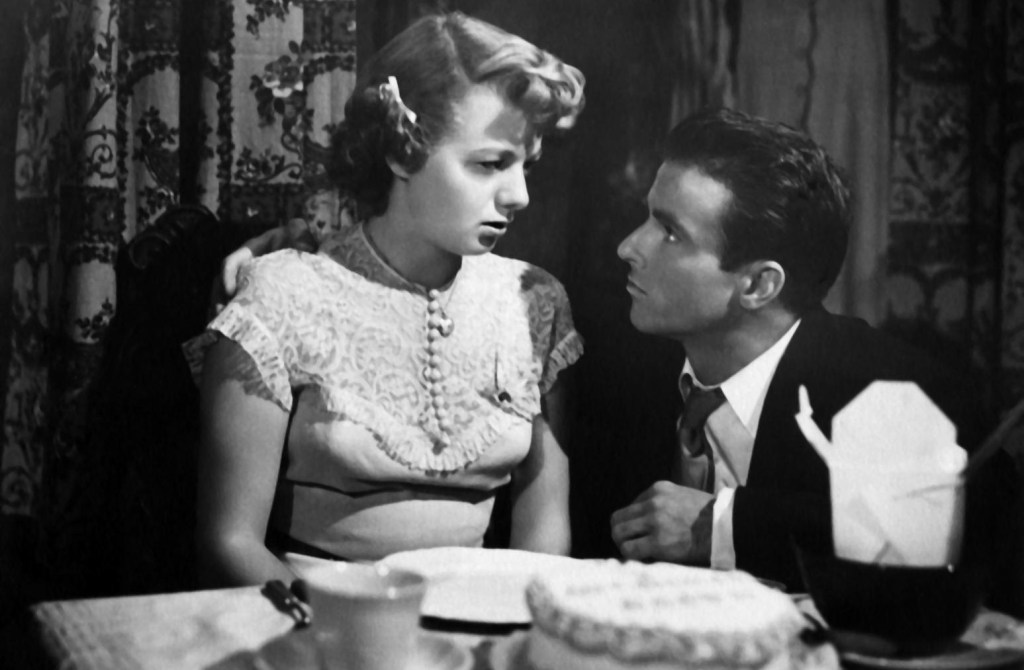
What Clift didn’t anticipate is how much the power of photography and editing (not to mention the radiance of his and Taylor’s handsomeness) would mean many viewers would end up rooting for the selfish romantic dreams of this weak-willed heel. Steven’s film turns the Clift-Taylor romance into a golden-age Hollywood dream. Taylor, at her most radiant, makes Angela possibly the nicest, kindest, most egalitarian rich girl you can imagine. Their undeniable click is there from their first real encounter (Angela watching George absent-mindedly sink a cool trick shot at an abandoned pool table – how many takes did that take?). The sequences of these two together play out like a classic idyll, from slow-dancing at glamourous parties to lakeside smooching. Everything about what we are seeing is programming us to root for them – and I’m not sure Stevens realises the implications.

If we are being encouraged to relate to Clift and Taylor, everything in Shelley Winter’s Alice is designed to make us see her not want to be her. Winters lobbied for the part, desperate for a role to take her away from shallow romantic parts – ironically her success pigeon-holed her to dowdy, needy second-choice women, deluded wives and desperate spinsters. But she’s superb here, making Alice just engaging enough for us to imagine George would take a break from his self-improvement books, but also so fragile and needy we can believe she’d become both increasingly desperate and annoying. Angela, dancing radiantly at parties, is who we want to be: Alice, sitting up late in her cramped flat with a try-hard birthday dinner and carefully chosen gift waiting for the arrival of an indifferent George, is who we fear we are. If movies are an escape, we don’t choose her.

Steven’s film makes Alice’s pregnancy more and more a trap. (The film carefully skirts the much discussed but never named abortion option). When on the phone together, the camera tracks slowly into George as he huddles against a wall mumbling, the film’s world shrinking with his. In one of the film’s many beautifully chosen Murnau-inspired super-impositions, Alice appears like a ghost over George and Angela at the river. Alice’s increasingly fractious demands that George do his duty and marry her, with increasingly wild threats of social disgrace interspersed with her grating, desperate neediness makes us cringe with him. Possibly because we worry we’d be like her.

A Place in the Sun makes us root for a man plotting murder and guilty, at the very least, of manslaughter. That could make it the most subversive romance of all time – if it wasn’t for the fact that, even in the end, George is presented as the real victim. Even a priest gives him only a few words of criticism, while George is not even punished by losing the love of the faithful and trusting Angela. Even if George didn’t push Alice in, he also didn’t lift a finger to save her life. In the trial, Raymond Burr’s showboating DA helps us pity George as he presents a version of that fateful boat trip that we know isn’t true but is only a few degrees more horrible than what George actually did. Even his guards feel sorry for him, and Steven’s clunkily intercuts between George’s dutifully honest working-class family and the wealth of his rich uncle’s circuit to hammer home the tragedy.

Did Stevens realise all of this as he made the film? I’d argue possible not: that he was as much sucked into the romance as the viewing audience. But some American movies embrace optimism – and an American tragedy in that world is lovers kept apart. A British tragedy is an ambitious man destroying himself and others. There is a smarter, more ruthless film to be made from the material of A Place in the Sun. One where Clift’s George is a truly heartless go-getter and both Alice and Angela are different types of victim. And that would be American to: it would be one which consciously shows us how our longing for fairy tales and the American Dream can lead to perverse, outrageous outcomes. That film would be a masterpiece, rather than the unsettling work A Place in the Sun actually is.
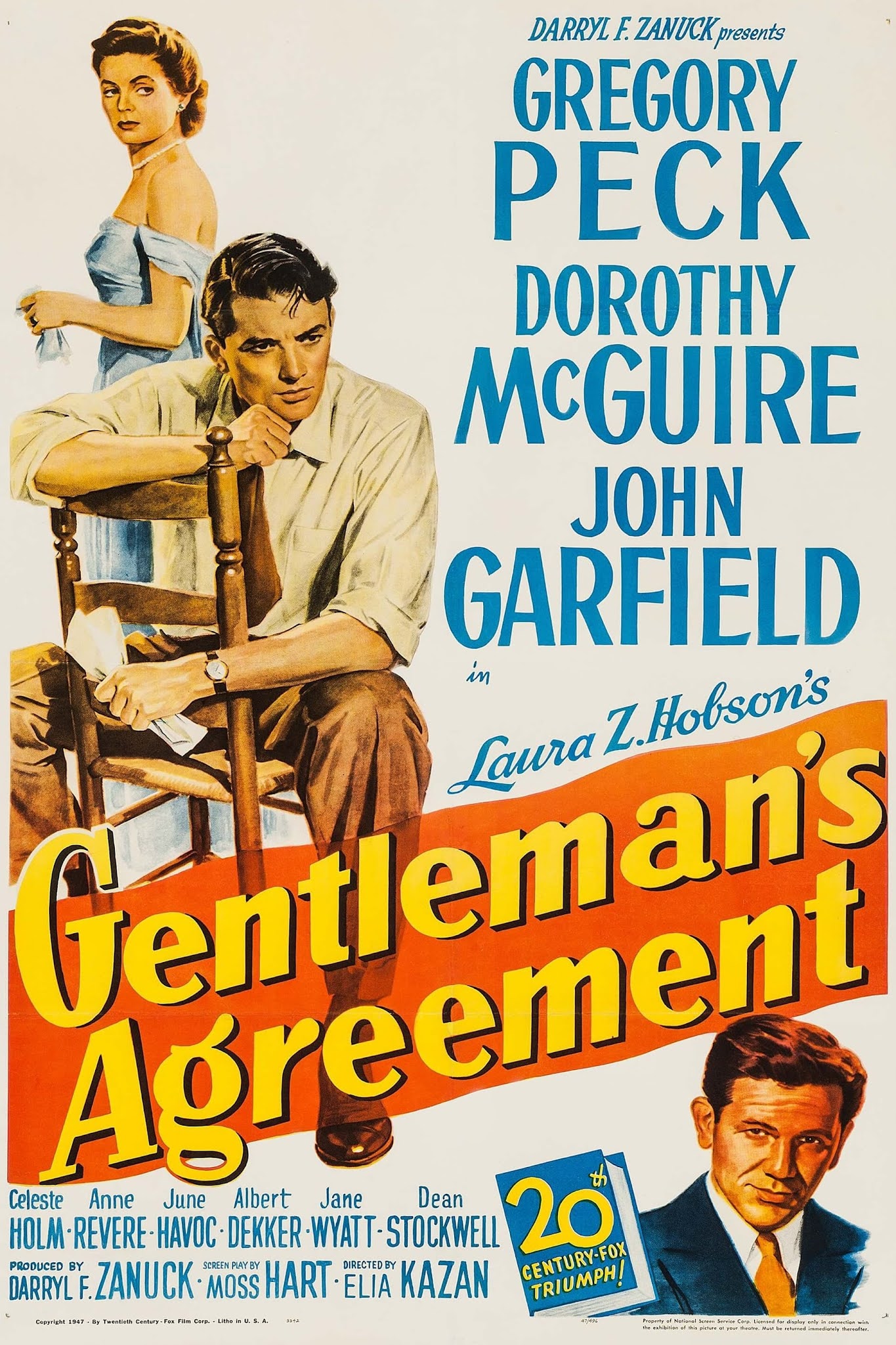
Gentleman's Agreement (1947)

Gregory Peck takes on anti-Semitic prejudice in Gentleman’s Agreement

Director: Elia Kazan

Cast: Gregory Peck (Philip Schuyler Green), Dorothy McGuire (Kathy Lacey), John Garfield (Dave Goldman), Celeste Holm (Anne Dettrey), Anne Revere (Mrs Green), June Havoc (Elaine Wales), Albert Dekker (John Minify), Jane Wyatt (Jane), Dean Stockwell (Tommy Green), Sam Jaffe (Professor Fred Lieberman)

What was daring 60 years ago, often seems tame today. In 1947, Gentleman’s Agreement, an expose of anti-Semitism in America, was a potential career-ending risk for its stars. It won three Oscars, including the Big One (beating the similarly themed Crossfire, an anti-Semitic murder mystery – and better, more entertaining film). Today, Gentleman’s Agreement seems like a time capsule on celluloid: extremely earnest Hollywood movie-making at its most socially responsible – and only scratches the surface of prejudice and its dangers, capping everything with a neat happy ending.

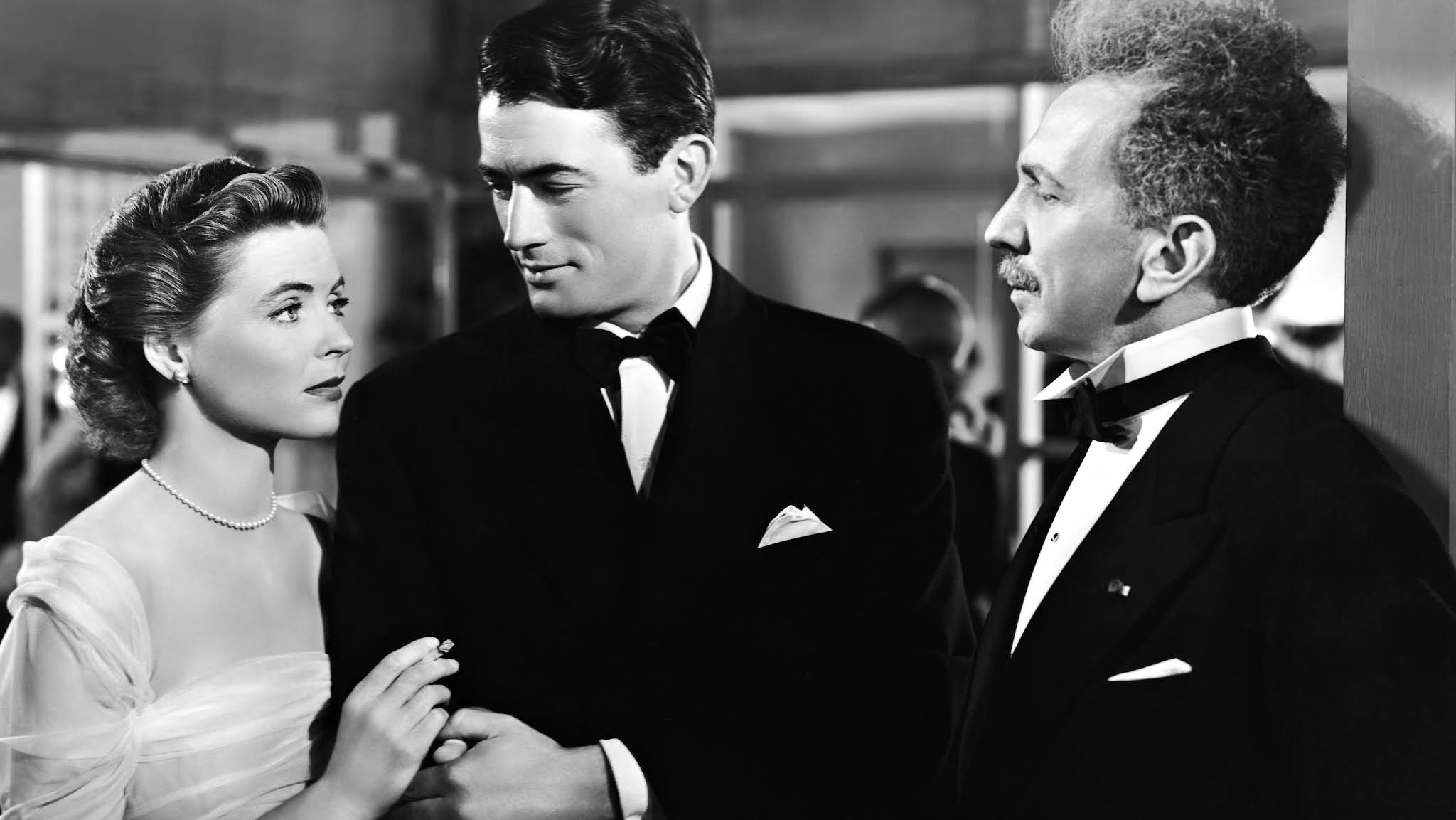
Journalist Philip Schuyler Green (Gregory Peck) is commissioned to write a series of expose pieces on anti-Semitism. His editor doesn’t want the “cold facts”, he wants the sort of unique “angle” that’s Green’s specialism. Phil decides to pass himself off as a Jew so he can find out what it’s really like. Only Phil’s fiancée Kathy (Dorothy McGuire) will know the truth. Phil finds out first-hand the knee-jerk prejudice and barriers Jews in New York face – something hammered home as he begins to relate to the experiences of his Jewish school-friend-turned-war-hero Dave Goldman (John Garfield). Phil starts to realise even Kathy may talk the talk of opposing prejudice, but doesn’t always walk the walk.

Gentleman’s Agreement is an extraordinarily earnest piece of film-making, that doesn’t just wear its liberal heart on its sleeve, it stretches it across its entire shirt. The plot frequently halts for someone to deliver a set-piece speech on the evils of prejudice, and Phil’s son (well played by a young Dean Stockwell) serves as an audience surrogate for Peck to fill us in on how prejudice is the enemy-within. There is no doubting, watching the film, everyone passionately believes in its importance (Garfield, a Jew born in Brooklyn, took a huge pay cut to be involved). It’s just a shame that the film itself is to flat, overburdened by its own sense of importance.

It’s as least as interesting for what it doesn’t say. There is something damning about the fact Hollywood only felt comfortable making films about anti-Semitism after the Holocaust. A Jewish character objects to the Phil’s article with the standard line used by Hollywood Jewish studio owners – drawing attention to it only makes the problem worse (remember all references to Jewishness was removed from The Life of Emile Zola). Additionally, there are only passing references (if that) to sexism or any other form of racism or prejudice, and virtually every character we see is white, WASPY and middle-class. Hollywood could only handle one prejudice at a time, apparently.

Gentleman’s Agreement is strong on the everyday nature of prejudice – off-hand remarks about money and facial characteristics, a character protesting “that some of my best friends…” and so on. But, considering it was made in the shadow of one of the worst racially-motivated atrocities in history (the closest reference to the Holocaust is Peck refering to anti-Semitism being not just happening “far away in some dark place with low-class morons”), the film could (and should) have gone further on the dangers of prejudice. Saying that, this was still a big step for Hollywood. And while the film frequently appears preachy, po-faced and stodgy today, it was still a brave piece of film-making, even if it’s gingerly taking kid-steps towards confronting a problem.

Phil’s investigation of anti-Semitism is unfocused and vague. He speaks to only three Jews – a schoolfriend, an atheist Einstein figure (played by Sam Jaffe) he bumps into at a dinner party, and a secretary ashamed of her heritage who despises “the wrong sort” of Jew. Never once do we see him go to a Synagogue, visit a Jewish community or step outside the bounds of his world of country clubs, posh hotels and gated communities. The story may be about how prejudice exists in places we wouldn’t expect, but a film on anti-Jewish prejudice really should have a place in it for more than this, rather than Jewishness being a label Phil puts on and shrugs off later with a “ta da, gotcha!”

The film’s heart is in showing how “someone like us” could be prejudiced, sometimes without even realising it. Phil’s fiancée Kathy (a decent performance in a thankless part by Dorothy McGuire) turns out to have more than a few anti-Semitic bones in her body. Kathy is the classic liberal, believing every word of her own press about equal opportunities, while quietly urging people to fit in and be like her (gentile) friends. The film slowly exposes Kathy’s subconscious unease, her willingness to accept certain inequalities to avoid confronting the status quo. Watching today, it’s hard not to see Kathy as a pretty dreadful, hypocritical person. But while Gentleman’s Agreement wants to shake us, it still wants a happy ending – so she repents and learns her lesson.

It’s a shame, as this rather dull love plot is the film’s weakest thread. Far more interesting would have been seeing Phil actually out in the real world (Kazan’s immersive location shooting, which he used for Panic on the Streets and On the Waterfront, would have improved this film ten-fold). It’s also unfortunate Phil’s colleague Anne (played with Oscar-winning charisma by Celeste Holm) not only seems better suited to Phil, but a much nicer, braver person – it’s hard not to watch the whole film rooting for Phil to dump the tiresome Kathy for the engaging Anne.

Gentleman’s Agreement’s study of prejudice seems very tame, but its heart is in the right place. For even tackling the issue it deserves praise, even if it’s rather stunted dramatically. Kazan’s direction is as earnest (and at times lifeless) as the film, but he does fine work with actors. Peck is at his most morally certain, with a great sense of affronted liberalism, McGuire is very good, Garfield wonderfully humane, Holm marvellous, Anne Revere excellent as Phil’s drily witty mum. A braver film could (and should) have been made – and Crossfire makes all the same points, but quicker and with a lot more dramatic interest. Gentleman’s Agreement sometimes feels like a rather self-important bore at a dinner party, but at least you know it has conviction and means well.

The Song of Bernadette (1943)

Jennifer Jones sees visions of the Virgin Mary in the moving The Song of Bernadette

Director: Henry King

Cast: Jennifer Jones (Bernadette Soubirous), Charles Bickford (Abbé Dominique Peyramale), Williem Eythe (Antoinie Nicoleau), Gladys Cooper (Marie Theresa Vauzou), Vincent Price (Vital Dutour), Lee J. Cobb (Dr Dozous), Anne Revere (Louise Casteror Soubirious), Roman Bohnen (François Soubirous), Mary Anderson (Jeanne Abadie), Aubrey Maher (Mayor Lacade), Linda Darnell (Virgin Mary)

“For those who believe in God, no explanation is necessary. For those who do not believe, no explanation is possible.”

With these words, this worthy religious epic from the Golden Age of Hollywood kicks off its retelling of how visions of the Virgin Mary from one poorly educated peasant girl, Bernadette Soubirous, turned Lourdes from a backwater near the French-Spanish border into one of the most important Catholic pilgrimage sites in the world. It’s material that you could fairly expect to be pretty dry and sanctimonious stuff. But, surprisingly, it’s rather affecting and engaging work – and, although made with a certain workmanlike competence, carries enough touches of grace to lift it up into the second tier of the Hollywood firmament.

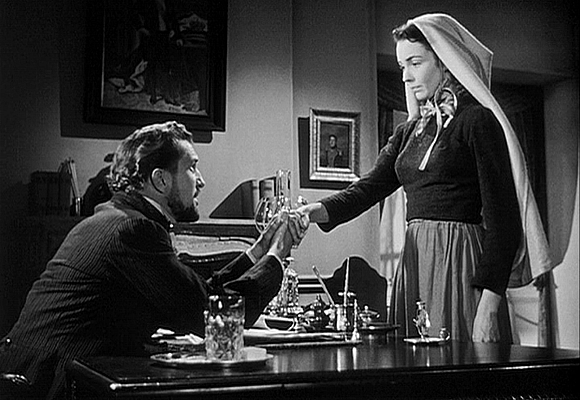
Bernadette Soubirous is played by Jennifer Jones – in one of her first screen roles, for which she became at 25 one of the youngest Best Actress Oscar winners ever. Until her visions begin, she is just an average peasant child, struggling with asthma, her parents (Anne Revere and Roman Bohnen) struggling with poverty, failing at religious school under the strict tutelage of Sister Marie Theresa (Gladys Cooper), and generally looking ahead to a life very much like any other. But visions of the Virgin Mary (played by an unbilled Linda Darnell) bring belief and devotion into her life, and she reports the content of the visions (and her discussions with the Virgin Mary) with an honest simplicity and consistency that wins many backers, not least local priest Abbé Peyramale (Charles Bickford). But the local officials of Lourdes, led by local prosecutor Vital Dutour (Vincent Price), concerned that these visions will impact plans for the town’s development and anxious about the hysteria they could encourage in the simple-minded, try their best to restore what they see as reason over the intoxication of faith.

Faith really is the word of the day in Henry King’s at-times stately, but also shrewdly worldly drama that mixes divine intervention and belief with a fair-hearing for the doubters and the arguments of reason. The miracles, when they come, are followed with several characters – not least Lee J Cobb’s coolly rational doctor – outlining the alternative explanations for why these people may suddenly feel they have been cured. Later Dutour complains wryly that it only takes a handful of cures among the thousands that come for everyone to continue to want – or need – to believe. 

But the film sides squarely with the truth of Bernadette’s visions, not least by stressing at every turn her honesty, guilelessness and principle. Questioned by various church officials – many of them terrified of being duped by a con, having been stung in the past – she sticks with an honest openness to the same version of the story over and over again. Peyramale – initially just as sceptical – is won over to belief by Bernadette’s sudden knowledge of such matters as the immaculate conception, when she seemed barely aware of what the Holy Trinity was while studying at school. 

King – a largely middle-of-the-road director, but who marshals his resources well here – clearly takes inspiration from Carl Dreyer’s films on similar topics of faith and visions in his shooting of Bernadette. Bright light and intense close-ups that study every inch of her rapture help convey the spirituality of her visions. When Bernadette leads groups to her visions – none of whom can see what she sees – light radiates around her and over her, but seems to barely touch those she is with. The cinematography by Arthur C Miller is beautiful, a brilliant use of light and darkness to skilfully sketch both the poverty of Bernadette’s background and the radiance of her visions.

The mood of the film is also helped be Jennifer Jones’ impressive performance. Bernadette is, in many ways, potentially one of the least interesting and dynamic characters in the film, but Jones pulls off the immensely difficult task of making someone stuffed with decency, innocence and honesty into an actually compelling and endearing character. A protégé of David O Selznick (whom she later married), Jones earned her place in the film with her ability to invest Bernadette with humanity, avoiding any hint of cynicism in her performance while never becoming grating either.

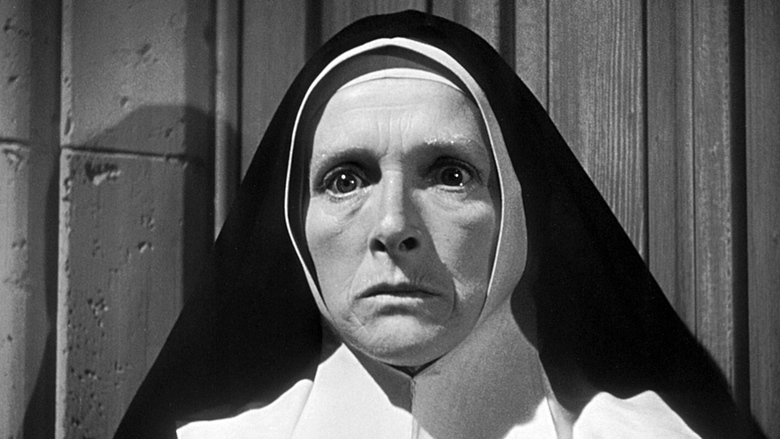
It contributes to a beautiful telling of the story, backed by a series of excellent supporting performances. Charles Bickford landed an Oscar nomination as the kindly, decent priest whose initial scepticism and concern that the crowd is being manipulated is washed away by growing belief. Lee J Cobb is very good as a stoutly rationalist doctor. Anne Revere (also nominated) has a protective warmth as Bernadette’s mother.

The film’s finest supporting roles though come from Vincent Price and Gladys Cooper. Price is superb as the man of science and reason who worries over the implications of fanaticism and the damage hysteria can cause, but is never simply prejudiced or Dawkinsish in his religious doubts. King’s film treats his concerns with a genuineness that makes both the character more interesting and the film more balanced. Cooper is brilliant as a Salieri-like nun, enraged with envy and jealousy that after years of devotion and suffering it is not she but Bernadette who gets the visions.

And why did Bernadette get those visions? The film is not crude enough to suggest why – Bernadette herself apologises for the trouble she has caused and her unworthiness – but it’s clear that it’s her very innocence and sincerity that makes her worthy of them. The design – and impressive score by Alfred Newman – helps to make the film feel as profound as it does, but it’s the balance that the film handles its characters with that makes it engrossing. There are no simple heroes or villains, just as there are no simple solutions. Like the film says at the start, it’s a question of faith. Those who do not wish to believe can marshal as many arguments in their favour as those who want nothing more than to trust in faith. It makes for a fine, balanced, engaging and well-made classic.