Tag: Armando Iannucci

The Personal History of David Copperfield (2019)

Dev Patel makes a charming lead in this Dickens adaptation that finds the comedy but misses the heart

Dir: Armando Iannucci

Cast: Dev Patel (David Copperfield), Tilda Swinton (Betsey Trotwood), Hugh Laurie (Mr Dick), Peter Capaldi (Mr Micawber), Ben Whishaw (Uriah Heep), Paul Whitehouse (Mr Peggotty), Aneurin Barnard (James Steerforth), Daisy May Cooper (Peggotty), Morfydd Clark (Dora Spenlow/Clara Copperfield), Benedict Wong (Mr Wickfield), Darren Boyd (Mr Murdstone), Gwendoline Christie (Jane Murdstone), Anthony Welsh (Ham Peggotty), Rosalind Eleazar (Agnes Wickfield), Nikki Amuka-Bird (Mrs Steerforth), Anna Maxwell Martin (Mrs Strong)

If Charles Dickens ever had a favourite child, it was probably David Copperfield. His novel – heavily inspired by events in his own life and upbringing – is an epic masterpiece, part coming-of-age story, part heart-warming family saga, part social satire. It’s quite a challenge to boil down its hundreds and hundreds of pages – and multiple plot points and characters – into less than two hours, but that’s the task Armando Iannucci takes on here. Does it work?

Well, to be honest, not quite. There is a lot to admire here, I’ll say that straightaway. And maybe I’m hard on it as I’ve read (or listened to) the novel at least three times. But for me this version drains out the heart of the novel. It zeroes in on the comedy – and there are several scenes and characters that are inarguably funny – but in doing so it removes or peels away anything bittersweet or with even a hint of sadness. It’s funny, but also a strangely empty and unengaging version of the story that it’s hard to get invested in and finally seems to drag.

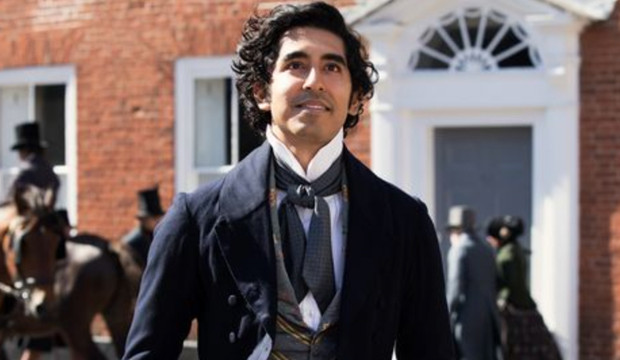
Iannucci uses a terrific framing device, inspired by Dickens’ own public readings of his work. The film opens with Copperfield (a wonderfully jovial and engaging Dev Patel) publically introducing his novel to a theatre full of people which, with a flourish, disappears as he walks into the scenery and into his own past. Iannucci sprinkles his film with little flourishes like this to remind us of the semi-created nature of what we are watching, from Mr Murdstone’s hand looming into the Peggottys’ boat to pluck Copperfield into the next scene, through to the use of projected imagery at key points to fill in visually backstories the characters in the scene are relating.

The book has been well pruned and structured – and this is in some ways a triumph of compression, since it ticks off nearly all the main storylines of the plot (with some changes) and includes all the main characters. The real purist will decry such things as the loss of Barkis and Mr Micawber’s famous lines, or the translation of Mr Creakle into a factory owner or Rosa Dartworth into Steerforth’s mother. But these are necessities of adaptation and much of the storyline remains the same (if abbreviated). The script punches up the comedy a great deal – Iannucci has been vocal in his feeling that Dickens does not get the appreciation he deserves as a comic writer.

The script also digs up a few gems in the novel – Copperfield’s nervousness in reading, his inability to read to Murdstone’s gaze, is imaginatively reinterpreted as dyslexia. The semi-Freudian longing he feels for the warmth and innocence of his lost childhood is neatly captured by casting Morfydd Clark (very endearing and charmingly ditsy) as both his mother and his first love Dora. There are several laugh-out loud moments and a charmingly freewheeling love for absurdity.
But what doesn’t work is that the heart and soul of the novel has been stripped out. There is, to put it frankly, no pain or difficulty here. The tears in Dev Patel’s eyes at the end of the film as he closes his recital with the audience and reflects on the triumphs and losses of his life feel unearned. Put frankly nothing seems that hard, for all poverty rears its head at time. Even the Murdstones are less fearsome and cruel than they need to be. Worst of all, anything of any real emotional depth or tragedy from the book is removed. The two key tragic deaths of the book are actively reversed here, with both Dora and Ham surviving at the end. The complexities of Copperfield’s feelings for Dora and Agnes are resolved with immense ease for a traditional happy ending in a garden of the heroes surrounded by friends and families (exactly the sort of happy ending that Greta Gerwig gently poked fun at in Little Women). 

It’s all boiled down and told for jokes and the emotional engagement just isn’t there. Dev Patel enters the film too early – Copperfield is a young adult before he even heads to his aunt’s house – meaning the lost, vulnerable sense of sad childhood turning into a happy one is completely lost, and Copperfield’s fragility is too quickly brushed aside. Mr Micawber (a funny turn from Capaldi, but far too wheedling) is played so much for laughs that his essential decency and kindness is lost in favour of a man who spends his life borrowing cash. Too often humour is the first and only port of call, and finally it crushes the heart out of the story.

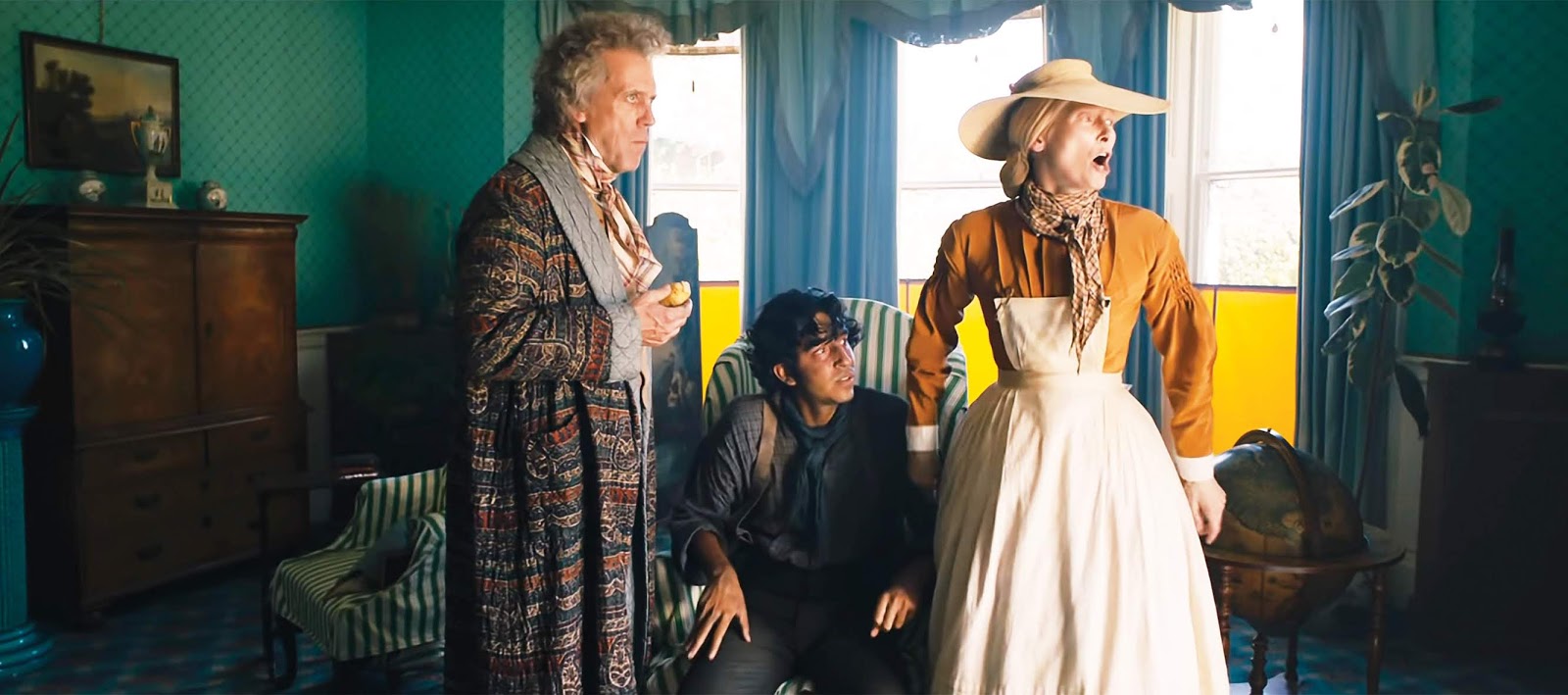
There are triumphs in the film’s cast. Hugh Laurie is simply outstanding as Mr Dick – warm, funny, wise, surreal, eccentric, half a philosopher, half an engaging and excited child – it’s Laurie’s finest performance ever on film. Benedict Wong is very funny as the alcoholic Mr Wicklfield. Tilda Swinton has great fun as a battleaxe but wise Miss Trotwood. Nikki Annuka-Bird could cut glass as Mrs Steerforth. Aneurin Barnard makes for a charmingly dissolute Steerforth. Ben Whishaw is terrific as the unctuous and ambitious Uriah Heep. The colour-blind casting works a treat to bring a range of wonderful actors in.

It’s just a shame the story doesn’t translate as well. There is a theme somewhere in here of Copperfield trying to work out his identity (much prominence is given to his multiple names and nicknames) but it never really takes flight, serving as a fig leaf of an arc rather than an actual arc. It’s a film full of jokes and fine moments – but with no heart, and no real engagement with the audience, it ends up feeling far longer than reading the book.

The Death of Stalin (2017)


Hilarious hi-jinks in Soviet Russia as the politburo struggle to deal with The Death of Stalin

Director: Armando Iannucci

Cast: Steve Buscemi (Nikita Khrushchev), Simon Russell Beale (Lavrenti Beria), Paddy Considine (Comrade Andreyev), Dermot Crowley (Lazar Kaganovich), Rupert Friend (Vasily Stalin), Jason Isaacs (Georgy Zhukov), Olga Kurylenko (Maria Yudina), Michael Palin (Vyacheslav Molotov), Andrea Riseborough (Svetlana Stalin), Jeffrey Tambor (Georgy Malenkov), Paul Whitehouse (Anastas Mikoyan), Paul Chahidi (Nikolai Bulganin), Adrian Mcloughlin (Joseph Stalin)

Armando Iannucci is a brilliant television satirist, who spring to wider fame with the success of foul mouthed political satire The Thick of It (re-imagined as Veep in the USA). His sweaty, sweary, fly-on-the-wall style, and characters who embody the panicked agitation of the nakedly ambitious but not-too-bright, was a perfect match for our modern world. Does the style work for the past? You betcha.

In Soviet Russia, a country near paralysed with terror, the ruthless dictator Stalin dies. This starts an immediate scramble to succeed him, with the leading candidates being weak-willed, vain and foolish deputy Malenkov (Jeffrey Tambor), vaguely principled but fiercely ambitious opportunist Khrushchev (Steve Buscemi) and sinisterly sadistic police chief Beria (Simon Russell Beale). Soviet Russia though is a pretty ruthless place for political manoeuvring, with retirement usually coming in the form of a single bullet to the back of the head.

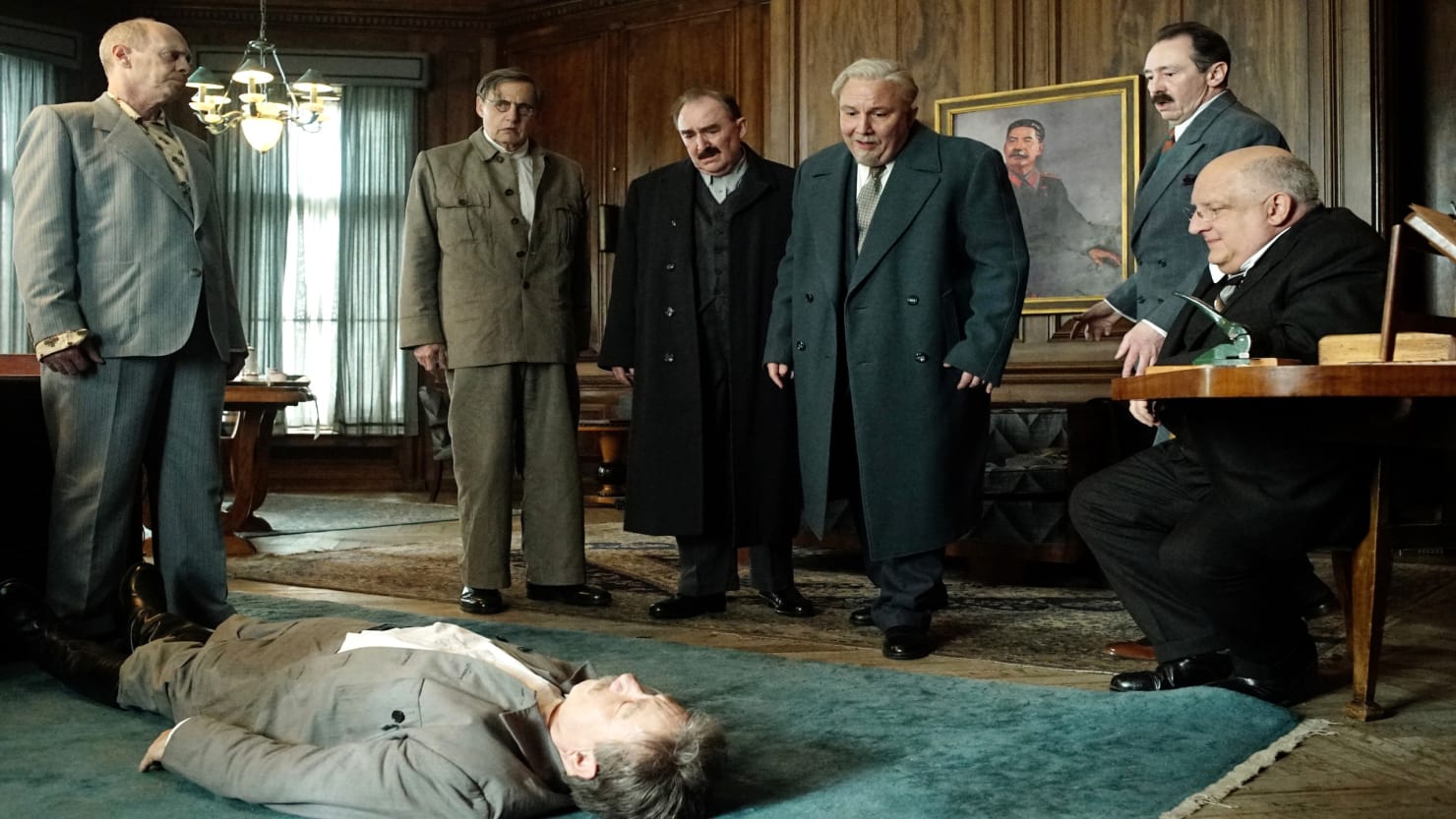
First off the bat, The Death of Stalin is a blisteringly funny film, a real laugh-out loud riot. Why does it work so well? Because it understands that, hand-in-hand with the horror, Stalinist Russia was so completely barking mad that it lends itself completely to black comedy. Imagine The Thick of It, but with Malcolm Tucker executing rather than dismissing terrified ministers. Welcome to the madness. Events that seem crazy are pretty much true: although time has been telescoped, the struggle for the succession did more or less play out like this (with less swearing).

Every scene of this dark farce has a memorable, stand-out line or moment. The sweaty panic of these over-promoted yes-men is brilliantly reminiscent of the sort of panic you can imagine seeing in your office, with the exception that it probably isn’t literally life-and-death. Iannucci completely understands the wild improvisation of the fiercely ambitious in high-stress situations. If you think the ministers of The Thick of It were adrift when confronted with parliamentary enquiries, imagine how their counterparts struggle when faced with the threats of a bullet in the head.

Because that’s the great thing about this film – while still being hilariously foul-mouthed, it actually gives a pretty good idea of what it might have been like to live in Soviet Russia. The characters are constantly having to adjust to who is in favour and who isn’t, what it is permissible to think and say and what isn’t, who is “dead and who isn’t”. Iannucci totally understands human nature doesn’t change – those left alive around Stalin are just the sort of shallow, selfish, weaklings he’s been lampooning in The Thick of It. Most of the ordinary people we see are just desperate to keep their heads down – getting noticed for regular joes in this film is basically a death sentence. 

The opening sequence really gets this idea across. Paddy Considine is hilariously nervy and terrified as a radio producer ordered to send a recording of the live concert they’ve just broadcast (unrecorded) to Stalin. The frantic rush to reassemble the orchestra, fill the audience up again with people from the street, replace the conductor (the original having passed out in terror at the possibility that he may have been bugged questioning Stalin’s musical knowledge) is brilliantly funny – but works because the genuine expectation that doing the slightest thing wrong could lead to immediate execution is completely clear. Especially as the scene is intercut with Beria’s heavies rounding up innocent civilians to disappear into a gulag. 

Iannucci doesn’t dodge the ruthlessness. The film is punctured throughout by executions, often carried out with a black farcical desperation. It doesn’t shy away from the brutality of Beria, whose violence, sadism and pathological rape addiction we are constantly reminded of (and which are even more effectively sinister as he’s played by the cuddly Simon Russell Beale). In turn, a frantic Beria berates the rest of the politburo for their participation in the orgy of killings and show trials Stalin organised. We see people about to be taken to their deaths hurriedly offering terrified goodbyes to their loved ones. The final sequence of the film, as the battle for the succession reaches its end-game, tones down the jokes to give us an alarmingly realistic picture of a coup. Black farce ending in death: it’s as legitimate a picture as any of living in Stalinist Russia.

All of this is presented in a razor-sharp and witty script, and the cast who deliver it are brilliant. In a fantastic touch, the actors (with the exception of Isaacs) use their own accents, which only adds to the crazy fun. The acting is, across the board, fabulous. Russell Beale gives his greatest ever film performance as a grubby, ambitious, not-quite-as-smart-as-he-thinks Beria, with bonhomie only lightly hiding his chilling sadism and cruelty. Buscemi is equally brilliant as Khrushchev, who has the ego and self-delusion to convince himself that he is the only hope for a reformed USSR, while actually being a weaselly political player with naked ambition.

Around these two central players there is a gallery of supporting roles. Tambor gives a brilliant moral and intellectual shallowness to the hapless Malenkov. Friend is hysterical as Stalin’s drunken son, a deluded man-child barely tolerated by those around him. Palin’s cuddliness works perfectly as fanatical Stalinist Molotov. Whitehouse, Crowley and Chadihi are also excellent, while Riseborough does well with a thankless role as Stalin’s daughter. The film may be hijacked though by Isaacs as a swaggeringly blunt General Zhukov, re-imagined as a bombastic, plain spoken Yorkshireman, literally entering the film with a bang half-way through and bagging most of the best lines.

The Death of Stalin is not just a brilliantly hilarious comedy, it also feels like a film that completely understands both the terror and the confused ineptitude of dictatorship. In a world where it is death to question the supreme leader, is it any surprise that his underlings are all such clueless, ambitious idiots? Has anyone else understood the black comedy of dictatorship before? I’m not sure they have. You’ll laugh dozens and dozens of times in this film. And then you’ll remember at the end that when this shit happens, people die. This might be the best thing Iannucci has ever made.