
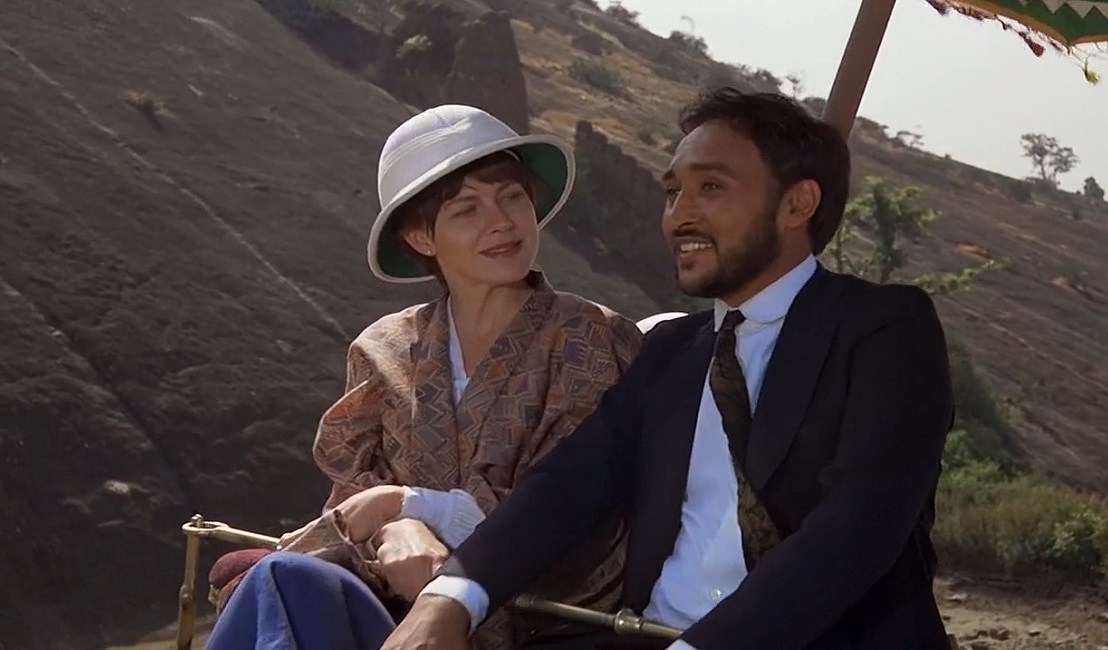
Lean’s final film is a visually sumptious, if not always completely successful, Forster adaptation
Director: David Lean
Cast: Victor Bannerjee (Dr Azizi), Judy Davis (Adela Quested), Peggy Ashcroft (Mrs Moore), James Fox (Richard Fielding), Alec Guinness (Professor Narayan Godbole), Nigel Havers (Ronny Heaslop), Richard Wilson (Collector Turton), Antonia Pemberton (Mrs Turton), Michael Culver (Major McBryde), Clive Swift (Major Callendar), Art Malik (Ali), Saeed Jaffrey (Hamidullah), Ann Firbank (Mrs Callendar), Roshan Seth (Amit Rao)

David Lean’s final film came after a 14 year hiatus after the overwhelmingly negative reaction to Ryan’s Daughter. (During a disastrous two-hour lunchtime with several prominent US film critics, Lean was asked outright how the director of Brief Encounter could have made “such a piece of bullshit” – the experience shattered his confidence for years). When he returned, it was with this handsome literary adaptation of EM Forster’s classic novel on the tensions in the British Raj. A Passage to India is a wonderful fusion between Lean’s later films that fill the largest canvas, and the carefully judged Dickensian adaptations of his early years.
In 1920s Chandrapore, Adela Quested (Judy Davis) has arrived from England with her prospective mother-in-law Mrs Moore (Peggy Ashcroft) to marry the local magistrate Ronny Heaslop (Nigel Havers). The two women are fascinated by India and its culture – and quickly bored with the parts of it the ex-pat community will show them (basically a sort of little-England alcove). When they befriend local Muslim doctor Aziz (Victor Bannerjee) and liberal pro-Indian school superintendent Richard Fielding (James Fox), Aziz invites them on a trip to the local Marabar Caves. During the trip, Miss Quested flees and accuses Aziz of attempted rape. Aziz pleas his innocence – Fielding and Mrs Moore believe him, Miss Quested seems confused – but the case becomes a cause celebre that will explode the tensions between the rulers and the colonised.
Lean’s production of the book (as well as directing, he also wrote the screenplay and edited the film) is a delicate and handsome adaptation, carefully capturing the events of the book and making a manful effort to bring to life its textures and complexities. Forster had worked in India for several years as the secretary to a Maharajah and for many years was in love with an Indian called Masood. He had a unique perspective of Indian/English relations (much of it filtered into the character of Fielding) which he believed was underpinned not only by misunderstanding but also unpassable barriers that Empire throws up between East and West.
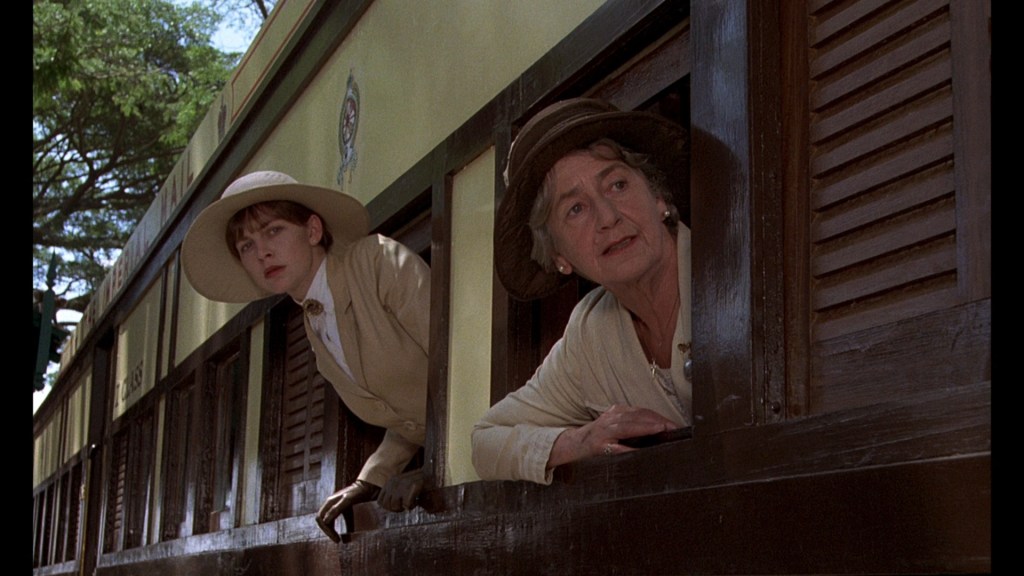
A Passage to India doesn’t always quite manage to capture this – perhaps largely because the book’s third act (which focuses in particular on the strains on the friendship between Aziz and Fielding) is truncated down to about 12 minutes of the film’s 2 and half hour run time. This does mean the film’s final impact feels rushed and unclear – and that the final parting of these characters doesn’t carry the impact it should. I can see why this has been done – that section of the book is less interesting, and also shows Aziz, at times, in a less sympathetic light – but it does mean the film misses something of the book’s engagement with moral and intellectual issues in favour of delivering the cold, hard plot of the Caves and the trial.
But these sections are well-judged, carefully structured and expertly executed. Lean’s film is very good on observing the kneejerk racism (some paternal, some outright unpleasant) from the British community. The incongruity of British clubs, garden parties and middle-class homes and lawns in a foreign land. How Indians are only welcome into these settings as silent servants or repurposed into British icons, such as brass bands. The total detachment of the rulers from the ruled: the tour of India arranged by Ronny features the British barracks, court-room and culminates in some ghastly amateur theatricals. Indians exist only to be told what to do and to applaud their rulers.
This is counterpointed with the rich, vibrant, dynamic culture of the Indians. If the film sometimes tips into displaying this as a sort of Oriental mysticism, that can be partly because our experience of it is often filtered through Adela and Mrs Moore who are bewitched and intrigued by a country of colours, emotions and passions unheard of in Britain.
Lean’s film never overlooks the Indians though. Our introduction to Aziz is to see him nearly mowed down on his bike by a speeding government car. His home is kept in good condition, but cannot compare to the wealth of the British. He and his friends talk passionately of the possibility for independence. There is a natural expectation of rudeness and dismissal from the British, that is taken in their stride.
Well played – if the role is a little passive – by Victor Bannerjee, Aziz is the victim we witness events through. Proud to befriend the British women, friendly and over-eager, Aziz is a highly unlikely would-be rapist. Put-upon and dismissed by his British superiors, he’s a lonely widower whose children are living hundreds of miles away, who suggests the trip in a moment of social awkwardness and goes to absurd ends to make the trip a success.
Sadly, its doomed. Leans film does a good job of maintaining much of the book’s mystery of what happens in the caves. Lean also finds a visual way of representing much that lies implied in the book. In an invented scene before the trip, Adela cycles into the Indian countryside eventually finding a ruined temple filled with sexually explicit statues and hordes of monkeys in heat. Its clear the exposure to sexuality both shocks and unnerves her – but also fascinates her. Later she dreams of the statues she has seen. The same overwhelming feels seem to consume her in the caves – a heightened sense bought on by claustrophobia and a fear of a moment of personal intimacy between her and Aziz, perhaps spinning off into a temporary nervous collapse.
The film doesn’t state it for sure, but the implication is carefully put there. It leads perfectly into the well-staged trial scenes. Lean’s film focuses largely on delivering the plot of the novel, rather than the depths, but in delivering this crucial encounter he finds a marvellous way to use the language of film (music, editing and photography all interplay effectively in the sequences to add to their unsettling eeriness) to dramatise a literary sequence.
It’s not a perfect film. At times languid, it could no doubt have done with a bit more tightening and pace (it takes nearly half the film to reach the caves). While the film benefits from the build of the atmosphere and the tensions between both cultures, if Lean can do Great Expectations in less than two hours you feel he could have done this book more tightly. The unfortunate decision to cast a brown-face Alec Guinness as Brahmin scholar Professor Godbole looks more uncomfortable with each passing year – not least as all other Indian roles are played by Indian actors.
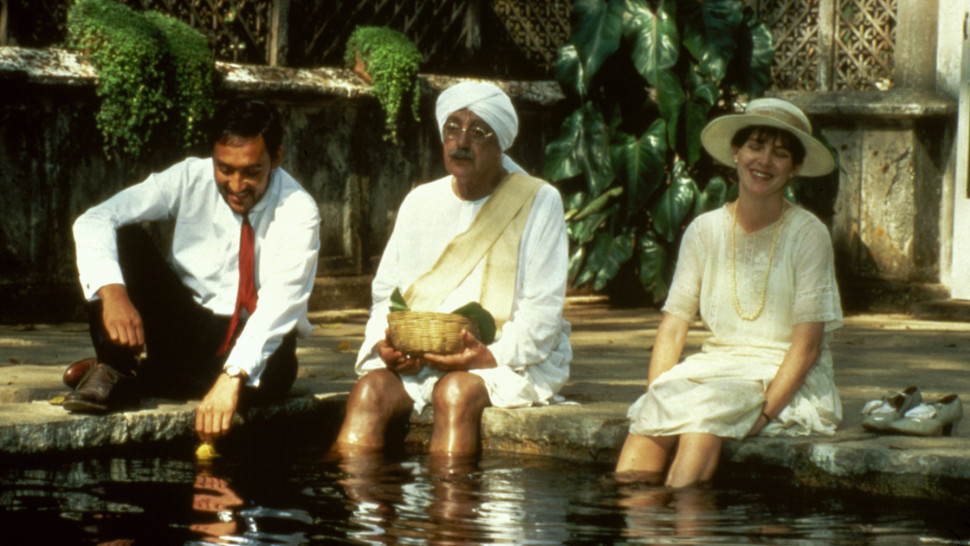
The film does however have a very strong cast. Judy Davis is both fragile, uncertain and at times even deeply frustrating (in the intended way!) as Miss Quested. Peggy Ashcroft won an Oscar (part of a late boom in her screen career – she also won a BAFTA the same year for The Jewel in the Crown) as the very grounded and worldly-wise Mrs Moore. James Fox gives his finest performance as the sympathetic Fielding caught between two worlds and eventually rejected by both.
A Passage to India has a lot of Lean’s visual mastery, but it’s less a sweeping pictorial epic and more of a careful and well-judged literary adaptation. While it does focus more on the plot and less on the meaning of the novel, and it overlong and at times lacking in energy, it also has some fine performances and brings many parts of the novel triumphantly to life. His final film does not disgrace his CV.


 Movie Musings